Showing posts with label Romance. Show all posts

Mar 24, 2021

24FPS @ BFI Flare 2021: Firebird

Dir: Peeter Rebane
At the height of the cold war, Private Sergey (Tom Prior) and Lieutenant Roman (Oleg Zagorodnii) meet and fall in love on base. When they are suspected, Sergey leaves the army for his long held dream of going to drama school and Roman marries Luisa (Diana Pozharskaya), Sergey’s best friend. Still, Sergey and Roman continue to be drawn to each other.

Every film whether, like this one, it is based on a true story or it is the most fantastical and surreal tale ever told, sets out to create a world that is, in itself, credible. In some ways, Firebird does this: the historical detail—sets, props, hairstyles, costumes—appears to be on point, but right from the start, something is off. The film is spoken almost entirely in English (background dialogue that doesn’t need to be subtitled is in Russian, as is signage and other incidental writing). The commercial imperatives of this choice are clear and easy to understand, but the fact remains that Firebird is telling a fundamentally Russian story. The story takes place entirely within the USSR, the characters are all Russian, and two of the three lead actors are Ukrainian. From the first moment they start talking to each other in accented English (often dubiously so in Tom Prior’s case), a vital part of the world-building is broken however good the rest of the film may be.

Unfortunately, even apart from this glaring issue, Firebird isn’t a particularly good film. The performances are a mixed bag; the actors are clearly capable, with the films quieter moments coming off well. The longing looks between Sergei and Roman, the silent build of chemistry, and Sergei’s terror, which he has to hide from the other soldiers when Roman’s plane gets into trouble, are all effective. The best moment in the film comes from Tom Prior. When Sergei hears that Roman is marrying Luisa we can see the deep, under the surface, hurt coming to the fore for just a moment. However, probably thanks to the language issue, dialogue is often stiff and stilted, never more so than in a dinner table scene between Roman and Luisa. This means the film always feels uneven. While it looks handsome enough and Rebane puts some of his influences on display (a beach scene late on has a definite air of Francois Ozon), the direction isn’t especially inspired and, on a couple of occasions, notably clunky. This is never more true than when we find out that Luisa is pregnant with Roman’s child, there is a hard cut to Sergei standing in the pouring rain—a cheap, corny, and cliche emotional shortcut.

Taken purely at an emotional level as a story of forbidden love, Firebird has its affecting moments. We do believe in the relationship at its heart, and it’s hard not to feel for the characters, especially knowing that the story is at least broadly true. On the other hand, every detail is clunky. The language issue means everything feels artificial and Peeter Rebane doesn’t find much visual inventiveness with which to tell his story. There’s the kernel of a great movie here, but it’s not the one that ended up on the screen.
★★

Oct 10, 2020

24FPS @ LFF 2020: Undine

Dir: Christian Petzold

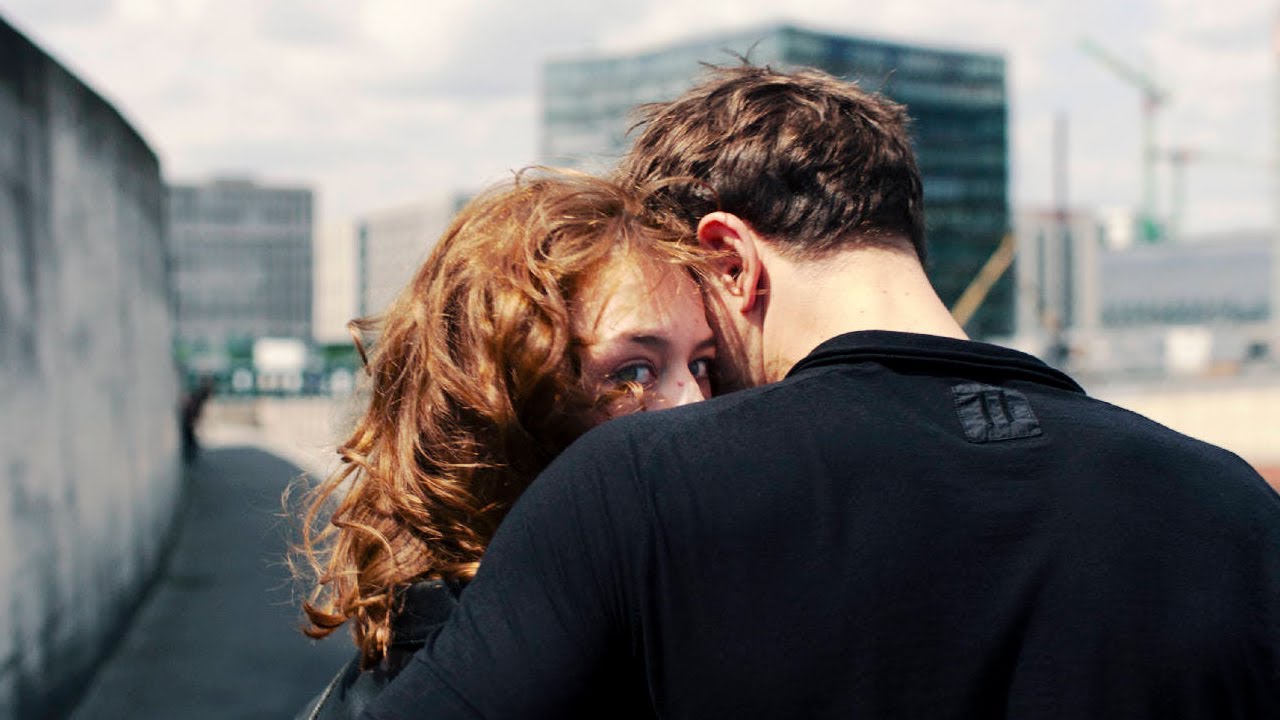
Christian Petzold is a filmmaker who at once wears his influences on his sleeve and remixes them enough to make the resulting films very much his own (consider Phoenix's relationship to Vertigo and Eyes Without a Face, or Jerichow and Yella's riffs on The Postman Always Rings Twice and Carnival of Souls respectively). Undine is loosely inspired by a myth initially found in the alchemical writings of renaissance physician Paracelsus. The myth speaks of mermaid-like creatures who resemble humans but lack a soul, and to gain one they must marry a human, but if the man is unfaithful he is fated to die. As is his usual style, Petzold takes a few of the bones of this myth and embeds them in a story that is very much grounded in the real world.

Paula Beer's Undine is a historian working at a Government office in Berlin, giving talks on the architectural history of the city. On the morning her boyfriend Johannes (Jacob Matschenz) breaks up with her, she goes to find him at their local cafe, but instead encounters industrial diver Christoph (Franz Rogowski). They accidentally smash the cafe's fish tank, soaking them both and cutting Undine. When we next see them, they are in a relationship, which we continue to follow throughout the film.

Their connection perhaps honed through their work together in Petzold's previous film, Transit (to summarise its influences, think 'Kafkablanca') Beer and Rogowski are both excellent, solidly grounding the more fanciful aspects of the film with performances that commit totally to the emotion of each moment, and they have intense chemistry throughout. We meet them the second time when they are clearly relatively newly, but comfortably, in their relationship, and there is a hunger especially about the way Beer approaches it, something we see notably in her initial frustration when Christoph puts the brakes on when things are about to get sexual and asks Undine to give him the lecture she has been practising for the next day. On the surface, Undine may seem slight; a relationship drama that takes a late second act diversion into possible supernatural occurrences and mythical fantasy, but there is perhaps more to it than that.

Undine's lectures look at the changing character of Berlin, from a split city to a whole one and the way that transformed the architecture of the city, even bringing back buildings from the past. I think Petzold wants us to view this as analogous to the shifting states of relationships, from Undine's initial pleading with Johannes not to leave her to her relationship with Christoph. It could also be argued that he's discussing shifting states of being, even beyond the question of the connection between Undine as a character and the mythological figure. Through his work, Christoph is to some degree a being of the water and early on Undine needs to be saved from drowning, which has echoes in later passages of the film.

For all the thematic concerns and all the questions of the relationship between myth, imagination, and reality, at its heart, Undine feels honestly romantic, perhaps ultimately about memory and touchstones (the diver statue that travels through the film, variously with Christoph and Undine). I get the sense that it deliberately doesn't give up all that it's about on a first viewing, and I especially want to pair it with a rewatch of Yella, to examine how each film' and each character's connection with water is expressed. That said, this is still an extremely rewarding and rather beautiful film even without the full context of Petzold's filmography. It's a slow burn, but one worth immersing yourself in.
★★★★

Oct 6, 2019

24FPs @ LFF 2019: Lunana, A Yak In The Classroom / Babyteeth

Lunana - A Yak in the Classroom
Dir: Pawo Choying Dorji
Sometimes, all it takes for a film to feel a little different is a change of context. There are more than a few movies about teachers in an unfamiliar environment, from comedic takes like Kindergarten Cop to more dramatic pieces like Dangerous Minds. In most of them, the teacher will find their class or environment something they don’t initially warm to, but eventually will be turned around, learning something about themselves. Lunana, a Yak in the Classroom doesn’t do these broad strokes any differently, but the setting and cultural specificity of it make it feel a bit different.

Ugyen Dorji (Sherab Dorji) is in his last of five years of service as a teacher, following his training, and he’s fallen out of love with it. He’s lazy, marking time before he can leave Bhutan for Australia. Ugyen’s boss, sick of his attitude, dispatches him to Lunana and the most remote school in the world, eight days hike across the Himalayas from the nearest town. When he arrives, Ugyen immediately wants to leave, but the villagers and the kids he’s teaching win him round.

There isn’t much unexpected here. Ugyen is slowly inspired by the kids, notably adorable class captain Pem Zam (all the kids use their own names) and sets about doing up the school, for instance having the villagers helping him mix charcoal paint to make a blackboard. A city resident and a modern person, he also has his head turned by traditional culture, notably the songs sung by yak herder Saldon (Kelden Lhamo Gurung). This is where the film marks itself out from the many others like it. Music is a major throughline, Ugyen wants to be a singer when he gets to Australia, and we see him spending much of his time trying to learn a traditional song he hears Saldon singing. The music is soothing, and unlike much we regularly her in the UK.

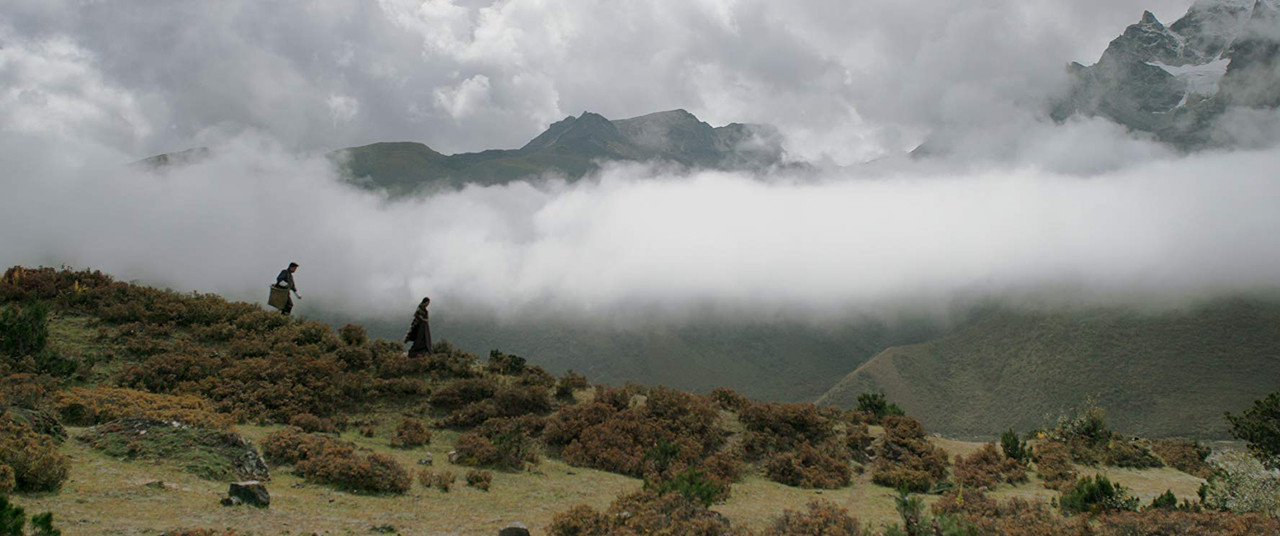
As well as a beautiful soundtrack, the film makes use of its stunning location to mark itself out. Shot on solar powered cameras 5000 metres up in the Himalayas, Lunana looks like few other films, taking place among the clouds not because it is set in some fantastical realm, but simply because that is where its characters live. The vistas are unbelievable and almost worth the price of admission on their own.

While it never goes anywhere unexpected, Lunana is executed with great charm. The dynamic between Ugyen, the villagers and the kids feels natural and has a warmth that permeates the whole film, in contrast to the mountain weather. This is especially the case in the friendships that develop between Ugyen and his escorts and the potential budding romance between Ugyen and  Saldon.

A sweet natured film about the importance of community and tradition, as well as that of following your calling, whatever that may mean, Lunana is perhaps a bit different to the rest of LFF’s Family programme, in that it doesn’t seem as much aimed at children as suitable for them, just as much as it will be for their parents. It should charm the whole family.
★★★

Babyteeth
Dir: Shannon Murphy
The teen cancer romance has, weirdly, become prevalent enough to be a subgenre all of its own. Generally speaking, I can’t stand them. Most feel like tragedy porn, content to let their characters be defined solely through illness and essentially acting as a big stick, designed to poke you until you cry. The genre’s miserable low is without doubt the vomitously saccharine The Fault in Our Stars. I’m not sure it had a high point until now.

Babyteeth begins with 16 year old Milla (Eliza Scanlen) meeting and falling for Moses (Toby Wallace), he’s older, tattooed, jobless, a small time drug addict and dealer. Milla’s parents, Anna and Henry (Essie Davis and Ben Mendelsohn), understandably, do not approve. It’s only later that we learn that Milla’s cancer has returned. In the throes of first love with Moses, she wants to spend as much time with him as possible, to the point that he ends up living with Milla and her parents as she gets sicker.

There are many things that set Babyteeth apart from the herd of teen cancer movies, most notably the fact that it is not defined by Milla’s illness. This is largely a comedy drama about a dysfunctional family and cancer is only a part of that dysfunction. It’s also only a part of the film. It lurks in the background of the first half, becoming more present over time, much like the progress of the disease. For much of the first hour, writer Rita Kalnejais and director Shannon Murphy push comedy to the fore, with Essie Davis especially priceless as Milla’s anxiety riddled mother, who spends much of her time in a Zoloft induced haze, drugs prescribed by her psychiatrist husband. The scene in which Milla first brings Moses home and there is an excruciatingly awkward family dinner is particularly priceless. What many films about tragic things forget is that, even in the midst of it, not every moment is tragic. By remembering this, the sometimes irreverent humour of Babyteeth conveys more emotional honesty than any of the manipulative set pieces in a more typical teen cancer pic.

Milla’s first romance is obviously unsuitable, but we understand it from all sides, whether it’s Milla's romantic sense of being with the bad boy who’ll annoy her parents or the rather deeper thought that it’s Moses’ fearlessness that first draws her in, perhaps a quality she wants more in herself as her cancer gets worse. Eliza Scanlen is excellent in the part. For a long time we can see her playing Milla as a kid who simply wants to ignore her illness; she hasn’t got any hair, so she’ll wear fun wigs, and she’ll go out and she’ll fall in love with this guy, like a normal kid. We also see and feel the moments that bring that crashing down to Earth, but Scanlen never overplays them. For Moses’ part, there’s a recognition that he too, more experienced if not that much wiser at 23, realises that this crush Milla has on him isn’t entirely healthy, and that he at once has some feeling for her that goes beyond sympathy and yet he’s not immune to exploiting her feelings. Moses, in particular, is a more complex character than we usually see in these films and his shifts in motivation and feeling are given great weight in a deceptively light performance from Toby Wallace.

Initially, Ben Mendelsohn and Essie Davis have broader roles, essentially doing something close to comic relief duty (their first scene, an appointment for sex in Henry’s office, is a good example of this tone), but this recedes as the film goes on and their performances become heartbreaking. Mendelsohn, one of the best actors in movies right now, is especially brilliant when his daughter asks him to smile for a picture; “gimme a second” he says, and the weight of everything in the film is felt in those three words.

Director Shannon Murphy, making her feature debut after several shorts and plenty of TV work, balances the film’s tone beautifully and draws terrific work from her cast, allowing supporting players like Emily Barclay, as Anna and Henry’s heavily pregnant neighbour, to steal a few scenes, but never the focus. I’m not a fan, though, of her aggressive chaptering. The many, many title cards add little and sometimes give the film a bitty feel that undermines an otherwise strong emotional throughline. The nadir of this technique comes when a title card introduces the song a sequence is set to, making that sequence resemble a music video even more, slightly deflating its impact for that.

On the whole though, Babyteeth is a refreshing addition to a genre that has so far given us little to enjoy. The balance of humour and heart is more honest here than in any of its peers, and Eliza Scanlen and Toby Wallace both impress, marking themselves out as names to watch for the future.
★★★★

Sep 26, 2019

24FPS @ LFF 2019: Days 8 and 9

I Lost My Body
Dir: Jérémy Clapin
As a disembodied hand searches for its former owner, we watch in parallel as Naoufel (Hakim Faris) falls for Gabrielle (Victoire Du Bois), who he first meets as a voice on an intercom when he’s supposed to deliver a pizza to her.

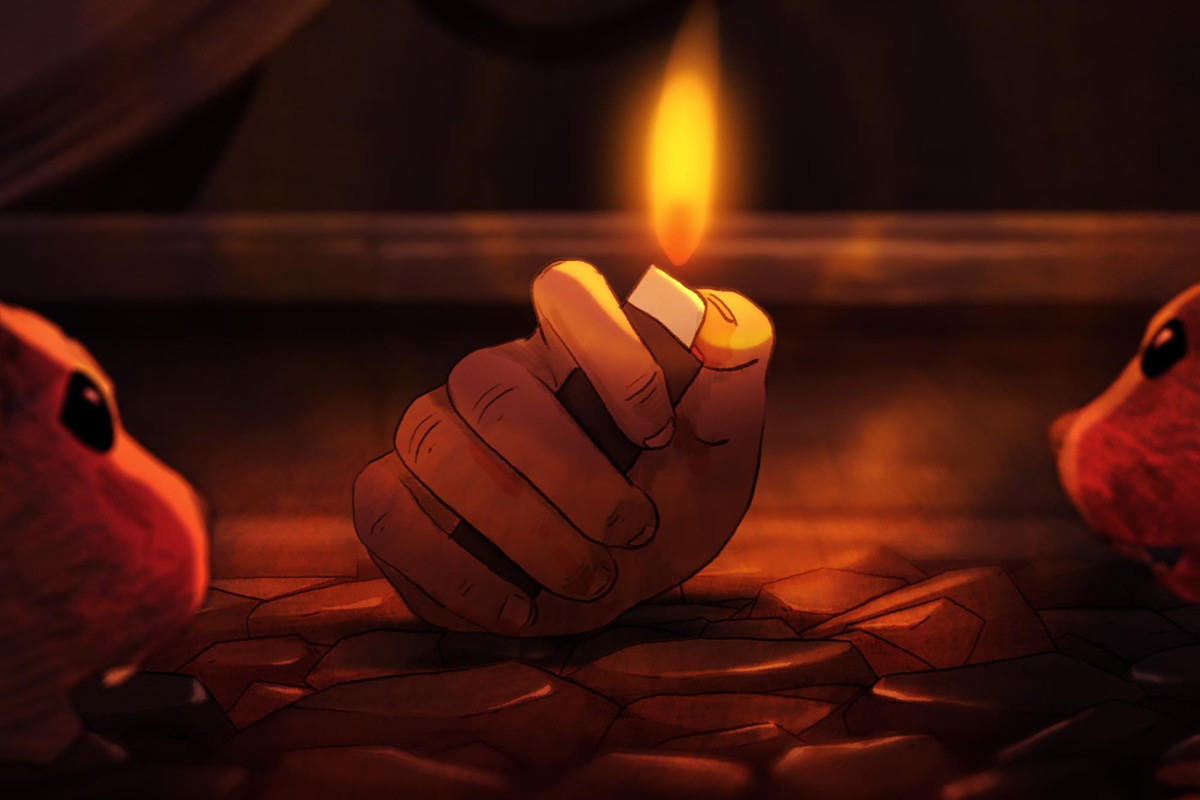
Jérémy Clapin’s first feature is first and foremost a beautiful piece of hand-drawn animation. The human characters are expressive, with a slightly sketchy look but fluid and engaging animation that gives them all character. What is more remarkable though is the animation of the disembodied hand and the world it moves through. Obviously, we are seeing much of what the hand goes through from its level and the realistic drawing of the environment around it and the things it interacts with - notably rats and a pigeon - makes its journey feel all the more perilous and takes us on that journey with it. In addition to that is the brilliance of the animation of the hand itself. Without eyes, a mouth or even an interior voice, the hand feels like a full character. From it, we get a sense of struggle—gripping on to a drainpipe for dear life—and of longing, as it ventures on its long quest. In many ways, it may be the character we end up feeling most empathy for, which is an incredible achievement. 

The relationship between Naoufel and Gabrielle is sweetly drawn. It’s hard not to identify with the slightly inept ways that Naoufel tries to tell Gabrielle who he is, aborting the mission several times through nerves. It’s also interesting and refreshing to see how Gabrielle, and through her the film, views these gestures by Naoufel as compared to how a romantic comedy of ten or twenty years ago might have.

As much as I loved the animation and the expressive but not instructive score by Dan Levy of The Dø, I Lost My Body ends up feeling a bit slight. Once we see how everything connects up, the last ten minutes are a little underwhelming and don’t really deliver the emotional punch the rest of the film appears to have been trying to lead to. There are lovely moments here, and the whole section of the film focused on the hand is remarkable, but ironically it might ultimately be a little less than the sum of its parts.
★★★½

The Antenna
Dir: Orcun Behram
The idea of a government using a broadcast to control its population is barely a sci-fi concept when one considers things like North Korean state TV and even the relationship between Fox News and the Trump administration. The Antenna is set in Turkey and shows us the first night of operations of a new government broadcast from the point of view of a single apartment building where, as soon as the dish to receive the broadcast is installed, escalating chaos ensues.

For his first film, writer/director Orcun Behram draws on many influences. This wouldn’t necessarily be a problem in itself, but he fails to establish much of an identity of his own and so what we end up with is a patchwork of those influences and a film that feels hugely derivative of better things that have come before. The main thrust of the plot is essentially a combination of two David Cronenberg films; the still underrated Shivers and one of his true masterpieces, Videodrome. As the insidious influence of the dish and the broadcast become more present, black sludge begins to ooze out of walls, taps and other outlets, calling to mind the black oil that was such a feature of the conspiracy episodes of The X Files. These are just the most glaring examples, and the ones by which The Antenna suffers most by comparison.

Taken on its own merits, The Antenna does occasionally show that Behram has some visual promise. An early sequence of Mehmet (Ihsan Önal), the maintenance worker who is the first to sense that there is something wrong at the building and that the dish is the cause, walking to work makes striking use of the imposing, towering, straight lines of the buildings he walks past. There are also a couple of standout sequences in the last fifteen minutes or so; an attack, under flickering lights, on Yasemin (Gül Arici) is visceral and brutal, and the long held close up on her in the aftermath is effective. The final sequence also shows some flair, especially in the choice to show one attack from outside the building it happens in, which accentuates the shock by stripping out the sound. 

Unfortunately, the journey to and time between these sequences is filled with long and slow scenes that want to revel in the film’s imagery but do little to repay that investment of time. The pace is often painful, every camera movement is agonisingly slow and the characters seem to move as if they are walking through the black sludge we see so much of. Sometimes a slow pace can work to build tension, but it’s so obvious where the film is going and what it’s trying and failing to say that instead it simply tests the patience. At 115 minutes, The Antenna feels long, and it could lose half an hour just through recutting to quicken the pace. The overarching message is one that has been advanced with more force and clarity in many films over the years, and the screenplay fails to get under the skin of either its central idea or its characters. It is possible there are resonances an English speaking audience will miss unless they are familiar with Turkey and its politics, but even if that’s the case, the film doesn’t deliver much of substance that is accessible to a wider audience. 

There are a few flashes of promise here, but for the most part, The Antenna is a slow and boring slog that will make you wish you were watching any one of the films it so liberally cribs its ideas from.
★½

Oct 10, 2016

24FPS @ LFF 2016: Frantz

Dir: Francois Ozon
The new film by Francois Ozon is always an occasion I await with great anticipation, and it has become a tradition that he brings them to LFF each year. After a run of quality all but unprecedented among working directors (a parade of 4 and 5 star films broken only by his English language début, Angel) Ozon hit his first major stumble with Jeune et Jolie, but seemed to have regained momentum with his last film, The New Girlfriend. Frantz, disappointingly, represents another backward step.

The auteur theory can be overapplied, but if it were written to describe any modern director then it is Ozon. One of the most versatile directors of his generation, Ozon can change mood, subject and genre wildly between films, but his identity, his favoured images and ideas, recur like a fingerprint. An Ozon film is different from every other Ozon film, but you would never be in any doubt as to who directed it. Until now.  

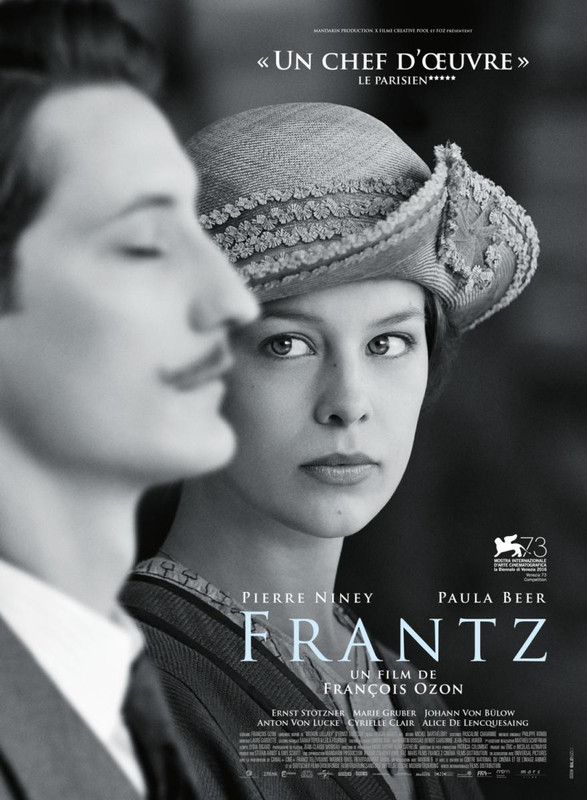
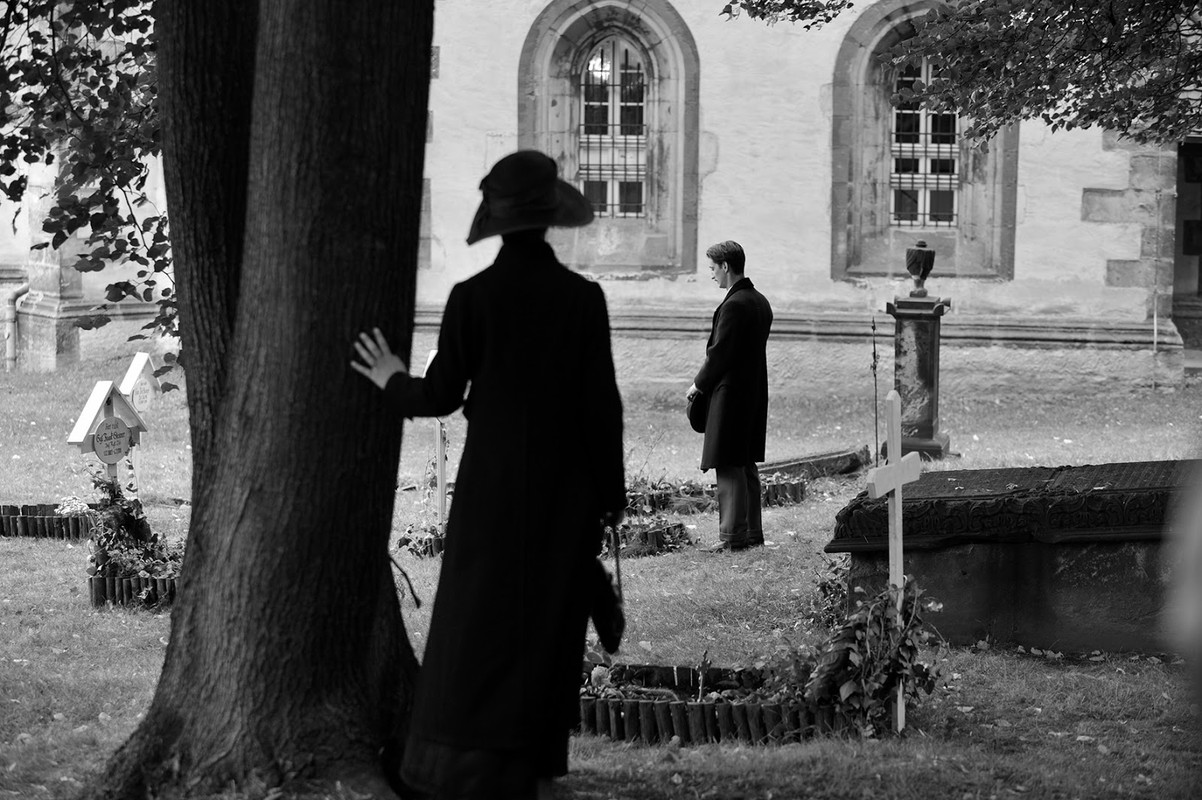
Frantz, as ever, finds its director in new territory. Set in the aftermath of World War One, it begins in a small German town. Visiting the grave of her fiancée Frantz, Anna (Paula Beer) finds flowers that were not left by her. The next day she discovers that they were placed by a French soldier, Adrien (Pierre Niney), who says that he was a friend of Frantz' before the war. Frantz' family begin to rely on Adrien, who reminds them of their son and Anna's feelings for the Frenchman begin to grow, but Adrien has a secret that changes those relationships again.

Perhaps the biggest change from his previous films is that here the colour obsessed Ozon shoots almost entirely in black and white. This is supposed to plug us into the period in which the film is set, but it looks too clean for that to come off. More disappointing still is the limited use of colour. The slightly faded colours are beautiful, but the moments that Ozon chooses to use them couldn't be more obvious or groan-inducingly literal. Yes, he uses colour to reflect the characters emotional states, but it's so basic an idea that the execution feels more like that of a clumsy film student than one of modern cinema's greats. This is only exacerbated by the awful final shot; a piece of sentimentality straight out of the ending of (500) Days of Summer, and maybe the single worst scene Ozon has put on screen.

The force of personality that Ozon usually brings to his films has gone missing here. The film's forward looking message, the German and Paris scenes both laced with warnings of the coming Second World War, feels less of this filmmaker than it does like Ozon trying to do The White Ribbon; Haneke on happy pills perhaps.  But Ozon can't pull off the doomy sense of the weight of destiny that Haneke delivered. The happy pills aren't working either, here Ozon has none of his usual playfulness and while he's also effective in severe, dramatic form, Frantz also misses this target. 

In just about every way, Frantz is a weightless film. The budding romance between Adrien – Niney looking unsure and out of place, like a kid playing dress up in a stick on moustache – and Anna is unconvincing, even before Adrien's entirely expected revelation comes out, after that point, with such a tenuous connection established between the characters, it becomes almost laughable, fatally undermining the film's Paris set third act. This might have worked in the 1930s, in the Lubitsch film in which Ozon based his screenplay, but the whether it's the non-existent chemistry between Beer and Niney or the fact that the screenplay gives them too little to hang the relationship story on, something about it just doesn't work here.

There are a couple of positives to take from Frantz. German actress Paula Beer is a find; Ozon gives her less to work with than his usual rich female roles, but she gives a strong performance, much of it in a second language (Niney struggles more with his German than Beer does with her French). The best performances in the film, however, come from  Ernst Stotzner and Marie Gruber as Frantz' parents, both broken by grief, but cheered by the little glimpses of their son that Adrien offers them. There are also a few standout scenes: Anna inventing a letter from Adrien, to avoid telling Frantz' parents the real truth; Anna sitting, deeply uncomfortable, as the Marseilles is sung in a Paris bar, but these are scattered moments in a near two hour film, and good as they are in isolation they can't make it knit together as an effective whole.

If Frantz isn't Ozon's worst film it's certainly his most anonymous. This doesn't feel like a filmmaker changing direction, it feels like he's dropped the map and got lost. Worse than all this is that, for the first time in an Ozon film I didn't like, I can't see what drew him to tell this story, what he was going for. For all its faults, Jeune et Jolie had something interesting at its core, it didn't work, but it still gave me something to think about and discuss. Frantz doesn't even have that, it's a pure misfire, not even very interesting in its failure.
★★

Feb 12, 2014

Coming Of Age Movie Month Days 9 and 10

Jeremy
Dir: Arthur Barron
I hadn't heard of this 1973 film until a few years ago when I heard Mark Kermode talk about how much it had moved him when he first saw it and having a similar experience when he finally saw it again after many years.  Any film that resonates down the years like that must have something worth recommending in it and, even if I can't claim to love it as Kermode does, that's certainly true of Jeremy.

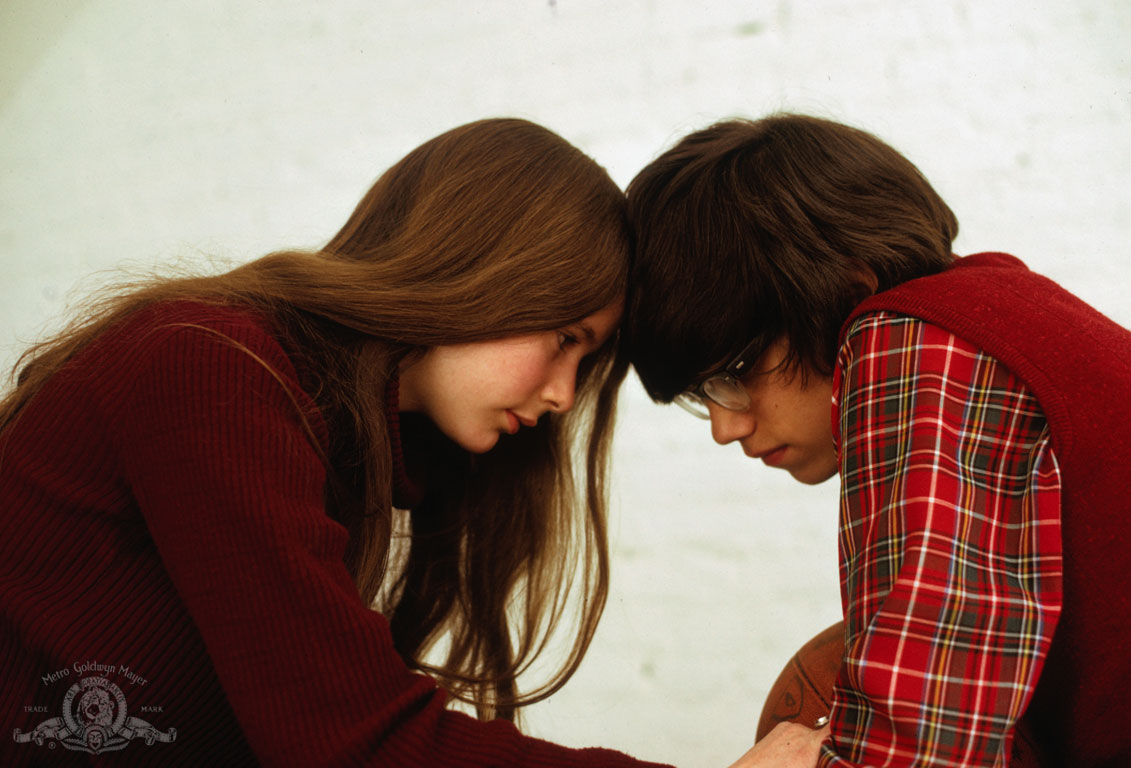
The story is a rather typical one of first love.  The geeky Jeremy (Robby Benson) spots Susan (Glynnis O'Connor) at school and falls for her instantly.  When he finally plucks up the courage to talk to her they start dating, falling into a relationship that becomes serious quite quickly.  Unfortunately, a big obstacle is suddenly thrown in their way when Susan's father gets his old job back, meaning they have to move.

I understand Mark Kermode's affection for this film completely, and I suspect that had I seen it when I was the same age as Jeremy and Susan (who are 15 or 16) it would have become one of my favourite films.  Seeing it now I can still feel a lot of it at a very personal level.  At 16 I was much like Jeremy; a bespectacled nerd pining for the prettiest girl in school.  The scenes where he's trying to call her and ask her out, asking his friend to find out about her, taking her on a date and trying to make small talk, I think we've all lived those awkward moments.  This is what makes Jeremy a film that still resonates; there can hardly be an audience member who hasn't felt like this, and that powers the movie through some of its clunkier moments.

Jeremy is sometimes earnest to the point of being cloying.  This would annoy me more, however, if it were a film about adults, who tend to have a little more perspective on things than teenagers in their first serious relationships.  As grating as they can be, these moments also ring true, catapulting me back in time to similarly over-dramatic conversations I had with friends at that time.  If I'm honest, my engagement with the characters and the relationship was probably also aided by the fact that I too would have been in love with Susan if I'd gone to school with her.

The emotional honesty of the film is thanks largely to its two excellent central performances.  Both 17 at the time and just starting out their film careers, Benson and O'Connor give unforced performances that feel almost improvised.  Their connection is palpable (and indeed genuine, they got together in real life for a time) and the scenes of them spending time together on dates are sweet and heartfelt.  Since this film was made many American teen movies have developed a mean or exploitative streak (and I say that as someone who likes a lot of those films), but what's great about Jeremy is that it gives you two characters who are easy to root for.  They aren't caricatures, just nice kids that you can identify with and even imagine having gone to school and been friends with.  Watching their relationship develop in such a frank way is a pleasure.

As a story about first love, Jeremy has barely dated, but the ending makes it look like something of a relic.  It still has an emotional tug, but I wonder if people raised in the internet age will feel the full force of it because Jeremy and Susan's problem could be so easily fixed today.  Of course, this is not the fault of the film. For me, the melancholy ending is one of the best things about it.  I'm not sure this is quite a lost classic, but I see why people would feel that way, and if you like coming of age films it's an essential one to track down.
★★★

Lakki, The Boy Who Grew Wings
Dir: Svend Wam
I... I have to review this don't I?  

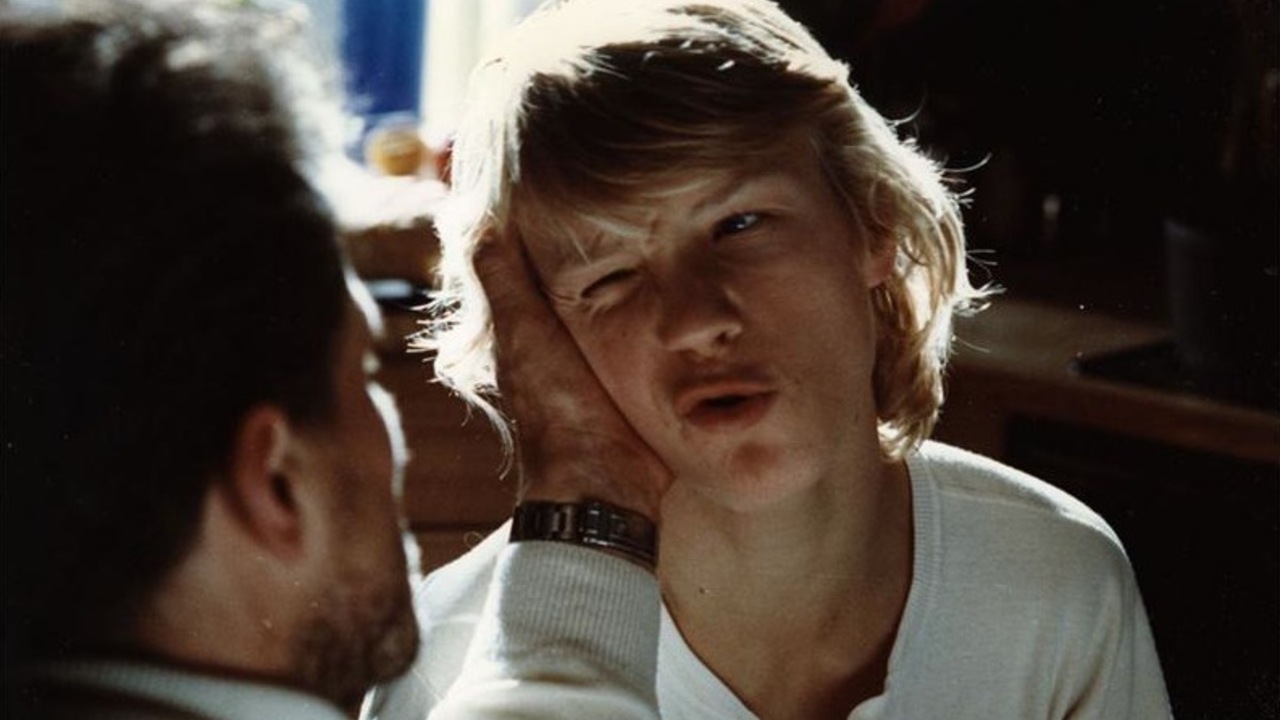
Lakki, The Boy Who Grew Wings would seem to have a lot going for it.  I'm fond of Scadinavian coming of age films, I like the idea of mixing surrealism and social drama (see Francois Ozon's Ricky for a great take on that odd idea) and the idea of a surrealist piece about an abused and neglected 14 year old growing wings to escape his situation is, at the very least, different.  Unfortunately, for me at least, Lakki fails on just about every possible level.

First off, the drama just doesn't work.  The reason that Ricky worked so well for me was that it established a real world, with strong performances, before heading into realms of surrealism.  Lakki doesn't.  From the off the 'real world' scenes feel just as surreal as the fantasies that Lakki has, so we're never sure what's actually happening and what Lakki is blowing out of proportion in his own mind.  This is also reflected in the tone of the performances, which are overblown throughout, further undermining any sense of why Lakki really wants to escape from his life so desperately.  Even when the film tries to rein these excesses in (far too late), the damage has been done and everything rings false.

The surreal sequences do have some striking images (Lakki, having been bullied by his swimming teacher, borne aloft in a crucifixion pose, by his classmates), but they all tend towards beating us over the head with their point.  Frankly the film may as well be called Lakki, The Boy Who Grew An Obvious Metaphor.

I don't really have much to say about this.  I found it irritating and tiresome throughout; a laboured, badly conceived and acted film that bellowed its metaphor at the audience for 105 minutes to little effect.

Jan 23, 2014

Kiss Me, You Fucking Moron

Dir: Stian Kristiansen
I knew that I had to see this Norwegian coming of age movie as soon as I read the title (which, sadly, seems to have been reduced to Kiss Me, Damn It for international release).  As attention grabbing and as great as that title is, it also primed me to expect something quite different from what I got.  I went in expecting a knockabout teen comedy, what I got tended much more to drama, but it hit me in ways I didn't expect.

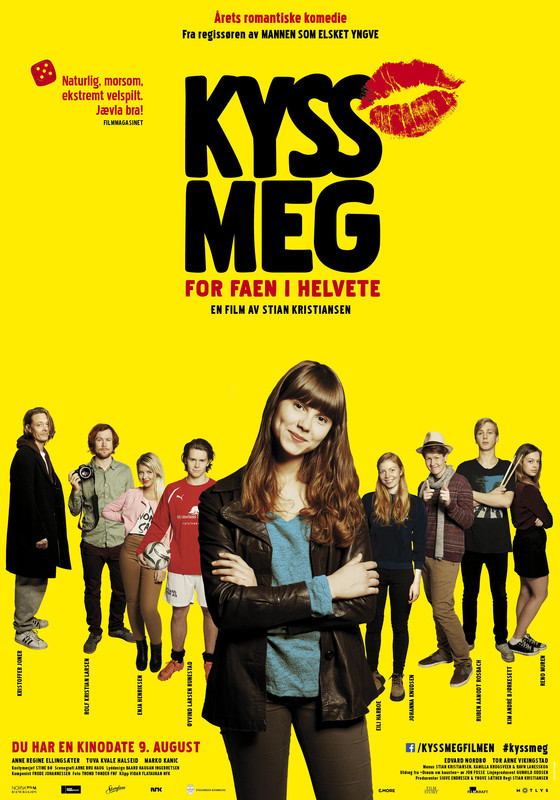
Tale (Eili Harboe) is seventeen years old, living in a small rural town in Norway, and wants to be an actress.  She's in an amateur acting troupe with a few friends but they are bored of staging silly revues.  Instead of another revue Tale suggests that the group stage a play by Jon Fosse (a famous Norwegian playwright).  She badgers Lars (Kristoffer Joner), a famous actor who has turned up in town to stay with a friend and deal with a mid-life crisis, into directing them and he insists on casting a local troublemaker, Vegrad (Øyvind Larsen Runestad) as the male lead.  A method director, Lars insists that Tale and Vegard spend time together in order to give better performances.  Guess what happens.

You couldn't call Kiss Me, You Fucking Moron an original film.  It runs through the typical beats of a coming of age movie.  The boy and girl hate each other, they spend time together, find common ground, become friends, some obstacles get thrown up... it's all pretty standard.  I've always said that the fact that a film is generic doesn't have to mean that it's bad.  Genre structure is laid down because it has been proven to work, but conforming to genre does mean that you have to deliver quality work to stand out.  This is exactly what Stian Kristiansen and his cast do here.

The young leads in this film have a difficult job, in many scenes they have to be acting on a lot of different levels; playing actors who are playing a part, to varying degrees of success, but also letting their character's concerns beyond the scene come through and inform the drama outside the play within the film.  This is just one of the ways that Eili Harboe stands out here.  Tale is clearly supposed to be a pretty good actress to begin with, but we have to see both a progression through rehearsals and the crush that she has on Vegard which informs much of the way Tale plays scenes in the second half of the film.  Harboe does all of this beautifully, there's always a lot going on underneath the scenes when Tale is acting, and she has an understated naturalism outside of those scenes that helps the film remain credible when the screenplay is sticking resolutely to genre convention.  It's hard to believe that this only her second acting job, but I really want to see more from her in the future.

If playing a good actor is tough then playing one who starts out bad and then has to progress, while also giving a strong performance outside of acting scenes, must be tougher.   Øyvind Larsen Runestad is excellent as Vegard, particularly as the bravado of the bully we see in the early scenes begins to fade away as he and Tale hang out and get to be friends.  After seeing the first couple of scenes that he appears in and then discovering that he was to be the film's male lead I was concerned that there would be no way to have sympathy for Vegard, but slowly the screenplay and Runestad's performance allow us to warm to him.  This is also helped by the fact that Tale is going through the same process, and Harboe plays it so well that we start to see things through her.

The only name in the cast list that was familiar to me coming into this film was that of Kristoffer Joner, a Norwegian actor who I've now seen in several projects and always been impressed by.  He's got a character actor's face and talent to match, it's really only the lack of a big crossover hit that, I think, is keeping him from being much better known outside of Scandinavia.  Here Joner is typically excellent as the initially reluctant director of Tale's play.  It's as much of a process seeing him warm to the kids in the acting troupe as it is watching the relationships between them.  He doesn't, for the most part, do a lot of heavy dramatic lifting, but there is a rumpled charm to the character and hints of something painful behind why he's ended up in this small town.  Late in the film, we get to hear the story behind this, and Joner delivers it perfectly.  Between his performance and Harboe's as Tale listens and reacts to his story, it's perhaps the best scene in the film.

The lively but believable performances of the leads and the supporting cast really drew me into this film, it's in some of the writing that Kiss Me, You Fucking Moron lets itself down.  For the most part, the interactions between the teenage characters are nicely observed.  This is especially true of scenes between Tale and Vegard as they spend more and more (mandated) time together and we see them grow closer.  On the other hand, there are threads that are left underdeveloped, perhaps falling victim to the film's tight 93 minute running time.  For instance, when we first meet Lars he appears to have an alcohol problem, but this gets shunted out of the way pretty quickly, and a storyline involving Vegard's girlfriend gets an almost insultingly prosaic final scene.  Perhaps the most random, out of the blue, inclusion is a scene in which Tale's previously (and subsequently) unmentioned band play a song, it's a nice scene, and demonstrates that Harboe has another string to her bow besides acting, but it does feel like it's been parachuted in from another film. 

On the whole this is an engaging, involving and charming film.  Stian Kristiansen deftly combines the small dramas that make up Tale's life with a light sense of humour.  There's a good tonal balance here; it's never too knockabout, but never as dark as many of the teen movies we see from Europe and Scandinavia.  On the surface, it seems a little slight at times, but the performances are emotionally engaging and lend a depth to the final film that may not have been entirely present on the page.  If like me, you're a fan of teen and coming of age movies then this is one that you really ought to track down, it's not quite what you'd expect from the title, but that's no bad thing.
★★★★

Dec 30, 2013

My Top 13 Non-2013 Films

I try to watch as many new release films as I can each year, but inevitably there are still big gaps in my cinematic experience and every year I also spend a lot of time trying to plug those gaps by catching up with a lot of older films.

Since discussion of my Top and Bottom 10 of 2013 will be posted in the form of podcasts I decided that this year I'd do something a bit different and run down, in the order that I saw them, the 13 best older films that I watched for the first time this year.

The Lickerish Quartet

The Radley Metzger films I've seen, both softcore and hardcore, have all exceeded the expectations that you would typically have of sexploitation cinema, but The Lickerish Quartet really stands out.  It's a playful, surreal, film that intertwines film and reality in a way that has much to say about the way we relate to cinema.  The script is articulate and the acting strong, but Metzger's direction really stands out, he may be an exploitation filmmaker, but he has an artist's eye and sense of rhythm.

Onibaba

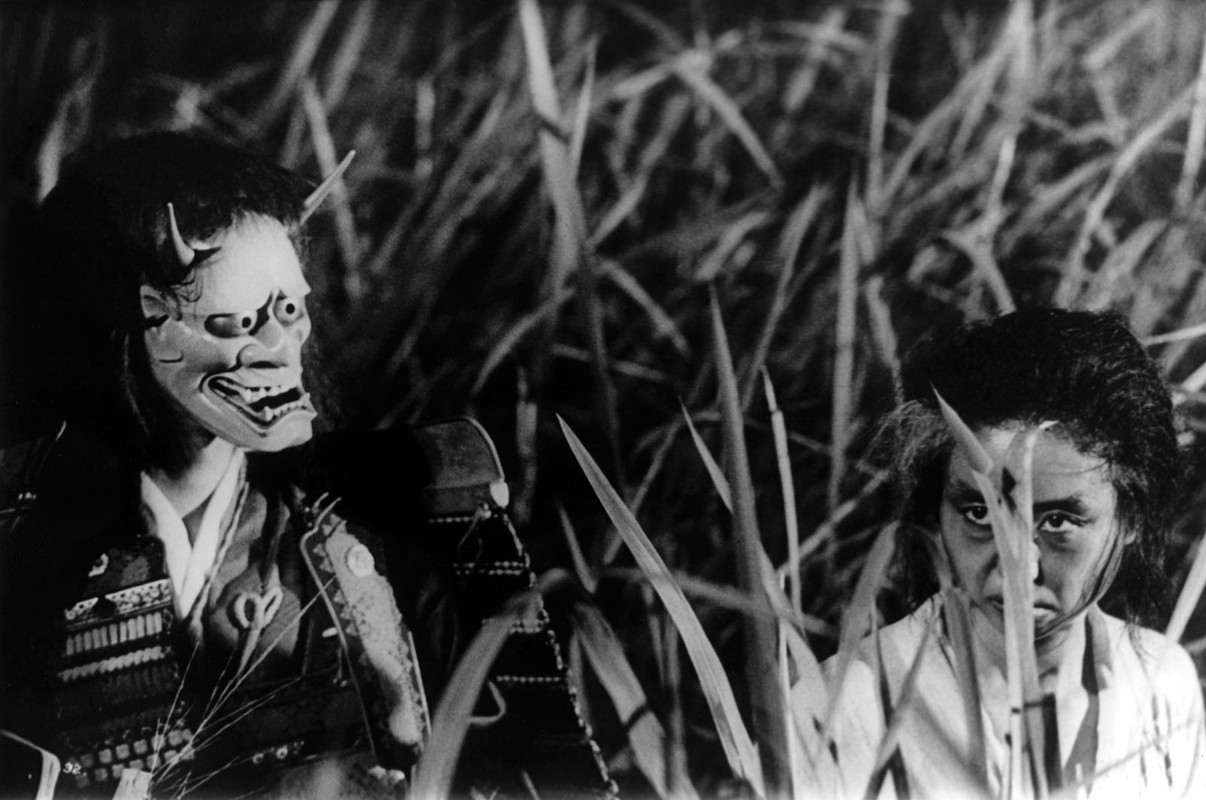
Kaneto Shindo was a great discovery for me this year, and another example of a director whose work I might never have discovered were it not for being a critic (I was assigned several of his films to review for other sites).  Onibaba was the standout; a brilliantly acted drama about a young wife living with her mother in law as they wait for the husband to return from war, which morphs slowly into a creepy ghost story.  It's strikingly shot, with the remote location in the midst of a swamp providing great atmosphere, but the threat also comes through in the performances, especially that of Nobuko Otowa as the mother. 

Rashomon
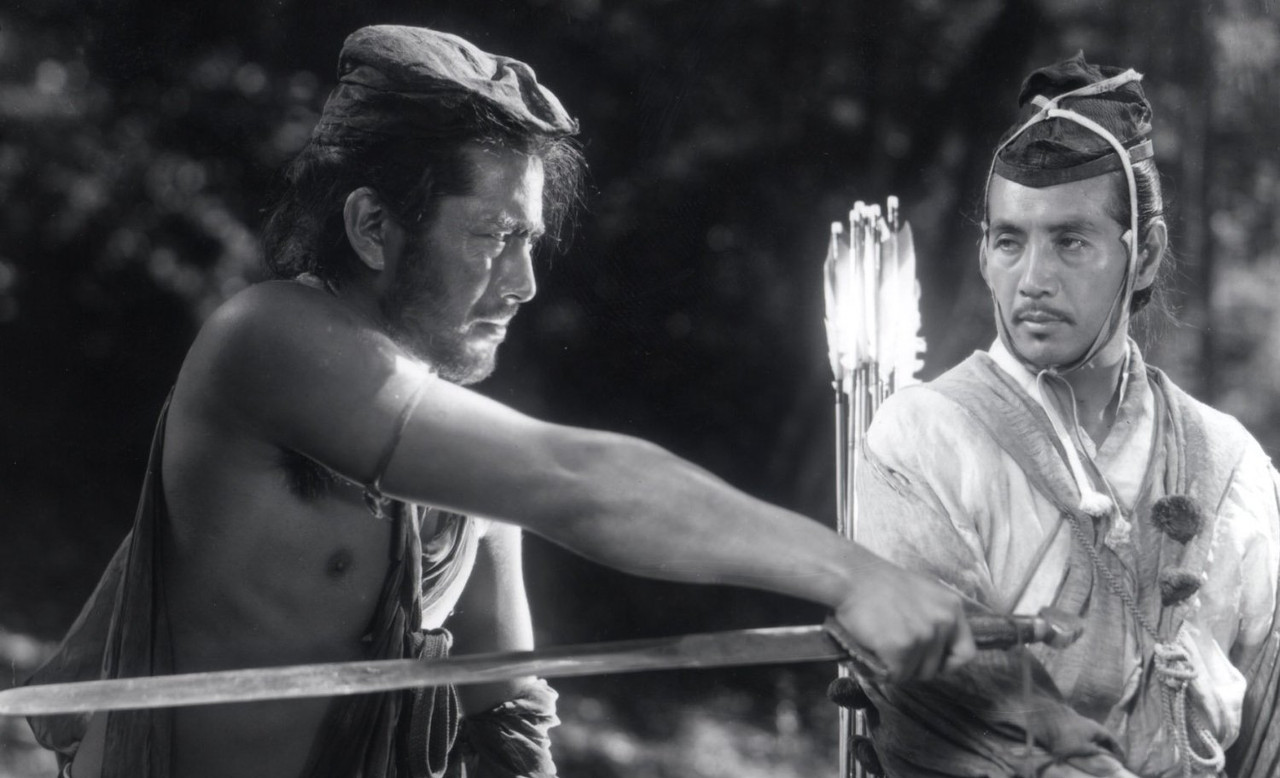
One of the most shameful oversights in my film viewing came to an end this year as I finally saw my first Akira Kurosawa films.  Rashomon is a movie that felt strangely familiar on a first viewing, because I had heard so much about it and seen so many films that spin off its central idea of using varying testimony to explore the 'truth' of a single killing.  That's not to say that Rashomon didn't grip me, from Kurosawa's use of light to Toshiro Mifune's fantastic performance, which manages to be both clownish and menacing at times, it impressed me throughout and made me kick myself for never having seen it before.


The Place Promised In Our Early Days
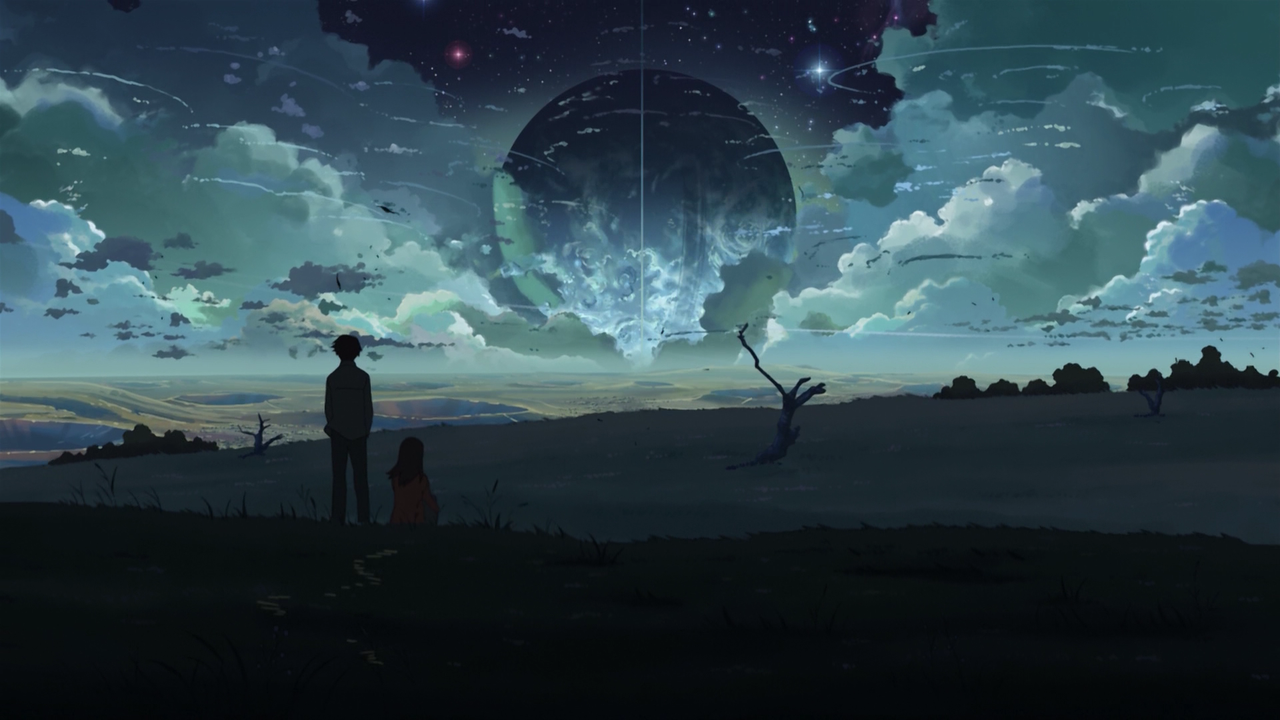
Makoto Shinkai is becoming one of my favourite directors, and is certainly one of the best I've discovered working in anime.  This film takes a grand sci-fi concept and marries it to a teenage love triangle that is depicted - despite eventually also taking place in a dreamscape - in a way that rings almost painfully true and painterly imagery that looks like what would happen if Terence Malick became an animator.  It's quite extraordinary to look at, and tugged my heartstrings in an unforced way.

Sky Captain and the World of Tomorrow
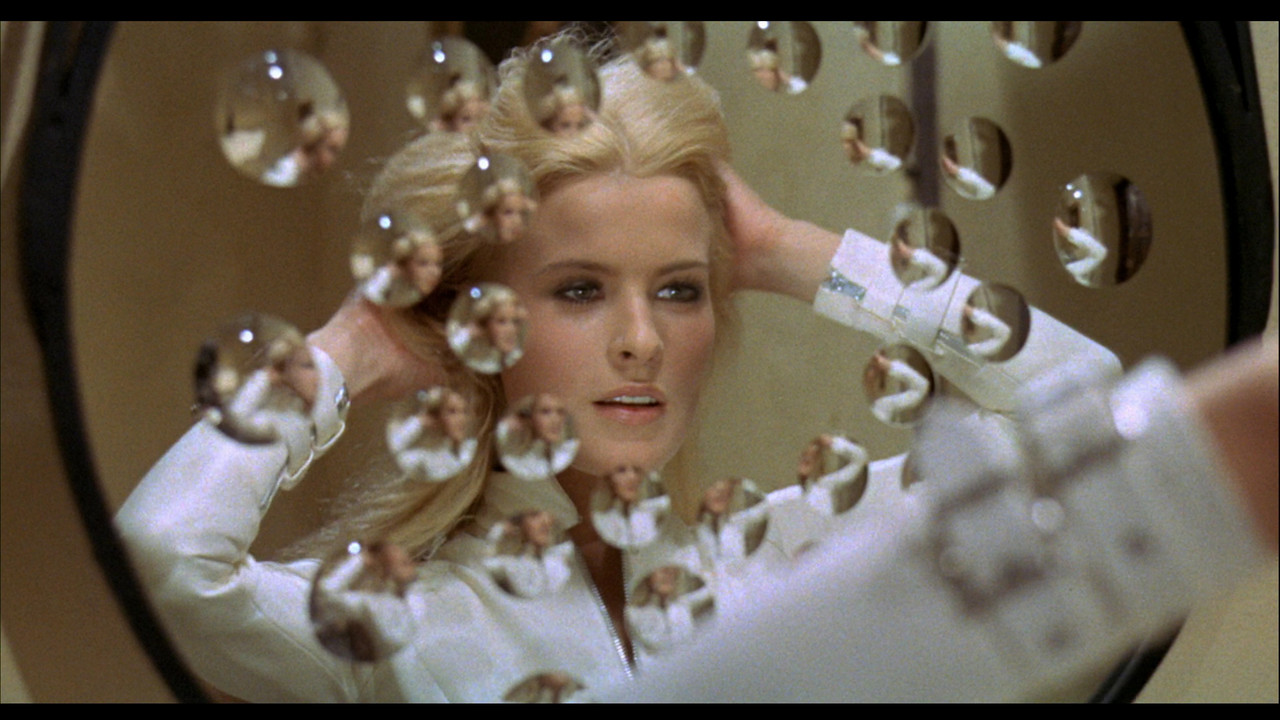
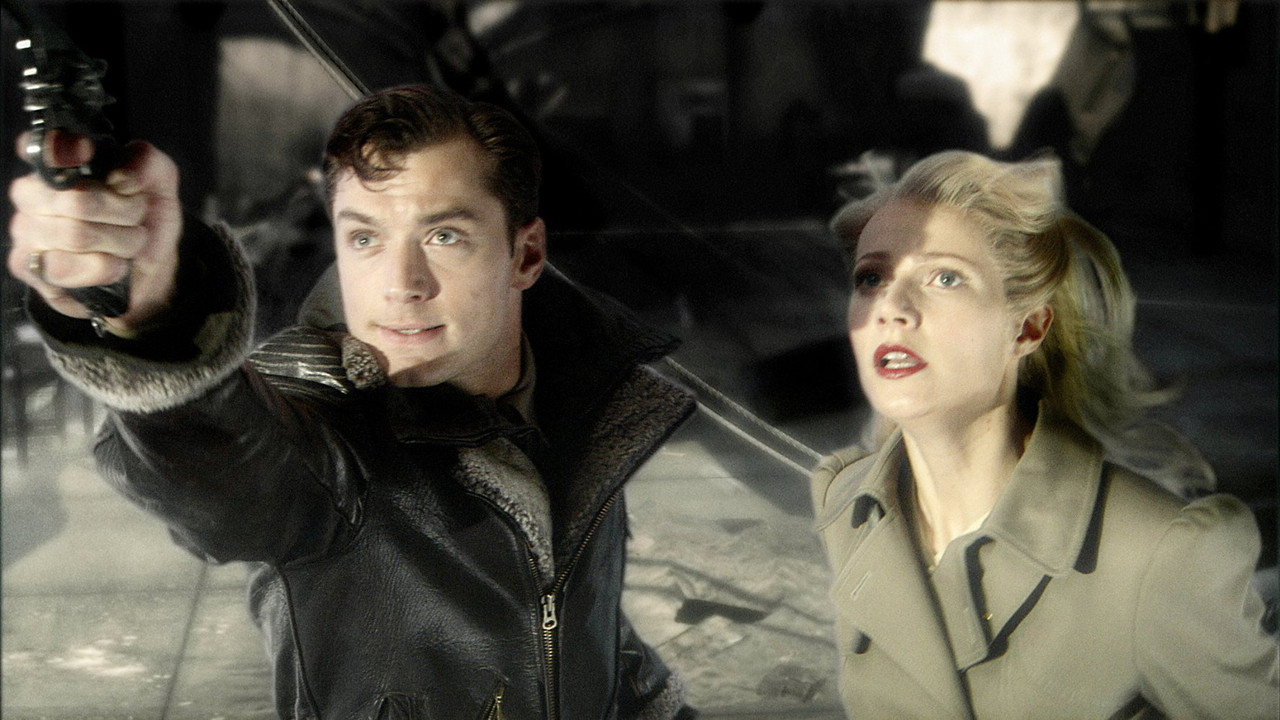
Yes, really.  I passed this one by on its release as it looked like just one more would be blockbuster flop, what I found instead was a witty and relentlessly fun adventure movie that remixed all its influences (expressionism, noir, adventure serials, 50's sci-fi and more) into a distinctive and well realised universe of its own.  The performances are as much fun as the visuals and while it's not always totally coherent the freewheeling fun of the story kept me engaged.  The film Sky Captain reminded me of most was The Rocketeer, and it deserves a critical rehabilitation just as much.

A Swedish Love Story
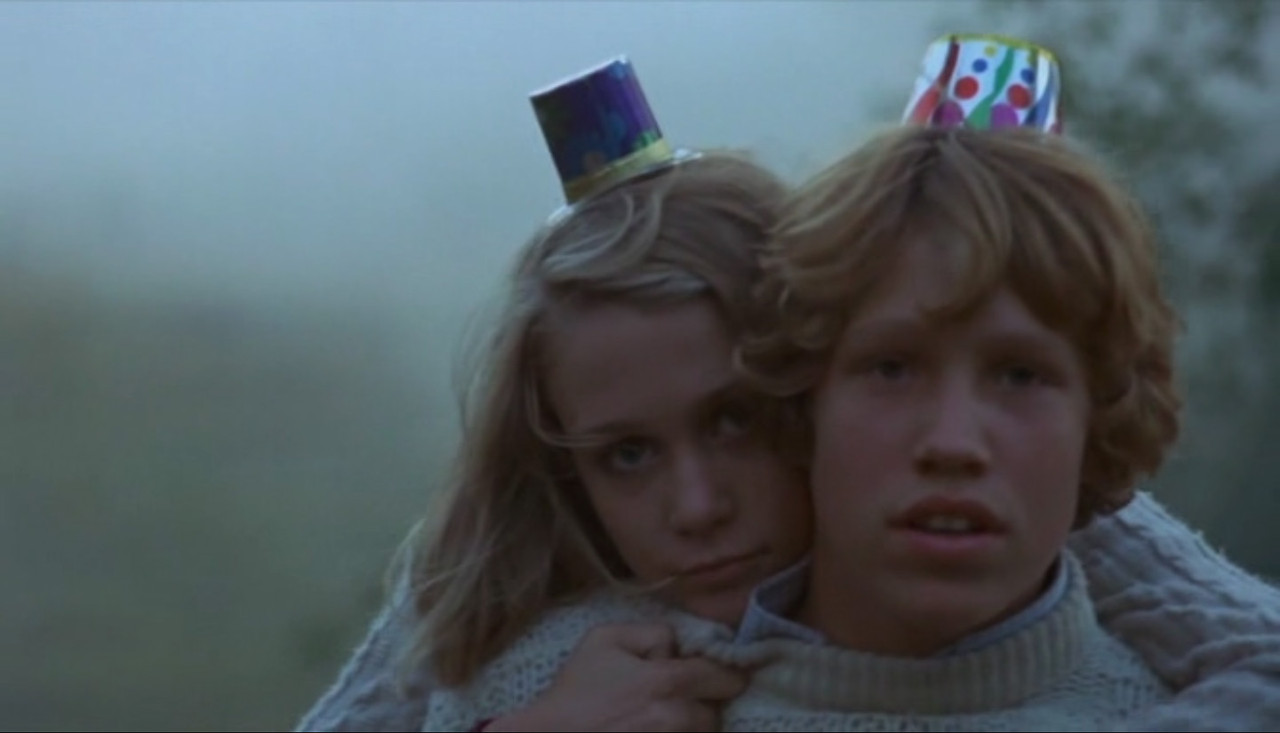
A simple title for a simple film, and I mean that in the best way.  I've always been interested in coming of age stories, and am especially fond of those from Europe and Scandinavia, but I only heard of this film (on Twitter) earlier this year.  On tracking it down I found a heartfelt tale of first love, with the rough edges that Hollywood might smooth left intact.  The two lead performances are brilliantly naturalistic, which is also the approach taken by director Roy Andersson.  The film digresses in its last twenty minutes, but this is the only bad note it hits.

Love In The Afternoon ['72]
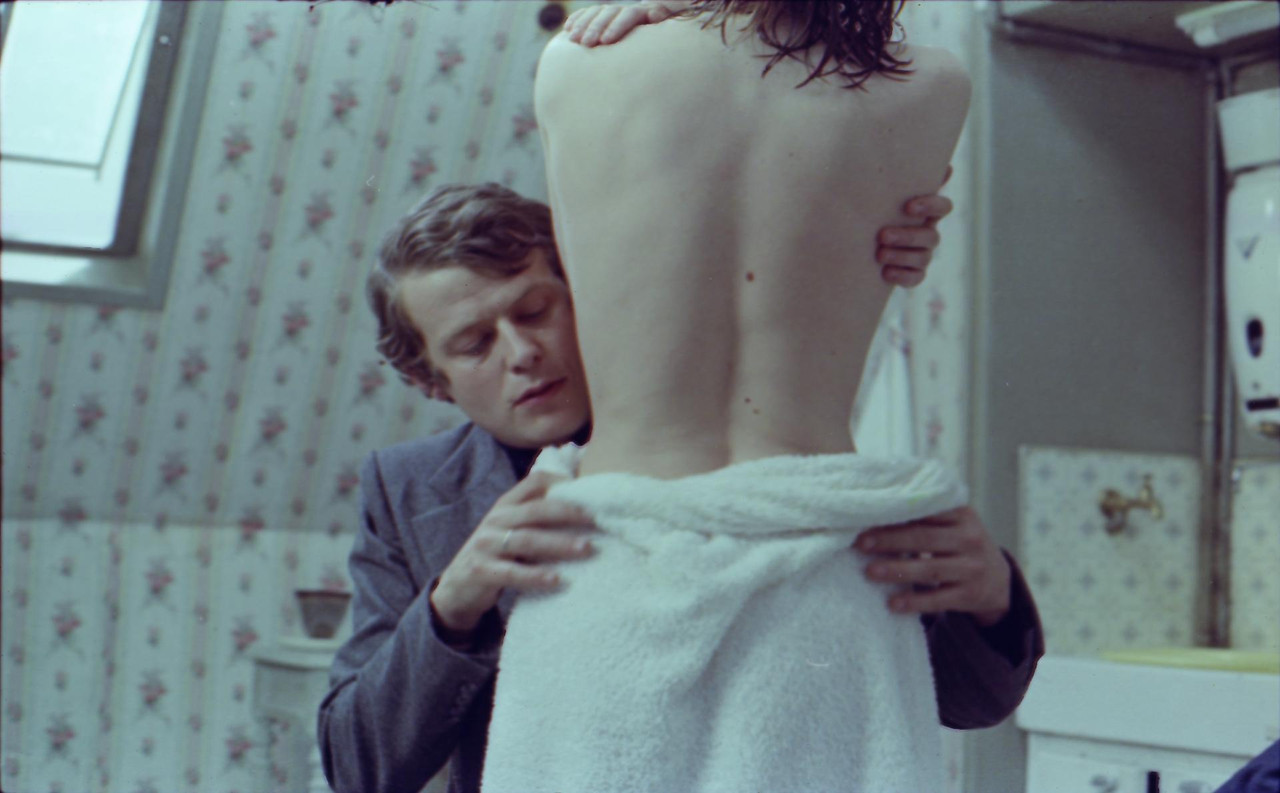
Eric Rohmer was another director that I discovered this year, having only previously seen one of his films (The Green Ray).  I thoroughly enjoyed Pauline A La Plage, but this film, about a man torn between his wife, who he still loves, and a woman he is tempted to have an affair with, was the one that really cemented my interest in Rohmer's work.  As is the case with all of the films I've seen from him, Rohmer manages to take difficult, dramatic, topics that could sit heavily and, while exploring them with great detail and import, treat them lightly.  It's a wonderful tonal balancing act that the director and his actors carry off and I can't wait to see more of it.

Solaris ['72]
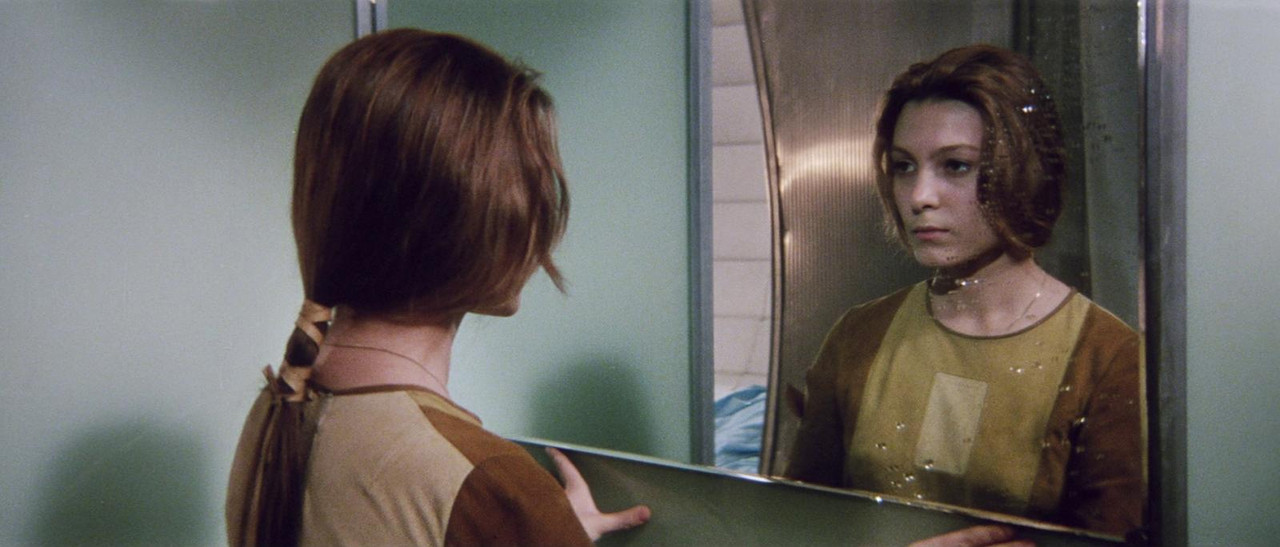
From what I had heard about Andrei Tarkovsky and his films I was concerned that I would find Solaris dull and remote, it was anything but.  This slow moving sci-fi eases us into its more fantastical elements and this, along with the exceptional acting, allows it to credibly introduce unreal elements and have us question whether they are actually happening or a result of the main character losing his mind.  At the centre of the film is an achingly romantic story of a man desperate to have his late wife back, and Natalya Bondarchuck's performance as that wife - or an image of her - is one of the best I've seen for years.  I can't wait to see this multi-layered and immersive film again.

Tuesday, After Christmas
Another film about a man torn between two women, this one much more caustic than Love in the Afternoon.  This Romanian film finds a husband and father leaving his family for a younger woman.  Observed in a handful of long scenes, the film allows you to become invested in both the marriage and the new relationship by giving all of the characters rounded personalities and painting no one as either good or bad.  It's down to earth and true to life, often in the most uncomfortable way, especially in the climactic break up scene which, like the whole film, is perfectly played.

Seven Samurai
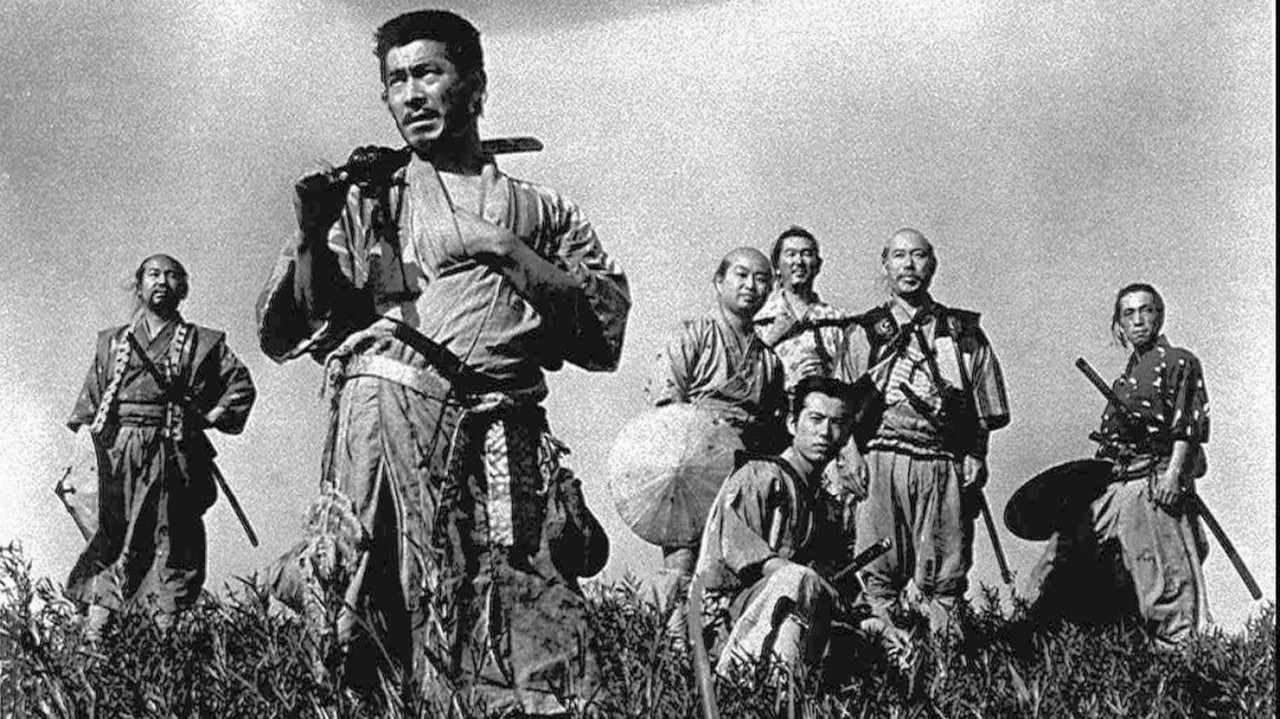
Yes, I know I should have got round to Kurosawa and to this film much earlier, does it help redeem me that the first time I saw it was at a cinema, projected from a beautiful 35mm print?  Anyway, primed by Rashomon earlier in the year (and because I wanted to retain at least a little critical credibility), I went in wanting to love Seven Samurai.  I was not disappointed.  A rather slight love story aside this old story of a band of warriors fighting against impossible odds was invigorated by its telling, which is energetic despite a running time north of three hours.  The battle scenes are incredible, but the film doesn't mark time in getting to them, it is riveting and beautiful throughout.

Spider Baby
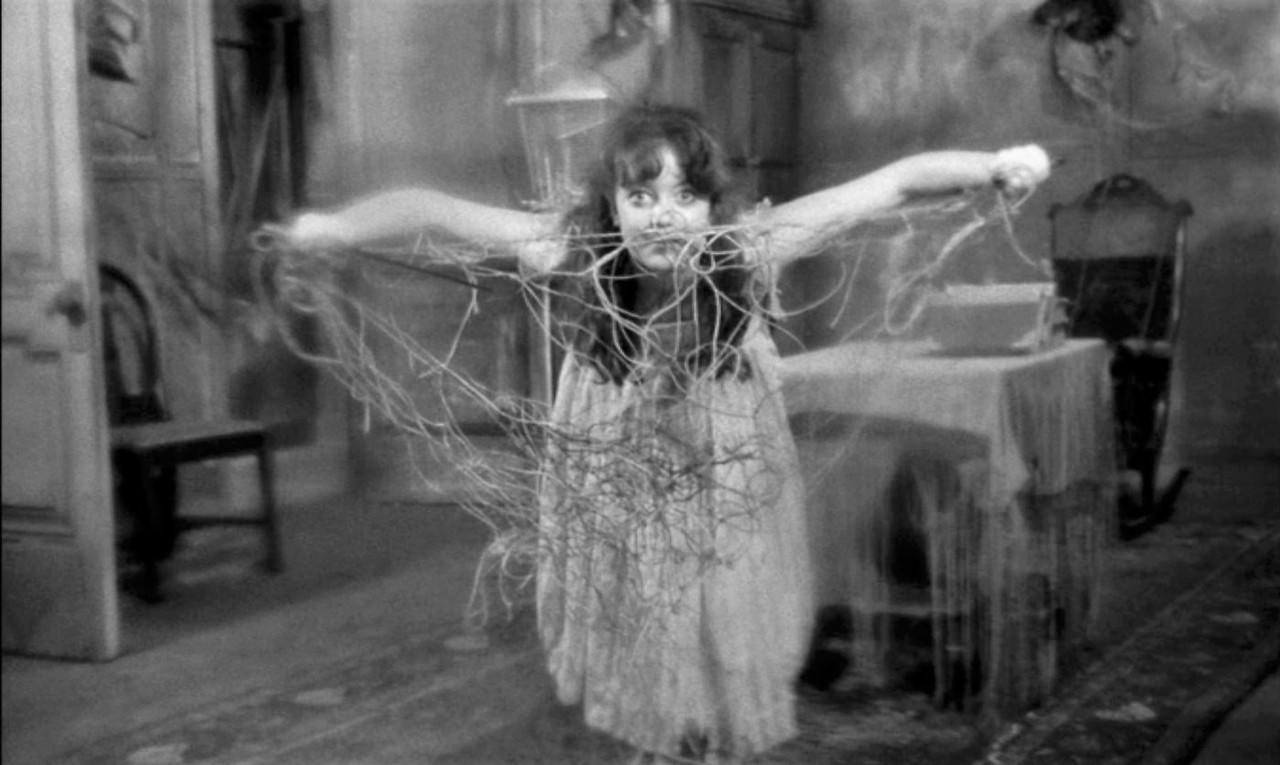
Spider Baby is one of those movies that I had always heard about, but it remained obscure and all but impossible to get your hands on, until Arrow Video released it on Blu Ray this year.  It is a defiantly odd film, its closest relation as a dark, weird, horror movie inflected with comedy is perhaps Tod Browning's Freaks, and Spider Baby is not embarrassed by the comparison.  It's a surprise to find that director Jack Hill - best known for Blaxploitation fare like Coffy and Foxy Brown - is also behind this oddity, but while it's atypical of his work it's full of memorable moments and scenes that still stand out for their strangeness.  I'll have much more about this film on an upcoming podcast.

L'Effrontee
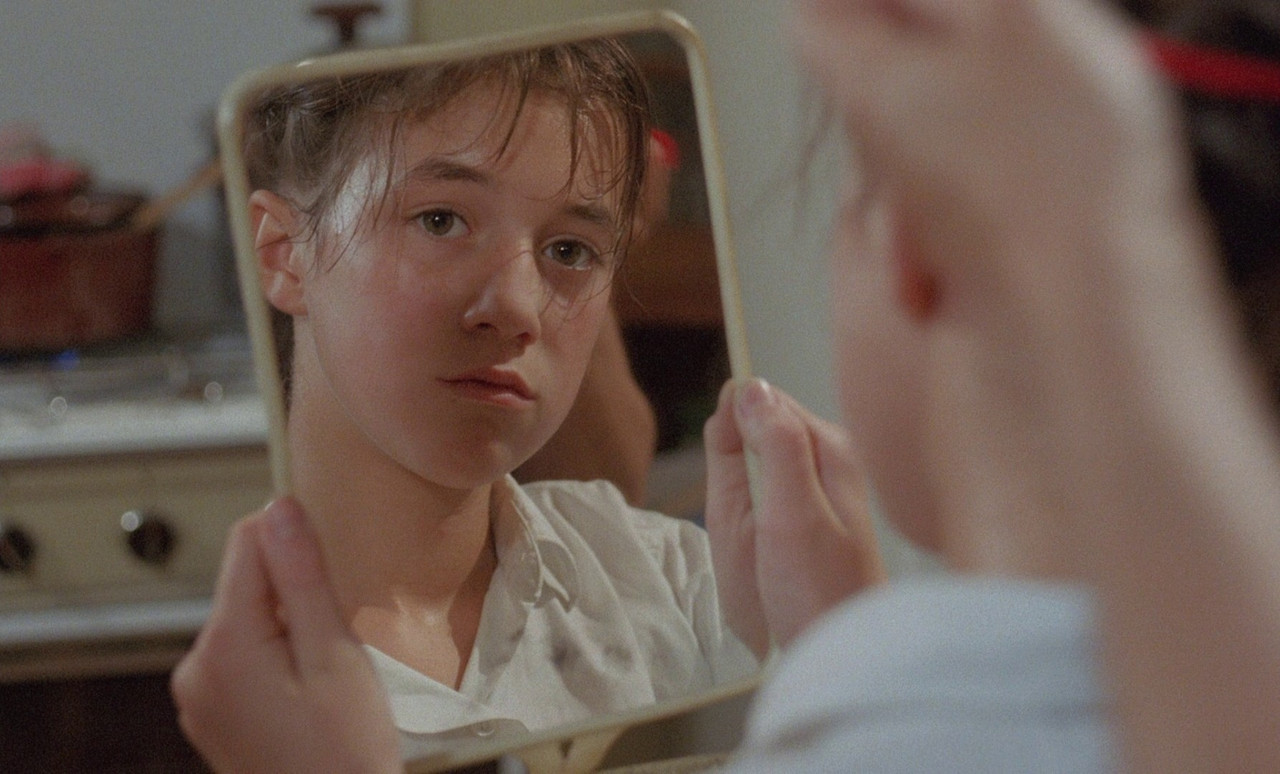
I've long been a fan of Charlotte Gainsbourg and have been wanting to see her early work for some time.  This, her second film, was the role that really brought her to notice and with good reason, she's exceptional as a young teenager who becomes obsessed with a concert pianist her own age, tracking her down after they meet by accident and convincing herself that they are friends.  Because of her character's youth Gainsbourg is more pitiable than frightening here, and her inexperience is turned on her in a sub-plot involving what begins as an innocent flirtation with an older man.  This is another fine example of how coming of age films from outside the US often deal better with the less pleasant aspects of growing up.

Heaven's Gate
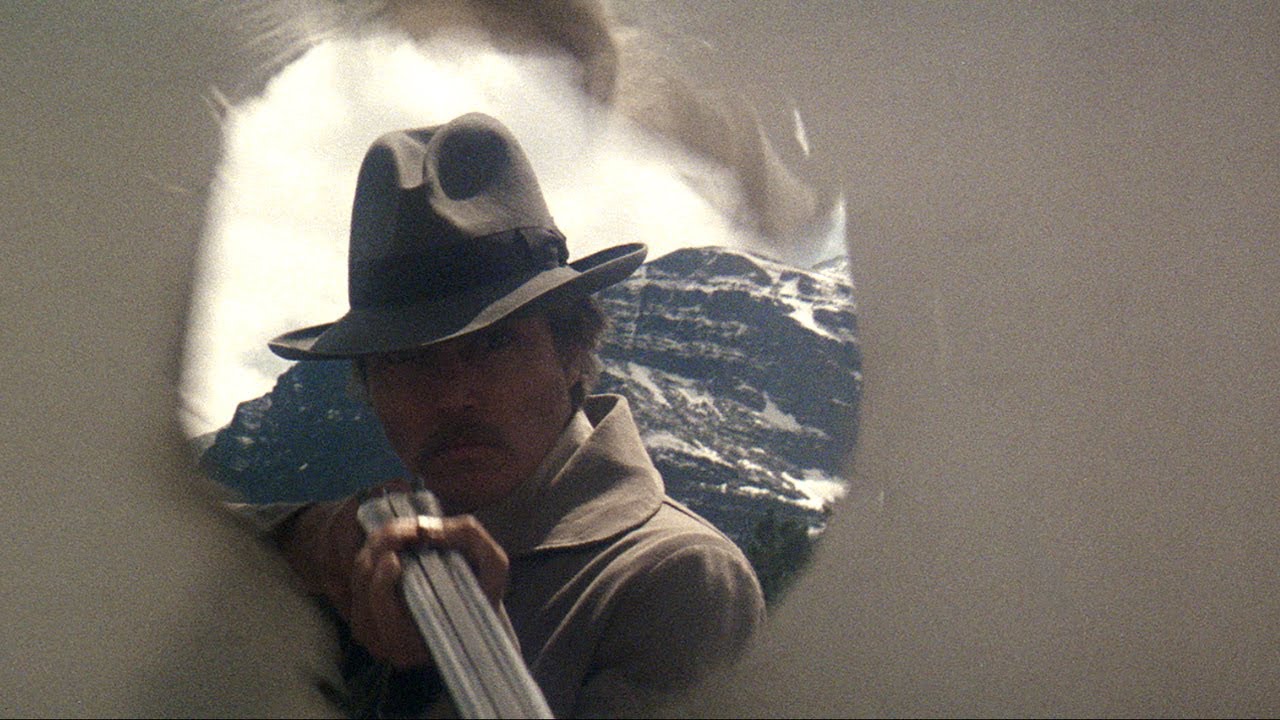
Much maligned at the time of its release and subsequently hard to get hold of in the UK, Heaven's Gate has taken on almost mythical status as a great directorial folly.  This could hardly be further from the truth.  Though it could, for me, happily shed its prologue and epilogue, the 190 minutes that fall between them are essentially a masterpiece, telling a large sale story of the (real life) Johnson County War, but finding personal resonances in the stories of new immigrants to the US and a love triangle between Kriss Kristofferson, Christopher Walken and Isabelle Huppert as men on opposite sides of the conflict and the woman they both love.  It may be long, but both the exceptional performances (Walken has seldom been better) and the stunning imagery will reward your patience.

Oct 15, 2013

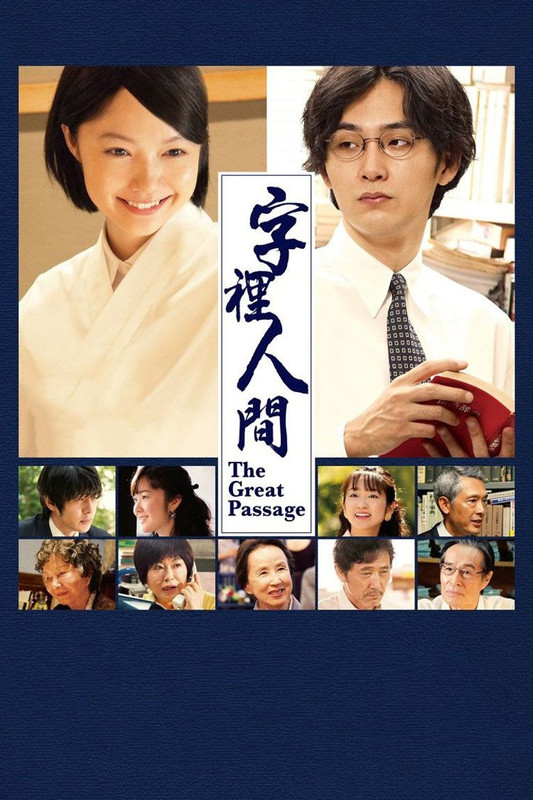
24FPS @ LFF 2013 The Great Passage

Dir: Yuya Ishii
I'm a writer (in case you hadn't noticed) and while I got into writing because I love films I have stuck with it because I love writing and because I love words.  The right word is something any writer knows is elusive – sometimes it's impossible to find – The Great Passage, among it's many other virtues, is a film for the writer, the word lover, in us all.

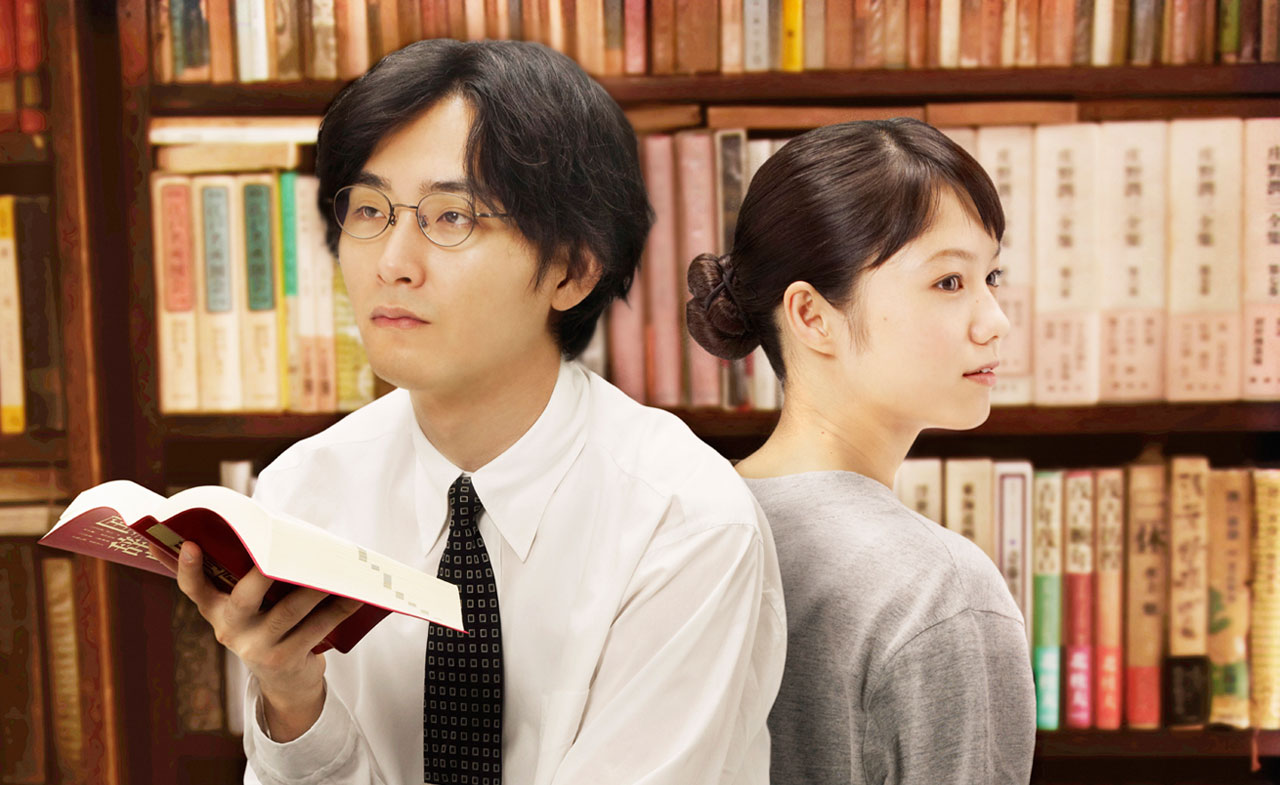
The Great Passage is the title of a new 240,000 word dictionary being put together by the Genbu company.  The dictionary editorial department is understaffed and underbudgeted, but they recruit one new member of staff to help with this project; shy, geeky, Mitsuya (Ryuhei Matsuda).  Over 15 years the film follows Mitsuya as both the dictionary and his life move on.

The premise of The Great Passage immediately recalls Howard Hawks' wonderful screwball comedy Ball of Fire, in which linguistics professor Gary Cooper is beguiled by Barbara Stanwyck as he helps to compile an encyclopedia.  The first half of Yuya Ishii's film – his first with a big budget and major stars – wears this influence very much on its sleeve, with screwball antics very much in evidence both in the dictionary editing department and at the boarding house where Mitsuya lives and falls for his landlady's pretty granddaughter   (Aoi Miyazaki).  However there is always an undercurrent of drama, provided by the very real sense that the dictionary's editor  (Joe Odagiri) may not live to see it completed.  This drama comes to the fore in the film's second half which, while still often funny, delivers an undeniable emotional punch.

I'm not sure how Yuya Ishii's fanbase will take to this film.  I've only previously seen his candy coloured, kooky, Sawako Decides, which I liked for the most part, but almost felt assaulted by, so desperate was it to charm me.  The Great Passage is not a total departure but rather feels like a refinement of Ishii's style.  It remains bright, broad and cute but the biggest excesses are reined in, making it easier to relate to the characters and their relationships, as well as to the comedic and dramatic beats.

The first half of the film hits a variety of comic registers, from the way that the older members of the dictionary staff observe people in order to collect new words and phrases on examplar cards to the genuine charm of the romantic comedy dynamic between Matsuda and Miyazaki.  This is how you do romantic comedy; the characters are both charmingly awkward on their own and right from the off their dynamic works well.  Their first meeting sets the tone, when Mitsuya mistakes Kaguya asking the cat's name and instead gives his own.  We never see much intimacy between the two (we don't even see them kiss) but we do believe and root for the couple.  

Some of the film's funniest scenes revolve around a letter that Mitsuya has written to Kaguya, unfortunately he's used brush calligraphy and though it's beautiful almost no one can read the result.  Ishii mines this for several very funny moments, both in the office and at the boarding house, hitting wonderfully warm comic tone that echoes through the film, even into the somewhat more serious second half.

The letter is also a good metaphor for what the film as a whole is about just under the surface; the joy of words and how they can draw people together (this isn't a film that has   much interest in pulling people apart).  To say that the way this theme is woven into the film is subtle wouldn't be true, but it's certainly effective.

The actors all pitch their performances beautifully; the stammering Ryuhei Matsuda finds the charm underneath Mitsuya's nerves while Aoi Miyazaki has a serene beauty that is also reflected in Kaguya's nature and in addition radiates a believable intelligence that is reflected in her character's skills as a chef.  Joe Odagiri gives an appropriately regal bearing to his veteran editor, but there's a glint in his eye that works for his humour, especially when he is collecting new words.  All round, the actors reflect the tone of the film perfectly.

Overall, The Great Passage is a great big warm hug of a film.  It has an easy charm thanks to an appealing cast who all do strong work with a script that is often very funny.  The drama works too, without feeling overly manipulative.  I hope we'll see more of this kind of work from Yuya Ishii.

Oct 2, 2013

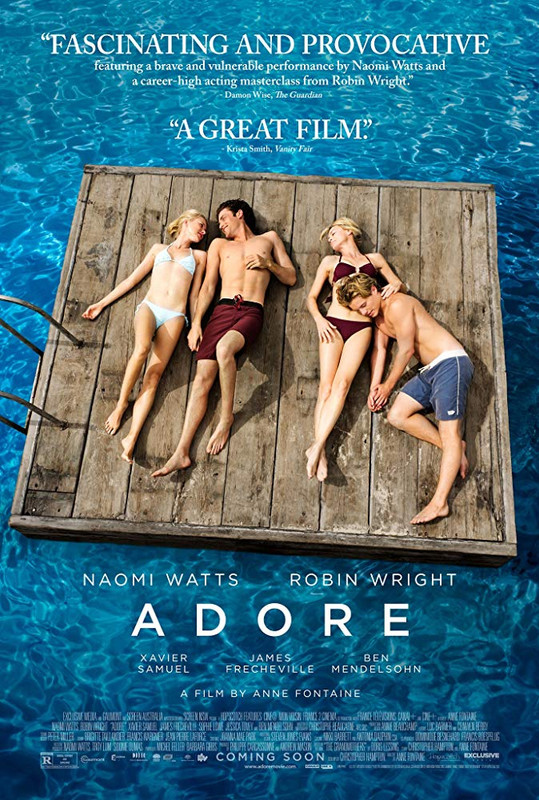
24FPS @ LFF 2013 Adore

Dir: Anne Fontaine
Adore is easily the funniest film I've seen so far from this year's London Film Festival crop. What a pity it's a drama.

Ros (Robin Wright) and Lil (Naomi Watts) have been friends all their lives. In their forties, they are living idyllic seeming lives on the coast of Australia, Ros with her husband (Ben Mendelsohn) and late teens son Tom (James Frecheville) and the widowed Lil with her own 18 or 19-year-old son Ian (Xavier Samuel). The families have always been close, but one night when Tom has gone to bed drunk and with her husband away in Sydney, Ian kisses Ros, who reciprocates, kicking off an affair between the two. Tom catches them, but rather than say anything responds by beginning his own affair with Lil. The film follows the ups and downs of these two relationships and that between Tom and Ian over about five years.

I think the biggest problem with Adore is it's easy to see how it could be a promising project. The story (based on a Doris Lessing novella, The Grandmothers) has an inherent drama about it, given that it's rife with betrayal and the potential for broken friendships and relationships. On the surface, it is also very well cast. Naomi Watts is someone I've been a fan of. Even when she's sometimes been stuck with a generic screenplay (Fair Game) or the film she's in hasn't entirely won me over (The Impossible), she tends to impress, sometimes elevating films through her work. Robin Wright works less often than Watts, but I've long thought her an underappreciated talent, and I've enjoyed seeing her make more frequent screen appearances lately. To be fair to Watts and Wright, they do what they can here and give pretty remarkable performances given what they have to work with. This isn't to say that you'll buy anything that happens in Adore, just that the fact you won't is the fault of Christopher Hampton and Anne Fontaine's screenplay rather than the acting.

Adore is dull in a rather particular way; everything is purely surface level. This is as true of the imagery as it is of the writing.  Fontaine is blessed with a beautiful landscape to shoot and gorgeous actors to film against it, resulting in a film that superficially looks good. However, there is little behind any of it, the visuals do little that isn't backed up by bald dialogue, and the few things that are left purely to the visuals are equally telegraphed.

The premise promises drama, but the film seems almost allergic to it. The whole thing is excruciatingly polite. Any moment that suggests any kind of confrontation is swiftly cut away from and left to play out off screen. Among the dramatic events that we never see are the first couplings between Ros and Ian and Lil and Tom, the arguments (and reasons) that Ros and her husband divorce and the argument between Tom and Ian when they first find out they are each involved with the other's mother. Each of these things seems rather key to the narrative and the fact we see none of them is a problem because there is nothing in their place aside from risible dialogue. Dramatic restraint is fine if it means something, but there's no tension and no great insight into the characters through that restraint, so it just becomes tedious and silly.

The lack of passion and the lack of drama completely undermines the film. First, because there is no sense of the visceral chemistry that surely should power these twin affairs, but more damagingly because it gives us the sense that Adore takes place in some sort of alternate reality. This is a reality where two lifelong friends, on discovering that each has betrayed the other - in a frankly icky way - clear things up with a chat that consists of this exchange: Ros: “What have we done?” Lil: “We've crossed a line.” and then decide that, hey, let's just keep crossing it. In any real world this story wouldn't feature that conversation, it would end up as a shouting match on Jeremy Kyle. It was at this point that I and the majority of the audience stopped taking Adore at all seriously.

There are two ways Adore could work; by being serious or by being silly. Anne Fontaine desperately wants to be taken seriously, but she keeps fumbling the ball with such comical scenes as one in which Watts' boss comes to ask her out, but ends up thinking she and Wright are lovers or the gut-busting penultimate scene in which Lil tells Ros - whose actions help start everything - “You're the only one who hasn't behaved badly.” If Adore wants to be taken seriously, fine, but it needs to delve much deeper into its characters than a few brief scenes of the absurdly beautiful Ros and Lil worrying about their age. If Adore wants to be a farce, fine, but it needs then to play as though the laughs are intentional. The problem is that it never decides, and ends up being Bergman's Blame It On Rio. Yes, it's as bad as that sounds.

Jun 25, 2013

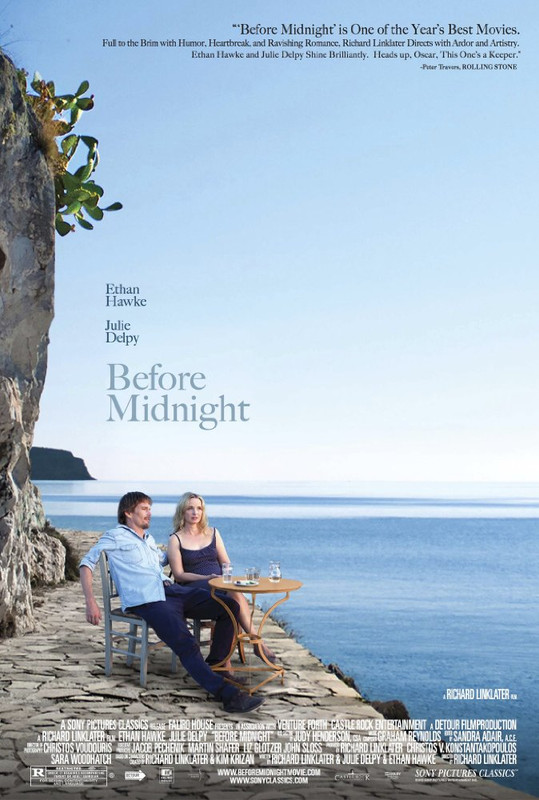
Before Midnight [15]

Dir: Richard Linklater
It’s hard to explain what the Before films (1995′s Before Sunrise and 2004′s Before Sunset precede this entry) mean to me. I saw the first film when I was 16, and I fell in love with it, with the performances, the writing, with Julie Delpy’s Celine. When the first word came out about a sequel I was dead set against it; how could it compare, and how could it deliver after the first film left things on such a beautifully ambiguous note? Before Sunset turned out not just to be the equal of its predecessor, it bettered the first film, and again managed to find an indelible ending, but this time I couldn’t wait to see Jesse and Celine again, and I wasn’t surprised when word leaked that Before Midnight was in progress.

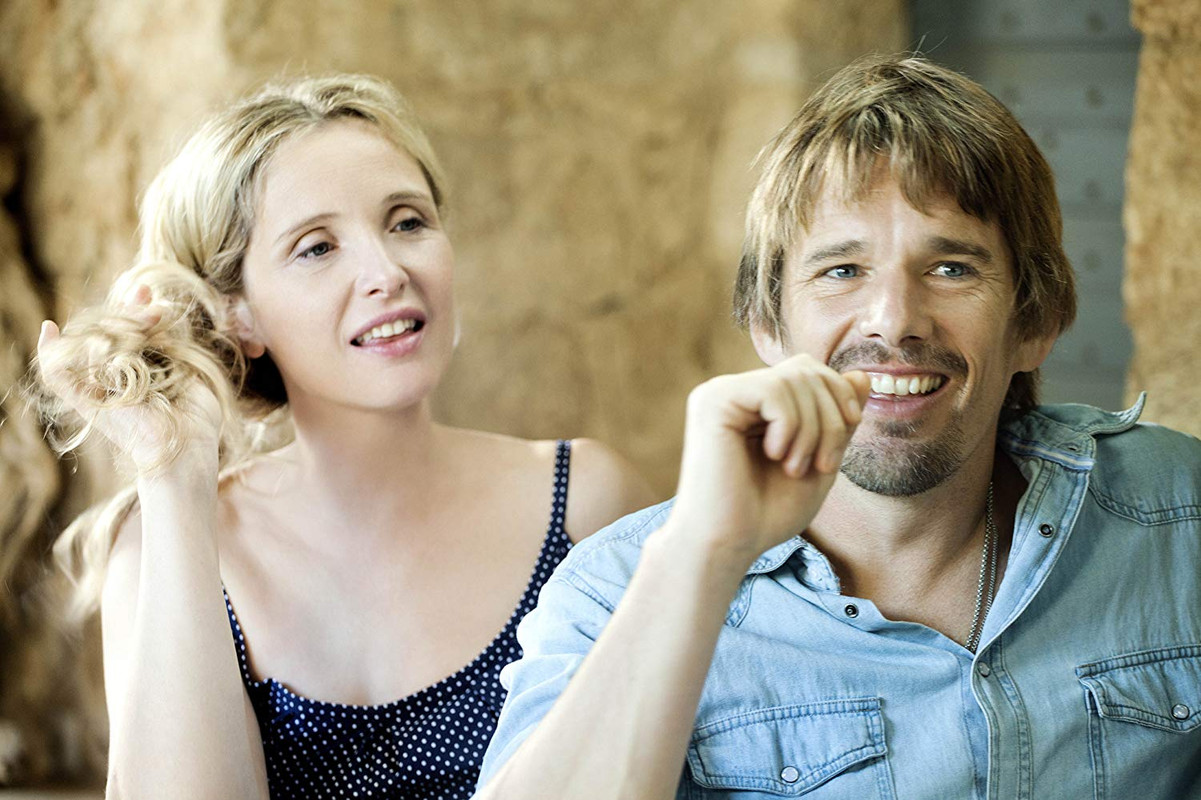
The film picks up with Jesse (Ethan Hawke) and Celine (Julie Delpy) 9 years after Jesse missed the plane back from Paris and 18 years after that long night in Vienna. They’ve been together since the credits rolled on Sunset, and now have adorable 7 year old twin girls. As the film opens Jesse has just put his 14 year old son Henry on a plane back to his mother in Chicago from Greece, where he and Celine are on holiday while he is on a writer’s retreat, trying to work on his new book. The couple are now 41 and their relationship is tested over a single night as they talk about, among other things, their children, Jesse’s guilt at being an absent father to Henry and a job that Celine has been offered.

The first notable thing about Before Midnight, among many, is what a joy it is to see these people again. I say people rather than characters advisedly, because I can’t imagine that I’m alone in saying that Jesse and Celine feel like real people to me. However outlandish the details of their meeting and their reunion feel, they themselves (or rather Hawke and Delpy’s astonishing performances) are completely credible. If the films earlier films took somewhat fairytale situations (the idea that you might randomly meet a woman as smart and interesting as Celine on a train, that she’d look like Julie Delpy, and that she’d spend an evening walking round a city she doesn’t know with you an hour after you met seems, at best, fanciful) and put real characters and real conversations in the middle of them, then Midnight’s smartest move is to dump the fairytale. This is a film about love after ‘Happily Ever After’, and about the myth of that phrase. It’s about struggle, but also about how that struggle can be as romantic as the fairytale ever was.

That said, a lot of Before Midnight is hard to watch. We’ve become so invested in these people that to see them argue – not banter, not bicker, not disagree, but really argue to the point that you think there may be no going back – is heart in mouth stuff; as tense as any thriller. This is what is so meaningful about the history behind this film, it means that everything matters, from the biggest line to the smallest gesture.

Each of the films in the series is subtly structurally different. Sunrise is a series of snatched moments, Sunset is one long meandering conversation and Midnight falls between these stalls, unfolding almost as a series of one act plays. Most of those acts are brilliant, but one is problematic. About twenty minutes into the film, Jesse and Celine arrive for their last meal at the writer’s retreat before going home, and here, really for the first time, we see them separate from each other, and also in a larger context (a dinner with friends). It’s not that these scenes are bad in and of themselves, indeed there is an appealing Rohmeresque quality to the dinner scene in particular, and I can see that Linklater and his co-writing stars are trying to place Jesse and Celine in context alongside a young couple about the age they were in Sunrise (Yiannis Papadopolous and Ariane Labed) and an older couple who seem to have been married a long time (Panos Koronis and Greek filmmaker Athina Rachel Tsanagrai). The problem is that this is a long section of the film, and it largely turns the focus away from Jesse and Celine, which feels wrong for the series. This would be a lesser issue if the ideas expressed at the dinner came back, but by this time everything that will come into play to come between Jesse and Celine has been set up already, and the dinner feels rather redundant.

Aside from this section though, Before Midnight is stunningly, spectacularly, brilliant. In fact, that scene notwithstanding, it may well be the best of the series. It begins with a great and wrenching scene of Jesse saying goodbye to his son, and you can see how much that absence is felt in Hawke’s face throughout the film, especially when, on two occasions, Celine takes a call from Henry and fails to pass the phone to Jesse. The car journey from the airport to the retreat is another small masterpiece, bringing us gracefully up to date with where Jesse and Celine’s lives have gone in the past nine years, recalling the car journey from Sunset, but also sowing the seeds of the arguments to come and showing us that this is not the ending we may have imagined for these people.

The film really hits its stride, however, in its second half, when everyone else; the friends, the kids, is out of the way and once again we’re alone with Jesse and Celine. Linklater, Hawke and Delpy bait the hook perfectly, recapturing the past with the two walking and talking their way from the retreat to a hotel. Once again we see the chemistry and the connection, and we sense how it has only deepened in the time since we’ve last seen these people, but then comes the final act, and Before Midnight threatens to rip our hearts from our chests.

To go into specifics would be unfair, but the last forty minutes of Before Midnight are the best forty minutes of cinema I’ve seen for a long time. The scenes are confined almost entirely to the hotel room Jesse and Celine are sharing, and the mood goes from sexual to a potentially final argument in short and utterly believable order. The intimacy that is felt in this scene is incredible, first in physical terms – Delpy spends about five minutes topless, even as the argument kicks off – but more so in terms of the level of insight into what is happening between these two people. I suspect everyone has been here, and it’s a horrible place to find yourself, and it’s nearly as difficult to sit through this scene. I was completely taken in, never thinking about the fact I was watching a film or people acting. I was on the verge for most of the last third of the film, and couldn’t hold in the tears come the final, perfect, scene. I’m not sure I believe there is such a thing as a perfect film, but there are perfect cinematic moments and each of the Before films has several. The last scene here is one. It’s incredibly moving, funny, but never forgets the gravity of what has gone before, and, once again, leaves things on an ellipsis,

The Before series works for two reasons: Ethan Hawke and Julie Delpy. As they did in Sunset (and an uncredited capacity for Sunrise) the stars pull double duty as writers, and it’s clear that this dialogue is deeply felt, however, for me it is as actors that they truly make the films soar. There isn’t a single moment in Before Midnight – whether it’s Jesse at his most pretentious when discussing his books or Celine at her silliest pulling a rat orgasm face – in which it feels like either of the stars is acting. That said, if you have to pick one, the perennially underrated Hawke is the MVP. There is so much going on for Jesse, so much raw emotion, so many things pulling him in different directions and Hawke, without overselling it, wears every one of them. There is such a rawness to his emotions and his performance, especially as he responds to Delpy in the last third, you can feel every cutting remark and every worry he has.

I’m so torn on the grade for this film. I know that most of it deserves five stars and the highest recommendation I can give, and yet those twenty minutes, that dinner scene, is problematic. If it were a brief stumble I’d be more forgiving with the grade, but no matter the grade Before Midnight is essential viewing. One caveat: you need to come to it knowing the other films, both for the context and because knowing them informs the sheer depth of character and a great deal of the film’s feeling comes from the history that we in the audience share with these people. This is adult, engaging, storytelling and I can’t wait for the next chapter.