Showing posts with label Turkey. Show all posts

Oct 9, 2021

24FPS @ LFF: Les Enfants Terribles

Dir: Ahmet Necdet Cupur

Back in 2015, Deniz Gamze Ergüven’s Mustang dramatised life inside a Turkish family where the wishes of the parents for their daughters overrode (or at least attempted to override) just about any agency the girls could have had for themselves. Ahmet Necdet Cupur’s documentary has more than a few things in common with Mustang, with its director going home to capture family life with his parents and younger siblings, chiefly twenty-something Mahmut and teenager Zeynep.

Mahmut and Zeynep are each constantly at odds with their parents for different reasons. Mahmut wants to leave his arranged marriage to 17-year-old Nezahat, not because of any fault on either of their parts, he simply doesn’t love her. Zeynep, on the other hand, just wants to further her education, to go to university in the nearest city and to live life on her terms rather than be bound by her parents’ traditions. All this makes for a volatile atmosphere in the house, something we see from the very start when an innocuous joke sends the siblings father into a violent rage. Throughout the film, Ahmet observes in close-up detail, but without seeming to impose himself on what he’s filming. Given that this is his family, that balance must have been challenging to find, but it means that the end result feels fair, if never dispassionate, in how it depicts everyone.

Later sequences demonstrate just how ingrained tradition is in Mahmut and Zeynep’s parents, especially when it comes to seeing women as inferior. In one of the film’s most quietly shocking sequences, Zeynep first debates then more stridently argues with her mother about why she so desperately wants to be educated, trying to get through to her that women have just as much value and should have as much choice of what they do, as men. Frustrated, she finally says “Studies or death, I’ll die if I don’t”, only for her mother to come back with “Death then”. It’s so haunting, so sad, summing up in two words the seeming impossibility of squaring their points of view. The image that closes this scene; Zeynep resting her chin in her hands, looking away as her mother prays, strikes me as the defining one of the film.

Mahumut’s problems have more ramifications for others, chiefly Nezahat, divorced at barely 18. We do see that Mahmut cares about her to some degree, at least expressing concern about her family “giving her to an old man” because she has lost her value. This, as it was in another film at the festival, is a running theme; women being valued as commodities, and there is much discussion of what will have to be paid for Mahmut to go through with the divorce.

As dark as the film can be, chinks of hope come through by the end. “I think a person is like a tree, says Zeynep, so intelligent and expressive throughout the film. You can only hope that she and Mahmut both get to put their roots down where they want to, and grow from there.
★★★★

Sep 26, 2019

24FPS @ LFF 2019: Days 8 and 9

I Lost My Body
Dir: Jérémy Clapin
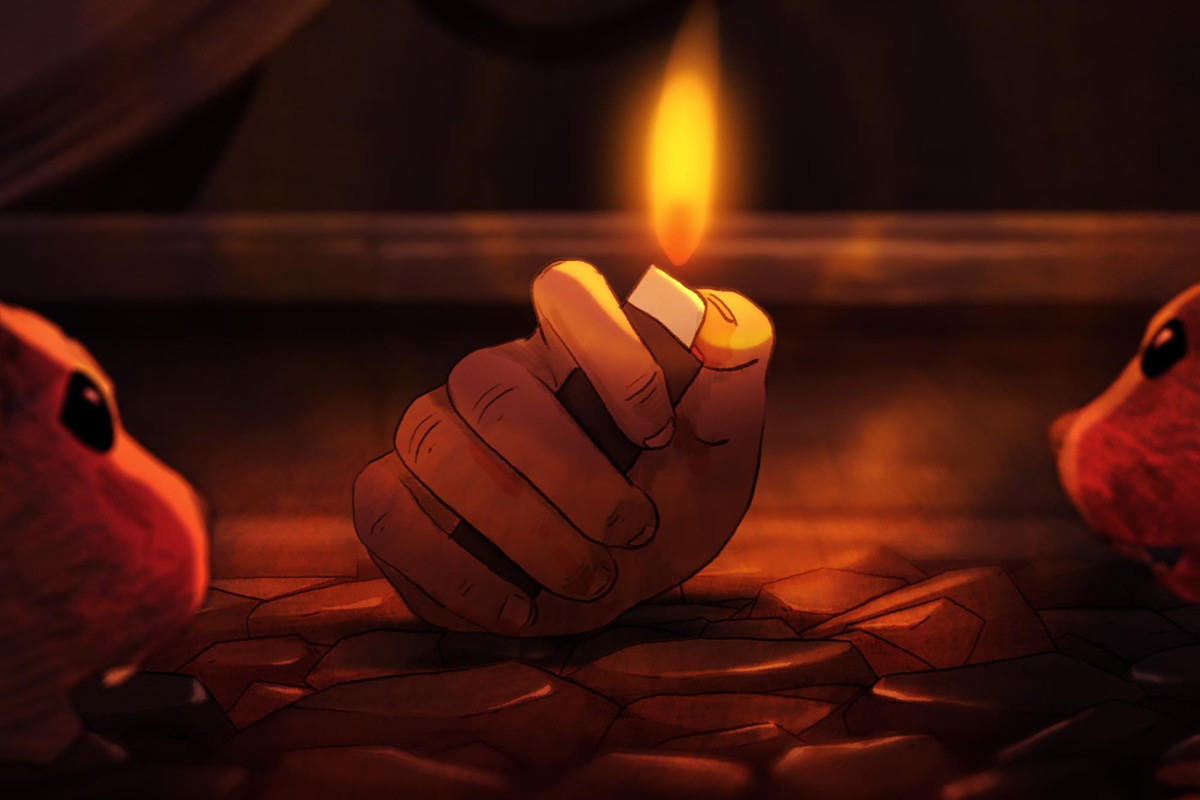
As a disembodied hand searches for its former owner, we watch in parallel as Naoufel (Hakim Faris) falls for Gabrielle (Victoire Du Bois), who he first meets as a voice on an intercom when he’s supposed to deliver a pizza to her.

Jérémy Clapin’s first feature is first and foremost a beautiful piece of hand-drawn animation. The human characters are expressive, with a slightly sketchy look but fluid and engaging animation that gives them all character. What is more remarkable though is the animation of the disembodied hand and the world it moves through. Obviously, we are seeing much of what the hand goes through from its level and the realistic drawing of the environment around it and the things it interacts with - notably rats and a pigeon - makes its journey feel all the more perilous and takes us on that journey with it. In addition to that is the brilliance of the animation of the hand itself. Without eyes, a mouth or even an interior voice, the hand feels like a full character. From it, we get a sense of struggle—gripping on to a drainpipe for dear life—and of longing, as it ventures on its long quest. In many ways, it may be the character we end up feeling most empathy for, which is an incredible achievement. 

The relationship between Naoufel and Gabrielle is sweetly drawn. It’s hard not to identify with the slightly inept ways that Naoufel tries to tell Gabrielle who he is, aborting the mission several times through nerves. It’s also interesting and refreshing to see how Gabrielle, and through her the film, views these gestures by Naoufel as compared to how a romantic comedy of ten or twenty years ago might have.

As much as I loved the animation and the expressive but not instructive score by Dan Levy of The Dø, I Lost My Body ends up feeling a bit slight. Once we see how everything connects up, the last ten minutes are a little underwhelming and don’t really deliver the emotional punch the rest of the film appears to have been trying to lead to. There are lovely moments here, and the whole section of the film focused on the hand is remarkable, but ironically it might ultimately be a little less than the sum of its parts.
★★★½

The Antenna
Dir: Orcun Behram
The idea of a government using a broadcast to control its population is barely a sci-fi concept when one considers things like North Korean state TV and even the relationship between Fox News and the Trump administration. The Antenna is set in Turkey and shows us the first night of operations of a new government broadcast from the point of view of a single apartment building where, as soon as the dish to receive the broadcast is installed, escalating chaos ensues.

For his first film, writer/director Orcun Behram draws on many influences. This wouldn’t necessarily be a problem in itself, but he fails to establish much of an identity of his own and so what we end up with is a patchwork of those influences and a film that feels hugely derivative of better things that have come before. The main thrust of the plot is essentially a combination of two David Cronenberg films; the still underrated Shivers and one of his true masterpieces, Videodrome. As the insidious influence of the dish and the broadcast become more present, black sludge begins to ooze out of walls, taps and other outlets, calling to mind the black oil that was such a feature of the conspiracy episodes of The X Files. These are just the most glaring examples, and the ones by which The Antenna suffers most by comparison.

Taken on its own merits, The Antenna does occasionally show that Behram has some visual promise. An early sequence of Mehmet (Ihsan Önal), the maintenance worker who is the first to sense that there is something wrong at the building and that the dish is the cause, walking to work makes striking use of the imposing, towering, straight lines of the buildings he walks past. There are also a couple of standout sequences in the last fifteen minutes or so; an attack, under flickering lights, on Yasemin (Gül Arici) is visceral and brutal, and the long held close up on her in the aftermath is effective. The final sequence also shows some flair, especially in the choice to show one attack from outside the building it happens in, which accentuates the shock by stripping out the sound. 

Unfortunately, the journey to and time between these sequences is filled with long and slow scenes that want to revel in the film’s imagery but do little to repay that investment of time. The pace is often painful, every camera movement is agonisingly slow and the characters seem to move as if they are walking through the black sludge we see so much of. Sometimes a slow pace can work to build tension, but it’s so obvious where the film is going and what it’s trying and failing to say that instead it simply tests the patience. At 115 minutes, The Antenna feels long, and it could lose half an hour just through recutting to quicken the pace. The overarching message is one that has been advanced with more force and clarity in many films over the years, and the screenplay fails to get under the skin of either its central idea or its characters. It is possible there are resonances an English speaking audience will miss unless they are familiar with Turkey and its politics, but even if that’s the case, the film doesn’t deliver much of substance that is accessible to a wider audience. 

There are a few flashes of promise here, but for the most part, The Antenna is a slow and boring slog that will make you wish you were watching any one of the films it so liberally cribs its ideas from.
★½