Showing posts with label Ozon. Show all posts

Oct 6, 2017

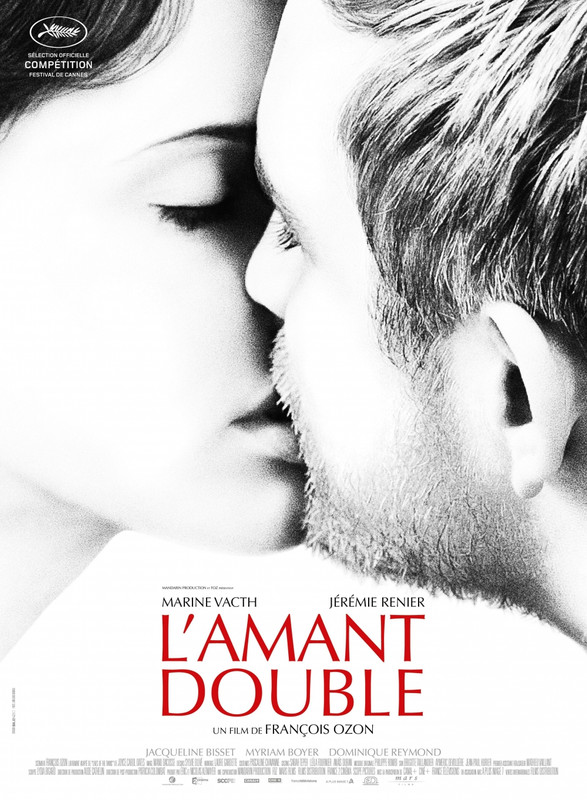
24FPS @ LFF 2017: L'Amant Double

Dir: Francois Ozon
Another LFF, another new Francois Ozon film, regular as clockwork. This is an improvement on his last, the deeply disappointing Frantz, but I am beginning to think that Ozon, like a lot of auteurs who work at a rate of knots, would benefit from taking a break.

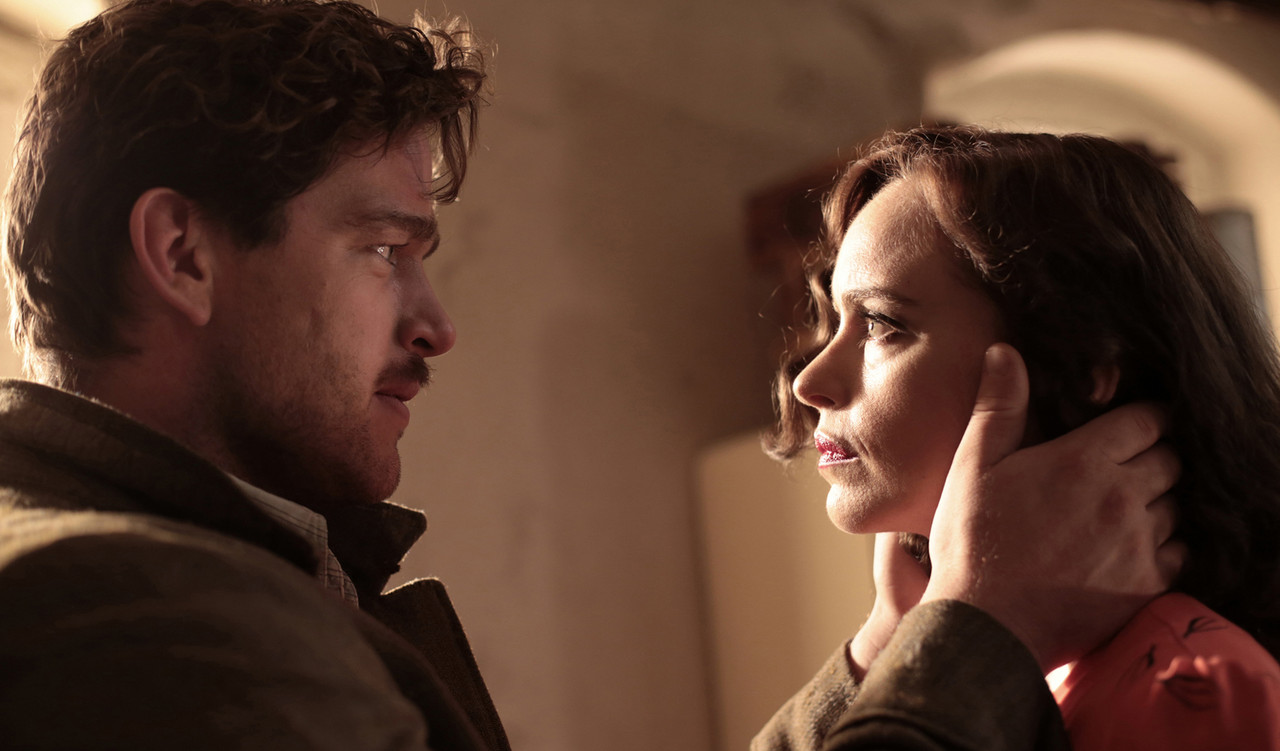
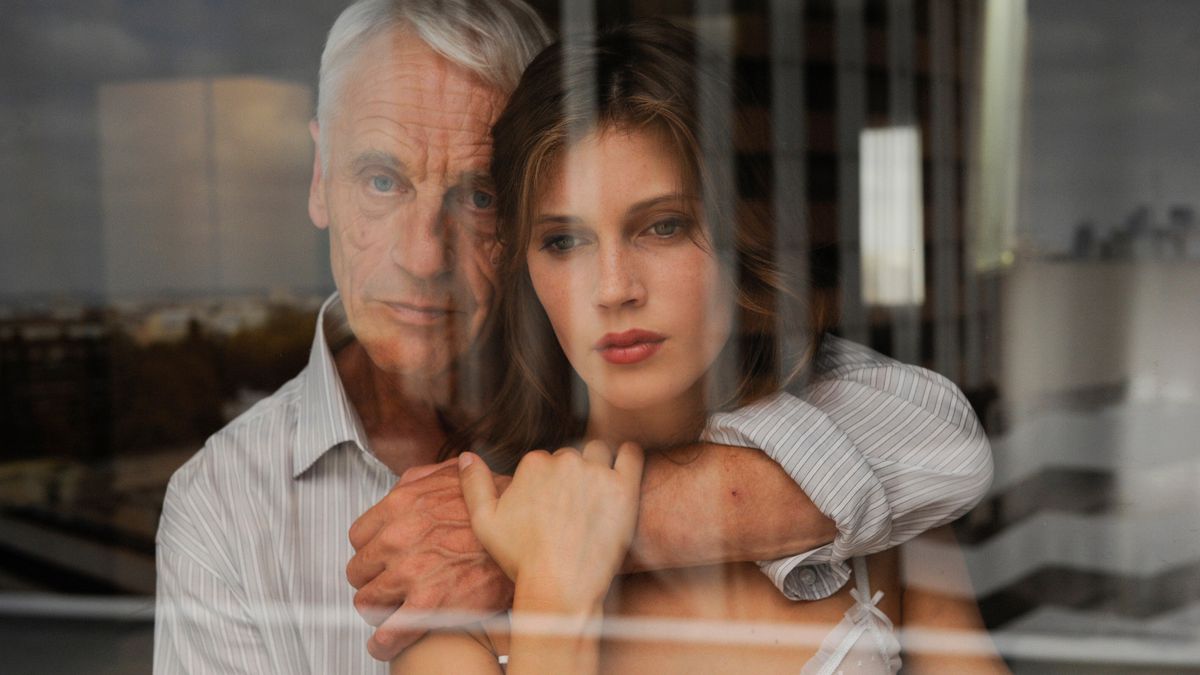
Adapted, apparently loosely, from Joyce Carol Oates’ The Lives Of The Twins, L’Amant Double centres on Chloe (Marine Vacth, back with Ozon after an impressive turn in the otherwise poor Jeune Et Jolie). Plagued by stomach problems that her doctors believe are psychosomatic she goes to visit psychiatrist Paul (Jeremie Renier). Paul and Chloe fall in love and soon she has moved in, but the stomach problems return. Having spotted ‘Paul’ on the street, Chloe discovers that this was in fact Louis (Renier again), a twin that Paul doesn’t acknowledge. He too is a psychiatrist and, under the guise of therapy, begins an affair with Chloe that takes her into investigating the dark past of her boyfriend and his brother. 

Whatever you think of Ozon, he’s always been able to make a striking image, and one of the first we see in L’Amant Double is likely to be one of his most controversial. We open on flesh, and as Ozon’s camera pulls out it becomes clear we are watching a gynaecological examination, which then cross dissolves into an image of Marine Vacth’s eye. The film indulges in doubling and near doubling a lot and later we’ll see another image redolent of this one, this time in a sexual, rather than a clinical, context. It’s an audacious beginning, one that suggests the shock tactics of a Von Trier more than it does Ozon’s usual eye, but the film never again goes to these extremes, so it ends up an isolated image calculated to make us sit up at the start of the film, rather than adding up to much.

What L’Amant Double adds up to is perhaps its central problem, because the answer remains ‘not that much’. The themes of duality, twinning and their wrapping up in sexual desire are familiar not just from the likes of Single White Female and Dead Ringers, but Ozon’s own work. A key sex scene here evokes a, sadly, much less disturbing Society as well as a Cronenbergian feel, but Ozon advanced its themes much more interestingly in The New Girlfriend. Other images reveal a debt to Black Swan and, further, to its inspiration Perfect Blue.

The dual role of Paul and Louis allows Jeremie Renier licence to cut loose. A fine actor who previously worked with Ozon on Potiche and Criminal Lovers, Renier clearly enjoys himself as Louis, chewing on his every misanthropic line with glee, having fun with the counterpoint to the rather wet Paul. He’s best in the few scenes in which he gets to slip between personae, but otherwise each role is a bit one note, a well played note, but a singular one. Given that he’s now cast her as a lead in two films, I’m certain Ozon regards Marine Vacth as a big talent. In Jeune Et Jolie she was effective as an ingenue out of her depth, but here, with bigger notes to play in a more melodramatic setting, she seems a little lost at times. I found myself longing for Jennifer Jason Leigh, whose Single White Female performance nails the details and makes the psychology credible, while also hitting the operatic moments perfectly. I’m not sure Vacth totally sells either.

L’Amant Double isn’t a dead loss though. Ozon is clearly having a wonderful time indulging all his influences, and comes up with some amusingly overblown and audacious moments. A shot that takes us down Vacth’s throat to her vocal chords at the moment of orgasm is one of these, a more subtle one seeds a key twist in the museum display that it’s Chloe’s job to guard, while the geometric use of the screen - clean lines doubling Chloe and Paul/Louis in the film’s climax - is visually striking. Ticking off all the references is all but impossible (for instance, when did Ozon see Elle, is a shot of a cat a nod or simply a coincidence)? Ozon saves his best shot for almost last; a sly use of reflection and refraction in a window putting a bow on the film’s themes. Sadly he literalises this idea, getting an effective jump, but undercutting a great image.

L’Amant Double is entertaining but, ironically for a film that has several moments that are literally internalised, skin deep. The themes are an easy read, as is much of the plot (if not how much of it happens in whatever Ozon means by reality here). If you’re a fan of 90’s erotic thrillers then you’ll probably enjoy this and an Ozon fan will have much to do unpicking the surprising influences and contextualising this film among his work. Ultimately though, this is a lightweight film that feels very minor in one of the most interesting cannons around.
★★★

Oct 10, 2016

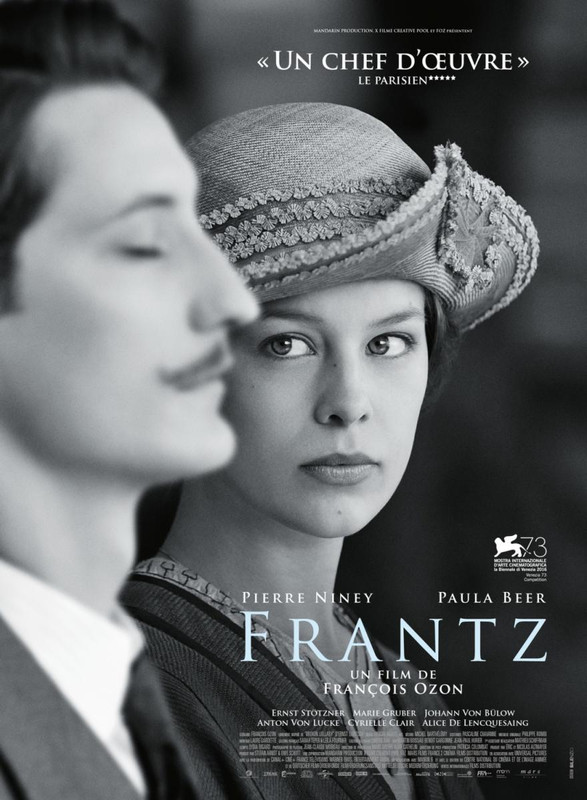
24FPS @ LFF 2016: Frantz

Dir: Francois Ozon
The new film by Francois Ozon is always an occasion I await with great anticipation, and it has become a tradition that he brings them to LFF each year. After a run of quality all but unprecedented among working directors (a parade of 4 and 5 star films broken only by his English language début, Angel) Ozon hit his first major stumble with Jeune et Jolie, but seemed to have regained momentum with his last film, The New Girlfriend. Frantz, disappointingly, represents another backward step.

The auteur theory can be overapplied, but if it were written to describe any modern director then it is Ozon. One of the most versatile directors of his generation, Ozon can change mood, subject and genre wildly between films, but his identity, his favoured images and ideas, recur like a fingerprint. An Ozon film is different from every other Ozon film, but you would never be in any doubt as to who directed it. Until now.  

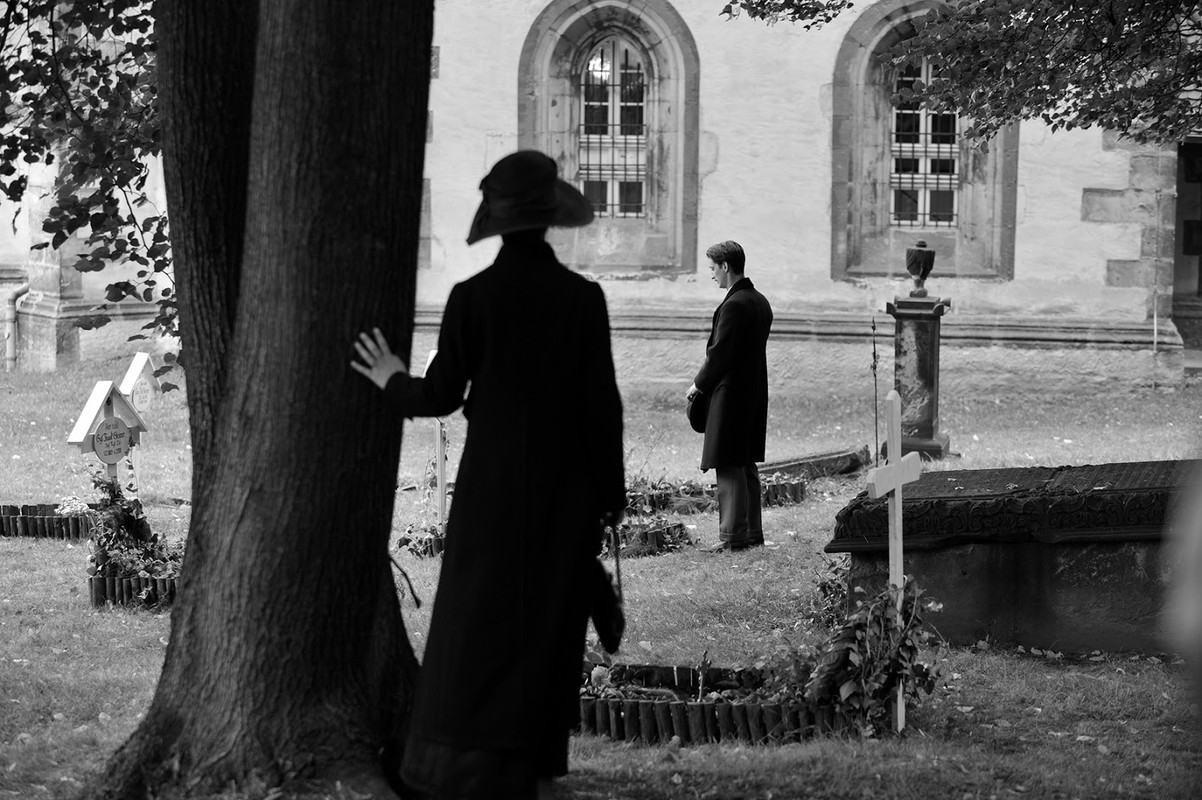
Frantz, as ever, finds its director in new territory. Set in the aftermath of World War One, it begins in a small German town. Visiting the grave of her fiancée Frantz, Anna (Paula Beer) finds flowers that were not left by her. The next day she discovers that they were placed by a French soldier, Adrien (Pierre Niney), who says that he was a friend of Frantz' before the war. Frantz' family begin to rely on Adrien, who reminds them of their son and Anna's feelings for the Frenchman begin to grow, but Adrien has a secret that changes those relationships again.

Perhaps the biggest change from his previous films is that here the colour obsessed Ozon shoots almost entirely in black and white. This is supposed to plug us into the period in which the film is set, but it looks too clean for that to come off. More disappointing still is the limited use of colour. The slightly faded colours are beautiful, but the moments that Ozon chooses to use them couldn't be more obvious or groan-inducingly literal. Yes, he uses colour to reflect the characters emotional states, but it's so basic an idea that the execution feels more like that of a clumsy film student than one of modern cinema's greats. This is only exacerbated by the awful final shot; a piece of sentimentality straight out of the ending of (500) Days of Summer, and maybe the single worst scene Ozon has put on screen.

The force of personality that Ozon usually brings to his films has gone missing here. The film's forward looking message, the German and Paris scenes both laced with warnings of the coming Second World War, feels less of this filmmaker than it does like Ozon trying to do The White Ribbon; Haneke on happy pills perhaps.  But Ozon can't pull off the doomy sense of the weight of destiny that Haneke delivered. The happy pills aren't working either, here Ozon has none of his usual playfulness and while he's also effective in severe, dramatic form, Frantz also misses this target. 

In just about every way, Frantz is a weightless film. The budding romance between Adrien – Niney looking unsure and out of place, like a kid playing dress up in a stick on moustache – and Anna is unconvincing, even before Adrien's entirely expected revelation comes out, after that point, with such a tenuous connection established between the characters, it becomes almost laughable, fatally undermining the film's Paris set third act. This might have worked in the 1930s, in the Lubitsch film in which Ozon based his screenplay, but the whether it's the non-existent chemistry between Beer and Niney or the fact that the screenplay gives them too little to hang the relationship story on, something about it just doesn't work here.

There are a couple of positives to take from Frantz. German actress Paula Beer is a find; Ozon gives her less to work with than his usual rich female roles, but she gives a strong performance, much of it in a second language (Niney struggles more with his German than Beer does with her French). The best performances in the film, however, come from  Ernst Stotzner and Marie Gruber as Frantz' parents, both broken by grief, but cheered by the little glimpses of their son that Adrien offers them. There are also a few standout scenes: Anna inventing a letter from Adrien, to avoid telling Frantz' parents the real truth; Anna sitting, deeply uncomfortable, as the Marseilles is sung in a Paris bar, but these are scattered moments in a near two hour film, and good as they are in isolation they can't make it knit together as an effective whole.

If Frantz isn't Ozon's worst film it's certainly his most anonymous. This doesn't feel like a filmmaker changing direction, it feels like he's dropped the map and got lost. Worse than all this is that, for the first time in an Ozon film I didn't like, I can't see what drew him to tell this story, what he was going for. For all its faults, Jeune et Jolie had something interesting at its core, it didn't work, but it still gave me something to think about and discuss. Frantz doesn't even have that, it's a pure misfire, not even very interesting in its failure.
★★

Dec 27, 2015

The 10 Best Films of 2015

Before we begin this year's list, a note on eligibility. I always want to have the broadest possible spread of films to choose from and I want to at least attempt to write about them when they are most relevant to the people reading. In order to try to do that I have quite broad, but quite specific, rules on how I decide whether films are eligible for this list (and the other Review of the Year posts). 

Of course any new film released for the first time in the UK during 2015 is eligible, whether it was a cinema release or direct to video in some fashion. The grey area comes with festivals. If a film I saw at a festival in 2015 hasn't opened in the UK, but has a distribution deal in place, I'll hold off and consider it eligible on UK release. If there is no distribution in place then I will cover it in this year's list. It's not a perfect system, but I think it works to give me the most choice and you the most interesting read.

10: A Most Violent Year 

9: Blind

8: Take Me To The River
I have chosen these ten films because I think they represent, all round, the best I saw of the artform this year. That said, if there is a running theme this year (aside from the fact that, as ever, I suspect my list looks rather different to most of the others you've seen) it is the presence of some truly brilliant performances, in well-written and complex roles, by some great actresses. 

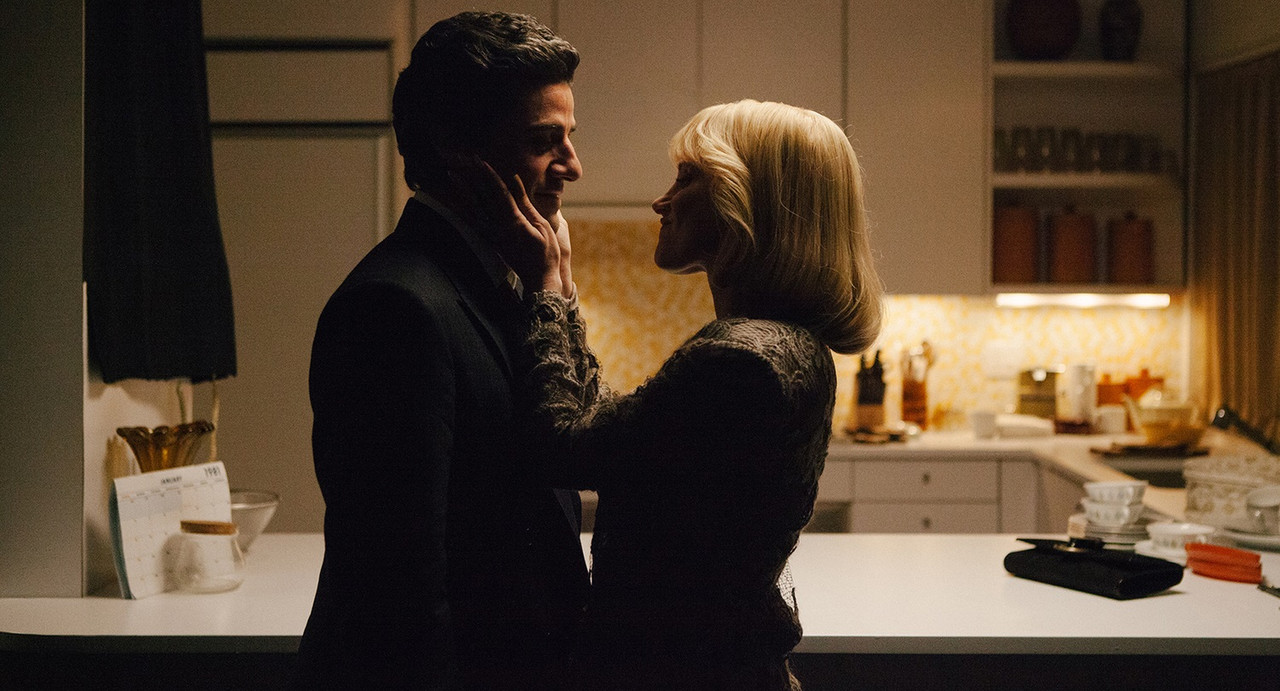
While it is true that Jessica Chastain's part in A Most Violent Year is a wife role, she certainly makes the most of it. She may be spoiled, she may be the secretary working away in the background of her husband's business, but Chastain's Anna has cold steel running through her veins. Just look at the way she deals with a DA when a birthday party at her house is interrupted by a search; the utter seriousness of purpose in her "this was very disrespectful" and the way she throws away her cigarette. In one line and one gesture you get a sense of how far this woman will go to protect those around her, including her husband, who may not be as comfortable with those threats.

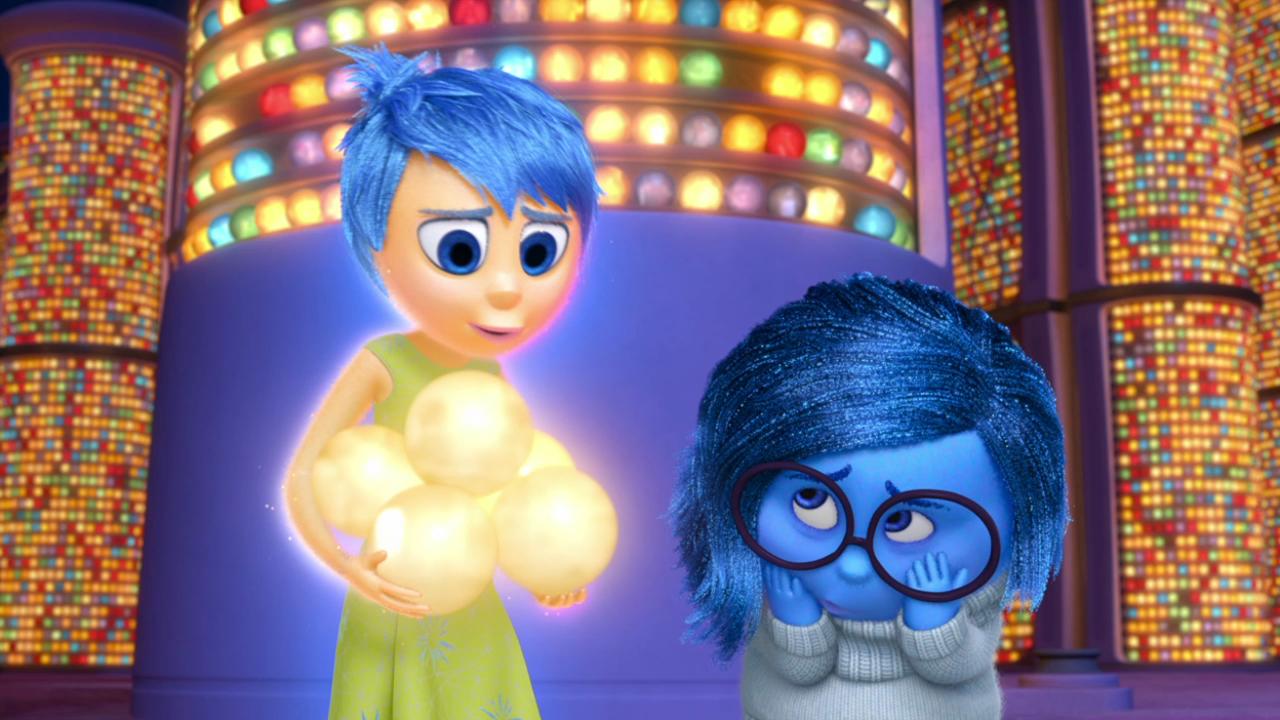
Among the other brilliant women in these films we have Amy Poehler, Phyllis Smith and Kaitlyn Dias in Inside Out. Joy and Sadness are the centre of the film, and Poehler and Smith have been justly lauded, but it's often forgotten how important Dias, as Riley's voice, is to the film. Joy and Sadness are just elements of a personality, Dias has to pull it all together and give us a sense of this 11 year old girl as a whole person. Given that the actors never recorded together it's a remarkably complementary set of performances.

7: Predestination

6: Petting Zoo

5: Inside Out
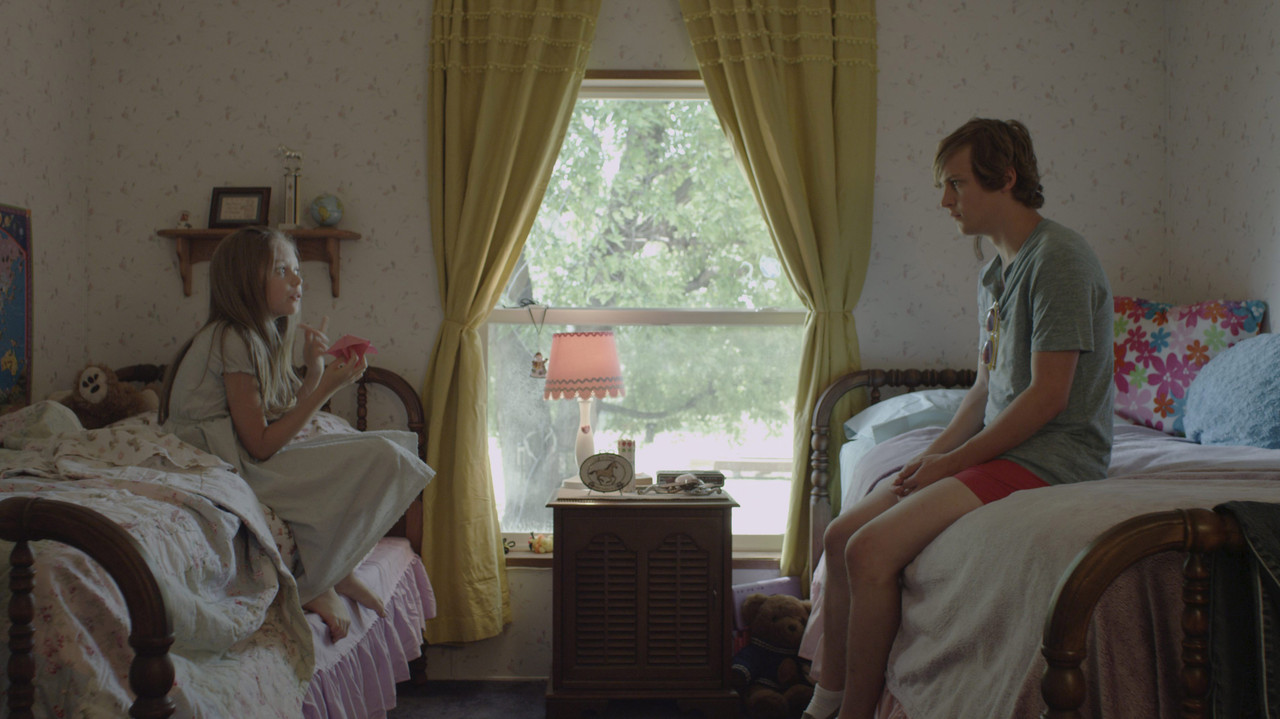
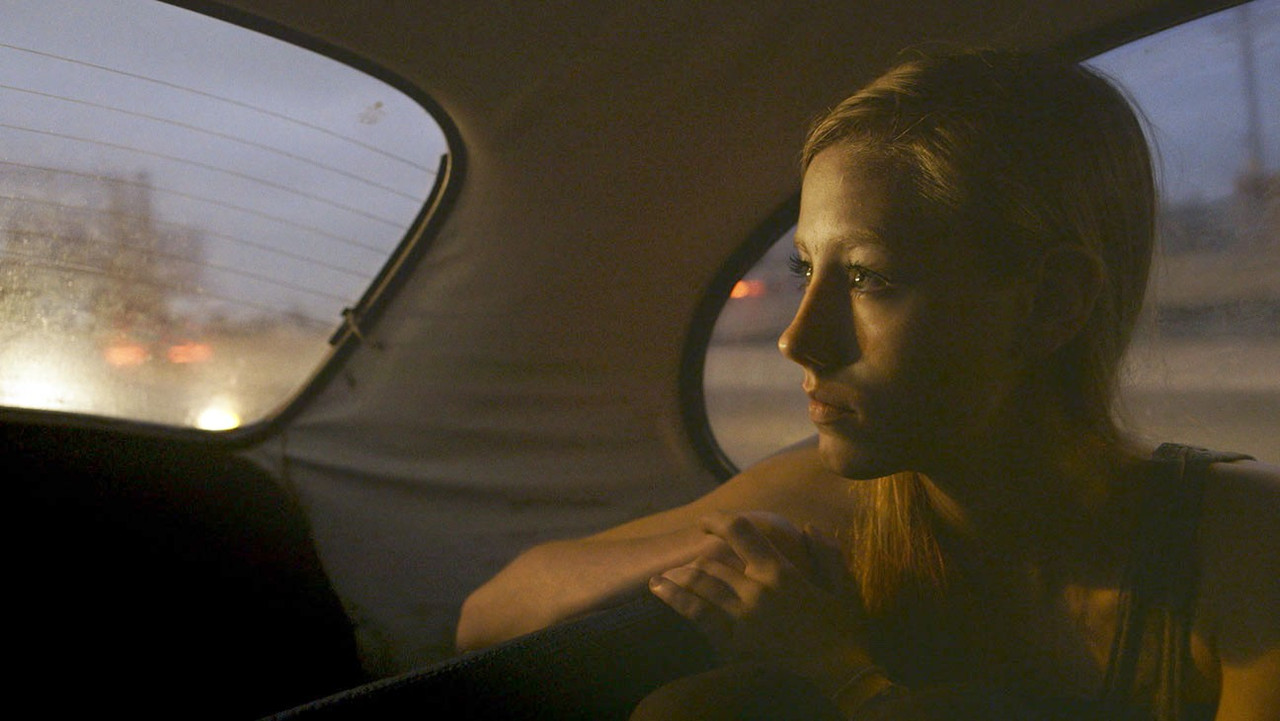
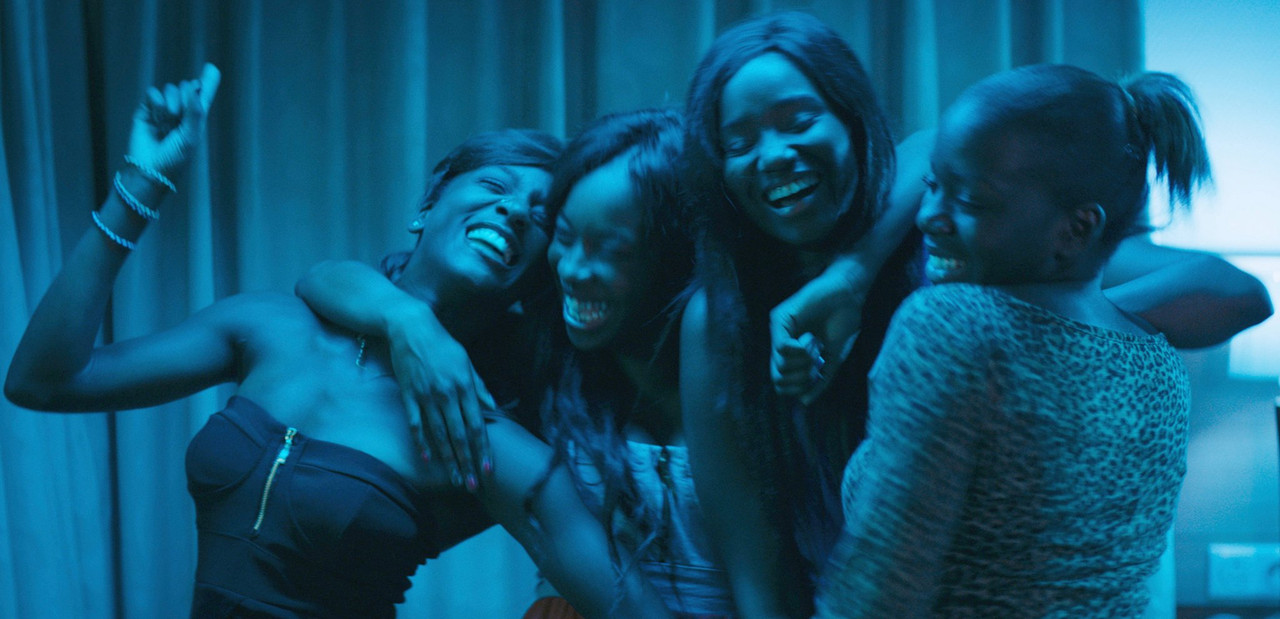
Elsewhere, we see promise from fresh talent like Devon Keller in Petting Zoo and the girls of Girlhood; all giving us portraits of lives lived on the the margins, perhaps with more promise than they'll ultimately fulfill. The environments and the specifics are different, but many of the emotions are similar and both films and both sets of actors give us a glimpse of something universally identifiable. Also in the new talent category is ten year old Ursula Parker in Take Me to the River. Her performance, like the whole film, beautifully balances a series of disturbing ambiguities, contributing hugely to the film's unsettling atmosphere which, for me. carried over long after the credits rolled.

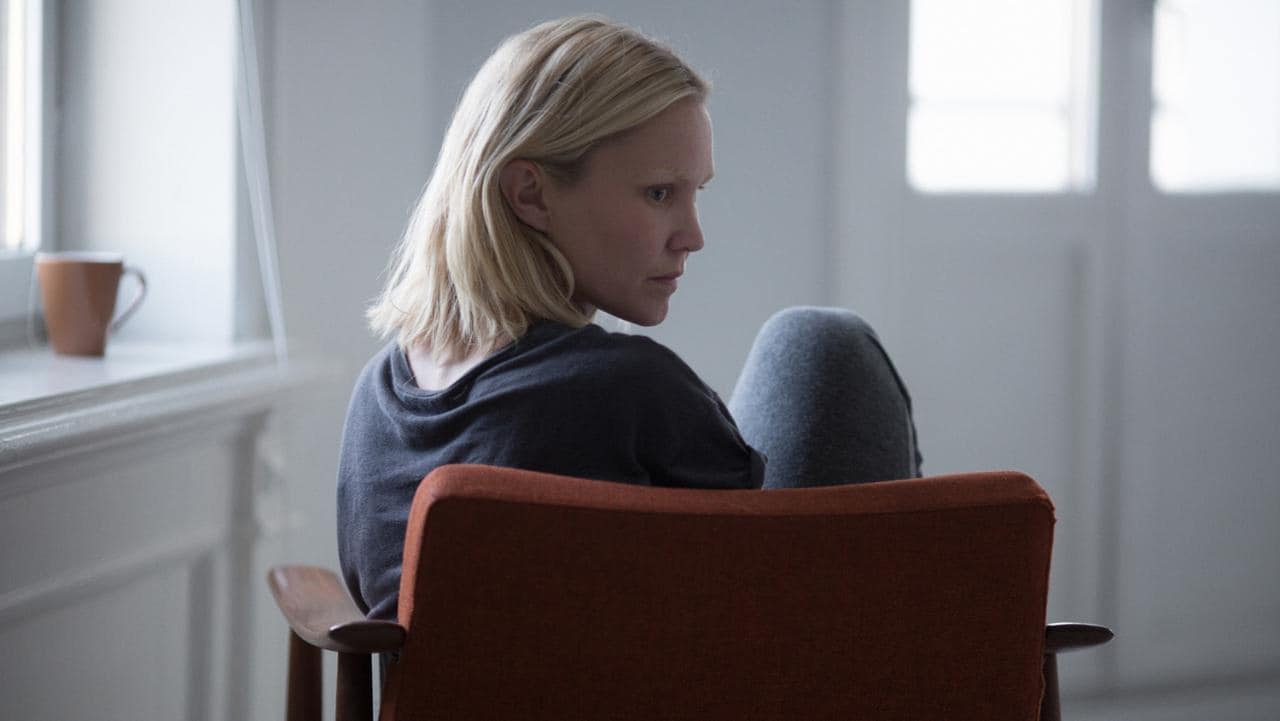
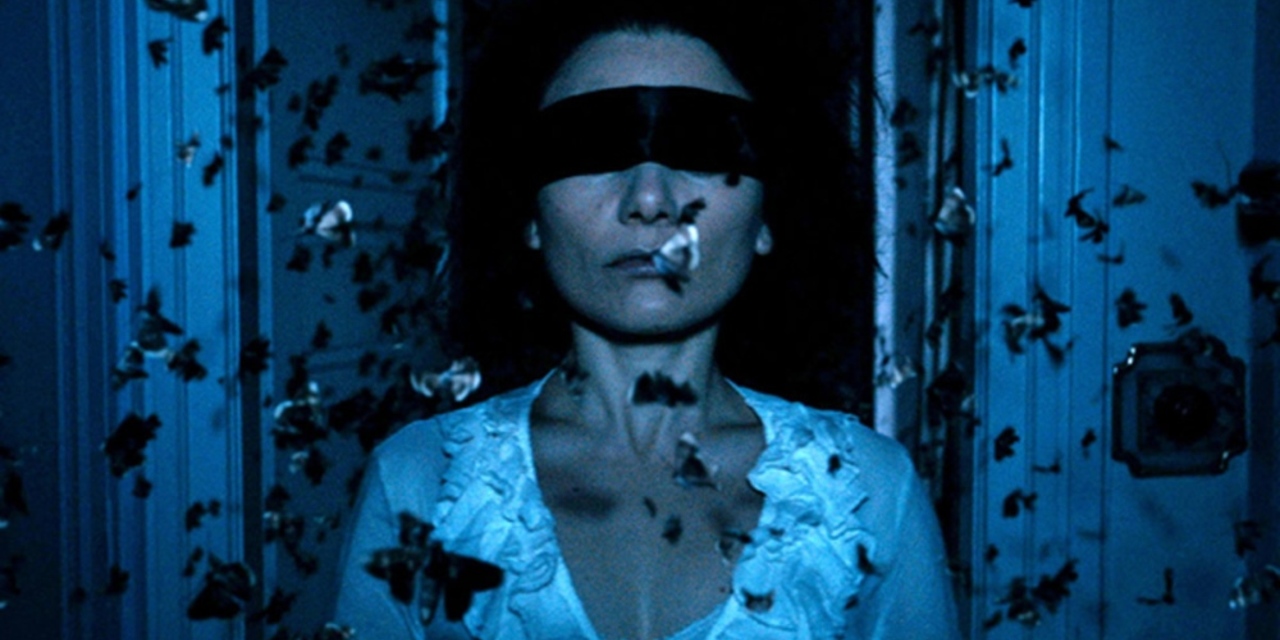
Actors with longer careers made powerful first impressions on me in Blind, The Duke of Burgundy and Predestination. Ellen Dorrit Petersen is an actress I now feel remiss for having not heard of before seeing Blind. Her performance as woman hallucinating and imagining her way through the trauma of having recently gone blind is revelatory, and the stuff awards would be made of if it were in English. The Duke of Burgundy is perhaps the film that makes the list mostly for its visuals, but that's not to take away from the performances of Sidse Babbet Knudsen and Chiara D'Anna, who take what, to most of us, would be seen as a truly unusual relationship and make it something evocative and touching, as well as drawing us in to the film's layers of metaphor. I talked about how extraoedinary Sarah Snook is in Predestination in the last post, but it bears repeating. There are so many layers, so many characters, in what she does in that film. We often talk of actors as chameleonic, but Snook completely earns the description.

4: Phoenix

3: The Duke of Burgundy

2: Girlhood  
Lastly we come to a couple of the best actresses working in European cinema, both of whom helped power their respective films to the upper echelons of my list this year.

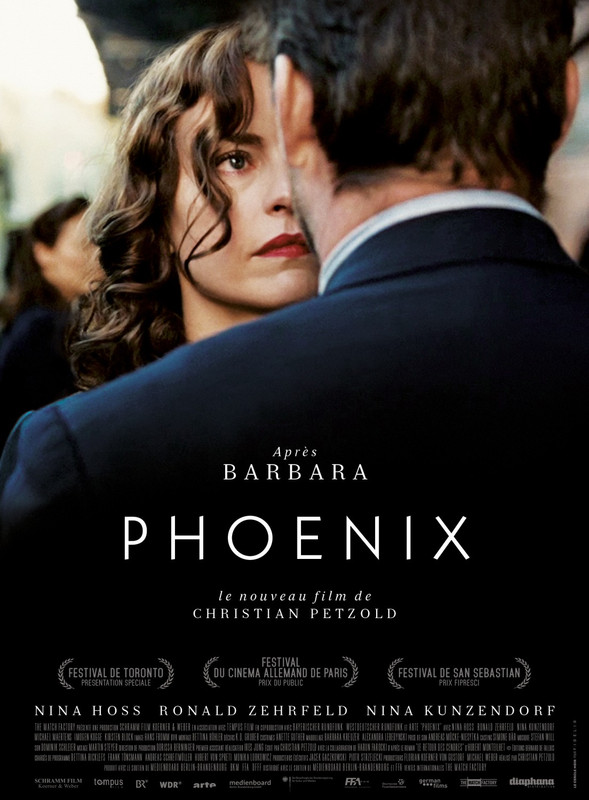
What do I have left to say about Nina Hoss? "Superlative-defying" wouldn't be a bad description. Hoss is often at her best working with Christian Petzold and this may be their finest collaboration yet. A riff on Hitchcock's Vertigo, Phoenix puts the focus squarely on Nina Hoss' face. This is great in two respects. First, that face is just incredible; one of the most memorable, most interesting, in cinema right now. Secondly, Hoss can make the tiniest adjustments speak volumes. The whole film is a masterclass in a character articulating one thing but subtly showing us the audience another silently. The film's last ten minutes are especially exemplary in this regard, just watch Hoss as she meets people she hasn't seen in years at the station, and subsequently as she sings Speak Low, silently saying everything even as she sings. It's incredible work, but she makes it look easy.

1: The New Girlfriend
And so we arrive at the film of the year. It was touch and go: one contender became ineligible because it was an LFF title that ended up getting a UK distribution deal for 2016 (more on that in due course), and throughout the process of sorting this list out I have been torn between my top two choices. The New Girlfriend wins out because, great as it is, Girlhood is what it is, I love it on each watch, but for the same reasons and in the same way. The New Girlfriend has continued to deepen and to improve on rewatches, from an already excellent starting point.

Francois Ozon has been one of my favourite directors since a friend showed me Sitcom, not long after it was released on video and I've since seen every feature he's ever made and all but one of his shorts (Un Rose Entre Nous). This was a great return to peak form following the awful Jeune et Jolie. The New Girlfriend combines the two sides that Ozon's cinema used to have; there is plenty of the camp frivolity of his frothier work here, but it's all underpinned by character drama as affecting and as brilliantly played as in any of his more severe work.

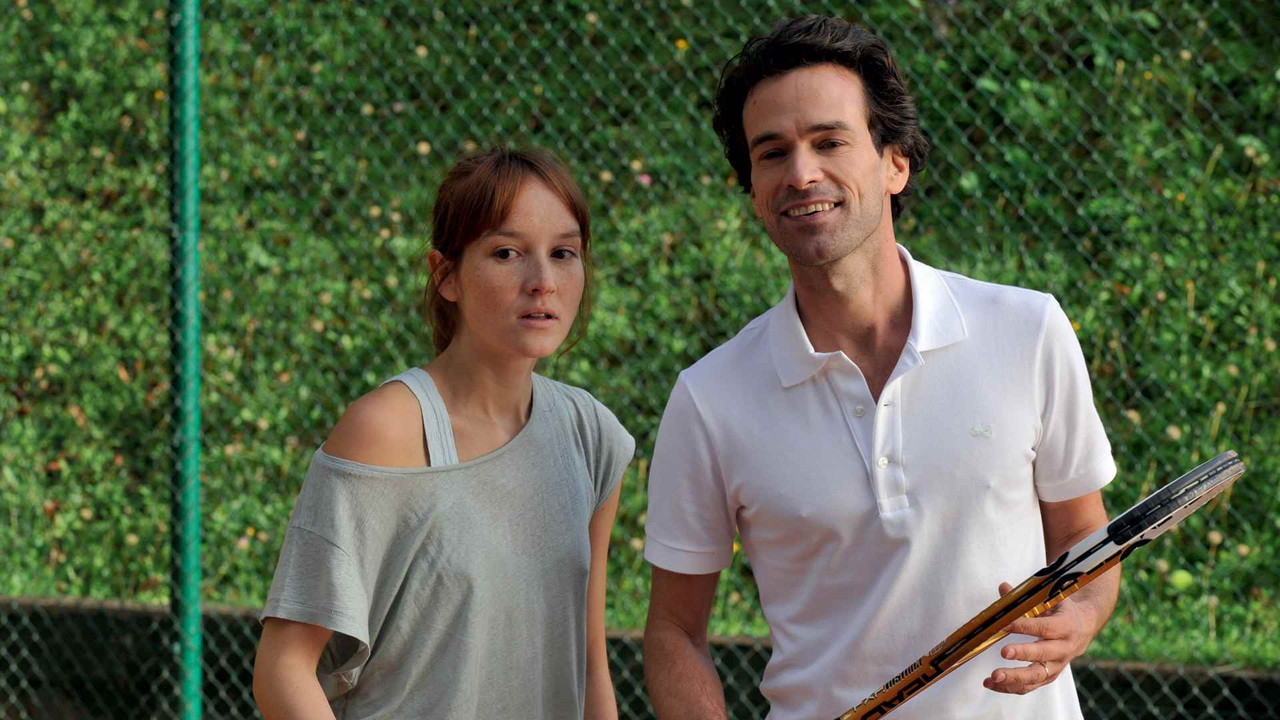
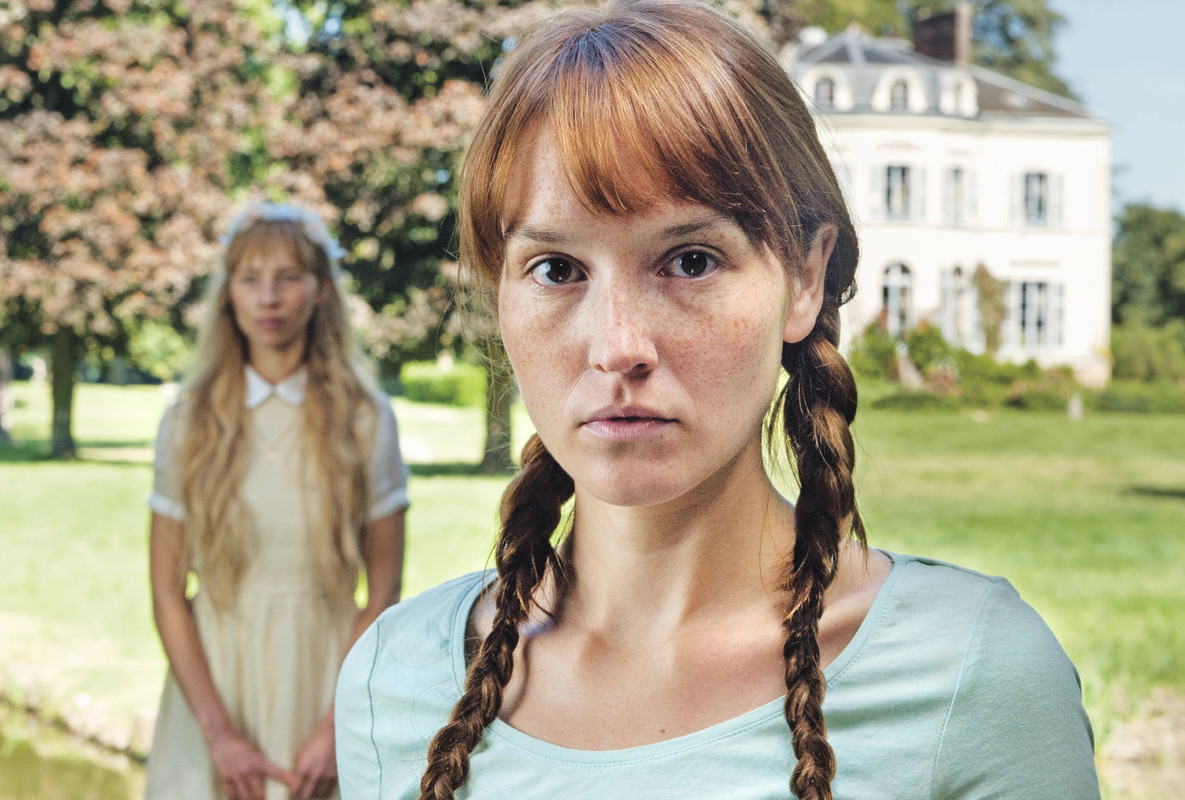
Anais Demoustier has been on my radar for a few years and has been consistently impressive, even when the films she's in don't entirely work (Elles), here, as Claire, she doesn't have the showy part, but in many ways it is she who is the centre of the film, discovering new feelings, new contexts in which to see both herself and David (Romain Duris), whose late wife (Isild LeBesco in a part that haunts the film beautifully, thanks to a surely Up inspired opening sequence) had been Claire's best friend.

David's solution to his pain is unorthodox, but it creates a gift of a role for Duris as David adopts the persona of Virginia and he and Claire begin to fall in love. Ozon and the actors balance tones beautifully. The film is broad and funny, but it's never laughing at how David is coping or at who he is, and Demoustier and Duris bring great detail and subtlety to their performances. Many moments stand out, but David going to wipe away some lipstick, forgetting he's not dressed as Virginia and Claire's reaction is great example of how the film is both funny and deepens character in a single motion.

This is a rich film, full of ideas about gender and sexuality (a pivotal sex scene is Ozon's most fraught depiction of these issues), about modern relationships and what family means and swimming in Ozon's auteurism. As a fan I find it hugely fascinating and rewarding, but I'm not saying it's the film of the year just for Ozon fans. Auteurist as it is, this one of Ozon's most accessible works and one that any audience should see something in. 

Nov 11, 2015

From the Verite Archives: Phoenix and The New Girlfriend

I just answered a question on Twitter asking what our favourite films so far this year had been and in answering it I realised that I had not yet run my reviews, originally written for the now defunct Verite magazine, of two of my choices for that list, which seems important given that the questioner had only heard of one of my selections. Thanks, as ever, to Verite for letting me repost these pieces.

There are spoilers in the review of The New Girlfriend.

Phoenix
Dir: Christian Petzold
Director Christian Petzold has often drawn on other films for inspiration. Hitchcock has long felt like a key influence on Petzold, bleeding into Jerichow, Barbara, and early TV effort Something to Remind Me, but never has Petzold drawn so heavily on Hitchcock as he does in Phoenix, which is steeped in the influence of Vertigo.

Petzold's muse Nina Hoss (in her eighth collaboration with the director), plays Nelly, a Jewish woman who has survived the concentration camps but, when we meet her, has sustained severe facial injuries. She asks the reconstructive surgeon to make her look exactly as she did before. Nelly then returns to Berlin, looking for her husband Johnny (Ronald Zehrfeld). Nelly's friend Lene (Nina Kunzendorf) claims that Johnny was the one who betrayed Nelly, but she wants to discover if her husband still loves her. When Nelly and Johnny meet again he is struck by the resemblance but appears not know that she is his wife. Instead, he exploits that resemblance, getting her to 'impersonate' Nelly.

There is something disturbing in this story that goes beyond even Vertigo's obsessiveness. James Stewart's Scottie is trying to remodel Kim Novak into someone different, someone she never was. Not so the case here. Whether or not he's aware of it, Johnny is trying to make Nelly become his wife once more, but to his own exacting standards. It's a goal that can't, in either case, ever be achieved, but the impossibility of such perversity is magnified for paradoxically already having been achieved.

This is a film centered on Nina Hoss, specifically on her face. That should be enough to make you want to see it, because Hoss, beyond her obvious talent, has one of the most distinctive and fascinating faces in cinema right now. This is especially interesting in the context of Phoenix, because that very distinctiveness makes it hard to believe that Johnny could fail to recognise his wife. That interesting/frustrating ambiguity lingers for never seeing the full extent of Nelly's facial wounds (only a soldier wincing at them), and all we know of her before her disfigurement is the picture her surgeon is working from that shows Nelly laughing; not something Hoss gets to do much, here or in other films.

Also worth noting about Nina Hoss' face is the depths of its expressiveness and how its surface can shift like quicksilver. Playing two halves of a splintered psyche simultaneously, with only a glance she alternates between a sure-of-herself Nelly, wanting things to return to the way they were (evident early on in that request to the surgeon) and an uncertain Nelly, trying to figure if her husband did, in fact, betray her, and what he thinks of her now they're reunited. She's also Johnny's doll, playing dress up 'Nelly', trying to become the image he has of his wife in the flesh.

Hoss dons the different personas and confused states of minds like masks her character wears uncomfortably; from the bandages of the first fifteen minutes (more than a little reminiscent of Eyes Without a Face) to how the recently reconstructed Nelly now sees herself, and finally, Johnny's idealised version of the wife he recalls—the one that will make their old friends believe she's the 'real' Nelly. It's a performance that, were it in English, would sweep all the accolades come awards season. Hoss shows us the tangled confusion of Nelly's mind with subtle shifts in emotional temperature that are tiny but telling.

Phoenix is an exceptionally strong film and Petzold's direction matches the lead performance. Characteristically, he plays off his influences without allowing the film to become Hitchcock karaoke, and giving 1945 Berlin historical verisimilitude, he uses the camera to be just as true to the emotions of the characters, capturing every moment of exposing vulnerability that Hoss and Zehrfeld contribute to loaded silences, lending their highly dysfunctional relationship an interior richness. Yet all this subtly and intrigue pales next to the mastery of the final scene. Without giving too much away, Nelly's heartrending performance of 'Speak Low', is built off just a few images and a devastating piece of silent acting from Zehrfeld. With this, Petzold draws the themes and all the film's questions together in an astonishing whisper that goes off like a bang. Where Petzold goes from here will no doubt be interesting, but he's given himself a hell of a mountain to climb in having to follow such a powerful ending.
★★★★★


The New Girlfriend
Dir: Francois Ozon
Francois Ozon has brought a new film to the London Film Festival three years running, but 2013's Jeune Et Jolie suggested that a rate of at least one film a year was starting to take a toll on his work - much of which is soufflé light and fancy free, but even for him, Ozon's last was a shallow film crying out for more depth.  

Thankfully, it seems Jeune Et Jolie was just a blip, as The New Girlfriend, adapted from a Ruth Rendell story of the same name, finds Ozon back on form, blending his mischievous side with a substantial (but hardly realistic) story, full of secrets that are practically impossible not to reveal when talking about the film.

The totally spoiler-free version of the review reads like this. A playful addendum to Ozon's grief trilogy (Under The Sand, Time To Leave and Le Refuge), The New Girlfriend finds husband David (Romain Duris) and best friend Claire (Anais Demoustier) dealing with the death of Laura (Isild Le Besco) in different ways. These coping mechanisms are predicated upon Ozon's chief preoccupation of sexual malleability and confusion. For his fans, The New Girlfriend is full of auteurist traits in the use of colour and offbeat humour, perfectly handled by an outstanding cast.

Discussing the film in any greater detail requires the revelation of a key twist, so stop reading if you want to go in cold, which is my recommendation.

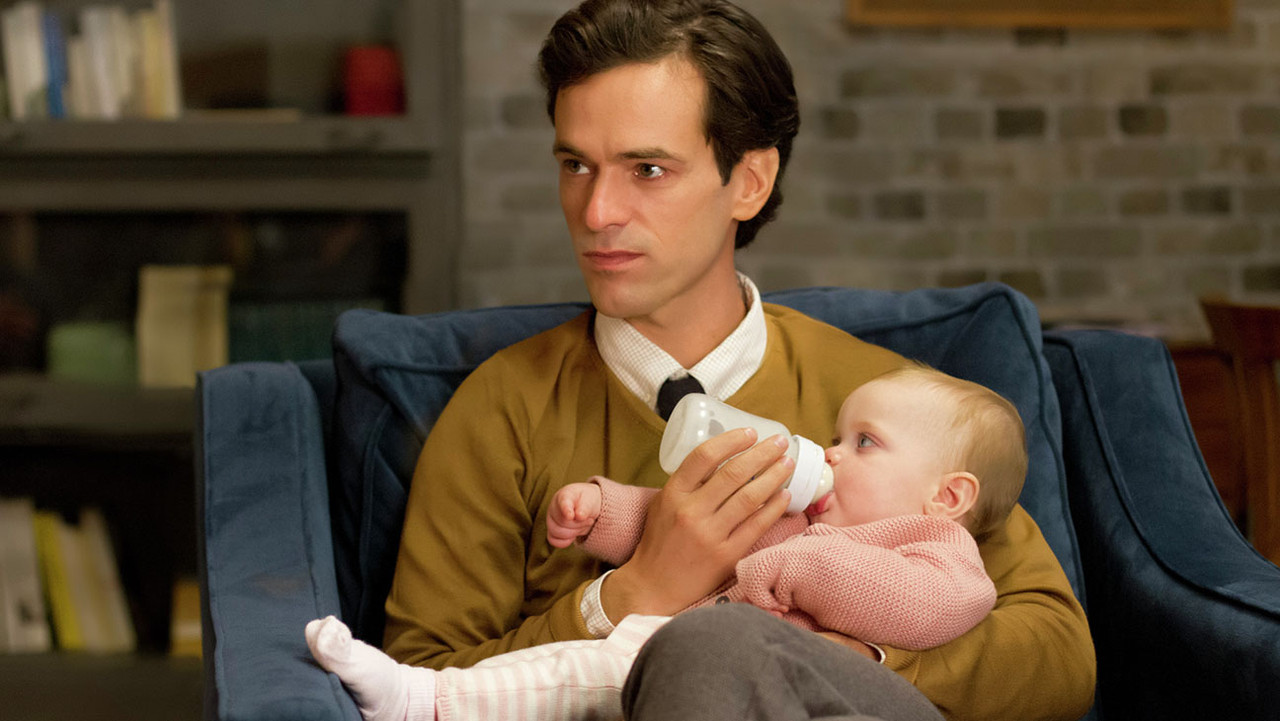
Fifteen minutes in, we discover that David is, in fact, the title character. After his wife's death, he falls back into an old enjoyment of dressing as a woman, becoming closer with Claire as Virginia, a relationship she keeps from her loving but uncomprehending husband Gilles (Raphael Personnaz). Virginia is a persona who grows into a fully realised third main character, with Romain Duris physically, verbally and emotionally defining the split between the two personalities he's playing very capably. Ozon mines much comedy from his star's gender-bending, but its intent and effect are never cruel. The joke is often at David's expense, but Ozon never has us laugh at anything David himself would be upset by. Take for instance an early moment when David is having tea with Claire and his mother in law (Aurore Clement) in his own clothes. Gesturing as if to rub away some lipstick, he forgets he's not dressed as Virginia. Coupled with Demoustier's reaction it's one of many slyly funny, non-verbal embarrassments.

With the less showy role, Anais Demoustier has a grounding effect on the film, lending Claire a straightforwardness that gives us a way in to the characters and the story whenever Duris' dual performance might push the camp factor a little too far out for some. Claire seems a simple character, but her complexities lie under the surface and Demoustier lets them show through slowly. Virginia's observation that her friend often dresses in a masculine fashion is quickly followed by a sex scene in which Claire enacts a masculine cliché; rolling off her husband as soon as she's achieved orgasm and casually asking “did you come?” “No”, he says, “but that's okay.” The gender issues seeded in this scene pay off in a later sex scene between Claire and Virginia/David. Demoustier quietly and heartrendingly articulates Claire's sudden kinship with Virginia. Despite never having been close to David, she like him, is trying to fill the void Laura has left in their lives. 

Laura is glimpsed only briefly (mostly in an opening flashback charting her friendship with Claire that feels like Ozon's take on the opening of Up),  and while Isild LeBesco doesn't have time to give us a rounded character, her radiant presence is more than enough to suggest how much darker the lives of these characters are without Laura in them.

In changing some of its fundamentals, re-calibrating its tone and adding a great deal to Ruth Rendell's ten-page story (including a completely different ending which closes the film out with the most auteurist image of Ozon's career), there's a feeling of a filmmaker at play, despite the grief which subsumes the players. Claude Chabrol's La Ceremonie is more along the lines of what might be expected from a straight Rendell adaptation, but with a distinct lack of foreboding or impending violence, Ozon brings a lightness of touch to even the most dramatic of scenes, enabling him to seamlessly shift from frolicsome scenes such as Claire and Virginia's first outing together and moments suffused with a crippling sense of grief, such as David dressing his wife's body for her funeral. Between these contrasting registers, Ozon's customarily unblinking depiction of sexuality against the hetero-normative grain is evident throughout, with one sex scene in particular, the strangest, most emotionally fraught and complex he's ever directed. Like the sexuality, the film's structure is fluidly subversive. The sequence of Laura being dressed for her funeral is echoed at the end, its second occurrence making poignant use of a song that Virginia and Claire hear a drag act sing at the film's midpoint, movingly literalising its meaning. 

For years, Francois Ozon's films fell into two categories; the playful and the severe. Recently, with In the House and now The New Girlfriend, it's fascinating watching him begin to draw those two sides off his personality as a filmmaker together. The mix is less successful here than it was previously, largely because Claire's husband is rather underdeveloped and one note and the existence of Laura's daughter Lucie is almost entirely forgotten for an hour of the run time. Still, The New Girlfriend is a great film, often moving and amusing in the same moment and boasting two subtly soulful lead performances.

Much more than a return to form, it's a superb reaffirmation of Ozon's status as one of the best directors in world cinema, ranking in the top tier of his own rhapsodically tender and strikingly imaginative filmography.
★★★★★

Oct 3, 2013

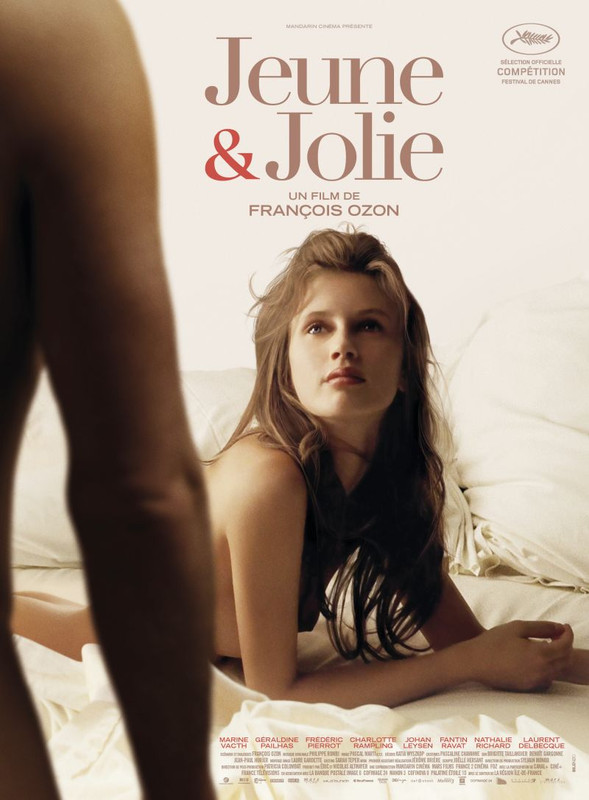
24FPS @ LFF 2013 Jeune & Jolie

Dir: Francois Ozon
Ever since I first saw his feature debut, Sitcom, about fifteen years ago, Francois Ozon has been both one of the most exciting and one of my absolute favourite working filmmakers.  Last year he really hit the heights with In The House; a film that played with and analysed film and storytelling, while also working as a thriller and a comedy.  Even as a big fan I had accepted going into Jeune & Jolie (Young & Beautiful, for those whose GCSE French has deserted them) that it was unlikely to match that film, but I really didn't expect it to be the crushing disappointment that it is.

Told over twelve months, beginning in Summer and split into four seasonal sections, Jeune & Jolie begins by introducing us to Isabelle (Marine Vacth).  She's holidaying at the beach with her family and about to celebrate her seventeenth birthday.  The night before her birthday Isabelle sneaks out and loses her virginity to a boy she's had a holiday romance with.  The next time we meet Isabelle it is Autumn, she's back at school, but in between homework assignments, she has begun working as an escort, under the name Lea.

Recently there have been a few films about students turning to prostitution to fund their studies (the best of the bunch is the bleak Student Services).  Jeune & Jolie is different in both tone and content to those films.  On the one hand, this could prove refreshing, as Ozon doesn't take us on the familiar downward spiral of danger and drugs often seen in films about sex workers. Unfortunately what he does serve up is so thin and underwhelming that he seems unsure of what he's trying to say. The film seems to have no opinion about Isabelle's work, no interest in why she got into it and no insight into what she gets out of it (we never even see her spend any of the money she makes). From a director has long been renowned for his complex characterisation of women and for his work with actresses, this lack of insight is disappointing, and it brings the film tumbling down.

Jeune & Jolie actually begins promisingly. The opening image of a topless Isabelle on the beach, viewed through binoculars by her twelve-year-old brother Victor (Fantin Ravat), is shot through with Ozon's obsessions; it's a beach shot, dwells on beauty and is full of implied unconventional sexuality.  It's the biggest, but almost the only, auteurist statement of the film and Ozon largely fails to explore the most interesting undertones that it suggests.  This is often the story of this film; it's packed with interesting avenues that I want to see Ozon explore, but he never does.

Victor is a perfect example.  In several scenes there is something bubbling under the surface; the suggestion that Victor is attracted to his sister – certainly he tries to explore his sexuality through her – but this never comes to anything, Ozon seems to repeatedly brush the idea aside in favour of following Isabelle in what is a rather more conventional and less interesting coming of age narrative.  This pattern repeats with the stories about Isabelle's mother (Geraldine Pailhas) and her possible affair with a family friend, Isabelle's relationships with friends and lovers after she leaves prostitution behind and, most frustratingly, Isabelle's relationship to her job and her clients.

Ozon's films have never pulled back from sex and nudity, but Jeune & Jolie is unusual even in this respect.  Ozon is gay, which is something that informs his work.  He clearly appreciates female beauty, but he's never made a film that has such an explicitly male – and straight – gaze as this, in fact it's so extreme that at some points it feels exploitative of Marine Vacth, who is exposed over and over again.  Of course the nudity is part of Isabelle's job, but still, Ozon lingers queasily long after any potential point has been made.  The last time the nudity in an Ozon film was this extensive and frequent was Swimming Pool, but there it was about something – the idealisation of Ludivine Sagnier's character from the point of view of Charlotte Rampling's – here it seems to be mere titillation most of the time.

Throughout the film things echo from the rest of Ozon's filmography, only adding to the hollow rattle of this film as what was previously meaningful loses most of its content.  A party scene towards the end of the film is a good example.  This is the moment that Isabelle is re-entering society, associating with her peer group again after the scandal of her double life (which, remarkably, she seems to have been able to hide even after the Police have been involved).  There is something of a feeling here, especially as Isabelle dances with a potential boyfriend, of an echo of the key party scene in 5 X 2.  Unfortunately where that scene neatly encompassed all of the film's conflicts this one just feels like a series of shots of people dancing to Crystal Castles, because we know so little about Isabelle, even over an hour into the film.

It has been suggested to me that reason we are told so little and given to understand so little about Isabelle is that, at 17, she may not know herself who she is or why she does the things she does.  This is a fair point, but a character not knowing or understanding something doesn't mean that we shouldn't, in fact that duality is a feature of almost every coming of age film.  Without the extra dimensions that Ozon's characters usually have, Isabelle comes off as a blank slate, and a blank slate isn't terribly interesting to base a film around.

There are a couple of caveats to the disappointment of Jeune & Jolie.  First of all the initial Summer sequence, though some of its key events never echo as they should, is great.  Ozon shoots summer and the seaside like no one else, and here he filters that through an intimate, Rohmeresque, exploration of the little dramas of holiday romance, if this had been the whole film I'm sure I'd have loved it.  The other thing worth seeing here is Marine Vacth, she can't conjure up a personality for Isabelle, but she does draw a clear line between Isabelle and her Lea persona and while it's never as deep as you'd like thanks to Ozon's weightless screenplay she delivers a performance of conviction and slips effortlessly between gears.  If she's this good in a bad film I'm looking forward to seeing what Vacth can deliver when she has more to work with.  The rest of the performances are also good, with Geraldine Pailhas especially strong as Isabelle's mother.  The only disappointment among the cast is Charlotte Rampling, whose ice queen act is wearing very thin at this point.

Jeune & Jolie isn't a classically bad film.  It looks fine, it's expertly cut and there is a clear artistic hand behind it, the problem is perhaps context: Ozon has been so good that when he stumbles it feels like a bigger fall than it might be for another filmmaker.  The greatest disappointment of this film is how weightless it is.  Ozon does fluff brilliantly, but this story needs heft, needs character, and ultimately it's the worst thing it could have been: inconsequential.
★★

May 17, 2013

My Top 10 Directors: Part 2

Alfred Hitchcock
Making a list of cinema’s greatest directors without including Alfred Hitchcock would just seem… wrong. I quite often reject critical consensus, or the idea of a canon of indispensable films and filmmakers, but I’ll make an exception in this case. With over 50 extant films (remarkably for a director who began in the silent era only one, The Mountain Eagle, is lost) Hitchcock could be a daunting prospect to discover, but he isn’t, for two reasons. First, and perhaps most remarkable, is the depth of quality in his filmography. Look pretty much anywhere in Hitchcock’s oeuvre and you’ll find something regarded as a classic (though I’m less fond of Frenzy, which tends to be seen as his last great work). The other thing that makes Hitchcock easy to discover and still so compelling as a filmmaker is how well his films have aged. The Lodger, for instance, hit its 85th birthday last year but, but for the lack of sound, still plays to me like a (fantastic) modern thriller.

I’m still behind on my Hitchcock homework, having seen ‘only’ 24 of his films, but even with only about half his filmography covered I’ve still found what I consider to be hidden gems among his most celebrated periods. For example there’s Hitchcock’s own favourite, the masterful Shadow of a Doubt, the tight little thriller Young and Innocent from the late British period or the Henry Fonda starring The Wrong Man, which floats under the radar among the seldom broken run of classics that constitute the 23 years between Rebecca and The Birds. It’s arguably the greatest run in cinema history, even taking into consideration the odd dud like The Paradine Case, and it’s probably true that without this run, or Hitchcock’s earlier British work, cinema would be very different.

Hitchcock’s greatest talent was for thrillers, and for the construction of a narrative in cinematic terms; he had an amazing knack for holding back information, both from audiences and the characters in his films and thus maximising both suspense and shock. Though he worked in the thriller genre for most of his career, the versatility of Hitchcock still impresses, often within a single film. For the most part, Strangers on a Train is a more psychological thriller, but its murder scene – seen as a reflection in the glasses of the victim – is something out of a nastier kind of horror movie. Psycho also deals in this duality; the film does focus on the psychology of Norman Bates, but it could also be said to have invented the slasher film with its shower and staircase murders.

I could go on and on about Hitchcock; about the joy of the sly wit that runs through his films; about the visual invention and verve that pervades them (look at the way The Lodger uses a see through floor to suggest both sound and tension); about his skill with actors and the way he turned their personae inside out (especially James Stewart and Cary Grant).

Ultimately though, the reason Hitchcock is here is twofold. First of all, as a fan of genre cinema, he’s both the master and the source; there is very little in thriller cinema even now that Hitchcock didn’t do at some point. Secondly, and more importantly, most of his films remain as brilliant; as thrilling, as funny, as suspenseful, as scary now as they were when they came out.
Start With: Psycho / Strangers on a Train
Best Film: Shadow of a Doubt


Satoshi Kon
I debated with myself for a long time about whether to put Satoshi Kon on this list, pondering whether I could justify including a filmmaker with just four features to his name. Ultimately I decided that I could on two grounds. First of all, three of Kon’s films make my Top 100 list, making him easily the most represented filmmaker in terms of percentage of work on the list and secondly, sadly, because it is at best extremely unlikely that we’ll ever see another film with his name on it. Kon died aged just 47 in 2010, and though he had been working on a new film, The Dreaming Machine, which was supposed to be moving forward even after his passing, there has been no news on it since.

Kon became an anime director, but originally his first film, Perfect Blue, was supposed to be a live action project. I’m rather relieved that it wasn’t because, as great a film as Perfect Blue is, the fact that it is an animated psychological thriller marks it out as something a bit different, and I wonder whether it would have made the journey from Japanese to English and American release had it been live action. The film is an incredible blend of influences, notably Hitchcock and David Lynch, telling the story of a pop star who want to become an actress and may also be being stalked by an obsessive fan. It’s one of Darren Aronofsky’s favoruite films, and images from it recur in both Requiem For a Dream and Black Swan (which is essentially an uncredited remake).

Kon’s influence is felt in more than just Aronofsky’s films. Conciously or not, Christopher Nolan co-opted many of the themes of Kon’s final completed film Paprika – in which a machine that allows therapists to travel into patients dreams nearly brings down the walls of reality – for Inception. I’m sure Kon would have appreciated other filmmakers drawing on his work, because his love of cinema bleeds through in all of his films, but most notably in Millennium Actress, which frames a decades spanning romance through the lens of the movies that the film’s female protagonist starred in, as she reflects on them in an interview with another filmmaker.

For me, Kon took all of his influences and remoulded them into films that were compelling, great looking and often dazzlingly original. It’s a tragedy that we will never see another film from him, because there may yet have been even better to come, but though his legacy is small it is stunning.
Start With: Millennium Actress
Best Film: Perfect Blue


Park Chan-Wook
By 2004 I had already dipped my toe in the water of the South Korean new wave, which had begun to come to prominence in about 1998, but it was for me, as it was for most people, Park Chan-wook’s Cannes Grand Prix winner Oldboy that really made me sit up and take notice of what was being produced in South Korea.

Since I love vengeance movies it’s really no surprise that I immediately discovered Park’s cinema, given that his first three really notable films constitute a thematically linked trilogy on the subject. More than that though, all of the Vengeance trilogy (Sympathy For Mr Vengeance, Oldboy and Lady Vengeance) offer a great primer on Park’s cinema, with a style that is heavily constructed and visually impeccable, yet also frequently extremely visceral. Park’s early films (including his debut Joint Security Area) also see him building up a stock company from whom he knows that he can get strong performances. Perhaps the key links in that company are Song Kang-ho, brilliant as a Father out to avenge his daughter’s death in Sympathy For Mr Vengeance and as a conflicted priest who becomes a vampire in Thirst and Choi Min-sik, who has large parts in Oldboy and Lady Vengeance as two almost diametrically opposed characters.

Park’s trademark seems to be the almost excruciating precision of his films, and the way that everything in his composition seems, at least to me, to take on meaning (look at the moving moment when Lee Young-ae removes her red eyeshadow in Lady Vengeance). This can mean that, outside of Oldboy, which is his most visceral work, Park’s films can take some time to settle. This was something that happened to me with Lady Vengeance, and ultimately made it extremely rewarding. I didn’t love the film the first time I saw it, but in the back of my mind there was a niggling thought that I was missing something, that I, rather than the film, was the problem. So I went back, and then back again, and again. Each time I saw it the film grew in meaning and significance, and this is something I think stretches through Park’s work; there is so much to see, so many subtleties and layers beyond the (usually rather extreme) hook that for me his films reveal themselves a little more with each watch, and that’s a truly rare thing to do once in a career, let alone multiple times.

The jump to the English language can unstick a foreign director, but Park’s English language debut, Stoker, blew my mind earlier this year. I saw it at the cinema four times in six weeks. It’s unchallenged to date as 2013′s best film and confirmed for me, along with Thirst, that his madcap sci-fi I’m a Cyborg, But That’s Okay was just a blip. There’s a sense for me, when walking into one of Park’s films, of excitement, because I never know quite what to expect, but I always know it’s going to challenge me.
Start With: Oldboy
Best Film: Lady Vengeance


Francois Ozon
Well, if you know me then you knew this was coming. I was introduced to Francois Ozon’s films, along with a lot of American independent and other European cinema, by a film buff neighbour who used to lend me tapes, including Ozon’s debut Sitcom. I was immediately taken with that rather odd film, but it was only after seeing 5 X 2 at the cinema that I made sure I caught up with the rest of Ozon’s work (I’ve now seen everything he’s made, bar a tiny handful of shorts). What I found was one of the most versatile, interesting, and reliably high quality filmmakers I’ve ever come across. Over 13 features (excluding the new Jeune et Jolie, which just screened at Cannes) the only one I can count as something of a misfire is his one English language effort, Angel.

Ozon flits between genres and styles with an assurance that is rare in filmmakers, but it seem to me that he has two main modes. There are the rigorous dramas, notably Under the Sand, Time to Leave and Le Refuge, which make up his trilogy on grief, and the excruciating 5 X 2, which charts a failed marriage backwards from divorce to first meeting. Then there are the lighter films, the ones that often tend towards camp, like Sitcom, 8 Women and Potiche. Not all of Ozon’s films fall into these categories though, and there rewarding oddities to be found among his work, such as the fairytale gone nightmarish Criminal Lovers and Fassbinder adaptation Water Drops on Burning Rocks.

As I’ve said many times, given his workrate (a film a year), and how that rate has worked out for some other directors (The last quarter century of Woody Allen, for instance), I’m always as nervous as I am excited walking into the new Ozon, because I don’t want to see him make a truly bad film. Because Ozon is so adaptable, there is also a sense of excitement in never knowing what – beyond trademarks like fluid sexuality and, whenever possible, at least one beach scene – he’s going to deliver. For example, who would have predicted that he would follow literary adaptation Angel with Ricky; a social realist film which takes a surreal, even Cronenbergian, turn when the central couple have a baby with wings?

For me though, Ozon is not the traditional jack of all trades, master of none. Nor is he simply a shooter who turns his attention to a variety of projects without bringing anything to them. His films all bear a recognisable auteurist stamp and all share themes, but he is always in motion, and seems always to be interested in finding something that he hasn’t done, hasn’t said, to base his next film around. I an age when I know what to expect from almost any given film, especially from a filmmaker I know as well as I do Ozon, this constant surprise is incredibly exciting and rewarding, and for me it’s what makes him the best filmmaker working today.
Start With: 8 Women
Best Film: 5 X 2


Paul Verhoeven
I think this list has ended up broadly reflecting my cinematic interests, and by that token I suppose Paul Verhoeven is as close as it comes to representing my love of exploitation cinema, which I think is often given unjustly short critical shrift, but does generally lack directors whose filmographies reflect the consistency of those I’ve listed here.

Verhoeven isn’t, strictly speaking, an exploitation director, but even his early Dutch language dramas have the sort of extreme content that defines exploitation cinema, and these are things he would only end up accenting in his American work (what is Basic Instinct if not Hitchcock refashioned as an exploitation film?) Here and in America, largely because of their subtitles, Verhoeven’s early films would be seen as arthouse fare, but in Holland they were popular hits, in fact his second film, Turkish Delight, held the record for most admissions of any film ever released in Holland for years after it came out. Holland is famously more liberal than the US and UK, but that didn’t stop Verhoeven from being controversial. Spetters, though it reached a large audience, was so controversial that a group actually formed purely to protest it, accusing it of being anti-gay, anti-christian and anti-women among other things. It was this reception that would, after making a proto-Basic Instinct in The Fourth Man, lead Verhoeven to Hollywood.

I like Verhoeven’s Dutch films very much, but Hollywood, for me, brought out the best in him. He never toned himself down (indeed his Hollywood debut, Flesh and Blood, is awash in both titular ingredients and is such a rank portrait of the middle ages that the smell fairly leaps off the screen), but Hollywood really seemed to bring out his subversive streak, and for my money he did his best work when taking genre pieces and inserting subversive social commentary into them. He mastered this in Robocop, which satirised Reagan’s America and presented its central figure as, in Verhoeven’s words, an American Jesus (Verhoeven is a member of the Jesus seminar, and has written a biography of Jesus. No, really). Starship Troopers; Robocop‘s spiritual twin, was perhaps even more subversive, so much so that its satire of American militarism was often – hilariously – misread as a fascist tract.

This dedication to messing with his audience, while also delivering the spectacularly entertaining goods, is what I love about Verhoeven’s films. His work can absolutely be enjoyed at face value (sometimes only at face value, of Hollow Man he says ‘Ist hollow film, ja?’), but most of his work has much more going on beneath that surface. The gloss and the dedication to explicit sex and violence, I think, sometimes makes audiences and critics think that’s all there is, but Verhoeven is smarter, deeper and better than that. I wish he were still working more.
Start With: Robocop / Starship Troopers
Best Film: Robocop

Mar 26, 2013

Interview: In The House Director Francois Ozon

I think every film critic and journalist has a list, whether on their head or on paper, of reasons they got into this line of work; the people who inspired them, and the things they want to do. At the end of last week I got to put a tick next to one of the major items on my list.

When I was young I was lucky enough to have a neighbour who was a huge film buff, and who introduced me to my first films from outside the American mainstream. One of those was Ozon’s first feature, Sitcom, which I loved. I’ve since seen every one of Ozon’s feature films and all but a handful of his shorts, and have come to consider him the best director currently working, so when I got a chance to join a roundtable and interview Ozon with five other journalists, ahead of the opening of his new film, In the House, I leapt at the chance.

My own questions are indicated below.

Q. As In the House is an adaptation of the play The Boy in the Last Row, why did you choose to adapt this play and how many big changes did you make?

Ozon: Actually I was invited by a friend of mine who is an actress, she was in the play and she insisted that I should come to see the play because she said it was the play for you but I didn’t want to go because actors always invite you and you don’t know if it’s for the play or [to see] them. But when I discovered the title The Boy in the Last Row I was intrigued by the title. So I decided to go and she was right, the play did interest me and it was very clever, funny and so I decided to take the rights of the play but the rights were in Spain, taken by a Spanish director. So I was afraid ‘Oh my God maybe it’s Pedro Almodovar who wants to do it’ and it was an unknown Spanish director that didn’t find the money [to make the film] so I kept the rights and I decided to do my own adaptation.

Q. What do you think you accomplished in the film that is different from the play?

Ozon: You know when you are doing an adaptation you have to admit that it is a betrayal, you know, you can’t keep everything. You have to follow your instincts and to keep what you liked and in the case of this film because it is a story about story telling, the process of working, the process of writing – I decided to take what was close to me. Because the author of the play Juan Mayorga was very nice and he said to me ‘I respect you. Do what you want’ you know, he didn’t want to control the adaptation, he let me be totally free. So I was free to do exactly what I wanted so I cut many things because the theatrical language and the cinematic language is totally different and so I changed a little bit [of] the characters, I changed the ending. So I made many transformations but I tried to keep the spirit of the play.

Q. Why the title change?

Ozon: The title? Because in French, The Boy in the Last Row [Ozon says the title in French] was too concrete. And it was just one situation of the film and I had a feeling that the film would be larger than that. In the House is abstract enough to mean what you want it to me and because my films, very often I do films about the house, I think it’s a metaphor like the entire film. It was perfect for what I wanted to do

24FPS. This is your second adaptation of a play in a row; Potiche and now In the House, is there something that particularly appeals to you about transferring stage material into film?

Ozon: Each time it is different. For Potiche I didn’t want to lose the theatrical origins. In the case of In the House, I think that if you don’t know that it’s adapted from a play you can’t imagine it was a play because I tried to make it very cinematic because for me it’s the way you feel about the mise-en-scene in cinema. So it depends on the project. Each time it is different

Q. On the surface, all of your films seem very different but do you think that there is something that unites them all, a common thread or a style in particular to you?

Ozon: Maybe but don’t ask me those kinds of questions [laughs] because I don’t analyse too much my work that’s up to you [film critic] to do that. I try not to repeat myself, to try new challenges, to try to go in a new direction. But I guess there may be links between all the films and sometimes I’m shooting a scene and I think ‘oh I think I have done that before.’ But I try to have a new experimentation each time, to not have the feeling of repeating especially because if I do a film a year if it’s always the same thing it can be very boring.

Q. I assume you identified with the young writer in the film. Did you also identify to any extent with Fabrice’s [Luchini] character in terms of this is what might have happened if your career hadn’t [taken off]?

Ozon: I identify more with a student than with a teacher. I feel myself still like a student learning many things doing films. But yes I’m close to the two characters but feeling more towards the young boy because he is the story teller and in my mise en scene I try to follow the different genre into which he goes in the story because you know, he tries to follow the response of his teacher though he [Claude] doesn’t know exactly what he is doing. Is it a melodrama, is it a comedy or a thriller and for me it was very exciting to play with these different genres in the same film.

Q. Did you have a teacher figure who took you in at the beginning of your career?

Ozon: Not like Germain, not someone so close, but yes there are some people who were very important when I was a young cinema student. Someone like Eric Rohmer was very important for example. And to discover and to see for example a big retrospective of [Rainer Werner] Fassbinder when I was a student was very important because suddenly I had the feeling that he was talking to me. His work, his way of working, the theme of his film and the different genres he was able to do, it was very helpful. When you are young and you realise you have a different influences you get afraid you don’t know exactly who you are going to do. And suddenly to see a master, who is totally free and it’s very helpful.

24FPS: In terms of influences, a lot of people have talked about Hitchcock with this film for obvious reasons. One thing that struck me was the way that Claude talks about class, this seems to relate somewhat to Claude Chabrol’s films. Were either of those influences that you saw or wanted in the film?

Ozon: You know when you speak about story telling, it’s an obligation to speak about Hitchcock because it was the first one to theorise about how to tell a story, how do you play with your audience with the information, the idea of suspense. So for me it was obvious to do references especially at the end of the film, the shot is like Rear Window. After Claude Chabrol no I didn’t have it in mind.  What amused me was to show the point of view of Claude of this middle class family which is very ironic at the beginning, even cynical and step by step because he follows the influence of his teacher he learns to like his characters and in the end it is more like a melodrama, he falls in love with the housewife. So I like to show his journey. His evolution.

Q. For non French audiences, we are not just looking into someone else’s house or class, really we are looking into a whole different culture, do you really think that that changes the meaning of a film or how it can be perceived?

Ozon: Yes I guess it must be very, even for the French the film is very strange. You know the middle class doesn’t look like the typical French middle class. It looks like more like the American middle class but it was the idea to style it. Even in the schools, you know we don’t have uniforms in France. It’s very unusual and so actually my first idea when I began was to do the film in England, to make it a public school because you have uniforms and because I thought it would be a good idea to have all the students like a herd of sheep always the same. Then I realised that it would be too much work and I didn’t know the English system of education enough to make it in England.

Q. In terms of the casting, you do seem to give prominent roles to actresses over 40, Charlotte Rampling in the past and Kristin Scott Thomas and I was wondering…

Ozon: [Corrects] 50.

Q. Over 50. Do you think that French cinema is more accommodating to older actress than perhaps Hollywood is?

Ozon: Yes of course. But I think it’s sad for the American and English actresses. That’s why so many English actresses come to France to work when you see the parts that Kristin [Scott Thomas] very often has in England she’s the supporting part, she’s the auntie, the grandmother, I don’t know what or the mother. In France she has the lead part. In my film she has a supporting part but she has a very strong part. The way that it is shot she has the opportunity to have a very complex part. I don’t know from where it comes, because in France we are less obsessed with the cover. [In France] Cinema is an art first and after it is an industry so we like to give parts to everybody you know, so there are parts for women after 40 and 50 years old. And many actresses like someone like Isabelle Huppert and Catherine Deneuve are still working a lot being the leading part.

Q. Charlotte Rampling is the lead in your next film [Jeune et Jolie]

Ozon: She has a small part.

Q. What is it about her? Is she almost your muse would you say?

Ozon: It was very strong to meet Charlotte when we did Under the Sand. It was very good. It was amazing meeting in my work and then we became very good friends. I think she was very important because the film Under the Sand was a real fight. Everybody was against the film. Everybody [like] the financier said Charlotte was too old [the film] was for old people, nobody will be interested in a film about death and grieving. And we fought to make the film against everybody and when the film was released it was a huge success in France and it was the comeback of Charlotte Rampling and so it was a real pleasure. We were very happy in fact. And we began a real professional relationship after Swimming Pool and the last one that I’ve just finished.

Q. The art work that used in the film, was that commissioned for the film or is that a real artist’s work?

Ozon: What do you think? [Laughs] It was our invention. But you can imagine the dolls would come from an exhibition of Jeff Colts and those kinds of people, it’s quite realistic. I asked for the verbal paintings, but I think that they did exist. ['Paintings' which exist only as the artist's description of them, and are 'seen' via headphones]. It’s a good idea actually verbal paintings.

Q. What do you think the film really tells us about story telling and how we interact with it on an audience level?

Ozon: I think the film says nothing. You know I don’t have a message. I just want to share with you the experience of the storytelling and the process. I try to let there be a place for the spectator to the audience to be engaged in the process. It’s funny when I do some Q&As and I speak with the audience, I realise that people have different interpretations of the film and I’m very happy with that because it’s what I wanted. At the beginning of this film it’s very clear what is real and what is fiction but step by step I mix everything and I decide to treat everything on the same level. It is up to you to decide what is fake. You do your own film That was the idea to make an interactive movie.
Q. Do you think the message is less important than the action that is on the screen?

Ozon: Yes for me the idea of message, I have no message. I just show things and after I give you the freedom. When I go to the cinema I don’t want someone to tell me you have to think that. I am not my character. I am not a teacher. I try not to be a teacher.

Q. The student teacher relationship in the film it reminded me of a writer/editor relationship. I was wondering were you able to draw on your own experience as a writer/director in that relationship?

Ozon: I need to speak with people when I am working. The process of creation in movies is not lonely. You work with a crew. You don’t stop speaking with the others. When I am writing I like to give the screenplay to friends to have a point of view because it is a process. Even at the editing process I do some test screenings to see if people are bored, do they understand. For me it’s very important.

Q. Speaking of editing, you films are very fast paced do you also say to your actors ‘Come on!’

Ozon: No. When you tell a story you have to captivate your audience so the idea especially at the editing process is not to lose time to make it quick and funny and to have a good rhythm. Maybe between Kristin and Fabrice, it’s very wordy and I wanted a comedy tempo between them like Woody Allen and Diane Keaton.

Q. She [Kristin Scott Thomas] even wears a tie in the film.

Ozon: Yes that’s why, it’s a reference to Diane Keaton.

Q. How did you make it interesting to ‘just’ have people talking on the screen?

Ozon: I hope that the lines are good enough and after it’s a question of actors, it’s the job of the actors. For example between Kristin and Fabrice you know, I think it worked. You have pleasure to watch them speaking but you never know that’s something you realise when you are editing. If it’s not good you cut.

Q. There isn’t that much drama that takes place in the house. Was it quite a challenge for you?

Ozon: I ask myself many questions because I think if I was a Hollywood director I’d have put a murder in the house or something more like a thriller. But I thought it was more interesting to have quite nothing in the house. It was a challenge, it was quite dangerous for the story but it was not so much about what happens but how do you describe what is going on in this house?

24FPS: In terms of actually making the film, this is your second time directing Fabrice Luchini, and you work with a lot of actors multiple times. Is that something you find very helpful for directing people? Does it give you a short hand on set?

Ozon: Just the fact sometimes you work with an actor one way and you know this actor is richer than that and they have more faces. For Fabrice in Potiche he was a very characterised part and I wanted to give him the opportunity to show another face of his personality. So when you like someone you want to show different faces of his work and his personality.

Q. You make a film a year, do you ever take a break or do you keep working? It is amazing how many films your producing compared to other directors.

Ozon: I like to work but I have time to take a break too. Do you want me to take a long break? [laughs] But I like to make movies. I don’t like to do promotion but I like to do movies. If I didn’t have to do promotion, I would be able to do two or three movies a year.

Q. Is it quite nice when you are doing promotion, when you are travelling the world talking about the film that you get to almost re-live it talking about it long after it’s first made?

Ozon: It’s easier because you have a distance. I’ve done a new film, I’ve already turned the page. It’s like talking about a last love, an ex-love. So it’s easier.

24FPS: You’ve said that you like to work doing a lot of things, doing a lot of different genres. Is there something that you haven’t been able to do yet that you would like to?

Ozon: A Western? I don’t try to do a different genre. You know I’m not like Kubrick wanting to do different genre. I just follow my instincts and my pleasure that is all.

Q. What was the last film that you saw that you really enjoyed?

Ozon: [Thinks] I saw a film on the plane, The Life of Pi it’s not a film that you should see on a plane. I love films on a plane because I’m afraid so I love all the films on the plane. [laughs]. I like The Life of Pi because it is a film about storytelling and I was very surprised about that idea and I didn’t actually know the book so I liked the ambiguity at the end, if it’s just fiction in the end. It was a beautiful idea.