Showing posts with label LFF2017. Show all posts

Oct 16, 2017

24FPS @ LFF 2017: Family Films

The Big Bad Fox and Other Tales
Dir: Patrick Imbert, Benjamin Renner
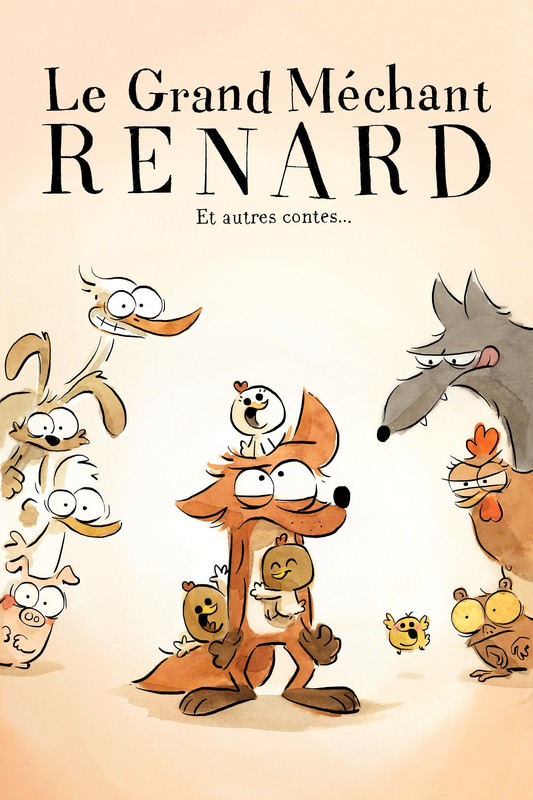
This delightful French animated film is set up as three short plays, put on by the animals in a farmyard. In Baby Delivery, Pig and his dimwitted friends, Rabbit and Duck, must fill in for an injured Stork. The Big Bad Fox sees Fox accidentally become mother to three chicks he steals for himself and Wolf to eat. In Saving Christmas, Duck believes he has killed Father Christmas and he, Rabbit and Pig must fill in for him, as they did for the Stork.

The Big Bad Fox and Other Tales is this year’s Family Gala screening at the London Film Festival, this is the strand that contains the films pitched at children, but this is a true family film. It will delight children (I’d suggest it for ages six and over) but, without aiming jokes over children’s heads, it should also work for adults. The animation style is very different; a little sketchy, but beautifully simple and full of character rather than crude, but the tone of the film has much in common with classic animated shorts. The slapstick gags come thick and fast, with the timing and execution of classic era Tom and Jerry, while the way these moments combine with the verbal humour recalls Looney Tunes strongly (especially in the relationship between Pig, Rabbit and Duck).

There are some wonderfully absurd touches and running gags to be enjoyed; the chickens forming a self-defence group because the guard dog is lazy, the calamities that happen to Pig’s house and Little Michel, who pops up in the last two stories to endearing and hilarious effect.

Any further review of this film would amount to my repeating my favourite jokes, which would rather spoil what is a wonderfully enjoyable film. I will say to stay in your seats during the credits as during them there are some lovely jokes, a recipe and a closing moment that seems to be a nod to Michigan J. Frog and sent me out of the cinema with a mile wide smile on my face. This may be pitched as a kids film, but it’s for anyone with a functional funnybone.
★★★★½

The Day My Father Became A Bush
Dir: Nicole Van Kilsdonk
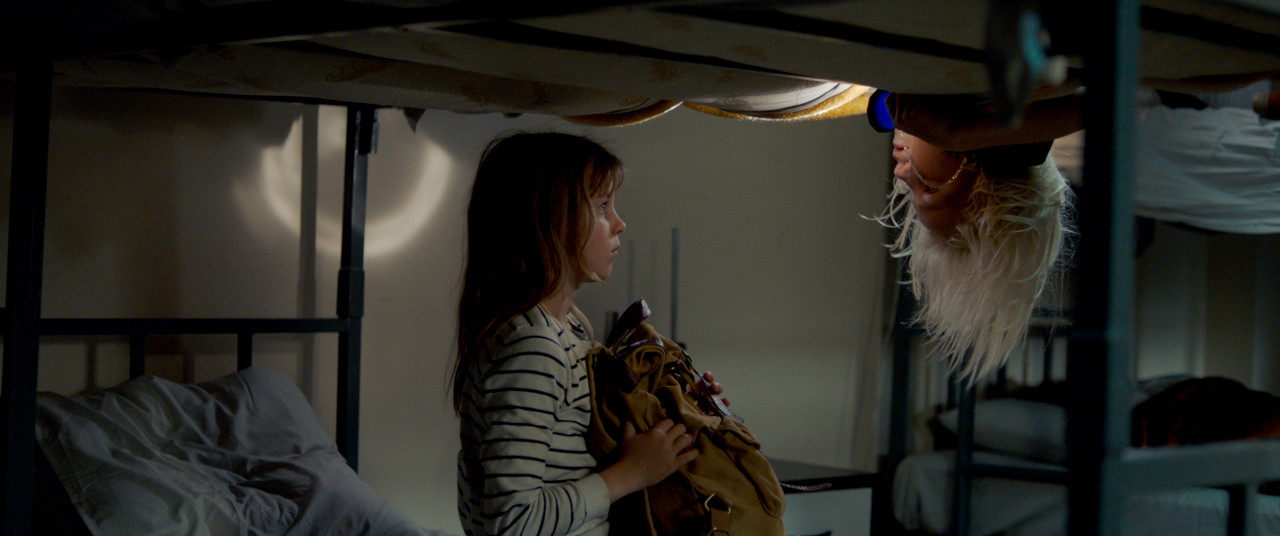
Toda (Celeste Holsheimer) is ten years old and lives with her pastry chef father (Teun Kuilboer) in an unnamed country. When war breaks out between ‘The Ones’ and ‘The Others’ Toda’s grandmother comes to stay, while her father is called to fight. Eventually it becomes too dangerous at home and Toda is sent abroad to join the mother (Noortje Herlaar) she doesn't know. Along the way she gets separated from the people taking her and must make her way on her own.

I am a great believer that children’s cinema can and should be much more than mindless entertainment. The Day My Father Became A Bush tackles some big issues: war and its futility, displacement and the dislocating reality of suddenly becoming a refugee, but does it from a child’s eye view, making those issues comprehensible for its target audience. A big part of this success is in the way it addresses war. Nicole Van Kilsdonk never explores what the fighting is about or whether we should see ‘The Ones’ or ‘The Others’ as the good guys in the conflict. This isn't what’s important to Toda, what matters to her is that her father is away and that his camouflage be good enough to make sure he comes home (in one of the film’s most quietly touching scenes she puts branches on his helmet so ‘even birds will think you’re a tree’). 

Ultimately, the film says, which side we’re on doesn't matter much. Her father wears a blue badge but at one point Toda finds herself sharing a shack with a man wearing a yellow badge, soon she’s sharing food with him and, sweetly, helping him learn to give orders (he has deserted because he found he wasn't assertive enough for his command role. This scene is a fine example of the way the film leavens its messages with humour and heart.

Toda is a great character for young girls to see and identify with. She’s inquisitive and intelligent, brave in the face of scary situations and compassionate with a slightly younger boy who attaches himself to her, whom she nicknames Stickie (Matsen Montsma). She’s also just a typical ten year old, who calls herself a daddy’s girl. As Toda, Celeste Holsheimer gives a performance free of anything actorly or precocious. She hits the funny moments nicely, but is particularly adept in the dramatic scenes, especially towards the end of the film when, having lost her mother’s address, Toda finds herself a refugee.

The Day My Father Became A Bush asks kids to engage with some big themes, but it takes them gently through those ideas, leavening them with humour and, even in the film’s toughest moments, the optimistic outlook that Toda radiates. It’s an entertaining and intelligent film and an ideal opportunity to discuss some challenging subjects with your kids. 
★★★

Oct 15, 2017

24FPS @ LFF 2017: Suspiria

Dir: Dario Argento
While he continues to dilute his legacy with garbage like Giallo and Dracula 3D (and the rest of the last two decades), it’s a fine time to be reminded that, at one time, Dario Argento made some of the most visually stunning horror cinema ever seen. Suspiria, recoloured to its intended luridness and remastered in 4K for its 40th anniversary, is a brutal, beautiful, masterpiece.

The paper thin story of Suzy (Jessica Harper), an American ballet dancer, going to a famous dance academy where people begin to disappear and be killed, couldn’t be any less important. This isn’t one of Argento’s many whodunnits, instead he simply wants a framework on which to hang the film’s stunning set design, lighting and its graphic gore.

Suspiria’s tagline famously told us that the only thing more terrifying than its last 12 minutes were the first 92. I agree in part. The film’s first 15 minutes or so, up until the first two deaths have been shown, are a self-contained masterwork. The vivid lighting, drenching what should be a drab rainy night in unnatural colour, the striking set design - all sharp lines and symmetry - and the Goblin score; ethereal at first, building to something sinister, all these things combine with the shock of sudden violence in a sequence that envelops us completely in the world of the film.

The scenes in the dance school, with their obvious dubbing and over the top line reads, aren’t the film’s strongest suit, but the disconnection from reality that dubbing often lends is, intentionally or otherwise, effective in further dislocating us from reality, just as the film does to Suzy. This isn’t to say that the performances don’t work for the film though, the delicately pretty Jessica Harper isn’t one of horror cinema’s tougher final girls, but our journey through the world of the film is much like hers - slightly surreal, sometimes unnerving, sometimes confusing - and Harper takes us along on that journey effectively. Most memorable among the cast is Alida Valli, (over)playing strict ballet teacher Miss Tanner to often very funny effect.

Argento sprinkles scares, surrealism and beautifully designed slayings throughout the film, but the tagline undersells the film’s last 12 minutes. Suzy’s surreal journey through the ballet school to find the secret at its heart contains some of Argento’s most incredible and iconic visuals, bringing the film to a crescendo. On this viewing, with the picture so vividly remastered and the sound pounding into my ears, I saw Suspiria on a non-narrative level. That’s probably how it works best, as a purely sensory experience; shape, colour and noise colliding into the most beautiful of nightmares. 
★★★★ 

Oct 12, 2017

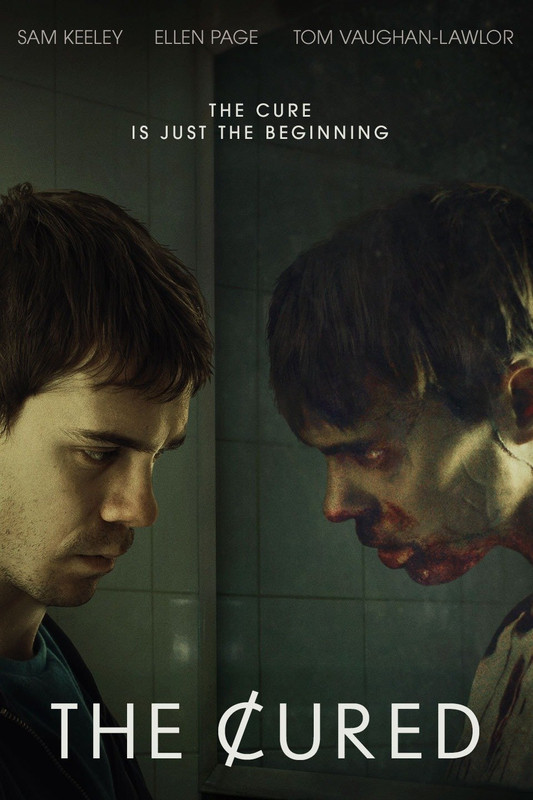
24FPS @ LFF 2017: The Cured

Dir: David Freyne
The zombie movie is a subgenre with a well established set of cliches. Those can be done poorly, they can be done well, but it’s not frequently that anyone brings a truly new idea to the table. Credit is due The Cured for having at least one original idea that opens up new avenues to explore in zombie cinema. Unfortunately, it does less with it than you’d hope.

In Ireland, the Maze virus has devastated the population, turning swathes of people into zombie like creatures. There is hope though, a cure has been found that has treated approximately 75% of cases, curing the rage and bloodlust, making the cured immune to further infection, but leaving them with the memories of what they did while they were infected. Slowly being returned to society, the Cured are largely rejected. As part of the third wave of returnees Senan (Sam Keeley) moves back in with his sister in law Abby (Ellen Page), he’s trying to reintegrate, but Connor (Tom Vaughn-Lawlor), Senan’s friend from quarantine, is trying to him to join a group of Cured planning to fight back against their treatment and the planned killing of the 25% of apparently incurable infected.

The central idea of The Cured is genuinely interesting. I can recall seeing films featuring attempts to treat zombies before, but never one that examined the idea of what would happen if that treatment were effective. The political side of the film has some potentially powerful parallels in how we view other ‘outsiders’ in society with fear. It feels especially relevant to the idea of how prisoners are treated and try to cope after their release. Sadly, it’s all a bit blunt and what starts out as quite a refreshing idea ends up being depicted through rather cliche imagery before descending into little more than the umpteenth riff on 28 Days Later.

The performances are all fairly solid. Sam Keeley has an effective melancholy as Senan, holding in a secret about the things he did while he was infected and Tom Vaughn-Lawlor makes for a forceful, if decreasingly complex, villain. Ellen Page is oddly cast, but she’s got some strong moments, never more so than when Abby confronts Senan about that secret. It’s also fun seeing her cut loose with an axe towards the end of the film, I wish she’d been a bit more involved in the action.

David Freyne does what he can with a limited budget, but those constraints are visible, particularly in how frequently the film cuts away, rather than spend on what could be quite an expensive gore effect. The grimy look isn’t unfamiliar from other recent zombie films, but Freyne finds some memorably bleak shots and, tonally, gives the film an admirable viciousness that goes along with its dystopian outlook. 

The Cured doesn’t break as much new ground as it would like to, but it has capable performances and some new ideas, even if it doesn’t expand on them entirely satisfyingly.
★★

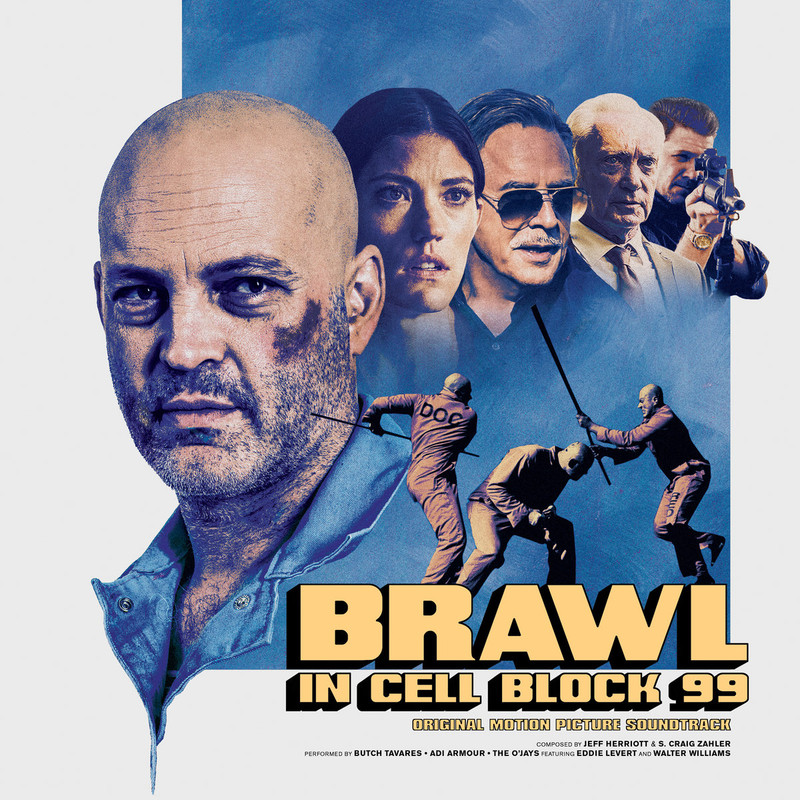
24FPS @ LFF 2017: Brawl in Cell Block 99

Dir: S. Craig Zahler
S. Craig Zahler divided people with his debut, Bone Tomahawk; a slow burning revenge western with something more akin to Cannibal Holocaust as a third act. I was a fan. It was vicious, but very well shot, darkly funny and character driven. For his second film Zahler has changed the setting, but delivers a similar mix of ingredients.

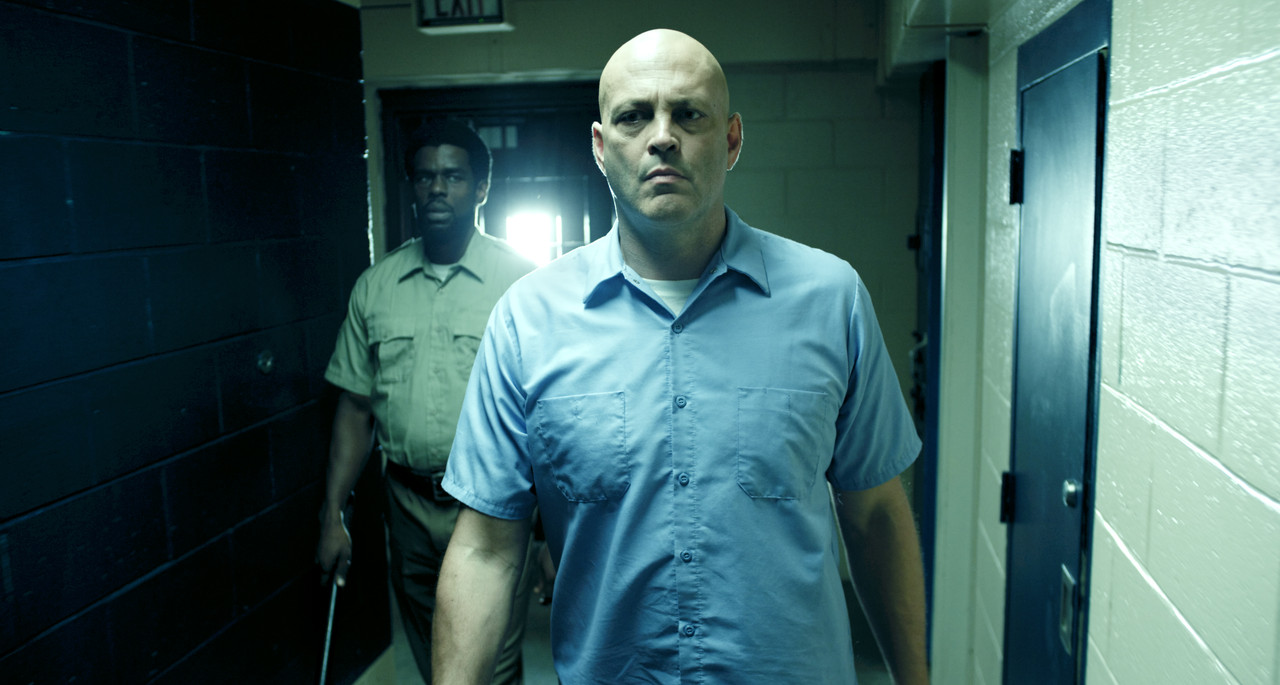
When Bradley (Vince Vaughn) loses his job he goes to work for a friend, running heroin and meth, but when an exchange goes bad he ends up with a seven year prison sentence. As soon as he’s sent down the cartel kidnap Bradley’s pregnant wife (Jennifer Carpenter) and demand that, for her freedom, he get to Cell Block 99 of a maximum security prison and kill a man for them.

Brawl in Cell Block 99, like Bone Tomahawk before it, takes its time in unfolding what is ultimately a very simple story. Some audiences might find the wait for the brawling a little drawn out, but for me the focus that Zahler’s screenplay puts on establishing characters and relationships and the major screentime he puts into that effort, adds a lot of weight to what could be little more than series of punch ups with some talking in between them. In Bradley, Zahler has written a layered character. He’s never someone we can entirely relax around. Early on, when his wife confesses an affair, he takes her car apart with his fists, punching in widows and tearing off the bonnet. He’s clearly capable of extreme violence, but by the same token we see that he’s not indiscriminate. After destroying the car he talks with his wife and when she goes to approach him at the end of the scene tells her not to, he still needs to cool down. This is a great shorthand encapsulation of the character; a coiled energy that he wants to keep under control, even if he sometimes finds it difficult. Bradley’s no hero, but the film establishes that he has some sort of moral code, and that helps us stay on this journey and, in some odd way, root for him.

I’ve never rated Vince Vaughn. I wasn’t a fan of Swingers nor of many of his comedies, but I did think he turned in a very good dramatic performance in Hacksaw Ridge. This, however, is even better; a career redefining performance. As Bradley, Vaughn is shaven headed and physically imposing, at times in the film’s brutal last third his face is so contorted and focused on the violence he has to do that he essentially becomes a sentient fist, but his performance is anything but a one note show of force. That early scene with Carpenter and others in the film demonstrate an emotional depth we haven’t seen from Vaughn before and Zahler also makes use of his star’s comedic timing. Bradley often has a sarcastic line, especially to authority figures, and Vaughn underplays these nicely, using them as Bradley’s way of getting a little power back as much as making a joke.

The other performances tend towards the broader end of the scale, with Udo Kier (as one of the cartel’s middle men) and Don Johnson (a hammy prison warden) stealing scenes. Marc Blucas, sadly, remains about as anonymous as he was on Buffy, but he’s not in the film long enough for it to matter. It’s also a bit of a shame that Jennifer Carpenter, who is good here and in just about everything else I’ve seen her in, is underused. There was a similar problem with the wife role in Bone Tomahawk, and Zahler could certainly benefit from writing more rounded female characters.

The screenplay is largely excellent; cleanly plotted, with strong character beats and often amusing dialogue, but it’s in the direction that Zahler excels. Visually the film is fairly cold, reflecting the poverty Bradley finds himself in early in the film and the atmosphere of the first prison nicknamed ‘The Fridge’ (for the initials of its full name, but you could just as easily see it as a cold meat storage facility). In the last act, inside the maximum security prison, the visuals get ever danker and darker. At a certain point it begins to feel like a descent into hell, with only orange jumpsuits, blood and bone providing splashes of colour that aren’t black or brown.

The violence is shot with an absolutely pitiless eye, which will surprise nobody who saw Bone Tomahawk. Skulls are exploded, heads stomped, arms ripped open, faces stripped off and there is plenty of fluid, hard hitting, fight choreography. As an action director Zahler stands back and allows the fights to take place in medium to wide shots, showing us that Vaughn is doing most if not all of his own stunts and how the choreography works within the space. It’s exactly how I like to see action staged, none of this hard to see shakycam crap. The level of violence will mean that Brawl in Cell Block 99 isn’t for everyone (or even for everyone who thinks they might ordinarily like a film with this title), it drew cringing from my audience, and even made my toes curl on occasion. That, for me, is a positive. Violence should be cringemaking, should be upsetting, and Brawl in Cell Block 99 certainly manages that.

For me, this is one of the highlights of the London Film Festival this year. It’s proof that Bone Tomahawk was no fluke and that S. Craig Zahler is a name for fans of extreme cinema to keep a very close eye on. This is two hours of nasty, brutal, often very funny, character driven grindhouse cinema. I loved it.
★★★★½

Oct 11, 2017

24FPS @ LFF 2017: More short(ish) reviews

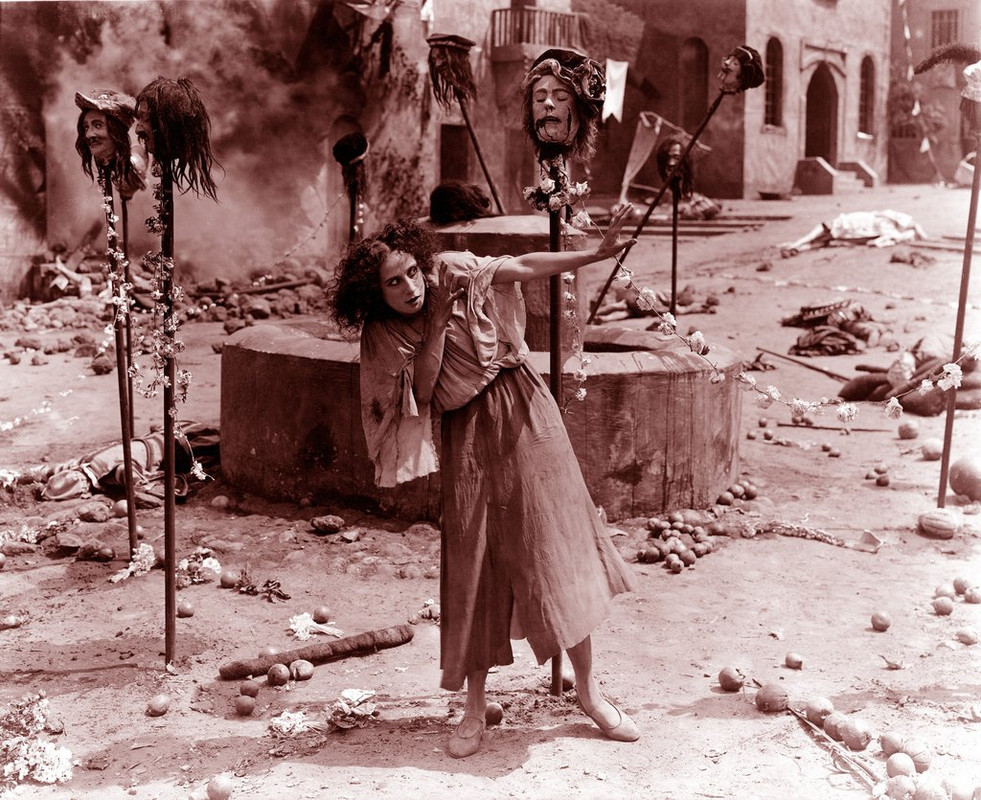
The Dumb Girl of Portici
Dir: Lois Weber
I confess I am far from an expert on silent cinema. It’s a medium that I think is in many ways distinct from sound film, because of the many differences in style, technique and in the basic way it communicates with us. I have seen a good few silent films, from the established classics - Keaton, Chaplin, Griffith - to a few deeper dives, such as Oscar Micheaux’s Within Our Gates, but I still feel I need further education. It is worth bearing all this in mind here, because some of the difficulties I had with The Dumb Girl of Portici may be based on that unfamiliarity, rather than the inherent qualities of the film itself.

The story is based on an opera about Fenella (Anna Pavlova), a mute gypsy girl who falls for a nobleman. The film tells the story of their affair, the victimisation of Fenella because of it and the revolution it precipitates, led by Fenella’s brother (Rupert Julian, later the director of the silent Phantom of the Opera).

For most modern audiences, The Dumb Girl of Portici will be most notable as the only feature film role of the legendary ballet dancer Anna Pavlova. In this respect it is a hugely important film, documenting a great artist whose work was otherwise only seen live. Pavlova is an interesting presence in the film, she is the top billed star, but the lead role arguably belongs to Rupert Julian and for much of the film, particularly the second half, Pavlova is treated as a rag doll, pulled and carried from scene to scene as people fight over her. It can’t be denied though that she is magnetic on screen: she captures a wild, expressive character with grace and beauty of technique. Most of the time Pavlova is entirely in character, she does some dance in the story, but it is only at the very beginning and very end of the film that we see her as a ballet dancer, her pure technique captured.

The film itself definitely has energy within its frames, especially in the surprisingly bracingly violent riot scenes of the second half, but Lois Weber’s use of the camera is otherwise rather static. Camera movement is very minimal, but tinting is used to excellent effect, again especially in the red toned riots. It’s worth noting that performance in silent film of this era was much more gestural and theatrical as a rule, but even by those standards, I found much of the acting in The Dumb Girl of Portici overblown, particularly Rupert Julian’s performance and that of William Wadworth as Pietro, literally twirling his moustache as a guard who turns on the aristocrats, then turns on the rebels as soon as he is stopped from raping Fenella.

I’m glad I saw The Dumb Girl of Portici, just for the opportunity to see Pavlova and, for the first time, to experience a silent film with a live piano score, but while this is clearly an important film, for me it isn’t one that has aged brilliantly.
★★★

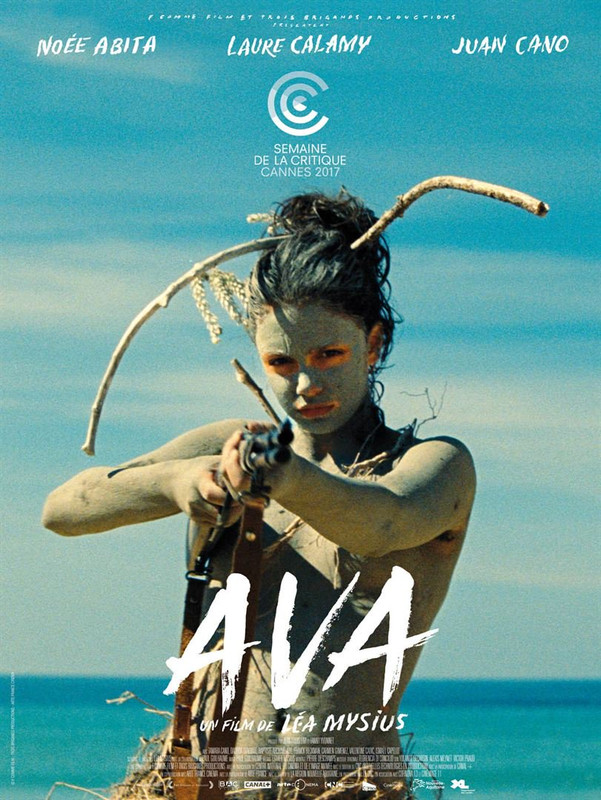
Ava
Dir: Lea Mysius
There may be something in the water in France. They seem to excel at making coming of age films, particularly about girls. Lea Mysius debut focuses on the titular Ava (Noee Abita), a 13 year old girl holidaying with her mother (Laure Calamy). Ava has just been told that she is going progressively blind, and this may be the last summer in which she is able to see. On the beach Ava encounters Juan (Juan Cano) and becomes fascinated first with his dog and soon with him.

Ava is very much a film of two halves. The first is beautifully aimless. Ava wanders the beaches, steals Juan’s dog, flirts with a boy her age and acts out in various ways against her mother, perhaps annoyed that she’s taken a much younger local man as a lover. I looked at this part of the film as being about Ava’s wanting to see as much as possible in this ‘last’ summer and it finds great poignancy in that, notably in the paintings in Ava’s room, white circles of decreasing size, surrounded by blackness.

Noee Abita makes an outstanding debut as Ava, capturing the duality of that confusing age when you are still a child, but increasingly desperate to break out of that and into ‘adulthood’, when your parents might be telling you one thing and your body another. Abita has the ability to look both older than her years and incredibly childlike, sometimes in the same moment, and the scenes that play these emotions off against each other are the film’s finest moments. Ava is aware that her body is changing, and of the effect it can have on people, but she doesn’t truly understand either. In one moment, as Juan goes to leave, she flashes him, trying to make him stay. It’s a moment that is both funny and sad in its naiveté.

Laure Calamy, the only experienced actor in the main cast, is also highly effective as Ava’s mother, who is very much enjoying what seems like a second wind of youth, having just passed 40 and with a year old daughter to look after as well as Ava. She’s caring, but not the most responsible parent, leaving Ava alone to care for her young sister. She’s frank with Ava, telling her daughter that she lost her own virginity at 13, that she understands what’s going on in her head right now, but to try and wait. Ava, for her part, wants the Earth to open up and swallow her at this point. This whole first section of the film is an acutely observed and played coming of age film. 

Then Lea Mysius decides her film needs a plot.

The second half of Ava diverges wildly from the first, expanding Juan’s role and suddenly, without warning, becoming a road movie. Ava’s encroaching blindness remains as a plot point, but all but vanishes as a theme, it’s depicted but never truly explored. I don’t want to go into what happens in the film’s second half, for fear of spoilers, but the film splits in two at a certain point, just after a carefree montage of Ava and Juan. That montage strains credulity, but the next scene breaks it, and nothing after rings true with the first half of the film.

It’s a terrible shame that Ava abruptly stops working, because for 40 minutes or so it is an extremely promising debut, beautifully shot, sensitively written and acted. Despite its problems, this film still points to good things from Lea Mysius in the future, but this could have been brilliant, and isn’t.
★★★

Oct 9, 2017

24FPS @ LFF 2017: Short(ish) reviews.

Little Crusader
Dir: Václav Kadrnka

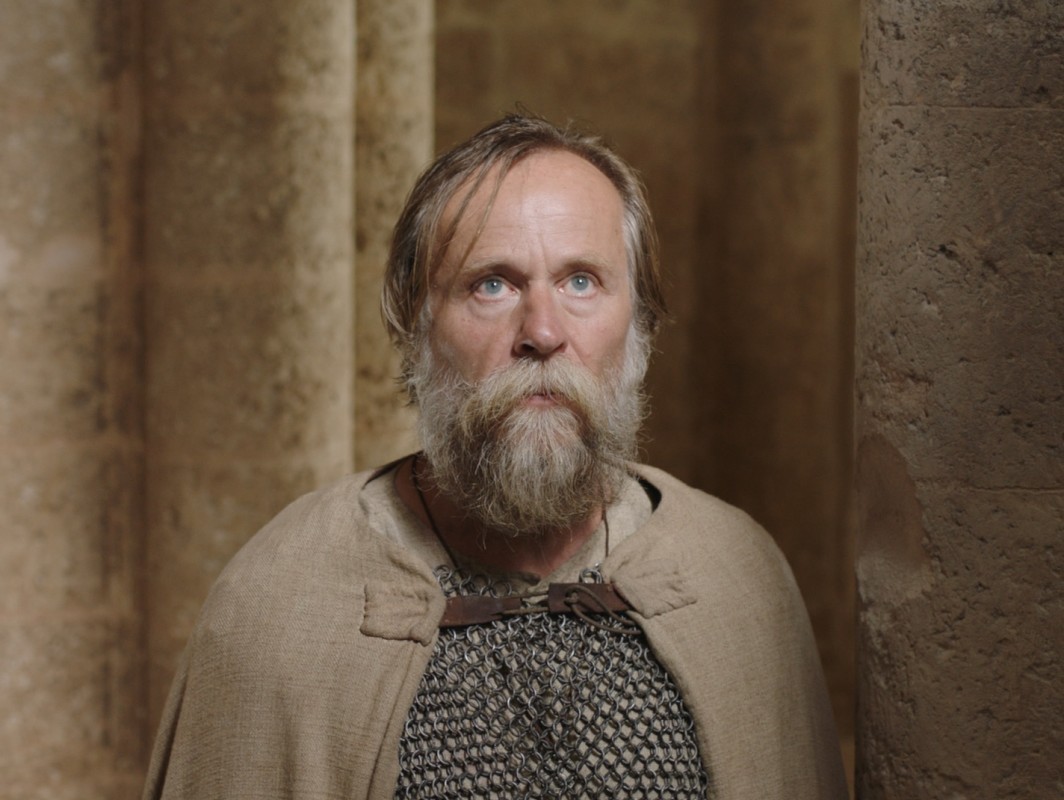
Set during the crusades, Little Crusader follows Borek (Karel Roden) on a near silent quest to find his young son (Matous John), who has run away and apparently vanished into the war.

The film opens with a silent ten minute sequence following the young boy. He puts on his tiny armoured breastplate, hangs his sword on his belt and moves around the castle where he lives and the surrounding area, before lowering the drawbridge to let two men in and walking off on his own. This sequence has some of the film’s most arresting images, not least the first, as an expanse of white gives way to show a Knight walking towards the camera. At first I thought this white was snow, but it turns out to be a pair of curtains, the crack between them flapping in the light breeze.

The film is stunningly composed throughout, with Vaclav Kadrnka making striking use of the 4:3 frame, particularly in long held shots. In one of these we see Borek finally arrive in the thick of the Crusades. In one unbroken shot he marches across the desert, cutting down one enemy after another. Another especially memorable long take has the medallion belonging to Borek’s son passed through what seems like an unending parade of children’s hands, searching for its owner. These and other shots do a hugely effective job of communicating the film’s story through pure imagery. The other notable thing about the imagery here is how incredibly textured it is. Every detail - hair, tree bark, the blades of swords, the fabric of a boat’s sail, feels like you could reach out and touch it. I don’t know how the film was shot, but if it’s digital then it’s some of the most detail rich digital I’ve seen.

The problem is, simple as the film is and short as its running time may be, I’m not sure it’s much other than stunning looking. In the first ten minutes we develop an attachment to Borek’s son and not seeing his side of this story seems a shame. The film is gorgeous, but emotionally it kept me a little distant. Still, if you’re fond of slow cinema, of following a character on a very literal journey, Little Crusader has some great rewards in store.
★★★½

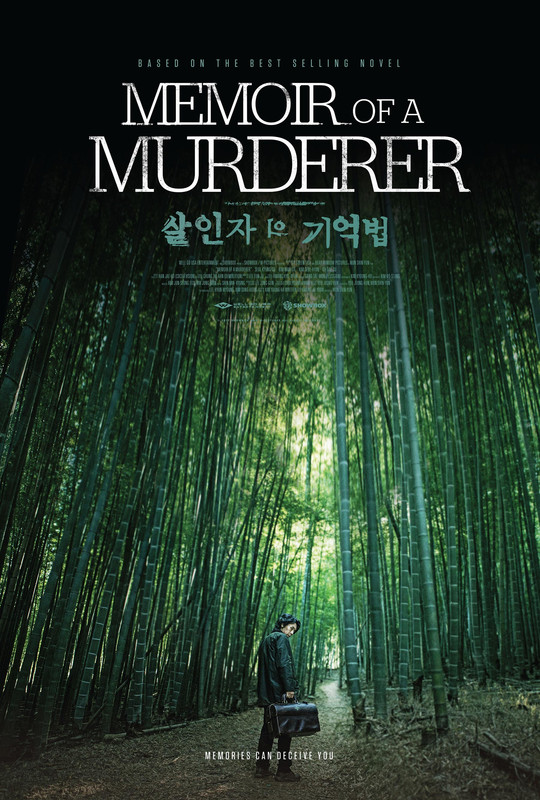
Memoir Of A Murderer
Dir: Won Shin-yun
It’s always useful to have a high concept, a brief logline that can tell a film’s potential audience what they’re in for. Whatever else you think of Memoir of a Murderer, you have to admit that ‘Memento, but with two serial killers, one of whom has dementia’ is a hell of a high concept.

Buyng-su (Kyung-gu Sol) has recently been diagnosed with alzheimer's, possibly as part of the after effects of a car accident 17 years ago. As his memory begins to go, two things remain: his love for his daughter Eun-hee (Seol-Hyun Kim) and his sense memory, the reflexes honed in a career as a serial killer, which ended the day of the accident. When he’s involved in another accident Byung-su comes to believe that the other driver, Tae-ju (Nam-gil Kim) is an active serial killer of young girls. Unfortunately Tae-ju is a cop, and Eun-hee’s boyfriend.

Memoir of a Murderer uses its killer hook to fine effect for most of the running time. Kyung-gu Sol pitches his performance as Byung-su expertly, vacillating between making the character a somewhat pitiable old man struggling with a disease and allowing us glimpses of the organised serial killer who says he only killed ‘bad’ people but, one suspects, is simply self-justifying. The film unpacks the facts about Byung-su, who is by his nature as both a serial murderer and a dementia sufferer a deeply unreliable narrator with patience, managing to land most of its twists as true surprises. Equally good is Nam-gil Kim, whose performance becomes ever more gleeful as he realises that he can let his true nature slip in front of Byung-su, because he’ll soon forget anyway.

Won Shin-yun balances tone well, undercutting the horror with some very black humour. As the film ramps up to its most operatic moments towards the end, it also hits on the best comedic use of Byung-su’s memory problems coming suddenly into play, combining a laugh and a scare in one moment. Won, however, isn’t a stylist on the level of a Park Chan-wook or a Kim Jee-woon and though the film has an effectively cold style and is well shot throughout, it’s not exactly shot through with personality. At just a shade under two hours, the pace flags a few times and the ending, in particular, could probably be tightened, which would also mean the film could pull back on some overblown moments that, for me, slightly sour the effective chill of the rest of the film.

Memoir of a Murderer is an entertaining ride, a little bumpy at times, but it’s got some thrills, some chills and more than a few guilty laughs. It’s worth a look.
★★★

Oct 8, 2017

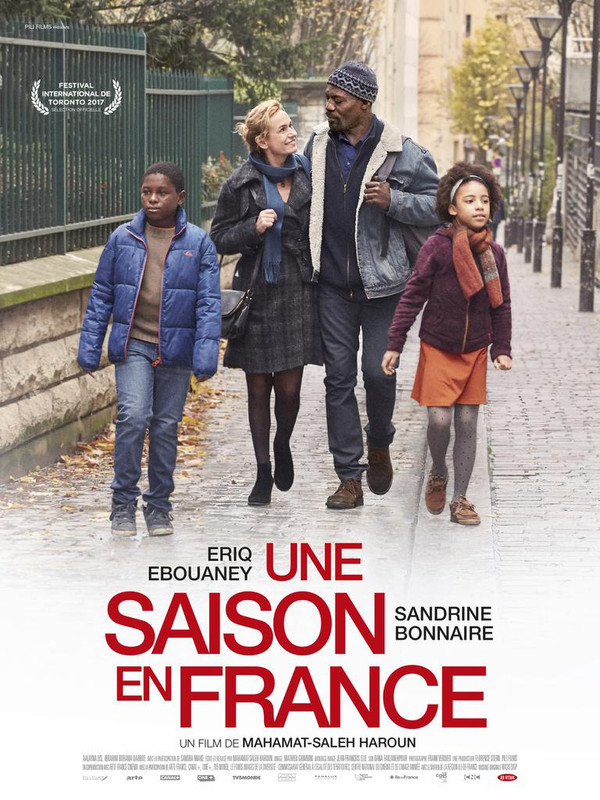
24FPS @ LFF 2017: A Season In France

Dir: Mahamat Saleh Haroun
It is easy, and probably comfortable, for us to view the current refugee crisis and the people seeking asylum in Europe in the abstract. When they are seen on a UKIP poster as an endless line of faceless people we don’t have to consider the individual stories that make up that line. I think a lot of people are afraid that if they did engage with those individual stories they would find that they empathise with some of them. That is very much the aim of A Season In France.

Abbas (Eriq Ebouaney) and his young son and daughter have escaped Central African Republic, but Abbas’ wife was killed by rebels before they could leave their home country. Now making their home in France, the children go to school while Abbas works at a market stall and has established a relationship with Carole (Sandrine Bonnaire). Abbas’ brother Etienne (Bibi Tanga) is also living and working in France, and the whole family is waiting to hear whether their asylum appeals have been granted. When they are denied life, inevitably, becomes even harder.

A Season In France has a difficult circle to square. It must at once be a specific story, taking us into the lives of Abbas, his family and Carole but it also will be asked to represent something larger, to speak for a wider refugee experience. That it manages this trick is one of its greatest achievements. While there was dialogue written, Haroun apparently likes to allow his actors to find natural unscripted moments within scenes, and we can feel the evidence of this balance throughout. This is especially clear in the performances of Aalayna Lys and Ibrahim Burama Darboe as Abbas’ children, Asma and Yacine. Neither of their performances appears scripted. Instead we seem to get a glimpse of kids being kids together, whether they’re toughing it out eating together in a cramped kitchen or they are finding a moment of escape as they help Carole celebrate her birthday.

Those moments of escape feel precious because there don’t seem to be many. Life is tough waiting to hear whether you’re to be allowed to make a new home when, in essence, you already have. The scenes at the court of asylum are wrenching - crowds of people being drip fed through to check their names against a list and discover their new status. We are left to imagine the details of what Abbas and Etienne experienced in their escape, but we see that Abbas still has nightmares about it and Etienne, having gone from being a teacher to working security, is clearly terrified of being returned. The point, ultimately, is that the fact they made the perilous and traumatic journey should tell us more than we often allow it to.

The naturalism that Mahamat Saleh Haroun captures in his sensitive work with the children is also reflected in the other performances. Eriq Ebouaney plays Abbas as a man remaining strong for his kids, for Carole, for Etienne, even as he inwardly accepts the inevitable. When those walls crumble and we see the vulnerability that lies just under that strong surface, when Abbas wakes from another dream about his wife, or cries with Carole, it’s deeply moving. Sandrine Bonnaire is typically excellent as Carole. She plays her as a woman without ulterior motives, who simply cares for Abbas and for his children. When we meet them the relationship is already established and we get a sense both of their chemistry and their affection for each other and the difficulty that Abbas has had in letting go of his wife. In a smaller role, Bibi Tanga brings warmth as Etienne. His story is just as affecting as anything else in the film, with a shocking sadness that intrudes without warning.

It would be easy for A Season In France simply to be depressing, and its conclusions are, but there is a lot of light let in to this story, a lot of warmth along the way. The film humanises and individualises a group of stories too often dismissed because of fear and prejudice. In that alone it is valuable, but it’s also an engaging, sometimes enraging, piece of drama in its own right.
★★★★

Oct 7, 2017

24FPS @ LFF 2017: Apostasy

Dir: Dan Kokotajlo
In a time when we worry constantly about religious fundamentalists and their ability to kill in the name of their faith, we tend to dismiss Jehovah’s Witnesses as just those people we slam the door on when they drop by. Dan Kokotajlo’s feature debut tells a fictional story, but it’s one grounded both in what that church teaches and in a family we can believe could live on just about any street, in any town.

Alex (Molly Wright) has had an anaemic condition from birth, and her life was saved minutes after it started by a blood transfusion. Alex’s family are Jehovah’s witnesses, the transfusion causes her guilt and she, supported by her mother Ivanna (Siobhan Finneran), signs a document stating that, now she’s 18, she refuses consent for any transfusion. Alex’s older sister Luisa (Sacha Parkinson) is less devout. When Luisa becomes pregnant she is expelled from the congregation and her mother and sister are told that they must shun her.

Apostasy made me furious. I mean that as a great compliment, because that’s clearly what it’s aiming for. The film is quiet, trading much more - for the most part - on what is not said and not done than what is, but that reserve can’t mask the fact that this is an angry film that wants to address in a forceful way how even religions we don’t usually lump in with those that are most restrictive seek to control people, especially women. Happily, Kokotajlo doesn’t let the film devolve into a lecture, instead he makes us feel this anger through the storytelling.

The film uses its low key style to draw us into the family and their larger community, it shows us on a micro scale the constant reminders that you have to please God first. For instance that Witness meetings must come before Luisa’s education, even though she only has one more class to take to complete her college. We can see how this burrows into Alex’s mind, how it is what has made her ashamed of the fact she even survived infancy, revealing it as a shameful secret to the young worship leader who shows a romantic interest in her. The most upsetting thing here, chillingly shown in Siobhan Finneran’s performance, is that while Ivanna obviously loves her daughters, that love is second to her love of Jehovah and to a large degree conditional on Alex and Luisa’s love for him.

Finneran, Molly Wright and Sacha Parkinson form a believable family unit. The relationship between the sisters is especially well drawn, with Wright giving us some heartbreaking moments as it’s clear that, when she leaves the house, Alex wants to reach out to her sister but only has the tools to do so through talking to her about Jehovah, rather than on an empathetic level. Equally effective is the singular moment when, without acknowledging it aloud, Wright allows a flicker of recognition to cross Alex’s face as she sees hypocrisy in the moral of a Bible story. It’s a devastating moment, and becomes more so soon after.

The third act becomes a little more strident, stating its case more than it has in the first hour, but by this point the characters and the excellent performances are so well established that these moments remain grounded and feel real for the characters in the moment. Still, even in these scenes, it’s the things unsaid that speak loudest, flickers in Finneran and Parkinson’s physical performances and in the way the camera maintains distance between them. An intelligent, urgent and highly credible film, this is an especially promising first feature from a British filmmaker.
★★★★

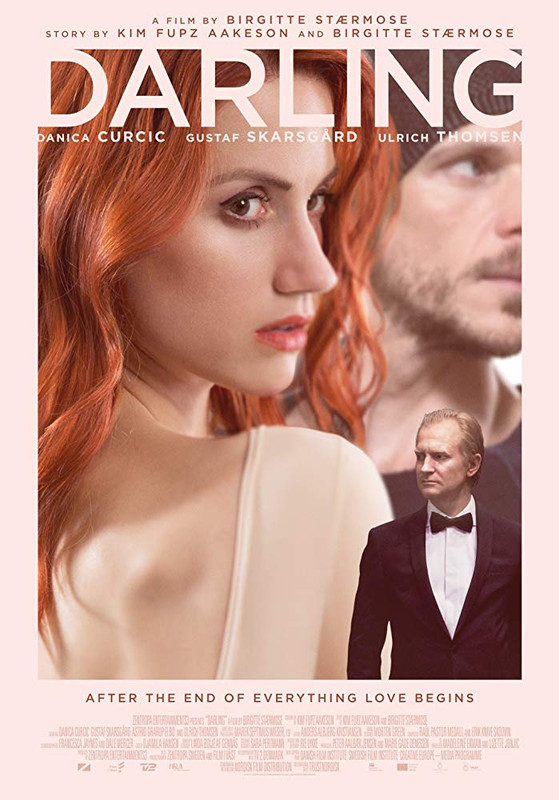
24FPS @ LFF 2017: Darling

Dir: Birgitte Stærmose
Darling is about a prima ballerina named Darling (Danica Curcic), brought back to her home company in Denmark, along with her choreographer boyfriend Frans (Gustaf Skarsgård), to create and perform a new version of Gisele. Darling has been hiding severe pain for a long time and when she collapses in rehearsal it is clear that the problem is career ending. Darling instead offers to assist in training her replacement, Polly (Astrid Grarup Elbo, making an excellent film debut) but it’s hard to tell whether her tough methods are designed to help Polly or to undermine her.

We’ve seen the basic beats of Darling before: artistic jealousy fraying a relationship and the agony of being replaced, superseded for your director, your audience and possibly your partner by a younger, fresher model driving an artist to extremes. Given that, it all comes down to execution. While it doesn’t deal in the duality and split personality ideas, the closest recent analogue is probably Black Swan, but Darling feels more grounded, lacking much of that film’s tendency to melodrama. 

This is exactly why Darling is, at times, unnerving. Danica Curcic gives an excellent performance which never quite lets you read her motives in Darling’s training of Polly. It’s clear that she takes some perverse pleasure in making the the younger dancer suffer. One notable scene sees her begin to seduce Polly, only to break off and say “bring that feeling to rehearsal tomorrow” just as Polly starts to go with the moment. Is this a cruel method of drawing out a feeling she actually wants infused in the performance, or is Darling only trying to hurt her young, beautiful, replacement? The same question arises throughout. Only one moment feels truly sinister, when Darling administers the same medications to Polly that she used for years to hide her pain. This scene feels like Darling is attempting not just to hurt Polly but to turn her into a clone of herself and perhaps make Polly, eventually, end her career in the same painful way she was forced to.

The same back and forth that we feel about Darling - is she trying to help or to hurt - is something we can see in Astrid Grarup Elbo’s performance. Polly clearly admires Darling, wants her help on the role and is challenged by her training, but we can see the shift as this gives way first to concern then to some degree of fear, alongside confusion at being tod different things by Darling than by Frans.

The relationship storyline between Frans and Darling is considerably less interesting than the dynamic between Darling and Polly. In many ways it’s an mirror image of the process, between lovers rather than two dancers but, while Gustaf Skarsgård gives a fine performance, these scenes never have the claustrophobic intrigue of the scenes between Darling and Polly in the studio.

Birgitte Stærmose directs capably. She creates some memorable images, especially in the stark design of the eventual performance of Gisele and generates an interesting tension between her actors in the scenes between Darling and Polly (the gaze in a costume fitting not long after that interrupted seduction, for instance). The film never hits the same heights outside those sequences, but there is plenty here to hold the interest and I’ll be looking out for Stærmose’s next film.
★★★

Oct 6, 2017

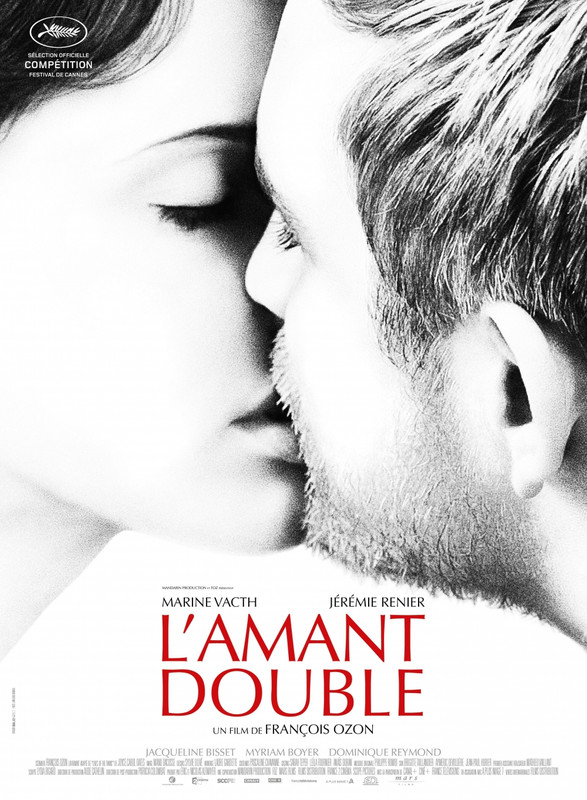
24FPS @ LFF 2017: L'Amant Double

Dir: Francois Ozon
Another LFF, another new Francois Ozon film, regular as clockwork. This is an improvement on his last, the deeply disappointing Frantz, but I am beginning to think that Ozon, like a lot of auteurs who work at a rate of knots, would benefit from taking a break.

Adapted, apparently loosely, from Joyce Carol Oates’ The Lives Of The Twins, L’Amant Double centres on Chloe (Marine Vacth, back with Ozon after an impressive turn in the otherwise poor Jeune Et Jolie). Plagued by stomach problems that her doctors believe are psychosomatic she goes to visit psychiatrist Paul (Jeremie Renier). Paul and Chloe fall in love and soon she has moved in, but the stomach problems return. Having spotted ‘Paul’ on the street, Chloe discovers that this was in fact Louis (Renier again), a twin that Paul doesn’t acknowledge. He too is a psychiatrist and, under the guise of therapy, begins an affair with Chloe that takes her into investigating the dark past of her boyfriend and his brother. 

Whatever you think of Ozon, he’s always been able to make a striking image, and one of the first we see in L’Amant Double is likely to be one of his most controversial. We open on flesh, and as Ozon’s camera pulls out it becomes clear we are watching a gynaecological examination, which then cross dissolves into an image of Marine Vacth’s eye. The film indulges in doubling and near doubling a lot and later we’ll see another image redolent of this one, this time in a sexual, rather than a clinical, context. It’s an audacious beginning, one that suggests the shock tactics of a Von Trier more than it does Ozon’s usual eye, but the film never again goes to these extremes, so it ends up an isolated image calculated to make us sit up at the start of the film, rather than adding up to much.

What L’Amant Double adds up to is perhaps its central problem, because the answer remains ‘not that much’. The themes of duality, twinning and their wrapping up in sexual desire are familiar not just from the likes of Single White Female and Dead Ringers, but Ozon’s own work. A key sex scene here evokes a, sadly, much less disturbing Society as well as a Cronenbergian feel, but Ozon advanced its themes much more interestingly in The New Girlfriend. Other images reveal a debt to Black Swan and, further, to its inspiration Perfect Blue.

The dual role of Paul and Louis allows Jeremie Renier licence to cut loose. A fine actor who previously worked with Ozon on Potiche and Criminal Lovers, Renier clearly enjoys himself as Louis, chewing on his every misanthropic line with glee, having fun with the counterpoint to the rather wet Paul. He’s best in the few scenes in which he gets to slip between personae, but otherwise each role is a bit one note, a well played note, but a singular one. Given that he’s now cast her as a lead in two films, I’m certain Ozon regards Marine Vacth as a big talent. In Jeune Et Jolie she was effective as an ingenue out of her depth, but here, with bigger notes to play in a more melodramatic setting, she seems a little lost at times. I found myself longing for Jennifer Jason Leigh, whose Single White Female performance nails the details and makes the psychology credible, while also hitting the operatic moments perfectly. I’m not sure Vacth totally sells either.

L’Amant Double isn’t a dead loss though. Ozon is clearly having a wonderful time indulging all his influences, and comes up with some amusingly overblown and audacious moments. A shot that takes us down Vacth’s throat to her vocal chords at the moment of orgasm is one of these, a more subtle one seeds a key twist in the museum display that it’s Chloe’s job to guard, while the geometric use of the screen - clean lines doubling Chloe and Paul/Louis in the film’s climax - is visually striking. Ticking off all the references is all but impossible (for instance, when did Ozon see Elle, is a shot of a cat a nod or simply a coincidence)? Ozon saves his best shot for almost last; a sly use of reflection and refraction in a window putting a bow on the film’s themes. Sadly he literalises this idea, getting an effective jump, but undercutting a great image.

L’Amant Double is entertaining but, ironically for a film that has several moments that are literally internalised, skin deep. The themes are an easy read, as is much of the plot (if not how much of it happens in whatever Ozon means by reality here). If you’re a fan of 90’s erotic thrillers then you’ll probably enjoy this and an Ozon fan will have much to do unpicking the surprising influences and contextualising this film among his work. Ultimately though, this is a lightweight film that feels very minor in one of the most interesting cannons around.
★★★

Oct 4, 2017

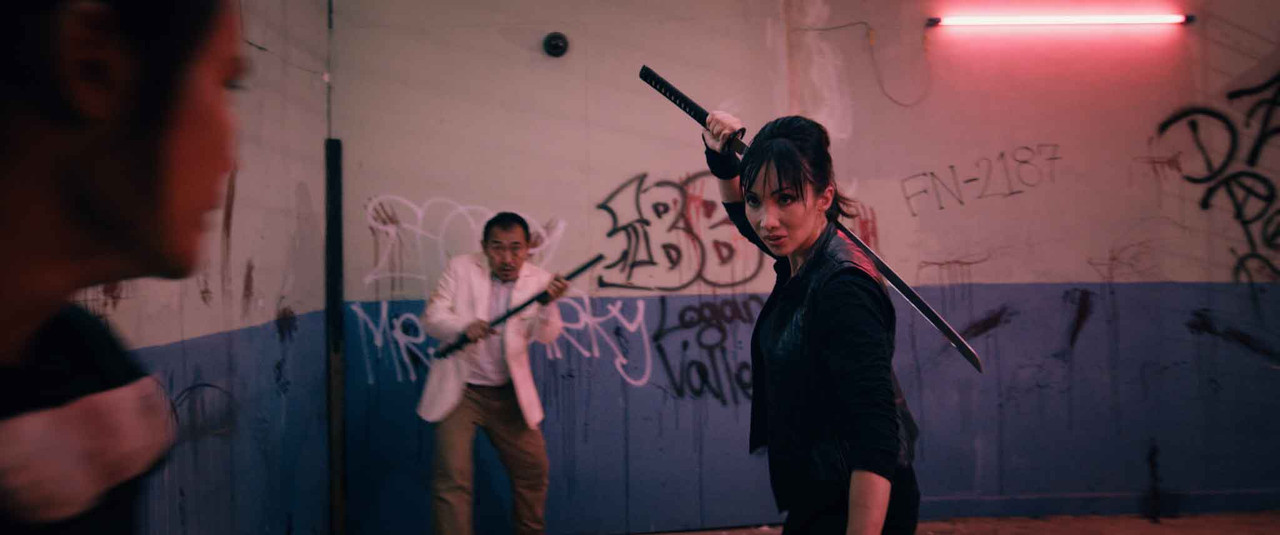
24FPS @ LFF 2017: Jailbreak

Dir: Jimmy Henderson
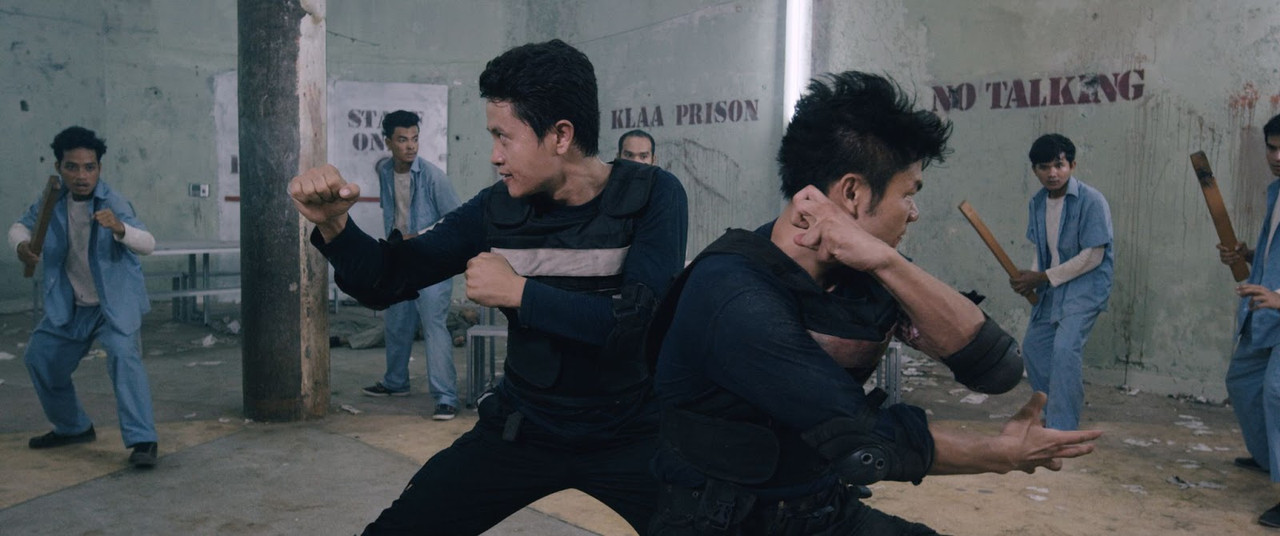
Ong-Bak popularised martial arts films and stars from Thailand. The Raid followed suit for Indonesia and now Jailbreak, which sticks resolutely to the template laid down by The Raid, seems to be attempting to do the same for Cambodia. It may well succeed.

The plot is incredibly simple. Four cops (Jean-Paul Ly, Dara Our, Tharoth Sam and Dara Phang) have to escort Playboy (Savin Phillip), a mobster who is turning on his otherwise all female gang, to jail. Playboy's former boss, Madame Butterfly (Celine Tran), has other ideas and gets someone on the inside to instigate a jailbreak, forcing the cops to fight for their lives and Playboy's.

The structure may be skeletal, but it's all a film like this needs. What the script has to deliver here is a reasonable series of excuses to set up increasingly spectacular fights. In this respect it largely delivers. The pieces are set within 25 minutes and for the last hour or so director Jimmy Henderson is free to let his actors cut loose, showing off Cambodian martial arts style Bokator. Bokator is an impactful style, it looks (as a character observes early on) a little like Muay Thai, with its emphasis on using arms and elbows, legs and knees more than fists and feet. The choreography, however, definitely has a distinctive flavour about it.

Jailbreak sets out its stall right from the first fight scene, a huge brawl just as the prisoners begin to escape their cells. Henderson allows the camera to be dynamic, but he never lets that get in the way of our being able to see the action well and he keeps the geography of the scene intact while following four different sets of fights, which sometimes overlap. While all the fights are impressive the begin to lack variation as the film goes on. The drab setting doesn't help, but it would be nice to see something different from fight to fight; a shift in style, more extensive prop use. When we do get this - when Jean-Paul takes out some prisoners with a machete after they attempt to rape Tharoth, or Tharoth, wielding a pipe, facing off against Madame Butterfly with her sword - these are the fights that stand out, but after that first massed brawl there's not many places the film can take that type of scene.

The overriding problem with the version of Jailbreak that I saw (through the LFF's online screener service for critics) was the subtitling. We hear three languages in the film; Khmer, French and English. The Khmer was - mostly - subtitled in English (though there are disastrous moments of dropout, one exchange goes: "you want Playboy dead?" "yes" [unsubtitled line] "Deal"). The French, however, had English subtitles perhaps twenty percent of the time, with many lines that were translated being cut off midway through. The same went for the French subtitling of English dialogue, but to an even more haphazard degree. Of course the plot isn't the most important thing here, but going through whole conversations in French that have one line subtitled is incredibly frustrating. I hope that this problem is fixed for the public screenings and any future release.

Jailbreak is basic stuff and, with that caveat, it works. The fights are strong throughout and Jean-Paul Ly, Dara Our and Tharoth Sam all impress enough that I'd like to see them in further projects, perhaps with more developed screenplays. Celine Tran has enough presence as Madame Butterfly that it's a pity she's not featured more. The film leaves off on a note that seems to invite a sequel, which I would expect will take the Raid 2 route of expanding from the single location we see here. this is no masterpiece, but if we get to see this cast again and bring some more variety to both the setting and the fights, I'm there for the next film.
★★★

Sep 25, 2017

24FPS @ LFF 2017: Documentaries

A Skin So Soft
Dir: Denis Côté
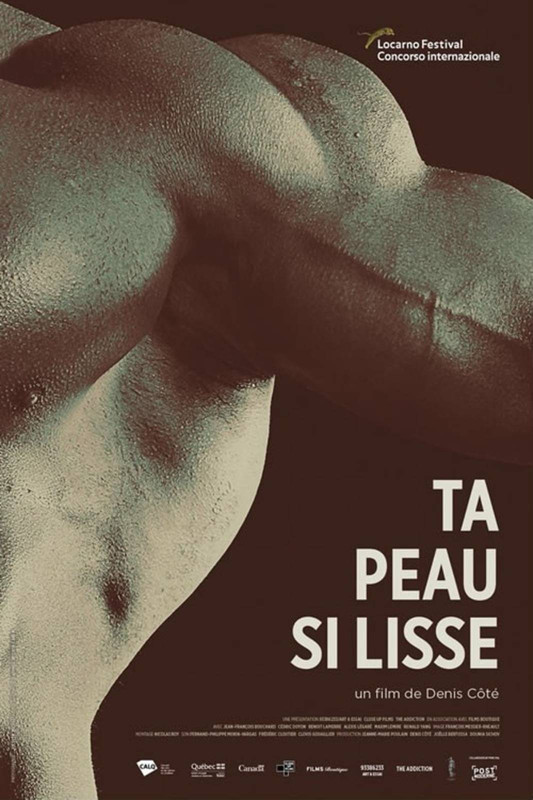
Denis Côté’s bodybuilding documentary has much more in common with Fred Wiseman’s reflective Boxing Gym than it does with the bravado and myth-making of Pumping Iron. Côté follows five French-Canadian bodybuilders, at various stages of their lives and their sport, as they go about their daily lives, training as well as doing other more mundane things.

Near wordless for much of its running time, the film instead finds insight into its subjects purely through observing them, fitting in a sport that is, whatever the route to get there, entirely about physicality. This can be mesmerising. The first twenty minutes of the film introduce the characters in almost total silence, following their morning routines. The youngest of the men trains, his Mother visible through the basement window, gardening above him as his weights clip their frame as he lifts. Another man eats breakfast while watching youtube. I couldn’t tell what he was watching, but from time to time he seems to choke back tears. These and other moments - Max, the wrestler, insisting to his wife that he’s “fine” despite the fact he’s hardly spoken to her in two days, for instance - linger in the memory for the amount of intrigue and insight they pack into images that we have to take purely on their own.

There are a few dialogues; the terse conversation I mentioned between Max and his wife stands out, as does the young bodybuilder telling his girlfriend he can’t be both her boyfriend and her trainer, especially if she’s not going to apply herself fully. Almost every other word spoken though is about training in some way, whether it’s the magnificently bearded Alex telling his masseur “I hate you” or the chatter between the guys when they all go for a weekend away.
   
Côté’s near total reliance on pure physicality does, however, have its downsides. Sometimes it feels as though he’s cutting around conversation. In the closing scenes on their weekend away, the bodybuilders are clearly friends, and talking amongst themselves. It would be good to see, and hear, more of that, to get more of an insight into the dynamic between them, and where the line lies between competition and friendship.

A Skin So Soft sometimes gets beneath the tough surfaces of the men it profiles, but it also often feels like it could go deeper. It’s an interesting film in its quietness but, for me, also sometimes limited by it.
★★★

Liyana
Dir: Aaron Kopp, Amanda Kopp
I have often talked about the fact that I approach film initially from the perspective of someone being told a story. From the earliest time I can remember, I was always told stories - some were read to me, others made up for me. As I got older, film became how I was told stories, and that’s still the way I look at them first.

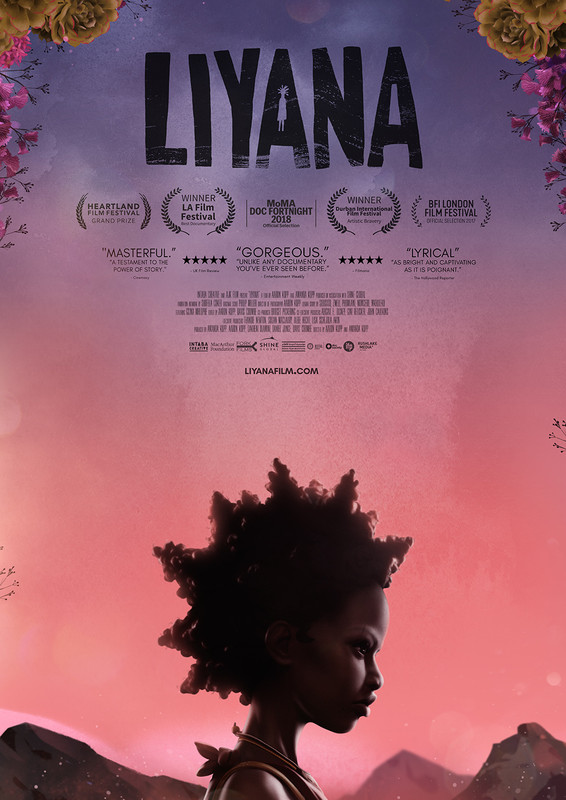
Liyana is a story about storytelling, but it’s about a lot more than that too. The film follows a group of children in an orphanage in Sawziland who are asked in a workshop to collaborate, with children’s author Gcina Mhlophe and with each other, to create a character and a story. Their character is Liyana; a strong girl about their age, born into a family in which a drunk and abusive father contracts HIV and passes it to his wife, orphaning Liyana and her young twin brothers. One night, thieves come to Liyana’s home and kidnap her brothers so Liyana, taking one of the bulls the family keeps along with her, must set out to find them.

The story the children invent is interesting and entertaining in its own right. They set the odds against Liyana, but they give her plenty of agency, they make her brave and resilient and they create a narrative full of perilous set pieces for her to triumph over, with the help of the bull. We see the story unfold in beautiful animation by Shofela Coker, which makes Liyana unusually cinematic for a documentary.

What’s really compelling about Liyana though, and makes it remarkable, is watching the children create this story and understanding why they are writing it as they are. It is often said to young writers that to begin with you should write what you know. Tragic as it is, that is what these children are doing. It cannot be lost on us that a huge percentage of these children have been through much of what they put Liyana through. When deciding on the overall narrative there is discussion about what sets Liyana on her quest and it is clear that the idea of the thieves resonates, at least partly, through experience. This is even more true of the fact that Liyana finds herself orphaned by AIDS. A full 25% of Swaziland’s adult population has HIV or AIDS, and it is almost certain that many of the orphaned children writing Liyana’s story were orphaned for that reason.

The film industry and fan communities have recently been having a lot of conversations about representation. Liyana is the perfect example of why those conversations are important. These children don’t often get the chance to have their stories told cinematically, and when they are it is often through the filter of an industry that is almost entirely white at the top. Here they are able to control their own narrative. They seems to grab that power with both hands, giving it to Liyana and thus back to themselves. It becomes clear in interviews late in the film just what this ability to represent themselves means to these children. “When Liyana’s story keep going, mine will keep going” says one. That’s what’s important here, these children are empowered by storytelling, allowed to write a happy ending for Liyana and thus for themselves. I hope they all get the ending they write.

Liyana is a great example of why the Family strand of the London Film Festival should be covered more, it’s just the kind of film we should be encouraging children to see (I’d suggest it for ages 10 and up, thanks to a few tough themes). Hopefully it will encourage them to tell their own stories, now and in the future.
★★★★

Sep 24, 2017

24FPS @ LFF 2017: Tiger Girl

Dir: Jakob Lass
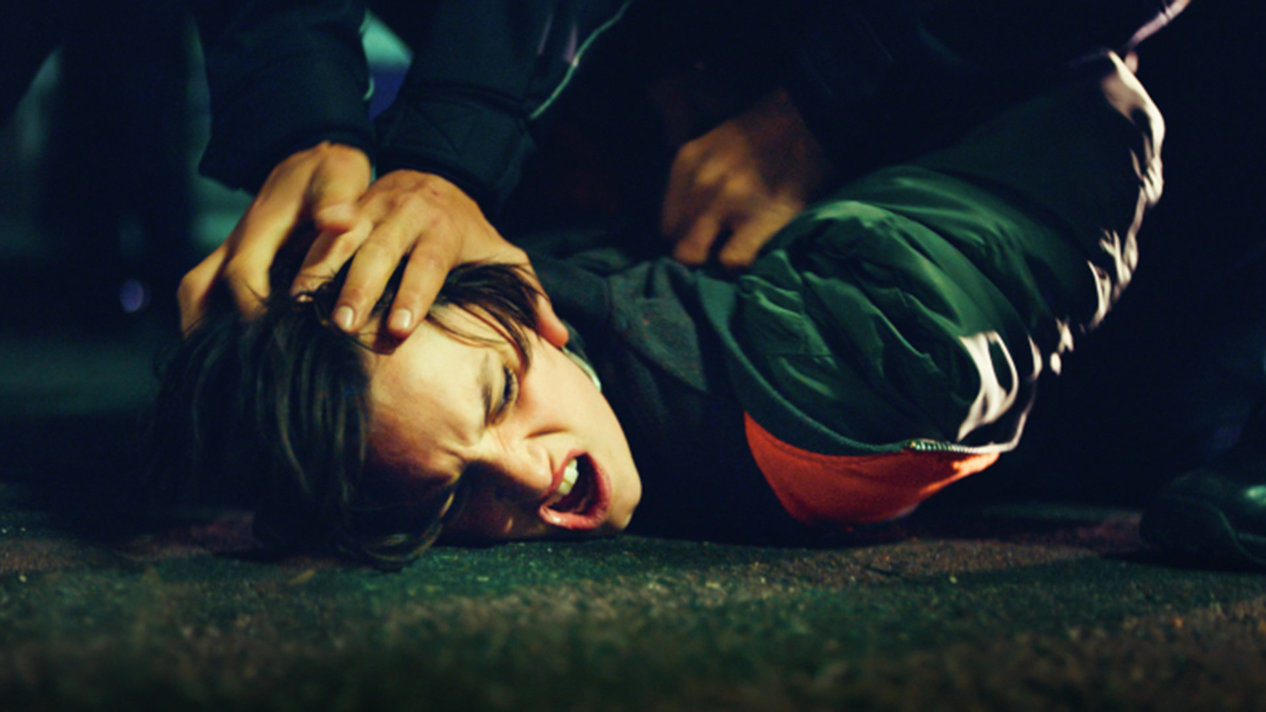
Maggy (Maria Dragus) has recently failed her exam to join the Police but, while she’s waiting to take it again in six months, she’s enrolled on a course to become a security guard. On the first day of her course, Maggy goes out in the evening and is harassed at a subway station on the way home. Tiger (Ella Rumpf) comes to Maggy’s rescue, beating up her attackers. This begins a fast friendship, which begins to lead Maggy down a path of increasing rebelliousness and violence until Tiger is concerned that she’s created a monster.

The brochure blurb on Tiger Girl makes a big play of Tiger as an anti-capitalist and the film as political. I went into it expecting the film to dig into the conflict between political violence and simple lashing out - a sort of Edukators with fight scenes. Unfortunately these themes are more present in the LFF booklet than they are in the film itself.

Tiger does occasionally mention that she only attacks people with power, only steals from the rich, but this reads like self-justification for her mugging people or lashing out violently. That would be interesting if the film gave any indication of making her confront this hypocrisy, but it fails to engage with this even as Maggy becomes ever more randomly violent, to Tiger’s disapproval.

In Raw, Ella Rumpf showed that she has an interesting, edgy, presence about her. Sadly, Tiger Girl doesn’t demand much of her aside from that. The writing is ultimately shallow and we never learn much about Tiger. Rumpf can still hold the camera with a look, and dominates scenes even when outnumbered, useful in a third act scene when she goes to pay off a big time dealer her friends have fallen in with. 

If Rumpf convinces at least with her presence, the same can’t really be said of Maria Dragus, who was so good in Graduation. Dragus always seems like she’s acting, both in the early scenes as she excels in her security course and increasingly so as she drifts ever further into criminality. This is appropriate enough as Tiger goads Maggy into her first acts of rebellion (renaming her ‘Vanilla’), but the sense of both Dragus and Maggy playing a part doesn’t go away. If this is supposed to suggest that Maggy is looking for a sense of belonging and, not finding it, trying to play the role, that’s another theme the screenplay never makes convincing.

The screenplay drags out its various strands in thoroughly expected ways, trying to play off the irony of Maggy’s infatuation with Tiger’s way of life set against her initial ambition to be a cop. It’s entirely obvious where this is going to end up, just as it is obvious how Tiger and Maggy’s friendship will fracture.

Jakob Lass directs competently, if not particularly interestingly. There are a handful of striking images here (the jewelled masks in the still above, for instance) but while the violence is reasonably well shot it seldom has much charge to it. Had the film given more emphasis to the politics we’re apparently supposed to take from it then the violence might have had an interesting moral ambiguity about it, but without that dimension, it just becomes a deadening series of confrontations.

On the whole, this is a disappointing film. It wastes two actors with obvious raw talent and a screenplay that has some ideas, but neglects to explore them in any way that would either inform the characters or prove thought provoking for viewers.
★★

Sep 21, 2017

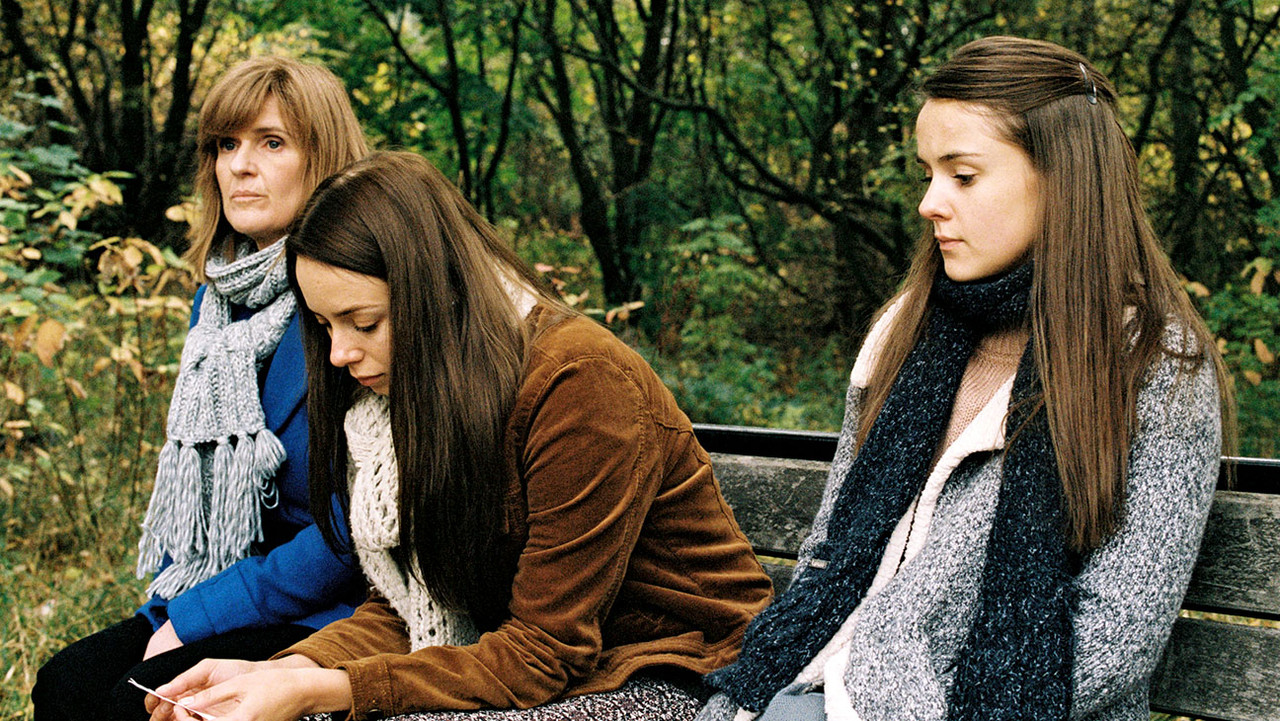
24FPS @ LFF 2017: Princess Cyd

Dir: Stephen Cone
Princess Cyd is writer/director Stephen Cone's eighth feature in as many years, but you'd be forgiven for not knowing that, because the two of his films that have come out in the UK have had only low key streaming releases, Black Box through Amazon and Henry Gamble's Birthday Party through Netflix. I was shown the latter earlier this year and instantly marked Cone as a director to watch for his witty dialogue, ability as an actor's director and knack for creating believable characters and relationships. If there's any justice, Princess Cyd will serve as Cone's breakout moment.

The minimal story finds 16 year old Cyd (Jessie Pinnick) going to stay in Chicago for a couple of weeks with her aunt Miranda (Rebecca Spence), a well known writer. While she's there, Cyd meets Katie (Malic White) and begins a casual relationship. From a wary start, we see Cyd and Miranda's relationship grow and both of them grow a bit through it.

Much of Princess Cyd unfolds through conversation. This is perhaps Cone's greatest strength as a writer; the character's voices are distinct as are the ways that each character relates to all the others and it's the differences in these relationships and therefore in the flow of conversation that makes it so engaging. We see this best in the evolution of how Cyd and Miranda talk. Initially Cyd is a bit reticent saying, almost as the first thing she tells her author aunt, that she doesn't read. This gives way to lighter moments as they begin to relate more, and later to a tense and frank conversation after a get together at Miranda's house, when Cyd suggests that if her Aunt had sex rather than cake she might be happier. This scene is some of Cone's best writing of the whole film, with an angry Miranda visibly trying to get her point across without saying something she might regret, but which is clearly what she'd like to say if Cyd were a few years older. This is also the moment when Rebecca Spence's performance is at its best. There has been a sense throughout of her feeling out how to relate to her niece and, alongside the other notes in this scene, she gives Miranda a barely disguised sense of disappointment that perhaps she hasn't yet worked it out as well or as completely as she thought.

The evolution of Cyd and Miranda's relationship and the ways they rub off on each other is one of the film's strongest threads. Through Miranda (and perhaps through wanting to impress Katie, who does read), Cyd finds a greater connection to her aunt's work, while Miranda is somewhat lightened by Cyd, doing things she hasn't done and thinking about things she hasn't considered for some time. This is woven through the relationship between Miranda and Anthony, Cyd sees an energy between them and encourages it to both of them, but Cone smartly refuses to make it that simple or to put a bow on it by the end of the film. It's an intelligently written story that emphasises the differences in how people think and their priorities at 16 and at 40.

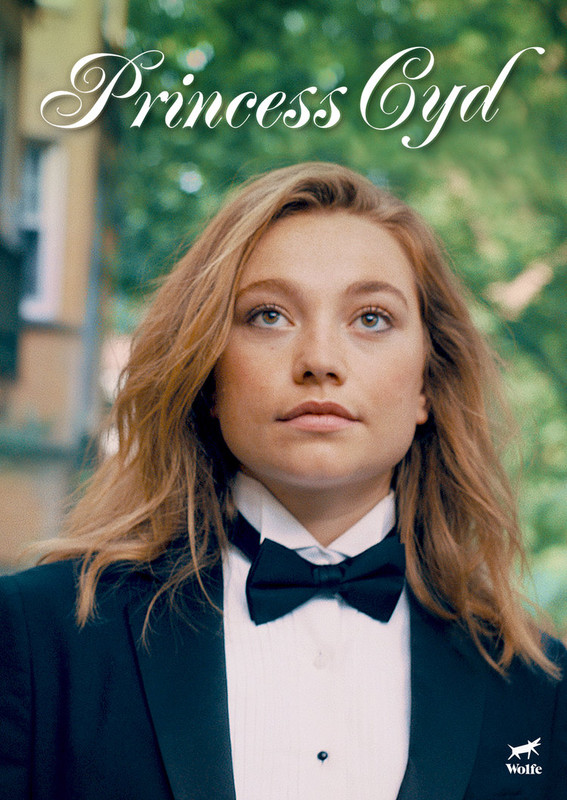
The film is set in the summer, and this comes through in the visuals, which show a suburban Chicago far from the crime ridden image we're often given of it in the news. This is probably to do with the circles Cyd finds herself in, but it also suggests that sense of her enjoying a new place and, in Katie, new people. Scenes of Cyd lying out in Miranda's garden to sunbathe or the time she spends with Katie have that feel of the long days of summer that seem to stretch out in front of us in our school holidays. This is very much the feel of the scenes leading up to and at Miranda's party. Cyd borrows an outfit – a tuxedo – from Katie to attend, and you get the sense of her finding a new comfort in her skin and with her aunt and her friends. One very nice moment has Cyd asking a lesbian couple about the fact that they both used to be married to men, and ends up in her saying to them “I like... everything”, something you get the sense she's vocalising, perhaps even to herself, for the first time in that moment.

There are, among the sweet moments of coming of age, moments of darkness; that tense moment with Miranda, a call from Katie in a moment of crisis and the always present undertone of the family tragedy that Cyd survived when she was six, accentuated by the fact that she's staying in her late mother's old bedroom. Jessie Pinnick is outstanding throughout as Cyd, there's little sense that she's acting, except perhaps early in the party scene, before she settles in with the new people around her. The chemistry between Pinnick and Malic White as Katie also feels entirely unforced, we buy them as fast friends and the evolution of their relationship. There is a sense, as Cyd's stay is just two weeks, of the whole film as a series of stolen moments, that's never more true than in her relationship with Katie, particularly an early scene when a film crew mistakes Katie for a boy and asks her and Cyd to slow dance in the background of their shot. 

Like many of the best coming of age films, Princess Cyd is ultimately an ellipsis. We don't know where Cyd and Katie will end up, if Cyd will go back to Chicago for college or, beyond a closer relationship with her aunt, the lasting impact of these two weeks. Growing up is a process, and Princess Cyd is about a brief moment in it, one it captures beautifully.
★★★★★