Showing posts with label Animation. Show all posts

Jul 30, 2021

2021 Catch Up: Chloe Grace Moretz [Shadow in the Cloud and Tom & Jerry]

Shadow in the Cloud
Dir: Roseanne Liang
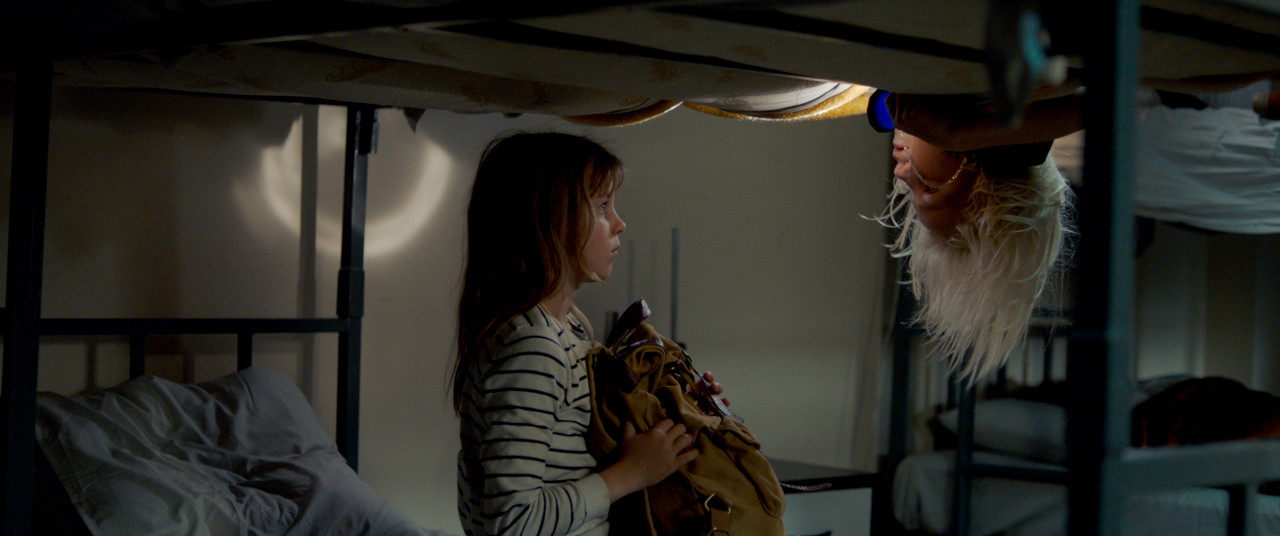
1942. Just as their mission is about to take off, the crew of an armed supply plane is joined by Maude (Chloe Grace Moretz), a female flyer with a mysterious package that has to be kept safe. Made to sit in the turret under the plane, without her package, Maude becomes trapped, and that’s before she spots a ‘gremlin’ on the wing and an enemy fighter in pursuit.

Shadow in the Cloud is, it’s fair to say, a lot. It tries to roll several genres; claustrophobic thriller, creature feature, wilfully ludicrous action movie together, while also folding in a big helping of social commentary, and do it all in 83 minutes including credits. That director and co-writer (unfortunately with Max Landis) Roseanne Liang manages it, and only occasionally drops one of the many balls she’s juggling, is pretty remarkable. As Maude gets on the plane, and while she is locked in the turret and communicating via the radio, the characters are understandably broadly drawn. It has to be said a lot of the dialogue, most of it unreconstructed sexism directed towards her, is interchangeable between them. However, the long scenes that are just Moretz trapped inside this tiny pod are extremely claustrophobic, especially once she’s trapped with the gremlin able to attack from the outside.

The creature feature aspects also work well. The design of the gremlin is fairly familiar; a bat-like monster with sharp claws, but it’s well-rendered for the most part and there’s a sense of its presence and of the pain it can inflict in the first attack scene. Later we get to see it more fully, and again it's impressive. The effects in the big fight are well done enough that, even with a small budget, we don’t have any sense of Moretz trying to punch an empty space where the CG will be filled in.

This is only Roseanne Liang’s second feature. Her first, 2011’s My Wedding and Other Secrets, sounds like a pretty conventional rom-com, but it has my attention both on the basis of this one and featuring the great Cheng Pei-pei. Shadow in the Cloud is a big swing, and Liang pulls together all the elements, wedding them to strong images. The use of red and green light is striking, especially when it’s used over close-ups that identify the plane’s crew as we first hear them on the radio. Married to the synth score by Mahuia Bridgman-Cooper and inspired choice of end credits song, it’s an aspect that identifies the film as looking back more to B-Movies of the 80s than strictly to its world war two setting. 

Chloe Moretz is clearly having a great time as Maude, especially in the third act as she embraces her first action role since Hit Girl. She continues to project the toughness and resourcefulness that has always been part of her screen persona (and that made her such a terrible fit as Carrie). That we have any emotional investment in the McGuffin, the big reveal of which doesn’t quite resonate as powerfully as it might if there were a little more setup behind it, but undeniably raises the stakes, is down to her investment in the role and in that rushed backstory. The fact she treats the material seriously grounds it just enough for there to be tension even as it ramps up the ludicrousness.

This turn into the third act is where Shadow in the Cloud might lose some people. But others will find as I did, its full embrace and recognition of its own ridiculousness, while not winking at us, an audacious turn into a third act that has some spectacular action for a film of this budget level. For all its silliness though, this last part of the film does also bring the film’s politics front and centre, the idea seems to be that Liang is showing Maude as a woman embracing but not limited by traditional roles; that she can do what the men on the crew do, even best them at it, but still be more than just a ‘badass female character’. It’s all wrapped up in the film’s triumphant final image.

As I’ve noted, Shadow in the Cloud is trying to do a lot in a short time, and sometimes that means it short changes some elements (the male characters are as lightly sketched as the backstory), but it also means that it is a relentless entertainment. You do, at a certain point—probably when an explosion catapults Maude back into the plane—have to just decide to go with it, but if you do, I can’t imagine you not having enormous fun with it.
★★★★

Tom & Jerry [2021]
Dir: Tim Story

Tom and Jerry cartoons might be the first piece of filmmaking, of media, that I remember really loving. The Hanna Barbera shorts may be simple in premise—cat chases mouse, slapstick violence ensues—but the endless invention of the gags and the malleability of the animation, stretching and squashing its characters into strange new shapes, gets incredible mileage out of it.

The problem with taking Tom and Jerry from seven minutes to over ninety is easy to see; there’s no plot, no characters to speak of, and an hour and a half is long time to spend just stringing together gags without any real connective tissue. The 1993 film didn’t manage to square this circle, and committed the sacrilege of having Tom and Jerry talking for most of the running time. This version gets closer, but still fumbles.

The film is set in the real world, but for the apparently accepted fact that all animals are animated. We pick up with Kayla (a game Chloe Grace Moretz), just fired from her delivery rider job, she manages to pass off another woman’s CV as her own and get a job at a fancy New York hotel helping to organise the wedding of famous couple Preeta and Ben (Pallavi Sharda and Colin Jost). When Jerry moves into the hotel, Kayla volunteers to get rid of him, with the help of Tom. This doesn’t seem like a bad hook on which to hang the film’s slapstick sequences, but far too much screen time is taken up not by Tom and Jerry (or even Kayla and the rest of the hotel staff, including Rob Delaney, Michael Peña, Jordan Bolger and Patsy Ferran) getting into physically impossible comedic scrapes but by a story about Preeta not wanting Ben to go so big with their wedding and not listening to her about it. This is a kids movie, so it’s hardly an issue how shallow this story is, and Sharda and Jost are perfectly fine in their parts, it’s just that nothing about it is either funny or interesting, and it keeps the film’s main attractions off-screen for long periods at a time.

When it is focused on the cat and mouse duel, Tom and Jerry captures the essence of the original shorts beautifully (down to referencing a lot of classic gags). The Rube Goldberg like practicalities of shooting the plates for the animation to go over must have been fun, because the real world mayhem appears largely practical, but stays faithful to cartoon physics. The animation isn’t always brilliantly integrated, but the style, a sort of pseudo-3D look that has the flavour of classic Tom and Jerry, but doesn’t feel entirely flat, works well once you adjust to it. 
The film’s first half-hour is easily its strongest passage, with pure slapstick routines like Tom and Jerry fighting while Tom is playing keyboards in the park and Tom trying to get into the hotel, walking across power lines with predictable results, capturing the energy and look of the shorts perfectly and scoring some big laughs. As the film runs on though, there is less focus on these sorts of sequences, and the laughs dissipate. 

The live-action segments, to be fair, do have a couple of gags that hit. Peña taking a joke Moretz makes about a fish being in charge of aquatic activities at the hotel literally is very funny, as is a throwaway line from one of the spectators watching Tom play in the park, and British actress Patsy Ferran has a weird energy as Joy the bell girl that made me laugh a few times. On the whole though, whenever the titular pair are off-screen, the film’s energy dips disastrously. Moretz, strangely, plays better off the animation than she does most of her human co-stars, especially Jordan Bolger, who I think is meant to be a love interest of sorts, but the chemistry is absent to the point that the intent isn’t even clear. This is a real problem when it’s her job to hold together the human story of the film, such as it is.

There are good things here, and moments in which Tim Story and his team capture exactly what made Tom and Jerry brilliant, but there is also a sense that part of what made them brilliant is also the reason they don’t work at this running time. The surrounding padding that has to be there to facilitate some sort of story is often dull, and the balance is off, with the pure slapstick making up perhaps only 20% of the screen-time. It’s a big improvement on the last Tom and Jerry film, but that only goes so far.
★★

Oct 14, 2020

24FPS@LFF2020: Wolfwalkers

Dir: Tomm Moore /Ross Stewart

As children, my brother and I were read to every night, and in recent years I've read to friends kids. I've always believed that this fondness for being told stories is where my love of cinema comes from. Few people have ever captured the feeling and texture of those stories and of the books they were read from than director Tomm Moore and his colleagues at Cartoon Saloon.

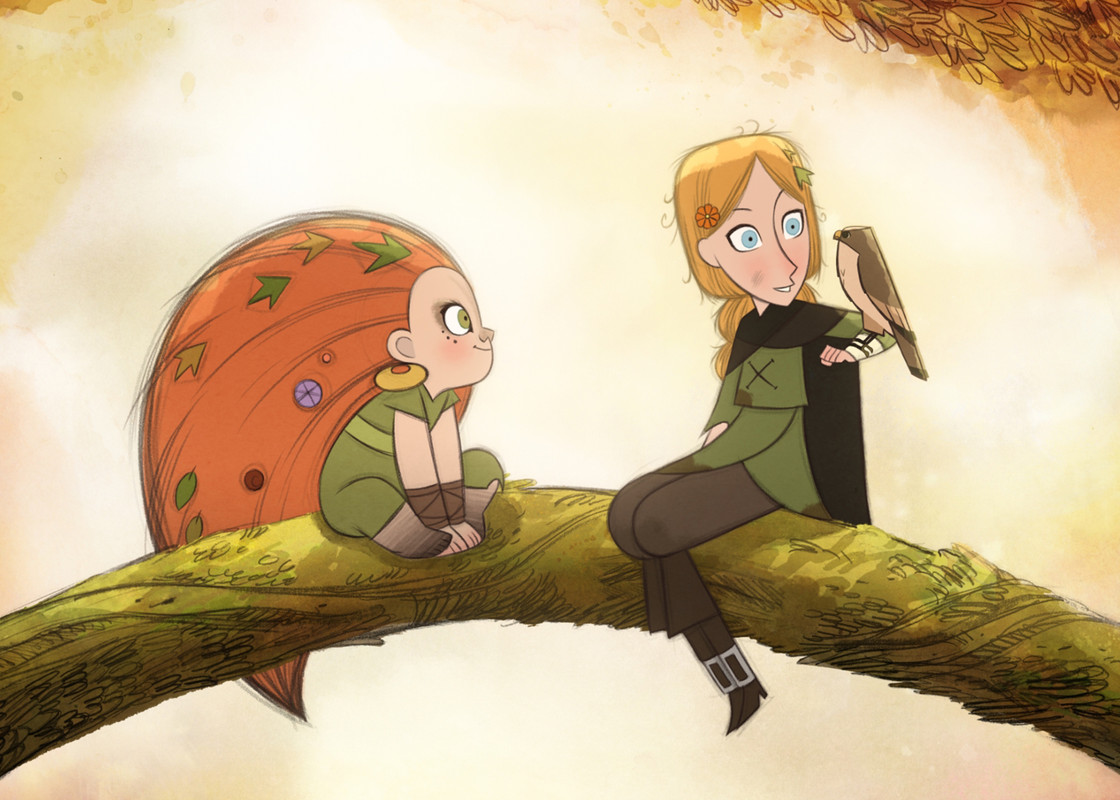
Wolfwalkers tells what feels like an old Irish folk tale. Set against the English occupation of Ireland in the 1650s, it's about an adventurous young English girl named Robyn (Honor Kneafsey) who longs to go hunting with her father (Sean Bean), who has been charged with clearing the local forest of wolves. On a trip into the forest, Robyn is bitten by Mebh (Eva Whittaker), a young Wolfwalker who is a little girl when she's awake, but a wolf when she sleeps. The bite makes Robyn a Wolfwalker too, and she and Mebh become fast friends and together try to save the wolves and Mebh's mother (Maria Doyle Kennedy) from the Lord Protector (Simon McBurney).

The animation has two distinct styles, delineated between the town and its people and the forest and its residents. The town is all woodcut style; sharp lines and angles both on the buildings and the people. Most of them also move in a distinctly angular fashion, the massed soldiers in particular animated in a slightly jerky but regimented fashion that makes me wonder whether they are animated on twos. The more free-spirited Robyn and her father are similarly styled but move in a more fluid manner that reflects the way they are increasingly caught between the two worlds of the film. In extreme contrast, the forest is all sweeping lines and curves, visibly free brush strokes chosen over ruler-straight lines and circular imagery (Yin and Yang sometimes graphically invoked in the depiction of Robyn and Mebh) rather than sharp angles. Even without dialogue or character, the art choices allow us to immediately understand the opposing forces at play here. The bold style of the animation and the contrasting shapes and movement of the characters make the film a kinetic watch. 

Action sequences later on are marked by the same differences in style choices, with the motion of the wolves feeling as graceful as it does threatening and jagged flames contrasting against the forest. Equally interesting, and somewhat distinct even from the rest of the animation, is how it depicts the way Wolfwalkers see; scent and sound are depicted as sketchy lines of colour, an impression of the real world, or something close to a storyboard in animation, giving a sense of the essential movement without fully rendering it.

All the beauty and meaning embedded in the animation is wedded to a story that is both simple and deep. There are themes here of a father and daughter finding common ground (the sequence in which Robyn begs her father not to kill the wolves is marked by some of the most striking image choices, as the black frame around the film encroaches ever more; shrinking and focusing the image). This theme of a child's love for their parent is also echoed in Mebh's search for her mother, whose human form has been trapped in sleep, leaving her unsure where the wolf part of her is. There are also themes of nature vs encroaching urbanization (the 17th century equivalent of it at least) and of how unlikely friendships can be almost as close as family. Kids likely won't analyse these layers, but without talking down to either them or adult viewers, Moore and Stewart make the ideas plain, without allowing them to overwhelm the essential storytelling.

Wolfwalkers is a beautiful film; visually stunning and meaningful on that level as well as being an enchanting piece of old-fashioned storytelling, a bedtime story that children and their parents can enjoy together and all get something out of.  
★★★★½

Nov 23, 2019

Frozen II [U]

Dir: Chris Buck, Jennifer Lee
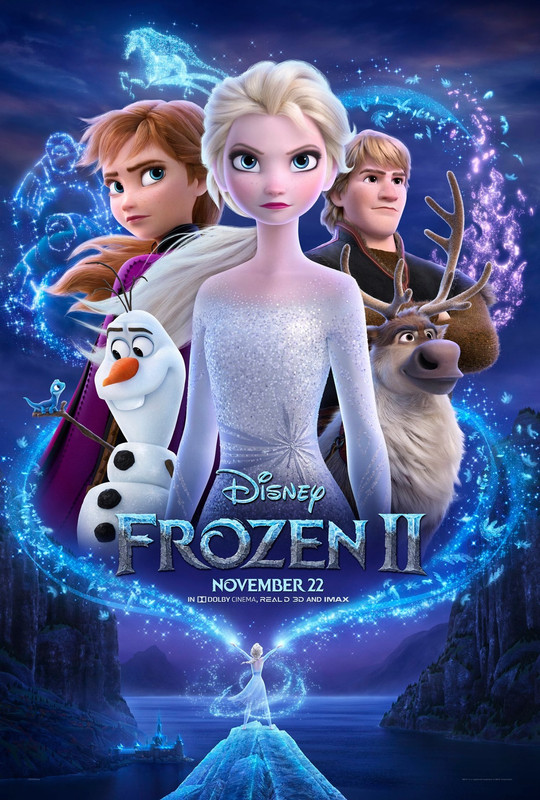
Frozen was a genuine cultural phenomenon and the highest grossing animated film of all time. Finding a way to make a sequel to it is in many ways a nice problem to have, but that doesn’t mean it’s easy. If you’re too radical you risk alienating the fans of the original film (and after six years that’s a lot of little kids who have been watching the first film at home their whole lives, plus their older siblings who saw it at the cinema first time round) but making a carbon copy of your previous work risks making both entries look stale. I wish I could say that with Frozen II, writer and co-director Jennifer Lee and her team had managed to find a middle way through this conundrum.

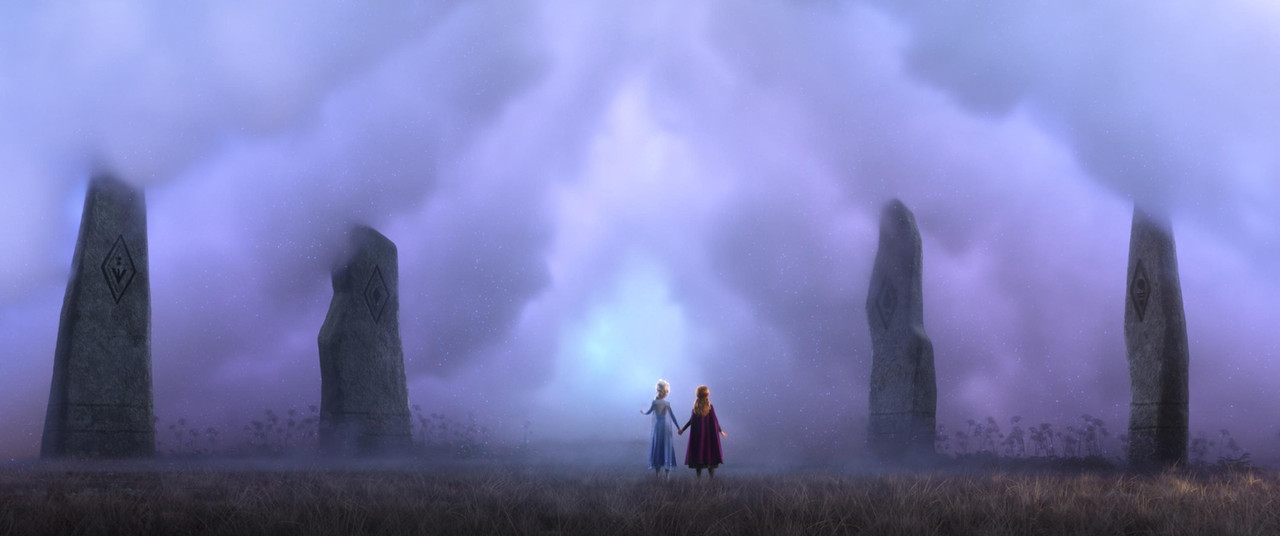
Three years have passed since the end of the first film and all seems fine in Arendelle. Elsa (Idina Menzel) and Anna (Kristen Bell) have kept the city gates open, Olaf (Josh Gad) is enjoying his new magical permafrost and Kristoff (Jonathan Groff) is preparing to propose to Anna. This happy stability is rocked when Elsa begins hearing a beautiful voice singing in the distance (vocals provided by the Norwegian singer Aurora Aksnes). Elsa, Anna, Kristoff and Olaf follow that voice to a magical forest, which became cut off years before, after a conflict between Arendelle and the Northuldra people who live in the forest. Called to the forest by the voice, Elsa wants to discover the truth about the past and how it might connect to her powers.

Frozen, while hardly without its flaws, was a good film, but more importantly, it was an interesting one. For years, Disney films had dealt in familiar fairy tale clichés of Princesses saved by and ending up married to Prince Charming. ‘True love’ had only really been seen to mean one thing, and it had often struck in an instant. Frozen transcended and lightly satirised many of these things, and found a narrative that dealt in more complex emotions. It was refreshing, while also delivering the comedic goods and the showtunes, some of them funny, others emotional, one world-conquering.

Of course, Frozen II can’t break the same ground, but what’s most disappointing about the film is that it finds no other new notes to play. The dynamic between Elsa and Anna remains the same and, in terms of how the film deals with romance, Kristoff’s struggle to find the correct words to propose to Anna is notably old-fashioned set against how the idea of true love was dealt with in the first film. Olaf is still largely superfluous comic relief. He has one or two charming moments, but those are the bits that feel most disposable (a song about getting older and a quick recap of the events of the first film). Even the other characters find him grating at times and it’s hard to blame them. 

The songs also suffer from a combination of a lack of inspiration and fear of straying too far from the template. Only Kristoff’s Lost in the Forest—rendered as an 80s hair metal ballad, complete with visual quotes from music videos—is any kind of departure, but it’s such a strange switch away from everything else in both musical and visual style that it has the inverse problem to the rest of the film: it feels like it’s been parachuted in from a completely different movie. 

Songwriters Kristen Anderson-Lopez and Robert Lopez try not once but twice to recapture the once in a lifetime success of Let It Go, giving Idina Menzel licence to belt out Into The Unknown and Show Yourself. Neither song is up to the task. Into The Unknown is weirdly hollow, perhaps coming too early, only a few minutes after the voice has been established, at which point the stakes feel so much less personal than they were in Let It Go. It also doesn’t help that, even without words for her to sing, it’s Aurora Aksnes’ voice that is the song’s standout element. There’s more drive and a little wit in Show Yourself, but the naked desperation to recapture earlier glories only helps it fall flat. The other songs don’t rate much mention, so aggressively unmemorable are they. The gulf in quality between the songwriting in original and sequel calls to mind that between 2011’s The Muppets and Muppets Most Wanted, as with the latter of that pair, there’s little danger of your kids or you walking out of the cinema humming any of these tunes.

With six years between films, a research trip to Norway, having written in character diaries for Elsa and Anna, and with four other people on the story team, you’d have hoped that Jennifer Lee would have come up with a more solid foundation of a screenplay. Unfortunately, it’s all very slippery. Elsa and Anna’s relationship has nowhere to go, while Kristoff and Anna’s is written as a sitcom’s C story. The lack of a defined villain wasn’t a problem for most of Frozen’s runtime, because it was part of the way the film differed from Disney convention, here that and the under explored nature of the enchanted forest mean the film suffers from a lack of focus. The story never coheres, the forest and its creatures and people lack definition (one very cute creature is an almost direct lift from Tangled, even more so than Kristoff’s reindeer Sven, who always felt like a riff on the horse from that underrated film). Even moments that should be poignant echoes, one key one involving Elsa in particular, land awkwardly because the film is so directly echoing its predecessor throughout that they just end up being another lift, rather than something more meaningful.

This is still a Disney movie, which means the animation is breathtaking. A horse made of water is especially jaw-dropping and, closely ‘inspired by’ The Neverending Story as the design is, the Earth Giants are equally impressive technically. Equally, the voice cast give their best. Kristen Bell and Idina Menzel have a nice back and forth and everyone hits the laughs and the emotion well. The problem is with the material rather than the execution.

From a story perspective, Frozen never cried out for a sequel. Yes, there were unanswered questions in the backstory, but as many recent prequels have taught us, if backstories are left unexplored in an initial franchise entry, there tends to be a reason for that. The answers found here are, once we have the setup, obvious, and not that interesting. Beyond the fact that, economically, it would be a good idea, Frozen II ultimately never finds an answer to the largest question any sequel has to address: why does it need to exist?
★★

Sep 30, 2019

24FPS @ LFF 2019: Selected Shorts

It’s a shame we don’t see more short films in general release, but at LFF the various shorts programmes are often a good way to spot new talent both in front of and behind the camera. Here are some appropriately brief thoughts on some shorts I’ve seen recently. These films were viewed on the online press library.
Be Still My Beating Heart
Jericho (Sarah Andrews, Aaron Hopwood), screening in the Family shorts programme on October 5th, is one of the briefest shorts in the festival. Though barely 90 seconds long, it’s still an impressive piece of work. Fluent and high quality CG animation tells the story of a lonely robot trying to build himself a friend. It’s gently funny and rather touching. I do wish it were longer though, as there is potential to mine some more humour out of the situation. Sweet then, but perhaps too limited by its running time. 
★★★

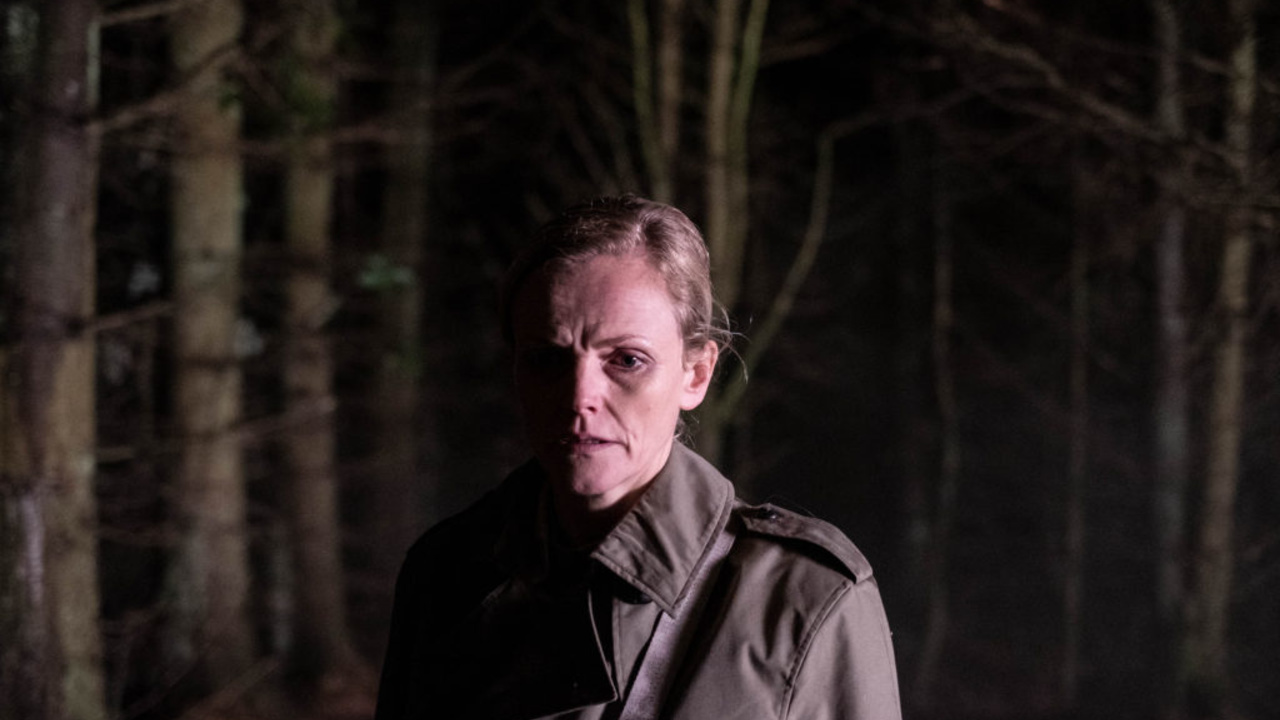
Be Still My Beating Heart (Ruth Paxton) screens in the Cult shorts programme on October 6th and 8th (both sold out). This story of a medical examiner looking after her younger sister who has an unspecified illness benefits greatly from having the always excellent Maxine Peake in the leading role. Peake and Elysia Welch bring dimension to a sisterly relationship that feels sour on both sides, even if it’s loving deep down. Director Ruth Paxton’s imagery veers between the mundane and the primal, and points to interesting things for her future. Unfortunately, the film ends up as less than the sum of its parts. The various ideas don’t knit together in the 25 minute running time and this ends up feeling less like a trailer for a future feature film version of itself (a common issue with shorts) than an impressive showreel for its director. 
★★½

Let's Roll
The Lamb (Nina Volic) screens in the Dare shorts programme on October 10th and 12th. Most boys, when they’re around 12 or 13, start wanting to impress the girls around them. That’s where The Lamb begins, with a boy meeting two girls from his class to show them something. In an incredibly dark turn, ‘something’ turns out to be a black man, tied up and gagged, on his sofa. The way the kids interact with the man is initially not violent, but the immediate and casual dehumanization of this ‘other’ is horrifying, as they treat him as a prop, posing for selfies with him in the background. A deeply disturbing, if extreme, look at how social media has made some of us treat the world as a background image to our lives, The Lamb promises great things from Nina Volic. 
★★★★

Let’s Roll (Chris Thomas) screens in the Thrill shorts programme  on October 5th and 10th. A surprisingly gentle film for its strand, Let’s Roll is a coming of age film set around the Cooper’s Hill cheese roll. Antonia’s brother was a champion, but now he’s away in the Army and her mother is against Toni taking his place. The progression of the film is fairly familiar, as Toni has a friend (who may be nursing a crush) help her train for the cheese roll in secret. The best thing about the film is how much it packs in to 23 minutes, writer Allan Macleod puts a lot of depth into the background in Toni’s relationship with her Mum, both of their implied concern about their brother and son and Toni’s troubled reaction to this stress (we first meet her running from a shop after stealing a magazine). This is also very well played by Amy Bowden as Toni and Zara Ramm as her Mum. There is a lot to build on for a feature version, which I’d happily watch, but the short feels complete in its own right. The only disappointment is the last sequence, which is too obviously documentary footage that Bowden doesn't appear to be in. 
★★★★

Aug 12, 2019

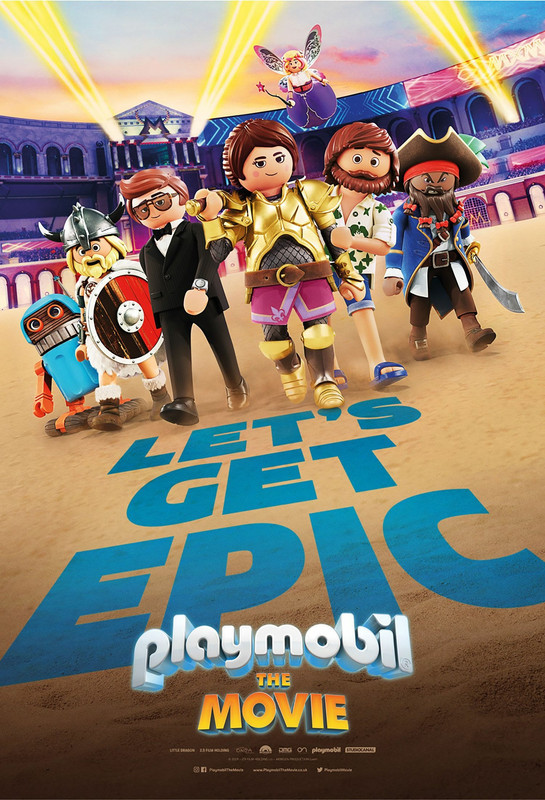
Playmobil: The Movie [U]

Dir: Lino DiSalvo
When it was first announced, I remember a lot of skepticism about The Lego Movie, but on reflection it makes perfect sense, Lego could be completely unconstrained, it offered a multitude of ideas because the only boundary to what you could do with it was your imagination. Playmobil doesn’t strike me that way. I remember it as having defined sets and not being especially malleable. This is just one of many reasons that the German company’s naked attempt to replicate Lego’s cinematic success falls flat.

The setup has 18 year old Marla (Anya Taylor-Joy) her younger brother Charlie (Played at 6 by Ryan S. Hill and at 10 by Gabriel Bateman) orphaned, leaving Marla to abandon her dream of spending a gap year travelling and to become a surrogate parent to Charlie who, a few years later, is bemoaning how little fun she’s become. After a row Charlie runs away, he ducks into a toy exhibition and when Marla finds him there they are both sucked into the world of the Playmobil toys they used to play with together.

Playmobil: The Movie feels like a film that nobody thought about beyond its title. The characters, screenplay and message are all painfully bland, the songs are perfunctory and the performances either lack or make poor use of any personality from the actors. This lack of interest pervades everything, right down to the animation. Consider the intricacy of how The Lego Movie and its sequels and spinoffs are animated: everything is built from virtual representations of real Lego bricks, there is nothing in the films that couldn’t be built, and the characters all retain the same articulation as their real life counterparts. Initially, when Marla and Charlie are sucked, low rent Pleasantville style, into the Playmobil world, it looks as though this film will take a similar tack, as Marla struggles to get used to moving using her new rigid plastic limbs, on the plus side, this is one of the few gags in the film that raises a titter. Sadly, the film quickly abandons the idea, allowing the figures to bend their arms and legs in a way that actual Playmobil figures can’t. The choice isn’t the issue, the inconsistency and lack of interest in addressing or exploring it is, along with how this is indicative of the larger experience of the film.

The film unfolds as a series of vignettes some rip off better things (the opening section with the vikings devolves into a deeply substandard attempt at ripping off a song from Tangled) and others are simply unfunny scenes of their own, often voiced by celebrities who lend little to proceedings (Adam Lambert as a Roman emperor).

This same lazy feel pervades everything. The songs feel particularly listless, with Anya Taylor-Joy looking ill at ease as she dances her way through an anonymous opening number and Meghan Trainor obviously heavily autotuned for her song. The jokes have the same listlessness, with Jim Gaffigan seemingly abandoned by a script that gives him a main character (Del), but absolutely no defining traits and several interesting opportunities for gags squandered. Think about Meghan Trainor’s part, it’s a fairly route one idea but, wouldn’t a funnier joke be to have her speaking voice autotuned and her singing voice natural? Daniel Radcliffe sounds very ill at ease as secret agent Rex Dasher, why not play that up, make it part of his character? A nervous and uncomfortable James Bond figure may again be a relatively obvious gag, but at least it’s something, and would mitigate an otherwise weirdly affected performance.

All in all, Playmobil: The Movie is dull and empty, a closing sequel setup seems - thankfully - ludicrously optimistic. I suspect this will very soon be an embarrassing footnote that Anya Taylor-Joy and Daniel Radcliffe, among others, will cringe at being reminded of.

Jun 22, 2019

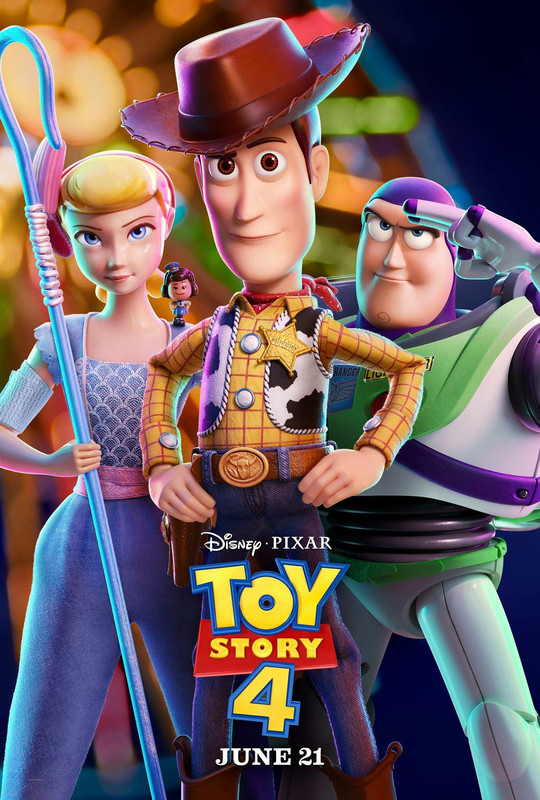
Toy Story 4 [U] [2D]

Dir: Josh Cooley
There is an unwillingness in Hollywood to let stories end. It’s not hard to see why; if you can find another story to tell with characters you know audiences already love, you can mitigate some of the risk inherent in films that can cost hundreds of millions of dollars. Sometimes, though, it’s not a bad thing to know when to let something go.

When Toy Story 3 came out nine years ago, I wasn’t sure, even as a fan of the two previous films, that I needed it to exist. It turned out to be the perfect capper to the themes of the series, wrapping things up satisfyingly, implying that Woody, Buzz and the gang would continue to live offscreen, while providing a sense of closure for both audience and characters. So, we come to Toy Story 4; it’s a genuinely lovely film, it hits the funny bone repeatedly, pricks at the tear ducts on occasion, reunites us with old friends and lets us meet new ones… and yet, this entry, while building in even greater finality, never manages to hit the same emotional register as the previous film did in its tearjerking mix of endings and beginnings.

Woody (Tom Hanks), Buzz (Tim Allen) and the other toys are still living with Bonnie, the little girl Andy gave them to at the end of the last film (a moment revisited in a beautiful dissolve that, for me, was the most emotional part of the film). On her first day at kindergarten, Bonnie makes a new toy, Forky (Tony Hale), who becomes her favourite toy. Initially, Forky thinks he’s trash, and Woody has to keep him from escaping, but when Bonnie’s family take a road trip, Forky takes his chance at escape and Woody chases after him, running into old friends as he tries to reunite Bonnie with Forky.

The Toy Story films have always been about more than what toys get up to when humans aren’t watching. To some degree, all of them are about the function and importance of a toy in a child’s life, and the effect that has on the toys themselves. Here we see all sorts of versions of that. Woody is going through the experience of no longer being the favourite. Bo Peep (Annie Potts) has become willingly lost, finding a new kid to play with her most days and collecting items to fix other lost toys. The most substantial take on the need of toys to be played with comes from a vintage doll, Gabby Gabby (Christina Hendricks), whose broken pull string voice box has meant that she’s never had a kid. The development of Gabby - something of a twist on Toy Story 3’s Lotso - is one of the best aspects of the film, with Hendricks playing the two sides of the character beautifully, finding both sinister and moving registers.  

It’s also interesting to see a different take on the idea of the lost toy, previously seen by the series as the worst possible fate that could befall a toy (Woody’s anguished “I’m a lost toy” from the first film still resonates). Bo has chosen to be lost, and it’s clearly a choice that has empowered her. The character was a relatively minor (if well liked) figure in the previous films, here she’s elevated to co-lead and woman of action, with Annie Potts making her recognisably the same character but also bringing new nuances to the table. Of the new characters, Keanu Reeves’ Duke Kaboom scores plenty of laughs, but it’s Tony Hale as Forky who has the most to do and delivers the most laughs and emotion. His lack of understanding he’s a toy is reminiscent of Buzz in the first film, but with an added tragic dimension because his repeated attempts to throw himself in the trash look - and from a toy’s point of view probably feel - like suicide attempts. Watching him come to an understanding of what being a toy means, and the readiness with which he accepts it, is one of the film’s sweetest touches.   

There are many strengths here (Pixar’s typically dazzling animation among them), but that’s not to say that Toy Story 4 is perfect. The main issue for me here is that there isn’t much that is unique to this Toy Story. Director Josh Cooley and the writers do find different angles on some ideas, but many of the themes and even the ways the film engages with them have been dealt with in the series’ previous films. The many new characters are also a challenge, meaning that the pacing sometimes feels off as the extended gang are shunted off to the sidelines for long swathes of the film. This is especially problematic when it comes to Buzz, who is largely a one joke character here. Woody tells him to listen to his ‘inner voice’ and Buzz, misunderstanding, uses his voice buttons as a source of advice throughout the film. It’s a cute enough bit, and Tim Allen sells it hard, but it’s disappointing that this is most of what Buzz has to do, and for me it rings false with a Buzz who has been accustomed to being a toy for the better part of 15 years in movie time. Jessie (Joan Cusack) is given even shorter shrift, with nothing of import to do and only a handful of lines. Overall, for many of the characters, this is a disappointing send off with little of the sense of them as a close-knit group of friends that the previous films had, especially in the incinerator scene.

All that said, and for all its imperfections, it would be churlish to go too hard on Toy Story 4, its major mistake is the hubris of attempting to follow a genuinely perfect franchise capper, but it’s seldom, if ever, less than fun. It’s packed with gags, most of which work and if it doesn’t punch you in the gut emotionally the way its predecessor did it certainly has moments that resonate in a similar way. In a largely dreadful summer for mainstream movies, Toy Story 4 deserves the tag of crowd pleaser. 
★★★

Oct 16, 2017

24FPS @ LFF 2017: Family Films

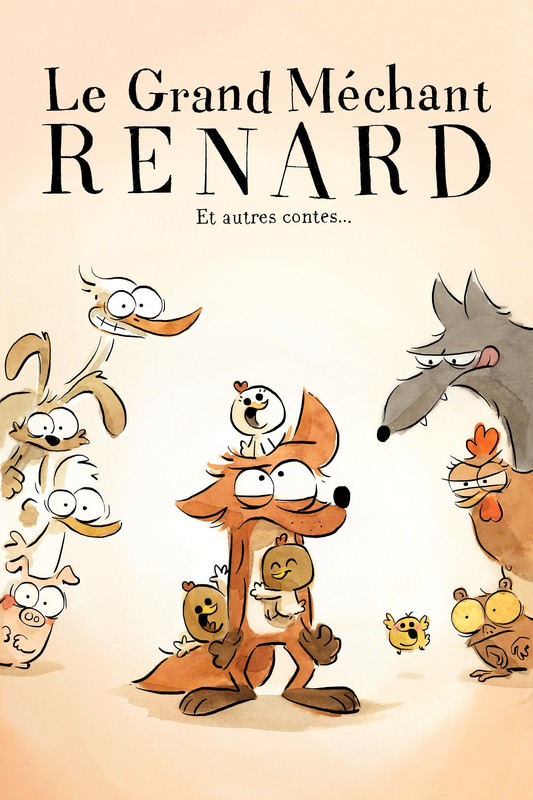
The Big Bad Fox and Other Tales
Dir: Patrick Imbert, Benjamin Renner
This delightful French animated film is set up as three short plays, put on by the animals in a farmyard. In Baby Delivery, Pig and his dimwitted friends, Rabbit and Duck, must fill in for an injured Stork. The Big Bad Fox sees Fox accidentally become mother to three chicks he steals for himself and Wolf to eat. In Saving Christmas, Duck believes he has killed Father Christmas and he, Rabbit and Pig must fill in for him, as they did for the Stork.

The Big Bad Fox and Other Tales is this year’s Family Gala screening at the London Film Festival, this is the strand that contains the films pitched at children, but this is a true family film. It will delight children (I’d suggest it for ages six and over) but, without aiming jokes over children’s heads, it should also work for adults. The animation style is very different; a little sketchy, but beautifully simple and full of character rather than crude, but the tone of the film has much in common with classic animated shorts. The slapstick gags come thick and fast, with the timing and execution of classic era Tom and Jerry, while the way these moments combine with the verbal humour recalls Looney Tunes strongly (especially in the relationship between Pig, Rabbit and Duck).

There are some wonderfully absurd touches and running gags to be enjoyed; the chickens forming a self-defence group because the guard dog is lazy, the calamities that happen to Pig’s house and Little Michel, who pops up in the last two stories to endearing and hilarious effect.

Any further review of this film would amount to my repeating my favourite jokes, which would rather spoil what is a wonderfully enjoyable film. I will say to stay in your seats during the credits as during them there are some lovely jokes, a recipe and a closing moment that seems to be a nod to Michigan J. Frog and sent me out of the cinema with a mile wide smile on my face. This may be pitched as a kids film, but it’s for anyone with a functional funnybone.
★★★★½

The Day My Father Became A Bush
Dir: Nicole Van Kilsdonk
Toda (Celeste Holsheimer) is ten years old and lives with her pastry chef father (Teun Kuilboer) in an unnamed country. When war breaks out between ‘The Ones’ and ‘The Others’ Toda’s grandmother comes to stay, while her father is called to fight. Eventually it becomes too dangerous at home and Toda is sent abroad to join the mother (Noortje Herlaar) she doesn't know. Along the way she gets separated from the people taking her and must make her way on her own.

I am a great believer that children’s cinema can and should be much more than mindless entertainment. The Day My Father Became A Bush tackles some big issues: war and its futility, displacement and the dislocating reality of suddenly becoming a refugee, but does it from a child’s eye view, making those issues comprehensible for its target audience. A big part of this success is in the way it addresses war. Nicole Van Kilsdonk never explores what the fighting is about or whether we should see ‘The Ones’ or ‘The Others’ as the good guys in the conflict. This isn't what’s important to Toda, what matters to her is that her father is away and that his camouflage be good enough to make sure he comes home (in one of the film’s most quietly touching scenes she puts branches on his helmet so ‘even birds will think you’re a tree’). 

Ultimately, the film says, which side we’re on doesn't matter much. Her father wears a blue badge but at one point Toda finds herself sharing a shack with a man wearing a yellow badge, soon she’s sharing food with him and, sweetly, helping him learn to give orders (he has deserted because he found he wasn't assertive enough for his command role. This scene is a fine example of the way the film leavens its messages with humour and heart.

Toda is a great character for young girls to see and identify with. She’s inquisitive and intelligent, brave in the face of scary situations and compassionate with a slightly younger boy who attaches himself to her, whom she nicknames Stickie (Matsen Montsma). She’s also just a typical ten year old, who calls herself a daddy’s girl. As Toda, Celeste Holsheimer gives a performance free of anything actorly or precocious. She hits the funny moments nicely, but is particularly adept in the dramatic scenes, especially towards the end of the film when, having lost her mother’s address, Toda finds herself a refugee.

The Day My Father Became A Bush asks kids to engage with some big themes, but it takes them gently through those ideas, leavening them with humour and, even in the film’s toughest moments, the optimistic outlook that Toda radiates. It’s an entertaining and intelligent film and an ideal opportunity to discuss some challenging subjects with your kids. 
★★★

Oct 15, 2016

24FPS @ LFF 2016: Animation Roundup

Apologies for not posting more written reviews while I was at LFF this year, I was having serious computer troubles.  Here, by way of apology, are short(er) reviews of three animated films I saw.


My Life as a Courgette
Dir: Claude Barras
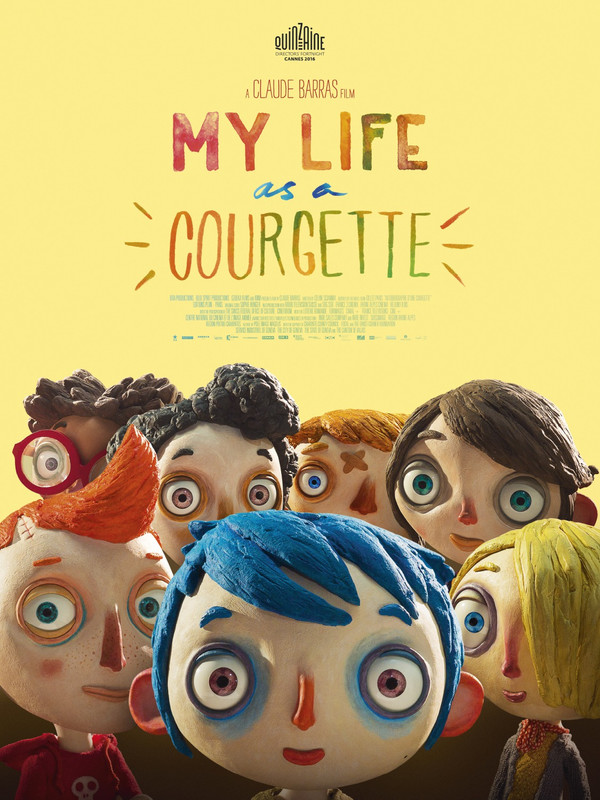
For my money, the French writer/director Celine Sciamma is one of the most interesting talents to emerge in cinema in recent years. Her three directorial films: Water Lilies, Tomboy and Girlhood all number among the best of their respective years and I await her projects with great anticipation. While Sciamma didn't have any directorial work in the LFF this year, she wrote the screenplays for both the new Andre Techine film, Being 17 and for this, a delicate, nuanced, but optimistic children's film about a boy named Courgette who falls for the new girl at the orphanage he's sent to after his mother dies in an accident at home.

Director Claude Barras and his animators craft an interesting look for the film. The characters all have a certain look, but the designs are striking and individual, giving even the characters with the least screen time a distinctive look. They are set against backgrounds that are often a bit drab and have a homemade feel, like something out of a Michel Gondry animation. This is effective in making the characters stand out from their environment.

For a little while it seems that My Life as a Courgette might be a pretty miserable film. We get the expected beats when Courgette first arrives at the orphanage and is bullied by a bigger kid, but this dynamic soon shifts and a much brighter film emerges. This home is depicted as one where there is a genuine sense of community, and the film has a real warmth thanks to that. Little recurring jokes, like one child running to the door every time it opens, expecting her mother, amuse while also giving the film surprising emotional weight, but it's the way that Barras' images and Sciamma's screenplay combine to capture the little moments that define growing up that have stuck with me about this film. Courgette and Camille's relationship is touchingly well-observed, as are the growing bond between Courgette and the cop who initially takes him to the orphanage and the shifting dynamics of the group of kids. These things may be played out by plasticine models and in front of cardboard backdrops, but they ring true.

My Life As a Courgette should be suitable for kids from about 10 or 11, but I'd imagine that their parents will enjoy it just as much, it's sweet without being sickly, funny without compromising on some the darkness at the heart of the story, and eventually extremely touching.
★★★★★


Psychonauts, The Forgotten Children
Dir: Pedro Rivero / Alberto Vazquez
In a post-apocalyptic world, humans appear to have died out and animals are all that remains. Dinky longs to escape the island she lives on and her religious parents. For help she turns to her friends and to Birdboy, whose soul has been overtaken by a demon. To escape, they must make dangerous trek through the rubbish dumps where roving gangs of rats and mice live beyond the law.

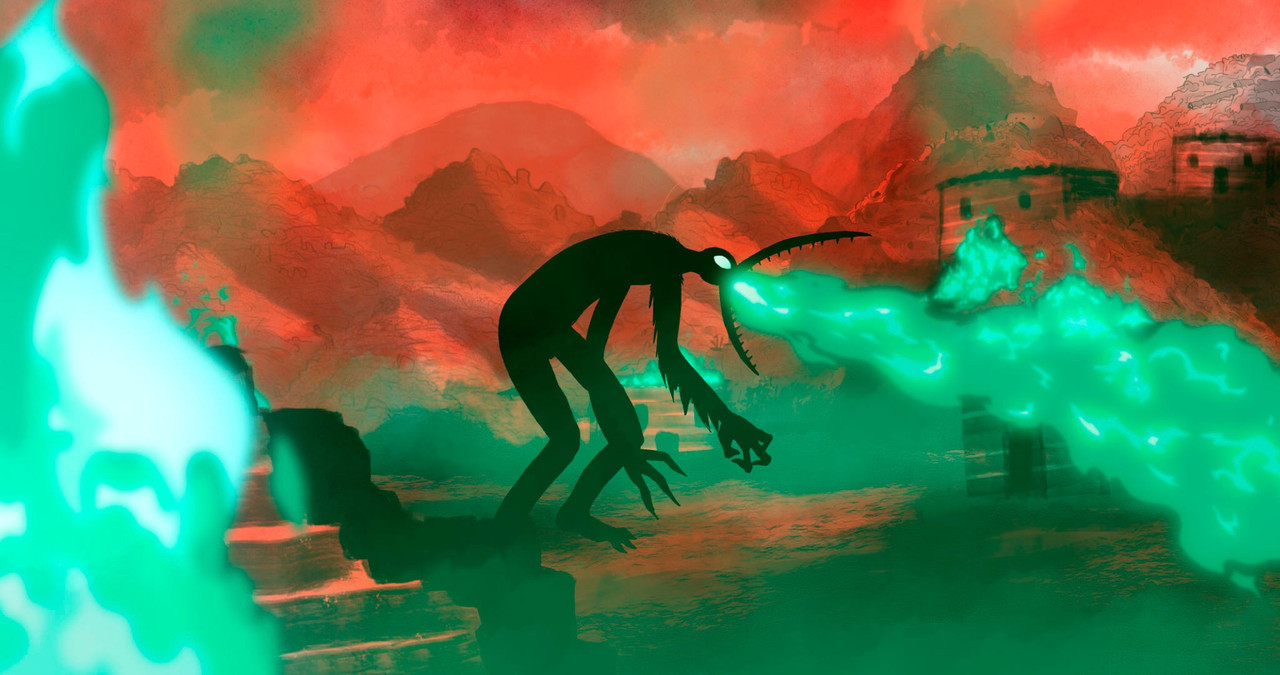
Psychonauts is a determinedly offbeat film. From its visual style on down, it mixes tones, combining dark subject matter and imagery (sometimes sketchy, sometimes in bold red and black silhouettes) with offbeat humour and cute design on Dinky and her friends. The jokes leaven the darkness of the film just enough that Psychonauts, while properly scary at times, is probably suitable for older kids as well as for adults.

The film's biggest laughs often come in the margins, the little moments, such as when Dinky's brother tells his parents what he wants to be when he grows up, or when the inflatable duck Dinky and her friends get to try to escape the island on tells his backstory. As much fun as these moments are though, there is something chilling at the core of Psychonauts; a scorched earth world that feels complete in its design. The opening moments, with a mouse and his son scavenging for rubbish and invoking the rules of their community, set this up brilliantly, as well as setting up a surprisingly human and moving relationship between the characters. This approach will carry through the film effectively, especially in Dinky's love for Birdboy.

The animation is brilliant, the mix of styles well executed and fitting for the film's mix of tones, and it's often surprising what level of character Rivero and Vazquez manage to get of their designs. This too is especially evident with Birdboy, who is essentially just a few shapes in black and white, but is rich in character despite being mute. Birdboy's eyes; huge empty black holes signifying the loss of his soul, are particularly haunting, and end up communicating a lot.  The film is at its best when Birdboy, fully possessed by a demon, attacks the Psychonauts village. This is a sequence straight out of a monster movie, and a brutal one at that, with images of burning characters that call to mind the atomic bomb sequence in Terminator 2.

Overall, Psychonauts, the Forgotten Children is a great surprise; a well balanced tonal juggling act that will horrify and amuse in almost equal measure. I hope it finds a UK release.
★★★★


Your Name
Dir: Makoto Shinkai
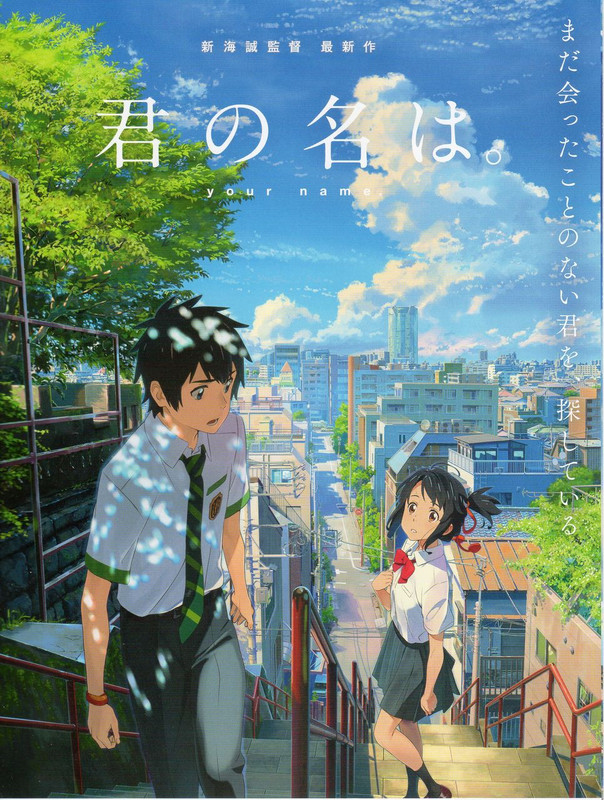
I've said it before, but it bears repeating, when we're talking about the most visually stunning films being made today, Makoto Shinkai needs to be in the conversation. His latest, Your Name, is the first anime to play in the (relatively new) London Film Festival competition section, and it is just as lush and gorgeous as we have come to expect.

Your Name will also feel somewhat familiar to Shinkai fans in its story (a tale of two young people falling for each other, though separated, then trying to find, and in this case remember, each other). While he is a visual master, Shinkai's flaws often come from his writing and Your Name doesn't have his strongest screenplay. Even for him, the boy sort of meets girl story that develops as Taki and Mitsuha begin to wake in each other's bodies is a rather sentimental and sometimes cloying one. That said, Shinkai does have a knack for this material, and while he sometimes overeggs the pudding, Your Name is also full of emotional moments that hit me just as deeply as the visuals did.

Visually, this is a film of dazzling beauty. The character designs are expressive, but as ever it's the world Shinkai grounds them in which is so stunning. From the most mundane things like images of trains passing, to the grandest in scale, such as the images of the comet that figures centrally in the film's story, everything is rendered with the same loving detail, everything seems lit from within. It's also important that the environments feel credible. There's a great sense of place and of the contrast between Taki's home in the fast-paced modernity of Tokyo and Mitsuha's life in a little village where tradition persists. If the film weren't grounded like this, then its flights of sci-fi fancy would strain credulity even more than they do. 

The character work here is strong. As the voices of Taki and Mitsuha, Ryûnosuke Kamiki and Mone Kamishiraishi shift their performances as the characters become more used to 'being' each other several times a week. There are overblown moments in each of their performances, but they are allowed to be smaller and more subtle as the film goes on and become more affecting as this happens. The scenes as the comet finally comes into play, particularly one set at twilight, are delicately played, beautifully animated and ultimately very moving.

Like much anime, I found Your Name to be at its weakest when it is at its broadest. While there are some fun running jokes, the early body swapping sequences can be loud, lacking nuance and sometimes a little wearing, but even in those scenes, the beauty of the film and the fluency of its animation are engaging all by themselves. 

This is a hit and miss film, it can even be a little grating at times. When it works though, when Shinkai pulls images, character and story together in a moment as simple and moving as a shot late in the film of Mitsuha opening her hand and seeing writing on it, it's as magical as the director's best work.
★★★

Oct 15, 2015

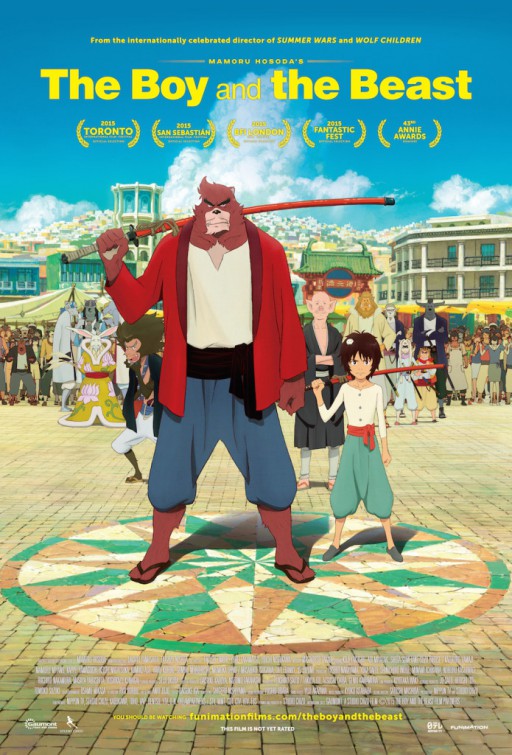
24FPS @ LFF: The Boy and the Beast

Dir: Mamoru Hosoda
Mamoru Hosoda is one of the most interesting auteurs currently working, not just in anime but in movies as a whole, so it is one of the biggest disappointments of this year's LFF to report that his latest is by far his weakest solo directorial effort. 

9-year-old runaway Ren (voiced as a child by Aoi Miyazaki) encounters Kumatetsu (Koji Yashuko), a bear-like beast who has crossed briefly from his world of Juntegai into the human world, looking for an apprentice. Ren follows Kumatetsu and becomes his apprentice in Juntegai, the two eventually teaching each other and training for the day that Kumatetsu must battle another best to become ruler of Juntegai. Once he is 17, Ren (now voiced by Tokyo Tribe's Shota Somentani) begins taking trips back to the human world, finding himself torn between a girl there, his real father and Kumatetsu, the father that raised him.

Hosoda fans reading that summary will immediately recognise many of the director's trademarks. His overarching tactic of taking stories about everyday human emotion and conflicts and wrapping them in a huge sci-fi or fantasy concept is intact. Like his last film, 2012's dazzling Wolf Children, The Boy and the Beast is largely about parenthood. In this case, the focus is on how Ren and his brittle adoptive father essentially end up raising each other; Ren teaching Kumatetsu control and Kumatetsu showing Ren that someone will always be there for him. This and other things in the film are moving lessons, but a lot of it feels like Hosoda is raking over old ground that he has mined much more profitably in the past.

The world of Juntegai is beautifully imagined and rich in detail, every beast has an individual design and Hosoda's character design and animation is as precise and characterful as ever. What is missing from this side of the film, however, is much sense of rising stakes. The battle for control of Juntegai never seems terribly important, largely because both the outcome and the mechanism by which we will arrive at it are obvious from the off. Hosoda signposts other plot developments far too clearly as well, in a film that, for a long time, seems to lack an ultimate bad guy, it's clear almost from the first appearance of the character who that bad guy will end up being, and clear from the design what his motives will be. Foreshadowing is one thing, but here Hosoda seems to do it with flashing neon signs pointing out the plot and character development. 

There are some wonderful moments in the film. The training sequences, as Ren begins to copy Kumatetsu's movements but tries not to let Kumatetsu see him, bring out the best in Hosoda.  The shot design here is often as funny as it is evocative, telling both the story and the emotion in a series of dialogue-free frames. Even better is the prologue, which explains the world of Juntegai and renders all of its characters as flames. It's an extraordinary looking scene that promises much for the film to come. The Boy and the Beast is never less than visually engaging. The final sequences, as Juntegai threatens the human world, are also especially impressive, with dark visuals and a sense of menace that sets them apart from the rest of the film, which is often bright and cartoony. Hosoda's storytelling may be malfunctioning this time out, but his visual sense seems as keen as ever.

Another thing that seems to have deserted Hosoda this time is his pacing, his films often nudge the two-hour mark, but The Boy and the Beast is strange in that it feels both too short and too long. The pace slackens quite often in the Juntegai sequences, which can feel repetitive and as if they are anxious to drum exposition that has already been established into you several times over, you could say that this is for the kids in the audience, but this will likely be a 12A when released, and there is little to establish that will challenge any intelligent 9 year old. On the other hand, several sequences are rushed through with almost unseemly haste, chief among these is a sequence in which Ren and Kumatetsu go to visit the leaders of the other beast kingdoms. This sequence boils down to a few very brief jokes and an obvious, one line, lesson, but it could easily have formed the backbone of an effective quest narrative.

I don't know quite what to make of The Boy and the Beast, it's clearly a Hosoda film, it pulses with his favourite themes and messages and often delivers them effectively, but it never resonates the way that Wolf Children, Summer Wars and The Girl Who Leapt Through Time do. Ultimately this is hit and miss fare but must count as a big swing and a miss from a director who has, to date, delivered 3 modern anime classics.
★★★

Jul 27, 2015

Inside Out [U]

Dir: Pete Docter / Ronnie Del Carmen
Pixar's early run was almost perfect. A Bug's Life might not have hit the heights of Toy Story but otherwise, until the middling Cars, they had an astonishing hit rate. Lately, though, returns have seemed to be diminishing, with Cars 2, Monsters University and Brave all disappointing, artistically if not commercially. Meanwhile, Disney is in the midst of what appears to be an animation renaissance with Frozen, their best film since Beauty and the Beast, rapturously received by critics, the biggest animated film ever at the box office and a genuine cultural phenomenon. Inside Out, it could be said, has some work to do in re-establishing Pixar's reputation.

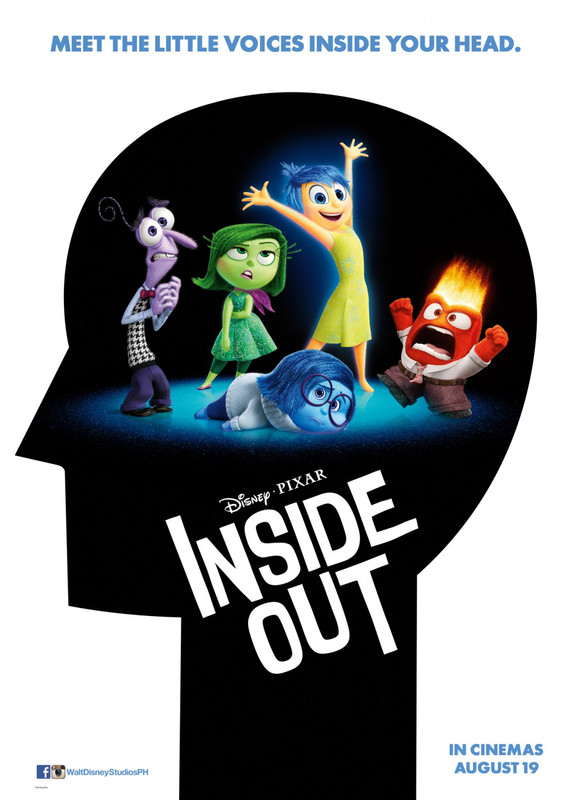
The film is set largely inside the mind of Riley (Kaitlyn Dias), an 11-year-old girl. In headquarters, her emotions – Joy (Amy Pohler), Sadness (Phyllis Smith), Anger (Lewis Black), Fear (Bill Hader) and Disgust (Mindy Kaling) take turns at the controls, building Riley's memories and thus her personality. Riley is a happy little girl until her parents (Diane Lane and Kyle MacLachlan) move from Minnesota to San Francisco. There, Joy becomes frustrated when a sad memory is due to become part of the core of Riley's personality, and there is an accident in which Joy, Sadness and all of Riley's most important memories are cast out of Headquarters. Without two key emotions, Riley isn't her usual self, and Joy and Sadness must get back before something terrible happens.

In any film, the audience needs information to allow them to enter the world of the story. Who are these characters that we're about to spend the next 100 minutes with, what is the context in which they exist, what, if any, are the technical details we need to understand in order to access the film's world? There are many ways and means of doing this. For instance, in Inception, we have Ellen Page's character, whose every line seems to be “what's that” or “how does that work?” This is the kind of exposition I hate; characters spewing raw (usually indigestible) information at each other.

Inside Out completely sets up its uniquely imagined world, its technicalities and its rules within the first ten minutes which, as in Pixar's earlier Up, seem to function almost as a short film to set up the tone of the next 90 minutes. Happily, it never feels like you are being spoonfed information. As we watch Riley grow from a newborn who initially knows only Joy (though she is joined by Sadness after 33 seconds) to an 11-year-old girl with personality islands devoted to Hockey, Family and, adorably, being a goofball, the film communicates emotion as much as it does information. Part of this may have worked on me because the early moments made me think of my nephews (22 months and 5 months), but the film never tugs the heartstrings in a way that feels crudely calculated.

Pixar have made mini-masterpieces before. Up only intermittently hits the emotional heights of its opening sequence in the rest of the film, and Wall-E feels like two separate films, never recovering after Wall-E boards the spaceship and humans enter the film. This isn't the case with Inside Out, which manages to sustain the momentum of its opening. With dazzling inventiveness, Pete Docter, Ronnie DelCarmen and Pixar's rightly legendary story department find a series of relatable metaphors to dramatise the inner workings of the mind, as well as to create a landscape that lends itself to a tricky adventure for Joy and Sadness to go on. There is an especially good joke involving dream production, which works like a movie studio and where we see posters for previous attractions such as 'I'm Falling Into a Pit'. Some of the film's best moments come in these relatable, seemingly throwaway, gags. One that struck close to home for me was towards the end when we get a glimpse into a 12-year-old boy's brain when Riley speaks to him.  From time to time I'm still that kid. These are the little joys of this film, but every one of them adds to the richness of its world.

Other seemingly throwaway jokes actually run deeper. The team clearing out fading memories and sending them to a deep part of Riley's brain where they will lie forgotten is a masterstroke, especially in Joy's reaction to them; she treasures every little moment, even if Riley doesn't need it, more Riley's parent than her emotion at this moment. Of course, this sequence also has some lovely gags, such as an explanation of why a random pop culture memory can often pop into your head unbidden.

We see this dual purpose in almost everything in Inside Out. When Riley's personality islands crumble, for instance when her goofball side collapses, it is desperately sad because we understand what it means for Riley, but it also adds to the adventure of Joy and Sadness' quest, cutting off a route back to Headquarters. This comes across especially well with the character of Riley's imaginary friend Bing Bong (Richard Kind), who still roams free in her memory, despite the fact she hasn't thought about him in a long time (another idea that rings very true). Bing Bong is a funny character and a cute piece of design, but for adults, there is another side to his character. Similarly to the toys of the Toy Story trilogy, we know that redundancy is an inevitability for Bing Bong, just as it was for any imaginary friends we may have had as children. This runs right through Bing Bong's role, coming to a head in one of Pixar's most beautifully tragic scenes with one of several lines that made me tear up.

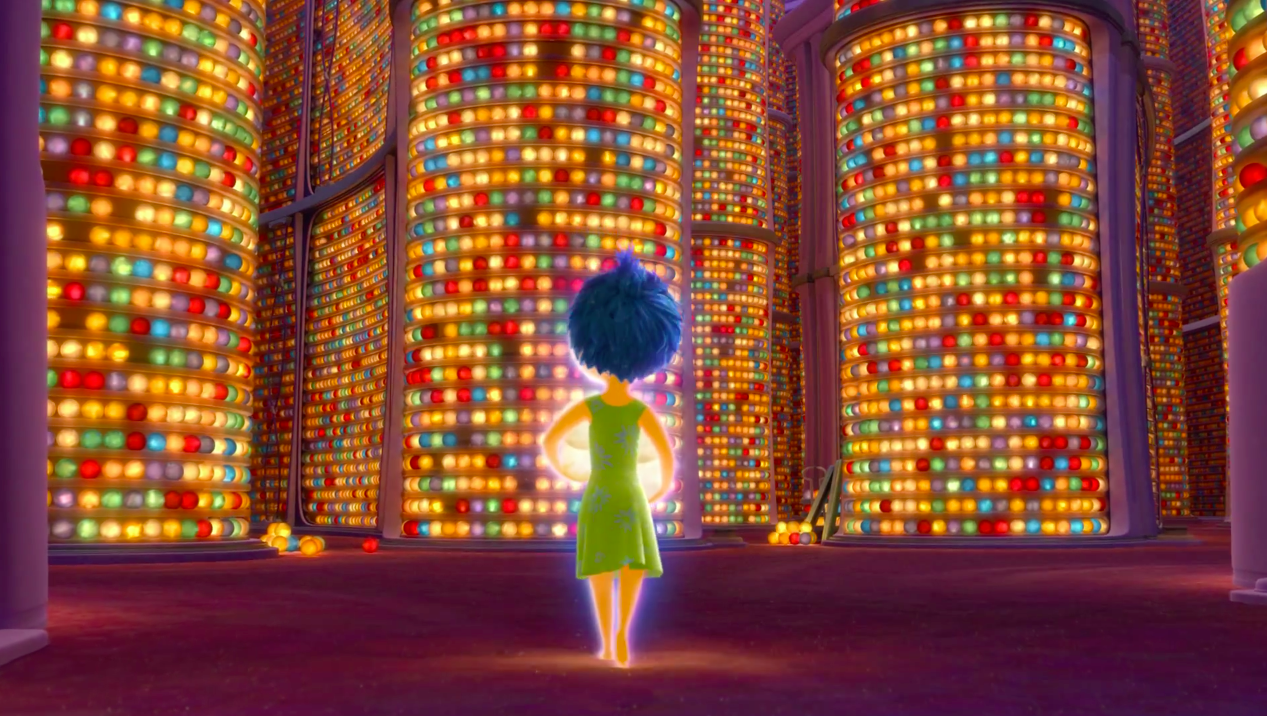
The animation is beautiful throughout, clearly delineating between the more stylised world of the working of Riley's mind, which is all brightly coloured balls of memory and jagged, forbidding levels of subconscious and the more realistically rendered world of San Francisco, which seems to become duller and more drab as the film goes on, to reflect Riley's growing dissatisfaction with the place. We don't spend a huge amount of screen time outside Riley's mind, but what we do see is enough to have us invest in a set of family relationships that ring true and to come to like both Riley and her parents. Animation wise the standout moment sees Joy, Sadness, and Bing Bong, running to catch Riley's train of thought, take a shortcut through abstract thought. In there they are broken down, becoming ever simpler until they are just 2D shapes. It's a moment more from Looney Tunes tradition (specifically Chuck Jones' glorious Duck Amuck) than Disney.

For all its humour, all its invention and all its adventure Inside Out comes down to emotion, and to the realisation that it's just not realistic to think that all of our memories and experiences can be, or even should be, happy. For much of the film, Joy tries to shunt Sadness aside and to keep her out of Riley's experience. This is a coming of age film, and its real moment of growing up, for Joy and Riley alike, comes when it is accepted that Sadness is an important part of Riley's experience and that her memories needn't always be defined by a single emotion. It's a rather profound truth to find in what is, on its face, a children's film, and it is beautifully and subtly articulated.

Inside Out is all too rare a film; as intelligent as it is entertaining, as moving as it is funny. It's more than a return to vintage form for Pixar, it's one of their very best films.
★★★★★

Sep 22, 2014

24FPS @ LFF 2014: The Satellite Girl and Milk Cow

Dir: Chang Hyung-yun
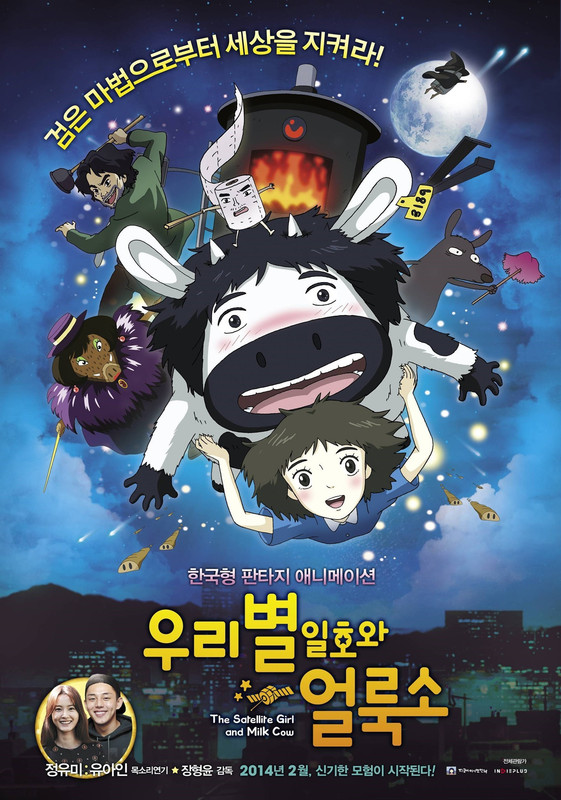
One of the problems with being a film critic is that, quite often, it can feel like we've seen it all.  And here we go again... just one more story about a broken down satellite that turns into a girl when it hears a young man singing.  Falling to Earth, she finds the young man, who, broken hearted, has been turned in to a cow.  Together, along with a wizard who has been turned into a magical roll of embossed toilet paper, they must evade a sentient monster incinerator and a man with a magical plunger who wants to steal the cow's liver.  

You know.  That old story.

The Satellite Girl and Milk Cow is a film as odd as its title, and that's where it draws a lot of its fun from.  You could call it a fish out of water comedy, with Il-ho (the satellite) taking human form and having to learn how to deal both with interacting on Earth and with the complicated reality of human emotion, both hers and Kyung-chun's (the cow).  There are plenty of laughs to be had in this side of the film and while many of them (Il-ho breaking down when she eats some of Kyung-chun's grass, for instance) are designed to appeal to young kids, they're also likely to make parents laugh.  Merlin, the wizard turned into a luxuriously soft roll of embossed toilet paper, is an especially reliable source of laughs.  The film seldom uses him for toilet humour, instead getting laughs by juxtaposing what he looks like with his very serious and forceful personality.

The film also has a poignancy about it.  This isn't always its strongest suit, but to the film's credit there is a sincerity to the way it wears its emotion on its sleeve, and it can be forgiven for feeling a little rushed and simplistic given that it is pitching at 8 year olds.  That said, you would have to be a hard person indeed for the shifting relationship between Il-ho and Kyung-chun not to tug your heartstrings even a little bit.

The animation here is good, somewhat Miyazaki inflected, but not quite up to those technical standards, nor can it quite match the deft mix of brilliant animation and emotion in the films of Makoto Shinkai or Mamoru Hosoda.  However, the character design is engaging and appealing, and director Chang Hyung-yun finds many funny and moving images throughout the film, particularly as it comes to a crescendo in the last ten minutes.

The Satellite Girl and Milk Cow is ultimately a bit lightweight for an adult audience, it suffers, a couple of times, from going for a musical montage over a more complex emotional payoff.  It should delight its target audience though, and if you do take your kids to see it you will be rewarded with a fun, silly, strange film that, at the very least, will tell you a story you haven't heard before.

Dec 14, 2013

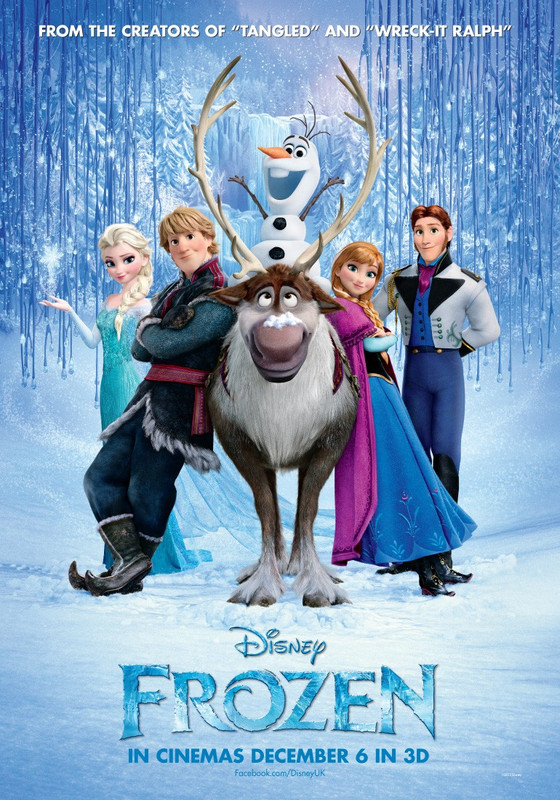
Frozen [PG]

Dir: Chris Buck / Jennifer Lee
Frozen has one of the worst trailers in recent memory.  It paints the film as Tangled in the snow.  This is bad on two levels, first, Tangled is a great traditional Disney movie and signs that the company is now trying  simply to imitate it suggest serious creative issues.  Second, and perhaps more pressing, Frozen is nothing like Tangled.  It has some familiar Disney elements, but the focus is different in terms of character, story and tone.

Based loosely on The Snow Queen, the film focuses on two royal sisters Elsa (Idina Menzel) and Anna (Kristen Bell).  Elsa has magical powers that allow her to create ice and snow, but her power is growing with her and because of fears she will, accidentally, seriously harm her sister she is hidden away, even after their parents die in an accident.  On the day Elsa ascends to the throne the gates of the palace are opened and the sisters see each other for the first time in years, but when the sisters argue Elsa's powers are revealed and she runs to the mountains, plunging her kingdom into winter and sending Anna chasing after her.

Somewhere in that synopsis Frozen also finds room, with varying success, for a couple of romances, trolls, and a talking snowman who likes warm hugs, but the crux of the film, the emotional centre, always remains Anna and Elsa's relationship, which is charmingly set up in the first ten minutes of the film.  

To begin with it's not entirely clear what Frozen is going to be.  The first half hour is crammed with incident, fast forwarding through events and through the Disney fairytale playbook at a rate of knots.  I began to fear that this was going to be a very rushed exercise in box ticking but the film has to hit those setup beats because what it does afterwards is subvert them in a way that marks a real departure for Disney in a lot of ways.

In animation there is often a tendency from both audiences and critics not to discuss acting in the same way that they would when discussing a live action film.  Hopefully Frozen will help change that, because this film is built almost entirely on its characters, and therefore it turns on its performances even more than would usually be the case.  As Anna, Kristen Bell gives a light but feisty performance, creating a character whose warm personality radiates out of a desire to interact with people, especially her older sister.  She plays the character's naiveté with charm and while it's only a small part of the film she plays nicely off Jonathan Groff as the ice salesman she ropes in to help her.  

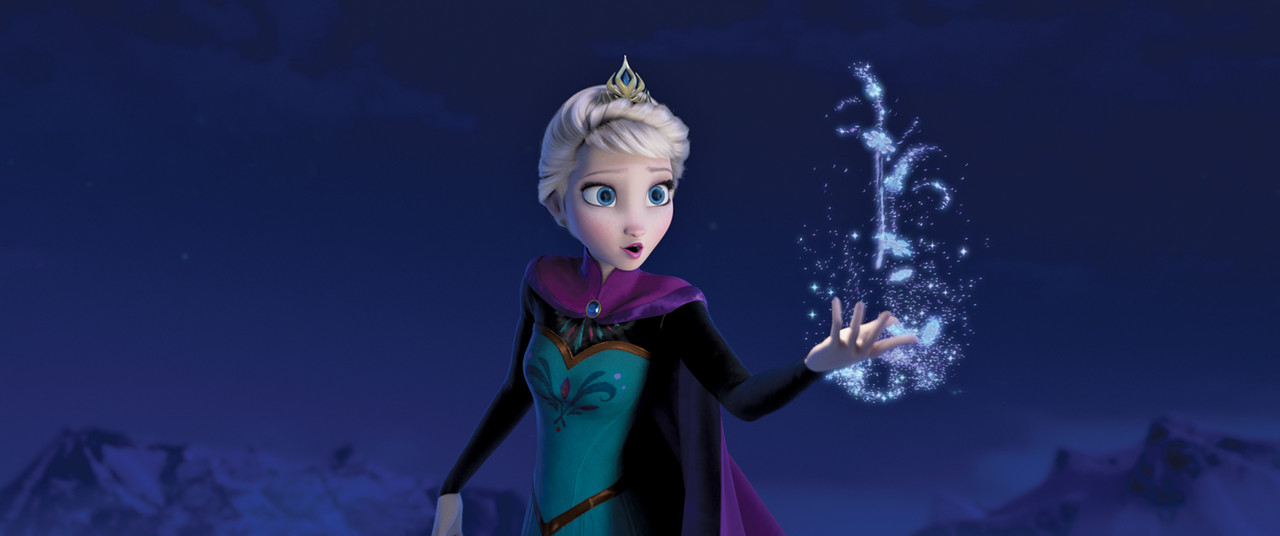
Idina Menzel, as Elsa, has a more layered character to play.  Apparently she was written as a more traditional villain but that focus was changed when composers Robert Lopez and Kristen Anderson-Lopez presented her showstopping song Let It Go.  This is a great choice.  One thing that's often true of Disney films is that their villains are quite simplistically evil, because it's easy to imagine that the young target audience needs things drawn in black and white.  Frozen takes a much more interesting path; Elsa is an antagonist, but the fact she's driven not by greed or malice but by fear means that she's never simple and never truly a villain.  Menzel drives all this home with a complex performance that explodes into life - and the film with it - with Let It Go, which was the first of a few moments when I felt myself getting really emotional.

The colourful supporting cast are all good but the standout is Josh Gad, who is completely heartwarming as a snowman who longs to see summer.  This is another great example of how the film works at multiple levels; Gad supplies some great laughs and one beautiful line that speaks volumes about the character's essential goodness, but behind it all there is an implication of tragedy, because he doesn't understand why he can't see summer or feel heat.  The film doesn't milk this aspect of the character, but allows it to inform his whole arc in a wonderful way that, like all the best things here, is smart, tugging the heartstrings without being too obvious about it.  I was taken by surprise by how much drama there is here and how willing the film is to dig in to the emotions of its characters, in this way it's perhaps Disney's best since Beauty and the Beast

The film looks beautiful, as you would imagine given the pedigree behind it.  The character design is appealing and cartoony, but not so much so that we disconnect from the emotion behind the story, and the landscapes and settings, especially Elsa's ice palace, are jaw dropping to look at.  The 3D is as unrequired as ever (and I had some ghosting in my screening), but even that didn't detract from the film's best moments.

All this said, Frozen isn't perfect.  The opening half hour clunks a little (though it may work better on a second viewing, once it's clear what is being set up and why the film seems in such a hurry) and while it's a welcome return to the big Broadway style musical Disney of the late 80's and early 90's there are perhaps a few more songs than we really need here (a digression with a family of trolls and the pleasant, but hardly crucial, Fixer Upper slows the film at just the wrong time).  It's a testament to the film and to the performances that these end up feeling like nitpicks, Frozen finds Disney delivering, in a very different way, on the huge promise of Tangled and, taken together, these films may just point the way to a new golden age for the house of mouse.