Showing posts with label Spain. Show all posts

Sep 17, 2019

24FPS @ LFF2019: Day 1

Rewind
Dir: Sasha Joseph Neulinger

Film serves many functions in our lives. It can be pure escapism and entertainment, but it can also serve as an archive; a document of what we are thinking and feeling in a given moment, or as evidence of another kind.

Sasha Neulinger’s directorial debut is a bravely personal film, looking back on the sexual abuse that came from within his family towards both him and his younger sister, when they were each as young as three years old. Through a patchwork of archive footage taken by his filmmaker father and present day documentary and interview footage, “It’s a puzzle made from my life”, says Neulinger, as he opens the film in which he combs through his childhood to recall and to contextualise the abuse, focusing on how it seems to be passed down like a virus.

The archive footage, at first glance, is much like that which any family who had a video camera in the 90s might have taken; family gatherings, parties, trips to the zoo the kids playing outside. There is a dark side though, and it’s present from the off, as we see a roughly 9-year-old Sasha introduce his “Shit diaries” direct to camera. What emerges as the pieces of the puzzle form a full picture is a jagged image of a disturbed boy whose initially sunny and open nature was blown apart early in his life, leaving a child who couldn’t express his emotions except in anger and acting out.

Today’s Sasha is markedly different, but there is still a raw feeling to the film as it is plain that revisiting these times, even if it is eventually cathartic, is deeply difficult for him. In one scene, as his father describes his own childhood abuse from a brother who would grow up to also victimise Sasha, we can see the director in background of his shot, clearly shocked, moved and holding back tears. In another moment that speaks of deep connection, both as family and survivors, Sasha gives his sister Beckah a long hug following her interview. It’s this long thread of shared experience the runs throughout the film that is, in many ways, its most shocking aspect. 

Rewind is, obviously given its subject matter, a challenging watch. Moments that find Neulinger looking through his old therapy records with his doctor, looking back at drawings that graphically - if largely metaphorically - describe his abuse are especially hard to stomach. Yet there are also moments of grace, not least the one in which, in archive footage, Sahsa reveals that he’s changing his surname to Neulinger. 

The form of Rewind is fairly familiar, not least from the acclaimed Capturing the Friedmans, but coming from a first person point of view gives the way that the stitching of this patchwork of footage a somewhat different power to that of the earlier film. This case has already made positive change, but this film will bring it to a wider audience, particularly if it is picked up by something like the BBC’s Storyville series, which is the sort of distribution that might suit it best. That would allow Neulinger’s campaigning, but never brow beating, film to get out and perhaps make a wider difference.  
★★★½

The Miracle of the Sargasso Sea
Dir: Syllas Tzoumerkas
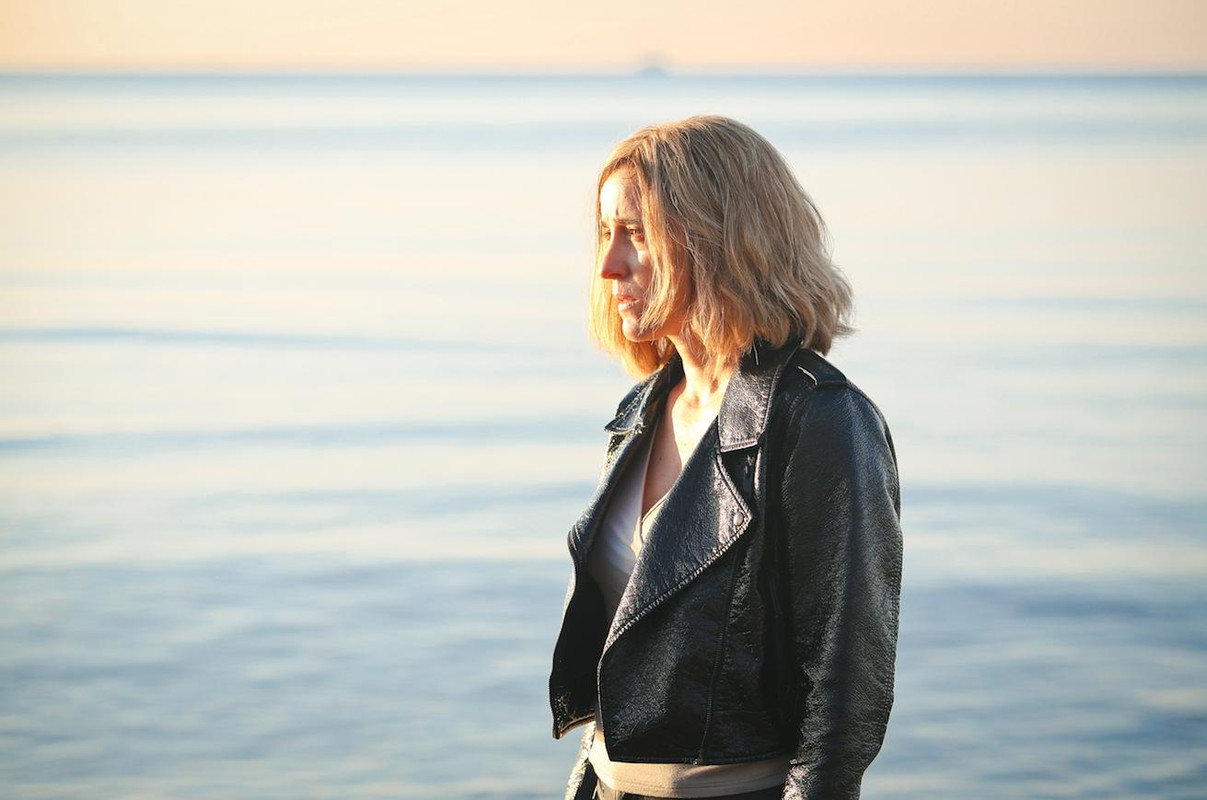
The name may not be entirely accurate anymore, but after more than a decade it still feels as though the Greek ‘weird wave’ is surfing in the wake of Yorgos Lanthimos. While he has managed to transfer his talents, with his peculiar tone largely intact, to higher profile and even prestige projects, many other filmmakers have remained at home, ploughing a similarly strange furrow. Syllas Tzoumerkas was last seen at LFF with the awful A Blast, his latest film has a little more going for it, but suffers from many of the same issues.

For the first half, Tzoumerkas and co-writer Youla Boudali set their pieces. Elizabeth was a cop in Athens but in the opening sequence we see her asked to join other officers in lying about planted evidence. 10 years later, Elizabeth (Angeliki Papoulia) is living with her now teenage son Dimitris (Christian Culbida). Elizabeth the chief of police in their small town. She’s a drunk, a casual and sometimes open drug user, constantly berating the officers below her and not above her own corrupt actions. Other strands involve the rest of the people in town, from club singer Manolis (Hristos Passalis) and his sister Rita (Boudali), who have a fractious relationship with him doing most of the caring for their mother, who has alzheimer's to, among others, Elizabeth’s married lover Vassilis (Argyris Xafis), local DA Andreas (Laertis Malkotsis) and Andreas’ mute brother Michalis (Thanasis Dovris). 

There are a lot of tangled strands set up here, but only Rita’s story grabs much attention. This is where the film suggests the most depth, with her job cleaning a church and the various biblical visions we see through her story promising something with a powerful undertone but, as with many other things it sets up, the film never really delivers on this. The visions seem just to be there, perhaps someone more well versed in Greek Orthodox doctrine could unfold something specific from them, but for me they ended up feeling empty. That’s less true of Youla Boudali’s performance as Rita though. We get, at the very least, a sense of trauma and of something rather dark lurking underneath her relationship with Manolis (a slickly dislikeable turn from Passalis).

The rest of the film is far less interesting. Elizabeth’s story starts intriguingly enough, leaving some ambiguity about how she reacted to the bribe in the opening sequence, but once we find her a decade later, Angelikki Papoulia’s performance is disappointingly lacking in any shading. Her constant anger, her lack of any subtlety in her performance outside the film’s bookending scenes becomes wearing very quickly. Having a heroine who isn’t someone we would usually root for is fine, but the screenplay allows Papoulia little to work with in terms of contextualising Elizabeth’s rage and keeps her at such a constant boil that her every scene feels like a reiteration of the last.

As the second half of the film begins to use a murder mystery - the solution to which is hardly a surprise - to unpick the strands the first half set up, the extreme dark secrets that lie under the quietness of this town feel, for all the deadening and pointless explicitness with which Tzoumerkas shows them, somehow inevitable. He’s clearly going for shock value but a decade of films from Greece that have used many of the same ingredients, along with the fact we only really know and care about one of the characters involved, means the effect is considerably blunted.

There are flashes of interest here, notably in Youla Boudali and Hristos Passalis’ performances (he is especially good as he seemingly snaps after a performance, and begins berating the home town crowd from the stage) and in the various biblical overtones that surround their story. However, Tzoumerkas and Boudali’s screenplay is far too unfocused and, in other areas, too one note, to sustain that interest for the two hours the film runs.
★★
A Thief’s Daughter
Dir: Belén Funes
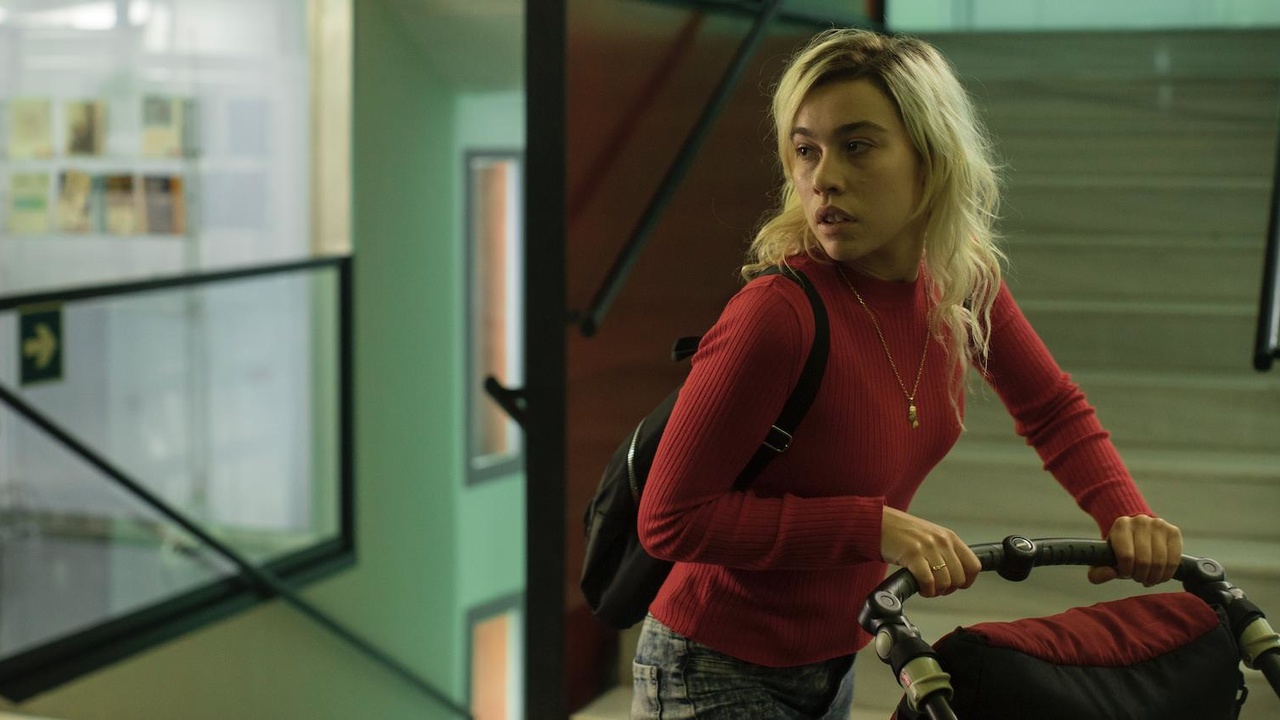
Late on in A Thief’s Daughter, Sara (Greta Fernández) is asked why she can’t just forget about her Dad “I carry him in my face”, she says. There’s a push and pull in that moment that is felt throughout Belén Funes excellent feature debut.

Sara is 22, she’s scraping away in a variety of menial jobs, trying to make ends meet for herself and her baby son, while also trying to win custody of her seven year old half brother Martin. Her father (played by her real life father Eduard Fernández) has just got out of prison and she clearly craves a family connection, while also being aware that being around him may not be good either for her or for Martin.

This isn’t a film of big dramas, confrontations are small and brief, grounded in the same reality as the rest of the film. Funes constructs a beautifully observed film, her camera more often feeling like a third person in the room more than it does something imposing structure. With that said though, she also has an incredibly economical style, often unfolding whole swathes of backstory without a word. In one especially impactful moment Sara is washing up after celebrating Martin’s first communion, she gets a little wine on her hand and sucks it off, then for a second considers drinking what’s left in a glass, before relenting and washing it. A couple of movements, perhaps five seconds, and we understand potentially years of Sara’s life. It’s a piece of pure cinematic storytelling. 

Little things unpack big stories throughout the film, thanks to the sensitive and artifice free performances. The relationship between Sara and her Dad has a naturally tense feeling to it, doubtless aided by the real life relationship between the actors, the history between the characters feels present in every moment. Outside of these scenes, the same unforced realism comes through in Greta Fernández’ performance. Whether Sara is at work, at home, or with her brother (another beautifully drawn relationship) there is never a sense of an actor playing a scene; the observational quality of Belén Funes’ direction coming through in performance as well as in camera. The victories may be small, but we feel them all the more powerfully for that, one sequence in which Sara learns she’s passed her probation at work is particularly good, capturing a warmth that we sense she feels too seldom as she’s trying to get by.

The film does build to a big narrative event, but even there Funes and co-writer Marçal Cebrian  resist any urge to grandstand, landing on an ambiguous but deeply moving final image that underscores the tug that we have felt in Sara throughout. This is a notable debut from Belén Funes, a film that delivers but also promises many interesting things for the future. It points to director with a strong but unobtrusive eye and a great command over casting and performance. It’s a quietly excellent film, and one you should make time for at LFF.
★★★★

Oct 15, 2016

24FPS @ LFF 2016: Animation Roundup

Apologies for not posting more written reviews while I was at LFF this year, I was having serious computer troubles.  Here, by way of apology, are short(er) reviews of three animated films I saw.


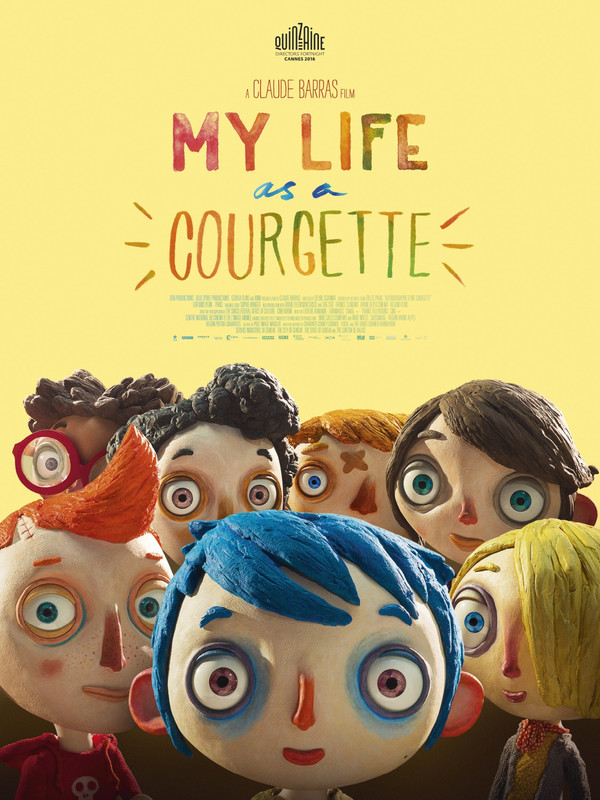
My Life as a Courgette
Dir: Claude Barras
For my money, the French writer/director Celine Sciamma is one of the most interesting talents to emerge in cinema in recent years. Her three directorial films: Water Lilies, Tomboy and Girlhood all number among the best of their respective years and I await her projects with great anticipation. While Sciamma didn't have any directorial work in the LFF this year, she wrote the screenplays for both the new Andre Techine film, Being 17 and for this, a delicate, nuanced, but optimistic children's film about a boy named Courgette who falls for the new girl at the orphanage he's sent to after his mother dies in an accident at home.

Director Claude Barras and his animators craft an interesting look for the film. The characters all have a certain look, but the designs are striking and individual, giving even the characters with the least screen time a distinctive look. They are set against backgrounds that are often a bit drab and have a homemade feel, like something out of a Michel Gondry animation. This is effective in making the characters stand out from their environment.

For a little while it seems that My Life as a Courgette might be a pretty miserable film. We get the expected beats when Courgette first arrives at the orphanage and is bullied by a bigger kid, but this dynamic soon shifts and a much brighter film emerges. This home is depicted as one where there is a genuine sense of community, and the film has a real warmth thanks to that. Little recurring jokes, like one child running to the door every time it opens, expecting her mother, amuse while also giving the film surprising emotional weight, but it's the way that Barras' images and Sciamma's screenplay combine to capture the little moments that define growing up that have stuck with me about this film. Courgette and Camille's relationship is touchingly well-observed, as are the growing bond between Courgette and the cop who initially takes him to the orphanage and the shifting dynamics of the group of kids. These things may be played out by plasticine models and in front of cardboard backdrops, but they ring true.

My Life As a Courgette should be suitable for kids from about 10 or 11, but I'd imagine that their parents will enjoy it just as much, it's sweet without being sickly, funny without compromising on some the darkness at the heart of the story, and eventually extremely touching.
★★★★★


Psychonauts, The Forgotten Children
Dir: Pedro Rivero / Alberto Vazquez
In a post-apocalyptic world, humans appear to have died out and animals are all that remains. Dinky longs to escape the island she lives on and her religious parents. For help she turns to her friends and to Birdboy, whose soul has been overtaken by a demon. To escape, they must make dangerous trek through the rubbish dumps where roving gangs of rats and mice live beyond the law.

Psychonauts is a determinedly offbeat film. From its visual style on down, it mixes tones, combining dark subject matter and imagery (sometimes sketchy, sometimes in bold red and black silhouettes) with offbeat humour and cute design on Dinky and her friends. The jokes leaven the darkness of the film just enough that Psychonauts, while properly scary at times, is probably suitable for older kids as well as for adults.

The film's biggest laughs often come in the margins, the little moments, such as when Dinky's brother tells his parents what he wants to be when he grows up, or when the inflatable duck Dinky and her friends get to try to escape the island on tells his backstory. As much fun as these moments are though, there is something chilling at the core of Psychonauts; a scorched earth world that feels complete in its design. The opening moments, with a mouse and his son scavenging for rubbish and invoking the rules of their community, set this up brilliantly, as well as setting up a surprisingly human and moving relationship between the characters. This approach will carry through the film effectively, especially in Dinky's love for Birdboy.

The animation is brilliant, the mix of styles well executed and fitting for the film's mix of tones, and it's often surprising what level of character Rivero and Vazquez manage to get of their designs. This too is especially evident with Birdboy, who is essentially just a few shapes in black and white, but is rich in character despite being mute. Birdboy's eyes; huge empty black holes signifying the loss of his soul, are particularly haunting, and end up communicating a lot.  The film is at its best when Birdboy, fully possessed by a demon, attacks the Psychonauts village. This is a sequence straight out of a monster movie, and a brutal one at that, with images of burning characters that call to mind the atomic bomb sequence in Terminator 2.

Overall, Psychonauts, the Forgotten Children is a great surprise; a well balanced tonal juggling act that will horrify and amuse in almost equal measure. I hope it finds a UK release.
★★★★


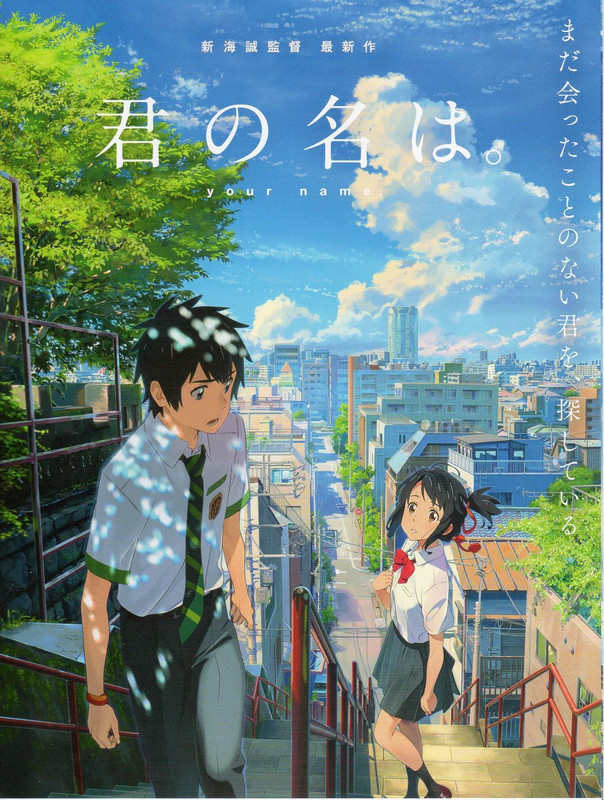
Your Name
Dir: Makoto Shinkai
I've said it before, but it bears repeating, when we're talking about the most visually stunning films being made today, Makoto Shinkai needs to be in the conversation. His latest, Your Name, is the first anime to play in the (relatively new) London Film Festival competition section, and it is just as lush and gorgeous as we have come to expect.

Your Name will also feel somewhat familiar to Shinkai fans in its story (a tale of two young people falling for each other, though separated, then trying to find, and in this case remember, each other). While he is a visual master, Shinkai's flaws often come from his writing and Your Name doesn't have his strongest screenplay. Even for him, the boy sort of meets girl story that develops as Taki and Mitsuha begin to wake in each other's bodies is a rather sentimental and sometimes cloying one. That said, Shinkai does have a knack for this material, and while he sometimes overeggs the pudding, Your Name is also full of emotional moments that hit me just as deeply as the visuals did.

Visually, this is a film of dazzling beauty. The character designs are expressive, but as ever it's the world Shinkai grounds them in which is so stunning. From the most mundane things like images of trains passing, to the grandest in scale, such as the images of the comet that figures centrally in the film's story, everything is rendered with the same loving detail, everything seems lit from within. It's also important that the environments feel credible. There's a great sense of place and of the contrast between Taki's home in the fast-paced modernity of Tokyo and Mitsuha's life in a little village where tradition persists. If the film weren't grounded like this, then its flights of sci-fi fancy would strain credulity even more than they do. 

The character work here is strong. As the voices of Taki and Mitsuha, Ryûnosuke Kamiki and Mone Kamishiraishi shift their performances as the characters become more used to 'being' each other several times a week. There are overblown moments in each of their performances, but they are allowed to be smaller and more subtle as the film goes on and become more affecting as this happens. The scenes as the comet finally comes into play, particularly one set at twilight, are delicately played, beautifully animated and ultimately very moving.

Like much anime, I found Your Name to be at its weakest when it is at its broadest. While there are some fun running jokes, the early body swapping sequences can be loud, lacking nuance and sometimes a little wearing, but even in those scenes, the beauty of the film and the fluency of its animation are engaging all by themselves. 

This is a hit and miss film, it can even be a little grating at times. When it works though, when Shinkai pulls images, character and story together in a moment as simple and moving as a shot late in the film of Mitsuha opening her hand and seeing writing on it, it's as magical as the director's best work.
★★★

Dec 14, 2015

24FPS' 10 Worst Films of 2015

I had a shorter list of terrible films to choose from this year than usual. I think there are two reasons for this. 

First, it was a middling year on the whole, with many average to very good films, but few that broke through, for me, either to excellence or awfulness. 

Second, I changed the way I watch movies this year. For many years I had an annual pass for the UK's largest multiplex chain. This year I switched that for a similar deal with Curzon, whose programming is more eclectic. As a result I missed much of the year's mainstream fare after April. I say missed, but that's a lie, I can't say there was a single major release that I truly regret not catching. I think this switch in my viewing has led to a much better average among the films I saw in 2015 as opposed to recent years. 

All this said, the pickings for this list, though slim, were rich indeed and I had to drop some films I truly will miss from this countdown. Make no mistake, these 10 movies are all pretty awful, some made me extremely angry, and I'd be happy to never see any of them again.

10:  Rosewater
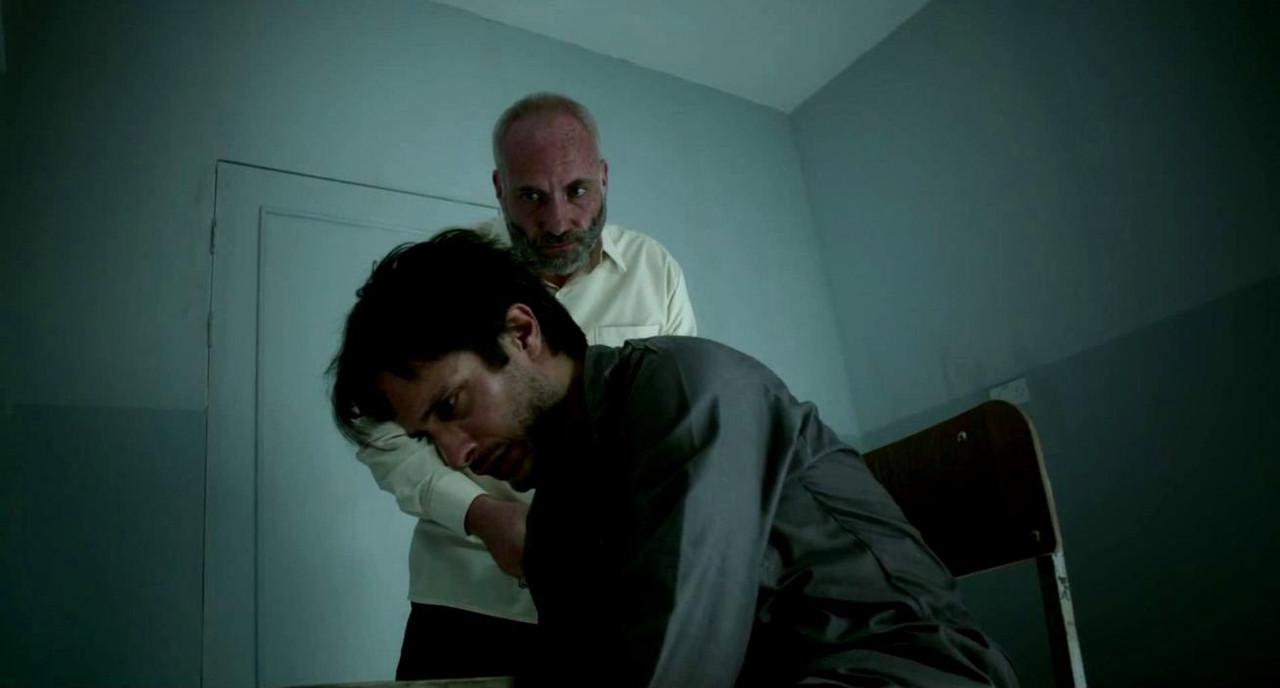
Jon Stewart's directorial début is a disappointment rather than a truly awful film, it strives for importance, but its impact is lost in uninspired directorial choices. The story of the imprisonment and interrogation of Iranian journalist Maziar Bahari (played by Gael Garcia Bernal) is impactful enough on its own, without the mawkish scenes of him hallucinating images of his Father and Sister.  When Stewart pulls back and just allows the situation to speak for itself (as when Bahari gets to speak to his pregnant wife on the phone), we get glimpses of what the film could have been, but all too often the directorial inexperience and the weight of Stewart's tangential personal involvement in the story hobbles it.

Aside from this, the language of the film proved a disconnect for me. The Iranian main characters are played by a Mexican (Bernal) and a Dane (Kim Bodnia as the interrogator), and all the dialogue is in English, not only does this confuse a few moments when you wonder how much Bernal's captors understand, but it created a distance for me, an awareness of watching actors rather than being sucked into a situation. This is an Iranian story, it feels wrong in English.

It's a pity that this doesn't come off, it's a deeply sincere film, but undone by inexperience.

9: What We Become
This is going to be a recurring theme on this year's worst list, but the main reason that What We Become has ended up here isn't because it's one of the worst films ever made - it's entirely competently acted and shot - it's because there is not one single frame of it that I haven't seen before. This Danish zombie/pandemic film draws quite heavily on Chris Gorak's underrated Right At Your Door and very heavily on every zombie movie ever made.

The film shuffles forward, seldom dull, but never truly engaging either, and never remotely original. Every scene, every shot, could have been drawn from somewhere else and a hackneyed horror film doesn't magically become better because it's not in English.

8: Me and Earl and the Dying Girl
Well, it's better than last year's godawful cancer movie. Just. Me and Earl and the Dying Girl (the more I type that title the more I hate it) has many of the familiar problems of young adult literature adaptations, most pressingly the fact that its characters have no personality. As the Dying Girl of the title Olivia Cooke has a tumour and a small assemblage of quirks where her character's personality should be and worse, what personality she does develop largely comes in the last 10 minutes of the film, entirely in service of the male lead.

That male lead (Thomas Mann as Greg), is both an annoying character - it's another movie that forces me to hang out with an asshole I'd rather avoid, without him being very interesting - and a weak performance. Mann is flat and affectless throughout, which completely undermines the connection he should be developing with Cooke's Rachel.

While it has a few moments of wit, thanks to the parody films that Greg [Me] and Earl make together (well, their titles anyway), the film's overwhelming tweeness drowns out the few moments of promise.

7: Chappie
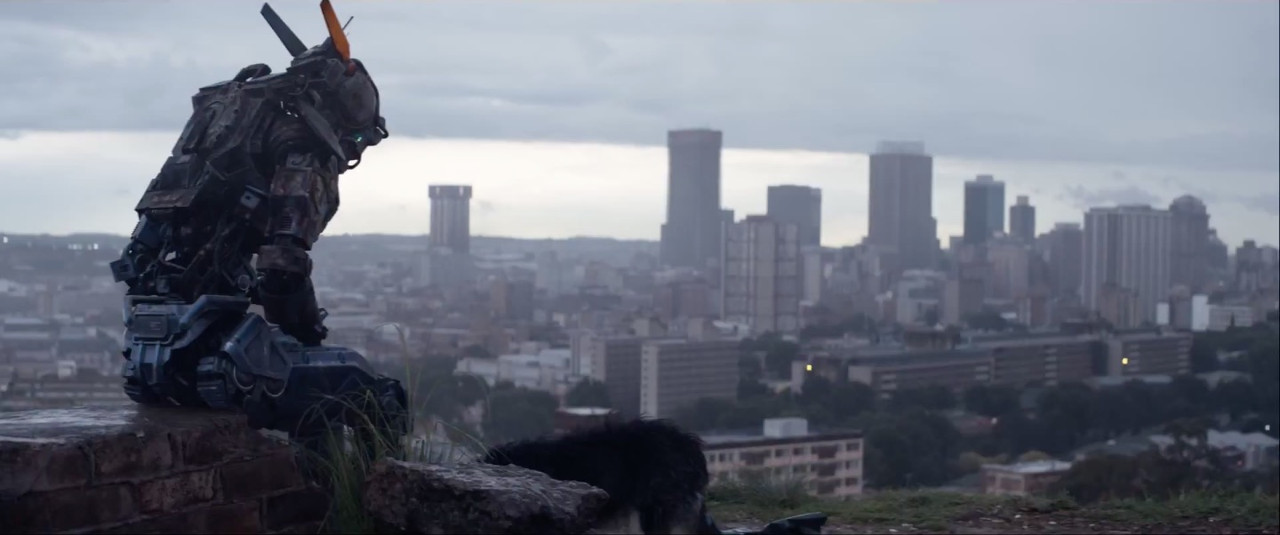
Three films in, Neill Blomkamp has half a great movie to his name. It's not half of this one. Like so many other films on the list this year, Chappie seems to be less a film in its own right than a compilation of other people's ideas, in this case with the annoyance factor turned WAAAY up. 

The story is an amalgamation of elements of Short Circuit (the coming of age stuff), Ghost in the Shell (several of the bigger sci-fi concepts) and Robocop (the crime/policing side of the story). The design also steals from all of these sources (Robocop especially egregiously). What ideas Blomkamp has are either abandoned in favour of CGI spectacle, poorly executed thanks to some of the worst performances of the year, or lost in the cacophony of competing elements and abysmal dialogue.

The performances are the worst part though. The perma-mugging Sharlto Copley is just awful as the voice and motion capture source of Chappie, Dev Patel is wooden as his creator, Hugh Jackman can blame his performance, which boomerangs from pious concern to gleeful violence on the script, but Sigourney Weaver's autopilot rendition of a business bitch has no such excuse.

However, it gets worse, in the shapes of Ninja and Yo-Landi Visser, co-vocalists in rap-rave act Die Antwoord, who both have major roles with serious screentime and compete to give 2015's most fingernails down the blackboard grating performance. It's a close run thing but Ninja's strained faux gangsta schtick wins. We lose.

Every single idea in Chappie has been better and more fully executed in other films, hell, the final image was better executed in a Bjork video. There's no reason for this to exist.

6: Mistress America
I'm not generally fond of what I've taken to terming 'hangout movies'. Hangout movies are those films that are driven not by plot but simply by spending time in the company of a character or small group of characters. I'm not averse to them when the character or characters are people I'd like to spend time with in real life, or people I find interesting enough to want to spend 90 minutes with in a cinema, even if I'd avoid them otherwise. The people in Mistress America are dull and largely have noxious personalities, I'd leave a party to avoid them.

Noah Baumbach's films have been having this effect on me for a while, but at least he used to write about interesting bastards. Roger Greenberg (Ben Stiller in Greenberg) is a wanker of such magnitude that for me it undermined the plot of the film, but he's not boring. The characters in Margot at the Wedding are uniformly terrible, but again, their conflicts are interesting. This is not true of Gerwig's Brooke, nor of Lola Kirke's Tracy (pretty damn awful herself) . 

Given that, all Mistress America amounted to for me was 45 minutes in the company of people I hated, then another 45 minutes watching them do forced, desperately unfunny, screwball comedy. I think that's my last Baumbach for a while.

Note: Yes, I know Baumbach made a film [While We're Young] without Gerwig this year, but since I hated the trailer and fans seemed to like that one less, I skipped it.

5: Madame Courage
I really thought this was going to be the single dullest film of 2015's London Film Festival. It didn't even manage that meagre achievement (see No. 3). I keep having to clarify that I don't have an inherent problem with slow or minimalist cinema, I think for me though, the caveat is that if in story terms you are going to take that route, then in character terms I need to find something compelling, because while beautiful images are all well and good - which isn't to say Madame Courage has those either - they aren't the be all and end all of what I come to cinema for.

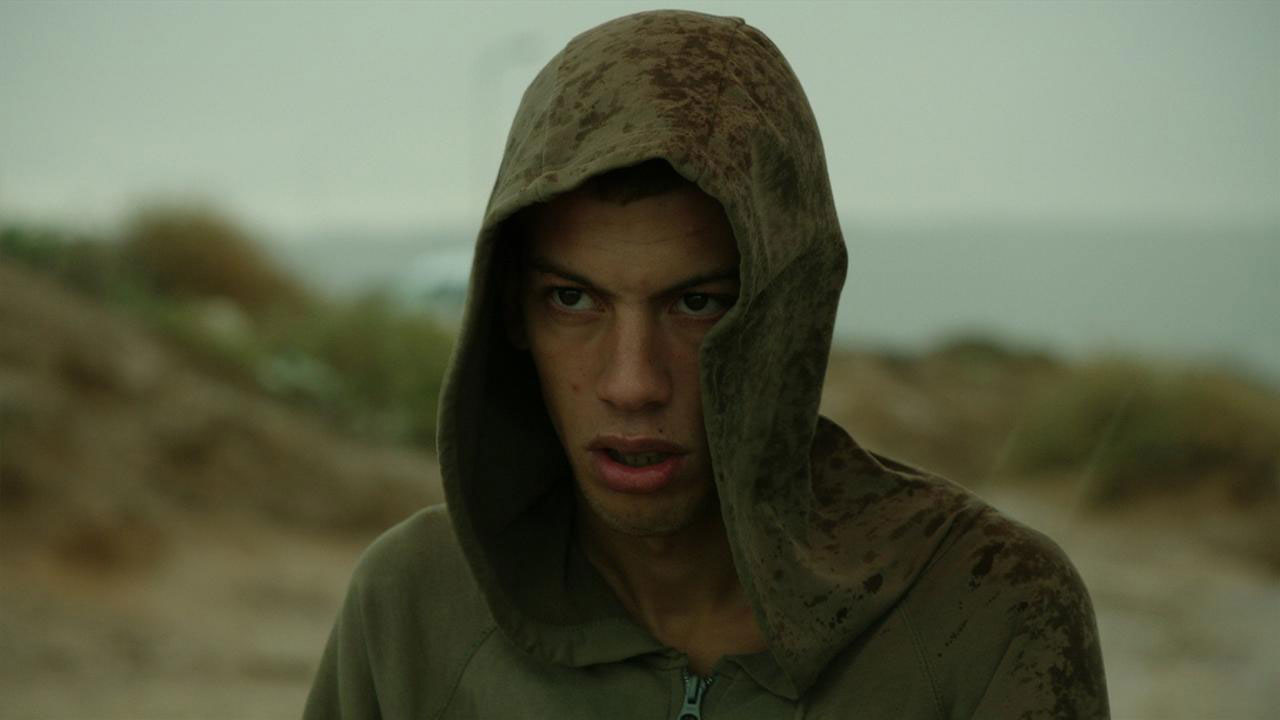
This incredibly minimal story, set in Algeria, is of a young drug addicted thief who falls for a girl he mugs and begins following her and standing outside her window. What does he find so intriguing about her, why is she not more intimidated by him? On these and many, many other questions the film is oblique to the point of tedium.  Many scenes simply depict Omar (the thief) standing outside this girl's window for minutes on end. Nothing is said, nothing happens, we just watch him stand, or sit. This might have proven menacing if director Merzak Allouache gave any sense of building to something, but even when this appears, finally, to be what he's doing, it amounts to less than nothing.

On the sidelines there are scenes of Omar interacting with his Mother and Sister at home, but these feel overblown and, while they strain to make a point about women in this society, the characters are so thin that it never comes off. For the most part, for all its incident and interest, I may as well have watched a blank screen rather than Madame Courage.

4: The Corpse of Anna Fritz
I like my movies messed up and I especially like body horror. This really should have been on the other list this year, if it had worked. The premise is simple; a famous actress dies unexpectedly and the young morgue attendant invites his friends to see the naked corpse before it is embalmed. Soon though, things move beyond looking and while she is being raped, Anna Fritz (Alba Ribas in an exploitative part) wakes up. There is a terrifying locked room thriller, with a rich subtext about how we as a society believe we own celebrities, buried somewhere in this premise, but instead co-writer/director Hèctor Hernández Vicens opts to make one of the most by the numbers pieces of horror I've seen this year.

The Corpse of Anna Fritz runs through its potentially unnerving story within half an hour, then proceeds to stretch in a way that strains credulity and patience more often than it does nerves. Worse than this is the grinding predictability of the whole thing. Almost every scene is predictable not just in plot terms, but down to the visual choices. This reaches its apex in a chase scene that should be the film's most suspenseful moment but so hackneyed is the execution that I could spot every single shot and every single edit coming a mile away.

This should have been right up my dark little street, but it fails on almost every level.

3: Box
I went to see Box at the London Film Festival, choosing it over several higher profile screenings that I might have been well advised to see and have an opinion on, purely because it stars the Hungarian actress Hilda Peter, who made one of the most compelling film debuts I'd seen in years in Peter Strickland's Katalin Varga. This was my first chance to see her again and I wasn't going to miss it. Unfortunately, Box is an empty vessel.

Peter plays Cristina, a stage actress in her mid 30s, a little distracted both in rehearsals and at home with her husband and young son. Rafael Florea plays a 19 year old boxer, looking for success, who begins following Cristina home. After an hour's repetitive and largely silent screentime of this, they finally speak, agreeing to go for one coffee, after which Rafael will promise to stop following Cristina home. The film's last half hour, after this 'date' is grindingly predictable, but the film builds to nothing more than a pointless ellipsis. 

It would be something if we got any sense of a connection between Cristina and Rafael, that last image might then prompt questions, but they're so uninteresting that by the end it simply feels as though writer/director Corneliu Porumboiu has tired of the characters, long after I had.

2: Awaiting
I have to be careful how I phrase this, because there are words I don't want to use, but to say that Awaiting (which played at Frightfest before getting a DVD release this year) is 'inspired by' 1989 Canadian chiller Cold Comfort would be to, in my opinion, massively understate the debt that writer/director Mark Murphy owes that film.

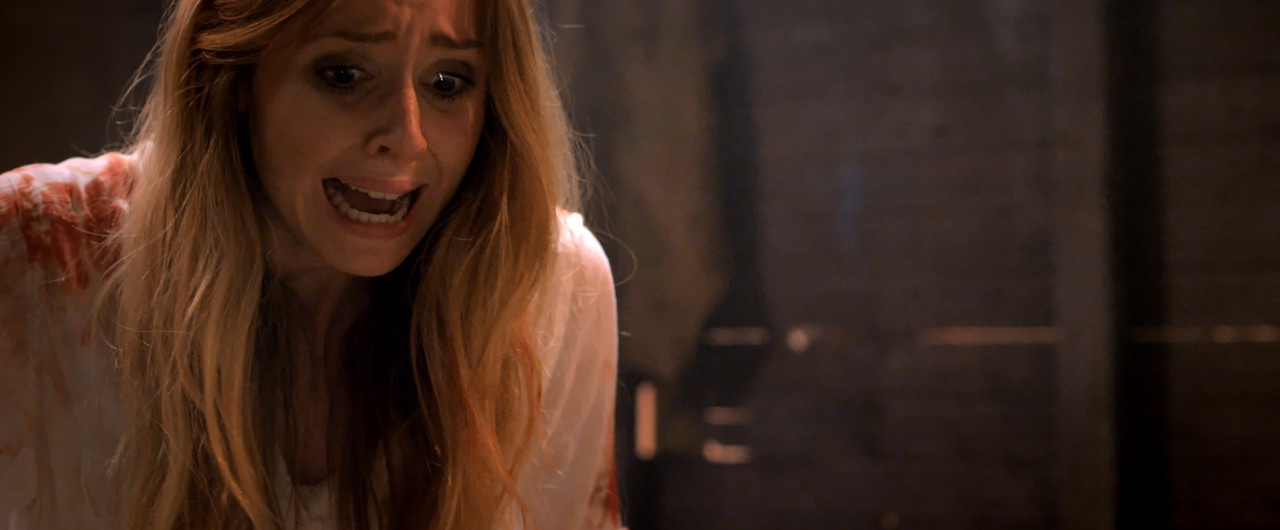
On its own merits, Awaiting is pretty awful. The performances of Tony Curran and Diana Vickers as a serial killer father and his shut in daughter aren't bad, but they're in service of a film that unspools like a collection of moments and shots drawn from other, better, films even before you get to the similarities to Cold Comfort. If you have seen that film then watching Awaiting will often be an exercise in deja vu, as Murphy mirrors not just plot details (often down to the tiniest nuances) but dialogue, images and even editing and shot structure. In this way Murphy hobbles himself, because even the few things he does right here seem to belong to another filmmaker first.

1: Terminator: Genisys
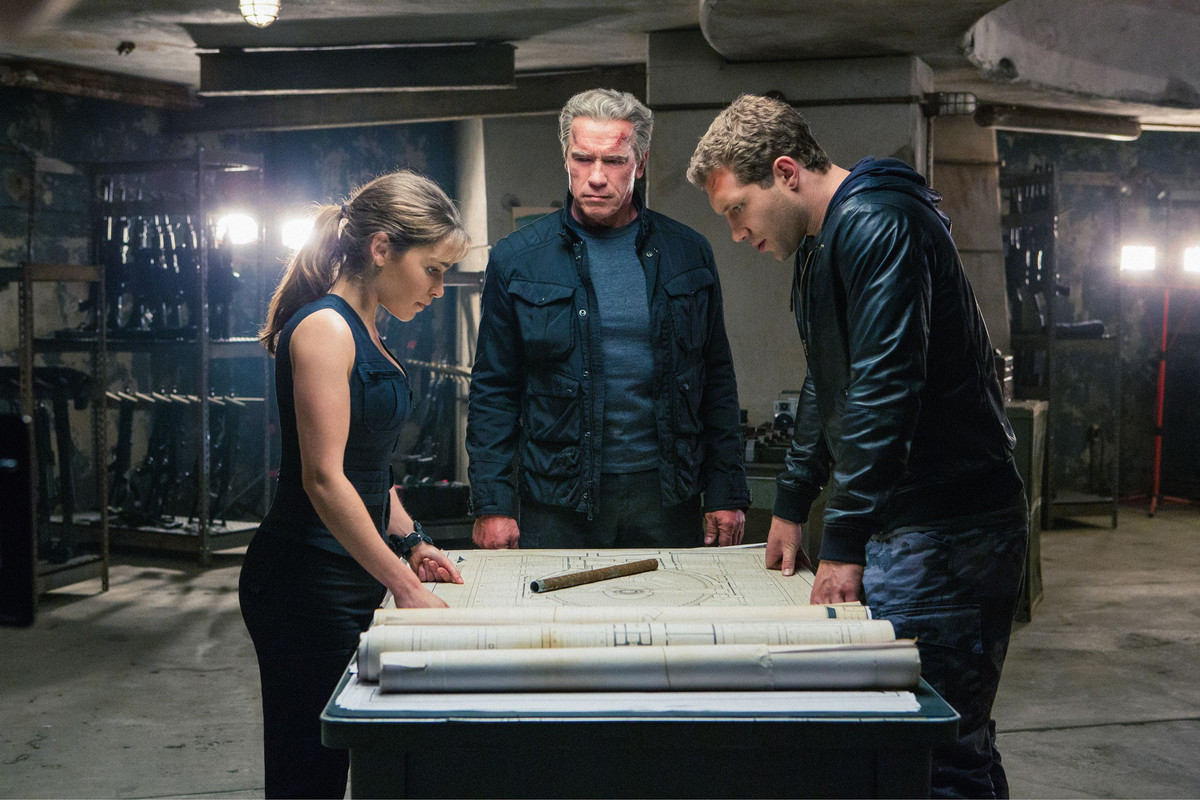
Terminator: Genisys is a remarkable film. It is so catastrophically terrible that it feels like watching the result of a creative meeting, the mission statement of which was 'How can we take every good idea in the history of the franchise and make it insultingly shitty?' Not only that, it makes me want to apologise to McG, because next to this steaming heap of elephant droppings, his Terminator: Salvation looks like the unacknowledged sci-fi classic it absofuckinglutely isn't.

Arnie's tired take on the titular cyborg is easily his worst leading performance since ending his Governorship of California. He's reduced to spouting endless confusing exposition, trying to find a quotable one-liner ("I'm old, not obsolete" won't be a line we'll see callbacks to in future Arnie films) and generally hamming it up. In previous films, Schwarazenegger's performances, subtly shifted with each different iteration of the Terminator, have been strong. Here he's weak all round, he seems bored and even his action scenes have a listless quality that suggest he's barely along for the ride. This isn't to say the rest of the cast is better: Emilia Clarke is a catastrophically miscast and bland Sarah Connor, while Jai Courtney still can't provide any answer to the frequently asked question 'Why does Jai Courtney have a career?'

The timeline bending storyline, which attempts to write the consistently and sadly underrated Terminator 3: Rise of the Machines out of continuity, is perhaps the film's very worst element. It's less a screenplay than a series of nadirs for the franchise. First the godawful moment in which Courtney arrives in this movie's 1984 and we see 1984 Arnie, the seemingly unstoppable threat of the first film, neutered within seconds. Then there's the twist. The godawful, utterly miscalculated, laughably executed and acted, thoroughly pre-spoiled twist. The idea is beyond terrible, but the performance it is anchored to is so bad that it undermines even the tiniest chance of it having the impact it might have achieved in the second or third films.

The tragedy of Terminator: Genisys (leaving aside its nonsensical tytle) is that for about 30 seconds we glimpse a movie that could have been, a movie that could have been new and different and interesting. Why couldn't we have seen the film set in 1973, with the Terminator raising and protecting Sarah Connor as a child? It would be a new context for the franchise, with new challenges inherent in the setting. But that's the thing, that would be new and that, in a Hollywood apparently intent on feeding on itself until it chokes on its own self-regarding nostalgia, just wouldn't do.

Oct 10, 2015

24FPS @ LFF: Mini Review: Retribution

Dir: Dani de la Torre
I first saw the Spanish actor Luis Tosar as the abusive husband of Laia Marull in Take My Eyes. Since then, I've found him a consistently commanding actor, one with a very particular screen presence. Tosar seems to have a great line in coiled, menacing, energy which explodes like a powder keg. This is where his casting in Retribution is so effective.

Tosar plays Carlos, an investment banker with a wife, two kids, and a relatively comfortable life. One morning on the school run he gets a call telling him that there is a bomb in his car, that he must pay the caller 488,000 Euros and that if anyone gets out of the car, it will explode.

Putting Tosar's energy in such a hemmed in position is the film's masterstroke. Here's a guy we can see building in both panic and rage as the day runs on, and with just the use of a phone, another man has managed to put him in a box within a box. The fact that Tosar's usual energy is contained in this artificial way is a key element of the film's suspense and, alongside his and most of the other performances, the only element of Retribution that works all the way through the film.

While the action is confined to the car, the camera isn't (which keeps this from becoming the misplaced piece of radio drama that last year's Locke was). This is one of the ways that first-time director Dani de la Torre is able to keep the film's energy up – the other being the sheer amount of incident, for the first hour Retribution barely takes a breath. Then the car stops, the power shifts and much of the tension built up over the first hour starts to ebb away as more characters come in to the situation and things begin to get ever less credible. It's never exactly a mystery why Carlos has been targeted by the caller, but still, when confirmation comes the dialogue is clangingly on the nose and strains with every sinew for contemporary resonance.

It's a pity that Retribution begins to fall apart in its second half, but Tosar keeps it watchable right up until the end. He's a great actor, I just wish this material could match him for consistency.
★★★

Sep 25, 2015

24FPS @ LFF: The Corpse of Anna Fritz

Dir: Hector Hernandez Vicens
The premise is strong: beautiful young actress Anna Fritz (Alba Ribas) dies and Pau (Albert Carbó), the orderly who takes her body in at the morgue has two of his friends come over to see her. After doing some coke, looking at and feeling up Anna, Ivan (Cristian Valencia) decides to take things further, to the mounting horror of Javi (Bernat Saumell). After Ivan has taken his turn, Pau also has sex with Anna's corpse. That's when she wakes up and the question of how to deal with this situation arises.

I was hoping for so much more from this film; a tense thriller mixed with body horror themes that could easily lead into a subtext about the degree to which we, as an audience, consider that we own celebrities, whether in life or in death. If those ideas exist in The Corpse of Anna Fritz then they are buried deep, hidden beneath one of the most by the numbers, predictable so-called horror films I've seen for some time. If I just meant that the plot was predictable, that wouldn't be so bad (after all, we can all guess that Anna has to wake up at some point). The problem is that the predictability extends so far; to every detail of the progression of the story, to the shape of individual scenes, right down to specific shots and edits.

Even at 75 minutes, the film feels brutally stretched out. The ideas here could just about justify a 20 minute short, but to eke a feature out everything is extended and much ground is trodden many times over. The extended moments can occasionally work for the film. When Pau is raping Anna we are forced to watch in a long and disturbing sequence, knowing that it's almost inevitable that she is going to wake up. For a couple of minutes, the largely static camerawork and cold atmosphere work well, but the film has nowhere to go from this apex of horror (which happens barely 20 minutes in). 

Characterisation is incredibly broad. Ivan is a basic monster "just pretend she's drunk", he tells Javi, trying to talk him into joining in the 'fun' he's having with Anna, implying that he's probably a date rapist on top of everything he does here. Javi isn't exactly a saint, but his character arc is cut short early, which is a pity because his mounting guilt is not badly played and could serve as an effective source of tension for much longer than it does. Pau's arc could come across as complex; he's as bad as Ivan in some ways, but also has some of Javi's guilt, but the shifts in his character seem haphazard and dictated by the plot. The performances aren't bad, given what the actors have to work with, but there is never enough depth for anyone to truly impress. 

This is especially true for Alba Ribas. You have to wonder what attracts an actress to this part. Ribas' main job here is to lie still, frequently while naked. Once she wakes up you would expect her part to become more dynamic but, for no reason that seems medically explicable, she is still unable to move and barely able to talk for the great bulk of the running time. This is problematic on several levels; first it reduces Ribas, for about 75% of her screentime, to a nude or scantily clad prop, secondly, it robs the film of more variety in its setpieces. One setpiece, a slow chase towards the end of the film, makes what could be an effective use of Anna's inexplicable paralysis, but it is undermined by the grindingly predictable direction and editing, which robs the sequence of the suspense it's trying to generate. For instance, the second Anna crawled into a lift at the end of this sequence I knew exactly what the next cut and shot would be, and so do you.

Ultimately we've seen everything in this film done better many, many times. If there is even an attempt at commentary on celebrity then it pales next to Brandon Cronenberg's Antiviral, the moral implications and horror of the basic premise are far more interestingly explored in Deadgirl and the character dynamics are infinitely more interesting in any number of locked room thrillers. The Corpse of Anna Fritz is a missed opportunity on every level; a grindingly dull and emptily shocking misfire that feels much, much longer than 75 minutes. It is, sad to say, dead on arrival.
★

Oct 12, 2014

24FPS @LFF 2014: Roundup

Some reviews from the last week at LFF.

Spring
Dir: Justin Benson, Aaron Moorhead
There are many things that are great in isolation, but combining them with other great things, interesting as the idea may be, doesn't always lead to a third great thing.  That seems to be what has happened here.  You have to give Spring the daring and originality of its concept; filtering Before Sunrise through a Cronenbergian monster movie is an intriguing idea but in the hands of writer/co-director Justin Benson and co-director Aaron Moorhead the execution is less satisfying than the concept.

After his mother dies Evan (Lou Taylor Pucci), finding himself aimless and wanted after a bar fight, decides to use his inheritance and gets on a plane to Italy.  There he meets and falls for Louise (Nadia Hilker), but this new romance is complicated when it turns out that she is not just the beautiful woman she appears to be.

For most of it first hour, Spring keeps its cards very close to its chest, not even giving away the genre of the film it becomes.  For a while it simply follows Evan; home from the bar after his mother's funeral and then to Italy, where he meets two boorish Brits who take him on a booze fuelled road trip.  This is all pretty engaging, because it allows us some time to get to know Evan and because Lou Taylor Pucci, unrecognisable with close cropped hair and clean shaven, makes him amusing and enjoyable company (the same can not be said of the Brits, Tom and Sam, who are cliché irritants).  By the time Evan meets Louise we're as ready as he is for things to switch gears, and they do, into a rather endearing, if not unfamiliar, getting to know you style romance.

The body horror movie Spring eventually becomes (and if that constitutes a spoiler you're making the wrong assumptions about the Cult strand of the festival) needs this slow burn approach to work, but it's a mixed bag.  Charming as Evan is and gorgeous and interesting as Louise is for the third act to work you have to believe that there is deep, deep love between them.  I just didn't buy it.  A connection, both sexual and as people, sure, but that's different and given the stakes of the ending I found this lack of belief in the depth of their relationship a near fatal flaw.

On the plus side the performances are good.  Pucci believably charms Nadia Hilker's Louise and she, even before we know the true scale of things, is someone who you can buy into any guy falling pretty hard and fast for.  The script in their early scenes together is light and fun (their first meeting, which ends with both of them a little confused, is especially amusing) and you do warm to them as a couple.  Then, when the film springs its surprise, which has elements of Cronenberg and more than a few visual echoes of Possession it does turn your head and change the direction of the film.

Unfortunately the third act never quite delivers on this promise.  The interplay between Evan and Louise is all too often reduced to Louise expositing at him.  Of course it's important to establish certain rules, but spending so much time on raw exposition not only somewhat over explains things but also leads to the very problem that means that the film's final shot lands, at least for me, with a bit of a thud.

There is much to like here.  Benson and Moorehead deliver main characters worth investing in, who both have actual personalities (a rarer quality than I'd like) and when they steal they steal with taste and manage to put a spin on their influences.  There is some striking imagery here too, especially in the transformation sequences.  It's just a shame that, after holding two seemingly disparate ideas together for an hour they can't balance them for the last third of the film.  That said, Spring remains an interesting and original piece of work and it's worth checking out, because we'll be hearing from Benson and Moorehead again.
★★★

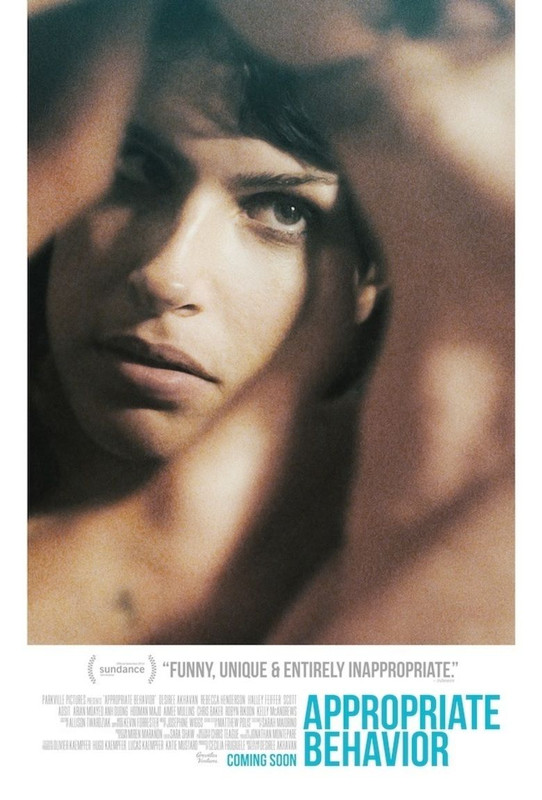
Appropriate Behavior
Dir: Desiree Akhavan
Not quite a rom-com, Appropriate Behavior nevertheless concerns itself with modern romantic relationships and has a whole lot of good jokes along the way.

Shirin (writer/director Desiree Akhavan) has just split up with her girlfriend Maxine (Rebecca Henderson) and through the course of the film we see her trying to adjust to being single, get over Maxine and figure out how to tell her Iranian parents that she's bisexual without being disowned. 

Several things mark Appropriate Behavior out but perhaps the most striking is its viewpoint.  I don't know how closely Akhavan is drawing on her real life here, but this feels like a very personal film, especially when it comes to Shirin's interactions with her family and with Maxine.  The flashbacks to the various stages of Shirin and Maxine's relationship capture in short order both the thrill and fun of falling in love and the sting of it ceasing to work.

The side stories provide some fun jokes too, especially when Shirin gets a job teaching a filmmaking class to 5 year olds. Scott Adist of 30 Rock scores a laugh with every line as her boss, and the finished films riff nicely on pretentious video art and on the kind of movie a 5 year old would actually want to make (it's about farts).

Despite a few dark turns, Appropriate Behavior is quite a light film.  Arkhavan's direction is pretty unobtrusive most of the time, though she does use the camera well to suggest the discomfort of an impromptu threesome that Shirin finds herself in, she fares well as an actor's director, doing strong work herself and helping the rest of the cast find a very natural register that suits the story and style well.  Akhavan is particularly well matched by Rebecca Henderson, who can be caustic as Maxine, but also lets us see why Shirin is drawn to her.  There's also a fun supporting part for Halley Feiffer, very funny as Shirin's fickle straight friend Crystal.

Appropriate Behavior may not be the most groundbreaking of films, but it's funny, intelligent,well acted and points to an interesting voice with a particular viewpoint in Desiree Akhavan.
★★★

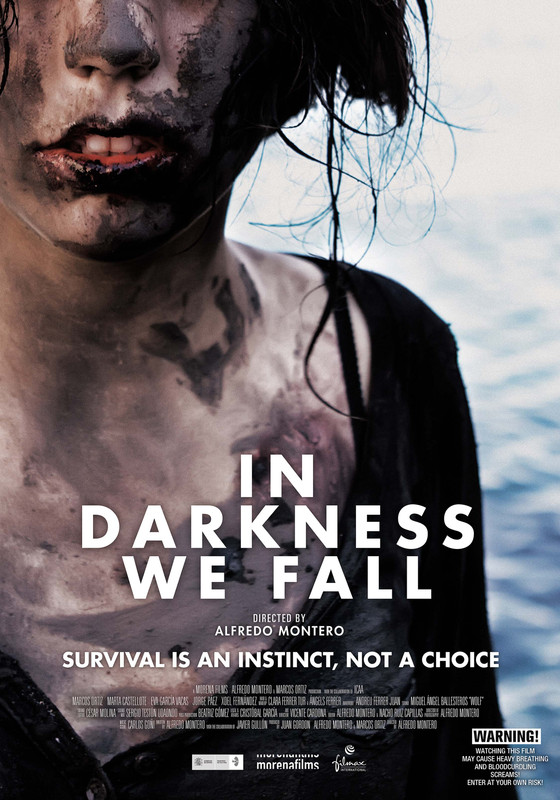
In Darkness We Fall
Dir: Alfredo Montero
It has always puzzled me why so many filmmakers seem to think that populating their horror movies with total arseholes is the way to get us to care whether the characters live or die.

In Darkness We Fall follows Carlos (arsehole who films absolutely everything all the time), Jaco (alpha-male arsehole), Ivan (arsehole who shags the girl he knows his friend has been after), Carlos' girlfriend Celia and her friend Bego on a camping trip.  One morning they decide to explore a cave.  They find themselves lost and things go from bad to worse while they are trapped.

For most of its first hour, In Darkness We Fall (a better title than the Spanish original: La Cueva) is annoying.  The characters aren't fun company and the group dynamic between them doesn't really work (especially in relation to Jaco, who'd go on holiday with that guy?)  That would be fine if they were interesting, but they aren't.  Writer/director Alfredo Montero is apparently operating a strict 1 trait per character limit.  So we follow these people who are largely stupid (because they leave no track behind them when exploring a cave) and unpleasant and watch on shaky found footage cam as they get lost and crawl around in circles.

The third act does herald the film's one would be interesting scene, in which there is a debate that has an interesting moral, and indeed practical, question at its heart and the horror of the situation is heavily ramped up.  But it's undermined by the fact that I don't care who lives or dies.  This is also true of the final setpiece, which, to be fair, has one very effective jump scare, but is also the film's most implausible moment.

For a film shot as found footage In Darkness We Fall doesn't look bad and the cave does have some atmosphere though the film is never, despite trying hard to be, as claustrophobic as The Descent.  In the end, In Darkness We Fall has the same problem as Open Water.  There I was rooting for the sharks, here I was rooting for the cave.
★★

Sep 30, 2014

24FPS @ LFF 2014: 29/9

Kelly And Cal
Dir: Jen McGowan
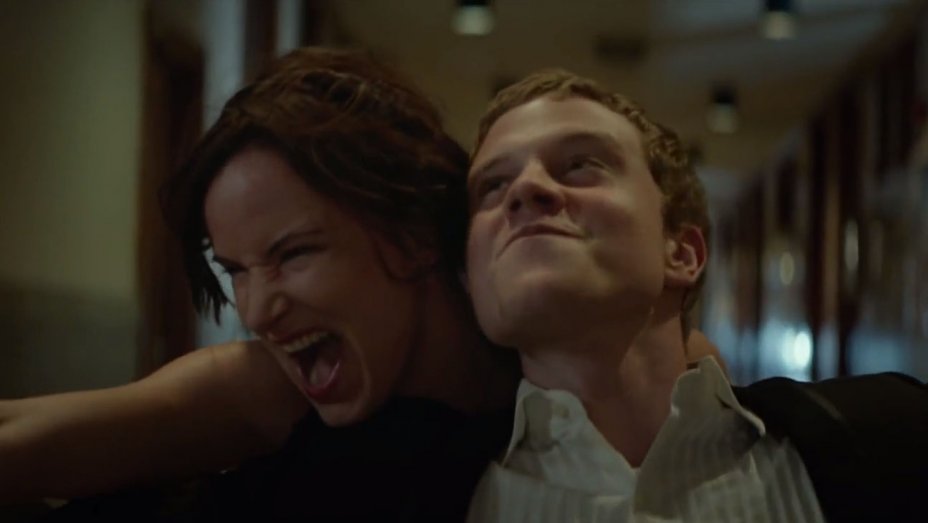
Casting is a strange sort of alchemy.  Sometimes you can imagine all sorts of alternatives in roles, other times, there seems only to be one correct choice for a part, and that's very much the case with Juliette Lewis in Kelly And Cal.  It's tough to imagine any actress in Hollywood better suited to the part of a former riot grrrl turned suburban housewife in her late 30's, struggling with a new baby, distant from her husband, who finds a connection with a disabled teenager (Cal, played by Jonny Weston) who lives next door.  This connection leads to trouble when Cal falls for Kelly and begins acting out.

Juliette Lewis is one of those actresses whose talent has often outstripped her roles, it's been too long since we've seen her in a lead, with a part she can get her teeth into.  She has that in Kelly, and she grabs it with both hands.  Lewis' offscreen persona plays into the part.  There has always been an edge to Lewis, it has been seen in dangerous roles (most notably Natural Born Killers), but latterly she has channeled it into fronting a rock band, and this gives an authenticity to Kelly's past.  The little we hear of Kelly's former band, Wetnap, is good and Lewis is clearly doing the vocals, which lends a multi-layered energy to the scene where she first plays their tape for Cal.  This energy also allows us to buy in to why Kelly is drawn to Cal.  He's rude and surly, but she seems to recognise a little of the rebellious streak that she has had to mute in herself, and perhaps the chance to recapture it in some small way.  Lewis is also very good at playing Kelly's struggles with being a new parent (she may even have post-natal depression, though the film never comes out and says that).  It's easy to read and to sympathise with her frustrations and Lewis carries herself with a weariness common to most new parents.

Jonny Weston is also good as Cal, but he's not quite up to some of the dramatic challenges posed by Cal's more extreme acting out towards the end of the film (this is also partly the fault of Amy Lowe Starbin's screenplay).  In the first two acts Weston impresses, making Cal's bluntness understandable and his fumbling, obvious, crush on Kelly just the right side of charming rather than creepy.  In one of the film's best sequences he takes her on a surprise date, a sort of replacement for her rubbish prom of 20 years ago and the one he won't be attending.  It's cheesy in just the right way; you can believe this earnest kid trying to impress Kelly this way.  It also has the film's biggest laugh, if you're old enough to remember a certain song from the first time round.

Unfortunately the film never matches up to these performances and begins to collapse around them come the third act.  The other characters (Kelly's solidly decent husband, her stereotypically interfering mother in law and sister in law) are lightly sketched and feel more like dramatic props than real people.  This also begins to sneak in to the writing of Cal, whose personality switches quite dramatically after his and Kelly's 'date'.  This all conspires, along with director Jen McGowan's competent but rather unexciting visuals, to make Kelly and Cal less than it could be.  It's a strong showcase for Juliette Lewis and it's great to see her back, front and centre of a film, but the film itself ends up being quite forgettable.
★★★

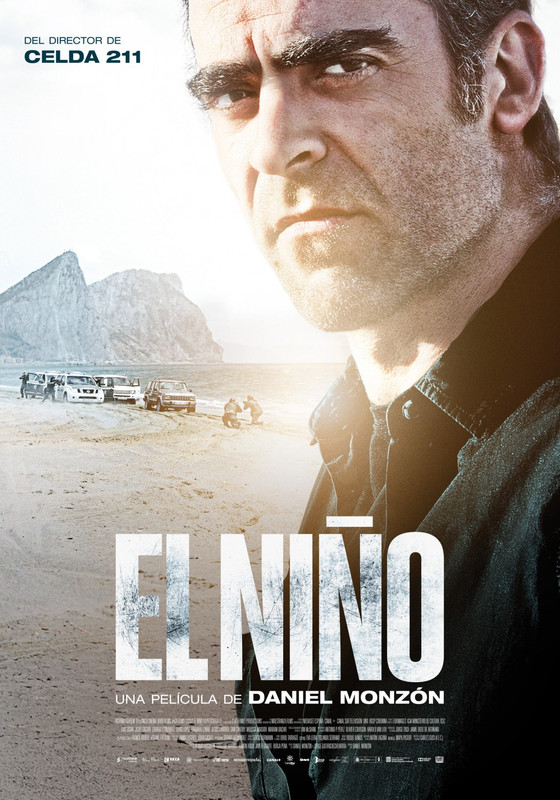
El Niño
Dir: Daniel Monzon
How many films have you seen where a driven cop has been going after bringing down a target for years and knows he has one last shot, or he's going to get fired?  How many films have you seen where a young upstart criminal (who's not so bad really, all he wants is some startup cash so he can sail off into the sunset with his girlfriend), gets caught between that cop and his target?  Yes, I've seen about 200 of those as well.  Here's another.  It's in Spanish this time.

El Niño isn't a terrible film.  It's got a solid cast.  The cops are led by Luis Tosar; as forceful and no bullshit as ever, anchoring the movie with his down to earth grit and his boss is played by Sergi Lopez, clearly not stretched here, but still one of Spanish cinema's most reliable talents.  Equally decent work is put in by Barbara Lennie as Tosar's partner and Jesus Castro, Jesus Carroza and Saed Chatiby as the three young small-timers caught between a cop and a hard place.  These performances basically sum up the movie; they are all technically decent, but there's nothing terribly exciting, nothing new, in any of them.

Daniel Monzon and co-writer Jorge Guerricaechevarría  could use some work on their pacing.  After a strong opening that introduces Tosar's Jesus and his driving ambition to bring down this drug dealer Monzon allows him to vanish for some time as he sets up the three young dealers.  This would be fine, except that every beat is so hackneyed, so utterly standard, that it feels like being shown the Cliff Notes on lazy character development for half an hour rather than being introduced to three distinctive characters.

When Monzon starts to draw the stories back together and to inject a little more pace and action into the narrative, El Niño does briefly catch light, particularly with a chase between a boat and a helicopter which ends with a pretty spectacular underwater sequence.  This feels like, and probably should be, the climax, but Monzon drags his feet, bolting on another 40 minutes of padding, taking what might have been a bog standard but inoffensive 95 minute film to a bloated and wheezing 135 minutes of creaky cliché.

I'm quite surprised to see this film in the festival.  It's a barely competent genre exercise, the fact it's not in English doesn't change that.
★★

A Girl At My Door [This review was previously published during Cannes]
Dir: July Jung
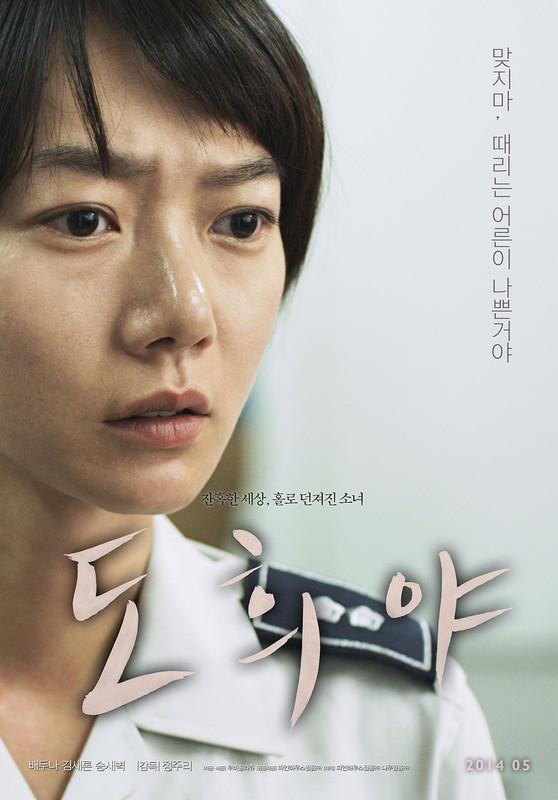
Like many fans of South Korean cinema I have, over the past decade, been charmed and impressed by Bae Doo-Na, who is one of the biggest stars in her home country.  It is fair to say, however, that Bae has a rather set onscreen persona; playing the charming, slightly kooky ingenue in many of her films.  That's no bad thing, I've frequently compared Bae's onscreen charm and magnetism with that of Audrey Hepburn, which isn't something I do lightly.  However, A Girl At My Door (Dohee-ya in Korean) seems to mark a real shift.  At 34 Bae seems to be wanting to finally play a real grown up and this often tough drama offers her that chance.

Bae plays Young-Nam, as the film begins she is moving to a small town to become their Police chief.  There are hints throughout the first half of the film that this is because of a problem in her past, which saw her sent away from Seoul.  When she arrives Young-Nam soon meets 13 year old Do-Hee (Kim Sae-Ron), who is picked on by the local kids and abused by both her father Yong-Ha (Song Sae-Byeok) and her grandmother.  Doo-Hee becomes very attached to Young-Nam and, after an especially bad beating, Young-Nam takes the young girl in.  This causes tension in the town, especially when Young-Nam's past comes home to roost.

A Girl At My Door, with its non-descript title and (relatively) lighter first hour, managed to trick me when it came to what kind of film it would be.  For ten minutes at the beginning we might be about to watch a fish out of water comedy about a big city cop coming to a backwater.  Then there is a turn for the dramatic as Young-Nam's problem drinking is revealed, but as the story between her and Do-Hee takes centre stage it seems as though we're actually going to be seeing a film about how an unexpected surrogate parent comes into the life of a troubled kid.  None of these ideas is especially original, and nor, really, is the direction of the film's third act, but the way that writer/director Jung manages to continually set us up for one thing before turning in a slightly different direction keeps things interesting and works to the film's advantage.

Towards the start and the end of the film, Jung slathers on the abuse just a little hard, it's not that graphic until one late scene that I'm surprised she even got away with a clear implication of, but it comes up so regularly at times that there is a slight tragedy porn feeling.  What saves the film in these moments, as well as from a rather OTT performance from Song Sae-Byeok, is the fact that the two leads are outstanding.

Bae seems to have made a conscious choice here to shift her image and while Song spends most of his scenes yelling abuse at whoever he's sharing the screen with at that moment, she dials everything back for a reserved performance that is sometimes resolved and sometimes porcelain fragile.  There is no coasting on her looks and her charm here, even as Young-Nam comes to care for Do-Hee there is a sense that the older woman is putting up a wall (why she may be doing so is another of the interesting shifts in the film).  Throughout, Bae does some wonderfully subtle physical acting, whether it's to do with Young-Nam's relationship to Do-Hee or to alcohol.  We see the complexities etched in particularly fine detail in what emerges as one of the film's key scenes, when Do-Hee asks if she can get in the bath with Young-Nam.

Bae might simply have walked off with the movie thanks to her performance, but 13 year old Kim Sae-Ron, who may be known to western audiences as the little girl in The Man From Nowhere, gives her a serious run for her money and establishes herself as an actress to keep an eye on as she and her roles mature.  What Kim manages to capture with great clarity here is the sense of a child suddenly growing up very quickly, perhaps thanks to a new influence in her life, perhaps due to the temporary absence of an old one.Jung's screenplay and Kim's performance both advance Do-Hee's character and her process of growth incrementally.  It's incremental enough that it's not that noticeable from one scene to the next, but it's credible that she changes as much as she does.  There is also a sense, which towards the end of the film another character also gets, that there is something underlying the broken exterior of the Do-Hee we first meet, and this is something that Kim puts across subtly but strongly.  All in all  it's a remarkably nuanced piece of acting for such a young performer.

While this is a creditable feature debut for July Jung there are still a few cracks that make it feel like a debut.  Visually the film is strong, and even if it doesn't yet speak to a deeply personal eye it has several very striking images (a repeated motif of Do-Hee dancing outside, for example).  The screenplay can be more problematic.  For instance, Young-Nam's drinking feels like it should be a major theme, but it is largely shunted aside; serving mostly as a misdirection early on.  Also problematic is the fact that when, with about 35 minutes to run, the film takes a not entirely unexpected turn into very dark territory it doesn't quite have the courage of its convictions.  This means that it strains credulity more than a little in both the speed and the ease with which it finds its ending.  It's not ruinous, but it's less complex than I'd like, given the preceding 100 minutes.

Overall, A Girl At My Door has its flaws, but when it concentrates on its two central performances it absolutely commands the attention and it's well worth seeing, especially for fans of Bae Doo-Na who want to see her branch out.
★★★