Showing posts with label Japan. Show all posts

Oct 15, 2016

24FPS @ LFF 2016: Animation Roundup

Apologies for not posting more written reviews while I was at LFF this year, I was having serious computer troubles.  Here, by way of apology, are short(er) reviews of three animated films I saw.


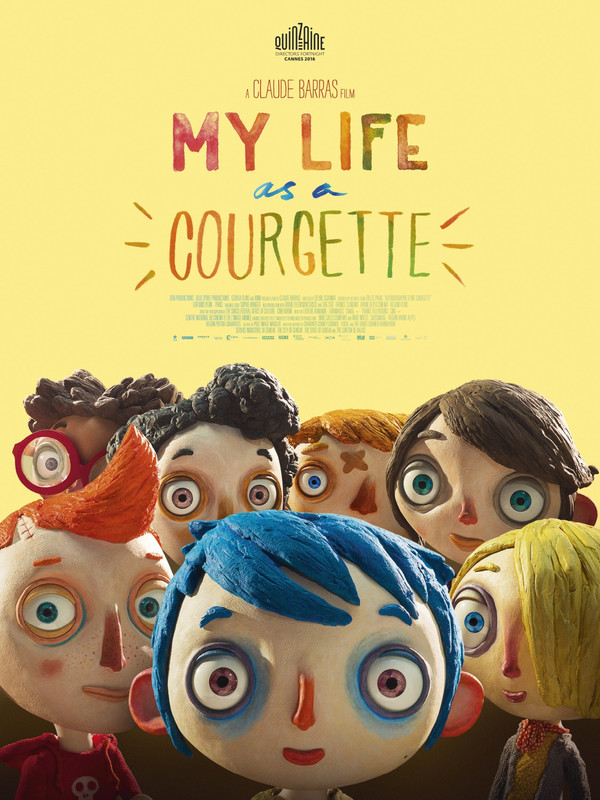
My Life as a Courgette
Dir: Claude Barras
For my money, the French writer/director Celine Sciamma is one of the most interesting talents to emerge in cinema in recent years. Her three directorial films: Water Lilies, Tomboy and Girlhood all number among the best of their respective years and I await her projects with great anticipation. While Sciamma didn't have any directorial work in the LFF this year, she wrote the screenplays for both the new Andre Techine film, Being 17 and for this, a delicate, nuanced, but optimistic children's film about a boy named Courgette who falls for the new girl at the orphanage he's sent to after his mother dies in an accident at home.

Director Claude Barras and his animators craft an interesting look for the film. The characters all have a certain look, but the designs are striking and individual, giving even the characters with the least screen time a distinctive look. They are set against backgrounds that are often a bit drab and have a homemade feel, like something out of a Michel Gondry animation. This is effective in making the characters stand out from their environment.

For a little while it seems that My Life as a Courgette might be a pretty miserable film. We get the expected beats when Courgette first arrives at the orphanage and is bullied by a bigger kid, but this dynamic soon shifts and a much brighter film emerges. This home is depicted as one where there is a genuine sense of community, and the film has a real warmth thanks to that. Little recurring jokes, like one child running to the door every time it opens, expecting her mother, amuse while also giving the film surprising emotional weight, but it's the way that Barras' images and Sciamma's screenplay combine to capture the little moments that define growing up that have stuck with me about this film. Courgette and Camille's relationship is touchingly well-observed, as are the growing bond between Courgette and the cop who initially takes him to the orphanage and the shifting dynamics of the group of kids. These things may be played out by plasticine models and in front of cardboard backdrops, but they ring true.

My Life As a Courgette should be suitable for kids from about 10 or 11, but I'd imagine that their parents will enjoy it just as much, it's sweet without being sickly, funny without compromising on some the darkness at the heart of the story, and eventually extremely touching.
★★★★★


Psychonauts, The Forgotten Children
Dir: Pedro Rivero / Alberto Vazquez
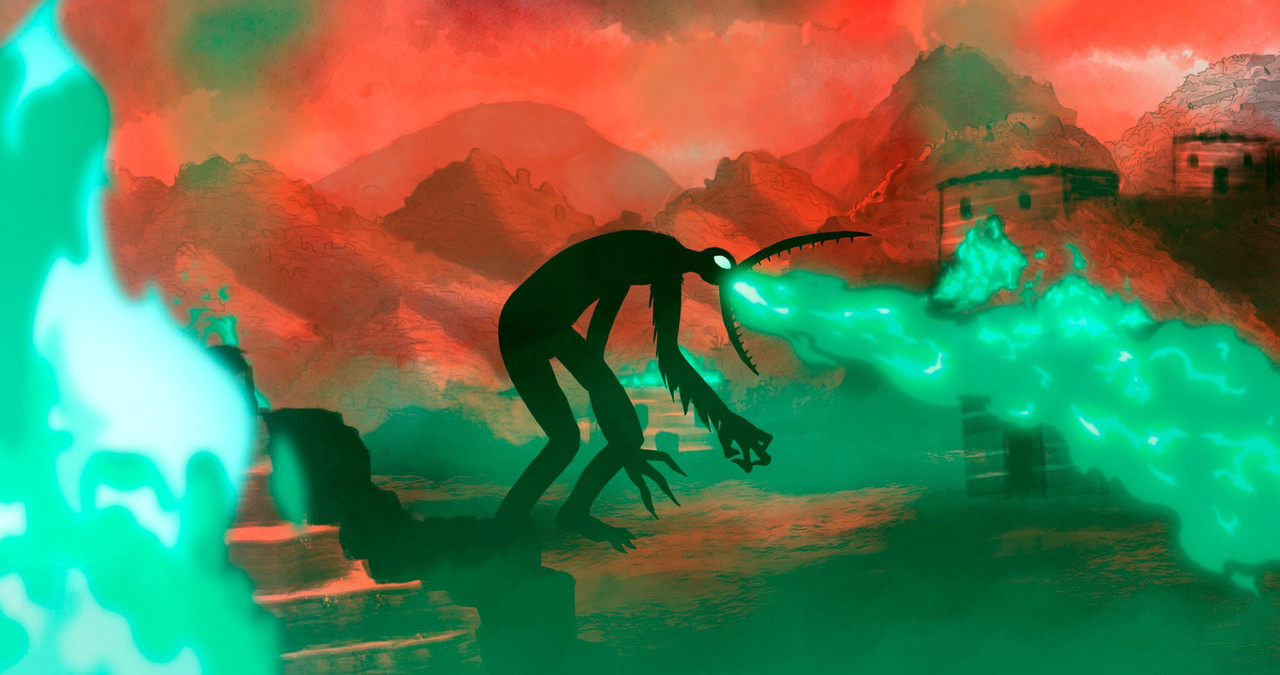
In a post-apocalyptic world, humans appear to have died out and animals are all that remains. Dinky longs to escape the island she lives on and her religious parents. For help she turns to her friends and to Birdboy, whose soul has been overtaken by a demon. To escape, they must make dangerous trek through the rubbish dumps where roving gangs of rats and mice live beyond the law.

Psychonauts is a determinedly offbeat film. From its visual style on down, it mixes tones, combining dark subject matter and imagery (sometimes sketchy, sometimes in bold red and black silhouettes) with offbeat humour and cute design on Dinky and her friends. The jokes leaven the darkness of the film just enough that Psychonauts, while properly scary at times, is probably suitable for older kids as well as for adults.

The film's biggest laughs often come in the margins, the little moments, such as when Dinky's brother tells his parents what he wants to be when he grows up, or when the inflatable duck Dinky and her friends get to try to escape the island on tells his backstory. As much fun as these moments are though, there is something chilling at the core of Psychonauts; a scorched earth world that feels complete in its design. The opening moments, with a mouse and his son scavenging for rubbish and invoking the rules of their community, set this up brilliantly, as well as setting up a surprisingly human and moving relationship between the characters. This approach will carry through the film effectively, especially in Dinky's love for Birdboy.

The animation is brilliant, the mix of styles well executed and fitting for the film's mix of tones, and it's often surprising what level of character Rivero and Vazquez manage to get of their designs. This too is especially evident with Birdboy, who is essentially just a few shapes in black and white, but is rich in character despite being mute. Birdboy's eyes; huge empty black holes signifying the loss of his soul, are particularly haunting, and end up communicating a lot.  The film is at its best when Birdboy, fully possessed by a demon, attacks the Psychonauts village. This is a sequence straight out of a monster movie, and a brutal one at that, with images of burning characters that call to mind the atomic bomb sequence in Terminator 2.

Overall, Psychonauts, the Forgotten Children is a great surprise; a well balanced tonal juggling act that will horrify and amuse in almost equal measure. I hope it finds a UK release.
★★★★


Your Name
Dir: Makoto Shinkai
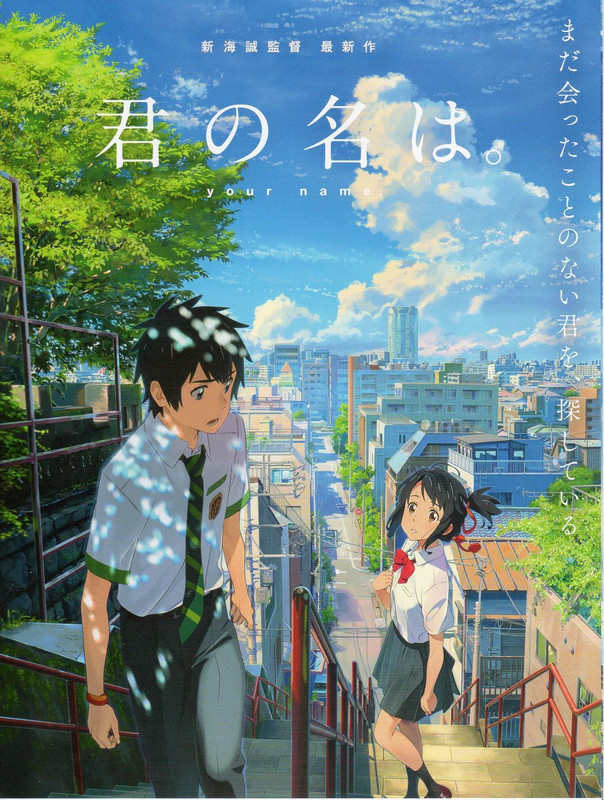
I've said it before, but it bears repeating, when we're talking about the most visually stunning films being made today, Makoto Shinkai needs to be in the conversation. His latest, Your Name, is the first anime to play in the (relatively new) London Film Festival competition section, and it is just as lush and gorgeous as we have come to expect.

Your Name will also feel somewhat familiar to Shinkai fans in its story (a tale of two young people falling for each other, though separated, then trying to find, and in this case remember, each other). While he is a visual master, Shinkai's flaws often come from his writing and Your Name doesn't have his strongest screenplay. Even for him, the boy sort of meets girl story that develops as Taki and Mitsuha begin to wake in each other's bodies is a rather sentimental and sometimes cloying one. That said, Shinkai does have a knack for this material, and while he sometimes overeggs the pudding, Your Name is also full of emotional moments that hit me just as deeply as the visuals did.

Visually, this is a film of dazzling beauty. The character designs are expressive, but as ever it's the world Shinkai grounds them in which is so stunning. From the most mundane things like images of trains passing, to the grandest in scale, such as the images of the comet that figures centrally in the film's story, everything is rendered with the same loving detail, everything seems lit from within. It's also important that the environments feel credible. There's a great sense of place and of the contrast between Taki's home in the fast-paced modernity of Tokyo and Mitsuha's life in a little village where tradition persists. If the film weren't grounded like this, then its flights of sci-fi fancy would strain credulity even more than they do. 

The character work here is strong. As the voices of Taki and Mitsuha, Ryûnosuke Kamiki and Mone Kamishiraishi shift their performances as the characters become more used to 'being' each other several times a week. There are overblown moments in each of their performances, but they are allowed to be smaller and more subtle as the film goes on and become more affecting as this happens. The scenes as the comet finally comes into play, particularly one set at twilight, are delicately played, beautifully animated and ultimately very moving.

Like much anime, I found Your Name to be at its weakest when it is at its broadest. While there are some fun running jokes, the early body swapping sequences can be loud, lacking nuance and sometimes a little wearing, but even in those scenes, the beauty of the film and the fluency of its animation are engaging all by themselves. 

This is a hit and miss film, it can even be a little grating at times. When it works though, when Shinkai pulls images, character and story together in a moment as simple and moving as a shot late in the film of Mitsuha opening her hand and seeing writing on it, it's as magical as the director's best work.
★★★

Oct 5, 2014

24FPS @ LFF 2014: 3/10

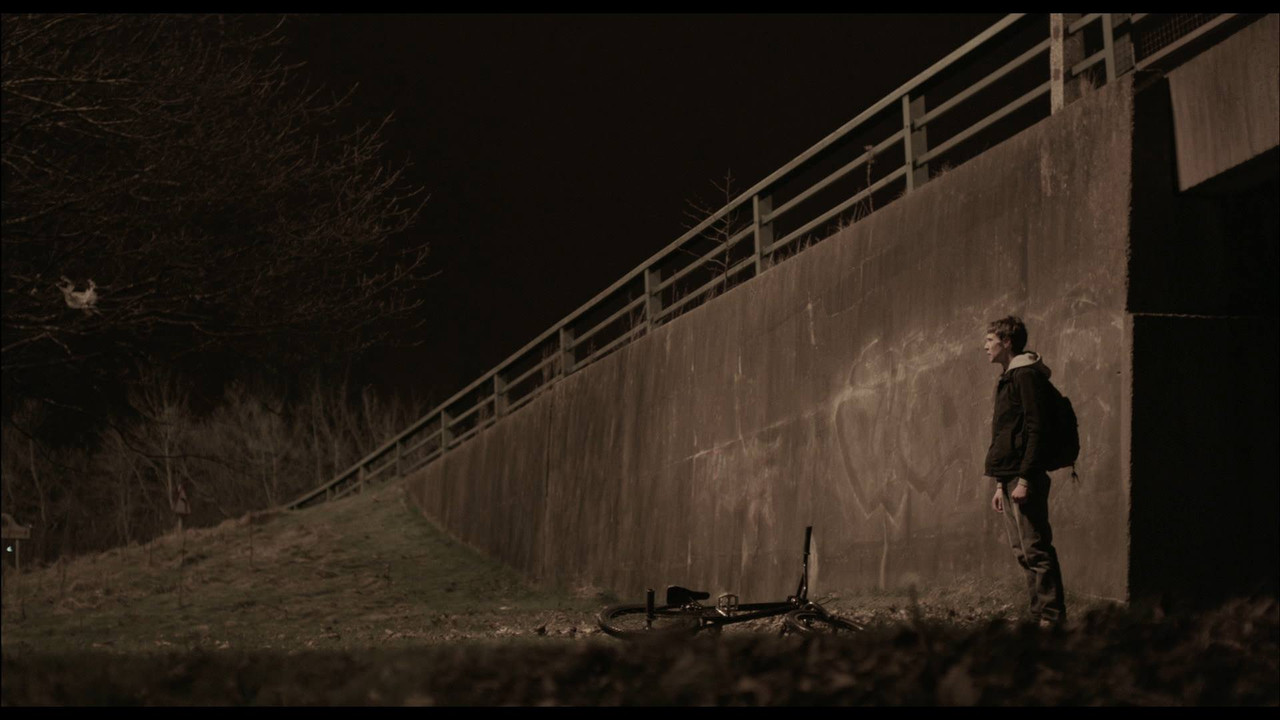
Bypass
Dir: Duane Hopkins
Better Things director Duane Hopkins has taken his time following up his debut, which I managed to miss when it came out five years ago.  I'm not exactly desperate to play catch up having seen Bypass.

Tim (George McKay) is in his early 20's.  His mother has died, his older brother has just been released from prison and he has turned to low level crime in an attempt to eke out a living for himself and his younger sister.  As the film proceeds, Tim finds himself falling deeper into the criminal world and struggling with an illness that is becoming serious.

As you might gather from that synopsis, Bypass is rather by the numbers stuff. Story wise, there's little here that hasn't been in another dozen British crime or council estate misery dramas in recent years.  Hopkins tries his level best to disguise this with his stylistic choices, but he fails miserably.  Bypass is perhaps the most self-consciously, self-regardingly, over-stylised film I've seen this year.  Almost every shot in Bypass is a soft focus, moving, close up on something.  Tim and the other characters are almost never seen in a full length shot and the camera is constantly searching, moving around to try and find every insignificant detail that it can (almost) focus on.  Hopkins doesn't stop at this.  His use of slow motion is also out of control (usually in combination with his 'meaningfully' shallow focus and off kilter framing) and the use of sound can also be grating, returning to the same trick of starting a scene's dialogue long before its visuals over and over ad nauseum. Without Hopkins' obnoxiously artsy approach, Bypass would just be banal, with it is is beyond grating.

More irritating than Hopkins' limited and repetitious artistic ideas is the fact the overuse of them means that they fall flat when Tim is at his most fraught.  In these moments the lack of focus and moving camera might reflect what's going on in Tim's mind, but because Hopkins uses these techniques as a crutch throughout the film they are robbed of that meaning.

The news is little better when it comes to the performances.  George McKay and Benjamin Dilloway are both hit and miss as Tim and his older brother Greg.  McKay has a few good moments, and his performance has a physicality that can be effective.  His best scene is perhaps an incredibly realistic and difficult to watch fit that Tim has, tellingly it's a silent scene.  When he has dialogue McKay turns in a flat performance, largely unencumbered by expression.  Still, he's light years better than either Chanel Cresswell as his younger sister or Charlotte Spencer, who is disastrously monotonous as his girlfriend.

To be fair, only some of this is the fault of the cast.  It's tough to make something out of nothing, and nothing is what Hopkins' screenplay gives them to work with.  The characters are all empty suits.  Tim is quiet and pliant, which makes his the most detailed characterisation in the film.  Of course Charlotte Spencer is dreadful, her character Lily barely has anything that counts as a trait, let alone a personality, so what chance does she have to do anything with her performance?  The limited dialogue is as poor as the character writing and the plot turns in ways that are ever more trite and loaded with implied but unfulfilled meaning, building to a staggeringly awful last ten minutes.  The ending is so wrapped up in the cleverness of its visual devices (the same visual devices we've seen for the past 90 minutes) that it completely fumbles its message.  Is it supposed to be redemptive or the restarting of the same cycle?  Who knows and, frankly, after this who cares?  

Bypass is directorial masturbation that fails to cover for the banality of the story and characters we're watching.
★

Tokyo Tribe
Dir: Sion Sono
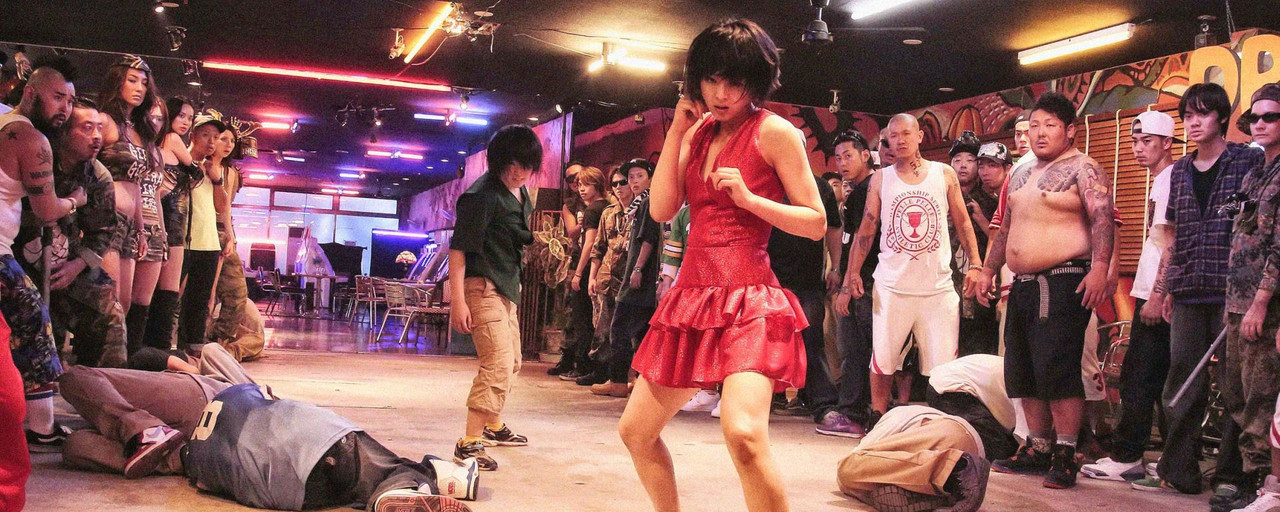
Sion Sono might be 21st century cinema's foremost absurdist.  That's not to say that there isn't more to his films than their craziness, but that is often their defining feature and seldom more so than with the blisteringly energetic and relentlessly bonkers Tokyo Tribe; a Manga- based post apocalyptic hip hop musical, jam packed with martial arts action. In other words it's pure, unrefined, Sono.  This is both great and a little problematic.

The story, such as it is, is introduced by an MC (played by Shota Somentani, the lead in Sono's Himizu and one of several cast members who recur from the director's earlier work).  He introduces the gangs who now rule Tokyo society and vie for dominance and also acts as a sort of greek chorus for the film.  The main thrust of the plot involves a gang headed by grotesque mob boss Buppa (Riki Takeuchi) and his enforcer Mera (Ryôhei Suzuki) trying to destroy all the other gangs one by one so that they can rule Tokyo but Kai (Young Dais), the peace and love promoting leader of a Musashino gang wants to fight back. To do so he teams up with Sunmi (Nana Seino), who has escaped being kidnapped for Buppa's brothel.

Sion Sono often makes long films, and while Tokyo Tribe has a relatively conservative running time of 116 minutes there is enough packed into it for it to be twice as long.  Earthquakes, gatling guns, bizarre side characters, penis envy, satanism, a Caligula inspired wall of death and pinku style sexploitation all raise their heads at some point and that doesn't come close to covering all of the oddness on display.  

As you would expect given that description and Sono's history, Tokyo Tribe is blazingly energetic and inventive.  The opening sequence introduces us to all of the gangs through the device of a gang member using a knife to demonstrate their relative positions to a female cop he's holding hostage.  Each gang also gets a showpiece rap at this point that cements a style for their contributions throughout the film.  This is a great choice by Sono because otherwise, with so many factions, the film could easily have become messy.

While there is an overarching story and a message (be nice to each other), Tokyo Tribe largely unfolds as a series of linked setpieces.  This being the case, the energy level seldom drops and the film can be exhausting, but every scene is packed with gleeful little details to keep you totally engaged.  Perhaps my favourite of these comes early in the film when Buppa is served his tea by a beatboxing girl.  It's so incongruous and comes so out of the blue that I can't imagine anyone not falling for the film, at least briefly, in that moment.  

This isn't to say that all the fun of the film is in its margins.  Takeuchi and Suzuki overplay everything, providing more ham between them than you'd find at the buffet table of a pork butcher's convention, but because evrything is so heightened here it works brilliantly.  Suzuki's unhinged Mera is especially great; a preening, perpetually half naked psychopath whose motivation, when it is revealed late in the day, is perhaps the film's best and its most juvenile joke.  There are also charismatic turns from Nana Seino, whose Sunmi goes convincingly from exploited innocent to badass fighter and from Kikoto Sakaguchi as her young sidekick whose martial arts moves use breakdance to bone breaking effect.  The only real issue with the performances is that, amongst this strong cast, Young Dais comes off a little bit dull as Kai.

The music is great, the insistent beats power the film along even when scenes lapse out of rap and into normal dialogue and there is a great variety in both the skills and the styles of rap on display.  Riki Takeuchi, for instance, is no MC, but he doesn't have to be because you get the sense that Buppa's rapping is only tolerated because if it's not he will literally kill someone.  Most of the main cast do a good job with what must have been a challenging task for those of them not from the music world.  Only Shota Somentani lets the side down a little, with a flat tone that never generates a great sense of flow.

There is so much to enjoy in Tokyo Tribe. The martial arts sequences, which are varied and brilliantly shot and choreographed, have an energetic brutality throughout , but there's also such fun in the details; the truck with chandeliers for headlights; the nod to Scarface with Buppa's 'Fuck Da World' globe sculpture and so many more.  The design is stunning and overblown throughout, never more so than in the room full of living furniture owned by Buppa's son Nkoi (an intensely creepy Yosuke Kubozuka).

The problem with this being, as I said, pure unrefined Sono is that there are a few troubling things here.  Tough as it is to take the film's sexual politics seriously, they can make you a little queasy.  With the exception of Sunmi (who has her own troubling scene early on), all of the women in the film are depicted purely as objects, most of them, at some point, stripped.  The most exploitative and uncomfortable moment comes early in the film when a female cop, who we never see again, is stripped.  This is perhaps the one moment where the exploitative tone eclipses the absurdity and becomes offensive.  This isn't new territory for Sono, but ultimately it's more muted and less troubling here than in, say, Himizu, because the film isn't asking us to take it seriously at that level.

Ultimately, you have to take Tokyo Tribe for what it is; a relentless and rather silly entertainment.  I can't imagine you failing to have at least some fun with it at that level.
★★★★

Feb 10, 2014

Coming Of Age Movie Month Day 7 and 8

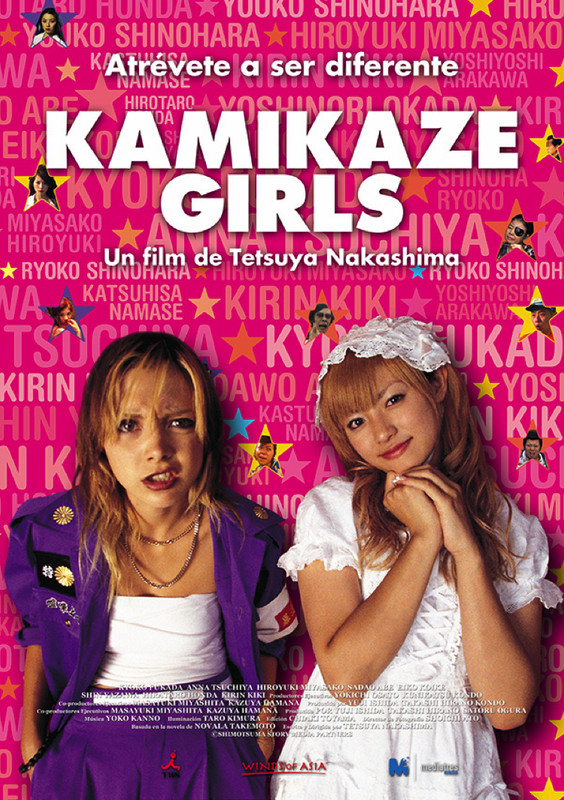
Kamikaze Girls
Dir: Tetsuya Nakashima
I have managed to go through Tetsuya Nakashima's filmography to date in reverse order.  I was bowled over by Confessions and shocked by how much of a contrast it was to his previous film, Memories of Matsuko.  His earliest film to get UK distribution, Kamikaze Girls, is completely different again.  It's a hyperactive teen movie about two unlikely friends from opposing Japanese subcultures, shot and cut in a brash, borderline surreal, style. 

Momoko (Kyôko Fukada) and Ichigo (Anna Tsuchiya) are completely different.  Momoko is a 'Lolita'; obsessed with 18th century France, she dresses in modest frilly dresses, isolates herself from most of her peers and is obsessed with everything about her being 'sweet' from her manner to her food.  Ichigo is a Yanki; a motorbike riding tough girl with a hard image and take no shit attitude, but her gang is breaking up and she also has few friends.  The two form an unlikely friendship, based largely around a shared interest in fashion, despite their wildly differing styles.

It can be tough to catch your breath while watching Kamikaze Girls.  From the start Nakashima bombards us with a brightly coloured, fast edited, barrage of images and sequences, seemingly intent on throwing us off  The film certainly grabs your attention when, within seconds of beginning, a title card comes up saying 'The End', only for Momoko's voiceover to say 'that's a bit too short', causing the entire film to rewind.  This sets the irreverent and hyperactive tone for the rest of the film, which frequently breaks into flashbacks and at one point an animated sequence that suggests an extravagantly bloody Powerpuff Girls, 'so you won't get bored', says Momoko.  Boredom is not a problem here.

Fukada and Tsuchiya do strong work and find surprising nuance, as the film goes on, in their outwardly very broad characters.  Tsuchiya is especially engaging, chomping scenery as the bad-tempered biker chick.  The performances sneak up on you, through the cartoonish visuals and the relentless energy of the storytelling you do get a sense of how these two virtual outcasts end up connecting with each other.  There are plenty of other memorable characters, particularly Eiko Koike, cameoing as the leader of Ichigo's biker gang and Sadao Abe, whose hilarious quiff gives his character 'Unicorn'  Ryuji his name.

Kamikaze Girls is easily the lightest of the films I've watched so far for coming of age movie month, but behind it, there is substance and a worthwhile message about people being able to be themselves but also find connection outside of their particular social circle.  Nakashima and his stars make this point well, but without any heavy-handedness to take away from the film's infectious, anarchic, energy.
★★★★

You Are Not Alone
Dir: Ernst Johansen, Lasse Nielsen
This film has been a long standing recommendation from my podcast co-host and fellow coming of age movie enthusiast Michael Ewins, so when I had the idea for this series I decided that it had to be included.

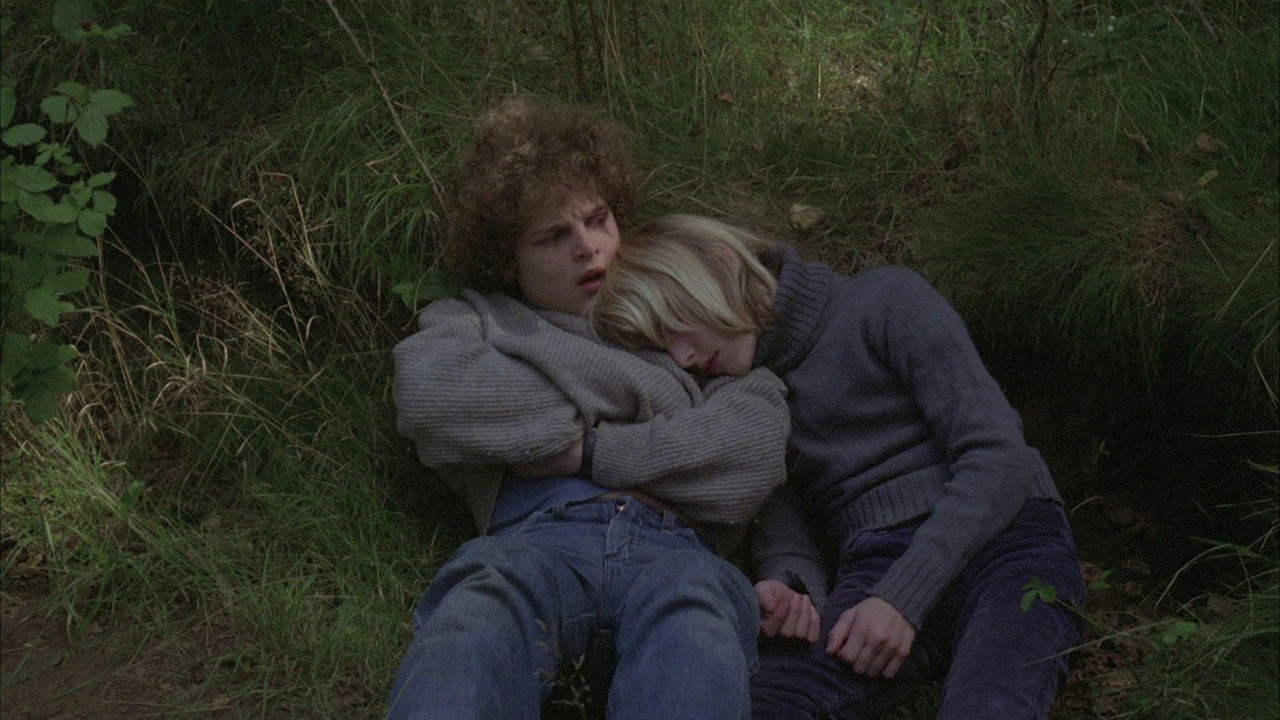
You Are Not Alone is a Danish film from 1978, set in a boys boarding school.  The central storyline is that of the burgeoning relationship between 15 year old Bo (Anders Agensø) and Kim (Peter Bjerg), who is a couple of years younger and the son of the school's headmaster.  Around this story we see the relationships, friendly and otherwise, between the pupils and the beginnings of a political consciousness, resulting in the students going on strike when one of their number is threatened with expulsion.

One of the things I liked most about You Are Not Alone is how wide ranging it feels as a coming of age movie.  Many confine themselves either to familial or romantic relationships to show how the characters are growing and changing and while this film also does that (and does it well) the focus on the characters growing politically and becoming active in that way gives an extra dimension to the coming of age narrative.  This is also true of the film's character focus, yes, Bo and Kim are the main characters, but the rest of their classmates are also well developed characters, most of whom have their own arcs and change in the course of the story.  It also makes room to give the teachers some personality (though Kim's authoritarian father is something of a cardboard cutout).

I often find that films about people having their first gay or lesbian relationship (a whole subsection of the coming of age movie) can be very samey: out gay kid and previously straight kid hit it off, straight kid is confused, parents/peers object, love conquers all.  It's not that that narrative can't be done well (see Fucking Amal), but it can be pretty dull.  Happily, You Are Not Alone doesn't really go down this route, even as Bo and Kim are more visibly together it never seems to be an issue among their peer group.  Indeed we see that they aren't the only gay couple among that peer group.  It's great to see a film deal with issues other than these characters sexuality.

The performances are great all around, neither Agensø or Bjerg ever seem to have acted again following this, which was the first film for both, but they give wonderfully naturalistic performances and their relationship has a sweetness and an innocence that works with the tone of the film as a whole.  Directors Ernst Johansen and Lasse Nielsen shoot and edit with an equally unaffected style, often content to let little silent moments communicate what the characters are thinking (as when Bo lifts Kim's arm from around his shoulders in one sequence where they are with other kids but then doesn't in a later scene).  It's a rather beautiful little film, and well worth seeking out.
★★★★

Dec 30, 2013

My Top 13 Non-2013 Films

I try to watch as many new release films as I can each year, but inevitably there are still big gaps in my cinematic experience and every year I also spend a lot of time trying to plug those gaps by catching up with a lot of older films.

Since discussion of my Top and Bottom 10 of 2013 will be posted in the form of podcasts I decided that this year I'd do something a bit different and run down, in the order that I saw them, the 13 best older films that I watched for the first time this year.

The Lickerish Quartet

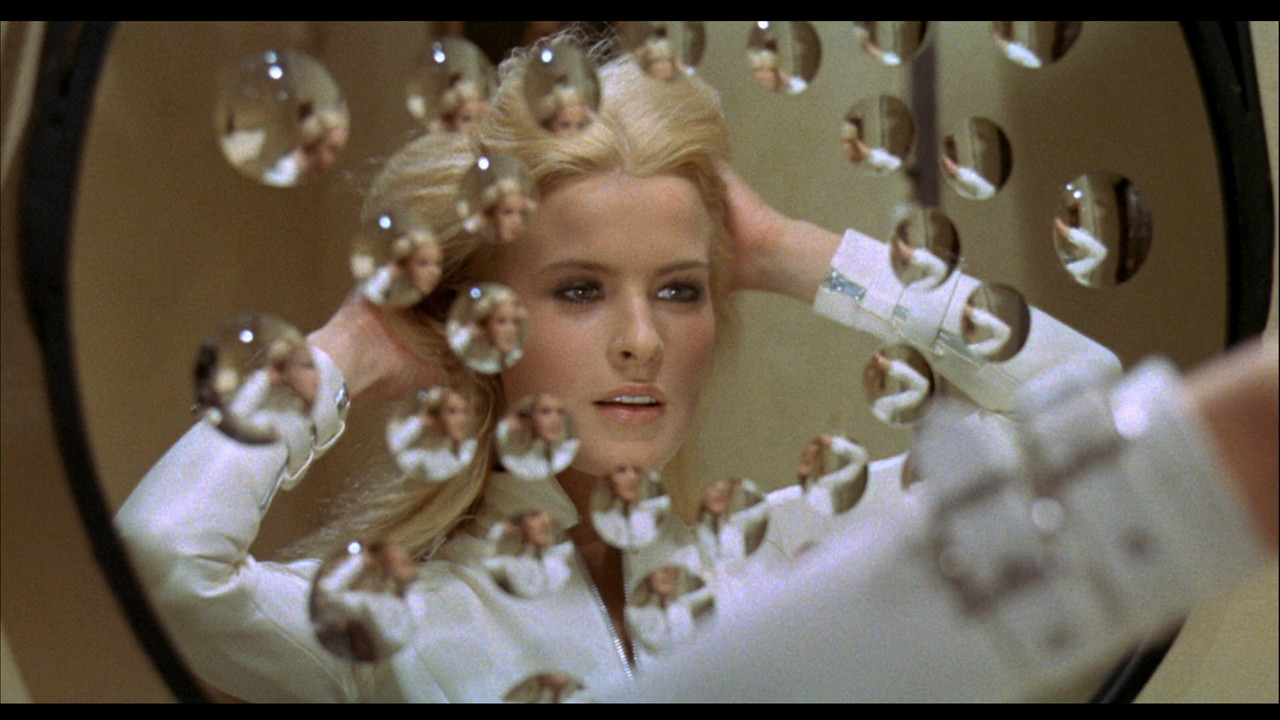
The Radley Metzger films I've seen, both softcore and hardcore, have all exceeded the expectations that you would typically have of sexploitation cinema, but The Lickerish Quartet really stands out.  It's a playful, surreal, film that intertwines film and reality in a way that has much to say about the way we relate to cinema.  The script is articulate and the acting strong, but Metzger's direction really stands out, he may be an exploitation filmmaker, but he has an artist's eye and sense of rhythm.

Onibaba

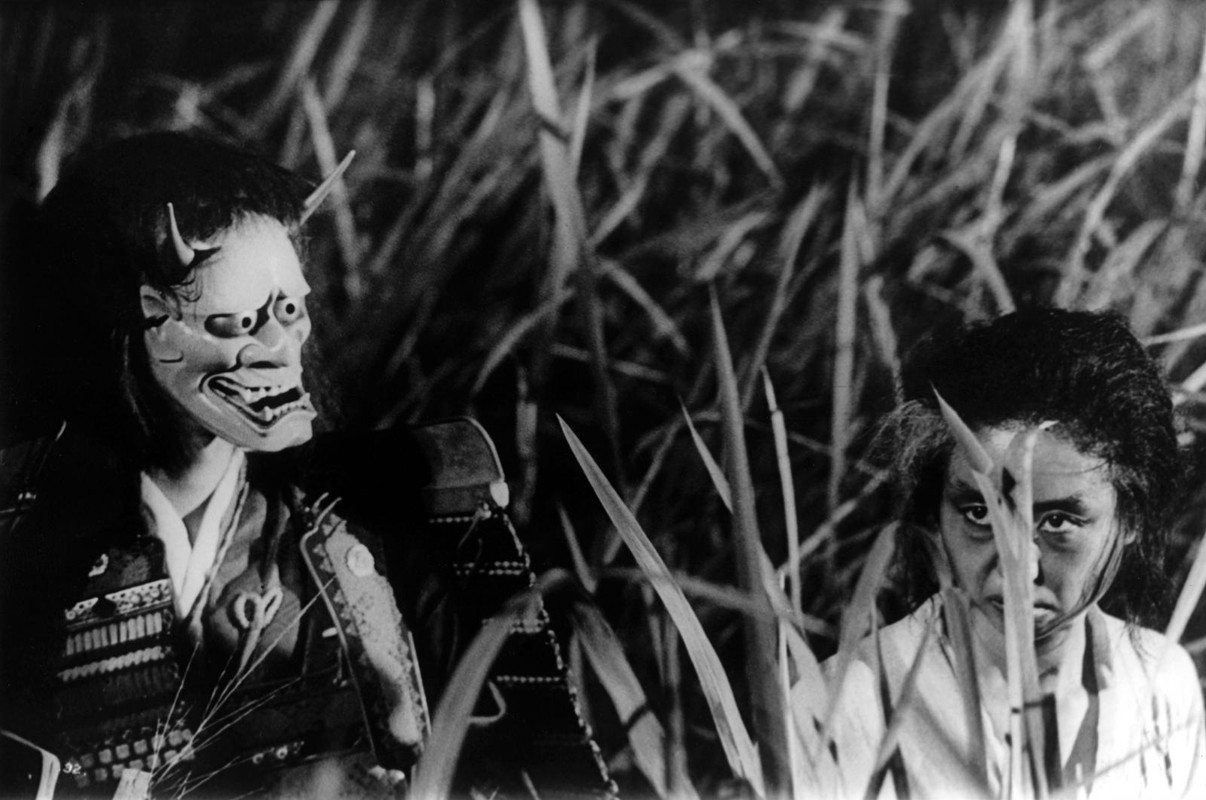
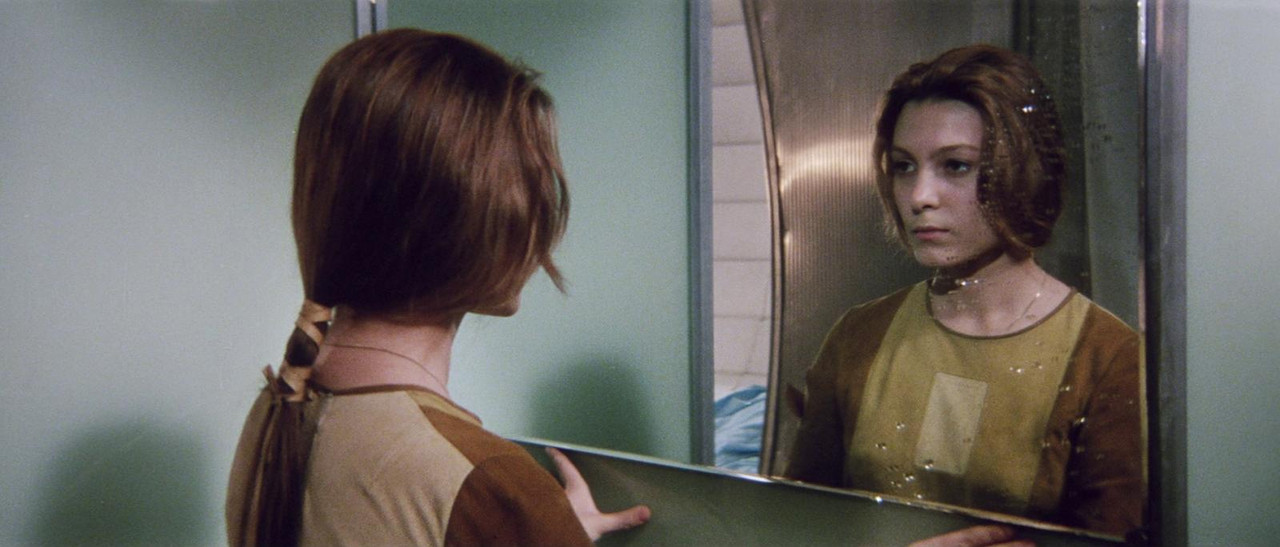
Kaneto Shindo was a great discovery for me this year, and another example of a director whose work I might never have discovered were it not for being a critic (I was assigned several of his films to review for other sites).  Onibaba was the standout; a brilliantly acted drama about a young wife living with her mother in law as they wait for the husband to return from war, which morphs slowly into a creepy ghost story.  It's strikingly shot, with the remote location in the midst of a swamp providing great atmosphere, but the threat also comes through in the performances, especially that of Nobuko Otowa as the mother. 

Rashomon
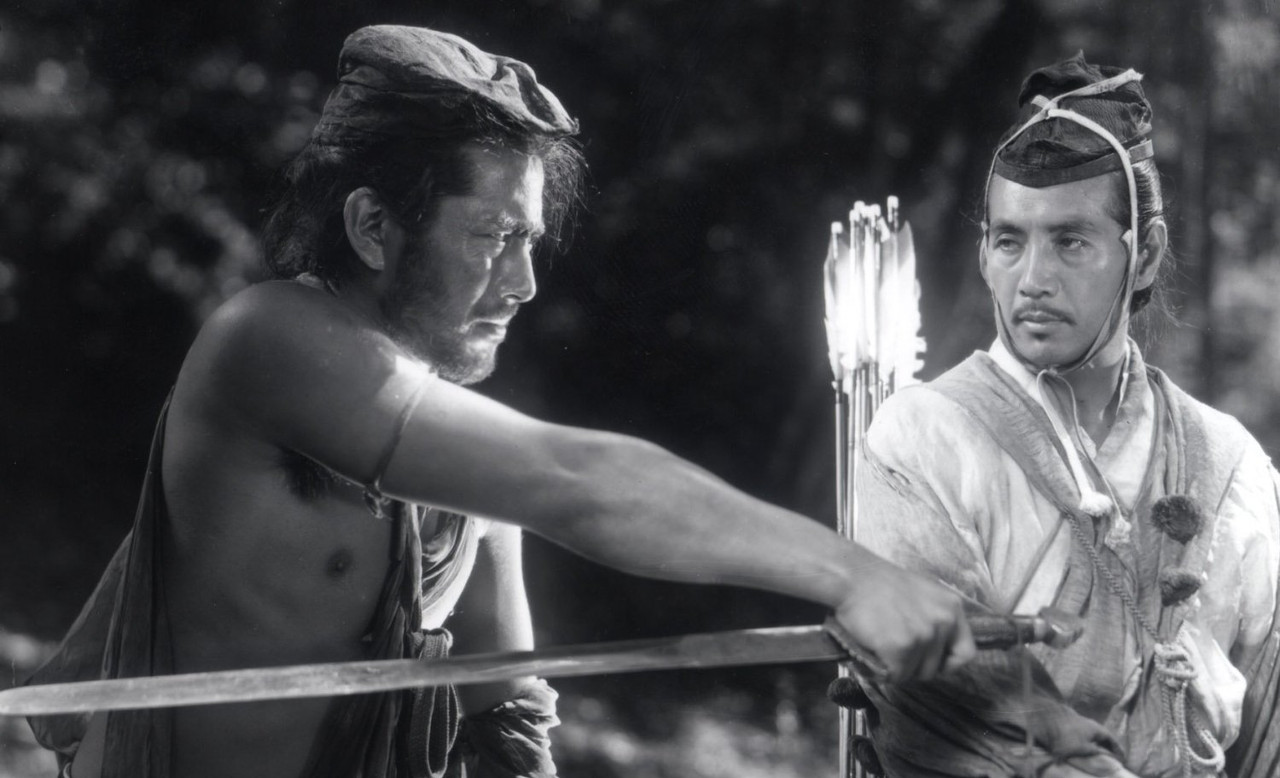
One of the most shameful oversights in my film viewing came to an end this year as I finally saw my first Akira Kurosawa films.  Rashomon is a movie that felt strangely familiar on a first viewing, because I had heard so much about it and seen so many films that spin off its central idea of using varying testimony to explore the 'truth' of a single killing.  That's not to say that Rashomon didn't grip me, from Kurosawa's use of light to Toshiro Mifune's fantastic performance, which manages to be both clownish and menacing at times, it impressed me throughout and made me kick myself for never having seen it before.


The Place Promised In Our Early Days
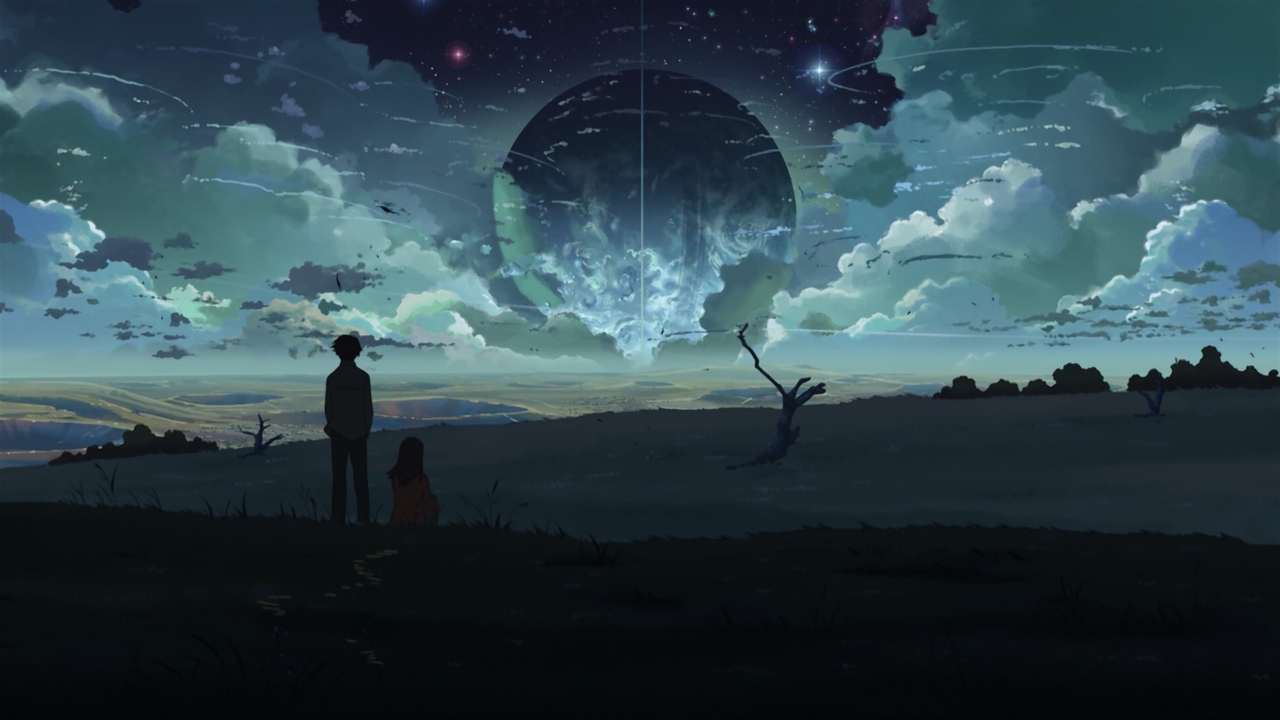
Makoto Shinkai is becoming one of my favourite directors, and is certainly one of the best I've discovered working in anime.  This film takes a grand sci-fi concept and marries it to a teenage love triangle that is depicted - despite eventually also taking place in a dreamscape - in a way that rings almost painfully true and painterly imagery that looks like what would happen if Terence Malick became an animator.  It's quite extraordinary to look at, and tugged my heartstrings in an unforced way.

Sky Captain and the World of Tomorrow
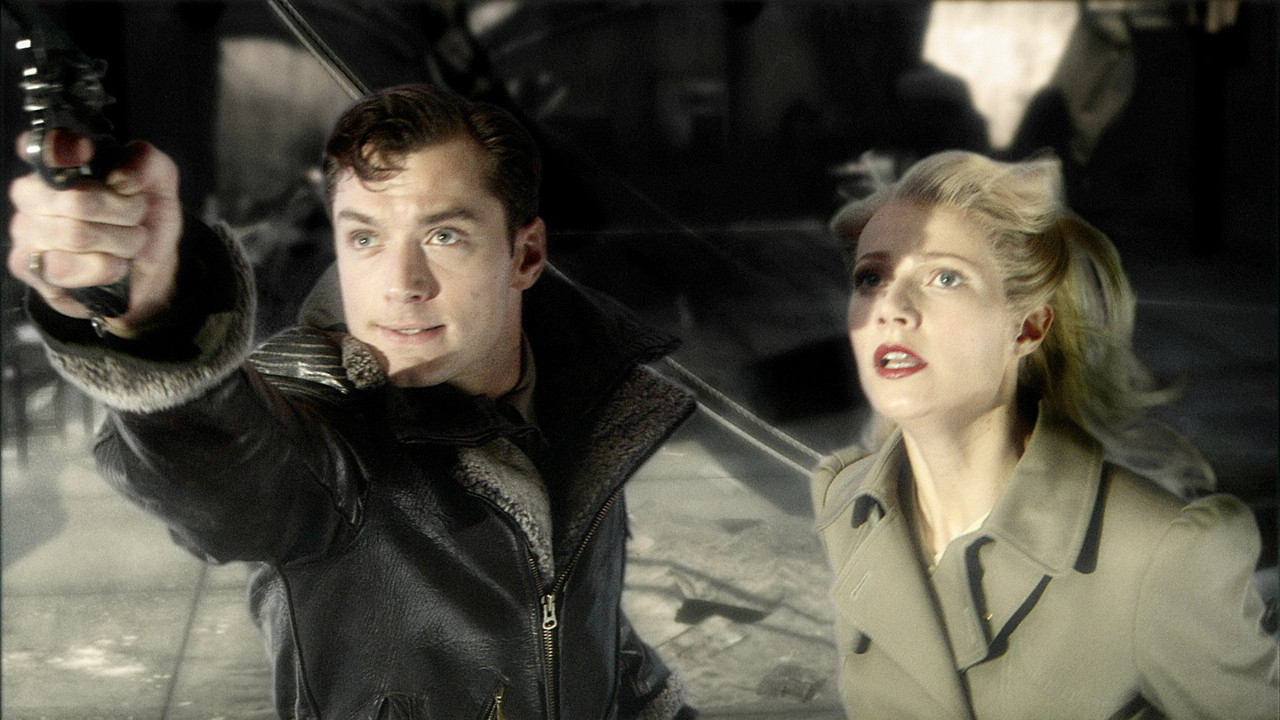
Yes, really.  I passed this one by on its release as it looked like just one more would be blockbuster flop, what I found instead was a witty and relentlessly fun adventure movie that remixed all its influences (expressionism, noir, adventure serials, 50's sci-fi and more) into a distinctive and well realised universe of its own.  The performances are as much fun as the visuals and while it's not always totally coherent the freewheeling fun of the story kept me engaged.  The film Sky Captain reminded me of most was The Rocketeer, and it deserves a critical rehabilitation just as much.

A Swedish Love Story
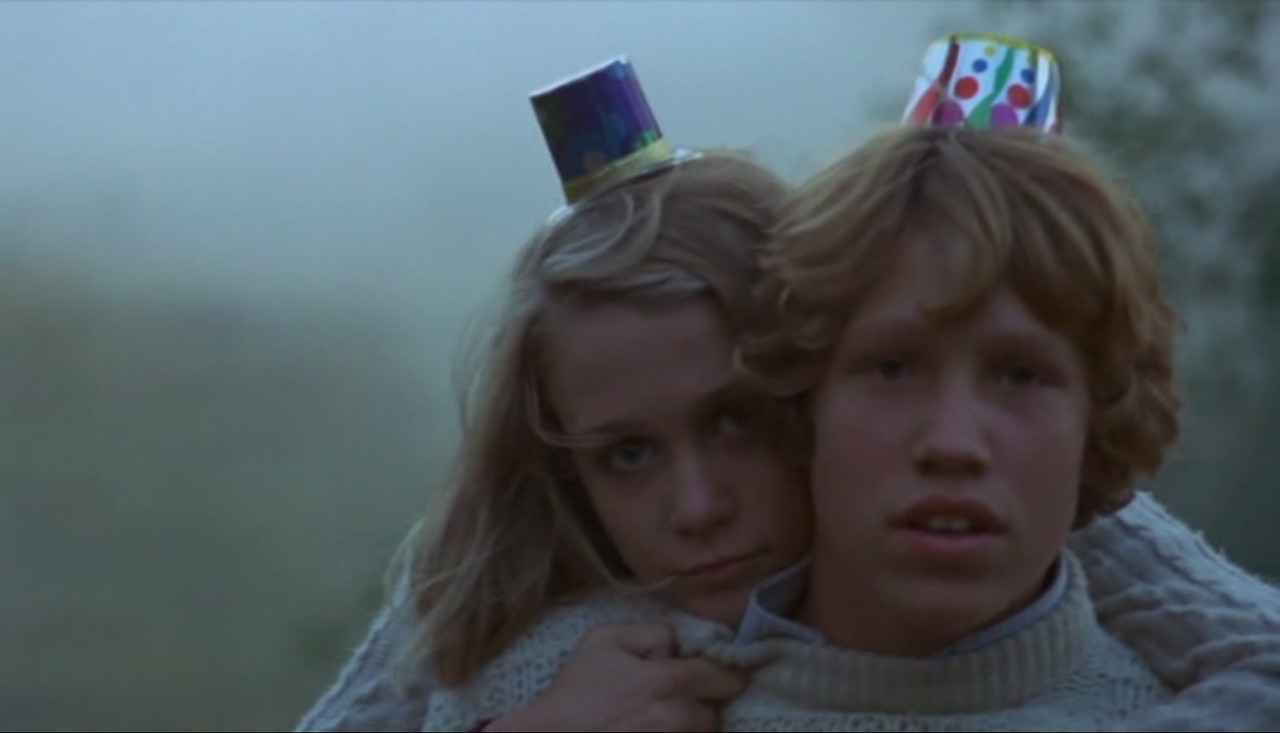
A simple title for a simple film, and I mean that in the best way.  I've always been interested in coming of age stories, and am especially fond of those from Europe and Scandinavia, but I only heard of this film (on Twitter) earlier this year.  On tracking it down I found a heartfelt tale of first love, with the rough edges that Hollywood might smooth left intact.  The two lead performances are brilliantly naturalistic, which is also the approach taken by director Roy Andersson.  The film digresses in its last twenty minutes, but this is the only bad note it hits.

Love In The Afternoon ['72]
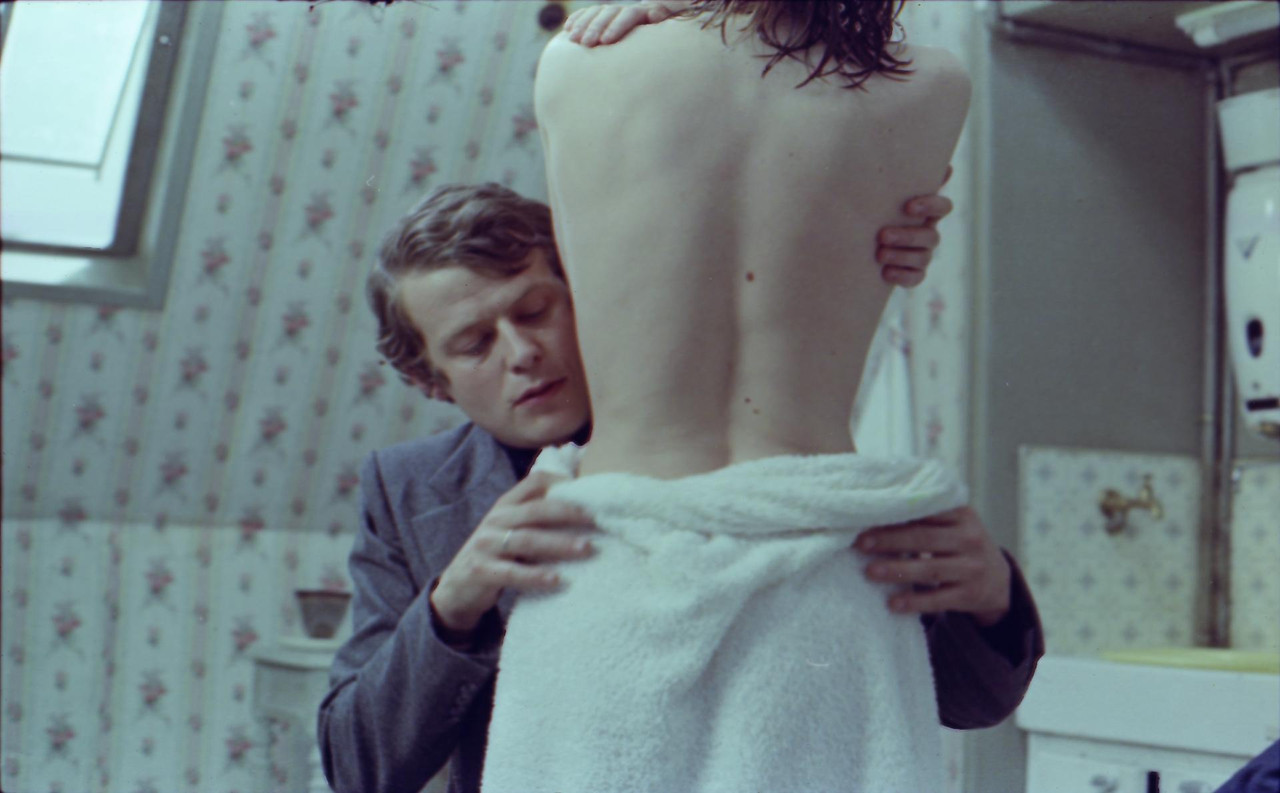
Eric Rohmer was another director that I discovered this year, having only previously seen one of his films (The Green Ray).  I thoroughly enjoyed Pauline A La Plage, but this film, about a man torn between his wife, who he still loves, and a woman he is tempted to have an affair with, was the one that really cemented my interest in Rohmer's work.  As is the case with all of the films I've seen from him, Rohmer manages to take difficult, dramatic, topics that could sit heavily and, while exploring them with great detail and import, treat them lightly.  It's a wonderful tonal balancing act that the director and his actors carry off and I can't wait to see more of it.

Solaris ['72]
From what I had heard about Andrei Tarkovsky and his films I was concerned that I would find Solaris dull and remote, it was anything but.  This slow moving sci-fi eases us into its more fantastical elements and this, along with the exceptional acting, allows it to credibly introduce unreal elements and have us question whether they are actually happening or a result of the main character losing his mind.  At the centre of the film is an achingly romantic story of a man desperate to have his late wife back, and Natalya Bondarchuck's performance as that wife - or an image of her - is one of the best I've seen for years.  I can't wait to see this multi-layered and immersive film again.

Tuesday, After Christmas
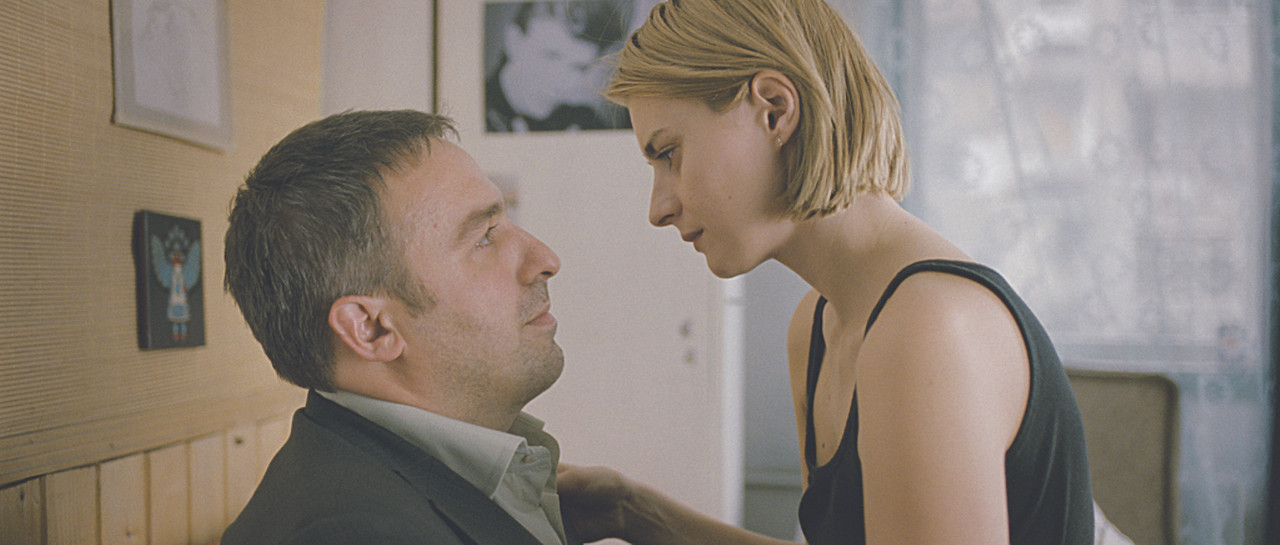
Another film about a man torn between two women, this one much more caustic than Love in the Afternoon.  This Romanian film finds a husband and father leaving his family for a younger woman.  Observed in a handful of long scenes, the film allows you to become invested in both the marriage and the new relationship by giving all of the characters rounded personalities and painting no one as either good or bad.  It's down to earth and true to life, often in the most uncomfortable way, especially in the climactic break up scene which, like the whole film, is perfectly played.

Seven Samurai
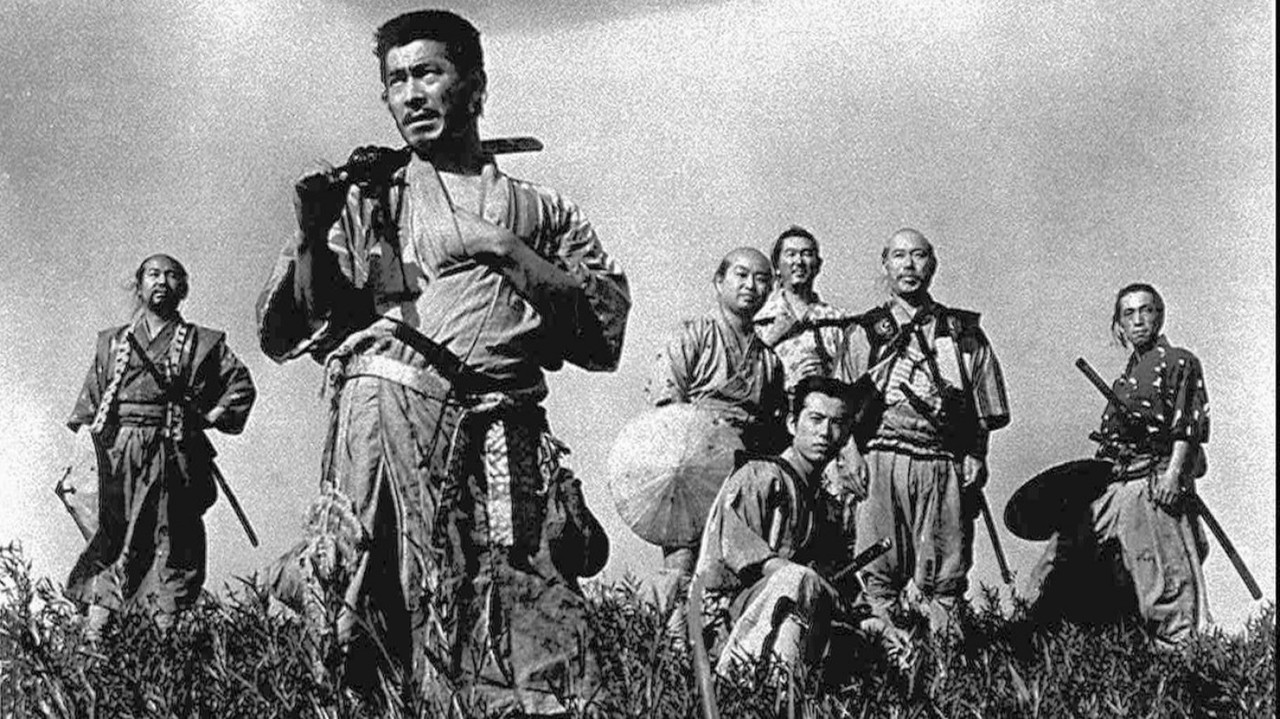
Yes, I know I should have got round to Kurosawa and to this film much earlier, does it help redeem me that the first time I saw it was at a cinema, projected from a beautiful 35mm print?  Anyway, primed by Rashomon earlier in the year (and because I wanted to retain at least a little critical credibility), I went in wanting to love Seven Samurai.  I was not disappointed.  A rather slight love story aside this old story of a band of warriors fighting against impossible odds was invigorated by its telling, which is energetic despite a running time north of three hours.  The battle scenes are incredible, but the film doesn't mark time in getting to them, it is riveting and beautiful throughout.

Spider Baby
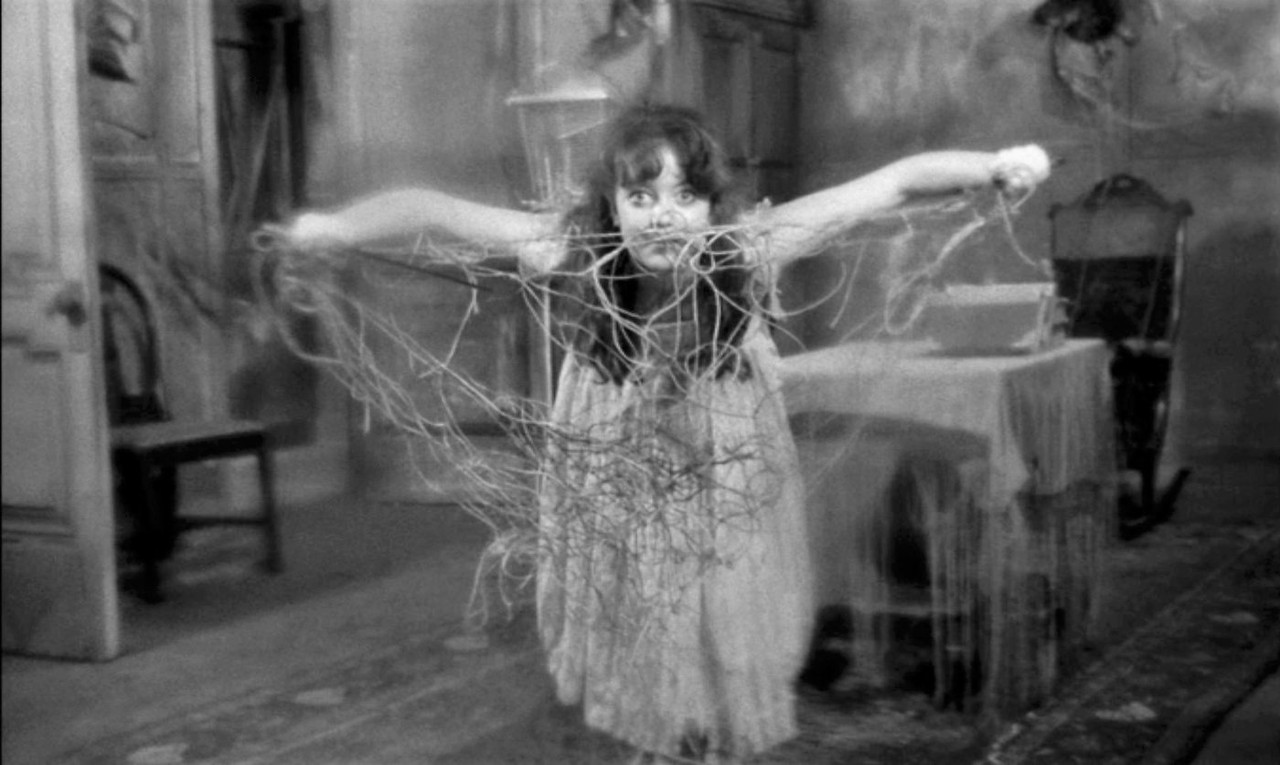
Spider Baby is one of those movies that I had always heard about, but it remained obscure and all but impossible to get your hands on, until Arrow Video released it on Blu Ray this year.  It is a defiantly odd film, its closest relation as a dark, weird, horror movie inflected with comedy is perhaps Tod Browning's Freaks, and Spider Baby is not embarrassed by the comparison.  It's a surprise to find that director Jack Hill - best known for Blaxploitation fare like Coffy and Foxy Brown - is also behind this oddity, but while it's atypical of his work it's full of memorable moments and scenes that still stand out for their strangeness.  I'll have much more about this film on an upcoming podcast.

L'Effrontee
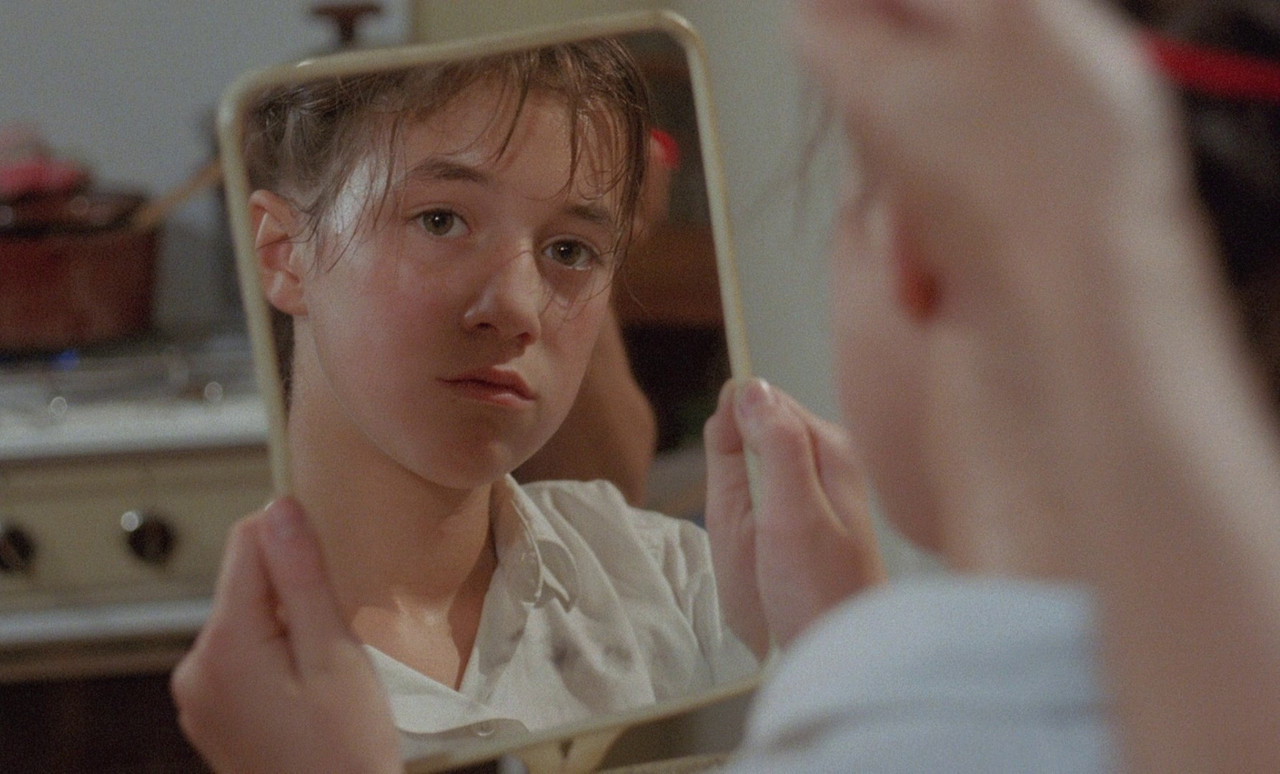
I've long been a fan of Charlotte Gainsbourg and have been wanting to see her early work for some time.  This, her second film, was the role that really brought her to notice and with good reason, she's exceptional as a young teenager who becomes obsessed with a concert pianist her own age, tracking her down after they meet by accident and convincing herself that they are friends.  Because of her character's youth Gainsbourg is more pitiable than frightening here, and her inexperience is turned on her in a sub-plot involving what begins as an innocent flirtation with an older man.  This is another fine example of how coming of age films from outside the US often deal better with the less pleasant aspects of growing up.

Heaven's Gate
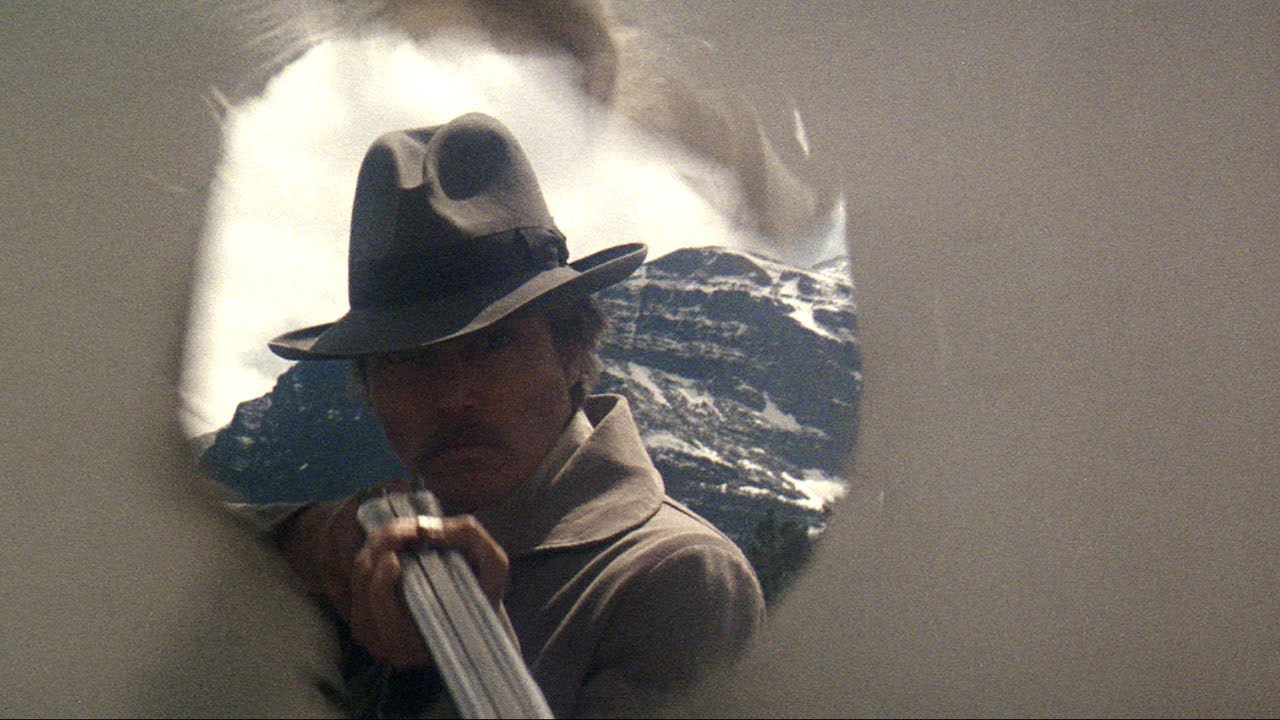
Much maligned at the time of its release and subsequently hard to get hold of in the UK, Heaven's Gate has taken on almost mythical status as a great directorial folly.  This could hardly be further from the truth.  Though it could, for me, happily shed its prologue and epilogue, the 190 minutes that fall between them are essentially a masterpiece, telling a large sale story of the (real life) Johnson County War, but finding personal resonances in the stories of new immigrants to the US and a love triangle between Kriss Kristofferson, Christopher Walken and Isabelle Huppert as men on opposite sides of the conflict and the woman they both love.  It may be long, but both the exceptional performances (Walken has seldom been better) and the stunning imagery will reward your patience.

Oct 15, 2013

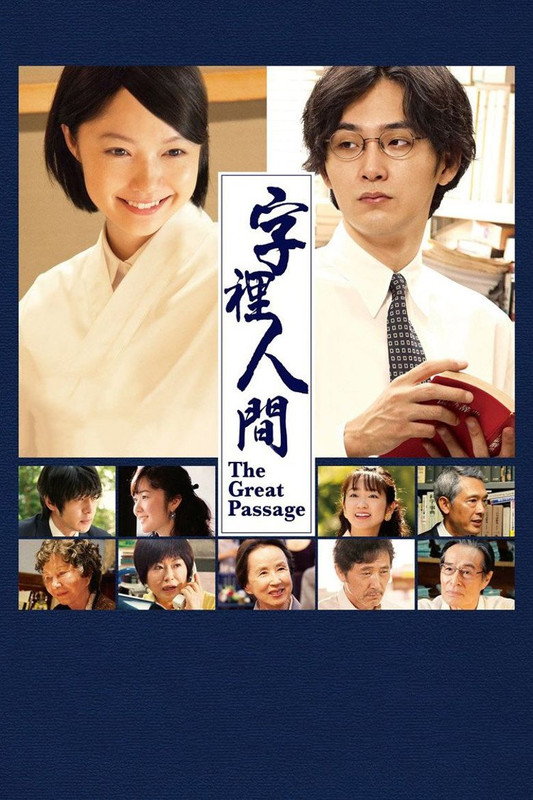
24FPS @ LFF 2013 The Great Passage

Dir: Yuya Ishii
I'm a writer (in case you hadn't noticed) and while I got into writing because I love films I have stuck with it because I love writing and because I love words.  The right word is something any writer knows is elusive – sometimes it's impossible to find – The Great Passage, among it's many other virtues, is a film for the writer, the word lover, in us all.

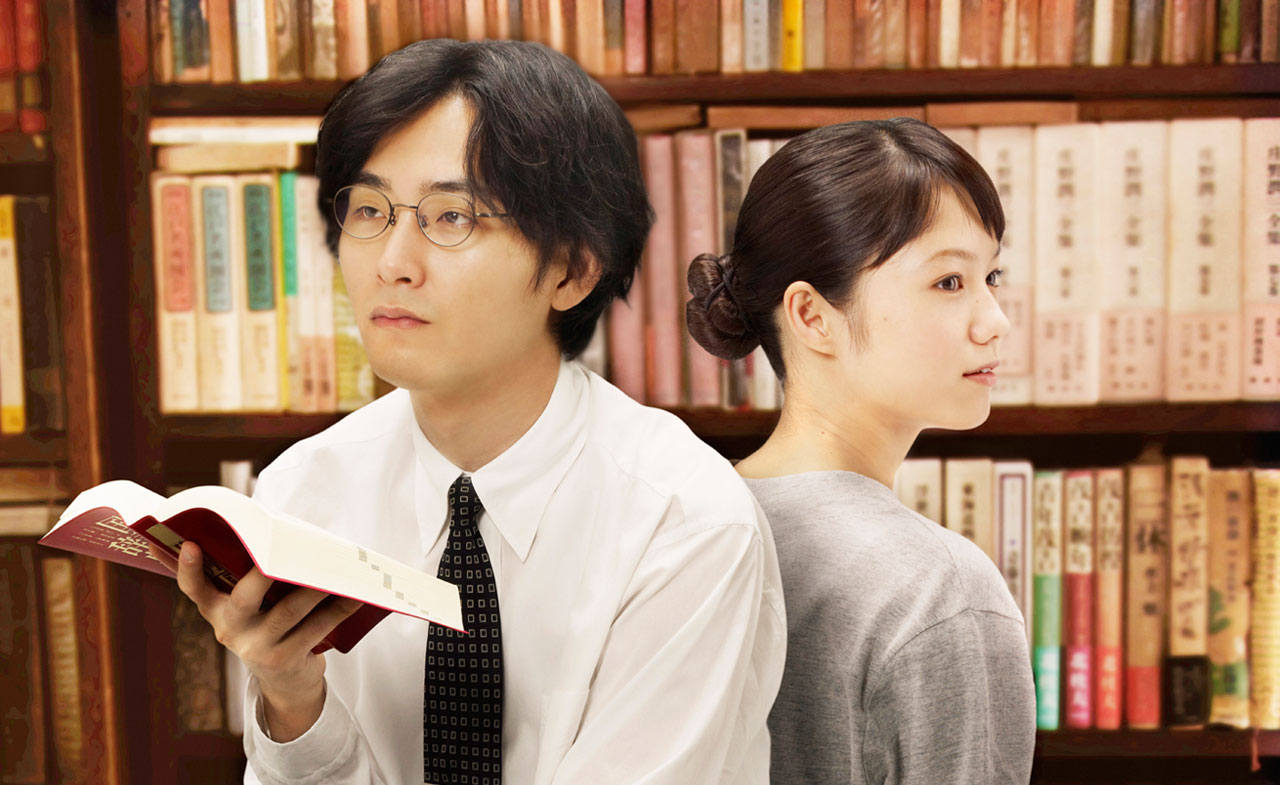
The Great Passage is the title of a new 240,000 word dictionary being put together by the Genbu company.  The dictionary editorial department is understaffed and underbudgeted, but they recruit one new member of staff to help with this project; shy, geeky, Mitsuya (Ryuhei Matsuda).  Over 15 years the film follows Mitsuya as both the dictionary and his life move on.

The premise of The Great Passage immediately recalls Howard Hawks' wonderful screwball comedy Ball of Fire, in which linguistics professor Gary Cooper is beguiled by Barbara Stanwyck as he helps to compile an encyclopedia.  The first half of Yuya Ishii's film – his first with a big budget and major stars – wears this influence very much on its sleeve, with screwball antics very much in evidence both in the dictionary editing department and at the boarding house where Mitsuya lives and falls for his landlady's pretty granddaughter   (Aoi Miyazaki).  However there is always an undercurrent of drama, provided by the very real sense that the dictionary's editor  (Joe Odagiri) may not live to see it completed.  This drama comes to the fore in the film's second half which, while still often funny, delivers an undeniable emotional punch.

I'm not sure how Yuya Ishii's fanbase will take to this film.  I've only previously seen his candy coloured, kooky, Sawako Decides, which I liked for the most part, but almost felt assaulted by, so desperate was it to charm me.  The Great Passage is not a total departure but rather feels like a refinement of Ishii's style.  It remains bright, broad and cute but the biggest excesses are reined in, making it easier to relate to the characters and their relationships, as well as to the comedic and dramatic beats.

The first half of the film hits a variety of comic registers, from the way that the older members of the dictionary staff observe people in order to collect new words and phrases on examplar cards to the genuine charm of the romantic comedy dynamic between Matsuda and Miyazaki.  This is how you do romantic comedy; the characters are both charmingly awkward on their own and right from the off their dynamic works well.  Their first meeting sets the tone, when Mitsuya mistakes Kaguya asking the cat's name and instead gives his own.  We never see much intimacy between the two (we don't even see them kiss) but we do believe and root for the couple.  

Some of the film's funniest scenes revolve around a letter that Mitsuya has written to Kaguya, unfortunately he's used brush calligraphy and though it's beautiful almost no one can read the result.  Ishii mines this for several very funny moments, both in the office and at the boarding house, hitting wonderfully warm comic tone that echoes through the film, even into the somewhat more serious second half.

The letter is also a good metaphor for what the film as a whole is about just under the surface; the joy of words and how they can draw people together (this isn't a film that has   much interest in pulling people apart).  To say that the way this theme is woven into the film is subtle wouldn't be true, but it's certainly effective.

The actors all pitch their performances beautifully; the stammering Ryuhei Matsuda finds the charm underneath Mitsuya's nerves while Aoi Miyazaki has a serene beauty that is also reflected in Kaguya's nature and in addition radiates a believable intelligence that is reflected in her character's skills as a chef.  Joe Odagiri gives an appropriately regal bearing to his veteran editor, but there's a glint in his eye that works for his humour, especially when he is collecting new words.  All round, the actors reflect the tone of the film perfectly.

Overall, The Great Passage is a great big warm hug of a film.  It has an easy charm thanks to an appealing cast who all do strong work with a script that is often very funny.  The drama works too, without feeling overly manipulative.  I hope we'll see more of this kind of work from Yuya Ishii.
★★★★

Jul 8, 2013

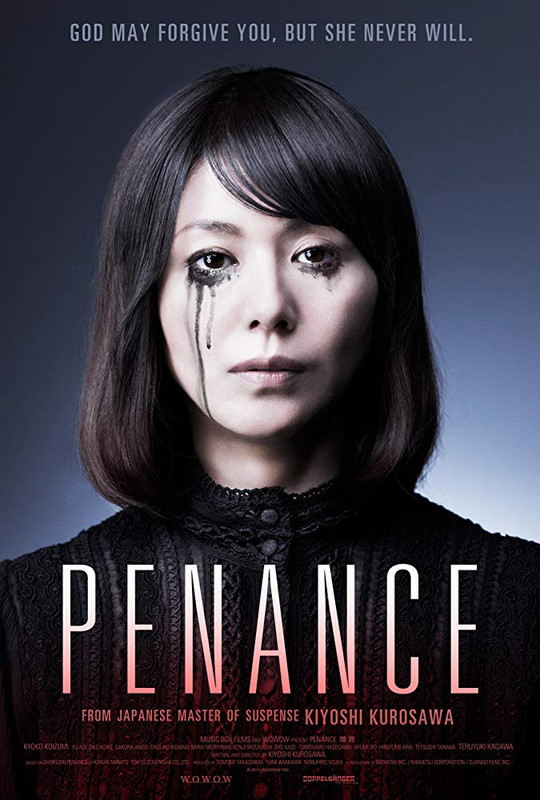
East End Film Festival 2013: Penance

Dir: Kiyoshi Kurosawa
Four and a half hours is a long time to spend in a cinema, but Penance – actually a five part Japanese TV series that is also being distributed as a film – made that time pass very quickly with a gripping, tense and varied story that managed to surprise right up until the end.

The story opens in the mid 90′s, when Emiri, one of a group of five ten-year-old friends is taken away from the others by a man and murdered in her school gymnasium. The other girls; Sae, Maki, Akiko and Yuka all say that they can’t remember anything about the man who took Emiri, and six months later there are no leads. Emiri’s mother Asako (Kyoko Koizumi) holds a birthday party for her, six months on from the murder, where she informs the four other girls that she can’t forgive them for not helping catch the killer, and that in the future they will have to perform an act of penance to earn her forgiveness. The series then picks up fifteen years later, unfolding in five parts, following the four girls and then Asako in turn.

While the fact of Emiri’s murder lies underneath the whole series as a motivating factor in how each of the girls grows up, and how that affects each of their stories, the focus of most of the series is not on finding the killer or even why the girls may have held back and not spoken up about things they did remember at the time of the investigation. Writer and Director Kurosawa (working from a novel by Kanae Minato) doesn’t attempt to draw the one mystery out over 270 minutes but instead gives each part of the film its own feel, drawing from a wide range of influences, while still keeping the underlying thread tight.

The first chapter sets out the strange, dark, stall that much of the film will follow (though in differing ways and tones) with a Hitchcockian – Vertigo being the obvious influence – chiller in which Sae (Yu Aoi) is set up with Takahiro (Mirai Moriyama) who was a couple of years ahead of her in school when Emiri was killed. They eventually marry, at which point Takahiro makes many rules for Sae, including requiring her to dress as a doll every night. It’s a strong psychological chiller, with great performances from its leads, and an interesting link back to the murder in terms of why Sae accepts this as her lot.

There is a jarring tonal shift between this and the broader second chapter, in which we see that Maki (Eiko Koike) has responded to the murder by becoming a teacher and being very hard on her students. Her reaction to an intruder who attempts a mass stabbing when the children are swimming is to attack back, but the way the series treats the school politics around this doesn’t quite work, as it sometimes has a slightly overblown comic tone that undercuts the drama (never more so than in the last scene, which provokes a few accidental chuckles).

Chapter three righted the series for me, with a(nother) great performance from Sakura Ando as Akiko. On the day Emiri is killed Akiko gets blood on her pretty dress, and she takes this as a sign that she mustn’t try to move ‘above her station’. Fifteen years later she sees herself hardly as a person but as a Bear. Ando is fantastic in the part; you get a true sense of her separateness simply from the way she holds herself. She also shows the - possibly fatal - shift in Akiko’s perception of herself in a purely physical manner with the way she begins to open up when her brother returns home with his new wife and his step-daughter Wabaka (Nanaka Fujii). The third chapter also features some of the best writing in the series, combining the cold and forbidding undertone with a much more natural sense of offbeat comedy.

The fourth chapter takes a very different approach, by showing us that, unlike the others, Yuka (Chuzuru Ikewaki) is untroubled by any kind of guilt, and this twists into a black comedy of manners as Yuka reconnects with her older sister (Ayumi Ito) and immediately, brazenly, sets about trying to steal her husband (Tomoharu Hasegawa), eventually becoming pregnant. When Asako comes into these stories (as she does in each) she is usually the cold presence, so it’s a well-timed change when Yuka meets her, and offers up one of the most coldly calculated suggestions in a film that has many. Chuzuru Ikewaki walks a fine line; bright and perky on the surface, with a flinty heart beneath, but she does it extremely well, and again this is where the film gets the blackness of its comedy right.

The final chapter wraps up the mystery, and owes much to Park Chan-Wook both in feel and in specifics. It’s a convoluted tale, and one detail stretches credibility near breaking point, but the series had been compelling viewing for long enough and the other twists were unexpected, more credible, and kept unfolding and unfolding in such a way that I could forgive the small lapse. Kyoko Koizumi really carries this last chapter, and she conveys a sense of sadness and resolve that put me in mind of Lee Young-Ae’s Lady Vengeance performance.

Penance commands the attention for its whole four and a half hours, moving much faster than you’d expect given the mammoth running time. I suspect the second chapter will feel more a part of the whole on a subsequent watch; it jars because it’s the first real tonal shift. Ultimately it’s a great showcase for five clearly talented actresses (Koyzumi and Ando the standouts). It’s a consistently high quality thriller that will keep you on your toes, whether you end up seeing it as series or a film, it’s well worth a watch.
★★★★

Mar 14, 2013

Japanese Movies: Lone Wolf and Cub - Sword of Vengeance / The Warped Ones

Lone Wolf and Cub: Sword of Vengeance [18]
Dir: Kenji Misumi
The first film in the Lone Wolf and Cub series (based, apparently at times to Sin City levels of faithfulness, on the Manga series of the same name) has an odd history for the English speaking market, and an odder one if you’re actually from England. Made in 1972, in 1980 an enterprising American producer took this film and its follow up Baby Cart at the River Styx, trimmed out all but the most basic plot elements, jammed a few action sequences from this film into that one, added a voiceover and called it Shogun Assassin. It was banned in the UK as a video nasty and, to be frank, exploitative as it is of its source material, it’s pretty damn awesome.

The story, just as it is in Shogun Assassin, is little more than a loose framework on which director Misumi can hang violent action and other bits of exploitation content. Ogami Itto (Tomisaburô Wakayama) is the Shogun’s executioner, but he’s framed for disloyalty by the Yagyu clan, pursued by the Shogun’s forces, his wife murdered, Itto wanders the countryside with his young son in a weaponised pram, vowing vengeance on the Yagyu.

I was thinking that the full version of one of these films might develop the character of Ogami Itto a bit further than Shogun Assassin did, but in fact most of the 12 or so minutes that are taken from this film for that one are the moments that establish the taciturn, vengeful, persona that Tomisaburô Wakayama gives the character, and if anything the film loses a little character nuance by the loss of the fantastic voiceover delivered by the two year old Daigoro (voiced by Sandra Bernhard). That said, Sword of Vengeance delivers what little plot we need capably, and when it does slow down, notably in the third act, Misumi proves adept at generating tension.

The action is what most people will come to this film for though, and this is where Misumi delivers in spades, yes it’s ludicrous, with Itto slicing his way through armies of enemies, making them all spray blood from high pressure hoses in their necks, arms, legs or chests, but as long as you don’t attempt to take it seriously it’s a great deal of fun. The choreography isn’t intricate, but it is impressive, with the chunky Wakayama moving fast, fluently, like an angry brick shithouse with a very sharp sword. The baby cart itself doesn’t really get into the action during this outing, but it certainly will in the next.

I said that Godzilla is a deceptively thoughtful film, this one doesn’t seem to be, but that doesn’t make it any less entertaining, nor me any less keen to see the rest of the series.
★★★★

The Warped Ones
Dir: Koreyoshi Kurahara
The Warped Ones is a strange and a difficult film. It seems, at least to my untrained eye (this may be something I address in a future themed month), to have many similar stylistic and thematic preoccupations as the French New Wave, but given that this film dates from 1960 it is unlikely that there was time for the influence of that scene to have reached Japan. It’s also a challenge because it has one of the least sympathetic, least relatable, leading characters I can think of, and because it occasionally seems to take some odd moral stances.

The Warped Ones describes a trio of young petty criminal friends. Akira (Tamio Kawachi) is a nihilistic seeming young jazz fan who steals cars, so he can ride around with his friend Masaru (Eiji Go) and Masaru’s prostitute girlfriend Fumiko (Noriko Matsumoto). While out on a joyride, Akira spots the reporter whose story sent him and Fumiko to jail, and decides to punish him. They take the reporter’s fiance Yuki (Yuko Chisiro) and Akira rapes her on the beach. Some time later Yuki finds Akira and tells him that his assault has made her pregnant.

These are challenging subjects for 1960, and though the film is not its main character, the mile-wide cruel streak that Akira has does sometimes take the film over to an uncomfortable and shocking degree. The swaggering, chain-smoking Akira is played by Kawachi as not so much a rebel without a cause as a young man with a total lack of empathy. When he graduates from theft to rape he doesn’t see that he’s in the wrong, and in the film’s most affecting scene when Yuki pours her heart out, begging him to make her the person she was before he attacked her, he ignores her and listens to jazz. Kawachi never blinks in this performance, never looks to excuse Akira, it’s a fantastic performance, but genuinely hard to watch.

Yuko Chisiro is equally excellent as Yuki. There’s a sense that she’s totally broken and totally humiliated by what happened to her, but that she’s trying hide it from anyone but Akira and her fiance (who doesn’t understand anyway). This shame and the way it keeps her from talking, is clearly corrosive, and her performance grows sadder and more desperate with each scene, without becoming over the top. The two other sides of the criminal triangle are shunted to the side from time to time (especially Eiji Go’s Masaru), but both give fine performances, and Noriko Matsumoto’s reluctant but often calculating hooker is another nastily memorable creation.

This is the first film I’ve seen by Koreyoshi Kurahara and it won’t be the last. I can imagine that in 1960 this felt very different indeed and, while it may now lack the shock of the new, The Warped Ones still has real dynamism to its visuals. Even some ideas that shouldn’t work – like the frequent overexposure of exterior shots, to the point that characters are often obscured by the light – add to the film’s visual invention and to its fast and freewheeling structure. It seems to me that the film’s visuals carry us along with the three main characters, its restlessness reflecting their own relentless quest to avoid being bored. The only thing that gives me pause – and perhaps I’m misreading it – is the film’s apparent stance on why the kids at its centre are warped. At least in the case of Akira it seems to suggest that Jazz may be partially responsible. There is never a sequence that comes right out and says it, but many of the sequences that see Akira at his worst are soundtracked by or have him listening to jazz. I’ll need to watch the film again and figure out exactly what it is saying there.

Whatever my slight misgivings about the message it seems to want to send, that takes little away from how impressive this film is as a whole; dynamically shot and extremely well acted, The Warped Ones remains a challenging and provocative watch after more than fifty years, it’s well worth seeking out.
★★★

Mar 10, 2013

Japanese Movies: Godzilla ['54] / Vengeance Is Mine / Rashomon

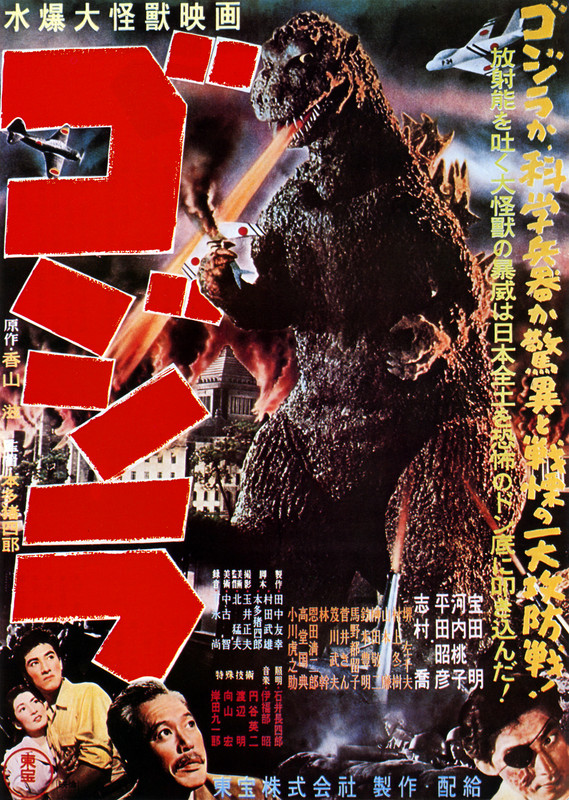
Godzilla ['54]  [PG]
Dir: Ishiro Honda
Godzilla looks like, and has often been thought of, as a silly film about a giant dinosaur, spawned by radiation, destroying much of Japan. It is that film to some degree, and it’s possible to have a good deal of fun watching it that way, but there are other ways to look at Godzilla that give it rather more depth and place it in an interesting context among the world cinema of its time.

The film isn’t subtle about its anti-nuclear stance, and that makes it interesting in the larger context of 1950′s science-fiction, which, in the US, was driven by nuclear and cold war paranoia (look at their own films about giant mutated things, like the wonderful Them!) This is especially interesting coming from Japan, because, of course, they are the only country to have been attacked with nuclear weaponry, and were the first place to see the real devastation it caused. In Godzilla the monster is as much – metaphorically speaking – a walking H-Bomb as it is a giant mutated amphibious T-Rex. Now, the film comes across as quite silly as it tries to explain Godzilla (particularly when it dates dinosaurs to 2 million years ago, I mean, I know I shouldn’t be nitpicking, but that’s a 63 million year mistake), but, unlike the 1998 Roland Emmerich directed remake, it’s at least using its sometimes laughable explanations to say something. It’s not the most intelligent nuclear paranoia sci-fi, but Godzilla still feels interesting at a thematic level today, especially with the Fukushima disaster still relatively fresh in the memory.

At its heart though, for me, this was largely a fun monster movie. While most monster films now hold the main attraction back for at least an hour (often to justify a bloated running time), here director Ishiro Honda shows his hand just twenty minutes in, and that never stops Godzilla, in the next seventy minutes, from being a cool or a threatening presence. There is, now, a bit of a hokey feel to the special effects, which are sometimes quite obviously a guy in a suit stomping on miniatures. It doesn’t really matter though, the cheese factor is always high with a monster movie, and actually the monster itself looks good, and is well served by the black and white stock, which, for me, makes it feel more imposing (maybe because I just find it sillier when it’s a big green monster. The major set piece – the destruction of Tokyo – is very well realised, and makes much more sense then the remake’s New York rampages, mostly because here Godzilla doesn’t just vanish into thin air all of a sudden.

Godzilla holds up pretty well, almost sixty years on from its release. The script and performances are reasonably basic, but the deliver the story, the metaphor and the set pieces assuredly, but Ishiro Honda elevates the film with some stylish direction and impactful use of the monster. I’m not sure it’s quite the classic that some of the American sci-fi films of the 50′s are, but it’s an entertaining film that still has something to say today.
★★★★

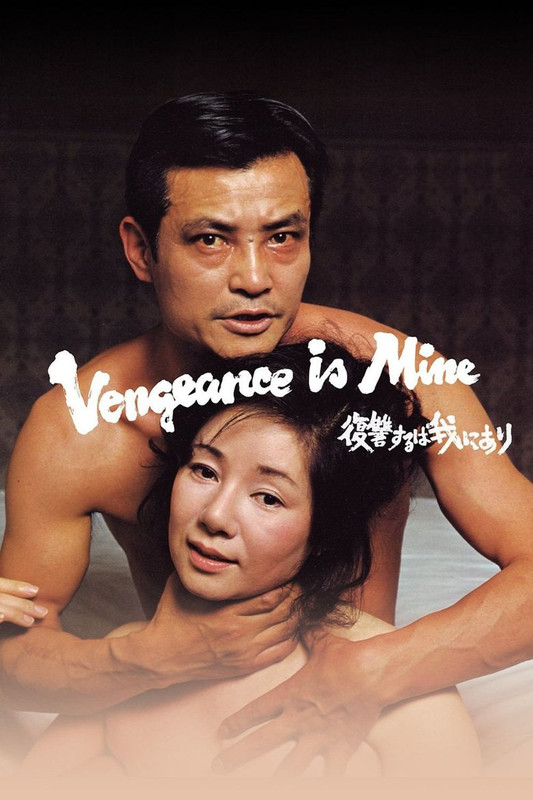
Vengeance Is Mine
 [18]

Dir: Shohei Imamura
I picked Vengeance is Mine as one of this month’s featured films because I really liked the first film I saw by director Shohei Imamura (The Insect Woman) and because I love vengeance films. Unless I missed something, this isn’t a vengeance film, however, it does share many of the traits I found so interesting in The Insect Woman, wrapping them up in a compelling narrative about an apparently motiveless serial killer, Iwao Enokizu (Ken Ogata) as Police interview him (almost completely off screen) about his 78 days on the run.

The film doesn’t senastionalise Enokizu’s life and crimes, rather it follows him quite dispassionately as he marries against his parents wishes, before leaving his wife (Mitsuko Baishô) with them when he’s imprisoned for the first time and then when he laves prison and fails to fit back in the film follows his murders and his escape to a guest house/brothel where the madam (Mayumi Ogawa) falls in love with him. In fact, the structure somewhat reminded me of The Insect Woman, in that Imamura is interested in more than the sensational, he digs into his protagonist’s life, and the lives around him, and like the earlier film Vengeance is Mine also has two pretty distinct halves, here largely defined by the dominant female presence in Enokizu’s life.

As much as the main storyline commands the attention, there is also great stuff around the edges, not least the creepy and intense attraction between Enokizu’s wife Kazuko and his Father Shizuko (Rentarô Mikuni), which threatens to come to a head while Enokizu is first in prison. This puts an extra, disturbing, dynamic into each of these relationships, and makes them just as gripping as the storyline about the murders.

Of course being that the film hardly deal with the killings themselves, especially in its long middle section, it relies on the actors to provide the tension, and they absolutely deliver. Ken Ogata is brilliant as Iwao Enokizu; communicating to us how unhinged and dangerous he is, while allowing us to see how he puts up a convincing mask of normalcy to the people around him. One great scene has him impersonating a lawyer, and despite knowing who he really is, you see why his marks buy into the fiction. Mitsuko Baisho and Mayumi Ogawa are both excellent as the women who – at least initially in Baisho’s case – love this charming killer. Wisely, neither they nor Imamura play on the danger they are in, and so what violence does occur is more shacking and scarier. What violence there is is pretty nasty. The film mirrors Zodiac somewhat in its structure, with two brutal and extended murder scenes happening right up front, and then the violence staying off screen for, in this case, almost the entire rest of the 140 minute running time. I’ve often seen violence in Japanese films rendered as outlandish splatter; high pressure hoses spraying blood from neck wounds etc, but Imamura does it differently; this violence is up close, extended, personal and difficult, and that’s why the film gets under your skin.

There are elements here of the later Henry: Portrait of a Serial Killer, which also puts a motiveless, patternless serial killer in his social context (though this film offers a resolution, where that one does not), and if slight overlength and occasional digressions from the thrust of the film keep Vengeance is Mine from being quite as good as Henry, it’s a close run thing and this film really makes me want to dig in to Imamura’s work at the first opportunity.
★★★★

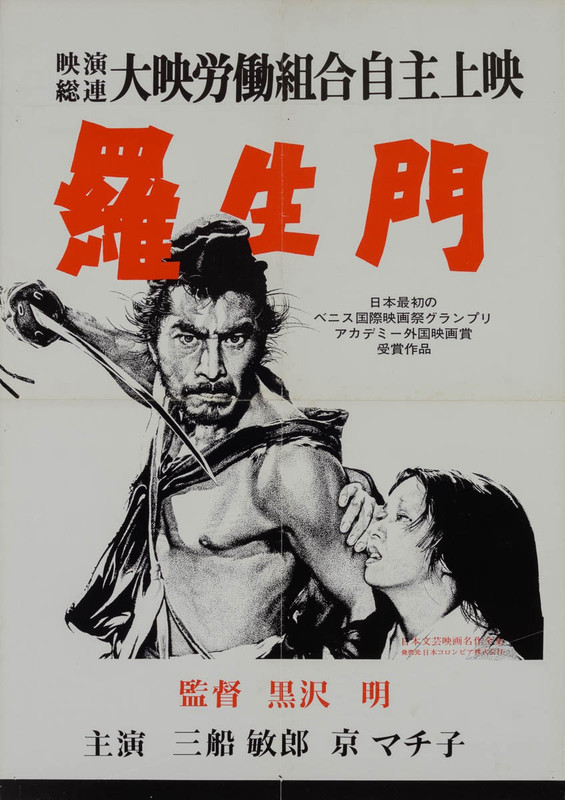
Rashomon
[PG]

Dir: Akira Kurosawa
Confession time: I am a 31 year old who has the gall to call himself a film critic, and this was the first time I had ever seen an Akira Kurosawa film. I know. Shut up. Kurosawa is one of those filmmakers with a reputation and a filmography so big that it’s almost intimidating; do you start with a classic and risk disappointment? Do you start with something lesser known and build to the famous work? I decided to start with a notable film, and one that I knew something about going in because of its pervasive influence. How pervasive is that influence? Pervasive enough that anthropologist Karl G. Heider coined the term ‘Rashomon Effect’ to describe the effect of perception on the subjectivity of recollection. Or, to put it in simpler terms…

Rashomon unfolds the story of what looks to be the rape of a woman (Machiko Kyo) and the murder of her husband (Masayuki Mori) by a notorious bandit (Toshiro Mifune). The story is told from four perspectives, each related as testimony in court, first by the bandit Tajomaru, then by the wife, then by the spirit of her dead husband (speaking through a medium) and finally by a woodcutter who witnessed the events. We watch each version unfold as reconstruction.

The structure of Rashomon has been emulated many times (a notable recent example being Zhang Yimou’s Hero) and it is easy to see why. The way the film unfolds makes demands on us as an audience to think about each version of the story, and to decide which of the versions – if any – we find credible. The great strength of the film is that it is equally as easy to find yourself sucked into any version of the story,because there is never anything truly outlandish suggested, and the performances always remain consistent and strong throughout. It’s also possible to see each story as somewhere between lie and fantasy, because we only ever see the events as a story told after the fact, and because the forest clearing where Kurosawa stages most of the action feels almost like a self contained world, a little removed from the real (this also seems to be suggested by the slightly unnatural shimmering light).

Toshiro Mifune was often said to be Kurosawa’s alter-ego, I hope that’s not the case here, but he’s brilliant as the sometimes unhinged Tajomaru. The moral code the people in this film seem to live by is difficult to relate to (much conflict revolves around the fact that once the Woman has been raped somebody has to die, because she cannot stay married to her Samurai husband while there is another man alive that she has been with), but when these ideas are expressed by Tajomaru, who seems crazed at his trial and driven into something of a frenzy by the first appearance of Kyo’s character you see them as coming from a place that is driven not by an idea of honour but by his lust for the woman.

Machiko Kyo’s character is probably the one who changes most in each telling of the story. In all versions she is a victim, but what happnes after the rape varies greatly. In her own version the woman is further victimised by a husband who stares at her with contempt, but in others she is more manipulative, spurring on the fight between Tajomaru and her husband. Kyo is excellent, shading the character slightly differently in each version of the story; giving her strength in some and emphasising weakness in others. It’s the film’s most complex role, and she does it great justice. Masayuki Mori has rather less to do for much of the running time, given that he spends a lot of his screentime tied to a tree, but he’s very effective in what is a rather cold and unsympathetic role.

Rashomon is a complex film, and I’m sure there is much more to it than the relatively simple question of which is the true version of events. As an introduction to Kurosawa I felt it was ideal; it’s short and moves fast through its multi-levelled story, but never forgets to pause for breath or to give its few characters real colour. It looks beautiful, and is cut intelligently and relatively fast for its time, which injects both pace and variation into what could – given that it takes place largely on a single confined set – become a slightly stagy visual experience. I’ll certainly go back to this film in future, because I feel that, as great as I found it on a first watch, I’ve a lot more to get from it yet.
★★★★★