Showing posts with label Crime. Show all posts

Oct 26, 2021

24FPS @ Raindance: Shadow

Dir: Bruno Gascon
In March 1998, 11-year-old Rui Pedro Teixeira Mendonça disappeared from close to his home in Lousada, Portugal. Later that year, his picture was identified when an international child porn ring known as the Wonderland Club was shut down by Police in an operation that spanned 13 countries. He has never been found. 

Shadow changes a few names, but otherwise sticks close to the facts of the case, following Ana Moreira as Isabel, after her 11-year-old son Pedro goes missing and Police botch the initial investigation the film tracks both the devastating psychological effect on Isabel and her efforts to keep the case alive and find her son.

Shadow is largely a performance piece. The cast that surround her, including Miguel Borges as her husband and Tomás Alves as the man she believes holds the key to what happened to Pedro, are effective, but this is  Ana Moreira’s show. There is little in the way of grandstanding in her performance, instead we see the impact of Pedro’s absence reflected in her body. The film unfolds in chapters: 1998, 2004, 2011 and 2013. Across the first three we watch as Isabel slowly shrinks before our eyes; an already slender woman becoming anorexic and sunken as if the stress of Pedro’s absence and simply of not knowing is eating her from the inside. The dialogue can be a little blunt (at least based on the subtitles), but Moreira’s physical performance always cuts to the core of the emotion of her scenes.

Much of the film looks like a typical Netflix true-crime story: it communicates the story well enough, but Gascon doesn’t find many images that stand alone. The exception, and the film’s most interesting purely visual thread, is in the use of yellow. The portrait used on Pedro’s missing poster has him in a yellow short, and for almost the entire film, Isabel is either wearing or carrying something yellow. Most of the time it is her shirt, but when she travels to meet another mother of a missing child, it is her suitcase. When Gascon, at Isabel’s low point, strips yellow out of the frame it feels like a final signal that Isabel has, at least in the moment, truly lost hope. Interestingly, this isn’t noted in the dialogue, so it’s only late in the film that it feels entirely intentional on Isabel’s part, but the emotional impact of the choice is there throughout.

The problem with the film is that nothing that surrounds Isabel is particularly well developed. To a degree that’s because she tunnel visions just about everything else in her life away, but there’s a lack of much sense of the impact of that on her husband and especially on her daughter. The final chapter focuses on a court case that, important as it is to Isabel, never gives us a feel for the stakes of its outcome, nor the specific charges it is over and which is much more formulaic than the rest of the film. It’s a weak note to end the film on. 

Of course, the problem that Gascon has is that there really isn’t an ending here. Nobody knows what happened to the real Rui Pedro, he was declared dead in 2019, but that’s an assumption, and the film never quite finds a way to deal with that beyond just stopping and dedicating itself to him and his family. The ending here ought to be lingering and haunting, instead, it just feels rather hollow. This is a tragic case, and Ana Moreira’s performance impressively articulates the impact of it on Pedro’s mother, but the rest of the film doesn’t land with quite the same impact.
★★★

Shadow screens at the Raindance Film Festival on October 30th at Curzon Hoxton and online on October 31st. Tickets are available here.

Oct 15, 2020

24FPS@LFF2020: Zanka Contact

Dir: Ismaël El Iraki

Energy pulses through Bataclan survivor
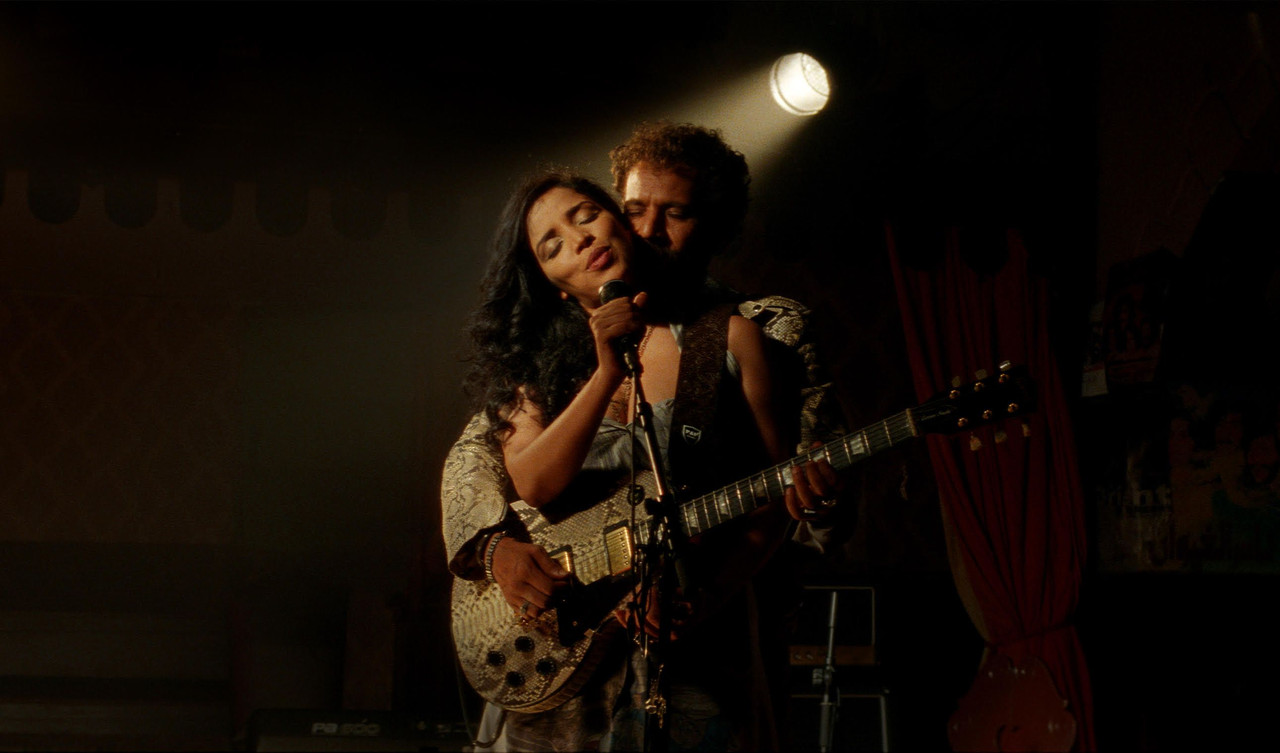
Ismaël El Iraki's feature debut from the very start, as a rock cover of Man of Constant Sorrow takes us over the city of Casablanca to find a pissed off Rajae (Khansa Batma) storming out of a hotel and into a cab, making jokes with the driver until another car slams into them. A flashback throws us into a room where former rock star Larsen (Ahmed Hammoud) is tied to a chair and being menaced by a couple of British criminals who say he owes them £150,000. Making a deal, he's on a plane to Casablanca and, impersonating another passenger, into a limo... which crashes into Rajaes's car, introducing the two. What follows is a wild mix of genres and influences as Rajae and Larsen try to escape her pimp, Said (Said Bey) and Larsen tries to get Rajae to sing for him.

While the setting is immediately novel, there are definite echoes of other films and filmmakers in Zanka Contact. Perhaps most notable is Quentin Tarantino. Several story and structural points recall his work. In particular True Romance; the early scenes of Larsen and Rajae getting to know each other have echoes of Clarence and Alabama's early interactions and Said's conversation with an irritated client of Rajae's has some of the feel of Dennis Hopper's speech to Christopher Walken, with the same lingering threat of violence as he's speaking. That said,  El Iraki doesn't slavishly imitate QT's style or even the sound of his dialogue, it's more that he's trying to capture a similar energy, and he does so successfully. There are other nods and winks throughout the film, obviously to the various versions of A Star is Born, but most notably the sequence when Larsen and Rajae, on the run, turn up to the house of another former member of Said's stable of girls. Here the film becomes a Western, complete with a violent shootout that is more than a little Peckinpah. 

El Iraki injects plenty of style of his own. One moment shows a sawn-off shotgun being made, seen from below, it shows the butt and then the barrel dropping to the floor; an image that drips with menace as much as it does style. Striking dream sequences have both Larsen and Rajae seen with their eyes closed, stylized eyes painted on their lids, walking through a dream landscape, and there is a similar oneiric feel to the first time Larsen plays with Rajae, lifting his guitar over her, so she can feel the notes as she sings. Again though, it's all about the energy, be it the charge of the violent moments (Zanka Contact apparently means a street fight) or the powerfully quiet moment when Larsen relates the story of why he wears snakeskin all the time.

As well as El Iraki, the film's relentless forward motion is powered by charismatic performances from 
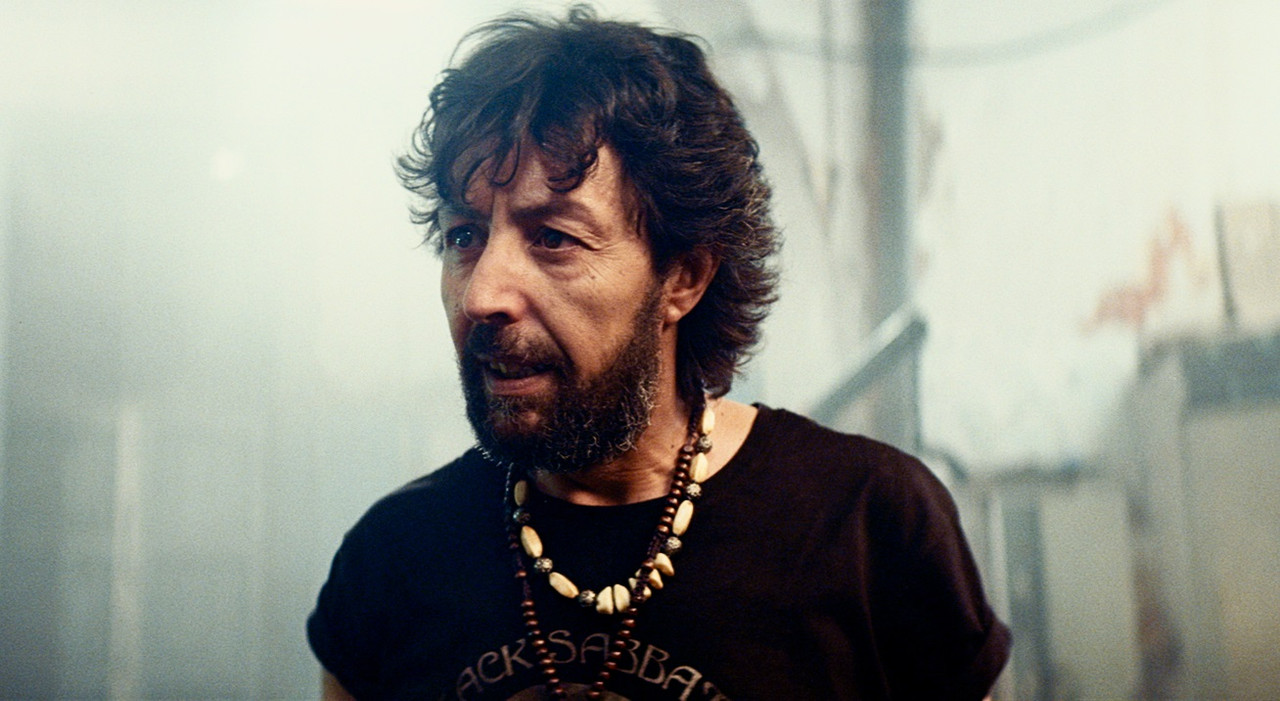
Khansa Batma, Achmed Mahmoud and Said Bey. Batma is well established as a musician in Morocco, but this is her first film role and from the moment she storms on to the screen, rubbing her lipstick off with the back of her hand, she has a presence commanding enough that you can see how she might shake Larsen out of his heroin haze. Her voice is beautiful and powerful, making the sequence near the end where she finally sings the song that gives the film its title impactful enough that you almost buy what happens as a result. Mahmoud's Larsen has more of a muted presence, not that the character can't be forceful, but there's a sense that part of this guy has gone missing; vanishing behind years of drugs and drifting from the music scene, again though, you believe the connection he has with Batma. The last of the central trio is Bey, initially a stereotypical pimp; charming his girls and their clients when he needs to, but also not to be messed with. Said Bey brings conviction to this, but also some more complexity when he's forced to help a much more vicious killer towards the end of the film.

Knowing the origins of Zanka Contact gives it an unexpected poignancy, drawing its leading character closer to his writer and director. There is a throughline here of using music as a way to hold on in a chaotic place. Larsen's connection to music has been compromised; heroin addiction has robbed him of his singing voice, because he's been injecting in his neck for so long. He hasn't recorded in years and has signed away the rights to his biggest hit, but he still carries his snakeskin Gibson and wears the similarly styled jacket and boots that were his onstage trademark. The connection back to music when he hears Rajae sing is immediate and visceral. It feels like El Iraki expressing what he says a gig by the German band Kadavar (who appear in the film), just a few days after the Bataclan, did for him "They brought me back from the dead". Resurrection is perhaps a slower process for Larsen, but it begins in that moment that seems to awaken him somewhat from his withdrawal-induced fug. 

It's not a perfect film. The ending feels a little too neat, as does the apparent ease with which Larsen, who has a decades long habit, seems to shrug off heroin use, and it does sometimes lean a touch heavily on its influences, but Zanka Contact grabs us from the beginning and drags us along on its ride for two pretty relentless hours. It's a debut that commands the attention
★★★★

Sep 23, 2019

24FPS @ LFF 2019. Day 7

Olla
Dir: Ariane Labed
In 2010 and 2011, Ariane Labed burst on to the international film scene with leading roles in Athina Rachel Tsangarai’s Attenberg and Yorgos Lanthimos’  Alps. It is perhaps no surprise then that this half-hour short, her debut as a writer/director, should bear their influence. 

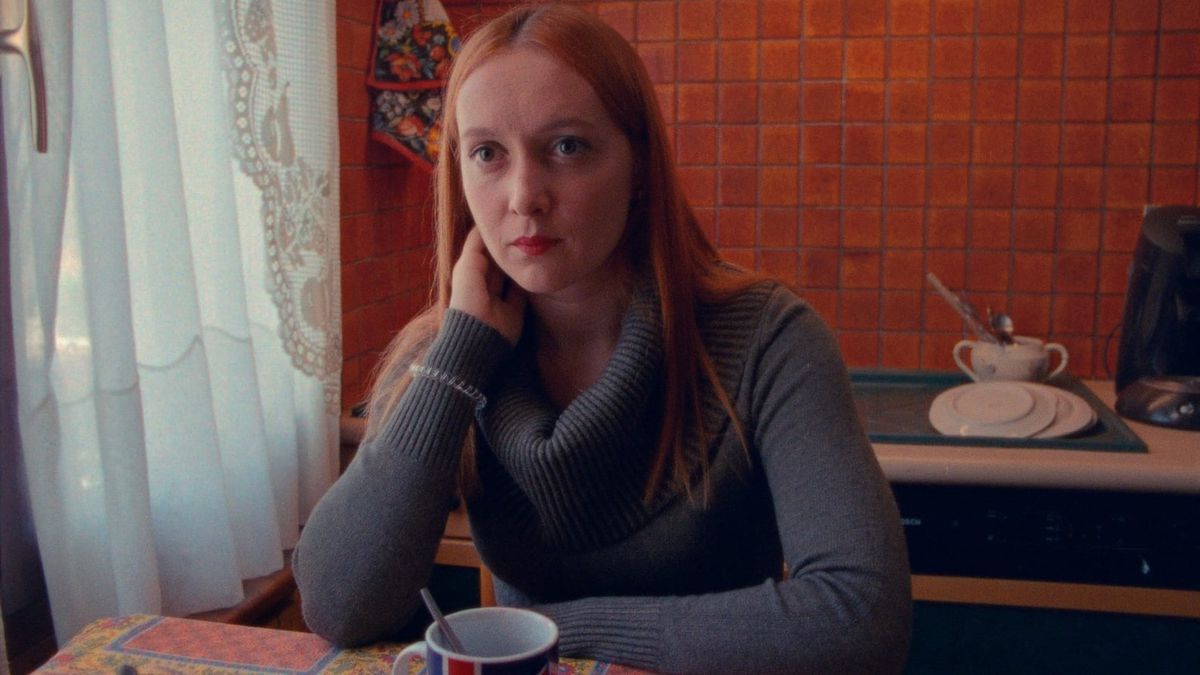
Olla (Romanna Lobach) has just arrived in France from Ukraine to live with Pierre (Grégoire Tachnakian), a man she met online and his infirm and elderly mother (Jenny Bellay). Bored, cut off from Pierre by the language barrier, and clearly annoyed by his suggestion that she be called Lola so she seems less like an immigrant, she ventures out of the house and ends up doing more than exploring the town. 

Though the deadpan black comedy and sometimes stark shooting style recall her collaborators work, Ariane Labed is no karaoke director. Most notable in her style here is an often bright and bold colour palette (starting with Olla’s striking red hair) that sometimes acts to undercut the darker elements of Olla/Lola’s experience. That said, there are moments that showcase the same sense of humour and stylistic influence of Lanthimos or Tsangarai. Most notable among them a one shot sequence in which she practices dancing, Pierre’s mother impassive in the chair as Olla gyrates to a foreign version of What is Love. Another darkly funny touch comes in repeated sequences of Olla being catcalled, the group of men all shouting in unison, first telling her how hot she is, then yelling that she’s a slut. The repetition turns them into something like a greek chorus, but also allows Labed to make a serious point about how women are often made to feel they are always on display.

At just half an hour, Olla doesn’t quite have enough room to grow. A feature version could flesh out the various plot points, especially the relationship between ‘Lola’ and Pierre, but this is a strong debut for Labed, anchored by a very good performance from Romanna Lobach and points to promising things from both of them.
★★★½

Cold Case Hammarskjöld
Dir: Mads Brügger
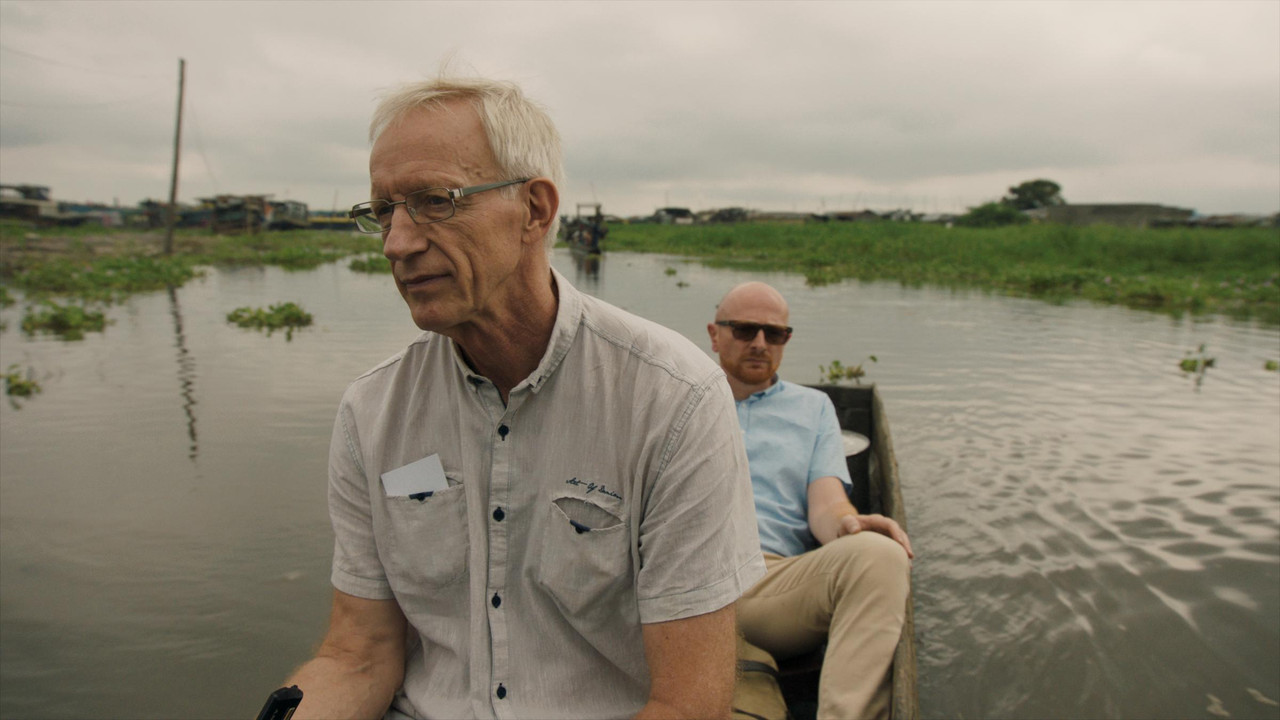
Through Netflix and a mass of popular podcasts, the true crime documentary has become one of the dominant forms of non-fiction storytelling in recent times. That is, in a way, what Cold Case Hammarskjöld begins as. The setup has director Mads Brügger and Swedish private investigator Göran Björkdahl reinvestigating the suspicious death in a 1961 plane crash over of UN Secretary General Dag Hammarskjöld. As Brügger admits right up front, this may be a very dark and far reaching crime, or it may simply be a tangled conspiracy theory.

There is, buried somewhere in this film, a compelling (potential) murder mystery. It definitely seems that the official story of Hammarskjöld’s murder is at best incomplete and deserves further and more rigorous and public investigation. Unfortunately not only does the film get distracted frequently, venturing down multiple rabbit holes, it also presents the central thrust of the mystery it sets out to investigate shockingly poorly. Throughout, Brügger uses a framing device that sees him have two (why two? he doesn’t know) secretaries type up the narration for the film, as we see him speak it. This totally redundant device slows the pace of the film badly, and only ever serves to restate things that it would be much better off simply presenting to us from the documentary and interview footage gathered.

The first half of the film is incredibly dull, with only tiny bits of information sneaking out between sequences of the director apparently structuring his film as we watch it. This might be less irritating if he structured it better. The second half of the film is more compelling. Brügger delves further into the South African Institute of Maritime Research—a shadowy mercenary and spy organisation that may have had a hand in Hammarskjöld’s death and other even darker crimes. He does manage to clearly establish that this organisation existed, but everything else is on very shaky ground. The one person he’s able to talk to at length tells a good story, but offers nothing to back up what he says, and worked for SAIMR decades after the plane crash that killed Hammarskjöld. Even this content is frustrating though, with Brügger fixating on details like how the man he believes was the head of SAIMR dressed completely in white at all times.

Again, the film can’t concentrate. If the rabbit hole it explores in the second half is true, then it’s one of the biggest and most disturbing scandals I’ve ever heard of, which is why it needs far better sourcing. What Brügger does is less robust investigation and more speculative join the dots. We see things laid out as note cards, but it wouldn’t be a surprise to find this film laid out on a conspiracy theorist’s wall, with red string joining the various elements up.

Strip out the self-indulgent framing device, impose a robust structure and concentrate on the one thread of the story that the film at least manages to pose relevant and important questions about and there might be a solid podcast episode or short documentary in this cold case, but the pure theory that surrounds it and the terrible presentation means that, at two hours, this is a largely unedifying test of patience.
★½

Oct 12, 2017

24FPS @ LFF 2017: Brawl in Cell Block 99

Dir: S. Craig Zahler
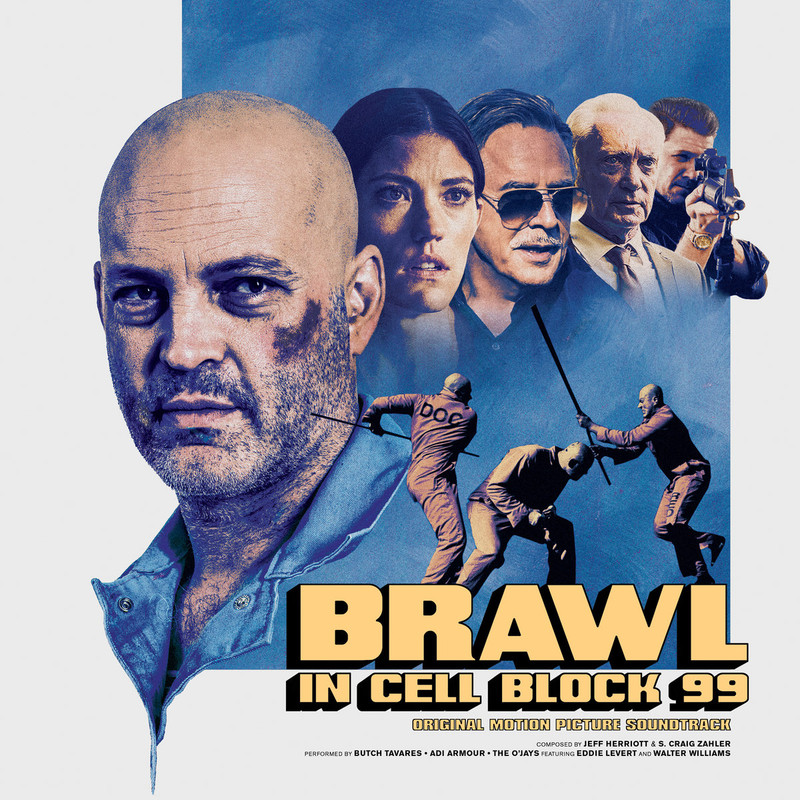
S. Craig Zahler divided people with his debut, Bone Tomahawk; a slow burning revenge western with something more akin to Cannibal Holocaust as a third act. I was a fan. It was vicious, but very well shot, darkly funny and character driven. For his second film Zahler has changed the setting, but delivers a similar mix of ingredients.

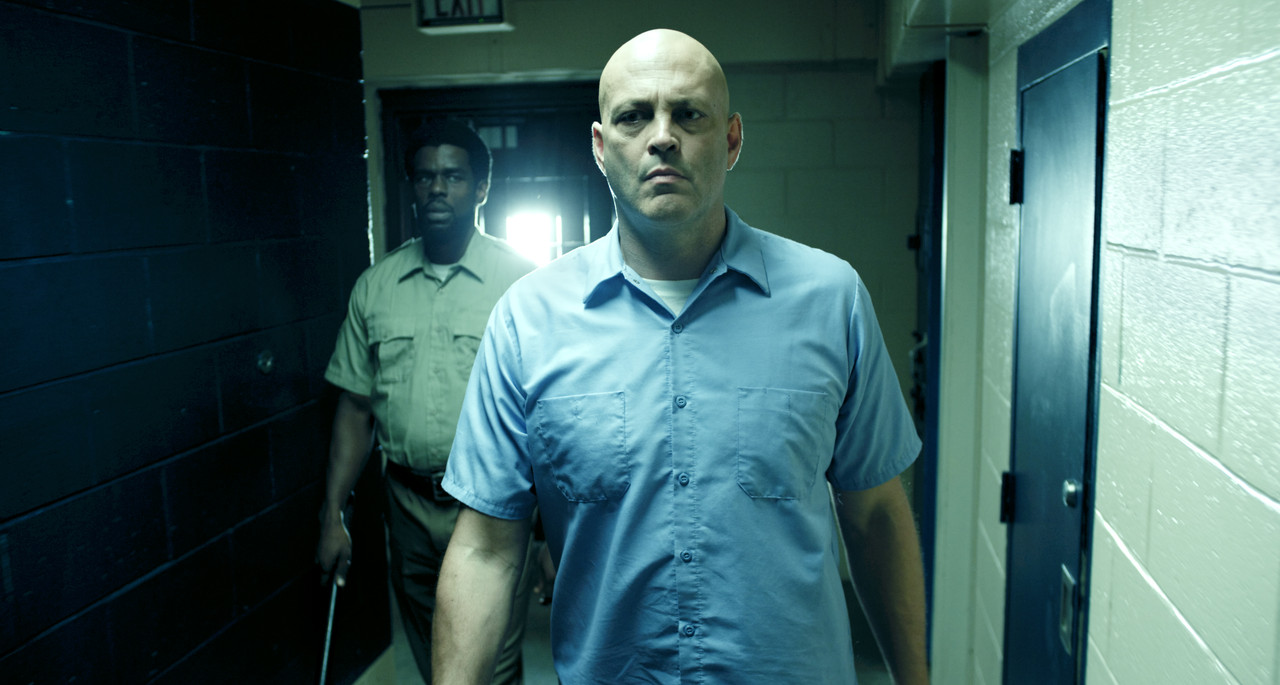
When Bradley (Vince Vaughn) loses his job he goes to work for a friend, running heroin and meth, but when an exchange goes bad he ends up with a seven year prison sentence. As soon as he’s sent down the cartel kidnap Bradley’s pregnant wife (Jennifer Carpenter) and demand that, for her freedom, he get to Cell Block 99 of a maximum security prison and kill a man for them.

Brawl in Cell Block 99, like Bone Tomahawk before it, takes its time in unfolding what is ultimately a very simple story. Some audiences might find the wait for the brawling a little drawn out, but for me the focus that Zahler’s screenplay puts on establishing characters and relationships and the major screentime he puts into that effort, adds a lot of weight to what could be little more than series of punch ups with some talking in between them. In Bradley, Zahler has written a layered character. He’s never someone we can entirely relax around. Early on, when his wife confesses an affair, he takes her car apart with his fists, punching in widows and tearing off the bonnet. He’s clearly capable of extreme violence, but by the same token we see that he’s not indiscriminate. After destroying the car he talks with his wife and when she goes to approach him at the end of the scene tells her not to, he still needs to cool down. This is a great shorthand encapsulation of the character; a coiled energy that he wants to keep under control, even if he sometimes finds it difficult. Bradley’s no hero, but the film establishes that he has some sort of moral code, and that helps us stay on this journey and, in some odd way, root for him.

I’ve never rated Vince Vaughn. I wasn’t a fan of Swingers nor of many of his comedies, but I did think he turned in a very good dramatic performance in Hacksaw Ridge. This, however, is even better; a career redefining performance. As Bradley, Vaughn is shaven headed and physically imposing, at times in the film’s brutal last third his face is so contorted and focused on the violence he has to do that he essentially becomes a sentient fist, but his performance is anything but a one note show of force. That early scene with Carpenter and others in the film demonstrate an emotional depth we haven’t seen from Vaughn before and Zahler also makes use of his star’s comedic timing. Bradley often has a sarcastic line, especially to authority figures, and Vaughn underplays these nicely, using them as Bradley’s way of getting a little power back as much as making a joke.

The other performances tend towards the broader end of the scale, with Udo Kier (as one of the cartel’s middle men) and Don Johnson (a hammy prison warden) stealing scenes. Marc Blucas, sadly, remains about as anonymous as he was on Buffy, but he’s not in the film long enough for it to matter. It’s also a bit of a shame that Jennifer Carpenter, who is good here and in just about everything else I’ve seen her in, is underused. There was a similar problem with the wife role in Bone Tomahawk, and Zahler could certainly benefit from writing more rounded female characters.

The screenplay is largely excellent; cleanly plotted, with strong character beats and often amusing dialogue, but it’s in the direction that Zahler excels. Visually the film is fairly cold, reflecting the poverty Bradley finds himself in early in the film and the atmosphere of the first prison nicknamed ‘The Fridge’ (for the initials of its full name, but you could just as easily see it as a cold meat storage facility). In the last act, inside the maximum security prison, the visuals get ever danker and darker. At a certain point it begins to feel like a descent into hell, with only orange jumpsuits, blood and bone providing splashes of colour that aren’t black or brown.

The violence is shot with an absolutely pitiless eye, which will surprise nobody who saw Bone Tomahawk. Skulls are exploded, heads stomped, arms ripped open, faces stripped off and there is plenty of fluid, hard hitting, fight choreography. As an action director Zahler stands back and allows the fights to take place in medium to wide shots, showing us that Vaughn is doing most if not all of his own stunts and how the choreography works within the space. It’s exactly how I like to see action staged, none of this hard to see shakycam crap. The level of violence will mean that Brawl in Cell Block 99 isn’t for everyone (or even for everyone who thinks they might ordinarily like a film with this title), it drew cringing from my audience, and even made my toes curl on occasion. That, for me, is a positive. Violence should be cringemaking, should be upsetting, and Brawl in Cell Block 99 certainly manages that.

For me, this is one of the highlights of the London Film Festival this year. It’s proof that Bone Tomahawk was no fluke and that S. Craig Zahler is a name for fans of extreme cinema to keep a very close eye on. This is two hours of nasty, brutal, often very funny, character driven grindhouse cinema. I loved it.
★★★★½

Oct 9, 2017

24FPS @ LFF 2017: Short(ish) reviews.

Little Crusader
Dir: Václav Kadrnka

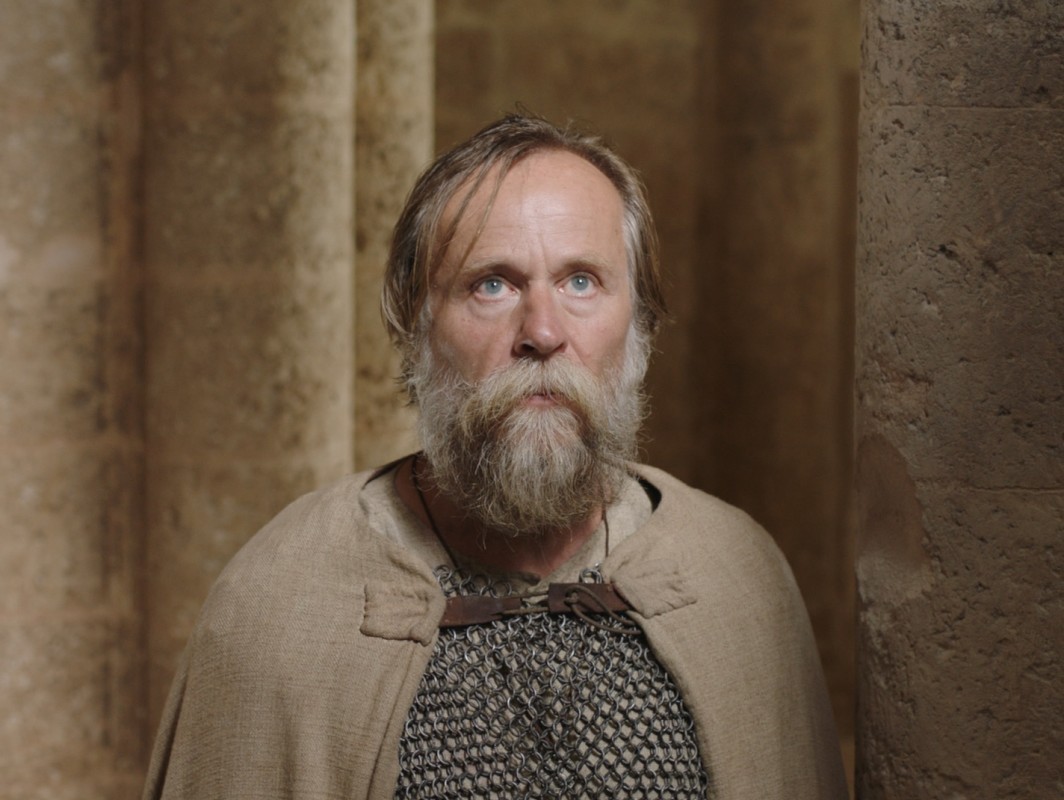
Set during the crusades, Little Crusader follows Borek (Karel Roden) on a near silent quest to find his young son (Matous John), who has run away and apparently vanished into the war.

The film opens with a silent ten minute sequence following the young boy. He puts on his tiny armoured breastplate, hangs his sword on his belt and moves around the castle where he lives and the surrounding area, before lowering the drawbridge to let two men in and walking off on his own. This sequence has some of the film’s most arresting images, not least the first, as an expanse of white gives way to show a Knight walking towards the camera. At first I thought this white was snow, but it turns out to be a pair of curtains, the crack between them flapping in the light breeze.

The film is stunningly composed throughout, with Vaclav Kadrnka making striking use of the 4:3 frame, particularly in long held shots. In one of these we see Borek finally arrive in the thick of the Crusades. In one unbroken shot he marches across the desert, cutting down one enemy after another. Another especially memorable long take has the medallion belonging to Borek’s son passed through what seems like an unending parade of children’s hands, searching for its owner. These and other shots do a hugely effective job of communicating the film’s story through pure imagery. The other notable thing about the imagery here is how incredibly textured it is. Every detail - hair, tree bark, the blades of swords, the fabric of a boat’s sail, feels like you could reach out and touch it. I don’t know how the film was shot, but if it’s digital then it’s some of the most detail rich digital I’ve seen.

The problem is, simple as the film is and short as its running time may be, I’m not sure it’s much other than stunning looking. In the first ten minutes we develop an attachment to Borek’s son and not seeing his side of this story seems a shame. The film is gorgeous, but emotionally it kept me a little distant. Still, if you’re fond of slow cinema, of following a character on a very literal journey, Little Crusader has some great rewards in store.
★★★½

Memoir Of A Murderer
Dir: Won Shin-yun
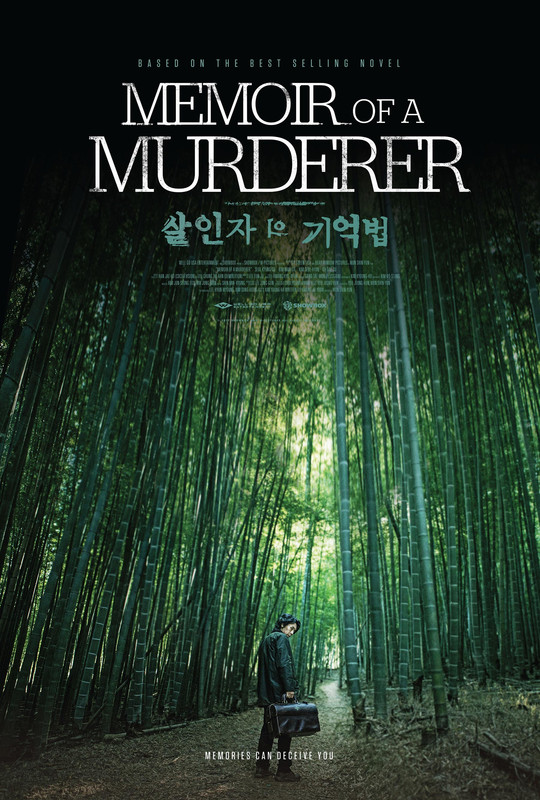
It’s always useful to have a high concept, a brief logline that can tell a film’s potential audience what they’re in for. Whatever else you think of Memoir of a Murderer, you have to admit that ‘Memento, but with two serial killers, one of whom has dementia’ is a hell of a high concept.

Buyng-su (Kyung-gu Sol) has recently been diagnosed with alzheimer's, possibly as part of the after effects of a car accident 17 years ago. As his memory begins to go, two things remain: his love for his daughter Eun-hee (Seol-Hyun Kim) and his sense memory, the reflexes honed in a career as a serial killer, which ended the day of the accident. When he’s involved in another accident Byung-su comes to believe that the other driver, Tae-ju (Nam-gil Kim) is an active serial killer of young girls. Unfortunately Tae-ju is a cop, and Eun-hee’s boyfriend.

Memoir of a Murderer uses its killer hook to fine effect for most of the running time. Kyung-gu Sol pitches his performance as Byung-su expertly, vacillating between making the character a somewhat pitiable old man struggling with a disease and allowing us glimpses of the organised serial killer who says he only killed ‘bad’ people but, one suspects, is simply self-justifying. The film unpacks the facts about Byung-su, who is by his nature as both a serial murderer and a dementia sufferer a deeply unreliable narrator with patience, managing to land most of its twists as true surprises. Equally good is Nam-gil Kim, whose performance becomes ever more gleeful as he realises that he can let his true nature slip in front of Byung-su, because he’ll soon forget anyway.

Won Shin-yun balances tone well, undercutting the horror with some very black humour. As the film ramps up to its most operatic moments towards the end, it also hits on the best comedic use of Byung-su’s memory problems coming suddenly into play, combining a laugh and a scare in one moment. Won, however, isn’t a stylist on the level of a Park Chan-wook or a Kim Jee-woon and though the film has an effectively cold style and is well shot throughout, it’s not exactly shot through with personality. At just a shade under two hours, the pace flags a few times and the ending, in particular, could probably be tightened, which would also mean the film could pull back on some overblown moments that, for me, slightly sour the effective chill of the rest of the film.

Memoir of a Murderer is an entertaining ride, a little bumpy at times, but it’s got some thrills, some chills and more than a few guilty laughs. It’s worth a look.
★★★

Sep 20, 2017

24FPS @ LFF 2017: Mini-Reviews 1

So Help Me God
Dir: Jean Libon, Yves Hinant
The true crime documentary is going through a particularly interesting period right now, with series like Making A Murderer and The Keepers and films as straightforward as Amanda Knox or as formally interesting as Casting JonBenet. So Help Me God doesn't break any new ground in the way it's made, but it does show most of us a job within the justice system we're not familiar with, through a highly engaging and interesting woman.

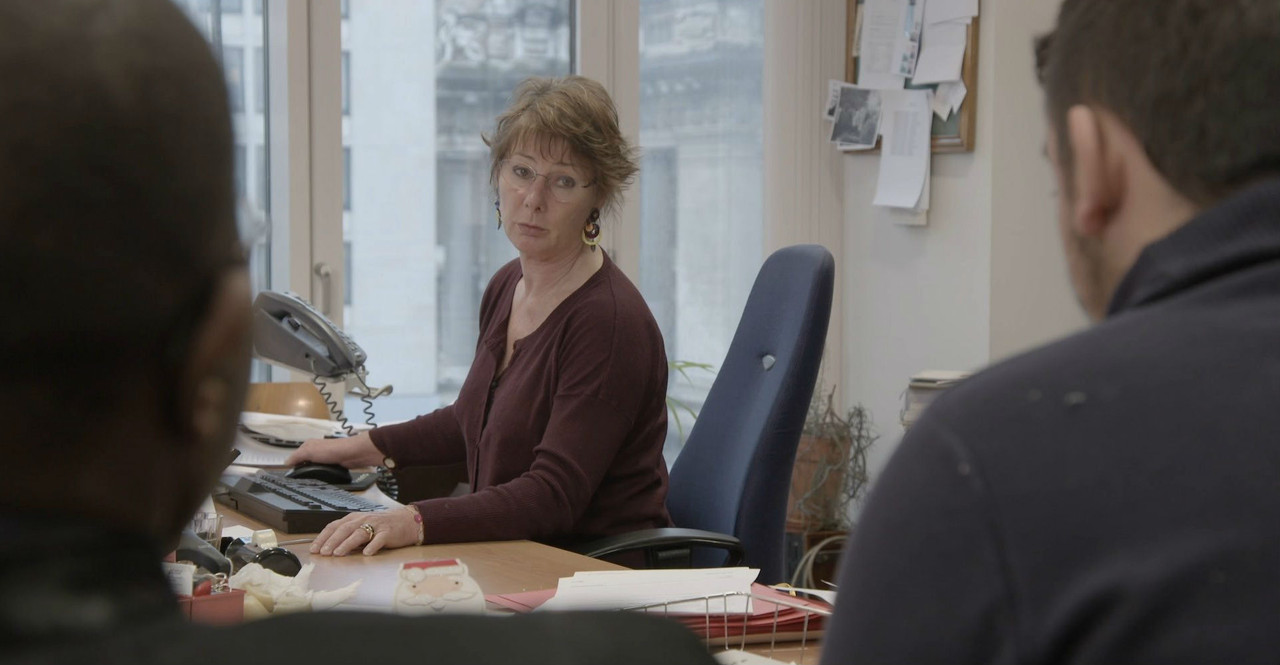
Anne Gurwez is a Belgian investigating magistrate, a job that seems to be somewhere between detective and prosecutor and carries a great deal of influence on how people are dealt with within the Belgian system. The film follows her over the course of several months, as her day to day work on current cases coincides with the reinvestigation of a 20 year old double murder.

Gurwez herself is the best reason to give So Help Me God a look. She seems like she takes a nuanced approach to her work; tough but good humoured, able to be talked round to giving someone a chance if she likes them, but sharp tongued if she detects any hint of bullshit and deadly serious when the situation demands it. This mix often provokes some amusing juxtapositions of the gruesomeness of some of her work and the matter of fact and generally good humoured way she approaches it (see the scene where a body is exhumed in the cold case).

There are many memorable moments here, some are quite light, like the scene in which a dominatrix accused of theft amuses Gurwez by discussing some of the strangest requests her clients have made, but others are much darker and heavier. The film hits hardest in the investigation of a horrifying infanticide, which is immediately followed by a coldly matter of fact confession by the child's mother, who tells a story that suggests insanity in the calmest and most measured tones. It's a truly disturbing scene that nothing else in the film comes close to matching.

Overall, this is a pretty conventional film made engaging by an unconventional personality at its centre and some compelling stories, it's perhaps more suited to the BBC's Storyville than a cinema, but it's well worth a watch if you're interested in true crime.
★★★

Pickups
Dir: Jamie Thraves
Aiden Gillen is one of those actors who can make everything he's in a little bit better. Especially as he's got into middle age, he's become one of those actors who always disappears into a character, and that is the jumping off point for
Pickups, which Gillen co-wrote with director Jamie Thraves.

Gillen plays Aiden, an Irish actor who is well known enough to get recognised regularly, but not George Clooney famous. He's recently divorced and preparing to make a new film, in which he's going deep into preparation to play a serial killer. It seems, however, that he may have got a bit too far into this character.

The premise of Pickups (the title referring both to casual sex and to additional shooting after a film's main production) isn't wildly original; a mid-life crisis coinciding with an actor going too deep into a role, but it should provide ample room for an actor like Gillen to get his teeth into a starring role (he's in practically every frame of the film). Unfortunately, I found the film meandering and lacking much insight. Narration frequently tells us what Aiden is thinking at any given moment, which it doesn't need to do, Gillen is a good enough actor to show us without our needing to be told most of what the voiceover says. Even with this though, everything is on the surface. The disconnect between Aiden's real life – the daughter he hasn't seen for some time back in Ireland – and his work on this character is interesting in concept, but the screenplay doesn't say much that's especially new or insightful about either side of that divide. 

The overarching story never coheres into anything terribly interesting, so what we end up with is more a series of vignettes. Some are interesting enough, interactions with fans often throw up an amusing moment, but even when we're supposed to be unnerved because he's too deep in the character, this doesn't feel like it bleeds over into these interactions. Only one vignette stuck in my mind, a brief moment with Antonia Campbell Hughes as an actress friend of Aiden's, who he suggests should have a part in the film. It's the one moment that chills the blood.

It's interesting to see Gillen play a character whose experiences seem so close to his own, but because of that it disappointing that Pickups doesn't feel more insightful. Ultimately if you want to see a version of an actor blurring the line between life and acting I'd suggest seeking out the underseen I Love A Man In Uniform rather than this.
★★

Jan 15, 2017

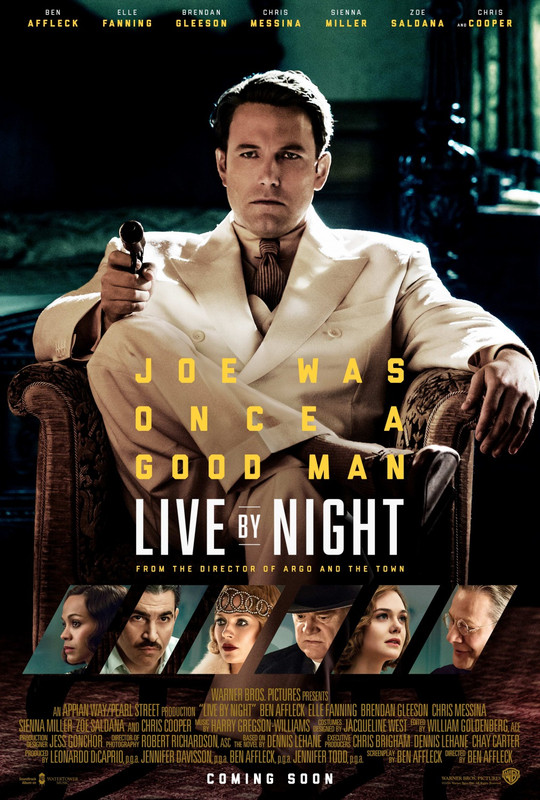
Live By Night [15]

Dir: Ben Affleck
As a director, one of the main jobs you have to master is getting all of your talent in the right place; casting the right actors for each role, helping to hone the screenplay, assembling and guiding the technical teams who are bringing your film to life. With Live By Night, his fourth film turn behind the camera, Ben Affleck shows that he's able to get a lot of these things right, but the one or two he gets wrong are big problems that ultimately hobble his film.

Based on a novel by Dennis Lehane (author of the source book for Affleck's directorial début, Gone Baby Gone, as well as Mystic River and Shutter Island), the film tells the story of Joe Coughlin (Affleck), who returns from World War One determined never to follow orders again and chooses a life of crime. Following a heist gone bad, and under threat from the head of the Irish mob, Coughlin lends his services to the Italians, who send him to Florida to run their rum operation and work on building a huge casino.

Affleck is a perfectly solid actor, but he's a better director and here his biggest mistake is in casting himself as leading man. For one thing, at 44, he's more than a little old for the character in the film's first act. Here Coughlin is a relatively young man (context suggests late 20's) coming up in the underworld. Yes, the story spans a long period (seven years seems a fair estimate, at least before the coda), but we never get a sense of a young man growing to fill ever larger shoes, which we might have with a younger actor. I wonder if Affleck recognises this, because early in the film he does look surprisingly fresh faced, whether through good lighting, make up work or a little CGI assist.

However, age is not the only problem. Affleck has said this was a passion project, the one he picked when he could essentially have decided to do anything, so it is truly bizarre that his performance is so low energy throughout. He's clearly going for sense of underplayed menace but maybe he's too successful at underplaying. There is a sense of Affleck giving the sort of performance he'd give while off camera even when he's on camera; it's barely inflected most of the time, robbing the relationships with Coughlin's lovers (Sienna Miller and Zoe Saldana) and his right hand man (Chris Messina) of any charge. His off camera work is even less energised, resulting in the most reluctant sounding voiceover since Harrison Ford's in Blade Runner.

Affleck leaves the focus closely on himself (he's in practically every shot), and in doing so he shortchanges many other characters, especially the women. Sienna Miller has fun in a ten minute turn as a gangster's moll embroiled in a dangerous affair with Danny, but she's little more than a cliché in human form. Still, that's more than can be said for Zoe Saldana, who should be an interesting character. When she meets Danny she, along with her brother (Miguel), is running much of the rum trafficking in South Florida. Within a couple of scenes she's Danny's Girl and from there on all she has to do is be hot (check) and look concerned.

Similarly shortchanged in terms of screentime, but able to make much more of the little she has to do is Elle Fanning. A great actor can take a part of any size and make you want the whole film to be about that person, that's what Fanning does here. Her character - the daughter of a cop (Chis Cooper) that Danny has to get the nod from in order to do business - is a failed actress who (offscreen) falls into sexual exploitation and drug addiction, only to come home, become a preacher, and speak against Danny's casino application. There's a film in that character, and thanks to Fanning's typically nuanced work it's one I'd pay good money to see. The material she's working with is unexceptional, what she does with it is purely a testament to her talent.

The rest of the supporting cast have similar problems, trying to make the best of roles that are either underwritten despite extensive screentime (Chris Messina, who does a good job with what he has), underwritten because of lack of screentime (Chris Cooper, Max Casella as a thuggish relative of Danny's boss) or laughably broad caricatures (Matthew Maher as RD, a KKK member who shoots up Danny's speakeasys in protest at his relationship with a black woman). Affleck appears, whether at screenplay stage or in the editing room, to be feeling the need to get things done, at least for the theatrical cut, within two hours. It all ends up rushed, thin and over familiar.

Courtesy of cinematographer Robert Richardson, Live By Night often looks good, but again, some of Richardson's work is undermined by his director's choices. But for a couple of brief moments - a shot from behind of Elle Fanning preaching, arms outstretched, for instance - Affleck's glossy framing throws up few memorable images, and never feels especially authentic. Perhaps it's the crisp digital sheen of the thing, but there is an overwhelming feeling here of watching people play dress up, rather than being sucked in to the mid to late 1920s. This incongruity hit me right from the start, when the studio logos came up sepia toned and with superimposed CGI film scratches. It all felt so transparently fake, and I never shook that feeling.

Live By Night wants to pay tribute to the classic gangster films of the 30s and 40s, but while Affleck has the budget to have all the trappings of those films, he shows little understanding of how they worked. The profane dialogue lacks the snap of the best of Warner's gangster films. The images, while technically decent, don't evoke the feeling of either the films or the period and the film as a whole feels long despite also clearly having gaping holes in characterisation, which are surely filled by things sitting on the cutting room floor. It's a pity, because Affleck is a capable filmmaker, but perhaps all the freedom that Argo has afforded him meant that nobody was able or willing to tell him that there were decisions he should have reconsidered on this project.
★★

Oct 5, 2014

24FPS @ LFF 2014: 3/10

Bypass
Dir: Duane Hopkins
Better Things director Duane Hopkins has taken his time following up his debut, which I managed to miss when it came out five years ago.  I'm not exactly desperate to play catch up having seen Bypass.

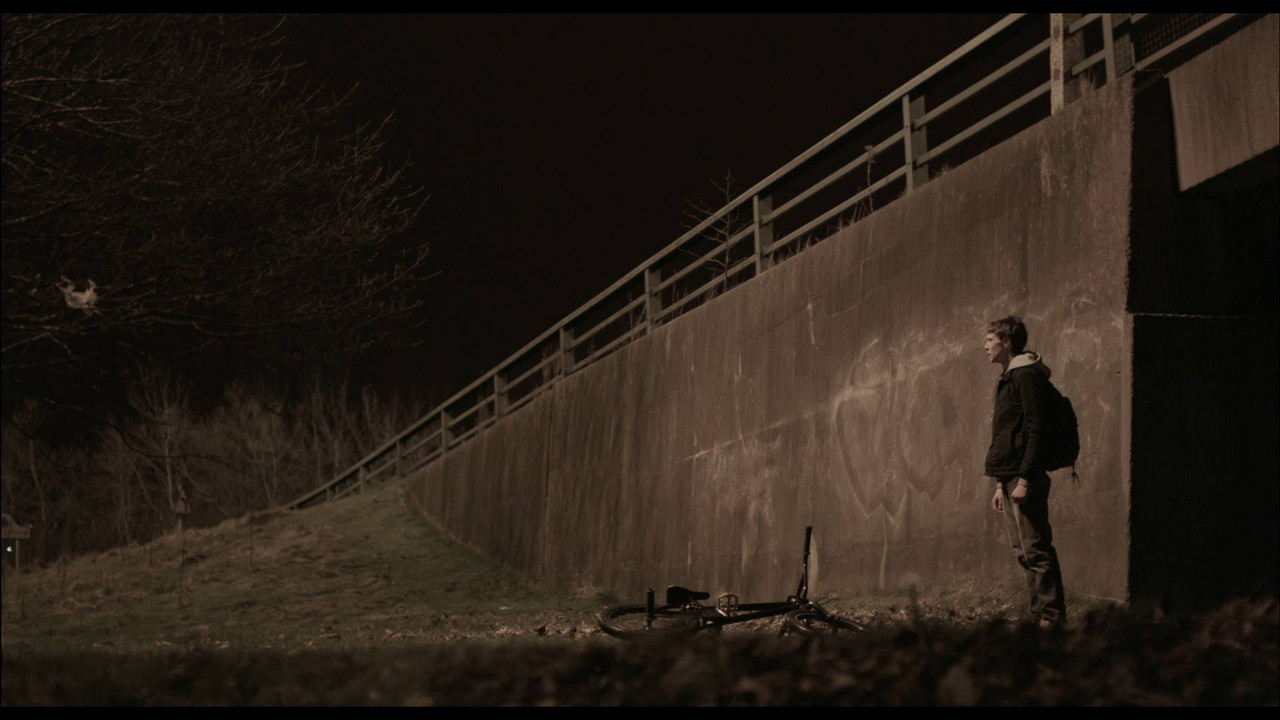
Tim (George McKay) is in his early 20's.  His mother has died, his older brother has just been released from prison and he has turned to low level crime in an attempt to eke out a living for himself and his younger sister.  As the film proceeds, Tim finds himself falling deeper into the criminal world and struggling with an illness that is becoming serious.

As you might gather from that synopsis, Bypass is rather by the numbers stuff. Story wise, there's little here that hasn't been in another dozen British crime or council estate misery dramas in recent years.  Hopkins tries his level best to disguise this with his stylistic choices, but he fails miserably.  Bypass is perhaps the most self-consciously, self-regardingly, over-stylised film I've seen this year.  Almost every shot in Bypass is a soft focus, moving, close up on something.  Tim and the other characters are almost never seen in a full length shot and the camera is constantly searching, moving around to try and find every insignificant detail that it can (almost) focus on.  Hopkins doesn't stop at this.  His use of slow motion is also out of control (usually in combination with his 'meaningfully' shallow focus and off kilter framing) and the use of sound can also be grating, returning to the same trick of starting a scene's dialogue long before its visuals over and over ad nauseum. Without Hopkins' obnoxiously artsy approach, Bypass would just be banal, with it is is beyond grating.

More irritating than Hopkins' limited and repetitious artistic ideas is the fact the overuse of them means that they fall flat when Tim is at his most fraught.  In these moments the lack of focus and moving camera might reflect what's going on in Tim's mind, but because Hopkins uses these techniques as a crutch throughout the film they are robbed of that meaning.

The news is little better when it comes to the performances.  George McKay and Benjamin Dilloway are both hit and miss as Tim and his older brother Greg.  McKay has a few good moments, and his performance has a physicality that can be effective.  His best scene is perhaps an incredibly realistic and difficult to watch fit that Tim has, tellingly it's a silent scene.  When he has dialogue McKay turns in a flat performance, largely unencumbered by expression.  Still, he's light years better than either Chanel Cresswell as his younger sister or Charlotte Spencer, who is disastrously monotonous as his girlfriend.

To be fair, only some of this is the fault of the cast.  It's tough to make something out of nothing, and nothing is what Hopkins' screenplay gives them to work with.  The characters are all empty suits.  Tim is quiet and pliant, which makes his the most detailed characterisation in the film.  Of course Charlotte Spencer is dreadful, her character Lily barely has anything that counts as a trait, let alone a personality, so what chance does she have to do anything with her performance?  The limited dialogue is as poor as the character writing and the plot turns in ways that are ever more trite and loaded with implied but unfulfilled meaning, building to a staggeringly awful last ten minutes.  The ending is so wrapped up in the cleverness of its visual devices (the same visual devices we've seen for the past 90 minutes) that it completely fumbles its message.  Is it supposed to be redemptive or the restarting of the same cycle?  Who knows and, frankly, after this who cares?  

Bypass is directorial masturbation that fails to cover for the banality of the story and characters we're watching.
★

Tokyo Tribe
Dir: Sion Sono
Sion Sono might be 21st century cinema's foremost absurdist.  That's not to say that there isn't more to his films than their craziness, but that is often their defining feature and seldom more so than with the blisteringly energetic and relentlessly bonkers Tokyo Tribe; a Manga- based post apocalyptic hip hop musical, jam packed with martial arts action. In other words it's pure, unrefined, Sono.  This is both great and a little problematic.

The story, such as it is, is introduced by an MC (played by Shota Somentani, the lead in Sono's Himizu and one of several cast members who recur from the director's earlier work).  He introduces the gangs who now rule Tokyo society and vie for dominance and also acts as a sort of greek chorus for the film.  The main thrust of the plot involves a gang headed by grotesque mob boss Buppa (Riki Takeuchi) and his enforcer Mera (Ryôhei Suzuki) trying to destroy all the other gangs one by one so that they can rule Tokyo but Kai (Young Dais), the peace and love promoting leader of a Musashino gang wants to fight back. To do so he teams up with Sunmi (Nana Seino), who has escaped being kidnapped for Buppa's brothel.

Sion Sono often makes long films, and while Tokyo Tribe has a relatively conservative running time of 116 minutes there is enough packed into it for it to be twice as long.  Earthquakes, gatling guns, bizarre side characters, penis envy, satanism, a Caligula inspired wall of death and pinku style sexploitation all raise their heads at some point and that doesn't come close to covering all of the oddness on display.  

As you would expect given that description and Sono's history, Tokyo Tribe is blazingly energetic and inventive.  The opening sequence introduces us to all of the gangs through the device of a gang member using a knife to demonstrate their relative positions to a female cop he's holding hostage.  Each gang also gets a showpiece rap at this point that cements a style for their contributions throughout the film.  This is a great choice by Sono because otherwise, with so many factions, the film could easily have become messy.

While there is an overarching story and a message (be nice to each other), Tokyo Tribe largely unfolds as a series of linked setpieces.  This being the case, the energy level seldom drops and the film can be exhausting, but every scene is packed with gleeful little details to keep you totally engaged.  Perhaps my favourite of these comes early in the film when Buppa is served his tea by a beatboxing girl.  It's so incongruous and comes so out of the blue that I can't imagine anyone not falling for the film, at least briefly, in that moment.  

This isn't to say that all the fun of the film is in its margins.  Takeuchi and Suzuki overplay everything, providing more ham between them than you'd find at the buffet table of a pork butcher's convention, but because evrything is so heightened here it works brilliantly.  Suzuki's unhinged Mera is especially great; a preening, perpetually half naked psychopath whose motivation, when it is revealed late in the day, is perhaps the film's best and its most juvenile joke.  There are also charismatic turns from Nana Seino, whose Sunmi goes convincingly from exploited innocent to badass fighter and from Kikoto Sakaguchi as her young sidekick whose martial arts moves use breakdance to bone breaking effect.  The only real issue with the performances is that, amongst this strong cast, Young Dais comes off a little bit dull as Kai.

The music is great, the insistent beats power the film along even when scenes lapse out of rap and into normal dialogue and there is a great variety in both the skills and the styles of rap on display.  Riki Takeuchi, for instance, is no MC, but he doesn't have to be because you get the sense that Buppa's rapping is only tolerated because if it's not he will literally kill someone.  Most of the main cast do a good job with what must have been a challenging task for those of them not from the music world.  Only Shota Somentani lets the side down a little, with a flat tone that never generates a great sense of flow.
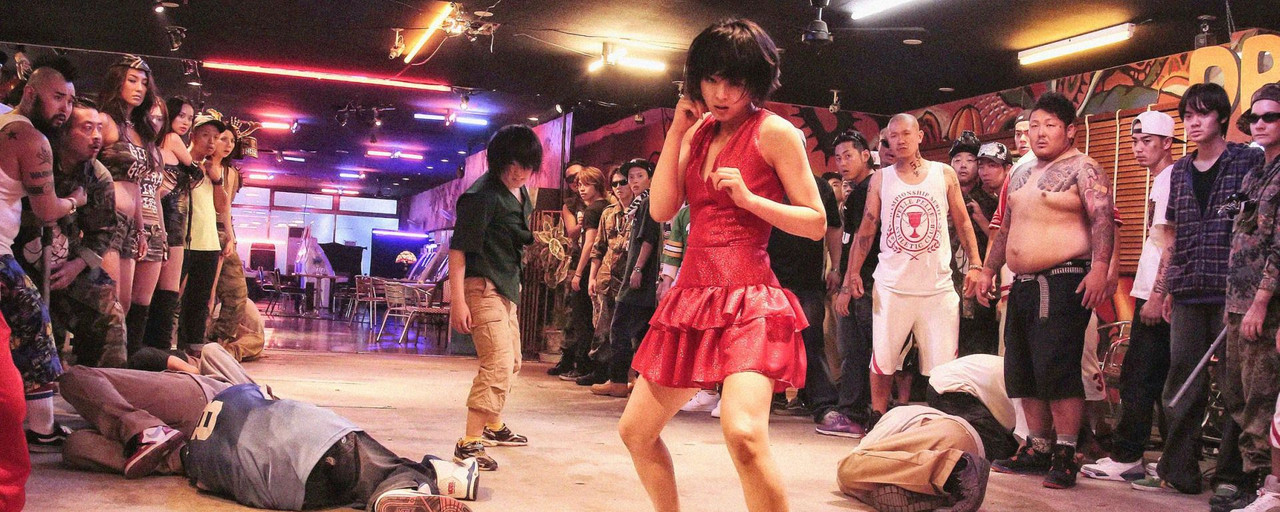
There is so much to enjoy in Tokyo Tribe. The martial arts sequences, which are varied and brilliantly shot and choreographed, have an energetic brutality throughout , but there's also such fun in the details; the truck with chandeliers for headlights; the nod to Scarface with Buppa's 'Fuck Da World' globe sculpture and so many more.  The design is stunning and overblown throughout, never more so than in the room full of living furniture owned by Buppa's son Nkoi (an intensely creepy Yosuke Kubozuka).

The problem with this being, as I said, pure unrefined Sono is that there are a few troubling things here.  Tough as it is to take the film's sexual politics seriously, they can make you a little queasy.  With the exception of Sunmi (who has her own troubling scene early on), all of the women in the film are depicted purely as objects, most of them, at some point, stripped.  The most exploitative and uncomfortable moment comes early in the film when a female cop, who we never see again, is stripped.  This is perhaps the one moment where the exploitative tone eclipses the absurdity and becomes offensive.  This isn't new territory for Sono, but ultimately it's more muted and less troubling here than in, say, Himizu, because the film isn't asking us to take it seriously at that level.

Ultimately, you have to take Tokyo Tribe for what it is; a relentless and rather silly entertainment.  I can't imagine you failing to have at least some fun with it at that level.
★★★★

Oct 1, 2014

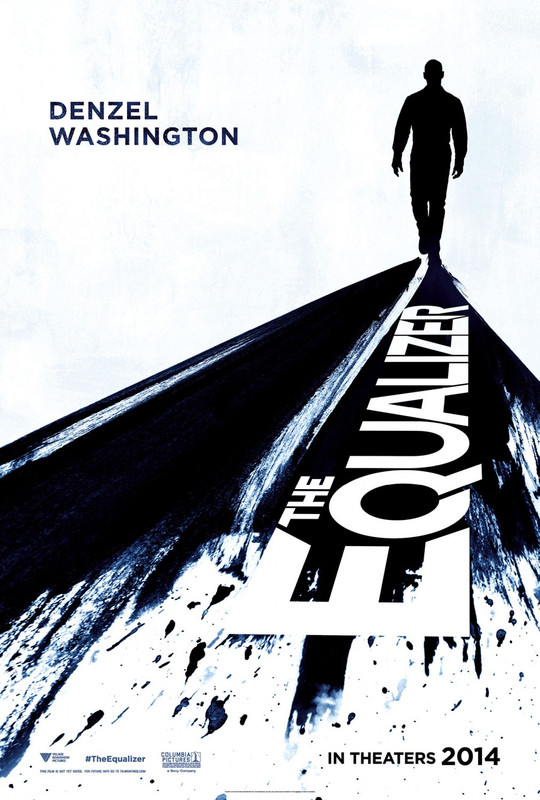
The Equalizer [15]

Dir: Antoine Fuqua
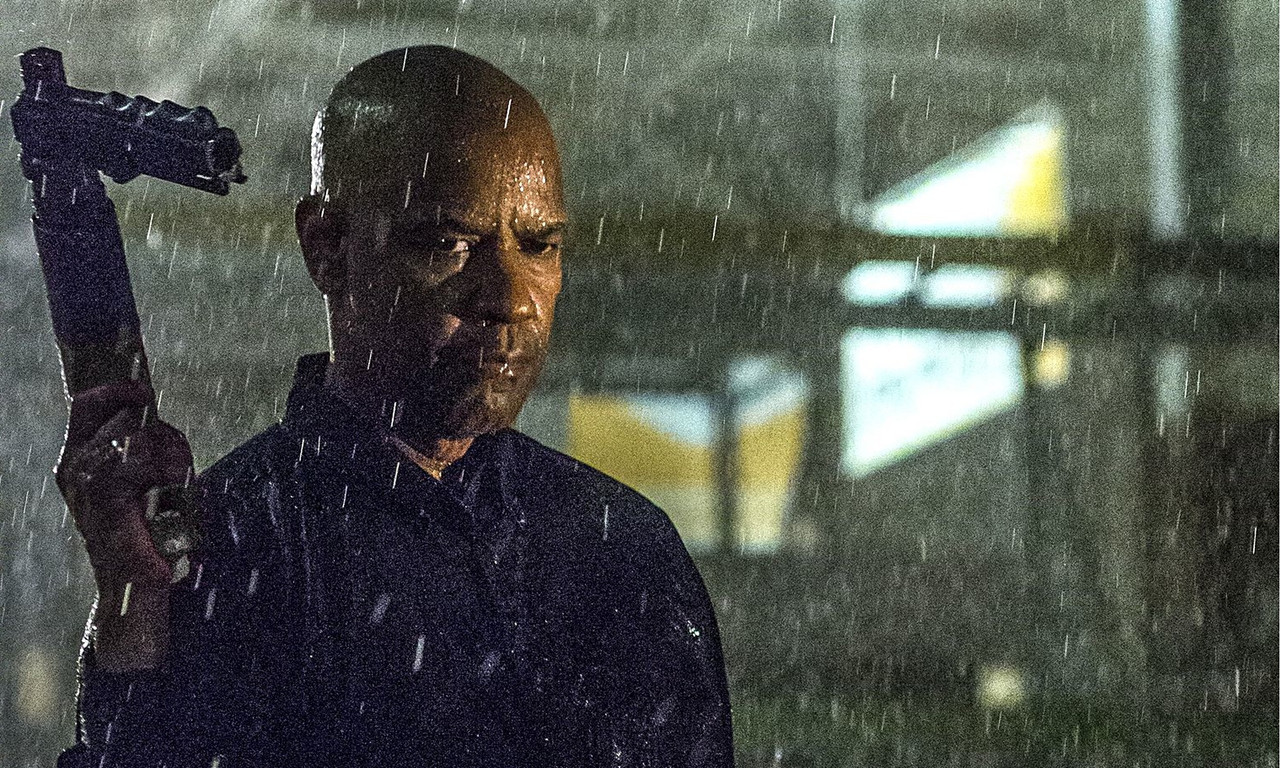
I read a piece recently that suggested that the anti-hero is, at least in mainstream cinema, dead.  If it has not been done already then The Equalizer, taking its place among Hollywood's new vigilante films, hammers the final nail into the lid of the coffin of the anti-hero.  There's nothing wrong, to my mind, with getting an audience to cheer a vigilante on in the course of a film, provided that you also ask that audience to think about what they are cheering and why.  The Equalizer doesn't do these things.

The thing that The Equalizer would most like to remind us of is not, I'm reliably informed, the Edward Woodward TV series from which it takes its title.  Rather the thing it most calls to mind is Taxi Driver.  It's a dangerous game to play, using the iconography of a clearly unstable vigilante (in this case Denzel Washington as Robert McCall) going on a rampage of violence against men who have, or are connected to people who have, hurt an underage hooker (Chloe Grace Moretz) who eats at the same diner as he does.  That's only the setup, but still, calling that film to mind at all sets a ridiculously high bar and The Equalizer misses it by margins that are initially comical, then just sad.

The Equalizer certainly doesn't rush into action, in fact a leisurely first half hour of character building see the film at its best.  Denzel Washington is a fine actor and while he's hardly stretched here he builds a foundation that you can believe in as Robert McCall; who seems to be a simple, decent, guy with a strong moral code that he can't see reflected around him.  Chloe Grace Moretz is equally talented, and won her role over several actresses in their mid-twenties, apparently aceing the audition so completely that she forced a rewrite.  The connection between this odd couple, who don't sleep and end up at the same diner night after night, is well founded and provides a strong motivation for the film's initial violence.  It's after this, as the film enters its second and third acts, that the wheels begin to come off.

Having set up a down to earth foundation the film begins to become more and more over the top, but not in a way that's any fun, instead it just begins to lead you to question many of the premises of the screenplay.  McCall would be interesting as an anti-hero, but as the film goes on it becomes clear that it has no interest in either positioning him in this way or looking more deeply at the morals of what he's doing.  It's tough, for me at least, to invest in a morally unambiguous portrayal of a man whose violence only escalates  from an initial quadruple murder, however nasty the nominal villains of the piece are.  Initially McCall's motives are at least somewhat honourable, even if the subtraction involved in reaching the possible title of 'The Equalizer' is a tad extreme.  Then the stakes are raised, McCall takes on, essentially, the entire Russian mob (and assorted other bastards, for whom he and his friends from work seem to suddenly become magnets) and it's here that the problems set in.  What personal stakes  there were have long since passed and the initially introspective nature of McCall suggests that he might find himself at least somewhat troubled at what he has to do to defend himself from the people trying to kill him, but if he does we never see a second of it.  It's almost as if writer  Richard Wenk and director Antoine Fuqua thought that this might show weakness, and that this would be a bad, rather than an interesting, thing.

The problem is that the increasingly lunkheaded direction the film goes in during its second and third acts goes against the tone it sets in the first.  There's nothing inherently wrong with a braindead, extremely violent, vigilante movie, but it has to be fun.  Commando, for example, features no moral questioning, it's too busy shooting a rocket launcher at a Police van and then coming up with a quip.  The thing is, Commando is always that movie, it has its tongue stuck firmly in its cheek, so you never feel bad for having fun and giggling at the absurd body count.  The Equalizer, on the other hand, starts out wanting to be much grittier, but can't ultimately decide what movie it should be.  The major villain (Marton Csokas) is a bit too much of a cartoon to be scary, but the violence is too vicious to work in a cartoon fashion (or as a 15 certificate, despite some obvious BBFC cuts for that category).  He, and every other character, is also a prop; a cardboard cutout designed to move the plot forward and only allowed to exist in the most cliché form possible. This, sadly, also ends up being true of Moretz, who pops up at the end of the film after a long absence, in a scene so stock that even her make up seems hackneyed.  

The other problem with the characterisation is that characters are treated as either morally black or white.  Washington is the White Knight (with a lot of apparently consequence free blood on his sword).  This is how the film contributes to the death of the anti-hero: it refuses to acknowledge anything remotely anti about McCall's heroism. Moretz and the characters McCall works with are blameless innocents, everyone else is a villain; bastardly at best, homicidal at (more general) worst.  This makes for a pretty boring watch, because everything happens as if scripted by a very basic character generating program, which has created stock figures and dialogue as  placeholders until the actual writer comes and fills in the details, it just seems that Wenk forgot this intermediate step.

The action is okay, save for a very silly and overblown sequence that seems to have been dropped in purely to meet the big fuckoff explosion quota.  The choreography is reasonably fluent, and Washington still has speed and impact enough that his ability to take down pretty much any opponent doesn't strain credulity too far.  However, despite its brutality, the action does still seem hamstrung by the pursuit of a 15 certificate, a moment involving a shot glass is edited into nonsense and, whether it was BBFC or Antoine Fuqua who made the choice, several scenes are so dark that they're tough to see, and thus tough to get caught up in.  This is a particular problem with the climax, which finds inventive uses for things in the hardware store where McCall works, but the impact, especially of a nasty garotting, is muted by the lack of light.

The Equalizer is a film that needed to choose an identity; serious vigilante film or nasty action packed vengeance trip.  Even if it combined those two things well, that would be fine, but instead it's marooned between the two.  Denzel Washington works hard, and gives a performance much too good for a film this tediously unconsidered, but he can't rescue it from an uncertain tone that is sometimes nasty, but in all the wrong ways.
★★

Sep 30, 2014

24FPS @ LFF 2014: 29/9

Kelly And Cal
Dir: Jen McGowan
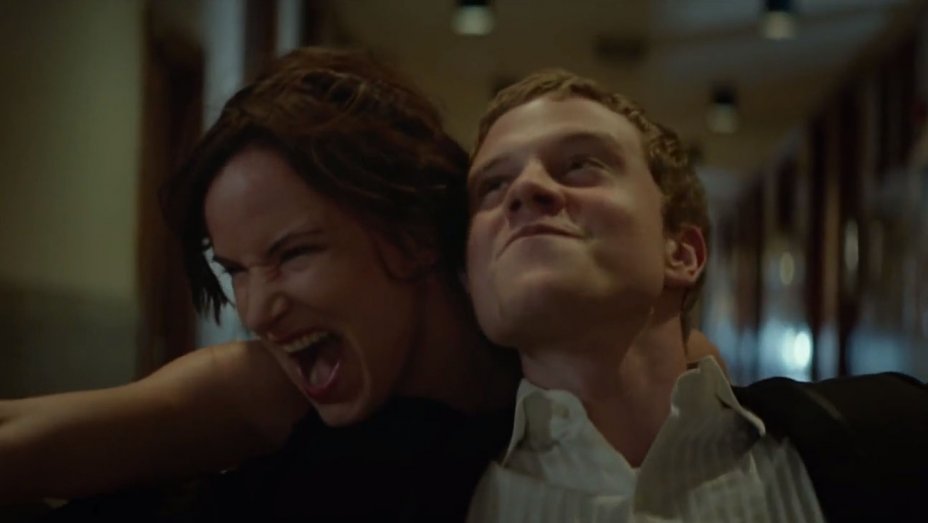
Casting is a strange sort of alchemy.  Sometimes you can imagine all sorts of alternatives in roles, other times, there seems only to be one correct choice for a part, and that's very much the case with Juliette Lewis in Kelly And Cal.  It's tough to imagine any actress in Hollywood better suited to the part of a former riot grrrl turned suburban housewife in her late 30's, struggling with a new baby, distant from her husband, who finds a connection with a disabled teenager (Cal, played by Jonny Weston) who lives next door.  This connection leads to trouble when Cal falls for Kelly and begins acting out.

Juliette Lewis is one of those actresses whose talent has often outstripped her roles, it's been too long since we've seen her in a lead, with a part she can get her teeth into.  She has that in Kelly, and she grabs it with both hands.  Lewis' offscreen persona plays into the part.  There has always been an edge to Lewis, it has been seen in dangerous roles (most notably Natural Born Killers), but latterly she has channeled it into fronting a rock band, and this gives an authenticity to Kelly's past.  The little we hear of Kelly's former band, Wetnap, is good and Lewis is clearly doing the vocals, which lends a multi-layered energy to the scene where she first plays their tape for Cal.  This energy also allows us to buy in to why Kelly is drawn to Cal.  He's rude and surly, but she seems to recognise a little of the rebellious streak that she has had to mute in herself, and perhaps the chance to recapture it in some small way.  Lewis is also very good at playing Kelly's struggles with being a new parent (she may even have post-natal depression, though the film never comes out and says that).  It's easy to read and to sympathise with her frustrations and Lewis carries herself with a weariness common to most new parents.

Jonny Weston is also good as Cal, but he's not quite up to some of the dramatic challenges posed by Cal's more extreme acting out towards the end of the film (this is also partly the fault of Amy Lowe Starbin's screenplay).  In the first two acts Weston impresses, making Cal's bluntness understandable and his fumbling, obvious, crush on Kelly just the right side of charming rather than creepy.  In one of the film's best sequences he takes her on a surprise date, a sort of replacement for her rubbish prom of 20 years ago and the one he won't be attending.  It's cheesy in just the right way; you can believe this earnest kid trying to impress Kelly this way.  It also has the film's biggest laugh, if you're old enough to remember a certain song from the first time round.

Unfortunately the film never matches up to these performances and begins to collapse around them come the third act.  The other characters (Kelly's solidly decent husband, her stereotypically interfering mother in law and sister in law) are lightly sketched and feel more like dramatic props than real people.  This also begins to sneak in to the writing of Cal, whose personality switches quite dramatically after his and Kelly's 'date'.  This all conspires, along with director Jen McGowan's competent but rather unexciting visuals, to make Kelly and Cal less than it could be.  It's a strong showcase for Juliette Lewis and it's great to see her back, front and centre of a film, but the film itself ends up being quite forgettable.
★★★

El Niño
Dir: Daniel Monzon
How many films have you seen where a driven cop has been going after bringing down a target for years and knows he has one last shot, or he's going to get fired?  How many films have you seen where a young upstart criminal (who's not so bad really, all he wants is some startup cash so he can sail off into the sunset with his girlfriend), gets caught between that cop and his target?  Yes, I've seen about 200 of those as well.  Here's another.  It's in Spanish this time.

El Niño isn't a terrible film.  It's got a solid cast.  The cops are led by Luis Tosar; as forceful and no bullshit as ever, anchoring the movie with his down to earth grit and his boss is played by Sergi Lopez, clearly not stretched here, but still one of Spanish cinema's most reliable talents.  Equally decent work is put in by Barbara Lennie as Tosar's partner and Jesus Castro, Jesus Carroza and Saed Chatiby as the three young small-timers caught between a cop and a hard place.  These performances basically sum up the movie; they are all technically decent, but there's nothing terribly exciting, nothing new, in any of them.

Daniel Monzon and co-writer Jorge Guerricaechevarría  could use some work on their pacing.  After a strong opening that introduces Tosar's Jesus and his driving ambition to bring down this drug dealer Monzon allows him to vanish for some time as he sets up the three young dealers.  This would be fine, except that every beat is so hackneyed, so utterly standard, that it feels like being shown the Cliff Notes on lazy character development for half an hour rather than being introduced to three distinctive characters.

When Monzon starts to draw the stories back together and to inject a little more pace and action into the narrative, El Niño does briefly catch light, particularly with a chase between a boat and a helicopter which ends with a pretty spectacular underwater sequence.  This feels like, and probably should be, the climax, but Monzon drags his feet, bolting on another 40 minutes of padding, taking what might have been a bog standard but inoffensive 95 minute film to a bloated and wheezing 135 minutes of creaky cliché.

I'm quite surprised to see this film in the festival.  It's a barely competent genre exercise, the fact it's not in English doesn't change that.
★★

A Girl At My Door [This review was previously published during Cannes]
Dir: July Jung
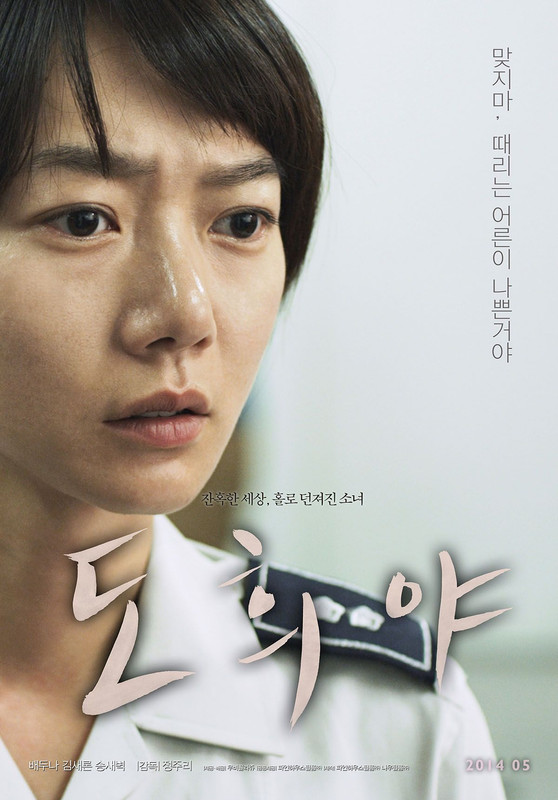
Like many fans of South Korean cinema I have, over the past decade, been charmed and impressed by Bae Doo-Na, who is one of the biggest stars in her home country.  It is fair to say, however, that Bae has a rather set onscreen persona; playing the charming, slightly kooky ingenue in many of her films.  That's no bad thing, I've frequently compared Bae's onscreen charm and magnetism with that of Audrey Hepburn, which isn't something I do lightly.  However, A Girl At My Door (Dohee-ya in Korean) seems to mark a real shift.  At 34 Bae seems to be wanting to finally play a real grown up and this often tough drama offers her that chance.

Bae plays Young-Nam, as the film begins she is moving to a small town to become their Police chief.  There are hints throughout the first half of the film that this is because of a problem in her past, which saw her sent away from Seoul.  When she arrives Young-Nam soon meets 13 year old Do-Hee (Kim Sae-Ron), who is picked on by the local kids and abused by both her father Yong-Ha (Song Sae-Byeok) and her grandmother.  Doo-Hee becomes very attached to Young-Nam and, after an especially bad beating, Young-Nam takes the young girl in.  This causes tension in the town, especially when Young-Nam's past comes home to roost.

A Girl At My Door, with its non-descript title and (relatively) lighter first hour, managed to trick me when it came to what kind of film it would be.  For ten minutes at the beginning we might be about to watch a fish out of water comedy about a big city cop coming to a backwater.  Then there is a turn for the dramatic as Young-Nam's problem drinking is revealed, but as the story between her and Do-Hee takes centre stage it seems as though we're actually going to be seeing a film about how an unexpected surrogate parent comes into the life of a troubled kid.  None of these ideas is especially original, and nor, really, is the direction of the film's third act, but the way that writer/director Jung manages to continually set us up for one thing before turning in a slightly different direction keeps things interesting and works to the film's advantage.

Towards the start and the end of the film, Jung slathers on the abuse just a little hard, it's not that graphic until one late scene that I'm surprised she even got away with a clear implication of, but it comes up so regularly at times that there is a slight tragedy porn feeling.  What saves the film in these moments, as well as from a rather OTT performance from Song Sae-Byeok, is the fact that the two leads are outstanding.

Bae seems to have made a conscious choice here to shift her image and while Song spends most of his scenes yelling abuse at whoever he's sharing the screen with at that moment, she dials everything back for a reserved performance that is sometimes resolved and sometimes porcelain fragile.  There is no coasting on her looks and her charm here, even as Young-Nam comes to care for Do-Hee there is a sense that the older woman is putting up a wall (why she may be doing so is another of the interesting shifts in the film).  Throughout, Bae does some wonderfully subtle physical acting, whether it's to do with Young-Nam's relationship to Do-Hee or to alcohol.  We see the complexities etched in particularly fine detail in what emerges as one of the film's key scenes, when Do-Hee asks if she can get in the bath with Young-Nam.

Bae might simply have walked off with the movie thanks to her performance, but 13 year old Kim Sae-Ron, who may be known to western audiences as the little girl in The Man From Nowhere, gives her a serious run for her money and establishes herself as an actress to keep an eye on as she and her roles mature.  What Kim manages to capture with great clarity here is the sense of a child suddenly growing up very quickly, perhaps thanks to a new influence in her life, perhaps due to the temporary absence of an old one.Jung's screenplay and Kim's performance both advance Do-Hee's character and her process of growth incrementally.  It's incremental enough that it's not that noticeable from one scene to the next, but it's credible that she changes as much as she does.  There is also a sense, which towards the end of the film another character also gets, that there is something underlying the broken exterior of the Do-Hee we first meet, and this is something that Kim puts across subtly but strongly.  All in all  it's a remarkably nuanced piece of acting for such a young performer.

While this is a creditable feature debut for July Jung there are still a few cracks that make it feel like a debut.  Visually the film is strong, and even if it doesn't yet speak to a deeply personal eye it has several very striking images (a repeated motif of Do-Hee dancing outside, for example).  The screenplay can be more problematic.  For instance, Young-Nam's drinking feels like it should be a major theme, but it is largely shunted aside; serving mostly as a misdirection early on.  Also problematic is the fact that when, with about 35 minutes to run, the film takes a not entirely unexpected turn into very dark territory it doesn't quite have the courage of its convictions.  This means that it strains credulity more than a little in both the speed and the ease with which it finds its ending.  It's not ruinous, but it's less complex than I'd like, given the preceding 100 minutes.

Overall, A Girl At My Door has its flaws, but when it concentrates on its two central performances it absolutely commands the attention and it's well worth seeing, especially for fans of Bae Doo-Na who want to see her branch out.
★★★