Showing posts with label Czech. Show all posts

Oct 6, 2021

24FPS @ LFF: Martin and the Magical Forest

Dir: Petr Oukropec
10-year-old Martin (Sebastian Pöthe) is a town kid who is packed off to a forest-based summer camp that he’s less than excited to be going to. Uninterested in joining in with the team games, and constantly complaining, he soon alienates most of the other kids. However, the sprites that live in the forest need some of the items he’s brought with him to cast a spell that might save them from a drilling crew looking for minerals. Martin’s price is their help so his team can win the camp’s series of challenges.

I sometimes worry that we’re not doing enough to grow the next generation of cinephiles, raising them on a limited diet when there is a world of kid’s cinema out there, and the LFF’s family strand is always a good way to throw the net a little wider. This Czech film is squarely pitched at an audience of its main character’s age, but it doesn’t talk down to them in terms of the environmental issues, nor by assuming that it needs fart jokes to keep a young crowd engaged. 

The magical world of the forest is something the film highlights from the very start. We see it in the beauty of the setting, but more to the point in the creatures that appear from the very first time Martin steps foot in the forest. Initially the sprites like him about as much as he does them; pine cones throw themselves onto his head and vines trip him up, but we also see that they have a side that can come to people’s aid, flying Martin back to the campsite when he’s tried to leave or helping him win the various challenges.
 
The methods used to realise the creatures are a little tough to discern. There may be animatronics in use because the sprites are very present within the frame and have a slight staccato effect to their movement, but if they are CGI then it is exemplary work. The creatures are expressive and fun to look at, with several developing personalities. One moment, when a stick Martin has been trying to get an arrow back from gets run over and ‘bleeds’ sap is surprisingly affecting as an image, even though we’ve never seen that creature before. It’s an effective way to teach kids a healthy respect for nature, but it’s never cloying or overly preachy.

Most of the kids other than Martin and Foxie (a winning Josefína Krycnerová), a fairy-tale loving 8-year-old who believes in the sprites but has never seen one, aren’t especially well-defined. The adults fall into two categories: the counselors, only one of whom, who measures chemicals in the local water and talks about being ready for a catastrophic event, is particularly notable and the drillers, personified by a couple in their 30s. On the one hand, it’s refreshing that the drillers aren’t simply shown as monsters who can’t wait to destroy the forest (remember Ferngully’s smoke-belching bulldozers), but on the other hand, they don’t otherwise have a great deal of personality.

The stakes and morals are pretty simple, as is the solution of the ending, but Martin and the Magical Forest should be a fun time for its intended audience, and it’s hard to argue with any of what it's trying to teach them about respect for nature and finding common ground with other kids. For adults, there’s some lovely imagery and the chance to watch something a little different from the usual kids movie fare. It’s slight, but a charming and fun time.
★★★

Oct 9, 2017

24FPS @ LFF 2017: Short(ish) reviews.

Little Crusader
Dir: Václav Kadrnka

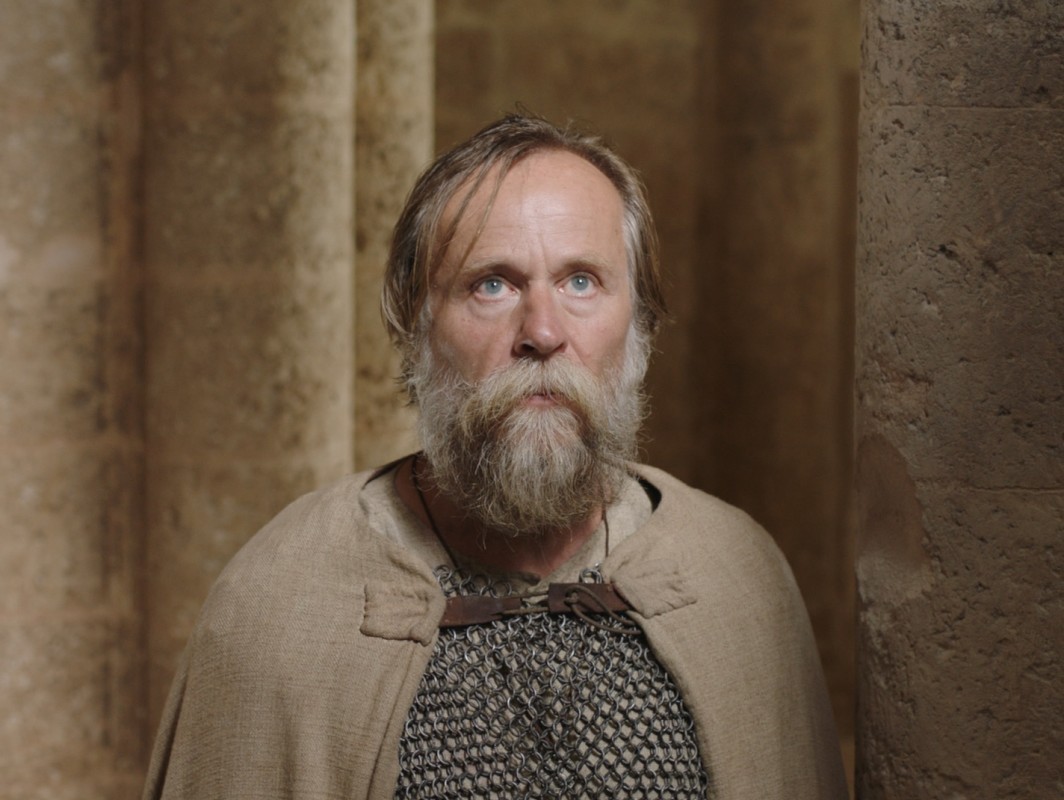
Set during the crusades, Little Crusader follows Borek (Karel Roden) on a near silent quest to find his young son (Matous John), who has run away and apparently vanished into the war.

The film opens with a silent ten minute sequence following the young boy. He puts on his tiny armoured breastplate, hangs his sword on his belt and moves around the castle where he lives and the surrounding area, before lowering the drawbridge to let two men in and walking off on his own. This sequence has some of the film’s most arresting images, not least the first, as an expanse of white gives way to show a Knight walking towards the camera. At first I thought this white was snow, but it turns out to be a pair of curtains, the crack between them flapping in the light breeze.

The film is stunningly composed throughout, with Vaclav Kadrnka making striking use of the 4:3 frame, particularly in long held shots. In one of these we see Borek finally arrive in the thick of the Crusades. In one unbroken shot he marches across the desert, cutting down one enemy after another. Another especially memorable long take has the medallion belonging to Borek’s son passed through what seems like an unending parade of children’s hands, searching for its owner. These and other shots do a hugely effective job of communicating the film’s story through pure imagery. The other notable thing about the imagery here is how incredibly textured it is. Every detail - hair, tree bark, the blades of swords, the fabric of a boat’s sail, feels like you could reach out and touch it. I don’t know how the film was shot, but if it’s digital then it’s some of the most detail rich digital I’ve seen.

The problem is, simple as the film is and short as its running time may be, I’m not sure it’s much other than stunning looking. In the first ten minutes we develop an attachment to Borek’s son and not seeing his side of this story seems a shame. The film is gorgeous, but emotionally it kept me a little distant. Still, if you’re fond of slow cinema, of following a character on a very literal journey, Little Crusader has some great rewards in store.
★★★½

Memoir Of A Murderer
Dir: Won Shin-yun
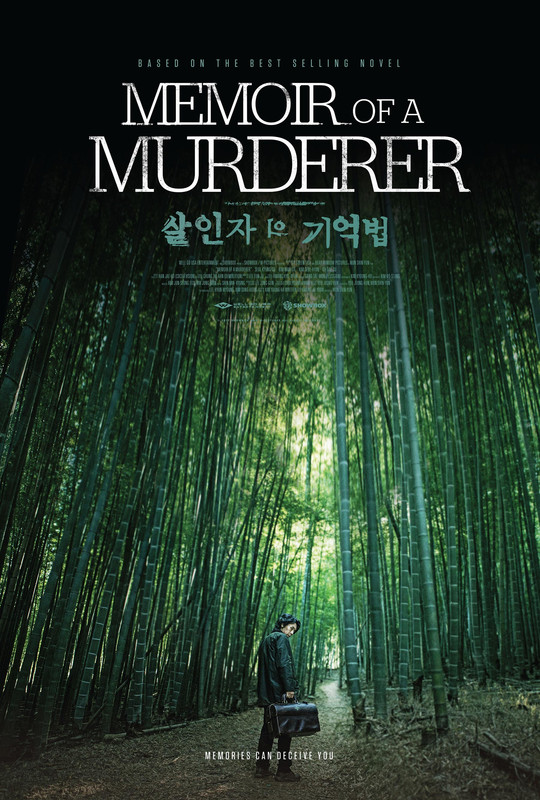
It’s always useful to have a high concept, a brief logline that can tell a film’s potential audience what they’re in for. Whatever else you think of Memoir of a Murderer, you have to admit that ‘Memento, but with two serial killers, one of whom has dementia’ is a hell of a high concept.

Buyng-su (Kyung-gu Sol) has recently been diagnosed with alzheimer's, possibly as part of the after effects of a car accident 17 years ago. As his memory begins to go, two things remain: his love for his daughter Eun-hee (Seol-Hyun Kim) and his sense memory, the reflexes honed in a career as a serial killer, which ended the day of the accident. When he’s involved in another accident Byung-su comes to believe that the other driver, Tae-ju (Nam-gil Kim) is an active serial killer of young girls. Unfortunately Tae-ju is a cop, and Eun-hee’s boyfriend.

Memoir of a Murderer uses its killer hook to fine effect for most of the running time. Kyung-gu Sol pitches his performance as Byung-su expertly, vacillating between making the character a somewhat pitiable old man struggling with a disease and allowing us glimpses of the organised serial killer who says he only killed ‘bad’ people but, one suspects, is simply self-justifying. The film unpacks the facts about Byung-su, who is by his nature as both a serial murderer and a dementia sufferer a deeply unreliable narrator with patience, managing to land most of its twists as true surprises. Equally good is Nam-gil Kim, whose performance becomes ever more gleeful as he realises that he can let his true nature slip in front of Byung-su, because he’ll soon forget anyway.

Won Shin-yun balances tone well, undercutting the horror with some very black humour. As the film ramps up to its most operatic moments towards the end, it also hits on the best comedic use of Byung-su’s memory problems coming suddenly into play, combining a laugh and a scare in one moment. Won, however, isn’t a stylist on the level of a Park Chan-wook or a Kim Jee-woon and though the film has an effectively cold style and is well shot throughout, it’s not exactly shot through with personality. At just a shade under two hours, the pace flags a few times and the ending, in particular, could probably be tightened, which would also mean the film could pull back on some overblown moments that, for me, slightly sour the effective chill of the rest of the film.

Memoir of a Murderer is an entertaining ride, a little bumpy at times, but it’s got some thrills, some chills and more than a few guilty laughs. It’s worth a look.
★★★

Dec 13, 2012

It's a Mad Mad Mad Mad World Cinema Blogathon: The Little Mermaid

So, for the second week of the Blogathon, Marcey has sent me to Czechoslovakia, to check out a surrealist film.  Here's why..

"Czech films of the 70’s are usually worth your time, and I happened to come across this one, based upon the story by Hans Christian Andersen. I am a huge fan of the story, and yes I do enjoy the Disney film but this is a fantastic adaptation. The visuals here are stunning; my eyes were treated to such beauty when I first watched this. There is a unique way of telling the story here, the under water scenes are done on sets and they look beautiful. This is exactly what I want out of the story, and I certainly hope Sam enjoys this. I know he shares a love with Czech cinema with me, and this is a must see."

The Little Mermaid ['76] 
Dir: Karel Kachyna
The first thing that came to mind as I watched this film wasn't the fairy tale, but rather a film that I had recommended to Marcey a couple of years ago; the Czech surrealist film Valerie and Her Week of Wonders.  Both films exist in a dreamlike state, but use it to tell what is a very simple story of a young girl's coming of age (in the case of Valerie the film is triggered by her first period, The Little Mermaid hinges on first love).  I LOVE Valerie, but The Little Mermaid, if not as immediately seductive, is not embarrassed by the comparison.

Disney's film must be one of the first I remember seeing at the cinema, but I also remember being read the real story; the sad story, when I was a kid, and thinking as I grew up that it was a shame nobody had filmed that version.  Turns out they had.  From my hazy 20 plus year old memories, this would seem to be a pretty faithful adaptation of Hans Christian Andersen's story of a mermaid (who saves and falls in love with a prince, then sells her voice to a witch, and agrees to endure enormous pain in order to appear human and have a chance to win his heart, only to fail, and decide to die rather than kill him and live).  It's a beautiful story, and Kachyna tells it well, with both the romance and the tragedy coming through affectingly.

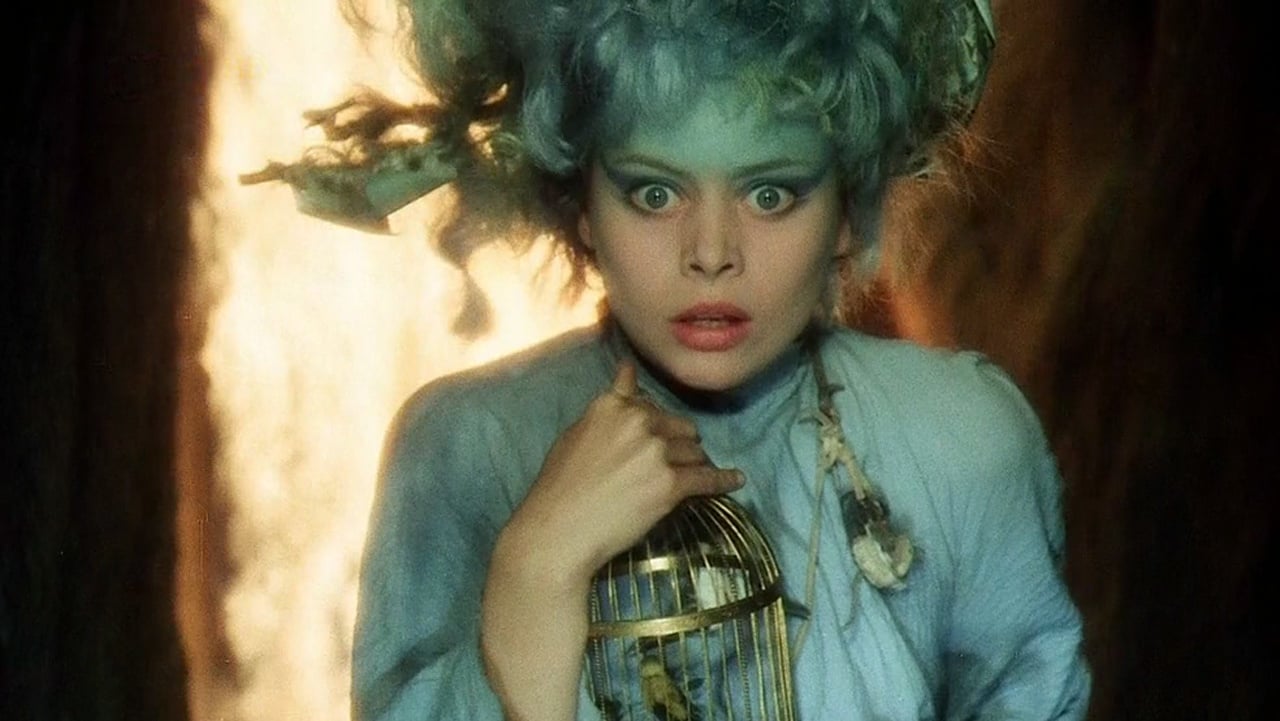
The visuals are unusual and gorgeous, particularly the design of the underwater kingdom of the Sea King, and of the Mer people themselves, who are all dressed in the different colours that the sea can appear to be, and seem to have ocean debris tangled in their hair.  The set design is also stunning, and really contributes to the way that the film creates a whole and credible feeling undersea world.  I like the little details too, like the way that Mer People never appear wet, even after emerging from the water.  Kachyna builds the world well in the film's first half, making it seem idyllic at first, but revealing the ways it holds The Little Mermaid (Miroslava Safránková) prisoner bit by bit.

The standout moment of the film is the scene in the cave of the Sea Witch, which really lays out just how huge a sacrifice is involved for the Princess to even appear human, here the film combines horror with the development of a strong character (another thing that's good about the story as a whole; all the choices are the Princess' own).

The only major criticism is really that the film somewhat rushes through the story once the Mermaid gets to look human, but Safránková's convincingly alien and rather soulful performance help the emotion of the story's third act stick, as does the still dreamlike imagery.  This is a hypnotic and beautiful film, one I'll come back to, and one that, just as Valerie And Her Week Of Wonders did, has made me anxious to see more Czech surrealism.