Showing posts with label 2014 Releases. Show all posts

Jan 15, 2015

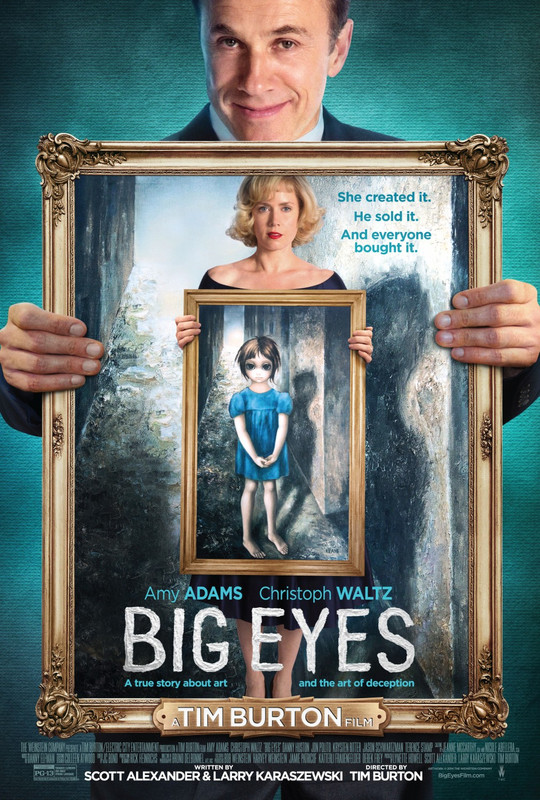
Big Eyes [12A]

Dir: Tim Burton
In recent years watching Tim Burton's films, especially his live action work, has been frustrating more often than it's been fun.  The quirky eye that was novel in his early films became a crutch, as did the frequent presence of his muses, his partner Helena Bonham-Carter and his friend and collaborator Johnny Depp.  Depp, in particular, did amazing work in his early collaborations with Burton, but what was quirksome stagnated and became simply irksome, approaching self-parody.

Big Eyes, then, is in many ways just what the doctor ordered for Burton's live action work.  It reunites him with Ed Wood writers and offbeat biopic specialists Scott Alexander and Larry Karaszewski and removes the twin crutches of Bonham-Carter and Depp.

The film tells the story of Margaret and Walter Keane.  Margaret was the artist behind the paintings of big eyed children which became fashionable in the 60's and were apparently some of the first paintings to be printed and sold to the masses as posters, rather than just to collectors.  Walter, by contrast, claimed to be a painter of landscapes, but was in reality a fraudster.  He convinced his wife to let him take credit for the big eyed children, manipulating her for years.

For the most part, Big Eyes is a sedately shot film, its visual identity coming less from the Burton playbook than it does from the pastel kitsch of the decade between the late 50's and late 60's.  There are, however, a few moments that fit more easily in to Burton's trademark look, be it the impossibly green rolling hills that recall Alice in Wonderland as Margaret drives past them, while leaving her first husband in the film's opening sequence or the surreal sequence of big eyed people staring at her in the supermarket.  However, here these excursions to Burtonville don't feel, as they have lately, like the director running out of ideas and resorting to self-plagarism.

Another thing that seems to refresh Burton somewhat is the presence of Amy Adams.  She's perfectly cast as Keane, looking remarkably like the archive pictures shown with the film's closing captions.  She gives Margaret a delicacy and naiveté that, without making her seem stupid, allow you to believe how she is taken in by the flamboyant Walter.  It's also an interesting quirk of casting that Adams has the sort of wide, open eyes that, as well as letting us see something of what her characters are thinking and feeling, suggest that - at least in the film's reality - Keane's art might have begun as an exaggerated self-portrait.

Adams' performance here is small; detailed but simple, but she has shown in films as varied as Junebug, Enchanted and American Hustle that she can also give big performances that nevertheless ring true.  This doesn't seem to be the case with Christoph Waltz, who plays Walter.  

Waltz came to prominence playing the cheerfully evil Hans Landa in Inglourious Basterds.  That performance was a surprise, a breath of fresh air in a genre that can be rather po-faced and encourage nothing more nuanced than a straightforward officiousness.  Unfortunately, every time I've seen Waltz since he's given basically that same performance.  Waltz never stops seeming actorly.  As Walter he has an energy bordering on mania, delivered with the grinning hammery of a slimy, but very effective, salesman.  This may be appropriate to Walter Keane's real character and might work better if we felt it was Walter who is the one putting on this performance.  Unfortunately, because Waltz has played these beats before, because you can see Landa and Dr King Schultz in what he does here, that distinction falls down and it ends up being Christoph Waltz we see acting, not Walter Keane.
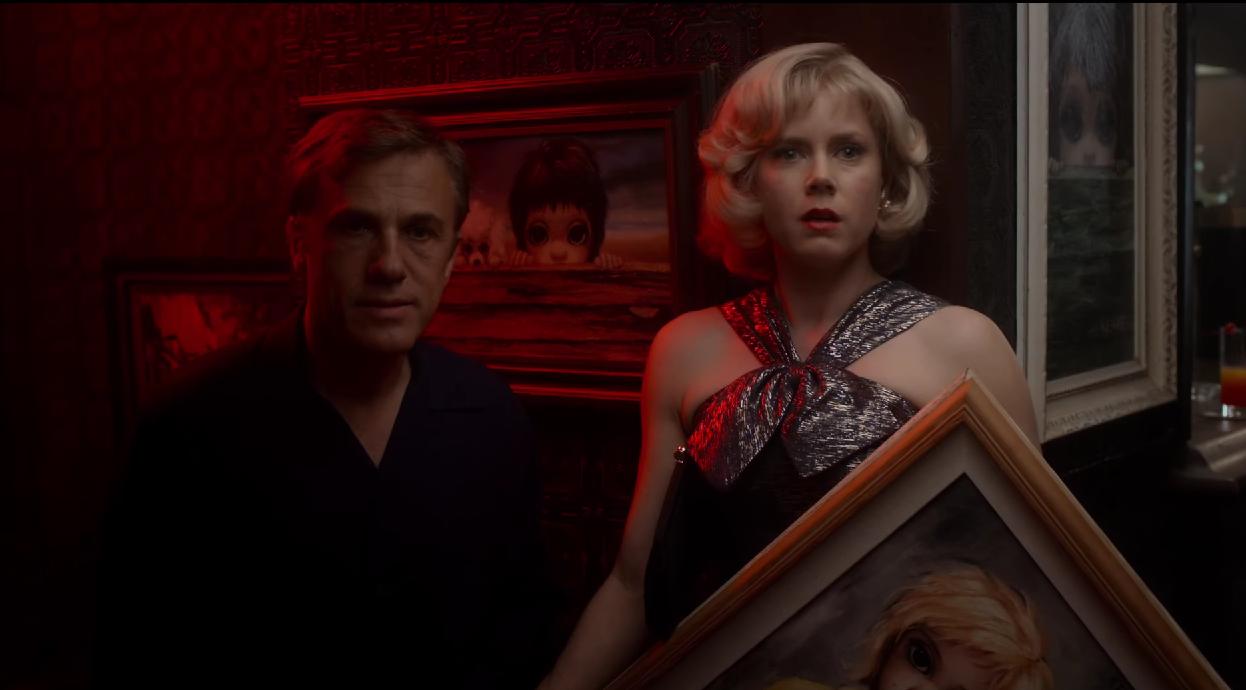
The supporting cast sometimes give Big Eyes more of the feel of a Coen Brothers than a Tim Burton film.  Many players drop in for one or two scenes, most of them at least slightly tongue in cheek.  Krysten Ritter (herself big eyed enough to be an anime character) has a slight part as a free spirited friend of Margaret's, but makes the best of limited screen time.  Erring more on the comic side are Jason Schwartzman; dry and droll as a pretentious gallery owner and Terrence Stamp as an art critic who dismisses Margaret's art as pure kitsch (he's got a point).  Stamp has a lot of fun as the purse-lipped and, the film would seem to suggest, over-serious critic, but he also gets stuck in one of the film's worst scenes as Waltz - hamming to high heaven - berates him for a bad review of 'his' latest painting.

Alexander and Karaszewski's screenplay is played straighter than their Ed Wood or People Vs Larry Flynt work, it's also pretty straightforward biopic box ticking at times, especially in the very minor acknowledgement it gives Margaret's apparently short lived issues with alcohol.  That said, both Margaret and Walter are well drawn (the problems when it comes to Walter are with the performance and with Burton's direction of it) and the dialogue is good, often quite funny.

Big Eyes finds Tim Burton closer to top form than he has been in live action for two decades.  It's certainly not perfect, and the fact that one of the central performances is the film's biggest issue means I can't quite wholeheartedly recommend it, but it's often fun, well played by most of the cast and Amy Adams elevates even its weakest moments.  Hopefully Burton can build on this and deliver something truly great again.

Dec 29, 2014

The 10 Best Films of 2014

10: Hungry Hearts
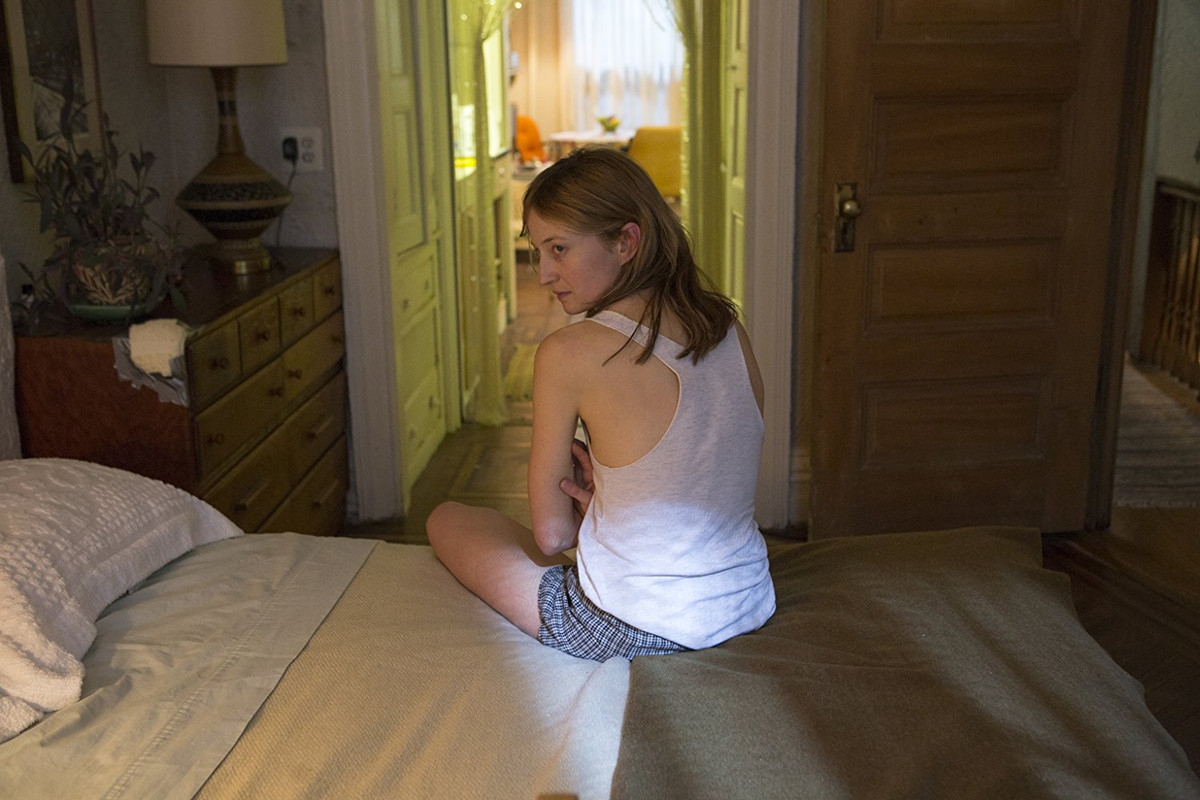
Most of the best films that came out of this year's London Film Festival - at least for me - are set for a UK release next year, but Hungry Hearts still seems to be an exception and while it's not without flaws it is well worth tracking down.

In its opening moments the film advertises itself as one thing; a romantic comedy.  It does so well, with a meet cute between Adam Driver and Italian actress Alba Rohrwacher which is both cute and funny.  It keeps this tone until after the couple are swiftly married and have a child.  It's then that Hungry Hearts begins to reveal itself as something rather different than the film you have thus far been watching.

In its second act the film mutates, folding in elements of paranoid thriller and body horror, as Rohrwacher's Mina becomes ever more unhinged in her concern for her child's safety and particularly that food of almost any kind will harm him.

The style of the film changes too, with one striking sequence towards the end of the second act employing a fish eye lens for an effect something like Repulsion via Cronenberg.  I might have put Hungry Hearts higher up this list, but for the fact that as it twists one final time in its last three minutes it lands on one of the worst endings any good film has had for some time.  Until then though, this is strikingly strange and original work.

9: Waiting For August
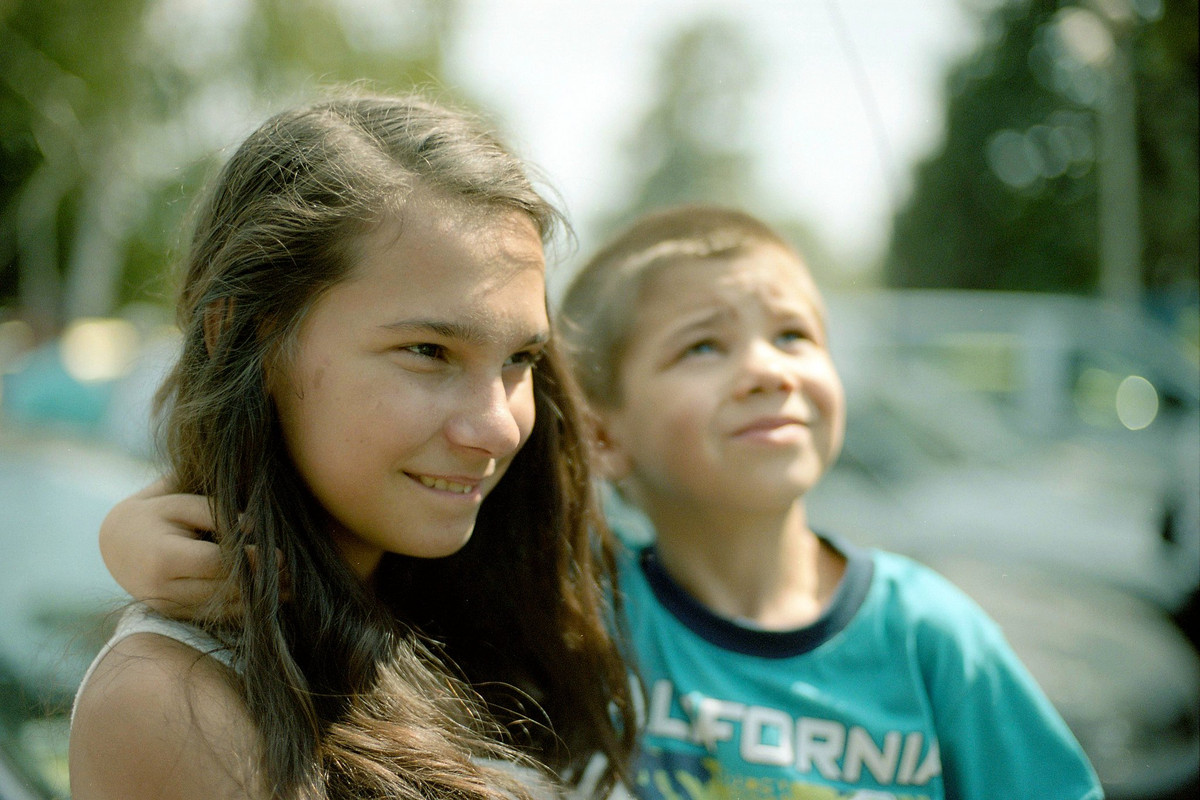
Waiting For August was that rare thing; a surprising film, but it wasn't just the fact it was surprising, but the manner in which it was surprising that really impressed me.  For 88 minutes I had assumed, having been given no contextualising information to the contrary, I had been watching an ultra realistic fiction.

I had been impressed by the depth and nuance of both the naturalistic performances and the unobtrusive, observed camerawork, and moved by the intimate glimpse into the lives of a family of kids, left at home in Romania while their mother works away in Italy.  It was only afterwards, doing some research for my review, that I discovered I had been watching a documentary.

It was an interesting mistake to have made, but it didn't change my admiration for Waiting For August, nor what I thought was best about it.  It remains an honest and intimate insight into a reality that a lot of kids, likely including many with parents working here in the UK, are living.

Geo, the 15 year old who emerges as the main carer for her siblings while their mother is away, is an engaging presence with a bright personality that not only leaps off screen but also keeps the film from becoming too downbeat.

Waiting For August makes some important points without lecturing its audience and marks director Theodora Ana Mihai as one to watch, I'll be intrigued to see what she comes up with next, especially if she moves into fiction filmmaking. 

8: The Garden of Words
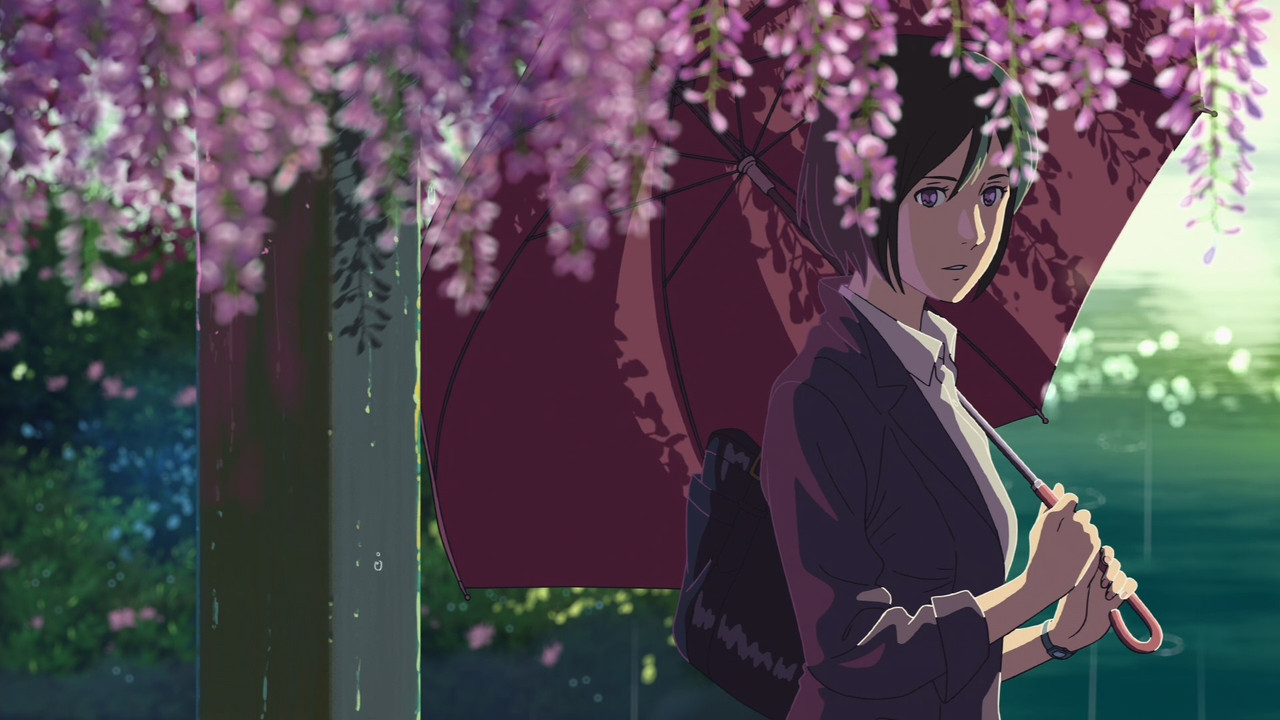
When the question is asked which directors are making the most visually stunning films of the 21st century, I would wager that, probably because he's an animator, Makoto Shinkai's name doesn't come up terribly often.  That's a pity, because this mid-length film (just 42 minutes) is one of 2014's most beautiful, and it follows a set of films - 5 Centimeteres Per Second, The Place Promised in Our Early Days, Children Who Chase Lost Voices From Deep Below - that mark him out, for me as the Terence Malick of anime.

This minor key film sees a boy of 15 skipping school one rainy day and going to a park to sketch.  There he meets a woman in her late 20s, they talk and, over a series of rainy days in the park, develop a connection.  It all goes much as you'd expect, and the one major twist is obvious from some way out, but the film develops its own languorous rhythm, the images are ravishing from start to finish and the voice acting is nuanced, forging a connection between the characters.

The penultimate scene is Shinkai's only misstep here; he rushes and overplays a key moment in a way that goes against the prevailing tone of the film.  However, that's only two minutes, and this wobble aside, The Garden of Words is beautifully crafted.  A minor work in Shinkai's canon, perhaps, but still one well worth seeking out.

7: The Guest
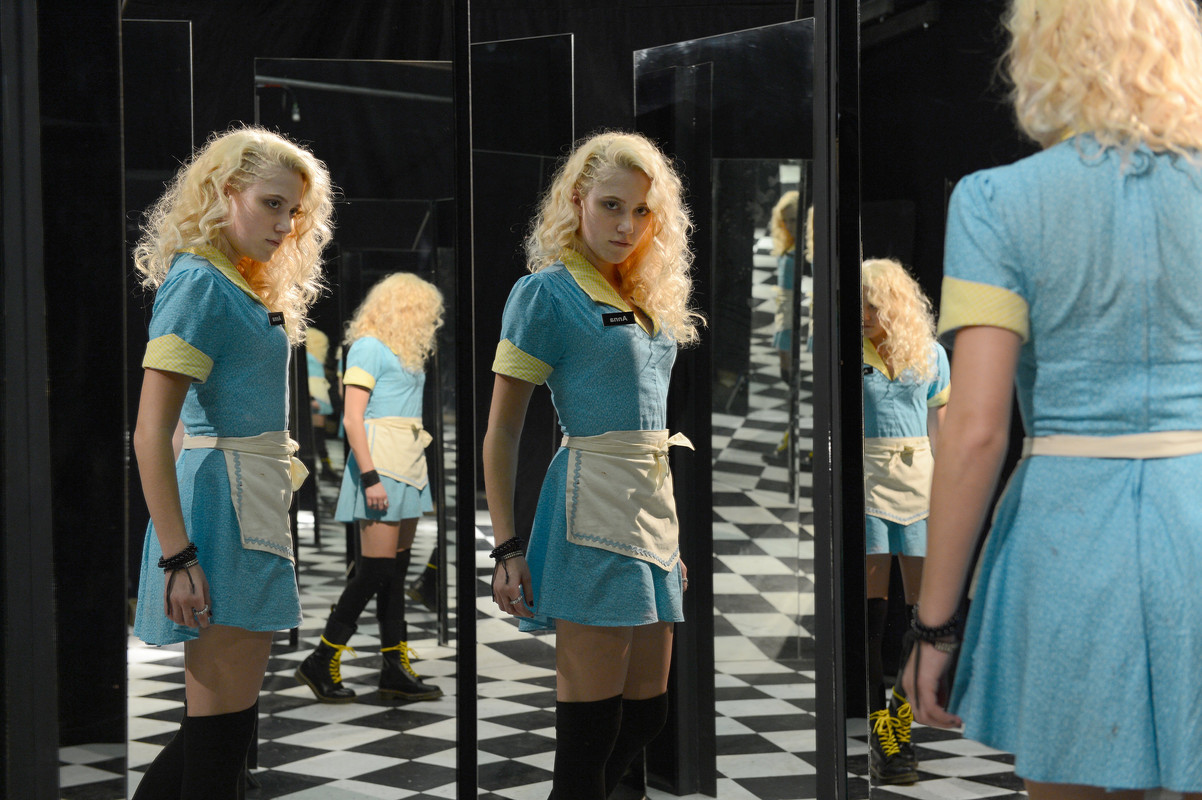
It won't win me any friends saying this, but I wasn't very fond of Adam Wingard's You're Next.  It had a solid final girl in Sharni Vinson and it's always nice to see Barbara Crampton but otherwise I found it a very ordinary home invasion film.  The Guest is a further step away from the mumblegore of A Horrible Way To Die, but for me this tilt at the mainstream (and explicit John Carpenter homage) is easily Wingard's best film to date.

I never watched Downton Abbey, but nevertheless I was aware that his role as an Iraq war veteran who ends up staying at the family home of one of his former, now deceased, fellow soldiers, represents a significant change of pace for Dan Stevens.  Of course that's not the whole story with either the film or the character, and Stevens achieves a fine balance between charming and sinister as he inserts himself into family life.

There are good performances all round, with Maika Monroe another memorable final girl, but the film really belongs to Adam Wingard and his regular collaborator Simon Barrett.  Barrett's screenplay has a dark wit and while it probably won't stand up to much analysis, it does at least try to have some political subtext.  

Wingard's images take centre stage here, with the 80's inflected design reflected in his framing, the lighting choices (heavy emphasis on neon and on bold colours) and extending into the synth driven soundtrack.  The style mutates throughout, with the tension of the first half giving way to first an action movie then a great sequence straight of a slasher classic, right down to the closing image.

The Halloween dance setpiece is the film's standout sequence, with shots that nod to Lady From Shanghai (or Enter the Dragon, if you prefer not to associate a movie like this with Orson Welles) and one of my favourite music cues of the year, as the final confrontation plays out to a beautiful remix of Annie's Anthonio. 

Wingard may make his influences obvious, but this is clearly his film, and after it I'm anxious to see his next one.

6: The Rover
Robert Pattinson has proven to be one of the biggest surprises of the past few years.  Having made his name with determinedly expressionless turns in the Twilight series and dozed through Bel Ami, he seems to have suddenly woken up one day and decided to challenge himself.  The result has been not just an apparent improvement in his work but a total redefinition of his career.  He's become one of the most interesting young actors around.

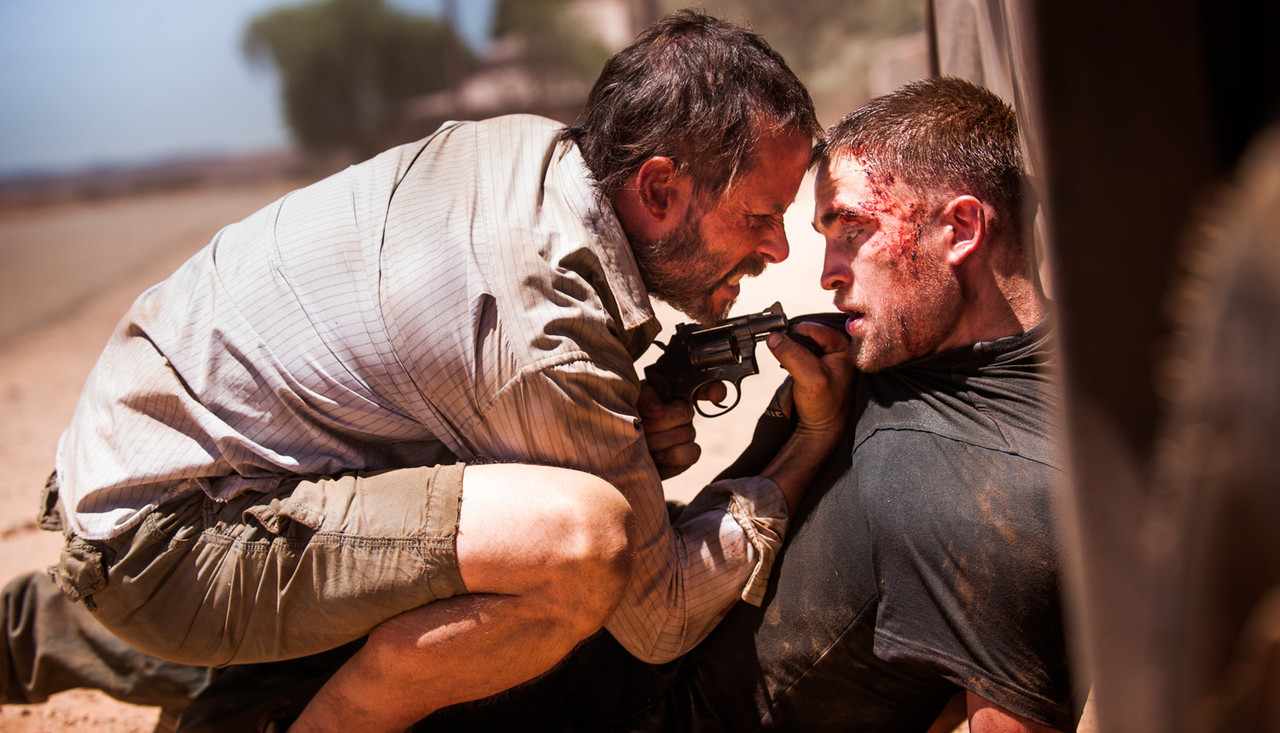
In David Michôd's post-apocalyptic revenge flick, Guy Pearce plays a man whose last possession, his car, is stolen.  He tears off after the people who took it, soon wounding and capturing their mentally slow brother (Pattinson). This kicks off an unusual, brutal, road movie.  Pearce and Pattinson, though both characters of few words here, forge an interesting relationship that develops credibly into something almost brotherly.

I loved the bleak world the film built up, the grim sense of inevitability about the final conflict and the late reveal of exactly why that car was so important, which makes a sad kind of sense given the reality of the film's world.  It was only marred by the fact that the discordant soundtrack that helped set the film on edge was sometimes muted by the Bollywood film playing in the next door screen.


5: Stations of the Cross
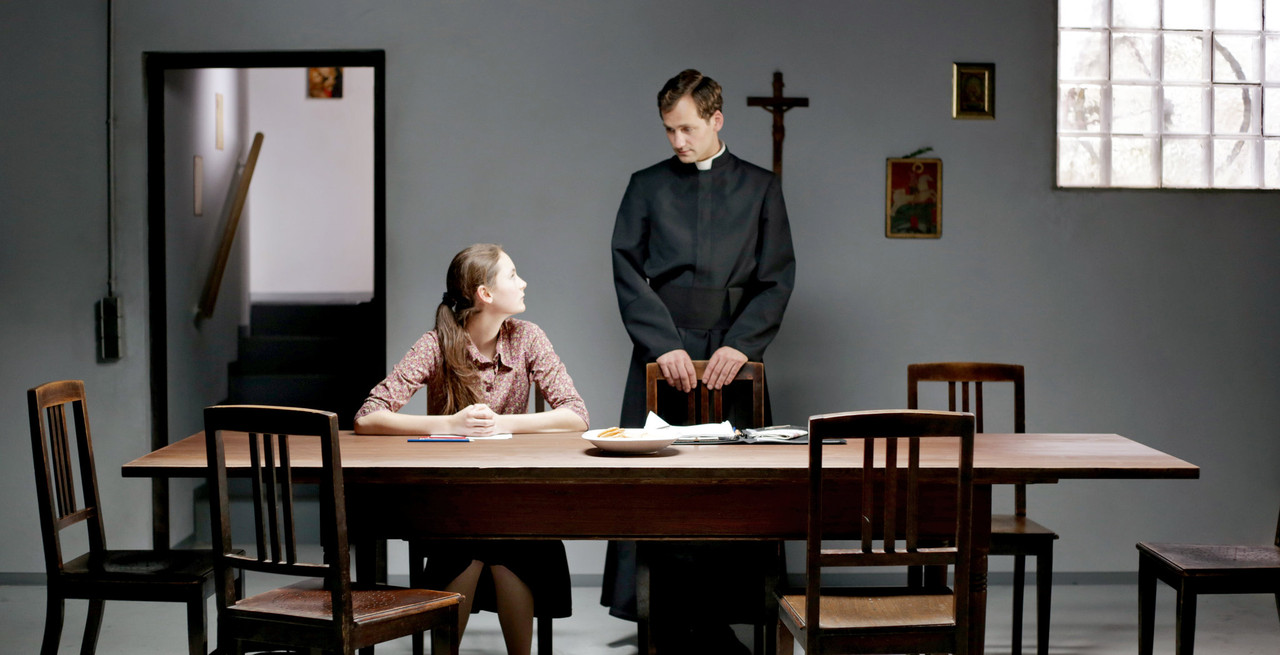
Dietrich Brüggemann's austere coming of age drama, written with his sister Anna, is set amongst a family who are members of a strictly traditionalist Christian sect and centres around 14 year old Maria's (Lea Van Acken) desire both to have a tiny measure of normality in her life and to please God, partially in the hope that her autistic youngest brother will be cured.

Telling his story in a series of almost entirely static tableaux, with titles mirroring the stages of Christ's journey to crucifixion, Brüggemann signals pretty heavily where things will end up, but the best things here are in the details, rather than the overarching plot (which can lean a bit too heavily on a strained metaphor by the end).

The static camera serves twin purposes.  In medium to long shots it forces you to get sucked into each frame, exploring the details and watching for the nuances, this is especially effective in a dinner table scene when Maria is punished for talking to a boy and lying to her mother (a scary Franziska Weisz) about.  There are many subtleties in the physical performances that speak volumes about how the other characters are reacting to this moment and your eye is forced to them.  

In closer shots the static camera forces your attention on to the tiniest subtleties of the performances, and Lea Van Acken delivers a spectacular début.  In the film's finest scene she confesses her 'sins', the most serious being a passing fantasy about holding hands with a boy.  The camera is tight on her the whole time and every little nuance, every feeling, comes through in her face.

The last 20 minutes are sometimes a little heavy handed, but that can't stop Stations of the Cross from being a must see.

4: Ida
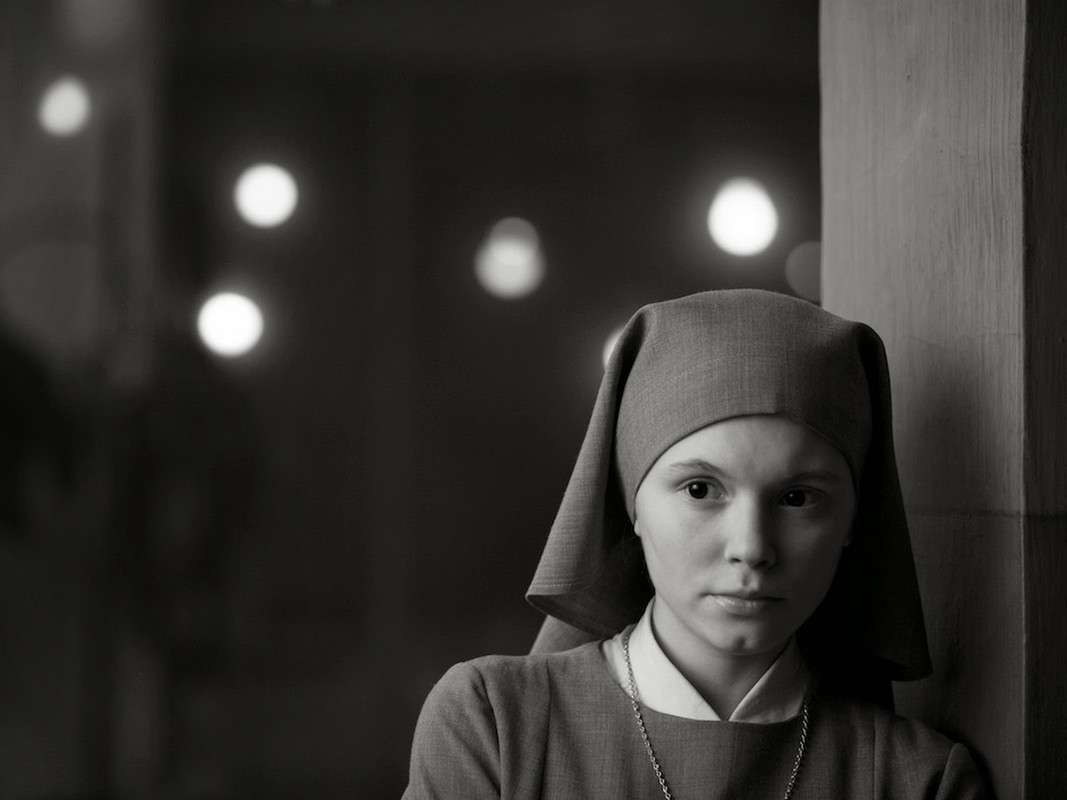
Ida does have a meaningful, moving, story (about Anna, a young nun in training who, before taking her vows, goes on a road trip with more wayward aunt to find the graves of her parents, murdered during the nazi occupation of Poland) and two exceptional performances at its centre, but it exists in my mind, and has done since 2013's London Film Festival, largely as a series of images.

By far the most beautiful film of 2014, Ida's imagery is all the more remarkable in that Pawel Pawlikowski's longtime cinematographer, Ryszard Lenczewski, who apparently didn't like the idea for the film, left days into shooting, leaving his assistant Lukas Zal to make his debut as a cinematographer on a feature film.  Zal more than rises to the challenge.  His images have a faded beauty, the black and white conferring an almost otherwordly feel and the exaggerated headroom in the 4:3 frame giving a sense of something hanging over Anna, be it God or the weight of her decision about whether to return to the convent.  It's a work of art and one of the most beautifully and originally framed films I've seen for ages.

The performances are perfectly pitched, especially the quiet, contemplative work of newcomer Agata Trzebuchowska as Anna.  Lying underneath the journey and the search for her parents is a coming of age story and a relationship, convincingly developed in just a handful of scenes, with a young musician.  The outcome of this story is wisely left ambiguous by Pawlikowski.  Is Anna returning to the convent in the film's final shot?  We're left to decide ourselves, and that's just one more interesting an affecting aspect of this excellent film.

3: We Are The Best
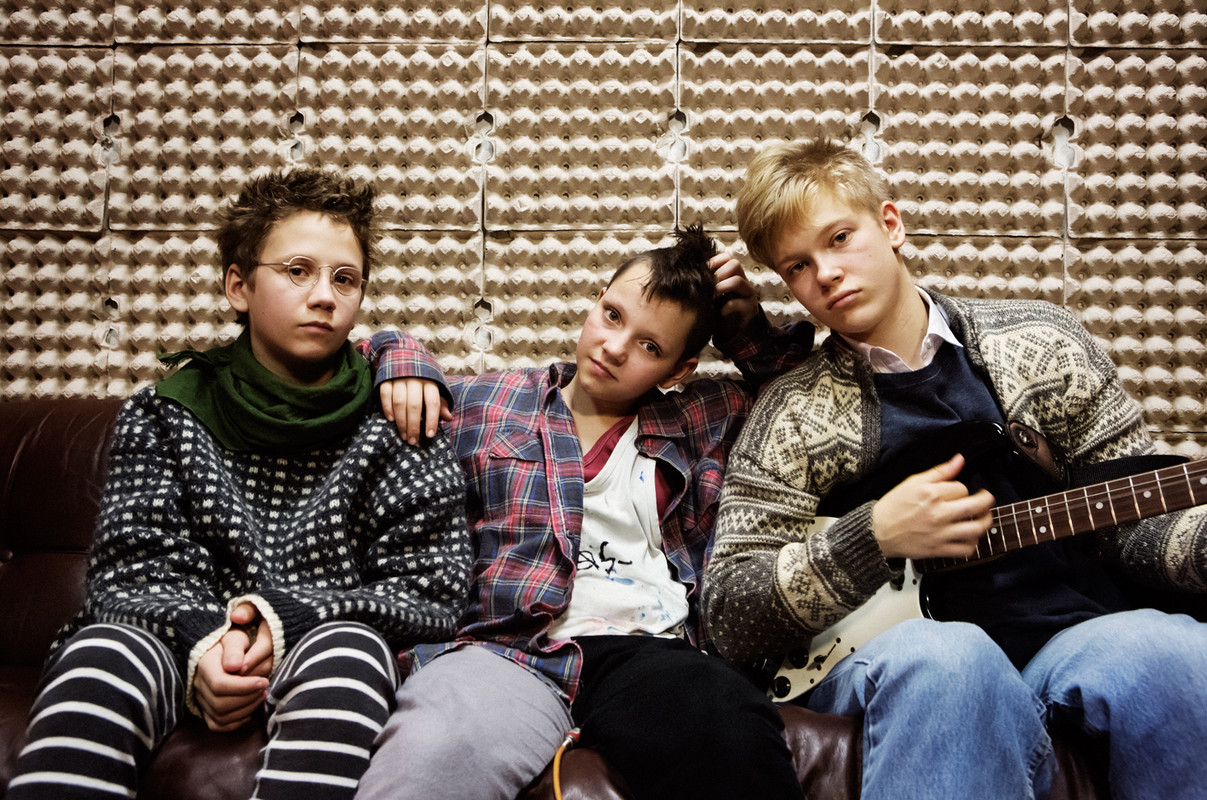
I may have mentioned my love of Lukas Moodysson's first film, Fucking Amal, and while I've liked many of his subsequent films (especially the gut punch that is Lilya 4 Ever), he's never, for me, quite recaptured the connection or the fun of his début.  We Are The Best, based on his wife Coco's semi-autobiographical graphic novel, feels like a deliberate return by Moodysson to the thematic territory and the setting of Fucking Amal, as he once again tells a coming of age story about high school girls.

This time the girls are a bit younger more naive.  It's 1982, and if it's not dead, punk is on the critical list, but 13 year old Bobo and Klara (Mira Barkhammar and Mira Grosin) are still dedicated fans.  With a battle of the bands coming up they decide to start a band, and recruit Hedvig (Liv LeMoyne), a slightly older girl who is the only one of their band who can actually play an instrument.

There's a real joy about We Are The Best.  It moves through the regular motions of a coming of age movie; there are jealous fights about boys and embarrassment at family members (Klara's dad is perfectly played, he clearly loves his kids, but also delights in embarrassing his daughter).  You get a sense of Bobo and Klara's closeness and of the way music helps their friendship with Hedvig grow, despite their differences.

It's refreshing that the band don't suddenly become brilliant.  Their one song (Hate the Sport) is awful, and it remains awful as their final performance becomes a confrontation, but this film isn't about them being great musicians, it's about them connecting through a shared love of music and that energy, that joy, translates to the audience.

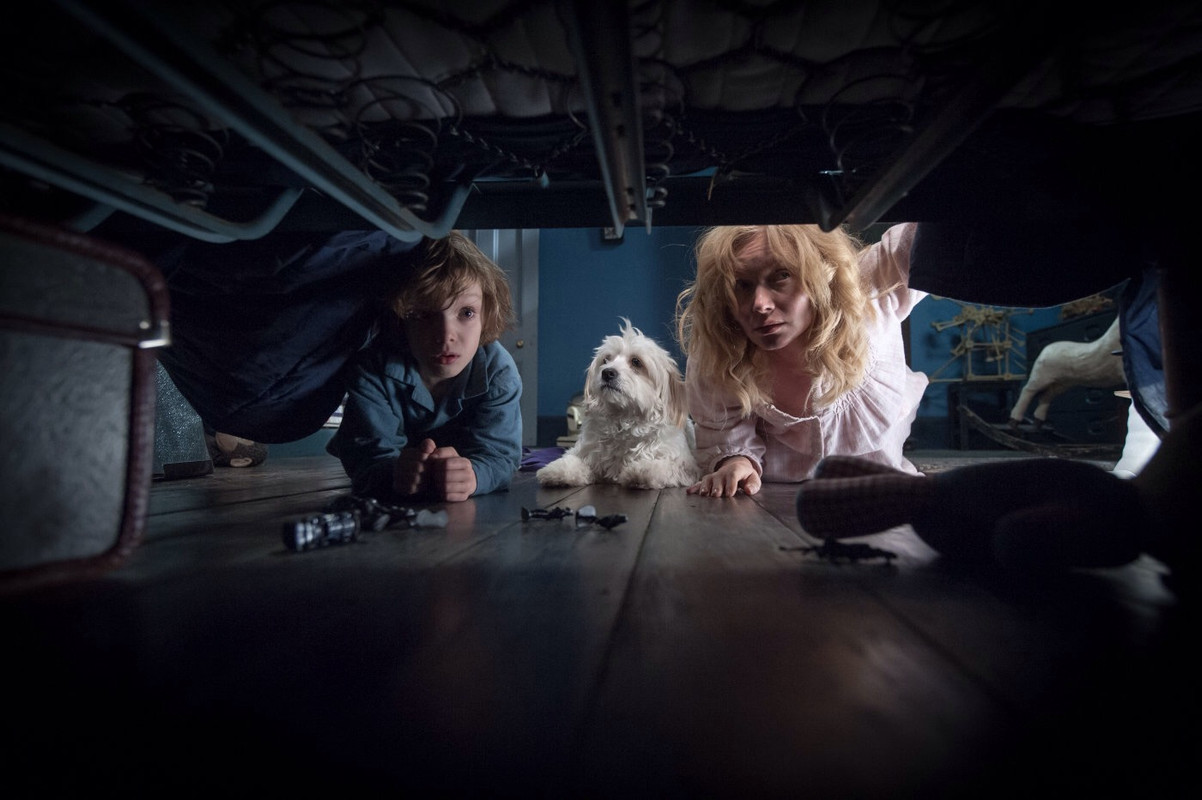
2: The Babadook
I very nearly missed The Babadook.  Few things in cinema bore me like the current trend for 'horror' films that extract all their 'scares' from things going bump just off screen.  These creaky house movies all blend into one for me, and the trailer for The Babadook painted it as just one more of them.  Happily, horror loving friends assured me that that wasn't all there was to the film, so I took a chance on it.

This isn't a typical horror film.  Yes, it has a monster , of sorts, at its heart, but for me it was clear from the outset that this wasn't a film about a literal monster and the the horror of The Babadook was not external, but internal.  This is the horror of a woman (Essie Davis as Amelia) whose tragic circumstances - her husband was killed in a car crash while driving her to the hospital to have their son - means that she struggles to truly love her child (six year old Samuel, played by Noah Wiseman).  It's a film about the horror of depression, perhaps of PTSD, and of not feeling the one emotion you know you are supposed to feel.

The influences here are less The Others or The Conjuring than more cerebral horrors like Ann Turner's Celia or Bernard Rose's début, Paperhouse; both haunting films centered around children and stories.  That said, when director Jennifer Kent does the things that go bump in the night sequences or physicalises the Babadook it works, because it's solidly grounded in the psychology of the characters and there is much more going on behind the scares than just a creaking sound.

The fact that it all pays off is down to the two central performances.  Noah Wiseman, who was told that Samuel was a kid who just wants to protect his mother from a monster, is brilliant.  There's a haunted quality to him, and his desperate need for his mother to have more connection with him is obvious.  

However, the show is stolen by Essie Davis, who gives the best performance of 2014 as Amelia.  Her fragility is clear from the off, and she's completely credible as Amelia is possessed by the Babadook/loses her grip on her sanity.  That said, her strength, the way she pulls little pieces of it together and finds a way to resist either the Babadook or her personal demons (I know what I believe here, but the rest of my audience seemed to disagree) is also totally credible, and played with moving conviction.  It's also worth noting that she has a scream that belongs in the horror hall of fame.

I've not seen a horror film of this depth since Martyrs, and while it doesn't challenge the interpretation of the genre the way that film did for me, The Babadook still has me thinking about it and going over moments in my mind months after I first saw it.  It's smart, scary and brilliantly crafted.

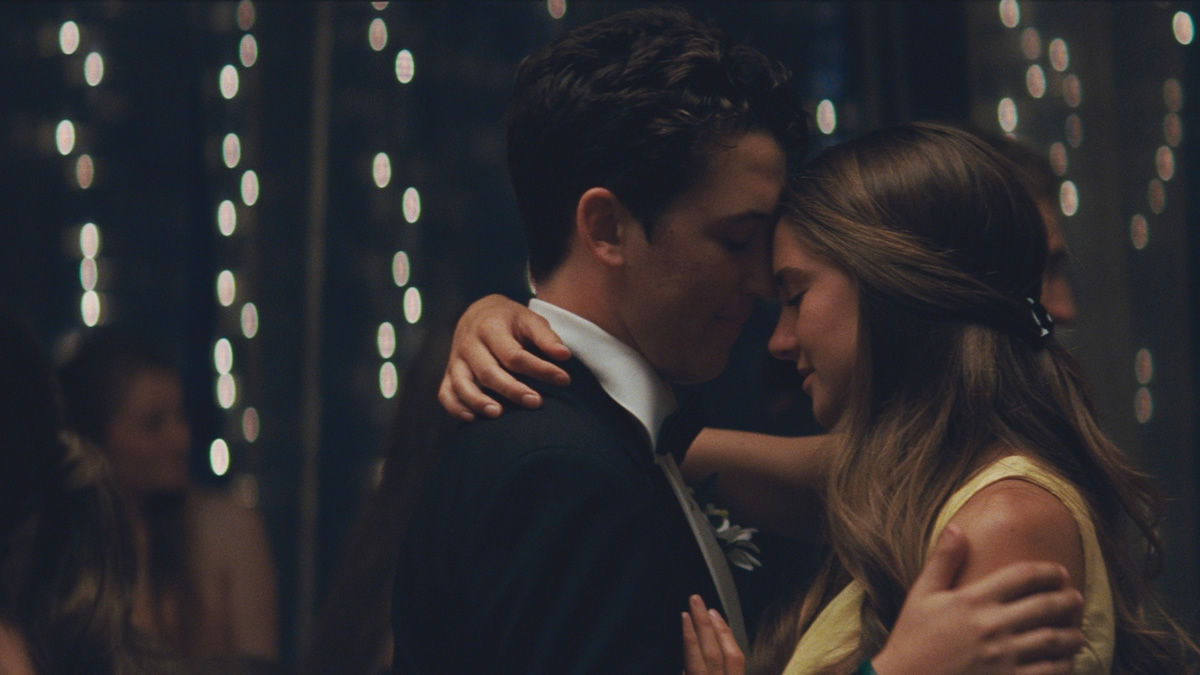
1: The Spectacular Now
My film of the year didn't play at cinemas.  It didn't get a Blu Ray or DVD release.  It didn't get dumped to ITunes.  Inexplicably, the UK release of The Spectacular Now, which I fell head over heels for at the London Film Festival in 2013, was direct to Google Play.  Really.  Google Play.

I believe I've made it clear before that I've always loved and been interested in coming of age movies, but I've been disappointed by much of the recent crop out of the USA, especially since they have refocused on trite YA novel adaptations.

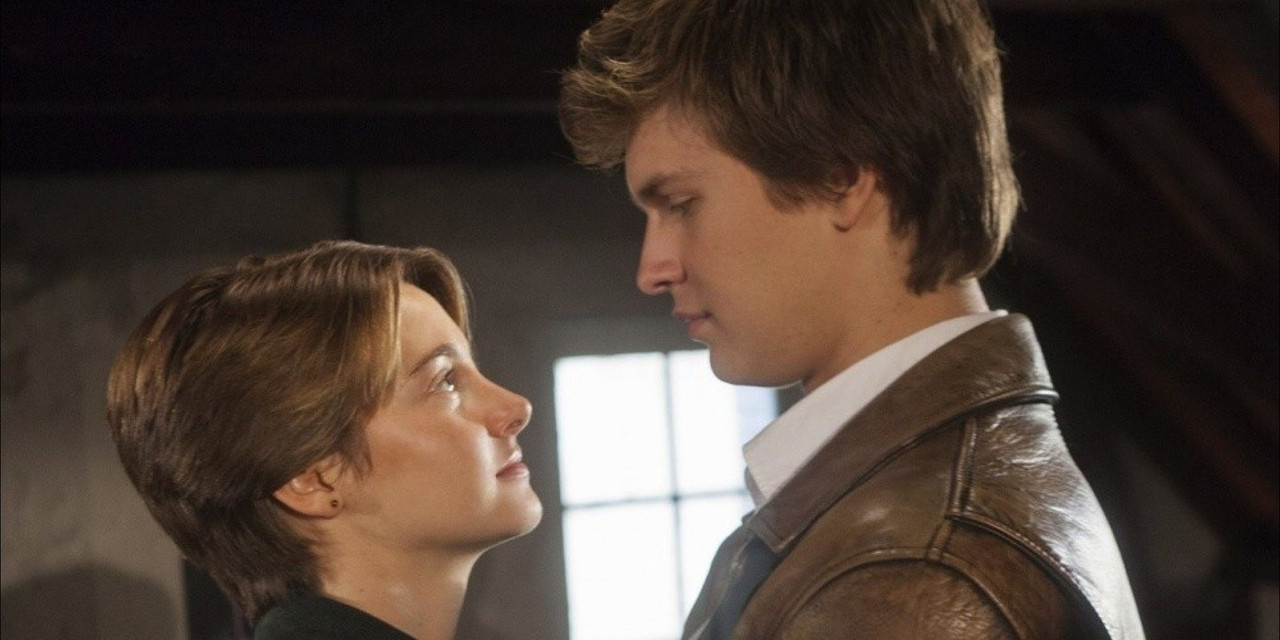
The thing that really blows my mind about The Spectacular Now is that this beautifully observed piece, full of realistically flawed characters who you root for because you recognise them, was delivered by the same screenwriters who gave us 2014's worst film, this movie's evil twin, The Fault In Our Stars

Of course, the success of this film isn't entirely down to Scott Neustadter and Michael H. Weber's witty and emotional screenplay, and the way I felt it picking at my memories of high school, the performances are also outstanding.

Miles Teller has been a name to watch for a while, but for me he really confirmed his promise here.  As Sutter he cuts rather a sad figure, especially as the film goes on and you see how deep his problems - a fondness for a drink that has become a functional alcoholism - run and how much of his fun loving personality is a cover for his insecurity.  Teller plays all this without needing to spell it out, often letting a little gesture or a look speak for him.

Teller has great chemistry with Shailene Woodley, who plays Aimee; the wallflower who he initially says he's just trying to bring out of her shell, but falls into a relationship with.  One of the best things about both the script and the performances is that you can feel their connection and see why they are drawn to each other, apart from being two attractive people of similar ages.  Woodley keeps it simple in every aspect.  Aimee's heart is worn on her sleeve most of the time and her straightforward nature is even reflected in the simple clothing choices she makes and her lack of make up, there's a sense of a person with no artifice about her.

Even the characters with limited screen time - Brie Larson as Sutter's ex, Jennifer Jason Leigh and Kyle Chandler as his estranged parents - have rounded characters and stories, and are brilliantly played.

Much of The Spectacular Now reminded me of a down to earth take on Cameron Crowe's Say Anything, and that continues right up to the final shot and cut to black, leaving the film on a beautiful ellipsis that we'll never see the end of.  It's a moment that fits perfectly with the film's bittersweet tone.

Dec 24, 2014

The 10 Worst Films of 2014

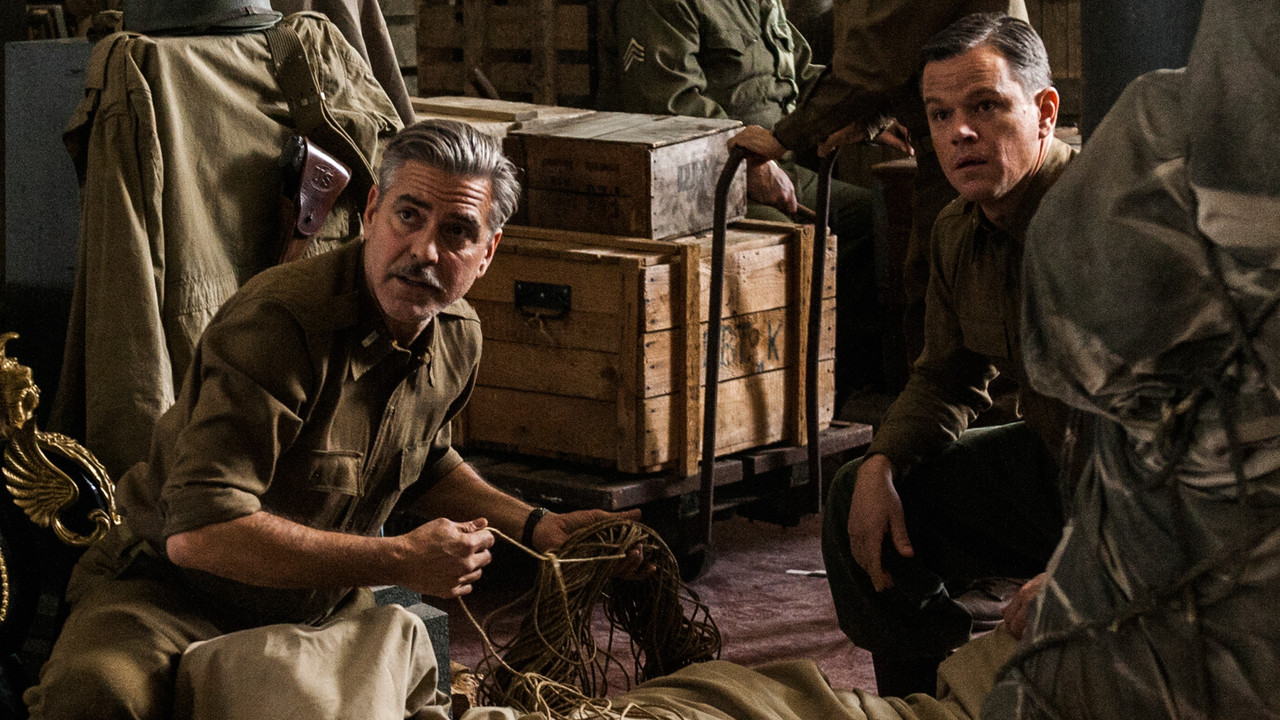
10: The Monuments Men
The Monuments Men wasn't supposed to end up on this list.  The pedigree of cast and director and the prestige of the subject (a based on true life tale of a small group of soldiers tasked, in the dying days of World War 2, with saving art stolen by the Nazis) were supposed to make it a sure bet at the Oscars.  Taste, for once, trumped prestige.

The film's fatal flaw was a complete botching of its tone, which boomeranged wildly from earnest lectures - FOUR in a two hour film -  about the value of art, full of heavy-handed questioning about whether it was worth these men's lives to sometimes farcical men on a mission sequences, most of them devoid of tension because the enemy had already departed the scene.

George Clooney appeared to have little grip on the film; it was never very exciting, never very funny, never very thought provoking and many of the performances had an undirected feel about them.  This was most notable in Clooney's autopilot leading turn and the single worst performance Cate Blanchett has ever committed to film.  For such a collection of talent to strike out so totally has to be one of the year's biggest missed opportunities.

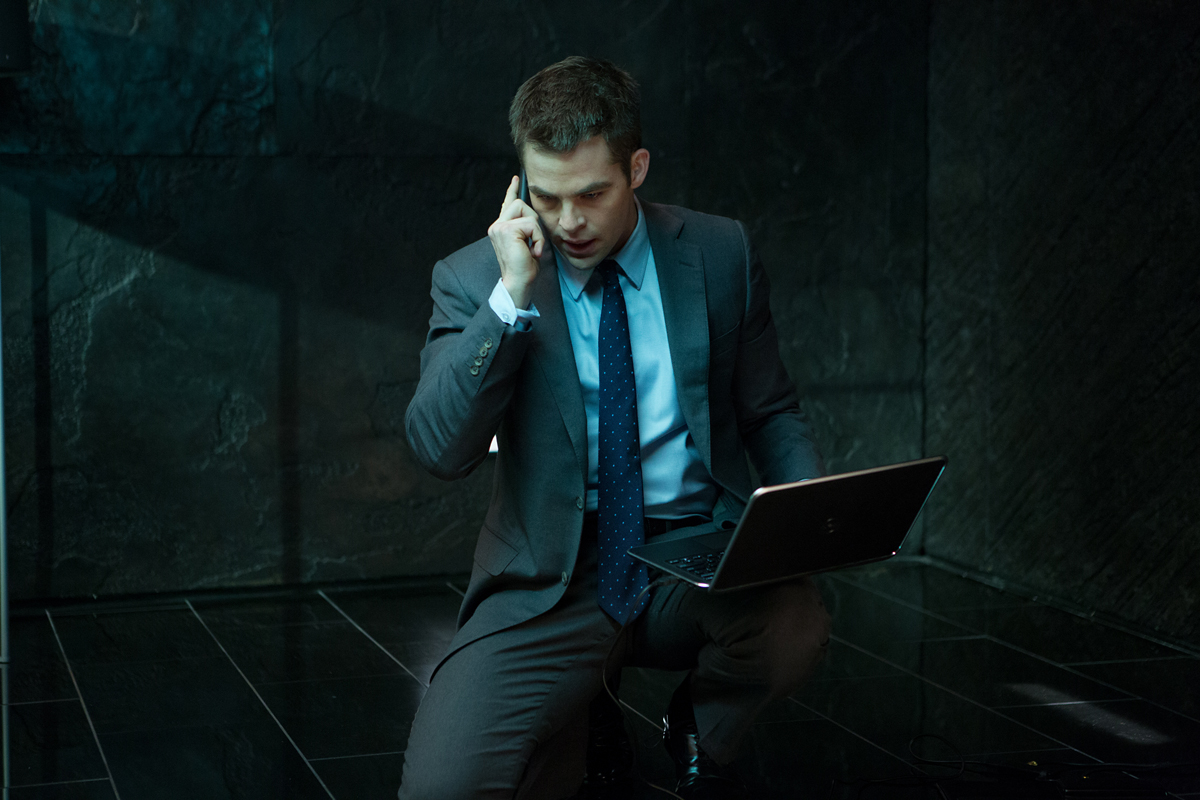
9: Jack Ryan: Shadow Recruit
There's something to be said for a film that manages to be two bad movies at the same time.  It's not good, but in a sense it's still overachieving.  Jack Ryan: Forgettable Subtitle is a shitty spy movie in which everything is as it seems and the espionage is both tedious and suspense free.  Amazingly it also finds time to be a shitty action movie, shot and cut in typically bitty style and with a palpable lack of interest by director Kenneth Branagh.

The politics might be troubling, if you could take even a frame of this blatant, apparently failed, attempt at rebooting the Jack Ryan franchise seriously.

It's turgid, generic experience from teal and orange visuals to unthreatening Russkie villain (played by Branagh, no more interested, it seems, in acting than directing).  Chris Pine may be an adequate young Captain Kirk, but he's laughably unconvincing as a genius, war hero super spy and Keira Knightley, wasted as Pine's wife in the weakest of three unimpressive films I saw her in this year, can do little to help matters.

Kevin Costner shows up and is good value as Pine's CIA mentor, but it's too little, too late.

8: Non-Stop
Sometimes I don't understand my fellow critics at all.  I was immune to the alleged charms of films as diverse as Frances Ha and Pacific Rim last year, but, if I squint, I can almost see what people got out of them.  This, on the other hand, I really fail to understand what the people who, apparently without irony, told me it's great - not so bad it's great, just great - are seeing.

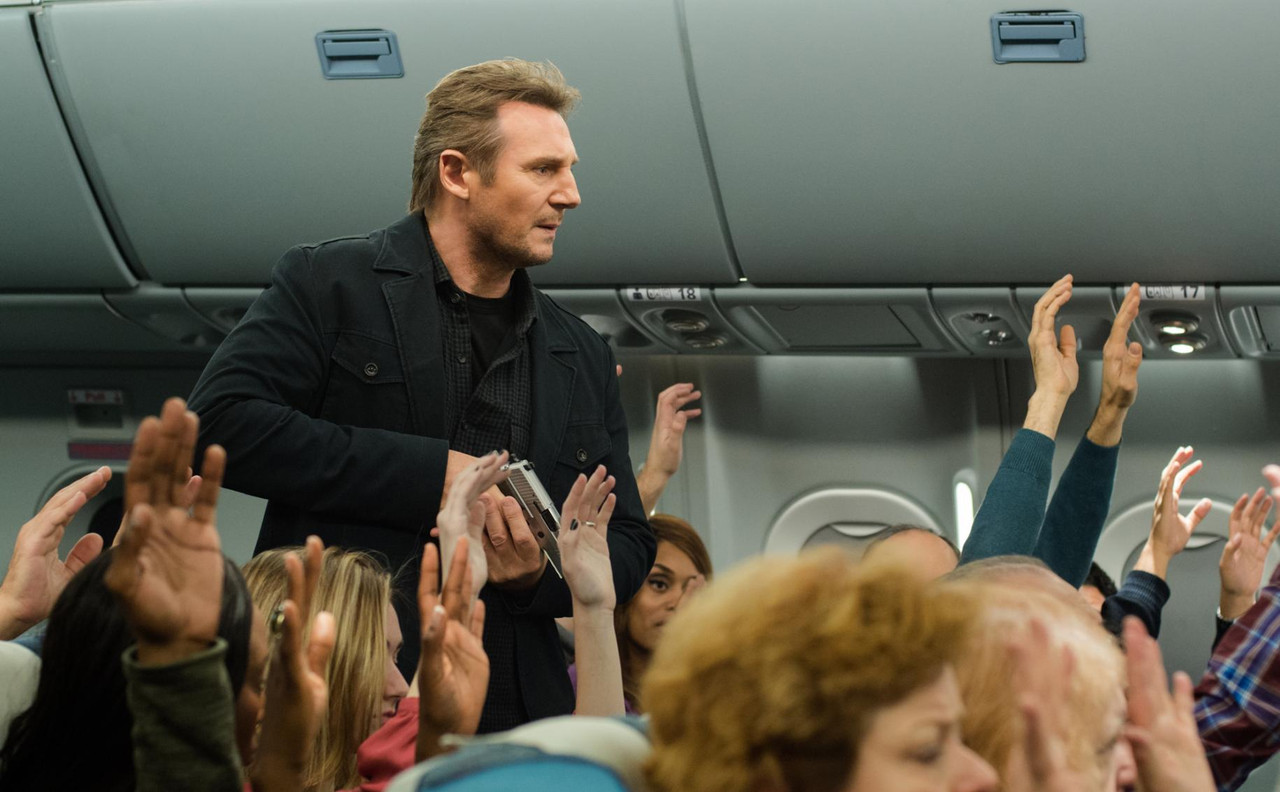
If you fancy watching a slightly less plausible version of Flightplan, starring Liam Neeson in scowling for pennies mode and featuring Julianne Moore as a 'person' with less character than the text messages that incessantly pop up onscreen then you're welcome to Non-Stop.  

Beyond the yawning logic gaps and the insultingly rubbish writing - especially of Moore's character, whose sole trait, prior to a late infodump, is that she likes the window seat - the final straw was the laughably unearned and poorly executed political dimension the film tried to add in its closing minutes.  

If Non-Stop had a sense of its own ridiculousness, if it felt like it was being silly, rather than stupid (like, say, Con Air) it wouldn't be here.  The ending scuppers any argument to that effect.  It wasn't convincing up to that point, but the second it bellowed its subtext Non-Stop sealed a place on this list. 

7: Warrior King 2
The Raid 2 came perilously close to making this list (consider it number 11), thanks to its ridiculous overextension of a focused martial arts film into a tedious gangster movie by numbers that came to life only in its last half hour.  Still, it's better than this toss.

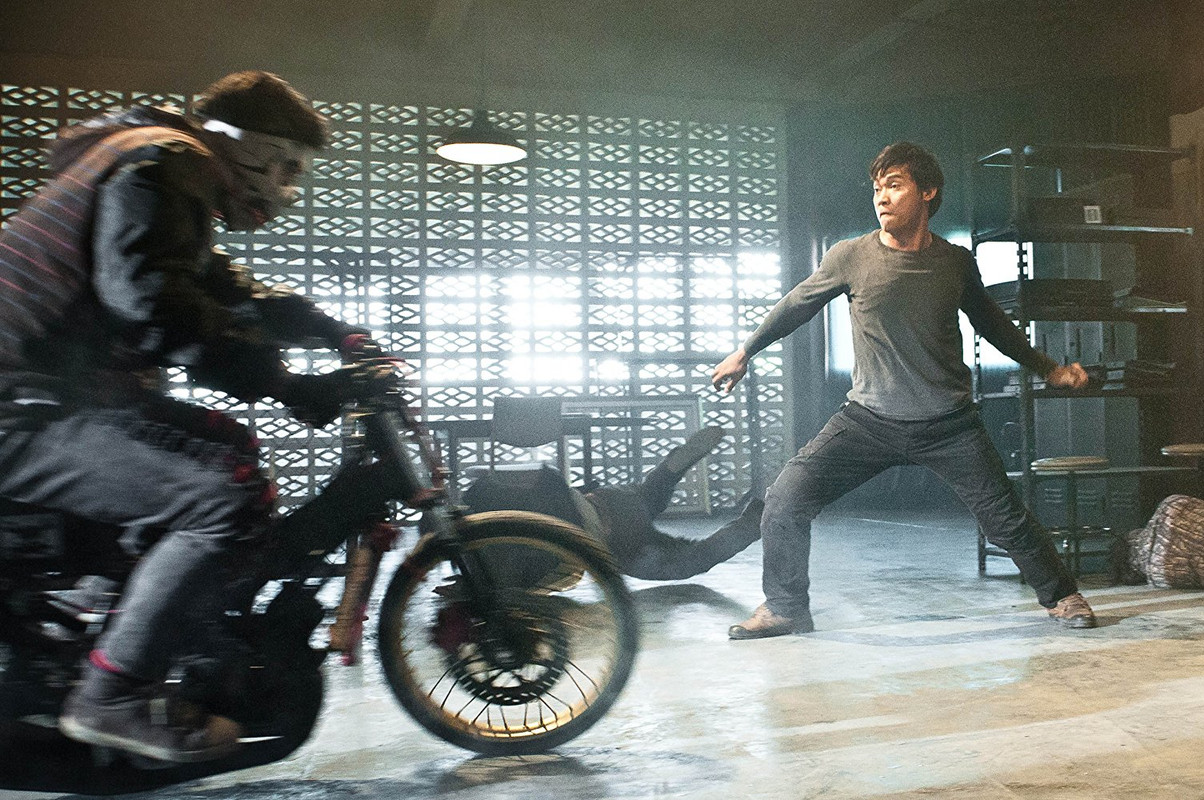
Like all martial arts movie fans I loved the original Ong Bak.  So what if its star couldn't act and it had the depth of a rapidly evaporating puddle?  The muay thai fights and the stunt work were astounding, and Tony Jaa would get better.  Right?  Wrong.  Jaa hasn't improved one iota as an actor or a screen presence, and while he remains a formidable martial artist his weaknesses in other areas have become a major issue with his films.

The 'plot' of Warrior King - "give me back my elephants" - hardly seemed to invite a sequel, and so it proves.  This entry is just as thinly plotted, and it couldn't matter less that it's a sequel as Jaa's character is so perfunctory that the idea of advancing him is laughable.

This, along with an - ahem - Rzable performance from a member of the Wu Tang Clan, could perhaps be excused if it weren't for the fact that the martial arts sequences have been largely neutered by the fact that Jaa is now using obvious (read awful) CGI to achieve many of them.  Jeeja Yanin's small part is a treat for fans like myself, but otherwise, Warrior King 2 is a dead loss that fails by stripping away the exact thing that once made Jaa worth watching.

6: Labor Day
I wish I remembered enough of Labor Day's - uniformly unspeakably awful - dialogue to simply make this entry a series of quotes.  Trust me, there's more than enough ammunition in these two hours.

I was never quite sure that Jason Reitman was as brilliant a filmmaker as he had been fêted as following Juno and Up in the Air, but I certainly thought he was better than this Mills and Boon bullshit.

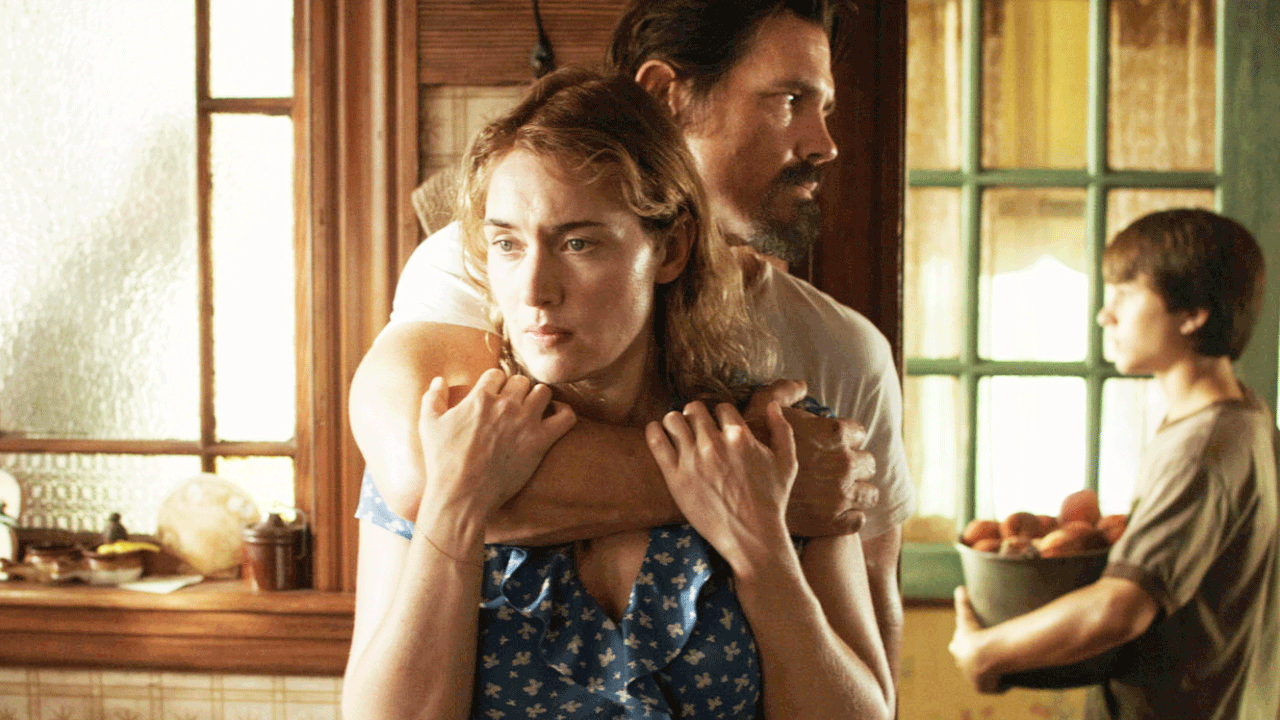
Josh Brolin and Kate Winslet do their best, but are defeated by the laughable story (about an ex-con who takes a woman and her 13 year old son hostage in their own home, only for them to become a sort of family) and outright hilarious dialogue.

The worst bits of the film often revolve around pie.  In one scene, which absolutely deserves the place it will have in round ups of the most miscalculated moments in cinema, Brolin gets Winslet and her son (Gatlin Griffith, who is just awful here) to help him make a pie.  It becomes a seduction scene, culminating in them putting the lid one the pie and Brolin saying "Help me put a roof on this house".

This and other moments got me some dirty looks when I saw the film with a friend, as I couldn't help laughing out loud.  The lady down the row apparently didn't appreciate that.

5: Devil's Due
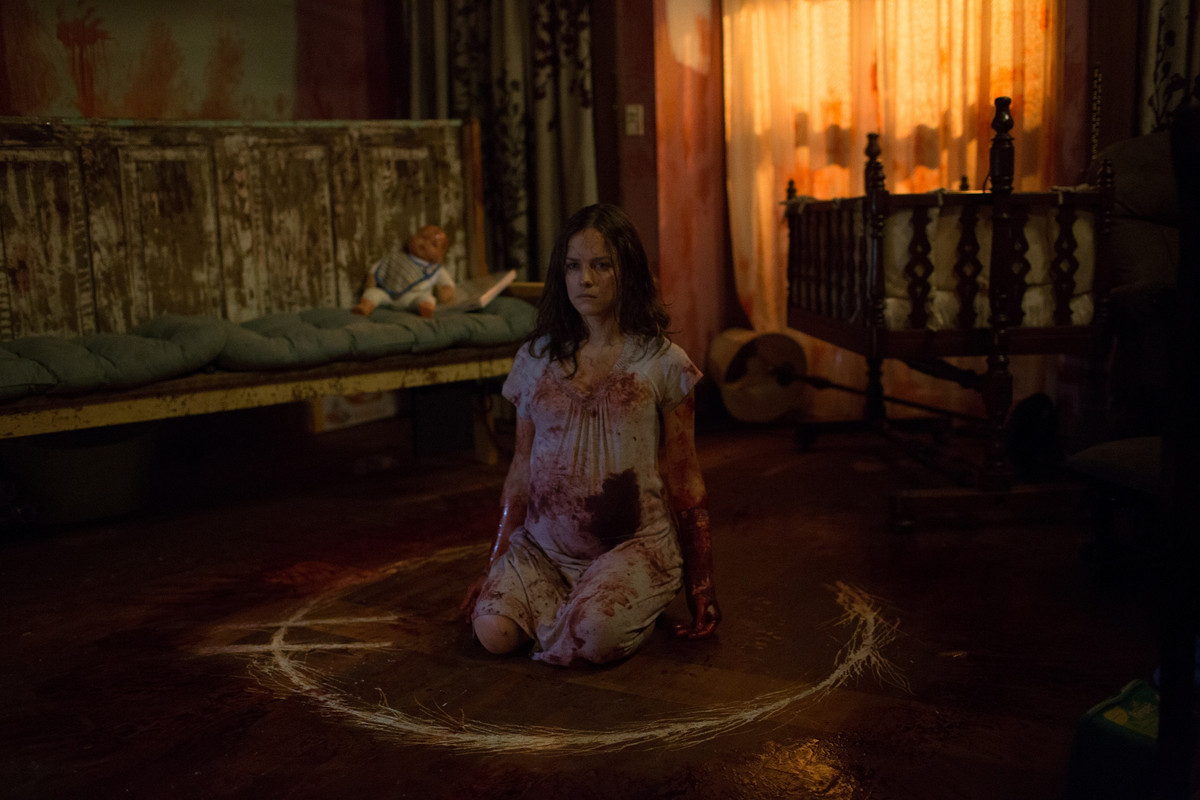
Ah January.  Where would this list be without the annual dumping ground and its traditional provision of a shitty, derivative, 'horror' film?  This year it's not quite as shockingly awful as Texas Chainsaw 3D was last year, but make no mistake, this tedious found footage Rosemary's Baby knockoff is dreadful.

The biggest annoyance is that there are flashes of something better.  The couple whose baby may be the antichrist are Christians.  What does this mean for them?  How does the idea of aborting a pregnancy that seems to be in some sense malevolent play with their faith?  The film never bothers to show an interest.

The performances are as rubbish as you might expect of a low budget horror film, but the filmmaking is what really holes Devil's Due below the water line.  I've become used to the found footage illusion being badly maintained, but here it's just laughable, with unmotivated camera angles a frequent feature.

Devil's Due is, in a sense, more than just a bad movie; it's indicative of the 'that'll do' culture that continues to shit these scare free turds into cinemas every January.

4: Sin City: A Dame To Kill For
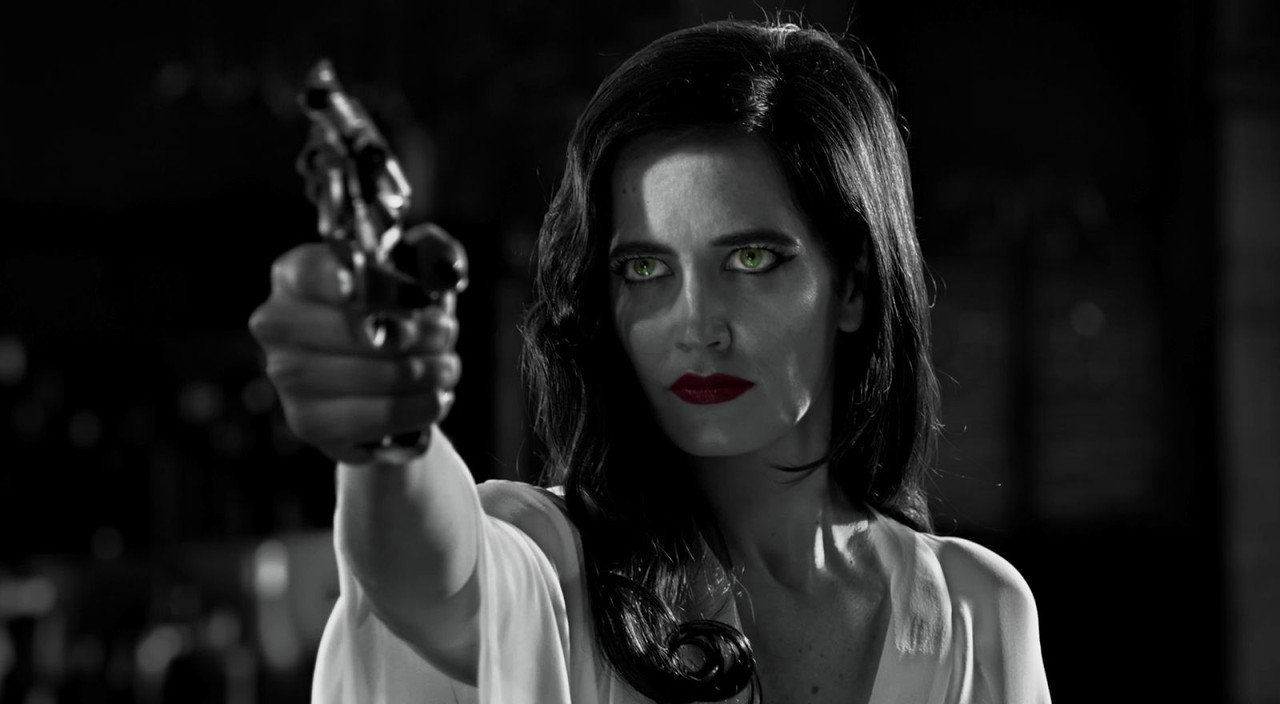
I love Eva Green, and this year she deserves an award for services to turd polishing, having burned up the screen in both 300: Rise of an Empire and this extremely belated, utterly awful, sequel to Sin City.  

Brilliantly cast and effortlessly charismatic as Green is as the titular Dame to Kill For, Frank Miller and Robert Rodriguez' juvenile jab at all the familiar shades of noir is by turns boring and repellent.

The film's attitude to women is that of a 14 year old boy who loves tits, but has no idea that the thing they're attached to has a personality.  It leaves a nasty taste in the mouth.  Green, good as she is, seems needlessly exploited here; a naked prop that manages to be more by sheer force of charisma.  Let's just say that Jessica Alba - still incongruously fully clothed as Nancy, who is, after all, a stripper - doesn't manage the same feat.

I was never a big fan of the look of the first film, but if anything this one looks older, with 3D adding a layering that looks cheap and dated.  It's also a pity that this is the only context in which one might use the word 'layers' to discuss this film.

There's a surprising sense of contractual obligation to the whole thing.  You got the sense that there was some excitement driving the original film, but nobody, be they newcomers like Joseph Gordon Levitt or old hands like Bruce Willis and the co-directors, gives that impression here.  No wonder I was also bored.

3: Locke
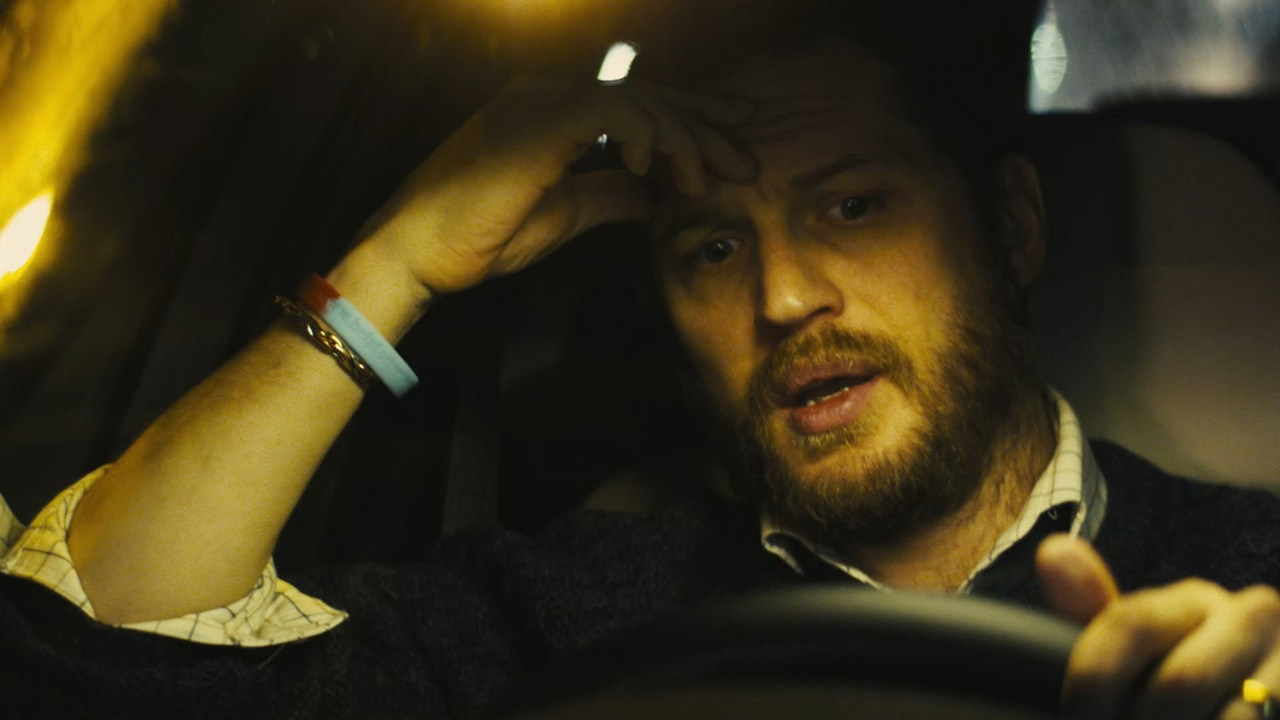
Here's another film I completely fail to understand the largely rapturous critical reception of.  Tom Hardy and his wandering accent drive for 85 minutes while their life implodes on the phone.  The performances aren't terrible, but this is the most profoundly uncinematic film of the year.  Barely a single idea here is visual, practically every nuance (bar one hackneyed device) could easily have been achieved on radio, which is surely Locke's proper home.

That's not to say I'd have wanted to hear it on the radio.  Not, at least, unless the many, many, discussions of how to pour concrete were to be deleted from the script.    

2: Dario Argento's Dracula [2D]
Oh, how the mighty have fallen.  Okay, so it has been a while since Dario Argento made a great film, or even a decent one, but holy fuck, I didn't think the man who gave us Suspiria had something this amateurish in him, even now.

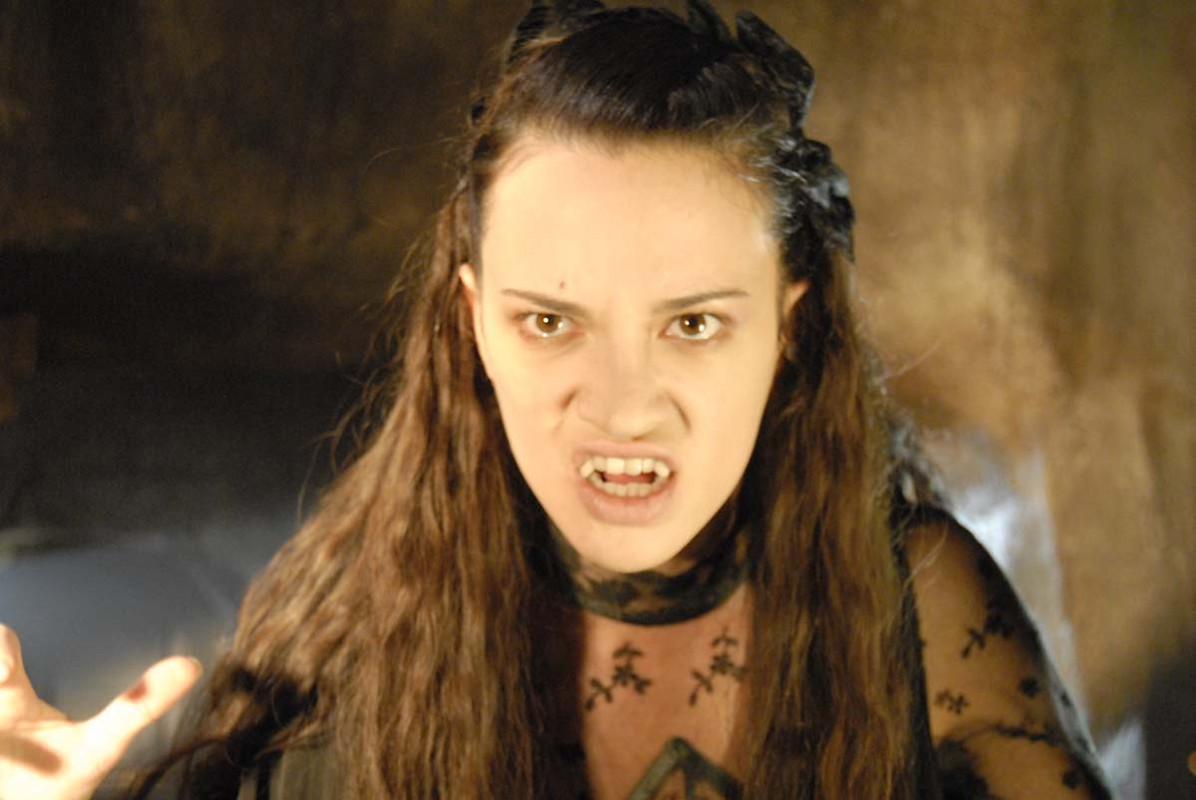
If Locke is the least cinematic film of the year then this is the ugliest.  Argento pours light into every frame of the film, overlighting it as mitigation against the darkening effect of 3D.  The result is to make it look like cheap TV from the 90s.  The heavily digital look doesn't help; everything is harsh, and the brightness makes it hilariously obvious just how cheap the sets are.

The news doesn't improve when it comes to the performances.  Thomas Kretschmann and Asia Argento (topless in yet another of her Dad's movies, and no, that hasn't got less icky with time) both act as if they're in a laughably bad panto, while Rutger Hauer, though admittedly well cast, is on autopilot as Van Helsing.

The effects are hilariously chintzy, with a CGI praying mantis that makes the Scorpion King from The Mummy Returns look state of the art, and vampire teeth that don't even fit the actors mouths.  Dario Argento's Dracula?  I'm amazed he put his name to this.  Hell, I'd imagine Uwe Boll would have gone for an Alan Smithee credit on this one.  

1: The Fault In Our Stars
Fuck this movie.  

Fuck it for being the exact movie, about beautiful people learning beautiful lessons, it promises not to be in its opening voiceover.

Fuck it for having two main characters so lacking in complexity that the only flaw either of them has is 
cancer.

Fuck it for wasting talented people like Shailene Woodley and Laura Dern on its mawkish tedium.

Fuck it for the trite lovey dovey bullshit that spews from its main 'characters' mouths.

Fuck it for pretending any teenager speaks like the achingly pretentious Augustus.

Fuck it for having three separate eulogies for the same barely a character.

Most of all though, fuck it for the scene in which Augustus and Hazel make out in the middle of the Anne Frank house, and everyone applauds them.

Fuck this movie.

Dec 1, 2014

The Imitation Game [12A]

Dir: Morten Tyldum
The story of the breaking of the Enigma code, a breakthrough which, if it didn't actually win us the whole thing, shortened World War Two considerably, is one that should be full of drama and of rich and interesting characters.   This telling, while not especially bad in any way, never really has either of those things.

The film focuses on Alan Turing (Benedict Cumberbatch), his relationship with Joan Clarke (Keira Knightley), a brilliant young member of the team at Bletchley Park, his building of Christopher; the computer that would crack Enigma and the secret that would ultimately lead to a horrible injustice against him later in life.

If you think that suggests that the film's focus is scattered then, frustratingly, you'd be right.  While all of these elements were important in Turing's life, trying to tell them all (plus a flashback to his school days) in roughly 105 minutes discounting the credits means that The Imitation Game struggles either to find a central thread or to tell any of its smaller stories especially satisfyingly.

The fact that we all know how the story ends (both for good and for ill) shouldn't be a reason for a film to fail to engage as a thriller.  Director Morten Tyldum tries hard to bring that edge of tension to the development of Christopher, but it never comes off.  Zodiac, ultimately, is a film about men looking through information in boxes and slowly building it into a complete picture, but it's also an intensive character study of those men and what drives their obsession.  Both sides of this seem to go missing from The Imitation Game.  

Benedict Cumberbatch is perfectly fine as Turing, but the performance is never anything more than that; Benedict Cumberbatch putting on a convincing period accent and convincing period clothing to give a performance.  I got a sense that I was being told who Alan Turing was and watching re-enactments of moments from his life, rather than living inside those moments with him, which is the sense of immersion achieved by Zodiac.

We get a sense of the reason behind the building of Christopher and of Turing's drive to achieve it, but the process itself is left largely offscreen and little attempt is made to explain how the machine works.  We see the stages of its building, but not the nuts and bolts work, so the achievement doesn't seem quite as hard won as it clearly was.  Instead what we get are cliché movie moments; Turing standing in front of his machine shouting that his bosses will never understand the importance of it; papers being flung from desks in frustration.  These things may have happened but, in the context of a movie that doesn't entirely absorb you into its world, they ring false.

Cumberbatch is relatively typical of the performers here.  Like him, Keira Knightley and Matthew Goode are perfectly fine, they're not doing anything wrong, as such, but from both there is a sense that they are working very hard and that we're watching actors acting.  The only moments of naturalism come from an engagement party sequence where we get to see the staff at Bletchley interacting as people – or as close to being a person as Turing is able to get. 

There seems to be an indecision at the heart of the film about what it wants to be; a biopic of Turing or a film about the cracking of Enigma.  This leads to Tyldum and screenwriter Graham Moore trying to have it both ways.  The problem is that the film doesn't come close to splitting its focus equally, so the treatment of Turing's school days and of the framing device involving the hideous injustice of his arrest for indecency and chemical castration is almost insultingly prosaic.  There are the ingredients here for two interesting films; one about Enigma and another about Turing's arrest, trial and conviction, but both of those films would need to dig much deeper than The Imitation Game.

Decently executed though it is, The Imitation Game is remarkable only in how utterly unremarkable it is.  It's not bad, but it's also no more than a couple of notches above a Sunday night drama on ITV.

Nov 2, 2014

The Month In Movies: October 2014

A slightly less in depth Month in Movies this month. I've already said a lot about my best and worst choices this month, as they were all at the London Film Festival.

Film of the Month
Girlhood

Worst of the Month
A Blast / Nagima


AWARDS
I nicked these categories from my friend AJ, who has been asking people to fill them out each month for many years at the joblo.com message boards.  Only first viewings are eligible.  If there is a tie films are listed in the order in which I saw them.

Best Actor: Romain Duris: The New Girlfriend
Best Actress: Nina Hoss: Phoenix / Essie Davis: The Babadook
Best Director: Peter Strickland: The Duke of Burgundy
Best Screenplay: Celine Sciamma: Girlhood
Best Visuals: The Duke of Burgundy
Best Use of Music: Girlhood
Biggest Surprise: The Duke of Burgundy
Biggest Disappointment: Face of an Angel
Best Movie Nobody Else Has Seen: Phoenix / Hungry Hearts 
Most [brilliantly] Fucked-Up Movie: Tokyo Tribe 
Coolest Title: Stray Cat Rock: Delinquent Girl Boss
One To Watch: Chiara D'Anna: The Duke of Burgundy / Karidja Touré: Girlhood / Essie Davis: The Babadook
Movie I Finally Got to Friggin’ See: The Town That Dreaded Sundown
Hottest Lady: Meiko Kaji: Stray Cat Rock: Delinquent Girl Boss / Wild Jumbo

Oct 27, 2014

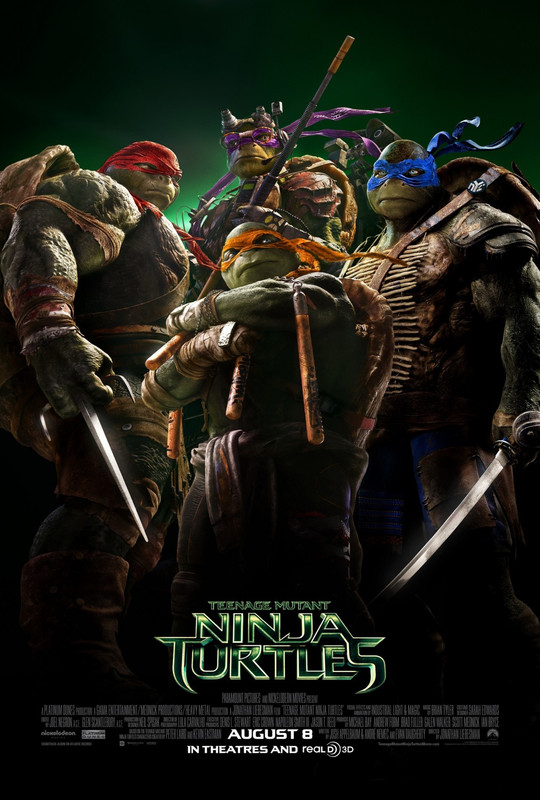
Teenage Mutant Ninja Turtles ['14] [12A]

Dir: Jonathan Liebesman
To my slight dismay I am now old enough for my childhood and teenage years to be mined for pop culture nostalgia.  I grew up on the Teenage Mutant Hero Turtles (thanks, BBC censorship, for making the word Ninja a surprise when I saw the first film).  Michaelangelo was always my favourite, he was closest to my own personality; the pizza obsessed joker, and he had the coolest weapons.  I hadn't thought about the turtles in a good couple of decades until this film was announced and I found myself revisiting the earlier movies, discovering that the first held up well; a surprisingly deft mix of humour, action and a little grit.  This did not make me optimistic for this reboot, and nor did the 'talent' behind it.

Jonathan Liebesman has previously brought us such contributions to the art of cinema as Battle: LA and such respectful, high quality, takes on franchises with a long legacy as Texas Chainsaw Massacre: The Beginning while producer Michael Bay has a long list on his crimes against geeks charge sheet, chiefly the unspeakably abysmal Transformers franchise.  The pairing doesn't inspire confidence.

In some respects, given the floor level expectations, Teenage Mutant Ninja Turtles qualifies as a reasonably pleasant surprise.  I never read the comics, I was too young for them when I was into the cartoon and perceived myself, perhaps wrongly, as too old for them after I grew out of the show and the previous films.  This being the case I always saw rather broad characterisations of each of the Turtles.  Leonardo was the stoical leader, Raphael the loose cannon, Donatello the nerd and Michaelangelo the joker.  The turtles don't need all that much more nuance, and to the film's credit it gets these personality traits right, though they come through more intermittently than you'd like and, sadly and in contrast to the 90's films, seldom figure in the action.  Mikey has some funny moments and his crush on April (played by Megan Fox) is intact, while Donatello is less anonymous here than he has been in some  iterations of the franchise.  The interplay between the brothers is good and faithful to the source, though Raph's separation from the group and rivalry with Leo could be a touch more developed.

The action takes longer to ramp up here than in the 90's films and between the fact that he has too much exposition up front and hides the Turtles for much too long it takes Liebesman more than half of the film's (wisely brief) running time to get to an action scene in which we can really see each of the Turtles fighting.  The choreography is solid enough, and while they can be ludicrous the large scale set pieces of the film's third act, especially one that takes the action down the side of a snowy mountain, are also a lot of fun if you can locate your inner nine year old and make him sit still to watch the film.  I was never caught up in the story, but I did find myself enjoying the action scenes purely as action scenes.

Unfortunately, while Teenage Mutant Ninja Turtles is better than you'd expect, it's not all that much better than you'd expect and for every thing it gets right it gets two wrong.  The casting is a mixed bag.  Johnny Knoxville does well as Leonardo, as does Alan Ritchson as Raph, but Mikey and Don both have pretty grating voices (Noel Fisher and Jeremy Howard respectively) and  Tony Shalhoub's Splinter simply doesn't carry the gravitas of previous takes on the character.  

Then there's Megan Fox.  Fox never seemed a likely April O'Neil to me, the character was always, while depicted as attractive, defined by her job rather than her looks.  That might have been true here but for the casting of Fox; a vacant actress who has long coasted on her perceived hotness.  She does nothing here to suggest she has any ambition to change that.  There is an attempt here to give April some depth that she never had in either the show or the other movies (despite Judith Hoag's perfectly solid performance), but the screenplay does this in only the most perfunctory way, giving her an off the peg dead father subplot that also ties into the origin of the Turtles, which is another of the film's big problems.

Tying April in to the origin story not only leads to her lame and predictable back story, but it means that the film has to give us several lengthy and boring infodumps that simply wouldn't be necessary if it weren't for that specific character being tied in to events.  It would be fine if it made a dramatic contribution to the film, but it doesn't, beyond Fox's late realisation about the film's villain, which prompts her to actually say, out loud, "You killed my father" (I confess to openly laughing at Megan Fox's blank delivery of that line).  

This storyline also gives us a terribly ineffectual villain.  The 90's films, while they had a menacing Shredder and a pretty cool second stringer in Tatsu, never quite captured the fun rogues gallery of the TV show, and this is a problem this new film echoes.  William Fichtner's villain is an empty suit with little menace, a silly, hackneyed, plan and a ridiculous motive: to become "stupid rich", despite the fact he already lives in a literal mansion.

The only familiar villain used is Shredder and he is the hub of the design problems that are the film's second major issue.  Shredder was never the most plausible looking villain, but the 1990 film made gave him a look that fitted into the reality of the New York it presented.  The bladed outfit looked threatening, but like something you could imagine someone would make in order to scare the gang he leads into submission.  This film's Shredder, by contrast, looks ridiculous.  He looks like a cross between one of Bay's Transformers and a sentient knife factory.  The first appearance of his costume was another moment at which I let out an inappropriate laugh.

The design issues don't stop there.  The Turtles themselves actually look better in motion than they did in publicity shots, but there are still a few moments when the attempts to humanise their faces become just a little eerie and their design is just a bit overly busy with straps, makeshift armour and other accessories.

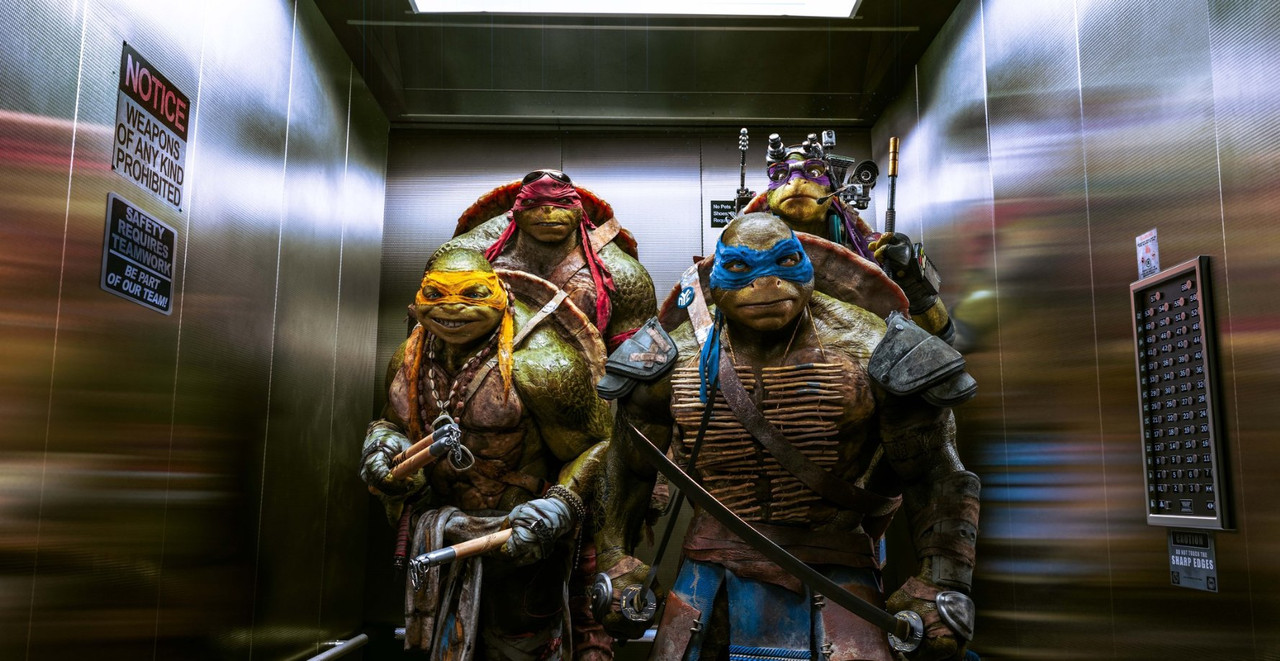
The film isn't badly shot, but it's anonymous looking.  Liebesman is, at best, a journeyman and not even one of Hollywood's more reliable directors in that category.  I'd love to have seen how Joe Johnston, a much more talented journeyman, would have tackled this assignment.  Still, Teenage Mutant Ninja Turtles does most of what it's supposed to do pretty well.  What's frustrating is that there are flashes of a better film - as in a funny little digression in the elevator on the way to the final fight with Shredder - and easy fixes that could have solved some of the film's problems.  

The kids in my audience lapped it up and, given that it's for them, perhaps that's all that matters.  Still, as someone who grew up a Turtles fan, I'd like to have got more from this film.  I think there's room to please old fans and new here, and I'm at least interested enough to see whether a sequel can marshal the elements a bit better, because when this film get things right it's a lot of fun, but it gets them wrong too often.
★★½

Oct 9, 2014

Gone Girl [18]

Dir: David Fincher
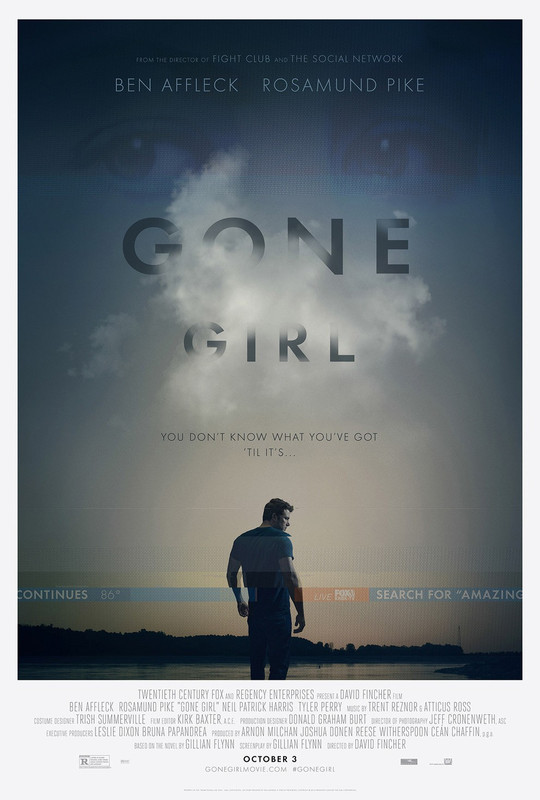
Gone Girl is a contradictory piece of work: it's trashy and tawdry, pure pulp, but it's also classy; precisely crafted and looking to award season with a degree of expectation.  These are things that David Fincher has previously combined to brilliant (Se7en) and numbingly pointless (The Girl With The Dragon Tattoo) effect. Sadly Gone Girl, while it has more reason to exist than Fincher's last, ends up leaning more towards the latter.

Based on Gillian Flynn's novel, and adapted by Flynn herself, the setup of Gone Girl sees Amy Dunne (Rosamund Pike) vanish on her fifth wedding anniversary from the home she shares with her husband Nick (Ben Affleck).  As the investigation continues details emerge about Nick and Amy's lives and their marriage which throw suspicion on Nick.  That, of course, is only the premise, but to say much more would be to spoil the film for those, like myself, who come to it without having read the novel and that would be a shame because one of its undoubted strengths is the fact that the plot twists genuinely throw you for a loop.

There is, on the surface, much to recommend here.  As you might expect of a craftsman as assured as Fincher, the film looks impeccable.  There is a coldness to his eye here that renders suburbia something foreboding, visually and geographically removed from the grimier part of town where The Bar, which Nick owns with his twin sister Margo (Carrie Coon), is found.  Every frame is perfectly composed, reeking of design, and the camera movement follows suit.

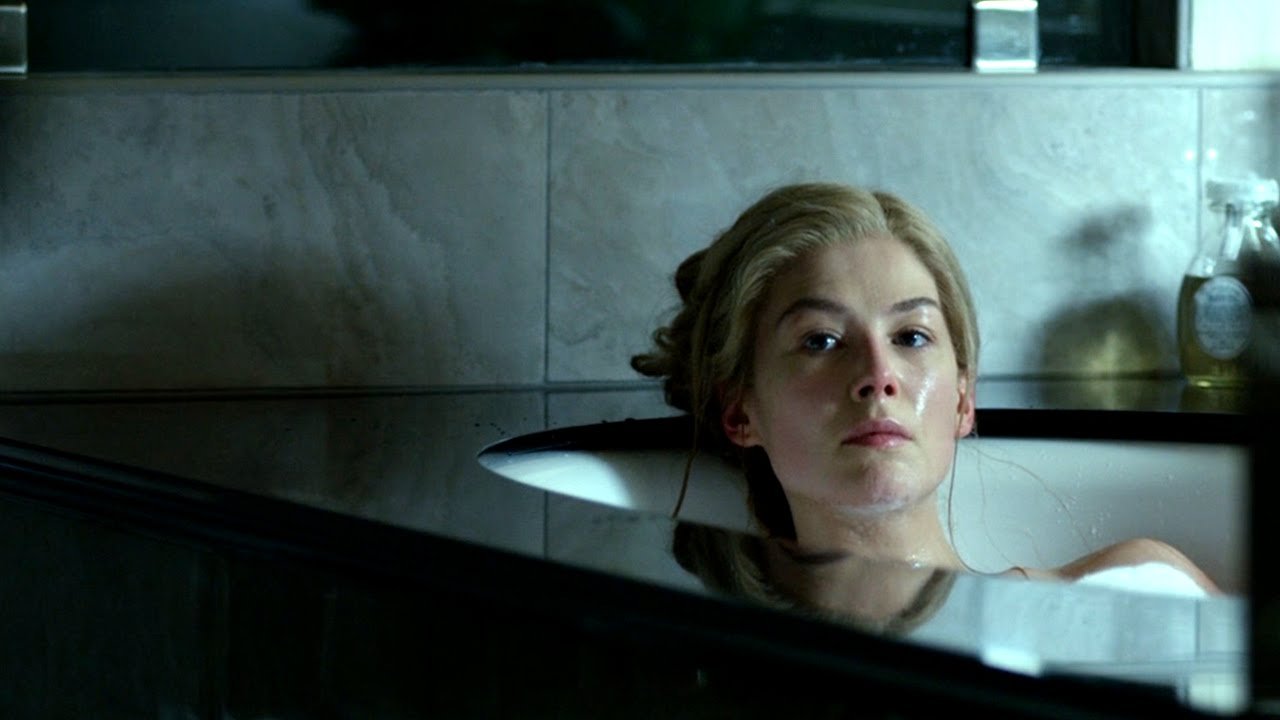
Similarly there is little outwardly wrong with the performances.  Affleck does some of if not the best work of his career.  A TV interview late in the film is full of meaningful touches that resonate with scenes from right back to the start of the film.  Rosamund Pike, given a standout role as Amy, grabs hold of the part with both hands and owns every scene she's in.  As far back as her debut as a bad Bond girl in Die Another Day filmmakers have recognised Pike's icy quality and it seems perfect that she was once the lead in a play titled Hitchcock Blonde.  Fincher uses and manipulates those attributes in Pike to  striking effect.

Many of the film's best roles are for women and perennial supporting player Kim Dickens, as a thoughtful, methodical detective and Carrie Coon, in her first, potentially star making, film role as Margo; dragged into events simply by being related to Nick both give strong performances and are allowed to be more than just props to move the action along.  Perhaps the biggest surprise is Tyler Perry, regarded by people who aren't fans of his Madea films as at best and irritant and at worst an embarrassment, he here turns in a credible and authoritative dramatic performance as Nick's lawyer, Tanner Bolt.

And yet, as there is a dark underbelly to Nick and Amy's marriage there is a flipside to many of the virtues of Gone Girl.  It IS perfect looking, designed to within an inch of its life, and perhaps the coldness that that design gives the film is exactly what Fincher and his brilliant DP Jeff Cronenweth intended.  Still, I can't deny that it meant I could see them behind every shot, that the film held me at a distance, almost as if I was watching it being directed rather than watching the story unfold.  Surprising as the events of the story are, I found myself so aware of their assembly that I was never fully engaged with them.

The performances ARE largely excellent (though Patrick Fugit gets lost in the shuffle and Missi Pyle is too hammy as TV news reporter) but they all feel like performances.  This, again, may be down to the fact that I could always feel Fincher's hand driving the film, which, controlled as they are, I never have in his other works.  It's particularly true of Rosamund Pike.  Again there is perhaps intent in this; a sense that we're supposed to feel that Amy is always playing a role, but this is something that I've felt has been done better in a lot of previous Neo-Noir.  Pike is an actress I've long been a fan of, and she's clearly been directed to this performance, which is technically difficult to fault, but it's that very technicality that was the problem; I could always see the cogs turning, in a way I can't usually when I see her on screen.  It would be easier to say that this was just a choice about Nick and Amy's characters if the same feeling weren't present in most of the other performances.  I found it particularly forced with Neil Patrick Harris' character.  Perhaps Fincher is trying to externalise the idea that everyone has a hidden agenda, but it's just one more thing that kept me very aware I was watching a construct that I felt more and more removed from even as I admired its craft.

For its first two hours Gone Girl strains credulity progressively more and more, with a plot that hinges so completely on everything going exactly to plan and everyone behaving just as expected that it is always on the knife edge of seeming ridiculous, but it's only in the last 30 minutes or so that the balance falters and my suspension of disbelief went from strained to snapped.  Up to that point I just about believed that the main characters would behave as the narrative needs them to, but that stopped being true after the big twist that heralds the film's long coda.  This might be less of an issue if Gone Girl had been more embracing of its pulpiness from the outset, but amping up those elements feels an odd fit with the prevailing tone of the film.

Watching Gone Girl I kept thinking of John Dahl's great film The Last Seduction, which is as pulpy as any 90's neo-noir and has many elements that echo here, including that cold tone.  For me Dahl marshals and combines those elements much better, into a film I am much more absorbed by.  David Fincher and his cast and crew are exceptional craftsmen, but the more I think about it the more my experience of Gone Girl is one of watching them build a beautiful empty vessel.