Showing posts with label 2.5 stars. Show all posts

Oct 8, 2021

24FPS @ LFF: See For Me

Dir: Randall Okita

Having recently gone blind, former Olympic skier Sophie (visually impaired actor Skyler Davenport) has found herself taking jobs cat-sitting for wealthy homeowners. On the first night at her latest job, the house is broken in to and Sophie has to make it through the night, with the help of Kelly (Jessica Parker Kennedy), a desk-bound army veteran who sidelines as a helper on an app called See For Me.

To begin with, See For Me plays like a pretty typical home invasion thriller, riffing on the likes of Wait Until Dark and Panic Room. The opening act capably sets out the space, even more vital here because, with Sophie unable to see, we need to understand the geography to appreciate the difficulties she’s going to face because of it. The first half-hour or so also deals with the character introductions, and in that respect, at least with Sophie herself, Adam Yorke, and Tommy Gushue’s screenplay (their first feature) distinguishes itself a little. Sophie is a more complex character than you might first expect, especially in her moral dimensions, and this leads to some pretty surprising twists, and one scene, involving a cop played by Emily Piggford, takes on much greater tension because of it. 

The mix of characters among the three criminals in is pretty typical: the tech guy who doesn’t like violence, the controlled pro, and the loose cannon, and Kelly is also quite loosely established, though her sense of responsibility to Sophie comes through strongly and at least initially there’s some spark in the relationship between her and Sophie, though that is reduced as the film goes on, and she becomes a lot more purely functional as a character. Director Randall Okita does a decent job establishing and exploiting the geography of the location. Best in this respect is a series of shots early in the break-in that use first a wide exterior and then a more claustrophobic interior to show, in single frames, where Sophie and the robbers are in relation to each other.

Unfortunately, the whole film begins to lose its way in the third act. Up until this point, Davenport has given a performance that plays interestingly with our sympathies and challenges us on whether to root for her. The last half-hour, however, ends up letting in the only truly bad performance in the movie. The script piles on too many twists, and eventually loses credibility in story terms and, more damagingly, in terms of what we believe Sophie would be able to do with the level of visual impairment the film says she has. A tacked-on coda suggests something I simply don’t believe, before wrapping up on a twee note that doesn’t really fit the film, dragging it further down just before the credits roll. It’s a pity because there are things to enjoy here, but a solidly tense first hour ends up deflating by the end.
★★½

Sep 2, 2021

Frightfest 2021: Motherly

Dir: Craig David Wallace
It’s Beth’s (Tessa Kozma) 9th birthday, but she’s far from happy, spending it with her mother Kate (Lora Burke) in an isolated farmhouse, living in witness protection. Beth wants to see her father, but he’s in prison for the murder of one of his daughter’s friends. Late that night, Kate and Beth’s home is invaded by a couple bent on vengeance.

Home invasion films are often effective because of their claustrophobia; they tend to trap characters at odds with each other in a relatively confined space, drawing tension out from the feeling of being trapped with them. There are, despite a slightly wider canvas, aspects of this in Motherly, but it's notable that they begin before the home invasion aspect of the film starts. The house that Kate and Beth are stuck in is fairly spacious, it has a garden and a barn, but we still find them both feeling hemmed in by their space and the situation that has put them there. The tension between mother and daughter is felt right from the start, as a slightly bratty Beth is ungrateful for her birthday present and cake, and disobeys her mother by hiding in the barn. This feeling of being stuck in confinement with a difficult child is likely to be pretty familiar to parents, given the events of the last 18 months, and it builds the characters and their situation effectively before the real horror descends.

Lora Burke and Tessa Kozma both give committed and believable performances as the mother and daughter. Kate’s stress at financial worries, dealing with her daughter, and the fact that Beth doesn’t seem to entirely grasp why her father can’t be with them is palpable, but so, in the latter part of the film, is her absolute devotion to protecting her. For Kozma’s part, she makes Beth a realistically stroppy and perhaps traumatised, kid.

After an opening half-hour that largely lays character groundwork (also introducing us to Hal (Colin Paradine) Kate’s witness protection liaison, who she’s been sleeping with), the film moves into its home invasion section. Kristen MacCulloch and Nick Smyth have more emotion to play than the usual faceless bad guys we see in these films (notably, ironically, the ones Lora Burke came up against in 2020’s For The Sake of Vicious), and they bring real dimension to the parts.

However, there is one central element of the story that Craig David Wallace and his co-writer Ian Malone clearly want to keep as a big twist. Unfortunately, not only is it wildly obvious from the storytelling, but one particular shot choice relatively early on signposts it incredibly clearly. If you work that revelation out (and there’s little chance you won’t), the whole home invasion section—well directed and performed though it is—can feel rather redundant.

On the whole, Motherly is a solid debut film, but one that feels very much like a debut. Wallace is clearly adept at working with actors, drawing decent performances from his entire cast and his direction also often shows both style and impact; an understanding of the subgenre he’s working in. Where the film falls down is in the overly signposted screenplay, Wallace and Malone lay the themes in effectively enough, but they undermine themselves because by letting us see where everything is going to end up long before the film gets to that would-be shock they neuter the scares and the tension. It’s a shame because there’s real promise here, but the whole ends up rather less than the sum of its parts.
★★½

Mar 17, 2021

24FPS @ BFI Flare 2021: The Greenhouse

Dir: Thomas Wilson-White
Four siblings are reuniting for their mother Ruth’s (Camilla Ah Kin) 60th birthday, several years after the death of their other Mum, Ruth’s wife Lillian (Rhondda Findleton). Only Beth (Jane Watt) has remained at home over the years, being there as Lillian died and to try to help Ruth cope afterwards. She has also discovered that the path at the bottom of their garden acts as a portal, transporting her back to the past, when both her mothers were alive, her siblings were home, and she was falling in love for the first time.

The Greenhouse falls pretty distinctly into two genres. One works better than the other. The more familiar part of the film is a fairly simple character-driven drama. A wife struggling to come to terms with the loss of her wife, even a few years later. Siblings who love each other but have a difficult relationship, at least partly because the eldest, Beth, feels as though she has become stuck while her brothers and sister have gone off to live their lives. These are also dynamics we find echoing in the flashback sequences, as Beth observes the past. These sequences aren’t wildly original, but they are well acted, in particular one scene in which Beth sees herself shout at a dying Lillian, only for her older self to desperately try to take it back, screaming her “sorry” to a memory, unable to change it even though it is right in front of her. This is by far the moment that best distills what the film is saying in these flashback sequences. 

The flashbacks also have a few moments that colour in the characters of the siblings. Beth’s tentative relationship with her friend Lauren (Harriet Gordon-Anderson) is interesting in how it speaks about the fact that even though her mothers are gay and one of her brothers is bi-sexual, Beth isn’t entirely comfortable with or confident in her sexuality. Also effective are the purely domestic scenes. The family dynamic is credibly fractious, but we also believe that the siblings and Ruth all love each other, especially during Ruth’s speech at her birthday party, which becomes something of a eulogy for Lillian.

What works less well is the sci-fi aspect of the film. In the beginning, it’s somewhat unclear how we are supposed to take what is happening. Beth could be having very vivid, lucid, dreams (which would perhaps better explain what everyone she sees in the past is their current age, despite flashbacks clearly going back to when she was about 16), when it becomes clear that she’s not the only one who has found this path, and thus that it isn’t a dream, the rules aren't especially well-defined, which means that a late attempt at a shift into horror—while it throws up some emotional moments—doesn’t feel credible within the film’s conceit.

Overall, The Greenhouse isn’t bad, but it’s messy. The sci-fi element trips over itself literalizing a fairly obvious point, but the straightforward drama sections showcase strong performances and some emotionally articulate writing from director Thomas Wilson-White.
★★½

Nov 25, 2020

2020 Catch Up: Vol 1

As this long, generally awful, and for cinema notably strange year starts drawing to a close, I come to a familiar part of my process: list time. Each year around Christmas I put out my personal best of the year, and each year I try to play catch up with some of the releases I either missed or need to revisit before finalizing the Top 10 or 20 (probably 20 this year), so here is the first of what should be a series of short(ish) reviews of some of those catch up screenings.

Legacy of Lies
Dir: Adrian Bol
I'm not going to pretend that Scott Adkins the actor can do the kind of emotionally heavyweight work that, say, a Michael Shannon can. On the other hand, in his niche of direct to video action films, he's one of the best. He's got more acting range than a Jason Statham and is considerably more accomplished in the action scenes, he really should be a more mainstream name. That's not to say Legacy of Lies is the best argument for that idea.

The plot, on the vanishingly small off chance that you care, is the usual guff about the bad guys (Russians and/or the CIA in this case) wanting 'the files' that Adkins' Martin, a secret agent turned MMA fighter/bouncer was tasked with protecting 12 years previously. On that mission, Martin's partner was killed, which has left him with a now 12-year-old daughter, Lisa (Honor Kneafsey), who is kidnapped by Suzanne (Andrea Vasiliou), in order to bribe him to get the files.

Shot in Ukraine, Dutch director Adrian Bol's second feature doesn't appear to have the budget to elevate itself much beyond typical DTV fare, though some location shooting does at least give us a bit of a sense of place for Kyiv (the same is not true of any attempt to convince us we're in London in the first act). Adkins doesn't stretch his acting muscles much here, but Honor Kneafsey, so good in the lead voice role in the forthcoming Wolfwalkers, is pretty good as Lisa and she brings a little more emotion out of him in some of their scenes. The bad guys, and Yuliia Sobol, as the daughter of another of Martin's former fellow spies, don't have much opportunity to do more than advance the plot with Bol's generic dialogue.

All this said, Legacy of Lies is still a fun watch. Adkins is seldom less than an engaging presence, and he carries this nonsense fairly well. What matters though, is the action. Fights pepper the movie throughout, with a decent mix of gunplay and martial arts, but definitely more emphasis on the latter, playing to Adkins' strengths. An early MMA bout serves little plot purpose but is one of the film's better punch ups and a mid-film set piece pitting him against (I think) one of the CIA guys is also particularly solid. The editing could be a little more sedate, but the fights are generally well shot; punches and kicks feel like they land hard, and we can generally see what's going on.

When it comes to a film like this, I'm not overly demanding. Legacy of Lies doesn't have the most riveting plot, but it's well enough acted not to be risible, has enough action that it's never dull and is shot proficiently enough that watching the fights is fun. That's doesn't put it up with the Ninja films, Avengement or the peerless among DTV actioners Universal Soldier: Day of Reckoning among Adkins' best, but it's enough to recommend it to his fans.
★★½

Blackpink: Light Up The Sky
Dir: Caroline Suh

It's fair to say that in the last couple of years, having had a brief flirtation with the mainstream back in 2012 with Psy's huge hit Gangnam Style, K-Pop has become a massive force in global pop culture. This can largely be put down to the massive crossover success of the boyband BTS, whose fans apparently sabotaged one of Donald Trump's rallies earlier this year by booking tickets en masse, making him humiliatingly take down an 'overflow' stage outside the venue. No other group seems to have achieved this sort of cultural crossover
—at least to someone like me, who hasn't followed mainstream pop music closely in at least 15 years—except possibly Blackpink.

Caroline Suh's documentary catches Jisoo, Jennie, Rosé and Lisa on the cusp of and during their 2019 world tour, but also takes a look back, filling in the background of each of the girls and their training under the YG Entertainment system, as well as capturing the relationship between them as bandmates and friends.

Glimpses of the girls auditions, their stories of the gruelling training regime at YG, with 14 hour days spent drilling the same routines and songs prior to a monthly ranking, and the archive footage showing their development over as much as six years before Blackpink's debut is the most interesting content here. It's the point at which we sense the least filter, and yet it still feels as though these sequences only scratch the surface of the story behind the factory-like atmosphere at YG and other talent agencies like it. Several of the girls talk about having felt lonely, or sad at knocking their friends out of the process, but there is definitely a whole film to be made diving more deeply into this world.

The rest of the film is really for fans. Jisoo, Jennie, Rosé and Lisa all come across well, their friendship shines through in all of their interactions, with each of them often running into the others as they finish each others sentences. The bits on their background give some insight into why they might have bonded so quickly, with Rosé and Lisa both coming from overseas (New Zealand and Thailand respectively) and Jennie having lived and gone to school in New Zealand for five years, giving them an international makeup that apparently isn't common among K-Pop bands. It's also clear that they work ridiculously hard, which shows in the footage from their accomplished live shows, and particularly the one at Coachella; their first in the US.

At 79 minutes, Light Up The Sky is brisk and breezy. There are glimpses beneath the surface, but there is definitely a feeling that this is argely a PR product. The girls talk about beng tired and having to make sacrifices to work so hard, but little is allowed to puncture what is a very light and sunny tone. I wonder if, some years down the line, we will see a more warts and all portrait of what goes in to making Blackpink the hugely successful machine it is. Still, this film will be enough of a look into their world to delight fans and perhaps to win them a few more, if what relatively little of their music we hear grabs a few casual viewers.
★★½

Apr 5, 2020

Martial Arts Month: Day 5

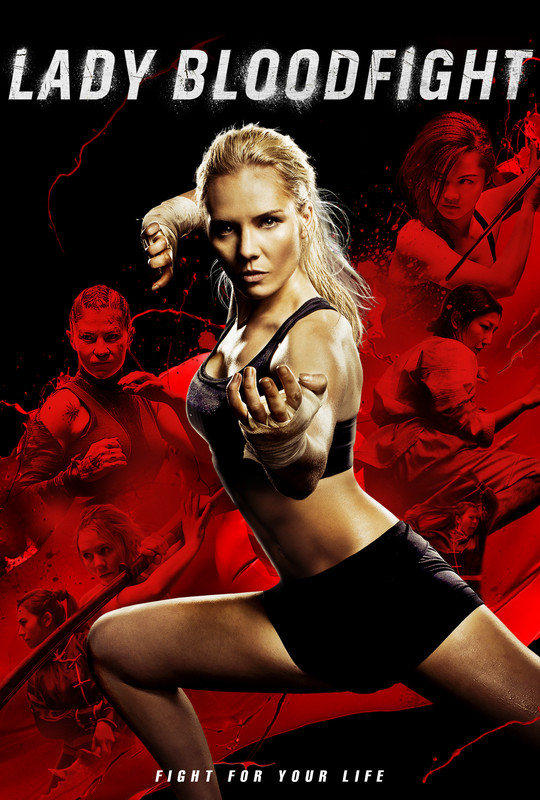
Lady Bloodfight
Dir: Chris Nahon
This was not on the initial list for this month’s martial arts marathon, but yesterday I saw a stuntmen react video on youtube, discussing some classic fight sequences and one of the guests was Amy Johnston. There were a few clips shown from this, the first movie she had a leading acting role in, so I decided to give it a look and add it to this series.

The story is basically Bloodsport, but with women (indeed it was originally titled Lady Bloodpsort). Johnston plays Jane Jones, who comes to Hong Kong to fight in the Kumite and avenge her father. She’s taken under the wing of Shu (Muriel Hofmann), who is also seeking revenge on a rival (Kathy Wu) who has trained her own champion (Jenny Wu) for the Kumite. 

The story is clearly basic, and the screenplay (by Bey Logan, whose Hong Kong Legends commentaries got me and many others into the genre) makes few demands of anyone’s acting abilities as it knits together various threads of cliché with dialogue that makes most of the lines sound like ‘that’ll do’ placeholders that accidentally found their way to the shooting draft. The plot too, for all its simplicity, is badly told, with Jane’s character particularly poorly established, meaning it’s hard to see why she’s recruited by Shu.

Amy Johnston is the film’s standout element; an accomplished stunt performer, she steps up to the role and delivers what the film needs. It’s nobody’s idea of a deep characterisation, but she does what she can with the dialogue, and demonstrates the sort of presence a lead needs. Johnston is also clearly extremely good at her day job. Her fight sequences are excellent and there are many blows and falls that at least appear to connect painfully. The other performers, many of them also stuntwomen, match her well. If any of them are given any personality it’s a single note (for instance, Jet Tranter’s Cassidy is ‘the nice one’), but they deliver where it matters: in the ring.

The problem is that while all the actresses are showing their best moves, Chris Nahon, who is the editor as well as director here, often neglects to show them at their best. Of course there are players here who may need more doubling and cutting because they aren’t experienced martial artists, but even the Kumite fights are often overly quickly cut. This is especially acute with Johnston. The few times Nahon lets extended moments play out in her fights are easily the film’s most entertaining, so it’s disappointing when he returns to the hyperactive rhythm that is his default setting.

I’d like to see Amy Johnston do more, this role isn’t a challenge, but what little she gets to do with it shows there’s an actor as well as a stuntwoman there, it’s just unfortunate that the script and direction here appear to not quite let her show the best of either.
★★½

Mar 1, 2020

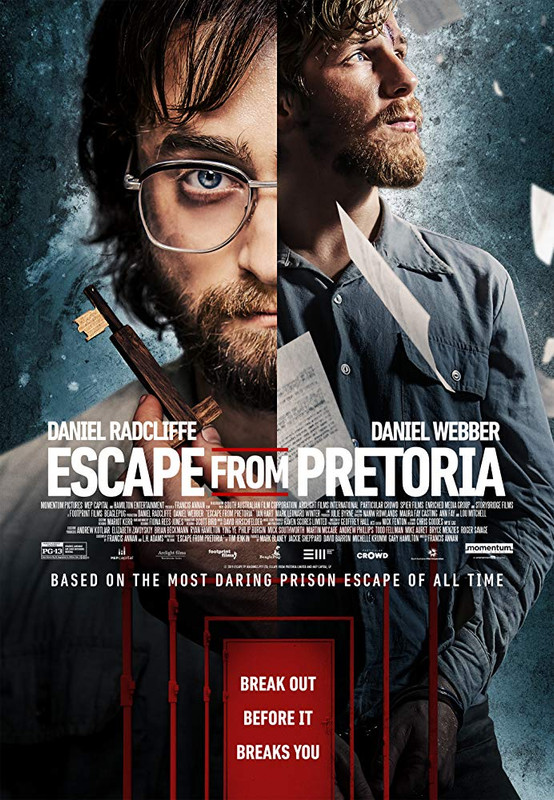
24FPS @ Glasgow Film Festival 2020: Escape From Pretoria

Dir: Francis Annan
In 1978, ANC members Tim Jenkin and Stephen Lee (Daniel Radcliffe and Daniel Webber) were sent to Pretoria Prison in South Africa for a series of leaflet bombings in protest against the government and its apartheid regime. They immediately began plotting their escape; observing the guards keys and cutting wooden replicas. 

You couldn’t accuse Francis Annan’s film (his first widely released feature, following shorts and TV work) of lacking focus. The preliminaries are dealt with quickly, with Jenkin and Lee’s last leaflet bombing, their arrest and their trial all neatly dealt with within the first 12 minutes or so. The politics are given context just as quickly, but the film assumes you understand what apartheid was and settles into its main focus; the meticulous preparations for the escape of Jenkin, Lee and Leonard Fontaine (Mark Leonard Franklin), a fictionalised version of third escapee Alex Moumbaris.

The process scenes are interesting; the trial and error of making keys precise enough to work and finding ways to hide the various implements needed for the escape. Annan is also able to leech painful tension out of practice runs of the escape. Because the replica keys are made of wood there is a constant, gnawing, nervousness that one might break off in a lock, and in one sequence the tiny creak of a cupboard door is enough to set us on edge. What we miss is some of the behind the scenes process, which could have added greater context to a film that often makes it feel as though this plan was entirely, if meticulously, improvised. A little reading demonstrates that’s far from true.

In focusing in so completely on process, Annan and his co writers sacrifice some character writing. Tim is the stoic hero whose resolve and planning are carrying the day, Leonard the family man missing his kid. Stephen Lee on the other hand, almost entirely disappears. Daniel Webber is fine in the role, but I couldn’t tell you much about Lee’s personality. Radcliffe is also pretty good, his accent wobbles from time to time, but his natural nervous energy works particularly well in a scene in which the keys are almost discovered, as we can see his Jenkin holding panic just below the surface.

The issue with Escape From Pretoria isn’t that it’s a bad film, it has a few standout moments (the use of a plunger to add tension in the final scene comes to mind), but most of it feels pretty standard issue. Everything; acting, camerawork, writing, is solid but there is little inspired here, little we’ve not seen before. At its best the film resembles Escape From Alcatraz, but that’s not entirely to its benefit, because it never meets that level and doesn’t really utilise some of the meatier political context available to distinguish itself from that or many other prison break movies.
★★½

Feb 25, 2020

24FPS @ Glasgow Film Festival 2020: Blood Machines and Spookies

Blood Machines
Dir: Seth Ickerman
Synthwave hasn’t found a mainstream moment since the Drive soundtrack, but it has carved out quite a niche as an underground scene. Soaked in the influence of the 80s, and particularly of John Carpenter both as a musician and as a filmmaker. The music readily conjures sci-fi imagery even on a first listen and Carpenter Brut and their regular directorial collaborator Seth Ickerman trade heavily on all of those influences in this 50 minute hybrid of mid-length film and music video, which trades on the same imagery they have been employing in their previous videos.

The story, such as it is, finds two men (Anders Heinrichsen and Christian Erickson) in charge of a spaceship, they have just shot down an enemy ship and taken an enemy soldier (Elisa Laskowski) prisoner. Unbeknownst to them, the ship was alive. The ship’s essence becomes a beautiful woman and a galactic chase ensues.

The dialogue isn’t great and the acting (all in English) is a bit ropey, but Ickerman’s imagery - if overly heavy on gratuitous nudity - is striking, folding Carpenter Brut’s recurring motifs in fairly naturally and employing some excellent CGI for what can’t have been a large budget. Ultimately though, the score is the star. If you like synthwave and in particular Carpenter Brut’s brand of the genre, this will work for you, though you do have to wait a little longer than is ideal for the first time the music kicks into high gear.

At 50 minutes, this is overextended, and it’s hard not to wish the writing and acting had been more of a focus, because there’s the kernel of a decent short film here, even apart from the score. As an extended music video though, there’s plenty for fans to enjoy both visually and aurally. The third star below is strictly for those fans.
★★★


Spookies
Dir: Eugenie Joseph, Thomas Doran, Brendan Faulkner
There are auteurs in the horror and exploitation genres, but you do have to remember that the exploitation part of that equation sometimes applies off screen as much as it does on, and bottom line often takes precedence over a director’s vision. Spookies is definitely one of those cases. It began life as Twisted Souls, about a group of teenagers (played by unknowns, but for Charlotte Alexandra—here Charlotte Seeley—known to arthouse fans for Walerian Borowczyk’s Immoral Tales and Catherine Breillat’s controversial debut, A Real Young Girl) who are trapped in a house by a Warlock who wants to use them to raise his bride from the dead. Bolted on to this were new scenes with an entirely different cast and extra creature effects.

Spookies entirely bears out its messy origins. It’s hard to imagine that Twisted Souls would have been any good in itself. What remains of co directors Brendan Faulkner and Thomas Doran’s work is basically a boring version of the original Evil Dead. Their characters establish little presence, indeed they’re barely even stereotypes, and the acting is middling at best. The story doesn’t hang together in these sections, particularly frustrating is the fact that, for me at least, it never became clear why these kids needed to become victims in order for the Warlock to get his wife back (she’s walking around long before the bulk of the deaths occur). In story and character terms, the extra scenes directed by Eugenie Joseph add little besides running time, always feeling untethered from the rest of the film and making the storytelling even more confusing.

What Spookies does have going for it, in both of its constituent parts, is some enjoyable practical creature effects. Effects team members like Gabe Bartalos and John Dods went on to more notable work, Bartalos recently branching out as a director. The work here displays budgetary limitations, but the design is always excellent, even when it’s clear that articulation was limited (see the Grim Reaper puppet and the spider monster, among others). The effects can’t paper over all the cracks in the film, but they do make it lively enough to be fun if you’ve got a soft spot for slightly ropey 80s horror.

Spookies is what it is: a movie that appears to have been held together with sticky tape and good will. There’s a sense that the cast are having fun and the effects crew in particular are trying hard, the film doesn’t add up to very much, but at 85 minutes it’s worth catching just for the kind of practical effects we seldom see these days.
★★½

Feb 24, 2020

24FPS @ Glasgow Film Festival 2020: Tammy and the T-Rex [Gore Cut]

Dir: Stewart Raffill
Boy meets girl. Boy is beaten up by girl’s psycho ex. Boy is murdered by a mad scientist who transplants boy’s brain into an animatronic T-Rex. Boy/T-Rex goes on a bloody rampage, before finding his girlfriend and convincing her he’s her boyfriend. Girl and T-Rex go on the run together. [Sings] “Tale as old as time…”

A lot of questions went through my mind as I was watching Tammy and the T-Rex. The one that recurred most often was this: “Who was this made for?” Shot in this R Rated version, with some splattery but often inept effects, cut down to a PG-13 for its initial 1994 video release and now restored to its full ‘glory’, neither cut seems to have an answer for this question. For the most part, this is a teen comedy, but even the PG-13 material has a strange darkness to it, with Tammy’s (Denise Richards) ex stalking her and threatening both her and her new boyfriend Michael (Paul Walker) and the T-Rex murdering a whole lot of random people, albeit less graphically in the original version. In both cuts, despite the darkness of some of the story elements, the tone is pitched towards 8-year-olds, except when it’s not, like in the final scene, in which an underwear-clad Richards does a sexy dance number for reasons too astronomically idiotic to go into here And so, I ask again, who was this supposed to be for?

Tammy and the T-Rex (or Tanny and the Teenage T-Rex, as my screener’s titles had it, despite the fact Tammy’s name is always clearly pronounced with an M, not an N) is technically a bad movie. Richards does her level best, but she’s hamstrung by the terrible material and fails to display the kind of comic timing she would show a few years later in Drop Dead Gorgeous. She and Walker are a cute enough couple, and there’s a little chemistry there, but asking Richards to replicate that with an animatronic T-Rex was never going to work. That mission isn't helped by the T-Rex itself, and least of all by the hilariously cheap hands used every time it has to interact with something. 

Try as everyone might, there’s never a moment that gets past the essential ridiculousness of the premise. And yet, that’s why the film works at a certain level. The restored gore is largely rubbish, and actually the film might be even funnier without it, because clips of the PG-13 version are even more comically stilted as they cut around the blood and swearing. While Richards and Walker aren’t bad within the confines of the script, the same can’t be said of the cartoony performances of most of the rest of the cast. Chief offenders are Terry Kiser as the scientist who transplants Michael’s brain into the T-Rex, playing the role as if he’s in some sort of overacting Olympics and Theo Forsett as Tammy’s camp gay best friend Byron, who is the butt of one of the film’s more mean-spirited jokes, from the sheriff’s deputies who are presumably meant as comic relief. 

When it is trying to be funny, Tammy and the T-Rex largely misses the mark, but Ellen Dubin genuinely seems to be having a blast as Kiser’s sidekick, and scores a couple of laughs. The few gags that hit are pretty good (look for one when Tammy, Byron and the T-Rex are cornered by the cops late in the film) and the unintentional comedy does make up the dearth of honest laughter. 

Honestly, your reaction to the title of this film probably tells you whether you’ll enjoy it. Imagine a film called Tammy and the T-Rex. Imagine how silly, how cheap, how comically inept it could be. Imagine how weird, singular and engagingly bizarre it could be. Tammy and the T-Rex is both of those movies. It’s not good, but at this point, who on Earth is coming to it expecting it to be good? Sit down and marvel at the cinematic car crash unfolding in front of your eyes. You’ll be entertained, just probably not the way Stewart Raffill had hoped for.
★★½

Oct 24, 2019

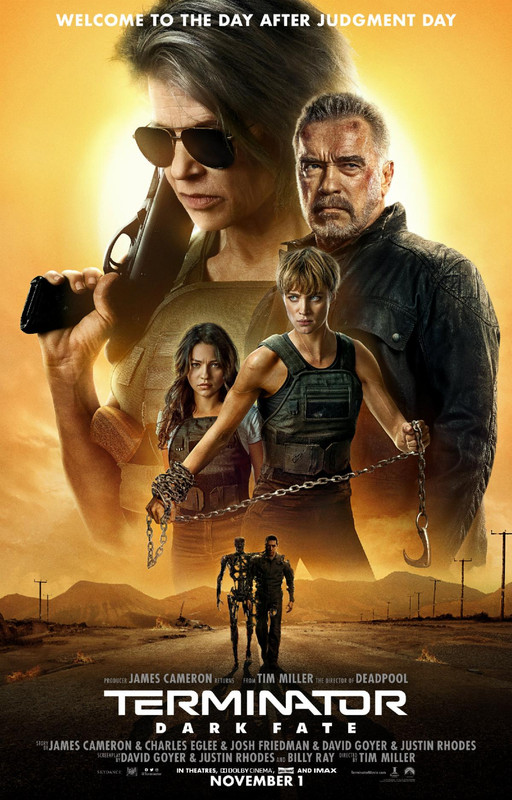
Terminator: Dark Fate [15]

Dir: Tim Miller
“There is no fate but what we make for ourselves”. For some years now, following the poorly regarded Terminator 3: Rise of the Machines, the Terminator franchise has been trying to re-make its own fate. The first attempt, Terminator Salvation, was an Arnieless excursion into the future war that had been glimpsed in every previous film. The next try, Terminator Genisys, was a full on attempt at a reboot, an abysmally terrible film that felt like the result of meeting asking how to actively take every good idea in the history of the franchise and make it shitty. Terminator: Dark Fate, arriving for the series’ 35th anniversary, feels like a last roll of the dice, and it’s trying as hard as it can to make sure those dice are loaded. Like the recent reboot of the Halloween franchise, this comes with the blessing of the original’s creator (James Cameron is credited as one of many story writers and as a producer) and turns back the clock to disregard every sequel since he was involved. 

Positioned as a direct sequel to Terminator 2, the plot finds auto worker Dani Ramos (Natalia Reyes) pursued by a new kind of Terminator, the Rev-9 (Gabriel Luna), as ever, the resistance has managed to send her a protector, this time in the form of Grace (Mackenzie Davis); a human, but one with enhanced abilities. On the run, they join forces with Sarah Connor (Linda Hamilton) and later with a T-800 (Arnold Schwarzenegger) to attempt to destroy the Rev-9, to save Dani and with her the future.

There is a certain purity to the first three Terminator films. For all their plot contortions—time travel, alternate futures, continuity destroying paradoxes—they are all basically one long chase sequence. The relentlessness of them is remarkable, and drives each of them forward with a propulsive sense of purpose. This is clearly what Tim Miller and his team are trying to find with this soft reboot. They want to recapture that thrill ride feeling, but also to bring the series up to date and use it to engage with some ideas with contemporary relevance. The result is, at best, a very mixed bag.

Things largely start well. Basing the first act in Mexico, with much of the dialogue in subtitled Spanish for the opening minutes gives this film a different flavour to its predecessors and Miller wastes little time in getting to the first action scenes. Mackenzie Davis and Gabriel Luna’s first fight is solid; a brutal encounter in a car factory, it shows off some solid choreography and establishes that both Davis and Luna are adept at doing their action beats. This then leads into a truly spectacular car chase—the franchise’s best action sequence since Rise of the Machines’ crane chase—which demonstrates the abilities of the Rev-9, including the very cool aspect of splitting itself into two entities: the endoskeleton and its liquid metal covering and shows off some of the film’s best CGI. Not pausing for breath, Miller then gives Sarah Connor an entrance that befits her iconic status, Linda Hamilton instantly nails the hard-bitten attitude, creating a continuity with the first two films that, at least in the moment, is powerful and thrilling. These ten or twelve minutes of screen time are stunning; vintage Terminator fare that can stand alongside any of the highlights of the franchise. They also set a standard the film never comes close to meeting again.

Some issues are apparent even in this first part of the film. The screenplay brushes up against a few ideas: exploitation of workers and their replacement via automation, but it doesn’t do much with them. This is a pattern we’ll see repeated in how the film later avoids engaging with immigration issues, despite an action scene set in a detention centre. Happily, this isn’t the Trumpian fantasy of the recent Rambo: Last Blood , but the issues barely qualify as window dressing.
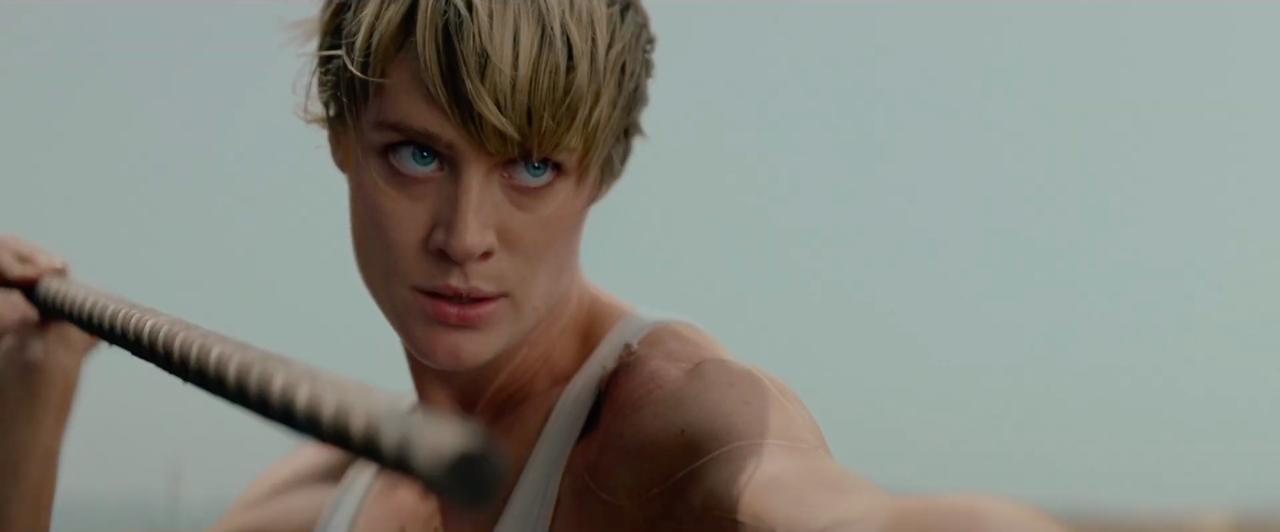
The bigger problems begin to bite after Sarah Connor’s entrance into the film. Logic has never been the strong suit of the Terminator franchise, but I found myself wondering, once a key piece of information was revealed, why Grace should be the protector sent back through the future. She possesses some of the strengths of a Terminator, but one key weakness that is more acute than those of a human, making her arguably the worst choice of the three. Her weakness serves merely as a plot device, and doesn’t add anything appreciable to her character. Nevertheless, Mackenzie Davis is very good in the part, giving it an emotional dimension reminiscent of the original’s Kyle Reese with some of the strength of Arnie’s good Terminator from the first sequel.  

The writing is the problem all the way through, with the performances often seeming to work in spite rather than because of it. Natalia Reyes has much the same arc as Hamilton’s Sarah Connor did in the first film, and she plays the role well as Dani evolves from a disbelieving pawn and grows into steely resolve, but the familiarity of the arc means that she’s not terribly interesting as a character and the one minor twist on it is both screamingly obvious and something T2 did before and better, with two characters. Gabriel Luna has an intimidating blankness, but again it feels like he’s chasing another actor’s work, in this case Robert Patrick. The new abilities of the Rev-9 are fun for a while, but again could be more inventively utilised. The first act suggests that Dark Fate will have the same relentless drive as the first three films, but somehow this too goes missing. The middle hour flags quite substantially, as we have to team Sarah up with Grace and Dani and have them find Arnie’s T-800. During this section, Luna is mostly off screen, and the ever present sense of threat from the T-800 in the first film and the T-1000 in the second just doesn’t translate here.

Though he is of course top billed, this is probably Arnold Schwarzengger’s most limited screen time in the franchise, leaving aside his digital cameo in Salvation. One thing that often goes under acknowledged is that each time Schwarzenegger plays the Terminator, he is reinventing the character; the face may be the same, but he’s a different Terminator each time. In this respect, as little sense as his very existence makes in this timeline, there are some nice ideas here. ‘Carl’, as this T-800 is known, has built a life over the past 20 years. It would have been interesting to see this be more than window dressing and the source for a couple of jokes, but Arnie plays both the humour and the Terminator’s slightly evolved understanding of emotion effectively for the little screen time he’s allowed to work with it. It’s a good performance which is somewhat derailed by the fact the film seems shackled to striking as close to the shape of its best-loved predecessors as possible, meaning that come the third act Arnie is just a Terminator again, any evolution he’s done largely a moot point.  

Having been away from the franchise for 28 years, Linda Hamilton must have seen something worth getting involved in here. It’s true that Sarah Connor is probably the character best served by the screenplay, and Hamilton falls back into the role perfectly. The years visible in Sarah’s face attest to the tragic backstory, and Hamilton communicates both this and her distrust of the T-800 effectively. Again, even in the baggy middle hour, it’s not all that deep, but Hamilton hits all the emotional beats well enough to get maximum effectiveness from minimal development. Sarah’s presence is pure fanservice, but it’s well-executed fanservice in the middle of a film that otherwise often fails on that level.

Tim Miller, fortunately, doesn’t try to translate the tone of Deadpool to this film, the moments of humour are few, mostly solidly executed and, in fairness, less obtrusive than in Rise of the Machines. Miller does marshal some decent action sequences, though they are customarily over-reliant on CG and the rhythm of them feels off, with the unquestionable highlight coming with the first of the setpieces and the film feeling like it’s chasing that same high throughout, without hitting it. The CG is also problematic at times, with the first sequence in which it’s used looking shockingly shonky in one hugely important aspect (I won’t spoil it, because it has been well protected by the trailers). Outside the action, the screenplay again lets the side down, as it looks for an ending with the same kind of pathos as T2, and comes up empty.

Terminator: Dark Fate is a major step up from Salvation and Genisys, but that is much more an indictment of those films than an endorsement of this one. Every one of its successes is partial or compromised. The first twenty minutes are thrilling, but thereafter the film flags badly, throws out a lot of ideas it never quite utilises effectively and when it stutters to life it recalls the earlier, better, films so much—without hitting the same level of quality—that it only serves to make you wish you were just watching those again. For all its flaws, Rise of the Machines remains underrated and its dystopian ending maybe the franchise’s boldest choice. Dark Fate does nothing so interesting. It has some virtues, but its legacy will likely be as the second-best Terminator 3.
★★½

Oct 5, 2019

24FPS @ LFF 2019: The Lost Okoroshi / Instinct

The Lost Okoroshi
Dir: Abba Makama
Nigerian cinema, while I'm sure it is much more than this, has often been viewed as something of a punchline. Certainly, I’ve only come across it as clips of notably inept Nollywood films or satirical reviews of the legitimately bonkers sounding series of Vultures of Horror films. This all being the case, it’s refreshing to see a Nigerian film that is interesting for more than being crazy or terrible.

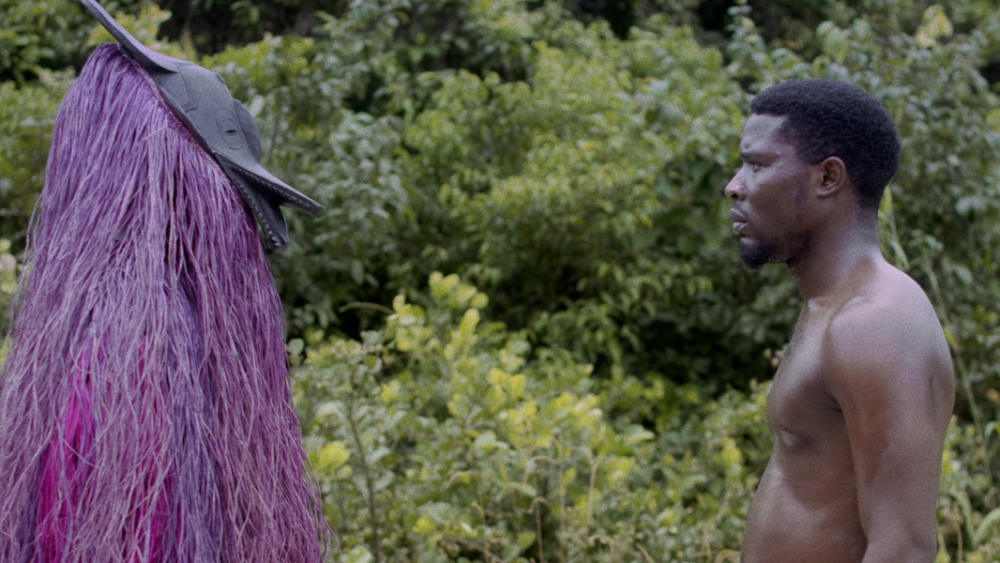
The Lost Okoroshi is a film that is obviously soaked in local tradition and culture. It’s about Raymond (Seun Ajayi), a security guard who wants to go back to tradition and become a farmer. He has a recurring dream of being chased by a masked spirit called Okoroshi. One day, Ray wakes up as the Okoroshi, he can no longer speak or remove the mask. Lost in the city, he is followed around by a kid who wants to be his promoter, then kidnapped by a group who want to use him as an icon to restore Nigeria’s traditional beliefs.

This seems like a deeply personal project and one that may have had to scrape together both funding and equipment. At times it is amateurish, with very rough sound recording and some poor acting (a journalist in the film’s final scene is the worst offender), but it’s clear that many of these issues, though they are a problem, stem more from a lack of resources than the filmmakers not being accomplished.

Things start slowly, with the first act composed of several long scenes of conversation that don’t really go anywhere and, at least for an international audience, aren’t terribly funny. The film picks up hugely once Raymond is transformed, and it builds comic momentum from there. Initially, co-writer/ director Abba Makama gets plenty of mileage purely from the incongruity of the Okoroshi figure walking through modern Lagos; a traditional figure set against a city that now speeds past him. There are plenty of funny moments here, especially when, his ‘promoter’ having collected a bag of money from people watching ‘Raymond’ dance, the Okoroshi hands the money to a hooker. The three of them form a sort of comedic chorus for a while, and again the film mines laughs from the sheer strangeness.

Later, when ‘Raymond’ is taken by the traditionalist group, the film continues to find better and funnier gags as it goes on. The group is clearly inspired by the scenes in The Life of Brian with the People’s Front of Judea and, while Makama and Africa Ukoh’s dialogue never reaches that sort of sublime comic inspiration, he hits on plenty of laughs. The film also looks pretty good, with the costumes for Okoroshi and the other ‘masquerades’ being especially striking.

For all the solid gags, Makama and Ukoh’s screenplay is patchy and disjointed. Beginnings and endings seem to test them, as storylines peter out and Makama simply cuts to the next scene rather than drawing to a satisfying close. This is also a problem with the film as a whole, which closes with several minutes of dry dialogue essentially recapping what we’ve just seen with a professor laying out events for a journalist and suggesting what Raymond’s case may mean for traditional Nigerian practices.

The Lost Okoroshi is seldom less than interesting, and the cultural aspects in particular will mark it out as something different for most UK audiences, but whatever the reasons for its technical amateurishness, that and the sometimes clunky screenplay mean that the several good laughs you’ll get from it never quite manage to paper over the cracks.
★★½

Instinct
Dir: Halina Reijn
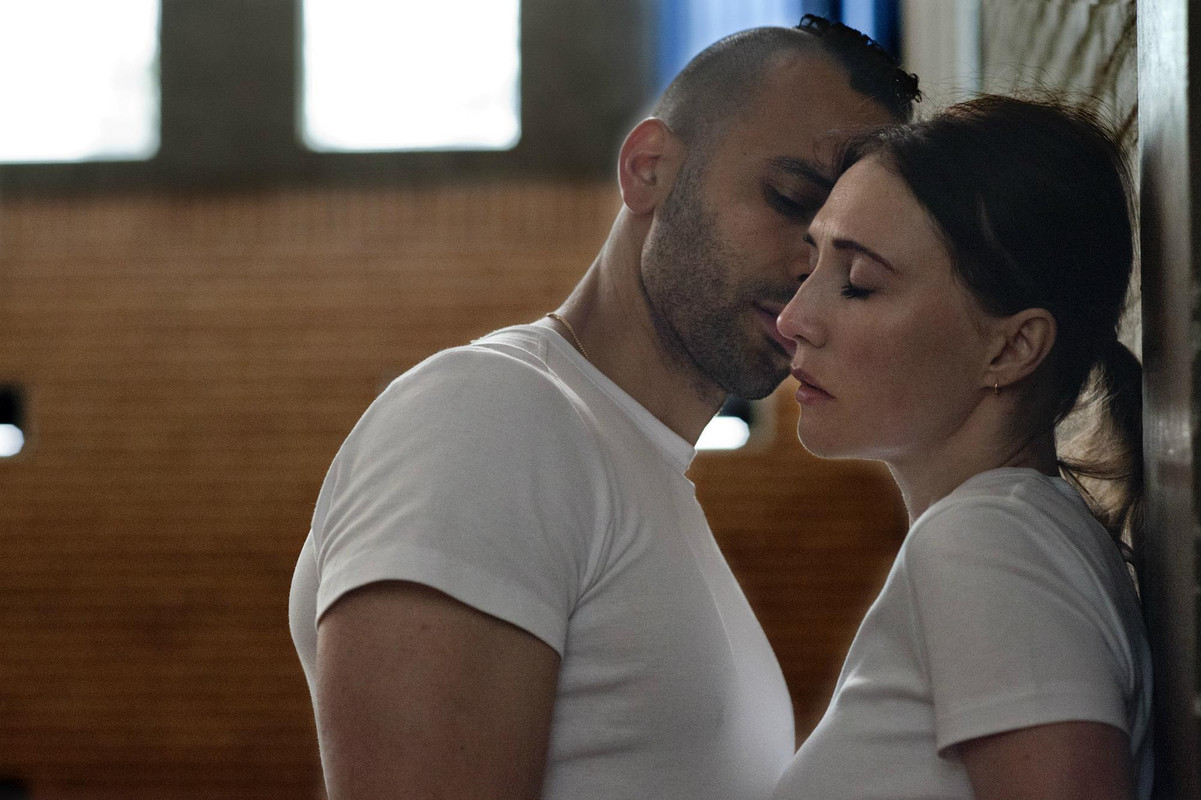
Set in a rehabilitation centre for sexual offenders, Instinct sees Carice Van Houten as Nicoline, a therapist newly assigned to Idris (Marwan Kenzari, familiar from his role as Jafar in Disney’s live-action Aladdin). With most of the staff convinced he’s doing well, Idris is nearing the end of his time at the centre, Nicoline disagrees, but the dynamic between her and Idris is more than therapist/patient, as her manipulative charge perceives that she’s attracted to him.

The term ‘psychological thriller’ is one that has been misapplied through the years, often used as an umbrella term for horror films their makers don’t want lumped in with the Friday the 13ths of the world. Instinct is a true psychological thriller, with all its tension coming from the dynamics and interaction between Nicoline and Idris. On these terms, it often works well. Carice Van Houten delivers her most notable and best performance for some time. Working again in her native language, she delivers a natural and nuanced performance that finds many layers in her character. Kenzari may be even better, always compelling and frightening as he walks the character of Idris along a precarious line between being charming and very obviously dangerous. Watching these two play off each other is often thrilling in itself, as there is palpable chemistry between them which, given the situation and the characters, is always disturbing. 

When Instinct is purely about performance, it can be excellent. This is never more true than in a sex scene between Nicoline and Alex (Pieter Embrechts) who is the basketball coach at the centre. We’ve seen this scene a hundred times, where one of the participants in a sex scene clearly wants it to be with someone else. Many directors would handle this by showing Idris, either in cuts or by having him, at a certain point, replace Alex in the scene. Reijn doesn’t do this, instead trusting us to understand the dynamic through Van Houten’s performance. Her trust in her lead’s skill pays off; the scene is unsettling and complex without simply stating what we’re supposed to read into it. It’s surprising, then, that the direction is increasingly the film's downfall.

The signs are there in the first half, notably in several confused scenes with Nicoline’s mother (Betty Schuurman) which seem to me to accidentally leave it very unclear whether that character is alive in the world of the film. Their first scene, in particular, is almost dreamlike - a quality which, if she’s reaching for it, Reijn never pulls off here. Much of the rest of the first half of the film is solidly grounded (though the fact the rest of the staff can’t see through Idris as easily as Nicoline does strains credulity), and benefits from the excellent central performances, but the film begins to go off the rails once the chemistry between Nicoline and Idris goes beyond an unsettling background simmer.

During a scene when they are alone on the centre’s basketball court, there is an encounter between Idris and Nicoline. Most of the scene is visually muted, but at a certain point the lighting shifts, becoming brighter and more intense. This carries over into the following scenes for about ten minutes. I suspect Reijn would say that this is to suggest that Nicoline is feeling a brighter light on her, a more intense focus. What comes across instead is, again, an uncertainty that I’m sure is unintentional, as to whether we should accept these scenes as reality or see them as something Nicoline is imagining. This also carries over into a scene at the beach, which marks the first moment that the film broke my suspension of disbelief.

The third act increasingly feels less like Reijn is telling her story than advancing an idea about the way people can be attracted to dangerous relationships. This might have worked had she more decisively gone for this approach early on, but next to the very grounded scenes of the first half, it’s an uneasy fit. The scenes themselves aren’t bad - one in which Idris turns up at Nicoline’s flat is interesting in how it tries to boil down an entire abusive relationship into five minutes, but it always feels more like an exercise than something we can believe in the context of these characters and their story.

Halina Reijn shows skill as an actor’s director. This is no surprise, given that she is best known as an actress (in the UK she is most recognised for a supporting role in Paul Verhoeven's Black Book, alongside Van Houten), but her visual and thematic approach is too scattershot for her ideas to engage as they should. The two central performances are too good for Instinct to be a total loss, but the confused direction and screenplay mean that they stand out as far better than the film they appear in. 
★★½

Sep 30, 2019

24FPS @ LFF 2019: Selected Shorts

It’s a shame we don’t see more short films in general release, but at LFF the various shorts programmes are often a good way to spot new talent both in front of and behind the camera. Here are some appropriately brief thoughts on some shorts I’ve seen recently. These films were viewed on the online press library.
Be Still My Beating Heart
Jericho (Sarah Andrews, Aaron Hopwood), screening in the Family shorts programme on October 5th, is one of the briefest shorts in the festival. Though barely 90 seconds long, it’s still an impressive piece of work. Fluent and high quality CG animation tells the story of a lonely robot trying to build himself a friend. It’s gently funny and rather touching. I do wish it were longer though, as there is potential to mine some more humour out of the situation. Sweet then, but perhaps too limited by its running time. 
★★★

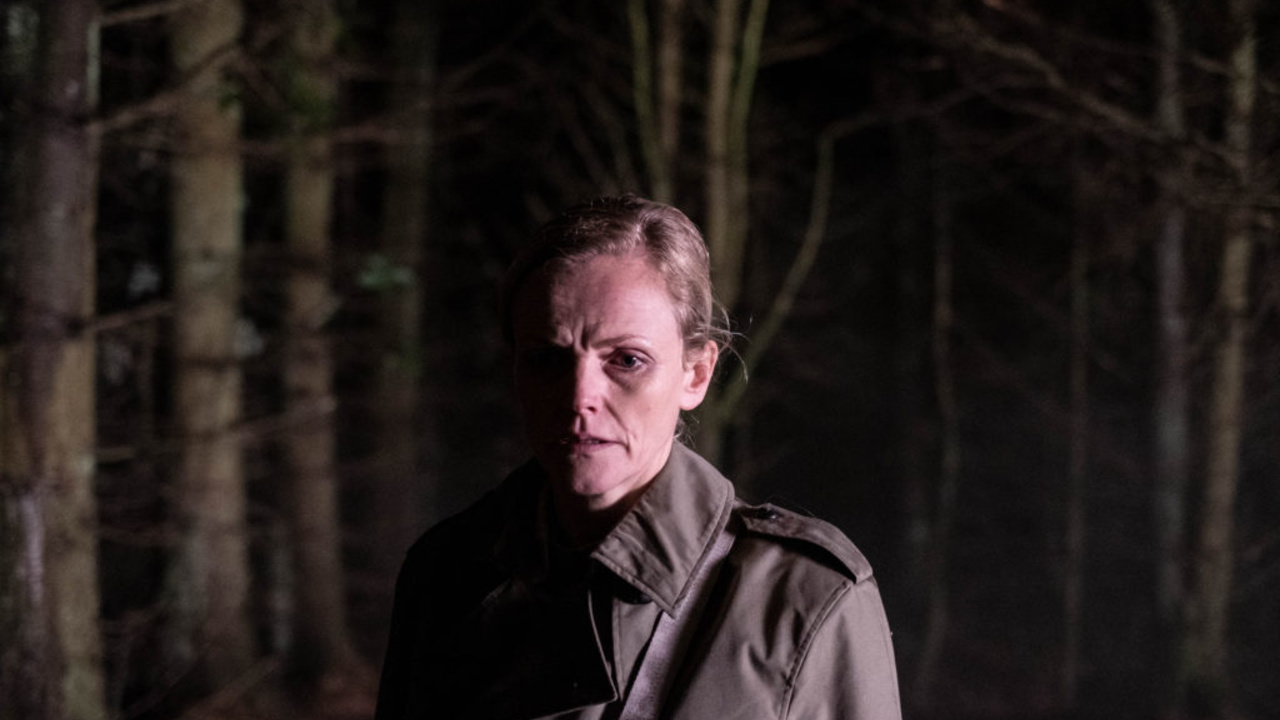
Be Still My Beating Heart (Ruth Paxton) screens in the Cult shorts programme on October 6th and 8th (both sold out). This story of a medical examiner looking after her younger sister who has an unspecified illness benefits greatly from having the always excellent Maxine Peake in the leading role. Peake and Elysia Welch bring dimension to a sisterly relationship that feels sour on both sides, even if it’s loving deep down. Director Ruth Paxton’s imagery veers between the mundane and the primal, and points to interesting things for her future. Unfortunately, the film ends up as less than the sum of its parts. The various ideas don’t knit together in the 25 minute running time and this ends up feeling less like a trailer for a future feature film version of itself (a common issue with shorts) than an impressive showreel for its director. 
★★½

Let's Roll
The Lamb (Nina Volic) screens in the Dare shorts programme on October 10th and 12th. Most boys, when they’re around 12 or 13, start wanting to impress the girls around them. That’s where The Lamb begins, with a boy meeting two girls from his class to show them something. In an incredibly dark turn, ‘something’ turns out to be a black man, tied up and gagged, on his sofa. The way the kids interact with the man is initially not violent, but the immediate and casual dehumanization of this ‘other’ is horrifying, as they treat him as a prop, posing for selfies with him in the background. A deeply disturbing, if extreme, look at how social media has made some of us treat the world as a background image to our lives, The Lamb promises great things from Nina Volic. 
★★★★

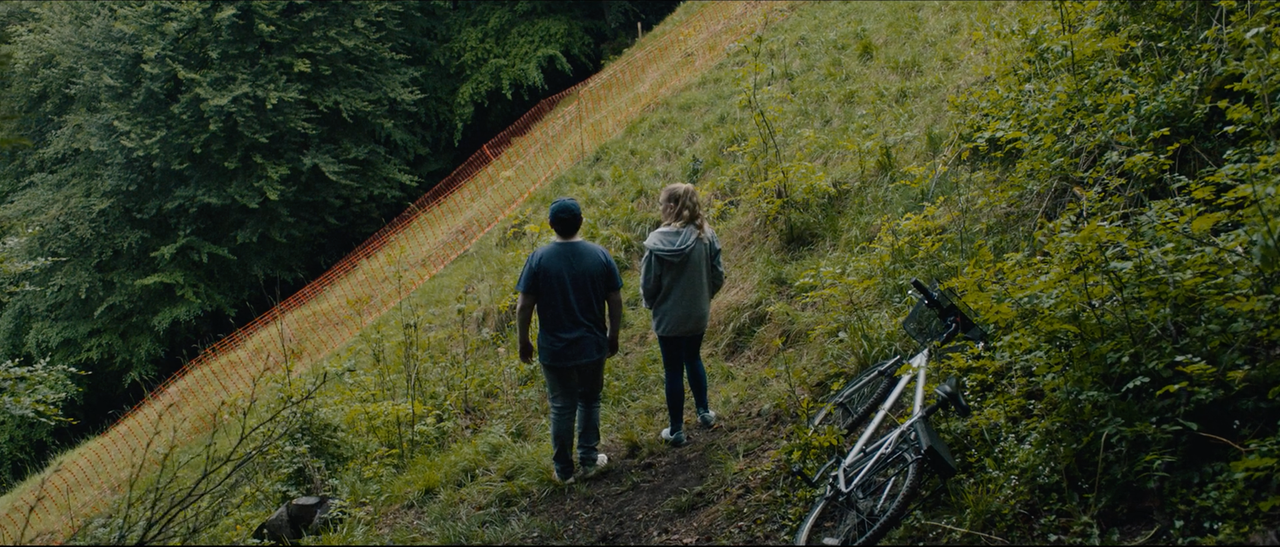
Let’s Roll (Chris Thomas) screens in the Thrill shorts programme  on October 5th and 10th. A surprisingly gentle film for its strand, Let’s Roll is a coming of age film set around the Cooper’s Hill cheese roll. Antonia’s brother was a champion, but now he’s away in the Army and her mother is against Toni taking his place. The progression of the film is fairly familiar, as Toni has a friend (who may be nursing a crush) help her train for the cheese roll in secret. The best thing about the film is how much it packs in to 23 minutes, writer Allan Macleod puts a lot of depth into the background in Toni’s relationship with her Mum, both of their implied concern about their brother and son and Toni’s troubled reaction to this stress (we first meet her running from a shop after stealing a magazine). This is also very well played by Amy Bowden as Toni and Zara Ramm as her Mum. There is a lot to build on for a feature version, which I’d happily watch, but the short feels complete in its own right. The only disappointment is the last sequence, which is too obviously documentary footage that Bowden doesn't appear to be in. 
★★★★

Sep 8, 2019

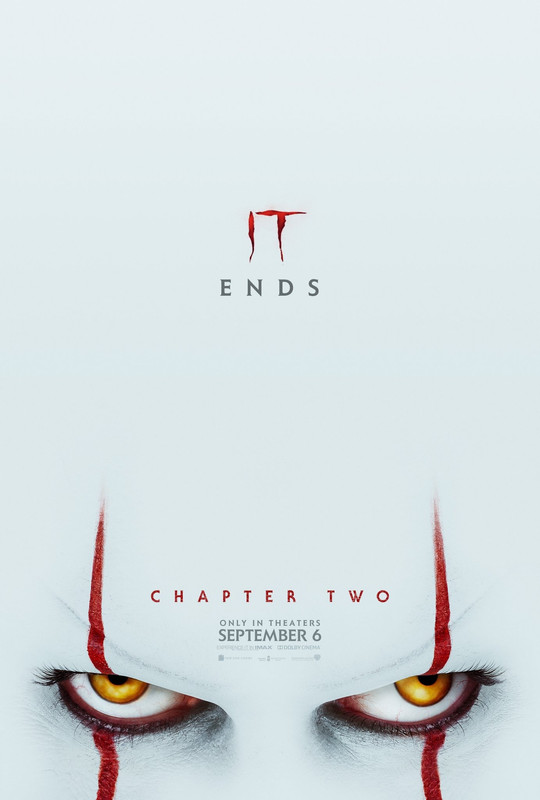
It: Chapter Two [15]

Dir: Andy Muschietti
The first part of this adaptation of one of Stephen King’s best regarded novels became, on its 2017 release, the highest grossing horror film of all time (albeit unadjusted for inflation), so it makes sense that director Andy Muschietti has been afforded expanded freedoms for this second and final instalment. It’s probably not coincidental that the finished film is a good argument for reining a director in.

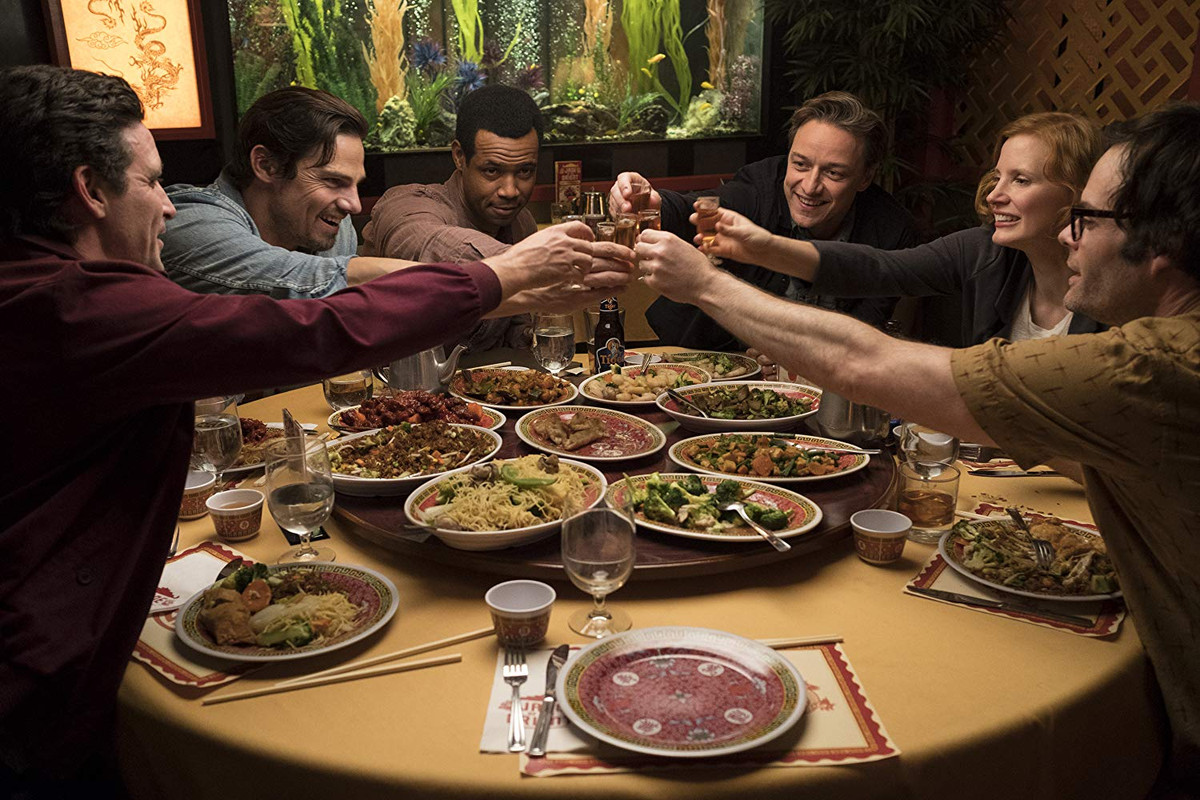
We pick up the action 27 years after the end of the last film, with the Losers Club now far-flung and having been out of contact and, with the exception of Mike Hanlon (Isaiah Mustafa), out of Derry since shortly after the summer they believed they defeated Pennywise (Bill Skarsgard). When a man is murdered, Mike discovers writing in blood that tells him Pennywise has returned, and he must reunite the Losers to finally destroy him once and for all. 

It’s tough to argue with the quality of many aspects of It: Chapter Two. Cinematographer Checco Varese, production designer Paul D. Austerberry and art director Nigel Churcher all help craft a striking look for the film. Scenes with Bill (James McAvoy) trapped in a funhouse and Richie (Bill Hader) seeing Pennywise floating above him, hanging from a pyramid of red balloons are particularly strong images in their own right. The good work in the behind camera departments continues with some effective transitions between past and present, some achieved via effects and others through Jason Ballantine’s editing, and there is excellent practical effects work from the make up department, notably the Pennywise unit and largely successful de-aging CGI on the kids, who have all grown since the first film. The join is only visible on Finn Wolfhard, who obviously needed more work to match his look from the first film and can occasionally appear a bit waxy in the flashback sequences. Unusually, the film’s MVP is arguably casting director Rich Delia who, having found a talented group of kids for the first film, matches them brilliantly both in look and personality with the adult cast here. 

With all this quality work in departments that don’t often get singled out for notice, it’s disappointing that where It: Chapter Two falls down is in the key aspects of its writing and direction. The film starts well enough, with a genuinely shocking and nasty scene of a gay bashing murder (with filmmaker Xavier Dolan playing the victim), but inconsistency soon rears its head. 

Gary Dauberman’s screenplay is bitty and episodic, often putting its emphasis on the wrong things. In the long search for ‘tokens’ the Losers have to sacrifice to help them defeat Pennywise, only a couple feel hugely significant to the characters, Bev’s (Jessica Chastain) postcard being the one we feel the owner has the deepest connection to. Criminally, Bill’s bike feels more like his token, given the emphasis put on it during the sequence, than what it turns out to be. Some of the problems with the writing, like the nuance free depiction of characters like Bev’s abusive husband, can be traced back to Stephen King, who never wrote a bully who wasn’t pure unvarnished evil, but Dauberman should have been able to use the film’s massive running time to draw the story together more effectively, and to find something for Mike Hanlon to do aside from spout exposition. A running gag about Bill (King’s self-insert author in this story) not being able to write satisfying endings is not only tiresome, making a joke about something doesn’t mean it’s not true.

Like Dauberman, Andy Muschietti seems to struggle with the unwieldy length of his film (169 minutes, longer than 2001, The Life and Death of Colonel Blimp and recent byword for self-indulgent overlength, Once Upon a Time… in Hollywood). The pacing is notably stop/start, with the film cramming in the exposition in the opening twenty minutes, with scenes so brief to establish where the Losers Club are now that they feel pat and tossed off. After the first act, every single scene is drawn out long beyond the time at which its point is made. This is especially true of the token seeking scenes and the funhouse sequence, all of which could easily lose a third of their running time. This is all without taking account of scenes that could be cut wholesale, such as every last frame involving Henry Bowers (Teach Grant), another of King’s one note bullies, and entirely superfluous here. 

Only in a couple of sequences does Muschietti show any knack for building atmosphere, and in both the funhouse and Beverly’s encounter with an old lady who lives in her former home, he manages to undermine what creeping fear he does engender, either with a laughable monster or poor pacing. Otherwise, the film’s scares are the typical ‘boo’ jumps. Some work, if only as a result of the law of averages, but they can almost all be counted in.

The acting is better than the screenplay and direction deserve. Chastain is the biggest name here but, while she’s typically good, she’s not a standout the way Sophia Lillis was, and remains among the teenage cast. McAvoy is also effective as the older Bill, convincing us of the long held guilt his character feels over ‘abandoning’ his little brother to Pennywise and the scene in which he works through that is one of the film’s best moments. The adult cast all channel their young counterparts, capturing the same essence and energy, suggesting both that our essential natures never really change and that, when drawn back together, they fall easily into old relationships. This is the film’s most affecting material, as it advances the coming of age stories that were the most compelling aspect of Chapter One. 

Among the adult Losers, the best performances come from Bill Hader as Richie and James Ransone as Eddie, the latter now somewhat meeker but still the risk averse person he was as a kid. Hader’s performance has both the emotional content of his work on The Skeleton Twins and the sharp comic timing he always shows, but he isn’t always well served by the script, which puts too much emphasis on his wisecracking, often puncturing potentially scary scenes with gags that, while well delivered, aren’t funny enough to justify undermining the horror element of what is supposed to be a horror film. Equally, the secret that Pennywise taunts Richie with, obvious as it is, appears to be set up to pay off in a bigger way, and while the way it’s depicted is heartfelt, it doesn’t land with the emotional punch the setup promises. Ransone, who made a strong impression in the Sinister films, might give the best performance of the whole Losers Club, struggling to overcome the hypochondria of his childhood which has led into work as a risk analyst, not a personality type best suited to fighting a demonic clown. As Ben Hanscom, Jay Ryan’s character is, for the first two acts, often little more than a soundalike of his surname. Ben’s story only comes into focus in the final act, but at least that’s more than Isaiah Mustafa gets as Mike, the film’s sole black character finding himself sidelined for large swathes of a second film in a row.

The other key cast member here is Bill Skarsgard as Pennywise. While the make up does a lot of work for him, the actor inhabits it brilliantly. Almost every element of the film’s pure horror scenes that works is thanks to his deeply weird and unnerving performance. This is particularly true when Pennywise attacks a little girl under the bleachers at a baseball game, Skarsgard’s childlike voice only adding to the skin-crawlingly horrible feel of the scene.

It would be unfair to say that It: Chapter Two is a bad film, there are too many well crafted elements for that to be true. The film comes into focus just often enough to make you think that buried somewhere in this morass of footage is a genuinely frightening film about the things that haunt us from our childhood. Unfortunately, to find that movie you have to pick through an overlong and digressive collection of scenes that often feel like they are stuck in the same inert state as the lady Bev has tea with. Muschietti is capable both of boring us with his longueurs and of making us groan with his painfully obvious allusions to films infinitely better than this one (from the King universe and outside). Next to these moments, the scenes that do manage to grip or to scare don’t add up to enough to allow the film to work as a whole. Taken together with the equally overlong and patchy Chapter One, there may be a way to carve out a great four hour film, but these two hours and forty nine minutes are only sporadically interesting.
★★½

Aug 25, 2019

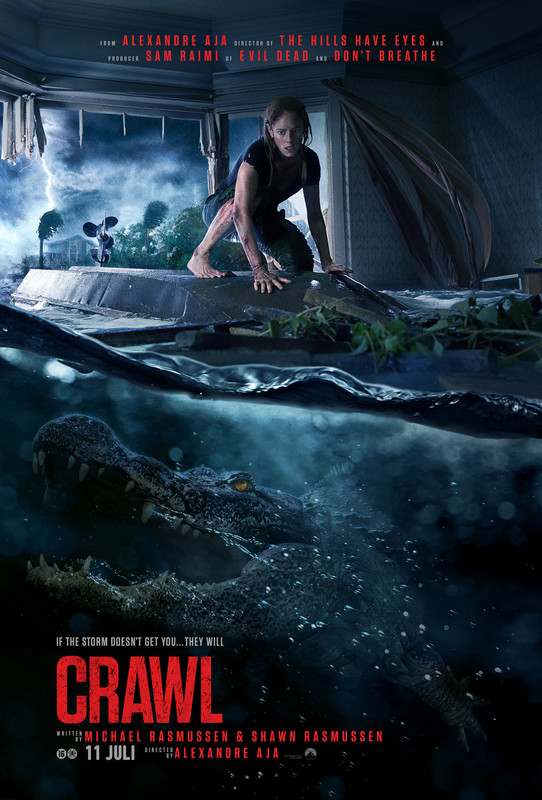
Crawl [15]

Dir: Alexandre Aja
Where exactly the early 00’s horror movement referred to as the New French Extremity began is debatable, but I remember my first encounter with it. I saw Alexandre Aja’s Switchblade Romance in a ratty London multiplex, and was blown away by the effectiveness with which it assaulted its audience, as I left the screening I saw the girl behind me balled up in her chair in the foetal position, crying. The visceral nature of the film and of that reaction have been burned in my memory ever since. In that moment I saw such promise in Aja and I’ve been waiting more than 15 years for him to fully deliver on it. It looks as though I’ll be waiting a bit longer.

Crawl is a pretty basic ‘nature attacks’ movie. Haley (Kaya Scodelario) is away from home on a college swimming scholarship, but when a hurricane begins to bite she goes to check on her estranged father, Dave (Barry Pepper). She finds him trapped in the basement of their house and as the wind and flooding becomes ever more intense she is trapped with him, and at least two hungry alligators.  

In some ways, Crawl is a very stripped back film. Much of it takes place on a single set with just two characters using limited tools and their wits to survive. In this respect, it’s a qualified success. Kaya Scodelario made her name with British TV series Skins, but this is the first major role I’ve seen her in and she comes up to what the part demands. The backstory for her character isn’t new or deep, but she commits to it, as well as to the action elements. On the whole, it’s an effective performance, if not one that particularly stands out. As Haley’s dad, the perennially underrated Barry Pepper, whose career was somewhat derailed by the unfortunate decision to star in Battlefield: Earth, gets a decent showcase. The dynamic between him and Scodelario works and between them, they carry the emotional moments well enough. 

While the performances are solid enough, some of the other elements are decidedly more rickety. The writing is perfunctory, with the issues between Haley and her dad feeling like boilerplate tensions between father and daughter the issue. There is also some unintentionally funny dialogue, notably when Dave tells Haley “you’re faster than them” - sure, she’s a competitive swimmer, but they’re ALLIGATORS. The problem Aja never manages to escape is that there is only so much to be done with material this basic. We’ve seen these moves before. Killer croc movies, lost in the wilderness movies, have done most of what’s on offer here and confining the action largely to a basement and subsequently a house doesn’t make Crawl especially novel. 

Aja is nothing if not a proficient filmmaker he marshals the film's effects well and manages to pull out a few nailbiting moments as Haley tries to swim through 'gator infested water. The frustrating thing about Crawl is that it’s not a bad movie, it’s just not an especially good one either. It works through the expected beats, with the grace not to hang around too long, but there’s not a single thing about it that is new or memorable. If you haven't seen one of these for a while, or if you're a fan of the subgenre, it might scratch an itch, but for me that's not enough. I remember the filmmaker who delivered Switchblade Romance, I just wish I believed Alexandre Aja did as well.
★★½