Showing posts with label 4.5 stars. Show all posts

Oct 12, 2021

24FPS @ LFF: Playground

Dir: Laura Wandel

For seven and nine-year-old siblings Nora (Maya Vanderbeque) and Abel (Günter Duret), the school playground isn’t the friendliest place. Bigger boys pick on Abel, and the association, as well as their closeness, blows back on both him and Nora, making things worse for both of them.

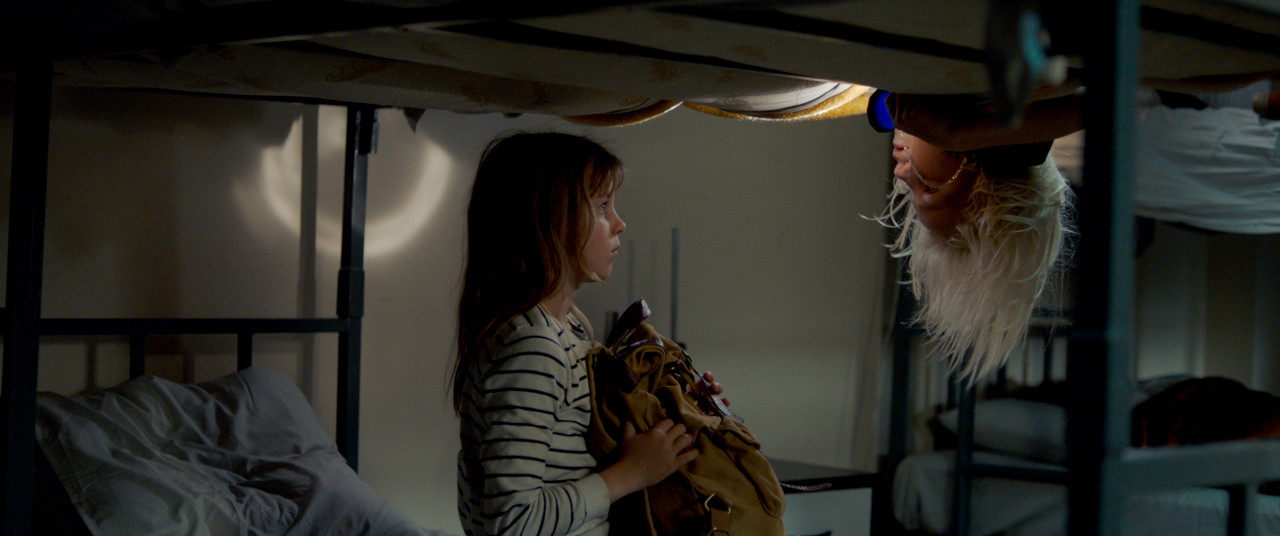
Playground is perhaps better served by its original title: Une Monde (A World). A child’s world is, in many ways, fundamentally different to that of an adult, and Laura Wandel goes out of her way to create that world and to bring us into it. The camera is always placed at Nora’s height. Adults are often seen as legs and have to bend down into the frame to interact with the children. This immediately places us with the children, having to remember what our perspective was like. 

Visually, Wandel also uses close-ups a lot, making the backgrounds of shots blurry. This, I think, is a neat and effective way to suggest Nora’s development. At seven, she’s just arriving at the stage where she can see beyond herself, but the blurriness suggests there’s still a shallow focus there; she can empathise with her brother, but her reasoning (“You won’t stand up for yourself, so I told Dad”) is still simplistic, and initially, she can’t see how that might have unintended consequences. It’s telling that the adults we see in focus are the ones Nora feels closest to; her Dad, a stay at home parent, and her favourite teacher, through whom the script hits its only bump, perhaps leaning a little too hard on the saintly teacher trope à la Miss Honey.

These interactions with the film’s few adults aside, Playground stays resolutely among its young cast, observing the day-to-day of primary school politics and interaction. The bullying we see doesn’t seem motivated by anything particular, just that the bigger boys sense some kind of weakness they can pick at in Abel, especially when his younger sister—again too naive to read the situation the way her brother can—tries to defend him. It’s even more affecting when, having gone to a teacher, we see Nora sitting in on a meeting as the boys are made to apologise to Abel. The whole scene plays on Maya Vanderbeque’s face, and we can see that Nora now understands that this is only going to make things worse.

The way this all affects Nora and Abel’s relationships with each other and with their own friends is incredibly realistically written, seldom more so than in a heartbreaking series of scenes as Nora tries to get invited to the birthday party of a girl who, until a few weeks ago, was her closest friend at school. This and the way Abel tries to get back in the good graces of the bigger kids by turning into one of them are so well observed by Wandel and her young stars that were it not for the purposeful stylisation of her camerawork you could confuse moments of the film for documentary.

For me, the filmmaker Wandel most recalls here is Nils Malmros, whose brilliant coming of age films are some of the best the genre has ever produced. In particular, this one seems to look to his debut, the autobiographical Lars Ole, 5C, for inspiration. There is little higher praise I can offer than to say that Playground can stand alongside that film and other classics about childhood and growing up. 

This is an outstanding debut. It's structurally excellent, with a beautiful rhyme to its opening and closing shots. More than that, it's also an incredibly articulate film that has a lot to say about children’s experiences at school and, through some of the things we hear them say that must be parroted or misinterpreted from their parents, at home as well. It's too unblinking and too serious to speak to the children it's about, but it feels like it comes from a place of deep understanding for and of them. It's one of the best films of 2021, and marks Wandel out as a huge talent to watch.
★★★★½

Mar 25, 2021

24FPS @ BFI Flare 2021: No Ordinary Man

Dir: Aisling Chin-Yee, Chase Joynt

I knew a little about Billy Tipton going into this film, which is to say that I basically knew the précis of what we discover is a rather controversial biography of him. It goes like this: Tipton was a trans man who was a fairly successful jazz musician in the 1940s and ’50s, and it was only with his death in 1989 that either the wider public or his wife and adopted children discovered the so-called ‘real’ identity he had been ‘hiding’. To be a hundred percent clear, there I am using the language of coverage at the time and that biography, trans men are men, trans women are women.

This documentary is, on its surface, a deeper telling of the story of Billy Tipton—a telling that acknowledges and celebrates his identity—but it is also much more than that. Aisling Chin-Yee, Chase Joynt and co-writer Amos Mac scrutinise and criticise the way Tipton’s life was framed in coverage after his death as, essentially, a long-running deception of the people around him. One clip, from a news show on E!, has sinister music behind the story, as if it’s something from a horror film. It’s worth noting that this characterisation of Tipton is rejected by his wife and son in archive footage, and by his son in new interviews for the film. They also relate that to the way trans identity is seen and talked about today “If I tell you who I am, I’m not lying” says one interviewee. More than that even, No Ordinary Man explores the issue of the erasure of trans history, and how that plays into the need for trans visibility and representation.

One of the way the film digs into these subjects is through auditioning trans actors to play Billy. The conceit reminds me of the documentary Casting Jon Benet, but it has much deeper resonance here because the directors talk with their auditionees about Tipton, what they already knew of his story, and how it relates to their own experiences. There are several great virtues to this idea, first, it completely gives the lie to the idea that cis people keep getting cast in trans roles because of some lack of talented trans actors, but much more important is the insight into how things are both different and the same for trans people now as when Tipton was alive.

The audition sequences are some of the film’s most riveting material, never more so than when the actors are playing out a sequence that seems mysterious to begin with. In it, Tipton indicates that he recognises something about a DJ he had never met before. It turns out that this is an imagined version of the only time that we know of that Tipton met another trans man. When the actors know this it entirely reframes the performances and leads to some deeply moving moments in which one in particular is overcome with the emotion of knowing that, just for a moment, Tipton knew he wasn’t the only person like himself. This, as much as any moment, show us the value of representation because that empathy just can’t be acted, and it’s a moment that must provoke empathy in its audience as well.

No Ordinary Man is a fascinating film about identity. I’m sure it will be a film that trans audiences identify with, and for cis audiences, it lays out so many nuanced issues of trans identity in such a directly emotional way, while also telling an interesting biographical story, that you can’t help but have a lot to reflect on long after the credits roll. 
★★★★½

Oct 14, 2020

24FPS@LFF2020: Wolfwalkers

Dir: Tomm Moore /Ross Stewart

As children, my brother and I were read to every night, and in recent years I've read to friends kids. I've always believed that this fondness for being told stories is where my love of cinema comes from. Few people have ever captured the feeling and texture of those stories and of the books they were read from than director Tomm Moore and his colleagues at Cartoon Saloon.

Wolfwalkers tells what feels like an old Irish folk tale. Set against the English occupation of Ireland in the 1650s, it's about an adventurous young English girl named Robyn (Honor Kneafsey) who longs to go hunting with her father (Sean Bean), who has been charged with clearing the local forest of wolves. On a trip into the forest, Robyn is bitten by Mebh (Eva Whittaker), a young Wolfwalker who is a little girl when she's awake, but a wolf when she sleeps. The bite makes Robyn a Wolfwalker too, and she and Mebh become fast friends and together try to save the wolves and Mebh's mother (Maria Doyle Kennedy) from the Lord Protector (Simon McBurney).

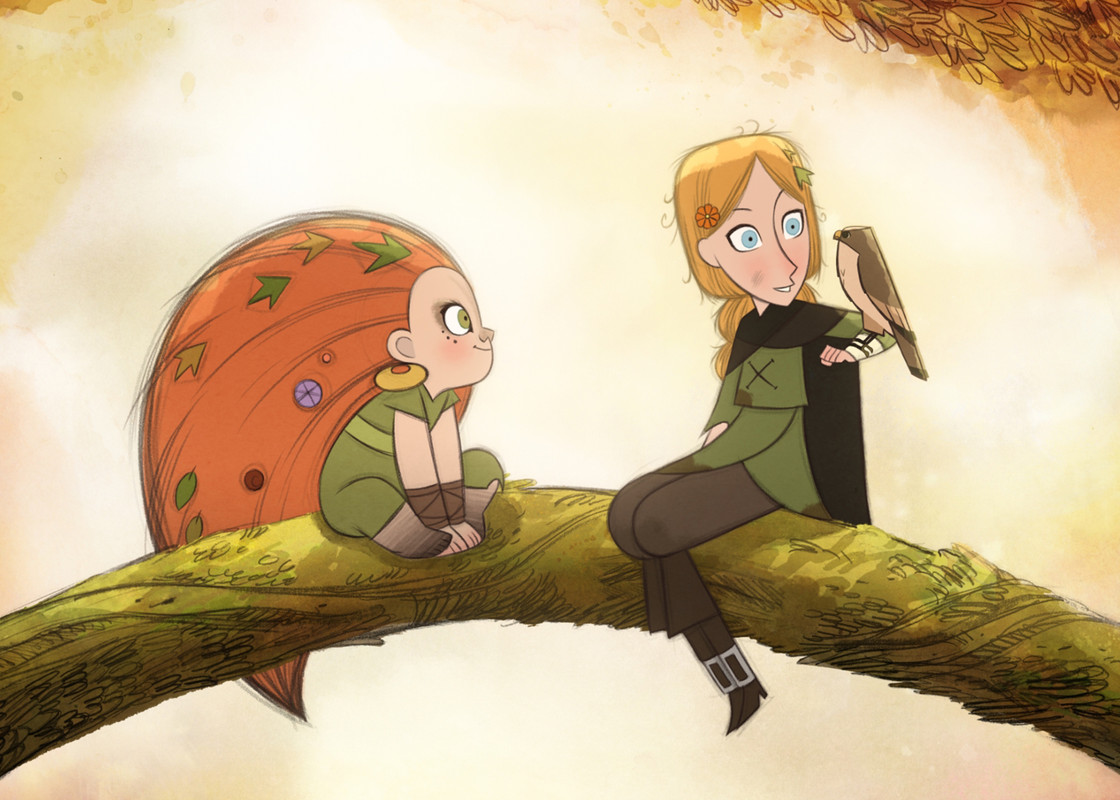
The animation has two distinct styles, delineated between the town and its people and the forest and its residents. The town is all woodcut style; sharp lines and angles both on the buildings and the people. Most of them also move in a distinctly angular fashion, the massed soldiers in particular animated in a slightly jerky but regimented fashion that makes me wonder whether they are animated on twos. The more free-spirited Robyn and her father are similarly styled but move in a more fluid manner that reflects the way they are increasingly caught between the two worlds of the film. In extreme contrast, the forest is all sweeping lines and curves, visibly free brush strokes chosen over ruler-straight lines and circular imagery (Yin and Yang sometimes graphically invoked in the depiction of Robyn and Mebh) rather than sharp angles. Even without dialogue or character, the art choices allow us to immediately understand the opposing forces at play here. The bold style of the animation and the contrasting shapes and movement of the characters make the film a kinetic watch. 

Action sequences later on are marked by the same differences in style choices, with the motion of the wolves feeling as graceful as it does threatening and jagged flames contrasting against the forest. Equally interesting, and somewhat distinct even from the rest of the animation, is how it depicts the way Wolfwalkers see; scent and sound are depicted as sketchy lines of colour, an impression of the real world, or something close to a storyboard in animation, giving a sense of the essential movement without fully rendering it.

All the beauty and meaning embedded in the animation is wedded to a story that is both simple and deep. There are themes here of a father and daughter finding common ground (the sequence in which Robyn begs her father not to kill the wolves is marked by some of the most striking image choices, as the black frame around the film encroaches ever more; shrinking and focusing the image). This theme of a child's love for their parent is also echoed in Mebh's search for her mother, whose human form has been trapped in sleep, leaving her unsure where the wolf part of her is. There are also themes of nature vs encroaching urbanization (the 17th century equivalent of it at least) and of how unlikely friendships can be almost as close as family. Kids likely won't analyse these layers, but without talking down to either them or adult viewers, Moore and Stewart make the ideas plain, without allowing them to overwhelm the essential storytelling.

Wolfwalkers is a beautiful film; visually stunning and meaningful on that level as well as being an enchanting piece of old-fashioned storytelling, a bedtime story that children and their parents can enjoy together and all get something out of.  
★★★★½

Oct 8, 2020

24FPS @ LFF 2020: Chess of the Wind

Dir: Mohammad Reza Aslani

The story of how Chess of the Wind came to be seen in this new restored version should be a movie in itself. Completed in 1976 and apparently screened only twice; once to hostile critics and once to an empty room, it was banned in 1979 when the Islamic government came to power in Iran. Years later, while Aslani's daughter was researching Iranian auteur cinema, the director's son discovered a complete print of the film in a junk shop. Smuggled out of the country and restored, it can now be seen in its original form.

Set almost entirely within the confines of the ornate home of a rich family where the matriarch has recently died, the film is about the machinations of the remaining members of the household, chiefly a paraplegic daughter who hates her stepfather and schemes with her maid (Oscar nominee Shohreh Aghdashloo in her film debut), to get the inheritance. The opening part of the film is perhaps the hardest for a Western audience to find its way in to, as it seems reliant on tradition and on knowledge of the dynamics of a large family at this point in Iranian history, however, we are drawn in by Aslani's composition and by the web of double and triple crosses he begins to weave. 

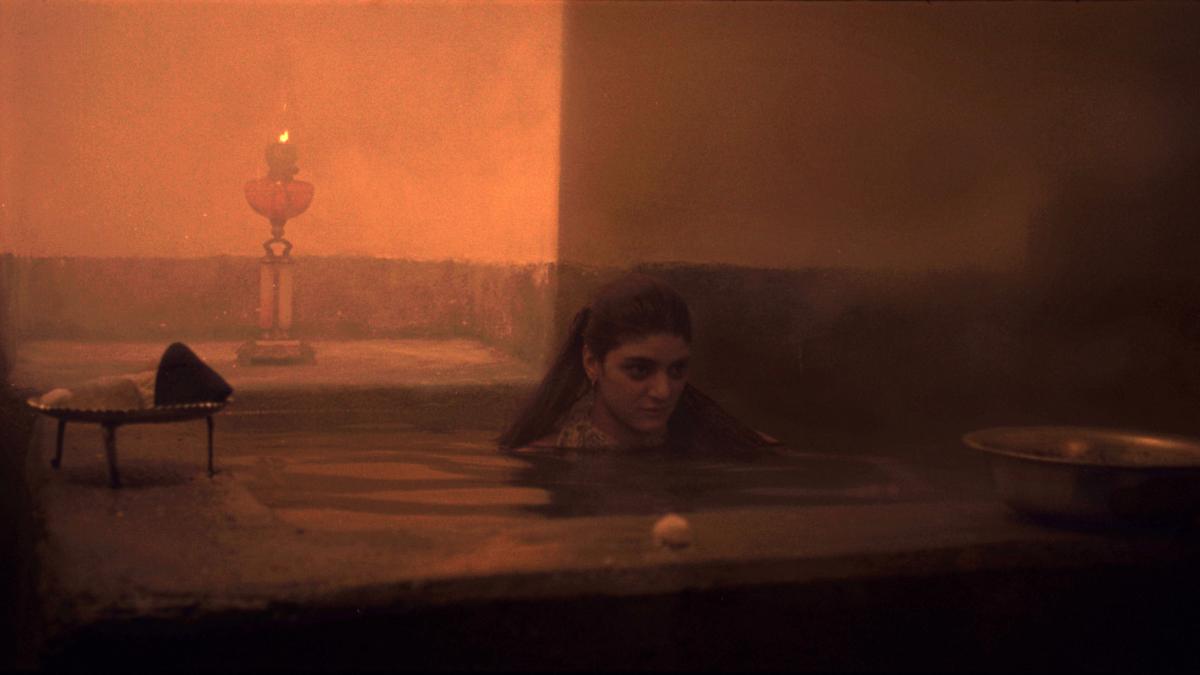
Fakhri Khorvash is a striking presence as the malevolent wheelchair-bound daughter, calculating every move even though she needs help to make them. A handheld flail is her equivalent of the dagger that might be the weapon of choice in a Western gothic horror. Beyond the violence, and the fact that is largely a strong and scheming female who is meting it out, it is easy to see why this film was banned by Iran's Islamic regime. A frisson exists between Khorvash and Aghdashloo's characters throughout, but one scene takes it further, suggesting a lesbian encounter between the two. Aghdashloo is the film's standout performer, immediately her presence—which vacillates between demure, luminous, and menacing—leaps off the screen. Her shifting loyalties are compelling to watch, and she's mesmerizing in the film's closing sequence (see still above), rising from a pool like some thing coming for her mistress.

The last twenty minutes of the film are remarkable. It's noted in the opening captions explaining the restoration that the sequence is influenced by silent cinema, and the orange tint, vividly restored in this version not only looks to the teens and twenties, Aslani makes it his own. A hothouse atmosphere has been building for some time at this point; a growing sense of paranoia and questions of who is out to get whom and whether there have been supernatural goings on. The fiery look of this sequence gives it the feel that everything may literally be going to hell.

Chess of the Wind is great example of exactly why festivals need archive sections. I had never even heard of this film, but I found something that drew me in more with each minute, that made me want to explore more about the culture it was made in to get more out of it (not just the traditional aspects, but the sort of Greek chorus formed by women washing clothes in a fountain outside the home, and the final shot which appears to recontextualise much of the film). The restoration brings out not just the precision of Aslani's shot choices but of the colour and texture of his film. I've not seen much quite like this before, and I hope this new version will enable a lot of people to be as transported by it as I was.
★★★★½

Oct 8, 2019

24FPS @ LFF 2019: Run

Dir: Scott Graham
Finnie (Mark Stanley) is stuck. He works at the fish factory in Fraserburgh, lives with his wife Katie (Amy Manson) and their children. Their eldest, Kid, (Anders Hayward) is about 17, his girlfriend Kelly (Marli Siu) is pregnant and it looks like he’s about to fall into the same pattern as his parents, whose ‘Born to Run’ tattoos now just look ironic.

Scott Graham’s third film brilliantly captures a very particular kind of inertia. Set over 24 hours, it breaks down into distinct sections, first laying out why Finnie feels so trapped, before allowing him to glimpse a way out and resolving whether he takes it. The first act is simply Finnie’s day to day; an unrewarding and likely fairly low paid job, being driven back and forth by his son, the daily shop for stuff for supper, and a marriage which might have seen better days. It’s notable that this doesn’t seem like it’s the worst day of any of these things, just another day in the slow grind that seems to have been wearing Finnie down. We get it when, after everyone’s asleep, he ‘borrows’ Kid’s car and goes for a spin. Going for that drive leads into the film’s second section, an extended detour with Finnie driving around the town. When she asks where Kid is, he ends up with Kelly in the passenger seat and the two drive around, racing some of Kid and Kelly’s friends, then aimless, waiting for the next race.

The long sequence in the car is ultimately about Finnie recapturing his youth. It’s significant that both the car he’s joyriding in and the girl in the seat next to him are much more connected to his son, Finnie is trying to throw himself back twenty years, when it would have been Katie in the passenger seat. In a way, he’s successful and as the sequence runs on we can see that he’s indulging more and more in the idea of the road opening up in front of him, offering more than a race - the sort of possibilities it might have held when he was Kid and Kelly’s age. The race too feels thematic, speaking of how Finnie has likely tried to escape many times, but found himself always turning the same circle, back to Katie and his kids. This is one of the great things about the film, it’s clearly set on a very significant day, but you can believe that this is just one of many days like it for Finnie; the 24 hours we see feel like a microcosm of a whole life.

As with his previous films, Shell and Iona, Scott Graham achieves a great sense of place in Run. The dialogue is particularly specific, thickly accented and in dialect that takes a little while to settle in to if you’re not from this part of Scotland. This only adds to the very observed feel of the first and last acts of the film, grounding us in the language of Finnie and his family as well as in their lives. Of course, this is also down to the naturalism of the performances. From a technical standpoint, it’s worth noting that few, if any, of the main cast are using their native accents, and all the work in that area is impeccable. 

Mark Stanley and Amy Manson’s performances as Finnie and Katie imply all of the backstory we need. We can see them as young sweethearts, getting pregnant early, putting their lives on hold. We get glimpses that suggest Katie also wants, in her own way, to get out of the ordinary, even if it’s by doing something as simple as wearing a nice dress, though it’s only for a family dinner of fajitas. Because this is largely Finnie's story, Manson is often a more muted presence, but the details of her performance are rich and her scenes with Stanley in the third act have real punch. The two have an interesting energy together, again we can see the couple they might have been in the past, and that things aren’t always so great now. There’s a real sense of shared history between them that gives the film added resonance. It matters that we feel the past while watching these characters' present because the film's last moments might feel trite without it, but the depth of the relationship allows them to work.  

Marli Siu, on the rise after Anna and the Apocalypse and with Our Ladies also in this year’s festival, is also very strong as Kelly. The growing rapport between her and Finnie as they drive around at night has an interesting dual dynamic, as you can appreciate why each of them is being pulled in, but also see that it’s not appropriate. The car sequence is long, perhaps 25 of the film’s 78 minutes, but it’s justified by that growing dynamic and the sense of being caught up in an extended moment, best exemplified when Kelly puts CHVRCHES’ soaring Make Them Gold on the stereo and we’re lost for a few minutes in a classic movie montage.

As Kid, Anders Hayward only comes to the fore in the film’s third act, so talking about his most developed scenes isn’t easy. What comes across again is the authenticity of the family dynamic, especially when Kid and Finnie finally sit down and talk. One particularly strong scene comes at breakfast, with Finnie having to hold up the table because Kid has kicked a leg out from it; you get his frustration with his son, but also a hint that he sees a bit of himself in that action, it’s this back and forth that carries across affectingly a little later on.

I hope a distributor will pick this up soon, because it’s one of the highlights of this year’s LFF and because, three films in, we should be talking more about Scott Graham. Graham has done a great job across his work of digging into the minutiae of ordinary lives and finding stories that feel both specific and identifiable. Run is on those terms perhaps his most developed film, because it could be the story of any numbers of families anywhere around the UK or further afield and yet it grounds you in the specifics of these people and their lives. 
★★★★½

Sep 27, 2019

24FPS @ LFF 2019: Burning Cane

Burning Cane
Dir: Phillip Youmans
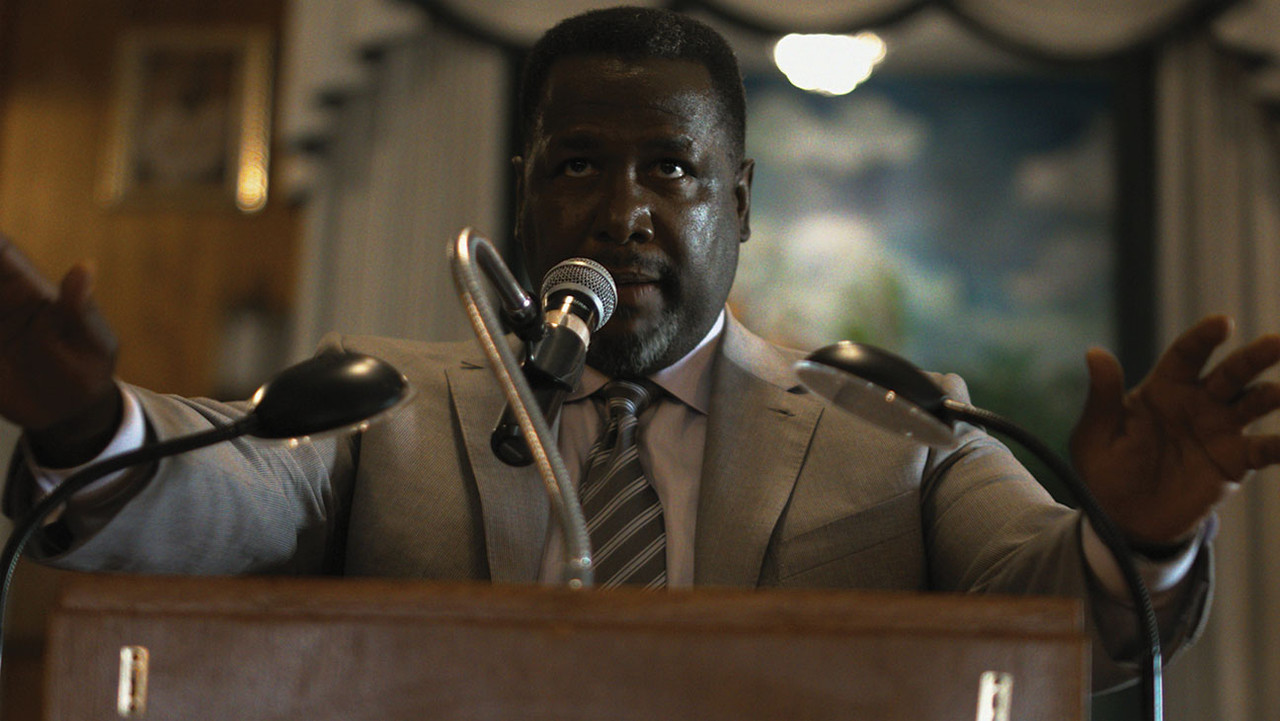
As Helen (Karen Kaia Livers) goes about her morning in rural Louisiana, we hear her describe the many old wives tales she heard and tried to implement—all without success—to cure a terrible rash her dog had. This is just one of the snapshots of Helen’s life in an impoverished town, where the Church is the centre of everyday life. We see her at church and with the alcoholic Reverend Tillman (Wendell Pierce) and trying to reconcile her faith with the troubles her son Daniel (Dominique McClellan), also an alcoholic, is going through.

The influence of Terence Malick and early David Gordon Green hangs heavy over his film,  especially in the use of evocative off camera dialogue and voiceover, often unrelated to much of what we’re seeing on screen. However, writer, director and cinematographer Phillip Youmans also establishes a strong voice of his own with this, his first feature film. Where he departs most from the Malick influence is in his dedication to handheld camera. Alcoholism is all over this film, Reverend Tillman is soaked in drink, to a degree that one could argue Youmans is drawing parallels between religion and booze as intoxicants. That’s not the only thing the film says about alcoholism though as it is also portrayed, through Daniel giving his young son Jeremiah (Braelyn Kelly) a drink, as a generational scourge. The handheld camera gives the whole film a woozy feeling, as if it too is mildly intoxicated in all of the scenes with alcoholic characters, which also lends purpose to moments that drift out of focus.

Youmans also knows when to simply let his camera rest. In one especially striking moment we see Daniel in the very back of frame, being berated over the phone by his mother because he has lost his job, while Jeremiah sits in the foreground, colouring. When you take it together with the shot of Daniel getting his son to drink, there is an enormous sense of foreboding in this image; as if Jeremiah’s future can be seen lurking behind him. It’s a brilliant and shatteringly sad image.

The performances are quietly spectacular. Karen Kaia Livers’ Helen carries world weariness and frustration, both with her son and her pastor, but also strength and caring. The voiceover that begins the film is beautifully written, but it’s her delivery that gives it such punch; the held in desperation of it as she recounts every failed attempt at a cure. We also see this combination of qualities in a scene that has her offering to drive Tillman to the store, because he’s obviously completely drunk. Wendell Pierce has an innate authority that lends itself to the role of a pastor, but the subtle way he plays drunk lies under every scene. Youmans isn’t entirely damning of religion, but he certainly comments on how both alcohol and religion can be enablers in the mistreatment of women, as we see a drunk Daniel hit his wife and later Reverend Tillman telling Helen that this is something that should be dealt with between her and God. If the film hits a stumbling block it is only in the last scene, perhaps an ellipsis too far; the fact we don’t see what happens feels a bit empty, but the rest of the snatches of these people’s lives are so well articulated that this is a very minor issue.

Add Youmans’ beautiful imagery to all this and it would be remarkable enough, but he made this film while he was still in high school. Beyond the maturity of his filmmaking, which is staggering, the understanding with which he writes characters generations older than him is exceptional. The crafting of the film’s language, the control of image and tone, the fact he says so much in just 77 minutes, and the way his elliptical construction of the film draws together so movingly all speak of a filmmaker older and more experienced than his 19 years. This is more than a calling card, it feels like an announcement of a talent we’re going to be hearing about for years to come. 
★★★★½

Sep 19, 2019

24FPS @ LFF 2019: Queen of Diamonds

Dir: Nina Menkes
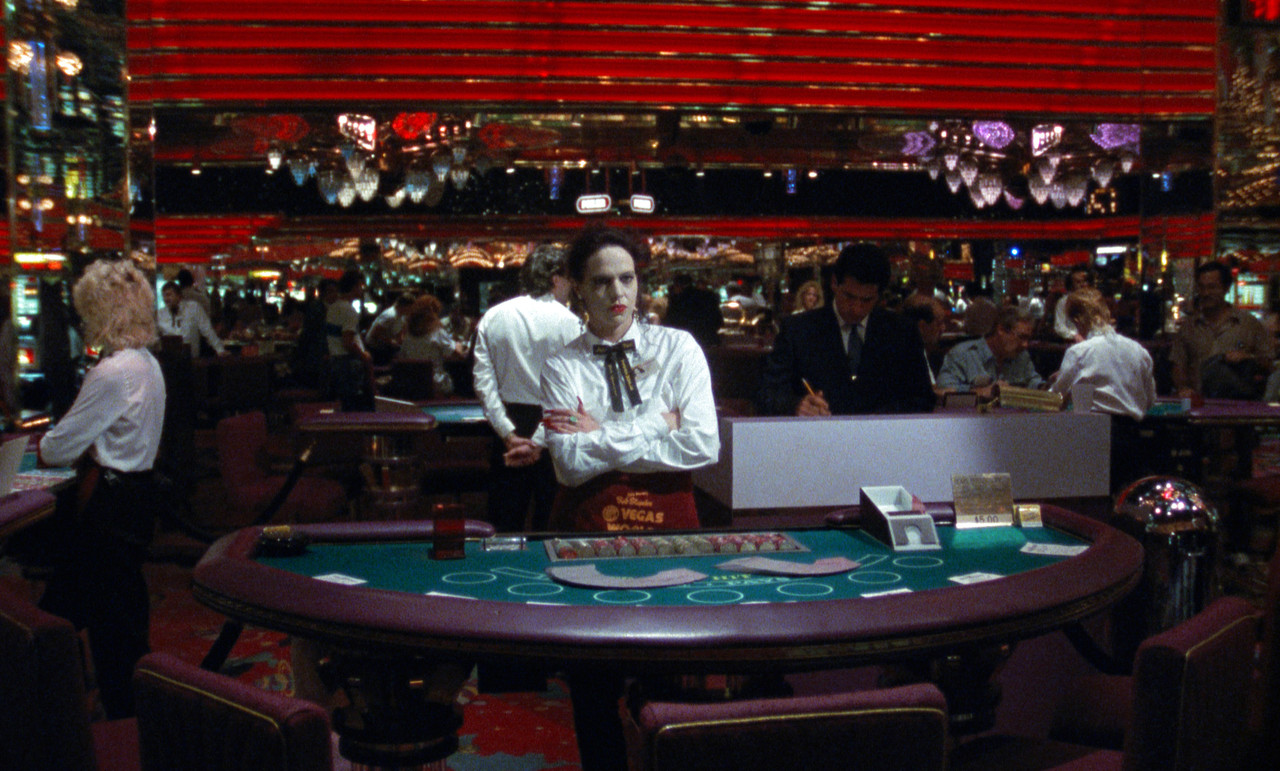
It is clear from the very first moment that Queen of Diamonds is not going to deal much in words. The title card comes up not as text but as a playing card. This is all the introduction we get to Nina Menkes’ demanding but rewarding look at one woman’s life on the outskirts of Vegas.

Made in 1991 and recently restored in 4K, this is likely to be one of the big discoveries of the LFF Treasures section for many viewers. It’s hard to ascribe anything approaching a story to this film, it hints at many behind the sometimes disconnected images, but not fully engaging with them is just one of the ways the film skirts any hint of cliche. Tinka Menkes plays Firdaus. We learn she lives in a motel, where her neighbours are an engaged couple and the man is hitting the woman. Firdaus works in what looks like a rather low rent casino and she helps care for an old man. Her husband is missing, but this doesn’t appear to concern her. 

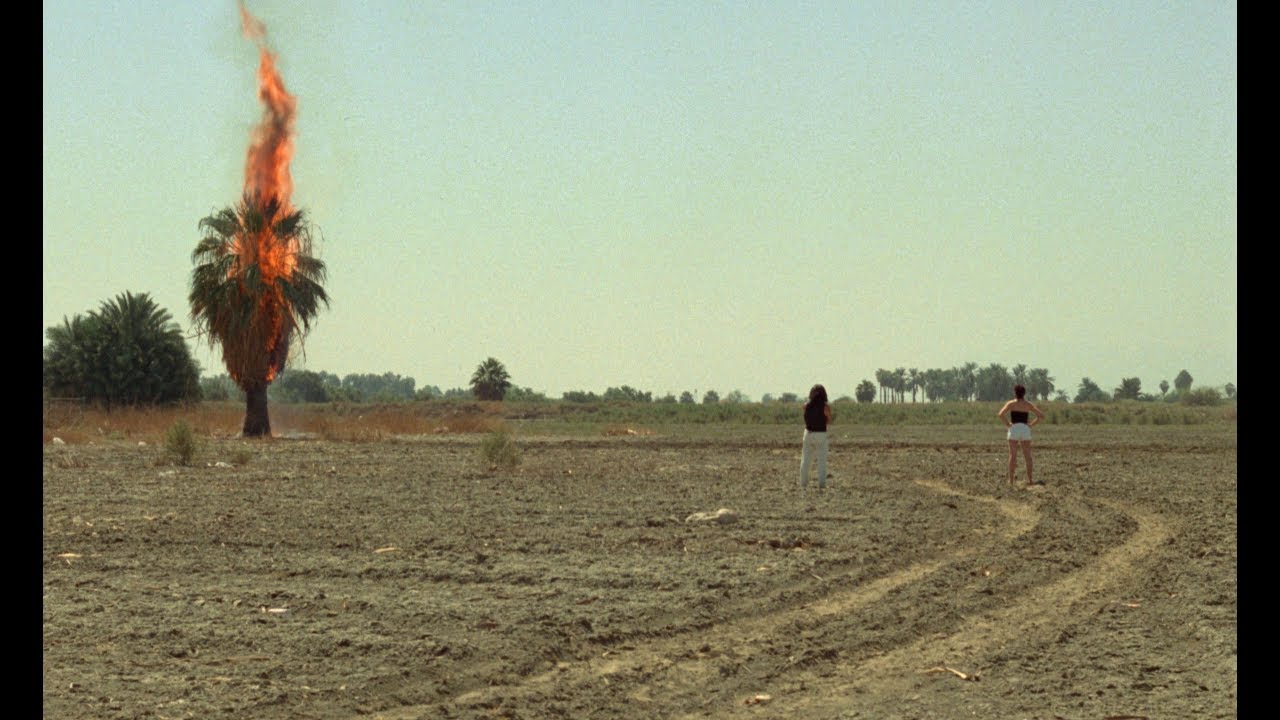
Events are thin on the ground, instead Nina Menkes puts us in a world somewhere between realism and surrealism, capturing the grinding mundanity of Firdaus' day to day life in a series of strikingly framed images, most of them in long shot, silent and unmoving. By so often sitting still on a shot for an extended period of time, Menkes forces us to draw ourselves into each image, to study every part of her framing and construction. The result doesn’t always reveal great meaning in the individual frame, but the beauty of her composition always means that there is pleasure merely in the looking and eventually in trying to piece the images together into some kind of full picture, like a jigsaw that will let us in to Firdaus, who remains a remote figure throughout. Perhaps the most striking image in the early part of the film comes when Firdaus goes for a walk with a man she meets on the beach. Rather than watch them walk we find them next standing at the edge of frame while, on the other extreme edge, a palm tree burns. The man leaves at some point, but we watch with her as it burns out in a shot that doesn’t move for something like three minutes.

Camera movement and cutting are so rare that when, about thirty minutes in, we come to a scene where we see Firdaus at work and Menkes zooms in on something, then cuts, it is almost a shock to the system. For a while it feels like Queen of Diamonds is settling into something approaching a normal filmic rhythm, but that’s only in the first part of the sequence. Menkes drags this sequence out for a long time—in full it is perhaps 10 of the film’s 77 minutes—it is clear the aim is to show us the repetitiveness and perceived length of her main character’s work day. This is highly successful, but not just through the length of the sequence. Images, cuts and camera movements repeat in a cycle, the camera often focusing on how Firdaus always leans on the card chute, or how she pushes money into a bank in the table. Menkes seems to break continuity, emphasising what feels like a time loop of mundane work and all the while she subtly builds a ticking clock into the sound design. It’s a sequence that demands patience and attention, but which is hugely rich and revealing if you give yourself over to it. In one way it’s hugely atypical of the film, in another it’s the whole thing in miniature. The second half of the film does take a few of the qualities of this sequence, but still remains stylistically very true to the still and studied overall style.

Dialogue is thin on the ground, serving little like traditional narrative function when it does appear. Even the sound quality—whether by design or happenstance—underlines this with the dialogue sounding distant, even overheard. Character too, is a slippery notion. We get no real background on Firdaus and her one friend who occasionally appears is equally an enigma. It would almost be fair to say we know more about the neighbour and his fiance, but even so, a long sequence about them towards the end of the film, though the jollity set against the bruises we can see on the bride is perhaps Menkes’ clearest signpost to what the film is saying as a whole, is the only segment that truly feels drawn out.

Queen of Diamonds is something of an enigma, but it’s gorgeous, hypnotic and quite unlike anything else I’ve seen recently. I want to dive into further viewings and try to unpick what lies behind it. One thing, though, is certain: it’s a crime that I hadn’t even heard of Nina Menkes before, and you should take this all too rare opportunity to discover her work. 
★★★★½

Aug 24, 2019

Once Upon a Time... in Hollywood [18]

Dir: Quentin Tarantino
I was in my teens in the mid to late 90s, so of course I grew up a Tarantino fan. I remember the frustration of the long wait for Reservoir Dogs, and then Natural Born Killers to be released here; the first held up by BBFC, the second having its release cancelled by Warner Brothers after an 18 certificate was granted. I remember the shock of seeing Pulp Fiction at fourteen, rewinding it and rewatching it immediately. 

My first Tarantino in the cinema was a bit of a disappointment at the time. Subsequently, Jackie Brown is clearly his greatest film. I bought into the mythology of the cool director who honed his craft not at film school but by watching videos and I revelled in much of the renaissance in independent cinema that his work seemed to usher in. I feel that Tarantino’s career, with Pulp Fiction as something of an outlier, can largely be divided into two eras: the genre pastiches and the alternate histories. Dogs was his heist film, Jackie his Blaxploitation movie, Kill Bill his kung fu picture, Death Proof a Roger Corman cars n' girls movie. Those elements that come from being steeped in genre lore recur in his war film Inglourious Basterds and his Westerns Django Unchained and The Hateful Eight but these films are at least as concerned with remixing history as they are remixing genre, an aspect of Tarantino’s work I’ve never entirely warmed to, until Once Upon a Time… in Hollywood.

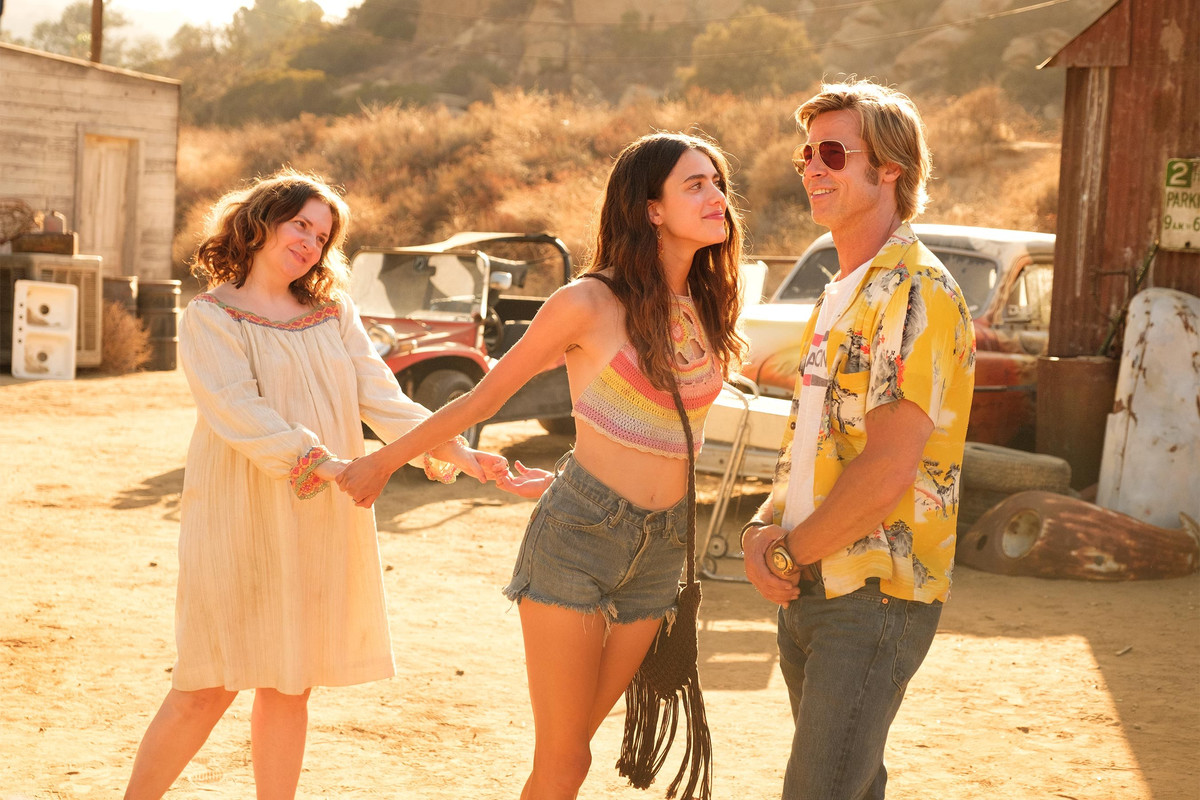
I first heard about this as Tarantino’s film about the Manson Family murders, but in truth it’s a shaggy dog story woven around 1969 in Hollywood, tangentially and intriguingly dealing with those events. Leonardo DiCaprio and Brad Pitt star as Rick Dalton, a washed up movie star, now flailing in TV and Cliff Booth, his stunt double/dogsbody. Rick’s disappointment in the direction his career has taken is accentuated by the fact that while he’s doing a guest part on a Western pilot, he’s living next door to Roman Polanski and Sharon Tate (Margot Robbie). Meanwhile, Cliff encounters one of the Manson girls (Margaret Qualley) and gives her a lift back to Spahn ranch where he and Rick used to work, meeting the rest of the Family in the process.

That’s only the barest bones of a film that, in its 162 minutes, encapsulates so much; from encounters with Bruce Lee (Mike Moh) and Steve McQueen (Damian Lewis); to cameos from the extended Tarantino family (Zoe Bell, Kurt Russell, Michael Madsen) and what is sure to be one of the year’s most controversial and difficult to address endings. 

In some ways the film is guilty of all the typical excesses of its director’s oeuvre but it’s also his most reflective work; at times almost wistful, even in the midst of its most extreme moments.

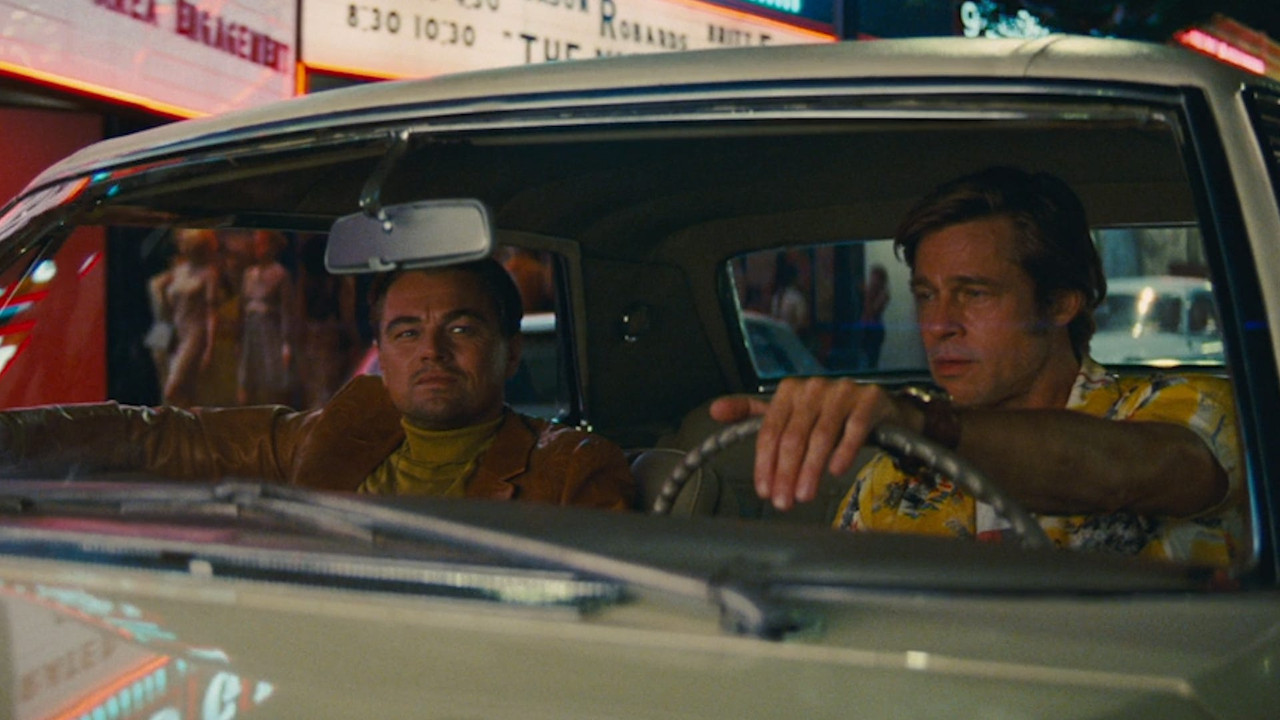
For the bulk of its running time Once Upon A Time… in Hollywood (a title whose significance is only fully clear when the card comes up at the end of the film) is a hangout movie, involving us in the minutiae of a couple of days in Rick and Cliff’s lives. There is some sense that what began as a working relationship has subconciously shifted to become a friendship of convenience.  Still, we get a sense of the two as real friends despite the disparity of their Tinseltown status. Together or separately, DiCaprio and Pitt have seldom, if ever, been better than they are here. Pitt, now more than ever aging into a doppelganger of a 45-ish Robert Redford, gives Cliff a slightly melancholy sense of a guy who has just followed where his life has led him, ending up a little battered and somewhere in the forgotten middle of society orbiting the rich, famous and his formerly idolised benefactor. Earlier in his life, you might imagine Cliff getting pulled in when he meets Pussycat (Qualley), but the years we can see and feel in Pitt’s performance have given him a fine-tuned bullshit detector which works to ramp up the tension in the scenes at Spahn ranch. As with the scenes of him being both a gofer and a shoulder for Rick, Cliff is shown to be a caring person in the sequence at Spahn ranch, the tension driven by his sense that something is off, making him insist that he check in on the elderly George Spahn (a cameoing Bruce Dern). 

It is in two closely related scenes centering on Cliff, that Tarantino hits the movie's only extended discordant note. During a lengthy flashback explaining why he’s no longer working as a stuntman,  Bruce Lee goads Cliff into a confrontation on the set of The Green Hornet. This is a film that otherwise fantasises about redressing the balance on terrible events, but this image of Cliffat least 40 in this sceneisn't just holding his own against an in-his-prime Lee, but at one point besting him. This isn’t just ludicrous, it leaves a bad taste in the mouth, especially when combined with a flashback within the flashback that winkingly suggests Cliff killed his wife. It’s a testament both to how inessential they are and how good the rest of the film is, that these scenes can largely be brushed aside, although they do leave the same lingering questions that have always clouded Tarantino's racial and sexual politics.

The Spahn Ranch sequence and the ending aside, Cliff’s story is about as loose and relaxed as he is. Rick's story by contrast is tense and internalised; from the opening realisation that the producer he’s talking to (Al Pacino, typically overblown) is telling him the  sad truth about his fading career; to the scenes on the set of the pilot he’s shooting, DiCaprio conveys the sense of a man simmering in a crisis continually rising to the surface. By far the most interesting character moments occur on the set of Lancer. Tarantino indulges in extended screen time for these probing scenes of a formerly confident ego wracked with self-doubt. Particularly interesting is the scene in which a highly practiced Rick still manages to forget his lines while the cameras roll. When he’s on solid ground he’s good, playing the villain with relish but also real menace, but once he loses focus he becomes hammily overblown, voraciously chewing on lines now given as prompts, spitting them out with a disdain for himself that extends to a pitifully brutal, drunken self-critique  in his trailer between scenes. 

It’s a special kind of challenge to deliver a great performance through bad acting, but the subtlety of Diaprio’s work pays dividends, giving colour and pathos to Rick’s process and his character. As Rick unexpectedly finds himself talking to a child actor before a crucial scene, the Lancer set provides an equally unexpected glimpse of something more emotionally raw than anything Tarantino has previously written. Asked about the cowboy novel he’s reading, Rick instantly recognises parallels to his own fading career and breaking down. This and the instant shame this recognition arouses, causes him to somewhat cruelly lash out at his preternaturally gifted co-star. These are rich but subtle moments that contribute to this being career best work from DiCaprio.

The most talked about aspect of OUATIH is undoubtedly the character of Sharon Tate and how she and the Manson murders tie into the narrative. It is at once very much a side story and the beating heart of the film. Tarantino has always been defined by his love of cinema, but he’s never romanticised it quite the way he does when Margot Robbie’s Tate goes to watch a public showing of The Wrecking Crew, in which she has a supporting role. We see herbare feet up on the seat in front of herenjoying the film but taking special pleasure in hearing laughter when her character “the klutz” gets a big reaction from a sparse audience, unknowingly watching along with the film's nascent star. This is a sequence about the magic of cinema and tragically snuffed out possibility. Splicing footage of the real Sharon Tate into this New Hollywood fairytale, Tarantino accentuates the artifice of his universe. Attention is drawn to the fact that Robbie looks little like the real life performer she’s playing, yet between them, actress and director make the connection between the avatar watching the film and the woman up on screen both believable and moving. We can see a process many actors must go through but which we’re seldom privy to. Watching herself up on the big screen, the movie’s Sharon seems to know that the audience's reaction and her rising star adjacent to the meteroic ascent of her husband, has opened up myriad possibilities, bathed in the warm glow of the projector. 

Robbie, one of the best actresses to emerge as a star in the past decade, is truly wonderful as Tate. Though much has been made of her lack of dialogue, her luminous presence is felt throughout even when she's off-screen, floating through the film as a prematurely ghostly figure. Tate and Polanski are positioned as the Joneses Rick can no longer keep up with, but their idyllic bubble is soon to burstthough Tarantino clearly wishes that hadn’t been the case. 
I’m unconvinced by the controversy around what Tarantino elects to leave out about Manson and his beliefs; the cult leader exists entirely on the periphery. Similarly, the controversy about the violence of the final sequence feels overblown, even in the context of Tarantino's filmography. OUATIH revels in violence and yes, much of it is meted out against women, but it matters exactly who these women (and the men leading them) are and what they have set out to do. For Tarantino, and in the wider historical context, this deranged bloodshed is a means of enacting righteous and furious vengeance. In the world of the film, these unfathomable events will almost certainly be a story for only a day. Cliff and Rick’s actions create an alternate path for history, meaning what they do has none of the ramifications it does in the real world. It's interesting to consider how the sequence plays if the viewer knows absolutely nothing about the historical reality, but if they do, the reward is Tarantino’s most radically complex rewriting of history yet.

As with all Tarantiono's post Jackie Brown output, Once Upon a Time in Hollywood's longueurs can go a little too long, though in this instance mostly by design and only occasionally. The gear shifts here would be easy to botch, but from its warm nostalgia to its violent excess and tense horror-inflected sequences pushed up against a surprising abundance of broad comedy, Once Upon a Time... in Hollywood mixes tones freely and with great success. The performances are uniformly excellent, not only the incredible leads, but many of the supporting playes, from a staked cast standouts include Margaret Qualley as the quintessential hippie chick, given an edge of danger by her associations, and a genuinely scary Dakota Fanning as Manson girl Squeaky. The film is also littered with one scene wonders like Julia Butters as Rick’s young co-star and Mikey Madison as deranged Manson girl Sadie. Robert Richardson’s cinematography beautifully captures a sense of period without feeling like pastiche, and he and Tarantino bring an especially beautiful eye to the TV pilot, making Lancer look so much more than the Western programme filler it's likely intended as. Overall, OUATIH is the richest, most mature and interesting film Quentin Tarantino has crafted in two decades. If the filmmaker remains true to his word and his next production is his last we can only hope he'll deliver at the same level and end his career on a suitably elegiac note, as he does with this film.
★★★★½

Oct 16, 2017

24FPS @ LFF 2017: Family Films

The Big Bad Fox and Other Tales
Dir: Patrick Imbert, Benjamin Renner
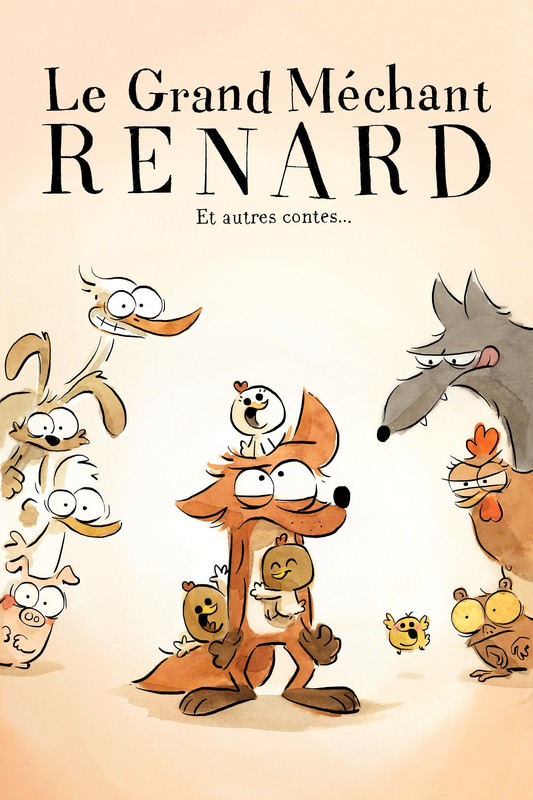
This delightful French animated film is set up as three short plays, put on by the animals in a farmyard. In Baby Delivery, Pig and his dimwitted friends, Rabbit and Duck, must fill in for an injured Stork. The Big Bad Fox sees Fox accidentally become mother to three chicks he steals for himself and Wolf to eat. In Saving Christmas, Duck believes he has killed Father Christmas and he, Rabbit and Pig must fill in for him, as they did for the Stork.

The Big Bad Fox and Other Tales is this year’s Family Gala screening at the London Film Festival, this is the strand that contains the films pitched at children, but this is a true family film. It will delight children (I’d suggest it for ages six and over) but, without aiming jokes over children’s heads, it should also work for adults. The animation style is very different; a little sketchy, but beautifully simple and full of character rather than crude, but the tone of the film has much in common with classic animated shorts. The slapstick gags come thick and fast, with the timing and execution of classic era Tom and Jerry, while the way these moments combine with the verbal humour recalls Looney Tunes strongly (especially in the relationship between Pig, Rabbit and Duck).

There are some wonderfully absurd touches and running gags to be enjoyed; the chickens forming a self-defence group because the guard dog is lazy, the calamities that happen to Pig’s house and Little Michel, who pops up in the last two stories to endearing and hilarious effect.

Any further review of this film would amount to my repeating my favourite jokes, which would rather spoil what is a wonderfully enjoyable film. I will say to stay in your seats during the credits as during them there are some lovely jokes, a recipe and a closing moment that seems to be a nod to Michigan J. Frog and sent me out of the cinema with a mile wide smile on my face. This may be pitched as a kids film, but it’s for anyone with a functional funnybone.
★★★★½

The Day My Father Became A Bush
Dir: Nicole Van Kilsdonk
Toda (Celeste Holsheimer) is ten years old and lives with her pastry chef father (Teun Kuilboer) in an unnamed country. When war breaks out between ‘The Ones’ and ‘The Others’ Toda’s grandmother comes to stay, while her father is called to fight. Eventually it becomes too dangerous at home and Toda is sent abroad to join the mother (Noortje Herlaar) she doesn't know. Along the way she gets separated from the people taking her and must make her way on her own.

I am a great believer that children’s cinema can and should be much more than mindless entertainment. The Day My Father Became A Bush tackles some big issues: war and its futility, displacement and the dislocating reality of suddenly becoming a refugee, but does it from a child’s eye view, making those issues comprehensible for its target audience. A big part of this success is in the way it addresses war. Nicole Van Kilsdonk never explores what the fighting is about or whether we should see ‘The Ones’ or ‘The Others’ as the good guys in the conflict. This isn't what’s important to Toda, what matters to her is that her father is away and that his camouflage be good enough to make sure he comes home (in one of the film’s most quietly touching scenes she puts branches on his helmet so ‘even birds will think you’re a tree’). 

Ultimately, the film says, which side we’re on doesn't matter much. Her father wears a blue badge but at one point Toda finds herself sharing a shack with a man wearing a yellow badge, soon she’s sharing food with him and, sweetly, helping him learn to give orders (he has deserted because he found he wasn't assertive enough for his command role. This scene is a fine example of the way the film leavens its messages with humour and heart.

Toda is a great character for young girls to see and identify with. She’s inquisitive and intelligent, brave in the face of scary situations and compassionate with a slightly younger boy who attaches himself to her, whom she nicknames Stickie (Matsen Montsma). She’s also just a typical ten year old, who calls herself a daddy’s girl. As Toda, Celeste Holsheimer gives a performance free of anything actorly or precocious. She hits the funny moments nicely, but is particularly adept in the dramatic scenes, especially towards the end of the film when, having lost her mother’s address, Toda finds herself a refugee.

The Day My Father Became A Bush asks kids to engage with some big themes, but it takes them gently through those ideas, leavening them with humour and, even in the film’s toughest moments, the optimistic outlook that Toda radiates. It’s an entertaining and intelligent film and an ideal opportunity to discuss some challenging subjects with your kids. 
★★★

Oct 12, 2017

24FPS @ LFF 2017: Brawl in Cell Block 99

Dir: S. Craig Zahler
S. Craig Zahler divided people with his debut, Bone Tomahawk; a slow burning revenge western with something more akin to Cannibal Holocaust as a third act. I was a fan. It was vicious, but very well shot, darkly funny and character driven. For his second film Zahler has changed the setting, but delivers a similar mix of ingredients.

When Bradley (Vince Vaughn) loses his job he goes to work for a friend, running heroin and meth, but when an exchange goes bad he ends up with a seven year prison sentence. As soon as he’s sent down the cartel kidnap Bradley’s pregnant wife (Jennifer Carpenter) and demand that, for her freedom, he get to Cell Block 99 of a maximum security prison and kill a man for them.

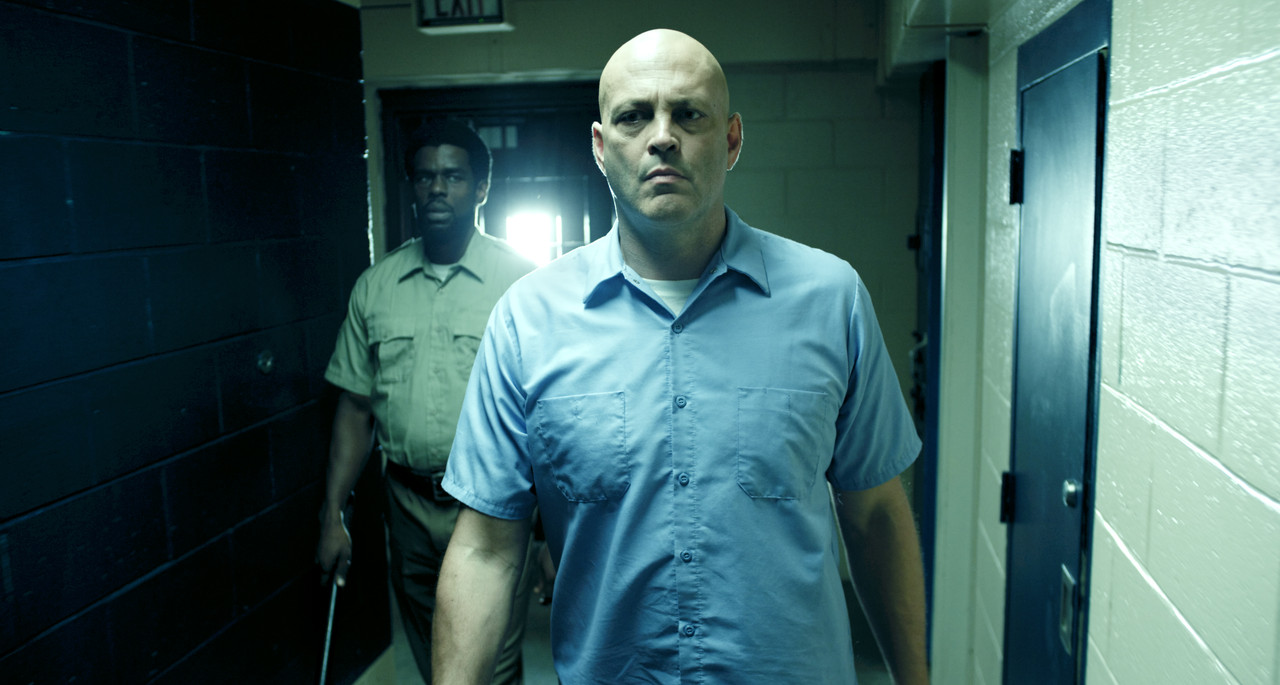
Brawl in Cell Block 99, like Bone Tomahawk before it, takes its time in unfolding what is ultimately a very simple story. Some audiences might find the wait for the brawling a little drawn out, but for me the focus that Zahler’s screenplay puts on establishing characters and relationships and the major screentime he puts into that effort, adds a lot of weight to what could be little more than series of punch ups with some talking in between them. In Bradley, Zahler has written a layered character. He’s never someone we can entirely relax around. Early on, when his wife confesses an affair, he takes her car apart with his fists, punching in widows and tearing off the bonnet. He’s clearly capable of extreme violence, but by the same token we see that he’s not indiscriminate. After destroying the car he talks with his wife and when she goes to approach him at the end of the scene tells her not to, he still needs to cool down. This is a great shorthand encapsulation of the character; a coiled energy that he wants to keep under control, even if he sometimes finds it difficult. Bradley’s no hero, but the film establishes that he has some sort of moral code, and that helps us stay on this journey and, in some odd way, root for him.

I’ve never rated Vince Vaughn. I wasn’t a fan of Swingers nor of many of his comedies, but I did think he turned in a very good dramatic performance in Hacksaw Ridge. This, however, is even better; a career redefining performance. As Bradley, Vaughn is shaven headed and physically imposing, at times in the film’s brutal last third his face is so contorted and focused on the violence he has to do that he essentially becomes a sentient fist, but his performance is anything but a one note show of force. That early scene with Carpenter and others in the film demonstrate an emotional depth we haven’t seen from Vaughn before and Zahler also makes use of his star’s comedic timing. Bradley often has a sarcastic line, especially to authority figures, and Vaughn underplays these nicely, using them as Bradley’s way of getting a little power back as much as making a joke.

The other performances tend towards the broader end of the scale, with Udo Kier (as one of the cartel’s middle men) and Don Johnson (a hammy prison warden) stealing scenes. Marc Blucas, sadly, remains about as anonymous as he was on Buffy, but he’s not in the film long enough for it to matter. It’s also a bit of a shame that Jennifer Carpenter, who is good here and in just about everything else I’ve seen her in, is underused. There was a similar problem with the wife role in Bone Tomahawk, and Zahler could certainly benefit from writing more rounded female characters.

The screenplay is largely excellent; cleanly plotted, with strong character beats and often amusing dialogue, but it’s in the direction that Zahler excels. Visually the film is fairly cold, reflecting the poverty Bradley finds himself in early in the film and the atmosphere of the first prison nicknamed ‘The Fridge’ (for the initials of its full name, but you could just as easily see it as a cold meat storage facility). In the last act, inside the maximum security prison, the visuals get ever danker and darker. At a certain point it begins to feel like a descent into hell, with only orange jumpsuits, blood and bone providing splashes of colour that aren’t black or brown.

The violence is shot with an absolutely pitiless eye, which will surprise nobody who saw Bone Tomahawk. Skulls are exploded, heads stomped, arms ripped open, faces stripped off and there is plenty of fluid, hard hitting, fight choreography. As an action director Zahler stands back and allows the fights to take place in medium to wide shots, showing us that Vaughn is doing most if not all of his own stunts and how the choreography works within the space. It’s exactly how I like to see action staged, none of this hard to see shakycam crap. The level of violence will mean that Brawl in Cell Block 99 isn’t for everyone (or even for everyone who thinks they might ordinarily like a film with this title), it drew cringing from my audience, and even made my toes curl on occasion. That, for me, is a positive. Violence should be cringemaking, should be upsetting, and Brawl in Cell Block 99 certainly manages that.

For me, this is one of the highlights of the London Film Festival this year. It’s proof that Bone Tomahawk was no fluke and that S. Craig Zahler is a name for fans of extreme cinema to keep a very close eye on. This is two hours of nasty, brutal, often very funny, character driven grindhouse cinema. I loved it.
★★★★½