Showing posts with label 5 Stars. Show all posts

Apr 16, 2022

Henry: Portrait of a Serial Killer 4K [18]

Dir: John McNaughton 

The Film 
For years, Henry was whispered about. It began screening at film festivals in 1986, but went unreleased in the US until 1990, largely because its producers were upset that they hadn't been given a more classical slasher film. In fact, director John McNaughton’s second film, The Borrower, would have beaten it to cinemas by two years, had its original distributor not closed. The problem for Henry wasn’t that it was bad, it was well-received by festival audiences and critics, but its subject and matter of fact, disturbing, presentation led to problems finding distribution and with the MPAA (to say nothing of the fights with the BBFC when it came to the UK). Before release, the film was apparently passed around industry circles on VHS, and in a way that’s still how it feels like it should be seen: a grubby artifact passed under the table. The fact it’s getting a 4K release seems almost antithetical to the movie it is.

McNaughton had made a couple of TV documentaries for producers Waleed and Malik Ali; profiles of gangsters composed of archive footage. When a planned series on wrestling fell apart, they simply offered him the same budget to make a film, stipulating only that it should be a horror movie. After being shown a segment of the TV show 20/20 about Henry Lee Lucas, who confessed to around 300 murders (few, if any, of which it is now thought he actually committed), McNaughton determined that this would be the subject for his film. 

In many ways, though set and shot in Chicago, Henry is reminiscent of the New York set exploitation movies of the 70s. At a production level the circumstances are similar: it was shot on 16mm, without permits, for a shoestring budget, by a cast and crew who, almost to a man, were working on their first film. More than that though, it has a gritty street level feel that permeates the film. Everything, from the back alleys where Henry (Michael Rooker) and Otis (Tom Towles) kill their victims to the very walls of the apartment they share with Otis’s sister Becky (Tracy Arnold), seems streaked with the accumulated dirt of the city. 

There are, intentionally, exploitation elements to the film that serve to lull us, as an audience, into a sense of security. The most classical of these is the murder when Henry and Otis go to buy a TV. The stolen goods dealer who is showing them their options is a slob, more than that he’s rude, abrasive, and insulting. Throughout the scene we know he’s going to get his ‘comeuppance’ (never mind that he’s a much lesser offender here; rude, rather than a serial murderer), we’re anticipating it, and when it comes it goes to almost silly lengths. It’s a very traditional death. What it sets up, however, is the central and most disturbing, sequence in the film. 

Before the TV murder, Henry looks largely at the before and after of murder, whether it’s the series of tableaux of victims that opens the film, or Henry walking into the flat he shares with Otis with a very nice guitar. Asked where he got it he says “I picked it up”, but we’re privy to the context, we just haven’t seen the body of the hitch-hiker who was carrying it before. We see Henry stalk potential victims, spotting them in public and following in his car; locked in, but able to abandon any that don’t present an opportunity. Rooker’s nonchalance in these before and after moments is chilling. When we see killings play out, Henry is little more affected, at least by his own actions. Otis is another matter. If Henry is controlled and careful, picking his victims, varying his MO to avoid detection, Otis is all abandon, the two are equally destructive, but Henry has a line, a sexual one, that he won’t cross and is upset when Otis does. 

This is where the film’s most controversial, and most pivotal, scene comes in. Where Michael Haneke’s Funny Games (in either version) looks into camera and goads us to justify our relationship to the depiction of violence on screen, McNaughton does the same thing in a much more insidious way. As we see the terrorisation and killing of a whole family unfold on a TV screen, we understand that we’re watching back something Henry and Otis have filmed, but it’s only late in the sequence that McNaughton breaks and shows us that they too are watching, and that Otis then rewinds the sequence, and puts it in slow motion. The film doesn’t have to come out and say it, the implication is clear: you’re doing the same thing as these monsters. How do you feel about that? It’s a sequence that echoes through the audience’s relationship to not just this film, but the serial killer genre as a whole. 

Between killings, Henry, both film and to some degree character, is almost banal. Rooker looks like every blue-collar guy, you believe the sense that the film puts across that he’s in no danger of getting caught not because he’s particularly smart (certainly he has no forensic awareness) but because he’s someone you wouldn’t look twice at. Until the moment, he doesn’t appear dangerous. In this way, Henry’s outward ordinariness becomes terrifying. It perhaps this, along with the fact that she seems to have been conditioned to expect and accept the very worst from men, that draws Becky to Henry. Through her eyes, Henry’s psychopathy isn’t as troubling as it should be, because she sees it directed at protecting her from Otis and his incestuous advances. 

These are difficult characters to play; all damaged, two of them irredeemably evil. Becky is the innocent of the group, naively looking past Henry’s nature, even after he disconnectedly tells her how he killed his mother. Tracy Arnold’s performance is the overlooked gem of this film; she gives us Becky’s innate decency, but also the damage that has resulted from her tough life and in her looking for someone to trust anywhere she can, even in a psychopath. Rooker and Towles dive deep into their reprehensible characters, giving horribly compelling performances. Towles’ Otis is a pathetic monster, emboldened by Henry to the worst of his violent impulses, but driven by his own urges to sexual crimes. If not exactly star-making, Rooker’s performance certainly gave him a career, and it remains his finest work. The only sense we get of acting is the fact that we sometimes sense Henry first trying to appear normal, and the mask slipping for a moment. This is most notable in the sequence when he’s playing cards with Becky, the distance in his eyes and his answers showing the blankness of the monster beneath his facade of normalcy. It’s a terrifying piece of work. 

Henry is the kind of film that could only have been made under the circumstances that it was: tiny budget, full creative freedom, and the luck of some incredibly talented people coming together. It’s among the bleakest and most pitiless films ever made, and even though the confessions it’s based on turned out to be fabricated, the reality is that somebody did these things (or things very like them) and it’s probable that the person was just as outwardly ordinary and often was just as free to go on with their life as Henry is by the end of this film. The film itself is a horror masterpiece, but what’s truly frightening about it is that we can be sure there were, and are, many, many Henrys out there. 
★★★★★ 


The Disc and Extras 

In this new edition, Henry looks outstanding. Presented in native 4K from a new restoration, the film almost certainly looks better than it ever has. The print is free of blemishes and, while grain is present, it doesn’t swarm the picture. The detail is excellent, accentuating the down and dirty feel of the film. It’s perhaps not up with the very best 4K presentations, but that's down to the limitations of the source format rather than the quality of the work here. 

The extras package is beyond exhaustive. Two booklets collect several essays on the film and the complete storyboards. There are three commentaries, all featuring John McNaughton. I’ve not had time to listen to them yet, but based on his contributions elsewhere, I’m sure they’re all engaging, but I suspect there’s also going to be significant overlap. A collection of deleted scenes and outtakes is interesting. It’s a pity the sound has been lost, but McNaughton’s commentary fills in the gaps. A 2005 documentary, running 50 minutes, is a useful overview and, happily, features all the key people, including Tracy Arnold, who doesn’t seem to have commented on the film that often outside of this feature. 

Elsewhere are filmmakers appreciations of Henry, a documentary on killers with cameras in cinema, and video essays on the film’s history with both the MPAA and the BBFC. Interview features with McNaughton are provided from around the time of the film’s release in 1990 as well as in retrospect, from 1998 and 2016. Finally among the video extras is an interview with the designer of the film’s startling theatrical poster. It will take you several full days to work through all the content here. Take into account the package: a hard case with new poster art, as well as a double-sided poster and 6 postcards, and this must qualify as one of 2022’s most comprehensive and best releases. 
★★★★★

Oct 16, 2021

24FPS @ LFF: Petite Maman

Dir: Celine Sciamma
“I came from the path behind you”, says 8-year-old Nelly (Josephine Sanz), just after telling her friend Marion (Gabrielle Sanz) that, in the future, Marion will be her mother. Like many of the lines in Celine Sciamma’s exquisite screenplay for her fifth film, it’s layered with meaning; Nelly literally comes from the path behind Marion, from her Grandmother’s house, which she and her parents are clearing out after her death. It’s also a line about how Nelly, and all children to some degree, follows a path cut for her by her mother.

Four of Sciamma’s five directorial films, and the two features she’s written for other directors, fall broadly into coming of age cinema. I’m not sure any modern filmmaker has managed such a consistent, varied and nuanced exploration of the genre. While it hasn’t got the spectacular effects and the high sci-fi concept, the film Petite Maman most recalls for me in spirit is, perhaps surprisingly, Back to the Future. That film, ultimately, is about meeting your own parents and realising that if you had just been a couple of guys at school, you probably wouldn’t have got on with your Dad. Petite Maman takes the same basic concept of meeting your parent at your own age, but in this case, Nelly and Marion become fast friends. While the film doesn’t have her state it in the moment, it’s clear from one subtle shot of a particular, almost talismanic, prop that Nelly figures out quickly what is going on. 

Initially, Nelly and Young Marion are on totally equal footing, there’s an innocence and purity to their play together, spending much of their time in the woods, building a hut that Nelly had asked about earlier in the film. Later, when the relationship is clear, Sciamma uses the carefree feeling of these scenes to contrast with the older, clearly more fragile, Marion (Nina Meurisse), for instance, it doesn’t seem like the silly, playful, way that the girls make pancakes for Marion’s eighth birthday party is something Nelly will have done with the older version of her mother. 

In the present day scenes, there are some beautiful observations of how much Nelly cares for her mother; feeding her crisps and hugging her from the back seat as they drive away from the home where Marion’s mother passed away. It’s something that, while present day Marion clearly loves her daughter, the younger version seems more able to express. There is so much to be said about how delicately and how beautifully Sciamma and her young stars paint this relationship, but perhaps the simplest moments are the most moving, like the image of 8-year-old Marion, blowing out her birthday candles as she looks between her mother and her future daughter. It’s a gorgeous, truly magical, family portrait that sums up the film's magical realism perfectly.

Celine Sciamma is one of the truly great filmmakers working today, and Petite Maman is another gem. Thanks to cinematographer Claire Mathon, who also shot Portrait of a Lady on Fire for Sciamma, this is a beautiful film. The scenes between the young Marion and Nelly have a golden autumn feel, while the scenes back at the present day house emphasise the emptiness, especially after present day Marion takes off, leaving Nelly with her Dad. The dialogue doesn’t always sound like 8-year-olds talking, but some of the most childlike moments are the film’s most indelible, like Nelly wanting to go to sleep “to get to tomorrow”, which leads immediately to one of my favourite cuts in any recent film, carrying that idea through directly.  In 72 minutes, Sciamma manages to convey great depth and nuance, to fully explore this mother/daughter relationship, but do so with disarming simplicity. 

I think I need to see it again (and again) to appreciate all of its layers properly, but this is clearly one of the very best films of 2021 and yet another landmark in Sciamma’s thus far flawless career.
★★★★★

Feb 7, 2020

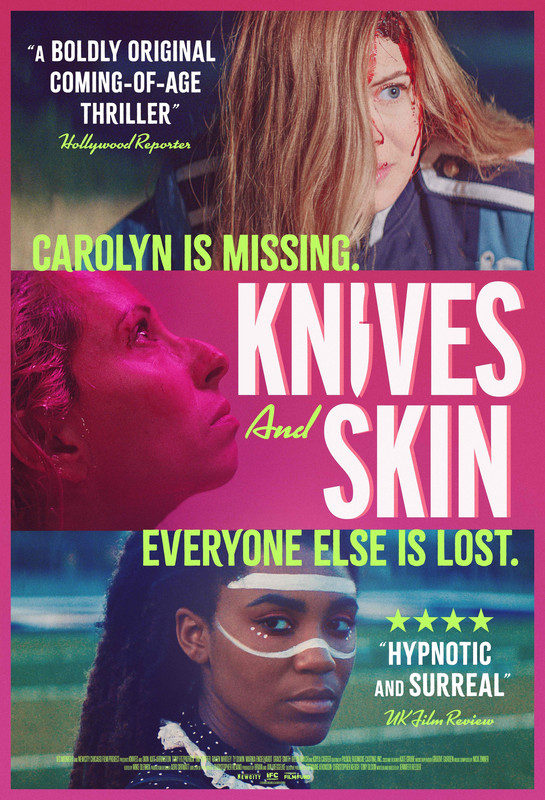
Knives and Skin

Dir: Jennifer Reeder
I’ve only seen a handful of Jennifer Reeder’s short films, but this feature feels like a logical extension of them. Those shorts screened in the London Film Festival’s Experimenta programme, but I always believed I saw Reeder’s interest in genre trying to force its way through her more abstract imagery. The images may lean more towards traditional narrative cinema here, but the tone remains deliciously off-kilter, in a way that draws us into what feels like a reality-adjacent world where Reeder is in full control.

15 year old Carolyn Harper (Raven Whiteley) has gone missing, and the film explores the aftermath of her disappearance and its effect on the small town she lives in; her peers at school, as well as her mother, Lisa (Marika Engelhardt) and the other adults in the community.

As befits a director with Reeder’s experience, Knives and Skin is, from the first frames, a supremely confident film. We are thrust straight into its neon-dipped world, discovering Lisa looking for her daughter, knife in hand, then pulling on one of her daughter’s dresses when she finds her gone. This sets a mood for the next 110 minutes, establishing the slightly off feeling of the film’s world, the bright and bold look and the way it mixes a wide streak of humour into its overwhelmingly melancholy tone. There is so much going on here, so much that Knives and Skin is about. On the surface, it’s largely about how a single death—even that of a person who may not have been especially popular—can echo through a community, but look beneath that and there is a film about girls and women, about feminism and representation, about relationships, about high school and about high school movies. Even that list doesn’t cover all the bases. 

Everything is filtered through Reeder’s dialogue, which has a very specific feel. It takes a moment to adjust to at first, but soon we and the film settle into its rhythm. Soon after her daughter has disappeared, Mrs Harper is talking with the local Sheriff, who says that he’ll get his wife to make her a casserole “I don’t think it’s time yet for casserole”, she replies. This moment distills the dialogue style beautifully; the cadence is slightly off, but the words themselves are expressive and full of underlying meaning. We know from the start that Carolyn is gone but in this moment her mother isn’t ready to give up hope that her daughter will be okay.

Other themes are also explored. The film is timely in its feminist approach. Early on, Reeder looks to reclaim the depiction of girls in teen movies. As Joanna (Grace Smith) and Jesse (Robert T. Cunningham) discuss their relationship to Carolyn he says “She could be pretty mean, so can you”. “That’s all we’ve got”, comes the reply. This feels like a direct riposte to the stock character of the popular bitchy girl, and also an acknowledgment of how women, whatever age, are judged more harshly for not appearing ‘nice’. We don’t actually see much meanness between the girls, but Joanna has a hard side, expressed to exploitative men in her life—a line about a sandwich near the end of the film is, remarkably, both laugh out loud funny and properly rousing. The film’s thesis statement about high school girls, if it has one, comes towards the end when Laurel (Kayla Carter) tells her soon to be officially ex-boyfriend “I’m not a bitch, I’m not a slut, I’m not a tease. You treat girls like shit”. It’s a powerfully blunt statement, later underlined in a perfect visual moment.

These are just some of the ways in which Reeder tries to get us to look askance at high school movies of the past, while also making clear her respect for the genre. Much of the film’s last fifteen minutes seems dedicated to this idea of depicting familiar moments but putting a twist on them. For instance, there is plenty of buildup to the homecoming dance, but it’s a performance by Charlotte’s band, rather than the date the film has been setting up, which ends up being the most important part of the scene, while a potential suicide scene becomes one of the film’s most hopeful and funniest (Joanna: “Please don’t jump, you’ll make a mess down here and it’s already such a fucking mess down here”) 

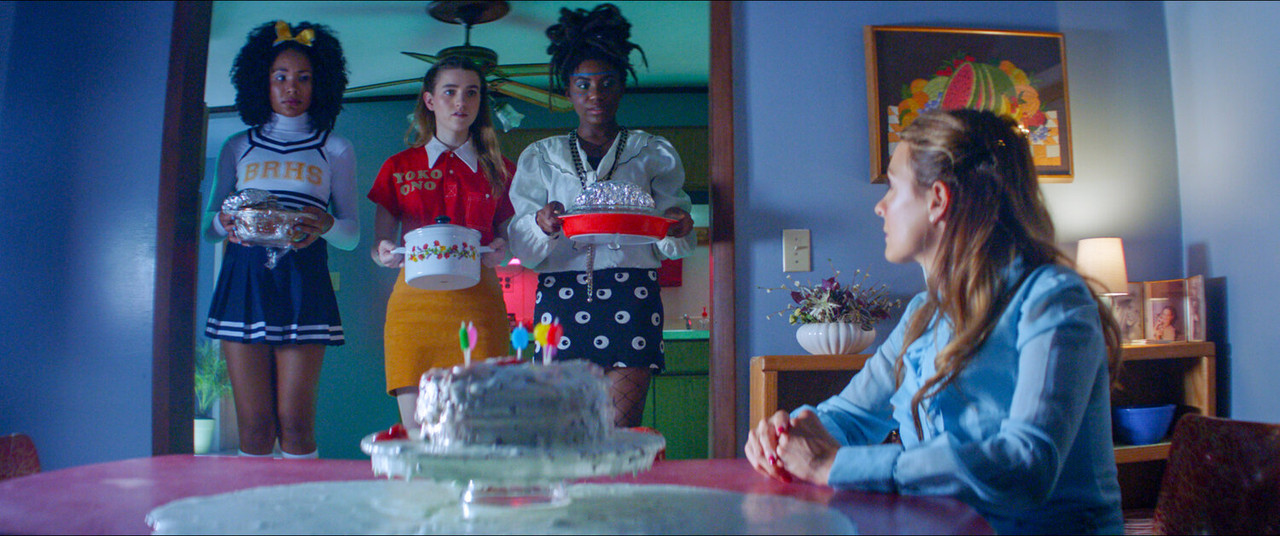
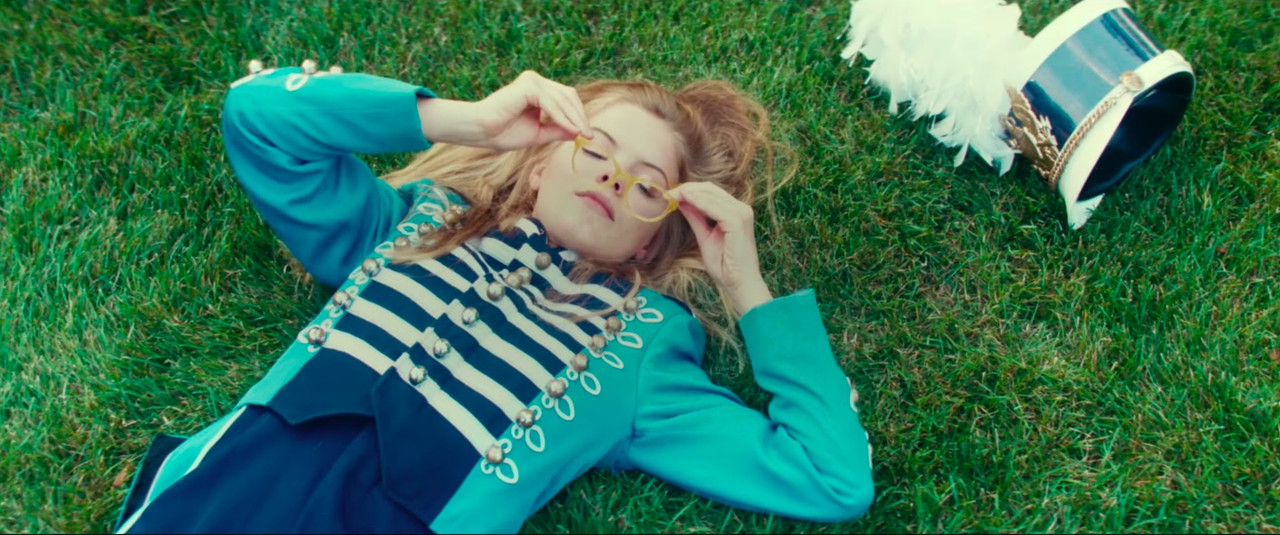
Of course, meaning is unpacked in the visuals as much as in the dialogue. Clothing, in particular, is given great significance. Several things related to Carolyn (her blood, a scratch she makes on her would-be boyfriend) glow, but it’s her glasses that become something of a talisman, spending the majority of the film shut away in a school locker, emanating a neon light, like the last piece of energy left from Carolyn trying to reach out into the world. For the other characters, clothes are a signifier of who they are (or would like to be), whether it’s Joanna’s T-Shirts, all monogrammed with the names of women like Angela Davis, Yoko Ono or Joan of Arc, her mother’s (Audrey Francis) Lion T-Shirt, or Charlotte’s (Ireon Roach) striking make up, and eventual acceptance of a pink homecoming dress. This is perhaps a little on the nose when it comes to Joanna’s dad; a literal sad clown who is cheating on his wife.

The use of music is striking throughout. Nick Zinner’s electronic score has a chilled ambiance, which pairs beautifully with the melancholy of the film. It’s not what you’d expect from the Yeah Yeah Yeahs guitarist, and is more reminiscent of Para One’s score for Celine Sciamma’s Water Lilies. However, the most daring use of music comes through the songs Reeder uses, largely 80s new wave hits sung by a choir coached by Carolyn’s mother. Some are staged simply as the choir rehearsing, but the use of Modern English’s I Melt With You is especially beautiful, as it’s sung by two girls falling in love, their faces and voices cross-fading into each other. These sequences are peppered throughout the film with such regularity that you could almost call it a musical, with each song serving a different emotional purpose within the narrative.

The performances from, at least to me, a largely unknown cast, are outstanding all round. Reeder has found memorable faces who deliver performances of great nuance. It’s worth noting Raven Whitely as Carolyn who, though she has relatively little presence in the film, establishes her character quickly in the opening scene and then haunts the movie, her presence hanging over it throughout. However, the two major standouts here are Grace Smith as Joanna and Marika Engelhardt as Lisa. Smith puts across a character who is extremely smart and uncompromising in her dealings with others, willing to exploit them, but there’s also a chink of warmth we can see under that shell, especially for her parents. It’s a terrific performance and should bring Smith a lot more work. Engelhardt’s performance is raw and vulnerable, dazed by concern but also trying to hold it together (“People keep asking me how I’m doing. It’s really annoying, but I know eventually they’ll stop asking, so I’m trying not to be an asshole about it”). Her best scene, and maybe the movie’s, comes when she gets into a boy’s car, believing she can smell how her daughter used to smell. It’s at once uncomfortable, deeply sad and blackly funny and Engelhardt hits every note perfectly.

There is so much still to say about Knives and Skin, whether it’s the production design (the tinfoil wrapped pillows Joanna’s mother sleeps on; Reeder's nod to her short Blood Below the Skin) or the darkly comic incidents (the reveal about the sheriff’s wife’s pregnancy). On an analytical level, I’ve only scratched the surface of what I have read into it, and I’m sure further viewings will prompt more ideas. This is all to say that this isn’t just a great film (though it is), but that it’s an interesting and deeply rewarding one that will have you turning its images and ideas over in your head long after the credits roll. Seek it out immediately.
★★★★★

Oct 10, 2019

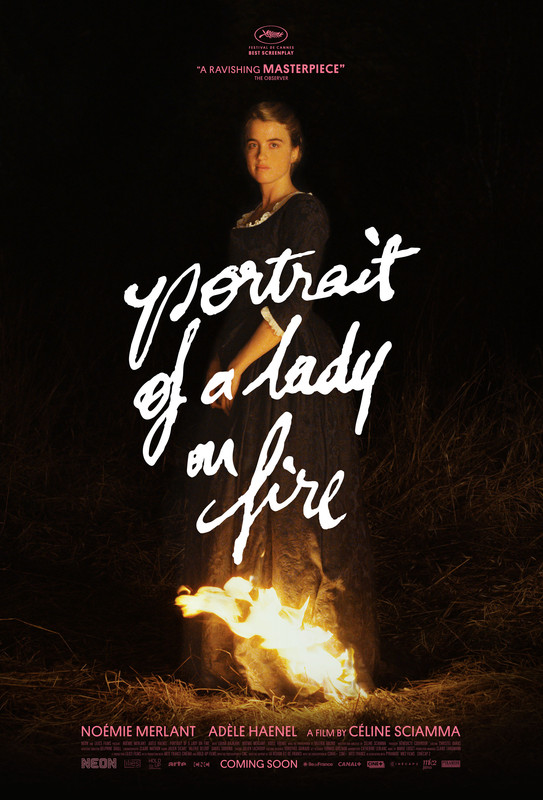
24FPS @ LFF 2019: Portrait of a Lady on Fire

Dir: Celine Sciamma
Since 2008, writer/director Celine Sciamma has made her name exclusively in coming of age cinema, with her own films Water Lilies, Tomboy and Girlhood and the screenplays for My Life as a Courgette and Being 17, all five of them among the genre’s best in the past few years. As her first venture outside that genre, Portrait of a Lady on Fire represents a big change, but Sciamma’s cinema, while evolving, as it has with each work, still feels as raw and personal as ever with this move into period romance.

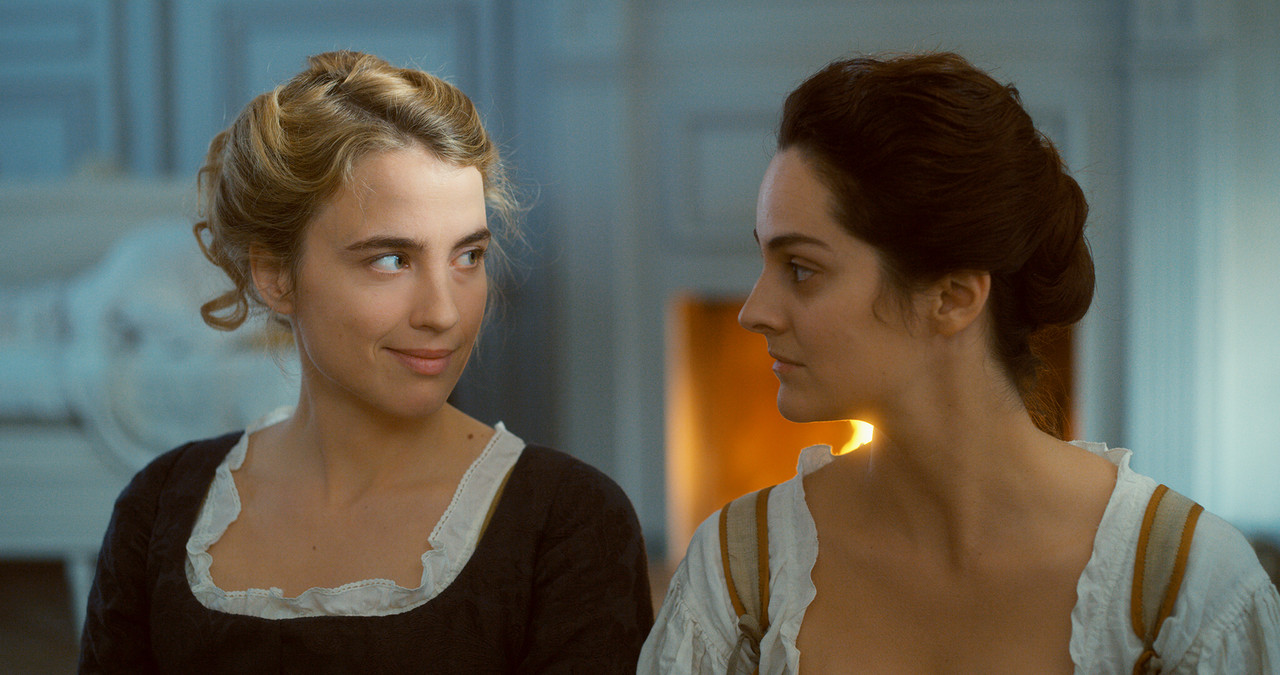
In 18th century France, painter Marianne (Noémie Merlant) is commissioned to paint a wedding portrait of Héloïse (Adèle Haenel). Because she doesn’t want the marriage, Héloïse is trying to avoid the painting, so Marianne must observe her during daily walks and work in secret. As the wedding grows closer, so do Marianne and Héloïse.

Described by Sciamma as a film about the memory of love, the jumping off point is the titular portrait. When Marianne is asked about it in a drawing class where she is both teacher and model we move straight into flashback, finding her arriving on the beach, above which sits the stately home where Héloïse lives with her mother (Valeria Golino) and their young maid Sophie (Luàna Bajrami).

Like many love stories, Portrait of a Lady on Fire is initially a slow burn. In her aim to film the growth of desire, Sciamma uses both this slow pacing and the composition and timing of her images brilliantly. The film is incredibly sensual and tactile, taking in details of form and texture in a way that seems to try to replicate Marianne’s painter’s eye for detail. This is seen in how the camera dwells on things like the folds of a dress, as well as in the way it regards Haenel, taking in every angle and line, allowing her to give a performance that works in tiny nuances, especially during the first half of the film, which is essentially a process of breaking through Héloïse’s shell. The first time Haenel smiles in the film, which is almost imperceptible and almost halfway through, is the first moment that begins to trigger the realisation of the desire and slowly forming passion that Sciamma has been building.

In a film where gaze is paramount, it is fascinating to watch how that aspect evolves. The connection between Merlant and Haenel changes throughout the film, and Sciamma often dwells in those moments, holding on their gaze towards each other, whether the two are in the same frame or not. The way the camera represents how they look at each other comes through in everything. It's there even in the design, the home feeling colder in the beginning of the film and the warmth of the relationship between Marianne and Héloïse seeming to warm up the surrounding environment, at least in the house, as time goes on. The central visual metaphor—Marianne seeing Héloïse standing in the opposite side of a fire at an outdoor party and Héloïse’s dress catching fire, just as the yet unspoken desire is rising on both sides—may not be subtle, but it’s evocative, thanks especially to the painterly texture of the image. This painterly feel is embedded in many of the film’s important images, most notably a recurring and fleeting image of Héloïse in a white nightgown; she seems part ghost, part painting, and that image becomes more affecting every time we see it.

The romance is the centre of the film, but many other concerns run through it as well. As well as being about love, the film features a telling depiction of female friendship and support, as Marianne discovers that Sophie is pregnant and the women try to obtain an abortion for her. That sequence, thanks to one element included by Sciamma, bears such complexity of feeling in a way that never lectures and is entirely fresh. It’s sad yet a victory; tough yet tender. Sciamma also interrogates the place of women in 18th century society. The idea that Héloïse is meant primarily as a bauble, a decoration for her husband to carry around is embedded in the portrait process, and especially in the more idealised image that Marianne paints when her model won’t sit for her. We also see this in Héloïse’s mother—clearly unhappy with her own arranged marriage, but now engaged in making the same bed for her daughter to very literally lie in.

Passionate but never exploitative, it’s obvious that a female gaze is behind the love scenes, but it’s sometimes the painting scenes that feel most telling of the relationship at the heart of the story. As they build to the first kiss, these sequences are as intense and intimate as any in the film, and after the relationship is formed they become playful; the intimacy acknowledged and embraced. Art also plays a part in the film’s most exposing scene, as Marianne draws a self-portrait, a secret thing for her lover to keep, while looking in a mirror she has set between Héloïse’s legs.

The film is exquisitely crafted, from the impeccable framing that only draws parallels between the arts of painting and cinema to the lack of non-diegetic music, which forces us to dwell in the same space as Marianne and Héloïse, to experience the growth of their love without being instructed by a score as to what we should be feeling. This extends to the work of the actresses (two men appear in the entire running time, each for a few seconds). The supporting roles are well cast, with Valeria Golino again reminding us how good she is, finding layers of sadness in the Countess and Luàna Bajrami making Sophie another interesting and important prong in the way the film looks at female relationships, beyond the romantic and sexual. Of the leads, Noemie Merlant is perhaps easier to read in the initial part of the film, from her emptiness in the opening scene to the way Marianne is progressively drawn to Héloïse, prompted initially by the mystery of what this woman may look like. The study of that face, which grows into a stronger desire scene by scene, is as brilliantly played as it is cued by Sciamma’s camera.

Sciamma has said that this film was made for Adele Haenel, and it’s difficult not to see it through the prism of their working and personal relationship. In many ways it is a film about Haenel’s face and the fascination it holds; for Marianne and, through the lens, for Sciamma. It would be tempting to take this reading further, but for all its clearly personal content there is a universality here. The power of the memory of love is hardly exclusive to any one relationship, and it’s impossible not to connect with the melancholy of that element, especially as the film runs up to the completion of the portrait. Haenel’s performance, even by her own standards, is superlative. The subtlety of what plays on her face, the way she shifts Héloïse’s character as the film goes on. She is perhaps most powerful in her silences, never more so than in the film’s beautiful final shot; a three minute take that simply tracks in on her. Haenel is one of the best female actors in Europe, and this is her finest performance to date.

Portrait of a Lady on Fire is a stunning achievement, rich and detailed in storytelling, metaphor and resonance. It’s proof that Celine Sciamma is more than just an accomplished teller of teenage stories, and further develops her cinema to put her on a level with the great visual storytellers around right now. It’s essential viewing for fans, and maybe even more so if you’ve not yet discovered her work.
★★★★★

Jun 7, 2018

Teen Movie Thursdays: Nordic coming of age movies

Right On, Man
Dir: Tapio Suominen
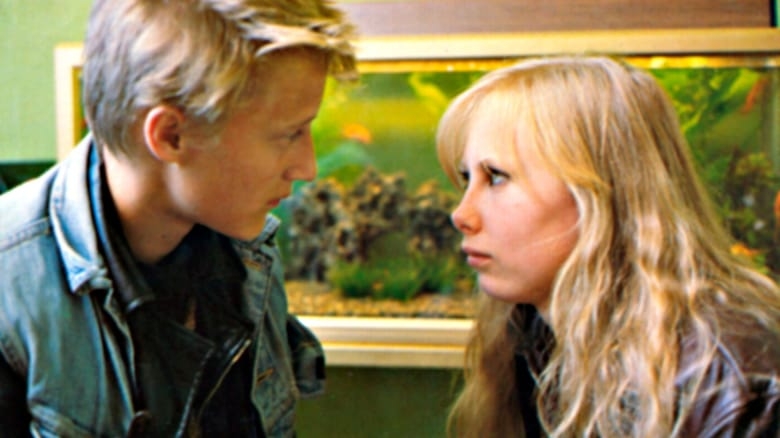
This realist Finnish coming of age film, with what seems to be a largely non-professional cast, doesn't appear to have traveled much, but it will be of interest to fans of Aki Kaurismäki, because it features the screen debut of his frequent collaborator Kati Outinen, though in a relatively small part.

The film focuses on a secondary school class for problem kids, all of them boys except for Outinen's Lissu. Initially, it explores the dynamics between the class, but as the film goes on the focus narrows to concentrate first on the dynamic between Jussi (Esa Niemelä) and Pete (Tony Holmström), as they drift further from the class and from their families, then solely on Jussi, as he isolates himself more and more, before potentially looking to Lissu to find a way back in.

Right On, Man paints a fairly bleak picture of teenage life. You get the sense of these kids as drifting, even before we spend an extended evening with Jussi and Pete, as they roam the streets, drinking and spending the proceeds of a robbery that Jussi pulled off. What hits home, even through sometimes uncertain performances, is the credibility of the whole thing. The dialogue has a natural feel, from the way the kids relate to each other to their dismissive attitude to their teacher (Lissu has a habit of walking away, so much so that in the class portrait that gives us the actor's names in the opening credits, Outinen's is over an empty chair).

Tapio Suominen gives the film a strong sense of time and place. We get a feel for the environment these kids are growing up in and the sense that they probably don't see particularly prosperous future. The dramas here are small, but Suominen builds a couple of threads that run through the narrative, even though they are largely off screen. The bad impression Jussi makes on a beat cop and Jussi's potential interest in Lissu (and hers in him) are both seeded early, only to come back around in a sequence that draws together well.   

If you're coming to the film for Kati Outinen, it's worth noting that she's barely in it until fifteen minutes from the end, when Jussi and Lissu re-connect. It's a lovely sequence and Outinen is charming and natural in it, it's easy to see why she might have been noticed, but this is a very small part. Fortunately, Right On, Man offers many other rewards; it's a well observed teen movie with a sense of verisimilitude and an unobtrusive style that draws you into the story and characters. It deserves to be better known.
★★★

Lars Ole, 5C
Dir: Nils Malmros
As far as I can tell, Nils Malmros is barely known among English speaking audiences. That needs to change. While he has moved outside the genre, Malmros has, for fifty years now, specialised in coming of age films. The best known is Kundskabens Trae (Tree of Knowledge), listed by the Danish Film Institute as one of the country's 100 greatest films, but this - his second feature - seems to be the film that established Malmros' reputation.

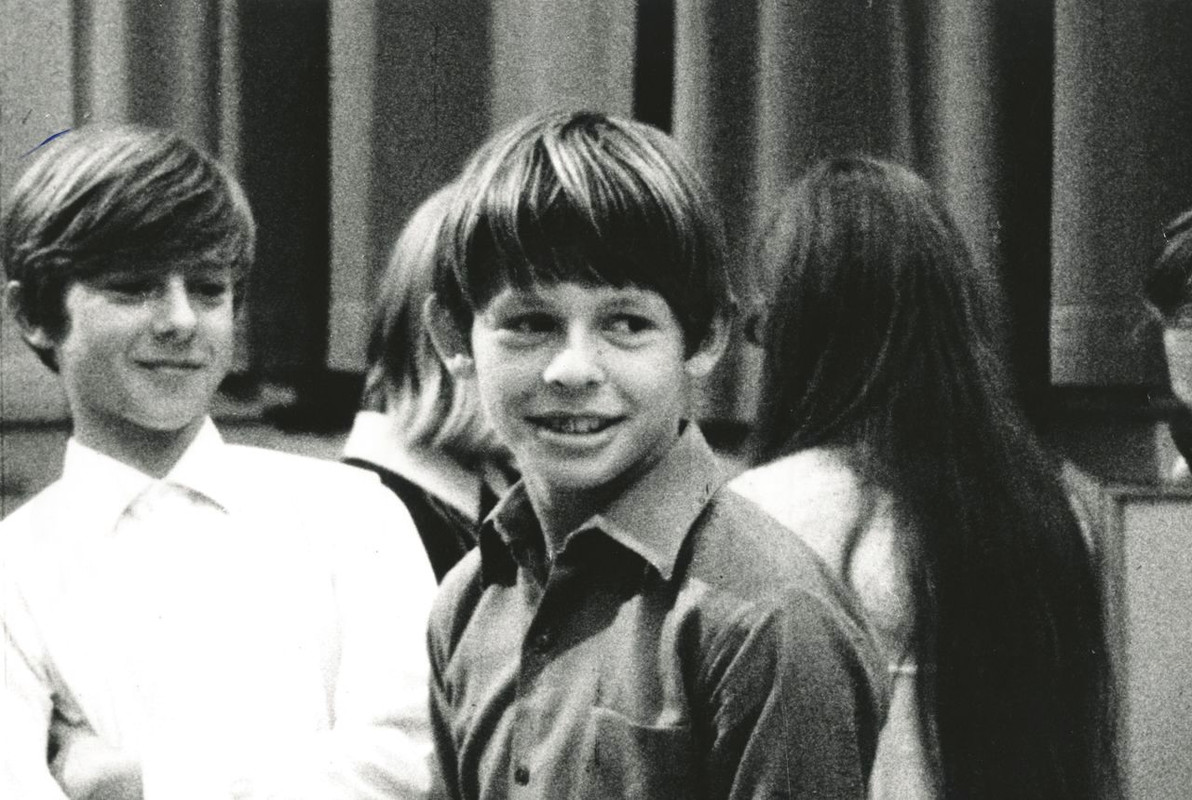
Drawing heavily from his own life, Malmros tells a low key story of 12 year old Lars Ole (Søren Rasmussen) and his classmates. There are petty rivalries, first crushes and moments of childlike mischief, but Malmros' concern isn't big events but the tiny things that shape day to day life when you're somewhere between childhood and adolescence.

Shot on grainy black and white 16mm, the film has a feeling of something observed more than it is staged. Frequently, moments that would have much more emphasis in another film are allowed to play out quietly, often in the background. A good example of Malmros' restraint comes when Lars Ole is being a pain, playing the wrong notes while his sister is practicing the piano, when he makes her cry, the camera views her through the door, before silently showing Lars Ole realising he's upset her more than he meant to. It's a beautifully subtle bit of acting and camerawork that makes us feel as if we are privy to a real moment.

We see a lot of these subtleties in the way the film depicts the politics of the playground, the games of tag and which kids are allowed to play or not, the dominance that older kids are able to exert. This is never more felt than in the way relationships are navigated. Early on we see that Lars Ole has a crush on Inger (Judith Nysom), who is 'dating' Hanse (Lars Randrup Mikkelsen), the way the camera often dwells on the space between them is clearly designed, yet feels totally natural, even in the final sequence when, at a dance, we see Lars Ole join in a square dance, changing partners as he goes and waiting for his brief chance to dance with Inger.

The relationships between the kids, whether it's the rivalry between those who live in a certain apartment complex and those who don't, the pettiness of who is allowed to play tag or not or the teasing and games in the classroom, ring completely true. The performances - all by non-professionals who seem not to have acted again - feel completely unforced, nobody seems to be playing a character or reaching for an emotion at any time.

I've now seen six of Malmros' films, and this is early evidence of his instinctive feel for how to tell a story from a young person's point of view. It's a beautifully constructed film, you feel Malmros' direction rather than seeing it, in that his choices are affecting and clearly purposeful, but barely seem designed. If you have even a passing interest in coming of age cinema, this is a filmmaker you need to discover and Lars Ole, 5C is a perfect entry point to his exceptional filmography.
★★★★★ 

Oct 15, 2017

24FPS @ LFF 2017: Suspiria

Dir: Dario Argento
While he continues to dilute his legacy with garbage like Giallo and Dracula 3D (and the rest of the last two decades), it’s a fine time to be reminded that, at one time, Dario Argento made some of the most visually stunning horror cinema ever seen. Suspiria, recoloured to its intended luridness and remastered in 4K for its 40th anniversary, is a brutal, beautiful, masterpiece.

The paper thin story of Suzy (Jessica Harper), an American ballet dancer, going to a famous dance academy where people begin to disappear and be killed, couldn’t be any less important. This isn’t one of Argento’s many whodunnits, instead he simply wants a framework on which to hang the film’s stunning set design, lighting and its graphic gore.

Suspiria’s tagline famously told us that the only thing more terrifying than its last 12 minutes were the first 92. I agree in part. The film’s first 15 minutes or so, up until the first two deaths have been shown, are a self-contained masterwork. The vivid lighting, drenching what should be a drab rainy night in unnatural colour, the striking set design - all sharp lines and symmetry - and the Goblin score; ethereal at first, building to something sinister, all these things combine with the shock of sudden violence in a sequence that envelops us completely in the world of the film.

The scenes in the dance school, with their obvious dubbing and over the top line reads, aren’t the film’s strongest suit, but the disconnection from reality that dubbing often lends is, intentionally or otherwise, effective in further dislocating us from reality, just as the film does to Suzy. This isn’t to say that the performances don’t work for the film though, the delicately pretty Jessica Harper isn’t one of horror cinema’s tougher final girls, but our journey through the world of the film is much like hers - slightly surreal, sometimes unnerving, sometimes confusing - and Harper takes us along on that journey effectively. Most memorable among the cast is Alida Valli, (over)playing strict ballet teacher Miss Tanner to often very funny effect.

Argento sprinkles scares, surrealism and beautifully designed slayings throughout the film, but the tagline undersells the film’s last 12 minutes. Suzy’s surreal journey through the ballet school to find the secret at its heart contains some of Argento’s most incredible and iconic visuals, bringing the film to a crescendo. On this viewing, with the picture so vividly remastered and the sound pounding into my ears, I saw Suspiria on a non-narrative level. That’s probably how it works best, as a purely sensory experience; shape, colour and noise colliding into the most beautiful of nightmares. 
★★★★ 

Sep 21, 2017

24FPS @ LFF 2017: Princess Cyd

Dir: Stephen Cone
Princess Cyd is writer/director Stephen Cone's eighth feature in as many years, but you'd be forgiven for not knowing that, because the two of his films that have come out in the UK have had only low key streaming releases, Black Box through Amazon and Henry Gamble's Birthday Party through Netflix. I was shown the latter earlier this year and instantly marked Cone as a director to watch for his witty dialogue, ability as an actor's director and knack for creating believable characters and relationships. If there's any justice, Princess Cyd will serve as Cone's breakout moment.

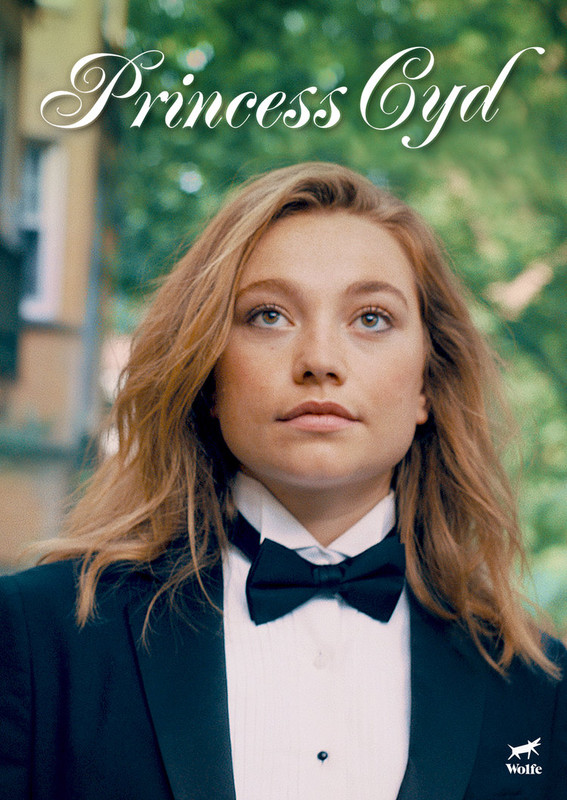
The minimal story finds 16 year old Cyd (Jessie Pinnick) going to stay in Chicago for a couple of weeks with her aunt Miranda (Rebecca Spence), a well known writer. While she's there, Cyd meets Katie (Malic White) and begins a casual relationship. From a wary start, we see Cyd and Miranda's relationship grow and both of them grow a bit through it.

Much of Princess Cyd unfolds through conversation. This is perhaps Cone's greatest strength as a writer; the character's voices are distinct as are the ways that each character relates to all the others and it's the differences in these relationships and therefore in the flow of conversation that makes it so engaging. We see this best in the evolution of how Cyd and Miranda talk. Initially Cyd is a bit reticent saying, almost as the first thing she tells her author aunt, that she doesn't read. This gives way to lighter moments as they begin to relate more, and later to a tense and frank conversation after a get together at Miranda's house, when Cyd suggests that if her Aunt had sex rather than cake she might be happier. This scene is some of Cone's best writing of the whole film, with an angry Miranda visibly trying to get her point across without saying something she might regret, but which is clearly what she'd like to say if Cyd were a few years older. This is also the moment when Rebecca Spence's performance is at its best. There has been a sense throughout of her feeling out how to relate to her niece and, alongside the other notes in this scene, she gives Miranda a barely disguised sense of disappointment that perhaps she hasn't yet worked it out as well or as completely as she thought.

The evolution of Cyd and Miranda's relationship and the ways they rub off on each other is one of the film's strongest threads. Through Miranda (and perhaps through wanting to impress Katie, who does read), Cyd finds a greater connection to her aunt's work, while Miranda is somewhat lightened by Cyd, doing things she hasn't done and thinking about things she hasn't considered for some time. This is woven through the relationship between Miranda and Anthony, Cyd sees an energy between them and encourages it to both of them, but Cone smartly refuses to make it that simple or to put a bow on it by the end of the film. It's an intelligently written story that emphasises the differences in how people think and their priorities at 16 and at 40.

The film is set in the summer, and this comes through in the visuals, which show a suburban Chicago far from the crime ridden image we're often given of it in the news. This is probably to do with the circles Cyd finds herself in, but it also suggests that sense of her enjoying a new place and, in Katie, new people. Scenes of Cyd lying out in Miranda's garden to sunbathe or the time she spends with Katie have that feel of the long days of summer that seem to stretch out in front of us in our school holidays. This is very much the feel of the scenes leading up to and at Miranda's party. Cyd borrows an outfit – a tuxedo – from Katie to attend, and you get the sense of her finding a new comfort in her skin and with her aunt and her friends. One very nice moment has Cyd asking a lesbian couple about the fact that they both used to be married to men, and ends up in her saying to them “I like... everything”, something you get the sense she's vocalising, perhaps even to herself, for the first time in that moment.

There are, among the sweet moments of coming of age, moments of darkness; that tense moment with Miranda, a call from Katie in a moment of crisis and the always present undertone of the family tragedy that Cyd survived when she was six, accentuated by the fact that she's staying in her late mother's old bedroom. Jessie Pinnick is outstanding throughout as Cyd, there's little sense that she's acting, except perhaps early in the party scene, before she settles in with the new people around her. The chemistry between Pinnick and Malic White as Katie also feels entirely unforced, we buy them as fast friends and the evolution of their relationship. There is a sense, as Cyd's stay is just two weeks, of the whole film as a series of stolen moments, that's never more true than in her relationship with Katie, particularly an early scene when a film crew mistakes Katie for a boy and asks her and Cyd to slow dance in the background of their shot. 

Like many of the best coming of age films, Princess Cyd is ultimately an ellipsis. We don't know where Cyd and Katie will end up, if Cyd will go back to Chicago for college or, beyond a closer relationship with her aunt, the lasting impact of these two weeks. Growing up is a process, and Princess Cyd is about a brief moment in it, one it captures beautifully.
★★★★★ 

Oct 16, 2016

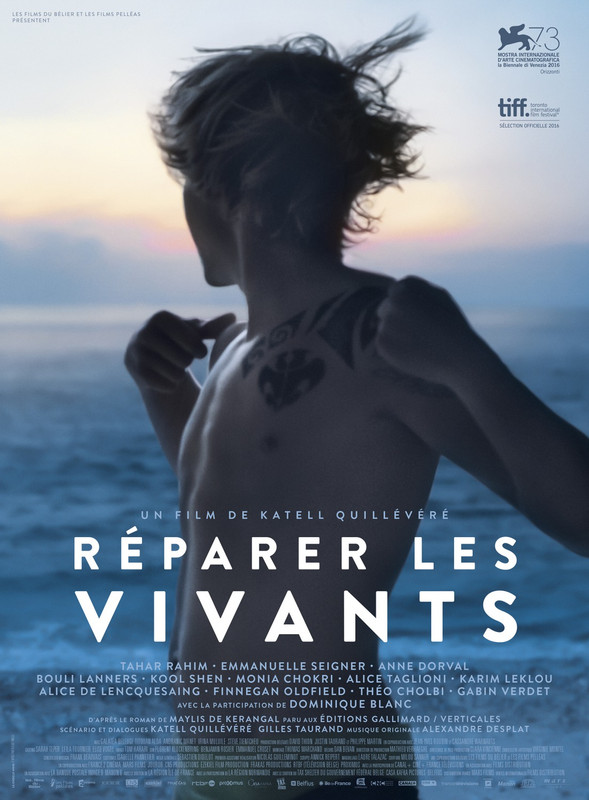
24FPS @ LFF 2016: Heal the Living

Dir: Katell Quillevere
As a film viewer, and especially as a critic, I am aware that when I approach a film I take things from it, but I also bring things to it. In the case of Heal the Living this was especially acute, because as I sat down to watch it I carried with me (as I do all the time) the weight of my medical history. Obviously this is hugely important in my life, but generally speaking it's not something that comes into play when I watch films. I have to be clear that Heal the Living was an exception, and that the impact it had on me has to be seen through the lens of that medical history.

Katell Quillevere's third feature, adapted from a novel by Maylis de Kerangal, takes organ transplants as its subject, following a single procedure (a heart transplant) from both sides; that of the family of the donor and of the the recipient and her family. This is where my history comes into play: I have received two liver transplants (25 years ago, within 10 days of each other), so I have experienced this journey from one side and have often imagined what it must have been like from the other. For other viewers these events may be more abstract, but for me Heal the Living was deeply and devastatingly personal.

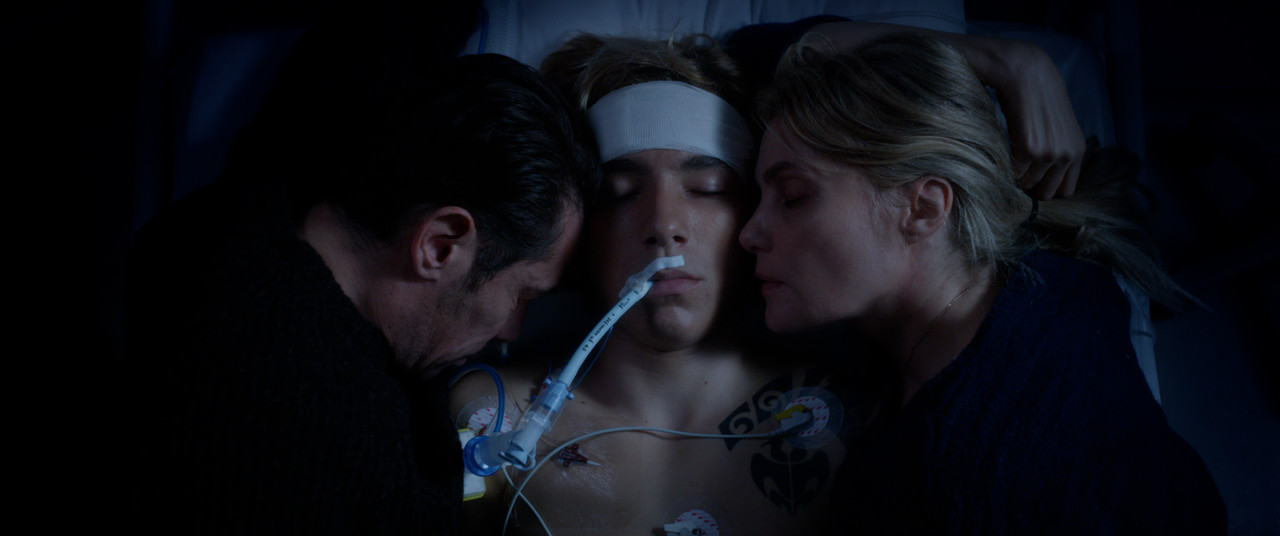
The donor is Simon (Gabin Verdet), brain dead after a car accident, and we are privy to the whole process as a young doctor (Tahar Rahim) sensitively introduces the prospect of donation to the devastated parents (Emmanuelle Seigner and Kool Shen). From the other side we see Claire (Anne Dorval) slowing down her life as she is placed on the transplant list and also trying to moderate the impact on her late teenage children (Finnegan Oldfield, Theo Cholbi). Quillevere divides the two parts quite decisively, only introducing Claire after about an hour, but also allowing time for each side of the story to develop independently before drawing them together.

The two parts of the film have similar form, but slightly different styles. In each section Quillevere allows for a few digressions, for instance following Monia Chokri's nurse for a little while and showing Claire reconnecting with a former lover (Alice Tagliolini), but the first hour has a more dreamlike feel, while the second half largely abandons those touches for something much closer to documentary style. For me, this seems to suggest the sense of dislocation that the extreme grief of Simon's parents must be causing for them spilling over into the film. This is acutely felt in a brief flashback to the first time Simon and his girlfriend kiss, a sweet scene which trades on Quillevere's mastery of coming of age cinema (her first film, Love Like Poison, is one of the 21st century's great entries in that genre). After sweeping you up briefly in this romantic moment, Quillevere immediately cuts to an ashen Seigner and Kool Shen, driving back from the hospital. The flashback is not a memory but either a parent's imagining of a moment in their son's life, now brutally cut short, or a memory of how he told that story. We never know which, but the question alone is affecting.

There are more beautiful directorial flourishes in the film's first part; the road becoming the sea as Simon's friend falls asleep at the wheel, causing the crash; images of Simon surfing, as if being sucked under into another world. These are not only striking in themselves, but in the contrast with the second half. Once Claire is introduced everything is matter of fact. Quillevere becomes more an observer, first of the relationship between Claire and her sons, then of the transplant procedure itself. Both operations, the harvesting and the transplant, are handled sensitively and with a matter of fact eye for procedure, but with enough restraint that the film always feels honestly sad, rather than sentimental.

This is delicate material, but Quillevere and her outstanding cast handle it beautifully. Tahar Rahim strikes a perfect balance between playing his character's desire to get consent for Simon's organs to be used and his determination to handle it with maximum sensitivity, while Seigner and Kool Shen, with relatively limited screentime, sketch believable studies of grief. In the second half, Anne Dorval finds a lot of moments that struck home for me, especially in the sequences after she gets the call to hospital; the nerves, the preparation, the goodbyes, all these things ring true and brought back raw images from 25 years ago. Even the small parts are expertly cast and played, with especially fine work from Bouli Lanners and Dominique Blanc.


Quillevere's balance between realism and poetic touches is exceptional throughout, but the moment that Rahim pauses the harvesting operation to say a few last words to Simon from his family is where it hits hardest. Devastatingly touching without ever feeling sugary or false, it's a moment that shows the film in miniature. 

After the blip I felt Suzanne represented after Love Like Poison, this is a dazzling piece of work from Quillevere. Heal the Living is beautifully cast and acted, expertly directed and well made in every technical respect, but for me it was so much more than that. Transplant isn't a subject often addressed in cinema, the last time I remember seeing it covered was in a very different context in Never Let Me Go, but Heal the Living has none of the abstraction and distance that Mark Romanek's film did. Instead this film lives in some of the most emotionally fraught moments of people's lives and rings true at every turn. I can't say whether other audiences will feel this film as viscerally as I did, but even if they don't, it remains essential viewing.

Oct 15, 2016

24FPS @ LFF 2016: Animation Roundup

Apologies for not posting more written reviews while I was at LFF this year, I was having serious computer troubles.  Here, by way of apology, are short(er) reviews of three animated films I saw.


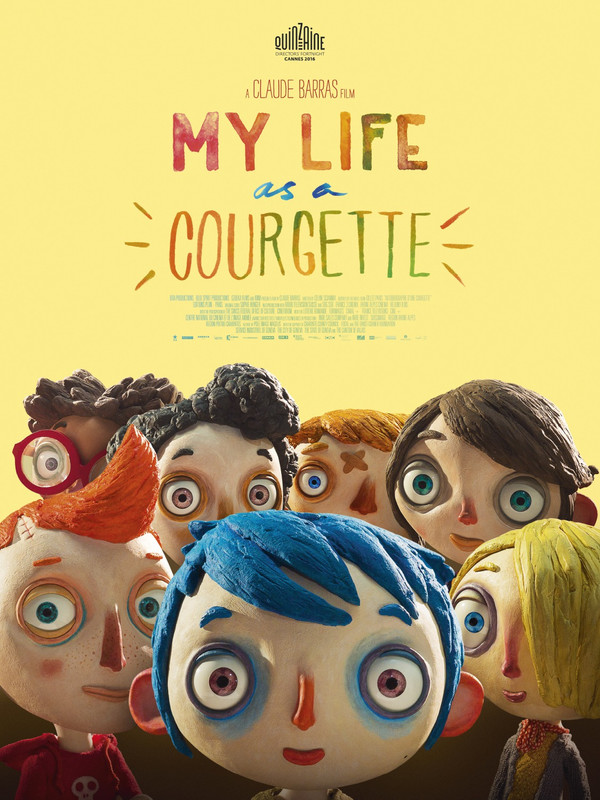
My Life as a Courgette
Dir: Claude Barras
For my money, the French writer/director Celine Sciamma is one of the most interesting talents to emerge in cinema in recent years. Her three directorial films: Water Lilies, Tomboy and Girlhood all number among the best of their respective years and I await her projects with great anticipation. While Sciamma didn't have any directorial work in the LFF this year, she wrote the screenplays for both the new Andre Techine film, Being 17 and for this, a delicate, nuanced, but optimistic children's film about a boy named Courgette who falls for the new girl at the orphanage he's sent to after his mother dies in an accident at home.

Director Claude Barras and his animators craft an interesting look for the film. The characters all have a certain look, but the designs are striking and individual, giving even the characters with the least screen time a distinctive look. They are set against backgrounds that are often a bit drab and have a homemade feel, like something out of a Michel Gondry animation. This is effective in making the characters stand out from their environment.

For a little while it seems that My Life as a Courgette might be a pretty miserable film. We get the expected beats when Courgette first arrives at the orphanage and is bullied by a bigger kid, but this dynamic soon shifts and a much brighter film emerges. This home is depicted as one where there is a genuine sense of community, and the film has a real warmth thanks to that. Little recurring jokes, like one child running to the door every time it opens, expecting her mother, amuse while also giving the film surprising emotional weight, but it's the way that Barras' images and Sciamma's screenplay combine to capture the little moments that define growing up that have stuck with me about this film. Courgette and Camille's relationship is touchingly well-observed, as are the growing bond between Courgette and the cop who initially takes him to the orphanage and the shifting dynamics of the group of kids. These things may be played out by plasticine models and in front of cardboard backdrops, but they ring true.

My Life As a Courgette should be suitable for kids from about 10 or 11, but I'd imagine that their parents will enjoy it just as much, it's sweet without being sickly, funny without compromising on some the darkness at the heart of the story, and eventually extremely touching.
★★★★★


Psychonauts, The Forgotten Children
Dir: Pedro Rivero / Alberto Vazquez
In a post-apocalyptic world, humans appear to have died out and animals are all that remains. Dinky longs to escape the island she lives on and her religious parents. For help she turns to her friends and to Birdboy, whose soul has been overtaken by a demon. To escape, they must make dangerous trek through the rubbish dumps where roving gangs of rats and mice live beyond the law.

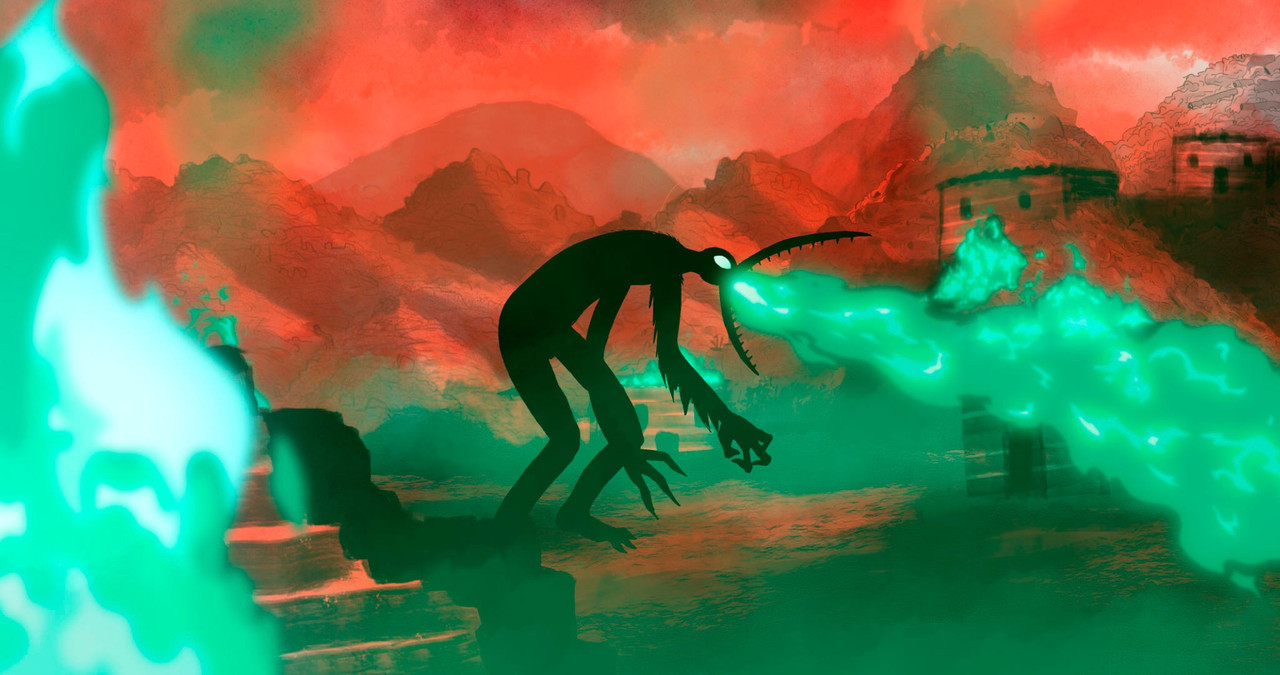
Psychonauts is a determinedly offbeat film. From its visual style on down, it mixes tones, combining dark subject matter and imagery (sometimes sketchy, sometimes in bold red and black silhouettes) with offbeat humour and cute design on Dinky and her friends. The jokes leaven the darkness of the film just enough that Psychonauts, while properly scary at times, is probably suitable for older kids as well as for adults.

The film's biggest laughs often come in the margins, the little moments, such as when Dinky's brother tells his parents what he wants to be when he grows up, or when the inflatable duck Dinky and her friends get to try to escape the island on tells his backstory. As much fun as these moments are though, there is something chilling at the core of Psychonauts; a scorched earth world that feels complete in its design. The opening moments, with a mouse and his son scavenging for rubbish and invoking the rules of their community, set this up brilliantly, as well as setting up a surprisingly human and moving relationship between the characters. This approach will carry through the film effectively, especially in Dinky's love for Birdboy.

The animation is brilliant, the mix of styles well executed and fitting for the film's mix of tones, and it's often surprising what level of character Rivero and Vazquez manage to get of their designs. This too is especially evident with Birdboy, who is essentially just a few shapes in black and white, but is rich in character despite being mute. Birdboy's eyes; huge empty black holes signifying the loss of his soul, are particularly haunting, and end up communicating a lot.  The film is at its best when Birdboy, fully possessed by a demon, attacks the Psychonauts village. This is a sequence straight out of a monster movie, and a brutal one at that, with images of burning characters that call to mind the atomic bomb sequence in Terminator 2.

Overall, Psychonauts, the Forgotten Children is a great surprise; a well balanced tonal juggling act that will horrify and amuse in almost equal measure. I hope it finds a UK release.
★★★★


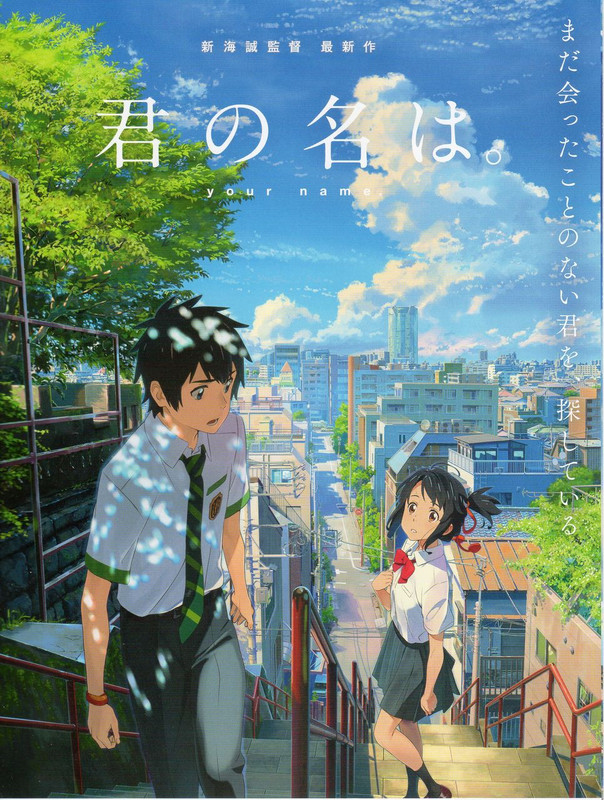
Your Name
Dir: Makoto Shinkai
I've said it before, but it bears repeating, when we're talking about the most visually stunning films being made today, Makoto Shinkai needs to be in the conversation. His latest, Your Name, is the first anime to play in the (relatively new) London Film Festival competition section, and it is just as lush and gorgeous as we have come to expect.

Your Name will also feel somewhat familiar to Shinkai fans in its story (a tale of two young people falling for each other, though separated, then trying to find, and in this case remember, each other). While he is a visual master, Shinkai's flaws often come from his writing and Your Name doesn't have his strongest screenplay. Even for him, the boy sort of meets girl story that develops as Taki and Mitsuha begin to wake in each other's bodies is a rather sentimental and sometimes cloying one. That said, Shinkai does have a knack for this material, and while he sometimes overeggs the pudding, Your Name is also full of emotional moments that hit me just as deeply as the visuals did.

Visually, this is a film of dazzling beauty. The character designs are expressive, but as ever it's the world Shinkai grounds them in which is so stunning. From the most mundane things like images of trains passing, to the grandest in scale, such as the images of the comet that figures centrally in the film's story, everything is rendered with the same loving detail, everything seems lit from within. It's also important that the environments feel credible. There's a great sense of place and of the contrast between Taki's home in the fast-paced modernity of Tokyo and Mitsuha's life in a little village where tradition persists. If the film weren't grounded like this, then its flights of sci-fi fancy would strain credulity even more than they do. 

The character work here is strong. As the voices of Taki and Mitsuha, Ryûnosuke Kamiki and Mone Kamishiraishi shift their performances as the characters become more used to 'being' each other several times a week. There are overblown moments in each of their performances, but they are allowed to be smaller and more subtle as the film goes on and become more affecting as this happens. The scenes as the comet finally comes into play, particularly one set at twilight, are delicately played, beautifully animated and ultimately very moving.

Like much anime, I found Your Name to be at its weakest when it is at its broadest. While there are some fun running jokes, the early body swapping sequences can be loud, lacking nuance and sometimes a little wearing, but even in those scenes, the beauty of the film and the fluency of its animation are engaging all by themselves. 

This is a hit and miss film, it can even be a little grating at times. When it works though, when Shinkai pulls images, character and story together in a moment as simple and moving as a shot late in the film of Mitsuha opening her hand and seeing writing on it, it's as magical as the director's best work.
★★★

Nov 11, 2015

From the Verite Archives: Phoenix and The New Girlfriend

I just answered a question on Twitter asking what our favourite films so far this year had been and in answering it I realised that I had not yet run my reviews, originally written for the now defunct Verite magazine, of two of my choices for that list, which seems important given that the questioner had only heard of one of my selections. Thanks, as ever, to Verite for letting me repost these pieces.

There are spoilers in the review of The New Girlfriend.

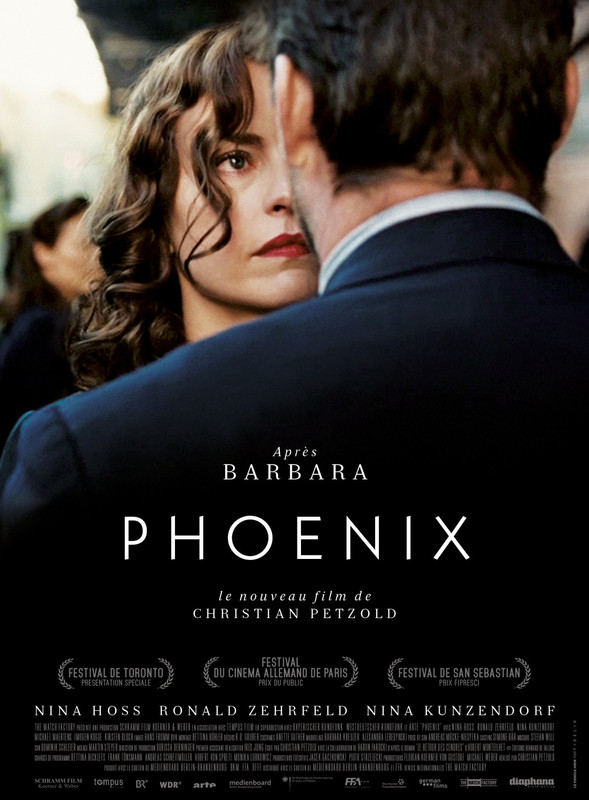
Phoenix
Dir: Christian Petzold
Director Christian Petzold has often drawn on other films for inspiration. Hitchcock has long felt like a key influence on Petzold, bleeding into Jerichow, Barbara, and early TV effort Something to Remind Me, but never has Petzold drawn so heavily on Hitchcock as he does in Phoenix, which is steeped in the influence of Vertigo.

Petzold's muse Nina Hoss (in her eighth collaboration with the director), plays Nelly, a Jewish woman who has survived the concentration camps but, when we meet her, has sustained severe facial injuries. She asks the reconstructive surgeon to make her look exactly as she did before. Nelly then returns to Berlin, looking for her husband Johnny (Ronald Zehrfeld). Nelly's friend Lene (Nina Kunzendorf) claims that Johnny was the one who betrayed Nelly, but she wants to discover if her husband still loves her. When Nelly and Johnny meet again he is struck by the resemblance but appears not know that she is his wife. Instead, he exploits that resemblance, getting her to 'impersonate' Nelly.

There is something disturbing in this story that goes beyond even Vertigo's obsessiveness. James Stewart's Scottie is trying to remodel Kim Novak into someone different, someone she never was. Not so the case here. Whether or not he's aware of it, Johnny is trying to make Nelly become his wife once more, but to his own exacting standards. It's a goal that can't, in either case, ever be achieved, but the impossibility of such perversity is magnified for paradoxically already having been achieved.

This is a film centered on Nina Hoss, specifically on her face. That should be enough to make you want to see it, because Hoss, beyond her obvious talent, has one of the most distinctive and fascinating faces in cinema right now. This is especially interesting in the context of Phoenix, because that very distinctiveness makes it hard to believe that Johnny could fail to recognise his wife. That interesting/frustrating ambiguity lingers for never seeing the full extent of Nelly's facial wounds (only a soldier wincing at them), and all we know of her before her disfigurement is the picture her surgeon is working from that shows Nelly laughing; not something Hoss gets to do much, here or in other films.

Also worth noting about Nina Hoss' face is the depths of its expressiveness and how its surface can shift like quicksilver. Playing two halves of a splintered psyche simultaneously, with only a glance she alternates between a sure-of-herself Nelly, wanting things to return to the way they were (evident early on in that request to the surgeon) and an uncertain Nelly, trying to figure if her husband did, in fact, betray her, and what he thinks of her now they're reunited. She's also Johnny's doll, playing dress up 'Nelly', trying to become the image he has of his wife in the flesh.

Hoss dons the different personas and confused states of minds like masks her character wears uncomfortably; from the bandages of the first fifteen minutes (more than a little reminiscent of Eyes Without a Face) to how the recently reconstructed Nelly now sees herself, and finally, Johnny's idealised version of the wife he recalls—the one that will make their old friends believe she's the 'real' Nelly. It's a performance that, were it in English, would sweep all the accolades come awards season. Hoss shows us the tangled confusion of Nelly's mind with subtle shifts in emotional temperature that are tiny but telling.

Phoenix is an exceptionally strong film and Petzold's direction matches the lead performance. Characteristically, he plays off his influences without allowing the film to become Hitchcock karaoke, and giving 1945 Berlin historical verisimilitude, he uses the camera to be just as true to the emotions of the characters, capturing every moment of exposing vulnerability that Hoss and Zehrfeld contribute to loaded silences, lending their highly dysfunctional relationship an interior richness. Yet all this subtly and intrigue pales next to the mastery of the final scene. Without giving too much away, Nelly's heartrending performance of 'Speak Low', is built off just a few images and a devastating piece of silent acting from Zehrfeld. With this, Petzold draws the themes and all the film's questions together in an astonishing whisper that goes off like a bang. Where Petzold goes from here will no doubt be interesting, but he's given himself a hell of a mountain to climb in having to follow such a powerful ending.
★★★★★


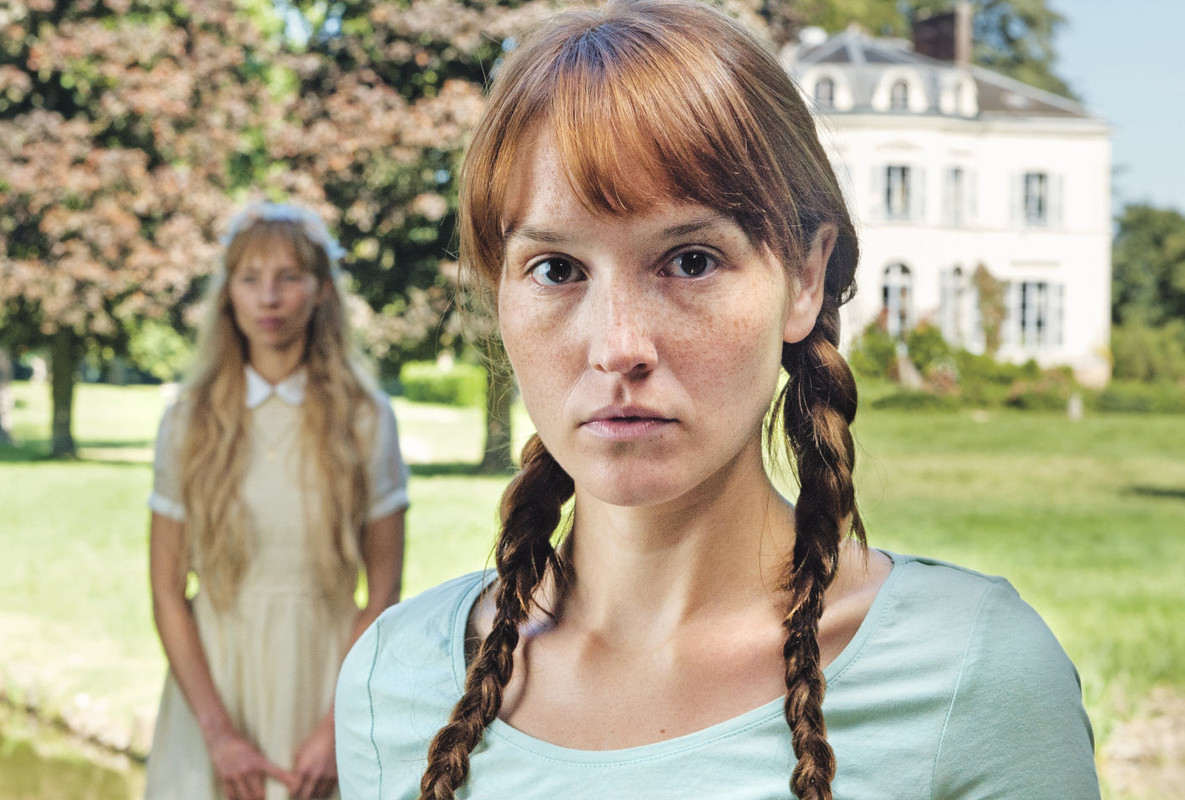
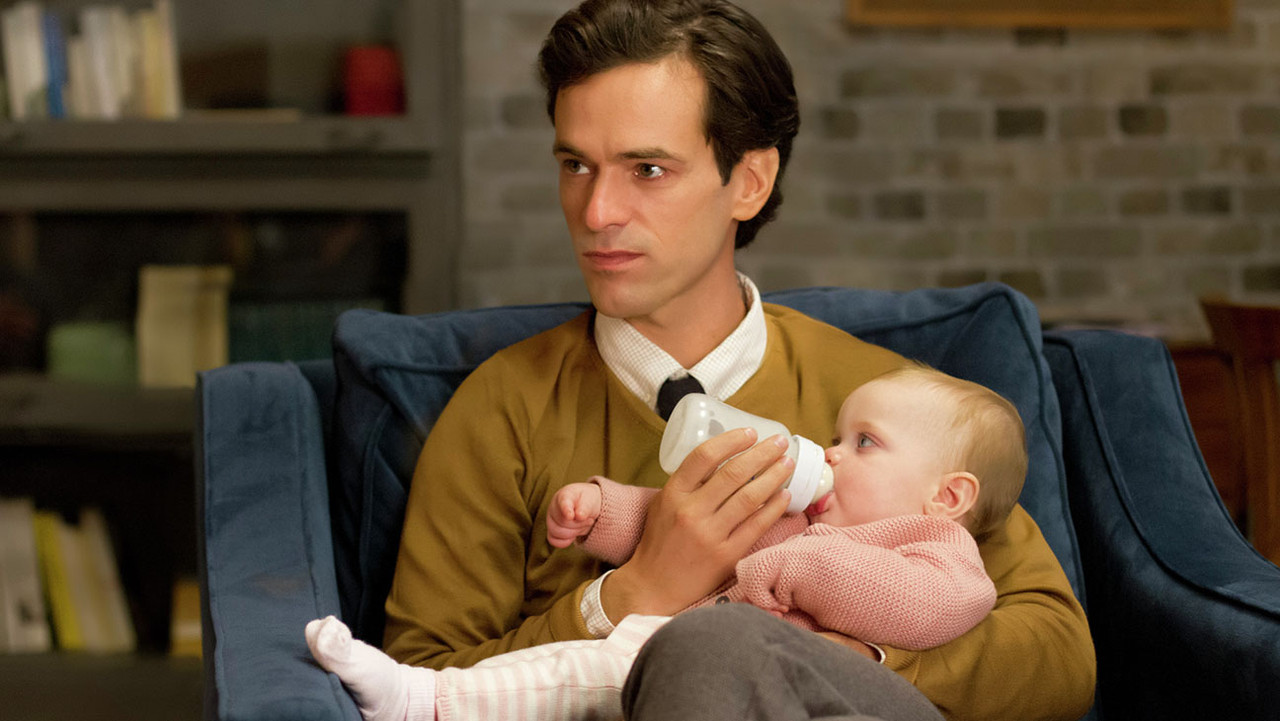
The New Girlfriend
Dir: Francois Ozon
Francois Ozon has brought a new film to the London Film Festival three years running, but 2013's Jeune Et Jolie suggested that a rate of at least one film a year was starting to take a toll on his work - much of which is soufflé light and fancy free, but even for him, Ozon's last was a shallow film crying out for more depth.  

Thankfully, it seems Jeune Et Jolie was just a blip, as The New Girlfriend, adapted from a Ruth Rendell story of the same name, finds Ozon back on form, blending his mischievous side with a substantial (but hardly realistic) story, full of secrets that are practically impossible not to reveal when talking about the film.

The totally spoiler-free version of the review reads like this. A playful addendum to Ozon's grief trilogy (Under The Sand, Time To Leave and Le Refuge), The New Girlfriend finds husband David (Romain Duris) and best friend Claire (Anais Demoustier) dealing with the death of Laura (Isild Le Besco) in different ways. These coping mechanisms are predicated upon Ozon's chief preoccupation of sexual malleability and confusion. For his fans, The New Girlfriend is full of auteurist traits in the use of colour and offbeat humour, perfectly handled by an outstanding cast.

Discussing the film in any greater detail requires the revelation of a key twist, so stop reading if you want to go in cold, which is my recommendation.

Fifteen minutes in, we discover that David is, in fact, the title character. After his wife's death, he falls back into an old enjoyment of dressing as a woman, becoming closer with Claire as Virginia, a relationship she keeps from her loving but uncomprehending husband Gilles (Raphael Personnaz). Virginia is a persona who grows into a fully realised third main character, with Romain Duris physically, verbally and emotionally defining the split between the two personalities he's playing very capably. Ozon mines much comedy from his star's gender-bending, but its intent and effect are never cruel. The joke is often at David's expense, but Ozon never has us laugh at anything David himself would be upset by. Take for instance an early moment when David is having tea with Claire and his mother in law (Aurore Clement) in his own clothes. Gesturing as if to rub away some lipstick, he forgets he's not dressed as Virginia. Coupled with Demoustier's reaction it's one of many slyly funny, non-verbal embarrassments.

With the less showy role, Anais Demoustier has a grounding effect on the film, lending Claire a straightforwardness that gives us a way in to the characters and the story whenever Duris' dual performance might push the camp factor a little too far out for some. Claire seems a simple character, but her complexities lie under the surface and Demoustier lets them show through slowly. Virginia's observation that her friend often dresses in a masculine fashion is quickly followed by a sex scene in which Claire enacts a masculine cliché; rolling off her husband as soon as she's achieved orgasm and casually asking “did you come?” “No”, he says, “but that's okay.” The gender issues seeded in this scene pay off in a later sex scene between Claire and Virginia/David. Demoustier quietly and heartrendingly articulates Claire's sudden kinship with Virginia. Despite never having been close to David, she like him, is trying to fill the void Laura has left in their lives. 

Laura is glimpsed only briefly (mostly in an opening flashback charting her friendship with Claire that feels like Ozon's take on the opening of Up),  and while Isild LeBesco doesn't have time to give us a rounded character, her radiant presence is more than enough to suggest how much darker the lives of these characters are without Laura in them.

In changing some of its fundamentals, re-calibrating its tone and adding a great deal to Ruth Rendell's ten-page story (including a completely different ending which closes the film out with the most auteurist image of Ozon's career), there's a feeling of a filmmaker at play, despite the grief which subsumes the players. Claude Chabrol's La Ceremonie is more along the lines of what might be expected from a straight Rendell adaptation, but with a distinct lack of foreboding or impending violence, Ozon brings a lightness of touch to even the most dramatic of scenes, enabling him to seamlessly shift from frolicsome scenes such as Claire and Virginia's first outing together and moments suffused with a crippling sense of grief, such as David dressing his wife's body for her funeral. Between these contrasting registers, Ozon's customarily unblinking depiction of sexuality against the hetero-normative grain is evident throughout, with one sex scene in particular, the strangest, most emotionally fraught and complex he's ever directed. Like the sexuality, the film's structure is fluidly subversive. The sequence of Laura being dressed for her funeral is echoed at the end, its second occurrence making poignant use of a song that Virginia and Claire hear a drag act sing at the film's midpoint, movingly literalising its meaning. 

For years, Francois Ozon's films fell into two categories; the playful and the severe. Recently, with In the House and now The New Girlfriend, it's fascinating watching him begin to draw those two sides off his personality as a filmmaker together. The mix is less successful here than it was previously, largely because Claire's husband is rather underdeveloped and one note and the existence of Laura's daughter Lucie is almost entirely forgotten for an hour of the run time. Still, The New Girlfriend is a great film, often moving and amusing in the same moment and boasting two subtly soulful lead performances.

Much more than a return to form, it's a superb reaffirmation of Ozon's status as one of the best directors in world cinema, ranking in the top tier of his own rhapsodically tender and strikingly imaginative filmography.
★★★★★