Showing posts with label Teen Movie. Show all posts

Apr 4, 2022

Much Ado about Much Ado: Interview with the Shakespeare sisters

In this audio interview, I spoke to Hillary and Anna-Elizabeth Shakespeare, screenwriters and directors of Soundtrack to Sixteen, which I've been a big fan of since its premiere in 2019 about their new film, Much Ado: a British, teen movieesque take on Much Ado About Nothing.
Much Ado

We talked about adaptation, working as a directorial team, delivering 400 year old dialogue casually and much more. You can listen to our discussion below, and head over to Hey U Guys for my review of the film.

If you want to know more about Soundtrack to Sixteen, Much Ado, or their upcoming projects, you'll find Hillary and Anna on Twitter and Facebook.

Feb 7, 2020

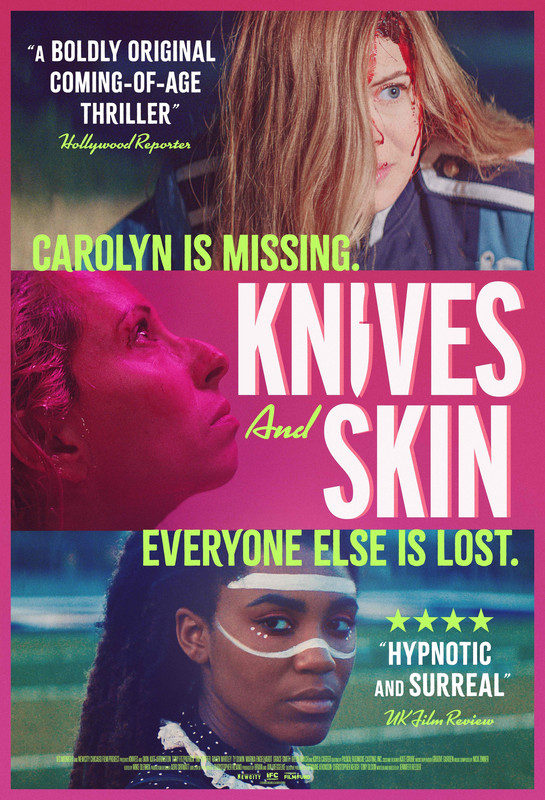
Knives and Skin

Dir: Jennifer Reeder
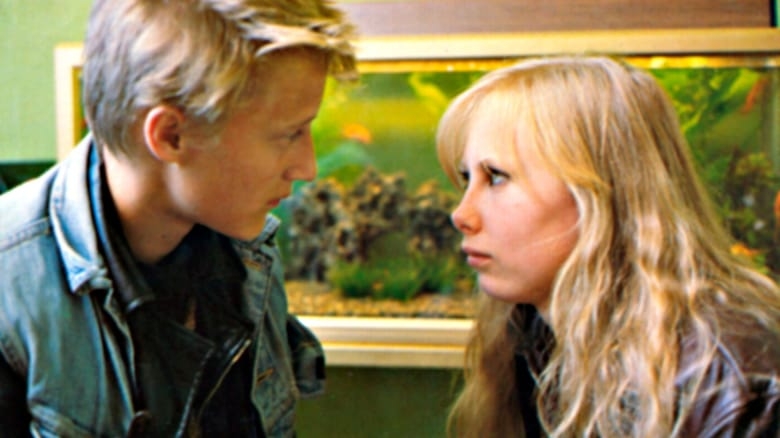
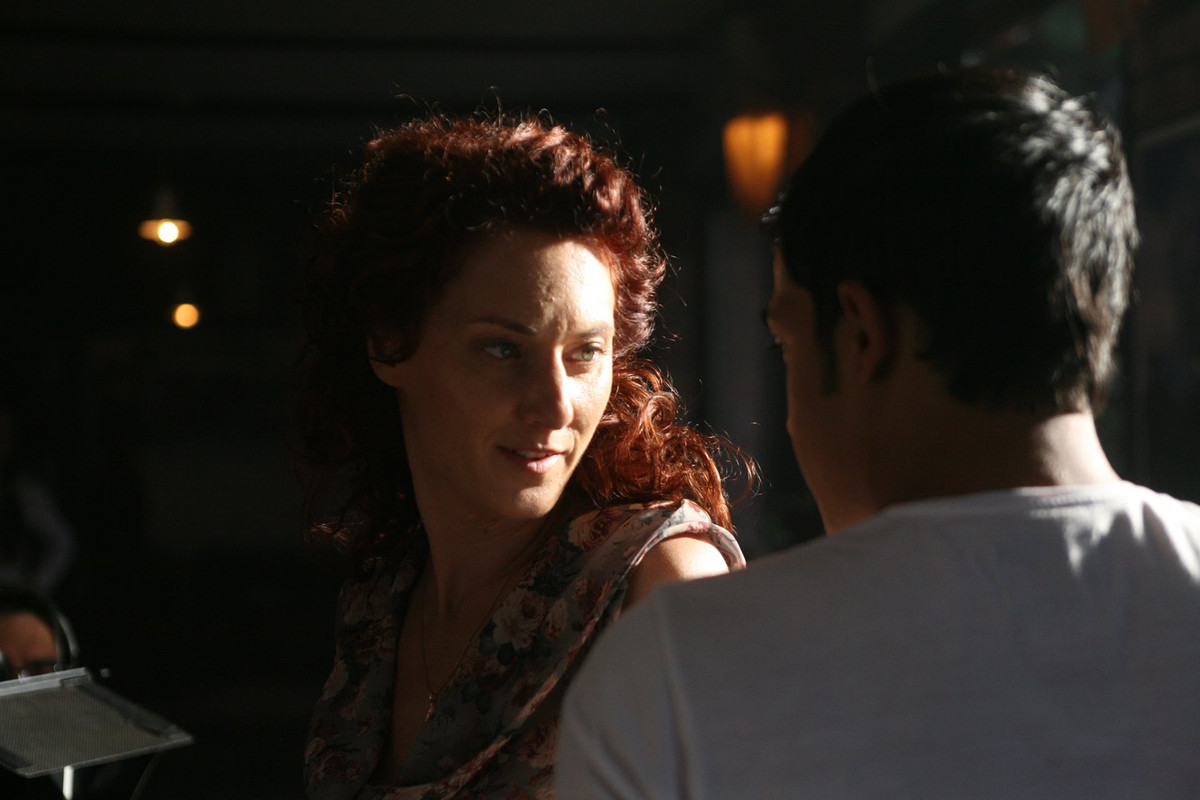
I’ve only seen a handful of Jennifer Reeder’s short films, but this feature feels like a logical extension of them. Those shorts screened in the London Film Festival’s Experimenta programme, but I always believed I saw Reeder’s interest in genre trying to force its way through her more abstract imagery. The images may lean more towards traditional narrative cinema here, but the tone remains deliciously off-kilter, in a way that draws us into what feels like a reality-adjacent world where Reeder is in full control.

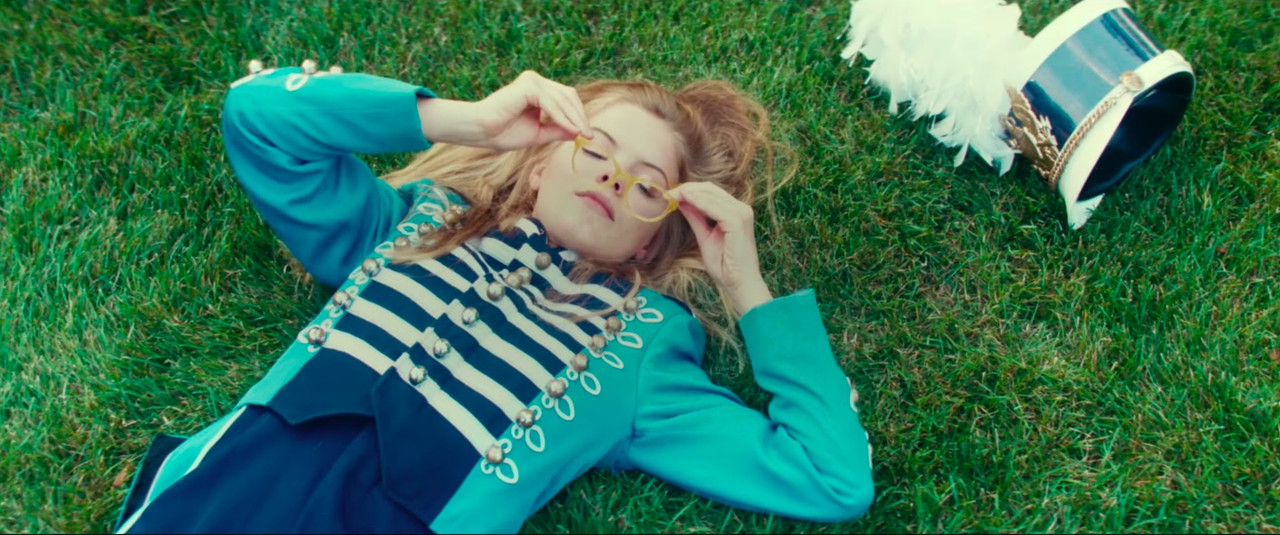
15 year old Carolyn Harper (Raven Whiteley) has gone missing, and the film explores the aftermath of her disappearance and its effect on the small town she lives in; her peers at school, as well as her mother, Lisa (Marika Engelhardt) and the other adults in the community.

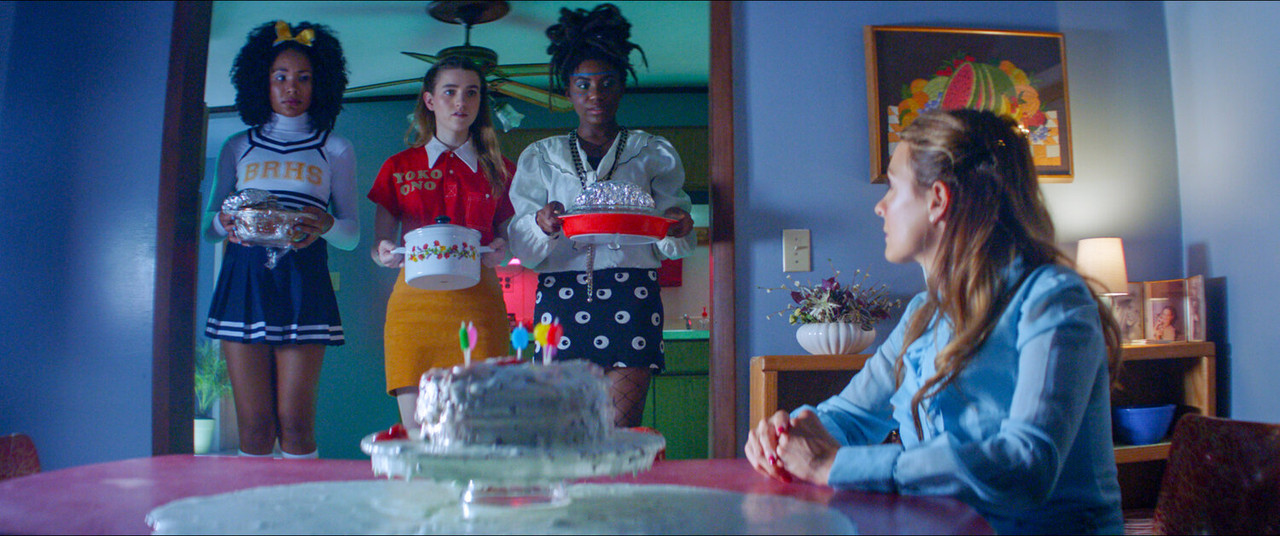
As befits a director with Reeder’s experience, Knives and Skin is, from the first frames, a supremely confident film. We are thrust straight into its neon-dipped world, discovering Lisa looking for her daughter, knife in hand, then pulling on one of her daughter’s dresses when she finds her gone. This sets a mood for the next 110 minutes, establishing the slightly off feeling of the film’s world, the bright and bold look and the way it mixes a wide streak of humour into its overwhelmingly melancholy tone. There is so much going on here, so much that Knives and Skin is about. On the surface, it’s largely about how a single death—even that of a person who may not have been especially popular—can echo through a community, but look beneath that and there is a film about girls and women, about feminism and representation, about relationships, about high school and about high school movies. Even that list doesn’t cover all the bases. 

Everything is filtered through Reeder’s dialogue, which has a very specific feel. It takes a moment to adjust to at first, but soon we and the film settle into its rhythm. Soon after her daughter has disappeared, Mrs Harper is talking with the local Sheriff, who says that he’ll get his wife to make her a casserole “I don’t think it’s time yet for casserole”, she replies. This moment distills the dialogue style beautifully; the cadence is slightly off, but the words themselves are expressive and full of underlying meaning. We know from the start that Carolyn is gone but in this moment her mother isn’t ready to give up hope that her daughter will be okay.

Other themes are also explored. The film is timely in its feminist approach. Early on, Reeder looks to reclaim the depiction of girls in teen movies. As Joanna (Grace Smith) and Jesse (Robert T. Cunningham) discuss their relationship to Carolyn he says “She could be pretty mean, so can you”. “That’s all we’ve got”, comes the reply. This feels like a direct riposte to the stock character of the popular bitchy girl, and also an acknowledgment of how women, whatever age, are judged more harshly for not appearing ‘nice’. We don’t actually see much meanness between the girls, but Joanna has a hard side, expressed to exploitative men in her life—a line about a sandwich near the end of the film is, remarkably, both laugh out loud funny and properly rousing. The film’s thesis statement about high school girls, if it has one, comes towards the end when Laurel (Kayla Carter) tells her soon to be officially ex-boyfriend “I’m not a bitch, I’m not a slut, I’m not a tease. You treat girls like shit”. It’s a powerfully blunt statement, later underlined in a perfect visual moment.

These are just some of the ways in which Reeder tries to get us to look askance at high school movies of the past, while also making clear her respect for the genre. Much of the film’s last fifteen minutes seems dedicated to this idea of depicting familiar moments but putting a twist on them. For instance, there is plenty of buildup to the homecoming dance, but it’s a performance by Charlotte’s band, rather than the date the film has been setting up, which ends up being the most important part of the scene, while a potential suicide scene becomes one of the film’s most hopeful and funniest (Joanna: “Please don’t jump, you’ll make a mess down here and it’s already such a fucking mess down here”) 

Of course, meaning is unpacked in the visuals as much as in the dialogue. Clothing, in particular, is given great significance. Several things related to Carolyn (her blood, a scratch she makes on her would-be boyfriend) glow, but it’s her glasses that become something of a talisman, spending the majority of the film shut away in a school locker, emanating a neon light, like the last piece of energy left from Carolyn trying to reach out into the world. For the other characters, clothes are a signifier of who they are (or would like to be), whether it’s Joanna’s T-Shirts, all monogrammed with the names of women like Angela Davis, Yoko Ono or Joan of Arc, her mother’s (Audrey Francis) Lion T-Shirt, or Charlotte’s (Ireon Roach) striking make up, and eventual acceptance of a pink homecoming dress. This is perhaps a little on the nose when it comes to Joanna’s dad; a literal sad clown who is cheating on his wife.

The use of music is striking throughout. Nick Zinner’s electronic score has a chilled ambiance, which pairs beautifully with the melancholy of the film. It’s not what you’d expect from the Yeah Yeah Yeahs guitarist, and is more reminiscent of Para One’s score for Celine Sciamma’s Water Lilies. However, the most daring use of music comes through the songs Reeder uses, largely 80s new wave hits sung by a choir coached by Carolyn’s mother. Some are staged simply as the choir rehearsing, but the use of Modern English’s I Melt With You is especially beautiful, as it’s sung by two girls falling in love, their faces and voices cross-fading into each other. These sequences are peppered throughout the film with such regularity that you could almost call it a musical, with each song serving a different emotional purpose within the narrative.

The performances from, at least to me, a largely unknown cast, are outstanding all round. Reeder has found memorable faces who deliver performances of great nuance. It’s worth noting Raven Whitely as Carolyn who, though she has relatively little presence in the film, establishes her character quickly in the opening scene and then haunts the movie, her presence hanging over it throughout. However, the two major standouts here are Grace Smith as Joanna and Marika Engelhardt as Lisa. Smith puts across a character who is extremely smart and uncompromising in her dealings with others, willing to exploit them, but there’s also a chink of warmth we can see under that shell, especially for her parents. It’s a terrific performance and should bring Smith a lot more work. Engelhardt’s performance is raw and vulnerable, dazed by concern but also trying to hold it together (“People keep asking me how I’m doing. It’s really annoying, but I know eventually they’ll stop asking, so I’m trying not to be an asshole about it”). Her best scene, and maybe the movie’s, comes when she gets into a boy’s car, believing she can smell how her daughter used to smell. It’s at once uncomfortable, deeply sad and blackly funny and Engelhardt hits every note perfectly.

There is so much still to say about Knives and Skin, whether it’s the production design (the tinfoil wrapped pillows Joanna’s mother sleeps on; Reeder's nod to her short Blood Below the Skin) or the darkly comic incidents (the reveal about the sheriff’s wife’s pregnancy). On an analytical level, I’ve only scratched the surface of what I have read into it, and I’m sure further viewings will prompt more ideas. This is all to say that this isn’t just a great film (though it is), but that it’s an interesting and deeply rewarding one that will have you turning its images and ideas over in your head long after the credits roll. Seek it out immediately.
★★★★★

Oct 6, 2019

24FPs @ LFF 2019: Lunana, A Yak In The Classroom / Babyteeth

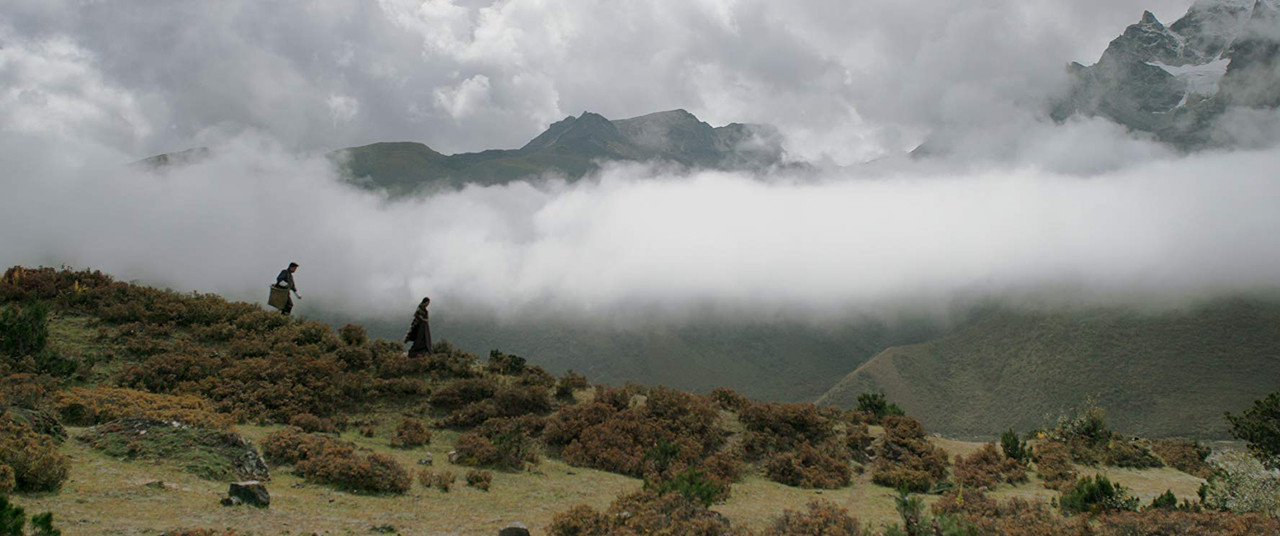
Lunana - A Yak in the Classroom
Dir: Pawo Choying Dorji
Sometimes, all it takes for a film to feel a little different is a change of context. There are more than a few movies about teachers in an unfamiliar environment, from comedic takes like Kindergarten Cop to more dramatic pieces like Dangerous Minds. In most of them, the teacher will find their class or environment something they don’t initially warm to, but eventually will be turned around, learning something about themselves. Lunana, a Yak in the Classroom doesn’t do these broad strokes any differently, but the setting and cultural specificity of it make it feel a bit different.

Ugyen Dorji (Sherab Dorji) is in his last of five years of service as a teacher, following his training, and he’s fallen out of love with it. He’s lazy, marking time before he can leave Bhutan for Australia. Ugyen’s boss, sick of his attitude, dispatches him to Lunana and the most remote school in the world, eight days hike across the Himalayas from the nearest town. When he arrives, Ugyen immediately wants to leave, but the villagers and the kids he’s teaching win him round.

There isn’t much unexpected here. Ugyen is slowly inspired by the kids, notably adorable class captain Pem Zam (all the kids use their own names) and sets about doing up the school, for instance having the villagers helping him mix charcoal paint to make a blackboard. A city resident and a modern person, he also has his head turned by traditional culture, notably the songs sung by yak herder Saldon (Kelden Lhamo Gurung). This is where the film marks itself out from the many others like it. Music is a major throughline, Ugyen wants to be a singer when he gets to Australia, and we see him spending much of his time trying to learn a traditional song he hears Saldon singing. The music is soothing, and unlike much we regularly her in the UK.

As well as a beautiful soundtrack, the film makes use of its stunning location to mark itself out. Shot on solar powered cameras 5000 metres up in the Himalayas, Lunana looks like few other films, taking place among the clouds not because it is set in some fantastical realm, but simply because that is where its characters live. The vistas are unbelievable and almost worth the price of admission on their own.

While it never goes anywhere unexpected, Lunana is executed with great charm. The dynamic between Ugyen, the villagers and the kids feels natural and has a warmth that permeates the whole film, in contrast to the mountain weather. This is especially the case in the friendships that develop between Ugyen and his escorts and the potential budding romance between Ugyen and  Saldon.

A sweet natured film about the importance of community and tradition, as well as that of following your calling, whatever that may mean, Lunana is perhaps a bit different to the rest of LFF’s Family programme, in that it doesn’t seem as much aimed at children as suitable for them, just as much as it will be for their parents. It should charm the whole family.
★★★

Babyteeth
Dir: Shannon Murphy
The teen cancer romance has, weirdly, become prevalent enough to be a subgenre all of its own. Generally speaking, I can’t stand them. Most feel like tragedy porn, content to let their characters be defined solely through illness and essentially acting as a big stick, designed to poke you until you cry. The genre’s miserable low is without doubt the vomitously saccharine The Fault in Our Stars. I’m not sure it had a high point until now.

Babyteeth begins with 16 year old Milla (Eliza Scanlen) meeting and falling for Moses (Toby Wallace), he’s older, tattooed, jobless, a small time drug addict and dealer. Milla’s parents, Anna and Henry (Essie Davis and Ben Mendelsohn), understandably, do not approve. It’s only later that we learn that Milla’s cancer has returned. In the throes of first love with Moses, she wants to spend as much time with him as possible, to the point that he ends up living with Milla and her parents as she gets sicker.

There are many things that set Babyteeth apart from the herd of teen cancer movies, most notably the fact that it is not defined by Milla’s illness. This is largely a comedy drama about a dysfunctional family and cancer is only a part of that dysfunction. It’s also only a part of the film. It lurks in the background of the first half, becoming more present over time, much like the progress of the disease. For much of the first hour, writer Rita Kalnejais and director Shannon Murphy push comedy to the fore, with Essie Davis especially priceless as Milla’s anxiety riddled mother, who spends much of her time in a Zoloft induced haze, drugs prescribed by her psychiatrist husband. The scene in which Milla first brings Moses home and there is an excruciatingly awkward family dinner is particularly priceless. What many films about tragic things forget is that, even in the midst of it, not every moment is tragic. By remembering this, the sometimes irreverent humour of Babyteeth conveys more emotional honesty than any of the manipulative set pieces in a more typical teen cancer pic.

Milla’s first romance is obviously unsuitable, but we understand it from all sides, whether it’s Milla's romantic sense of being with the bad boy who’ll annoy her parents or the rather deeper thought that it’s Moses’ fearlessness that first draws her in, perhaps a quality she wants more in herself as her cancer gets worse. Eliza Scanlen is excellent in the part. For a long time we can see her playing Milla as a kid who simply wants to ignore her illness; she hasn’t got any hair, so she’ll wear fun wigs, and she’ll go out and she’ll fall in love with this guy, like a normal kid. We also see and feel the moments that bring that crashing down to Earth, but Scanlen never overplays them. For Moses’ part, there’s a recognition that he too, more experienced if not that much wiser at 23, realises that this crush Milla has on him isn’t entirely healthy, and that he at once has some feeling for her that goes beyond sympathy and yet he’s not immune to exploiting her feelings. Moses, in particular, is a more complex character than we usually see in these films and his shifts in motivation and feeling are given great weight in a deceptively light performance from Toby Wallace.

Initially, Ben Mendelsohn and Essie Davis have broader roles, essentially doing something close to comic relief duty (their first scene, an appointment for sex in Henry’s office, is a good example of this tone), but this recedes as the film goes on and their performances become heartbreaking. Mendelsohn, one of the best actors in movies right now, is especially brilliant when his daughter asks him to smile for a picture; “gimme a second” he says, and the weight of everything in the film is felt in those three words.

Director Shannon Murphy, making her feature debut after several shorts and plenty of TV work, balances the film’s tone beautifully and draws terrific work from her cast, allowing supporting players like Emily Barclay, as Anna and Henry’s heavily pregnant neighbour, to steal a few scenes, but never the focus. I’m not a fan, though, of her aggressive chaptering. The many, many title cards add little and sometimes give the film a bitty feel that undermines an otherwise strong emotional throughline. The nadir of this technique comes when a title card introduces the song a sequence is set to, making that sequence resemble a music video even more, slightly deflating its impact for that.

On the whole though, Babyteeth is a refreshing addition to a genre that has so far given us little to enjoy. The balance of humour and heart is more honest here than in any of its peers, and Eliza Scanlen and Toby Wallace both impress, marking themselves out as names to watch for the future.
★★★★

Jun 7, 2018

Teen Movie Thursdays: Nordic coming of age movies

Right On, Man
Dir: Tapio Suominen
This realist Finnish coming of age film, with what seems to be a largely non-professional cast, doesn't appear to have traveled much, but it will be of interest to fans of Aki Kaurismäki, because it features the screen debut of his frequent collaborator Kati Outinen, though in a relatively small part.

The film focuses on a secondary school class for problem kids, all of them boys except for Outinen's Lissu. Initially, it explores the dynamics between the class, but as the film goes on the focus narrows to concentrate first on the dynamic between Jussi (Esa Niemelä) and Pete (Tony Holmström), as they drift further from the class and from their families, then solely on Jussi, as he isolates himself more and more, before potentially looking to Lissu to find a way back in.

Right On, Man paints a fairly bleak picture of teenage life. You get the sense of these kids as drifting, even before we spend an extended evening with Jussi and Pete, as they roam the streets, drinking and spending the proceeds of a robbery that Jussi pulled off. What hits home, even through sometimes uncertain performances, is the credibility of the whole thing. The dialogue has a natural feel, from the way the kids relate to each other to their dismissive attitude to their teacher (Lissu has a habit of walking away, so much so that in the class portrait that gives us the actor's names in the opening credits, Outinen's is over an empty chair).

Tapio Suominen gives the film a strong sense of time and place. We get a feel for the environment these kids are growing up in and the sense that they probably don't see particularly prosperous future. The dramas here are small, but Suominen builds a couple of threads that run through the narrative, even though they are largely off screen. The bad impression Jussi makes on a beat cop and Jussi's potential interest in Lissu (and hers in him) are both seeded early, only to come back around in a sequence that draws together well.   

If you're coming to the film for Kati Outinen, it's worth noting that she's barely in it until fifteen minutes from the end, when Jussi and Lissu re-connect. It's a lovely sequence and Outinen is charming and natural in it, it's easy to see why she might have been noticed, but this is a very small part. Fortunately, Right On, Man offers many other rewards; it's a well observed teen movie with a sense of verisimilitude and an unobtrusive style that draws you into the story and characters. It deserves to be better known.
★★★

Lars Ole, 5C
Dir: Nils Malmros
As far as I can tell, Nils Malmros is barely known among English speaking audiences. That needs to change. While he has moved outside the genre, Malmros has, for fifty years now, specialised in coming of age films. The best known is Kundskabens Trae (Tree of Knowledge), listed by the Danish Film Institute as one of the country's 100 greatest films, but this - his second feature - seems to be the film that established Malmros' reputation.

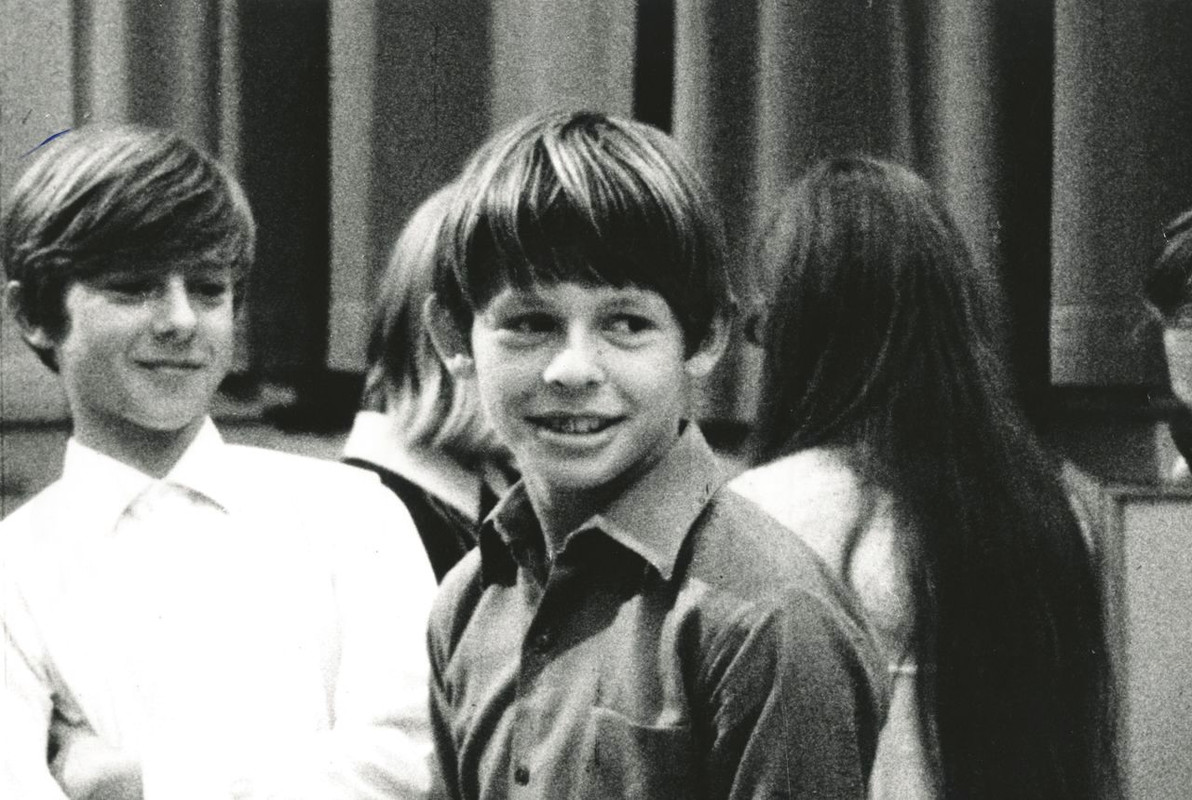
Drawing heavily from his own life, Malmros tells a low key story of 12 year old Lars Ole (Søren Rasmussen) and his classmates. There are petty rivalries, first crushes and moments of childlike mischief, but Malmros' concern isn't big events but the tiny things that shape day to day life when you're somewhere between childhood and adolescence.

Shot on grainy black and white 16mm, the film has a feeling of something observed more than it is staged. Frequently, moments that would have much more emphasis in another film are allowed to play out quietly, often in the background. A good example of Malmros' restraint comes when Lars Ole is being a pain, playing the wrong notes while his sister is practicing the piano, when he makes her cry, the camera views her through the door, before silently showing Lars Ole realising he's upset her more than he meant to. It's a beautifully subtle bit of acting and camerawork that makes us feel as if we are privy to a real moment.

We see a lot of these subtleties in the way the film depicts the politics of the playground, the games of tag and which kids are allowed to play or not, the dominance that older kids are able to exert. This is never more felt than in the way relationships are navigated. Early on we see that Lars Ole has a crush on Inger (Judith Nysom), who is 'dating' Hanse (Lars Randrup Mikkelsen), the way the camera often dwells on the space between them is clearly designed, yet feels totally natural, even in the final sequence when, at a dance, we see Lars Ole join in a square dance, changing partners as he goes and waiting for his brief chance to dance with Inger.

The relationships between the kids, whether it's the rivalry between those who live in a certain apartment complex and those who don't, the pettiness of who is allowed to play tag or not or the teasing and games in the classroom, ring completely true. The performances - all by non-professionals who seem not to have acted again - feel completely unforced, nobody seems to be playing a character or reaching for an emotion at any time.

I've now seen six of Malmros' films, and this is early evidence of his instinctive feel for how to tell a story from a young person's point of view. It's a beautifully constructed film, you feel Malmros' direction rather than seeing it, in that his choices are affecting and clearly purposeful, but barely seem designed. If you have even a passing interest in coming of age cinema, this is a filmmaker you need to discover and Lars Ole, 5C is a perfect entry point to his exceptional filmography.
★★★★★ 

May 13, 2018

How To Talk To Girls At Parties [15]

Dir: John Cameron Mitchell
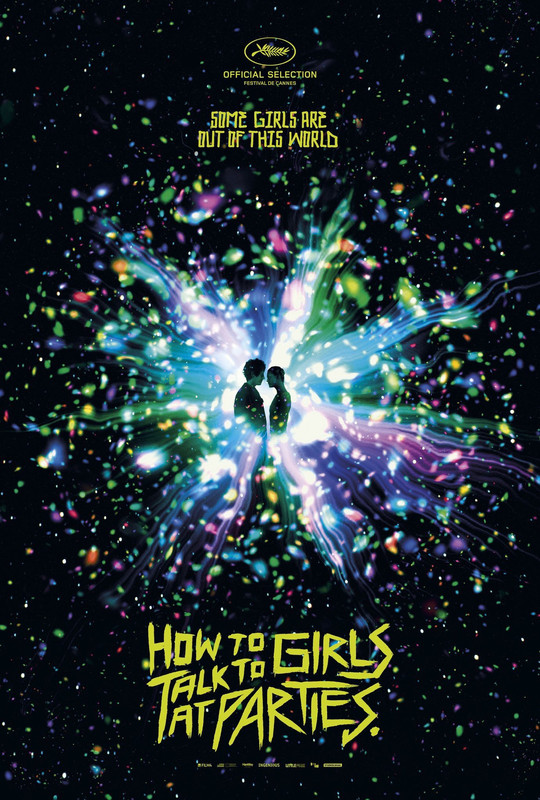
When you’re a teenage boy, girls might as well be an alien species, so the fact that Zan (Elle Fanning) is literally out of this world doesn’t make her any more unusual to Enn (Alex Sharp). Not that he realises she's an alien, he thinks she’s escaping from a cult. It’s 1977 and Enn and his friends are teenage punks in Croydon. Stumbling into what they think is an afterparty for the gig they have just been to, the end up at an abandoned house that Zan and the other beings from the six colonies that make up her species have taken over. When Enn tells her about punk, Zan is fascinated. Rebelling against her colony, Zan leaves the house with Enn, hungry for new experiences in her unfamilliar human form.

John Cameron Mitchell’s adaptation and expansion of Neil Gaiman’s short story is an eclectic mix of genres and influences: a punk sci-fi coming of age comedy, with a sex and kink positive message and, at its heart, a genuinely affecting love story. Mitchell and co-screenwriter Philippa Goslett mash these disparate elements together into a narrative that is sometimes chaotic, but always full of energy and ideas, be they in the film’s story or its wildly colourful and inventive design.

Along with costume designer Sandy Powell, Mitchell creates a distinctive look for the aliens, both as a species and within their individual colonies. All of them are dressed in skin-tight latex, but each has their own colour and their own look. The Stellas are the most sexualised, with the females wearing different coloured material to highlight their bodies, while another group are dressed somewhat more conservatively, the same material fashioned into blue suits. This way of distinguishing between the various colonies extends into their behaviour and even their movement. There are sure to be many subtleties here to pick up on subsequent viewings.

Set against this colourfully strange world there is the Croydon of 1977 (Sheffield subs for the exteriors). In many ways, punk and Zan serve similar functions in Enn’s life; injecting colour and excitement into a dull, grey, time and place. This is where Elle Fanning is perfect casting. I’ve said before that I think Fanning may be the most naturally gifted actress of her generation, and this is one of her best and most finely detailed performances. As she has observed, there is a risk inherent in playing a character who is engaging with the world for the first time that they appear to be stupid, thanks to their misunderstandings of language and social codes. This is not what we get from her as Zan. Yes, there is humour inherent in her telling Enn “I would like to go to the punk now” or telling his mother that she is going to the toilet for the first time, but what we get from Fanning is a sense of Zan’s boundless curiosity and enchantment with everything she is discovering, particularly her own sense of freedom, which is restricted in her colony.

There are the expected broad strokes to Fanning’s performance, but it’s the subtleties that make it. The way she moves is especially interesting; at first there’s a stiffness, she’s getting used to being in this body, but she loosens her physicality as Zan spends more time among humans, both because she is learning to mimic their movement and because she is adjusting to her new form. This is something we also see in the way she observes the world, Fanning has that rare gift of being able to let us see the character thinking. That’s another thing she first shows as pronounced. In the beginning, Zan’s observations are obvious, and often stated as well as simply made, but this is something else that gets naturally folded into her persona, as she becomes more comfortable around people. We get so much of the character through Fanning’s physicality, but she also exhibits great comic timing with her dialogue, and unforced chemistry with Alex Sharp that aids the film’s love story. Sharp also delivers a strong performance, lifted by Fanning and by Ethan Lawrence and Abraham Lewis, who play Enn’s best friends. The dynamic between them is believable and fun and, while it’s a different generation depicted here, there was much in the way they interact that felt familiar from my own teenage years.

In a largely excellent supporting cast, Ruth Wilson stands out as PT Stella, bringing a deadpan comic sensibility that I didn’t know she had. She’s particularly funny at the end of the film when she too begins to rebel. On the downside, there is Nicole Kidman. Tone is important in comedy, and Kidman is the only actor to miss it. As Queen Boadicea she’s a punk matriarch for whom the movement came too late. As an actress, she’s trying too hard. The accent is laughably broad and she overplays every moment to the hilt. It’s especially interesting to see her strain her every acting muscle in her few moments with Fanning, whose unaffected work has much more impact and embodies the character rather than performing it. Only in one moment, a stare down with Ruth Wilson, does Kidman stop working long enough to be similarly effective.

Mitchell and Goslett’s screenplay strikes a good balance between fish out of water comedy and the growing connection between Enn and Zan. The jokes largely hit and the love story is touching and feels organic; as Zan comes to love Earth and people she grows to love Enn in particular. It’s a rather beautiful thing, believing through Fanning’s performance that this is the first time this being, who is likely thousands of years old and has been through many life cycles, has experienced these emotions. The film also hits some truth about our relationship to music; the community that surrounds certain scenes and the sense of belonging that engenders, as well as the transporting nature of finding a song or a band that means something to you. This last aspect Mitchell takes in a way that is both literal and trippy.

I’m genuinely shocked by how divisive How To Talk To Girls At Parties has been. I can see how its tone will either work for you or not. I found it involving and moving as well as very funny. What I can’t see is how you can fail to appreciate how well designed it is, how Mitchell creates a whole offbeat world for his aliens inside their house. Nor do I get how you can fail to appreciate the many deft touches in Elle Fanning’s performance. Ultimately I think this is destined to be a cult item, appreciated by a group of fans I imagine will grow once the film lands on home formats after its disappointingly limited cinema run. At least, I hope that’s what happens.
★★★★

Aug 11, 2017

Fast Times At Ridgemont High at 35

In 1982, within five months of each other, three films came out that would forge the identity of much of what would follow in teen cinema, both in the 80's and for decades afterwards. 

First out of the gate, on March 19th, was the blockbuster hit. Porky's cost $4 million to make. In the US alone, within 4 months of release, it took $104 million. Today those numbers would put the widest of grins on a studio executives face, but in 1982 terms they were staggering. Porky's was the fifth biggest box office hit of the year and a genuine cultural moment. 

Next up, on July 30th, was The Last American Virgin, which opened to little fanfare and limited box office, taking just $5.8 million. Its success would grow slowly, until it would become a cult favourite and one of the best regarded, most quietly influential teen movies of its decade. 

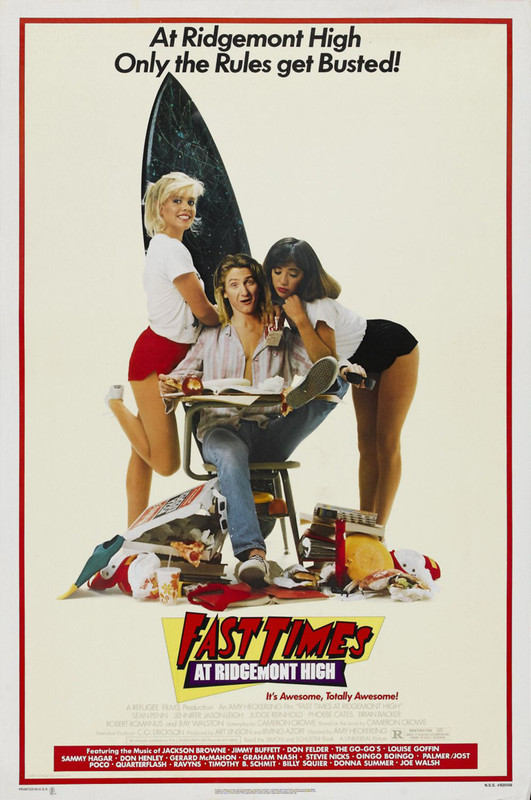
On August 13th the third of this important group of films arrived. Fast Times At Ridgemont High cost $4.5 million and took a respectable $27 million, enough to win it a short lived TV adaptation. It got strong reviews, but Fast Times' significance lies as much in the talent behind and in front of the camera as it does in the debt of inspiration the whole of the 80s teen movie cycle owes it. It was a talent farm, growing many people we'd meet multiple times in 80s teen cinema.

Films come and go. Big hits can vanish into cultural irrelevance. Flops can grow to outshine their initial reception many times over. These three films, whatever their level of success in 1982 and whatever the degree to which they hold up today, are culturally important. Between them they all but codified the conventions of the teen sex comedy. Today though, for its 35th birthday, we're going to look at Fast Times.

Of the three key teen movies of 1982, Fast Times At Ridgemont High has aged best. Viewed in the context of the other two it could seem to be a refinement of their themes, especially those of The Last American Virgin, with which it shares enough similarities that several people have mistaken Virgin for a Cannon films ripoff of Fast Times. Of course there is the possibility that Lemon Popsicle served as some inspiration for this film but this seems unlikely, as they had a more interesting source on which to base the film.

Cameron Crowe was a baby-faced 22 year old journalist with Rolling Stone, when he decided to return to high school for a year in order to research a novel. The result was Fast Times At Ridgemont High, the adaptation of which would become Crowe's first screenplay. Crowe's background work, a massive exception in a genre that can be more prone than most to writing of the laziest possible quality, pays off in characters that, while some have since become the basis of stereotypes, are richer and more relateable than many in teen movies of any vintage.
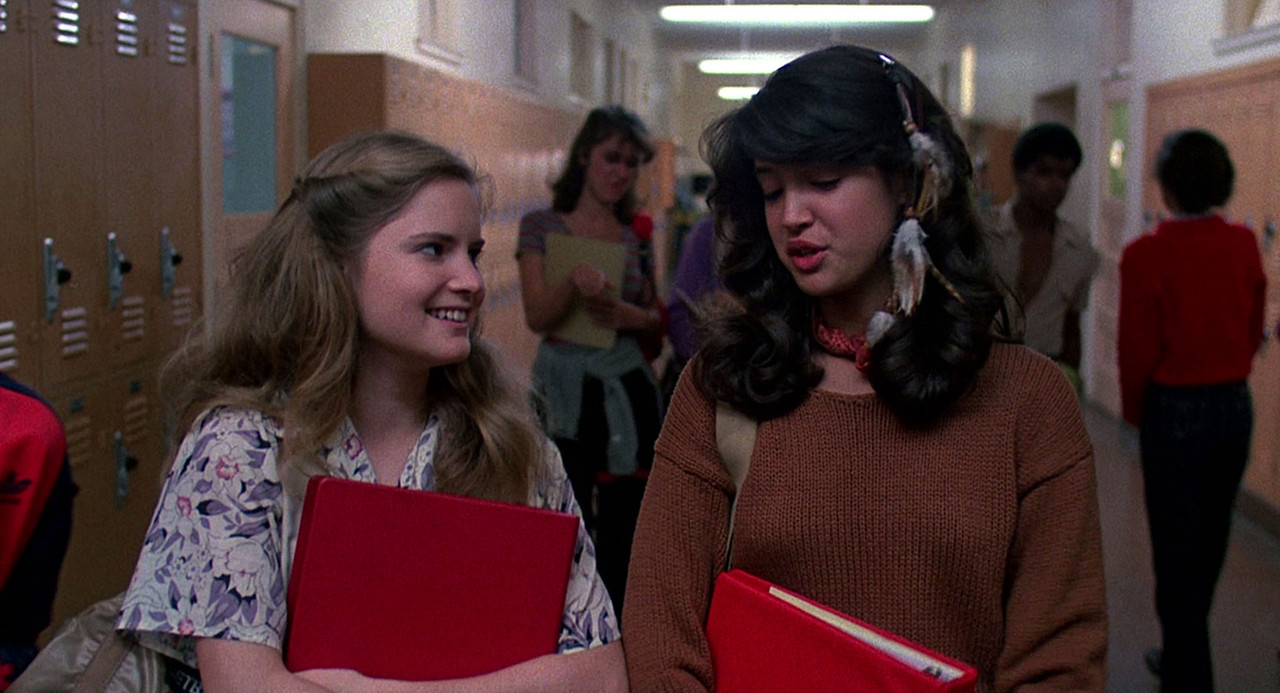
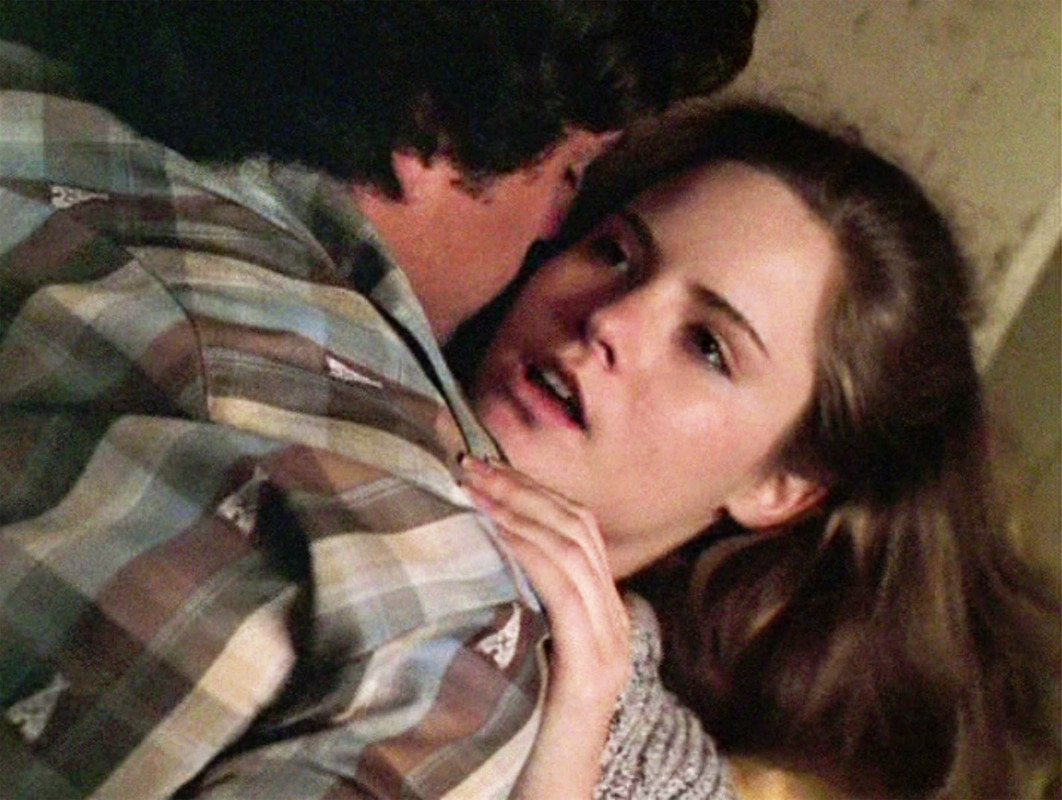
The film follows a year at the titular school, covering a number of students and their experiences. Crowe's screenplay hits several of the expected beats. There's the tentative romance as terminally nice Mark Ratner (Brian Backer) pursues Stacy Hamilton (Jennifer Jason Leigh), only to initially be outdone by his friend Mike Damone (Robert Romanus), who gets Stacy pregnant and bails on her when she needs an abortion. Stacy's brother Brad (Judge Reinhold), a senior, dumps his girlfriend, but then finds his objective – having his freedom so he can enjoy the best year of his life before he heads off to college – doesn't exactly go to plan. Brad is also nursing a crush on Linda (Phoebe Cates), Stacy's more experienced friend who, as Damone does for Rat, dispenses 'sage like' advice to Stacy. Around these central threads spin a series of fun, more broadly comic incidents, generally involving stoned school slacker Jeff Spicoli (Sean Penn) and his buds. Spicoli's nemesis is American history teacher Mr Hand (Ray Walston), who consistently berates Spicoli for wasting his time, leading to some of the film's funniest moments. 

Like The Last American Virgin, Fast Times At Ridgemont High mixes sex comedy and stoner jokes with a very serious side and a surprisingly realistic look at teenagers' own view of their coming of age experiences. While Virgin can often grind its gears during shifts between its serious and comedic sides, Crowe's screenplay smoothes the transitions in mood, doing a much better job of making the changeable tones feel cohesive. 

Crowe and director Amy Heckerling's deft mix of the comedic, the dramatic and sometimes the tragic, is seen most clearly in Stacy's story. Stacy is played as a typical fifteen year old girl; lacking experience, curious about the sexual experiences her friend Linda has already had and anxious both to learn and have those experiences for herself. Crowe and Heckerling often play this for broad comedy, as in the scene in the school cafeteria in which Linda, using a carrot, shows Stacy how to give a blowjob and Stacy's clumsy attempt draws mocking applause when it's spotted. 

Stacy and Rat's tentative on off romance is also largely played for laughs. Their first date is one of the film's funniest sequences. Damone has advised Rat to play the first side of Led Zeppelin 4 in the car when he picks up Stacy. Crowe knew the guys from Zeppelin from his days with Rolling Stone, but was unable to license anything from 4. Instead, as Stacy and Rat are driving to their date, we hear Kashmir on the stereo. This solution actually makes the scene funnier and more character appropriate than it would be if Crowe had been able to secure, say, Black Dog. The scene plays as if Rat has made a mistake, which suits his character better; he's forever trying hard, but not quite getting it right, in this case playing a track from Physical Graffiti rather than from 4. It's also a great joke because of what Kashmir sounds like. The strings hold a foreboding menace that plays on the nerves, accentuating how Rat must be feeling. This gag is carried through in the design of the restaurant that Rat and Stacy go to, where everything seems huge, purposely designed at Heckerling's request to dwarf Rat and Stacy, making them look like the kids they are trying hard not to be.

As much as Stacy is concerned with romance, her overriding curiosity and that of most of the characters in the film is about sex. Many of the American teen movies of the 80's see sex as something that girls allow to be done to them, rather than something they actively take an interest in, Fast Times differs in this respect. Stacy pursues sex with gusto, she goes after it first with a much older and more experienced man, then with Damone, a guy her own age who gets there first largely because he's more honest about what he wants than his nervy friend Rat. It would be easy to show Stacy's pursuit of sexual experience as something wholly positive, or to depict her as somehow immoral for her curiosity and desire (The Last American Virgin veers more towards the latter path). Crowe and Heckerling, however, take a more nuanced approach. 

It's clear that Stacy, while she doesn't altogether regret it, is disappointed when she loses her virginity. The venue is dirty, seemingly uncomfortable, and scrawled on with graffiti that suggests Stacy is just one of a long line of girls who have marked this milestone in this place. There's no romance to it, nor do either Stacy or her partner seem to enjoy it much. In this moment the use of the dreadful Somebody's Baby by Jackson Browne, which recurs on the film's soundtrack several times, takes on an ironic tone that seems unintended. This experience feeds in to the next, which is played much more comedically. Stacy now knows what she wants, thinks Damone can deliver, only to be met with disappointment of a different kind when he lasts just seconds. With each of these experiences Stacy grows up a bit, her ideas about what she wants shift and it's this that eventually allows her to see Rat as a serious possibility. This is where Fast Times is truly a coming of age story.

Fast Times is marked by a sexual frankness malleable enough to be both dramatic and funny, but it is also more respectful to its female cast than many of the teen films of this period, which were filled with completely gratuitous nudity (see Tomboy for some especially ill thought out examples). There is plenty of nudity, but the two female characters who are exposed – Stacy and Linda – are perhaps the film's two most developed and realistic individduals. With just one exception, the nudity takes place during sex scenes, and feels like part of the film's commitment to not sugarcoating its content. The bulk of the nudity seems designed to put us inside the awkwardness of Stacy's early sexual experiences. Look at the way Leigh holds herself in the second scene, at first showing off, then repositioning, slightly embarrassed. This intent is clarified with the one nude scene that occurs outside this context.

The exception comes in the scene of Cates getting out of the pool and removing her bikini top. This is one of the iconic images of 80's cinema as a whole, perhaps the trigger moment for an entire generation of guys coming of age, but it is interesting beyond its titillating nature. This scene is the product, within the story if not from behind the camera, of a male gaze, but it's clearly a fantasy and, importantly, a fantasy immediately undercut when Linda catches Brad masturbating in the bathroom. Yes, the film has its cake and eats it, but it's not endorsing Brad's image of Linda (indeed it shows Linda recoiling when she bursts in on him) and neither does it, unlike many of the films that predate it or would follow in its footsteps, eventually allow Brad to fulfill his masturbatory fantasies. One suspects, however, that these subtleties were lost on a 13 year old boy with a rented VHS and a pause button.

The film's coming of age focus pivots around Stacy. Linda learns a few lessons, Brad learns that he was a presumptuous dick in breaking up with his girlfriend and Rat, via Stacy, gets to do some growing up of his own, but it is Stacy we see go through all the most important milestones of young adulthood and deal with their consequences. 

In this respect it is interesting to compare and contrast how The Last American Virgin and Fast Times deal with their respective abortion plot points. Stacy doesn't have a Gary figure to come to her rescue, what she has is Brad to pick her up and drop her off and Damone to grudgingly provide half the money for the procedure. He treats the whole thing like one of the deals he makes in his 'job' scalping concert tickets. However, Fast Times is less cruel to Stacy for making this choice than Virgin is to Karen. There is no equivalent to the cut in Virgin from the procedure to a pizza being sliced, a decision by which Crowe and Heckerling avoid comment on the morals of Stacy's decision. We may never see Stacy go through the process, but we do sense an internal conflict about it, thanks to Jennifer Jason Leigh's remarkable performance.

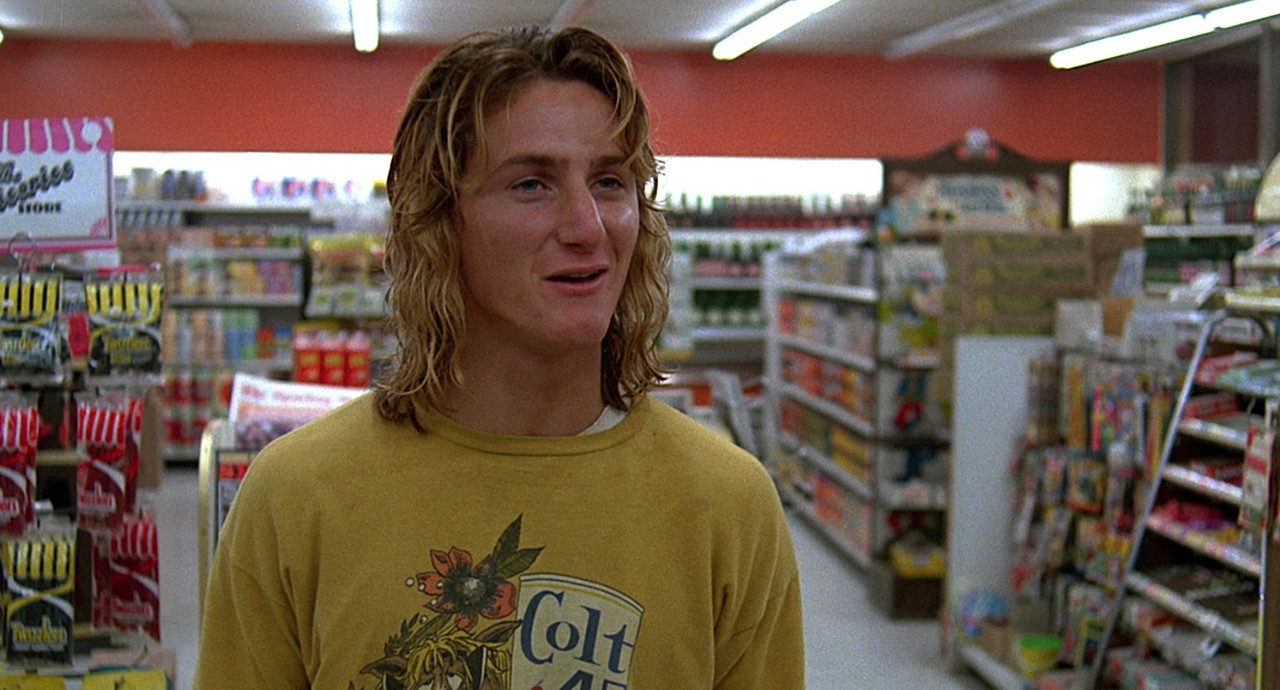
The things I've discussed above are largely the serious themes that are woven through the film, but it is replete with great jokes, and sparky performances from the cast keep the film from ever being mired in its more dramatic beats. This is much of the purpose of Spicoli's role. Spicoli isn't a character of great depth, or even a character at all; he's more of a comedy condiment to be sprinkled on the film, but he's funny enough that it's hard to mind very much. Sean Penn's semi-improvised altercations with Ray Walston's Mr Hand are hilarious and quotable, and his antics give great levity to the film when it's most needed.

A witty screenplay is a good start for a teen comedy but it goes only so far; casting is key. Fast Times may have the most accomplished cast ever to grace an American teen movie. The sheer amount of talent, of people who would go on to work of importance and quality, is staggering, ranging from the leads to people glimpsed in the background of one or two scenes. 

Perhaps the most notable of these talents is future two time Oscar winner Sean Penn, playing far against the type we have come to expect of him, as perpetually stoned surfer dude Jeff Spicoli. Penn was no less method in this role than he is as a matter of course. Throughout filming he insisted that the cast, crew and even his parents, with whom he still lived, refer to him as Spicoli. Spicoli is perhaps the quintessential dumb, stoned, surfer character. He became a model for a whole generation of characters – you could imagine the process of creating Bill and Ted as little more than splitting Spicoli into two bodies and handing each a guitar. Penn is fantastic, taking what is not a key role in terms of what loose story Fast Times has and, aided by Crowe's insanely quotable dialogue, making it the iconic thing to come out of the film.

The only other purely comedic element of the film, which otherwise weaves its laughs organically into its drama, are the repeated sequences of Brad's travails at his various jobs. At first he's smug, he's attained high status as an assistant manager at All American Burger. The hilarious sequence in which he loses that job - "Mister if you don't shut up I'm gonna kick one hundred percent of your ass" - contains several of the film's best lines, while a later job, delivering for a fast food fish and chips place, has one of the film's best visual gags (which also features a cameo by Crowe's wife, Nancy Wilson).  

The cast is jam-packed with quality names in small roles. Nicolas Cage, a runner up for the leading role of Brad, largely by dint of the fact he was still just 17, pops up in the background of a few scenes. Eric Stoltz and Anthony Edwards play Spicoli's buddies, Forest Whitaker makes a huge impression with a single line and Vincent Schiavelli is hilarious as Mr Vargas, who entreats his class to “Have a heart, I just switched to Sanca”. There are also early parts for Kelli Maroney, who went on to post-apocalyptic teen zombie comedy Night of the Comet, Bruce Springsteen's sister Pamela, who took the lead in a Sleepaway Camp sequel and Amanda Wyss, who may be best known for A Nightmare on Elm Street, but who I love in the hilarious Better Off Dead. Some of the main cast ultimately went on to smaller careers. Judge Reinhold, excellent as Brad, had a great 80s career, largely outside the teen movie cycle, but faded in the 90s and has largely been seen in TV and direct to video movies in the past decade, while Backer (who last showed up in Heckerling's Vamps) and Romanus are little seen these days.
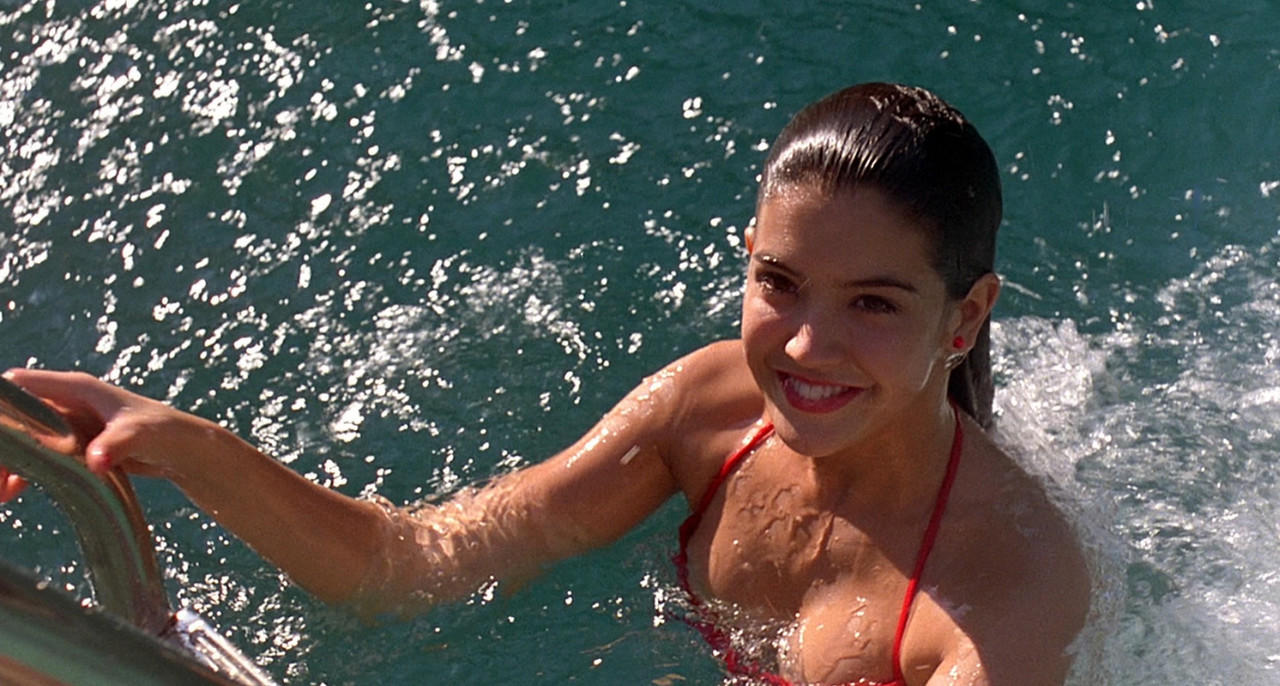
Perhaps the most disappointing of the disappearing acts pulled by the leading cast of Fast Times was Phoebe Cates'. Cates is one of the perennial crushes shared by every guy who loves 80s teen movies, thanks in no small part to the aforementioned swimming pool scene in this film, but she was more than that. Cates is gorgeous and vivacious as Linda, but she makes the character more than the fantasy girlfriend a dumber film and less accomplished actress might have been content to have her be. Cates plays the role with an awareness that Linda is much less of an adult than she attempts to paint herself as being, that her worldly wise pronouncements about her college boyfriend are much more naive than she imagines. Cates puts her own awareness of Linda's naiveté across without giving the character an awareness of it, but also without mocking her or painting her as a dimwitted bimbo. It's a lovely balancing act.  Cates had an interesting career into the 90's, but never became a major star, and perhaps deserved greater recognition as an actress. Soon after making Princess Caraboo, she disappeared from the screen, opting to become a full time parent to the children she has with Kevin Kline. Her last role to date was in 2001, in The Anniversary Party, the co-directorial début of her friend and fellow Ridgemont graduate Jennifer Jason Leigh.

I have to declare an interest here: I think Jennifer Jason Leigh is, at a minimum, the  best American actress of her generation. Fast Times At Ridgemont High was for her, as it was for so many of the young cast, something of a launchpad. Leigh has a well founded reputation as one of cinema's most dedicated exponents of research and pre-shoot character work. Here she appears to have taken it comparatively easy on herself, merely writing her usual in character journal and getting a job in the exact pizza parlour we see Stacy working in in the film's opening scene. If Linda is a naive character who has convinced herself that she is worldly then Stacy is much more aware of her lack of experience and, typically of the teenage girls of 80s movies, anxious to shed it. This became the crux of a problem the late, great, Roger Ebert had with the film in his contemporary review. Ebert decried the film for putting an actress as 'pure and innocent' as Leigh through the various experiences that Stacy goes through in the film, and for exploiting her nudity in those situations. 

Stacy is an innocent, naive, vulnerable teenager. She is often exploited. Jennifer Jason Leigh was a teenager when Fast Times was made but there, it would seem, the similarities between her and Stacy end. Leigh comes across, in the few interviews she elects to do, as a fiercely intelligent, thoughtful and very private woman who is dedicated to her work. She has never appeared to be a naif of any kind. The other thing that has always been clear about Leigh is that her dedication to acting is backed up with a fearlessness about exposing herself, in either an emotional or a physical sense. What is both shocking about Ebert's review and proof of Leigh's brilliance in this part and as an actress overall is that the critic has seemingly confused the actress with her role; he reviews Fast Times as though Leigh were Stacy, rather than playing a role. That's how convincing her illusion is. In commenting on Ebert's review on the DVD commentary track, director Amy Heckerling notes that, if anything, Fast Times failed to go far enough for Jennifer Jason Leigh's liking.

I've talked about Fast Times At Ridgemont High largely in parts. The fact I love this performance, why that scene works, but that's slightly missing the point. I could break this film down to its every constituent part, to bits in the background of scenes (the two girls who both dress like Pat Benetar, for instance), to individual scenes like Brad looking in the "Big Hairy Pussy" mirror or the little glimpse of Damone's best side as he rings round trying to get money for Stacy. A lot of teen comedies work this way, they are a collection of scenes and moments, you can almost see the cards on the screenwriter's board, moving around because there hasn't been a really big laugh for fifteen pages. Fast Times works like that to a degree, but it's also more cohesive, the scenes add up to something. We've discussed Stacy's journey, but the payoff for Spicoli has it's own peculiar emotional charge ("Aloha, Spicoli") and Brad's arc, while small, is another realistic and interesting one. More even than that though, it all works as a whole piece. Crowe and Heckerling keep everyone's stories in focus, they give them all enough screentime to pay off in a satisfying way. Most of all it works because I believe it, it's heightened, but I can see these events being part of a typical school year, I went to school with people like this and I believe them as each other's friends and peers. 

Great films don't always happen by design.
Fast Times At Ridgemont High feels like a particularly special and inexplicable piece of alchemy. All the right people happened to be in the right place at the right time. There's not one role that feels as though it could be cast better (Brad, for instance, needs the regular guy vibe that Judge Reinhold has, not Nicolas Cage's weirdness). All the jokes hit, all the drama connects. It says something to and about its audience without feeling preachy or sentimental. That's why this film endures, the fashion and the soundtrack may have dated, but the characters and their situations are as real today, as present in our high schools, as they were in 1982.

Fast Times At Ridgemont High is a key film in the history of teen cinema. In Cameron Crowe and Amy Heckerling it established the careers of people who would make further key contributions to the genre, in its cast it gave us a generation of actors who would, ultimately, be more important and do more interesting work than many of the 'Brat Pack', who would come to prominence partly through the films of John Hughes. It also influenced a huge amount of films that would come after it, and along with Porky's and The Last American Virgin, kickstarted a decade in which teen narratives would almost come to dominate American cinema. The films Fast Times influenced didn't always learn the right lessons from the three key teen movies of 1982, but good, bad or indifferent, many of them would play around with their influences in interesting ways and bring to the screen a depiction of teenage life and concerns that was absolutely rooted in its time and place.

Jun 22, 2017

Teen Movie Thursday: Two Remakes

Footloose [12] [2011]
Dir: Craig Brewer
Remakes, one of several crutches on which Hollywood is currently propping itself up. It seems as though any film with a slightly recognisable name can now be reconfigured for a modern audience and let's just say that the resulting films haven't always been noted for being better than those they're inspired by. Footloose is an interesting choice for dusting off. In some ways it makes perfect sense. The High School Musical and Step Up films showed that a young audience has an appetite for seeing dance on the big screen and both music and dance have moved on significantly enough since 1984 that the film's big moments could avoid repeating those of the earlier version. On the other hand, does the story make sense in a modern context?

To its credit, the film works hard to lend some credibility to the idea that in 2011 there would be an American town that outlaws public dancing. The car accident that closes the film's exuberant opening credits is a shocking moment and it's not that much of a stretch to see a town whose lawmakers are especially conservative react to it with legislation that is both draconian and missing the mark in terms of what was actually to blame for that accident. You make the choice to go with it or not, if you can this version of Footloose has its rewards.

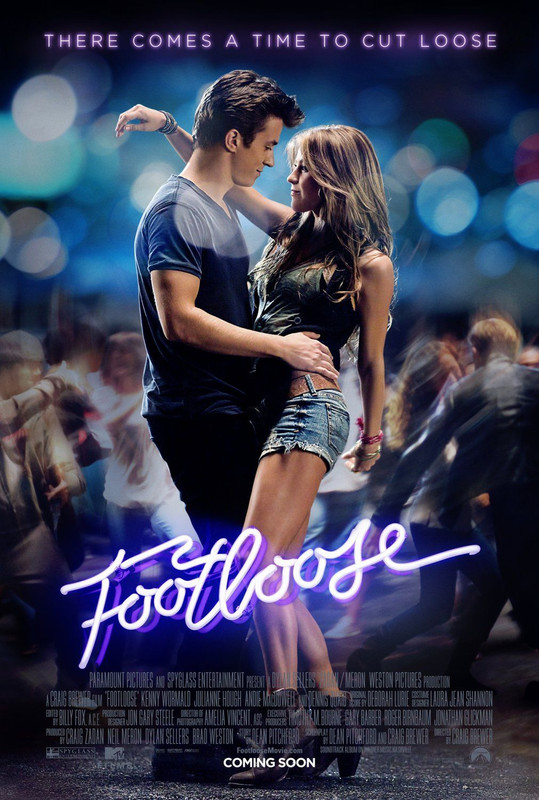
The basic story still sees rebellious teen Ren McCormack (Kenny Wormald) coming to town and butting heads with local preacher Rev. Moore (Dennis Quaid) over both the law against dancing and the fact that Moore's daughter Ariel (Julianne Hough) is showing a lot of interest in this boy from out of town. The characters are rather basically sketched, there are a lot of Hicksville stereotypes, including Miles Teller in Chris Penn's role as Ren's friend who does not dance and Patrick John Flueger as a woefully broad asshole boyfriend that we all know Ariel will leave for Ren. There's also a thin role for Andie MacDowell as Quaid's wife. Even if you've not seen the original you know where this is going: Ren will get the girl and get the town dancing, it's really about execution and on that front there's good news and bad.

There is a gaping hole at the centre of this version of Footloose. Kevin Bacon was nobody's idea of a great dancer, but he is a great actor and more than that, simply by dint of his unique look, he's an interesting and memorable presence. Kenny Wormald is a very, very good dancer. How good? He used to be a backing dancer for Justin Timberlake. Unfortunately he looks like he rolled off the production line in a factory where Hollywood makes cute guys you can't tell apart. His acting doesn't help. It's not that he's bad, he's just clearly not been cast as an actor first and his work is flat and bland. This bites hardest when Ren goes up against the town council. When he should be fired up and getting the crowd, if not the council, behind him, Wormald just doesn't have the presence to pull it off.

I can't help but feel that Miles Teller, who is able to carry himself on screen with an arrogance that would work for the way Ren initially looks at this hick town he's ended up in, and who is a proper actor, would have made for a better lead. He's clearly not the dancer Wormald is, but he acquits himself well enough in the last number that it seems likely he could have picked up those skills. As it is, Teller is in appealing mode here and he has fun, making an appropriate analogue for Chris Penn. 


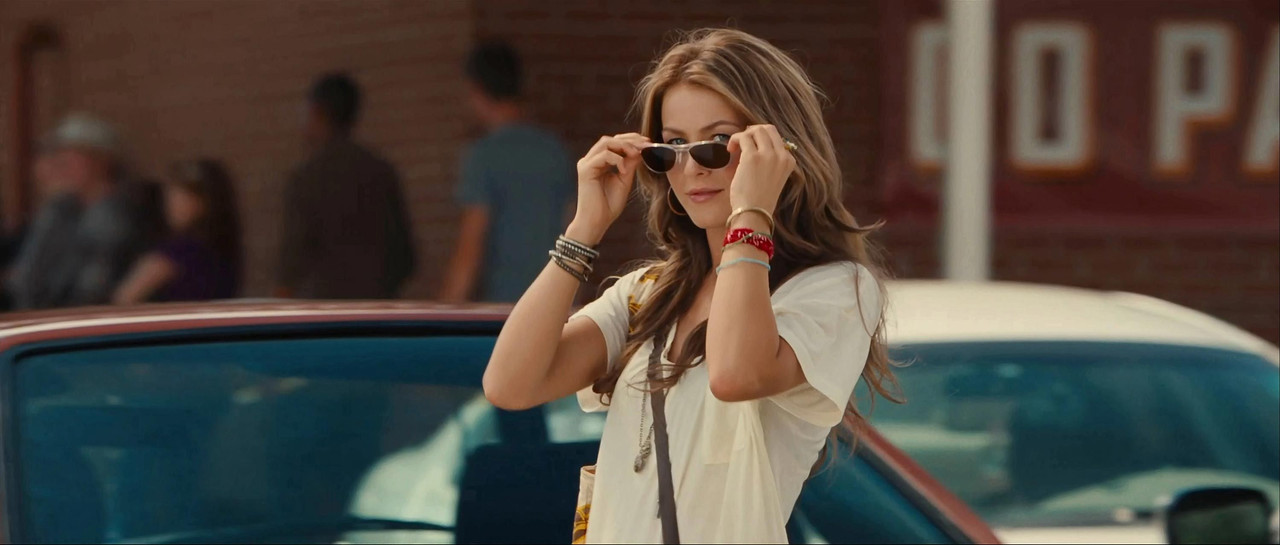
As with Wormald, you suspect that Dancing With The Stars pro (and now judge) Julianne Hough was cast for her dance background and small town Barbie look rather than strictly for her acting, but she does more than Wormald can with a thinner part. When there's finally a proper dramatic note for her to play, Hough is pretty good as Ariel confronts her Father, in his church, after she's been assaulted by her now ex boyfriend. Dennis Quaid is one of the better things here on an acting level. He's got a sliminess to go along with his charm that suits this part well. You can believe him as a preacher and as convincing speaker on the town council. He's one of the things that makes the anti dancing law feel somewhat plausible, because you can see how he could talk people round to his rationale for it. The character is on the two dimensional side, but Quaid is always worth watching.

The dancing, more than any of the actors, is the star of the film and Craig Brewer gives those moments prominence and makes each feel a little bit different. There's hip hop dancing in an early scene where Ren and Ariel first spot each other, line dancing at a club and Ren has a contemporary number when he's trying to get out his frustrations. It's all well executed, impressively choreographed and entertaining. Wormald and Hough both communicate as much character through their dance numbers as they do through any dialogue, more in Wormald's case.

Footloose is a pretty middle of the road film, slightly less interesting than the original as a piece of drama but probably better if you're coming to it purely for the dancing and the music. It can stand relatively well alongside the 1984 film, but I'm not sure its generation will end up holding it in quite the nostalgic glow the original has around it.
★★★

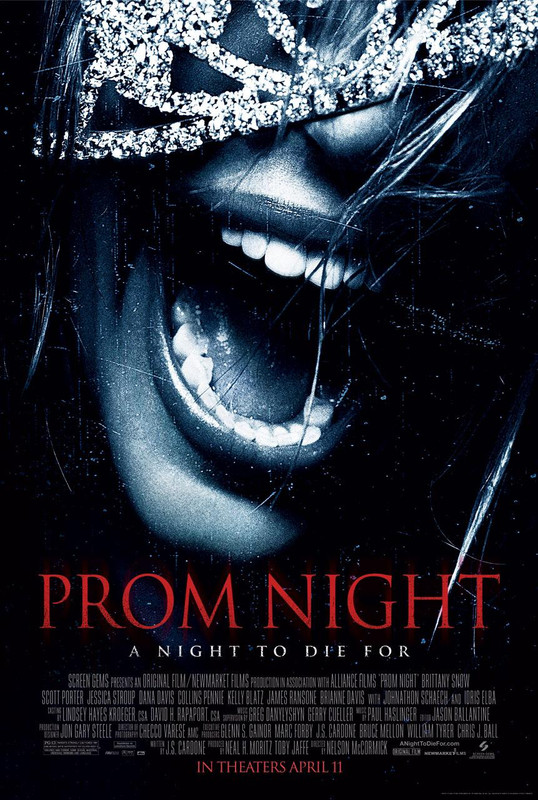
Prom Night [15] [2008]
Dir: Nelson McCormick
The slasher often seems seems the laziest of sub-genres. Get a bunch of attractive young people, put them in an isolating situation, add someone with a signature weapon (mask optional, but encouraged) and stretch as hard as you can until you reach 85-90 minutes. Job done. Perhaps lazier still is the slasher remake. The groundwork has been done, the situation exists and, depending how faithful you are being, so do many characters and even specific sequences. A remake in name only, Prom Night relies on its source film less than many, but make no mistake it remains a profoundly and painfully lazy enterprise.

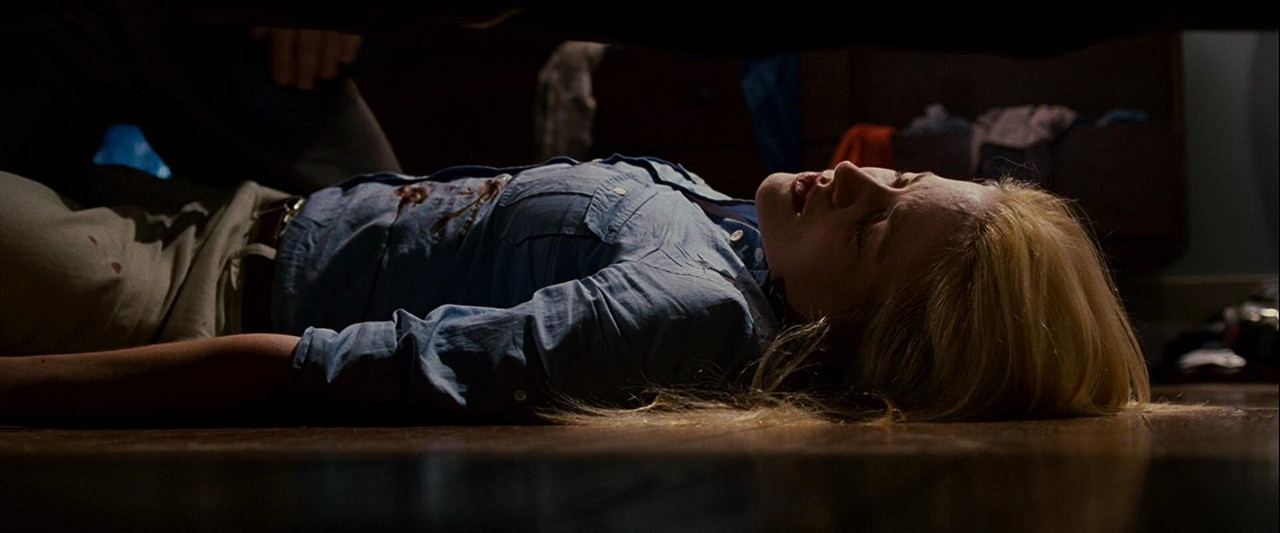
The film opens with a flashback to three years previously when a teacher (Jonathan Scheach) with an obsession with one of his students (Donna, played by Brittany Snow) murdered her entire family. The rest of the movie takes place on prom night, during which Donna's teacher escapes the asylum he's been confined to and plans to kidnap her from her prom. I'd have warned you of spoilers at the top of that paragraph but for two things: first, I would heartily discourage you from seeing this piece of shit and second, the blurb on the blu ray box also tells you the entire story, if they don't care why should I?

It's not necessarily the worst idea for a slasher to tell us who the killer is upfront. Genre classics like Halloween and A Nightmare on Elm Street don't trade on mystery, but they have killers who are terrifying and characters around them who are interesting, to say nothing of masterful, visionary filmmakers behind the cameras. Prom Night 2008 has a collection of pretty young ciphers and Nelson McCormick, a TV director making an almost determinedly anonymous feature début. 

The screenplay by J.S. Cardone, whose own first directorial feature The Slayer featured on the Video Nasties list back in the 80s, is terrible in every respect. The characters barely deserve that designation. Often in teen movies characters have to make do with traits (the Jock, the Bitch, the Brain etc) rather than full personalities. Cardone doesn't even grant his characters that. Brittany Snow's Donna is blonde. Her friends Claire (Jessica Stroup) and Lisa (Dana Davis) are brunette and African American respectively. Lisa's eye for men (“one of 'em was knida cute” she says when a group of men in their 30s or 40s hits on them) is the only thing I can remember as a defining trait for any of them. Donna is perhaps especially bland, and she's supposed to be our Final Girl. The supporting cast; the girls' boyfriends, Idris Elba as Detective Exposition and Jonathan Scheach as the murderous teacher, are no further developed. 

Cardone has one early idea that, while not overly original, might enliven proceedings. Donna is supposed to be traumatised by her experiences and is on anxiety medication. Just before she goes to prom we discover that she has been off her meds for a week. This could easily have been exploited to good effect: an anxiety ridden Donna, having actually seen her teacher, trying to convince her friends – who know her history – that he's really there and it's not the lack of pills talking. Cardone and McCormick could also have used this to create a sense of uncertainty in the audience, but this information is forgotten and swept under the carpet the second it's revealed.

As director, Nelson McCormick seems to go page by page through The Complete Hack's Guide To Making Your First Horror Movie. There are several jump scares in mirrors, two dream sequences, a series of repetitive, boringly shot murders and several iterations of the pulling back the shower curtain scare. This film could have been made by AI if you'd fed it the most repeated moments from the last 30 years of slasher movies.

The acting is bad, though perhaps not entirely the fault of the cast. Brittany Snow could have suggested her character's heightened anxiety, making something of the dropped plot point about Donna's meds, even if Cardone and McCormick forgot about it. Unfortunately this eludes her, as does any semblance of personality or much in the way of expression. Idris Elba is clearly paying his rent. He contributes a solid accent and says his dialogue out loud. The rest of the cast don't have to do accents, but manage the saying things out loud part of the equation. 

There wasn't much here for anyone to work with in order to turn in a good performance, but surely Jonathan Scheach should at least be able to seem creepy. He doesn't. We barely see him interact with Brittany Snow. His obsession isn't a strong thread at all. We should be feeling him in every shot, but instead he spends most of the film confined to the upstairs of the hotel where the prom is happening, pointlessly knocking supporting players off, which makes zero sense if we're to believe his objectives and that he has a plan to kidnap Donna.

Prom Night 2008 is an excruciatingly dull film. It pales next to its much more inventive source (and even more so next to the hugely fun, initially unrelated, sequel Hello Mary Lou: Prom Night 2). It's poorly directed and written, and acted by a near comatose cast. The audience will be in the same state by the end of this cinematic anesthetic. 

Dec 14, 2015

24FPS' 10 Worst Films of 2015

I had a shorter list of terrible films to choose from this year than usual. I think there are two reasons for this. 

First, it was a middling year on the whole, with many average to very good films, but few that broke through, for me, either to excellence or awfulness. 

Second, I changed the way I watch movies this year. For many years I had an annual pass for the UK's largest multiplex chain. This year I switched that for a similar deal with Curzon, whose programming is more eclectic. As a result I missed much of the year's mainstream fare after April. I say missed, but that's a lie, I can't say there was a single major release that I truly regret not catching. I think this switch in my viewing has led to a much better average among the films I saw in 2015 as opposed to recent years. 

All this said, the pickings for this list, though slim, were rich indeed and I had to drop some films I truly will miss from this countdown. Make no mistake, these 10 movies are all pretty awful, some made me extremely angry, and I'd be happy to never see any of them again.

10:  Rosewater
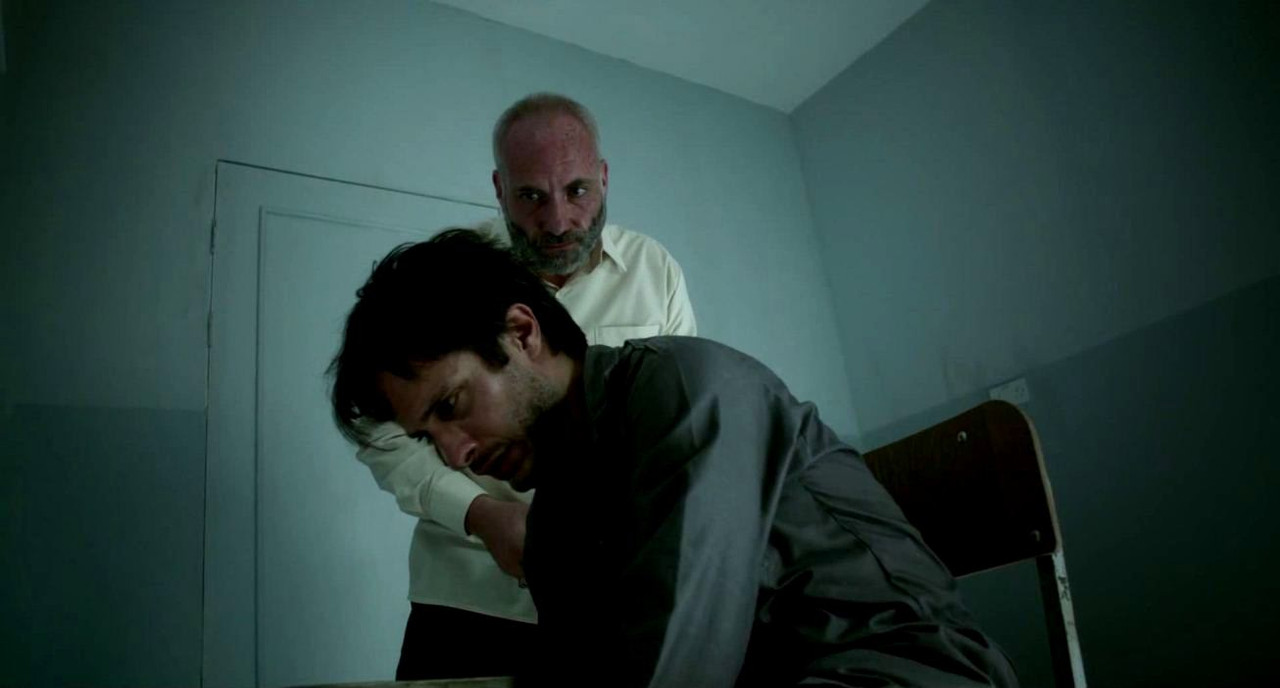
Jon Stewart's directorial début is a disappointment rather than a truly awful film, it strives for importance, but its impact is lost in uninspired directorial choices. The story of the imprisonment and interrogation of Iranian journalist Maziar Bahari (played by Gael Garcia Bernal) is impactful enough on its own, without the mawkish scenes of him hallucinating images of his Father and Sister.  When Stewart pulls back and just allows the situation to speak for itself (as when Bahari gets to speak to his pregnant wife on the phone), we get glimpses of what the film could have been, but all too often the directorial inexperience and the weight of Stewart's tangential personal involvement in the story hobbles it.

Aside from this, the language of the film proved a disconnect for me. The Iranian main characters are played by a Mexican (Bernal) and a Dane (Kim Bodnia as the interrogator), and all the dialogue is in English, not only does this confuse a few moments when you wonder how much Bernal's captors understand, but it created a distance for me, an awareness of watching actors rather than being sucked into a situation. This is an Iranian story, it feels wrong in English.

It's a pity that this doesn't come off, it's a deeply sincere film, but undone by inexperience.

9: What We Become
This is going to be a recurring theme on this year's worst list, but the main reason that What We Become has ended up here isn't because it's one of the worst films ever made - it's entirely competently acted and shot - it's because there is not one single frame of it that I haven't seen before. This Danish zombie/pandemic film draws quite heavily on Chris Gorak's underrated Right At Your Door and very heavily on every zombie movie ever made.

The film shuffles forward, seldom dull, but never truly engaging either, and never remotely original. Every scene, every shot, could have been drawn from somewhere else and a hackneyed horror film doesn't magically become better because it's not in English.

8: Me and Earl and the Dying Girl
Well, it's better than last year's godawful cancer movie. Just. Me and Earl and the Dying Girl (the more I type that title the more I hate it) has many of the familiar problems of young adult literature adaptations, most pressingly the fact that its characters have no personality. As the Dying Girl of the title Olivia Cooke has a tumour and a small assemblage of quirks where her character's personality should be and worse, what personality she does develop largely comes in the last 10 minutes of the film, entirely in service of the male lead.

That male lead (Thomas Mann as Greg), is both an annoying character - it's another movie that forces me to hang out with an asshole I'd rather avoid, without him being very interesting - and a weak performance. Mann is flat and affectless throughout, which completely undermines the connection he should be developing with Cooke's Rachel.

While it has a few moments of wit, thanks to the parody films that Greg [Me] and Earl make together (well, their titles anyway), the film's overwhelming tweeness drowns out the few moments of promise.

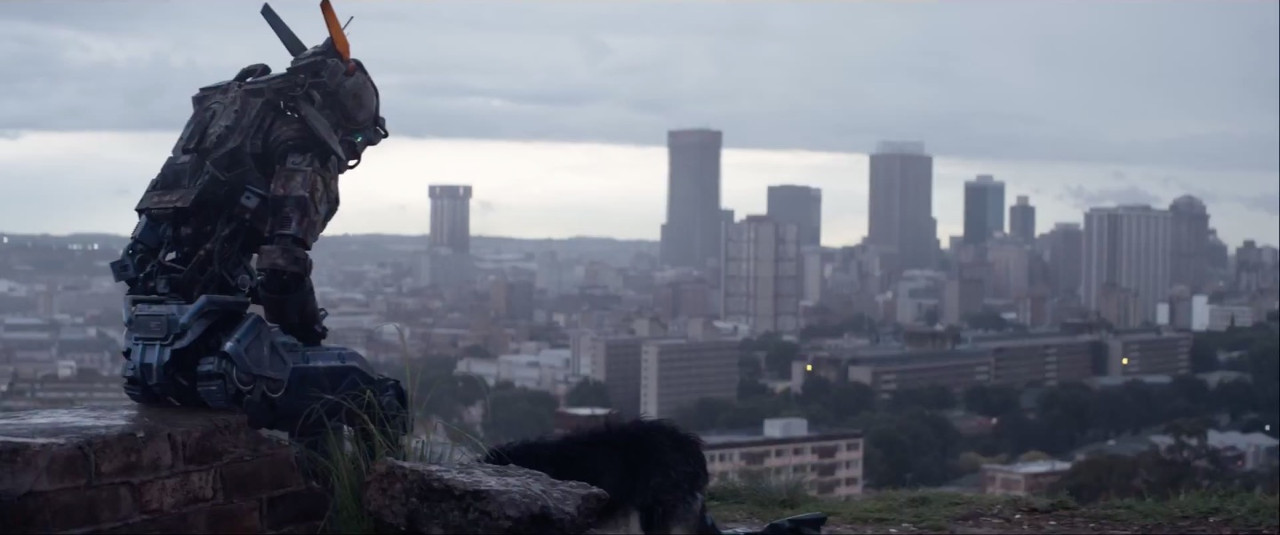
7: Chappie
Three films in, Neill Blomkamp has half a great movie to his name. It's not half of this one. Like so many other films on the list this year, Chappie seems to be less a film in its own right than a compilation of other people's ideas, in this case with the annoyance factor turned WAAAY up. 

The story is an amalgamation of elements of Short Circuit (the coming of age stuff), Ghost in the Shell (several of the bigger sci-fi concepts) and Robocop (the crime/policing side of the story). The design also steals from all of these sources (Robocop especially egregiously). What ideas Blomkamp has are either abandoned in favour of CGI spectacle, poorly executed thanks to some of the worst performances of the year, or lost in the cacophony of competing elements and abysmal dialogue.

The performances are the worst part though. The perma-mugging Sharlto Copley is just awful as the voice and motion capture source of Chappie, Dev Patel is wooden as his creator, Hugh Jackman can blame his performance, which boomerangs from pious concern to gleeful violence on the script, but Sigourney Weaver's autopilot rendition of a business bitch has no such excuse.

However, it gets worse, in the shapes of Ninja and Yo-Landi Visser, co-vocalists in rap-rave act Die Antwoord, who both have major roles with serious screentime and compete to give 2015's most fingernails down the blackboard grating performance. It's a close run thing but Ninja's strained faux gangsta schtick wins. We lose.

Every single idea in Chappie has been better and more fully executed in other films, hell, the final image was better executed in a Bjork video. There's no reason for this to exist.

6: Mistress America
I'm not generally fond of what I've taken to terming 'hangout movies'. Hangout movies are those films that are driven not by plot but simply by spending time in the company of a character or small group of characters. I'm not averse to them when the character or characters are people I'd like to spend time with in real life, or people I find interesting enough to want to spend 90 minutes with in a cinema, even if I'd avoid them otherwise. The people in Mistress America are dull and largely have noxious personalities, I'd leave a party to avoid them.

Noah Baumbach's films have been having this effect on me for a while, but at least he used to write about interesting bastards. Roger Greenberg (Ben Stiller in Greenberg) is a wanker of such magnitude that for me it undermined the plot of the film, but he's not boring. The characters in Margot at the Wedding are uniformly terrible, but again, their conflicts are interesting. This is not true of Gerwig's Brooke, nor of Lola Kirke's Tracy (pretty damn awful herself) . 

Given that, all Mistress America amounted to for me was 45 minutes in the company of people I hated, then another 45 minutes watching them do forced, desperately unfunny, screwball comedy. I think that's my last Baumbach for a while.

Note: Yes, I know Baumbach made a film [While We're Young] without Gerwig this year, but since I hated the trailer and fans seemed to like that one less, I skipped it.

5: Madame Courage
I really thought this was going to be the single dullest film of 2015's London Film Festival. It didn't even manage that meagre achievement (see No. 3). I keep having to clarify that I don't have an inherent problem with slow or minimalist cinema, I think for me though, the caveat is that if in story terms you are going to take that route, then in character terms I need to find something compelling, because while beautiful images are all well and good - which isn't to say Madame Courage has those either - they aren't the be all and end all of what I come to cinema for.

This incredibly minimal story, set in Algeria, is of a young drug addicted thief who falls for a girl he mugs and begins following her and standing outside her window. What does he find so intriguing about her, why is she not more intimidated by him? On these and many, many other questions the film is oblique to the point of tedium.  Many scenes simply depict Omar (the thief) standing outside this girl's window for minutes on end. Nothing is said, nothing happens, we just watch him stand, or sit. This might have proven menacing if director Merzak Allouache gave any sense of building to something, but even when this appears, finally, to be what he's doing, it amounts to less than nothing.

On the sidelines there are scenes of Omar interacting with his Mother and Sister at home, but these feel overblown and, while they strain to make a point about women in this society, the characters are so thin that it never comes off. For the most part, for all its incident and interest, I may as well have watched a blank screen rather than Madame Courage.

4: The Corpse of Anna Fritz
I like my movies messed up and I especially like body horror. This really should have been on the other list this year, if it had worked. The premise is simple; a famous actress dies unexpectedly and the young morgue attendant invites his friends to see the naked corpse before it is embalmed. Soon though, things move beyond looking and while she is being raped, Anna Fritz (Alba Ribas in an exploitative part) wakes up. There is a terrifying locked room thriller, with a rich subtext about how we as a society believe we own celebrities, buried somewhere in this premise, but instead co-writer/director Hèctor Hernández Vicens opts to make one of the most by the numbers pieces of horror I've seen this year.

The Corpse of Anna Fritz runs through its potentially unnerving story within half an hour, then proceeds to stretch in a way that strains credulity and patience more often than it does nerves. Worse than this is the grinding predictability of the whole thing. Almost every scene is predictable not just in plot terms, but down to the visual choices. This reaches its apex in a chase scene that should be the film's most suspenseful moment but so hackneyed is the execution that I could spot every single shot and every single edit coming a mile away.

This should have been right up my dark little street, but it fails on almost every level.

3: Box
I went to see Box at the London Film Festival, choosing it over several higher profile screenings that I might have been well advised to see and have an opinion on, purely because it stars the Hungarian actress Hilda Peter, who made one of the most compelling film debuts I'd seen in years in Peter Strickland's Katalin Varga. This was my first chance to see her again and I wasn't going to miss it. Unfortunately, Box is an empty vessel.

Peter plays Cristina, a stage actress in her mid 30s, a little distracted both in rehearsals and at home with her husband and young son. Rafael Florea plays a 19 year old boxer, looking for success, who begins following Cristina home. After an hour's repetitive and largely silent screentime of this, they finally speak, agreeing to go for one coffee, after which Rafael will promise to stop following Cristina home. The film's last half hour, after this 'date' is grindingly predictable, but the film builds to nothing more than a pointless ellipsis. 

It would be something if we got any sense of a connection between Cristina and Rafael, that last image might then prompt questions, but they're so uninteresting that by the end it simply feels as though writer/director Corneliu Porumboiu has tired of the characters, long after I had.

2: Awaiting
I have to be careful how I phrase this, because there are words I don't want to use, but to say that Awaiting (which played at Frightfest before getting a DVD release this year) is 'inspired by' 1989 Canadian chiller Cold Comfort would be to, in my opinion, massively understate the debt that writer/director Mark Murphy owes that film.

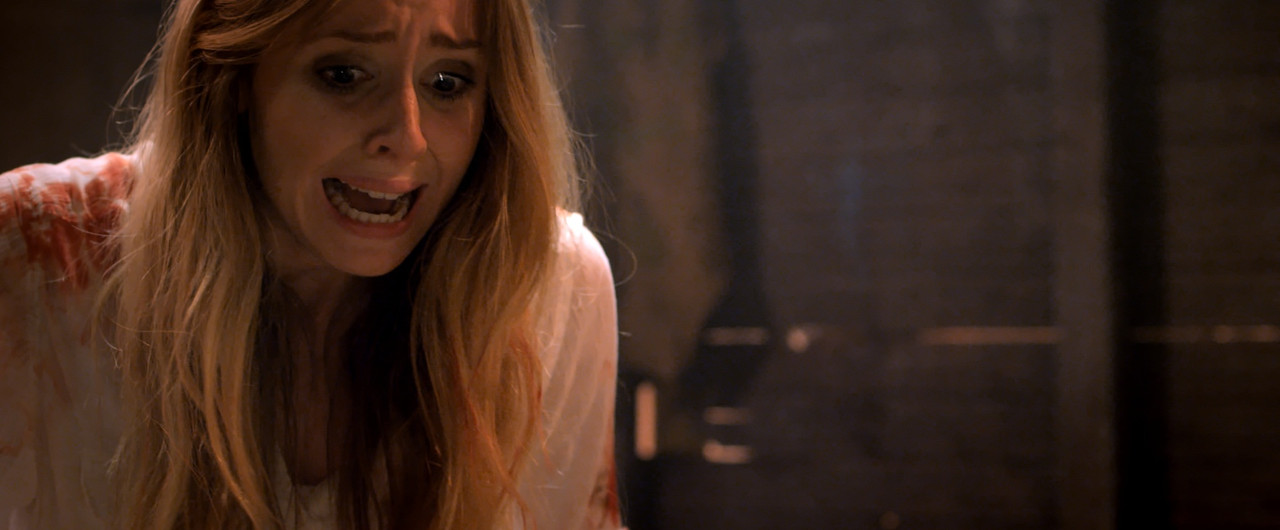
On its own merits, Awaiting is pretty awful. The performances of Tony Curran and Diana Vickers as a serial killer father and his shut in daughter aren't bad, but they're in service of a film that unspools like a collection of moments and shots drawn from other, better, films even before you get to the similarities to Cold Comfort. If you have seen that film then watching Awaiting will often be an exercise in deja vu, as Murphy mirrors not just plot details (often down to the tiniest nuances) but dialogue, images and even editing and shot structure. In this way Murphy hobbles himself, because even the few things he does right here seem to belong to another filmmaker first.

1: Terminator: Genisys
Terminator: Genisys is a remarkable film. It is so catastrophically terrible that it feels like watching the result of a creative meeting, the mission statement of which was 'How can we take every good idea in the history of the franchise and make it insultingly shitty?' Not only that, it makes me want to apologise to McG, because next to this steaming heap of elephant droppings, his Terminator: Salvation looks like the unacknowledged sci-fi classic it absofuckinglutely isn't.

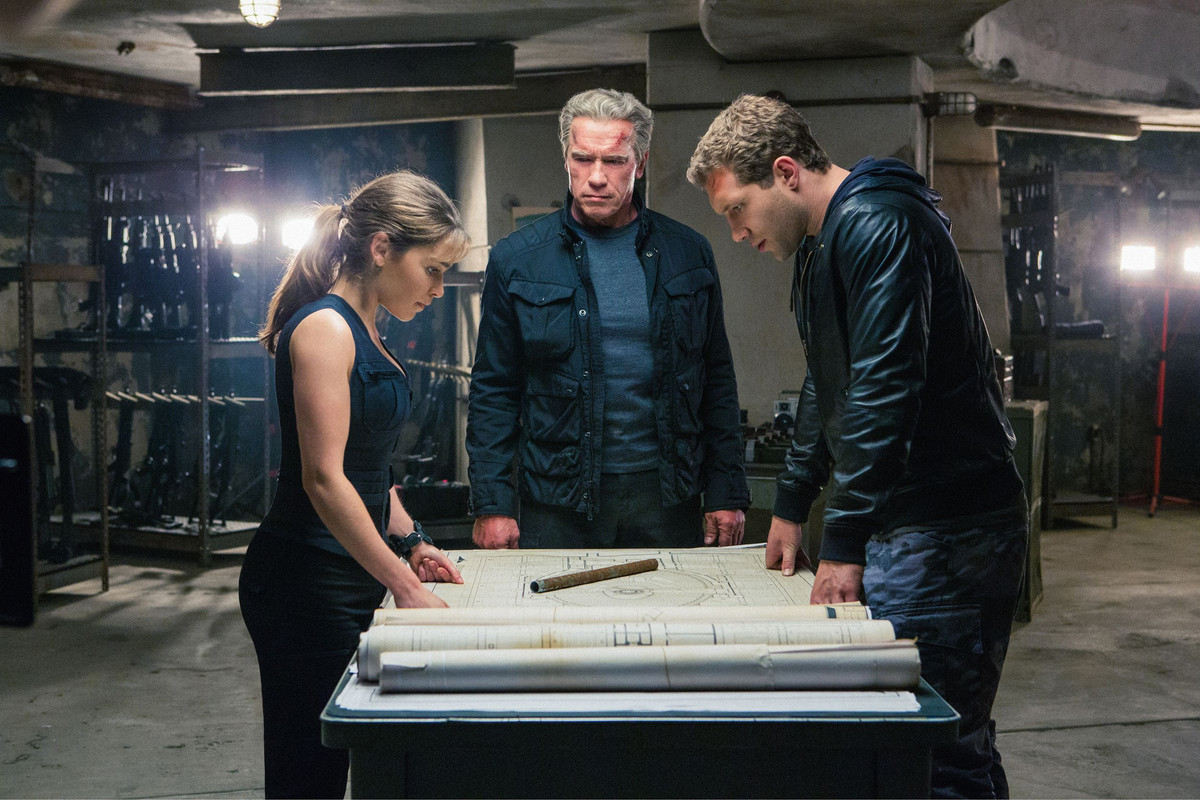
Arnie's tired take on the titular cyborg is easily his worst leading performance since ending his Governorship of California. He's reduced to spouting endless confusing exposition, trying to find a quotable one-liner ("I'm old, not obsolete" won't be a line we'll see callbacks to in future Arnie films) and generally hamming it up. In previous films, Schwarazenegger's performances, subtly shifted with each different iteration of the Terminator, have been strong. Here he's weak all round, he seems bored and even his action scenes have a listless quality that suggest he's barely along for the ride. This isn't to say the rest of the cast is better: Emilia Clarke is a catastrophically miscast and bland Sarah Connor, while Jai Courtney still can't provide any answer to the frequently asked question 'Why does Jai Courtney have a career?'

The timeline bending storyline, which attempts to write the consistently and sadly underrated Terminator 3: Rise of the Machines out of continuity, is perhaps the film's very worst element. It's less a screenplay than a series of nadirs for the franchise. First the godawful moment in which Courtney arrives in this movie's 1984 and we see 1984 Arnie, the seemingly unstoppable threat of the first film, neutered within seconds. Then there's the twist. The godawful, utterly miscalculated, laughably executed and acted, thoroughly pre-spoiled twist. The idea is beyond terrible, but the performance it is anchored to is so bad that it undermines even the tiniest chance of it having the impact it might have achieved in the second or third films.

The tragedy of Terminator: Genisys (leaving aside its nonsensical tytle) is that for about 30 seconds we glimpse a movie that could have been, a movie that could have been new and different and interesting. Why couldn't we have seen the film set in 1973, with the Terminator raising and protecting Sarah Connor as a child? It would be a new context for the franchise, with new challenges inherent in the setting. But that's the thing, that would be new and that, in a Hollywood apparently intent on feeding on itself until it chokes on its own self-regarding nostalgia, just wouldn't do.