Showing posts with label 2011 Releases. Show all posts

Jun 22, 2017

Teen Movie Thursday: Two Remakes

Footloose [12] [2011]
Dir: Craig Brewer
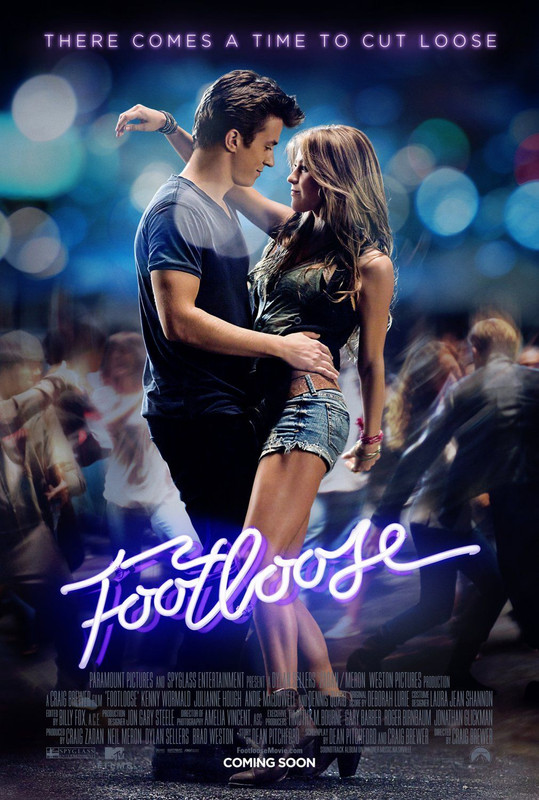
Remakes, one of several crutches on which Hollywood is currently propping itself up. It seems as though any film with a slightly recognisable name can now be reconfigured for a modern audience and let's just say that the resulting films haven't always been noted for being better than those they're inspired by. Footloose is an interesting choice for dusting off. In some ways it makes perfect sense. The High School Musical and Step Up films showed that a young audience has an appetite for seeing dance on the big screen and both music and dance have moved on significantly enough since 1984 that the film's big moments could avoid repeating those of the earlier version. On the other hand, does the story make sense in a modern context?

To its credit, the film works hard to lend some credibility to the idea that in 2011 there would be an American town that outlaws public dancing. The car accident that closes the film's exuberant opening credits is a shocking moment and it's not that much of a stretch to see a town whose lawmakers are especially conservative react to it with legislation that is both draconian and missing the mark in terms of what was actually to blame for that accident. You make the choice to go with it or not, if you can this version of Footloose has its rewards.

The basic story still sees rebellious teen Ren McCormack (Kenny Wormald) coming to town and butting heads with local preacher Rev. Moore (Dennis Quaid) over both the law against dancing and the fact that Moore's daughter Ariel (Julianne Hough) is showing a lot of interest in this boy from out of town. The characters are rather basically sketched, there are a lot of Hicksville stereotypes, including Miles Teller in Chris Penn's role as Ren's friend who does not dance and Patrick John Flueger as a woefully broad asshole boyfriend that we all know Ariel will leave for Ren. There's also a thin role for Andie MacDowell as Quaid's wife. Even if you've not seen the original you know where this is going: Ren will get the girl and get the town dancing, it's really about execution and on that front there's good news and bad.

There is a gaping hole at the centre of this version of Footloose. Kevin Bacon was nobody's idea of a great dancer, but he is a great actor and more than that, simply by dint of his unique look, he's an interesting and memorable presence. Kenny Wormald is a very, very good dancer. How good? He used to be a backing dancer for Justin Timberlake. Unfortunately he looks like he rolled off the production line in a factory where Hollywood makes cute guys you can't tell apart. His acting doesn't help. It's not that he's bad, he's just clearly not been cast as an actor first and his work is flat and bland. This bites hardest when Ren goes up against the town council. When he should be fired up and getting the crowd, if not the council, behind him, Wormald just doesn't have the presence to pull it off.

I can't help but feel that Miles Teller, who is able to carry himself on screen with an arrogance that would work for the way Ren initially looks at this hick town he's ended up in, and who is a proper actor, would have made for a better lead. He's clearly not the dancer Wormald is, but he acquits himself well enough in the last number that it seems likely he could have picked up those skills. As it is, Teller is in appealing mode here and he has fun, making an appropriate analogue for Chris Penn. 
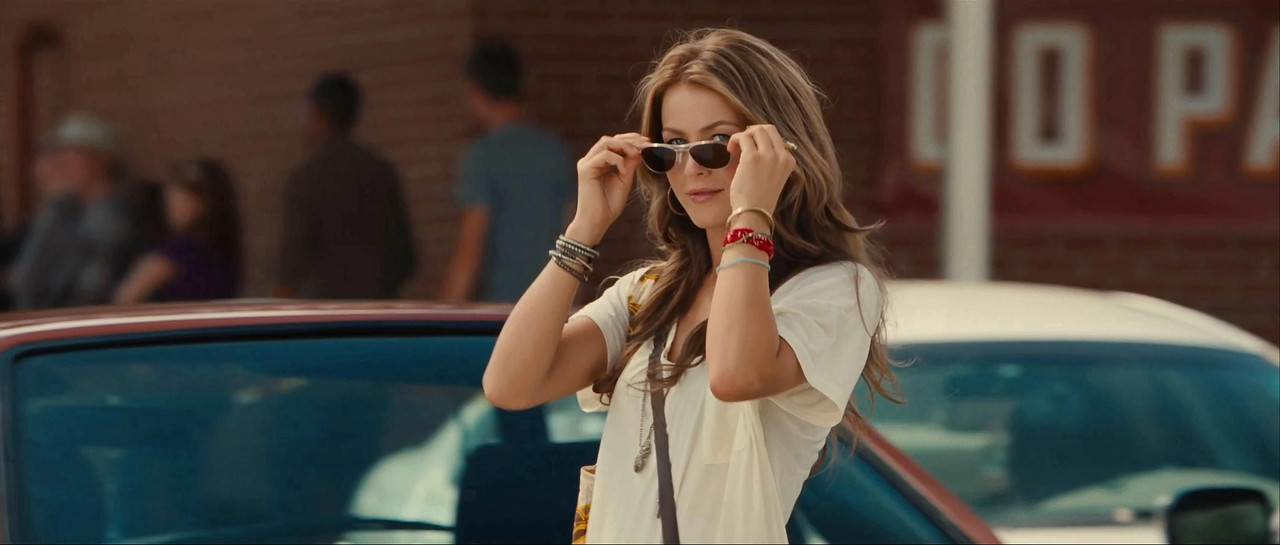

As with Wormald, you suspect that Dancing With The Stars pro (and now judge) Julianne Hough was cast for her dance background and small town Barbie look rather than strictly for her acting, but she does more than Wormald can with a thinner part. When there's finally a proper dramatic note for her to play, Hough is pretty good as Ariel confronts her Father, in his church, after she's been assaulted by her now ex boyfriend. Dennis Quaid is one of the better things here on an acting level. He's got a sliminess to go along with his charm that suits this part well. You can believe him as a preacher and as convincing speaker on the town council. He's one of the things that makes the anti dancing law feel somewhat plausible, because you can see how he could talk people round to his rationale for it. The character is on the two dimensional side, but Quaid is always worth watching.

The dancing, more than any of the actors, is the star of the film and Craig Brewer gives those moments prominence and makes each feel a little bit different. There's hip hop dancing in an early scene where Ren and Ariel first spot each other, line dancing at a club and Ren has a contemporary number when he's trying to get out his frustrations. It's all well executed, impressively choreographed and entertaining. Wormald and Hough both communicate as much character through their dance numbers as they do through any dialogue, more in Wormald's case.

Footloose is a pretty middle of the road film, slightly less interesting than the original as a piece of drama but probably better if you're coming to it purely for the dancing and the music. It can stand relatively well alongside the 1984 film, but I'm not sure its generation will end up holding it in quite the nostalgic glow the original has around it.
★★★

Prom Night [15] [2008]
Dir: Nelson McCormick
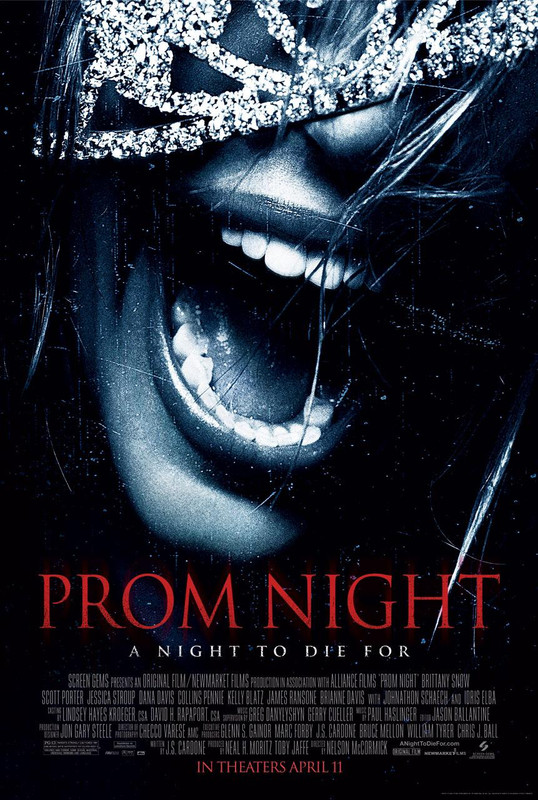
The slasher often seems seems the laziest of sub-genres. Get a bunch of attractive young people, put them in an isolating situation, add someone with a signature weapon (mask optional, but encouraged) and stretch as hard as you can until you reach 85-90 minutes. Job done. Perhaps lazier still is the slasher remake. The groundwork has been done, the situation exists and, depending how faithful you are being, so do many characters and even specific sequences. A remake in name only, Prom Night relies on its source film less than many, but make no mistake it remains a profoundly and painfully lazy enterprise.

The film opens with a flashback to three years previously when a teacher (Jonathan Scheach) with an obsession with one of his students (Donna, played by Brittany Snow) murdered her entire family. The rest of the movie takes place on prom night, during which Donna's teacher escapes the asylum he's been confined to and plans to kidnap her from her prom. I'd have warned you of spoilers at the top of that paragraph but for two things: first, I would heartily discourage you from seeing this piece of shit and second, the blurb on the blu ray box also tells you the entire story, if they don't care why should I?

It's not necessarily the worst idea for a slasher to tell us who the killer is upfront. Genre classics like Halloween and A Nightmare on Elm Street don't trade on mystery, but they have killers who are terrifying and characters around them who are interesting, to say nothing of masterful, visionary filmmakers behind the cameras. Prom Night 2008 has a collection of pretty young ciphers and Nelson McCormick, a TV director making an almost determinedly anonymous feature début. 

The screenplay by J.S. Cardone, whose own first directorial feature The Slayer featured on the Video Nasties list back in the 80s, is terrible in every respect. The characters barely deserve that designation. Often in teen movies characters have to make do with traits (the Jock, the Bitch, the Brain etc) rather than full personalities. Cardone doesn't even grant his characters that. Brittany Snow's Donna is blonde. Her friends Claire (Jessica Stroup) and Lisa (Dana Davis) are brunette and African American respectively. Lisa's eye for men (“one of 'em was knida cute” she says when a group of men in their 30s or 40s hits on them) is the only thing I can remember as a defining trait for any of them. Donna is perhaps especially bland, and she's supposed to be our Final Girl. The supporting cast; the girls' boyfriends, Idris Elba as Detective Exposition and Jonathan Scheach as the murderous teacher, are no further developed. 

Cardone has one early idea that, while not overly original, might enliven proceedings. Donna is supposed to be traumatised by her experiences and is on anxiety medication. Just before she goes to prom we discover that she has been off her meds for a week. This could easily have been exploited to good effect: an anxiety ridden Donna, having actually seen her teacher, trying to convince her friends – who know her history – that he's really there and it's not the lack of pills talking. Cardone and McCormick could also have used this to create a sense of uncertainty in the audience, but this information is forgotten and swept under the carpet the second it's revealed.

As director, Nelson McCormick seems to go page by page through The Complete Hack's Guide To Making Your First Horror Movie. There are several jump scares in mirrors, two dream sequences, a series of repetitive, boringly shot murders and several iterations of the pulling back the shower curtain scare. This film could have been made by AI if you'd fed it the most repeated moments from the last 30 years of slasher movies.
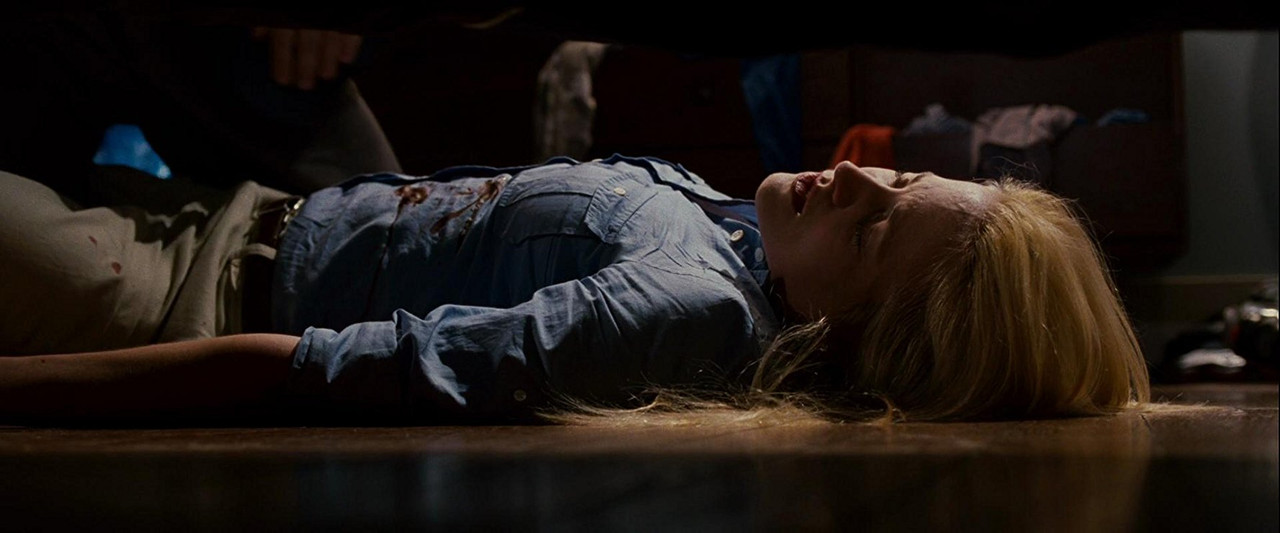
The acting is bad, though perhaps not entirely the fault of the cast. Brittany Snow could have suggested her character's heightened anxiety, making something of the dropped plot point about Donna's meds, even if Cardone and McCormick forgot about it. Unfortunately this eludes her, as does any semblance of personality or much in the way of expression. Idris Elba is clearly paying his rent. He contributes a solid accent and says his dialogue out loud. The rest of the cast don't have to do accents, but manage the saying things out loud part of the equation. 

There wasn't much here for anyone to work with in order to turn in a good performance, but surely Jonathan Scheach should at least be able to seem creepy. He doesn't. We barely see him interact with Brittany Snow. His obsession isn't a strong thread at all. We should be feeling him in every shot, but instead he spends most of the film confined to the upstairs of the hotel where the prom is happening, pointlessly knocking supporting players off, which makes zero sense if we're to believe his objectives and that he has a plan to kidnap Donna.

Prom Night 2008 is an excruciatingly dull film. It pales next to its much more inventive source (and even more so next to the hugely fun, initially unrelated, sequel Hello Mary Lou: Prom Night 2). It's poorly directed and written, and acted by a near comatose cast. The audience will be in the same state by the end of this cinematic anesthetic. 
★

Apr 3, 2012

24FPS at LLGFF 2012 Part 3

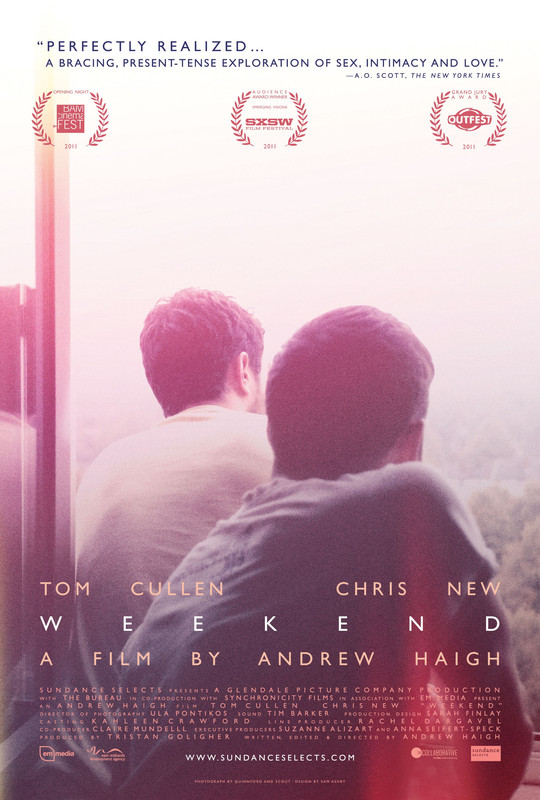
Weekend
Dir: Andrew Haigh
I've been hearing great things about Weekend, from just about all quarters, since last year's London Film Festival, but despite many opportunities, and not by design, I just kept managing to miss it, so where better to rectify that than at LLGFF?

At the Q and A after the film I heard director Andrew Haigh say that he wasn't keen on the many reviews using the word 'universal' to describe the film, as he felt that was a tactic to give straight audiences 'permission' to see the film, which we shouldn't need to do. I agree with the second part. At the risk of upsetting Haigh though, 'universal' was exactly the word that ran through my head, and not because this is a 'gay' film. The specifics of the relationship depicted here aren't something I have experience of, not merely because it's a gay relationship and I'm straight, but because I also happen not to have met someone for a weekend, fallen for them, but had to say goodbye almost as soon as I've met them. What does speak to me, and what will speak to almost any audience member, is the feeling of this film. Who hasn't found someone they think they might love and then lost them? Maybe neither of those things happened with the speed depicted here, maybe they did, but we've all felt like this, and that's why Weekend feels universal.

What is outstanding about Weekend is how emotionally articulate it is. This is largely down to the combination of Haigh's intelligently observed screenplay and tremendously naturalistic performances from leads Tom Cullen and Chris New. Cullen plays Russell, a gay man out to his friends, but not terribly comfortable being out in the wider public. At a gay bar he picks up Glen (New), and what seems likely to be a one night stand ends up developing quickly, even after Glen says that at the end of the weekend he's going to art college in America. Russell and Glen aren't the sort of shells we're now conditioned to accept as characters by most movies; they feel real and rounded, and for everything we do learn about them Cullen and New hint at much more going on beneath the surface. The conversational scenes between the two, particularly a drug aided discussion of marriage, have the loose feel of two people just talking the day or the night away, and that's the feeling of the whole film; it doesn't seem acted but like a little glimpse into 72 hours in the lives of these two people.

Neither Russell nor Glen is perfect, and even in the short time they spend together you can see the things that make them different and why a relationship would be hard, but they are both sympathetic, both people who feel real and who you can identify with, and that makes the relationship one you root for, even if you're reasonably sure how things will end up. To his credit, Haigh employs and plays with cliche beautifully with the film's ending, crafting something that feels both classic and a little different. Nobody needs permission to watch or enjoy Weekend, but if you have yet to, consider this a little friendly encouragement.
★★★★

The Mountain
Dir: Ole Giæver
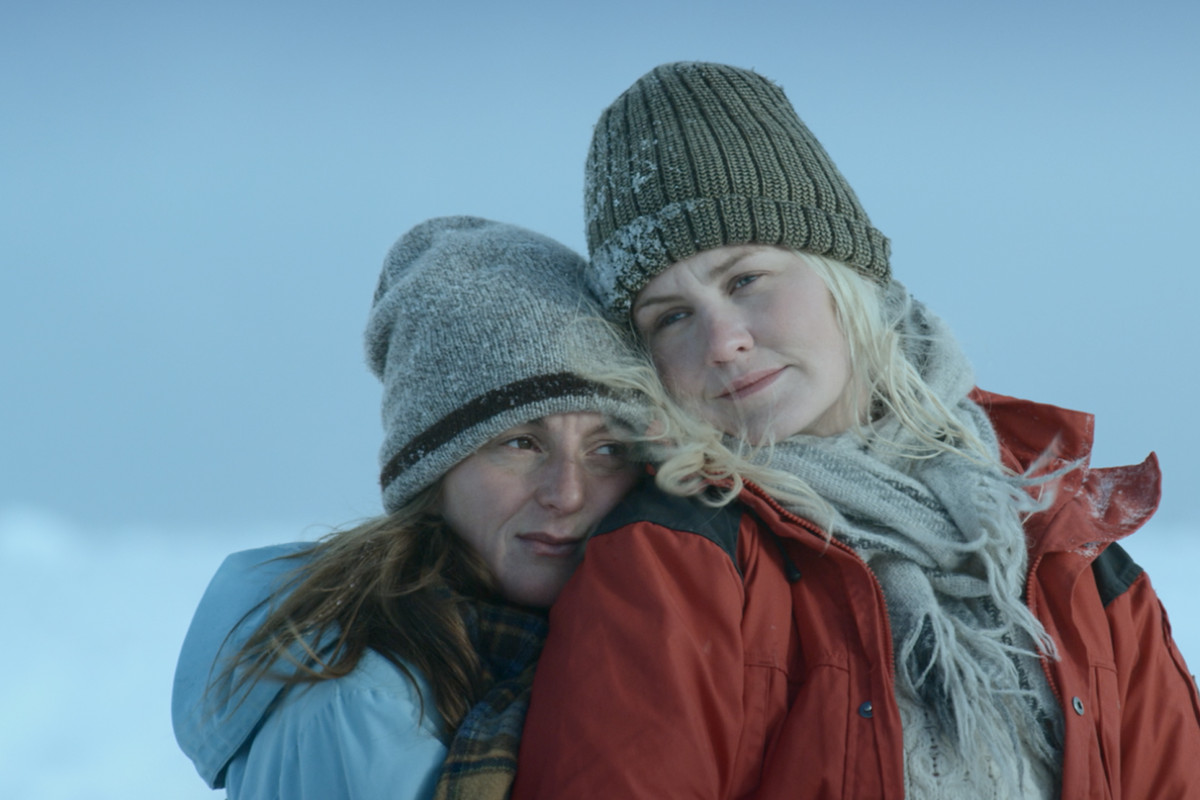
The Mountain of the title is, obviously, one big snowy metaphor. As the film opens we find Nora (Marte Magnusdotter Solem) and Solveig (Ellen Dorrit Petersen) climbing, a long term couple, they are clearly miles apart at the moment, and the film slowly lets us in on why that is and why, with Solveig three months pregnant, she is insisting that Nora join her in this trek.

As the information begins to leak out we can probably put together the story before the film tells it, but then this isn't really about what happened the last time Nora and Solveig were on the mountain, it's about the aftermath, what it has done to each of them and to their relationship. With only two characters in the film, The Mountain hinges entirely on the strength of its performances, and fortunately Solem and Petersen prove more than equal to the challenge of the emotional heavy lifting they each have to do.

The film really passes no comment on the fact that the couple at its centre are both women, it just happens to be so, and the story would be (largely) the same were they a heterosexual couple or two men. That said, the fact that both the main characters are women does give an important extra physical and emotional gravity to what has happened, and tensions between the birth and non-birth mother of the same child is a dynamic I've never seen on screen before. The performances get better and better as the emotions become more and more fraught, and the film is only really let down by an ending that feels a shade against the prevailing tone of the film as a whole. Until those last couple of minutes this is a refreshingly adult drama that deals with a difficult subject articulately.
★★★

This is What Love in Action Looks Like
Dir: Morgan Jon Fox
Documentaries often tell stories that are harder to believe than fictional films. Even in spite of knowing about it long before I saw this film, I still find myself incredulous at the idea that some parents' reaction when their child comes out to the is to send them, against their will, somewhere like the Refuge camp run by the more than slightly ironically named Love in Action, where they can, potentially, be 'treated' for and 'cured' of their homosexuality.

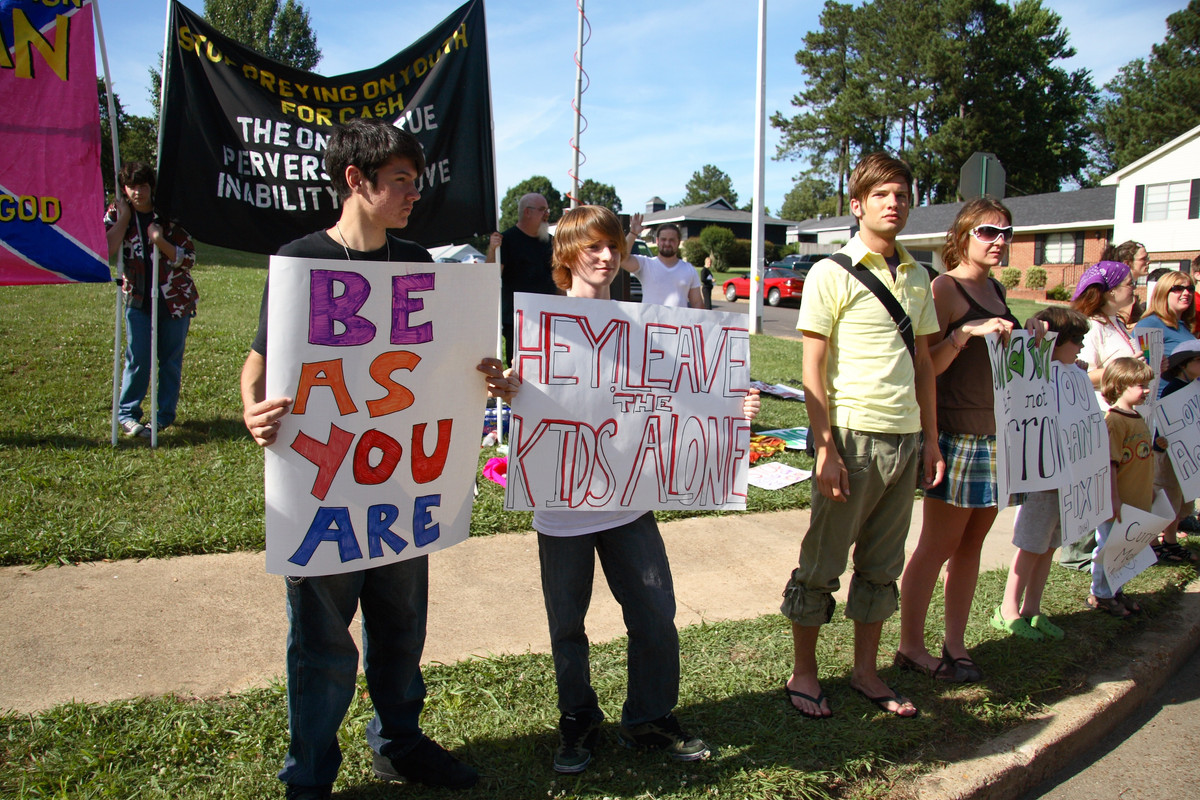
In 2005, a teenager named Zach Stark was told by his parents that he would be going to one of these camps, he then blogged about it on MySpace (this being 2005), posting the list of rules that Love in Action expected him to obey while he was there. From there the post was picked up, and a small group decided to protest at Love in Action every day that Zach was in there (the film is named for the text on one of the protestors banners), eventually the story was picked up national and international media, and began to make waves.

Director Morgan Jon Fox and his team have spent six years securing an impressive range of voices, from Zach and other people who went to Love in Action, some forced, others of their own volition as well as from the protestors and the former head of the Love in Action ministry. The views are perhaps, ultimately, slightly less diverse than I'd like - it would be good, for instance, to have someone in the film who felt that Love in Action's therapy had worked for them, though perhaps that absence speaks for itself. However, the varying perspectives from both within and without this organisation are always fascinating and sometimes shocking.

This is What Love in Action Looks Like is, or hopefully will be, an inspirational film, because as much as it's about Love in Action, it's also a film about how a small group of people really can make an important change in the world, not by violent means but by simply (and cleverly) saying: 'this is bad, and this is why'. Some technical aspects of the film are flawed (media clips are shown small, and on a background designed to look like the internet in 2005, and the emotive score sometimes overplays its hand when the image alone is plenty powerful enough), but these minor issues are easily overcome by the importance and the interest of this story.
★★★★

Jan 10, 2012

Sherlock Holmes: A Game of Shadows [12A]

Dir: Guy Ritchie
A couple of years ago I gave a surprisingly warm (especially for me, let's not kid ourselves here) review to Guy Ritchie's Sherlock Holmes, which threw me for a loop by not only failing to suck, but by actually being pretty damn good, well, Ritchie has largely redressed the balance here, because this sequel feels tired where the original felt fresh and is wheezy where the original was energetic.

Time has passed in the world of Sherlock Holmes (Robert Downey Jr) and Dr John Watson (Jude Law). Watson is getting married, and preparing to leave behind his cases with Holmes, but Professor James Moriarty (Jared Harris) has other ideas. He has a dastardly plan, but also wants to toy with Holmes. After Moriarty's cronies try to kill Watson and his bride (Kelly Reilly) as they leave for their honeymoon the two old colleagues find themselves trailing across Europe, often accompanied by a gypsy named Sim (Noomi Rapace), hunting Moriarty and trying to stop whatever he has planned.

One of the key problems with Sherlock Holmes: A Game of Shadows is foregrounded in its title; it's a considerably darker film than its predecessor, in all aspects. The first film did have a sort of grimy look to it, but the colour palette was certainly more varied than that of Game of Shadows, which is grey. Costumes are grey, settings are grey, even the cinematography has a grey pallor about it, making the film quite dull to look at.

This darkness and dullness is also felt in the rest of the film, there is a definite attempt to be grittier, make the violence as close to the edge of the 12A certificate as possible and to generally make the film as downbeat as possible. To its massive disadvantage this is felt most in the relationship between Holmes and Watson, which seems to have lost its spark. Much of Holmes wit seems missing this time, and so his intellect, unleavened by humour, often feels smug. Where we sensed Holmes and Watson's closeness last time, we need to be convinced of it here.

When the film goes for funny this time out the aim has a tendency to be off, hitting silly and campy or - in one scene involving Holmes' brother Mycroft (Stephen 'national treasure' Fry) and Watson's wife - just plain inexplicable. The scene of Holmes in drag is a good example; the visual is good for one small, sniggering, laugh, thereafter it's just awkward, and goes on far too long. The set pieces are reasonable, and an early one in which Sim, whom Holmes has just met, is attacked by a would be assassin is especially good fun, ranging through a massive gambling den and on to the streets. It's also true that Ritchie keeps the pace, if not the interest, high.

On top of the fact that the returning leads feel rather stunted this time out, there is the fact that Noomi Rapace, who is among the top 1 percent of the best working actors (see her astonishing turn in Daisy Diamond for proof) is utterly wasted as the gypsy woman who may have the key to stopping Moriarty. At a certain point, towards the end of the film, I thought I'd figured out what, besides window dressing and an expositional prop, Rapace was for in this movie, it seemed like an obvious twist, but still, a pretty cool one. I was wrong. It turns out that I had written a much more interesting and complex climax for the film from my seat in the fourth row from the back. That's never good. I hope Rapace is better served by the upcoming Prometheus, and, if not, that she has the good sense to go back to Sweden and stop taking roles so beneath her talents.

As the series' big bad, Jared Harris gives a solid performance, but his Moriarty never seems much of a threat, or even especially evil (particularly given his irony laden speech to Holmes across a chess board), but this is more the fault of the script than the performance, which is true of all the acting here, everyone is working hard, but the mood of the movie is wrong, and the script feels a bit lifeless.

It's a pity that Sherlock Holmes: A Game of Shadows isn't better, because the cast - right down to Stephen Fry and the ever-charming Kelly Reilly - deserve more than they're getting here, and the first entry meant that this was a sequel I had been looking forward to.
★★☆☆☆

Dec 27, 2011

The Girl With the Dragon Tattoo [2011] [18]

Dir: David Fincher
David Fincher is generally regarded as one of the world's finest filmmakers, and at his best you'd be hard pressed to argue with that summation, but for me Fincher's hit rate is really only 50%.  Discounting Alien3, which he's never officially taken ownership of any version of, Fincher's career falls into a pretty clear on form/off form pattern with modern classics Se7en, Fight Club, and Zodiac followed respectively by the solid but uninspired The Game and Panic Room and the cloyingly awful The Curious Case of Benjamin Button, and so, following modern classic number four (The Social Network), it seems Fincher is due an off day, and so it has proven with The Girl With the Dragon Tattoo.

Despite the fact that Steig Larsson's posthumous mega-bestseller is very much in his wheelhouse, with its tales of serial murder and long running mystery, this still seems an odd assignment for Fincher. Yes he's worked extensively within genre cinema, and yes he's adapted stories from other media before, but he's probably the last person I expected to sign up to Hollywood's latest little obsession; the remake. As most readers will know, Larsson's books - all three of them - have already, and recently, been adapted for the screen in a Swedish/Danish co-production most notable for introducing the world to Noomi Rapace. It's a surprise to see Fincher reinterpreting another director's work, especially with that work fresh in audiences minds, having dominated the world cinema scene somewhat in 2009 and 2010. Fincher and screenwriter Steven Zaillian have argued that this is not a remake so much as it is a fresh cinematic take on Larsson's novel, but whether you buy in to that argument or not, it has bone deep problems.

Having - rightly - determined that this story, given the historical background, is quintessentially Swedish, Fincher has retained the original setting of Hedestad in Northern Sweden, but has his international cast speak English. This is often something that gets on my nerves. If a film is set in a specific place, if it is about people from there, if it deals with the culture and history of that place, then surely it should be in the language that belongs to that place. The issue here is exacerbated by the extremely mixed bag of accents, which range from Rooney Mara's brave and largely successful film long attempt at an authentic Swedish tone to Daniel Craig's almost rude lack of effort, which almost feels like he's sticking two fingers up at Fincher and the audience and saying 'you fuckers are lucky I showed up at all, that's all the effort I'll be putting in'. This means that while Fincher, ever the visual master, exploits every bit of the stark and wintry beauty of his locations, the film never really has a firm foothold in the world - it feels muddled, not specific.

Credit where credit is due. Fincher and cinematographer Jeff Cronenweth definitely make this telling of the story more viscerally and identifiably cinematic than Neils Arden Oplev's relatively visually pedestrian 2009 effort. Fincher know exactly where to place a camera; his shots feel incredibly designed, but they communicate story in themselves, and many of his films would work for long periods with the sound off. This is an impeccable looking film, made up to within an inch of its life, not a hair out of place. That said... this is also one of the problems here, for a film that should be rather down and dirty in a lot of its scenes, Dragon Tattoo is often too perfectly poised, I felt this most in the film's two shocking rape scenes. Fincher doesn't shrink from the violence or the violation, but somehow the cruder technique of the Swedish film felt more viscerally upsetting to me set against the cinematic perfectionism on show here.

The cast is generally fine, but again the comparisons with the Swedish film don't do them many favours. Most seem as if they are pretty much like for like swaps, Robin Wright for Lena Endre, for instance, Wright is fine casting as Erika Berger, but she doesn't do anything that would justify casting her over Endre besides talking in English. The re-casting does come good in one case, Stellan Skarsgaard should quite clearly always have been Martin, and he easily exceeds Sven-Bertil Taube's performance. Unfortunately the casting and acting come unstuck in some important areas too. Daniel Craig is an actor I've never really understood people's enthusiasm for, I've only ever found him effective as Bond (and then only when he's in robotic killing machine mode, when has to emote it just hurts) and here he's as lackadaisical and disengaged as he always seems, sleepwalking through the role of Mikael Blomkvist in another monotone performance (which is also, as noted above, utterly unencumbered by a Swedish accent), he seems less like a crusading Swedish journalist who just lost everything than he does a British businessman on a notably shitty holiday. He's also, frankly, too much of a movie star. Michael Nyqvist's rumpled Blomkvist seemed much more real (which, to be fair, is unlike the book, which characterises him as an irresistible permashagging superjourno)and was, therefore, much more engaging.

Of course, the one thing you have to get right when adapting The Girl With the Dragon Tattoo is the titular Lisbeth Salander. The original film had best of all worlds, making Lisbeth just a bit more real than she is in the book (where, one suspects, she's written as Larsson's particular sexual fantasy) and having her played by the extraordinary Noomi Rapace, in a barnstorming turn that signed her ticket to Hollywood. Casting wise, Fincher does reasonably well, it's in the writing that this depiction of Salander fails. When Salander meets her new guardian, who is about to sexually molest her, he says that she is sexy when she's surly, and in that moment the film diagnoses its own biggest flaw; Salander is surly. In the book and the original film there is an ever present sense of danger about Salander, as if a single wrong word can set her off like lighting a fuse to a stick of dynamite, that's absent here, and replaced with a surly character, who the film proceeds to warm up much too quickly. The prickly relationship with Blomkvist, which continued even after they slept together, is largely swept under the carpet, the rough edges are smoothed away to leave a character who feels like she's been chipped away at to make her a little more palatable for a mainstream audience. 

The last time I wrote about her I was very, very rude about Rooney Mara (and no, I won't be taking anything back), but she does well here; she totally commits to the part, changing her face and her body, dyeing her hair and eyebrows and getting extensive body piercings. She's working extremely hard, and that, again, is really the problem. With Noomi Rapace she just walked on screen and owned it, that's never true of Mara, she always seems as slight as she is, and never has that screen searing charisma that powered the original film. The thing is, it's hard to blame Mara for that, because the depiction of the character is so much slighter than it was previously. Fincher has retained the character's physical nakedness, but forgotten the emotional nakedness.

While they run to a similar length (at least in their big screen versions, the Swedish film also exists in a 3 hour extended cut which I'll be reviewing soon), this Girl seems to move more slowly. The details of the investigation slot nicely into place, and there's some welcome extra background about Salander's relationship with her first guardian, but the film just feels baggy in a way that the previous one didn't, even with repeat viewings. Zaillian's alterations to the ending are also neatly done, but ultimately the changed conclusion doesn't really add or take away anything from the story, it's a different angle, really no better or worse.

The one area in which this film does completely exceed the Swedish film is in its soundtrack. Not only is the effects track as meticulous as you'd expect of Fincher, but the musical choices are little short of inspired. Social Network composers Trent Reznor and Atticus Ross supply the score, mixing dark industrial beats with strings to fine and creepy effect, they'll likely pick up a second Oscar in as many years (though my vote would be for The Chemical Brothers' Hanna score), song choices are also brilliant, with one scene ensuring - mercifully - that Enya's Orinoco Flow will never again sound the same, and the Karen O featuring cover of Led Zeppelin's Immigrant Song driving an opening title sequence that is, for good or for ill, the single most exciting thing in the film.

On the one hand, as a fan of the Swedish film and especially of Noomi Rapace' performance, I was never really expecting this film to be anything but an expensive exercise in redundancy, but even with that in mind, given the talent involved, this has to go down as a major disappointment, because if anyone could stamp authority on the idea of remaking this film in English then it was David Fincher, and he's failed to do so. If you really, REALLY hate subtitles then this is proficient enough to be recommendable, but if you've seen, or would consider seeing, the Swedish film, then there is no reason to see this at all. It strikes me as a staggeringly wasteful use of $100million.
★★☆☆☆

Dec 4, 2011

Romantics Anonymous [12]

Dir: Jean-Pierre Améris
The problem that I've had with most new romantic comedies of late has been threefold. 1: They're not romantic. 2: They're not funny. 3: They're about awful people who don't deserve love anyway (see - or rather don't see - among others, The Bounty Hunter, Bad Teacher and Just Go With It). Well, Romantics Anonymous avoids all three of those potential pitfalls. Isabelle Carré and Benoît Poelvoorde play people who both suffer from extreme anxiety, which in both cases comes out most around the opposite sex. When Carré's Angelique - who is a master chocolatier, but too shy to say so - begins working as a sales girl for the struggling chocolate factory run by Poelvoorde's Jean-Rene the two begin to fall in love. Can their attraction overcome their crippling shyness? You'll know the answer to that question seconds in, but that's hardly the point.

It's fitting that Romantics Anonymous is set among chocolate, because it is itself a confection; a little insubstantial, not especially nourishing and, at 74 minutes, bite sized, but for all that it's easy to enjoy while it lasts, and likely to leave you wanting more. That's perhaps my biggest complaint here, I'd quite like the film to be twenty minutes longer than it is, which would leave it at a still very manageable 94 minutes, but give a little more breathing room to two interesting and charming characters and to two fine actors, who each give excellent performances here.

I can't pretend to have a full overview of Isabelle Carré and Benoît Poelvoorde's careers, but their best known works are very different from this film. Carré has excelled in challenging dramatic roles; as an erotomaniac in Anna M, and as a pregnant drug addict in Francois Ozon's Le Refuge, while Poelvoorde remains best known as the killer followed by a documentary crew in Man Bites Dog. In short, neither is an immediately obvious fit for a light rom-com.

Poelvoorde is terrific value as the incredibly inhibited Jean-Rene, whose panic is so profound that when - as an exercise given to him by his psychiatrist - he takes Angelique to dinner he also takes a briefcase with extra shirt, so he can change when he gets sweaty. This turns the first date into an awkward dance, with Jean-Rene repeatedly leaving the table and Angelique, through her own panic, convinced it's her fault. The comedy of Jean-Rene's character comes from his total inability to express his emotions, that's similar to Angelique, but the two aren't simply variations on the same character. The really sweet, and funny, thing about Isabelle Carré's work comes from the way Angelique is continually trying to reassure herself. The film is so keen to tell us how lovely the character is that it names her Angelique Delange, but Carré is effortlessly appealing anyway; her sparkling green eyes and slightly gap toothed smile immediately winning.

Romantics Anonymous hits most of the clichés of its genre (with the welcome exception of the inexplicable third act breakup, which has lately become almost compulsory), but in doing so it finds many of its best scenes. The moment that Jean-Rene gets up at a restaurant and with the backing of the resident band, sings to Angelique, could have been cringemaking, but it isn't. Poelvoorde and Jean-Pierre Ameris both underplay the moment, and a great deal of the sequence is allowed to play on Carré's reaction. Even the big confession moment works. It could easily be as cloying as that horrid "I'm looking for my wife" bit in Jerry Maguire (surely one of cinema's most vomit-inducingly treacly scenes), but by this point you're completely behind Jean-Rene and Angelique, actively rooting for them to get together, and the scene plays with total sincerity from both actors, which helps both the comedy and the romance of the moment play.

The film is filled with irresistible moments, be it the night Angelique and Jean-Rene have to stay in a one bed hotel room, Jean-Rene's description of their first kiss, or Angelique's repeated singing of "I have confidence in me", in scenes that, taken with the film's bright colour scheme, feel almost Disney like; Angelique giving us her own, more understated, version of the 'I want' song. Romantics Anonymous is an all too rare thing; a genuinely likeable film. As a filmgoer I love to be challenged, but sometimes there's nothing I like better than to float away with a little bit of escapism, and Romantics Anonymous is a perfect way to do that.
★★★★☆

Nov 25, 2011

The Help [12A]

Dir: Tate Taylor
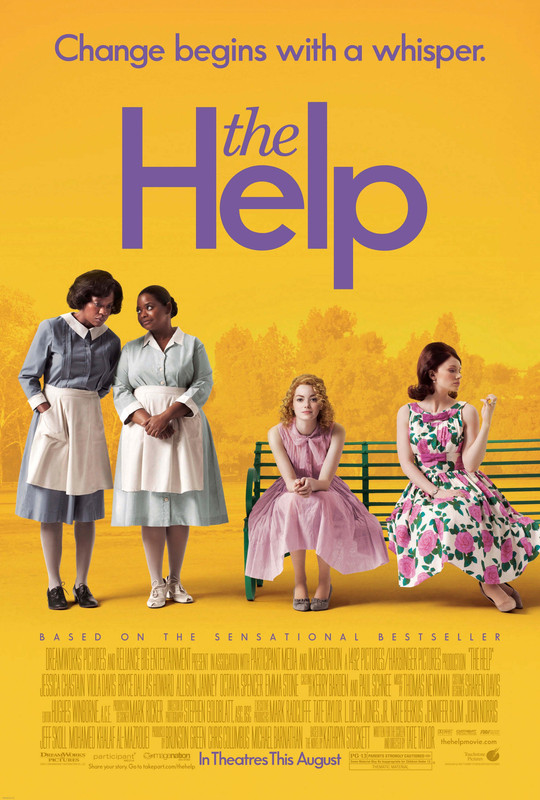
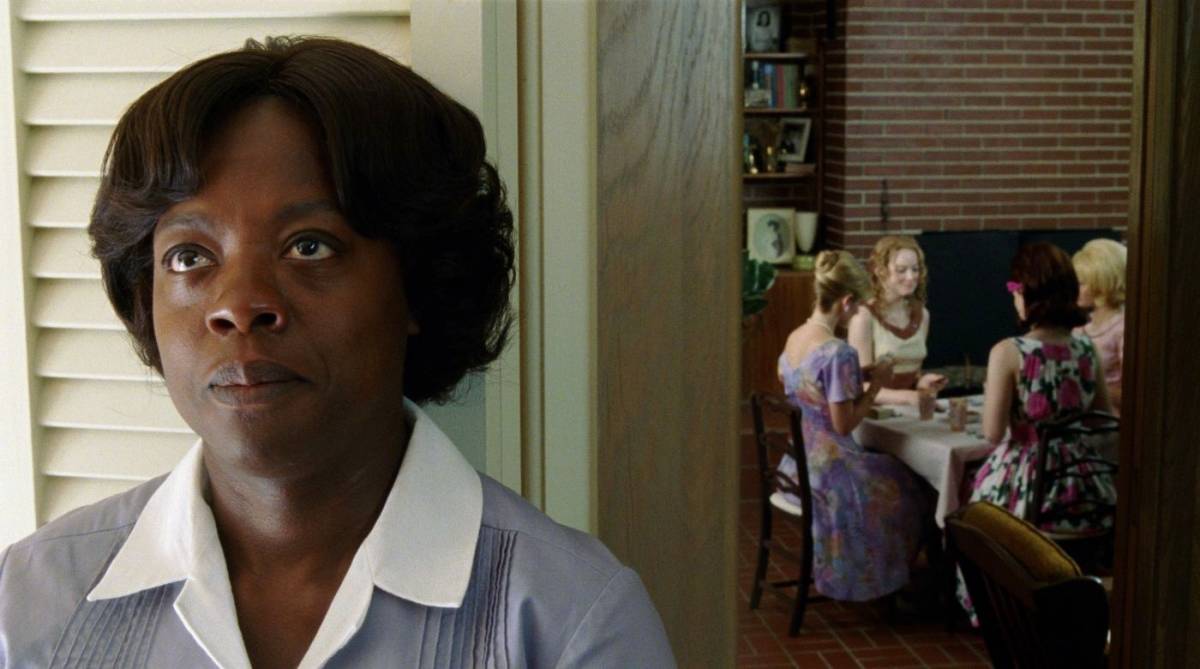
It's easy to see why The Help is being tipped for Oscar glory this year, not because it's tremendously brilliant - it isn't - but because it's the kind of film that wins Oscars. It's got a whole load of big actorly performances. It's a period set movie, dealing with some of the more sordid and shameful aspects of America's chequered past, but it deals with those themes in a way that feels non-threatening, middle American, and is generally pretty upbeat. Directorially it's solidly crafted, but never breaks any sort of mould, and on screen it is populated by a mix of beloved old hands and rising stars, just waiting to be anointed. If someone bottled a formula for Oscar, it might well taste like The Help.

Based on the novel by Kathryn Stockett, The Help is set in 1963, just as the civil rights movement was really beginning to gather a head of steam. Young aspiring journalist 'Skeeter' (Emma Stone) sees the way that the black maids in her home town of Jackson, Mississippi are treated, and decides to write a book about them, but she needs testimony, and lots of it. Initially she manages to recruit Aibileen Clark (Viola Davis) and Minny Jackson (Octavia Spencer) to share stories about the white families they have worked for. in the meantime, local queen bee Hilly Holbrook (Bryce Dallas Howard) is busy campaigning for a law to require coloured staff to use separate bathrooms from their white employers and setting up the town benefit for African orphans (an irony that director Taylor repeatedly slaps us in the face with).

There is a surfeit of characters and stories here, so much so that even at 146 minutes the film suffers from a lot of loose ends and underexplored characters (most notably the husbands of maids, the only one we encounter at all is a wife beater who we only ever come across as a disembodied voice on the phone). With many of the featured characters, including, damagingly, Stone's 'Skeeter', only sketchily outlined, the whole thing ends up feeling rather shallow, and not a little cartoony.

The cartoon storytelling is perhaps most felt in the opposing forces of ultimate evil (Bryce Dallas Howard, doing her best panto villain as the virulently racist Hilly) and ultimate good (a naively saintly Jessica Chastain as Celia Foote). The performances are both overblown, but both do their jobs beautifully, committing utterly to characters sadly lacking in nuance. Chastain - surely the brightest new star of 2011 - bears singling out again, as she continues to amaze with her range and sheer on screen magnetism. The problem is not the acting, it's that the fact that these don't feel like real people undermines the serious nature of what The Help is about. Yes, the way Hilly behaves is repellent, but she's such a panto villain, so devoid of any redeeming feature, that she feels like a character rather than a person, which robs much of her behaviour of real impact, and the same can be said of Celia's kindnesses and eccentricities.

The supporting characters are more real, and it's in them that we see the sort of insidious racism, that bred in prejudice that the South clearly had for many generations, but sadly we don't really get to spend enough time with them, and when we do Hilly is usually around as well. Some of the film's finest moments revolve around the petty cruelties of the day to day with these supporting characters, like the sting Aibilene feels when asked 'isn't it nice to have your own [toilet]?' by her employer (Ahna O'Reilly).

As the two maids that we really get to know Viola Davis and Octavia Spencer are both likely to be Oscar nominated, and both are excellent. Spencer makes a good fist of being, if not quite the comic relief, the more forceful and more upbeat of the pair and, in her scenes with Jessica Chastain, develops a great line in stunned reaction shots (Chastain also gets her own, probably the film's funniest moment). Davis, however, acts her and just about everyone else off the screen. It's probably no coincidence that what is likely the film's most reserved performance is also its best. Davis is the one person here who puts across more silently than she does through dialogue - even in the film's cloying, overblown, awful, final scene, her grounded performance makes the contrived little bow tied on the ending play.

The biggest problem for the film probably comes in its main character. Emma Stone is fine, though hardly a revelation, but 'Skeeter' barely feels necessary. This isn't her story, it's that of the maids, yes she gets the book started, but the authorial voice of the film feels confused, seemingly starting out as Skeeter's but moving to become Aibilene's, and ultimately a white character providing the impetus for the telling of these stories is one of a few ways the film slightly condescends in regard to its black characters. The other problem with 'Skeeter' is that she seems too modern. Yes, she's been to college, and she has different opinions from a lot of her peers in Jackson, but even her look feels incongruous - because she's the only person not dressed like a cartoon of the early sixties - and combined with her somewhat contrived status as audience analogue/mouthpiece, this makes her feel more a device than a character.

Rife though it is with problems, and while I sometimes doubt the sincerity of its politics, I can't say that I didn't enjoy The Help somewhat. It's generally well acted (Sissy Spacek hasn't been this good for a while), and until you sit back and unpick it, it's easy just to be carried along by the slightly overblown mix of drama and comedy, and by Taylor's generally quite authentic feeling visuals. Once you walk out the door, that's when you begin to realise how little like real people these characters can feel, how much of a clang some of the dialogue lands with, and how contrived many of the events of the story feel (especially the so called 'terrible awful', which smells of bullshit from the first moment we hear about it). It's tough to come down on either side with this film. I understand both why people like it and why people have serious problems with it, at the end of the day that's maybe the best reason to see it... at least it throws up some interesting issues, on purpose or not.
★★☆☆☆

The Twilight Saga: Breaking Dawn Pt 1 [12A]

Dir: Bill Condon
I am - ahem - not a fan of the Twilight series, which is irritating, because you'd think I would be. I'll admit this; I'm a hopeless romantic... why else would The Princess Bride be one of my favourite films of all time. I'm also a horror fan. I also find the ideas, the nuts and bolts, of the Twilight series pretty fucking cool. No, hear me out. So there's this girl (Kristen Stewart); not the school beauty queen, a bit awkward (just as I, historically, like 'em). She moves to a new town, and falls for a guy at school (Robert Pattinson), at the same time another guy (Taylor Lautner) falls for our heroine. This kicks off a love triangle, so far so dull and sappy... well... one guy's a vampire, the other's a werewolf, and there is a very shaky truce between the two, and it looks like this girl could ignite a war. That sounds COOL. WHY ISN'T THIS COOL?!

It was, is, and ever shall be a problem of character, or the increasingly distressing lack thereof. I think I've figured it out too, figured out why nobody has a personality. It's because Twilight isn't really a story. It's not about vampires, or werewolves, or war, or even love, it's a horrific combination of author Stephenie Meyer's sparkly sexual fantasies and 'traditional values' propaganda (see previous reviews for details). I have now sat through four films—nearly nine hours—of this. This job makes me stupider.

At the outset of this part, mutually parasitic couple Bella (Kristen Stewart) and Edward (Robert Pattinson) send out their wedding invitations, one of which, hilariously yet inevitably, is received with shirtless rage by Jacob (Taylor Lautner). Anyway, we get the wedding (which, unaccountably, Bella's father Charlie (Billy Burke) makes no attempt to rescue her from), the honeymoon and - insert menacing musical sting - the pregnancy. The pregnancy is the problem, as it is supposed to be impossible and Bella and Edward's child may well be a monster. So, as in ALL the other films, Bella becomes a target for the werewolves, but Jacob and her vampire family swear to protect her.

Unfortunately, as has become the custom for the series, none of this feels like it matters. Bella is a literal vessel in this film, little more than a pregnant husk, but that doesn't augment or change her character in any appreciable way, because she never had a character in the first place. Bella has always been a void for first Stephenie Meyer and then her readers to pour themselves into. The problem with that idea is that if you don't buy into it - and frankly as a straight man of 30 it's a BIT difficult to see myself as an 18 year old girl desperately in love with a vampire boy - then all you're ever going to see is that empty vessel, and that's just boring. When Bella is imperilled, I should care (particularly since the first three movies were essentially about how she's the single most amazing person in the world and omigod I wish she was my friend), but what is there to worry about, to care about, given that she doesn't have a personality?

This series tells us things over and over, like how much Bella and Edward love each other, and how disgustingly happy they are with each other, but it never shows us these things. For a series about a love that is, at least potentially, literally eternal, this is a disappointingly passionless set of films. The genuinely sickly looking Pattinson has no chemistry with his off screen girlfriend Stewart when the cameras roll, in fact, if there's such a thing as negative chemistry, that's what is displayed here. Pattinson looks like he's being jabbed with sharp needles every time he has to kiss Stewart, in fact, that pained grimace may be the most convincing expression he makes in the series.

What's really annoying about this instalment of the series is that it should be madly entertaining, because what happens in the last 15 minutes is the stuff of David Cronenberg's most viscerally fucked up night terrors, or, at least, it should be, but this is a 12A and Bill Condon, passable director though he may be, is no David Cronenberg. I can't imagine it will annoy anyone but SPOILERS AHOY... As the film comes to its climax, Bella's pregnancy is killing her (depicted through what is either good make up or the only competent digital work in the film, probably the former), so an emergency caesarean is required, some of which Edward does with his teeth, before Bella is vamped. THEN... oh then... Jacob 'imprints on'—essentially falls body and soul in love with—Bella and Edward's child the second he claps eyes on her. Even if Taylor Lautner were a decent actor, which, bless his cotton socks for trying, he's not, this would be risible, faintly uncomfortable, and hilariously overblown. Unfortunately certificate concerns neuter this scene, robbing it of visceral as well as emotional impact, and the lead up to it is as drawn out, ponderous and overwrought as we've come to expect from the series.

That said, this is the least worst Twilight film, and that's probably down to Condon, who is a proper actors director. Okay, he gets nothing so revelatory from this cast as he did from Brendan Fraser in Gods and Monsters, but Stewart is better here than she's been previously, she has one or two more expressions (come on Kristen, you can do it, you can make me have to use TWO hands to count your expressions) and at least puts across Bella's sexual appetite with a little conviction. Condon also manages to execute one memorable sequence; a beautifully shot dream which uses bright red against stark white in a way that, if not original, is striking. Otherwise, it's franchise business as usual; laughably shitty digital effects; a cast outacted by Anna Kendrick's five seconds of screentime and Billy Burke's excellent moustache; far too little of Michael Sheen; far too much waiting around.

Ultimately there's no reason to see this unless you are either a Twilight fan already or hoping to have sex with someone who is a Twilight fan already. Otherwise, move along.
★★

Nov 7, 2011

Mini-Reviews Out on Friday

The Awakening  [15]
Dir: Nick Murphy
Assuming you've seen a few of the ghost stories that have, at times, seemed to clog cinemas over the last decade or so there's nothing tremendously new or different about this variant set in the early 20th century. That said, The Awakening is a pretty decent piece of work, and has several things to recommend it.

The first outstanding aspect of the film is the photography, which comes courtesy of 30 year old wunderkind DP Eduard Grau, who shot Buried, A Single Man and the sadly underseen Kicks. Grau's photography uses source lighting and shadow, smoke and mist, to generate an effectively chilly and foreboding atmosphere throughout the film. Nick Murphy's direction is perhaps a little standard (bar a couple of sequences which get some terrific shocks out of a dolls house), but Grau makes every frame something worth taking the time to look at.

Rebecca Hall is, for my money, one of Britain's most interesting, versatile and talented actors of the moment, and while her role as sceptical ghost investigator Florence Cathcart isn't her most challenging she still invests it with a great deal of humanity, which helps to make the film's sometimes slightly hackneyed scares play. She's well cast too; with that classical beauty that fits a period setting, and an evident intelligence which she brings to this (for the time unusually) well educated character.

The plot is a bit familiar, involving ghostly goings on at a boys school, and Florence's increasingly desperate attempts to debunk them, but, to my surprise, it did manage to hook me in. When the final twist came around I was positively kicking myself for not having guessed it an hour previously, but the fact remains that I didn't guess it, and that The Awakening is pretty well constructed.

It's not a great movie, but Rebecca Hall is always worth watching, Eduard Grau is one of the best DPs around, and overall the film is a decent 100 minutes of spooky entertainment.
★★★½

Tabloid 
Dir: Errol Morris
Truth, they say, is stranger than fiction. That's a fact, that much is clear from watching Tabloid.

The film unpicks the story and, perhaps more importantly, the coverage of 'The Case of the Manacled Mormon'. In 1977, Joyce McKinney followed a former boyfriend to England, where he had gone with the Mormon church. Insisting that they had kidnapped him, and were holding him against his will, she kidnapped Kirk Anderson, drove him from London to Devon, and chained him to a bed for several days, where she, believing the religion had robbed her of her soulmate, tried to break him away from it, by having sex with him.

Joyce McKinney is not stable, that seems to have been true in 1977, and shortly after, when her trial, the nature of her crime and her former beauty queen looks made her a tabloid favourite and a celebrity in Britain, and it still appears to be true, as Morris demonstrates by building most of Tabloid around an interview with McKinney. She's clearly quite nuts - and still in love with Kirk Anderson and unable to see that she did anything wrong - but you do end up feeling a bit sorry for her as her story goes on. Morris never tells you what he thinks of McKinney; whether she acted out of self interest and, to some degree, malice, or whether, as she contends, she really believed she was trying to save Anderson, but she comes across as sincere, at least in the terms of her own somewhat broken reality.

With McKinney as the key interview and reporters and a few other interested parties chipping in, Tabloid is often a very funny film. McKinney's very particular turn of phrase is often hilarious (observing that it's impossible for her to have raped Anderson she says "It’s like trying to put a marshmallow into a parking meter"), as is the way the Mirror journalist who wrote most of the stories STILL seems to talk about it in headlines. The only real problem with the film's survey of the case is that Morris was unable to speak to Kirk Anderson (still a devout Mormon, apparently), and that does rob us of the chance to give McKinney's account real context.

Tabloid's events are so outlandish you wouldn't believe them in fiction, and perhaps that's why Morris shuns his usual reconstructions here, because it's more outrageous to hear Joyce McKinney, with a tinkling laugh, come out with the details. This is not one of Morris' more important films, but it's a return to form following the lacklustre Standard Operating Procedure, and a highly entertaining, frequently jaw dropping, account of a great story.
★★★

Wuthering Heights  [15]
Dir: Andrea Arnold
I can't tell you how disappointed I am to say this, but Andrea Arnold, who made a magnificent start to her feature directing career with Red Road and Fish Tank, has come horribly unstuck with this version of the much filmed Emily Brontë novel.

It is, thanks to DP Robbie Ryan, excruciatingly, achingly, jaw droppingly beautiful. The mist shrouded Yorkshire moors are forebodingly atmospheric, Ryan captures every tiny detail, every individual hair of the characters as they are buffeted by wind and rain, every grainy detail as they find themselves caked in mud or blood. It is extraordinary looking, indeed it could almost be said to belong more to a gallery than to a cinema, and that is where Andrea Arnold has fundamentally got it wrong.

I'll be honest and say that my entire experience of Wuthering Heights before this film comes from the Kate Bush record, but I'm not sure that Arnold tells the essential story much better or much more faithfully in 2 hours than Bush did in 3 minutes, or that she invests it with as much feeling. It's my understanding that Wuthering Heights (or at least the first half, which is what Arnold has adapted here) is about the destructive force of Heathcliff's truly obsessive love for Cathy, and while that happens in the film, I really never felt it, and that is a gaping hole at the centre of the film.

The problem is twofold. First of all, Arnold is obsessed with detail. Almost every shot, especially in the first half of the film, is a juddering handheld close up of some tiny detail of a scene; a detail of a character's face, clothes or body; a detail of the landscape, a detail of an animal. She seldom, apart from some times when we are out on the moors, pulls back for the bigger picture, and thanks to a lack of dialogue and thus a lack of context (particularly if you haven't read the book), this patchwork of detail never comes together into a cohesive whole. The other problem, sadly, is the acting, to this point always a strength of Arnold's work. Here, sadly, she has largely cast non-actors as Heathcliff and Cathy (the roles are split, with Solomon Glave and Shannon Beer as the younger pair and James Howson and Skins actress Kaya Scodelario as the adult Heathcliff and Cathy), the gamble falls spectacularly flat on its face, with Glave contributing an especially wooden turn (perhaps the reason he has only about 10 lines).

Problems abound; the acting is largely terrible, the screenplay is awkwardly and inappropriately contemporary (I'm reasonably sure the book's Heathcliff never called anyone a c**t, or got called an n word), but the main and hobbling issue is the total lack of feeling. The romance holds no weight, no import, and therefore the film, stunningly beautiful as it is, is boring and meaningless.
★★

Oct 2, 2011

LFF 2011: The Future

Dir: Miranda July
Miranda July is a conceptual performance artist. Yes, this is going to hurt. Following on from insufferably twee sounding art projects like Things We Don’t Understand and Definitely are Not Going To Talk About and her insufferably twee feature début Me and You and Everyone We Know (whose most memorable storyline featured a six year old boy talking to a woman in a chatroom about his fantasy of 'pooping back and forth, forever'... yes, I'll excuse you while you go and vomit) July has returned with this, her second feature film as writer and director. Guess what? It's twee, and insufferable.

The Future is about Sophie (July) and Jason (Hamish Linklater); a doppelgänger couple who have decided to adopt an injured kitten they have named Paw Paw, however, they can't take Paw Paw home until his paw heals, in a month. So, entirely logically, they both quit their jobs and decide to do what they want with 'their last month of freedom'. Jason joins a group going door to door selling trees, while Sophie decides to make 30 youtube videos of 30 dances. Eventually, bored, Sophie calls a number on the back of a picture Jason bought for them, and ends up meeting the artist.

It's not that I hate the people in The Future, more that I pity them. I mean, honestly, these people are in their mid thirties, they have nothing to tie them down, appear to be in a stable relationship (yes, with a person who looks creepily like their reflection, but still) and are gainfully employed, and yet these whiny pretentious douchebags have an existential crisis over adopting a cat. Here's a thought... If it's so troubling that you're going to panic about your mortality, call the animal shelter and don't adopt the thing. Or you could make some mind numbing performance art about it, I guess. Guess which way Miranda July goes here.

It's not that I hate the people in The Future, more that I don't believe these people exist. Nobody talks like this. These people don't have conversations, they speak in a series of non-sequiturs, spouting barely connected banalities at each other, as if that way lies profundity (spoiler: they're wrong). I can accept that maybe Sophie and Jason are just odd, maybe they both have aspergers or something, but honestly, everyone in the movie appears to be an alien. Jason goes to buy a hairdryer from an old man, who then becomes his main confidant, because that's what happens when you pick up an EBay purchase. The oddest moment comes when Sophie dials that number on the back of the painting, and talks to the artist. For some reason, during the course of a supremely odd conversation, this guy never says 'fuck off lady, you are crazy', which is the only sane response to Miranda July... sorry, to Sophie, and thus the entire second half of the film is rendered totally unbelievable.

When July wants you to feel something (I think we're meant to be sad when Sophie and Jason split up) you don't, because nobody in the movie seems to have feelings, or when they do they express them by burying themselves in the garden, or pulling a T Shirt over their head and improvising a dance... you know, like normal humans do. This is because July has ideas above her station, and think that her 'art' (and I've defended some things as art that people may shake their heads at, but if this is art then literally anything qualifies. Maybe I'll go and film myself shitting and if I give it a pretentious title like 'I am the void, and so are you', it will be art too) is so provocative and full of ideas that she doesn't need to engage with concepts like plot, character and emotion.

Good GOD this film is boring. It's not even a film, it's just a series of quirky ideas that Miranda July had, but she's got no idea of how to express them in cinema. I don't know what she's saying with this film. It might be about late Gen X/early millennial ennui, equally it might be about a cat with a broken paw. In the film's most sick making device July herself does a squeaky voiceover, narrating the movie, as the cat waiting to be adopted. If that sounds 'cute' to you, by all means go and see The Future, and do feel free never to talk to me. I HATED this film, loathed it on a physical level, everything about it, and everything about the overwhelmingly fake and contrived July made me itch to get out of my seat as fast as humanly possible. I hated July's first film, the equally cutesy, equally vapid, equally insufferable, Me and You and Everyone We Know, but I gave her a chance here, well, this is worse, and I am done, no more Miranda July for me. Ever.
★☆☆☆☆