Showing posts with label LFF2011. Show all posts

Nov 6, 2011

LFF 2011: Top 10

Top 10 Films
10: THE BIRD
Yves Caumon's slow, meditative, film is a demanding, but ultimately very rewarding, exploration of the impact of loss. Sandrine Kiberlain gives a superlative performance, slowly allowing the details of what has happened to make her character Anne a virtual recluse who lives, divorced, in a tiny flat and shuns almost all attention, except that of a bird that she finds trapped in the wall cavity of her flat.

Kiberlain says almost nothing, but there is an ocean of feeling in her detailed and heartbreaking performance. Caumon has said that his film is about a rebirth; essentially about Anne coming to terms with life, but he manages to execute that without sentimentality, through a visual style that begins down to earth, even a little grimy, before becoming almost Malickian in its last half hour, as Anne ventures back into the world. It's a rather beautiful piece of work.


9: NATURAL SELECTION
Natural Selection was a million miles from being the most original thing at the festival, but Robbie Pickering's incredibly endearing debut overcame its somewhat derivative status with a screenplay which boasted witty dialogue and specific characterisation and excellent leading performances from the, on the face of it, mismatched pairing of Rachael Harris and Matt O'Leary.

While the elements are familiar, the mix feels fresh, thanks to the fine performances; Harris as a naive Christian housewife, out in the world for the first time, O'Leary as an ex-con who happens to be the result of one of her husband's many sperm donations. The two have terrific chemistry as actors, and their relationship, which grows in closeness and complexity throughout, powers the film and gives it an emotional tug as well as a lot of laughs. Natural Selection was one of those rare films that just left me with a bit of a warm glow.


8: POUPOUPIDOU
Poupoupidou has a perfect title, one that tells you everything you need to know about the film. It tells you that there is some connection to Marilyn Monroe, but more importantly it tells you about the tone of the film, which is soufflé light and fun, so of course the title is being changed - to Nobody Else But You - for its English language release.

Poupoupidou is a strange little movie; a technicolor noir comedy about a detective novelist (Jean-Paul Rouve) investigating the death of a local weather girl (Sophie Quinton) whose look and life both seem to mirror Marilyn Monroe's, and falling a little bit in love with her as he discovers more through her diaries. Director Gerald Hustcahe-Mathieu marshals the elements with assurance, combining an intriguing and well thought out mystery - and a rare one in which none of the pieces feel forced together - with some terrific character comedy.

Attention is paid in all areas, and even the supporting characters, like the receptionist at the local hotel (Clara Ponsot) who immediately falls for Rouve, feeling like real and rounded individuals with lives outside the story. Ultimately, Poupoupidou is fluff, but it's such engaging and amusing fluff that it is very hard to mind.


7: SILVER BULLETS
Among Joe Swanberg's four films of 2011, this one was the one that nearly spelt the end of his filmmaking career, and that leaks out into this film's consideration of the process of filmmaking. Two films are being shot during Silver Bullets, one a werewolf movie directed by Ben (Ti West, director of House of the Devil) and starring Claire (Kate Lyn Sheil), the other a romantic drama directed by Claire's boyfriend Ethan (Swanberg), who has cast Claire's friend Charlie (Amy Smietz) to play opposite him in the film's many love scenes. Art and personal relationships both become complicated in the course of the productions.

Swanberg is known for his improvised films, shot in a couple of weeks, and though the feel here is still very much loose and improvisatory, with four entirely naturalistic performances anchoring the film, Silver Bullets was shot on and off over two and a half years. It never really shows, and the film plays as a cohesive and convincing piece about jealousy, both professional and personal. Kate Lyn Sheil is a real discovery, and particularly stands out in a rather charming scene with West, when he puts a cheap and cheesy werewolf mask on her, as well as in the film's brilliant final shot.

A much more crafted work than Swanberg is known for, Silver Bullets shows a director expanding his range while retaining his idiosyncracy, it's highly recommended.


6: INTO THE ABYSS: A TALE OF DEATH, A TALE OF LIFE
Werner Herzog is a brilliant interviewer, his seemingly odd questions and statements elicit an incredible response from his subjects. In this film Herzog takes on the death penalty in the US, using a triple murder case to explore it and talking to victims friends and relatives, death row staff and the perpetrators (one on death row, one imprisoned for life) and their friends and family. It's a pretty comprehensive film, and a pretty comprehensive indictment of the death penalty, even though Herzog, though he takes sides, hasn't made a campaigning film.

Into the Abyss is overwhelmingly a film about pain, be it the pain of a jailed father seeing his son go the same route, the pain of a man who has spent 10 years (guilty or, as he maintains, not) knowing that the state is going to kill him, the pain of the family of a murder victim, the pain of the death house chaplain or the pain of a former guard, who had a breakdown after unstrapping his 121st executed body from the gurney. Violence is everywhere in this film, and Herzog shows us the hopelessness of trying to solve it with further, albeit clinically executed, violence.

That said, Into the Abyss also has its moments of light; a friend of the killers recalls being stabbed with a 14 inch screwdriver, and then going to work as though it were nothing, and the wife of the jailed killer gives Herzog an interview that is both funny because she seems so deluded, and sad because she seems so sweet. This is an intelligent and important work from a filmmaker who could be described in the same terms.


5: WITHOUT
The American indie début that has really set tongues wagging this year has been Martha Marcy May Marlene, that's a good movie, but the one you should really be talking about is Without. Newcomer Joslyn Jensen plays a 19 year old girl, hired to look after a catatonic old man for two weeks while his family are on holiday. Isolated, Joslyn's behaviour becomes odder and more troubling as time goes on, there seems to be something haunting her from her past, and she's becoming convinced that the old man may not be so much of an invalid as he seems.

Without is a film about questions. The uncertainty over what exactly is causing Joslyn's behaviour is more interesting than the answer (the film's only major flaw), but the film is packed with striking moments, most of them from Jensen's remarkably assured performance. She can be delicate and moving (as when she films herself singing a T-Pain song with only a ukulele as accompaniment), she can be disturbed and frightened (as when she finds her mobile phone gaffer taped to a table), and she can be strange and chilling (as in her increasingly uncomfortable interactions with the old man).

Director Mark Jackson instills a creeping sense of paranoia in the film with his spare style, but this is really Joslyn Jensen's show all the way. For me, she was the breakout performer of the festival.


4: THE ARTIST
The Artist is perhaps the most likeable film you'll see this year. Okay, so it hardly seems mainstream; a largely silent black and white comedy with two unknown (at least to most English speaking audiences) leads, trying to recapture a form of filmmaking last prevalent over 80 years ago. It not only works, it works completely, irresistibly.

Set in the late 20's and early 30's, The Artist is about a silent comedy star (Jean Dujardin) who finds his career ended by the coming of the talkies and the newly popular ingénue (Berenice Bejo) who seeks to repay him for giving her first break by using her power to get him a comeback vehicle. Director Michel Hazanavicius takes a brave approach here; many have made films set in this period, but few have emulated the style, whether through study or simply through skill, Hazanavicius captures the style of silent film beautifully (right down to the tone of the black and white). While the film is mostly silent, at least in terms of dialogue and sound effects sound is still key to its success; the score communicates what dialogue might in an ordinary film, giving a sense of how the characters are communicating, and setting the mood of each scene beautifully. Two key scenes, one of which gets perhaps the biggest laugh in the film, also use sound in a slightly more traditional way.

The whole cast is excellent, with sterling support provided by John Goodman (yelling silently), James Cromwell (avuncular even in silence) and Penelope Ann Miller (who it's just nice to see again, to be honest). The Artist is a joyous experience; funny from the very start, and performed with comic grace and dramatic assurance by Dujardin and Bejo, oh, and the dog nearly steals the film. If you don't like it you may not have a soul.


3: DAMSELS IN DISTRESS
So from a film everyone will love to a film half of you will hate, and I can't say that I don't understand, because Damsels in Distress; Whit Stillman's long, long awaited/dreaded (delete as appropriate) third film, following 1998's Last Days of Disco is pretentious, and stagy, and whimsical, and potentially incredibly annoying. I loved it. I think the longest I stopped laughing for was about 45 seconds.

Damsels in Distress is set on the campus of Seven Oaks college; a liberal arts school. Recent transfer Lily (Analeigh Tipton) meets Violet (Greta Gerwig), Heather (Carrie MacLemore) and Rose (Megalyn Echikunwoke), who run the campus suicide prevention centre. She befriends the girls and moves into their dorm, and Stillman follows their friendships and relationships throughout the school year.

You could accurately call this film Whit Stillman's Mean Girls, as the familiar story of school cliques and young romance and friendship is filtered through the writer/director's very particular world view. Stillman's writing is incredibly finely crafted, he's a wordsmith on the level of an Aaron Sorkin or a Davvid Mamet, with a similar gift for taking a tone that is incredibly specific to him, but making his words sound as though they are coming organically from the characters he writes. The largely young and inexperienced cast (indie darling Gerwig probably has the most extensive CV here) grab Stillman's dialogue for all it's worth, savouring the precision of the lines (Echikunwoke's delivery of the phrase 'playboy operator type is truly worth the price of admission by itself) and delivering all of the jokes with dead on timing.

Damsels in Distress is Stillman cutting loose and having fun. It's hilariously, anarchically, funny, it's packed with witty characterisation, odd ideas (footnotes before the credits) and great performances, and I found it endlessly engaging and entertaining.


2: CRAZY HORSE
Fred Wiseman has now made three films in a row about forms of dance; ballet in La Danse, boxing in Boxing Gym and now striptease/burlesque in this film about the Crazy Horse de Paris. If you like Wiseman's particular style - pure immersion in a place, with no narration, no captioning and no particular overarching narrative structure - then you'll love this latest film, if not, Crazy Horse probably won't win you over.

Wiseman is documentary cinema's great observer, and here he watches as the Crazy Horse team creates a whole new show, all while maintaining the current show that brings the punters in every night. Wiseman shows us the dance routines, of course, but he gets into everything; his camera hangs out with the dancers backstage, watching as they get ready, and as they pass time watching ballet bloopers. He attends rehearsals and creative meeting, financial meetings, costume fittings. He's along as the creative team give hilariously pretentious interviews to other crews, he observes auditions, and eavesdrops on the judges comments on the hopefuls. In short, Wiseman gets into every nook and cranny of the Crazy Horse.

Crazy Horse is neither a story driven documentary nor straight reportage, instead it seems like a gorgeous patchwork of images and moments snatched from the 150 hours of footage that Wiseman shot over six weeks, designed to give us a feel for what it is like to be in this place and amongst its people as an observer. It's an incredibly diverting film; beautiful, sexy, funny, and endlessly interesting.


1: ALPS
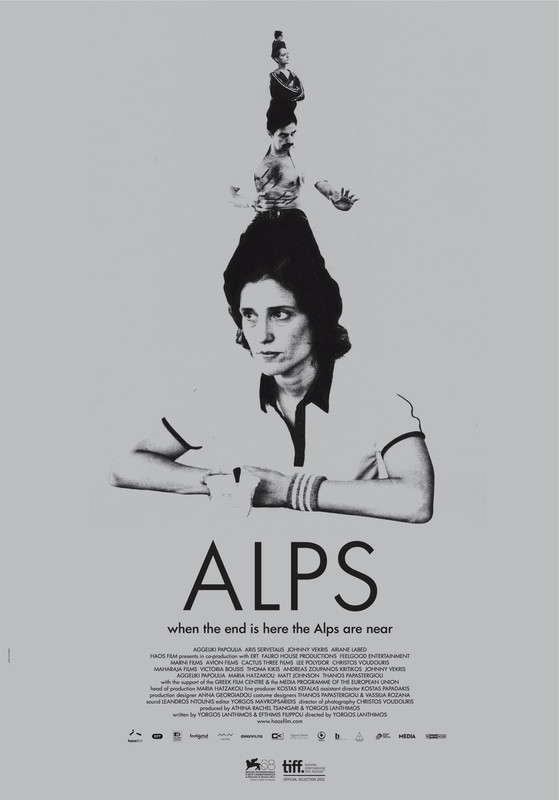
Having come out of nowhere with the best film of the 2009 festival (actually, I've not seen a single better film since that screening), Yorgos Lanthimos may not have delivered the sort of gut punch here that he did with Dogtooth, but Alps is another intelligent, unusual, haunting piece of work that marks him out as one of the most intriguing directors working.

Taking the idea (explored in Sion Sono's similarly mad and similarly brilliant Noriko's Dinner Table) of a group of people who work 'standing in' for the deceased relatives of recently bereaved people, Lanthimos focuses on a nurse (played by Dogtooth's Elder Daughter Aggelikki Papoulia), following her life both as part of the Alps group and - we are led to believe - at home with her father. What is best, at a conceptual level, about Alps, is the uncertainty of its story. Who are these people? How did they come to be in this group? Which of their interactions are real, which are part of a 'stand in' job? These questions and more Lanthimos leaves open to us in an intriguing and sometimes disturbing fashion.

Both performances and direction are striking too; Lanthimos often holds images for a long time, making interesting use of focus to blur the lines of reality and fantasy, just as his characters have for themselves. The acting is top notch, particularly from Papoulia and Attenberg star Ariane Labed. I love that I need to see Alps again in order to figure it all out, I love that even key relationships are troublingly blurred, I love, in short, that weeks after I've seen it, I'm still thinking about almost every aspect of this movie. That's why it's on top of this list.

Nov 1, 2011

LFF 2011: Bottom 5

First of all let me apologise for not having more LFF coverage this year, I've been engaged by other sites quite a lot over the last few months (hence my decreased writing here) and was engaged to write a festival diary for Front Row Reviews. You can read all 60 of the mini-reviews I wrote over there by clicking HERE. All the diary entries are my reviews.

By way of compensation, here, over two posts, are the high and low points of the festival (or at least of the 62 films I saw)...

Bottom 5 Films
5: A DANGEROUS METHOD
I've seen all of David Cronenberg's features bar the rare Fast Company and M. Butterfly, and his latest is far and away the least interesting film of the lot. It's perfect subject matter for Cronenberg; Carl Jung (Michael Fassbender) falling into an affair with a beautiful patient (Keira Knightley), just as his rivalry with Sigmund Freud (Viggo Mortensen) is reaching its height, and yet the director fudges it. The sexuality feels unimportant, the psychoanalysis never really exposes the characters and the two never mix in an interesting way.

Stylistically this is just another period film; Cronenberg brings nothing to the table, and really, this could be any director's film. However, probably the worst thing is Keira Knightley's performance; so histrionic and so catastrophically terrible that I may have to rethink my general regard for her as an underrated actress. This is the most disappointing film of 2011.


4: DRAGONSLAYER
I knew a few people who liked to get stoned when we were teenagers. I didn't hang out with them when they smoked, because I didn't smoke, and because when they did they became incredibly boring company, I'm sure the random bullshit stoners spout is funny when you too are stoned, but I haven't been, and wasn't when watching Dragonslayer. This being the case, 75 minutes of watching a perpetually stoned 23 year old skateboard and smoke weed wasn't a particularly edifying experience, despite a few nice shots.

I didn't feel like Dragonslayer showed me anything interesting, introduced me to anyone I wanted to spend time with or taught me anything - except that stoners are fucking boring, but I knew that - and a documentary that doesn't do any of those things isn't worth even 75 minutes of my time.


3: LIKE CRAZY
Ah, the prosaic, easily solvable,self made, relationship problems of two uninteresting and unsympathetic 23 year olds. It's like Before Sunrise, but insufferable. Felicity Jones has been inexplicably lauded for her relentlessly okay performance, it's even been suggested that she's an outside contender for an Oscar nomination, but despite the acclaim, she and Anton Yelchin are boring as a young couple; one English, one American, separated by her visa status (because she overstays on a whim).

The central characters aren't interesting or sympathetic, they both seem selfish, and there is little sense of what drives them to be together (the closest we get to seeing what they have in common is a 30 second conversation about their favourite Paul Simon album). I din't care what happened in these people's lives, and while after Before Sunrise I wanted to know where Jesse and Celine ended up, I'm simply glad to be rid of this dull, mumbling pair.


2: W.E.
Okay, so after the catastrophic reports from Venice I wasn't expecting Madonna's latest directorial effort (following the barely shown Filth and Wisdom) to be good... I went not so much to see the film as to view the corpse... but I hear that this is actually the re-edited version, which I thought was still in progress, and if that's true, Dear GOD, what must they have shown at Venice? W.E. tells two stories equally poorly; that of Wallis Simpson (Andrea Riseborough, at least a decade too young for the part), who, despite the fact that she was, at best, a Nazi sympathiser, Madonna seems to see as some tragically maligned angel, and that of a woman in 1998 New York named Wally (Abbie Cornish) who is obsessed with Simpson.

It's beautiful, but totally nonsensical. Madonna's cross cutting of the two stories is by turns inexplicably vague and thuddingly on the nose. The performances - bar Riseborough's valiant effort - are uniformly terrible, the dialogue is hilariously risible and the direction is ridiculously hysterical, as Madge drenches the film in a hideous score and steals her every daring move from other filmmakers (notably a use of The Sex Pistols' Pretty Vacant which... nods to... Sofia Coppola's use of music in Marie Antoinette. If this is the recut version of W.E. then it is still an utter disaster, if it is the original cut it is unsalvagably piss awful.


1: THE FUTURE

Stop The Future, I want to get off. I hated Miranda July's precious little piece of shit Me and You and Everyone We Know, and I didn't want to see her second feature, but I was dragged along by my friend and (now former) July admirer Mike Ewins. I'm not sure I've forgiven him yet. Amazingly, The Future is worse than Me and You; more twee, more cutesy, further up its own roomy arse. There is not a second of sincerity, not a frame of invention or interest. There's not one clever or thought provoking image or point. What there is is two near identical hipsters (July and Hamish Linklater), sitting around and fretting about the fact that getting a cat basically means the end of the fun part of their lives.

I want to slap these people, bellow "WELL DON'T GET A FUCKING CAT THEN YOU PRETENTIOUS, SELF REGARDING WANKERS" and leave them to the rest of their lives. But NO, July thinks this is ART, so we have to watch as she behaves like an insane person, and indulges her taste for the twee by having the cat narrate the film. It's pointless, meaningless, horrendously boring, cinematic water torture. I'm never watching another Miranda July film.

Oct 20, 2011

LFF 2011: ALPS

Dir: Yorgos Lanthimos
In 2009 I saw Yorgos Lanthimos' second feature film, Dogtooth, at the LFF and was knocked sideways by it. For my money I haven't seen a better film since, old or new. Alps could never have been the cinematic kick in the teeth that Dogtooth was, it is too burdened by being the subsequent feature to one so striking, but even if it is not the instantly flooring thing that Dogtooth was, Alps is an incredibly vital, individual and fascinating piece of cinema, and sees Lanthimos deliver on the promise of his last film.

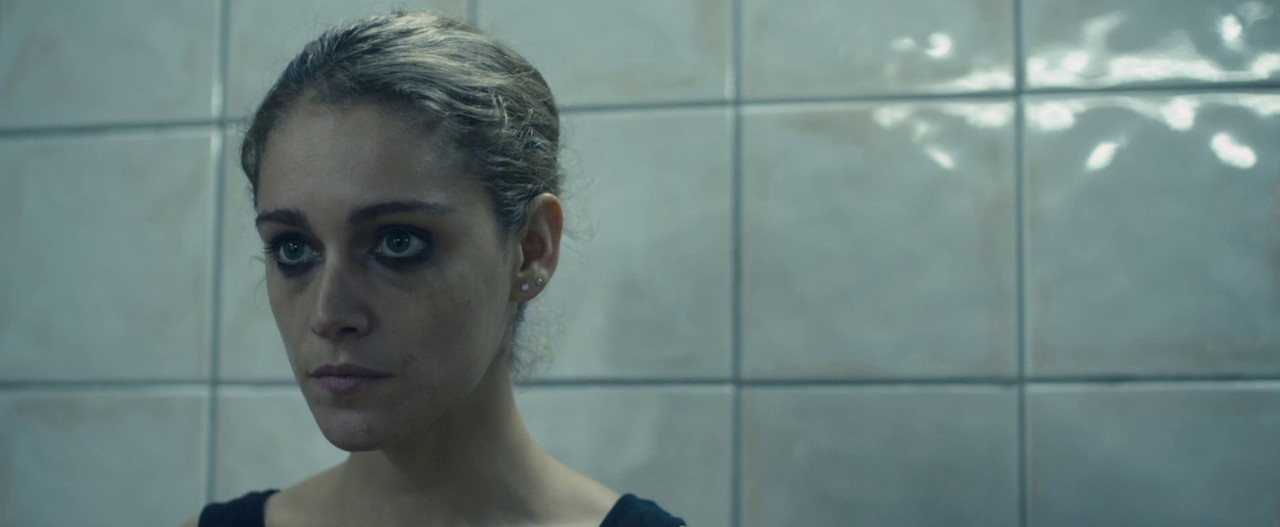
The title refers not to the mountain range but to a group of four people; a nurse (Aggeliki Papoulia, the elder daughter in Dogtooth), a paramedic (Arus Servetalis) and a gymnast (Ariane Labed, the lead in Dogtooth and Alps producer Athina Rachel Tsangarai's Attenberg) and her coach (Johnny Vekris). This group seems to exist as a sort of grief counselling service, but the therapy they offer is for one of the group to 'stand in' for a dead friend or relative of the bereaved and re-enact scenes from their lives. We largely follow the nurse, encountering the other characters either when the group meets or when two of them have the same job.

As you would expect if you've seen Dogtooth, there is a deeply uncomfortable and uncertain feeling as you watch Alps, Lanthimos challenges even your most basic assumptions about the truth of the relationships between the characters, that may make Alps a frustrating watch for some, the constant questioning and my shifting perspective on what was going on in the film was something I found fascinating.

The film unfolds patiently, each little vignette filling us in a bit more either on how the group's sessions work (we see the nurse with several people who are definitely clients, notably a couple whose teenage daughter she tended to in hospital) or how the group dynamic functions. The funniest and the most disturbing scenes revolve around that group dynamic.  Like Dogtooth this film shows a small, dysfunctional, family ruled over by a stern patriarch, who amuse themselves in strange ways. At one group meeting they perfect their stand in skills, doing impressions for the others to guess (Ariane Labed's hilarious take on Prince really has to be seen), even there though there is no levity, no sense of community, and if there's one thing I'd complain about with this film it's that it would be nice to understand a bit more about how this group came together. Tension is an odd thing in this film, take the scene where the paramedic gives the nurse a 'test'; it's immediately obvious what's going to happen, but Lanthimos delays it so long, and makes you dwell so uncomfortably in the moment with his unblinking, unmoving, camera, that it is a genuinely nailbiting moment, not so much about what, but when.

I loved Alps at a visual level from the opening shot, which is very simple, just a still frame of Labed standing in a gymnasium, waiting to perform a rhythmic gymnastics routine, as O'Fortuna booms out of the speakers. It doesn't tell us much, but it's such a striking juxtaposition of image and sound, and such an unexpected opening image that it makes an immediate impression. The rest of the visuals are similarly striking and heavily designed.  The Alps members are often the centre of shots, but also often obscured, with many shots showing the back of one of them, in close up, with background characters in blown out focus. Lanthimos holds shots for an often uncomfortable length of time, as if he wants to force us to look long and hard at this strange world he has created.

The question of identity also comes up a lot here, with characters adopting other personae so frequently that we're never allowed to be sure who they really are. Even Ariane Labed's character; the naive gymnast who clearly struggles with her work for the group, presents a question in this respect.  Though her coach is definitely another member of the group I found myself wondering, thanks to their sometimes robotic interaction and the often repeated question of why she can't perform to pop music, whether he might also be a client. This question comes up even more intensely with the nurse, we see her interacting with and feeding medication to a pensioner whom she calls her Father, but there is always a nagging doubt as to whether he too is a client and, ultimately, whether these people really have real lives that include others. I'm sure Lanthimos doesn't want us to know the truth of these relationships (and nor do I really want to know), but I'd be intrigued to know what he thinks is the truth of them.

Like Dogtooth, Alps is a comedy, a deep, dark, none more black comedy, but a comedy nonetheless. The humour hits like a hammer, because it's so out of place, and delivered in such a deadpan fashion. It comes in the awkwardness of some of the re-enactments (the nurse and the coach pantomiming sex, re-enacting the moment an elderly client caught her late husband with another woman), in the dialogue (in the opening scene the paramedic urgently asks a gravely injured girl who is her favourite actor) and in the images (the nurse trying to get that same girl, bandaged almost from head to toe, to play tennis). Set against the strange and disturbing world of the film, this absurdist humour is odd, but very effective. The performances strike a similar tone; they seem a little robotic at times, but that comes out of the situation presented, and adds to the comedy of many of the re-enactment scenes but, particularly from Papoulia and Labed, there are hints of much more going on beneath that emotionless surface the characters are trying to present.

Ultimately I still don't know quite what to make of Alps. It's clearly an astonishingly accomplished piece of art as well as highly engaging and - surprisingly I suppose - entertaining film, and it further marks out Yorgos Lanthimos as one of the most interesting directors in world cinema. I don't think it's the instant classic that Dogtooth was, but it's no disappointment. Days after I saw it, it continues to go round in my head, images and questions recurring over and over, I can't wait to see it again and try to work it out.
★★★★★

Oct 14, 2011

LFF 2011: Superheroes

Dir: Michael Barnett
If, having read comics, seen Kick Ass, and basically become aware of how hard most superheroes with 'actual' powers get their arses kicked much of the time (even when they ultimately win), you think; I should get myself a costume and do that', there is a good chance you're utterly mental. Certainly this is true of many of the real life superheroes in Michael Barnett's film, but, happily, Barnett isn't mocking these people, indeed he's celebrating them, and many of them deserve to be celebrated.

Superheroes looks at several individuals and superhero groups, but turns its focus most closely on two people who work largely alone, and a group of four superheroes who share an apartment (I smell a sitcom). The one who is perhaps most like you'd expect a real life superhero to be is Master Legend; a paunchy, straggly haired, middle aged guy who uses his 'powers' largely to drive around in a van, drink beer and hit on young women, while dressed in what looks like spray painted armour from the dressing up box I had when I was five. He's well meaning, and funny, but he's not so much a real hero. Mr Xtreme, who has a picture of Kitty Genovese (who was raped and murdered outside a populated building, within reach of 38 witnesses who did nothing) on his armour, is getting things done, and he's more typical of the superheroes we find here. Mr Xtreme is beating up criminals, he's helping out by - in costume - patrolling areas where assaults have been reported, making flyers appealing for information on a local groper and helping the homeless.

This seems to be what most of the real life superheroes seen here are like, yes, some of their tactics are questionable (the four who live together often do 'bait patrol', hoping one of them will get mugged so the others can intervene), but none is ever seen to be violent here, instead channelling private pain (most speak of difficult childhoods) into a desire to help in their own odd way. I'm not about to make a costume and become [fanfare]THE CRITIC![/fanfare], but there is something inspiring about a superhero get together where a group of costumed individuals go round distributing essential to the homeless, or a group of superheroes making such a loud noise in a park that drug dealers can't operate that night.

All this and more is chronicled by Barnett with a humane, often amused, but never derisive, eye. Much of the film is very funny, because these people are funny, but their overwhelming sincerity wins out, and makes Superheroes an unlikely feelgood, inspirational, movie.
★★★★☆

Oct 9, 2011

LFF 2011: Natural Selection

Dir: Robbie Pickering
Robbie Pickering's début has many touchstones, and it fits the mould of a relatively typical quirky American indie, but despite the fact that - especially to fans of the Coen Brothers' earlier, more freewheeling films - it may feel familiar, Natural Selection comes at us with such energy and such likeability that it is hard to imagine that anyone will mind very much.

The film focuses on Linda White (Rachael Harris), a 40 year old housewife whose husband Abe (John Diehl) refuses to make love to her for religious reasons, as they can't have children. One day Abe has a stroke, leading Linda to discover that for 25 years he has been donating at the local sperm bank. Thinking that Abe is going to die, and that he has asked that she track down his son, Linda sets out to find the 23 year old progeny of one of Abe's donations, but gets more than she bargained for when she finds Raymond (Matt O'Leary); a foul mouthed, drug addled, recent prison escapee.

Even from that brief synosis you can probably figure out much of what is going to happen during Natural Selection, and you'd be right most of the time, as the film does tick off a quite well established series of events, and foreshadows many of its twists quite clearly. This often annoys me more than it does most people, purely because I've seen so many films over the years (8-9000 is my current guess), but here it's fine, because the drama and the laughs come not so much from the storyline as they do from the characters.

Characterisation is a collaboration, it comes from the writing, the direction and the acting, and the three have to work in concert for it to really work. Here the balance is struck beautifully. At a screenplay level Pickering has created characters who seem on the surface to be a little stereotypical (the sheltered Christian housewife striking out on her own for the first time, the dishevelled redneck fuck up, etc) but slowly the script reveals layers behind that surface and reasons for the way these characters are. One pivotal scene has Raymond and Linda share a stolen supper, and reveal some painful truths about their backgrounds, and that, among several other scenes, really lets us see them as rounded characters. Pickering's direction is also strong, visually Natural Selection may not be the most dynamic or original film, but he exhibits a fine sense of timing in his cutting, a good balance between comedy and drama, and finds a few memorable shots (few more so than when we first see Raymond).

For me though, Natural Selection is an actor's piece, and while there are good supporting contributions from Diehl and Jon Gries, the film really belongs to Harris and O'Leary. O'Leary, an actor since childhood and familiar from the Spy Kids series and Brick, among others, is unrecognisable and very funny as the lank haired, bearded and frequently injured Raymond, he evidently enjoys Pickering's salty dialogue, and plays an early scene in which, after he's been beaten up, Linda gives him a bath, with perfect comic timing. That said, he's also believable in the film's more dramatic beats. Harris is perhaps even better. She too plays some of the comedy quite broadly, but only by embracing Linda as a character, she's never winking at the audience. Some people have observed that Linda; a buttoned down Christian housewife who believes in her duty to her husband so much that she's stayed in a sexless marriage for 25 years, wouldn't so readily fall into some of the things she does with Raymond. For me, Harris' performance makes it play, Linda always remains the fundamentally decent and sweet woman she is at the start of the film, but I believe her process of discovering the different things that that can mean once she's really out in the world for the first time.

The performances really power this film, O'Leary's character in particular might be problematic, as he is deeply unlikeable and sometimes cruel to Linda, who is loveable from the word go, but O'Leary is entertaining enough, and gives Raymond just enough depth, that we're always willing to go along with him, and even understand at some level why Linda does.

Natural Selection is at times a little schizophrenic; sweary and sometimes graphic (there is some violence, some brief nudity and a clip from Driller Killer), but also sweet natured and gently funny, it's a shame that this may well get quite a restrictive rating in the UK, because I could see it being the sort of gateway drug to more offbeat and interesting cinema that something like Raising Arizona was for me when I was about 13. It's not perfect; there is a moment towards the end that feels far too neat for this otherwise quite wilfully messy series of events, and is entirely predictable into the bargain, but that said, it's extremely well written and played, highly entertaining, and overall just one of the most enjoyable and likeable films I've seen in some time.
★★★★☆

Oct 2, 2011

LFF 2011: The Future

Dir: Miranda July
Miranda July is a conceptual performance artist. Yes, this is going to hurt. Following on from insufferably twee sounding art projects like Things We Don’t Understand and Definitely are Not Going To Talk About and her insufferably twee feature début Me and You and Everyone We Know (whose most memorable storyline featured a six year old boy talking to a woman in a chatroom about his fantasy of 'pooping back and forth, forever'... yes, I'll excuse you while you go and vomit) July has returned with this, her second feature film as writer and director. Guess what? It's twee, and insufferable.

The Future is about Sophie (July) and Jason (Hamish Linklater); a doppelgänger couple who have decided to adopt an injured kitten they have named Paw Paw, however, they can't take Paw Paw home until his paw heals, in a month. So, entirely logically, they both quit their jobs and decide to do what they want with 'their last month of freedom'. Jason joins a group going door to door selling trees, while Sophie decides to make 30 youtube videos of 30 dances. Eventually, bored, Sophie calls a number on the back of a picture Jason bought for them, and ends up meeting the artist.

It's not that I hate the people in The Future, more that I pity them. I mean, honestly, these people are in their mid thirties, they have nothing to tie them down, appear to be in a stable relationship (yes, with a person who looks creepily like their reflection, but still) and are gainfully employed, and yet these whiny pretentious douchebags have an existential crisis over adopting a cat. Here's a thought... If it's so troubling that you're going to panic about your mortality, call the animal shelter and don't adopt the thing. Or you could make some mind numbing performance art about it, I guess. Guess which way Miranda July goes here.

It's not that I hate the people in The Future, more that I don't believe these people exist. Nobody talks like this. These people don't have conversations, they speak in a series of non-sequiturs, spouting barely connected banalities at each other, as if that way lies profundity (spoiler: they're wrong). I can accept that maybe Sophie and Jason are just odd, maybe they both have aspergers or something, but honestly, everyone in the movie appears to be an alien. Jason goes to buy a hairdryer from an old man, who then becomes his main confidant, because that's what happens when you pick up an EBay purchase. The oddest moment comes when Sophie dials that number on the back of the painting, and talks to the artist. For some reason, during the course of a supremely odd conversation, this guy never says 'fuck off lady, you are crazy', which is the only sane response to Miranda July... sorry, to Sophie, and thus the entire second half of the film is rendered totally unbelievable.

When July wants you to feel something (I think we're meant to be sad when Sophie and Jason split up) you don't, because nobody in the movie seems to have feelings, or when they do they express them by burying themselves in the garden, or pulling a T Shirt over their head and improvising a dance... you know, like normal humans do. This is because July has ideas above her station, and think that her 'art' (and I've defended some things as art that people may shake their heads at, but if this is art then literally anything qualifies. Maybe I'll go and film myself shitting and if I give it a pretentious title like 'I am the void, and so are you', it will be art too) is so provocative and full of ideas that she doesn't need to engage with concepts like plot, character and emotion.

Good GOD this film is boring. It's not even a film, it's just a series of quirky ideas that Miranda July had, but she's got no idea of how to express them in cinema. I don't know what she's saying with this film. It might be about late Gen X/early millennial ennui, equally it might be about a cat with a broken paw. In the film's most sick making device July herself does a squeaky voiceover, narrating the movie, as the cat waiting to be adopted. If that sounds 'cute' to you, by all means go and see The Future, and do feel free never to talk to me. I HATED this film, loathed it on a physical level, everything about it, and everything about the overwhelmingly fake and contrived July made me itch to get out of my seat as fast as humanly possible. I hated July's first film, the equally cutesy, equally vapid, equally insufferable, Me and You and Everyone We Know, but I gave her a chance here, well, this is worse, and I am done, no more Miranda July for me. Ever.
★☆☆☆☆

Sep 23, 2011

24FPS at LFF 2011: Plan of Attack


I've just heard that, for the second year running, I'm a fully accredited member of the press corps for the London Film Festival, so I'll be aiming to bring you expanded coverage even from the extensive coverage I had last year. Hopefully this will mean more reviews and more interviews across the four weeks that the festival runs for us (two press weeks, two full festival weeks). So, to give you a bit of an idea as to what you can expect, here are the 83 (yes, 83) films I'll be aiming to see at this year's festival with the first ten in a rough order of importance to me.

1: Alps
There is no film, none, at the festival or otherwise, that I presently want to see more than Yorgos Lanthimos' follow up to his monumental Dogtooth (which I saw at LFF 2009). I have avoided all plot details, all reviews, all I know is the 20 second clip we saw at the press launch makes me suspect that this is not just more of the same, and that I'll be disappointed if it's not the film of the year.

2: Martha Marcy May Marlene
I've been dying to see this, and Elizabeth Olsen's (sister of Mary Kate and Ashley) apparently revelatory performance, since it premiered to glowing reviews at Sundance in January. It sounds smart, dark and disturbing... right up my alley in other words.

3: Shame
Great reviews from the festivals it has played so far, and Fassbender's Best Actor award at Venice promise much for Steve McQueen's second film. I like both Fassbender and Carey Mulligan, and I always like to see filmmakers and actors exploring sex in a truly adult way. I'm hopeful that's what we'll get here.

4: Dreileben
Dreileben is actually three films by three German directors. Each film has the same starting point; the escape of a convict from custody, but each then spins its own story, linked subtly to the others. A project this ambitious will likely either be a tremendous success or a total disaster, I'm looking for ward to finding out which based on the titles of the three parts; Beats Being Dead, Don't Follow Me Around and One Minute of Darkness.

5: A Dangerous Method
I've said it before, but it bears repeating, the ingredients are fantastic here; David Cronenberg making a film about psychoanalysis, and a cast comprising Michael Fassbender, Viggo Mortenson, Kiera Knightley and Vincent Cassell. I honestly can't see how I won't love it.


6: Michael
The case of Josef Fritzl has inspired several provocative pieces of art (the bestselling novel Room being the best known) and this tough sounding film from Austria by a former casting director who has worked with both Jessica Hausner and Michael Haneke promises to be challenging. It's about a 35 year old man who keeps a 10 year old boy prisoner in his cellar. Reviews from Cannes were mixed, but Austria has turned out some impressive films and filmmakers of late, who have dealt well with difficult subject matter.

7: She Monkeys
My liking for European teen movies has been something of a running theme on this site and through the various LFF's I have attended (this is my sixth), and this Swedish example sounds promising. The story of two 15 year old girls on the same equestrian acrobatics team falling for each other suggests echoes off both Fucking Amal and Water Lilies. I can only hope She Monkeys is half as good as either of those great films.

8: Into the Abyss: A Tale of Death, A Tale of Life
In the wake of the execution of Troy Davis, whose guilt was in substantial doubt, Werner Herzog's documentary about the death penalty couldn't be more timely. Herzog is a fascinting guy, and I'm sure he'll have an interesting take on this issue, I hope the film will let all sides speak in the case it focuses on, rather than become a campaigning film.

9: Sarah Palin: You Betcha
In terms of catching the Zeitgeist, Nick Broomfield's latest may have missed its moment, but still, it has the potential to be a very funny, and not a little scary, insight into the American right wing. Hopefully Broomfield can go beyond name calling here and dig a little deeper into what makes Palin and (perhaps more interesting) her supporters tick.

10: The Fatherless
Another Austrian film, and I always seem to have one film in my main selection that for some reason I can't quite pinpoint, just calls out to me and says that it's going to be good. In 2008 it was Everybody Dies But Me, in 2009 Dogtooth, in 2010 Nothing's All Bad (all films that made my Top 10 in their years). It's about a group of grown children who have just lost their father, and their memories of their unconventional upbringing, and apparently flashes back and forth from present to past. The still above is what really stood out for me, there's just something starkly evocative about that image. I hope this one pays off.

and here, in alphabetical order, are my other Must See titles...

The Art of Love
The Artist
Asmaa
The Awakening
Back to Stay
Bernie
Better This World
The Bird
Breathing
Carnage
Coriolanus
Corpo Celeste
Crazy Horse
Darwin
The Dish and the Spoon
Dreams of a Life
The Fairy
50/50
Flying Fish
The First Born
The Forgiveness of Blood
The Giants
Goodbye
Guilty
Hara Kiri: Death of a Samurai
Headhunters
Here
Hors Satan
Hunky Dory
Hut in the Woods
The Ides of March
Junkhearts
Last Screening
Last Winter
Let the Bullets Fly
Like Crazy
The Loneliest Planet
Lotus Eaters
Low Life
Miss Bala
The Monk
The Natural Phenomenon of Madness
Natural Selection
Nobody Else But You
On The Sly
Once Upon a Time in Anatolia
Oslo, August 31st
Ostende
Play
Rampart
Return
Seven Acts of Mercy
17 Girls
Silver Bullets
Sleeping Sickness
The Sleeping Voice
Snowtown
Stopped on Track
Strawberry Fields
The Student
Superheroes
Take Shelter
Tales of the Night
Trishna
Twilight Portrait
Undercurrent
W.E.
We Have a Pope
We Need to Talk About Kevin
When the Night
Wild Bill
Without
Wreckers
Wuthering Heights


There are also a few (typically three) films yet to be announced (not counting the surprise film). I would hope that at least some of these will feature: Take This Waltz (Sarah Polley's second directorial effort, starring Michelle Wiliams, Seth Rogen and Sarah Silverman), Killer Joe (William Friedkin's latest, with the brilliant young Brit Juno Temple in the lead), Himizu (The latest from cray, and prolific, Japanese auteur Sion Sono), The Girl With The Dragon Tattoo (Some remake by some bloke called Fincher) and at least one film with Isabelle Huppert, given that there are several to choose from right now.

Sep 11, 2011

LFF 2011 Preview Part 1


Yes, it's that time again, for all us movie fans the circus is back in town, as the London Film Festival ramps up for its 55th year. This is also the final year for artistic director Sandra Hebron, whose tenure has seen the festival become a very significant event in the world film calendar. It looks like she and her team have crafted an eclectic programme again this year across all the familiar strands, and across this 3 part post I'll be picking my personal must sees of the fest.

Let's begin, then, with the festival's heavy hitters.

GALAS AND SPECIAL SCREENINGS

Opening Film: 360
Dir: Fernando Mierelles

A dynamic and moving study of love in the 21st century from the director of The Constant Gardener.

Mierelles reunites with his Constant Gardener star Rachel Weisz, and assembles a cast of international talents (also including Jude Law, Anthony Hopkins, Jamel Debouzze and Moritz Bleibtreu) for the globetrotting set of interlocking stories about couples. It's an adaptation of La Ronde (hence 360). For me, Mierelles is overrated, and this looks very middling, but as the opening film, and one of Rachel Weisz' four Oscar hopeful roles this year it must count as one of the big events of the festival.

Closing Film: The Deep Blue Sea
Dir: Terence Davies

Terence Davies' poetic and sensitive adaptation of Terence Rattigan's play, with subtly nuanced performances from its impeccable cast.

A classy British cast for a classy British director, adapting a play by a classy British writer. Yep, that's an LFF closing film. This is perhaps the expected Oscar nominated performance for Rachel Weisz, playing a woman who, in 1950's London, leaves her older husband (Simon Russell Beale) for a younger man (the very busy Tom Hiddleston), but inevitably finds that that relationship also has its problems. This looks like a heady drama with a beautifully crafted look and a standout part for Weisz.

The Artist
Dir: Michel Hazanavicius

They don't make ‘em like they used to, apparently. Well, ‘they' do now!

Set in Hollywood in 1927, this homage to silent cinema was one of the big popular hits of the Cannes Film Festival, and won lead Jean Dujardin the Best Actor prize. The Artist is, apparently, not quite a modern silent, but eschews dialogue almost completely and that, along with the crisp black and white photography, should allow us to plunge into what is now, for most, a lost world, just as the movies discovered sound. This looks like a smart, sweet and funny love letter to cinema. I can't wait to see it.

Coriolanus
Dir: Ralph Fiennes

A clever, contemporary adaptation of Shakespeare's play of political power and intrigue, directed by and starring Ralph Fiennes.

Rather shamefully I don't know Shakespeare's Coriolanus at all. That said, what we've seen of Ralph Fiennes' directorial debut doesn't exactly scream Shakespeare at you. Instead it seems that by setting this story of a Roman general in modern day and in a Balkan war zone Fiennes has come up with a muscular adaptation, combining Shakespeare's words with the ultra modern imagery that he and Hurt Locker cinematographer Barry Ackroyd have collaborated to find. Fiennes also leads a cast packed with the best of British acting talent... and Gerard Butler, who appears to be playing a man who shouts in a Scottish accent. Well, you can't have it all can you?

A Dangerous Method
Dir: David Cronenberg

Viggo Mortensen, Michael Fassbender and Keira Knightley star in David Cronenberg's compelling look at the early days of psychoanalysis.

A new David Cronenberg film is always a cause for celebration as far as I'm concerned, and it seems that, having been preoccupied with the body for so long, Cronenberg is becoming more and more interested in exploring the mind with his recent films. Here he depicts the relationship between Sigmund Freud (Cronenberg's current muse, Viggo Mortenson), Carl Jung (Michael Fassbender) and one of Jung's patients, with whom he has an affair (Keira Knightley). So, and adventurous and high quality cast, a script by Christopher Hampton and Cronenberg dealing with sex and psychoanalysis. Sign me up.

The Descendants
Dir: Alexander Payne


Alexander Payne is another filmmaker I find hit and miss, but this, his first film since Sideways, looks to be much more up my street than that film or About Schmidt. George Clooney plays a Dad who suddenly realises, when his wife is seriously injured in an accident, that he doesn't really know his two daughters (who are ten and seventeen). Clips suggest that Payne's comedic instinct as as sharp as ever and that Clooney is well cast. The danger is probably that the film could start to feel over familliar, or that the inevitable learning and hugging could be cloying, but hopefully Clooney's Cary Grant like charm will keep those things from becoming a real issue.

The First Born
Dir: Miles Mander

The sex lives of the upper classes come under scrutiny in this tour de force of late silent British cinema.

You're probably best off asking Pamela from Silent London about this one. The archive gala is a late silent period British film, starring Madeline Carroll, who would go on to be one of the quintessential Hitchcock blondes in The 39 Steps. Coincidentally, The First Born was co-written by Hitchcock's wife, Alma Reville. The story of a philandering husband, jealousy, miscegenation and images of Carroll taking a bath (shot in very voyeuristic fashion) must have been controversial at the time, and suggest a film that is still likely to feel adult and somewhat contemporary.

The Ides of March
Dir: George Clooney

George Clooney directs and appears alongside Ryan Gosling, Philip Seymour Hoffman, Paul Giamatti and Evan Rachel Wood in this smart, incisive exploration of dirty politics on the campaign trail.

After a misstep with charmless screwball throwback Leatherheads it seems that George Clooney is back to what he does best as a director. The Ides of March casts Clooney as a candidate for the Democratic presidential nomination (who seems to carry more than a few echoes of Barack Obabma). The cast is high quality, the quetion mark will likely be whether Clooney and co-writer Grant Heslov can keep the political rhetoric from being too heavy, or, worse, the whole thing from simply feeling like The West Wing lite.

Shame
Dir: Steve McQueen

Michael Fassbender and Carey Mulligan star in Steve McQueen's frank study of a New York man's sexual compulsion.

I didn't like Steve McQueen's debut; Hunger quite as much as some other critics, but Shame sounds more interesting for several reasons. First is Michael Fassbender, the real standout aspect of Shame, reuniting with McQueen having gone from strength to strength as an actor since their last collaboration. Second is Carey Mulligan, whose career is so much in the ascedant right now that she could be doing blockbuster upon blockbuster, but instead she's choosing daring parts like this and finally there's simply this; when was the last time you saw an English language film that treated sex as more than something to leer or snigger at? It doesn't happen much. Truly adult films, treating adult subjects intelligently, are too rare. This looks like being one.

We Need to Talk About Kevin
Dir: Lynne Ramsay

The much-anticipated film based on Lionel Shriver's Orange Prize-winning novel.

One of the great mysteries in the film business is why, after the opening one two punch of her magnificent Ratcatcher and Morvern Callar, it took eight years (and several collapsed projects) for Lynne Ramsay to be allowed back behind a camera.

This adaptation of the novel about a woman (played by the always magnificent Tilda Swinton) trying to come to terms with the fact that her son has committed an awful crime sounds like it is right up Ramsay's particularly bleak street, and the casting also seems dead on, with John C. Reilly as Swinton's husband and the hotly tipped Ezra Miller apparently outstanding as Kevin. I just hope it's as good as I want it to be.