Showing posts with label Greece. Show all posts

Sep 17, 2019

24FPS @ LFF2019: Day 1

Rewind
Dir: Sasha Joseph Neulinger

Film serves many functions in our lives. It can be pure escapism and entertainment, but it can also serve as an archive; a document of what we are thinking and feeling in a given moment, or as evidence of another kind.

Sasha Neulinger’s directorial debut is a bravely personal film, looking back on the sexual abuse that came from within his family towards both him and his younger sister, when they were each as young as three years old. Through a patchwork of archive footage taken by his filmmaker father and present day documentary and interview footage, “It’s a puzzle made from my life”, says Neulinger, as he opens the film in which he combs through his childhood to recall and to contextualise the abuse, focusing on how it seems to be passed down like a virus.

The archive footage, at first glance, is much like that which any family who had a video camera in the 90s might have taken; family gatherings, parties, trips to the zoo the kids playing outside. There is a dark side though, and it’s present from the off, as we see a roughly 9-year-old Sasha introduce his “Shit diaries” direct to camera. What emerges as the pieces of the puzzle form a full picture is a jagged image of a disturbed boy whose initially sunny and open nature was blown apart early in his life, leaving a child who couldn’t express his emotions except in anger and acting out.

Today’s Sasha is markedly different, but there is still a raw feeling to the film as it is plain that revisiting these times, even if it is eventually cathartic, is deeply difficult for him. In one scene, as his father describes his own childhood abuse from a brother who would grow up to also victimise Sasha, we can see the director in background of his shot, clearly shocked, moved and holding back tears. In another moment that speaks of deep connection, both as family and survivors, Sasha gives his sister Beckah a long hug following her interview. It’s this long thread of shared experience the runs throughout the film that is, in many ways, its most shocking aspect. 

Rewind is, obviously given its subject matter, a challenging watch. Moments that find Neulinger looking through his old therapy records with his doctor, looking back at drawings that graphically - if largely metaphorically - describe his abuse are especially hard to stomach. Yet there are also moments of grace, not least the one in which, in archive footage, Sahsa reveals that he’s changing his surname to Neulinger. 

The form of Rewind is fairly familiar, not least from the acclaimed Capturing the Friedmans, but coming from a first person point of view gives the way that the stitching of this patchwork of footage a somewhat different power to that of the earlier film. This case has already made positive change, but this film will bring it to a wider audience, particularly if it is picked up by something like the BBC’s Storyville series, which is the sort of distribution that might suit it best. That would allow Neulinger’s campaigning, but never brow beating, film to get out and perhaps make a wider difference.  
★★★½

The Miracle of the Sargasso Sea
Dir: Syllas Tzoumerkas

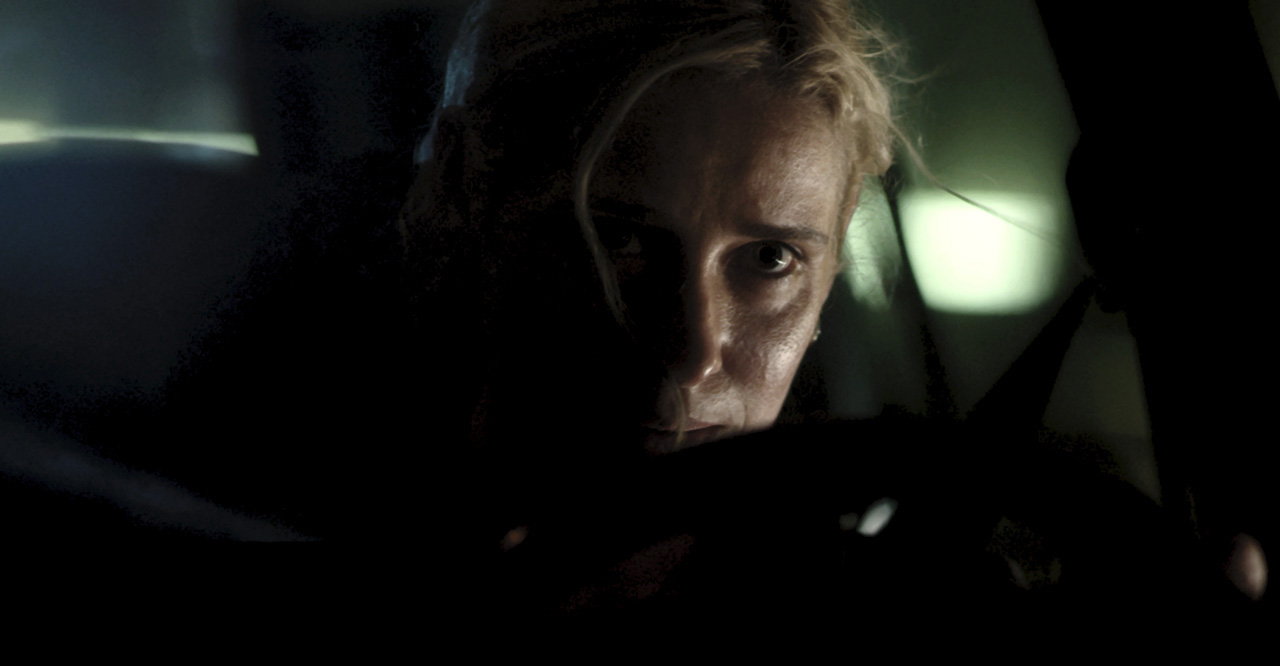
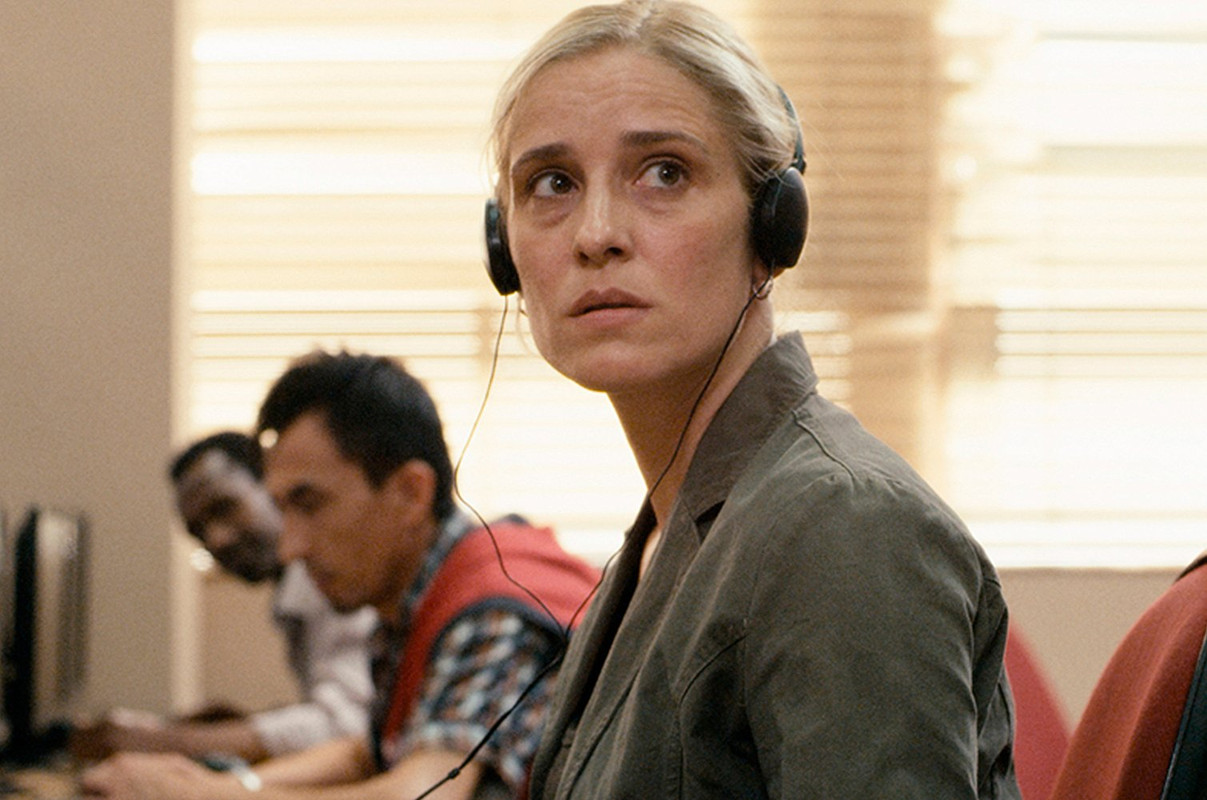
The name may not be entirely accurate anymore, but after more than a decade it still feels as though the Greek ‘weird wave’ is surfing in the wake of Yorgos Lanthimos. While he has managed to transfer his talents, with his peculiar tone largely intact, to higher profile and even prestige projects, many other filmmakers have remained at home, ploughing a similarly strange furrow. Syllas Tzoumerkas was last seen at LFF with the awful A Blast, his latest film has a little more going for it, but suffers from many of the same issues.

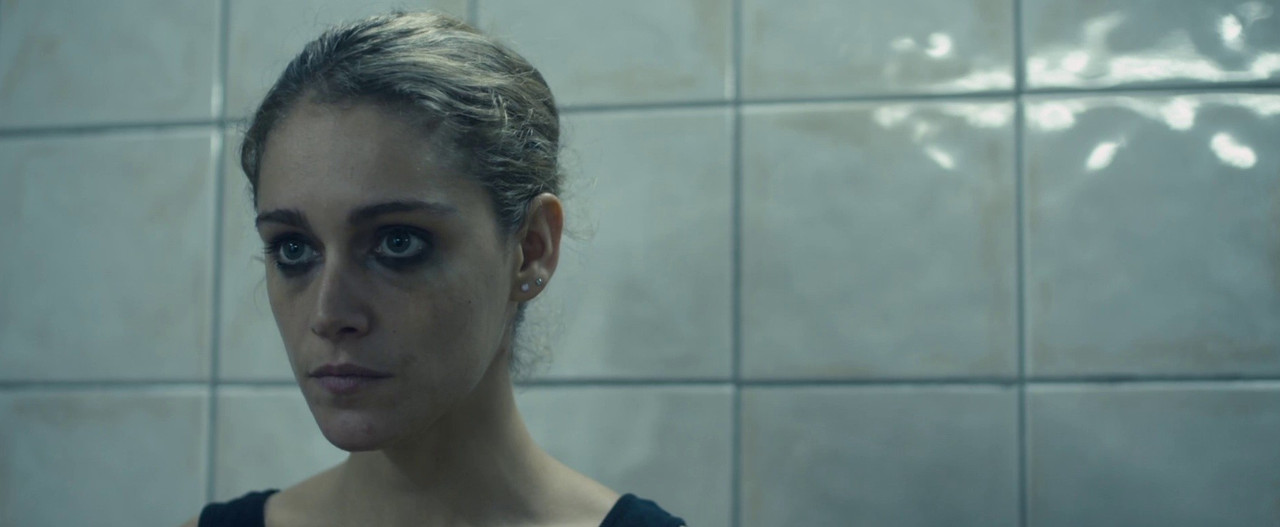
For the first half, Tzoumerkas and co-writer Youla Boudali set their pieces. Elizabeth was a cop in Athens but in the opening sequence we see her asked to join other officers in lying about planted evidence. 10 years later, Elizabeth (Angeliki Papoulia) is living with her now teenage son Dimitris (Christian Culbida). Elizabeth the chief of police in their small town. She’s a drunk, a casual and sometimes open drug user, constantly berating the officers below her and not above her own corrupt actions. Other strands involve the rest of the people in town, from club singer Manolis (Hristos Passalis) and his sister Rita (Boudali), who have a fractious relationship with him doing most of the caring for their mother, who has alzheimer's to, among others, Elizabeth’s married lover Vassilis (Argyris Xafis), local DA Andreas (Laertis Malkotsis) and Andreas’ mute brother Michalis (Thanasis Dovris). 

There are a lot of tangled strands set up here, but only Rita’s story grabs much attention. This is where the film suggests the most depth, with her job cleaning a church and the various biblical visions we see through her story promising something with a powerful undertone but, as with many other things it sets up, the film never really delivers on this. The visions seem just to be there, perhaps someone more well versed in Greek Orthodox doctrine could unfold something specific from them, but for me they ended up feeling empty. That’s less true of Youla Boudali’s performance as Rita though. We get, at the very least, a sense of trauma and of something rather dark lurking underneath her relationship with Manolis (a slickly dislikeable turn from Passalis).

The rest of the film is far less interesting. Elizabeth’s story starts intriguingly enough, leaving some ambiguity about how she reacted to the bribe in the opening sequence, but once we find her a decade later, Angelikki Papoulia’s performance is disappointingly lacking in any shading. Her constant anger, her lack of any subtlety in her performance outside the film’s bookending scenes becomes wearing very quickly. Having a heroine who isn’t someone we would usually root for is fine, but the screenplay allows Papoulia little to work with in terms of contextualising Elizabeth’s rage and keeps her at such a constant boil that her every scene feels like a reiteration of the last.

As the second half of the film begins to use a murder mystery - the solution to which is hardly a surprise - to unpick the strands the first half set up, the extreme dark secrets that lie under the quietness of this town feel, for all the deadening and pointless explicitness with which Tzoumerkas shows them, somehow inevitable. He’s clearly going for shock value but a decade of films from Greece that have used many of the same ingredients, along with the fact we only really know and care about one of the characters involved, means the effect is considerably blunted.

There are flashes of interest here, notably in Youla Boudali and Hristos Passalis’ performances (he is especially good as he seemingly snaps after a performance, and begins berating the home town crowd from the stage) and in the various biblical overtones that surround their story. However, Tzoumerkas and Boudali’s screenplay is far too unfocused and, in other areas, too one note, to sustain that interest for the two hours the film runs.
★★
A Thief’s Daughter
Dir: Belén Funes
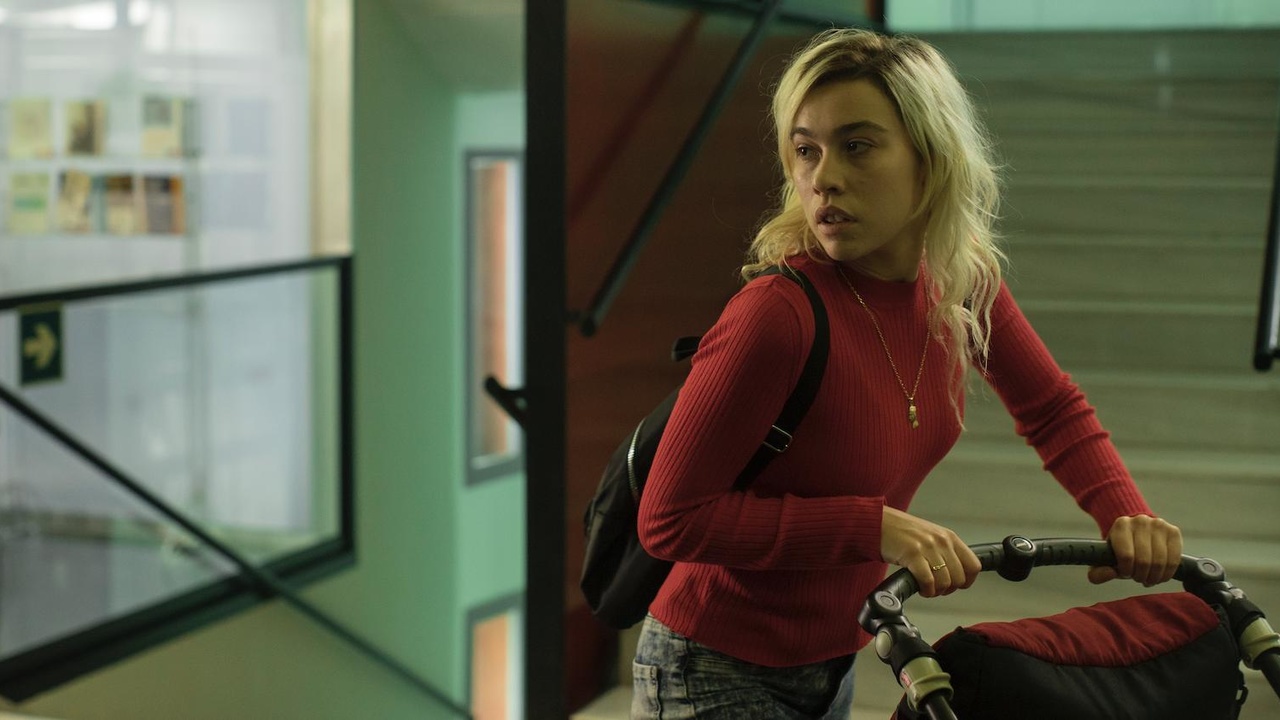
Late on in A Thief’s Daughter, Sara (Greta Fernández) is asked why she can’t just forget about her Dad “I carry him in my face”, she says. There’s a push and pull in that moment that is felt throughout Belén Funes excellent feature debut.

Sara is 22, she’s scraping away in a variety of menial jobs, trying to make ends meet for herself and her baby son, while also trying to win custody of her seven year old half brother Martin. Her father (played by her real life father Eduard Fernández) has just got out of prison and she clearly craves a family connection, while also being aware that being around him may not be good either for her or for Martin.

This isn’t a film of big dramas, confrontations are small and brief, grounded in the same reality as the rest of the film. Funes constructs a beautifully observed film, her camera more often feeling like a third person in the room more than it does something imposing structure. With that said though, she also has an incredibly economical style, often unfolding whole swathes of backstory without a word. In one especially impactful moment Sara is washing up after celebrating Martin’s first communion, she gets a little wine on her hand and sucks it off, then for a second considers drinking what’s left in a glass, before relenting and washing it. A couple of movements, perhaps five seconds, and we understand potentially years of Sara’s life. It’s a piece of pure cinematic storytelling. 

Little things unpack big stories throughout the film, thanks to the sensitive and artifice free performances. The relationship between Sara and her Dad has a naturally tense feeling to it, doubtless aided by the real life relationship between the actors, the history between the characters feels present in every moment. Outside of these scenes, the same unforced realism comes through in Greta Fernández’ performance. Whether Sara is at work, at home, or with her brother (another beautifully drawn relationship) there is never a sense of an actor playing a scene; the observational quality of Belén Funes’ direction coming through in performance as well as in camera. The victories may be small, but we feel them all the more powerfully for that, one sequence in which Sara learns she’s passed her probation at work is particularly good, capturing a warmth that we sense she feels too seldom as she’s trying to get by.

The film does build to a big narrative event, but even there Funes and co-writer Marçal Cebrian  resist any urge to grandstand, landing on an ambiguous but deeply moving final image that underscores the tug that we have felt in Sara throughout. This is a notable debut from Belén Funes, a film that delivers but also promises many interesting things for the future. It points to director with a strong but unobtrusive eye and a great command over casting and performance. It’s a quietly excellent film, and one you should make time for at LFF.
★★★★

Oct 18, 2014

24FPS @ LFF 2014: A Blast

Dir: Syllas Tzoumerkas
The Greek 'weird wave' kicked off, at least at LFF, in spectacular style by Yorgos Lanthimos' modern classic Dogtooth has produced some of the most challenging work in recent world cinema.  Some of it - Alps, Miss Violence, Attenberg - has been great, some -  the infuriating Boy Eating The Bird's Food - has been abysmally poor.  The good news is that A Blast isn't as terrible as Boy Eating The Bird's Food, the bad news is that it's a very close run thing.

The film focuses on Maria (Angeliki Papoulia, of Dogtooth and Alps); a mother of three in her early 30's.  When we meet Maria she is clearly running from something (or to something, it's hard to tell).  She's had debt problems thanks to the failure of the shop she owns with her Mother, has a fractious relationship with her sister (Maria Filini), whose husband has joined Golden Dawn, but still leaves her children with them.  She also appears to be on the outs with her cargo ship captain husband Yannis (Vassilis Douganis).  The film skips between scenes of this increasingly frantic Maria and of her early, more carefree, days with Yannis.

There are two major problems with A Blast, which together conspire to make it one of the absolute worst films at LFF this year.  The first is the register at which it is presented.  The entire film is set at an hysterical pitch, every emotion overplayed, every line garbled out as if in a dialogue speed reading competition, or a rap battle with no rhythm.  This reaches a fingernails down the blackboard annoying fever pitch in scenes between Maria and her sister, in which Papoulia and Filini trade loud insults at 200 miles per hour.  The effect is very much like being in a wind tunnel lined with people bellowing at each other.  

Aside from the fact that it's just wearing, this constant pursuit of volume and speed over sense has another damaging effect: it makes everything overplayed.  As anyone who has seen Dogtooth and Alps will tell you, Angeliki Papoulia is a great and fascinating actress who can say volumes without speaking.  Here, sadly, she's directed into shouty histrionics at almost every turn and it all feels like she's in a ridiculously sexually explicit panto, so broad and directed at the back of the room is her performance.  It's tough to say anything nice about the other performances, but as they are also pitched at this same level you have to extend the actors the benefit of the doubt for their clanging falseness.

The other film-hobbling issue that A Blast has to contend with is how much of a mess it is, and how its all over the shop structure ultimately renders it an exercise in empty, unfulfilled, metaphor.  Co-writer/director Tzoumerkas is clearly trying to draw a big metaphor about how the financial crisis and the rise of Golden Dawn ripped Greece apart, boiling that conflict down to this one family.  He fails.  Hard.  The reason he fails is that little of this attempted substance can make its way through the sheer volume of the present day scenes and that the flashbacks, while trying to set a different tone, are so needlessly explicit (and seldom any quieter than the present day story) that there is no space left in these 83 minutes for nuance.

For the most part, A Blast flits all but randomly between time periods.  It may be worse when it stops being random, cutting clunkily between a sex scene, Maria watching hardcore porn in an internet cafe and Yannis teaching Maria to throw a punch.  The metaphor is beyond obvious and lamely executed.  When it's not obvious the film is infuriatingly obscure.  For example, early in the film a 'first payment' of 65,000 euros is put in to Maria's bank, setting her off on her journey.  What is this payment for?  How much is yet to come, in how many installments, and what does she have to do for those?  Not only does the film never answer these questions, it barely even feigns interest in them, preferring to cut to yet another borderline hardcore sex scene instead.

The sex scenes pretty much encapsulate A Blast's larger issues; screamingly over the top content over substance.  Papoulia has hardly shied away from explicit content, indeed Dogtooth also has a sex scene that at least skirts very close to being hardcore.  The difference is that the explicitness here serves little purpose, leaving it feeling exploitative of both Papoulia and Douganis.  Yes, it shows how at one point the couple had an intense connection, but this is something film neglects to demonstrate in anything but a physical way, and it hardly needs in excess of ten minutes of extremely explicit sex to demonstrate it on a physical level.

A Blast ends on a suitably infuriating note; an ellipsis that tells us nothing.  That's just...
★

Oct 15, 2013

24FPS @ LFF 2013 The Enemy Within / Durban Poison

The Enemy Within
Dir: Yorgos Tsemberopolous
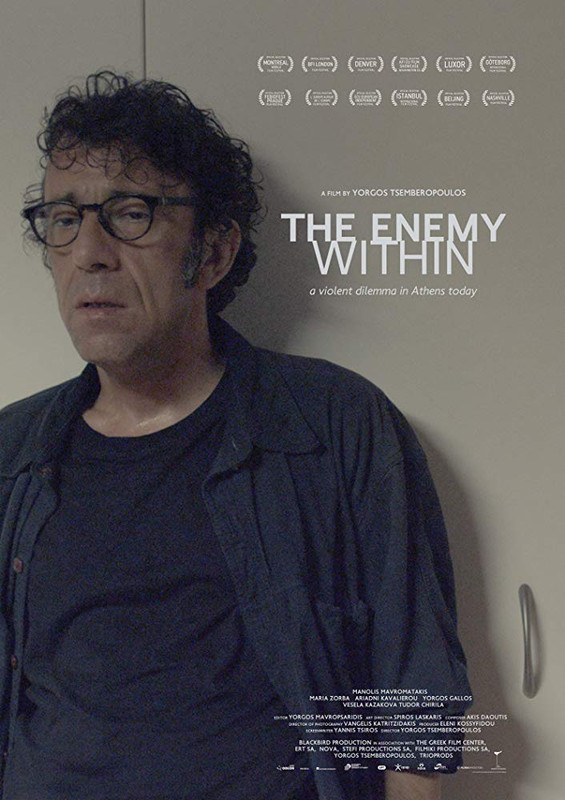
Since bursting into wider consciousness with Dogtooth (which I saw at LFF 2009), Greek cinema has been impressing with what has been called the 'weird wave'.  The Enemy Within takes up some of the stylistic tropes of that wave, but is overall rather more conventional than many of the films we've lately seen from Greece.

The story unfolds in low key fashion, documenting the way that anger and fear drive Kostas (Manolis Mavromatakis) to disturbing, destructive action after a gang breaks into the home he shares with his wife and teenage children, robbing and assaulting them and raping his 14 year old daughter (Maria Zorba).  Kostas is egged on in his vengeance by a neighbour (Yorgos Gallos) who has been obsessed with security since a similar incident happened to him.

The Enemy Within plays in genre much more than most of the recent films we've seen in the Greek New Wave.  Ultimately it's a vengeance film, though an atypical one, and like most vengeance films it's about more than just the surface.  In this case, like much current cinema from the region, the film seems to reflect the Greek economic crisis in several ways.  Yorgos' right wing neighbour, who rants about immigrants, is likely a member of Golden Dawn and the whole thrust of the story; the rising incidence of home invasions and the extreme protective instinct around property could be seen as a comment on the way Greek society is reacting to suddenly having much less to go around.

This all plays under the surface though, and the thrust of the film is still Yorgos' ever building anger and the way it threatens to destroy his life when it explodes for a moment.  This is largely depicted through an excellent inheld performance from Manolis Mavromatakis, more sad than scary as the frightened patriarch.  The other leads also turn in fine work.  Yorgos Gallos is the standout, giving a troubling performance, casually justifying a violent response in a way that, at least to begin with, seems frighteningly reasonable.  

About half an hour from the end, with the plot twisting in interesting ways, the film seems as though it's about to go all Rolling Thunder on us, then it pulls a reversal, ending with its quietest scenes, which, as is the way of vengeance movies, leave things on a morally thorny note.

There isn't much here that we haven't seen before, but the spare style – broken by the early rush of violence of the home invasion, effectively intercut with the quieter aftermath – strong performances and a very good score all add up to make it a worthwhile and more easily accessible entry in the Greek New Wave.
★★★★

Durban Poison
Dir: Andrew Worsdale
Apparently this is South African filmmaker Andrew Worsdale's first film in almost thirty years.  It shows.  

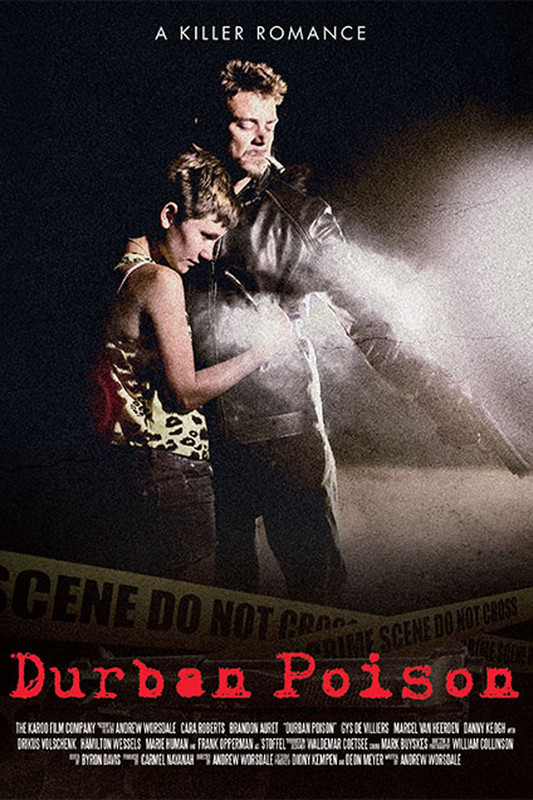
The film unfolds after Pieter (Brandon Auret) and Jolene's (Cara Roberts) killing spree has ended in arrest and they take the Police on a tour of the crime scenes, relating what happened, though the Police suspect that the whole truth is not coming out.

To be fair, Durban Poison doesn't start badly.  The opening scene; a montage of images that seem to come from right across the film's timespan of roughly four years, with a focus on the couple being booked after their arrest, plays out silently under the credits, suggesting at the very least that there is a visual sense at work here.  Not, perhaps, a hugely original one, but still effective.  The opening half hour then goes on to set up a multi-stranded narrative, with questions from the Police prompting flashbacks and an interesting relationship seeming to develop between Jolene and the Police Captain leading the investigation.  All of these things quickly go off the rails.

Durban Poison begins to fall apart once we flash forward in time and establish that Pieter and Jolene are now married with a baby.  This threw me.  No jump in the timeline is ever indicated so the child simply arrives out of nowhere.  Equally unhelpful is the fact that the first time we see the baby is in an all but silent scene.  I initially assumed that the camera was going to cut either to a kidnap victim whose child this would be or to a friend for whom Jolene and Pieter are babysitting, so badly established is the whole thing.  I wouldn't bang on about this so much, but it seems to set a pattern for the rest of the film.

The relatively even juxtaposition of the two timelines is abandoned, the focus thrown on the flashbacks, unbalancing the film and making the actions of the Police increasingly, hilariously, inexplicable (they let Jolene go swimming in the sea because, sure, that's procedure).  Even the performances seem to suffer, Auret and Roberts now struggling, though with some admittedly very rote dialogue.  

The idea, seeded early on, that there might be more to the story than Pieter and Jolene are letting on seems to be forgotten for much of the last hour of the film, only to resurface in the last scene, in the most obvious way possible.  This also reflects the larger problem with the storytelling, events unfolding in what feels like a series of isolated scenes rather than a consistent narrative flow.  Overall it almost seems, after finishing the opening half hour of his film,  Andrew Worsdale simply gave up.

It's a pity Durban Poison ends up being such a let down, because there's the kernel of something good here.  The basic story is interesting, and I'd like to find out how closely Worsdale stuck to the facts (the film, though it never says so, is based on a real case).  The performances are variable, but I suspect that's a writing and direction issue and the first act of the film suggests rather better things than the last hour can deliver.  If Worsdale decides to wait another 30 years before stepping behind a camera again I shan't be crying over the loss.
★★

Nov 17, 2012

The Picture Show: Alps / Rust and Bone

This week Sam and Mike review two recent arthouse releases which - SPOILERS - also happen to be two of the best films of 2012. They also discuss some of their favourite uses of music in non-musical films and recommend recent DVD and Blu Ray releases. You can listen to the show in the player below or download it HERE

Oct 19, 2012

24FPS @ LFF 2012: Diary 17/10

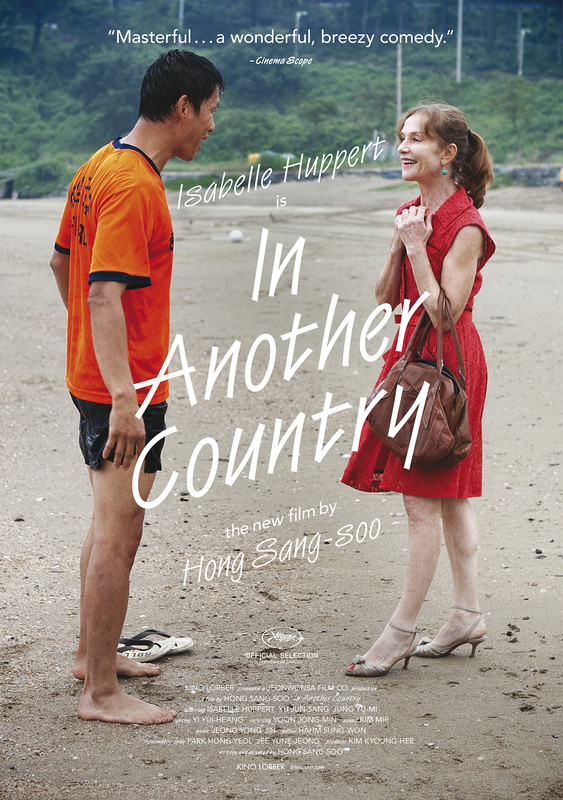
In Another Country
Dir: Hong Sang-soo
Despite my long-standing fondness for South Korean cinema, I've never previously seen any films by one of its most prominent auteurs, Hong Sang-soo. I've often meant to see his films when they have come to previous LFF's, but never quite got around to it, but I knew I'd be seeing this one as soon as it was announced that he had cast Isabelle Huppert in the leading role.

In Another Country is really three short films more than it is a feature, with Huppert playing a different French woman alone in a small Korean town, interacting with the same small cast of characters (some of them in slightly different roles from piece to piece) in each of the shorts. In the first part Huppert is a famous film director, in the second she's a woman awaiting the arrival of her lover; a famous Korean director and in the third she's alone after her husband (who may be a director in this part, it's not quite clear) has left her for a younger Korean woman.

After, for the first time, finding her on autopilot in another of her four LFF films, Dormant Beauty, I was really hoping that In Another Country would find Huppert on form again, and it largely does. Huppert has a reputation as a stern and icy presence (and to be fair, few people do stern and icy as well), but here she's clearly having a lot of fun, putting on a flighty turn as the various incarnations of Anne enjoy flirtations with Korean men (her host/lover and a lifeguard) or ask inappropriate questions of Buddhist monks (“What is sex for you?”). There's a sense that Huppert is relishing the (slightly mannered) silliness of the script, and particularly of the many scenes in which the same dialogue is used, slightly tweaked to the different situation, scenes in which she seems just a small step away from winking at the audience. It's a very different Huppert than we're used to, and a welcome change. The other performances are equally good, particularly a turn full of nervous energy from the actor playing the lifeguard [IMDB lists actor names but not who plays who for this film], who is uproarious in the first section, when he writes a song for Anne (“Anne, Anne, this is a song for you”).

Hong Sang-soo's direction is as intentionally mannered as his script, with Anne's changing character indicated largely by her changing dress, along with a few other physical indicators – hairstyles, clothes – that serve to show that the other actors are playing different people in each short. As constructed as it is though, the film is always fun, with Hong using a few dream sequences and wry match cuts as much as he does the dialogue in order to get laughs.

In Another Country is insubstantial. It plays with narrative amusingly, if less assuredly than In the House does, and the performances are all perfectly pitched. It's a fun confection which has encouraged me to try some more of its director's work, but it could do with being a little more substantial.
★★★

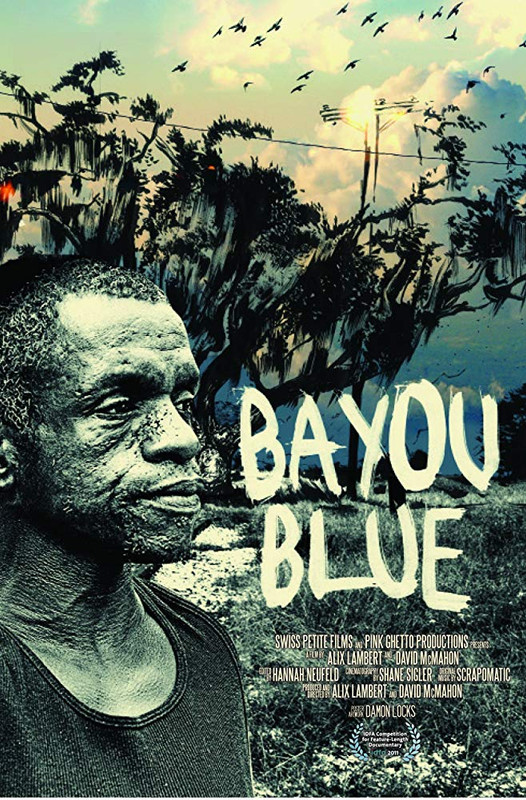
Bayou Blue
Dir: Alix Lambert / David McMahon
I've always been interested, perhaps because it's very far from my experiences growing up in a very safe corner of the South East of England, in the darker side of life. We all are to a degree – why else is 90% of the news in our papers bad news? But even at that ratio, the papers can't contain all the horrible things that people do to one another, and such was the case when it came to a relatively recent series of serial killings of young men down in the bayou around the New Orleans area.

Between about 1998 and 2006 Ronald Dominique raped and murdered 23 men, most of them not yet out of their twenties, and for some reason, even regionally, the story was hardly picked up. This was one of the worst serial cases in US history, and it was all but unreported. Bayou Blue looks mostly at the later cases, the ones that led two local Sheriff's office detectives from two different parishes to finally catch Dominique. Directors Lambert and McMahon talk to the detectives, to victims families and, in one very striking interview, to a man who seems to have come very close to making the victim tally 24.

It's a fascinating case, and the story is told with assurance by the filmmakers and passion by the interviewees but, while there are some nice visuals of New Orleans bayou, the pressing issue is really that there's no reason this should be on a cinema screen rather than on TV. There is also something of a lack of focus, as if this reasonably short film has used up all its most interesting information in the initial hour, and has to overextend itself for the last twenty minutes, touching on things like media and coastal erosion, which have little to do with the case at the film's centre.

On the whole, Bayou Blue is well made, interesting, television, but I can't shake the sense that it is television.
★★★

The Capsule [Short]
Dir: Athina Rachel Tsangarai
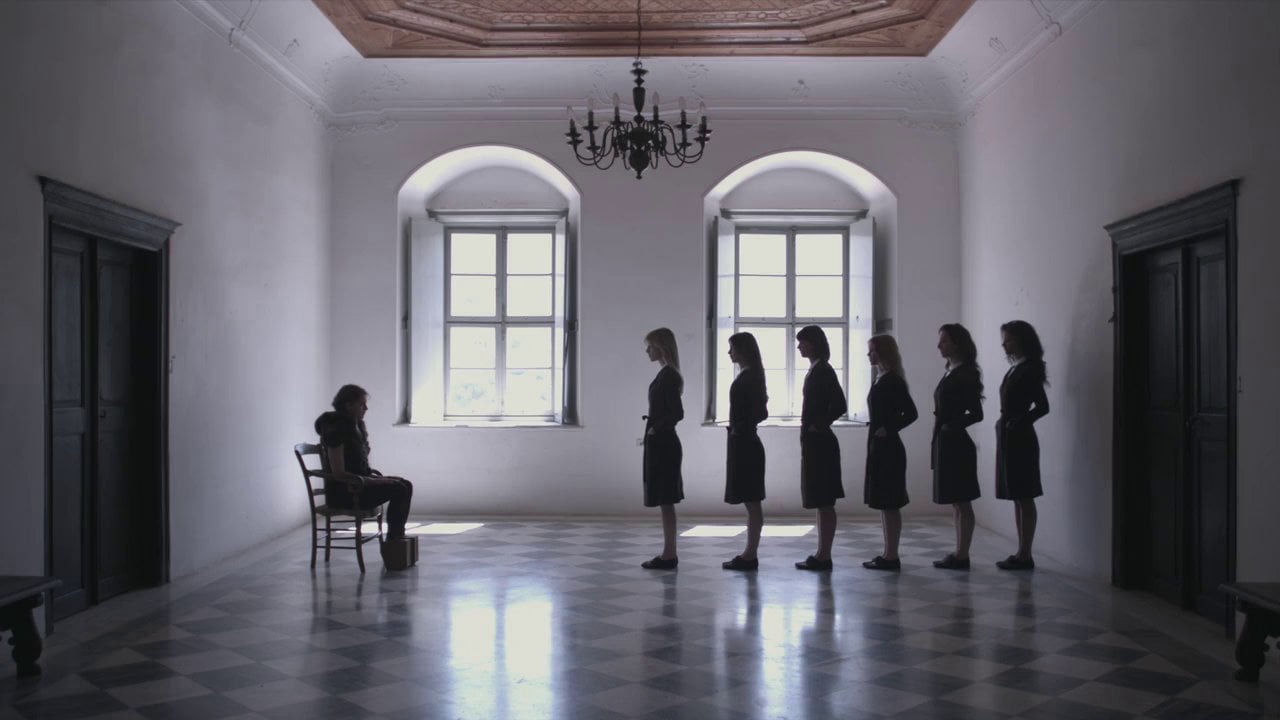
Athina Rachel Tsangarai follows her striking feature debut Attenberg, unusually, with a 35 minute short. The film seems to take place at a castle in a completely deserted landscape, where six young women (including up and comer Isolda Dychauck and Clemence Posey) are put through a series of bizarre scenarios by a beautiful authority figure (Tsangarai's Attenberg star Ariane Labed). They lead Goats around on leashes, they dance as Labed sings A Horse with No Name, they make confessions and are punished in odd ways (one girl has her hair tied in a knot across her face). These things are also interspersed with a handful of animated sequences (such as a topless Daychuck pulling her chest open, her crudely animated guts spilling out).

The Capsule is a film awash in film knowledge and references, and it recalls everything from Lucille Hadzihalilovic's Innocence to Lynch, to Bunuel and even, in its frequent focus on bodily detail and strange movement, David Cronenberg. The meaning is elusive, but it hardly matters, because the imagery is so strange and riveting (thanks in part, it has to be noted, to the strange beauty of each of the actresses Tsangarai has cast). This gorgeous, baffling, film makes me sad that the distribution routes for shorts are so limited, because it's a hypnotising film, and one of the best I've seen at LFF this year.
★★★★★

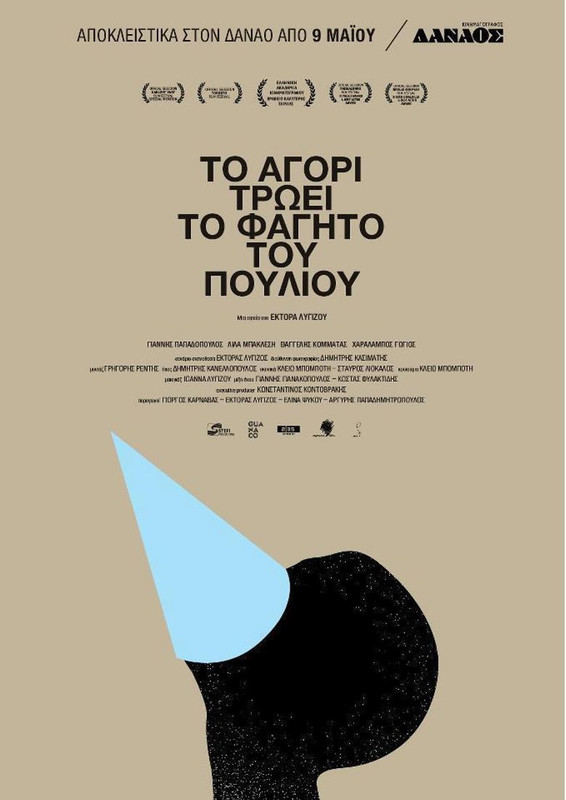
Boy Eating the Bird's Food
Dir: Ektoras Lygizos
I'm – annoyingly for a writer – at something of a loss for words. How do I even begin to go about itemising all that I hated about Boy Eating the Bird's Food? I wonder, in all honesty, if when he hoped we'd “enjoy the next 80 minutes of our lives” before the film, the producer was being ironic or facetious, because even if you see value in it (and I don't, and nor do I understand how anyone might), this is hardly an 'enjoyable' film.

The story is basically covered by the title. The lead character (Yorgos Karnavas) seems to be in his mid to late twenties and lives alone with a pet bird. He eats bird food and other things he finds, he stalks a girl who works in a hotel, visits an elderly man who lives beneath him and generally walks around a lot. NONE of his behaviour is given reason, little of it is shown to have consequences. Showing a character doing stuff, then expecting us to fill in every detail besides, is not a story and it certainly isn't a character study. It's merely stuff.

There is little on the technical side of the film to get excited about. It's largely shot in that irksome handheld 'look at me I can't hold the camera still so my film must be super realistic and smart' style that has become so prevalent of late and it's impossible to tell anything about the acting, because we know nothing about what this character is supposed to be like (we don't even know his name until it is randomly blurted out perhaps 15 minutes from the end of the film by an unseen character).

As well as being boring the film is also often disgusting, most notably in an utterly gratuitous scene, apparently staged for real, in which the main character jerks off in his hand before licking it clean, as well as in its apparent suggestion that if you stalk a girl long enough she'll eventually let you get intimate with her, and even pack up your dinner for you so you can take it away. As much as I was hating the film before, it really lost me half way in, when the main character danced to a song on Itunes, and chose Broder Daniel's Whirlwind, the theme tune of one of my favourite films of all time; Lukas Moodysson's Fucking Amal.  Here's a tip for makers of future meaningless, character free, badly filmed pieces of cinematic dung like this: DO NOT remind me how much I'd rather be watching one of my favourite movies.

My parents have often asked me why I watch some of the films I choose to watch (horror, exploitation, etc etc).  I'd really like to ask Ektoras Lygizos why he thinks we should watch this.  Why for 80 minutes we should watch a character do nothing more than wander around, eat rotting food and occasionally stalk a girl.  Why does he feel we should see this and learn nothing about him?  What does he think we'll gain in insight?  Does he expect us to make up a backstory, given that the only clue we get as to why the character is how he is is a brief and singularly unedifying phone call to his mother?  What the hell is he trying to say with any of this?  I don't care, at the end of the day.  Boy Eating the Bird's Food is a waste of my time and even of the memory on the digital cameras used to shoot it.  I'll be stunned if I see a worse film this year.
★

Oct 20, 2011

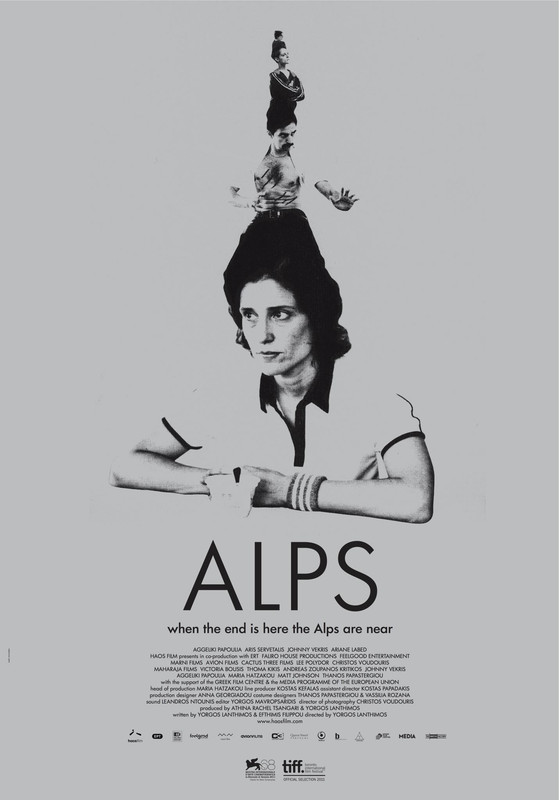
LFF 2011: ALPS

Dir: Yorgos Lanthimos
In 2009 I saw Yorgos Lanthimos' second feature film, Dogtooth, at the LFF and was knocked sideways by it. For my money I haven't seen a better film since, old or new. Alps could never have been the cinematic kick in the teeth that Dogtooth was, it is too burdened by being the subsequent feature to one so striking, but even if it is not the instantly flooring thing that Dogtooth was, Alps is an incredibly vital, individual and fascinating piece of cinema, and sees Lanthimos deliver on the promise of his last film.

The title refers not to the mountain range but to a group of four people; a nurse (Aggeliki Papoulia, the elder daughter in Dogtooth), a paramedic (Arus Servetalis) and a gymnast (Ariane Labed, the lead in Dogtooth and Alps producer Athina Rachel Tsangarai's Attenberg) and her coach (Johnny Vekris). This group seems to exist as a sort of grief counselling service, but the therapy they offer is for one of the group to 'stand in' for a dead friend or relative of the bereaved and re-enact scenes from their lives. We largely follow the nurse, encountering the other characters either when the group meets or when two of them have the same job.

As you would expect if you've seen Dogtooth, there is a deeply uncomfortable and uncertain feeling as you watch Alps, Lanthimos challenges even your most basic assumptions about the truth of the relationships between the characters, that may make Alps a frustrating watch for some, the constant questioning and my shifting perspective on what was going on in the film was something I found fascinating.

The film unfolds patiently, each little vignette filling us in a bit more either on how the group's sessions work (we see the nurse with several people who are definitely clients, notably a couple whose teenage daughter she tended to in hospital) or how the group dynamic functions. The funniest and the most disturbing scenes revolve around that group dynamic.  Like Dogtooth this film shows a small, dysfunctional, family ruled over by a stern patriarch, who amuse themselves in strange ways. At one group meeting they perfect their stand in skills, doing impressions for the others to guess (Ariane Labed's hilarious take on Prince really has to be seen), even there though there is no levity, no sense of community, and if there's one thing I'd complain about with this film it's that it would be nice to understand a bit more about how this group came together. Tension is an odd thing in this film, take the scene where the paramedic gives the nurse a 'test'; it's immediately obvious what's going to happen, but Lanthimos delays it so long, and makes you dwell so uncomfortably in the moment with his unblinking, unmoving, camera, that it is a genuinely nailbiting moment, not so much about what, but when.

I loved Alps at a visual level from the opening shot, which is very simple, just a still frame of Labed standing in a gymnasium, waiting to perform a rhythmic gymnastics routine, as O'Fortuna booms out of the speakers. It doesn't tell us much, but it's such a striking juxtaposition of image and sound, and such an unexpected opening image that it makes an immediate impression. The rest of the visuals are similarly striking and heavily designed.  The Alps members are often the centre of shots, but also often obscured, with many shots showing the back of one of them, in close up, with background characters in blown out focus. Lanthimos holds shots for an often uncomfortable length of time, as if he wants to force us to look long and hard at this strange world he has created.

The question of identity also comes up a lot here, with characters adopting other personae so frequently that we're never allowed to be sure who they really are. Even Ariane Labed's character; the naive gymnast who clearly struggles with her work for the group, presents a question in this respect.  Though her coach is definitely another member of the group I found myself wondering, thanks to their sometimes robotic interaction and the often repeated question of why she can't perform to pop music, whether he might also be a client. This question comes up even more intensely with the nurse, we see her interacting with and feeding medication to a pensioner whom she calls her Father, but there is always a nagging doubt as to whether he too is a client and, ultimately, whether these people really have real lives that include others. I'm sure Lanthimos doesn't want us to know the truth of these relationships (and nor do I really want to know), but I'd be intrigued to know what he thinks is the truth of them.

Like Dogtooth, Alps is a comedy, a deep, dark, none more black comedy, but a comedy nonetheless. The humour hits like a hammer, because it's so out of place, and delivered in such a deadpan fashion. It comes in the awkwardness of some of the re-enactments (the nurse and the coach pantomiming sex, re-enacting the moment an elderly client caught her late husband with another woman), in the dialogue (in the opening scene the paramedic urgently asks a gravely injured girl who is her favourite actor) and in the images (the nurse trying to get that same girl, bandaged almost from head to toe, to play tennis). Set against the strange and disturbing world of the film, this absurdist humour is odd, but very effective. The performances strike a similar tone; they seem a little robotic at times, but that comes out of the situation presented, and adds to the comedy of many of the re-enactment scenes but, particularly from Papoulia and Labed, there are hints of much more going on beneath that emotionless surface the characters are trying to present.

Ultimately I still don't know quite what to make of Alps. It's clearly an astonishingly accomplished piece of art as well as highly engaging and - surprisingly I suppose - entertaining film, and it further marks out Yorgos Lanthimos as one of the most interesting directors in world cinema. I don't think it's the instant classic that Dogtooth was, but it's no disappointment. Days after I saw it, it continues to go round in my head, images and questions recurring over and over, I can't wait to see it again and try to work it out.
★★★★★

Oct 17, 2009

24FPS at LFF: Day 1

ENTER THE VOID
DIR: Gaspar Noe
CAST: Nathaniel Brown, Paz De La Huerta,
Cyril Roy, Olly Alexander


Gaspar Noe’s last feature film, IRREVERSIBLE, was a shock to the system; a caustic masterpiece that was, despite its brilliance, impossible to recommend. Enter the Void is a desperate, grasping, attempt to make something equally shocking and controversial.

Enter the Void, Noe told us before the screening, is about life, about death. Well, yes, that’s what it wants to be about, but in striving for profundity Noe finds only pretension. The film is seen almost entirely through the eyes of Oscar (Brown), a young American living in Tokyo and working as a small time drug dealer. Early in the film Oscar is shot and killed by Police, and for the rest of the epic running time he floats freely through the world, watching his life pass before his eyes and looking on as the lives of his sister (De La Huerta) and friends (Roy, Alexander) go on. There is actually an interesting central idea at the centre of Enter the Void, a film about the process of death, and the out of body experience that may go with it, is genuinely intriguing but it is an idea that belongs to a short film. Enter the Void lasts 160 unbelievably long and tedious minutes.

I can’t deny that Enter the Void is, visually speaking, the work of a master filmmaker. It looks quite unlike anything else I’ve seen, and the POV construction is realistic even down to the fact that the camera regularly ‘blinks’. For the first 20 minutes I was dazzled by the visuals, but then you start to realise that there is nothing but dazzle, that this construction really has no purpose. Noe’s shot selection gets really irritating after Oscar is dead. For the next 140 minutes half your time is spent at ceiling level, looking down at people and the other half is spent just behind Oscar’s head. Add to that more neon than you’ll find in 20 Joel Schmacher Batman films, a constantly moving camera and enough strobe lighting to induce epilepsy in a previously healthy person and you’ve got a film that can be genuinely challenging to watch. I’m not against that on the whole, but there has to be a point. Noe’s visuals end up feeling like a very talented film student showing off. Just like the film’s thematic content the visuals seem to bellow, “look at me, look at me”.

Noe’s screenplay is thin, and his characters are all impossible to care about because we never really get to know much about any of them (even Oscar, whose whole life we see through his eyes) and even if we did they are all such terrible people that there is no reason to care about them anyway. The acting also happens to be pretty awful. The worst offender, just as he was in the absolutely appalling Tormented, is Olly Alexander, who can’t even say, “I’m sorry” in a way that sounds vaguely human. He honestly sounds so unnatural that I find it hard to believe that he understands the words he’s saying.

Cyril Roy may actually not understand some of his dialogue, and his thickly accented English lacks any emotion. The only exceptions to each of these complaints are the two actresses playing Oscar’s sister Linda. As an adult Paz De La Huerta gives her a moving pathos and makes her search for connection in an unfamiliar city, especially after the death of her brother, a really genuine quality. However she, and everyone else in the film, is outshone by Emily Alyn Lind, whose work as the young Linda gets to places of deep, searing emotion that seem so real they are almost uncomfortable to see in a child.

With IRREVERSIBLE Gaspar Noe offended and shocked a lot of his audience. I’ve seen people walk out of films before, but when I saw IRREVERSIBLE several ran out of the cinema. Enter the Void is almost goading its audience, begging us to find it offensive and extreme. I didn’t, I just found it tiresome and adolescent. At times Enter the Void feels like a film by a teenager who has just discovered girls. How else to explain the repeated shots of naked women - Linda, both in her job as a stripper and just sitting around naked; Oscar’s mother, who is often seen breastfeeding him or Linda; Oscar’s older lover (a terrible Sara Stockbridge), who seems to exist purely to be a topless plot device. This impression is only reinforced by the utterly pointless explicitness of the film’s last 20 minutes. We drift through the hotel love, watching an endless succession of couples having sex, much of it very evidently hardcore.  This sequence culminates with Linda and Alex (Roy), whose sex scene ends in a close up, from the inside of Linda’s vagina, of Alex fucking her. Never mind that the final result of this sequence was already done in, of all things, the opening sequence of Look Who’s Talking, it’s completely pointless. It doesn’t tell us anything except that Gaspar Noe has a desperate need to shock.

Initially intriguing and technically dazzling though it may be, Enter the Void is a huge step backwards for a man who had previously threatened to become cinema’s foremost provocateur. This is a pretentious, pointless, masturbatory film, that smacks of desperation at every turn.


KYNODONTAS
[DOGTOOTH]
DIR: Yorgos Lanthimos
CAST: Hristos Passalis, Aggeliki Papoulia, Mary Tsoni,
Christos Stergioglou, Anna Kalaitzidou, Michelle Valley


The one problem with seeing as many movies as I do? I’m almost never surprised. Well, Dogtooth took care of that for me. I really have never seen anything quite like it.

Not everyone is going to warm to Yorgos Lanthimos’ third film. There are only two types of review on IMDB; those that dismiss it as a total waste of time, and those proclaiming it a masterpiece. Dogtooth is rather standard in form. In fact it is almost textbook, if minimalist, filmmaking. What really makes this film so strange, and as a result so beguiling, is its story and the way it creates an entirely believable world all of its own. The film centres on a family; Mother and Father (Valley and Stergioglou), and three children who all appear to be between mid teens and mid twenties. Only the father is ever allowed to leave the house. The parents have forced their children to live in a hermetically sealed world, which stops at the large fence surrounding their property. The only person allowed into their world from the outside is Christina (Kalaitzidou), a security guard from the father’s workplace, who he has engaged to teach his son (Passalis) about sex, practically.

From this odd starting point Dogtooth builds a truly strange world. It’s a slightly formless film, with little narrative drive and no exposition - we discover this family’s way of life by being plunged headlong into it. In the absence of an overarching story what we have is a series of scenes that almost seem like vignettes, but which build piece by piece into a compelling whole. Because the children (who, like their parents, are never named) never go outside they spend much of their time playing. The games are truly bizarre, and always competitive. At one point the elder daughter (Papoulia), who appears to be the family doctor, even though all her information about the body is wrong, announces that she’s got a new anaesthetic, and proposes that she and her younger sister (Tsoni) both take some and the first to wake up ‘wins’. Like much of the film this scene has a truly disquieting undertone, and because events play out so against the grain of social norms you never know where Dogtooth is going to go next. In an age of movies that you can predict almost every beat of by just looking at the poster, this is truly refreshing.

Yorgos Lanthimos’ direction is formal, chilly, and somewhat distant. Shots are often very composed, even theatrical at times. Yet, because of the peculiar atmosphere in which his film takes place, this approach seems entirely natural, and a perfect fit for the material. Another thing that might be off putting is the acting. The performances of the actors playing the children are very stilted and unnatural; their tones have an unnatural evenness, an almost robotic air. You have to remember, though, what it is they are playing. When you accept that these are people who have never been outside the grounds of their home, only ever seen one person from the outside, know little of film, TV or music and have spent a lifetime being deliberately misinformed by their parents, the performance style too seems completely appropriate, and it begins to dawn that these are in fact three brilliant pieces of acting. The forced way in which the children relate to each other, and especially to Christina, the confusion with which they greet the unfamiliar (see an horrific scene with a cat) and the slightly robotic way they do certain things (a truly odd dance scene, for example), all these things and more combine to make up a compellingly realistic portrayal of these rather unique people.

The only concession to standard plotting comes rather late in the day, with the revelation that when the children lose their ‘dogtooth’ (the first incisor) they will be judged mature enough to leave the nest. This information comes back around in a viscerally painful ending, which is perfectly executed by Lanthimos. He demonstrates an admirable willingness to leave us with questions, leave us wanting to know more, and yet the film isn’t unsatisfying. Dogtooth is a strange and haunting piece of work, one that you’ll be going over in your head long after its abrupt finish.