In this packed show Mike and I review Into the Abyss, Babycall and The Hunger Games. There's discussion of one location movies and two weeks of DVD releases, and Sam picks 3 to see from the recent London Lesbian and Gay Film Festival.
You can listen to the show using the player below, or download it HERE
Showing posts with label LLGFF '12. Show all posts
Apr 6, 2012
Apr 5, 2012
24FPS at LLGFF 2012 Part 4
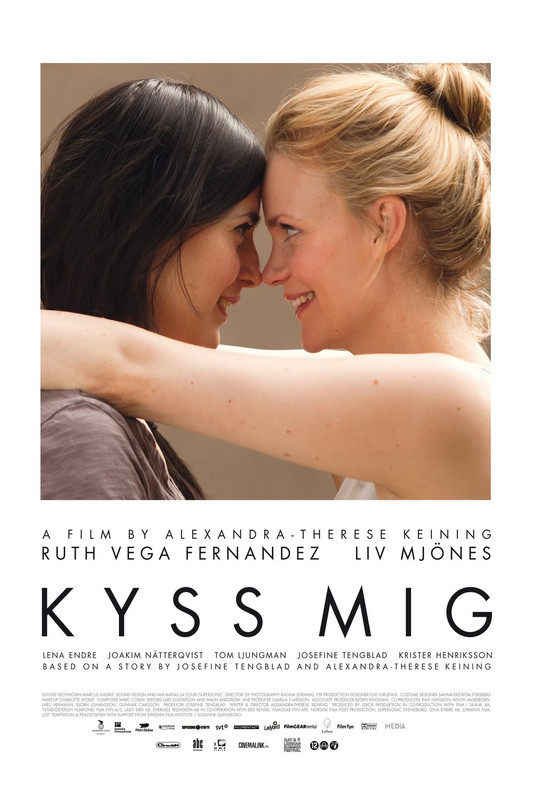
Kiss Me
Dir: Alexandra-Therese Keining
A few years ago there was an uninspired British Rom-Com called Imagine Me and You, whose big twist on generic formula was simply that the person who wanted to spirit the bride away from her groom was - gasp - a woman. I guess that if Kiss Me (also known by the equally insipid title With Every Heartbeat) proves anything it's that it wasn't the idea but the execution that was rotten in that film.
Kiss Me begins with thritysomething Mia (Ruth Vega Fernandez) taking her fiance Tim (Joakim Nätterqvist) to her Father's (Krister Henriksson) 60th birthday party. There Mia meets her new soon to be stepmother Elisabeth (Lena Endre) and Elisabeth's thirtyish year old daughter Frida (Liv Mjönes). At first Frida and Mia don't get along, but on a brief break at Elisabeth's summer home, the two kiss and sleep together, setting off a lot of questions in both of their previously well ordered lives. It's a rather familiar straight girl meets gay girl story, a variation on what is the essential story of every second lesbian movie ever made.
What holds the film together and keeps it from being totally consumed by cliche is the strength and conviction of the ensemble performances. Mia and Frida's attraction to one another arises very fast, and very much out of the blue, but it convinces because Fernandez and Mjönes have very strong chemistry together, and also manage to give us a real sense of the emotional journey that each of these women is on. There's real weight behind their decisions too; we see what's left in the wake, most of the time romantic films just brush the very idea of emotional debris under the rug, but Kiss Me acknowledges it, while also allowing us to root for Mia and Frida's relationship. The support is also good, with an especially strong showing from Lena Endre.
While the film does indulge in cliche at times it also plays with it a little bit. The romantic movie staple of the race to the airport ending does crop up, but it's played a little differently than usual. That's probably a good summation of Kiss Me; it hardly reinvents the wheel, but it's expertly made, and makes just enough changes to what has gone before to be an engaging 100 minutes.
★★★
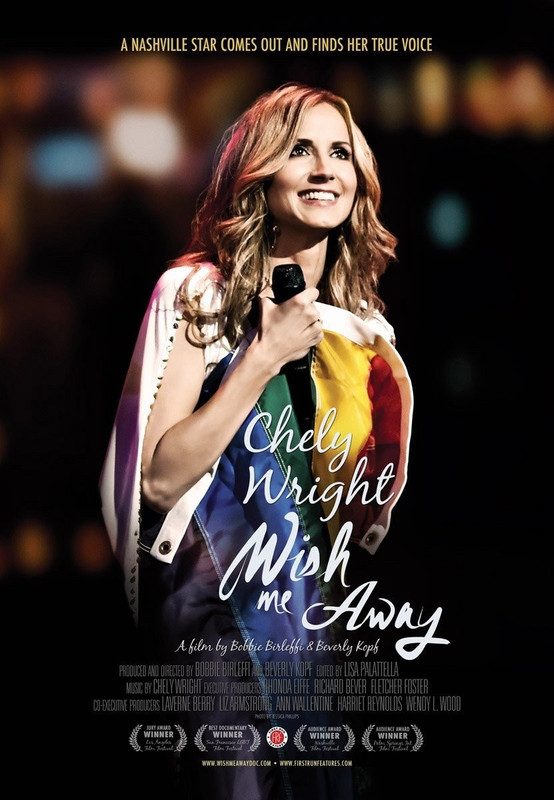
Wish Me Away
Dir: Bobbie Birleffi / Beverly Kopf
I confess, based on what we hear in this film, I'm not the greatest fan of Chely Wright's music, which seems to have been, until recently, largely country pop cast from the Shania Twain mould but, while it does of course address her career and her status as an artist, Wish Me Away is about much, much more than that. Wright became a massive star in Nashville's country music scene, with a series of hit albums and singles and critical acclaim. She also, it seems, became a well loved celebrity; dedicating herself to charity work for disadvantaged kids and the military among others. Outwardly she appears to be the perfect all American girl made good; a Christian with strong values who loves her country and sings and looks like the girl you wished lived next door. She was also, that whole time, gay.
Wish Me Away sees Wright, in incredibly personal and exposing fashion, put her decision to come out, and the almost military precision with which she decided to do it, under the microscope of directors Bobbie Birleffi and Beverly Kopf. She comes out of it very well. Wright's story powers the film, and it's largely self told, whether through (often devastating) video diaries, interview footage or a meeting we sit in on between her and her spiritual adviser. As the film runs on we hear about the pivotal things that drove Wright to, in 2010, become the first country musician to come out. From the bargain she made with herself as a very young girl that she'd pray extra hard to God, and be extra good, if only he'd make her not gay to the moment she found herself with a gun in her mouth, and how she didn't pull the trigger, there are many difficult and moving stories shared here.
Wright does touch on the fact that she probably hurt people in hiding her sexuality, from her girlfriends (including a woman, never named or otherwise identified, she calls the love of her life) to the men that she dated to maintain the appearance that she was straight. he talks with evident regret about Brad Paisley, another country musician with whom she had a serious relationship which seems to have ended abruptly. It's a bit of a shame the film doesn't talk to Paisley, because while Wright is incredibly likeable it would serve the film well to discuss a few of her less admirable moments.
That's not to say, however, that Wish Me Away is anything but a penetrating insight. Wright - and to an only slightly lesser degree her family - is laid bare here. She says that she is coming out both for herself ('to live my complete truth') and for others who find themselves in her situation, in the hope it might give them some hope and some strength. You could see this latter motivation as egotistical, but it doesn't feel like it, and has been borne out in Wright's activism since she came out. It's also borne out in this film, which is both an incredibly moving personal story and manages to preach equality without feeling hectoring. I was often genuinely moved, and I suspect you will be too.
★★★★
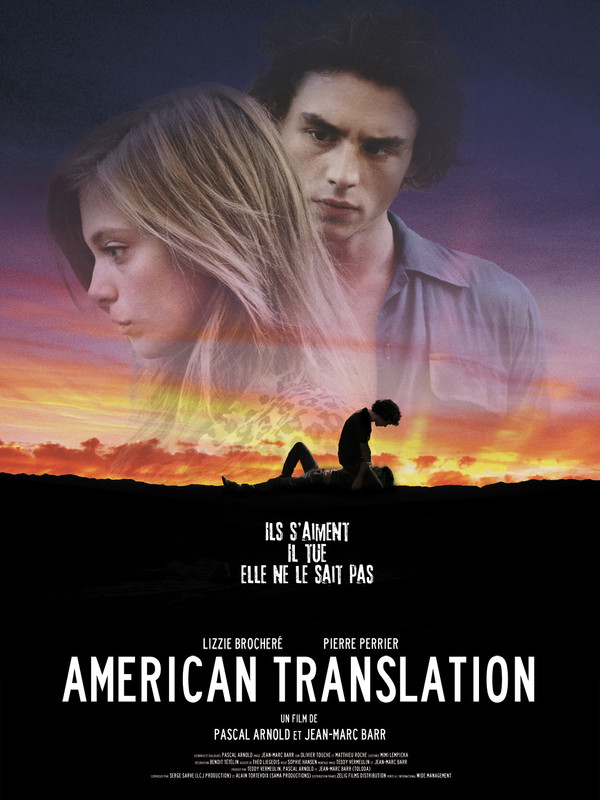
American Translation
Dir: Pascal Arnold / Jean-Marc Barr
Pascal Arnold and Jean-Marc Barr's latest directorial collaboration seems like something of an odd choice for LLGFF, as it is largely about an obsessive, co-dependent, heterosexual relationship. Chris (Pierre Perrier) and Aurore (Lizzie Brocheré) meet and immediately fall deeply in lust. Their relationship progresses fast, and soon Chris is living with Aurore in a flat belonging to her Father. All would be perfect, but Chris' behavior is frequently odd and controlling, and, Aurore soon discovers, he has a disturbing hobby; every now and then he picks up, has sex with, and strangles rent boys. Even when Aurore discovers this, her love for Chris keeps them together.
American Translation is an intense and creepy film that really gets under your skin, thanks largely to two excellent performances at its centre. Pierre Perrier is handsome enough to convince you that he could spirit the stunningly beautiful Lizzie Brocheré away, and that he'd be seen by his victims as not just harmless, but a trick significantly less unpleasant than most, and he's also convincing as a man who has learnt to wrap his controlling character in enough flattery that the people he is manipulating almost invite it. He straddles the line between deeply unsavoury and seductive with skill, while also convincing as a psychopath. There are shades here of Martin Sheen's Kit from Badlands, but also of the killer from Eric Stanze's grueling, upsetting, Scrapbook.
Brocheré is equally good, particularly as the reality of who Chris is begins to dawn on Aurore, without making her think of getting away from him, along with Perrier she provides a layered portrait of a disturbingly co-dependent relationship. One of her best moments comes as Aurore witnesses, up close, how Chris chooses and kills a victim. Much of the murder scene is played on Brocheré's face as Aurore tries to reconcile this act and the person she clearly, deeply, loves. It's terrifying scene not just because one person is committing a a brutal murder but because we see the whole process of another person rationalising it.
Arnold and Barr pace the film very patiently, refusing to make a conventional thriller. For about forty minutes after Chris and Aurore meet the murders disappear from the film, and it becomes an explicit (I lost count of how many nude scenes Brocheré has) relationship drama with a disturbing undertone. This works because it develops the characters as real three dimensional people, and makes their dysfunctional relationship one we believe in, even if we struggle to understand it, all of which gives weight to what happens after this time has been put in. The co-directors also find a lot of really interesting visuals, from the first time Chris picks up a rent boy when he is with Aurore, and the way she is shunted to the side of the frame, to a memorable final shot.
American Translation is a tough, intelligent, slow burning adult thriller, and I hope its inclusion in the LLGFF doesn't suggest that it will be ghettoised as 'a gay film', because it deserves to be widely seen.
★★★★
Labels:
2012 Releases,
Crime,
Documentary,
Festivals,
Film reviews,
France,
LLGFF '12,
Mini-Reviews,
Romance,
Sweden,
Thriller
Apr 3, 2012
24FPS at LLGFF 2012 Part 3
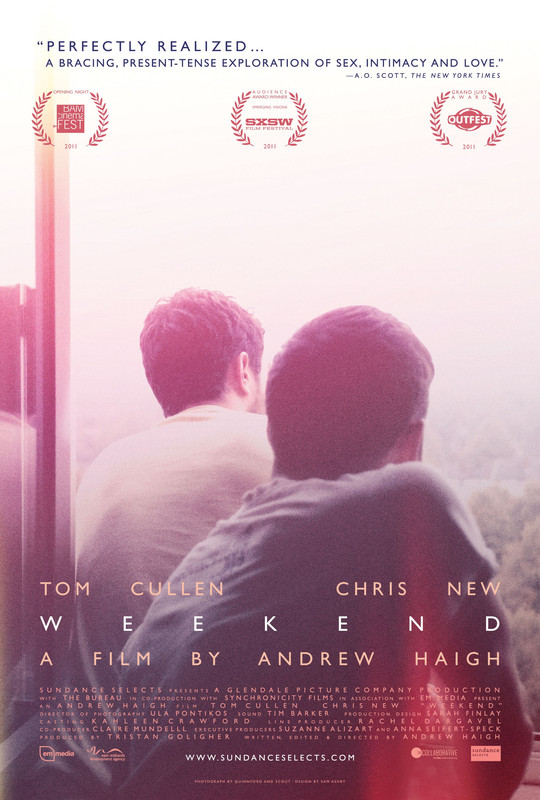
Weekend
Dir: Andrew Haigh
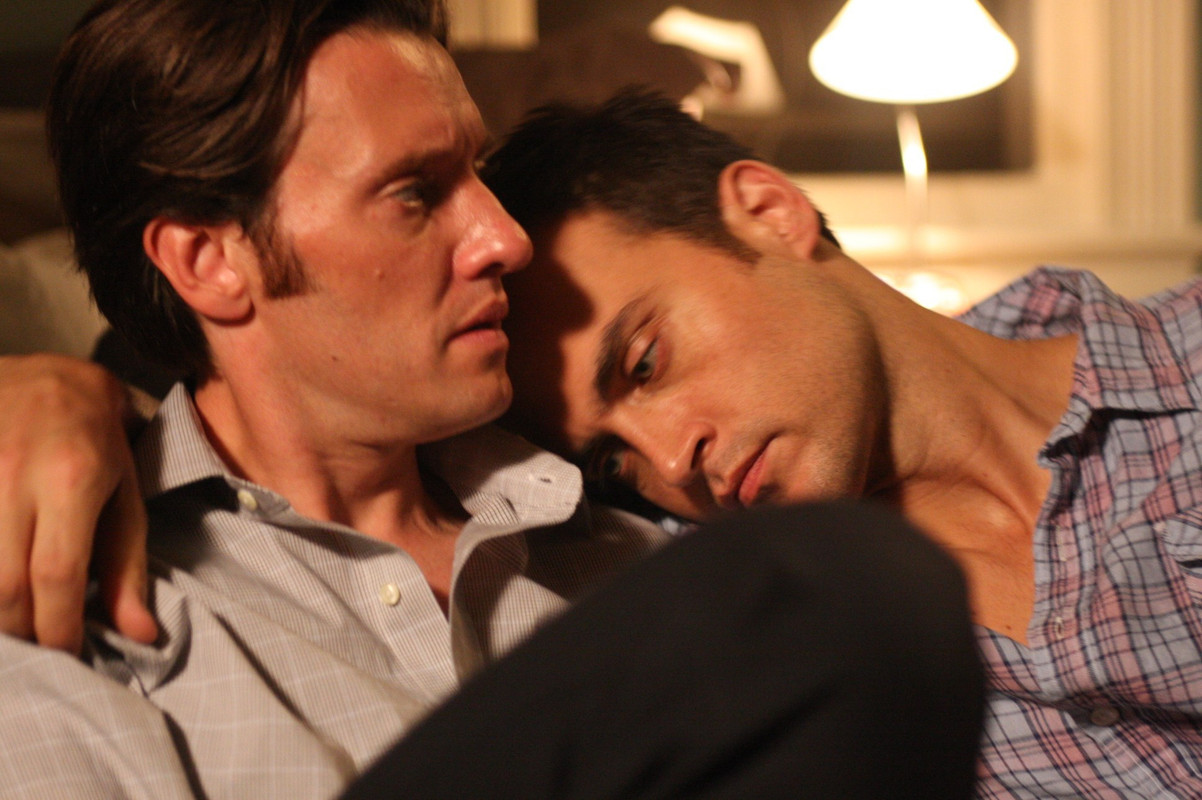
I've been hearing great things about Weekend, from just about all quarters, since last year's London Film Festival, but despite many opportunities, and not by design, I just kept managing to miss it, so where better to rectify that than at LLGFF?
At the Q and A after the film I heard director Andrew Haigh say that he wasn't keen on the many reviews using the word 'universal' to describe the film, as he felt that was a tactic to give straight audiences 'permission' to see the film, which we shouldn't need to do. I agree with the second part. At the risk of upsetting Haigh though, 'universal' was exactly the word that ran through my head, and not because this is a 'gay' film. The specifics of the relationship depicted here aren't something I have experience of, not merely because it's a gay relationship and I'm straight, but because I also happen not to have met someone for a weekend, fallen for them, but had to say goodbye almost as soon as I've met them. What does speak to me, and what will speak to almost any audience member, is the feeling of this film. Who hasn't found someone they think they might love and then lost them? Maybe neither of those things happened with the speed depicted here, maybe they did, but we've all felt like this, and that's why Weekend feels universal.
What is outstanding about Weekend is how emotionally articulate it is. This is largely down to the combination of Haigh's intelligently observed screenplay and tremendously naturalistic performances from leads Tom Cullen and Chris New. Cullen plays Russell, a gay man out to his friends, but not terribly comfortable being out in the wider public. At a gay bar he picks up Glen (New), and what seems likely to be a one night stand ends up developing quickly, even after Glen says that at the end of the weekend he's going to art college in America. Russell and Glen aren't the sort of shells we're now conditioned to accept as characters by most movies; they feel real and rounded, and for everything we do learn about them Cullen and New hint at much more going on beneath the surface. The conversational scenes between the two, particularly a drug aided discussion of marriage, have the loose feel of two people just talking the day or the night away, and that's the feeling of the whole film; it doesn't seem acted but like a little glimpse into 72 hours in the lives of these two people.
Neither Russell nor Glen is perfect, and even in the short time they spend together you can see the things that make them different and why a relationship would be hard, but they are both sympathetic, both people who feel real and who you can identify with, and that makes the relationship one you root for, even if you're reasonably sure how things will end up. To his credit, Haigh employs and plays with cliche beautifully with the film's ending, crafting something that feels both classic and a little different. Nobody needs permission to watch or enjoy Weekend, but if you have yet to, consider this a little friendly encouragement.
★★★★
The Mountain
Dir: Ole Giæver
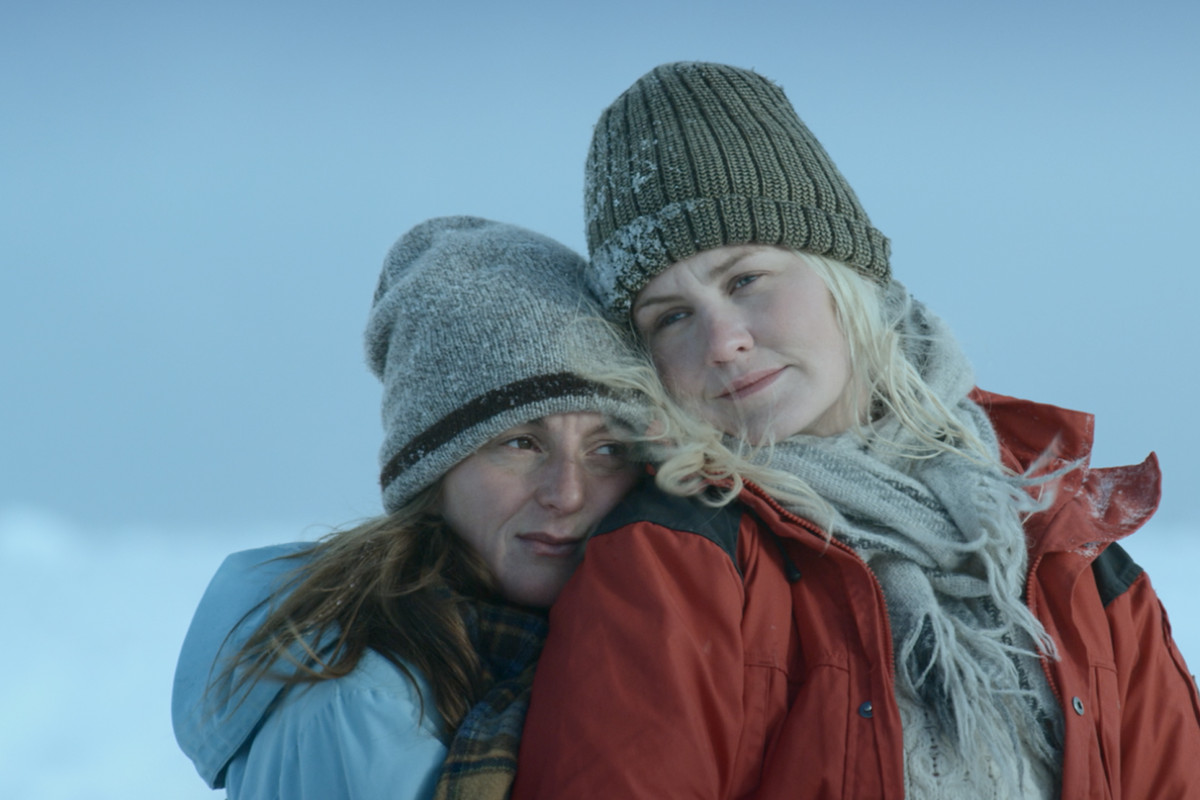
The Mountain of the title is, obviously, one big snowy metaphor. As the film opens we find Nora (Marte Magnusdotter Solem) and Solveig (Ellen Dorrit Petersen) climbing, a long term couple, they are clearly miles apart at the moment, and the film slowly lets us in on why that is and why, with Solveig three months pregnant, she is insisting that Nora join her in this trek.
As the information begins to leak out we can probably put together the story before the film tells it, but then this isn't really about what happened the last time Nora and Solveig were on the mountain, it's about the aftermath, what it has done to each of them and to their relationship. With only two characters in the film, The Mountain hinges entirely on the strength of its performances, and fortunately Solem and Petersen prove more than equal to the challenge of the emotional heavy lifting they each have to do.
The film really passes no comment on the fact that the couple at its centre are both women, it just happens to be so, and the story would be (largely) the same were they a heterosexual couple or two men. That said, the fact that both the main characters are women does give an important extra physical and emotional gravity to what has happened, and tensions between the birth and non-birth mother of the same child is a dynamic I've never seen on screen before. The performances get better and better as the emotions become more and more fraught, and the film is only really let down by an ending that feels a shade against the prevailing tone of the film as a whole. Until those last couple of minutes this is a refreshingly adult drama that deals with a difficult subject articulately.
★★★
This is What Love in Action Looks Like
Dir: Morgan Jon Fox
Documentaries often tell stories that are harder to believe than fictional films. Even in spite of knowing about it long before I saw this film, I still find myself incredulous at the idea that some parents' reaction when their child comes out to the is to send them, against their will, somewhere like the Refuge camp run by the more than slightly ironically named Love in Action, where they can, potentially, be 'treated' for and 'cured' of their homosexuality.
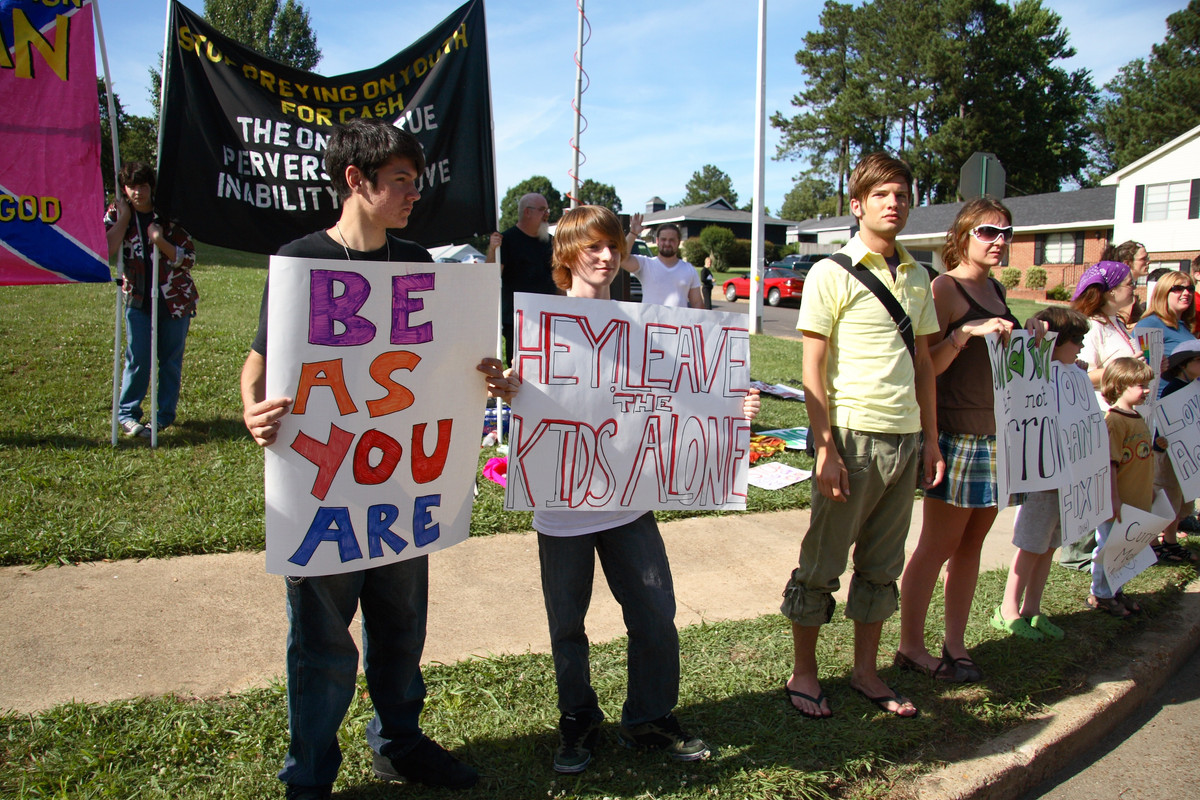
In 2005, a teenager named Zach Stark was told by his parents that he would be going to one of these camps, he then blogged about it on MySpace (this being 2005), posting the list of rules that Love in Action expected him to obey while he was there. From there the post was picked up, and a small group decided to protest at Love in Action every day that Zach was in there (the film is named for the text on one of the protestors banners), eventually the story was picked up national and international media, and began to make waves.
Director Morgan Jon Fox and his team have spent six years securing an impressive range of voices, from Zach and other people who went to Love in Action, some forced, others of their own volition as well as from the protestors and the former head of the Love in Action ministry. The views are perhaps, ultimately, slightly less diverse than I'd like - it would be good, for instance, to have someone in the film who felt that Love in Action's therapy had worked for them, though perhaps that absence speaks for itself. However, the varying perspectives from both within and without this organisation are always fascinating and sometimes shocking.
This is What Love in Action Looks Like is, or hopefully will be, an inspirational film, because as much as it's about Love in Action, it's also a film about how a small group of people really can make an important change in the world, not by violent means but by simply (and cleverly) saying: 'this is bad, and this is why'. Some technical aspects of the film are flawed (media clips are shown small, and on a background designed to look like the internet in 2005, and the emotive score sometimes overplays its hand when the image alone is plenty powerful enough), but these minor issues are easily overcome by the importance and the interest of this story.
★★★★
Labels:
2011 Releases,
Documentary,
Festivals,
Film reviews,
LLGFF '12,
Mini-Reviews,
Norway,
Romance
24FPS at LLGFF 2012 Part 2
Love Free or Die
Dir: Macky Alston
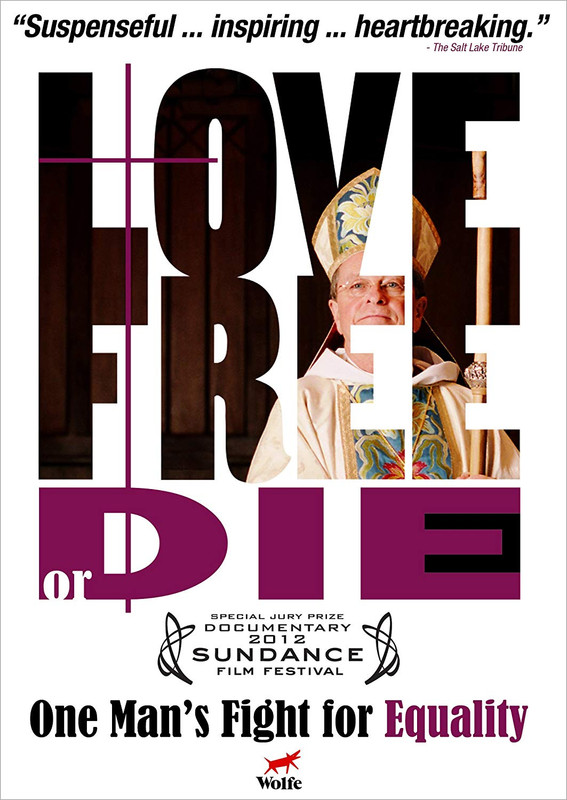
With the Christian Church mounting a robust resistance to the possibility of gay marriage, it is perhaps the perfect time for this documentary about Gene Robinson, the first gay bishop in the Anglican communion.
The film begins telling Robinson's story at the Lambeth Conference in 2008, to which he was the only Bishop in the whole Anglican church not invited. You could forgive Robinson if he'd thrown a fit and started shouting into the nearest microphone about injustice. Instead, he spent the time the other Bishops were meeting and talking meeting and talking with Parish priests, congregations and other members of society, Christian and otherwise, that he would not otherwise have had a chance to meet or minister to during his time in England. He handles himself with great good grace, even when a protestor begins yelling at him as he begins a sermon in a London church, which visibly and audibly upsets him.
The bottom line is that Gene Robinson comes across as a good man, and one who does is job extremely well, it just so happens that his partner is named Mark, not Mary, and that one fact makes him an outcast from the people he shares his vocation with.
Love Free or Die engages with issues surrounding equality within the church for LGBT people, but it doesn't become an advocacy film. Director Macky Alston takes a stance in his presentation that clearly favours Robinson and his argument with the church, but Robinson and other commentators make the case (and some also try to refute it).
To some degree I stand apart from these issues: I'm not a Christian, nor am I a member of any LGBT community. I don't need convincing on Robinson's agenda. Instead, I saw Love Free or Die as an engaging film about a man whose beliefs I may not share, but who seems to represent the best version of what the church supposedly preaches. The film represents his message without feeling like it is bellowing it at you relentlessly, and gives us a rounded view of him as a person, a priest and a political activist. Often intensely moving, this is an affecting and hopefully will be an effective film.
★★★½
Yes or No
Dir: Sarasawadee Wongsompetch
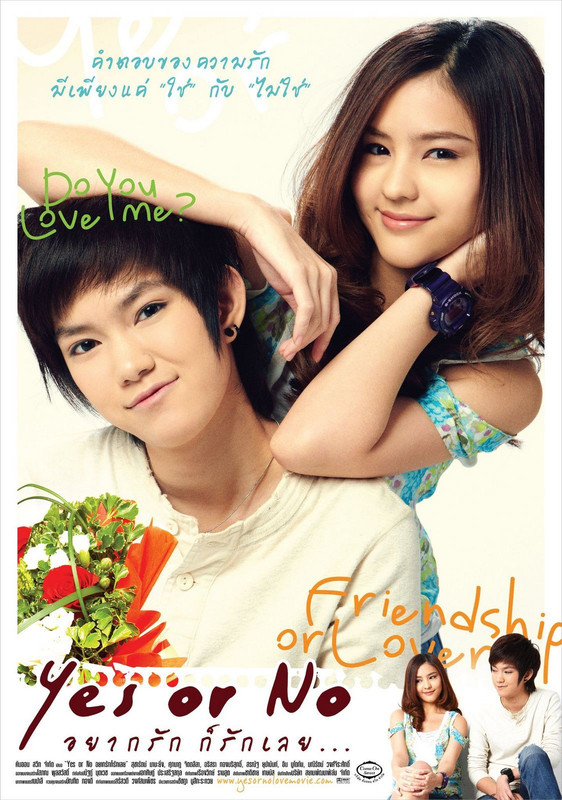
Thailand's first lesbian themed film is a well-meaning, but confused and sometimes condescending, mess. When Pie (Aom Sucharat Manaying) begins her life at university she discovers to her horror that her roommate Kim (Supanart Jittaleela) is a tomboy. At first, Pie insists they divide the room, but soon the two girls become closer, and even begin a relationship, but Pie's disapproving Mother, and her own fears, may get in the way.
Overlong at nearly two hours, Yes or No starts out neatly enough, with a madcap comic tone which, while a little sugary and broad for my tastes, does provoke some laughs. It goes off the rails, however, in an interminable and increasingly awful second hour, which is horrendously preachy, explicitly telling the audience that there's nothing wrong with being a tomboy, or being gay, in a way that feels - with a view from the West - like a public service announcement from 30 years ago. It doesn't help that the leading performances simply can't meet the dramatic demands of the film. The chemistry is all but non-existent, and come the long waited for kiss both Manaying and Jittaleela seem very uncomfortable.
The characters are appealing in the first half and, in a supporting role as a friend of Kim's who is hopelessly in love with her, Arisara Thongborisut gives a charmingly batty performance, but ultimately the film trips over its own tonal confusion and morass of preachy cliches.
★★
The Perfect Family
Dir: Anne Renton
Anne Renton's feature directorial debut isn't especially groundbreaking, and doesn't hit any really unexpected story beats, but it still remains a sharp little comedy that deals amusingly with some pressing issues in modern society. Eileen Cleary (Kathleen Turner) has just been nominated as Catholic Woman of the Year by her local church, and is desperate to win. The judging panel (including the Archbishop of Dublin) are going to make a home visit to meet her 'perfect' family, including her former alcoholic husband (Michael McGrady) her son (Jason Ritter), who is getting a divorce, and her daughter (Emily Deschanel) who has just announced that she is A: Gay, B: Engaged and C: Pregnant.
While it does draw much of its comedy from the contrast between Eileen's dedication to a strict interpretation of her religion and the way her children's lives have turned out, The Perfect Family doesn't portray Eileen as unthinking, unfeeling, or a villain. She clearly cares about her kids, but the way she interprets what is 'best' for them is totally bound up with 60 years of moralistic teaching, and still she does try. It's nice to see a film from this perspective present a (reasonably) even-handed portrait of a deeply religious person.
At the heart of the film is Eileen's relationship with her daughter Shannon, and Turner and Deschanel are both excellent, giving the drama, despite its predictability, appreciable emotional weight. When the film goes broader it hits most of its comedic targets. Turner relishes the humour, as does a brassy Elizabeth Pena (as Shannon's new Mother in Law), who lends Eileen a tracksuit which gets perhaps the film's biggest laugh. Sharon Lawrence also stands out among the supporting cast as Eileen's seemingly perfect rival for Catholic Woman of the Year.
I wish at least one moment, one plot point, had gone in an unexpected direction, but The Perfect Family is fun and well made, and while it perhaps won't stick long in my mind, I had fun watching it.
★★★
The Green
Dir: Steven Williford
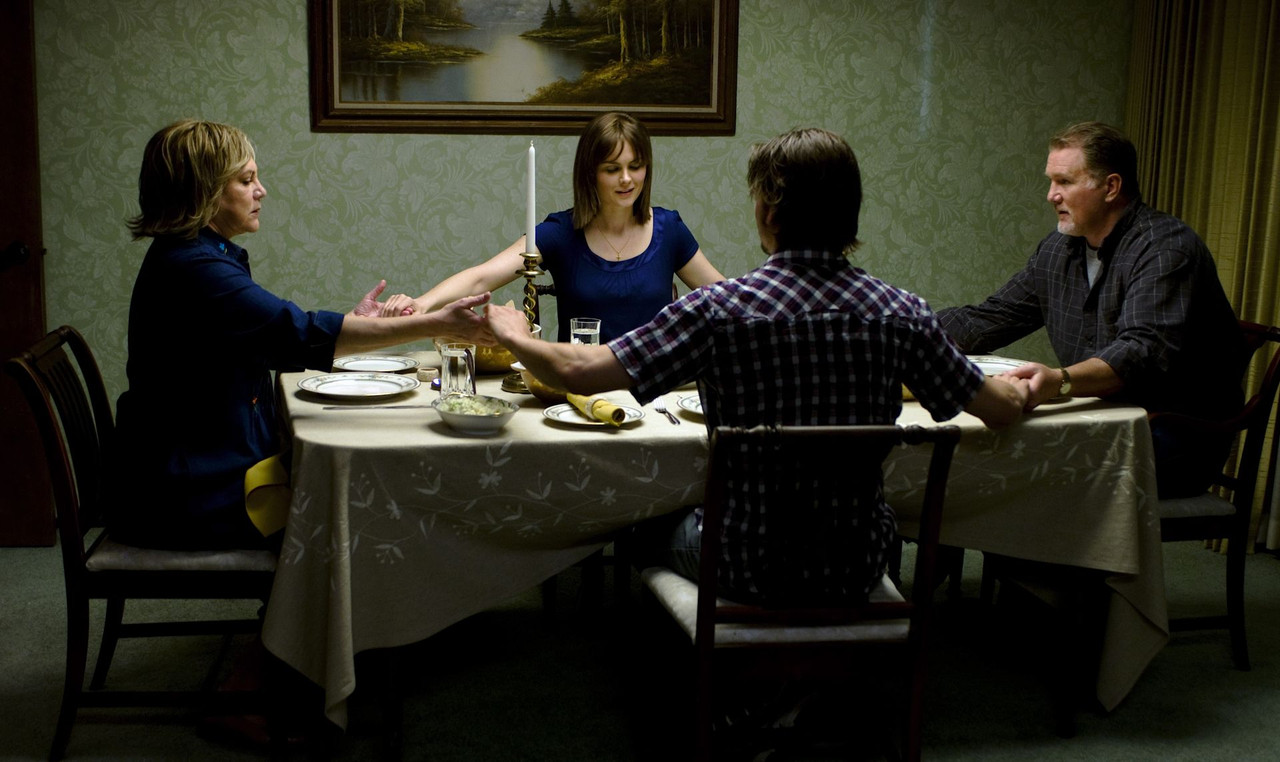
I saw much, MUCH worse films at LLGFF than this one, but not one that proved as disappointing. The Green is about a teacher named Michael (Jason Butler Harner) whose livelihood and relationship with long term boyfriend Daniel (Cheyenne Jackson) are both threatened when he's accused of an inappropriate relationship with one of his students (Christopher Bert). The small town he lives in rejects Michael, and even friends begin to become suspicious of him.
The Green, for its first hour, is a film about mess; about how one event - tiny and misinterpreted - can spiral out of control and come close to destroying a person's life. It's an incredibly relevant tale, given the paranoia that often surrounds male teachers and the sensationalism and witch hunting that even a whiff of an accusation of paedophilia can arouse in sections of the press and media. Jason Butler Harner, who impressed in Clint Eastwood's underwhelming Changeling, is excellent as Michael, giving an utterly compelling portrait of a man who can't understand how his life has begun to fall apart around him, and Cheyenne Jackson lends equally nuanced support as the boyfriend who wants to believe him, but struggles with that and with what the situation is doing to their lives. More impressive support comes from the film's women; Illeanna Douglas as Michael's best friend, Julia Ormond as his lawyer, and Karen Young as the Mother of his accuser.
Disappointingly, immediately after its very best scene, the film utterly collapses, with a storm outside providing an incredibly forced metaphor, and the film subsequently rushing to tie up every loose end in a credulity straining series of events that ignores every shred of the quiet drama with which it had treated its subject matter up to that point. It is a truly spectacular unravelling, and very nearly destroys every bit of good will the film had built up. I'm baffled that the first sixty and last thirty minutes of the film could have come from the same hands, but for those first sixty minutes The Green is still (JUST) recommendable.
★★½
Labels:
Documentary,
Festivals,
Film reviews,
LLGFF '12,
Mini-Reviews,
Thailand
Mar 30, 2012
24FPS at LLGFF 2012 Part 1
I've been attending the London Lesbian and Gay Film Festival for a couple of years now, but this year I'm spending longer than ever before on it, thanks to a fantastic looking programme of fiction and, especially, documentary films.
I can't possibly cover everything in as much detail as I usually do, but here (over two posts) are mini-reviews for the eight films I've seen so far (with more to see on Saturday and Sunday).
Circumstance
Dir: Maryan Keshavarz
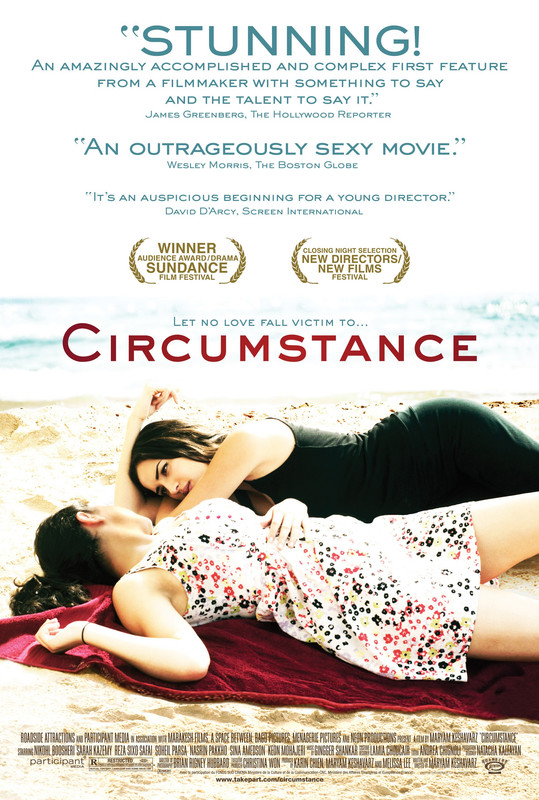
I've been hearing about, and interested in seeing, Circumstance since it first screened at Sundance in January of 2011 (I'm surprised LLGFF only has it this year). It's especially interesting, and perhaps important, as a film coming from a largely Iranian cast and crew, because of the way its subject matter reflects if not on the events of the Arab Spring (it was made before that really happened, and had been in development for years anyway) then certainly on the climate that allowed it to happen. Sadly, this context is really the only thing that makes the film especially interesting.
The film has two stories that it attempts to intertwine. The first is about 16 year old schoolgirls, Atefeh (Nikohl Boosheri) and Shireen (Sarah Kazemy), trying to be relatively normal teenagers despite the ways that Iran's social policy, and particularly the morality police, make that difficult. It soon becomes clear that there is also an attraction between the girls. At the same time, Shireen's brother Mehran (Reza Sixo Safai) has returned home having kicked drugs, and has become a much more hardline Muslim and a member of the morality police, bringing him into conflict with his family. The story concerning Mehran's continuing hardening stance on moral and religious issues, the morality police, and how that conflicts with the liberal views of his sister and her friends (one very funny scene finds them dubbing Milk into Farsi), works well, brings an intense undercurrent of tension, and feels timely.
Unfortunately the romance between Atefeh and Shireen doesn't work so well. It lacks the weight of the political angle of the film, and while there are some sensually shot scenes between them, I didn't really feel the often spoken about heat and chemistry between them, nor did I feel any real urgency to be invested in the relationship. That's perhaps because, for much of the film, the relationship story takes a back seat, and the two sides of the film, while they affect each other, don't really mix. For the most part a scene is either Politics or Relationship, and as a result the film feels choppy and confused about its own identity.
There are good things here, but I wish Maryan Keshavarz had pulled the relationship story into sharper focus.
★★★☆☆
Our Paradise
Dir: Gael Morel
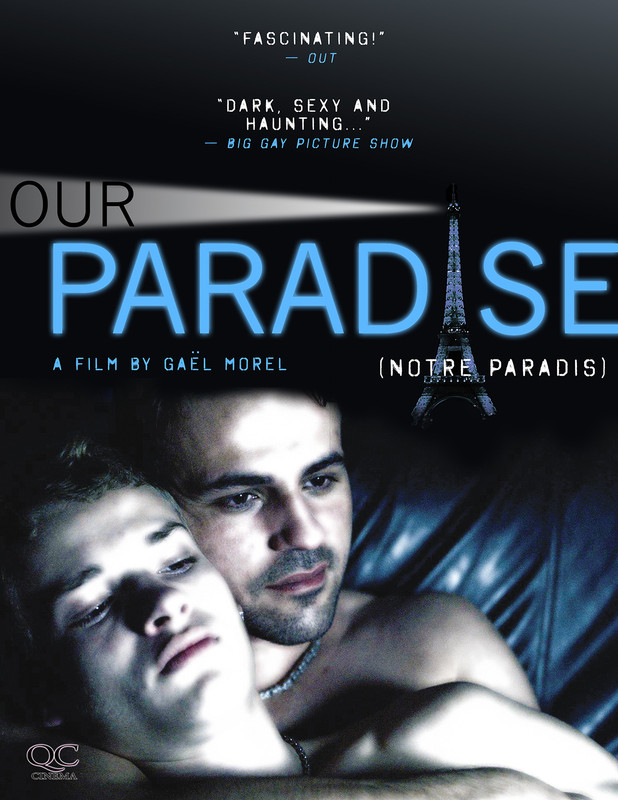
Gael Morel's latest film follows a (relatively speaking) older male hustler named Vassilli (Stephane Rideau), in the first scene of the film we discover that he sometimes murders his clients. Soon after, he meets a young rent boy (Dimitri Durdaine), who won't give his real name, so Vassilli names him Angelo, and they quickly fall in love. This doesn't mean that the killing stops though, and after one of his victims turns up alive Vassilli and Angelo flee to Lyon and take refuge with an old friend (Beatrice Dalle) and her young son.
There are two sides to Our Paradise, on the one hand it feels almost like a take on Henry, Portrait of a Serial Killer, and on the other there is the love story between Vassilli and Angelo. The part dealing with Vassilli's crimes works less well, because there is little insight into the reasons for his actions. If anything the crime subplot at first feels like a rather contrived way to get Vassilli and Angelo out of Paris and on their way to Lyon, and it only becomes truly sinister in the film's last act, in which a sense of the creation of a twisted family unit makes the threat of violence much more potent.
The love story works better. Vassilli and Angelo's relationship feels rather unhealthy, but it's no less genuine feeling for that (the still above gives a good sense of the relationship; Vassilli gripping the younger man tight both affectionately and possessively). The performances are excellent, with Rideau and the non-professional Durdaine both giving fearlessly exposing performances, and exhibiting some real chemistry, and Beatrice Dalle as striking as ever in a very down to earth role.
If there were a little more depth behind Vassilli's crimes then this might have been great, as it is Our Paradise is impressively acted and often engaging, but also smacks of unfulfilled promise.
★★★☆☆
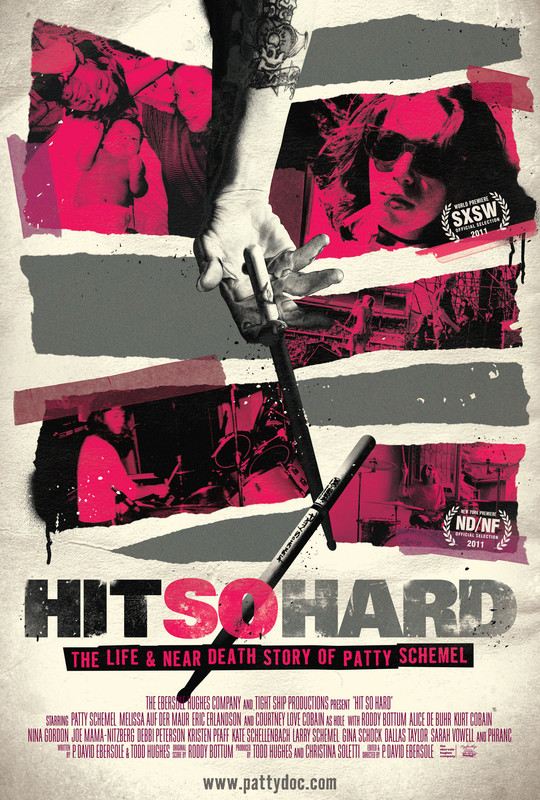
Hit So Hard
Dir: P. David Ebersole
Hit So Hard goes to core of one of the more insoluble questions of a festival like LLGFF: what makes a film one that fits in a programme like this? Former Hole drummer Patty Schemel is a lesbian, she's married to a woman, and they are having (have now had, I'm sure) a child. This film does touch on her sexuality, but it's tangential to the thrust of the documentary, which is about a great rock drummer who was almost destroyed by drugs. Does putting it in a Lesbian and Gay Festival ghettoise it, or does asking that question help enforce that very ghettoisation? Answers on a postcard.
Those questions aside, Hit So Hard is a fascinating documentary. It's built largely from interviews with Schemel, the other members of Hole (including a completely wasted Courtney Love), other musicians, and Schemel's brother and mother, and from footage shot on Schemel's own video camera during her days with Hole. This personal footage is an absolute goldmine, as it catches Schemel and her friends totally unguarded. There are touching scenes of Kurt Cobain with his baby daughter Frances, there are raucous moments from backstage with Hole, and there are intimate conversations captured between Schemel and her friends, especially Melissa Auf Der Maur, recruited as Hole's bassist when Kristen Pfaff died of a heroin overdose.
What really draws you into the story is Schemel herself, her honesty and good humour are disarming, and conspire to make it even more telling and even sadder when she reaches the one point in her story - when she was homeless and a crack and crystal meth addict - where she clearly wants to avoid one traumatising detail. Drugs are one part of the story, music is the other, and Schemel's passion for it comes through strong in both the archive and the interview footage, especially when the very difficult making of Hole's third album, Celebrity Skin is discussed. In one of the greater moments in irony in recent times, this film is named for a Hole song on which Schemel doesn't play.
Hit So Hard is by turns sad, funny, and even inspirational, particularly as, over the last ten minutes or so, captions reveal just how long the journey that Schemel has been on while the film was being made has been. It's interesting and entertaining as a film about one particular person, as a film about drugs and as a film about being in a band. It comes highly recommended, especially if, like me, you grew up with 90's music.
★★★★☆
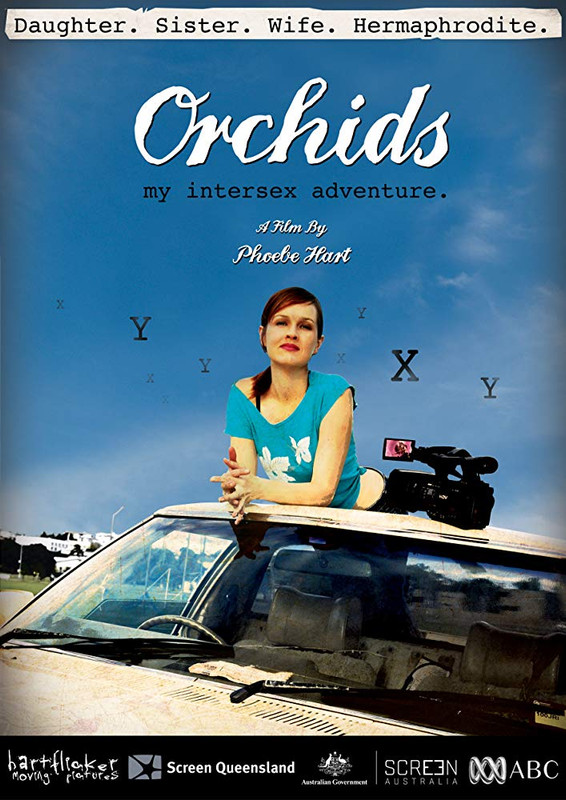
Orchids: My Intersex Adventure
Dir: Phoebe Hart
As suggested by the possessive subtitle, Orchids: My Intersex Adventure, is clearly a deeply personal film. Director Phoebe Hart wants to finally bring into the open what has long been her family secret, that both her and her sister Bonnie were born intersex; genetically male, but with a body that would not recognise male hormones, and so developed as female. To this end, Phoebe and Bonnie embark on journey, trying to talk both to intersex people they don't know, and to their family in order to explore is issues around their condition and their identity.
The greatest strength of Orchids comes from its extremely personal nature. What drives it is a sense of Phoebe trying to come to terms with her childhood, and the way her identity was initially hidden from her and from her sisters, and the different ways in which different parts of the family dealt, and continue to deal, with it. Her parents seem to have largely attempted to avoid the issue, and continue to for much of the film, only agreeing to be filmed or interviewed very late in the process. More forthcoming are the other intersex people Phoebe and Bonnie meet, their stories, and especially that of Phoebe's former photography teacher, who, amazingly, is also intersex, are often extraordinary and moving, even if you sometimes feel the film is drifting from its personal viewpoint here.
Another element that really makes the film engaging is the relationship between Phoebe and Bonnie. Phoebe is more serious, though a genial host for the film, whereas Bonnie comes across as madcap and unpredictable, and is immensely good fun, lightening the mood, often in an inappropriate manner, which makes it all the more amusing.
The film is, however, hamstrung by its origins as a piece for Australian TV, and the strict running time constraints that keep the film to just under an hour, and mean that several threads feel like they need more room to breathe. What's here is fascinating and well presented, but it feels like there is so much more to say, and I'd be happy to spend another hour for Hart and her family to say it.
★★★☆☆
Labels:
2012 Releases,
Documentary,
Festivals,
Film reviews,
LLGFF '12,
Mini-Reviews
Feb 27, 2012
The London Lesbian and Gay Film Festival 2012: A Preview
This will be my third year attending the London Lesbian and Gay Film Festival and I'm pleased to see that, after a difficult 25th anniversary last year thanks to the arts funding cuts, the festival has re-expanded, up from a week last year to ten days this time round, and boasting a programme jam packed with interesting and vibrant looking films. I can't possibly cover everything I'd like to see in this preview, there really is just too much, so instead here - in alphabetical order by title - are my personal Top 10 priorities, the films I REALLY want to see at the festival. For the full programme, be sure to visit http://www.bfi.org.uk/llgff/. I hope to see a few of you there between movies.
The short descriptions (in blockquotes) and pictures here are drawn from the LLGFF programme.
ABSENT (Marco Berger)
AMERICAN TRANSLATION (Pascal Arnold / Jean-Marc Barr)
CIRCUMSTANCE (Maryam Keshavarz)
THE GREEN (Paul Marcarelli)
Beyond that, and my hope that the film will deal in doubt more than, say, Doubt did, I want to see The Green for its outstanding cast. Jason Butler Harner impressed in Changeling, and I'm a longstanding fan of supporting actresses Julia Ormond (as Harner's lawyer), Illeana Douglas (as his supportive friend) and Karen Young (as the mother of his accuser). If nothing else there should be some really standout performances here.
LOVE FREE OR DIE (Macky Alston)
ORCHIDS, MY INTERSEX ADVENTURE (Phoebe Hart)
OUR FUTURE (Kashou Iizuka)
THE PERFECT FAMILY (Anne Renton)
THIS IS WHAT LOVE IN ACTION LOOKS LIKE (Morgan Jon Fox)
WISH ME AWAY (Bobbie Berleffi / Beverly Kopf)
There is so much more that I want to see at the festival, from short film selections to documentaries about musicians; the Bowie like Jobriath (Jobriath AD) and Hole drummer Patty Schemel (Hit So Hard) to features from Iceland (Jitters), Sweden (Kiss Me), Norway (The Mountain) and Thailand (Yes or No?). This looks like a great festival this year and I hope more people who, like me, come from outside the LGBT community, will take a chance on a few of these movies.
The short descriptions (in blockquotes) and pictures here are drawn from the LLGFF programme.
ABSENT (Marco Berger)
A schoolboy develops a crush on his teacher in this original and unconventional thriller.Argentina is a real up and comer in terms of world cinema, and for a little while now has been producing a few break out arthouse titles each year, it's also produced a couple of notable filmmakers addressing LGBT issues. This is Berger's second feature to play at LLGFF, and the clip we saw suggests a taut, tense and intimate little thriller with an unobtrusive observed camera style and a pair of strong leading performances.
AMERICAN TRANSLATION (Pascal Arnold / Jean-Marc Barr)
A young woman discovers her boyfriend is a psycho-sexual killer with a fondness for handsome rent boys.If you see more than a couple of LGBT films you can become very used to seeing a lot of variations on the same coming out / self discovery story (many of them good, but still), so it's nice to hear about something like American Translation, which appears to be shying away from the cliches, combining a relationship narrative between Lizzie Brochere and Pierre Perrier and a thriller about Perrier's activities as a serial killer preying on rent boys. I'm hoping for a smart and challenging film that evokes some of the same discomfort that powered films like Henry: Portrait of a Serial Killer.
CIRCUMSTANCE (Maryam Keshavarz)
Two young women fall in love while exploring the sub-cultural underground party scene in Tehran.It's humbling, and important, that in the political climate in which they live (which has recently seen filmmakers arrested, imprisoned, banned from making movies, and in the case of one actress who dared to show her breast on camera, barred from the country) Iran is continuing to make films that explore things that will be extremely controversial at home. Circumstance has been much talked about since it appeared at Sundance last year (where it won the Audience Award). The trailer we saw paints this as a vibrant and sexy film that nevertheless explores some uncomfortable realities about Iran's conservatism. Hopefully it will live up to the good word that has built around it.
THE GREEN (Paul Marcarelli)
A teacher has his life turned upside down when a student files a sexual allegation against him.I saw a video recently of a speech given AGAINST legislation in Georgia that would stop LGBT candidates being discriminated against for teaching jobs. Against a background where that sort of thing is still a live issue in the US, and the reality is that even an accusation of sexual abuse can ruin someone's life, a film like The Green appears timely.
Beyond that, and my hope that the film will deal in doubt more than, say, Doubt did, I want to see The Green for its outstanding cast. Jason Butler Harner impressed in Changeling, and I'm a longstanding fan of supporting actresses Julia Ormond (as Harner's lawyer), Illeana Douglas (as his supportive friend) and Karen Young (as the mother of his accuser). If nothing else there should be some really standout performances here.
LOVE FREE OR DIE (Macky Alston)
An intimate portrait of Bishop Gene Robinson, the first openly gay and partnered bishop in Christendom.The selection of documentaries at LLGFF looks especially strong this year, and this film about gay Episcopalian Bishop Gene Robinson looks like it will give a real insight into Robinson and, hopefully, into those who opposed his appointment. Taking Robinson as a central subject should also distinguish this treatment of the issue of church acceptance of the LGBT community from that of the recent (and excellent) For the Bible Tells Me So.
ORCHIDS, MY INTERSEX ADVENTURE (Phoebe Hart)
A moving autobiographical documentary about a woman's journey to come to terms with her intersex condition.While it doesn't say so in the title, the LLGFF does screen films addressing all areas of the LGBT community, and this one deals with a young woman and her friends and family coming to terms and dealing with each of their relationships to her intersex status. This promises, as it unfolds through director Phoebe Hart's candid video diary, to be a deeply personal film exploring an issue that still remains almost completely undiscussed in cinema or, really, in public life at all.
OUR FUTURE (Kashou Iizuka)
A pivotal summer in the life of a trans teenager growing up in rural Japan.I've been falling in love with Japanese cinema for the last couple of years (thanks largely to the films of mad genius Sion Sono), and this semi autobiographical story of a male identifying trans teenager dealing with his parents divorcing and an uncomfortable school life sounds like an intelligent and moving piece of work, providing it's well handled and that the performances convince.
THE PERFECT FAMILY (Anne Renton)
A mother and daughter struggle to accept each other in this funny and poignant all-star family drama.It's always nice to see, in areas of cinema that are traditionally niche concerns, a film that seems like it might have the ingredients to break out of that ghetto, and certainly this dramedy starring Kathleen Turner as a Christian matriarch whose daughter (Emily Deschanel) announces that she is gay, engaged and pregnant would seem to fit that bill. Hopefully both Turner and Deschanel will be at the top of their games and we'll have a smart, funny, movie here.
THIS IS WHAT LOVE IN ACTION LOOKS LIKE (Morgan Jon Fox)
A passionate documentary chronicling one of the most controversial cases in recent gay history.It seems that religion rears an ugly head in this documentary about a young man sent, by his parents, to a ministry that promised to 'cure' his homosexuality. It seems that director Morgan Jon Fox has got interviews from all sides of this story, and hopefully he'll use them to present a less polarised picture than we are used to seeing of these issues.
WISH ME AWAY (Bobbie Berleffi / Beverly Kopf)
Country music star Chely Wright's brave coming out journey is beautifully chronicled in this excellent documentary.I like some country music, but had only heard of Chely Wright through the news, because, having been an incredibly successful country star she came out in 2010, and that decision, thanks to the conservatism of much of the country base, cost her radio play, record sales and fans. In what looks like another deeply personal documentary this film covers the run up to and aftermath of Wright's decision to come out, largely through her own video diary. The clip we saw was very moving, and this is something I'm eagerly anticipating seeing.
There is so much more that I want to see at the festival, from short film selections to documentaries about musicians; the Bowie like Jobriath (Jobriath AD) and Hole drummer Patty Schemel (Hit So Hard) to features from Iceland (Jitters), Sweden (Kiss Me), Norway (The Mountain) and Thailand (Yes or No?). This looks like a great festival this year and I hope more people who, like me, come from outside the LGBT community, will take a chance on a few of these movies.
Subscribe to:
Posts (Atom)