Showing posts with label Musical. Show all posts

Aug 12, 2019

Playmobil: The Movie [U]

Dir: Lino DiSalvo
When it was first announced, I remember a lot of skepticism about The Lego Movie, but on reflection it makes perfect sense, Lego could be completely unconstrained, it offered a multitude of ideas because the only boundary to what you could do with it was your imagination. Playmobil doesn’t strike me that way. I remember it as having defined sets and not being especially malleable. This is just one of many reasons that the German company’s naked attempt to replicate Lego’s cinematic success falls flat.

The setup has 18 year old Marla (Anya Taylor-Joy) her younger brother Charlie (Played at 6 by Ryan S. Hill and at 10 by Gabriel Bateman) orphaned, leaving Marla to abandon her dream of spending a gap year travelling and to become a surrogate parent to Charlie who, a few years later, is bemoaning how little fun she’s become. After a row Charlie runs away, he ducks into a toy exhibition and when Marla finds him there they are both sucked into the world of the Playmobil toys they used to play with together.

Playmobil: The Movie feels like a film that nobody thought about beyond its title. The characters, screenplay and message are all painfully bland, the songs are perfunctory and the performances either lack or make poor use of any personality from the actors. This lack of interest pervades everything, right down to the animation. Consider the intricacy of how The Lego Movie and its sequels and spinoffs are animated: everything is built from virtual representations of real Lego bricks, there is nothing in the films that couldn’t be built, and the characters all retain the same articulation as their real life counterparts. Initially, when Marla and Charlie are sucked, low rent Pleasantville style, into the Playmobil world, it looks as though this film will take a similar tack, as Marla struggles to get used to moving using her new rigid plastic limbs, on the plus side, this is one of the few gags in the film that raises a titter. Sadly, the film quickly abandons the idea, allowing the figures to bend their arms and legs in a way that actual Playmobil figures can’t. The choice isn’t the issue, the inconsistency and lack of interest in addressing or exploring it is, along with how this is indicative of the larger experience of the film.

The film unfolds as a series of vignettes some rip off better things (the opening section with the vikings devolves into a deeply substandard attempt at ripping off a song from Tangled) and others are simply unfunny scenes of their own, often voiced by celebrities who lend little to proceedings (Adam Lambert as a Roman emperor).

This same lazy feel pervades everything. The songs feel particularly listless, with Anya Taylor-Joy looking ill at ease as she dances her way through an anonymous opening number and Meghan Trainor obviously heavily autotuned for her song. The jokes have the same listlessness, with Jim Gaffigan seemingly abandoned by a script that gives him a main character (Del), but absolutely no defining traits and several interesting opportunities for gags squandered. Think about Meghan Trainor’s part, it’s a fairly route one idea but, wouldn’t a funnier joke be to have her speaking voice autotuned and her singing voice natural? Daniel Radcliffe sounds very ill at ease as secret agent Rex Dasher, why not play that up, make it part of his character? A nervous and uncomfortable James Bond figure may again be a relatively obvious gag, but at least it’s something, and would mitigate an otherwise weirdly affected performance.

All in all, Playmobil: The Movie is dull and empty, a closing sequel setup seems - thankfully - ludicrously optimistic. I suspect this will very soon be an embarrassing footnote that Anya Taylor-Joy and Daniel Radcliffe, among others, will cringe at being reminded of.
★

Jun 2, 2019

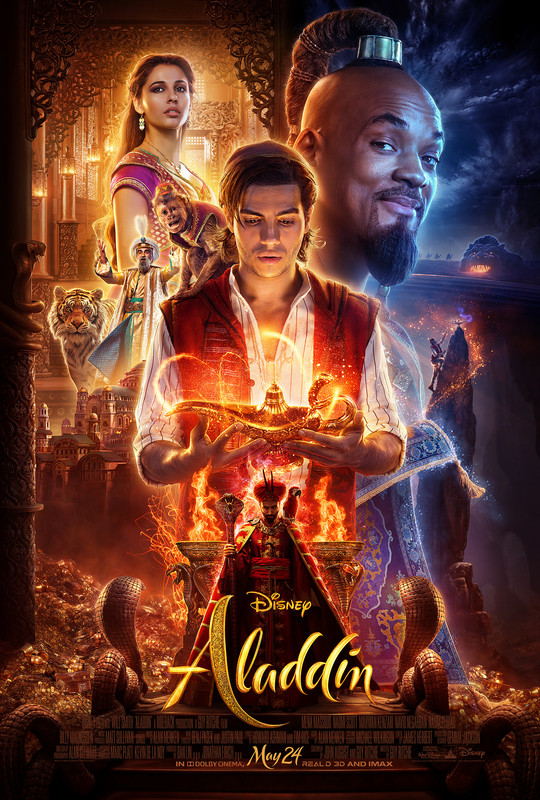
Aladdin [2019] [PG]

Dir: Guy Ritchie
After the live action reboot of Beauty and the Beast made, at last count, all the money, this was only a matter of time. Aladdin was one of the great films that Disney made in the renaissance kicked off by The Little Mermaid in 1989, and was incredibly influential thanks to the casting of Robin Williams, whose spectacular voice work as the Genie was undoubtedly a major catalyst for more recognisable actors from outside animation being cast in the main voice roles in subsequent films. This live action version has a lot to compete against.

Sight unseen,  there are promising indications. You could never replace Robin Williams, but Will Smith, though his comic energy is very different, is one of the few people it is possible to imagine finding a new spin on this part. Rather than cast the latest hot young things, director Guy Ritchie has found largely new and culturally appropriate actors for the main roles, though the positives as far as representation goes have been undermined by stories of extras being given brownface makeup on set. Still, there does seem to be at least an attempt to find a fresh angle. And then you see the film.

It’s fair to say that the lyrics to the opening song of the animated film, Arabian Nights, were always rather problematic, so it’s fine that the version here is rewritten, but it is a very bad first indication of what this film is going to be. Rather than the peddler/narrator, the song is now delivered by a ‘mariner’ played by Will Smith. Smith, as will be repeatedly demonstrated, can not sing. Rather than drawing us in to the live action world of Agrabah, the bored, obviously autotuned, yet somehow still terrible delivery of the song keeps us at arm’s length. 

This is an abiding problem with Will Smith’s performance. As the Genie, Robin Williams was an endless explosion of comic energy and invention, this was always likely to be a more laid back version, but Smith never seems comfortable in the role and doesn’t find a groove. The better moments take ideas from the original performance but allow Smith to put his own spin on them. The sequence of trying various looks for Aladdin’s Prince wish is a good example, finding a middle way between Smith's persona and the original material. Conversely, expanding Genie’s story by giving him a love interest (Nasim Pedrad) and the moments in which he directly emulates Williams simply don’t work. Tedious as Genie’s romantic storyline is, Smith’s casting - intentionally or otherwise - throws up one potentially interesting and provocative subtext: Genie is essentially a slave and Aladdin, his master, has the sole power to free him. Casting an African American actor in this role makes Genie’s chains something more than a supernatural plot facilitator, it's not a surprise that a Disney film is either unable or unwilling to find a way to engage with this idea, but it goes slightly uncomfortably by the wayside; always there but never addressed.

The awkwardness of the whole enterprise isn’t just evident in front of the camera. Guy Ritchie seems to have had similar problems. Ritchie always felt like an odd fit for this job, with no experience either in films geared towards this young an audience or with musical numbers. It shows. Again, there’s a roadmap to follow and he looks for a middle way between using the animated film as a storyboard and bringing his own ideas. What goes missing, in both sides of the equation, is the fizz of the original. Like the character of Genie (and probably largely because of him) Aladdin had real energy in its animated form. Here, everything seems slower. At over half an hour longer Ritchie's Aladdin feels bloated. More pressingly though, sequences like the escape from the lava in the cave of wonders and the opening chase with the guards seem to have been made a few percent slower. I suppose this allows the film to feel slightly less cartoony, but for a small difference it’s very perceptible. The Prince Ali scene brings the film’s every flaw together from Ritchie’s staggeringly boring and flat staging, which makes the gigantic spectacle of the original number feel tiny, to Smith’s listless and tuneless delivery of one of the score’s best songs.

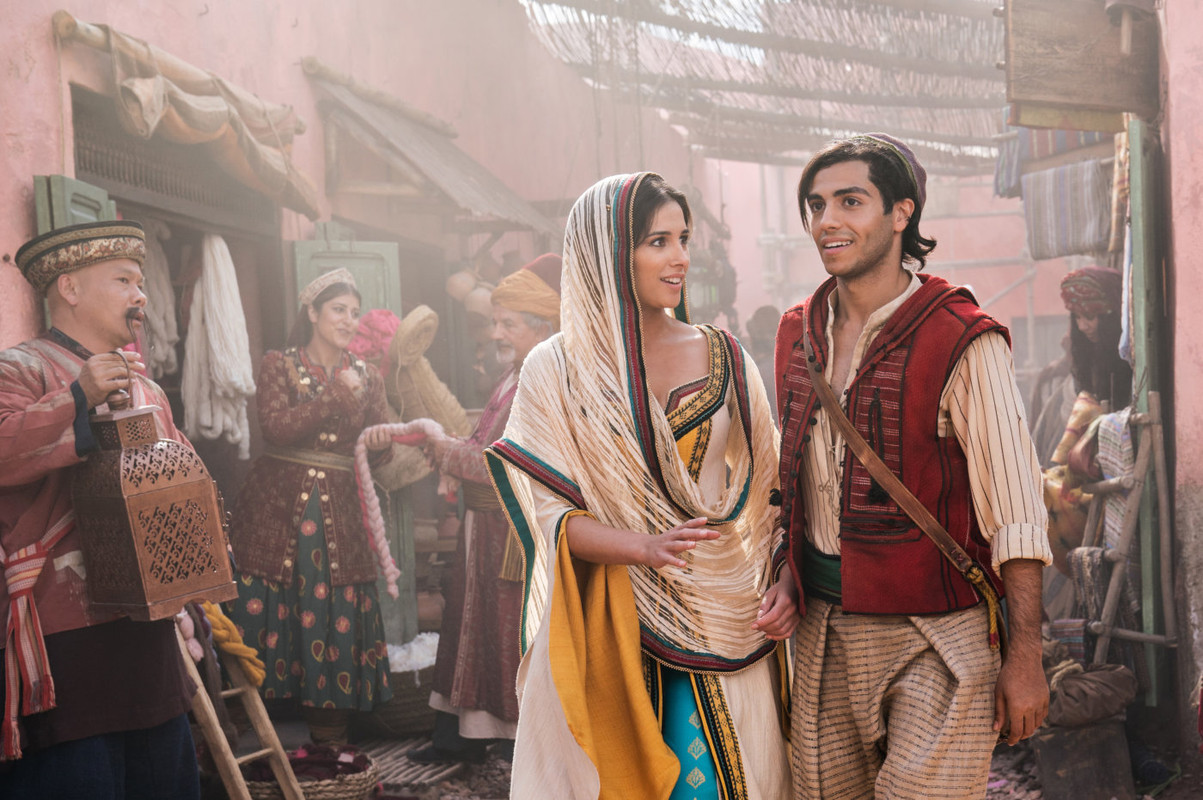
Happily, this Aladdin does have a few things going for it, chiefly British actress Naomi Scott, whose modernised Jasmine is much more active and assertive than the animated character and who gives easily the best performance, both as an actor and as a singer, in the film. Of all the added elements, the shift in the dynamics of why she can’t marry a commoner and her excellent song new Speechless are by far the most interesting. Marwan Kenzari has presence and is a far handsomer Jafar than you’d expect based on the animated character’s model, but what he lacks is menace. To be fair to Kenzari, who does what he can with the part and has a certain slippery charisma, this is largely the fault of the script by Ritchie and John August, which strips Jafar of the most gleeful aspects of his villainy, as well as dropping his Prince Ali reprise and reducing Iago to a squawking prop. Mena Massoud is perhaps the actor who sticks closest to his animated counterpart’s personality. He captures Aladdin’s charm and cheekiness, hits the jokes well (even if a bit about jam is ludicrously overextended) and delivers the songs solidly enough.

At its best, Aladdin is just about good enough. There are a handful of moments that translate the magic of the original film - A Whole New World still works - and a few new ideas do click, but these are few and far between. As a whole, it needed the courage to be more radical. Like the Genie, the film is shackled, only, in this case, its master is nostalgia. Rewrite the songs so Will Smith could deliver them entirely as rap, rather than making him sing when he can’t (or try to be Robin Williams when he can’t). Have a director who knows musicals and let them cut loose with the camera rather than shoot the numbers as if they are being awkwardly performed on a cheap stage set. There are a few simple pleasures here, but with just a little daring there was a much better and more individual film to be made.
★★

Apr 14, 2014

This Week We've Been Watching... April 7th - 13th 2014

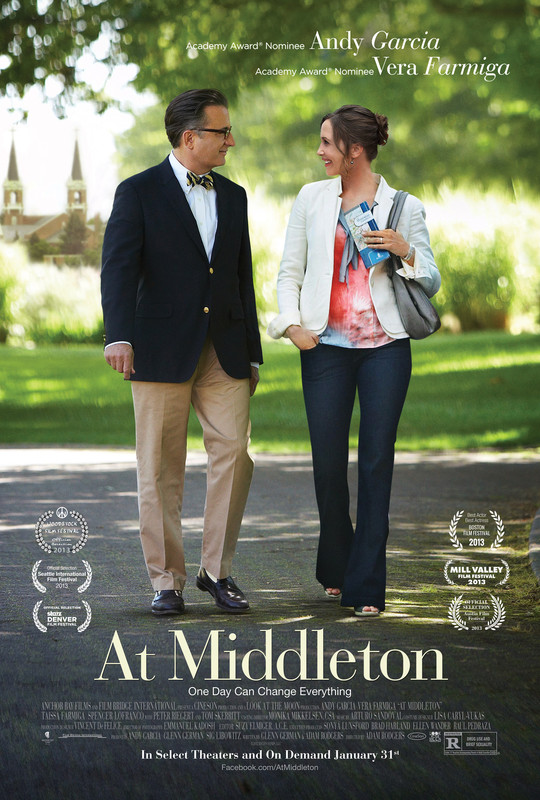
At Middleton
Dir: Adam Rogers
The romantic comedy has, of late, been in the doldrums as a genre.  It has largely descended into the act of watching people you hate make terrible jokes while falling into laughably unconvincing relationships with one another.  I was hoping that, given the participation of Vera Farmiga and Andy Garcia, At Middleton would break that mould.

Farmiga and Garcia each play parents bringing their children to an open day at Middleton college.  They meet early in the day, argue but then hit it off and end up separated from the tour group, spending the day getting to know each other and perhaps falling for each other.  For about an hour this has a level of charm about it.  Farmiga and Garcia are both fine actors and while they are saddled with rather cliché characters (Garcia the uptight Dad, Farmiga the free-spirited Mom) they spark off each other quite nicely.  The chemistry works and so do many of the jokes, especially a scene in which the two stumble into an acting class and end up improvising a scene.

The cuts back to the kids storyline (despite a decent performance from Tassia Farmiga, Vera's much younger sister, as her daughter) never generate much momentum and in the first hour they drain a bit of the energy that is being built up.  This becomes a much bigger problem as the film segues into its long third act.  At 100 minutes At Middleton could be cut by a fifth and lose very little.  The last 40 minutes drag out, especially in an interminable scene in which Garcia and Farmiga get stoned with a couple of college students only to end up shouting "The ballsack is life" over and over.  Remarkably this is not the worst line in the film.

Towards the end At Middleton also develops a sentimental streak a mile wide, which meant I stopped believing in the connection between these characters.  Worse, it provides the film with one of the most vomit inducing lines of 'romantic' dialogue since the ending of Four Weddings, as Farmiga turns to Garcia, whose character is a heart surgeon and says "I thought you fixed hearts".  As I said, Garcia and Farmiga are both very fine actors, but you can't expect anyone to make that line, nor quite a few of the others this script puts in their mouths, work.  They try hard, but the last third of the movie finds them increasingly defeated by the material.

At Middleton is actually one of the better American romantic comedies of recent years, but sadly that speaks to the catastrophic state of the genre more than it does the qualities of this film.
★★

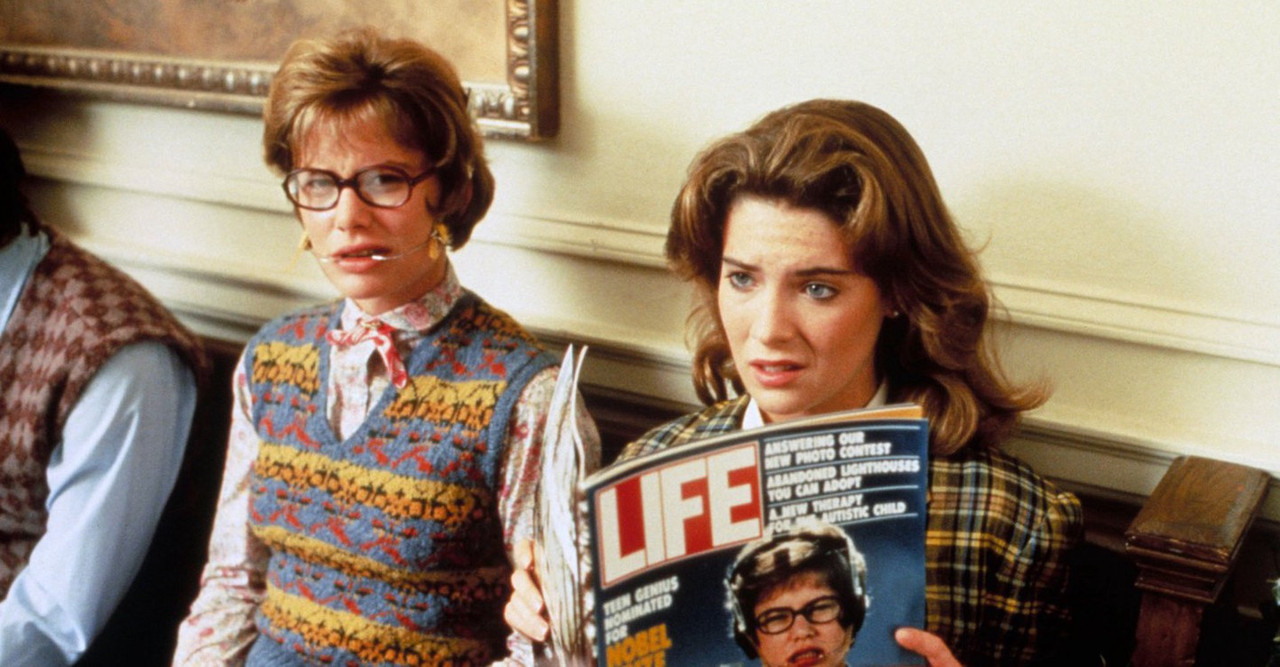
How I Got Into College
Dir: Savage Steve Holland
Savage Steve Holland is one of those filmmakers that I have always wished was given the opportunity to work more at feature length (since this film he has been plugging away in kids shows and TV movies), his anarchic take on the teen movie in Better Off Dead and One Crazy Summer marked him out as an individual voice in a scene that threatened to become stale, and this film is one with the same wonderfully skewed view of the world.

The plot is incredibly simple; High School senior Marlon (Corey Parker) is in love with Jessica Kailo (Lara Flynn Boyle) and his college plans revolve entirely around getting into the same school as her, as he's convinced that once she sees him as a grown up he might have a shot.  They're both trying to get into a small but prestigious school.  At the same time a young member of the admissions board (Anthony Edwards) is arguing that the school should look beyond grades when recruiting students.

Now, I understand that that doesn't sound that crazy, but it's not so much the structure as the approach that Holland takes to it that is so offbeat.  The surrealism begins from the first frames, with a question on Marlon's SAT's personified by two characters, A and B, who are endangered by Marlon's inability to get the right answer.  This is a comic device that just keeps on giving throughout the film.  How I Got Into College is not as fast with its jokes nor as incredibly odd as Better Off Dead, but it trades that off for a slightly more involved story, liberally sprinkled with gags (a running joke about the college admissions officer who accepted a fake application 'from' a pig is a particular joy).  

Corey Parker may not be the most charismatic of leading men, but his Marlon comes off as a likeable goof and a decent centre for the film's crazier moments to spin around.  Similarly, Lara Flynn Boyle is no Diane Franklin (though she appears briefly in a priceless bit as Marlon's young stepmother), but she's attractive and appealing enough to convince us that Marlon would want to follow Julie to college.  That story could be creepy, but by the end it has developed an essential sweetness.  As the college recruiter Anthony Edwards has that down to earth decency that has always served him so well on screen, as well as pretty spot on comic timing.  The rest of the cast are largely cameos, but everyone has enormous fun (watch for Better Off Dead's Curtis Armstrong in a typically offbeat moment).

How I Got Into College may not quite be the lost classic that Holland's debut is, but it's a wonderfully inventive, silly and often gut-bustingly funny film of the like you simply don't see anymore.  Seek it out.
★★★

Mar 12, 2014

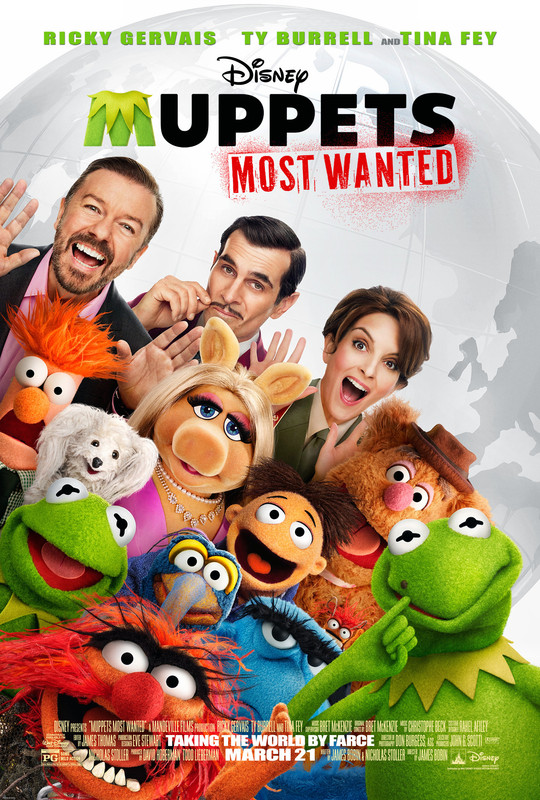
Muppets Most Wanted [U]

Dir: James Bobin
Sequels are a strange sort of contract between a filmmaker and an audience.  One party promises to deliver something like what the other party previously enjoyed, but without making it so similar that the audience feels that they have been short changed.  On the face of it, Muppets Most Wanted delivers to the letter on this contract, but the ways in which it departs from 2012's wonderful The Muppets are likely to be disappointing, especially for an adult audience.

The Muppets often take on familiar film structures and give them their own distinctive spin, last time it was the old canard of getting the band back together/putting on a show, this time it's the caper movie. The film revolves around a case of mistaken identity; when 'the world's most dangerous frog', Constantine, escapes from a Siberian gulag his uncanny resemblance to Kermit allows him to take Kermit's place at the head of The Muppet Show, using it as a front for a series of heists, while Kermit is recaptured by Nadia (Tina Fey) and thrown into the gulag.

The film resumes directly after the final shot of The Muppets (complete with obvious body doubles for Jason Segel and Amy Adams), segueing into a song about the idea of doing a sequel.  This is one of the film's best numbers, suggesting some amusing ideas including one priceless spoof that is the best gag in the whole film.  Soon after, the gang are won over by Dominic Badguy (groan), played by Ricky Gervais (GROAN), who offers to promote their tour and we're off on the caper.

The great thing about The Muppets was that it set the emotional stakes high.  Remember that scene where we find Fozzie in his Las Vegas 'dressing room', or Pictures In My Head?  Those moments, along with many others, were funny, but they combined the laughs with a deep emotional resonance that connected with the audience's relationship to these characters, who many of them have been watching all their lives.  This depth is absent from Muppets Most Wanted.  A few scenes about Miss Piggy's desire to marry Kermit attempt to find something like this level of connection, but with Kermit off in his own story it just doesn't stick.

Alongside its pathos and emotion, The Muppets was bust a gut funny, and that's another area in which Muppets Most Wanted simply doesn't bear up to its predecessor.  There are some funny moments, but the film leans too heavily on cameos, many of which clunk, and for the most part is only mildly funny.  Ricky Gervais is more tolerable than usual as Dominic, but there's still a sense of smugness about him, and I simply don't find him amusing (though the fact that his funniest line comes when he's introduced is unhelpful).  Tina Fey works hard and has a solid enough comedy Russian accent.  She seems to be dubbed for her big song, which is fine, but seems a missed opportunity for some good jokes.  Fey gets much of the funniest stuff in the film as an outwardly cruel gulag boss, mining laughs from the affection she sometimes has for the prisoners (all played by cameoing stars, including one who gets a very funny namecheck).

The gulag scenes are easily the film's best, not least because they reunite us with Kermit, whose almost total absence from the main storyline just feels strange and makes this feel much less of a Muppet movie.  This side of the film also provides it with a little of the 'let's put on a show' stuff that the Muppets do best.  The caper movie falls down for the simple reason that it just isn't that much fun.  Ty Burrell does his best Jean Dujardin as an Interpol cop paired with Sam Eagle's CIA agent (their joke about badges goes on far too long), but Gervais and Constantine make for anemic villains and the jokes just aren't that inventive.  At two hours or so the movie drags, with the so-so songs (I couldn't hum you any of them bar 'We're Doing A Sequel') and  sometimes flat gags making it wheeze its way to the finish line.  It's perhaps more kid oriented than the previous film, but it's not as if the adult skew of some of the jokes and the emotion of The Muppets (or Frozen, for that matter) left the kids in the audiences I saw it with behind.  By contrast, Muppets Most Wanted often felt like it was leaving the adult audience behind, whether on purpose or by accident.

Ultimately the biggest issue with Muppets Most Wanted is that as I sit here and write this I find myself thinking back on gags and songs and moments not from it but from The Muppets.  That film has lasted in my memory, this one vanished within moments of the credits rolling.
★★

Mar 4, 2013

Japanese Movies: The Happiness of the Katakuris / Female Prisoner 701: Scorpion / Manji ['64]

The Happiness Of The Katakuris [15]
Dir: Takashi Miike
The blisteringly prolific Takashi Miike directed SEVEN films in 2001, when he shot this remake of The Quiet Family (the debut of South Korean filmmaker Kim Jee-woon). This being Miike, Kim’s film seems to have been filtered quite substantially through his imagination, which, here, seems as manic as ever, but much lighter in tone than we usually see.

The film revolves around a family who run a remote guest house, and have very few clients, but when more people begin to arrive and stay the night they all seem to die mysteriously. The family bury them in the garden; an idea which, of course, comes back to try to bite them in the form of zombies. Oh, and there are songs, because of course there are songs.

I’m going to keep this review short, because if I’m honest The Happiness of the Katakuris, for all its relentless oddness and quirkiness, left very little impression on me. The opening sequence of the film is one place where the strangeness really works; a woman fishes what looks a bit like the fairy from the beginning of Pan’s Labyrinth out of her soup, it promptly grabs and rips out her uvula, then eats it, before being eaten by something else. All of this is rendered in amusingly stylised stop motion. The problem is that this four minute sequence sets up a completely different film, to the point that I almost took the disc out to make sure there hadn’t been a mistake.

The rest of the film is an odd mix of black family comedy, garish musical and – very late in the day and briefly – zombies. I’ve often found modern Japanese cinema to be exhilarating in its weirdness, but here I felt it took away from the film. The simple family comedy at the heart of the film – even with the darkness of people mysteriously dying – feels like more than enough to support the film, and it would probably be easier to justify the 110 minute running time if a little more time were spent developing the characters beyond their quirks rather than cutting to a song. It would also help if the songs were better. It’s tough to judge in a language as unfamiliar to me as Japanese, but the lyrics often seem awkward with the (rather bland) music, and the cast don’t seem to have especially brilliant singing voices. I was reminded, more than a few times, especially in the way that the songs grow out of very little and seem like set pieces rather than plot advancement, of Francois Ozon’s 8 Women, a comparison that does this film no favours.

I like some of Miike’s films, but this feels like an awkward fit for him, and I never got comfortable with the tone and was disengaged long before the overdue ending. If you get into the tone, if you end up running with the quirkiness, you’ll have fun, but it just didn’t work for me.
★★

Female Prisoner 701: Scorpion  [18]
Dir: Shunya Ito
Exploitation cinema comes in many flavours. This first film in the Female Prisoner Scorpion quartet may not be quite the gourmet menu that
Cannibal Holocaust or the original I Spit on Your Grave – both more complex and thoughtful films than they are usually credited as being – were, but it certainly holds more complexity and more interest than many exploitation films, and particularly the women in prison genre, tend to.

This is really down to two people: director Shunya Ito, who makes an extremely creditable debut here, and star Meiko Kaji. Ito and Kaji, and the combination of their skills, conspire to create something that consistently surprises with its qualities. Kaji plays the titular Prisoner 701, imprisoned for the attempted murder of her boyfriend; a corrupt cop who uses her to get one over on a drug running gang, causing her to be raped. She’s doing hard time, but it only gets harder when her escape attempt put the whole prison on punishment detail, setting both guards and inmates against her.

This being a women in prison exploitation film, almost all of the convicts are inordinately beautiful, but even in this company, Kaji sticks out. She has to, because she has very little dialogue, and instead the film relies on her face for her performance, and what a face it is. Kaji has a hard, fierce beauty about her in this film; a coldness of purpose that reflects the film’s theme, sung by Kaji herself and titled Grudge Song. It’s perhaps not the biggest acting challenge, but we buy into the hatred powering her vengeance, and beyond that there’s just a presence about her that means that, like a true movie star, Kaji always draws your eye.

The film is more a series of moments than a larger story (though the last ten minutes do pick up the dangling vengeance plot thread), but Shunya Ito strings the film together so unexpectedly stylishly that the lack of a truly satisfying throughline for most of the film really doesn’t matter. Ito’s images are often extremely striking; take for example a shower scene in which one prisoner tries to frame another for trying to escape, only for Kaji to turn the tables. This leads to a chase, and to the guilty prisoner taking a glass door to the face, at which point the lighting and the woman’s wounds become incredibly stylised, making her look demonic and the whole scene something more out of Kabuki than a women in prison flick. These moments recur throughout the film, another striking moment bathes the film in red light as a swirling red and black sky appears when the women – being punished by being made to dig a huge pit – riot. Visually, Female Prisoner 701: Scorpion is an incredibly engaging film that continually throws you for a loop by breaking visual genre conventions, even if only by seeming as though someone has put thought beyond ‘how can we get more boobs in this shot?’ into the film’s look.

Aside from the visuals it is reasonably conventional, and the pacing sometimes feels off (only returning to the vengeance plot in the last ten minutes is a problem), but this is an entertaining film for an exploitation fan, and much better crafted than I expected. It’s well worth a look if you’re into your grindhouse films.
★★★★

Manji  ['64]  [18]
Dir: Yasuzo Masamura

Manji
, meaning Passion in English, has now been filmed at least three times, in increasingly explicit versions, but this 1964 collaboration between writer Kaneto Shindo (whose Onibaba I recently saw and loved) and director Yasuzo Masamura is the original version. I’ve not seen the other versions, but I may well try to track them down, because there is a story at the centre of this film that I think is really compelling but, despite this and despite its several undoubted qualities, I never really got into Manji.

The story sees Sonoko (Kyoko Kishida), a housewife in her mid thirties falling in love with a younger woman in her art class; Mitsuko (Ayako Wakao). The relationship becomes, at least from Sonoko’s side, truly obsessive and needy, and begins to draw in other people from her life, including her own husband, and a friend who she pledges to make her brother, then marry him off to Mitsuko so they can share her. For her part, Mitsuko seems to recognise the obsession, but does she share it or is she using it?

The central story here is interesting, and it’s hard to fault either of the lead actresses. Kyoko Kishida really carries the film, narrating it in flashback, and her ever increasingly desperate performance is well judged and not a little sad. Equally Ayako Wakao schemes in effectively subtle style, and looks just about as perfect as Kishida tells her. The problem, for me, was that the obsession, even as it grows, doesn’t truly convince at a character level. The pitch of Shindo’s screenplay is melodramatic so early (20 minutes in it’s already indulging in talk of who would die for whom) that you never really get a sense of the obsession taking root. The actresses do what they are tasked with well, but it just doesn’t quite add up for me. The other problem is that after the very fast first half hour the pace slows and, bound as it is to Sonoko’s house, the film begins to feel a bit stagy – at least between occasional flashes of Masamura’s customary visual flair.

Masamura is an intensely visual filmmaker, and Blind Beast, years after I first saw it, continues to fascinate me with its surreality. Manji doesn’t always have the same visual flair, but there are moments that really mark it out as the work of the same filmmaker. Best and most striking is a scene in which Mitsuko says she’s given a sleeping drug to herself, her husband and Sonoko, but in fact has only given the real drug to Sonoko, who drifts in and out of consciousness, extremely jealous, as Mitsuko and her husband make love in the same bed. Here the bodies seem almost to be landscapes, and Masamura gives the sequence a dreamlike quality that places you inside Sonoko’s experience of this moment. The film never quite matches this scene, thought it does have consistently interesting framing and design.

It’s hard to explain why I didn’t get much out of Manji, other than to say that it’s a film I looked at and saw qualities in, rather than truly connecting with. For me it’s just missing that disturbing edge that would really make it compelling as a film about sexual obsession, because I don’t quite buy into the depths of that obsession. It’s a tough film to rate, but ultimately there are enough good things in it to warrant a partial recommendation.
★★★

Jan 11, 2013

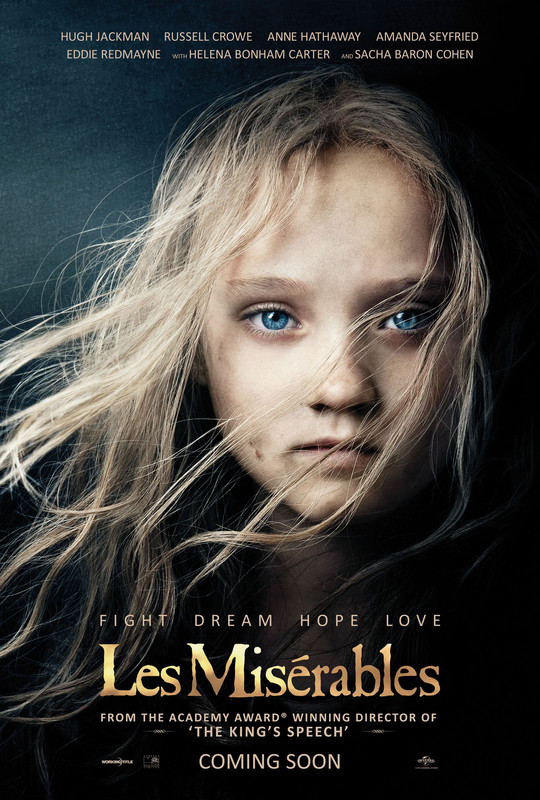
Les Misérables [12A]

Dir: Tom Hooper
I suspect, given the colossal and continuing success of the stage production, that a film version of the Les Misérables musical has been long in the planning.  What eludes me is how the reins were eventually handed to British director Tom Hooper and who, based on work like inexplicably Oscar winning, barely elevated, ITV drama The King's Speech, thought that he'd be equipped to handle something of this scope.

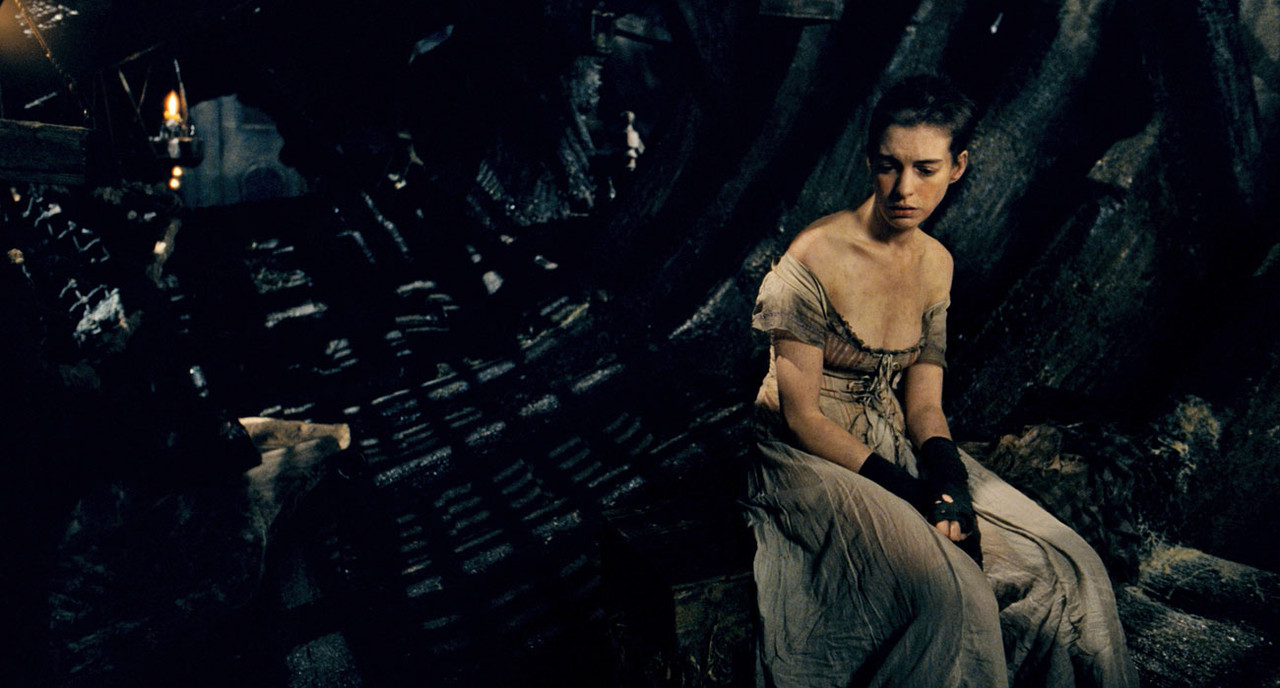
The story was, I confess, new to me as I have neither read the book nor seen the musical (I did have to sing some of the songs in my theatre group, more than fifteen years ago now).  Summarising the decades spanning tale is hard, but it essentially follows Jean Valjean (Hugh Jackman).  We meet Valjean as a convict, serving hard time for stealing a loaf of bread.  He escapes, and begins a new life, eventually rising to become a factory owner and mayor of a small town.  All the time Valjean is still being pursued by Inspector Javert (Russell Crowe), whose custody he escaped all those years ago.  In Valjean's factory the young Fantine (Anne Hathaway) is hounded out of her job, falling to become a prostitute.  When Valjean hears of this he is grief stricken and agrees to find and raise Fantine's daughter Cosette (Isabelle Allen).  Years later, France is again on the brink of revolution and the now grown Cosette (Amanda Seyfried) falls for one of the leaders of the youth movement, Marius (Eddie Redmayne).

Les Misérables is a difficult film to pin down as a critic, because some of its problems are hard to define.  Take what I found to be one of the biggest issues; that the film never really manages to shake off its stage origins.  I don't mean that in quite the usual way that people do when they call something 'stagy' (by which they usually mean a film that features characters sitting or standing and talking a lot in small sets).  Les Misérables seems as though it should be more expansive than that; it spills out into the streets of Paris, and other parts of France besides, but still, it never feels cinematic, and that's largely down to the way that Tom Hooper has elected to shoot the film.

All but a few lines of dialogue are sung, and even those are generally spoken on key, in addition to which about three quarters of the film's running time is devoted to full songs, all of which Hooper shoots almost entirely in tight close up.  This is a huge problem, because it means that well over half of the film is framed so tightly that Hooper completely excludes the world that he is attempting to build.  In his efforts to heighten emotion he loses any sense of the expanse of the setting, and this means that the film feels claustrophobic and stagebound.

This stylistic choice comes close to hobbling the film all by itself, because of the many and various ways it affects the whole.  Another huge issue is that it makes a huge portion of the film look incredibly samey.  Every single song has at least a few shots of the singer leaning in so close to the lens that they almost seem to break the fourth wall.  Inexplicably, Hooper even does this in chorus numbers, using masses of individual close ups rather than pulling back for the scale of a number.  At times, it begins to feel not just as though the director has no other stylistic ideas, but that he simply doesn't know that he can change lenses or angles on his camera.

Perhaps even worse than the sheer tedium of Hooper's lensing of the songs is the way that by using this style where it doesn't fit, he robs it of power in the moments where it would otherwise have worked.  I can see why he wanted to shoot the film's two big power ballads; 'I Dreamed a Dream' and 'On My Own' – both emotionally delivered by Anne Hathaway and Samantha Barks respectively – but having battered us into boredom with his shot selection, neither lands with the punch that it should.

Tom Hooper is his own worst enemy with this film - one of his completely pointless dutch angles (another favourite crutch) actually made me laugh out loud towards the end of the film - but he's far from the only problem.  The cast is starry and reasonably high quality, but musically they are a mixed bag at best.  Among the supporting cast Helena Bonham Carter recreates her grating cockernee singing from Sweeney Todd in a desperately unfunny double act with a mugging Sacha Baron-Cohen, but there are more pressing issues with the leads.  As Javert, Russell Crowe is mostly awful.  In his more conversational scenes with Hugh Jackman he sounds like an out of tune foghorn, while in his bigger songs he just sort of yells on key, like your Dad at a carol service.  I'm not sure whether I was more put off by Crowe or Eddie Redmayne.  Redmayne definitely has a better voice, but he's very much aware of it, and hams up every song (sadly he has many) to the nth degree.  He also seems, even more than most of the cast are, to be playing to an imaginary audience, which only increases the film's peculiarly stagy feel.  Hugh Jackman largely occupies a middle ground between these two, which should be fine, but much of the time I found his Valejean a little bloodless.  For a character we live a quarter of a century with, he feels a little thin by the end, and I suspect that's more down to Jackman than it is the screenplay.

The women largely do better, though I regret to say I didn't find myself a fan of young Isabelle Allen, who plays Cosette as a child.  Anne Hathaway is going to win this year's Best Supporting Actress Oscar, based on 'I Dreamed a Dream', and while it is one of the most impressive things in the film, it is just four minutes.  This isn't to say that she's bad in the rest of the film, she's not, but it's not exactly revelatory work, and the rest of her performance is put in the shade by her featured song.  Fantine, at least, gets a proper character arc during her fifteen or twenty minutes of screen time, the same can't really be said for her daughter Cosette.  I'm not sure if any of the older Cosette's storyline from the stage has been cut for the film, but she feels woefully underdeveloped, and that leaves the romance plot of the second half floundering, despite a perfectly fine performance and pretty singing voice from Amanda Seyfried.  Among the female cast the standout for me is perhaps Samantha Barks, making her film debut as Eponine, a role she has also played on stage.  She makes her two featured songs two of the film's most moving moments, and I really hope this isn't the end of her screen career.

The one thing that Tom Hooper really does right with Les Misérables, and which almost makes the film worth seeing despite its many problems, is that he has all the actors sing live on set, rather than mime to pre-recorded tracks.  This absolutely achieves the stated aim of having the songs be very much of the moment, and it immeasurably benefits the performances.  This is best seen in 'I Dreamed a Dream' and 'On My Own', which prick at the emotions thanks to the rawness of the performances of Anne Hathaway and Samantha Barks respectively, and in 'Do You Hear the People Sing?' which is truly rousing.  

Les Misérables is aggravating, there's the ghost of a great epic here; of something with scope, power and resonance, but it's lost in a miasma of abysmal directorial decisions by someone who seems totally unsuited to the job, which makes the moments and performances that do shine through all the more frustrating.
★★

Oct 15, 2012

24FPS @ LFF 2012: For Love's Sake

Dir: Takashi Miike
A selection box of madness from the insanely prolific (and, one suspects, perhaps simply insane) Miike, this violent musical about a girl named Ai – Love in Japanese (Emi Takei) who falls for a bad seed named Makoto – Sincerity in Japanese (Satoshi Tsumabuki) and decides that she will devote herself to helping him reform himself, initially by making her Father bribe the head of the very exclusive prep school she goes to let Makoto in. Things don't work out, and Makoto is sent to a rough school, where the seemingly demure Yuki (pop singer Yo Hitono) and gang member Gumko (Sakura Ando) both fall for him. The stage is set for romance, songs and a series of beatings.

The strapline for selling For Love's Sake, should it pick up a UK distributor (and it should, and I suspect will) is likely to be that it's Miike's West Side Story. That's true to a point, certainly there's star crossed love and gang war, but both are rather one-sided. Ai's (slightly disturbing) devotion and incredible charity to Makoto isn't returned, or even gratefully received, and the 'gang war' is really one massive gang (led by a man in his 40's with a bad wig, who claims he has a premature ageing disease) against Makoto. The songs come in at irregular intervals, and there tend to be two or three in relatively rapid succession, followed by a long section of story.

The musical sequences are never organic and, based on the subtitles, seldom seem to comment directly on the action (Ai's song and the one sung by Ken and his gang seem to be the exceptions to this rule). This, however, doesn't stop them from being hugely entertaining. There is little similarity in terms of content or style, but some of the ways Miike uses the songs are redolent of Francois Ozon's 8 Women, be it the cutesy love song sung by Ai, or the outrageous camp of the numbers sung by Ai's parents and by Ken and his gang. At other times the songs veer closer to parody, especially when Ai's other suitor pledges his undying love, in an overblown song paired with an hilariously terrible dance number. Only a few are sincere, and even those don't really connect emotionally.

This is the problem with the film: at times it feels as though Miike wants to make a musical Love Exposure, but while this is a stylish and barmy film and there are things in the style (including the often brutal violence) that could as easily come from Sion Sono as Miike, For Love's Sake lacks the themeatic and dramatic weight, and thus the impact of Sono's great film.  On the plus side though, Miike does manage to reconcile most of the wildly differing tones his film adopts - from slapstick comedy through to gritty violence - and make a film that hangs together as a piece, even if it doesn't make a huge amount of sense.

This isn't to say that the cast doesn't work hard. Ai seems a little psychotic in her devotion to Makoto, but Emi Takei's cute, sweet, open performance is hugely appealing. Satoshi Tsumabuki is equally good as Makoto, giving a committed and deeply unlikeable performance which nevertheless grabs the attention. However, they, and everyone else, are sometimes just blown off the screen by Sakura Ando. Ando fascinated me in Love Exposure, and her two appearances at the festival this year (she's also in a small part in The Samurai That Night) continue to make the case that she's one of the most naturally charismatic young actresses around. As Gumko she's wonderfully offbeat as a gang leader who falls for Makoto, and the scene in which she decides to change herself is both hilarious and a great demonstration of her talents.

For Love's Sake isn't a great movie, at the end of the day it's basically fluff (incredibly violent fluff at times, but fluff nevertheless). It's never less than hugely entertaining, but as good a time as I had, I didn't walk out with much lasting impression, nor was I humming any songs.
★★★