Showing posts with label USA. Show all posts

Mar 12, 2014

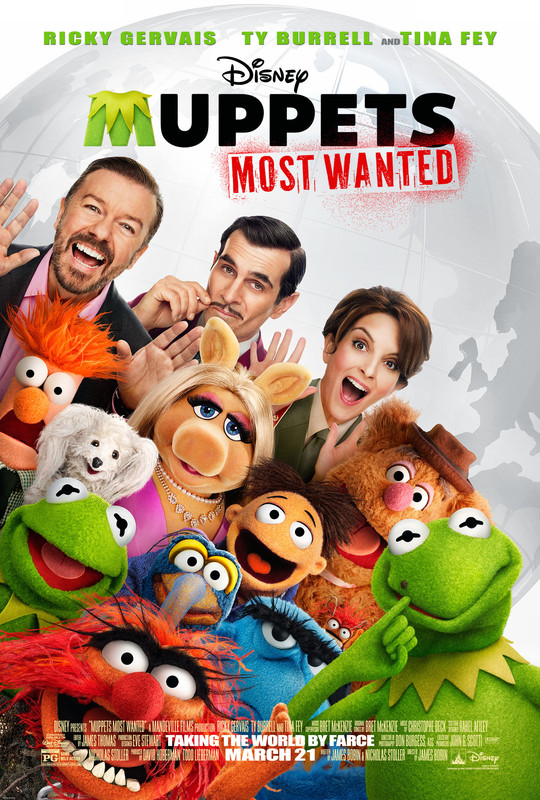
Muppets Most Wanted [U]

Dir: James Bobin
Sequels are a strange sort of contract between a filmmaker and an audience.  One party promises to deliver something like what the other party previously enjoyed, but without making it so similar that the audience feels that they have been short changed.  On the face of it, Muppets Most Wanted delivers to the letter on this contract, but the ways in which it departs from 2012's wonderful The Muppets are likely to be disappointing, especially for an adult audience.

The Muppets often take on familiar film structures and give them their own distinctive spin, last time it was the old canard of getting the band back together/putting on a show, this time it's the caper movie. The film revolves around a case of mistaken identity; when 'the world's most dangerous frog', Constantine, escapes from a Siberian gulag his uncanny resemblance to Kermit allows him to take Kermit's place at the head of The Muppet Show, using it as a front for a series of heists, while Kermit is recaptured by Nadia (Tina Fey) and thrown into the gulag.

The film resumes directly after the final shot of The Muppets (complete with obvious body doubles for Jason Segel and Amy Adams), segueing into a song about the idea of doing a sequel.  This is one of the film's best numbers, suggesting some amusing ideas including one priceless spoof that is the best gag in the whole film.  Soon after, the gang are won over by Dominic Badguy (groan), played by Ricky Gervais (GROAN), who offers to promote their tour and we're off on the caper.

The great thing about The Muppets was that it set the emotional stakes high.  Remember that scene where we find Fozzie in his Las Vegas 'dressing room', or Pictures In My Head?  Those moments, along with many others, were funny, but they combined the laughs with a deep emotional resonance that connected with the audience's relationship to these characters, who many of them have been watching all their lives.  This depth is absent from Muppets Most Wanted.  A few scenes about Miss Piggy's desire to marry Kermit attempt to find something like this level of connection, but with Kermit off in his own story it just doesn't stick.

Alongside its pathos and emotion, The Muppets was bust a gut funny, and that's another area in which Muppets Most Wanted simply doesn't bear up to its predecessor.  There are some funny moments, but the film leans too heavily on cameos, many of which clunk, and for the most part is only mildly funny.  Ricky Gervais is more tolerable than usual as Dominic, but there's still a sense of smugness about him, and I simply don't find him amusing (though the fact that his funniest line comes when he's introduced is unhelpful).  Tina Fey works hard and has a solid enough comedy Russian accent.  She seems to be dubbed for her big song, which is fine, but seems a missed opportunity for some good jokes.  Fey gets much of the funniest stuff in the film as an outwardly cruel gulag boss, mining laughs from the affection she sometimes has for the prisoners (all played by cameoing stars, including one who gets a very funny namecheck).

The gulag scenes are easily the film's best, not least because they reunite us with Kermit, whose almost total absence from the main storyline just feels strange and makes this feel much less of a Muppet movie.  This side of the film also provides it with a little of the 'let's put on a show' stuff that the Muppets do best.  The caper movie falls down for the simple reason that it just isn't that much fun.  Ty Burrell does his best Jean Dujardin as an Interpol cop paired with Sam Eagle's CIA agent (their joke about badges goes on far too long), but Gervais and Constantine make for anemic villains and the jokes just aren't that inventive.  At two hours or so the movie drags, with the so-so songs (I couldn't hum you any of them bar 'We're Doing A Sequel') and  sometimes flat gags making it wheeze its way to the finish line.  It's perhaps more kid oriented than the previous film, but it's not as if the adult skew of some of the jokes and the emotion of The Muppets (or Frozen, for that matter) left the kids in the audiences I saw it with behind.  By contrast, Muppets Most Wanted often felt like it was leaving the adult audience behind, whether on purpose or by accident.

Ultimately the biggest issue with Muppets Most Wanted is that as I sit here and write this I find myself thinking back on gags and songs and moments not from it but from The Muppets.  That film has lasted in my memory, this one vanished within moments of the credits rolling.
★★

Feb 6, 2014

Coming of Age Movie Month: Days 3 and 4

My third coming of age movie was going to be Tuff Turf, but since I found it incredibly dull and have little to say about it besides 'THE 80'S!!' I decided I would count the other film I watched that day, which also had a lot of coming of age elements, as the day's entry in this series.


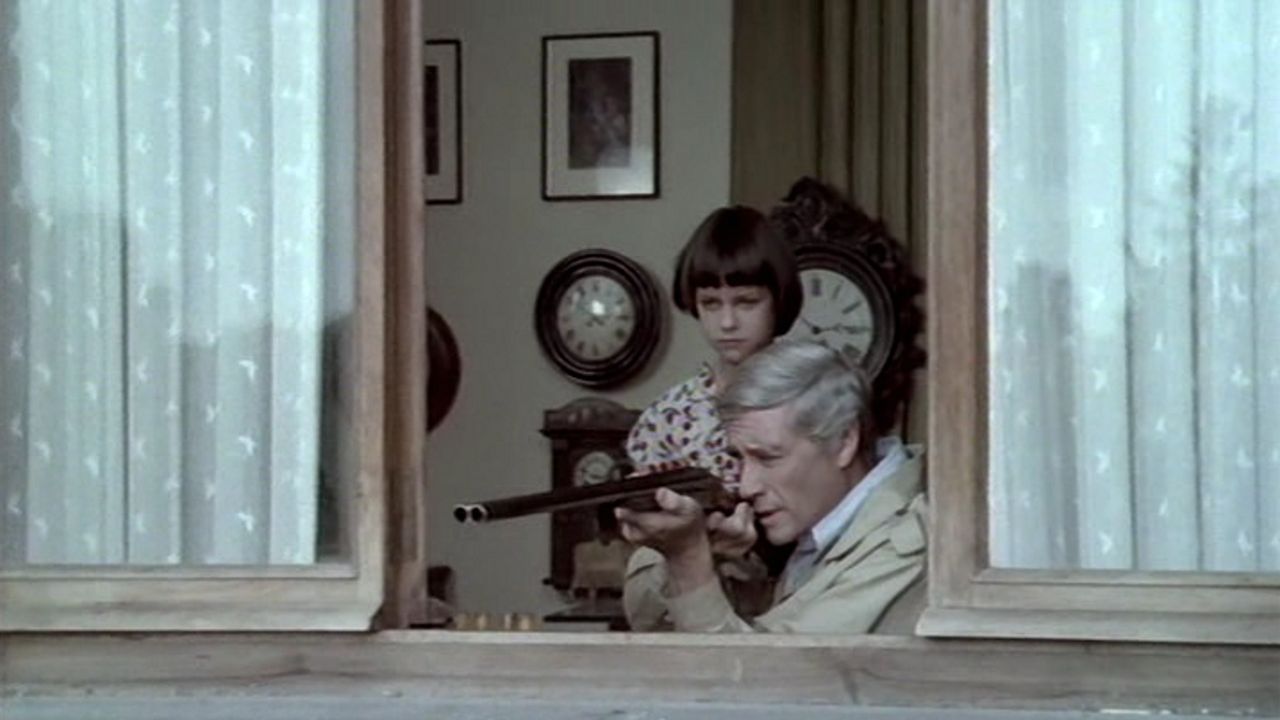
L'Immoralita
Dir: Massimo Pirri
My interests in coming of age movies and exploitation cinema often cross over, but seldom in as troubling a manner as they do in L'Immoralita [Immorality].  The film opens with Federico (Howard Ross), a serial child killer, burying his latest victim, then being chased down by the Police.  Injured, he comes across Simona (Karin Trentephol) an 11 year old girl who agrees to help him and gives him a place to hide.  As the local community hunts Federico, Simona begins to fall in love with him, and react jealously when her mother (Lisa Gastoni) seduces him.

First love is a common theme in coming of age cinema, and it will run through almost every entry in this series to a greater or lesser degree, but this is perhaps the most disturbing take I've ever seen on the subject (with the possible exception of Maladolescenza), both because Simona is so young and because she is not naive about what Federico has done.  There is a duality about Simona's character; in some ways she is hopelessly naive, she clearly still has a child's understanding of adult relationships and her jealousy of her mother is a child's petulance.  However, Simona is also calculating.  A chilling scene in the middle of the film has her stealing a gun and buying bullets on her father's account, for what reason we don't yet know.  Simona also seems aware of the way that she appeals to Federico and this too plays out in an extended and uncomfortable scene.  The discomfort around the Simona character is even further accentuated because, even through the haze of typically shonky Italian dubbing, you can see that Karin Trentephol (who never made another film) is giving an excellent performance.

While the increasingly disturbing dynamic between Federico, Simona and her mother holds the attention, there isn't much drive to the narrative that has both the Police and local vigilantes after Federico, with the film conjuring little of the fevered atmosphere of provincial paranoia that Lucio Fulci's Don't Torture A Duckling manages.  Ultimately the film is a mixed bag; competently shot, variably acted as far as one can tell through the dubbing, but at the centre lies this fascinating and disquieting relationship.  It's not an easy watch, even for fans of Italian sleaze, but it is worthwhile.
★★★

All The Right Moves
Dir: Michael Chapman
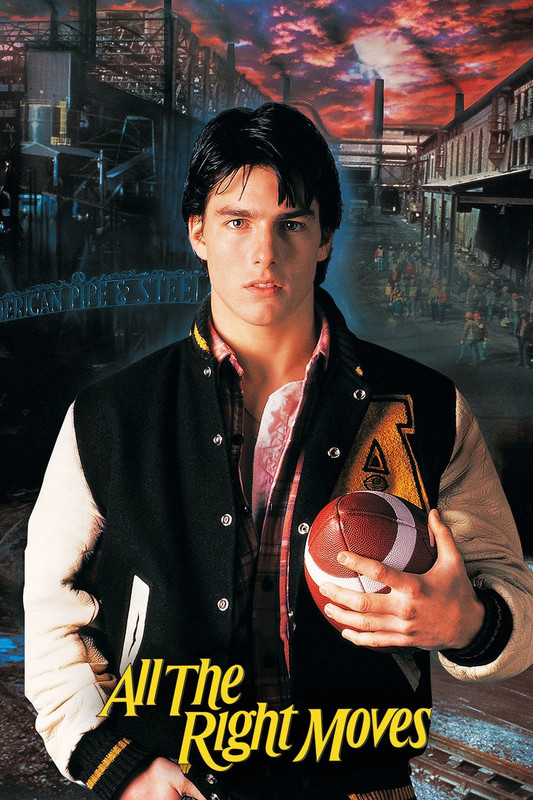
I thought that All The Right Moves was going to be a rather different movie than the one it turned out to be.  It begins with that staple of the 80's movie; its own (pretty upbeat) theme song, and I was expecting to see Tom Cruise triumphing against the odds as a small town high school football player trying to find a scholarship to a college.

The movie soon set about disabusing me of this notion, from the colour palette on down All The Right Moves is a surprisingly bleak and hard hitting film.  What it's really about is people, young as they are, being trapped in a bad situation and having one chance to get out.  This is the situation we find Cruise's Stef in.  He's a high school senior, a star player on the football team with a few colleges sniffing around to give him a scholarship, and he knows this is his only way out of an economically decaying future in a Pennsylvania steel town.

Former cinematographer Michael Chapman paints the town in greys and browns, the colour and energy seeming to leak out of it along with the jobs and this, along with the way we see Stef's friend (Chris Penn) captured by the town when he gets his girlfriend pregnant, accentuates the urgency of escape.  Interestingly, the image Cruise has built since this film played into my expectations, his characters usually lead such charmed lives that I expected the obstacles that Stef would have to face would be extremely minor, instead the conflict with his coach (a very good Craig T Nelson) seems as though it will consign Stef to the scrapheap.

Outside of the football games and the attempts to escape from his dead-end town, there is a relationship storyline.  Lea Thompson's melancholy performance as Stef's girlfriend Lisa gives the film several of its most resonant moments, especially a scene in which she tells Stef that she too has ambitions beyond their town, but that music scholarships aren't on offer.  Her monologue realising that much of her life is, at seventeen, already written for her is extremely sad and resonant.  Thompson, an underrated actress who should have had more chances, is great in the part.  It's also worth noting that she's probably responsible, thanks to one scene, for a lot of boys growing up pretty suddenly.

Cruise is also good.  He's much less put together here than he has been in most of his films and Stef (while, of course, ridiculously handsome) does come off like a typical teenager.  Cruise plays him naive but anxious, this comes through notably in the sex scenes, but also informs the rest of the character: Stef wants things; Lisa, his scholarship, and naively thinks that he can't, at this point, jeopradise his chances of having them.  Cruise's youthful exuberance suits the opening part of the film well and makes it all the more effective when he's beaten down.

It's a pity that Michael Chapman didn't direct more (only one more notable feature, Clan of the Cave Bear, followed this, his debut), instead of returning to cinematography.  He shows an affinity for his characters, extracting uniformly strong performances from his cast, and his unobtrusive camera style makes their world feel real and vivid.

While it snatches victory from the jaws of defeat (in what feels like a bit too much of a movie moment), for the most part All The Right Moves is an effectively downbeat drama that has something to say about growing up, but also about how adulthood doesn't always live up to what we expected.
★★★

Feb 8, 2009

Bolt [3D] [PG]

Dir: Byron Howard / Chris Williams
For some time now Disney’s animation arm has been looking beleaguered, their acquisition of their collaborators Pixar looked like a calculated move to reinvigorate the department, and though Bolt was in production long before Pixar’s John Lasseter and Ed Catmull came aboard it certainly bears several large Pixar fingerprints.

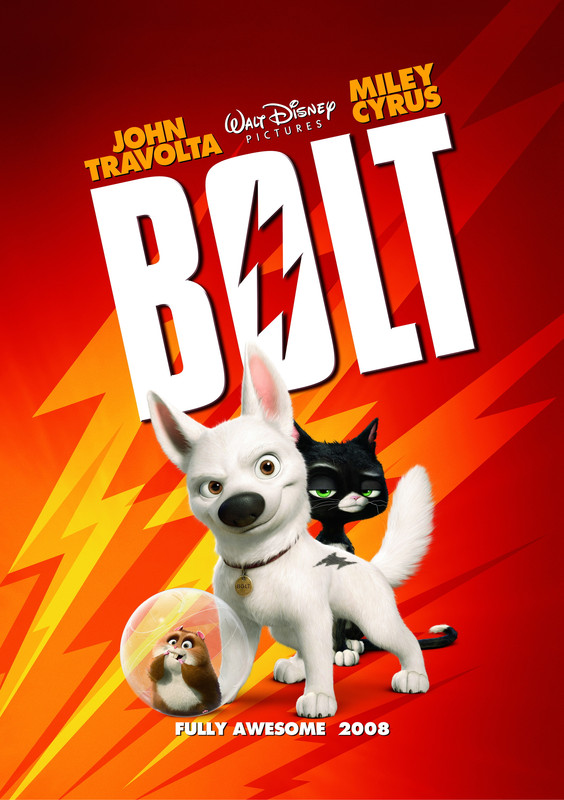
Bolt is the story of a dog (Travolta) who is the super-powered hero of a TV show that he stars in with his person, Penny (Cyrus). The problem is that Bolt thinks the show, and his powers, are real, so when Penny is ‘kidnapped’ Bolt escapes to attempt to save her, ending up in New York. Believing that Penny still needs saving Bolt crosses the country to find her, with the reluctant help of New York cat Mittens (Essman) and the excitable help of brave hamster Rhino (Walton).

The first film released under the new team at Disney, Bolt is also the studio’s first major 3D release (though Chicken Little and Meet the Robinsons also had limited 3D releases). I’ve had problems, from a technical standpoint, with all the 3D films I’ve seen so far, but you have to hand it to Disney, aside from a slight softness to some images, and the odd bit of blur in motion, they’ve nailed it here. This is easily the best 3D I’ve seen, with no ghosting in sight and strong, usually distinct, depth effects. If they’ve proven that the technology functions what Disney has failed to do with Bolt is to demonstrate any particular reason for its existence. The depth effects work, sure, but why are they there? Rather than draw you into the story they eject you from it, making you think about the effects rather than the story. If it’s never immersive, never more than a gimmick, what’s the point?

Quite apart from the 3D the film does look good. The design is strong and appealing, with humans having a nicely cartoony look, heavily influenced by The Incredibles and the animation is beautiful; characterful, fluid and intricate. The voice acting is a bit more of a mixed bag. John Travolta shows up as Bolt, but that’s about all he does. He never really creates a character here, the way that Tom Hanks and Tim Allen did for Toy Story, he simply shows up and says the words adequately. Blander still is Miley Cyrus as Penny, who expresses the sadness about her dog being lost with all the pathos I might muster to say “I dropped my ice cream”. However, the film is stolen from under the names noses a couple of supporting turns. Susie Essman is terrific as Mittens, sarcastic and funny to begin with, but credibly warming to and becoming friends with Bolt, but it's animator Mark Walton who runs away with the show, he was originally drafted only as a temp voice for Rhino, but his almost psychotically enthusiastic tones are a perfect fit for the character and his every line is a hilarious joy.

The story is a bit pedestrian, and somewhat familiar – think Toy Story meets The Incredible Journey, but it provides a solid enough framework on which to hang the gags and the set pieces. What matters is that most of the content works; the gags stick and the set pieces are generally involving, and the film powers along at a decent rate. The kids will never be bored, and the adults should remain awake, and largely amused. Bolt is a very safe play for Disney, an entirely traditional, not especially challenging or groundbreaking, family comedy. It works well enough, most of the time, but it's no Toy Story.
★★½

Doubt [15]

Dir: John Patrick Shanley
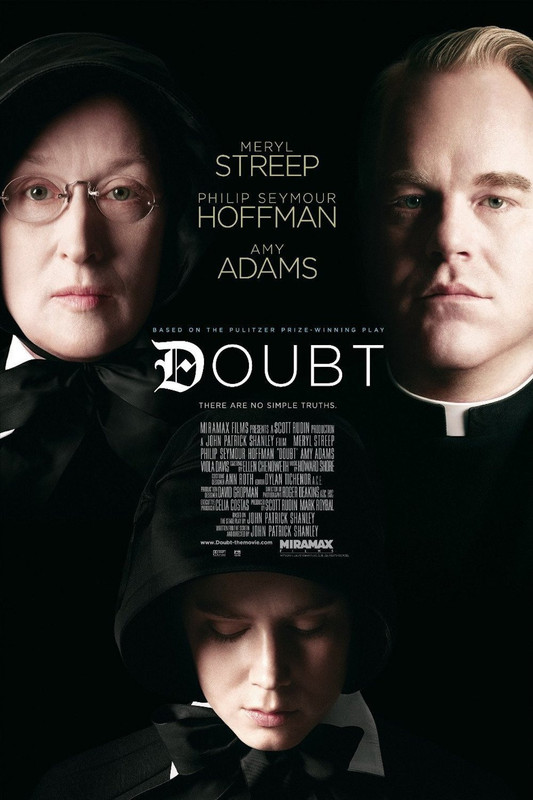
I try not to read too many reviews, mainly for fear of inadvertently plagiarising someone, but everything I have, thus far, read about Doubt lauds it for the same thing; the film’s ambiguity about its central question; did Father Flynn (Philip Seymour Hoffman) do something inappropriate with Donald Miller, the only black child at the Catholic school he is the pastor to?  I have to wonder if the version of Doubt that was press screened was substantially different to the one I saw, because the film I saw ties up almost all its loose ends, lacking only a neatly tied bow. 

John Patrick Shanley’s second directorial effort (which comes 19 years after his first) is a film of two halves. The first, which is by far the better, sets out the daily life of a Catholic school in 1964, the world changing around it as principal Sister Aloysius (Meryl Streep) tries to prevent the modern world from encroaching on her school, and by extension her church.  This first half also introduces the three powerhouse performers at the centre of the drama. Streep represents the old guard, while forward-looking priest Hoffman and young, innocent Sister James (Amy Adams) both seem to want to put a new, friendlier, face on the church, though, it is implied, for very different reasons. This part of the film draws you into the world and the conflict that erupts in it when Sister James confides in Sister Aloysius about her suspicions of Flynn. 

Sadly it doesn’t last, and the second half of Doubt becomes overblown and overwritten, its believability careening downhill, especially in a pivotal scene with Viola Davis, whose excellent performance is negated by dialogue so wildly lacking in credibility that it utterly removes you from the scene. The second half of the film is its most theatrical, built on confrontations in enclosed spaces, and using such hackneyed devices as the plot appropriate thunderstorm to groan inducing effect. The sledgehammer subtlety of the second half is a real disappointment; particularly given the quiet, credible, build of the first half. It’s the neatness, though, that really irks, with a couple of scenes near the end sewing the central issue up far too securely. 

That isn’t to say that Doubt is a bad film though. Shanley’s direction opens up the play with plenty of well-composed and evocative shots, all made to look beautiful by Roger Deakins, who is surely the best cinematographer working in the US. However, Shanley’s taste for dutch angles, for little reason and to irritating effect, mars what is otherwise a rather beautiful film. 

The main reason to see Doubt, as you might expect, is the acting. Phillip Seymour Hoffman is the 21st century DeNiro, an actor who completely transforms himself in demeanour, in look and in character from film to film. He has some heavy and theatrical dialogue to deliver here, particularly in the clunkily written sermon he delivers towards the end of the film, but he makes every word play. If there is an element of doubt at all at the end of the film it is provided by Hoffman, whose performance draws you in with its ambiguity. It would have been easy to play Flynn as a monster, or as a wronged saint. Hoffman plays him as a flawed man. 

Amy Adams has made quirky, irrepressible characters something of a stock in trade, but as Sister James, she plays against type. As a nun who wants to retain her individuality, and use it to inspire her students she calls to mind Audrey Hepburn in The Nun’s Story, and gives a performance that stands the comparison. It’s the smallness of her work that impresses, the detail in her eyes and her face, and the fact that she’s just as watchable when she’s not speaking as she is when there are reams of dialogue for her to say. It’s a small performance, but it's another small wonder from a young woman who is becoming a reliable mark of quality in movies.  Meryl Streep goes to the other extreme. Where Adams’ performance is all about detail Streep’s is all bluster and bombast. It’s big and loud and scene hogging and it never makes you think anything besides ‘look, it’s Meryl Streep in a habit’. You can always catch her acting, which isn’t true of her co-stars. This is a performance for the back row of the theatre, not for the close up camera of the cinema, and it hurts the film. 

Doubt has moments of greatness; a three way confrontation between Streep, Adams and Hoffman; Hoffman and Adams’ shared scene on a bench; the silent scene in which Sister Aloysius makes Sister James eat a piece of gristle. It also boasts some outstanding contributions, from Roger Deakins, Phillip Seymour Hoffman and Amy Adams. Overall, though it’s not the film it should have been, it is worth seeing for these strong points, and for an excellent first hour.
★★★

Feb 1, 2009

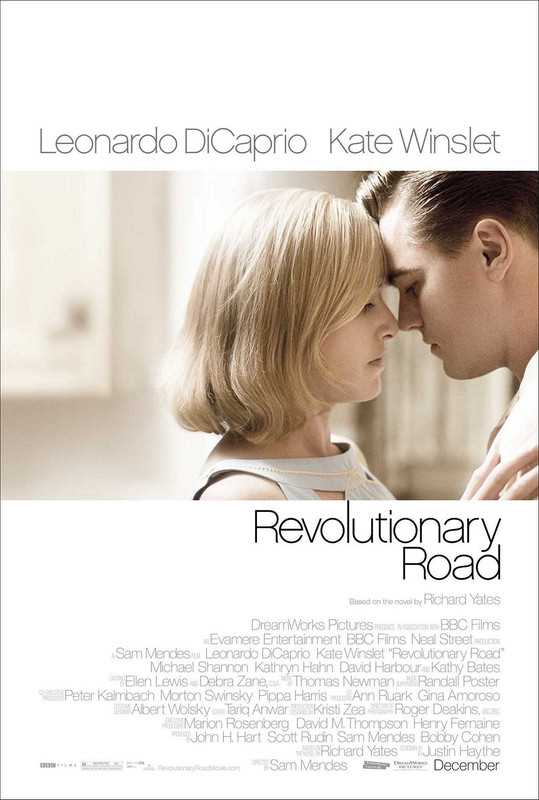
Revolutionary Road [15]

Dir: Sam Mendes
The Academy Awards are truly bizarre. Their weird voting system, their almost total lack of acknowledgment of movies released before November, the politics and maneuvering behind each nod, but the weirdest thing about the Oscars, at least based on watching Kate Winslet’s two most recent films, for both of which she was tipped for a nomination, is their taste. To nominate Winslet for her solid work in The Reader would have been fine any other year, but in the same year that her astonishing performance in this film is eligible? That’s just odd.

Revolutionary Road is based on a 1961 novel by Richard Yates about Frank and April Wheeler (Leonardo DiCaprio and Winslet), a young couple whose life and marriage, outwardly, looks perfect, but both of whom had bigger dreams, dreams now being crushed by suburbia, and the resentment is destroying their marriage. If DiCaprio and Winslet’s first teaming; Titanic, was about the power of romance then their second is about the death of romance, its slow strangulation by routine and mundanity. Revolutionary Road is a harsh film; all sharp edges and pressure cooker atmosphere, and that doesn’t make it an easy watch, but it does make it an impactful one. For the film’s first two acts Sam Mendes lets all the tension, all the resentment, all the anger, in Frank and April’s relationship come to a raging boil, and then in the third act the pot boils over, unleashing all that is held in and repressed in the first 90 minutes of the movie. It is to DiCaprio and Winslet’s credit that this rather melodramatic structure works.

The fact that Leonardo DiCaprio has only, in recent years, been nominated for an Oscar for his distinctly middling work in Blood Diamond is a travesty, and seldom one as acute as it is in this case. The former pretty boy has grown into an actor of intense focus and force. Frank hums with barely contained energy, but DiCaprio understands that doing too much, becoming theatrical, would unbalance the film, instead he opts for the coiled spring approach, showing Frank’s thoughts through tiny adjustments, the resentment burning behind his eyes. When that third act comes though the explosion is completely credible and frightening. 

Winslet is, perhaps, even better. In The Reader it was all you could do not to dwell on her (solid) German accent, but here her mid American tones sound completely natural, and you accept them without question. Outside of those technical aspects her performance is another masterclass from an actress who gives one almost every time she’s on screen. April’s hopes and dreams come alive in her in the scenes when she thinks they are moving to Paris, and when it becomes clear that that won’t be happening you can almost see the dream crushed before your eyes. The remarkable thing though, about both of these performances, is that they don’t come across as performances. Frank and April feel like living, breathing people.

The only actor from 
Revolutionary Road who has actually scored an Oscar nomination is Michael Shannon. In a year in which the award weren’t a forgone conclusion I’d count him in with a shout, and certainly, he doesn’t deserve the loss he’ll take to Heath Ledger’s lip-smacking hamming. In a perverse way his character, the ‘insane’ son of Frank and April’s neighbour (Kathy Bates), is the most honest person in the film, and that’s why his every brilliantly delivered line stings. It’s his final declaration of why he’s happy that will, of all the many good things in this film, stay in your head for days.

For his part Director Sam Mendes, as well as extracting fantastic performances from his stars, creates a convincing vision of mid-50’s America. The costuming and set design is excellent, but it’s also in the way the film is shot, as Mendes employs a largely still, spare style that fits the period as well as the story.

There are a few problems, each is small, but they do add up. Thomas Newman’s music, for instance, is beautiful in and of itself, but at times it is insistent to the point of being hectoring, and it also becomes repetitive. Kathy Bates, usually a fine actress, works rather too hard to provide some comic relief and she ends up being the one cast member to strike a false note. There are also a few too many bitty scenes at the film’s end, it’s only five minutes or so, but there are about three scenes that the film could stand to lose, in order to find a slightly more satisfying final image. These are all small problems, but they do mean that I can’t give the top grade that DiCaprio and Winslet have certainly earned.
★★★★

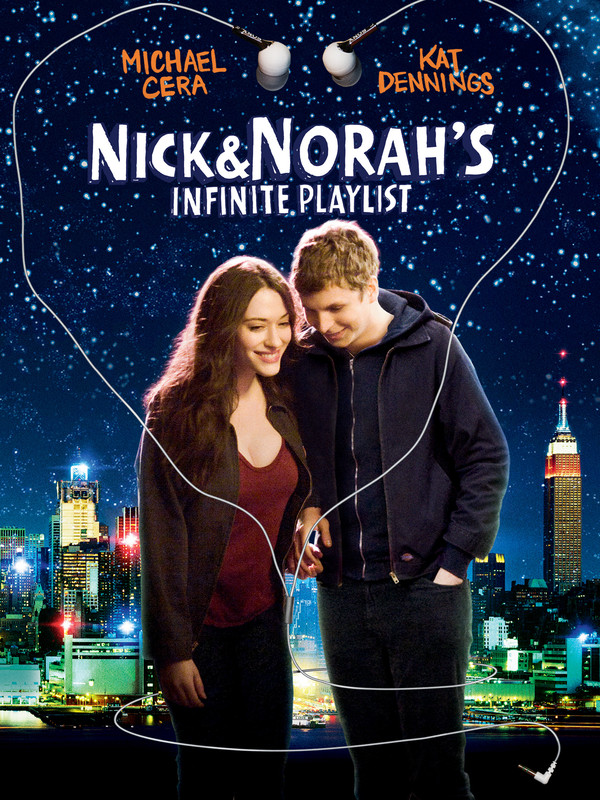
Nick and Norah's Infinite Playlist [12A]

Dir: Peter Sollet
Cool. Some people are simply cool, I’m not one of them, but I know this much, trying to be cool only demonstrates, and ensures, that you aren’t. Nick and Norah’s Infinite Playlist would have done well to learn that lesson, because for its entire 90 minute running time it strives desperately to be cool, only to end up underlining how utterly unremarkable it really is.

The story is breathtakingly simple. Nick (Michael Cera) was dumped by his girlfriend (Alexis Dziena) a month ago, and his bandmates (Aaron Yoo and Rafi Gavron) are sick of him being depressed so when Nick meets Norah (Kat Dennings) after his gig his friends contrive to get them to spend the night together in New York. It’s Before Sunrise for indie kids, only not very good.

The main problem with Nick and Norah’s Infinite Playlist is how completely contrived it all feels. The main characters first meeting, for example, has Dennings simply walking up to a random guy to kiss him, proving to Dziena that she has a boyfriend and, guess what, she happens to pick on Cera, Dziena’s ex. Yes, the ‘meet cute’ is always contrived, but this one especially so. It doesn’t help that there is no chemistry between Cera and Dennings whatsoever, be it romantic or comic. Both have shown themselves to be capable and charming comedians before, but here they flounder, and rather than spark off one another they end up dampening down both the humour and the romance.

The other big issue with the leading performances is their familiarity. Cera has now played the same nerdy stereotype in three films on the trot (Superbad, Juno, and this), while Dennings gives the exact same performance she did in both The 40 Year Old Virgin and Charlie Bartlett. There is nothing terribly wrong with the acting (though Dennings’ nasal voice is an irritant), except that we’ve seen them both before, recently, and better.

The Infinite Playlist of the title is provided by an endless array of indie bands, whose music underscores every scene. Director Peter Sollet doesn’t have much idea how to use the music, so he leans on it as a crutch, letting the soundtrack tell us how to feel. In its quest for cool points the film also shoehorns in awkward cameos for the band Bishop Allen and Devendra Banhart. The one smart musical decision the film makes is that it never shows us the band that Cera, Dennings and their friends spend the whole night trying to find. Where’s Fluffy? (which, by the way, almost beats It Hugs Back for the title of worst band name of all time) would have to have the messiah on vocals to be even half as good as the film implies, so it’s a relief we never see them.

The film unfolds exactly as you’d expect. They meet, they don’t like each other, then they like each other, then they have an incredibly forced falling out, then they like each other again. It’s just so rote, but the problem isn’t that it’s rote, it’s that it’s utterly unconvincing. The fact there’s no connection between the actors means the relationship never works, and you never care if Nick and Norah hit it off, rather you wish they’d just hurry up and kiss so that the music can swell on the soundtrack and you can leave.

There are a handful of good lines, but Cera and Dennings’ monotonous performances never really sell them, but Ari Graynor does well in a thankless role as Dennings’ drunk friend, and Aaron Yoo and Rafi Gavron manage not to make their gay characters mere stereotypes. But these are small victories in a film that fails to work as a whole.
★★

Jan 24, 2009

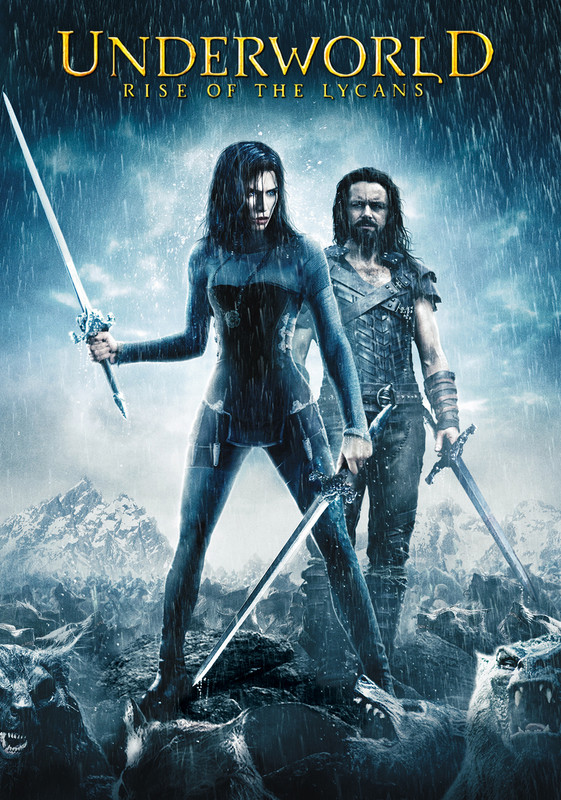
Underworld: Rise of the Lycans [18]

Dir: Patrick Tatopoulos
The first two Underworld films were ludicrous but rather entertaining things. The central premise was irresistible; a war between clans of vampires and werewolves and the gloomy but stylish visuals, decent effects and bone-crunching violence made for a couple of amusing pieces of complete nonsense.

Original director Len Wiseman and star Kate Beckinsale have moved on to greener pastures, so a further sequel was clearly out, but the cash cow is milked once more in the form of a prequel to the original film, attempting to tell the tale of how the war between Vampires and ‘Lycans’ began. The story is simplistic almost to the point of non-existence. Original Lycan Lucian (Michael Sheen) leads a revolt among his enslaved people, while at the same time attempting to run away with his lover Sonya (Rhona Mitra), who just happens to be the daughter of vampire king Victor (Bill Nighy).

Patrick Tatopuolos ascends the throne of director, having spent many years as an effects artist and creature designer, and the film plays much as you’d expect given its helmer’s previous job. Even on what must have been a relatively low budget the special effects largely live up to their name, and Tatopoulos marshals the mayhem quite well. The fights, if over cut, are pretty well choreographed, easy to follow, and enjoyably intense. On the downside, Tatopoulos’ shot selection is pretty dull, and his colour palette consists entirely of grey and crimson (though that only appears in the form of spurting blood). The combination of these things means that, particularly outside of the action sequences, Rise of the Lycans is often rather boring to look at, and seriously lacking in detail in its visuals.

Tatopoulos is also clearly not much of an actor’s director. From Nighy, never cinema’s most restrained actor, he draws a performance so unendingly hammy that you could slice it up and put it in a sandwich. Kate Beckinsale is no great shakes as an actress, and Rhona Mitra is no Kate Beckinsale, her range consisting of pout 1, pout 2 and scowl 1.  It’s not as though she has a demanding part, but when the female lead in your film can’t even make saying "yah" to make a horse start moving believable you clearly need to do more auditions, however pretty she may be. Michael Sheen, as Lucian, rises above the awful performances of his peers and the risible screenplay to give a performance far better than the film needs or deserves. Behind his beard and lank hair, and with his sharp features, Sheen is convincingly feral, and even manages to give the relationship with Mitra some weight.

Underworld: Rise of the Lycans is, of course, total nonsense, and no, it’s not especially good. However it doesn’t, at 92 minutes, outstay its welcome. There’s plenty of action, and plenty of amusingly rubbish dialogue to keep you entertained. As Friday night distractions go, you could do worse.
★★

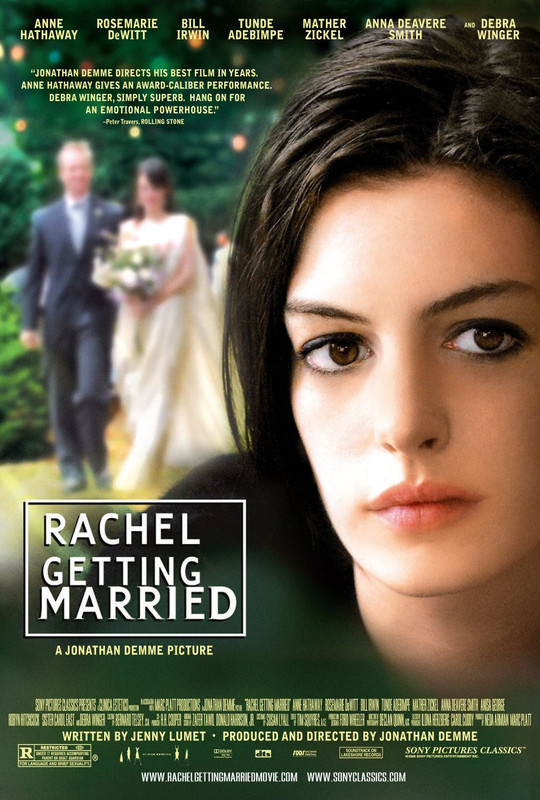
Rachel Getting Married [15]

Dir: Jonathan Demme
I’m so torn on this film, there’s a lot that I respect about it. The acting, Jenny Lumet’s amazing screenplay, the music… and then there’s a huge problem right at the centre of the film. I have previously mentioned my antipathy for the current ‘shaky-cam’ fad, a device that filmmakers seem to feel lends immediacy and intimacy, but which I feel makes their work look like a 12 year old with ADD shot it. There is absolutely no need for Rachel Getting Married to be shot this way, and the fact that it often makes the film, despite its undoubted quality, a real trial to watch. More than once, in scenes where there is just a single character on screen speaking or on one occasion singing, I had to restrain myself from standing up and yelling “Keep the fucking camera still”.

This is a particular irritant because everything else about Rachel Getting Married is absolutely top notch. The cast is composed mainly of little known actors (and some non-actors) all of whom acquit themselves beautifully, but it’s the known quantity, Anne Hathaway, who has been attracting most of the awards attention. It’s not unwarranted attention either, Hathaway is completely transformed, utterly mesmerising as Kym. The role is deeply unsympathetic and though Kym constantly asks for sympathy, and craves attention, Hathaway never tries to manipulate the audience into caring for her. Nor do Hathaway or Jenny Lumet give Kym a sudden character shift over the weekend over which the film takes place. She arrives a screwed up young woman straight out of rehab, and that’s how she leaves too. People are complex, they don’t change overnight and both Lumet’s script and Hathaway’s finely wrought and extremely moving performance recognise that.

Like most of the performers, Hathaway manages to make what must have been scripted dialogue sound like it’s coming straight from her. Not a line, not an inflection feels rehearsed, particularly in her show-stopping speech at the wedding rehearsal dinner. The supporting cast is destined to be overlooked in the rush to praise Hathaway, but if anything Rosemarie DeWitt is even better as Rachel. She’s got the tougher job, there are no real extremes to Rachel (while Kym is all extremes) but DeWitt hits every emotional beat with absolute truth and conviction. She’s got several great scenes with Hathaway, in which she’s extraordinary, but DeWitt’s best work is opposite Tunde Adebimpe, who plays her new husband. The chemistry between the two of them is electric and unforced, and the way she listens as he sings to her at their wedding is one of the most beautiful moments I’ve seen in a cinema for some time.

It would be easy to write reams on the brilliance of all the film’s performances, but a couple more do need to be singled out. Stage actor Bill Irwin is new to me, but he makes what could have been an annoyingly weak character deeply touching, with a riveting performance as the permanently flustered father juggling one daughter’s wedding, the other’s return from rehab and the constant worry that goes with both. Then, of course, there’s Debra Winger, returning to the screen the best part of 15 years since her last major role. She’s well cast as Hathaway and DeWitt’s mother, and gives a nicely low-key performance, never demanding the limelight, but softly threatening to steal a few scenes.

As much as I love most of Rachel Getting Married it does make a few missteps, there are a couple of moments that, in a film this realistic, feel a bit overly contrived, a slightly stock involvement between Hathaway and the best man, and a melodramatic moment that we just don’t need. Despite the fact that his stylistic choices annoyed me, you have to hand it to Jonathan Demme; he draws a large and often inexperienced cast together into a completely believable group of family and friends, while getting individually excellent performances from every one of them. I’d love to recommend Rachel Getting Married unreservedly, but the distracting camerawork does jolt you out of the film so frequently that it undermines what is otherwise a brilliant piece of work all round.
★★★★

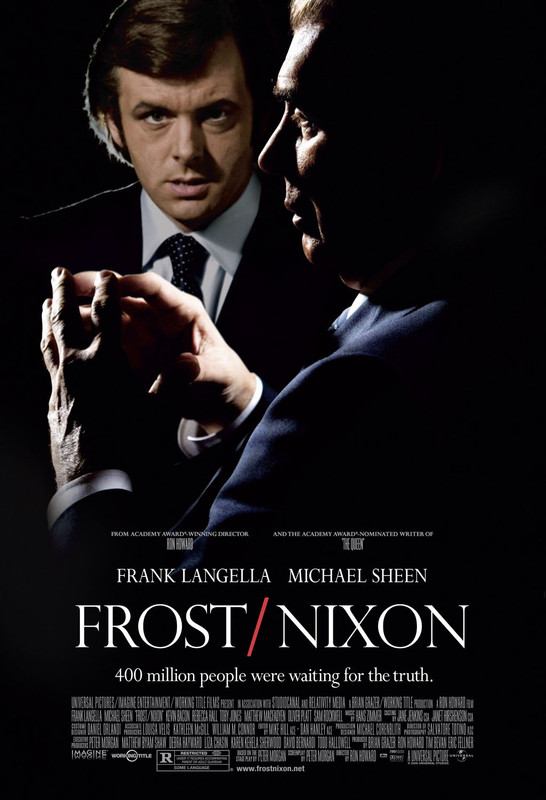
Frost/Nixon [15]

Dir: Ron Howard
Frost/Nixon is an odd fit for the cinema, a story about television, based on a play, the movies wouldn’t seem to be its natural home. However, under the unobtrusive direction of Ron Howard, the story makes a surprisingly natural transition to the big screen. The story is that of a series of interviews with disgraced ex-president Richard Nixon (Frank Langella) conducted by British talk show host and comedy performer David Frost (Michael Sheen). Writer Peter Morgan (who also scripted The Queen) fictionalises the build up to the interviews, and the relationships between the major players on both sides.

As the title implies much of Frost/Nixon rests on the shoulders of its stars. Langella is picking up most of the accolades, including an Oscar nomination, for his Nixon. He looks nothing like tricky Dick, but the gruff voice, and the demeanor of the man, come across brilliantly. Where Langella really excels, particularly given how often Nixon has been portrayed on screen before, is in giving more than just an impersonation of the man, more than a caricature, he manages to make Nixon human, even to make him sympathetic at times, giving a fresh perspective on a man about whom much has been said.

Michael Sheen doesn’t, sadly, come off as well. Sheen has made playing real-life characters something of a stock in trade. He’s done an uncanny Tony Blair, Kenneth Williams and is appearing as Brian Clough soon. Frost seems a bit undefined. He gets the impersonation down in the first few scenes, but then he lets it slide, and ends up slipping into his Blair for a lot of the film, with the notable exception of the last interview, in which the Frost impression returns to full force. The problem is that, unlike with Langella, I could never really shake the feeling that, however good he is technically, what I was watching was Michael Sheen doing impressions.

There is a similar mix among the supporting performances. Former Spooks star Matthew MacFadyen lets his wig do most of the work for him as John Birt, and the talented Rebecca Hall is largely reduced to sitting next to Sheen and looking pretty, while Oliver Platt does his patented comic relief part as well as ever. There are standouts though; Kevin Bacon is excellent as Nixon’s closest aide, particularly in a conversation with Sheen just before the first interview session, Sam Rockwell makes more of his part as a researcher than was likely on the page and Toby Jones, in just a handful of scenes as Nixon’s agent ‘Swifty’ Lazar, very nearly steals the film out from under Langella’s nose.

Stylistically Ron Howard indulges in few flourishes, the use of ‘documentary’ footage of some of the leading players is odd and out of place, and it feels truncated, as if there is an abandoned framing device sitting on the cutting room floor but otherwise his major choice is to make extensive use of tight close ups in the interview sequences, the one thing that theatre can’t do, and a decision that really hammers home what the film is really about; the power of television.

Frost/Nixon is certainly talky, but it’s never dull, screenwriter Peter Morgan combines fact and fiction literately, putting believable dialogue into the mouths of all of his characters, even when some, like Hall’s are left a touch underdeveloped. The major problem with the film is that not all of the performances come up to the high mark set by some of the cast, but the film is still worth checking out, especially if you have an interest in the era, or in politics in general.

★★★

Jan 17, 2009

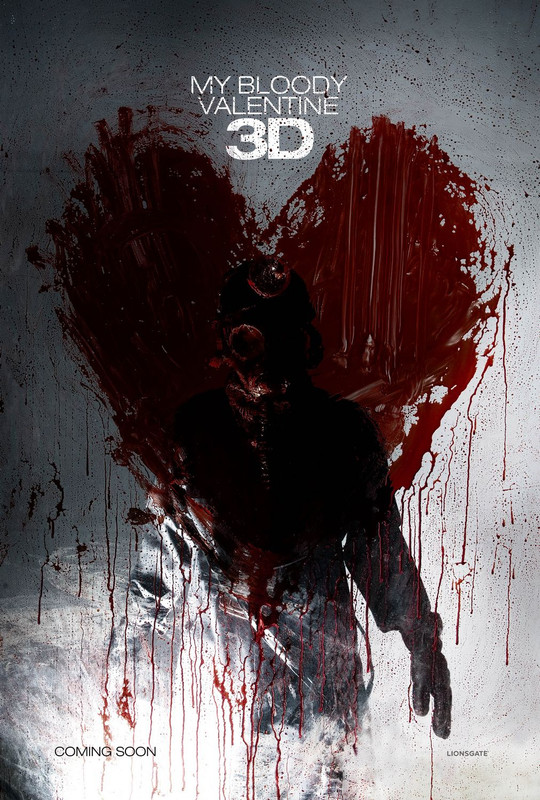
My Bloody Valentine [3D] [18]

Dir: Patrick Lussier
The original My Bloody Valentine isn’t a very well regarded slasher film, though a recently released DVD, which restores all the previously snipped gore scenes, may, among genre fans, do something to address that. This film may also help its cause because, even among unspeakably awful horror remakes, this one is a special kind of terrible.

I haven’t seen the original film, so I can’t really comment on how closely this one follows its blueprint, but by all accounts, the remake portion of the film is really just the first 10 minutes, which consist of a series of murders at a Valentine's night party in a mine  - because, really, where else would you go for a party? - while the rest of the (colossally overlong) running time is more a sequel than a true remake. That may go some way to explaining why the film’s title makes so little sense. Besides the opening sequence and the way the killer leaves victims hearts in heart-shaped candy boxes the connection to Valentine's Day is all but absent. For all the import the date has, all the effect it has on either the characters or the crimes this may just as well be My Bloody Chinese New Year.  The bulk of the film takes place 10 years later, when the heir to the mine (Jensen Ackles) comes back to town for the first time since the massacre, to find his fellow survivors being murdered and himself the prime suspect for his former friend (Kerr Smith) who is now the town’s Sheriff. Rumours, of course, also abound that the original killer has returned from the dead.

I like slasher movies, they’re fun despite their formulaic nature, and in the opening chapter of a franchise it’s often entertaining to see if you can spot the killer. You certainly will here, mere minutes in. It’s all so ludicrously obvious and telegraphed that you expect your suspect to be the red herring, only he’s not, this movie is just that stupid and obvious. It’s also nice to have some characters with personalities as the victims. Wes Craven has a particularly good record here, with both Scream and the original Nightmare on Elm Street boasting casts of young pretty bodies in waiting that you could actually identify with and root for, and who even, on odd occasions, said something you could imagine coming out of a real person’s mouth. Not so here. Writers Todd Farmer and Zane Smith prove unable to invest any of their, for lack of a better word, characters with anything even passingly resembling a personality, or to write dialogue that doesn’t feel like it was written by a 12-year-old misremembering dialogue from a slasher he thought was cool.

You don’t really go into a slasher film expecting Academy Award winning performances, but even so, the standard of… oh, let’s be kind and call it acting, even though reading would be a more accurate description, on display in My Bloody Valentine 3D is absolutely inexcusable. Jensen Ackles, of TV’s Supernatural, is shockingly wooden as Tom Hanniger, not only does his performance fail to deliver anything one could even charitably call an emotion, it makes you wonder whether he even knows what the word means. Don’t go thinking the rest of the cast are any better though, because the jaw-dropping non-performances of Jaime King and Kerr Smith and the pantomimic awfulness of Kevin Tighe and genre vet Tom Atkins will disabuse you of that notion fast.  It’s enough to make you want to reach into the screen just so you can slap the entire cast and yell “do it better” at them.

A glance at Patrick Lussier’s filmography reveals him as a director of straight to video crap, and My Bloody Valentine 3D bears that out with every single shot. Despite the 3D process this film is as flat and uninteresting to look at as they come. Every setup looks utterly generic, and at times (particularly one inexplicable moment in the opening sequence) the geography of Lussier’s shots flies completely out the window. Worse is that he’s got only two ideas for the murder sequences, the helmet lamp searching in the darkness and looking over the audience in a 3D effect, wheeled out four or five times, which doesn’t work once, and people getting stabbed with a pickaxe, sending, more often than not, bad CGI viscera flying at the audience. That’s it, the film never deviates from the formula (even using the shot with the lamp in a lit area, well done there) and when you’ve seen the first kill in this movie you really have seen them all.

Technically the 3D largely works. There are fewer problems with ghosting (which were prominent on the first three films I saw in the REAL-D process) and though there remains a softness to the picture and focus the previous problems with detail in long shots and on movement are reduced. What this film proves to me though, and what really makes me fear for the future of cinema, should the predictions of 3D’s dominance in the future come true, is that it’s no more than a gimmick. Far from being immersive, sucking you into the world of the film and thus scaring you more, the picture’s added depth merely accentuates the films utter lack of it. What absolutely doesn’t work is the endless array of things coming out of the screen at you. On a flat screen CG can now be photo-real, but the renderings of pickaxes, eyes, and branches, to name but a few things, that shoot out at us here are so patently fake that the 2D version is more likely to make an audience recoil from the screen. If there is any reason for My Bloody Valentine 3D to exist it is this; it offers definitive proof that a shitty movie in 3D is still a shitty movie. The process adds nothing.

Quite apart from being a remake My Bloody Valentine 3D steals liberally from other, better films. There are shots here that you’ll recognise from The DescentLeon and Haute Tension, none of which deserve to be even tangentially associated with this retrograde piece of crap, which should be consigned to the dustbin of shitty movie history, never to be spoken of again.

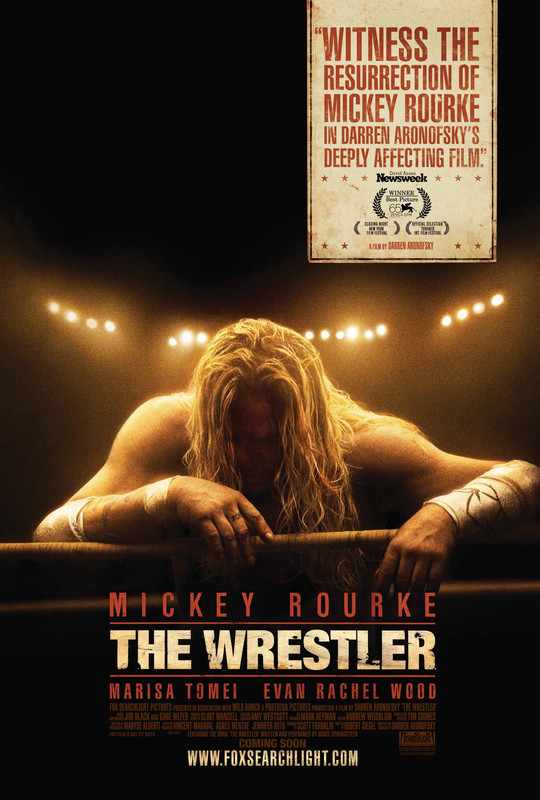
The Wrestler [15]

Dir: Darren Aronofsky
“I’m an old broken down piece of meat.” Surprisingly, that's not a quote from an interview with time and plastic surgery ravaged Mickey Rourke, but from his character Randy ‘The Ram’ Robinson, the eponymous Wrestler in Darren Aronofsky’s latest film. The film follows The Ram 20 years after his heyday. He’s deaf, fighting in tiny, extreme matches. His only friend is his favourite stripper (Marisa Tomei). His daughter (Evan Rachel Wood) doesn’t want to know him and he’s suffered a heart attack mere weeks before a 20th anniversary rematch with his most famous opponent.

For the most part The Wrestler doesn’t just embrace cliché, it sees cliché coming, rushes toward it and gives it a great big kiss. It does, commendably, do a few unexpected things (or, rather, not do several things you expect it to) in its final scenes, but until we get there it’s familiar almost beat for beat. The reason that this tremendous familiarity doesn’t sink the movie is that the actors simply won’t allow it.

Mickey Rourke was due to be the next James Dean, or the next Brando. He was impossibly handsome, had an instinct for good scripts and turned in an array of memorable and unforced performances in films as varied as Diner, Body Heat and Angel Heart, and then it all went wrong. Rourke returned to boxing and a combination of spending years getting hit in the face and plastic surgery reduced the former pinup to what we see in The Wrestler, which resembles Paul McCrane’s character in Robocop after he’s been doused in toxic waste more than it does Mickey Rourke. His voice has changed too; sounding like Rourke has spent the last decade on a diet of cigarettes, sandpaper and granite, and yet all this makes him perfect to play The Ram. Even before Rourke opens his mouth we have a sense of him as a broken down former legend. His performance is a subtle thing, which works beautifully in showing the way The Ram comes to life in front of an audience, be it in the ring or (in the film’s best scene) serving customers at a supermarket deli counter.

Rourke’s best moments are shared with his co-stars, his sad but sweet wooing of Tomei's Cassidey, the aging stripper he’s become friendly with as her only remaining regular for private dances, and his desperate attempt to mend his relationship with his teenage daughter. He’s completely invisible in the character in these scenes, and Tomei and Wood match him. Both the film’s major female characters are terribly underwritten and, particularly in Wood’s case, underutilised, but they both make the most of their screen time. Tomei finds humanity in what should be a cliché and exploitative part (though the exploitative element is very much there in the frequent and extensive nudity), making Cassidey, or Pam, refreshingly real and complex in just a few short exchanges. Evan Rachel Wood has even less time, and an even more stock character, but even with the ludicrously exaggerated speed of character arc you can’t fault her for a second. Her final scene is out and out painful to watch, both because you care for The Ram and because you empathise with her.

What, sadly, doesn’t work as well as the acting is the technical side of the film. Shaky-cam is becoming a disease in cinema, and Darren Aronofsky has come down with a bad case on this film. I don’t know when it became some sort of sin for a camera to make smooth moves when following a character, but the constant wobble in Aronofsky’s frames (even in many of his static shots) started to be irritating early on. Note to filmmakers… unless you do it very well, and for a purpose, shaky-cam doesn’t make your film feel ‘real’, it makes it feel amateurish. The Wrestler also falters somewhat at a screenplay level, because as well as many of the machinations of the plot a great deal of the dialogue feels second hand, however well delivered it is.

The one great thing about this film, besides the acting, is its ending. Most films these days are too long, driven by a desire to tie up every last loose end for an audience. The Wrestler ends exactly where it should, with a brilliant and moving shot, and by that one decision Darren Aronofsky and his film went up in my estimation. The Wrestler isn’t perfect, but its strengths are many, and enough to make it worth seeing.
★★★