Showing posts with label Acting. Show all posts

Jul 5, 2015

Adele Haenel Double Bill

French cinema has seldom found itself short of exciting and engaging young actresses, but 25 year old Adèle  Haenel, who first made her mark in the UK with 2008's Water Lilies, is one of the most distinctive and interesting to come along for some time. At present, she has one film, Les Combattants (sticking, thankfully, with its French title over the corny and inaccurate English title Love at First Fight), on UK release and another, French Riviera (also being released under the English title In The Name Of My Daughter), previewing in a season at the Cine Lumiere. Here are short(ish) reviews of both. 

Les Combattants
Dir: Thomas Cailley
Oddly described by a poster and trailer quote as a feelgood comedy, Les Combattants may not be as dark as it seems the second and third acts are preparing us for it to become, but it's hardly a laugh a minute rom-com either.

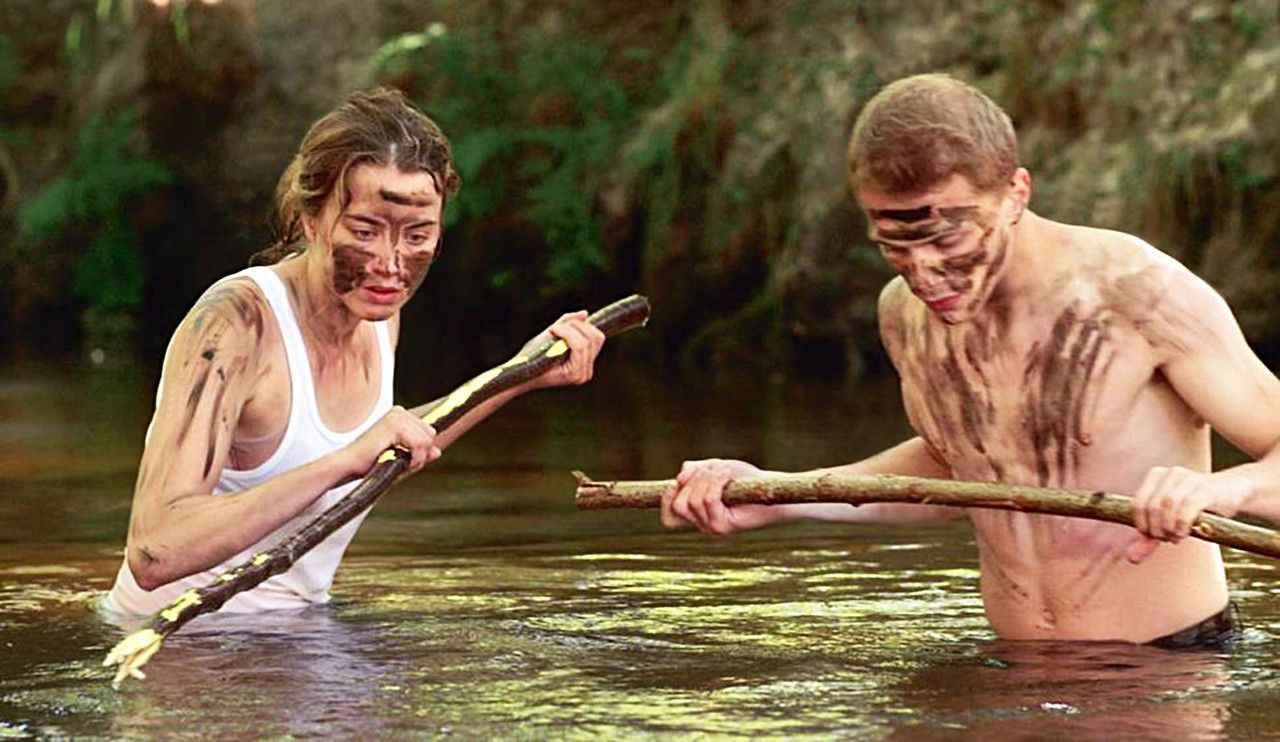
Arnaud (Kévin Azaïs) seems aimless until he meets Madeleine (Haenel). The first time they meet is at an army recruiting event, when they have to fight, the second time makes more impression, as Arnaud and his brother are doing some work at Madeleine's house. It becomes clear that she wants to go to Para training camp, and as she and Arnaud become closer he elects to follow her. Eventually, after a training exercise, the two end up going AWOL together and falling for one another.

The film's overarching story is set in motion at an awkward dinner that Madeleine has with Arnaud's family, at which she says that she thinks the end is coming. It's not a religious conviction, but one that seems born out of looking around at the world and not seeing how it can survive. Slowly it becomes clear that, at some level, Les Combattants is working its way toward a personal apocalypse

Les Combattants has a few things to recommend it; a screenplay that unfolds its story and themes patiently, despite a brief runtime, a selection of strong performances and a confidence that marks Thomas Cailley as a filmmaker to watch out for but, as it so often is when she's in a film, the main reason it is to be recommended is Adèle Haenel.

Haenel's default mode in many of her performances is to project confrontation as if she's expecting the world to kick out at her and determined to get the first swing in, That's certainly the case with Madeleine. She's seldom concerned with being liked, everything is secondary to her obsession with survival and the need to be able to rough it (in some of the film's more drily funny scenes she complains about the food at Para camp being too good). Madeleine is caustic, but you still see why Arnaud is drawn to her, beyond her looks, which are played down here, both by a lack of makeup and by Madeleine's perma-scowl, which goes away only very rarely. 

Haenel is brilliant, she commits totally to the character and her often destructive energy, but just as Madeleine radiates confrontational energy, Haenel radiates charisma. This has been the case since she first made her mark, aged 13, in Les Diables, but here you can't take your eyes off her, and her presence threatens to make the rest of the film struggle to make an impression.

Kévin Azaïs just about manages to stay with Haenel, and he becomes more effective as the film goes on and Arnaud becomes more sure of what he wants. To begin with Arnaud seems to be drifting – he only goes to Para camp to follow Madeleine – but after they become isolated together, living in the woods Badlands style having walked off a nighttime exercise, the two seem more equal, each of their strengths: Arnaud's calm and Madeleine's commitment, covering for the other's weaknesses. The chemistry between them is initially believably fractious, becoming credibly closer as the film rolls into its third act. 

That third act starts well, with the idyll the couple have established in the forest slow fading into something else. The visuals contribute a lot to this. Cailley generally keeps things realistic, and there's an observed quality to the Para camp scenes, but in the forest we occasionally and increasingly get a dreamlike feel to the visuals, as the film builds to a climax that could initially be a literal nightmare. 

Sadly, like Take Shelter, another film at least at some level about a personal apocalypse, Les Combattants ends up disappointing at the last minute. Here an abrupt change of tone feels as though it goes against the momentum the film has been building up. Ultimately it detracts only a little from an effective film and not at all from Haenel's deservedly Cesar winning performance, but it does mean that we're sent out on the only truly false note in the film.
★★★★

French Riviera
Dir: André Téchiné
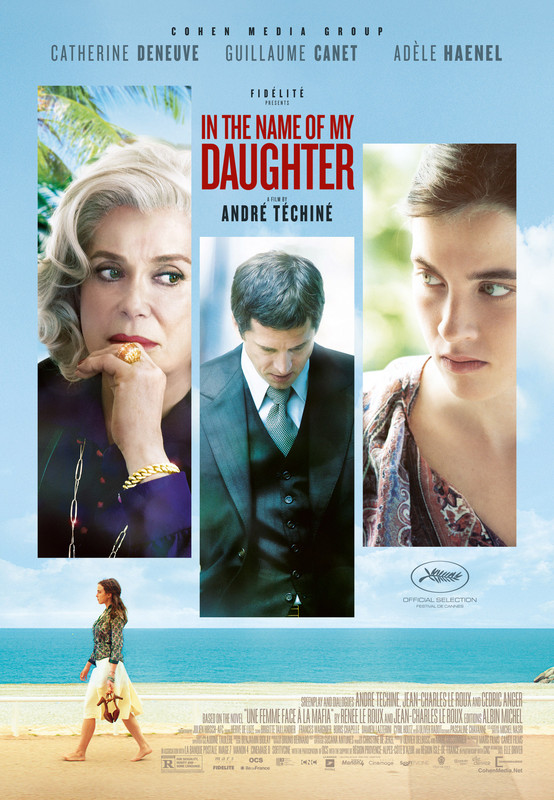
Based on a real case, French Riviera finds veteran filmmaker André Téchiné speculating about what really happened in the disappearance of Agnes Le Roux (Haenel) a casino heiress, who went missing in 1977 and of whom no trace has been seen since. Agnes had been in the middle of a battle with her mother Renee (Catherine Deneuve) over an inheritance of 3 million francs, and involved in a relationship with her mother's former lawyer Maurice Agnelet (Guillaume Canet). The question dogging the case and the film is whether Agnes simply decided to vanish, or Maurice, who ended up with the 3 million, pulled off a perfect murder.

At 116 minutes, French Riviera is a patient film. It takes time to lay out all of the relationships, to show us the complexities of at least some of the characters and to build the tension surrounding Agnes' disappearance, which we know is coming. Téchiné introduces that tension slowly. The relationship between mother and daughter always seems fractious, but for much of its first half the film is almost a romantic comedy between Agnes and Maurice. This serves a couple of purposes; first it lets us, in looking back, see what an arch manipulator Maurice is and see him perhaps recognising the opportunity that Agnes represents and laying a trap to catch her money in. It also allows us to be taken in by Maurice. Initially he's charming, and we see why Agnes; who has come home because she has just been divorced, is seduced.

In these scenes we see a different side to Haenel. Her screen persona is often hard-edged; a character hiding her problems behind a tough shell. Here there is much more abandon; Agnes is young and comfortably off, and at times she feels free to enjoy that. Early scenes between her and Maurice can be charming; one where he shows her a flat that she might want to rent and she jumps up and down on the bed and another that goes from charming to out and out sexual, as she performs an African dance for Maurice. 

This isn't to say that Agnes doesn't have that toughness we're used to seeing in Haenel's characters within her, just that it is more than usually tempered by other things. That hardness comes through when Agnes votes against her mother at a pivotal board meeting, having been egged on by Maurice. Her tears show that it's difficult for her, but she's still steely and resolute in the action.

Deneuve and Haenel are well cast as mother and daughter (though Deneuve's age, however much she seems able to hold time back, would perhaps make her more plausible as Agnes' grandmother). Their personalities here both have that similar capacity to be brittle, and one suspects that if we could see a younger Renee we would see more of Agnes' carefree side in her. Together the two actresses do a fine job of sketching a mother/daughter relationship that is difficult because of the similarities between the two of them as much as the differences. Deneuve has her familiar regal bearing in the early part of the film, but is affecting as that is further stripped back as the casino she owns slips ever further out of her grasp. By the end of the film we find her grey haired, half blind, walking with a cane, but still displaying that streak of steel shared by Renee and Agnes.

As the final spoke in the story's central wheel, Guillaume Canet shifts credibly from nice guy lawyer who just wants to be friends to slimy cad as we find out more about him. Canet and Techine seem undecided as to whether Maurice was genuinely capable of Agnes' murder, assuming that's what happened, but there is enough here to support either the 'playboy' or the 'sociopath' assessment of Agnelet.

The first 90 minutes of the film lead slowly and credibly up to Agnes' disappearance, and that could be a chilling note of uncertainty on which to leave the film. What happened to this vivacious young woman? We may never know… credits. That's not the route that Téchiné takes. Instead we have a rushed 20 minute epilogue, with Canet and Deneuve in awful old age slap, running in almost embarrassedly perfunctory form through the first of three trials Agnelet has faced on matters around Agnes' disappearance. The film falls apart quite spectacularly in these last twenty minutes, and in doing so it doesn't even manage to tell the full story, relegating the two subsequent trials to captions before the credits finally roll. Ultimately, Téchiné needed either to have cut this epilogue or made a three hour film, in order to give the trials the same gravity as the lead up to them. Instead what we get is a tense little drama, with a rushed twenty minute panto bolted on to the end. It's a shame, and not what the preceding 90 minutes, or the performances in them, deserved.
★★★

Feb 24, 2014

Nymphomaniac [18]

Dir: Lars Von Trier
I have never found Lars Von Trier to be an especially consistent filmmaker, but when he finds form his work can be dazzling; challenging and exciting in a way that few directors today ever are.  This has certainly been true of his most recent series of films, the depression trilogy which, following Antichrist and Melancholia, now comes to a close with the colossal Nymphomaniac.

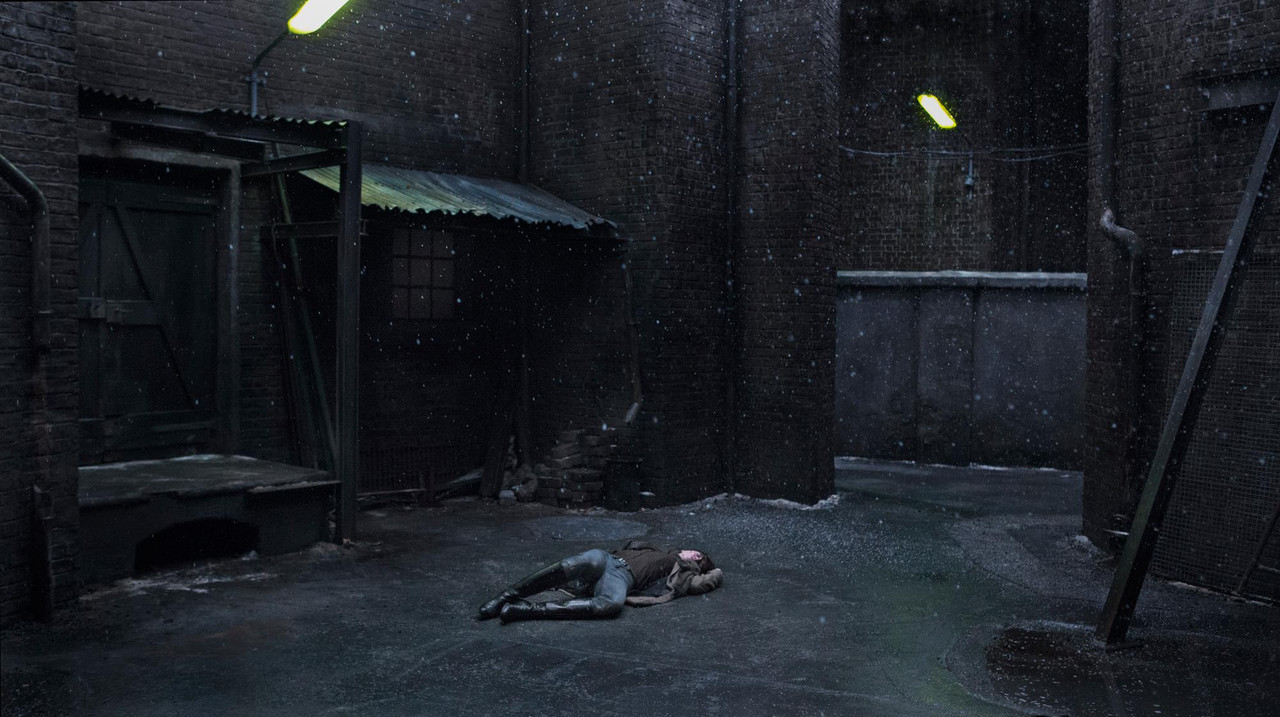
Across, in this shorter version, four hours and two volumes Nymphomaniac tells the story of Joe (played from 15 to 30 by newcomer Stacy Martin and from 30 to 50 by Charlotte Gainsbourg).  We find her lying in the street, beaten up.  Seligman (Stellan Skarsgaard) stumbles across her and, when she insists that he not call an ambulance, takes her to his home to recover.  There Joe relates, in eight chapters, the story of her life as a nymphomaniac, which she believes will lead Seligman to judge her a bad person.

There is always the question of how seriously we are to take anything that Lars Von Trier says or does, but Nymphomaniac comes loaded with more questions than that.  Is this four hour version something Von Trier is happy with?  Are we intended to see this as one long film or two distinct entities?  Is Von Trier trying to make art or porn?  Typically for its director Nymphomaniac makes none of these questions easy to answer.  That being the case you should consider this a review of the experience of seeing the two parts of this film back to back.  Having done so I'm sure that it will be a different experience viewing them separately, and I suspect doing so may benefit the films.

There are a couple of surprises about this version of Nymphomaniac (Von Trier's 5 ½ hour director's cut will likely see a Blu Ray release later this year), but the biggest is perhaps how playful and how funny it is.  Even at the film's most pretentious - and boy can it get pretentious - Von Trier's cutting and his dialogue often demonstrate a dry as dust wit, which can cut through the moments that might otherwise see you shake your head and mutter 'oh, Lars'.  For instance; Seligman often interjects in Joe's story, and at one point, just as I was inwardly sighing at another of his monologues in Volume 2, Joe told him “I think that was your most annoying interruption yet”.  The fact Von Trier seems to anticipate this criticism doesn't entirely defuse it, but this wry self-awareness is present and welcome throughout.  Seligman's interjections can be funny, but they are rather on the nose.  The fly fishing metaphor of the first chapter is amusing, but playing the same trick on different themes for four hours becomes seriously wearing by the midpoint of volume 2.  This is one of several ways in which the films might, for me, work better apart from one another. 

Throughout both volumes, Nymphomaniac essentially unfolds as two linked films; one a two hander, set in a single room, as Gainsbourg's older Joe tells her story and has discussions with Seligman, the other a series of flashbacks taking Joe from her discovery, at two, of her c**t right up to the film's opening image, when she is 50.  Both sides have moments that are great and moments that are infuriating, but for me, the flashbacks work more consistently.  

The big question of this film was always whether Von Trier could find someone who could convince as a younger Charlotte Gainsbourg as, from her look to her soft and soothing voice, Gainsbourg is one of the most distinctive (and for my money one of the best) actresses working.  Stacy Martin doesn't so much look like a young Gainsbourg as she does an absurdly beautiful melding of Gainsbourg's features with those of her mother, Jane Birkin, but what she gets right is the essence of the actress and especially the voice, which has that distinctive delicacy that is so present in the film through Gainsbourg's voiceover.  Outside of comparisons to her elder counterpart, Martin, in her first film, delivers an exceptional performance.  She has a way of delivering Joe's emotional detachment without her performance being empty.  She's especially good in what is easily Volume 1 and the film's best scene; as Uma Thurman whips up an emotional whirlwind around her Martin silently conveys Joe's alienation from, discomfort with and lack of understanding of these emotions.  When, particularly as Joe loses her one expression of feeling, Martin is called on to dig into emotional reserves, she delivers brilliantly.  The last shot of volume 1 is searing and painful thanks to her.

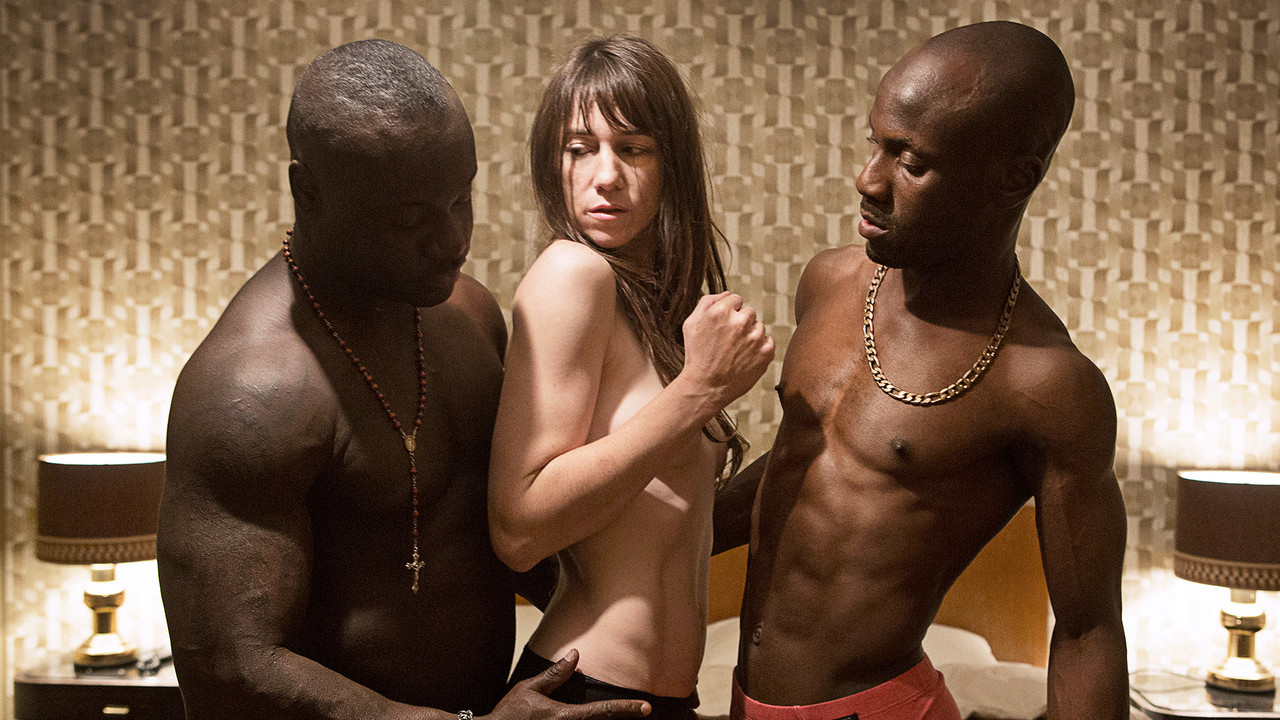
Charlotte Gainsbourg's side of the central performance is just as impressive.  Her Joe seems more fragile as if age and experience have made her brittle.  There is certainly more bitterness in her in this older incarnation, some justifiable, some less so, but she is recognisably the same woman.  Having given us two depictions of depression that manifested themselves in very visible ways; Antichrist's violence and Melancholia's panic, Gainsbourg here shows a much more reticent kind of depression.  Joe seems to operate at one remove from the world; her sexuality the only way she knows - perhaps cares - to connect with it.  Her brilliance here lies not in the searing, screaming, pain of loss as it does in Antichrist but in something much smaller and ultimately harder to understand.  Gainsbourg's side of the film is sadder, more reflective, but she does get to engage in some of its funnier moments, as when a proposed threesome degenerates into an argument between the two men.  Her voiceover means that Gainsbourg remains a presence even in the earliest of the flashback scenes, and does a great deal to tie the two portrayals of Joe together.  It's also just wonderful to listen to, communicating much about Joe's inner life with a rather poetic turn of phrase, not to mention a voice I would happily hear read the phone book.

The supporting cast is eclectic and the performances are as mixed as you might expect.  Perhaps the film's biggest downfall is the performance of Shia La Beouf.  I respect the fact that he's trying to stretch himself now, rather than turn back to the blockbusters that made his name (and, let's face it, an amount of money that allows him that choice), but he's pretty terrible as Jerome; the most important lover in Joe's life.  The problem is twofold.  First of all, for a character who has a lot of screen time, Jerome is frustratingly thinly developed.  He seems to behave in ways that serve the plot rather than tracking as a real character.  This too is something Von Trier jokes about, even implying that Joe may be lying about some of the times that she refers to Jerome, perhaps subbing him in for someone else because it's more interesting to do so. The second issue is LaBeouf's accent.  The film seems to be set in England, but it's so non-specific that there is no reason that Shia had to attempt the abysmally poor, inconsistent, woefully generic, 'English' accent he does here.  Let's just say that Dick VanDyke may now be forgiven.

There is much better news among the supporting cast, Christian Slater is very good as Joe's father (though the fact he stubbornly refuses to age is a little jarring in his last scenes, moving though they are).  Jamie Bell also impresses as a BDSM specialist that the older Joe sees.  He's almost completely devoid of personality, but Bell makes this interesting rather than frustrating.  I found myself asking the same questions as Joe does; who is this man and what does he get out of his 'work', which we never see that he is paid for?  In a smaller role as a friend of young Joe's, Sophie Kennedy Clark puts in a provocative turn in the film's opening chapter, instigating the memorable scene in which her character B and Joe compete to see who can fuck the most men on a train journey and so win a bag of chocolates.  On the downside there is Mia Goth, who has a large part in the film's closing chapter but, while beautiful, is deadly dull and puts almost no expression into her lines.  The film is very nearly stolen, however, by the barnstorming one scene performance of Uma Thurman, which has to be seen to be believed and should, in a world where there is justice, already be a front runner for next year's supporting actress awards.

Lars Von Trier's style as a director is constantly mutating and while Nymphomaniac has moments that recall the incredibly designed beauty of Antichrist and Melancholia (the opening shot, older Joe finding her 'soul tree' and many more) it also has a grittier and more mobile camera style at times.  This apparently comes out of Von Trier's non-proscriptive atmosphere on set, not blocking the scenes in advance and tasking the camera to follow the actors rather than vice versa.  This is perhaps best seen, again, in Uma Thurman's one scene, which has a chaotic but cohesive visual feel.  Perhaps the most notable thing about what Von Trier does here is the way that, like his main character, he appears to be reflecting on his life.  References to his earlier work litter the film.  I'm sure I didn't pick up on all of them but a major plot point of Breaking the Waves is echoed, the opening scene of Antichrist is recreated almost shot for shot and that film's fox also makes a brief cameo in the films most broadly comic scene.  Beyond reflection what Von Trier is saying about how he views this earlier work is never quite clear; perhaps that is what the debate between Joe and Seligman is really about for him, but it's a typically mischievous touch from the director.

Explicit as it is, Nymphomaniac is almost studiedly unsexy.  Part of Joe's story is how her endless sexual activity ends up being unfulfilling and making her numb both physically and mentally.  For its part, the film seems determined to make you feel the physical side of that numbness and it largely succeeds.  Most of the sex is mechanical (in a funny touch the thrusts when Joe loses her virginity are counted out on screen) and even when it's explicitly shot Von Trier's camerawork is so matter of fact.  The signifiers that Hollywood uses to tell you 'this is a sexy scene' are all absent.  It's all very effective in plugging you into Joe's experience.  That all said, I must confess I found one scene in the last chapter to be an exception to this rule, and I suspect most people will have one or two scenes where they find this to be the case.

Though my interest began to flag towards the end of the film, as I began to tire of the heavy metaphors discussed between Joe and Seligman, the film's only major storytelling misstep for me is its coda.  Even in a film that feels as frequently on the nose as this one, that last sequence bothers me because while Nymphomaniac can be groan-inducingly obvious it is never, until that moment, cheaply shocking.  I'll just say that I wish the cut to black had come a couple of minutes earlier and leave it for you to discover what I mean and whether you agree.

As an experience, Nymphomaniac is certainly a singular piece of work and often an exercise in contradiction: pretentious and hilarious; endlessly provocative and explicitly unsexy; artfully composed and messy as hell; rigorous and mischievous.  Viewed as a whole it loses steam, but that may not mean that Volume 2 is a worse film, simply that at four hours it is exhausting.  This isn't a great film by any means, but it's a vital and exciting one, I'm glad it exists and for all its flaws it is essential viewing.
★★★

Jun 16, 2013

My Top 10 Working Actresses: The Top 3

3: Jessica Chastain
Jessica Chastain only really came to filmgoers attention in 2011, when she had a truly spectacular year, and seemed to be in everything. This was largely because she had been making a lot of films over the previous couple of years, but they all managed to be released in a 12 month period. There were two that really launched her. The first was Terence Malick’s The Tree of Life, which brought her to major critical attention, and the second was The Help, which also brought critical kudos, but was a much more mainstream proposition and gave her wider visibility.

The Tree of Life was where I first saw Chastain, and I was knocked out. Her role in Terence Malick’s film is essentially intangible, yes she’s playing the Mother of the main character, but that’s not really what she’s playing so much as the idea and the personification of grace – an earthbound angel. Malick could not have cast the role better. Beyond her obvious and frankly almost unfeasible beauty, Chastain, in this film, possesses a quality that is almost lit from within, making her seem otherworldly. She makes a role that seems impossible to act feel quite natural, and by the time she’s a levitating vision at the end of the film you simply accept this ethereal quality as part of the character.

In 2011 I also saw Chastain in Texas Killing Fields, Coriolanus, Take Shelter, The Debt and The Help. What really impressed me was the range she was able to show and the variety of characters and tones she was comfortable with. For me though the standout among all of these was Take Shelter. In Jeff Nichols’ film Chastain could easily have been lost playing the worried but ultimately supportive wife who is watching as her husband (Michael Shannon in a towering performance) appears to be losing his mind, but she brings strength and heart to the part, and gives a real sense of the depth of love and commitment between these two people. This could easily have been the most standard role of her breakout year, but she brings such richness to it that it became the standout. Most of Chastain’s 2011 roles saw her in very serious mode, whether as a cop in Texas Killing Fields or as a spy in The Debt, but The Help gave her a chance to flex comedic muscles that you might not have expected that she’d posses as a well meaning but clueless young wife. She was Oscar nominated for The Help; an honour well deserved, but also, typically of AMPAS, given for the least interesting role in a truly great year of work.

What many people didn’t realise was that Chastain had been around for some time, making her debut in a 2004 episode of ER, but more notably had played the lead role in a 2008 independent film called Jolene. It tells a rather familliar story of a young woman (the 30 year old Chastain plays Jolene from 18 to 28) drifting from place to place and relationship to relationship, most of which end in ugly ways. The film wasn’t great, but Chastain was, and made the rather rote drama affecting.

Since that watershed year in 2011, Chastain has continued to challenge herself, and become perhaps the most interesting character actress of her generation; she’s brilliant as a CIA operative who goes from being one of many to a steely and unshakeable battering ram, relentlessly pursuing what she believes to be the key to finding Osama Bin Laden in Zero Dark Thirty, and while the horror film Mama may have shown up one place where she can’t find a comfort zone the upcoming dramatic pair of The Disappearance of Eleanor Rigby: His and Hers should see her back on firmer ground, while future projects like a new adaptation of Miss Julie and Guillermo Del Toro’s ghost story Crimson Peak suggest a desire to not repeat herself, which should see her continue to be one of the more unpredictable and interesting actresses around.


2: Isabelle Huppert
Isabelle Huppert’s career now spans 43 years and 112 credits, which range from work with Jean Luc Godard to a guest role in American TV series Law and Order: Special Victims Unit. Eclectic is perhaps not a strong enough word.

Huppert insists that she has no method, that she doesn’t become or inhabit her characters. If that’s truly the case then she’s well into a fifth decade of having us all fooled, because despite one of the most distinctive faces in cinema, which has only become more so as she has aged (far less than she should have at 60) she seems to me to be the most invisible of performers, the least herself (with the possible exception of the name below). I have more of her work that I’m yet to see than either of the other two women in this post, but still, I feel confident in putting her this high up this list.

Huppert has often said that she chooses her projects largely by the director, and that she likes to take risks on new filmmakers, but this hasn’t stopped her from forming long running relationships with filmmakers either, particularly with Claude Chabrol and Michael Haneke.

She made seven films for Chabrol, spanning 28 years from Violette in 1978 to A Comedy of Power in 2006, and taking in several of her finest roles along the way. Huppert’s best film for Chabrol was La Ceremonie, in which she’s initially an energetic presence who livens up the otherwise rather staid life Sandrine Bonnaire is living as a maid to a rich family, but slowly her motives become questionable, and the character develops a disturbing edge. However, Huppert’s best performance for Chabrol was probably in a historical drama, atypical for the director, A Story of Women. In this Huppert plays a woman who performs illegal abortions, and the last fifteen minutes of the film, between her arrest and execution, are completely devastating as her previously steely exterior begins to dissolve. Her final prayer “Hail Mary, full of shit” is one of those moments that makes the hairs on the back of your neck stand up, and remains with you long after the credits.

The collaboration with Haneke, so far, spans three films, but it was their first film together that gave Huppert perhaps her best role, and prompted a performance I would rank as one of the three greatest I’ve ever seen. The Piano Teacher sees Huppert as a repressed mid thirties woman who teaches at a conservatoire. One of her students (Benoit Magimel) begins to pursue her, not knowing the desires that she has been bottling up. It is one of the saddest and starkest films about relationships and sex, and the way Huppert’s coldness gives way to obsession is brilliantly played. For me though, the best scene is when Huppert lays out her toybox for Magimel. It’s desperately sad; almost childlike in its desire, and Huppert’s lack of comprehension of his emotions is also upsetting, because we know it means that her clearly deep emotional needs will never be met.

Age often reduces both the amount and the range of roles that an actress is asked to play, but Huppert has seemed to buck this trend, becoming ever more adventurous and discovering a sense of fun that she could have been accused of lacking in her earlier career. It was a real surprise to see her sending up her extremely severe and serious image in David O’Russell’s madcap metaphysics comedy I Heart Huckabees and Francois Ozon’s camp Agatha Christie style musical 8 Women and simply enjoy herself in the likes of Copacobana (opposite her daughter Lolita Chammah) and Hong Sang-soo’s In Another Country. For the most part Huppert’s roles remain more serious, but they also remain diverse, whether it’s as a plantation owner in White Material, a middle aged woman running away from her life in Villa Amalia, a mother who walls herself and her family into their house rather than move in Home or a woman taken hostage while on holiday in Captive. There is a restlessness to Huppert, she works constantly, and despite her insistence that she never prepares, simply acts the part scene by scene, she continues to seem endlessly and increasingly creatively inspired.


1: Jennifer Jason Leigh
I could write a book about why I think Jennifer Jason Leigh is – at minimum – the greatest actress working. Hell, in the nearly fifteen years I’ve been writing criticism of some kind and the twenty I’ve been making notes on movies for myself I’ve probably at least begun to write it. The challenge, at this point, is finding new ways to say it; new superlatives for an actress who routinely defies them.

The amount of work that Leigh puts into her roles is legendary. She amasses binders full of research (an entire file on 19th century etiquette for Washington Square), immerses herself in the roles she’ll be playing (she visited a sex phoneline for Short Cuts) and writes in character diaries for every role. This pays off in performances that seem to me not so much like acting as they do full on possession. In one of her earliest notable roles, the classic teen movie Fast Times At Ridgemont High, the then 19 year old Leigh played an innocent, virginal, high-schooler so convincingly that Roger Ebert took offence to the many sordid and exposing situations that she’s put in in the film, not knowing that, if anything, the film didn’t go far enough for Leigh, and that he was inadvertently reviewing the character rather than the performance. That, for me, ends any discussion about how good she is in that film.

Fast Times is essentially an exploitation film lifted out of its genre by some strong performances, and for a while Leigh seemed to specialise in bringing exploitation cinema a level of engagement it seldom saw from actors. She was remarkable as a deaf and blind woman stalked by a murderer in Eyes of a Stranger, more than the plot device she might have been in The Hitcher, a kidnap victim who uses her sexuality to scheming advantage in Paul Verhoeven’s American debut Flesh and Blood and, along with Bridget Fonda, brought class to trashy roommate from hell potboiler Single White Female.

Of course exploitation was not all that Leigh did, and she demonstrated her talent and versatility in a massive variety of projects. In a single year (1991) Leigh was a drug addicted undercover cop in Rush, the hooker with a heart of gold who dreams of a fairytale life with criminal Alec Baldwin in Miami Blues and the lead in the searing, deeply upsetting, Last Exit to Brooklyn. The last of these contains some of her best work, especially in the scenes after her character Tralala is left by her squaddie boyfriend and goes to a bar, where she essentially invites every man in the room to rape her. The desperation of her performance, and the way that she’s more broken almost scene by scene, her porcelain doll looks smashed by the end, is genuinely hard to watch.

The best performance I have seen from Leigh – and including films and TV work I’ve seen more than 50 – came in 1995′s Georgia, written by her Mother Barbara Turner and co-starring her longtime friend Mare Winningham. Leigh and Winningham play sisters, both singers. Winningham’s Georgia is a country star with a stable home life, while Leigh’s Sadie is a drug addled fuck up who performs in dives. Leigh totally disappears into Sadie, she dieted her slender frame down to barely 90lbs, rehearsed with her band in the film, and played all of the gigs we see for real, with no backing track. It is searing work, her performance delivered as if Sadie is not so much a person as an exposed nerve, feeling everything acutely and unable to filter what she puts back into the world. This is most thrillingly realised when she gets to play as Georgia’s support act at a huge concert, and then spends 9 excruciating minutes delivering Van Morrison’s Take Me Back with such venom that it’s almost an assault on her audience.

Liegh has worked less over the last few years, but she has still turned in some fantastic performances, notably as the hooker (she’s played quite a few) in a relationship with Christian Bale’s sleepless protagonist in The Machinist and as one of the iterations of the Aviva character in Todd Solondz’ Palindromes. She’s especially brilliant in the latter, seemingly shrinking into herself to convincingly play a 12 year old when she was 42.

2013 and 14 should be exciting times for Leigh fans, as she has several films in which she’s near the top of the cast list either doing the festival circuit or in post production. I wouldn’t dare predict what she’ll do next, but I’ll be at the first screening I can get to, I promise you that.

Jun 9, 2013

My Top 10 Working Actresses: The Runners Up

Following on from last month’s list of my Top 10 directors, me and a few fellow bloggers have decided that we will try to come up with similar lists on a different topic each month.

This has been an incredibly difficult list for me to make for several reasons. First of all, as with the directors list, I have been looking for consistency in a filmography, but it’s much harder to come by with actors, who tend to work much more frequently than filmmakers because their commitment to a project is much shorter term. Another problem of this is that it often means that there are large proportions of a contender’s filmography that I haven’t seen (with one notable exception), and so choosing and ranking them is difficult. While I’ve seen a lot of films from across the lifetime of cinema, I have most experience and knowledge of cinema since the 1970′s. Because of this, and because when I was looking for ‘classic era’ actresses to include I had to reject most of them because I had seen only a handful of their extensive work, I have decided to cheat, and refocus this list to be about actresses who are currently working. I promise to go away, do some homework, and come back with a classic era list in the future.

All this has made ranking a real struggle, and so what I have decided to do is post, in alphabetical order by surname, seven ‘runners up’ in this first part of the list, and my Top 3, ranked, in the upcoming second part.


Laura Dern
Laura Dern started early, appearing as an extra in Alice Doesn’t Live Here Anymore, which starred her mother, Diane Ladd, but she got a proper start in the film business in 1980 in Foxes. As I’ve seen more and more of Laura Dern’s earlier work – when she was playing leading roles with greater frequency – I’ve always been impressed with her range. Her slightly gawky prettiness lent itself well to roles that required an innocence and openness, such as she has as the blind girl who falls for Eric Stoltz in Mask, but she also grew into roles with a fierce sexuality; sometimes knowing, as in Wild At Heart and sometimes more naive, as in Rambling Rose.
 
All the best actors are versatile, and Dern is no exception, but if there is a theme that runs through many of her characters it is perhaps a rather matter of fact, down to earth nature. The title character in Rambling Rose is a great example of this for me. She turns a family upside down with her sexuality, but does so not maliciously, but simply by being her simple, straightforward, self. In a totally different way this is also common to a lot of her more recent performances, in which she’s often employed in supporting roles. One that works really well is her performance as an inspirational teacher in October Sky, her role could be the height of saccharine, but Dern plays it with such sincerity and simplicity that it works.
 
Dern’s best work, and perhaps her most wide ranging, has been for David Lynch. She went from good girl in Blue Velvet to femme fatale in Wild At Heart, before turning in a career best performance in INLAND EMPIRE. Playing both a successful actress and (probably) a character that she is slowly becoming, Dern is absolutely extraordinary, and, in the second half of the film, completely inverts her usual approachable persona in the most venemous, spittle flecked performance she’s ever given, reaching both its nastiest and its saddest moment as ‘Susan’ relates the story of what she did to a rapist to her psychiatrist (“fucker been sowing some pretty heavy shit”). That performance should have brought her the Oscar that Lynch campaigned for her to get (by sitting outside with a cow, because he’s David Lynch).
 
For me, Laura Dern continues to fascinate because she’s never settled into any particular type of role and whether she’s working on a huge canvas like Jurassic Park, where could be playing second fiddle to the effects, putting in a short performance in a film she isn’t the focus of, as in The Master, or trying to bring a real person to life as in the TV movie Recount, she brings the same level of engagement and reality to bear.


Elle Fanning
I debated with myself for some time about whether it was too early to put Elle Fanning on this list (she is just 15 years old), but then I thought back over the performances I’ve seen her give. The younger sister of Dakota Fanning, Elle seems to possess none of the obvious precociousness that came through in many of her sibling’s performances, instead what I see in her is a relaxed and easy naturalism; a sense that she’s hardly acting at all.
 
That sense, however, is something you are disabused of both by the range she is able to show and by her giggly, bubbly, personality in interviews, which is a million miles from her largely much more reserved and serious characters. Her first really notable role was at 4, when she played the young daughter of Jeff Bridges’ character in The Door in the Floor, and she turned in good, natural, work in the likes of Babel and The Nines before winning a first lead in Phoebe in Wonderland.
 
I sat up and took notice of Fanning in The Curious Case of Benjamin Button, in which she played the younger version of Cate Blanchett’s character, and then became a big fan – just as everybody else did – when she appeared in Sofia Coppola’s Somewhere. I found that film a tedious and testing experience as a whole, but Fanning brought energy to the otherwise somnambulant proceedings, with a mature and complex performance as a daughter warming, scene by scene, to a Father she doesn’t know all that well. Somewhere marked a real shift in Fanning’s career, and since she seems to have gone from strength to strength, picking a succession of intelligent and challenging roles.
 
For me, one of her finest moments comes in Super 8, in a scene when her character, Alice, is playing a zombie. She asks for some help in figuring out what a zombie should be like, takes the direction and then, before our eyes, transforms. The layers in that scene are many and she plays every one of them. What’s most impressive is that when she slips into zombie guise it feels like we’re still watching Alice, rather than Elle, act. There are many more impressive moments in Super 8, which makes it a bit disappointing when it becomes a monster movie.
 
The thing that really seems to mark Fanning out for me (and which was exploited to great effect by Sally Potter when she cast the then 13 year old as a 17 year old coming of age and protesting the cold war in the early 60′s in Ginger and Rosa) is an understanding beyond her years. It’s a trait that has served her incredibly well, and should continue too if, as her upcoming slate suggests, she continues to pick interesting and challenging roles. It may be early to put her on a list like this, but no other actress of her age – and few of any age – has recently put up as impressive a run of performances.


Nina Hoss
There are many reasons that I’m disappointed that we don’t see more world cinema getting a UK release, but one of the big ones recently has been the fact that when I say the name Nina Hoss to people their usual reply is “who?”
 
I first saw Hoss in Yella, one of her several collaborations with director Christian Petzold, and while I wasn’t overly fond of the film (largely because I spotted the ‘twist’ several hundred miles off), I was knocked out by Hoss’ performance, and by her unique, angular, beauty. Only a few of her films have achieved a UK release, and for a while she seemed to be that great actress who was always stuck in films that weren’t as good as she was. Atomised was notable. In this Hoss is seen in flashback as the flighty and irresponsible mother of the main character, and is the complete reverse of her cold, distant character from Yella. She was the only fun thing in a very dull film, and it was great to see that she could go 180 degrees away from the last film I had seen her in.
 
The other work I’ve seen has continued to show that versatility; she has an enormously good time camping it up as a lesbian vampire in Dennis Gansel’s dumb but fun We Are The Night, but she’s best when she’s more inheld, as in Petzold’s tense DDR thriller Barbara and the still undistributed in the UK The Heart is a Dark Forest, in which the discovery that her husband has another family a few miles away leads Hoss’ character on a surreal journey.
 
Her finest hour to date comes in Anonyma: A Woman in Berlin (which may have the least representative DVD art of any UK release). Hoss plays a woman who forges a relationship with a Russian officer in order to avoid the fate of many of her peers; random and repeated rape by the conquering army. It’s a deeply upsetting film with a fine ensemble cast, but Hoss’ dignified performance of improvised strength in the face of unimaginably horrendous circumstances is the stuff awards are made of (or would be, were it in English). I only wish more people knew how remarkable an actress she is.


Noomi Rapace
I’m really hoping that Noomi Rapace goes back to Scandinavia soon. Let me be clear about this; I wish nothing but the best for her, and it’s nice that she’s getting jobs in the US where I’m certain she’s making better money, but in terms of her work, the performances she turned in back home and those she’s giving in Hollywood simply don’t compare.
 
Like everyone else, I discovered Rapace through her role as Lisbeth Salander in The Millennium trilogy, in which she gave a fierce, feral and typically insanely committed performance, essentially transforming herself physically and mentally into the character for the duration of the shoot. Rapace is electrifying as Salander; there’s a dangerous energy about her that comes through even when, in the third film, she spends most of her screentime sat silently behind a desk. Rooney Mara’s take on the character seemed to me like a stroppy emo teenager, while Rapace gave off the truly unpredictable energy that made Salander so compelling in the books.
 
Sadly her Scandinavian work outside of the Millennium films has not traveled so extensively, and so most haven’t seen her as a young mother trying to come to terms with her memories of her own alcoholic mother as the older woman is dying in Beyond, or as a mother totally obsessed with the safety of her young son in Babycall, or in her frankly astounding performance in Daisy Diamond.
 
Daisy Diamond is a film that doesn’t quite earn its lead performance; it’s a bit obvious as it batters tragedy upon tragedy into us and into Rapace’ character; an aspiring actress who keeps failing auditions because her six month old daughter won’t stop crying. The thing that keeps it from being mere misery porn is Rapace, who was hospitalised after the shooting, with bleeding ulcer apparently brought on by the stress of the role and the diet she went on for it. She takes us down Anna’s horrendous spiral with total conviction, especially during the nightmarish first half, in which the question isn’t what will happen but when. It’s a jaw dropping, utterly fearless, emotionally and physically naked piece of acting that is among the best performances I can remember seeing, and it alone would put her on this list. I really hope she’s got another performance like that in her.


Kristin Scott Thomas
Hugh Grant['s character] is a fucking idiot. I mean honestly what kind of moron, given the choice, would pick tedious more-hair-than-personality Carrie (Andie McDowell) over the dryly witty, ridiculously good looking, clearly head over heels for him Fiona (Scott-Thomas) in Four Weddings and a Funeral? When I first saw the film, aged about 14, that – even more than the literally and figuratively wet ending – was the big problem with it. Kristin Scott-Thomas was simply, clearly, more interesting, and I couldn’t imagine why the floppy haired walking stutter would pass her up.
 
Scott-Thomas has not always been well served by the British film industry, but has been much better used, especially in recent years, in France, where she has lived and raised her children for many years. The life cycle of a successful actress generally dictates that they rise in their twenties, plateau in their thirties, and find themselves slowly relegated to more or less interesting mother and grandmother roles as the decades roll on, but Scott-Thomas is one who has really bucked this trend, getting many of her best parts and doing much of her best work in her forties and now into her fifties.
 
There is often a sense with Scott-Thomas that her outward appearance; sharply beautiful, but often suggesting a reserve or a coldness, is hiding things that are dying to get out. Roman Polanski capitalised on this in Bitter Moon, in which she is the half of an upper-class, very reserved, couple that ends up sleeping with Emmanuelle Seigner, despite the fact that it’s her husband (Hugh Grant) who has been tempted throughout the film. The same sort of pattern is seen in her more notable performances in The English Patient and the more recent Leaving, in which she falls into passionate affairs with, respectively, Ralph Fiennes and Sergi Lopez.
 
This isn’t to say that Scott-Thomas is limited. In recent years she’s excelled as a kidnapped woman going through Stockholm syndrome in In Your Hands and as a journalist investigating an almost forgotten story from the holocaust in Sarah’s Key, and she’s apparently striking as Ryan Gosling’s mother/Oedipus complex in the forthcoming Only God Forgives.
 
However, for me Scott-Thomas’ best role, and the one that really shows what a sensitive and nuanced actress she is is in I’ve Loved You So Long, in which she plays a woman recently released from a long prison sentence and struggling to put her life back together. Both film and performance hold their cards close to their chest, and when we finally find out what she’s been in prison for it’s devastating, but Scott-Thomas plays everything with a barely held in emotion that makes her whole performance feel like she’s like a raw nerve, being exposed to the world for the first time in years, but trying not to show how hard it is for her. It’s a remarkably controlled and intricate performance from an actress who seems to specialise in them.


Juno Temple
Juno Temple may be young (23), but she’s already established what is for me a very well deserved reputation as one of the most fearless and most interesting actresses around. You could easily suggest that, as the daughter of Julien Temple, her career has been the result of the usual nepotistic tendencies of Hollywood, but for the fact that she’s worked her way up from small parts – making a big impression in only her second film, Notes on a Scandal – to her current status as one of Hollywood’s busiest indie character actresses.
 
I think, though it’s far from being her best film, the role that really solidified Temple’s place on this list for me was Dirty Girl (which is, thus far, unreleased in the UK). She plays a rebellious high schooler who takes a social misfit under her wing and goes on a road trip with him to find her Father, who she always thought was dead. It’s a rather cliche ridden buddy road movie, – fun at times, but no great shakes in any respect – but Temple simply storms away with the film, giving a performance that is rich in character and blazes with charisma.
 
Another of the things that marks Temple out for me is the amount of layers that she manages to give her characters. In Dirty Girl, for example, she’s rebellious and promiscuous, but also just crying out to be loved, mostly by her unknown Father. She’s even more interesting in Cracks, as the former apple of teacher Eva Green’s eye, who turns scheming and nasty when she’s deposed by new arrival Maria Valverde. However, Temple’s finest hour to date came with her performance in William Friedkin’s brilliant Killer Joe, which, for me, she manages to steal from under the nose of a spectacular, career redefining, performance from Matthew McConaughey. As trailer trash teen Dottie, Temple initially seems like a vulnerable doll, being passed as a bargaining chip between the men in the movie, but Temple suggests that Dottie is not as naive as she seems, and that by the end she may well have contrived to have things work out best for herself.
 
Temple works constantly (indeed I have her next film, Magic Magic, to review soon) and she continues to carve a path that embraces tiny esoteric films (indies like Small Apartments, The Brass Teapot and others), offbeat higher budget work (the upcoming horror Horns), daring, exposing roles (the aforementioned Killer Joe and Greg Araki’s apocalypse comedy Kaboom) and the occasional blockbuster (The Dark Knight Rises, and next year's Maleficent). It’s a smart career plan, from a smart and endlessly interesting actress.


Kate Winslet
I wasn’t quite old enough to be the first at the party as far as Kate Winslet was concerned. I remember reading about her first film, Heavenly Creatures, when it was released when I was 13, and being desperate to see it, but it was an 18, and I looked about 9 at that time. I also remember a particular magazine photoshoot, and deciding, based on that, that it was probably worth looking out for Winslet in the future. Then I saw Titanic, and am not embarrassed to admit (no, that’s not right… I’m entirely embarrassed to admit) that I was completely taken in by the spectacle, and by Winslet.
 
I moved on from Titanic to some of Winslet’s better work, looking back to Michael Winterbottom’s heartbreaking Jude and forward to the idiosyncratic choices she made after starring in the highest grossing film ever made. Soon after that, Heavenly Creatures came on TV (I couldn’t buy or rent the video, because I still looked 9), and I taped it and watched it with my best friend. We were both knocked out by the film, and by both central performances. Winslet may have had little on camera experience, but she held the frame like an old fashioned movie star and delivered a knockout performance that was funny, unnerving and real. 19 years on from its initial release the film still plays brilliantly, and still resides in my top 20.
 
It would have been easy for Winslet to take the blockbuster route, but instead she has always stretched herself as an actress, largely at the expense of box office success. Okay, so she made the resolutely formulaic (and awful) The Holiday, but that’s more than offset by one of the most offbeat romantic comedy dramas ever made; Eternal Sunshine of the Spotless Mind, in which, it’s important to remember, she’s playing not a real person, but Jim Carrey’s memory of that person, as he tries to take back his decision to have that memory erased. It’s a complex film, and Winslet gives Clementine a suitably complex and sometimes extreme (in the way that memory can exaggerate a person’s traits) personality.
 
It’s not easy to pin down an essential Winslet character, and that’s perhaps what’s so good about her. Many of the women she’s played share a certain forcefulness (which, if you’ve seen her interviewed, almost certainly comes straight from the source), but it’s always nuanced, always adjusted to the character, and muted when that’s appropriate. It’s perhaps most accented in Holy Smoke, in which she’s outright combative as a former cult member being de-programmed by Harvey Kietel.
 
After six nominations, Winslet finally won an Oscar for… The Reader. Yeah. I’m not going to dispute that she’s very good as a former Nazi party member on trial for her part in a holocaust atrocity, but the film just felt wrong to me; a German story that really needed to be in the German language, and that she and Ralph Fiennes both seemed somewhat adrift in. It was also a nonsense that she won for that film because she was far, far better that year in her then husband Sam Mendes’ Revolutionary Road, which re-teamed her with Titanic co-star Leonardo DiCaprio as a 1950′s couple whose marriage is falling to pieces. It’s a brutal film, despite it featuring no physical violence, and Winslet and DiCaprio are both near their best. I still don’t know what the Academy was thinking that year.
 
Since this, Winslet has worked less, but impressed me playing a truly awful woman in Roman Polanski’s black comedy Carnage, and she now has a few more films in the can. I’m looking forward to seeing her on screen on a more regular basis, and perhaps to her recapturing the risk and excitement of the first decade or so of her career.

Martyn Conterio's Top 10 Performances by Actresses

A lot of my blogging colleagues are about to unveil their lists of their Top 10 actresses in cinema and my friend and sometime editor (previously at his now closed blog Cinemart, now at New Empress) Martyn Conterio wanted to chime in with a list. He’s gone a slightly different way with it than the rest of us, picking his 10 favourite performances by actresses rather than his 10 favourite actresses full stop, but it’s an interesting list and a typically great read. Grab a notepad and prepare to join me in jotting down titles of films you need to get round to seeing.


Miriam Hopkins in Trouble in Paradise (1932)
I quite agree with writer and critic, Gilbert Adair, who described this 1932 Ernst Lubitsch film as, “A masterpiece of delivery, the most mellifluous, the most perfectly spoken, film in the history of American cinema”.

Miriam Hopkins, as Lily, expert confidence trickster and artful scammer of Europe’s idle rich, is one of the greatest female performances in comedy. The pre-Code film sees two thieves fall in love and then attempt to fleece a French businesswoman, Madame Colet. Hopkins’s sly charm and fits of jealousy are brilliantly played, especially when her lover Gaston (Herbert Marshall) starts to have feelings for Colet (played by Kay Francis).

“You are a crook. I want you as a crook. I love you as a crook. I worship you as a crook. Steal, swindle, rob. Oh, but don’t become one of those useless, good-for-nothing gigolos,” is just one of many wonderful lines Hopkins gets to deliver in this absolute gem of a motion picture.


Monica Vitti in Red Desert (1964)

There are lots of movies about ennui and mentally disturbed women, but Michelangelo Antonioni’s Red Desert is one that matches photographic experimentation with a riveting lead.

Monica Vitti plays Giuliana, a woman lost in an industrial hellhole becoming further and further disturbed by her situation. “I can’t look at the sea for long or I lose interest in what’s happening on land.” An opportunity to have an affair with her husband’s colleague, played by Richard Harris, offers respite but leads to further dis-satisfaction. Vitti’s performance is subdued and expertly conveyed. It’s one of those minimalist jobs that speaks volumes.


Ann Savage in Detour (1945)


Edgar G. Ulmer’s cult film noir features, quite possibly, the maddest femme fatale in the movies. Ann Savage is positively maniacal as Vera, a swell-looking babe who browbeats poor schmuck, Al Roberts (Tom Neal), into a scam. Savage left the business in the early 1950s but she’s remained a cult figure ever since thanks to Detour.


Guinevere Turner in Preaching to the Perverted

Is it a good film? Not really, but it is fun. Is Guinevere Turner’s role, as dominatrix Tanya Cheex, an awards-winning triumph? No, it is not. But she looks totally hot in PVC and she captivated me in the way movie stars are supposed to do. I saw this film on television either in the late 1990s or early 2000s. I also like Bulle Ogier in Maîtresse – aesthetically pleasing.


Lillian Gish in The Wind (1928)


If M-G-M hadn’t have changed the ending to Victor Sjostrom’s film, this would have been a knockout master work of the silent era. It’s still excellent, however, and Lillian Gish is fabulous as the young girl driven insane and preyed upon by suitors in the arid, wind-swept flatlands of Texas.


Mary Duncan in City Girl (1930)

F.W. Murnau’s last Hollywood picture, City Girl features Mary Duncan as a city waitress swept off her feet by country boy Lem (Charles Farrell). The film was compromised, Murnau was ill during production, he relinquished control to ‘hacks’, and then fired by the studio. But City Girl is still a marvellous work and Duncan’s performance is the definition of pluck and a spirit, and infinitely more real and interesting than Janet Gaynor in Sunrise. Interestingly, Duncan has been labelled responsible for losing the last known print of Murnau’s 4 Devils, according to archivist and historian, William K. Everson.


Amy Seimetz in A Horrible Way To Die (2010)
Adam Wingard’s psycho horror flick impressed the hell out of me at FrightFest 2011. Actress Amy Seimetz is on the cusp of greatness and this performance shot straight into my all-time favourites. Sarah is a recovering alcoholic nurse whose ex-boyfriend turned out to be the notorious serial killer, Garrick Turrell. The vulnerability and sadness portrayed by Seimetz is deeply touching and the way individuals prey on her character’s weaknesses is devastating. The film is exceptionally directed and deep-down, a twisted love story. A Horrible Way To Die is a cult classic waiting to be discovered by more people.


Isabelle Adjani in Possession (1981)

This is a movie I saw about one month ago and it floored me. I’d seen Isabelle Adjani in the likes of The Tenant (1977), One Deadly Summer (1983) and La Reine Margot (1994), but her role as self-mutilating demon shagger in Andrzej Zulawski’s tale of a messy divorce, doppelgangers and an icky, tentacled monster is mind-blowingly good. When poor Anna (Adjani) loses her shit in a subway and starts to ooze slime, you know this film is a keeper. Possession is a melancholic, poetic horror movie par excellence.


Greta Gerwig in Damsels in Distress (2012)
Greta Gerwig’s face is from another time. She’s got eyes and an expression that belong in the silent era of picture-making. She could be like Mabel Normand – a comedienne in movies based around silly capers: Greta’s Man Trouble or Greta Goes to the Races or be a hip flapper chick in the vein of Colleen Moore or Clara Bow. In Damsels in Distress (a title evoking old Hollywood with aplomb), Gerwig plays Violet Whister, a snooty but hilarious college student who wants to change the world by inventing a new dance craze. She’s also completely, adorably, insane. I would put Violet Whister in any list of favourite movie characters. She’s like a heroine from a 19th century novel reconfigured and shot through Whit Stillman’s deadpan style. Superb.


Mira Sorvino in Mighty Aphrodite / Judy Holliday in Born Yesterday (1995, 1950)

I thought I’d twin these two together purely because I couldn’t choose and they’re spiritually united in the way male characters in each film perceive them as idiots. Both actresses won Oscars for their roles and both are forces of nature.

Allen’s writing is bleakly comical and Sorvino gets lines such as: “And so there I am on the first day, on the set, and there’s this guy fucking me from behind, right, and there’s these two huge guys dressed like cops in my mouth at the same time and I remember thinking to myself, “I like acting. I wanna study.”

Holliday’s dialogue wasn’t so grimly amusing but it’s a wonderful role that deserves to be remembered. Be advised: never see the Don Johnson/Melanie Griffith remake of Born Yesterday, just go directly to the George Cuckor movie.

By Martyn Conterio

Feb 8, 2009

Doubt [15]

Dir: John Patrick Shanley
I try not to read too many reviews, mainly for fear of inadvertently plagiarising someone, but everything I have, thus far, read about Doubt lauds it for the same thing; the film’s ambiguity about its central question; did Father Flynn (Philip Seymour Hoffman) do something inappropriate with Donald Miller, the only black child at the Catholic school he is the pastor to?  I have to wonder if the version of Doubt that was press screened was substantially different to the one I saw, because the film I saw ties up almost all its loose ends, lacking only a neatly tied bow. 

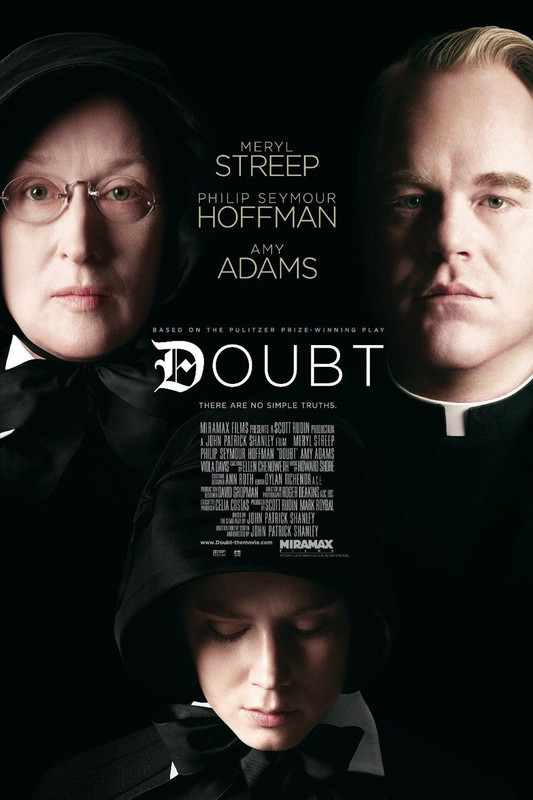
John Patrick Shanley’s second directorial effort (which comes 19 years after his first) is a film of two halves. The first, which is by far the better, sets out the daily life of a Catholic school in 1964, the world changing around it as principal Sister Aloysius (Meryl Streep) tries to prevent the modern world from encroaching on her school, and by extension her church.  This first half also introduces the three powerhouse performers at the centre of the drama. Streep represents the old guard, while forward-looking priest Hoffman and young, innocent Sister James (Amy Adams) both seem to want to put a new, friendlier, face on the church, though, it is implied, for very different reasons. This part of the film draws you into the world and the conflict that erupts in it when Sister James confides in Sister Aloysius about her suspicions of Flynn. 

Sadly it doesn’t last, and the second half of Doubt becomes overblown and overwritten, its believability careening downhill, especially in a pivotal scene with Viola Davis, whose excellent performance is negated by dialogue so wildly lacking in credibility that it utterly removes you from the scene. The second half of the film is its most theatrical, built on confrontations in enclosed spaces, and using such hackneyed devices as the plot appropriate thunderstorm to groan inducing effect. The sledgehammer subtlety of the second half is a real disappointment; particularly given the quiet, credible, build of the first half. It’s the neatness, though, that really irks, with a couple of scenes near the end sewing the central issue up far too securely. 

That isn’t to say that Doubt is a bad film though. Shanley’s direction opens up the play with plenty of well-composed and evocative shots, all made to look beautiful by Roger Deakins, who is surely the best cinematographer working in the US. However, Shanley’s taste for dutch angles, for little reason and to irritating effect, mars what is otherwise a rather beautiful film. 

The main reason to see Doubt, as you might expect, is the acting. Phillip Seymour Hoffman is the 21st century DeNiro, an actor who completely transforms himself in demeanour, in look and in character from film to film. He has some heavy and theatrical dialogue to deliver here, particularly in the clunkily written sermon he delivers towards the end of the film, but he makes every word play. If there is an element of doubt at all at the end of the film it is provided by Hoffman, whose performance draws you in with its ambiguity. It would have been easy to play Flynn as a monster, or as a wronged saint. Hoffman plays him as a flawed man. 

Amy Adams has made quirky, irrepressible characters something of a stock in trade, but as Sister James, she plays against type. As a nun who wants to retain her individuality, and use it to inspire her students she calls to mind Audrey Hepburn in The Nun’s Story, and gives a performance that stands the comparison. It’s the smallness of her work that impresses, the detail in her eyes and her face, and the fact that she’s just as watchable when she’s not speaking as she is when there are reams of dialogue for her to say. It’s a small performance, but it's another small wonder from a young woman who is becoming a reliable mark of quality in movies.  Meryl Streep goes to the other extreme. Where Adams’ performance is all about detail Streep’s is all bluster and bombast. It’s big and loud and scene hogging and it never makes you think anything besides ‘look, it’s Meryl Streep in a habit’. You can always catch her acting, which isn’t true of her co-stars. This is a performance for the back row of the theatre, not for the close up camera of the cinema, and it hurts the film. 

Doubt has moments of greatness; a three way confrontation between Streep, Adams and Hoffman; Hoffman and Adams’ shared scene on a bench; the silent scene in which Sister Aloysius makes Sister James eat a piece of gristle. It also boasts some outstanding contributions, from Roger Deakins, Phillip Seymour Hoffman and Amy Adams. Overall, though it’s not the film it should have been, it is worth seeing for these strong points, and for an excellent first hour.
★★★

Feb 1, 2009

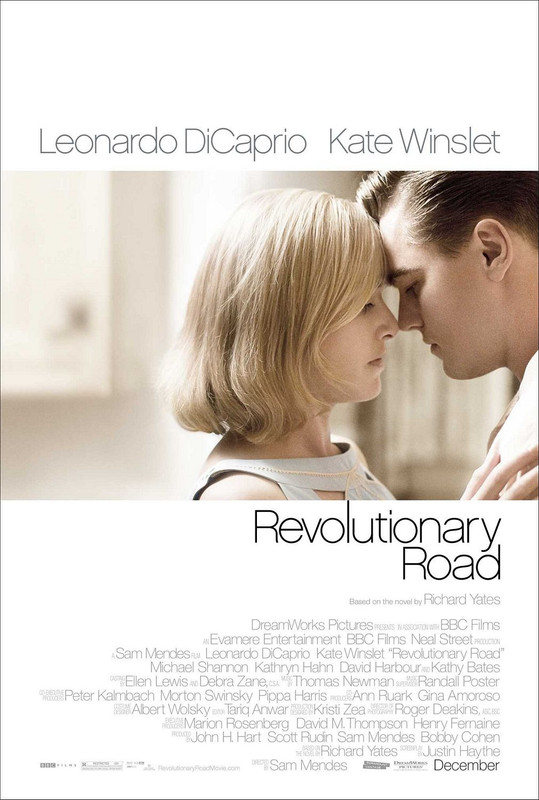
Revolutionary Road [15]

Dir: Sam Mendes
The Academy Awards are truly bizarre. Their weird voting system, their almost total lack of acknowledgment of movies released before November, the politics and maneuvering behind each nod, but the weirdest thing about the Oscars, at least based on watching Kate Winslet’s two most recent films, for both of which she was tipped for a nomination, is their taste. To nominate Winslet for her solid work in The Reader would have been fine any other year, but in the same year that her astonishing performance in this film is eligible? That’s just odd.

Revolutionary Road is based on a 1961 novel by Richard Yates about Frank and April Wheeler (Leonardo DiCaprio and Winslet), a young couple whose life and marriage, outwardly, looks perfect, but both of whom had bigger dreams, dreams now being crushed by suburbia, and the resentment is destroying their marriage. If DiCaprio and Winslet’s first teaming; Titanic, was about the power of romance then their second is about the death of romance, its slow strangulation by routine and mundanity. Revolutionary Road is a harsh film; all sharp edges and pressure cooker atmosphere, and that doesn’t make it an easy watch, but it does make it an impactful one. For the film’s first two acts Sam Mendes lets all the tension, all the resentment, all the anger, in Frank and April’s relationship come to a raging boil, and then in the third act the pot boils over, unleashing all that is held in and repressed in the first 90 minutes of the movie. It is to DiCaprio and Winslet’s credit that this rather melodramatic structure works.

The fact that Leonardo DiCaprio has only, in recent years, been nominated for an Oscar for his distinctly middling work in Blood Diamond is a travesty, and seldom one as acute as it is in this case. The former pretty boy has grown into an actor of intense focus and force. Frank hums with barely contained energy, but DiCaprio understands that doing too much, becoming theatrical, would unbalance the film, instead he opts for the coiled spring approach, showing Frank’s thoughts through tiny adjustments, the resentment burning behind his eyes. When that third act comes though the explosion is completely credible and frightening. 

Winslet is, perhaps, even better. In The Reader it was all you could do not to dwell on her (solid) German accent, but here her mid American tones sound completely natural, and you accept them without question. Outside of those technical aspects her performance is another masterclass from an actress who gives one almost every time she’s on screen. April’s hopes and dreams come alive in her in the scenes when she thinks they are moving to Paris, and when it becomes clear that that won’t be happening you can almost see the dream crushed before your eyes. The remarkable thing though, about both of these performances, is that they don’t come across as performances. Frank and April feel like living, breathing people.

The only actor from 
Revolutionary Road who has actually scored an Oscar nomination is Michael Shannon. In a year in which the award weren’t a forgone conclusion I’d count him in with a shout, and certainly, he doesn’t deserve the loss he’ll take to Heath Ledger’s lip-smacking hamming. In a perverse way his character, the ‘insane’ son of Frank and April’s neighbour (Kathy Bates), is the most honest person in the film, and that’s why his every brilliantly delivered line stings. It’s his final declaration of why he’s happy that will, of all the many good things in this film, stay in your head for days.

For his part Director Sam Mendes, as well as extracting fantastic performances from his stars, creates a convincing vision of mid-50’s America. The costuming and set design is excellent, but it’s also in the way the film is shot, as Mendes employs a largely still, spare style that fits the period as well as the story.

There are a few problems, each is small, but they do add up. Thomas Newman’s music, for instance, is beautiful in and of itself, but at times it is insistent to the point of being hectoring, and it also becomes repetitive. Kathy Bates, usually a fine actress, works rather too hard to provide some comic relief and she ends up being the one cast member to strike a false note. There are also a few too many bitty scenes at the film’s end, it’s only five minutes or so, but there are about three scenes that the film could stand to lose, in order to find a slightly more satisfying final image. These are all small problems, but they do mean that I can’t give the top grade that DiCaprio and Winslet have certainly earned.
★★★★