Showing posts with label Controversial Films. Show all posts

Jan 18, 2016

A Week in Movies: January 11th -17th 2016

Fantastic Four [2015] [12]
Dir: Josh Trank
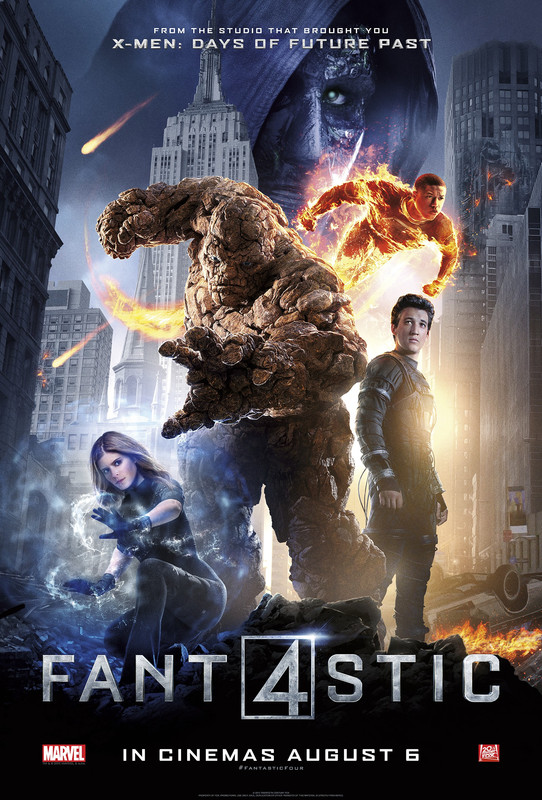
The Fantastic Four comic series has a fascinating big screen history, if only because, of four attempts to put the characters on screen, not a single one has managed to capture anything that seemed to explain why it was worth trying in the first place. The first version, never officially released, was a cynical rights holding move by Roger Corman. It was made for $7 and hot meals for the cast (citation needed) and is about as awful as you'd imagine. It's also by far the best version. This was followed by 20th Century Fox's first attempt at starting a franchise, with director Tim Story helming both Fantastic Four and its sequel Rise of the Silver Surfer. They were successful to a point, but horrendously miscast and entirely forgettable.

That brings us to this film... a cynical rights holding move by 20th Century Fox, who engaged Josh Trank, director of cult found footage superhero movie Chronicle, to make his big budget début. To say that the result, from production to final product, was and is a total clusterfuck is perhaps to be too kind. However, that doesn't mean that Fantastic Four 2015 - as a thing if not as a piece of drama - isn't interesting.

Fantastic Four fails at just about every level possible, and while it is easy to see that (and indeed when) the film was largely wrested from Trank's control, there is still plenty of blame to go around. It is not hard to see why executives would have thought that this film needed to be taken away from its director and his creative team. Throughout it seems imbued with a catastrophic lack of energy. The screenplay gorges itself on setup. To begin with, that doesn't work, partly because it suggests that 2014 Miles Teller (26) and Jamie Bell (28) are 17 or 18, which is laughable, but also because the backstory establishes very little about the characters. 

A screenwriter generally has to start with a blank page, that's not the case here, Trank and his co-writers have 50 years of comics to draw on, but what they come up with largely remains a blank page. Reed Richards (Teller) and Ben Grimm (Bell) are bland presences. Reed's one trait is that he's nerdy, which certainly marks him out among scientists working on inter-dimensional travel and Ben seems stripped even of his comic book toughness. Michael B. Jordan does what he can with the one note irresponsible daredevil he has to play as Johnny Storm, and contributes the film's best performance by coasting on his innate charisma. Kate Mara draws the short straw. Her Sue is consistently relegated to the back seat, she's pitched as a brilliant scientist but her biggest contribution to the mission that sends the team to another dimension seems to be in making their suits. Yes, it's more complicated than just having her do the sewing, but the symbolism is as loud as it is unintentional.

The first 40 minutes, before the characters travel to the other dimension (which is where, in this telling, they get their powers) should be setting up the four as individuals and as a team but - aside from a few unconvincing glimpses of Reed and Sue being attracted to each other so Toby Kebbel's Victor Von Doom can add jealously to ambition and generally being an asshole on the list of reasons he's the villain - it does no such thing. If Trank and the screenwriters had attempted to colour these characters in then the attempt at a down to earth, credible, take on this superhero origin story might have worked, but because they are so loosely sketched it is like watching them move cardboard cutouts around while explaining what's happening.

The tedious screenplay leads to another hobbling problem: the cast seem bored. Jordan at least tries to inject some exuberance into proceedings, but the downbeat tone, weak dialogue and characters, and by the numbers progression seems to sap the life from Miles Teller and Kate Mara in particular. Reed Richards and Sue Storm are one of the most famous couples in the Marvel Universe. It's important that, even if we don't see them as a potential couple, we understand why Doom does. Nothing about their interactions - more redolent of two people who have just met and are trying to pass time in after school detention than a potential couple - makes this remotely credible.

This is also reflected in the film's visuals, which are the typical teal and orange tediousness that so many would be blockbusters seem to be required to use. Trank injects no personality into the visuals, nor into the film as a whole, the corporate mandate drips from every frame even before the abrupt shift that seems to signal the moment that Fox put their director on a leash. The effects are at least competent, with The Thing looking the best he has ever looked on screen (though Jamie Bell's voice is hilariously mismatched with the post-transformation Ben) and The Human Torch looks good thanks to some surprisingly decent CGI fire (still something many films can't do well). These things and other solid effects suggest the film's sky high budget and solid tech team, so it's odd to see a simple, glaring, error in the visuals. Kate Mara's wig is awful, absolutely awful. How does something that basic slip past in a film of this scale? 

Ultimately I think it's - alongside the script and performances - an indication of a lack of passion that seems to pervade the film. The overwhelming impression is that of a company and a group of filmmakers working on a placeholder; something that will let them have a crack at doing this right in a couple of years time.

The film hits a lot of the expected beats: background, characters get powers, characters explore/moan about powers (in a sequence that could have been expanded upon quite interestingly, both in terms of its body horror and if it had engaged with politics that lay behind it, but which is dropped like a hot stone), but it does this without building up a villain. This is when the change in the film comes; as the third act opens a 'one year later' caption seems to end the film we've been watching (fine, I was bored) and start a new one, which is even more by the numbers and reintroduces Kebbell's Dr Doom. It's as if someone put a post it note in the screenplay that said 'insert generic end battle'.

The third act is an absolute mess. Doom's powers and motivation are ill defined, as is the way that the four, who he initially bats away with no seeming problem, should be able to defeat him (spoiler, it involves precisely no use of their apparently massive intellects). The plan that Doom uses to threaten the world is nonsense that feels like back of a napkin screenwriting, and the fact that the film to this point has barely engaged with the real world means that it has absolutely no weight or connection to anything of greater scale. I can see why execs wanted to take this boring and underpowered film away from Josh Trank, but you'd like to have imagined that if they were going to bother, they'd have ideas that would improve the thing.

Fantastic Four is a dull and derivative superhero film, made with absolutely no passion, but as a demonstration of how the modern Hollywood system works (or doesn't work) it is fascinating. Still, I'd rather see an honest documentary about it than this film itself.

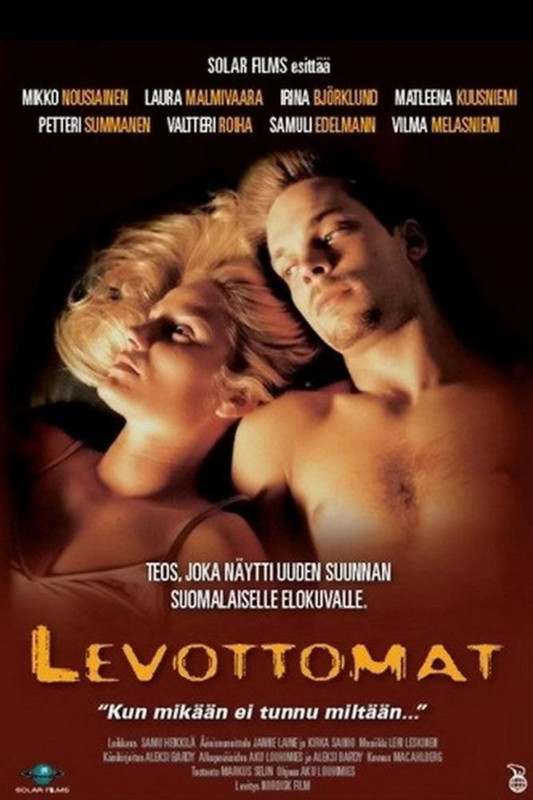
Levottomat
Dir: Aku Louhimies
The first of a loose trilogy, linked thematically rather than by characters, filmmakers or story, Levottomat was the college project of Aku Louhimies, writer Aleksi Bardy and editor Samu Heikkilä. For a group of young filmmakers, as a graduation piece, this is accomplished and confident stuff, but it does also betray its origins at times. 

The film centres on Ari (Mikko Nousiainen), a paramedic in his mid-twenties working in Turku, Finland. Ari remains largely emotionally disconnected from the world, especially when it comes to relationships, in which he has a policy of never sleeping with the same woman twice. That begins to change when he meets Tiina (Laura Malmivaara). Ari tells her what he's like, but Tiina wants to try to make it work and eventually introduces Ari to her friends, including free-spirited Ilona (Matleena Kuusniemi) and theology student and trainee priest Hanna-Rikka (Irina Björklund), both of whom Ari has affairs with.

The title Levottomat is translated literally in the credits as 'Restless', that's certainly a neat encapsulation of the state many of the characters are in, either as the film starts or as the events of the plot unfold. Ari's restlessness comes in his inability to commit or even to truly feel any emotion. Tiina's restlessness comes from Ari's and the fact that he doesn't seem to have the emotional capacity to be in the relationship she wants. Hanna-Rikka's restlessness comes from reconciling her belief with much of what she sees around her and with her own feelings for Ari. The theme echoes in all of the other characters as well, perhaps to too great a degree.

When it works, Levottomat is extremely engaging. The dynamic between Tiina and her friends (a group also including Ilona and Hanna-Rikka's boyfriends, played by Petteri Summanen and Valtteri Roiha) is convincing, as is the way that they are initially a little suspicious of Ari, but slowly allow him into the group (though this does begin to strain credulity in the third act). Having six main characters does mean that some go underdeveloped, with less time given to the boyfriends and to Hanna-Rikka's religion. I think the implication is that as Hanna-Rikka struggles more to contain her emotions she turns more towards her religion, but early on this isn't given the import that would allow it to develop more as a theme in her scenes. There is an interesting bit of background here, perhaps coincidental, perhaps not, in that Laura Malmivaara, who married Louhimies in 2003, studied theology for a time before becoming an actress.

Whatever the strengths and weaknesses of the writing, the acting is largely excellent. It would be easy to play Ari's detachment as robotic, emotionless, but Mikko Nousiainen brings rather more to it than that. There is a sense of emptiness at the heart of his performance, but it's something in the character rather than in his acting. Aside from Nousiainen it is largely the film's women who have the most developed roles, and they all acquit themselves well. Laura Malmivaara is affecting as Tiina, making us feel for her even as we know that the emotional cost of her decision to pursue Ari is inevitable. As the flightier Ilona, Matleena Kuusniemi is sexy and seductive, but never overblown. It would be easy to play Ilona as a one note seductress out to score with Ari, but the script and performance are somewhat smarter than that. While, as I mentioned above, Hanna-Rikka isn't quite so well developed as some of the other characters, Irina Bjorklund still makes her an interesting presence from scene to scene. If her performance comes off weaker it's because her characterisation, as written, is sometimes slapdash and developed in fits and starts. That said, she's the most interesting character by the third act of the film and probably the one I'd most like an update on, 16 years later.

At times Louhimies' film is overstuffed. For instance, the scene in which, having been thrown out by Tiina, Ari goes to stay with his paramedic friend, only to find him drunk and with a gun in his mouth. This scene serves only one plot purpose (which itself could easily be lost) and frankly, it seems a bit much. Levottomat is not a terribly happy film, but there seems little purpose to piling these 10 minutes of misery on, particularly as they never rate a subsequent mention.
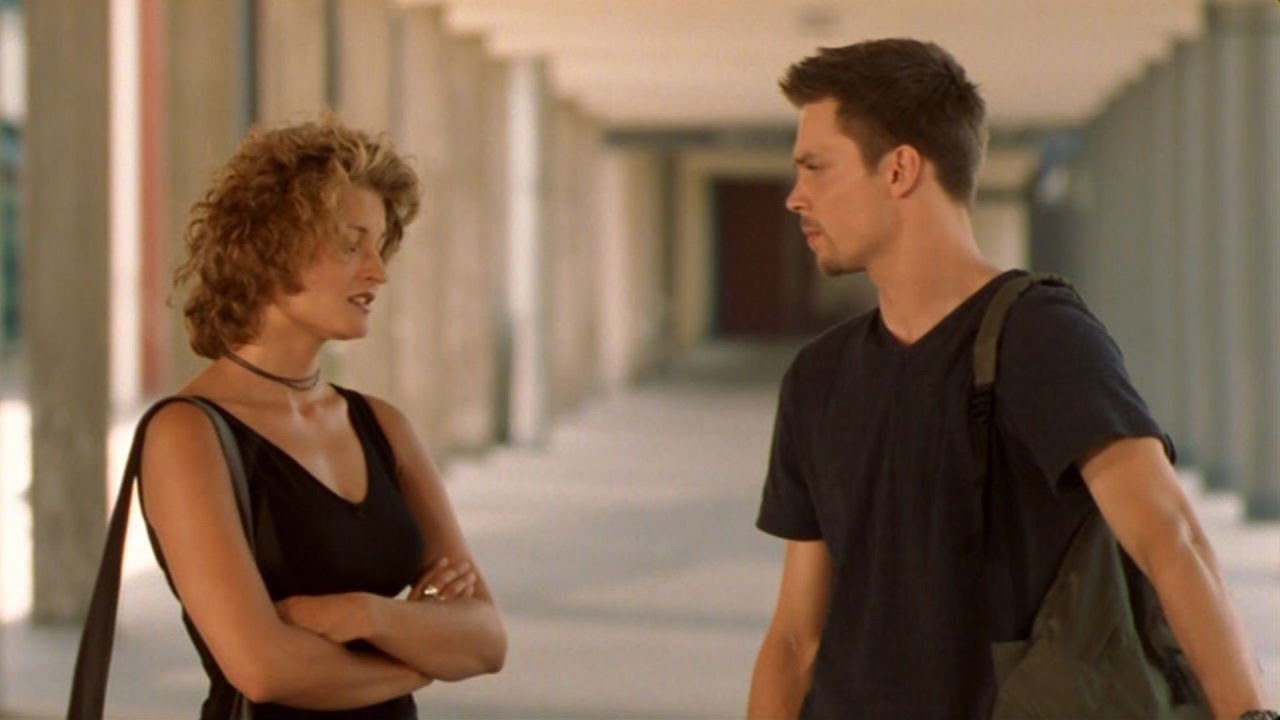
As much as it's about the complexities of the relationships and the emotions of this group of characters, Levottomat is about sex, and it approaches this theme with what is a typical Scandinavian frankness, at times bordering on hardcore. There are nude scenes that tend toward titillation, but for the most part these are character scenes, often about the emptiness for Ari of what ought to be a moment of connection. The best of these scenes may be the one between Ari and Hanna-Rikka. I got the sense that Hanna-Rikka is trying to adopt some of Ari's detachment, but finds that she can't (something that comes through strongly in the next scene).

For the first 80 minutes or so, Louhimies keeps everything grounded. His technique isn't sophisticated, but it's unobtrusive enough to serve the story. In the third act, however, as the characters convene for Ilona's wedding, things take a turn for the melodramatic and a few cringeworthy scenes ensue. This is the only time the actors seem out of sorts (Malmivaara in particular overacts a few late moments), but even here there are strong moments, such as a quiet scene between Nousiainen and Bjorklund.

On the whole, Levottomat is flawed, it feels like a debut, but there's also a degree to which it's okay for the film to be messy, because it's about people whose lives are messy. I'd like to see what Louhimies went on to from here, because for all the bits that clunk there is a lot of promise, especially in his work with actors. If you can, this is worth tracking down.

Feb 24, 2014

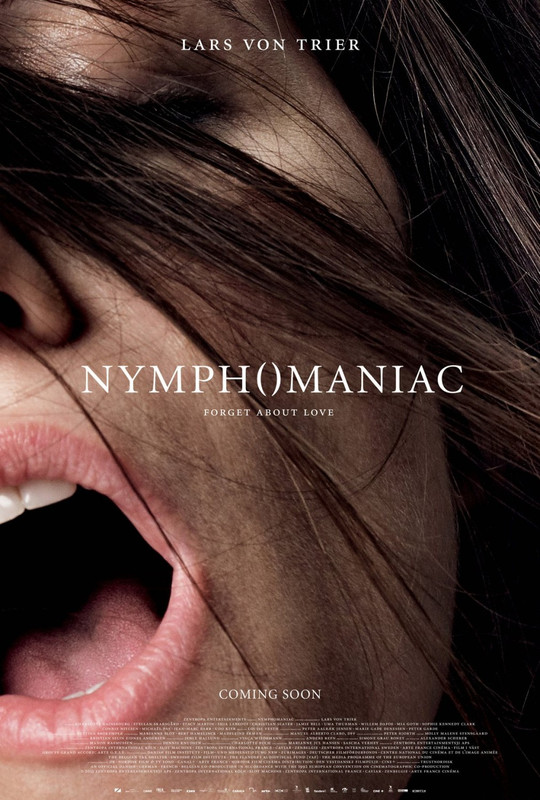
Nymphomaniac [18]

Dir: Lars Von Trier
I have never found Lars Von Trier to be an especially consistent filmmaker, but when he finds form his work can be dazzling; challenging and exciting in a way that few directors today ever are.  This has certainly been true of his most recent series of films, the depression trilogy which, following Antichrist and Melancholia, now comes to a close with the colossal Nymphomaniac.

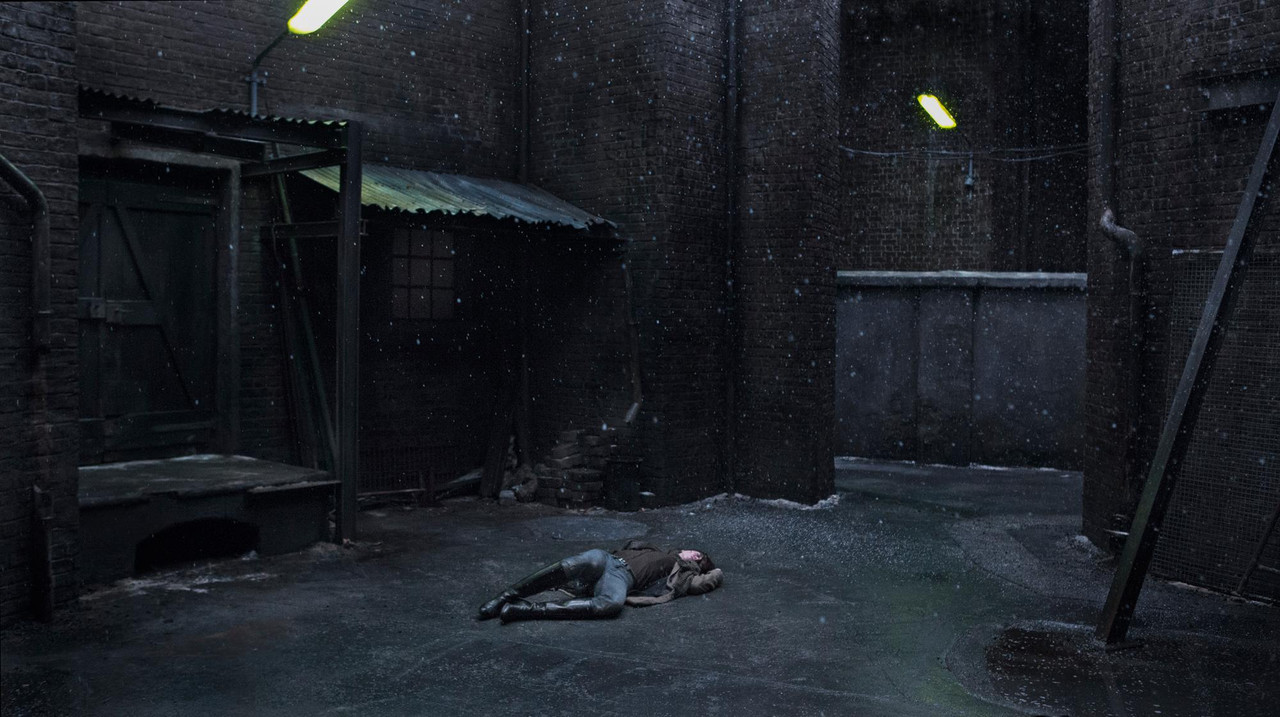
Across, in this shorter version, four hours and two volumes Nymphomaniac tells the story of Joe (played from 15 to 30 by newcomer Stacy Martin and from 30 to 50 by Charlotte Gainsbourg).  We find her lying in the street, beaten up.  Seligman (Stellan Skarsgaard) stumbles across her and, when she insists that he not call an ambulance, takes her to his home to recover.  There Joe relates, in eight chapters, the story of her life as a nymphomaniac, which she believes will lead Seligman to judge her a bad person.

There is always the question of how seriously we are to take anything that Lars Von Trier says or does, but Nymphomaniac comes loaded with more questions than that.  Is this four hour version something Von Trier is happy with?  Are we intended to see this as one long film or two distinct entities?  Is Von Trier trying to make art or porn?  Typically for its director Nymphomaniac makes none of these questions easy to answer.  That being the case you should consider this a review of the experience of seeing the two parts of this film back to back.  Having done so I'm sure that it will be a different experience viewing them separately, and I suspect doing so may benefit the films.

There are a couple of surprises about this version of Nymphomaniac (Von Trier's 5 ½ hour director's cut will likely see a Blu Ray release later this year), but the biggest is perhaps how playful and how funny it is.  Even at the film's most pretentious - and boy can it get pretentious - Von Trier's cutting and his dialogue often demonstrate a dry as dust wit, which can cut through the moments that might otherwise see you shake your head and mutter 'oh, Lars'.  For instance; Seligman often interjects in Joe's story, and at one point, just as I was inwardly sighing at another of his monologues in Volume 2, Joe told him “I think that was your most annoying interruption yet”.  The fact Von Trier seems to anticipate this criticism doesn't entirely defuse it, but this wry self-awareness is present and welcome throughout.  Seligman's interjections can be funny, but they are rather on the nose.  The fly fishing metaphor of the first chapter is amusing, but playing the same trick on different themes for four hours becomes seriously wearing by the midpoint of volume 2.  This is one of several ways in which the films might, for me, work better apart from one another. 

Throughout both volumes, Nymphomaniac essentially unfolds as two linked films; one a two hander, set in a single room, as Gainsbourg's older Joe tells her story and has discussions with Seligman, the other a series of flashbacks taking Joe from her discovery, at two, of her c**t right up to the film's opening image, when she is 50.  Both sides have moments that are great and moments that are infuriating, but for me, the flashbacks work more consistently.  

The big question of this film was always whether Von Trier could find someone who could convince as a younger Charlotte Gainsbourg as, from her look to her soft and soothing voice, Gainsbourg is one of the most distinctive (and for my money one of the best) actresses working.  Stacy Martin doesn't so much look like a young Gainsbourg as she does an absurdly beautiful melding of Gainsbourg's features with those of her mother, Jane Birkin, but what she gets right is the essence of the actress and especially the voice, which has that distinctive delicacy that is so present in the film through Gainsbourg's voiceover.  Outside of comparisons to her elder counterpart, Martin, in her first film, delivers an exceptional performance.  She has a way of delivering Joe's emotional detachment without her performance being empty.  She's especially good in what is easily Volume 1 and the film's best scene; as Uma Thurman whips up an emotional whirlwind around her Martin silently conveys Joe's alienation from, discomfort with and lack of understanding of these emotions.  When, particularly as Joe loses her one expression of feeling, Martin is called on to dig into emotional reserves, she delivers brilliantly.  The last shot of volume 1 is searing and painful thanks to her.

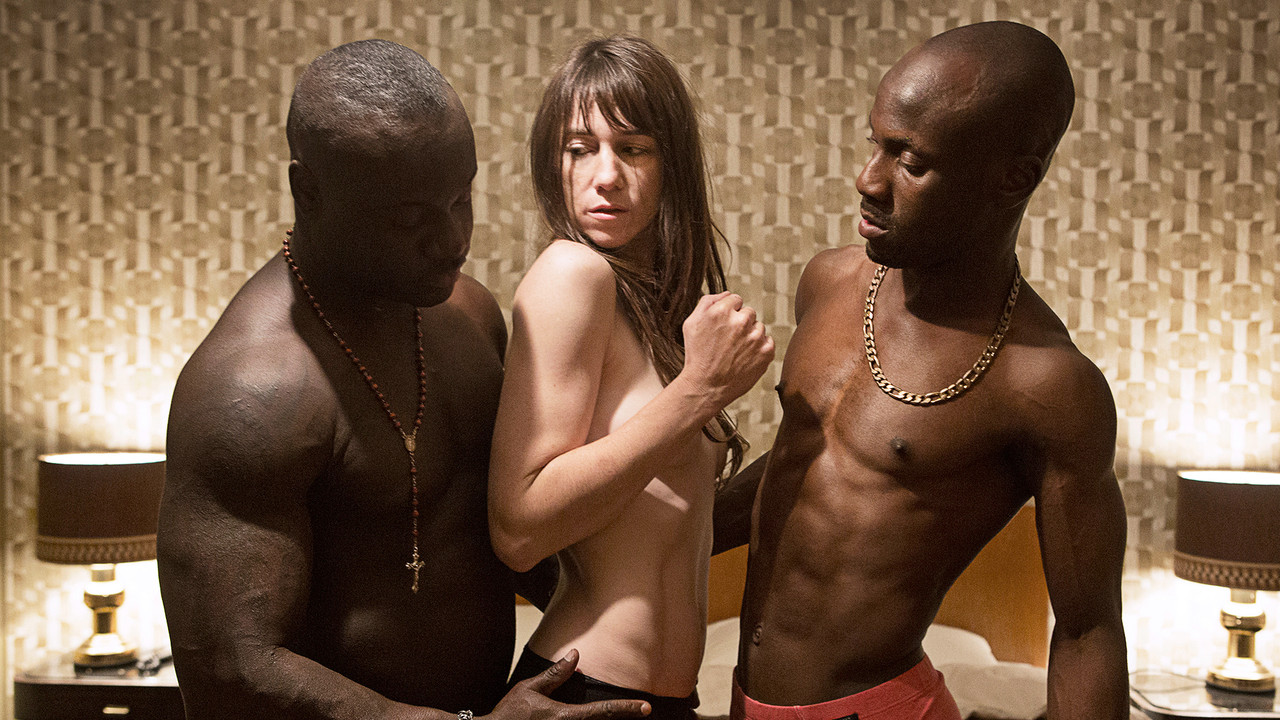
Charlotte Gainsbourg's side of the central performance is just as impressive.  Her Joe seems more fragile as if age and experience have made her brittle.  There is certainly more bitterness in her in this older incarnation, some justifiable, some less so, but she is recognisably the same woman.  Having given us two depictions of depression that manifested themselves in very visible ways; Antichrist's violence and Melancholia's panic, Gainsbourg here shows a much more reticent kind of depression.  Joe seems to operate at one remove from the world; her sexuality the only way she knows - perhaps cares - to connect with it.  Her brilliance here lies not in the searing, screaming, pain of loss as it does in Antichrist but in something much smaller and ultimately harder to understand.  Gainsbourg's side of the film is sadder, more reflective, but she does get to engage in some of its funnier moments, as when a proposed threesome degenerates into an argument between the two men.  Her voiceover means that Gainsbourg remains a presence even in the earliest of the flashback scenes, and does a great deal to tie the two portrayals of Joe together.  It's also just wonderful to listen to, communicating much about Joe's inner life with a rather poetic turn of phrase, not to mention a voice I would happily hear read the phone book.

The supporting cast is eclectic and the performances are as mixed as you might expect.  Perhaps the film's biggest downfall is the performance of Shia La Beouf.  I respect the fact that he's trying to stretch himself now, rather than turn back to the blockbusters that made his name (and, let's face it, an amount of money that allows him that choice), but he's pretty terrible as Jerome; the most important lover in Joe's life.  The problem is twofold.  First of all, for a character who has a lot of screen time, Jerome is frustratingly thinly developed.  He seems to behave in ways that serve the plot rather than tracking as a real character.  This too is something Von Trier jokes about, even implying that Joe may be lying about some of the times that she refers to Jerome, perhaps subbing him in for someone else because it's more interesting to do so. The second issue is LaBeouf's accent.  The film seems to be set in England, but it's so non-specific that there is no reason that Shia had to attempt the abysmally poor, inconsistent, woefully generic, 'English' accent he does here.  Let's just say that Dick VanDyke may now be forgiven.

There is much better news among the supporting cast, Christian Slater is very good as Joe's father (though the fact he stubbornly refuses to age is a little jarring in his last scenes, moving though they are).  Jamie Bell also impresses as a BDSM specialist that the older Joe sees.  He's almost completely devoid of personality, but Bell makes this interesting rather than frustrating.  I found myself asking the same questions as Joe does; who is this man and what does he get out of his 'work', which we never see that he is paid for?  In a smaller role as a friend of young Joe's, Sophie Kennedy Clark puts in a provocative turn in the film's opening chapter, instigating the memorable scene in which her character B and Joe compete to see who can fuck the most men on a train journey and so win a bag of chocolates.  On the downside there is Mia Goth, who has a large part in the film's closing chapter but, while beautiful, is deadly dull and puts almost no expression into her lines.  The film is very nearly stolen, however, by the barnstorming one scene performance of Uma Thurman, which has to be seen to be believed and should, in a world where there is justice, already be a front runner for next year's supporting actress awards.

Lars Von Trier's style as a director is constantly mutating and while Nymphomaniac has moments that recall the incredibly designed beauty of Antichrist and Melancholia (the opening shot, older Joe finding her 'soul tree' and many more) it also has a grittier and more mobile camera style at times.  This apparently comes out of Von Trier's non-proscriptive atmosphere on set, not blocking the scenes in advance and tasking the camera to follow the actors rather than vice versa.  This is perhaps best seen, again, in Uma Thurman's one scene, which has a chaotic but cohesive visual feel.  Perhaps the most notable thing about what Von Trier does here is the way that, like his main character, he appears to be reflecting on his life.  References to his earlier work litter the film.  I'm sure I didn't pick up on all of them but a major plot point of Breaking the Waves is echoed, the opening scene of Antichrist is recreated almost shot for shot and that film's fox also makes a brief cameo in the films most broadly comic scene.  Beyond reflection what Von Trier is saying about how he views this earlier work is never quite clear; perhaps that is what the debate between Joe and Seligman is really about for him, but it's a typically mischievous touch from the director.

Explicit as it is, Nymphomaniac is almost studiedly unsexy.  Part of Joe's story is how her endless sexual activity ends up being unfulfilling and making her numb both physically and mentally.  For its part, the film seems determined to make you feel the physical side of that numbness and it largely succeeds.  Most of the sex is mechanical (in a funny touch the thrusts when Joe loses her virginity are counted out on screen) and even when it's explicitly shot Von Trier's camerawork is so matter of fact.  The signifiers that Hollywood uses to tell you 'this is a sexy scene' are all absent.  It's all very effective in plugging you into Joe's experience.  That all said, I must confess I found one scene in the last chapter to be an exception to this rule, and I suspect most people will have one or two scenes where they find this to be the case.

Though my interest began to flag towards the end of the film, as I began to tire of the heavy metaphors discussed between Joe and Seligman, the film's only major storytelling misstep for me is its coda.  Even in a film that feels as frequently on the nose as this one, that last sequence bothers me because while Nymphomaniac can be groan-inducingly obvious it is never, until that moment, cheaply shocking.  I'll just say that I wish the cut to black had come a couple of minutes earlier and leave it for you to discover what I mean and whether you agree.

As an experience, Nymphomaniac is certainly a singular piece of work and often an exercise in contradiction: pretentious and hilarious; endlessly provocative and explicitly unsexy; artfully composed and messy as hell; rigorous and mischievous.  Viewed as a whole it loses steam, but that may not mean that Volume 2 is a worse film, simply that at four hours it is exhausting.  This isn't a great film by any means, but it's a vital and exciting one, I'm glad it exists and for all its flaws it is essential viewing.
★★★

Jun 15, 2011

VHS Memories: Natural Born Killers

Dir: Oliver Stone

The Memories 
Like every movie lover who was in his teens in the mid 1990's, I wanted to see ALL OF Quentin Tarantino's films. One small problem... I'm British, and Jamie Bulger had recently been murdered, precipitating a second moral panic about violent films being available on video. This led to BBFC bowing to pressure and delaying certification decisions on True Romance and Reservoir Dogs (among others) for well over a year and to Warner Brothers canceling the video release of Natural Born Killers - though it is still falsely reported as having been a banned title the uncut 18 certificate was always in place and it was purely a decision of Warner to leave the film unreleased in the UK market until 2001.

Obviously, whatever the reasons, when you tell a film fan he can't see something, that immediately means he wants to see it. So, I managed to obtain a second generation VHS, copied, I believe, from an American release. There was one small issue... It had been recorded on long play, and I, at this time - probably somewhere around '96 or '97 - didn't own a long play VCR. I watched it anyway.

My abiding memory of my first viewing of NBK is trying desperately to get the tracking to come in watchably, and trying to discern some of the dialogue through the double speed, suddenly helium voiced, performances. It's a strangely appropriate way, I think, to have first experienced it, firstly because, even at normal speed, NBK is a weird movie and also because that amount of effort feels appropriate for what was, for me at the time, one of the great forbidden holy grails of home viewing. So, how does it hold up? Let's find out...


The Movie 
It is easy to see why, in 1994, Natural Born Killers caused a storm of controversy, and why some people still hate the film, because it's still shocking, still feels dangerous, seventeen years on. It is satire, but it is also very easy to see where the people who decried this film as no more than an orgy of violence that makes heroes of two serial killers were coming from, because Oliver Stone manipulates every shot of the film in order to manipulate us into seeing these psychopaths the way that the mainstream media (personified by Robert Downey, Jr as TV tabloid journalist Wayne Gale) are portraying them. The film, however, does much that subverts and comments on that surface reading.

Early in Quentin Tarantino's career we got to see how his ideas looked filtered through a selection of other filmmakers, Jackie Brown notwithstanding, these films; True Romance, From Dusk Till Dawn and NBK are my favourites of his now 20 year career. NBK, despite its basic story having a very Tarantinoesque feel, is an Oliver Stone film through and through. Stone can be an infuriating filmmaker, he often slaps his audience in the face with his films messages, and his tendency to make digressions and indulge in his own obsessions can become wearing - and NBK is not immune on that score - but when Stone is visibly engaged in a project there are few filmmakers more interesting or more exciting. Though it seems to be anomaly in his filmography, NBK is actually the perfect film for Oliver Stone to have made, he runs wild here, his every crazy idea rampaging through the film like a bull in a china shop, as if he's trying to see just how much he can fuck with the medium. It doesn't always work, but it's never, ever, boring.

The film starts as it means to go on, with a scene that is brutally violent, inventively shot and cut, seductively stylish and unexpectedly funny. This diner set prologue, in which the films protagonists; serial killer couple Mickey (Woody Harrelson) and Mallory (Juliette Lewis) Knox gleefully murder a selection of truckers and a waitress over breakfast is the film's most Tarantinoesque, but shot through with the blitzkrieg style filmmaking that Stone is about to immerse us in for the next two hours. The use - at seemingly random intervals - of colour and black and white, 35 and 16mm stock, and the incredible pace of the cutting is difficult to adjust to to begin with, but it is impossible not to become caught up in the violent action that erupts when Mallory attacks the trucker who has been flirting with her, and L7's Shitlist begins blaring away on the soundtrack. Like Michael Haneke did with Funny Games a few years later, Stone asks us to revel in this violence, and later he'll (more subtly than Haneke) ask why we do.

Beyond the sheer verve of the filmmaking, the reason that NBK really grabs you is in the performances. They are all of a type; overblown, but the film is so over the top, so relentless, that if the acting was smaller or more subtle it would get swamped. Harrelson and Lewis are particularly good, he as a detached, sometimes thoughtful, psychopath, her as a more gleeful and impulsive one. Their Mickey and Mallory may be despicable murderers, but they are incredibly charismatic; Lewis in particular is so unpredictable, such a coiled spring of dangerous energy, that she is fascinating to watch here (it's a crying shame that she doesn't work much, and certainly not in roles this good, anymore). Also helpful in drawing us in is that, however overblown the film, and despite the fact that it is founded in seconds through a bizarre sitcom parody that provides Mallory's backstory, Mickey and Mallory's relationship does convince. Harrelson and Lewis reportedly didn't get along, but their chemistry works brilliantly, powering the film's epic prison escape sequence, and allowing us, perhaps, the tiniest morsel of identification.

Around those central performances are a set of grotesques, caricatures of a tabloid journalist (Downey's aforementioned Wayne Gale, who he plays with an exaggerated Australian accent, for no readily apparent reason), a tough as nails prison warden (Tommy Lee Jones, having a ball in his third film for Stone) and a seriously disturbed cop who is hunting Mickey and Mallory, but is a rapist and killer himself (Tom Sizemore as Jack Scagnetti, about whom it would have been fascinating to see a whole - more serious - film). You have to be on board with the tone by the time these even more outlandish characters become a large presence in the film about an hour in, or they are just going to annoy you, but in the context of the film they're all brilliantly engaging, and often hilariously funny.

Natural Born Killers has some incredibly striking sequences. From the diner to the sitcom sequence which ends in the murder of Mallory's parents (played by Rodney Dangerfield and Ferris Bueller's Edie McClurg), to the sickly green tinted Drug Zone confrontation which leads to Mickey and Mallory's capture, right through to the monumental, roughly 30 minute, prison riot / breakout which forms the film's third act and, in keeping with the lunatic tone, was filmed in a real maximum security prison, with real lifers as extras. That riot is an incredibly visceral sequence, there's a palpable feeling of chaos and danger in it both in the situation and sometimes in the performances themselves.

The satire of the film, which so many people seemed to miss at the time, lies in its extreme content, and in the way it sees Mickey and Mallory as both products of and commodities to be exploited by pop culture. It implicitly asks (without shouting at us for watching the movie the way Haneke did) whether this is healthy. It's an interesting question too, because we can see echoes of things like the vox pops of Mickey and Mallory fans in day to day life now - consider the Facebook group that declared Raoul Moat a 'legend' or the way that one British newspaper ran a story from a satirical site suggesting that there was to be a Grand Theft Auto game based on the crimes of mass murderer Derrick Bird as fact. It can't obviously, have been the intention, but NBK has only become more relevant as time has gone on.

It's not a perfect film. It's really less a story than a series of connected scenes and, as I said before, Stone's obsessions crop up, giving us the movie's one major misstep; a desert set sequence in which Mickey and Mallory encounter a wise old Indian and are attacked by snakes. Yes, it leads into the great Drug Zone sequence, but the ten minutes we spend in the desert seem to have been teleported in from some other movie; one that's not as good as Natural Born Killers.

For the most part though, this is a relentlessly engaging, intriguing and entertaining film. Few movies have such a freewheeling feeling about them, and few filmmakers could combine that with social commentary as effectively as Oliver Stone does here. I was surprised how well it still played long after my last viewing, but this remains truly exciting cinema.

May 27, 2011

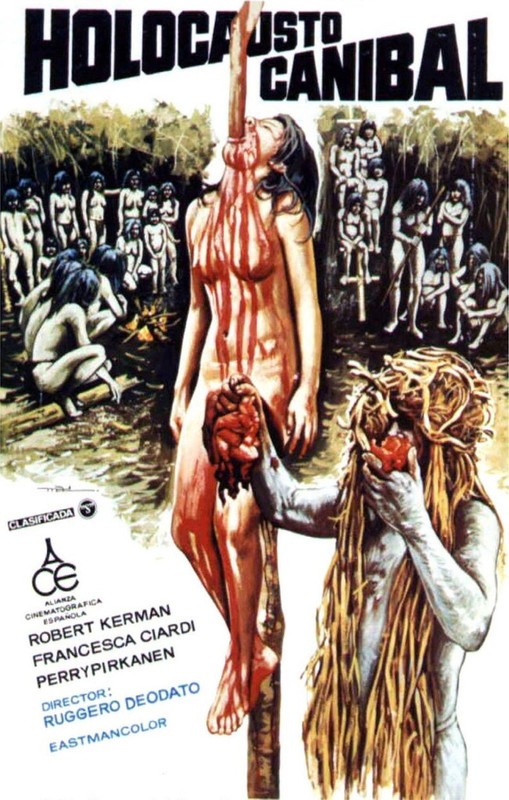
Cannibal Holocaust [2011 Cut] [18]

Dir: Ruggero Deodato
In 1984 the office of the Director of Public Prosecutions in the UK drew up a list of movies that would become known as the video nasties. Films so repellent, so brutal, that their release made their publishers liable to prosecution under the Obscene Publications Act. Ironically, for the most part, the DPP ended up granting a now nearly 30-year long spotlight to these films, films which otherwise would mostly have drifted into deserved obscurity.

However, it has also preserved a handful of good films, and even a couple of classics. Cannibal Holocaust, perhaps the most transgressive of the nasties, falls into that last category. Far from being a simple exploitation film, Deodato's magnum opus is a film of ideas and which plays with form in ways that provoke revulsion, fear, and most importantly thought, in its audience.

Last night I was finally able to see this groundbreaking film at the cinema (the last screening I had wanted to attend was pulled by Police). However, this was still not quite the original film, rather it is Deodato's 2011 edit, cut to get around some of the problems that the British Board of Film Classification have historically had with the film (largely its extensive unsimulated animal cruelty). This is the version which will be released on Blu Ray later this year by the exceptional Grindhouse company Shameless.

Rather than cutting the contentious moments, Deodato has generally chosen to obscure them with what are ostensibly flaws in the film. This is clever; an artful way to make the edits, in keeping with the form of the film (the second half of which purports to consist of documentary footage left in poor conditions in the jungle for months), and it doesn't take much away from the film, only the early killing of a muskrat is entirely deleted.

These considerations aside, Cannibal Holocaust remains a brilliant film. The performances are really only serviceable, but even that's quite high praise for Italian exploitation movies, but Deodato's direction is what really transforms this film from a simple gorefest into something genuinely interesting. The first half of the film is pretty straightforward narrative cinema, following a rescue operation to attempt to recover four missing filmmakers and their footage, and here Deodato reveals a genuinely artistic eye, developing many memorable shots and set pieces. The second half is even more striking; Deodato develops the faux documentary styling brilliantly, using them to draw us in in a much more visceral way than if we had been able to sit at one remove from the film, and manipulating technical 'flaws' to make the verisimilitude ever more convincing, and thus ever more disturbing.

The film's moral questions are simplistically phrased (summed up in a final line of voiceover), but they remain troubling, and can be extended into far less extreme situations with equally troubling implications. Cannibal Holocaust may have begun (as Deodato said before the film) as a reaction against explicit violence in news footage, but today it could easily be seen as being about war reporting, or even the morals of any reporting.

It may not quite be complete, but this is as good a version of Cannibal Holocaust as the UK is ever likely to see, and it was a treat (an odd term I know) to feel the full force of its impact on a big screen. It's an essential film, and a genuinely great and interesting one at that.
★★★★★

Mar 20, 2009

Martyrs [18]

Dir: Pascal Laugier
I’m a pretty big horror fan, and I like to think I can handle pretty much anything a movie can throw at me, after all I survived watching Gaspar Noe’s IRREVERSIBLE. Aside from that memorable piece of unpleasantness though, Martyrs is probably the single most depraved, the single most impactful, horror film I’ve seen at a cinema.

Pascal Laugier’s second feature film has been sucked in to the debate around films like Saw and Hostel, the so called ‘torture porn’ genre. Martyrs is so much more than that, it’s a film that uses graphic and unstinting brutality, but the difference is that this film isn’t merely concerned with gore for the sake of entertainment, it wants to get under your skin. Eli Roth wants you to revel in his film's violence, to enjoy it, Pascal Laugier never asks that of his audience – it’s out to disturb, to disquiet, and it achieves that aim from first frame to last.

This is a challenging film to review because it takes several unexpected gear shifting turns including, two thirds of the way in, one that completely alters the film, and I don’t want to spoil any of its many profound shocks, but there’s also so much that warrants discussing here, more so than in most horror films. Laugier’s story starts out relatively simple; Young Lucie escapes from a place where she has been held prisoner and tortured for a considerable time. 15 years later Lucie (Mylene Jampanoi) tracks down and takes her revenge on the people she believes held her captive. Lucie’s girlfriend Anna (Morjana Alaoui) arrives to help her clean up.  That takes us only about a third of the way into the film, but I really can’t say more, because I’d be spoiling things.

Intensity seems to have been Pascal Laugier’s watchword in creating Martyrs. Even before the violence really explodes he creates an atmosphere of terror, with an early scene in what appears to be an orphanage where Lucie and Anna are growing up. The use of sound, and the way Laugier barely lets us see anything in this scene sets the audience immediately on edge, where they will remain for the next 97 minutes. It’s once we get into the house where most of the film will take place that Martyrs really comes to life. After five minutes of scene setting there’s a knock at the door and from then on out the film offers almost no respite from brutality and fear.

The 45 or so minutes of Lucie and Anna carrying out and cleaning up Lucie’s revenge are perhaps Martyrs most conventional passage. The beats are familiar, and an early twist very guessable, but its Laugier’s execution that really impresses. He’s got all the details right, most notably the blood, which seems so simple, but movies so frequently get wrong, the blood here is utterly convincing, and that makes the rest of Laugier’s illusion play. The special effects make up is simply astonishing, there is an especially wince inducing scene in which Anna sews up slices that have been cut into Lucie’s back, but all the make up is stunning, particularly towards the end of the film. These things help, but what makes Martyrs the intensely riveting thing it is is the sheer ferocity of it. Most movies, even in the horror genre, that feature violence don’t really look like they hurt. The violence of this film is so palpable that you almost feel it yourself, and that’s what really makes it effective, if extremely difficult.

The screenplay is pretty basic, light on dialogue, but Laugier gives his characters just enough substance, and hints enough at their relationship, to make them sympathetic. In this lies Laugier's true masterstroke. Most horror films get down to their final girl, the one you are rooting for, the one you want to see kill her tormentor(s) and escape from whatever situation she’s become trapped in. Martyrs forces you to have a completely different relationship with its final girl, to hope that she’ll die not because you dislike her, or because it will be cool, but because it would be the kindest thing, and her ultimate victory. This is a genuinely uncomfortable place to find yourself, and Laugier makes you live in it for a long time.

Morjana Alaoui and Mylene Jampanoi both give strong performances, Jampanoi’s ferocity (particularly during one hideous killing with echoes of IRREVERSIBLE) dominating the film’s first half and Alaoui’s slow discovery of strength and resolve powering the second. Alaoui has the more shaded role, and walks away with the acting honours, but both give searingly memorable performances.

Laugier’s big twist will divide people. It takes the film into a different, perhaps slightly less believable, but ever darker, realm. It explains what has happened to Lucie in a way you’ll never be able to predict. Some will find it silly, and for a while I was unsure what to make of it, but it’s like John Doe says in Se7en, "you have to see the whole complete act." Without its third act Martyrs would be an impressively intense, well acted, and exceptionally nasty horror movie, with it it becomes something far more powerful, and more memorable. This third act is also, even by the standards of this film, unspeakably brutal. For about fifteen minutes all we see is one session of torture after another and then, just as you thought it couldn’t go to a place that was any more depraved and fucked up, the final act reveals itself. It is astounding, and remains burned into my brain.

I’d love to talk about Martyrs in more detail, but I fear that if I give away its twists and turns its incredible impact will be lessened. I’ll say this, don’t let anyone tell you that this is simply torture porn; it isn’t, as distressing and as violent as Martyrs is there are moments in it that approach profundity, which immediately marks it out as more than simple violence for violence sake. Martyrs, as I said to Pascal Laugier and Morjana Alaoui after the Q and A, is not fun, it’s not a film you’ll enjoy on any usual level, but it is a great film, one that any strong stomached horror fan should seek out, because it will get to you on levels that few other horror films even approach.