Showing posts with label Italy. Show all posts

Sep 19, 2019

24FPS @ LFF 2019. Days 2 and 3

Love Me Tender
Dir: Klaudia Reynicke
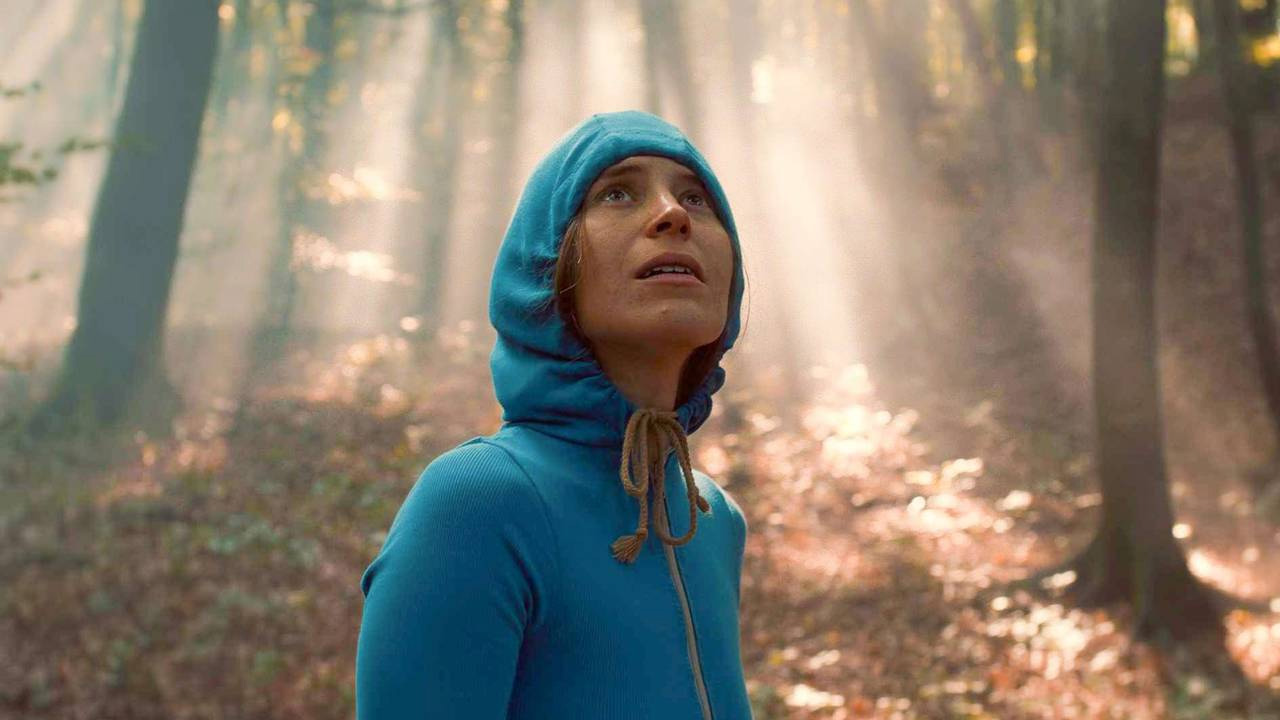
The second fiction feature by Swiss director Klaudia Reynicke, Love Me Tender is a strange and changeable beast. 

At the outset, this seems a largely serious minded look at a young woman named Seconda (Barbara Giordano) and her struggle with agoraphobia. We don’t know why she stopped going outside, but when we initially meet her she hasn’t left the apartment in nine months. When her mother dies and her father abruptly leaves, Seconda is trapped. With only answerphone messages from an increasingly abusive debt collector for company, she begins to think about ending her life. This is the unlikely cue for the film to begin to slip ever further into absurdist comedy.

Though it is about its main character’s psychology, Love Me Tender communicates largely through physicality.  Barbara Giordano’s performance is striking from the very start, as we see her manically dancing in the living room she shares with her parents. This is one of several behaviours that seem to have been carved out as a way to find comfort. For the first half there is a somewhat greater degree of comfort to Giordano’s performance, as the character and the film are confined to the flat, it’s when we finally see Seconda pull on her ‘armour’— a blue onesie—and venture outside that we see the character at her most vulnerable and the performance at its most extreme. Outside, Seconda seems to shrink; a slender woman anyway, she seems to pull every part of herself inwards to take up as little space as possible and walks in a fast straight line, never engaging with the world around her unless it directly intrudes. It’s a funny visual, but also a great evocation of somebody profoundly uncomfortable in their surroundings, which is a line Giordano’s performance walks brilliantly throughout.

A few more people are drawn into the narrative in the film’s second half. The debt collector shows up at Seconda’s door and there is an instant and very funny twist in that relationship. Then there is Santo (Antonio BannĂ²), who knocks at the door asking if there are any bottles he can take to sell. This is the first person Seconda has engaged with in the weeks since her dad left, and she immediately draws him in and asks if he’ll kill her (“unfortunately I have a strong survival instinct”). The film sometimes veers quite quickly in tone, from a sequence that threatens to recall Lucky McKee’s May, to a late moment in which every character in the film appears in the apartment, dressed in Seconda’s blue onesie, which is straight out of Being John Malkovich. It’s a bit messy at times, but the shifts are unexpected enough to be amusing and they do all contribute to the larger picture of Seconda as a character. 

You can probably watch Love Me Tender as a character study of a woman trying to get over her childhood trauma or as an absurd, drily witty, black comedy. For me, the combination of its two sides worked well, largely thanks to the deft work of Barbara Giordano; rooted in the character’s psychology but unafraid of being big and even occasionally silly. It’s an odd film and the peculiarly shifting tone won’t be for everyone, but if you go with it there are many rewards to be had.
★★★½

Hope Frozen
Dir: Pailin Wedel
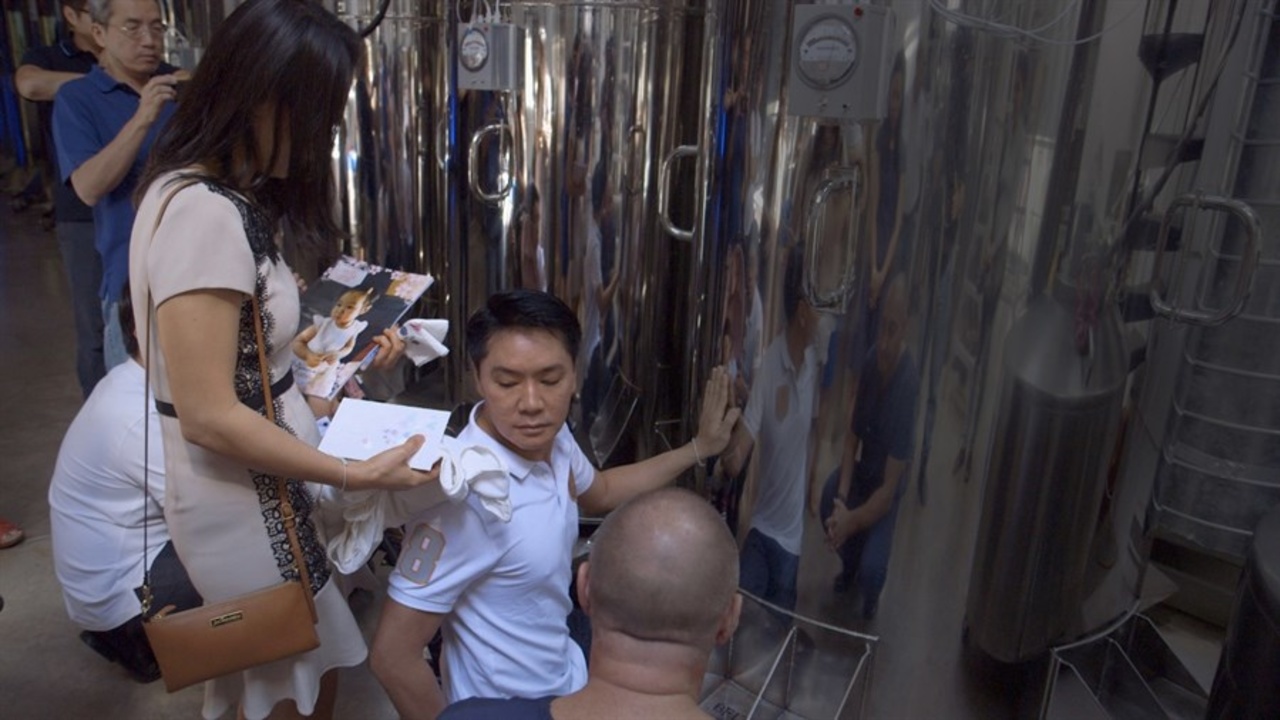
We all want the best for our children. We imagine who they’ll be, what their lives will be like, what they’ll achieve. Sometimes we don’t get those answers at all because they are cruelly snatched away from us. For the family in Hope Frozen, that happened with their two-year-old daughter Einz, when she died of an especially virulent form of brain cancer. Scientists, they decided to cryopreserve her brain, in the hopes that in the future she would be able to be brought back and to have the life that was taken from her this time.

There’s not much that is formally notable about Hope Frozen. It’s a fairly standard issue documentary construction, with observed moments combined with talking heads to tell the story and the fact it runs just 73 minutes is another thing that would make it ideally suited, eventually, for the small screen. That said, the film loses little by this, indeed its impact may be heightened by the fact that the filmmaking is fairly simple as, by this choice, director Pailin Wedel places the focus squarely on the story and on the family going through it, allowing us a window into their grief and the way they are trying to use science to help them work through it and find a glimmer of hope.

There is an added wrinkle in that the family are Thai and Buddhist. Reincarnation is a central tenet of their religion and the film hints at some controversy around that in Thailand, with commentators asking if Einz, rather than being preserved to potentially be saved, is trapped; her soul unable to enter a new body. As with the other questions in the film, Einz’ father, mother and brother find beautiful words to explain their decision, saying that their loved one’s soul is still around, in everything and everyone she touched.

Religion plays a part, but the film, like the family, is largely rooted in science. Einz’ older brother Matrix is pursuing studies that will allow him to work on finding some way to bring his sister back, something he initially feels might be close, but both he and the film are brought down to Earth with a bump at a certain point. It’s only in this moment that his father’s hope seems to move into a sort of strident faith, though the film never draws a connection to religion.

It’s impossible not to be moved by Hope Frozen. You can’t help but feel the raw heartbreak of this family, or be roused by their moments of joy (especially one that forms the coda of the film), but it’s also clear that their hope seems distant, dim, and perhaps destined to remain in stasis. 
★★★½

Oct 10, 2015

24FPS @ LFF: Mini Review: Arianna

Dir: Carlo Lavagna
Italy has recently produced some excellent coming of age movies and brought them to the LFF. Some, like Alice Rohrwacher's Corpo Celeste, eventually saw a UK release while others, like Antonio Capuano's Dark Love, are still sitting in international release limbo. I suspect, despite the fact that, flaws and all, it's better than a good deal of what does make it to cinemas, that niche appeal will see Arianna join the second group.

In her opening narration, Arianna (Ondina Quadri) tells us that she was “born twice, no, three times”, first as a boy, then aged three as a girl then, in an as yet unspecified way, when she was 20. At 20 we find Arianna returning with her parents to an island where they holidayed many years ago. It becomes clear that Arianna has had developmental problems; she wears a hormone patch to help her breasts develop, and is still not menstruating. She also finds, thanks to a willing boy, that it is too painful for her to go through with sexual intercourse. When her parents go away and leave her on the island, Arianna decides to get a new doctor and discover once and for all what her problems are.

Arianna is perhaps best described as a proficient film.  It looks good, better than that from time to time (especially in scenes in the springs where characters go swimming) and it tells its complicated coming of age story in a way that is both efficient and easy to identify with. The one thing that consistently stands out is the leading performance. Ondina Quadri's androgynous beauty is ideally suited to the role, but it's her performance that makes Arianna come to life, both as a character and as a film. Many of Quadri's best moments come in what she doesn't say – look at her face in the scene when, after her parents return, she tells her mother that she's fine, or the reaction to her boyfriend as they eat cereal in the middle of the night, after another failed attempt at sex.

Director Carlo Lavanga tells his story with a typically European frankness, to the point that I began to think that Quadri probably could have negotiated some of the nudity out of the film. However, this is an intimate story, focused around the development (or lack thereof) of Arianna's body and Lavanga's intimate, but largely non-purient, approach pays off in illustrating how Arianna sees herself.

The problem here is twofold. First, after that opening narration, it takes Arianna the entire film to discover her condition, while any audience member with a bit of general knowledge will probably figure it out by the end of the first scene. Secondly, the process that it goes through to get there, while well written and played, is very much by the numbers. Arianna's condition is the only thing that really sets this story apart from any other coming of age film, and even that has been explored more convincingly in the past.

Carlo Lavanga may go on to make better films than this, and I'm certain Ondina Quadri will, but overall Arianna is pretty middle of the road. It breaks no new ground and aside from a notable leading performance, it won't linger long in the mind.
★★★

Sep 30, 2015

24FPS @ LFF: Roundup 2

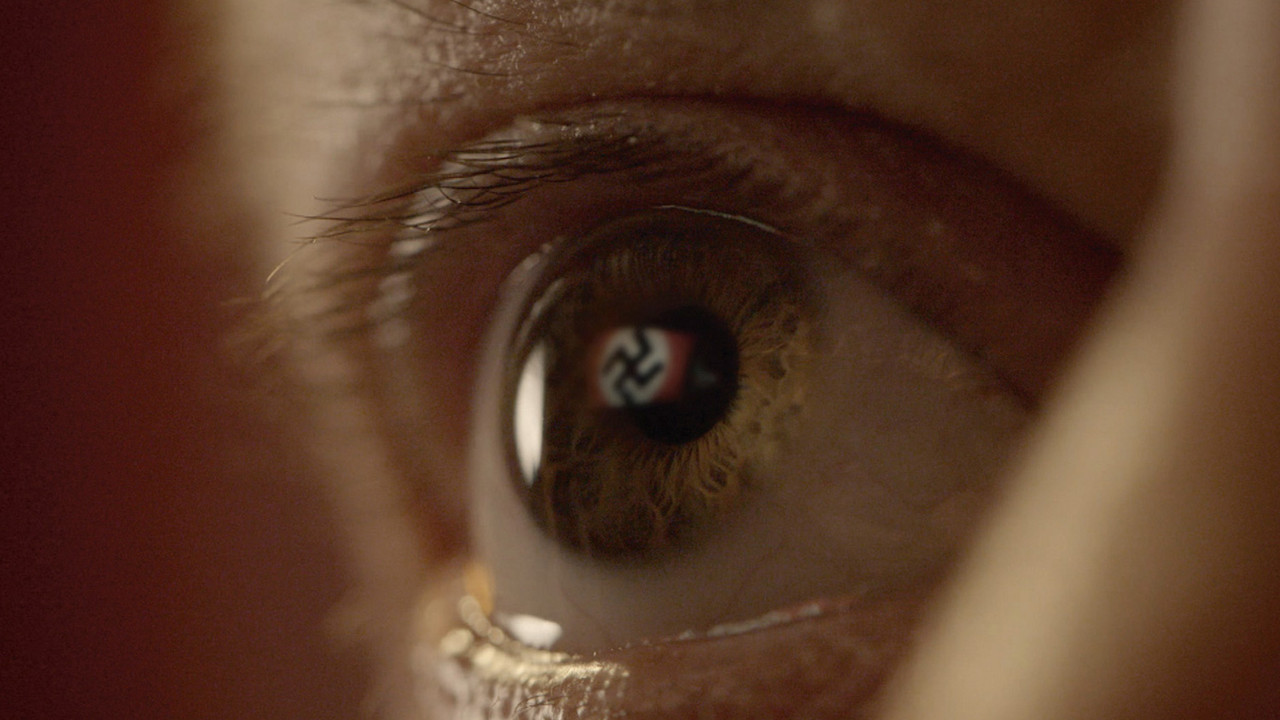
A Nazi Legacy
Dir: David Evans
Quentin Tarantino says that the advent of digital projection has rendered cinema no more than watching television in public. I don't buy that. Most of the time. A Nazi Legacy, whatever else it may be, is television. It was made for the BBC's Storyville series and stylistically it couldn't be more basic and televisual if it tried.

The subject matter is interesting enough. The film focuses on two men whose fathers were high ranking members of the Nazi party and their polar opposite views of their lineage. Niklas Frank, son of Hans Frank – one of the men tried and executed at Nuremburg – condemns his father at his every opportunity and even carries the last picture ever taken of him, just after his hanging. On the other hand Horst Von Wachter, son of Otto Von Wachter, continually minimises his father's role (Otto was in charge of the Warsaw ghetto), insisting that he would never have signed off on the worst atrocities as if this is a defence. Presented with evidence of his father's culpability, Horst still minimises everything.

The different ways these men process the legacies of their fathers and their strained friendship with each other and with human rights lawyer Phillipe Sands is fascinating, but the flatly shot interviews, very basic presentational style of both Sands (who serves as guide and narrator) and director David Evans. The film's simple structure, imagery, and editing do little to transform it from a very basic, if well made, piece of TV into anything that will benefit in any way, in terms of presentation or audience size, from being on a cinema screen.

There are some impactful scenes here, especially in the last twenty minutes, as Sands takes the two men to a field where 3000 people, including his own family, were murdered, on orders that both their fathers had a hand in, challenging Horst with this fact. This, however, doesn't make A Nazi Legacy cinema. It's worthwhile, if schematically presented, television, it just doesn't belong in a film festival.
★★

Who Killed Nelson Nutmeg?
Dir: Tim Clague /Danny Stack
My job is usually fun. Sometimes I get to share my excitement about something great, other times I might get to lay a long deserved kicking on a bad film by a bad filmmaker. In between, there are worse things I might have to do than type a few words about a movie, good, bad or middling. Then there are moments like this. I take no joy in writing about Who Killed Nelson Nutmeg? It has promise in its concept, a hey kids lets put on a show spirit that is admirable and one never wants to be overly harsh on a young and inexperienced cast. On the other hand you have to be honest, and almost nothing about this film works.

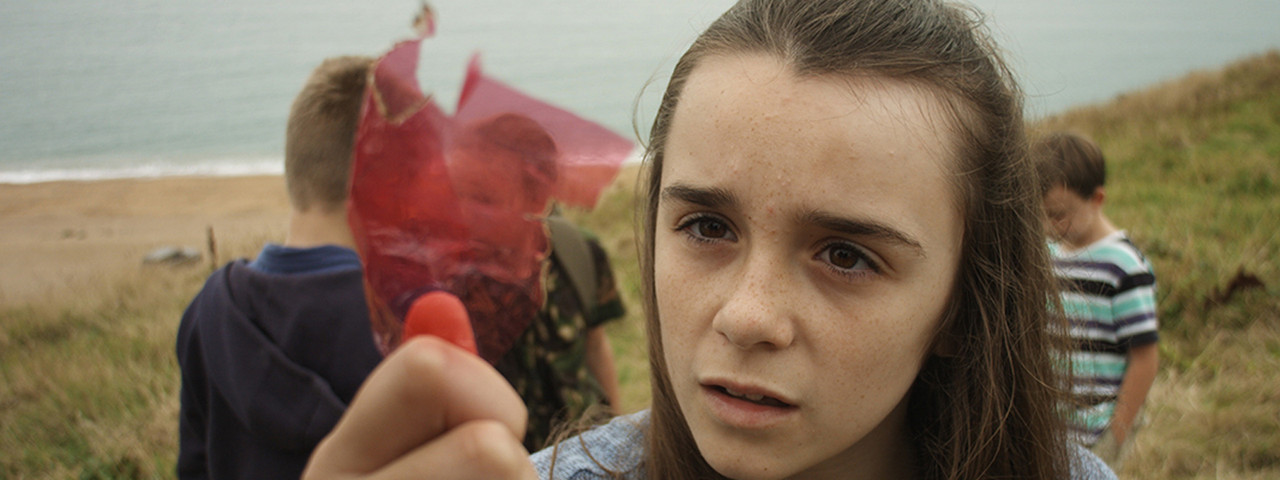
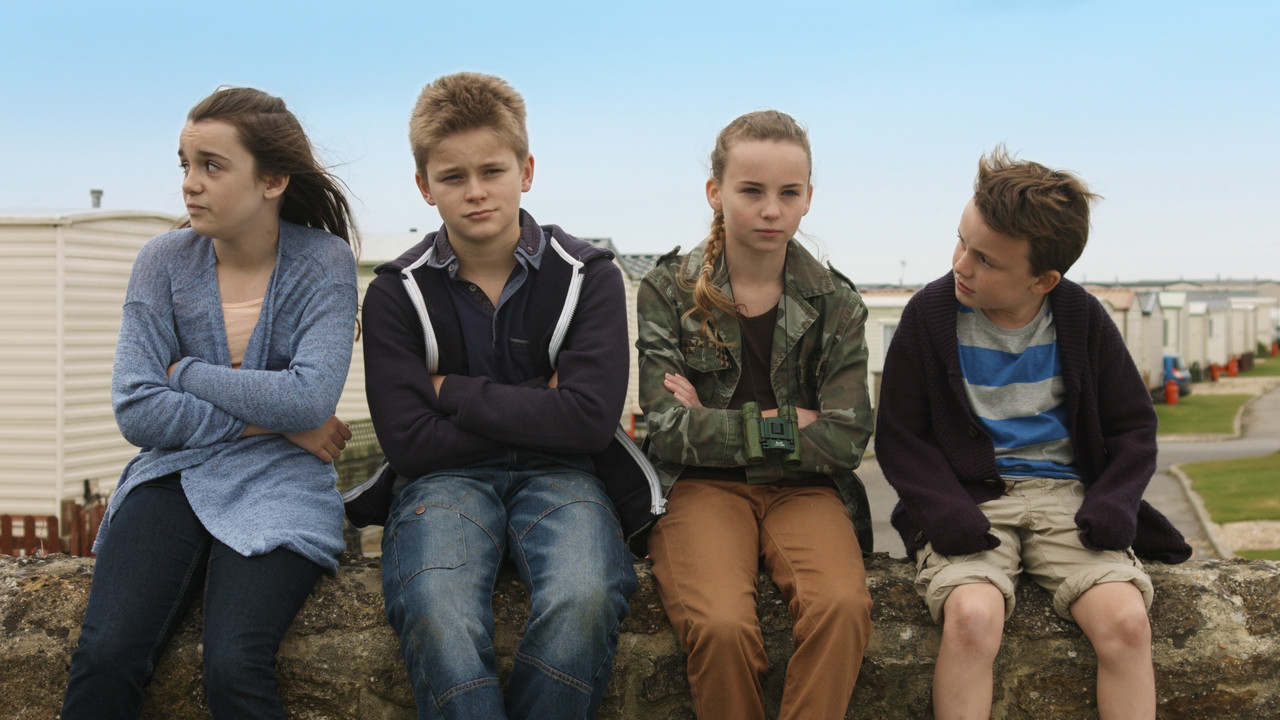
The premise is fun. In what seems to be a rather low budget seaside holiday resort a group of kids led by 12 year old Billie (Loretta Walsh) begin investigating when they believe the park's mascot has been murdered. Their chief suspect is the new manager Diane (Bonnie Wright). What the film is going for seems to be a cross between a low budget take on The Goonies and Enid Blyton's Secret Seven books. The simple clues and broadly played villains could well have worked in that context, but the film just falls down on too many other levels.

The script is a bit clunky. It plays very much to a young crowd (6+, says the LFF programme), but the jokes, juvenile or not, just aren't that funny and those that might have played well on the page aren't very well delivered. For instance, there are some potentially funny moments when the gang begin investigating and interrogate other kids, but the acting from these featured extras is so flat and devoid of comic timing that otherwise decent jokes flounder. It's perhaps no coincidence that some of the best gags are silently delivered, such as the brief glimpse of 'The Colonel' (Hattie Gotobed, as a tough, smart 12 year old girl who usually dresses in camouflage gear) competing in a princess pageant.

Loretta Walsh and Hattie Gotobed give the best performances among the young cast, they're both variable, but Walsh carries the action capably and the relationship between Billie and The Colonel is nicely played. Unfortunately most of the other performances, child and adult, are quite monotonous. This is a problem because, outlandish as something like The Goonies was, you always felt like you were along for that ride with these kids on an adventure. That should be easier to pull off here, with a more down to earth story, but it doesn't happen. The sense of watching a group of actors run through scenes never goes away.

This sense isn't helped by the film's technical side. To be fair, a disclaimer suggests that this is not the absolutely final version and that music and special effects may change yet. I hope this also goes for some of the editing, which can be oddly abrupt. The screenplay does have one resonant running theme; that this is the last year these kids will be together, you do get a sense of an end of an era for the group, and the sadness of that reality. Sadly, the mystery never grips, nor does it resolve in a way that makes much sense, and the gags seldom amuse. 

What is unlikely to shift with any changes still to be made before release is the overall televisual look. Despite a smattering of effects, Nelson Nutmeg resembles nothing quite so much as the low budget British kids shows I watched on late 80's CBBC. Even without massive financial resources, digital can be beautiful, but Nelson Nutmeg veers between looking flat and (in the handful of night time scenes) looking murky. 

My love of cinema was born at roughly the age this film is pitching to, and I still have images from those films stuck in my head more than 25 years on. I'd be surprised if kids get a frame of this film stuck in their minds for 25 minutes. I admire the ambition of Tim Clague, Danny Stack and their team, and it would be great to see more British films aimed at forging the next generation of film buffs, but if that's the intent then the films need to be better than Who Killed Nelson Nutmeg?
★★

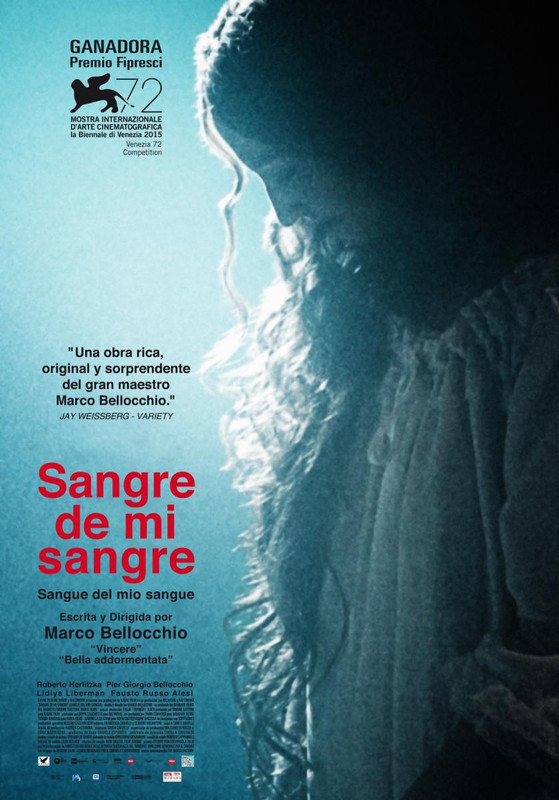
Blood Of My Blood
Dir: Marco Bellochio
The last Marco Bellochio film I saw at LFF was Dormant Beauty, which managed to tell four quite dull stories, without tying them together in particularly satisfying fashion. Blood Of My Blood restricts itself to just two stories, which are more closely tied together in terms of character and theme, but wildly disparate in tone and in quality.

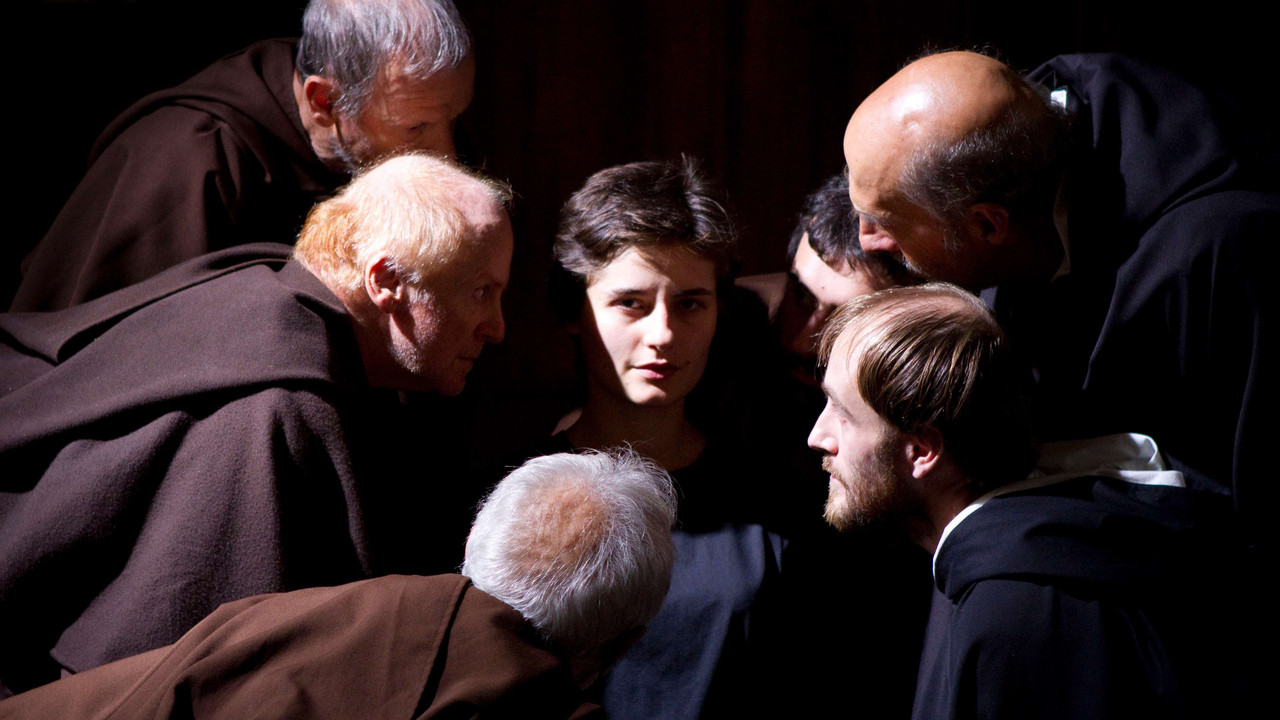
In the first story, set in the 1700s in a small Italian town called Bobbio, a young woman named Benedetta (Lidiya Liberman) is on trial in a convent, accused of seducing a priest whose suicide now means that he will be buried in a donkey cemetery and thus condemned to hell. The priest's brother, Federico (Pier Giorgio Bellocchio) is attending the trial, though, despite what he tells the priests it isn't always clear what he wants the outcome to be. We then cut to the present day. The convent in Bobbio may soon be sold to a Russian billionaire (Ivan Franek), which would greatly inconvenience the Count (Roberto Herlitzka), the self-described vampire who lives there in secret.

This is easily the most schizophrenic film of LFF so far. It begins soberly, the plot looks to history, such as the story of Joan of Arc, but it also has echoes - largely in subject rather than specifics - of Mother Joan of the Angels, Bresson's Trial of Joan of Arc and of the likes of The Devils and Mark of the Devil. The imagery is lush but not lurid, the aesthetic digital, yet still beautiful, even painterly at times (see the images of Federico standing at the bank of a river, seeing what seems to be his doppelganger silhouetted on the other side). It's a supremely controlled piece of direction, with plot, imagery, and music – the stunning use of Scala and Kolachny Brothers' choral cover of Metallica's Nothing Else Matters stands out – all coming together to create a tense and otherworldly feel. 

There is also an eroticism that runs subtly through this section of the film, as if it is a spell cast on the convent by Federico and perhaps, in the past, by his brother. We see this most clearly in the scenes of Federico returning to the guest house where he is staying with two presumably virginal sisters (Alba Rohrwacher and Federica Fracassi). One night when he comes home the sisters get into bed with him and all three begin kissing, we never see whether things go further than this, but there is the unmistakable sense of a force, whether it is under anyone's control or not, drawing these three together. 

It is, then, baffling when, roughly 45 minutes in, Bellochio appears to decide he's sick of making that film. He dumps the tension, throws out the eroticism, and replaces it with unfunny farce and a sub Only Lovers Left Alive depiction of the lives of vampires in the contemporary world. 

The entire texture of the film changes at this point. If you strain to look for it you can perhaps see Bellochio reaching to say something about the regimentation of the society of the church in the first section of the film set against the more chaotic modern world, in which that structure has had to adapt. Honestly though, I think that's more likely to be something I've made up in order to try and find some rationale for why the film so radically and suddenly changes tack. I'm not convinced it's actually in the film.


The acting is strong all round, the slightly sinister Pier Giorgio Bellocchio contributes hugely to the strange atmosphere of the period section as Federico and a haunted looking Roberto Herlitzka as The Count manages to add a little poignancy to the modern set story. The female roles are thinner, but  Alba Rohrwacher and Federica Fracassi bring ethereal presence to the sisters and striking newcomer Lidiya Liberman is by turns stoical and tragic as Benedetta.

The modern set section of the film serves a narrative purpose, it provides distance between the film's first segment and its closing images, which revisit the ending of the period section of the film in a haunting closing moment. That, however, doesn't explain the wild tonal detour that Bellochio takes, most gratingly with a small but infinitely irritating role for Filippo Timi. There is plenty of potential for this modern section to resonate, to rhyme with what's come before, but the sharp left turn into comedy completely undermines that possibility. 50 years into his career, Bellochio must know what he's doing, but he certainly doesn't communicate it well.

Overall, Blood Of My Blood is paradoxical. The first 45 minutes are probably the best I've seen at LFF so far this year, but they are fatally undermined by the second story, which seems to either not understand or flatly reject the spell cast by the first half of the film. And yet, for those 45 minutes, and for the last five minutes, I would still recommend Blood Of My Blood. I just can't do so as wholeheartedly as I'd like.
★★★

Oct 15, 2014

24FPS @ LFF 2014: Roundup 2

The Keeping Room
Dir: Daniel Barber
The home invasion film isn't new, it's been the model for everything from some of the most controversial films ever made (Fight For Your Life) to a series of hit family comedies (Home Alone), but this is the first home invasion film I can recall set during the American Civil War.

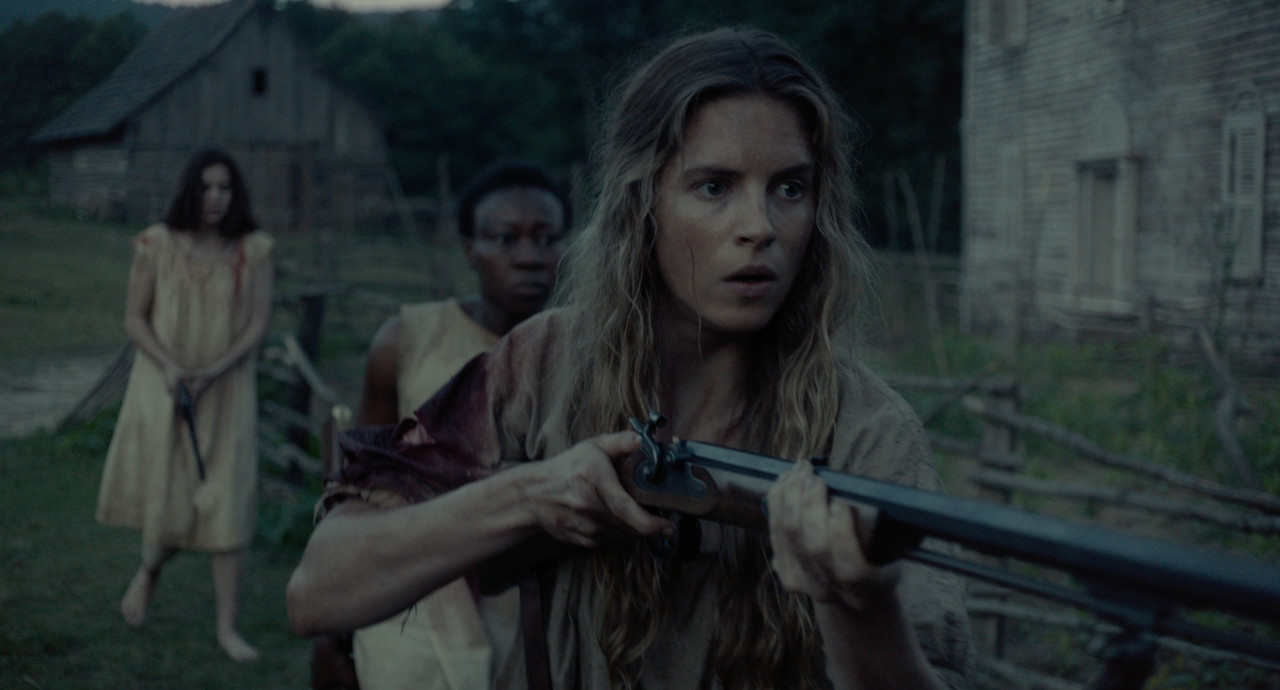
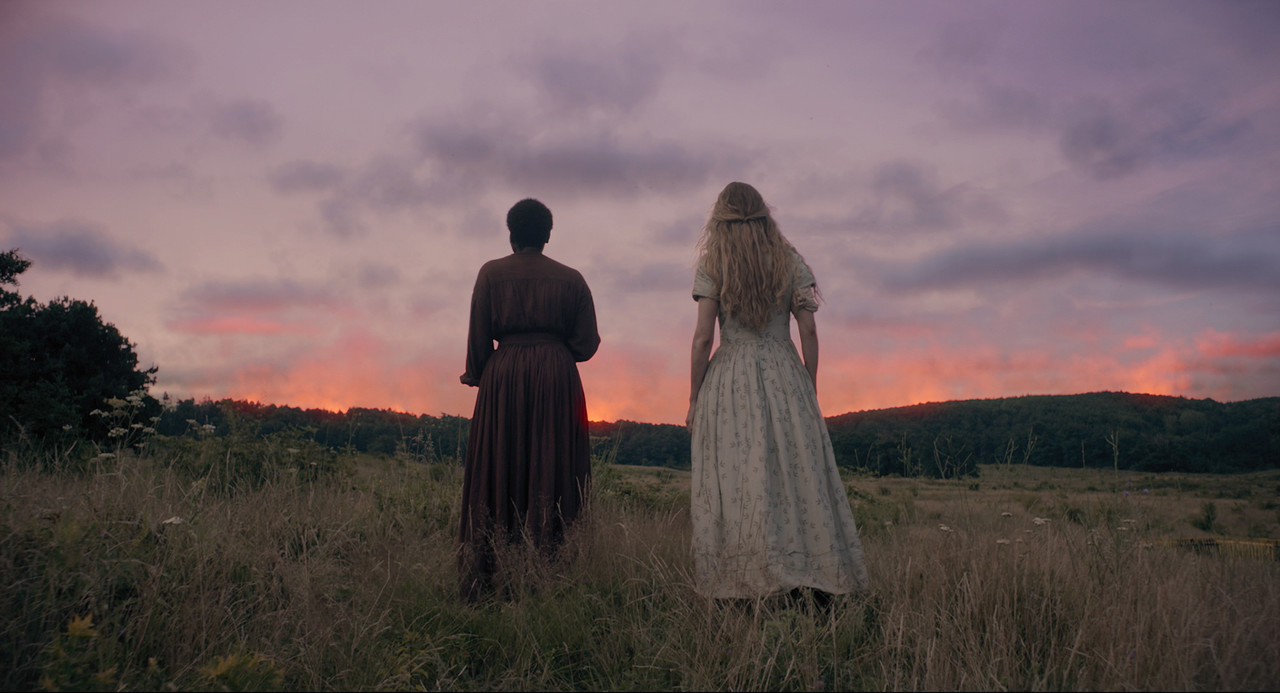
Augusta (Brit Marling) and Louise (Hailee Steinfeld) are Southern sisters, their large home is now empty but for them and one slave, Mad (Muna Otaru), who they now live on more or less equal terms with.  The war is all but over and Northern forces are encroaching, but when Augusta catches the eye of a violent advance party, led by Moses (Sam Worthington), the women must defend their home and their lives.

 The Keeping Room could have been made, in some alternate movie universe, 40 years ago as a nasty little grindhouse piece, but director Daniel Barber, writer Julia Hart and cinematographer Martin Ruhe bring more craft and subtext than you would probably have seen in that film.  The screenplay doesn't lean too heavily on its subtext, but there are powerful things said about both female empowerment and race.  The film is striking from the off, with a disturbingly slow and still opening sequence that introduces the film's suggestion that even in a war that was fought against slavery the victors weren't always noble.  The image of a cart rolling along a deserted road, on fire, its black driver shot in the head, is both sad and brutal; a combination the film plays to throughout.  The cinematography is excellent throughout, with an Innocents like shot of the women, carrying lanterns, walking up the stairs stealing the honours as the film's most beguiling.

The Keeping Room spends a good amount of time establishing rounded characterisations for its three leading ladies.  The dynamic between Augusta, Louise and Mad is never entirely comfortable; you get the sense of an uneasy but long lasting truce, especially in an early scene in which Louise says that Mad should be doing all the digging, because “she's the nigger”, to which Augusta replies “We all niggers now”.  This is typical of the film; it knows that these characters we're going to end up rooting for aren't always admirable, that they were on the wrong side of this war, but it still humanises them, showing them caught up in a brutal situation not of their making.

This complexity is matched by three fine central performances.  Hailee Steinfeld finally delivers on the promise she showed in True Grit, with a performance that is by turns forceful and vulnerable and Manu Otaru brings a quiet, clearly hard won, dignity to Mad.  However, as she does so often, Brit Marling stands out.  As Augusta she's full of steely resolve and resourcefulness, but also lets us see the fear behind her actions, fear both of the men who are invading the farmhouse and of those she knows will follow now the war is lost.  Marling is a great actress, but more than that she's clearly a movie star, she has a presence that draws the eye of both a camera and an audience and that quality pays dividends here.


There is a surprise in the cast in the form of Sam Worthington. This year, having previously been one of my least favourite actors, he has begun to win me round, first with a forceful role in the underrated Sabotage and now here, with a performance that is more than the cipher of a villain it begins as.  Late in the film, in a quiet and extremely tense scene conducted at gunpoint, Worthington more than holds his own with Marling.  It's this late moment, in conjunction with a quote about the cruelty of war that opens the film, that serves to humanise the villains of the piece.

While it's not hugely explicit, Daniel Barber doesn't flinch from much of the brutality on show here.  What, aside from an extremely upsetting rape scene, makes an impact is how much damage is done by a single gunshot.  Because the weapons used here still operate with ball and powder rather than bullets gunshots are infrequent, which means that every one has huge impact; they are loud, painful looking, and seldom without consequence, a stark contrast to how they are often treated in modern set films.  That said, the film's most powerful moment isn't a violent one but its quietest and most reflective, as Mad tells a story about life at one of her previous plantations.  This scene is where the film hammers home the idea that, as brutal as war is, for Mad it's hardly new, or indeed worse than any other time in her life.

Intelligent and artistic but also thrilling and accessible, The Keeping Room brings class to what could have simply been an exploitation movie and in doing so stands out among this year's London Film Festival crowd.
★★★★

Nagima
Dir: Zhanna Issabayeva
I have been coming to the London Film Festival for over a decade and must have seen at least 250 films here over the years.  Some were probably worse than Nagima, but few, if any, were emptier.

In contemporary Khazakstan Nagima (Dina Tukubayeva) is living a hand to mouth life with her friend Anya, with whom she grew up in an orphanage.  Anya is heavily pregnant, but after complications with the birth Nagima finds herself left holding the baby, something she is ill equipped for.

What's remarkable about that plot summary is that I've made Nagima sound about six times more interesting than it actually is.  The only truly notable thing about this film, at least until its abysmal, out of nowhere, last five minutes is how unstintingly boring it is.  Early in the film we see Nagima making her way home from work, which is to say that for about three minutes we watch her sit on a bus.  Expressionless.  This is not the only time during the film that director Zhanna Issabayeva takes 'slow cinema' to its inert conclusion, similar moments of watching Nagima on buses or watching vehicles travel along roads occupy perhaps ten of the film's scant 78 minute run time (this is not to say it feels like 78 minutes).

There is something to be said for the idea of using cinema simply to observe people going about their lives, but either the people or their lives ought to be interesting and Nagima, as played by Dina Tukubayeva, never has even the tiniest hint of personality.  Because she's such a complete void, so totally affectless, and because we never get a handle on who she is nothing that she does in the film, especially her extreme actions towards the end, connects.  There's no throughline, no logical progression from one event to the next because she's just a blank space.

I'm all for extreme cinema, I like to be challenged, I like to be shocked, but Nagima's shock ending is one of the cheapest I can recall.  Two years ago at LFF I saw a film called Accession, which featured one of the most shocking scenes I have ever seen, but it wasn't there for its shock value, it wasn't cheap.  Accession followed the progression of its character's brutally and hideously misguided logic, with a deep sense of dread, up to that moment.  That is what Nagima would like to do, and tries to do with Tukubayeva's final speech.  It's utter failure is not because it tries to shock but because that shock doesn't come from anything within the film.  It doesn't seem credible for Nagima's character, there's no hint of it in Tukubayeva's performance and the film never seems to be driving to that (or indeed any other) moment.

Nagima is easily and by far the worst film I've seen in this year's festival; a total waste of time and money, hell, even of the electricity going to the projector.
★

Hungry Hearts
Dir: Saverio Costanzo
From its still, its title, its place in the Love section of the festival and the presence of Adam Driver I had assumed that Hungry Hearts was going to be another indie hipster romance of the kind I have become so tired of over the past few years.  It is not.

Hungry Hearts begins with the most disarming meet cute I've seen in some time, as Jude (Driver) and Mina (Italian actress Alba Rohrwacher) find themselves locked in a restaurant toilet together.  The next time we see them they have been together for a few months.  Soon Mina falls pregnant and they get married, but when their baby is born Mina becomes so obsessed with purity and cleanliness that she may be harming him. 

Most films pick a genre and stick with it, or hybridise a couple of genres.  Hungry Hearts takes a different approach; it mutates throughout, evolving from a romantic comedy to a drama to a thriller to a horror film and back to a drama.  This could have unbalanced the film, throwing us between too many different poles in too short a time, but until the very end the gear shifts are surprisingly natural, growing organically out of the story and Saverio Costanzo's decision to alter the style of his direction along with the genre of his film keeps things interesting and specific from moment to moment, only proving disconcerting when the film wants you to be thrown off balance.

Driver and Rohrwacher capably adapt their performances to the shifting genre, with Driver's charming hipster routine sliding compellingly into a portrait of a man who clearly adores his wife, but is increasingly afraid of her and what her obsessions might be doing to their son.  Rohrwacher's finest choice here is to keep everything that Mina says and does small.  Her quietness and her conviction enable you to believe that, even if she's not well, she does believe everything she's saying and that she doesn't want to harm her son.  She becomes ever better and ever more disturbing as the film enters its Polanski influenced darkest patch.

These twenty minutes or so, when Mina's illness is at its worst and Jude's concern for his son at its height, also contain some of Costanzo's most interesting visual choices.  Operating the camera himself, he uses an extremely wide angle lens, giving the whole thing a surreal, sickly, look and making the already petite Rohrwacher seem to become an elongated skeletal figure.  This all contrasts very nicely with the brighter visual style of the first act, as we see Jude and Mina fall in love and get married and the shift from charmingly funny rom-com to disturbing everyday horror is so strong that it only compounds the disappointment of the ending.

The last three minutes of Hungry Hearts seem to be the product of Costanzo throwing up his hands and saying to himself 'I can't think of anything else, so I suppose that will do'.  From one completely out of the blue extreme action to a final shot that goes completely against the prevailing tone and feels like someone phoned Hallmark to obtain the final frame, the last three minutes are a complete disaster.  Thankfully, the rest of the film is strong enough and confident enough that it is still absolutely worth your time.
★★★★

Feb 6, 2014

Coming of Age Movie Month: Days 3 and 4

My third coming of age movie was going to be Tuff Turf, but since I found it incredibly dull and have little to say about it besides 'THE 80'S!!' I decided I would count the other film I watched that day, which also had a lot of coming of age elements, as the day's entry in this series.


L'Immoralita
Dir: Massimo Pirri
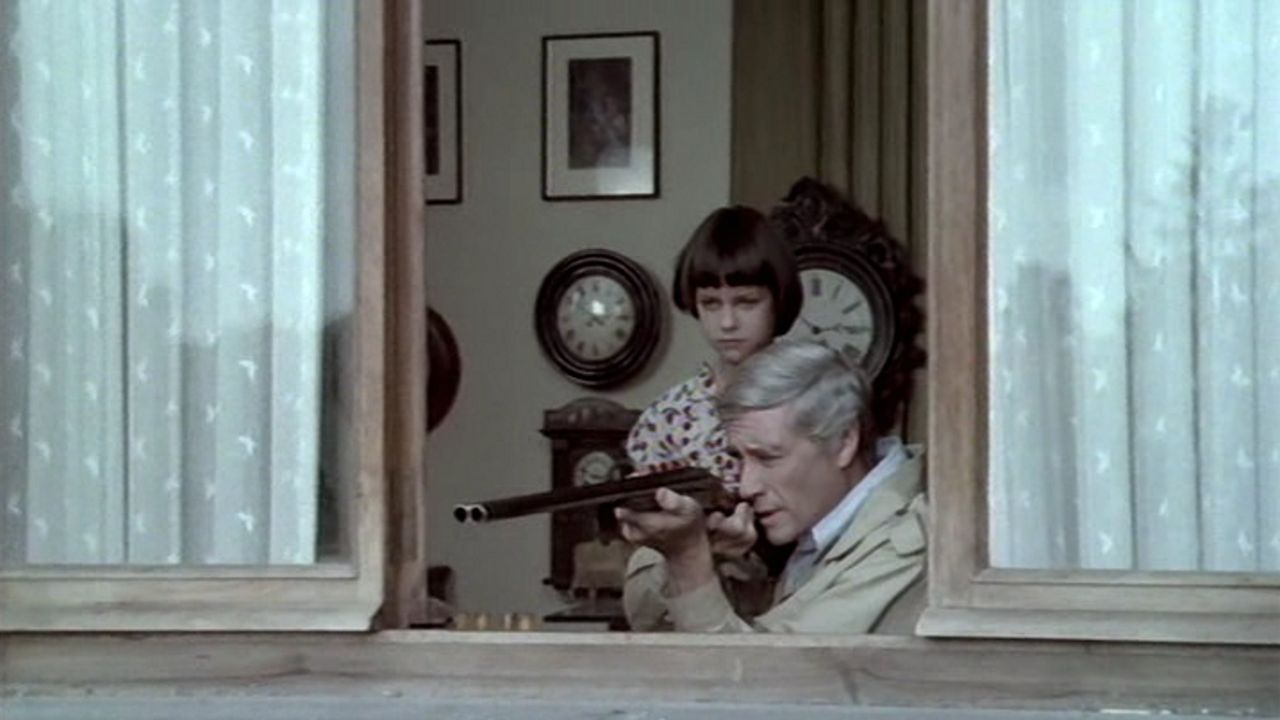
My interests in coming of age movies and exploitation cinema often cross over, but seldom in as troubling a manner as they do in L'Immoralita [Immorality].  The film opens with Federico (Howard Ross), a serial child killer, burying his latest victim, then being chased down by the Police.  Injured, he comes across Simona (Karin Trentephol) an 11 year old girl who agrees to help him and gives him a place to hide.  As the local community hunts Federico, Simona begins to fall in love with him, and react jealously when her mother (Lisa Gastoni) seduces him.

First love is a common theme in coming of age cinema, and it will run through almost every entry in this series to a greater or lesser degree, but this is perhaps the most disturbing take I've ever seen on the subject (with the possible exception of Maladolescenza), both because Simona is so young and because she is not naive about what Federico has done.  There is a duality about Simona's character; in some ways she is hopelessly naive, she clearly still has a child's understanding of adult relationships and her jealousy of her mother is a child's petulance.  However, Simona is also calculating.  A chilling scene in the middle of the film has her stealing a gun and buying bullets on her father's account, for what reason we don't yet know.  Simona also seems aware of the way that she appeals to Federico and this too plays out in an extended and uncomfortable scene.  The discomfort around the Simona character is even further accentuated because, even through the haze of typically shonky Italian dubbing, you can see that Karin Trentephol (who never made another film) is giving an excellent performance.

While the increasingly disturbing dynamic between Federico, Simona and her mother holds the attention, there isn't much drive to the narrative that has both the Police and local vigilantes after Federico, with the film conjuring little of the fevered atmosphere of provincial paranoia that Lucio Fulci's Don't Torture A Duckling manages.  Ultimately the film is a mixed bag; competently shot, variably acted as far as one can tell through the dubbing, but at the centre lies this fascinating and disquieting relationship.  It's not an easy watch, even for fans of Italian sleaze, but it is worthwhile.
★★★

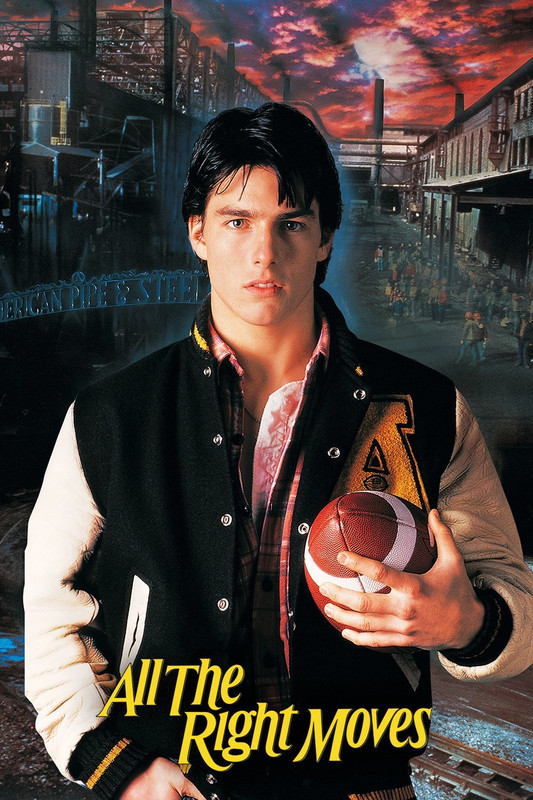
All The Right Moves
Dir: Michael Chapman
I thought that All The Right Moves was going to be a rather different movie than the one it turned out to be.  It begins with that staple of the 80's movie; its own (pretty upbeat) theme song, and I was expecting to see Tom Cruise triumphing against the odds as a small town high school football player trying to find a scholarship to a college.

The movie soon set about disabusing me of this notion, from the colour palette on down All The Right Moves is a surprisingly bleak and hard hitting film.  What it's really about is people, young as they are, being trapped in a bad situation and having one chance to get out.  This is the situation we find Cruise's Stef in.  He's a high school senior, a star player on the football team with a few colleges sniffing around to give him a scholarship, and he knows this is his only way out of an economically decaying future in a Pennsylvania steel town.

Former cinematographer Michael Chapman paints the town in greys and browns, the colour and energy seeming to leak out of it along with the jobs and this, along with the way we see Stef's friend (Chris Penn) captured by the town when he gets his girlfriend pregnant, accentuates the urgency of escape.  Interestingly, the image Cruise has built since this film played into my expectations, his characters usually lead such charmed lives that I expected the obstacles that Stef would have to face would be extremely minor, instead the conflict with his coach (a very good Craig T Nelson) seems as though it will consign Stef to the scrapheap.

Outside of the football games and the attempts to escape from his dead-end town, there is a relationship storyline.  Lea Thompson's melancholy performance as Stef's girlfriend Lisa gives the film several of its most resonant moments, especially a scene in which she tells Stef that she too has ambitions beyond their town, but that music scholarships aren't on offer.  Her monologue realising that much of her life is, at seventeen, already written for her is extremely sad and resonant.  Thompson, an underrated actress who should have had more chances, is great in the part.  It's also worth noting that she's probably responsible, thanks to one scene, for a lot of boys growing up pretty suddenly.

Cruise is also good.  He's much less put together here than he has been in most of his films and Stef (while, of course, ridiculously handsome) does come off like a typical teenager.  Cruise plays him naive but anxious, this comes through notably in the sex scenes, but also informs the rest of the character: Stef wants things; Lisa, his scholarship, and naively thinks that he can't, at this point, jeopradise his chances of having them.  Cruise's youthful exuberance suits the opening part of the film well and makes it all the more effective when he's beaten down.

It's a pity that Michael Chapman didn't direct more (only one more notable feature, Clan of the Cave Bear, followed this, his debut), instead of returning to cinematography.  He shows an affinity for his characters, extracting uniformly strong performances from his cast, and his unobtrusive camera style makes their world feel real and vivid.

While it snatches victory from the jaws of defeat (in what feels like a bit too much of a movie moment), for the most part All The Right Moves is an effectively downbeat drama that has something to say about growing up, but also about how adulthood doesn't always live up to what we expected.
★★★★

Feb 6, 2013

Blu Ray Review: Black Sunday [15]

The Film(s)
There are two cuts of Black Sunday on this new Blu Ray release; Mario Bava's Director's Cut, under his original title: The Mask of Satan, and the American release print (the version that has been most widely distributed) under the better known title Black Sunday.  As the former is Bava's own cut, I'll focus on that version for this review

The Mask of Satan was the directorial debut of a then 46 year old Bava, who had, up to this point, been a cameraman (a DP in fact, but he apparently disliked the term cinematographer, finding it pretentious) and had previously stepped in as director on several films when other filmmakers had left or been fired.  This was his reward for loyalty and good work, and Bava certainly makes good on the faith his producers put in him for this official directorial debut.

From its startling opening sequence, in which a witch (Barbara Steele) is punished by having a devilish mask lined with huge metal spikes nailed to - indeed through - her head, Mask of Satan is a stylistic tour de force from Bava, combining the more explicit gore allowed by the start of the 1960's with the gothic stylings of the classic Universal horror films of the 30's and 40's.

The bulk of the film takes place 200 years after the opening, two doctors (John Richardson and Andrea Checchi) on their way to a conference stumble across the witch's tomb and accidentally cause her to be reanimated.  They also meet a woman named Katja, who looks exactly like the witch and turns out to be a descendant.  The younger doctor falls for Katja, and ends up trying to protect her as the reanimated witch attempts to possess her body.

Bava's visuals are fantastic; his gliding camera and supreme control of light and shadow thanks to filming even 'exterior' scenes in a studio make for an intensely creepy and enveloping atmosphere that gives the whole film an otherworldly feel, which grows and grows as characters are possessed, killed, and as the witch comes closer to truly rising from her grave.

The film's gothic beauty is well matched by a smattering of grand guignol effects, especially an emphasis on eyes and trauma to them which seems to have permeated Italian horror in the years following this film (it's clear that Lucio Fulci owes Bava a debt in this respecy).  The effects are perhaps not quite up to modern prosthetic standards, but they seldom look hokey, and a few - a punctured eye in particular - remain really shocking.

Performances are hard to judge, due to the fact that, as was standard at the time in Italy, the film was made without sound, and dubbed later.  Certainly Barbara Steele's striking dark beauty is used well in the dual role of Katja and the witch and Andrea Checchi seems to be having fun, camping it up just enough as the older doctor.  John Richardson is square jawed and good looking enough, but doesn't seem to be an especially brilliant actor.

Ultimately though, The Mask of Satan is a film more about reveling in atmosphere, and Bava certainly achieves that.  Even more than fifty years on the film still chills and occasionally shocks, and most horror films struggle to do that fifty minutes in.

The AIP alternate cut, Black Sunday, is only minimally different.  Some music is changed, the dubbing is slightly different, and an opening crawl and voiceover are added.  Otherwise the only real difference comes in the reduced emphasis on some of the film's gorier moments.  The Mask of Satan is the superior cut in every way, but Black Sunday is still a great film, though it's really more of a curio on this release.

The Disc
Arrow Video have a well established and well deserved reputation for treating their DVD and Blu Ray releases with a great deal of care, and this release of Black Sunday should only serve to strengthen that reputation.  The black and white feature film looks absolutely outstanding; black levels are deep and dark, there are a great variety of shades of grey in the print, and texture is outstanding thanks to a robust grain structure that means the picture retains a filmic feeling, while remaining almost totally free of print issues.  Digitial artifacts, which can be a problem in films that make heavy use of smoke, as this one does, are also absent.  Overall, this is an outstanding transfer of a beautiful restoration, it really does justice to a great looking film.

Sound, at least through my stereo only TV, is clear, sharp and well balanced.

The Extras
As ever with Arrow releases the extras are plentiful.  You could count the AIP cut of the film as among the extras, but even if you don't there's another extra film; I Vampiri, the first Italian horror film of the sound era, which Bava completed after Ricardo Fredda left the production.

Mask of Satan gets a commentary from Bava expert Tim Lucas.  It's interesting in parts, but a little dry and heavy on 'here's what's happening in this scene' talk for my liking.  Also offering a little context is Alan Jones, who provides an optional introduction to the film.

Star Barbara Steele appears - still looking great - in a 1995 interview.  It's a bit short, but she's engaging and has some interesting things to relate, especially about the sets for Mask of Satan.  It is a shame, however, that Steele didn't participate in any new content for this release.

The film-specific content is rounded out with a rare deleted scene, which, like most deleted scenes, is inessential but interesting. The extras package is completed by a mass of trailers for this film and many, many of Bava's others.

Overall
This is another outstanding package from Arrow Video, who continue to treat horror films with a respect that most companies don't seem to think them worthy of, and which fans will revel in.  This is also a brilliant film, and the package is an essential addition to any horror fan's Blu Ray library.

Dec 1, 2012

Blu Ray Review: Zombie Flesh Eaters [18]

Dir: Lucio Fulci

The Film 
I have, perhaps oddly, a rather nostalgic fondness for Zombie Flesh Eaters.  My interest in horror films was sparked initially by my interest in censorship, and my desire to see movies that I wasn't supposed to see, and Zombie Flesh Eaters (albeit in a cut version which missed out some of the 'best' moments) was one of the first 'video nasties' I ever saw.  Though I've discovered more and better films by its director Lucio Fulci in the years since, I often come back to Zombie Flesh Eaters because it's a fun and undemanding gut muncher.

The story, such as it is, involves zombies, probably raised by voodoo, taking over a Carribbean island where Anne Bowles (Tisa Farrow) and Peter West, a reporter (Ian McCulloch) have journeyed to try to find her missing father.  They meet Dr Menard (Richard Johnson), who had been working to treat the zombie-causing illness with Anne's father.  Mayhem ensues.

Though titled Zombi 2 in Italy, to make it appear to be a sequel to George Romero's Dawn of the Dead (released there as Zombi), Lucio Fulci's first zombie film - he would make three more - strikes a very different tone from its notional model.  Fulci has little interest in using his zombies as metaphors, or in filling his narrative with commentary on ideas of race or consumerism, rather Fulci is a shamelessly, and rather joyfully, sensationalist filmmaker.  The script is more a loose series of scenes designed to knit together Fulci's set piece moments, and while I'm all for deep and multi-layered horror films, not everything in the genre needs to be cerebral.

The cast, a mix of American and English C-Listers and reliable but not hugely expensive international players acquit themselves as well as the dialogue and dubbing will allow.  Farrow and McCulloch have little chemistry, but the attraction the script shoehorns in is hardly key to the film, and they both do solid work, giving the credulity straining situations as much credibility as possible.  Richard Johnson, however, is in a different league; his sweaty browed scenery chomping is one of the film's great joys, and he strikes just the right tone as Dr Menard, even when chewing on some pretty awful lines.  Other players make an impact for different reasons.  You'd be hard pressed to say that either Olga Karlatos (as Menard's wife) or Auretta Gay (as one of a tourist couple that Anne and Peter hitch a boat ride with) give especially good performances, but they both make for stunning set decoration, and each have a part to play in some of the film's most memorable moments, even some of the zombies carve themselves into the memory, particularly the first one we see, played by the magnificently named Captain Haggerty.

The reason that Zombie Flesh Eaters works, the reason it's still compelling today, isn't really as much to do with the people in front of the camera as it is the people behind it.  At the time of the video nasties panic these films were seen as hack work; ugly films made by people with little talent and no standards - and to be fair some were - this isn't the case with Zombie Flesh Eaters.  Fulci trained with Fellini, and while they had wildly divergent careers and styles Fulci had honed a keen, sharp, and very identifiable directorial eye.  With DP Sergio Salvati providing a largely bright and soft lighting scheme that sets the film apart from many in the genre, Fulci wheels out trademarks like his extensive and impactful use of close ups on and his fondness for violence to eyes and sprinkles them through a series of varied set pieces.

The set pieces are just stunning, from a suspenseful opening to the closing zombie walk across the Brooklyn Bridge, but three really need discussing.  The famed Zombie V Shark sequence is as remarkable as it ever was.  It's brilliantly choreographed and shot, at times reminiscent of Creature From the Black Lagoon, and it looks amazingly dangerous, seemingly staged without a hint of fakery.  It's the sort of thing you could just never shoot now; the shark would be CG, and the sequence would lose all of its excitement.  There is also the graveyard scene, sometimes omitted between the breathless praise for the other set pieces, but perhaps the one that combines viscera and suspense most effectively.  There is an eerie slowness to Gianetto DeRossi's zombies as they rise from the ground, along with that creaking, tearing sound that is so unnatural, and that only makes it more shocking when the zombies swiftly attack.  Most striking though is the eye scene which, though famed for its visceral payoff, also has a stunning slow build as zombies try and break into Dr Menard's house to eat his wife (who, because this is an exploitation film, has just had a shower).  Almost as nightmarish as the amazing effect that ends the scene is the  build up, because even on a first watch you can be pretty sure where the scene is headed, and it makes the skin crawl.

Talking of effects, Gianetto DeRossi, who created the make up and gore effects, is really the star of the film.  Working with low tech tools like clay, he created some of the most disgustingly convincing zombies I've seen on screen.  The zombies were always my problem with Dawn of the Dead; they just looked like spray painted people.  The zombies here look dead, and as if they are rotting, bits being baked off them in the Caribbean sun.  There is also a strong variety in the zombie design, as well as some seriously painful looking blood and prosthetic effects (the aforementioned eye, a ripped out throat).  On occasion you can see the joins, but the film is such fun, and most of the effects work so spot on, that it's hard to mind very much.

I've no desire to get critically high-minded about this film; it's an entirely unpretentious feast of silliness and gore, and that's exactly the way I've always approached and enjoyed it.  Honestly, your reaction to the film will largely be dictated by your reaction to the title, if "Zombie Flesh Eaters" has you thinking there's a fun evening of horror in store then that's exactly what you'll get, if it makes you picture an idiotic waste of time then I'd imagine that's what you'll find, and if you're picturing a morally reprehensible 'Video Nasty', well, you'll probably find that here as well.  Me?  I'm just going to revel in the great photography and the fun, splashy, set pieces once more. 

The Picture and Sound
Arrow Video have earned a very good reputation for the care and attention they have shown to genre films that might not have previously received such lavish treatment.  Their restorations of Fulci's The Beyond and City of the Living Dead were both hugely impressive, but this presentation of Zombie Flesh Eaters absolutely blows them out of the water.  This is a spectacular restoration, revealing not only undreamed of detail, but shedding much more light on how brilliantly the film was photographed by Fulci and Sergio Salvati and how impressive the composition is.  The clarity does sometimes show a few of the joins in the effects, but it also shows the breathtaking detail and quality of the make up work.

The sound (though I can't comment on any surround use) is strong, with the impressive and haunting score (something sometimes undervalued in Italian exploitation films) coming through strongly, but never dominating above the dialogue.  I only listened to the English language track, because that has the real voices of at least the principal cast, but the original Italian dub is also available. 

The Extras
A generous package split across two Blu Ray discs.  On the main menu you'll get to choose from the three titles that Zombie Flesh Eaters went under.  The only difference is in which title sequence you see, the film itself is the same; a cute bonus, but not a terribly exciting one.  When you start the film (under whichever title) you'll also get a short intro from Ian McCulloch, who, as ever, seems surprised but happy that anyone remembers this movie.

The major video extra on disc one is an hour long documentary about the lineage of zombie movies, tracking from Night of the Living Dead, through Fulci's zombie quartet, and then to the many Italian films that cashed in on Zombie Flesh Eaters.  There's not much new here for genre fans, but the talking heads are intelligent, and the clips are fun. People just discovering these films would be well advised to watch it with a notebook handy to write down titles.

If you want to truly appreciate how good the film looks on this Blu Ray, have a look among the selection of Trailers at the trailer for the old Vipco release, which looks like third generation VHS.  The trailers are fun, but not something I would find myself watching much.  Also among the trailers are some brilliantly silly Radio Spots.

The major audio extras on the disc come in the form of two audio commentaries.  The first is with co-screenwriter Elisa Briganti and moderator Callum Waddell, it seems to have been recorded in a somewhat echoy room, which can be pretty grating, it's quite a general commentary for the most part, but Briganti is animated and Waddell gets some good, if not screen specific, stories from her.  It's worth a listen, but is really for fans more than casual viewers.  More essential is the second commentary, driven largely by Stephen Thrower, who literally wrote the book on Fulci (it's called Beyond Terror, and belongs in every horror fan's library).  Thrower is a fantastically engaging speaker, and here he's joined by Alan Jones; another encyclopedic authority on Italian horror films.  The two stick closer to what's on screen, but also talk around their subject about the Italian film industry and the larger careers of many of the people who worked on this film.  It's a very good track, and recommended to anyone with an interest in Fulci and his work.

The second disc of extras is led by a 46 minute interview with Ian McCulloch.  He tells a few familiar stories, but is as genial and informative as I found him in our chat.

Zombie Flesh Eaters: From Script to Screen is an utterly pointless feature in which [uncredited] screenwriter Dardano Sachetti show us the original draft of the screenplay.  Unfortunately we can't read any of it because the feature is not even 3 minutes long, is shot in wobblyvision, and largely consists of Sachetti flicking through the script.  If you're going to do a feature like this either make it an interview or put the original screenplay on the disc as a PDF.

A half hour Q and A with the film's composer Fabio Frizzi is a welcome and interesting addition, but it would probably benefit from optional subtitles, because the sound quality isn't brilliant, particularly on Frizzi's translator.  Still, it's very watchable and if you listen carefully you won't miss anything.  It's very nice to see Frizzi get his due on this disc; his soundtrack is one of the great things about the film.

Finally for the video extras The Meat Munching Movies of Gino DeRossi provides a 26 minute look at the work of Italy's own Baron of Blood.  Seeing inside his workshop is a real treat for a gorehound (the exploded head from The Beyond is still sitting on a shelf, and still looks amazing) and DeRossi comes across as personable, dedicated and hugely fond of his work.  He's also got a lot of interesting recollections about the films he's worked on.  Arrow need to get him to do a commentary one of these days.

The extras are rounded off by a booklet, which sounds very exciting, but was not made available for review.

Verdict
One of the essential releases of 2012 for horror fans; a classic film, with a stunning transfer, backed up by extensive and mostly intriguing extras.

The Film: ★★★★★ 
The Disc: ★★★★★

Oct 3, 2012

24FPS @ LFF 2012: Day 5 (Cont.) and Day 6

Reality
Dir: Matteo Garrone
This seems like the easiest job in the world, right? What do you do for work Sam? I have opinions, cushy, huh? That's until I come up against something like Reality, and find myself struggling to define my opinion. Can I see why many of my fellow critics liked it so much? Yes, and I can also see that it is going to be a real crowdpleaser, but I can't for the life of me get on board that train, and, more problematically, I'm struggling to sum up exactly why that is.

Reality is certainly an odd thing for Matteo Garrone to follow (the rather overrated, sorry) Gomorrah with. It could not be more different in story, approach or tone. The film follows Luciano (Aniello Arena), a fishmonger in his mid-thirties who is goaded by his young children into auditioning for Italy's version of Big Brother. He gets an audition in front of the producer in Rome, and becomes convinced that he's going to be on the show, but his status as a local celebrity and the expectation of being on the show soon result in Luciano becoming delusional.

From the start and throughout, Reality is a cacophonous and pretty one note satire. Did you know that in the modern world we're so obsessed with empty celebrity that people will ruin their lives pursuing it? I sure did. That said, the other problem is that the situation that Luciano puts himself into is so extreme (especially given the lack of interest he has at the beginning of the audition process) that it rings rather false. It doesn't help that, like the screenplay, the acting is all rather overblown and the dialogue often a battle of shouted voices; the effect is pretty abrasive, and makes the film at times grating and at others actively annoying. Approaching the film from a British cultural point of view presents another problem, in that it's tough to buy into Luciano's obsession when it has been about 8 years since Britain gave the tiniest of fucks about Big Brother.

As I said above, I can see why people have warmed to the film. There are some funny moments, thanks to the extremes that Luciano goes to, especially when he follows a former Big Brother contestant named Enzo when he's making a public appearance at a nightclub. To Garrone's credit, the film doesn't go entirely the way you'd expect (though this is a mixed blessing given an ambiguous ending which, for me, really didn't work) and Arena is excellent as Luciano, giving the very best of himself and holding the attention with a charismatic, if never sympathetic, performance. There are also some quirky side plots which are entertaining, though they do tend to get shunted out of the film unceremoniously (a plot about a racket Luciano has going on fencing kitchen robots is fun, but forgotten about in the second hour).

Ultimately, for me, Reality presented a deeply unsympathetic character, surrounded by others I didn't like much more (even my sympathy for Luciano's wife went by the wayside by the end of the film), none of whose storylines – especially the sort of collective madness which seems to grip the town in the film's second act – I really believed in. The satire felt blunt, and the point rather obvious and overstated, and for all the sense that I ought to be having fun here I simply wasn't. Sorry.
★★☆☆☆

Robot and Frank
Dir: Jake Schreier
Robot and Frank is likely to be one of the big popular hits of this year's London Film Festival, and that's really because it has something for just about everyone; it's odd and offbeat enough for the indie movie fans, but also traditional and gentle enough for them to take their parents to.  It's funny, but it also has moments of drama and pathos, and it has a few reasonably surprising plot turns, but there's never anything that will have you scratching your head.  It's a pretty safe movie, but still one that is perfectly charming, engaging, and entertaining.

Frank (Frank Langella) is in his early seventies, and in the early stages of Alzheimer's so, this being the near future, his son (James Marsden) gets Frank a robot caretaker (voiced by Peter Sarsgaard) who will ensure that Frank's body and mind stay active.  Frank has other ideas, until he realises that he can teach the robot to be his partner in his old occupation: burglary.

Robot and Frank is at its best when focused closely on its title characters, the interaction between the two follows a pretty predictable pattern (Frank hates the Robot, then comes to tolerate it, then finds it useful, and eventually they become 'friends'), but we're seldom more than a minute away from a funny line when the two are on screen together.  Langella seems to be having a wonderful time as the cantankerous Frank, and the way he talks Robot round to his ideas is very funny, but Langella also gives a nice dramatic performance, not overplaying Frank's illness, but letting us see the toll it takes in a subtle and subtly moving way.  Sarsgaard is also excellent, and manages to mine laughs with little in the way of intonation (the robot doesn't have emotions, of course) to help him out.  The film's funniest scene really belongs to Sarsgaard, as Frank tells his Robot to strike up a conversation with a Robot working at the library.

The supporting cast is largely solid.  James Marsden continues to show that he's a better actor than X-Men ever let him demonstrate and Susan Sarandon and Jeremy Sisto are their usual reliable selves.  On the downside, Liv Tyler seems half asleep as Frank's daughter and Jeremy Strong is gratingly OTT in a small (but not small enough) part.  The trappings are reasonably original, but Robot and Frank breaks no new ground as a story, and maybe that spark of originality is what's missing for me because, as much as I enjoyed watching it, as much as I laughed and was a little moved, I can't say I loved the film, or can really imagine watching it again.  It's a pleasant afternoon at the cinema, no more or less.
★★★☆☆