Showing posts with label 2013 Releases. Show all posts

Mar 1, 2015

Random Viewing

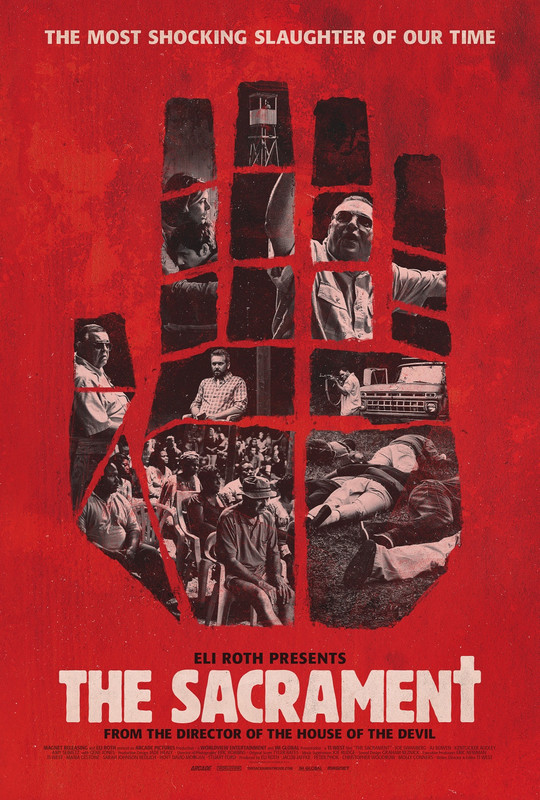
The Sacrament
Dir: Ti West
Ti West has become a fan favourite in the horror community, with House of the Devil and The Innkeepers both generating a substantial fanbase.  I'm not among that fanbase.  To date I just haven't got on with West's pacing, which tends to be agonisingly slow, nor have I been scared by any of his films.  Still, the fanbase remains, and when people I trust about horror tell me someone is worth paying attention to I'll generally give them at least a few films to engage me.  The Sacrament was probably the last chance I'd be giving Ti West - call it three strikes and you're out.

The film is clearly based on the Jonestown mass suicide.  A photographer (Kentucker Audley) is invited by his sister (Amy Seimetz) to visit her at the retreat where she has recently detoxed from a drug addiction and come to follow a charismatic religious leader known as Father (Gene Jones).  He goes, taking two friends (AJ Bowen and Joe Swanberg) who are making a documentary for Vice.

For the first time, West's pacing worked for me here.  The first half of the film is slow.  However, unlike House of the Devil, which felt brutally overstretched as its main character walked around an empty house for more than half an hour, The Sacrament spends its time interestingly.  For the first half of the film the documentary crew explore the commune, interviewing people, finding them happy and generally welcoming.  This is perhaps to be expected, but West, without tipping his hand too early, does give a sense of growing unease about the place and the smiles begin to feel like rictus grins.

If you know anything about the case that the film is based on, or even if you don't, there is only one way The Sacrament is going to end, and it does lurch into predictability in its second half.  The scenes are well staged.  The mass suicide is credible and disturbing.  What's slightly less credible is how quickly things seem to slide to this point.  In less than 24 hours the community goes from a fully functioning collective to drinking the (literal) kool aid.  It's not the followers, their actions I believe, it's the leadership that seems to make an extremely sudden and, frankly, not especially well founded turnaround.

These issues are mitigated by the quality of the acting.  West is part of the group of mumblecore filmmakers who often turn up in each other's films, and thus they seem to have an easy working relationship.  That can go either way, but here it seems to result in an easy naturalism from all concerned.  Bowen and Swanberg are strong as the journalists, but two other performances dominate the film in very different ways.  The first is Amy Seimetz; detailed and quietly credible throughout as Caroline, she lets her character's brainwashing become clearer with each scene up until a chilling moment in the third act.  Gene Jones is just as good as Father; charismatic and friendly in a way you believe would draw vulnerable people to him and aren't surprised hides danger.

What the acting can't mitigate against is some of West's filmmaking choices, including one stupid oversight that creates a huge continuity gap.  The found footage structure is less problematic than usual, but doesn't entirely work.  The fact it looks somewhat professional, even in fraught moments, is given context by the fact that within the fiction it's being shot by professionals.  We also know what we're watching; the edited version of the Vice piece, so cutting between cameras makes sense.  Except that when the film ends it's clear that at least one of those cameras doesn't leave the commune, at least at the time the credits roll.  That's a big oversight, and among other contrivances it undermines the film pretty badly in retrospect.

The Sacrament is probably my favourite of Ti West's films to date, though that's saying less than I'd like.  For 45 minutes I liked it a lot, unfortunately it becomes rote in its second half and there are problems with the construction.  However, the performances are always strong, and there's enough here that's good to make it worth a look.
★★★

What Maisie Knew
Dir: David Siegel / Scott McGehee
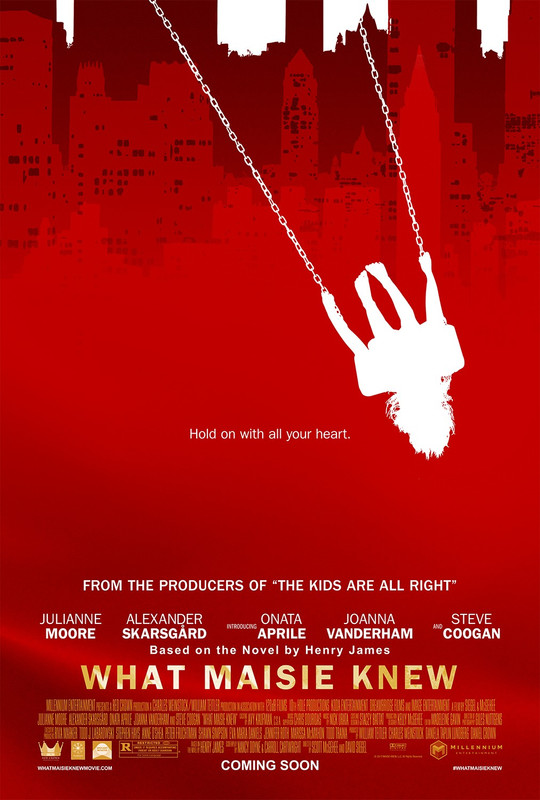
I watch a lot of coming of age films, so I see a lot of adult ideas, experiences and themes filtered through young characters.  Few do this as successfully as What Maisie Knew.  Based on Henry James' 1897 novel, the film is about six year old Maisie, whose parents (Juilanne Moore and Steve Coogan) are in the middle of an acrimonious divorce.  Busy with their work (She's a rock star, he an art dealer) neither has much time for Maisie and her care ends up being passed to her parents new younger partners (Alexander Skarsgård and Joanna Vanderham).

What sets What Maisie Knew apart is its dedication to its title, or perhaps more to the spirit of it.  What Maisie truly knows and understands about the world of the adults around her is not always clear, the film is more focused on what Maisie experiences and on trying to put us inside that experience.  It seems that every choice made by directors Seigel and McGehee is designed to reinforce that experience.

The camera, for the most part, sits low to the ground, not looking up, but instead often cutting off the heads of the adult characters, forcing a six year old perspective on us, even when we aren't looking through Maisie's eyes.  The sound is reactive too; muffled when Maisie is tired, pre-occupied or some distance from the adults.  What this, and only seeing the story of the marriage breakdown and the other relationships through moments that Maisie witnesses, does is force us to try to piece together our understanding of the events much as she does. 

The film's greatest asset is its cast and in particular Onata Aprile's performance as Maisie.  Aprile gives one of the most unaffected performances I've seen by a child in a long time.  Her expressions are often tiny, but huge moments are played just on her face, and she communicates volumes about what Maisie understands and how she feels about things with almost imperceptible moments.  Just look at her when she first discovers that her nanny (Vanderham) has now moved in with her father.  The way Maisie processes this and, over a couple of scenes, comes to understand the change in the various relationships is beautifully played.  With her open face, soulful eyes and bright personality, Aprile is a real find and she carries the film incredibly well.

The adults also acquit themselves well, though I'm not sure I buy Julianne Moore as a rock star (especially not when the songs we hear are Kills tracks where she subs for the brilliant Alison Mosshart).  Moore and Coogan are convincing as the couple whose relationship has turned toxic.  Both are unsympathetic and at times they both treat Maisie poorly, but the film doesn't simplistically label them terrible people, just people who have become too wrapped in themselves.

Much more likeable are the new partners, Margo (Vanderham) and Lincoln (Skarsgård).  These roles are the one place where the screenwriting feels a bit familliar.  Margo is, while extremely well played by Vanderham, a bit one dimensionally lovely and while Lincoln has more of a journey it's obvious early on where these two are going to end up.  However, it's hard to mind, they're both excellent and play off Aprile with such lightness of touch.  You feel the affection that Maisie has for both of them and while what ultimately happens is expected it also has an emotional tug to it.

What Maisie Knew brilliantly examines adult issues through a child's perspective, but manages not to reduce the complexity of either the events or the feelings they throw up.  It took me by surprise and I highly recommend it.
★★★★

Apr 14, 2014

This Week We've Been Watching... April 7th - 13th 2014

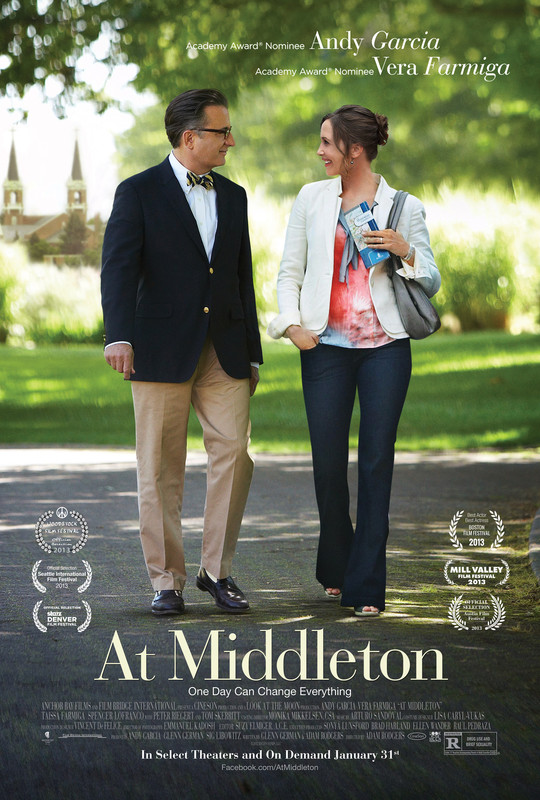
At Middleton
Dir: Adam Rogers
The romantic comedy has, of late, been in the doldrums as a genre.  It has largely descended into the act of watching people you hate make terrible jokes while falling into laughably unconvincing relationships with one another.  I was hoping that, given the participation of Vera Farmiga and Andy Garcia, At Middleton would break that mould.

Farmiga and Garcia each play parents bringing their children to an open day at Middleton college.  They meet early in the day, argue but then hit it off and end up separated from the tour group, spending the day getting to know each other and perhaps falling for each other.  For about an hour this has a level of charm about it.  Farmiga and Garcia are both fine actors and while they are saddled with rather cliché characters (Garcia the uptight Dad, Farmiga the free-spirited Mom) they spark off each other quite nicely.  The chemistry works and so do many of the jokes, especially a scene in which the two stumble into an acting class and end up improvising a scene.

The cuts back to the kids storyline (despite a decent performance from Tassia Farmiga, Vera's much younger sister, as her daughter) never generate much momentum and in the first hour they drain a bit of the energy that is being built up.  This becomes a much bigger problem as the film segues into its long third act.  At 100 minutes At Middleton could be cut by a fifth and lose very little.  The last 40 minutes drag out, especially in an interminable scene in which Garcia and Farmiga get stoned with a couple of college students only to end up shouting "The ballsack is life" over and over.  Remarkably this is not the worst line in the film.

Towards the end At Middleton also develops a sentimental streak a mile wide, which meant I stopped believing in the connection between these characters.  Worse, it provides the film with one of the most vomit inducing lines of 'romantic' dialogue since the ending of Four Weddings, as Farmiga turns to Garcia, whose character is a heart surgeon and says "I thought you fixed hearts".  As I said, Garcia and Farmiga are both very fine actors, but you can't expect anyone to make that line, nor quite a few of the others this script puts in their mouths, work.  They try hard, but the last third of the movie finds them increasingly defeated by the material.

At Middleton is actually one of the better American romantic comedies of recent years, but sadly that speaks to the catastrophic state of the genre more than it does the qualities of this film.
★★

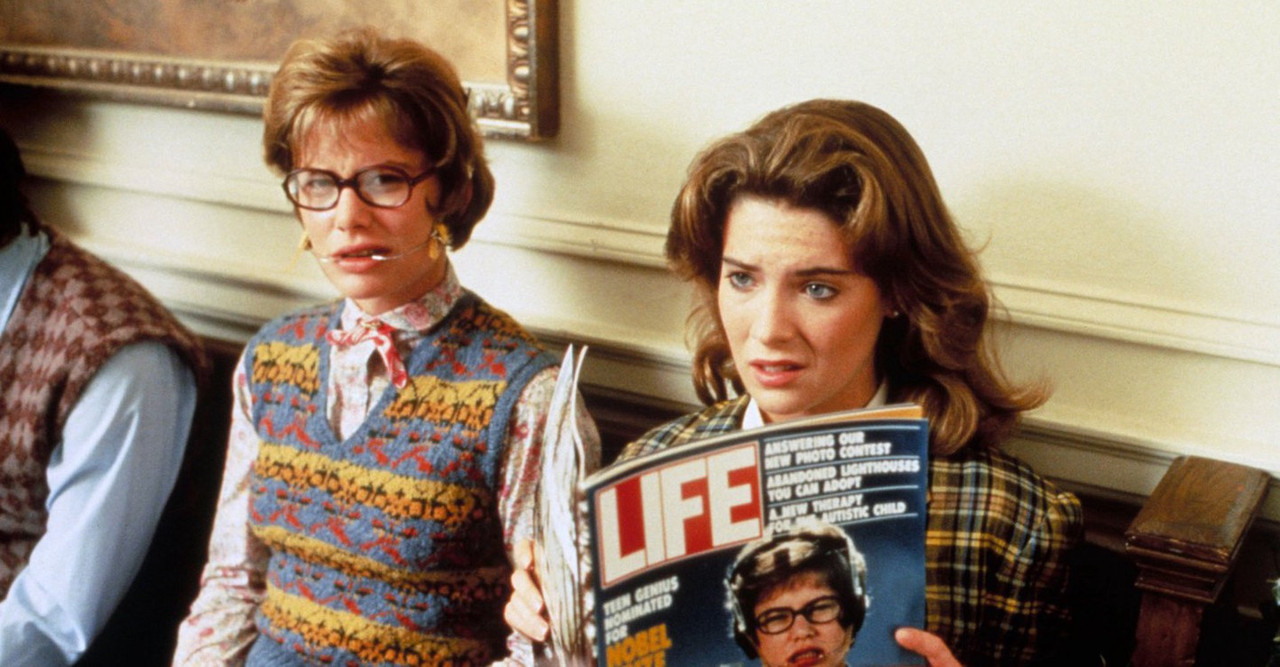
How I Got Into College
Dir: Savage Steve Holland
Savage Steve Holland is one of those filmmakers that I have always wished was given the opportunity to work more at feature length (since this film he has been plugging away in kids shows and TV movies), his anarchic take on the teen movie in Better Off Dead and One Crazy Summer marked him out as an individual voice in a scene that threatened to become stale, and this film is one with the same wonderfully skewed view of the world.

The plot is incredibly simple; High School senior Marlon (Corey Parker) is in love with Jessica Kailo (Lara Flynn Boyle) and his college plans revolve entirely around getting into the same school as her, as he's convinced that once she sees him as a grown up he might have a shot.  They're both trying to get into a small but prestigious school.  At the same time a young member of the admissions board (Anthony Edwards) is arguing that the school should look beyond grades when recruiting students.

Now, I understand that that doesn't sound that crazy, but it's not so much the structure as the approach that Holland takes to it that is so offbeat.  The surrealism begins from the first frames, with a question on Marlon's SAT's personified by two characters, A and B, who are endangered by Marlon's inability to get the right answer.  This is a comic device that just keeps on giving throughout the film.  How I Got Into College is not as fast with its jokes nor as incredibly odd as Better Off Dead, but it trades that off for a slightly more involved story, liberally sprinkled with gags (a running joke about the college admissions officer who accepted a fake application 'from' a pig is a particular joy).  

Corey Parker may not be the most charismatic of leading men, but his Marlon comes off as a likeable goof and a decent centre for the film's crazier moments to spin around.  Similarly, Lara Flynn Boyle is no Diane Franklin (though she appears briefly in a priceless bit as Marlon's young stepmother), but she's attractive and appealing enough to convince us that Marlon would want to follow Julie to college.  That story could be creepy, but by the end it has developed an essential sweetness.  As the college recruiter Anthony Edwards has that down to earth decency that has always served him so well on screen, as well as pretty spot on comic timing.  The rest of the cast are largely cameos, but everyone has enormous fun (watch for Better Off Dead's Curtis Armstrong in a typically offbeat moment).

How I Got Into College may not quite be the lost classic that Holland's debut is, but it's a wonderfully inventive, silly and often gut-bustingly funny film of the like you simply don't see anymore.  Seek it out.
★★★

Apr 7, 2014

This Week I've Been Watching... March 31st - April 6th 2014

Jerichow
Dir: Christian Petzold
I find director Christian Petzold to be one of the most hit and miss filmmakers around.  His work can be alienating; cold and airless in both emotional and visual register, but I keep returning to his films for one reason; his muse, Nina Hoss.

This film, from 2008, is one of Petzold's best and a riff on one of his favourite stories; The Postman Always Rings Twice (which I know only from one distant viewing of the Nicholson film).  Benno Fürmann plays Thomas an unemployed man in debt who lucks into a job driving for local businessman Ali (Hilmi Sözer) and ends up falling into an affair with Laura (Hoss), the young wife of his new boss.  Petzold takes the themes and some of style of noir.  For instance, a shot of Thomas emerging from the darkness to caress Laura, then disappearing when Ali might see him is noir through and through.  However, much of the film is less traditionally noirish; those themes sit under the drama, bubbling away as Ali and Thomas become friends.  This is a good touch, maintaining tension but also giving the film a feel that is different to much neo-noir.

Petzold's camerawork is typically austere, allowing the natural tension of the situation and the down to earth performances to do most of the work.  Fürmann and Hoss have worked together several times and they bounce off each other well here; there is an intensity to their sudden chemistry that convinces and the gaze between them, right from the first time they see each other, is riveting.  Overall Jerichow is a strong and suspenseful low key thriller, recommended for its excellent trio of central performances.
★★★★

Next Door
Dir: Pål Sletaune
A couple of years ago I saw and enjoyed director 
Pål Sletaune's Babycall.  It had a tiny UK release, but nevertheless was, for the most part, a tense little thriller.  This earlier film has much the same mix of elements and also stars the great Norwegian actor Kristoffer Joner.

Joner plays John.  On the day that his girlfriend has left him he meets his strange neighbours, Anne and Kim (Cecilie Mosli and Julia Schacht), who may be sisters.  John is drawn into their apartment when he is asked to help them move a cabinet.  The women try to keep John in their apartment, ultimately resulting in a violent sexual encounter with Kim and from here John's life seemingly begins to unravel.

From the start Sletaune creates an unsettling tone, giving us the feeling, especially once John enters the women's TARDIS-like apartment, that something is off and that we may not be getting all the information.  The answer is obvious quite early on, but that doesn't undermine the tension quite the way you would imagine.  That this is the case is down to the excellent central performances.  Kristoffer Joner has a blue collar feel to him; he's not quite leading man handsome, and when he's as thin as he is here he has a naturally haunted look about him, which in this case works very well for John.  He's a character in whose company you are never quite allowed to become comfortable, and for a while you can't pin down why.

More outwardly menacing, but equally effective, are Mosli and Schacht.  Both beautiful women, they acquire a siren-like quality as you realise that John really shouldn't be going near them, but sense how he is drawn back, over and over.  When the reality of the film becomes clear it morphs into a disturbing character study, and I suspect watching it knowing where it goes will change both the film and the performances.  At just 72 minutes it's a minor investment of time, and one worth making
★★★½

Jan 23, 2014

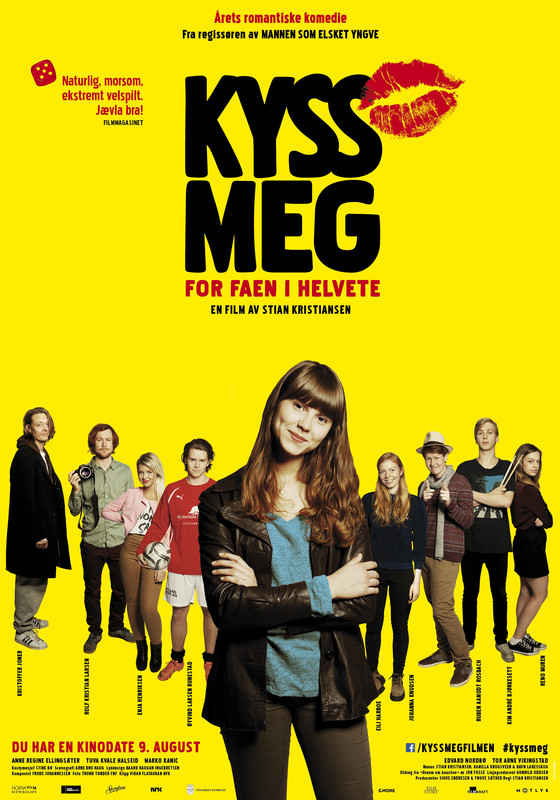
Kiss Me, You Fucking Moron

Dir: Stian Kristiansen
I knew that I had to see this Norwegian coming of age movie as soon as I read the title (which, sadly, seems to have been reduced to Kiss Me, Damn It for international release).  As attention grabbing and as great as that title is, it also primed me to expect something quite different from what I got.  I went in expecting a knockabout teen comedy, what I got tended much more to drama, but it hit me in ways I didn't expect.

Tale (Eili Harboe) is seventeen years old, living in a small rural town in Norway, and wants to be an actress.  She's in an amateur acting troupe with a few friends but they are bored of staging silly revues.  Instead of another revue Tale suggests that the group stage a play by Jon Fosse (a famous Norwegian playwright).  She badgers Lars (Kristoffer Joner), a famous actor who has turned up in town to stay with a friend and deal with a mid-life crisis, into directing them and he insists on casting a local troublemaker, Vegrad (Øyvind Larsen Runestad) as the male lead.  A method director, Lars insists that Tale and Vegard spend time together in order to give better performances.  Guess what happens.

You couldn't call Kiss Me, You Fucking Moron an original film.  It runs through the typical beats of a coming of age movie.  The boy and girl hate each other, they spend time together, find common ground, become friends, some obstacles get thrown up... it's all pretty standard.  I've always said that the fact that a film is generic doesn't have to mean that it's bad.  Genre structure is laid down because it has been proven to work, but conforming to genre does mean that you have to deliver quality work to stand out.  This is exactly what Stian Kristiansen and his cast do here.

The young leads in this film have a difficult job, in many scenes they have to be acting on a lot of different levels; playing actors who are playing a part, to varying degrees of success, but also letting their character's concerns beyond the scene come through and inform the drama outside the play within the film.  This is just one of the ways that Eili Harboe stands out here.  Tale is clearly supposed to be a pretty good actress to begin with, but we have to see both a progression through rehearsals and the crush that she has on Vegard which informs much of the way Tale plays scenes in the second half of the film.  Harboe does all of this beautifully, there's always a lot going on underneath the scenes when Tale is acting, and she has an understated naturalism outside of those scenes that helps the film remain credible when the screenplay is sticking resolutely to genre convention.  It's hard to believe that this only her second acting job, but I really want to see more from her in the future.

If playing a good actor is tough then playing one who starts out bad and then has to progress, while also giving a strong performance outside of acting scenes, must be tougher.   Øyvind Larsen Runestad is excellent as Vegard, particularly as the bravado of the bully we see in the early scenes begins to fade away as he and Tale hang out and get to be friends.  After seeing the first couple of scenes that he appears in and then discovering that he was to be the film's male lead I was concerned that there would be no way to have sympathy for Vegard, but slowly the screenplay and Runestad's performance allow us to warm to him.  This is also helped by the fact that Tale is going through the same process, and Harboe plays it so well that we start to see things through her.

The only name in the cast list that was familiar to me coming into this film was that of Kristoffer Joner, a Norwegian actor who I've now seen in several projects and always been impressed by.  He's got a character actor's face and talent to match, it's really only the lack of a big crossover hit that, I think, is keeping him from being much better known outside of Scandinavia.  Here Joner is typically excellent as the initially reluctant director of Tale's play.  It's as much of a process seeing him warm to the kids in the acting troupe as it is watching the relationships between them.  He doesn't, for the most part, do a lot of heavy dramatic lifting, but there is a rumpled charm to the character and hints of something painful behind why he's ended up in this small town.  Late in the film, we get to hear the story behind this, and Joner delivers it perfectly.  Between his performance and Harboe's as Tale listens and reacts to his story, it's perhaps the best scene in the film.

The lively but believable performances of the leads and the supporting cast really drew me into this film, it's in some of the writing that Kiss Me, You Fucking Moron lets itself down.  For the most part, the interactions between the teenage characters are nicely observed.  This is especially true of scenes between Tale and Vegard as they spend more and more (mandated) time together and we see them grow closer.  On the other hand, there are threads that are left underdeveloped, perhaps falling victim to the film's tight 93 minute running time.  For instance, when we first meet Lars he appears to have an alcohol problem, but this gets shunted out of the way pretty quickly, and a storyline involving Vegard's girlfriend gets an almost insultingly prosaic final scene.  Perhaps the most random, out of the blue, inclusion is a scene in which Tale's previously (and subsequently) unmentioned band play a song, it's a nice scene, and demonstrates that Harboe has another string to her bow besides acting, but it does feel like it's been parachuted in from another film. 

On the whole this is an engaging, involving and charming film.  Stian Kristiansen deftly combines the small dramas that make up Tale's life with a light sense of humour.  There's a good tonal balance here; it's never too knockabout, but never as dark as many of the teen movies we see from Europe and Scandinavia.  On the surface, it seems a little slight at times, but the performances are emotionally engaging and lend a depth to the final film that may not have been entirely present on the page.  If like me, you're a fan of teen and coming of age movies then this is one that you really ought to track down, it's not quite what you'd expect from the title, but that's no bad thing.
★★★★

Jan 9, 2014

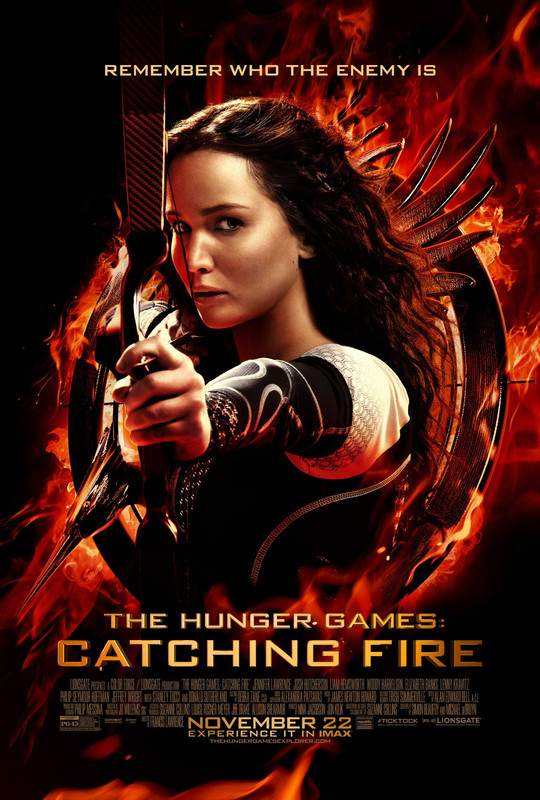
The Hunger Games: Catching Fire [12A]

Dir: Francis Lawrence
When I walked in to see the first Hunger Games film in 2012 I had little idea what to expect.  What I found was a tonally unbalanced mess; Battle Royale via Twilight with a side order of dictatorial dystopia, styled by Monty Python on acid.  In short, I didn't like it.  I wasn't planning to see this second installment in the series (which, no doubt inspired by Harry Potter and Twilight, is splitting the adaptation of its third and final source novel into two films), but I was at a loose end, it was still showing, and every review I'd seen of the film had deemed it better than the original.

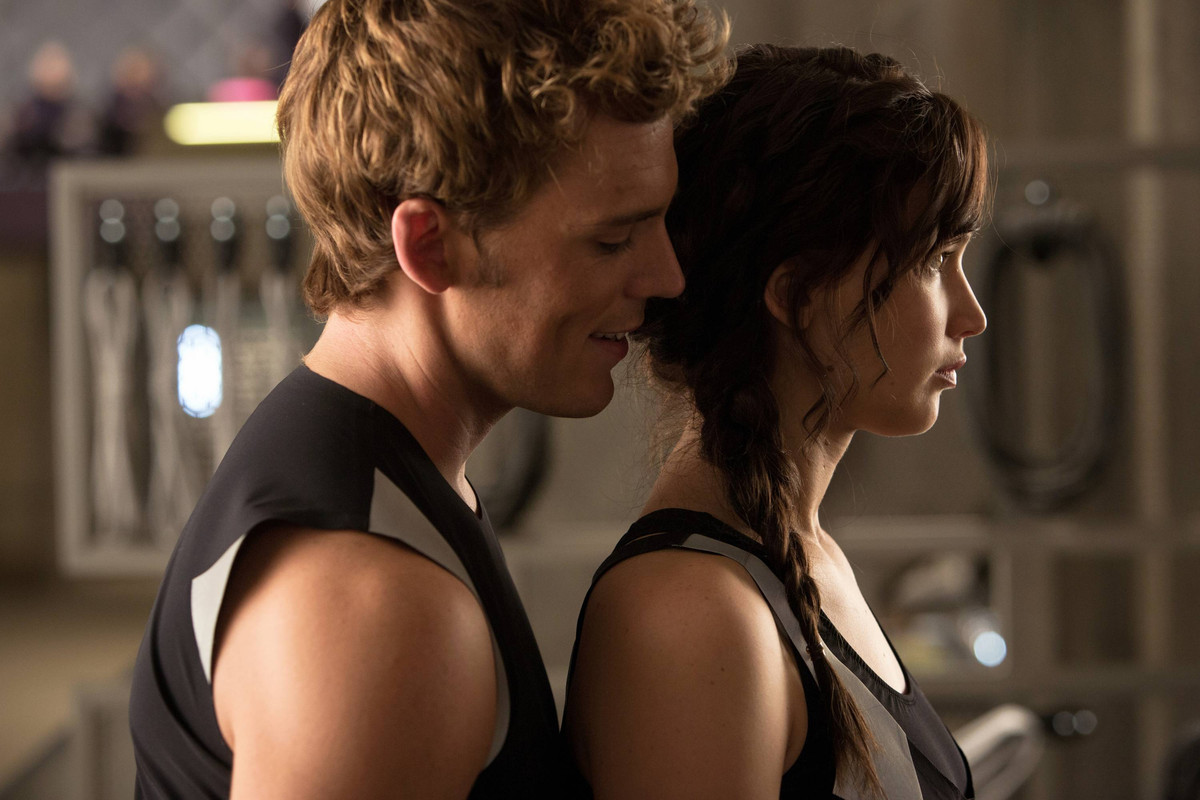
Catching Fire picks up the story of Katniss (Jennifer Lawrence) and Peeta (Josh Hutcherson) a few weeks after their victory in the 74th Hunger Games.  As is traditional they are being sent on a winner's tour of the 12 districts of Pan-Em as a propaganda tool for the Capitol and President Snow (Donald Sutherland).  The way that Katniss and Peeta subverted the intention of the games has led to incipient rebellion in some districts and to quell this rebellion new gamemaker Plutarch Heavensbee (Philip Seymour Hoffman) suggests that the 75th Hunger Games set former winners against each other, leading to Katniss and Peeta being back in the fray.  Alongside this, Katniss and Peeta must pretend to be in a relationship, while she is still in love with Gale (Liam Hemsworth).

As you can probably tell from the above paragraph, there is a lot to get through in Catching Fire, unfortunately the film (and I should stress at this point that I've not read the book) shunts many of its most interesting ideas off to the side and ends up dwelling, for much of its running time, on the preparation for and events of the games themselves.  The stakes have risen, but much of the film feels like a rerun of what was already overlong and reasonably dull in the first film.  It also, joy of joys, gives us ample opportunity to revisit Stanley Tucci's supremely annoying performance and catastrophic hairstyle.  

The disappointment is that, to my surprise, the film is pretty effective in its first 40 minutes or so, before we get back to the drudgery of the games.  The dystopia in which the series is set was presented largely through the games in the first film, but here we see a little more of the districts and peek further behind the machinations of the Capitol.  The way that Katniss and Peeta are being used, the implied threats to them and their families and the glimpses of the crackdown the Capitol is enforcing on even the smallest acts of rebellion manage to give this film a much more serious and darker tone, at least until Elizabeth Banks waltzes on as Effie to remind us how ludicrous the rest of the film looks and undermine the seriousness that is otherwise being established.

Assisting the film in grounding its first act are solid performances from Jennifer Lawrence and Josh Hutcherson.  Both are especially good in the scenes in which they have to pretend to be in love, playing the different ways their characters are hurt by this.  Sadly this is another area in which the film manages to undermine itself, robbing Katniss' side of the love triangle of much of its power by still neglecting to develop its third point, Liam Hemsworth's Gale, as a character.  However, Lawrence and Hutcherson play well off each other and their relationship gives the film much of its drive.

Also contributing solid work are some of the other 'tributes' that Katniss and Peeta must face during the games.  Most memorable are Jeffery Wright, as a tribute who uses his scientific knowledge to survive and Jena Malone, who steals several scenes, notably her first, as the ballsy, bitchy Johanna Mason.  Of course, there are bum notes hit in the performances; Sam Claflin remains as bland a presence as ever, Woody Harrelson sticks to drunk performance 101 and the less said about Stanley Tucci and Elizabeth Banks' irritating camp the better.

Once the film segues into the games and what surrounds them it largely loses its way.  It's tough to talk about why this is, because where I would like the focus to be is on the build up to the film's big twist, to see how that is being worked behind the scenes, given the Police state it's happening in, with the games in the background as motivating, rather than driving, force.  This might also, to some degree, get around the problem with the twist, which is that when you sit back and consider all the variables that have to work at the exact right moments for it to be viable you realise how absurd it is, and the story collapses like a house of cards.

Stepping away from the games might also have allowed more time to give Gale some weight as a character and make the love triangle more engaging, it might have allowed us to get further into what's happening in the districts and how President Snow's plan to change the perception of Katniss is working.  In short, it would allow some real world building, which the first act begins to do, but never gets far enough with, rather than a rehash of something we've already seen.

Francis Lawrence (who made the reasonable Constantine and the rubbish I Am Legend) is better suited to this material than the first film's director Gary Ross.  The best instinct Lawrence has is immediately evident, while the first film was a shakycammed mess this one has a much steadier visual style, which leads me to suspect that the moments the action degenerates into nonsense are a result of rating concerns rather than poor filmmaking per-se.  Unfortunately for the film Lawrence does engage in one of the most irritating traits of big budget filmmaking right now; the teal and orange (in this case mostly teal) look.  Barring some of the scenes in the Capitol and the greens that the jungle setting for the games introduces, almost every frame of this film is dominated by a steel blue tint and highlighted with bright yellow or orange.  In some scenes characters are watching footage from elsewhere in Pan-Em, so you'll have teal and orange within teal and orange.  It is incredibly boring to look at.

The Hunger Games left me with little hope for its sequel and while this is a better film, and promises better things for the next two installments, it is a film beset with problems that have easy remedies.  It's a frustrating watch because somewhere here there's an interesting, thrilling, intelligent film, but only hints of it have made it to the screen.
★★

Dec 31, 2013

The 24FPS Awards 2013

Whenever I sit down to write and record the review of the year in movies (a 3 part podcast series is underway) I end up asking myself one key question... what kind of year has it been?  Last year was, for me, an historic low, one that threatened my dedication to new cinema and saw me struggle to complete a Top 10, while at the same time having enough for a list of the 30 worst films of that year.  2013, to my immense relief, has been an improvement.

However, this hasn't for my money been the historically excellent year that many people have pegged it as.  2013 has been a year of highs and lows; it delivered the first film I've felt happy to call a masterpiece since I saw Dogtooth in 2009, but it also, for me, was jam packed with movies that, while not all of them were terrible, were extremely disappointing and baffled me with their critical reception.  On the whole, from what I've seen, it's been a perfectly middling year for film.  There are movies, good and bad, from 2013 that I'll carry with me in the future but there are many more I've already forgotten.

With all this said, here are the 24FPS Awards for 2013.  These are purely personal picks, not predictions for the upcoming award season (which I hate anyway).  The films I've considered eligible are those released in UK cinemas or as DVD or Blu Ray premieres in 2013 as well as the handful of festival films I saw that have not yet gained distribution deals in the UK.


BEST DIRECTOR
Kathryn Bigelow: Zero Dark Thirty
Fernando Franco: Wounded
Richard Linklater: Before Midnight
Francois Ozon: In The House
Park Chan-Wook: Stoker

WINNER: Park Chan-wook
I don't say this lightly but - deep breath - I think Stoker is essentially a perfectly directed film.  I don't mean that it is a perfect film as a whole, but it seems that it is an exercise in supreme and supremely beautiful directorial control from Park Chan-Wook. The watchword here is precision; Park conducts this film, the clarity of each moment and the rhythm of the piece as a whole are individually stunning and complement each other beautifully, revealing new depths every time you revisit the film (I'm on my sixth watch since March)


BEST ACTOR
Matthew Goode: Stoker
Ethan Hawke: Before Midnight
Caleb Landry-Jones: Antiviral
Matthew McConaughey: Mud
Jack Reynor: What Richard Did

WINNER: Ethan Hawke
For my money, Ethan Hawke is one of the most underrated actors working right now and if the Golden Globe nominations are anything to go by he's about to get screwed again because despite the fact that he turns in career best work in Before Midnight, adding a deeper melancholy to a now middle-aged Jesse, he has been passed over while his co-star Julie Delpy has been nominated.  Hawke rips your heart out with the smallest things in this performance; the hurt when Celine doesn't pass him the phone after speaking to his son; the way he receives one devastating line from Delpy and the quiet desperation of the film's final moments.  However, this is also still the Jesse we recognise; sometimes playful, sometimes pretentious, it's like seeing an old friend again and finding him the same but different.  It's masterful acting.


BEST ACTRESS
Marian Alvarez: Wounded
Julie Delpy: Before Midnight
Isabelle Huppert: Abuse of Weakness
Cosmina Stratan: Beyond The Hills
Mia Wasikowska: Stoker

WINNER: Marian Alvarez
I honestly thought about making this category a five way tie (and, so good a year was it for female leads, I could have added five more with no struggle), but ultimately I just can't deny or overstate how deeply I felt Marian Alvarez' performance in the as yet undistributed Wounded.  There is definitely a degree of personal experience leaking in to my admiration for this performance, because I've never seen the experience and the feeling of clinical depression and anxiety better captured on screen.  Alvarez' performance is scrupulously real, but what she and the film never lose sight of is the lengths people will go to to hide problems like this, and she draws distinctions between the (effective) mask she usually shows the world and the glimpses of the vibrant person the depression often hides.  It's a layered performance, and perhaps you need to have been there to get the most from it, but I was blown away.


BEST SUPPORTING ACTOR
Barkhad Abdi: Captain Phillips
Jason Clarke: Zero Dark Thirty
Matthew McConaughey: Bernie
Lars Mikkelsen: What Richard Did

WINNER: Jason Clarke
Jason Clarke has been cropping up in supporting roles and doing solid work for a few years now.  In fact, so good has he been that I've not spotted him from film to film, but Zero Dark Thirty is where he throws down a marker.  For me his character is one that gives the lie to the idea that the film simply brushes concerns about torture under the rug.  It's a subtle performance, but we do see how performing 'enhanced interrogations' affects this man, and the way he tries to mask it with bravado to Jessica Chastain's Maya.  He also shows a great ability to show how the character must slip between gears, whether in interrogations or from that active role to a more passive one sitting round tables in meetings.  The character seems thin to begin with, but Clarke does a lot with it; the mark of a real talent.


BEST SUPPORTING ACTRESS
Doona Bae: Cloud Atlas
Kaitlyn Dever: Short Term 12
Cristina Flutur: Beyond the Hills
Rosana Pastor: Wounded

WINNER: Cristina Flutur
Beyond the Hills was a late entry into my Top 10, but I was knocked out both by the film and by the two central performances (each is as good as the other, but I decided I shouldn't have ties, which is why only Cristina Flutur has won her category).  Flutur is heart-wrenching as Alina; a young woman reunited with a friend (and likely lover) from her younger days in an orphanage, who finds that friendship changed because her friend has become an orthodox nun and now only want to take care of Alina.  Like Marian Alvarez, Flutur is playing a character with undiagnosed (and in this case misunderstood) mental illness, but while the way that storyline works out is tragic the real sadness comes at watching her try to find a way back into relationship that is now gone forever.  It's a raw performance, and easy to identify with.


BREAKTHROUGH PERFORMANCE
Adele Exarchopolous: Blue Is The Warmest Colour
Chloe Pirrie: Shell
Waad Mohammed: Wadjda
Keith Stanfield: Short Term 12
Marine Vacth: Jeune Et Jolie

WINNER: Waad Mohammed
I hope that we will be seeing much more from everyone on this list but, though I've been talking about it for well over a year now, Waad Mohammed's wonderfully sparky but entirely unforced performance in Wadjda still stands out for me, even in what is a good field.  I love how the film doesn't impose its themes on the character, but instead lets her simply be a kid and trusts that the larger themes will come good because there is something recognisable in Wadjda, even for someone who grew up in a completely different situation.  Mohammed strikes just the right notes in playing Wadjda's different relationships; to her Mother, her Father, her teacher and her cheekier interactions with the boy next door and other people she meets.  I think what I like most about this performance is what it lacks; the forced precociousness that you can feel from child stars, instead a natural charisma just jumps off the screen.


BEST SCREENPLAY
Brandon Cronenberg: Antiviral
Julie Delpy, Ethan Hawke, Richard Linklater: Before Midnight
Skip Hollandsworth, Richard Linklater: Bernie
Francois Ozon: In The House
Fernando Franco, Enric Rufas: Wounded

WINNER: Francois Ozon
Thank God that Francois Ozon had two films out this year, because this way I can somewhat wash away the sour taste of Jeune et Jolie (perhaps his single worst film) by reminding myself that he also delivered In the House, which may not be his best film, but is almost certainly his most interesting and his finest screenplay.  The writing here is a masterclass in juggling tone; there is a playful vein of comedy as literature teacher Germain encourages a student to continue writing a voyeuristic story about the family of a fellow student, but Ozon also maintains a sense of tension; a threat underlying the whole story.  At yet another level the screenplay works as a very funny analysis of storytelling, with Ozon almost goading the audience, daring them to figure out where the narrative will go next.  It's a confident work that shows off Ozon at his best, which is why Jeune et Jolie baffles me so much.


BEST CINEMATOGRAPHY
Christos Voudouris: Before Midnight
Lukasz Zal: Ida
Yoliswa Gartig: Shell
Chung Chung-Hoon: Stoker

WINNER: Chung Chung-Hoon
I saw some dazzling sights in the cinema this year, but no award was more assuredly sewn up than this one, I think it was over by the time the opening credits ended the first time I saw Stoker.  The composition and lighting of Stoker are so precise, so perfect, that I can see how it might disconnect some viewers from the film.  For me it was quite the reverse, this was the first film for ages that I wanted simply to dive into, to break down shot by shot because I could tell just how much every frame might hold (there will be more of this in the Top 10 podcast).  For me the shot (and the edit) of the year was the moment that Park dissolves in a perfect match from a brush running through Nicole Kidman's hair to a field of reeds.  That moment, and a hundred others, have stuck with me since March.


BEST SCORE/SOUNDTRACK
Bikini Kill, Kathleen Hanna, Le Tigre, The Julie Ruin: The Punk Singer
Christophe Beck / Richard Lopez / Kristen Anderson-Lopez: Frozen
M83: Oblivion
Cliff Martinez: Only God Forgives
Clint Mansell: Stoker

WINNER: Frozen

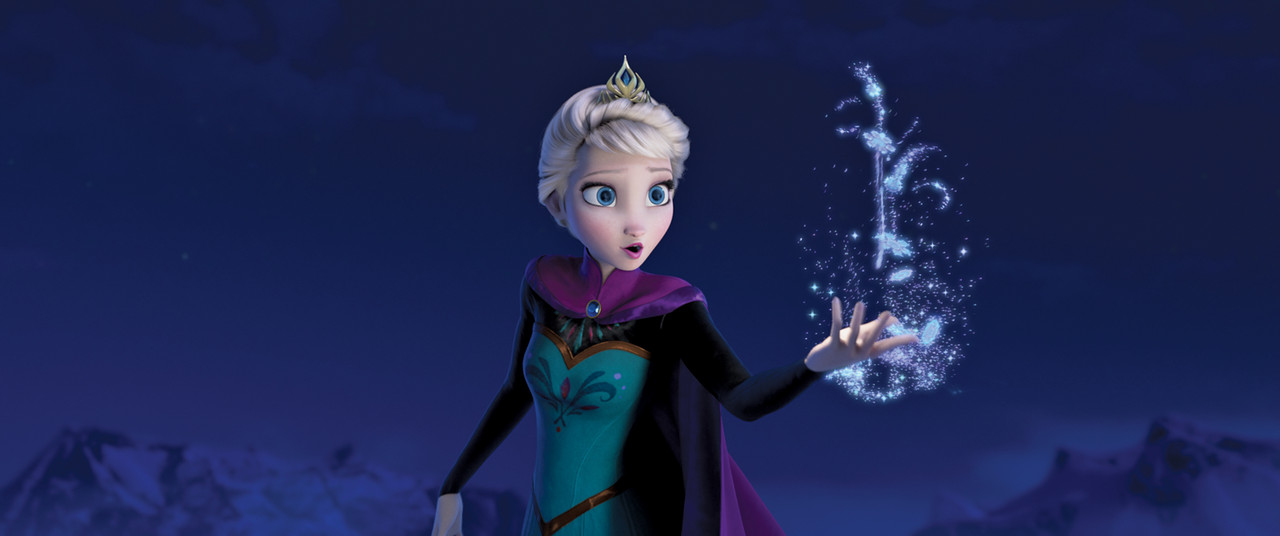
I grew up on Disney movies, but had felt disconnected from their non-Pixar efforts for some time until Tangled came along a few years ago.  That film, along with Frozen, seems to be ushering in a new golden age for the studio.  Frozen is a brilliant film; driven by its characters and taking a slightly unusual approach to Disney tropes, retaining fairytale ideas, but not simply having a handsome guy save a princess.  It's combined with a great set of songs which range from the comedic to the heartwarming to the dramatic.  Let It Go (see above) is the crucial point of the film, establishing a different sort of 'villain' that you can still identify with, and Idina Menzel's barnstorming delivery of it turns what had looked like an entirely standard Disney movie into something else (something better) in three minutes.


SCENE OF THE YEAR
The hotel room: Before Midnight
Alina is read a list of sins: Beyond The Hills
Piano duet: Stoker
Richard tells his Dad what happened: What Richard Did
Killing Bin Laden: Zero Dark Thirty

WINNER: Before Midnight [SPOILERS BELOW]
Even with a great film (and all those listed above are great films) there will always be a moment or a scene that will stick out in the memory above the rest and 2013 brought many of them (I could have also picked moments from Wounded or Stop the Pounding Heart or Captain Phillips or... you get the idea), ultimately though this was another category with almost no competition in it.  The 25 minutes or so that Before Midnight spends with Jesse and Celine in a hotel room are the most heart in mouth moments of cinema that 2013 delivered.  We've grown to love these people, individually and as a couple and to see them have a real argument - not something that will go away in five minutes, but a fight that might end their relationship - is genuinely upsetting.  I was on the verge of tears the whole time, and then broke when Celine says a line I could never have imagined I'd hear going into this film.  That moment hits like a punch to the gut, and that's why Before Midnight has no real competition here.

Dec 14, 2013

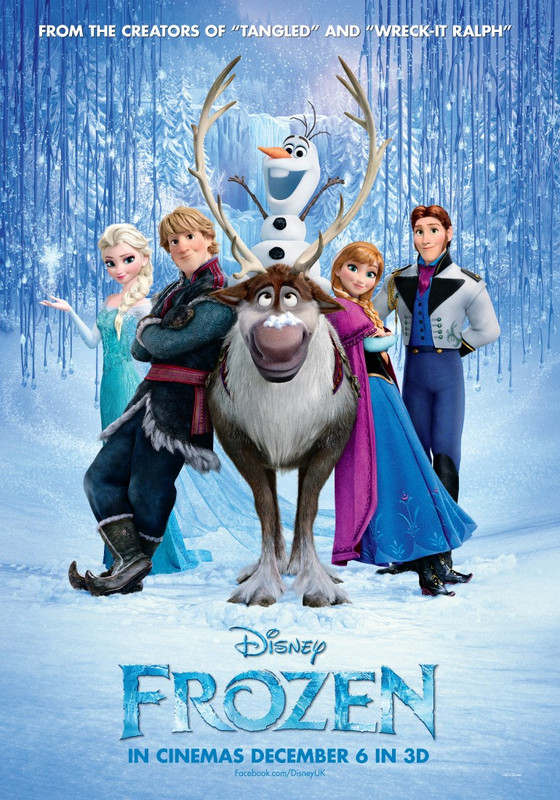
Frozen [PG]

Dir: Chris Buck / Jennifer Lee
Frozen has one of the worst trailers in recent memory.  It paints the film as Tangled in the snow.  This is bad on two levels, first, Tangled is a great traditional Disney movie and signs that the company is now trying  simply to imitate it suggest serious creative issues.  Second, and perhaps more pressing, Frozen is nothing like Tangled.  It has some familiar Disney elements, but the focus is different in terms of character, story and tone.

Based loosely on The Snow Queen, the film focuses on two royal sisters Elsa (Idina Menzel) and Anna (Kristen Bell).  Elsa has magical powers that allow her to create ice and snow, but her power is growing with her and because of fears she will, accidentally, seriously harm her sister she is hidden away, even after their parents die in an accident.  On the day Elsa ascends to the throne the gates of the palace are opened and the sisters see each other for the first time in years, but when the sisters argue Elsa's powers are revealed and she runs to the mountains, plunging her kingdom into winter and sending Anna chasing after her.

Somewhere in that synopsis Frozen also finds room, with varying success, for a couple of romances, trolls, and a talking snowman who likes warm hugs, but the crux of the film, the emotional centre, always remains Anna and Elsa's relationship, which is charmingly set up in the first ten minutes of the film.  

To begin with it's not entirely clear what Frozen is going to be.  The first half hour is crammed with incident, fast forwarding through events and through the Disney fairytale playbook at a rate of knots.  I began to fear that this was going to be a very rushed exercise in box ticking but the film has to hit those setup beats because what it does afterwards is subvert them in a way that marks a real departure for Disney in a lot of ways.

In animation there is often a tendency from both audiences and critics not to discuss acting in the same way that they would when discussing a live action film.  Hopefully Frozen will help change that, because this film is built almost entirely on its characters, and therefore it turns on its performances even more than would usually be the case.  As Anna, Kristen Bell gives a light but feisty performance, creating a character whose warm personality radiates out of a desire to interact with people, especially her older sister.  She plays the character's naiveté with charm and while it's only a small part of the film she plays nicely off Jonathan Groff as the ice salesman she ropes in to help her.  

Idina Menzel, as Elsa, has a more layered character to play.  Apparently she was written as a more traditional villain but that focus was changed when composers Robert Lopez and Kristen Anderson-Lopez presented her showstopping song Let It Go.  This is a great choice.  One thing that's often true of Disney films is that their villains are quite simplistically evil, because it's easy to imagine that the young target audience needs things drawn in black and white.  Frozen takes a much more interesting path; Elsa is an antagonist, but the fact she's driven not by greed or malice but by fear means that she's never simple and never truly a villain.  Menzel drives all this home with a complex performance that explodes into life - and the film with it - with Let It Go, which was the first of a few moments when I felt myself getting really emotional.

The colourful supporting cast are all good but the standout is Josh Gad, who is completely heartwarming as a snowman who longs to see summer.  This is another great example of how the film works at multiple levels; Gad supplies some great laughs and one beautiful line that speaks volumes about the character's essential goodness, but behind it all there is an implication of tragedy, because he doesn't understand why he can't see summer or feel heat.  The film doesn't milk this aspect of the character, but allows it to inform his whole arc in a wonderful way that, like all the best things here, is smart, tugging the heartstrings without being too obvious about it.  I was taken by surprise by how much drama there is here and how willing the film is to dig in to the emotions of its characters, in this way it's perhaps Disney's best since Beauty and the Beast. 

The film looks beautiful, as you would imagine given the pedigree behind it.  The character design is appealing and cartoony, but not so much so that we disconnect from the emotion behind the story, and the landscapes and settings, especially Elsa's ice palace, are jaw dropping to look at.  The 3D is as unrequired as ever (and I had some ghosting in my screening), but even that didn't detract from the film's best moments.

All this said, Frozen isn't perfect.  The opening half hour clunks a little (though it may work better on a second viewing, once it's clear what is being set up and why the film seems in such a hurry) and while it's a welcome return to the big Broadway style musical Disney of the late 80's and early 90's there are perhaps a few more songs than we really need here (a digression with a family of trolls and the pleasant, but hardly crucial, Fixer Upper slows the film at just the wrong time).  It's a testament to the film and to the performances that these end up feeling like nitpicks, Frozen finds Disney delivering, in a very different way, on the huge promise of Tangled and, taken together, these films may just point the way to a new golden age for the house of mouse.
★★★★

Nov 3, 2013

Cloudy With a Chance of Meatballs 2 [3D] [U]

Dir: Cody Cameron, Chris Pearn
I enjoy titles.  I enjoy coming up with them and I love to see a well crafted title, indeed that alone can be enough to get me into a cinema or interested in hearing an album.  Cloudy With A Chance Of Meatballs is not a title that I was immediately sold on; it's unwieldy and unappetising in several ways, but I ended up seeing it when I heard it described by Mark Kermode as 'David Lynch for kids'.  I found it not quite what I expected - more Lynch crossbred with Looney Tunes - but still an hilariously funny and highly inventive movie.  I didn't, however, leave thinking 'that needs a sequel', but it made lots of money and so here we are.

Cloudy 2 opens moments after the first film ends, with Flint (Bill Hader) and his friends planning to start a lab together.  However, Flint's childhood hero, Chester V (Will Forte) shows up and offers him a job working at his suspiciously Apple-like company LiveCorp, who are taking care of the cleanup of Swallow Falls.  Flint takes the job, but is soon manipulated by Chester into going back to Swallow Falls - now overrun by living, sentient, foodimals - to find the FLSMDFR.

Cloudy With A Chance of Meatballs 2 never really stood a chance.  The first film was incredibly refreshing; an anarchic, witty, surreal thing of the kind we don't often see, it's the kind of thing that, one suspects, can't be repeated.  This proves to be the case right from the off.  The first film established its anarchic tone with a banana falling from the sky and knocking the Columbia lady from her pedestal and with the title card 'A Film By A Lot Of People'.  Cloudy 2 replicates these moments, this time with a banana foodimal and 'Another Film By A Lot Of People', but they feel like empty echoes, desperate attempts to recapture what was fresh in the first film.  And so the tone is set.

There are only two new elements to the film: Flint's hero worship of Chester V (who, oddly, was never mentioned in the first film, it's almost as if he's an afterthought) and the Foodimals.  Neither really works.  Chester V's ultimate role in proceedings is obvious from the off, and the weird motion of the character (an odd fluid movement through his spindly limbs) is as offputting as the voice Will Forte gives him.  He's neither funny nor threatening and the broadsided satire of Apple feels pretty empty.  The foodimals fare even worse, because ultimately all they are - and all a great deal of the film is - are a collection of food puns.  Some are mildly amusing, but even these become wearing because there are just so very many of them.

The existing characters fail to develop beyond where they were at the end of the first film.  A forced conflict puts a wedge between Flint and his friends, but the dynamic between the characters falls flat throughout.  This is, sadly, especially true of Flint and his weather forecaster girlfriend Sam Sparks (Anna Faris).  There was a nice progression of their relationship in the first film, and a connection that made the characters a great fit together.  All of that spark has gone this time, even before that issue becomes a plot point.

The animation is solid enough and there are some scattered laughs (thanks largely to Steve the Monkey), but overall Cloudy 2 is a listless and uninspired sequel to one of the most entertaining kids movies of the last few years.
★★

Nov 2, 2013

Thor: The Dark World [12A]

Dir: Alan Taylor
Generally speaking, I've enjoyed the films based on Marvel comics much more than those based on DC properties.  They've had their misses (notably the awful Fantastic Four films and the horrendous recent Spider-Man reboot), but generally they've managed to be well cast, exciting and plenty of fun, especially those films that built up to Avengers Assemble last year.  Of the Marvel's Phase 1 films, Thor wasn't the worst, but it was for me the one that felt most perfunctory and where the tone and characters felt most awkward, though it did give us a fine villain in Tom Hiddleston's Loki.  

Taking place a few months after Avengers Assemble, The Dark World sees Asgard and the rest of the nine realms threatened by a dark elf named Malekith (Christopher Eccleston) who is after an ultimate power, long thought lost, known as the aether.  Of course Thor's (Chris Hemsworth) physicist girlfriend Jane Foster (Natalie Portman) gets wrapped up in events and to save both her and the nine realms Thor must choose to trust his brother Loki.

For me the biggest problem with Kenneth Branagh's franchise opener was the fact that it felt like two different films jostling for position.  There was a reasonably dark drama, with unmistakable Shakespearean overtones; two superpowered brothers vying for a throne and their Father's approval.  Then there was a goofy fish out of water romantic comedy.  Everyone worked hard, but for me the film never squared the circle and in this respect The Dark World represents a step backwards.  In the first film the main villain did at least feel like a threat, a personal one at that, and the motives behind his plans had weight.  Here the villain of the piece is an underdeveloped bore, a clearly slumming Eccleston evincing all the enthusiasm of a man making a mortgage payment, and even when his plans involve Jane there is no real sense of weight or threat about them.

If the threat falls flat this time then so, as it did before, does much of the fish out of water stuff.  I'm not the greatest fan of Natalie Portman, but she's completely wasted on the pathetically thin role of Jane Foster.  I know Portman is, in real life, extremely intelligent and accomplished, but whether it's the writing or the performance the idea that Jane is a brilliant physicist is only slightly more credible than Denise Richards being a nuclear physicist in The World Is Not Enough.  For the most part Jane seems to exist to provide exposition and be in a laughably underdeveloped romance with Thor.  The problem is that she hardly has a personality.  Outside of these two things - is a scientist, fancies Thor - I would struggle to tell you one thing about the character even after two movies.

The earthbound part of the film falls completely flat, not just because Jane is so monumentally dull, but because her friends are back.  Kat Dennings' Darcey may be the most annoying and most pointless character in the Marvel cinematic universe.  She does not one useful thing and exists solely to crack jokes, every one of them bad.  This is probably not Dennings' fault, but still, every line she has is like fingernails down a blackboard.  If Dennings and Portman are both wasted something sadder happens with Stellan Skarsgaard, who is utterly humiliated as Eric Selvig.  It's sad to see the film stooping for laughs, reducing itself and Skarsgaard to a scene in which the principal gag is that he's not wearing trousers.  The only honest laugh the film achieves in its earthbound scenes is unintentional, prompted when Thor asks for directions on the tube and is given woefully incorrect advice.

So that's the Earth half of the film, what of Asgard?  This time out the film spends more time in Asgard, but it doesn't really develop either the place or the story very much and ends up hitting many of the same beats as the original.  That said, Chris Hemsworth remains perfectly cast as Thor.  He's got the physical presence but also has the charm and charisma to carry the film on his absurdly large shoulders, as well as a solid way with a one liner.  Hemsworth, like everything else in the film, comes off best when he's alongside Tom Hiddleston's Loki.  It's annoying that Loki is sidelined for so much of the film - and in such a similar way to what happened to him in Avengers Assemble, indeed one line is almost a direct quote - but even hemmed in Hiddleston is brilliant.  There is such palpable glee to his performance that whenever he was on screen having fun, I was too.  The film's best sequence involves the planning of Thor, Jane and Loki's escape from Asgard, you can feel just how much the writers enjoyed this sequence and especially how much fun one cameo player was having channeling Loki while in character.  The only problem is that because Loki is only in the film for about half an hour the rest just feels like it's marking time between his scenes.

Director Alan Taylor brings a slightly darker visual sense to this film, perhaps inevitable with an overcast London replacing the sun baked New Mexico desert, but otherwise he fails to stamp any real directorial authority on the Marvel universe.  This is one of the biggest disappointments of the film.  For better or worse Marvel does seem to allow their directors quite a free hand, their last two films, Avengers Assemble and Iron Man 3, were unmistakably the work of Joss Whedon and Shane Black respectively, in these terms Taylor simply comes up empty.  For the record, I saw the film in 2D, but I can't imagine the 3D adding anything and I'm glad I didn't have to see the Dark World scenes with a 30% loss of brightness, because they're already pretty dark, as you might expect.

Ultimately Thor: The Dark World suffers from the exact same issues as its predecessor: the tone is mismatched, the comic relief often unfunny, key characters underdeveloped and on the whole it seems to be less a standalone film than a facilitator; the phase 2 Thor movie that has to happen before Avengers: Age of Ultron.  Hemsworth and Hiddleston just about save it from total redundancy, but it's little fun and seeing it felt more like an obligation than a pleasure.
★★