Showing posts with label video nasties. Show all posts

Dec 1, 2012

Blu Ray Review: Zombie Flesh Eaters [18]

Dir: Lucio Fulci

The Film 
I have, perhaps oddly, a rather nostalgic fondness for Zombie Flesh Eaters.  My interest in horror films was sparked initially by my interest in censorship, and my desire to see movies that I wasn't supposed to see, and Zombie Flesh Eaters (albeit in a cut version which missed out some of the 'best' moments) was one of the first 'video nasties' I ever saw.  Though I've discovered more and better films by its director Lucio Fulci in the years since, I often come back to Zombie Flesh Eaters because it's a fun and undemanding gut muncher.

The story, such as it is, involves zombies, probably raised by voodoo, taking over a Carribbean island where Anne Bowles (Tisa Farrow) and Peter West, a reporter (Ian McCulloch) have journeyed to try to find her missing father.  They meet Dr Menard (Richard Johnson), who had been working to treat the zombie-causing illness with Anne's father.  Mayhem ensues.

Though titled Zombi 2 in Italy, to make it appear to be a sequel to George Romero's Dawn of the Dead (released there as Zombi), Lucio Fulci's first zombie film - he would make three more - strikes a very different tone from its notional model.  Fulci has little interest in using his zombies as metaphors, or in filling his narrative with commentary on ideas of race or consumerism, rather Fulci is a shamelessly, and rather joyfully, sensationalist filmmaker.  The script is more a loose series of scenes designed to knit together Fulci's set piece moments, and while I'm all for deep and multi-layered horror films, not everything in the genre needs to be cerebral.

The cast, a mix of American and English C-Listers and reliable but not hugely expensive international players acquit themselves as well as the dialogue and dubbing will allow.  Farrow and McCulloch have little chemistry, but the attraction the script shoehorns in is hardly key to the film, and they both do solid work, giving the credulity straining situations as much credibility as possible.  Richard Johnson, however, is in a different league; his sweaty browed scenery chomping is one of the film's great joys, and he strikes just the right tone as Dr Menard, even when chewing on some pretty awful lines.  Other players make an impact for different reasons.  You'd be hard pressed to say that either Olga Karlatos (as Menard's wife) or Auretta Gay (as one of a tourist couple that Anne and Peter hitch a boat ride with) give especially good performances, but they both make for stunning set decoration, and each have a part to play in some of the film's most memorable moments, even some of the zombies carve themselves into the memory, particularly the first one we see, played by the magnificently named Captain Haggerty.

The reason that Zombie Flesh Eaters works, the reason it's still compelling today, isn't really as much to do with the people in front of the camera as it is the people behind it.  At the time of the video nasties panic these films were seen as hack work; ugly films made by people with little talent and no standards - and to be fair some were - this isn't the case with Zombie Flesh Eaters.  Fulci trained with Fellini, and while they had wildly divergent careers and styles Fulci had honed a keen, sharp, and very identifiable directorial eye.  With DP Sergio Salvati providing a largely bright and soft lighting scheme that sets the film apart from many in the genre, Fulci wheels out trademarks like his extensive and impactful use of close ups on and his fondness for violence to eyes and sprinkles them through a series of varied set pieces.

The set pieces are just stunning, from a suspenseful opening to the closing zombie walk across the Brooklyn Bridge, but three really need discussing.  The famed Zombie V Shark sequence is as remarkable as it ever was.  It's brilliantly choreographed and shot, at times reminiscent of Creature From the Black Lagoon, and it looks amazingly dangerous, seemingly staged without a hint of fakery.  It's the sort of thing you could just never shoot now; the shark would be CG, and the sequence would lose all of its excitement.  There is also the graveyard scene, sometimes omitted between the breathless praise for the other set pieces, but perhaps the one that combines viscera and suspense most effectively.  There is an eerie slowness to Gianetto DeRossi's zombies as they rise from the ground, along with that creaking, tearing sound that is so unnatural, and that only makes it more shocking when the zombies swiftly attack.  Most striking though is the eye scene which, though famed for its visceral payoff, also has a stunning slow build as zombies try and break into Dr Menard's house to eat his wife (who, because this is an exploitation film, has just had a shower).  Almost as nightmarish as the amazing effect that ends the scene is the  build up, because even on a first watch you can be pretty sure where the scene is headed, and it makes the skin crawl.

Talking of effects, Gianetto DeRossi, who created the make up and gore effects, is really the star of the film.  Working with low tech tools like clay, he created some of the most disgustingly convincing zombies I've seen on screen.  The zombies were always my problem with Dawn of the Dead; they just looked like spray painted people.  The zombies here look dead, and as if they are rotting, bits being baked off them in the Caribbean sun.  There is also a strong variety in the zombie design, as well as some seriously painful looking blood and prosthetic effects (the aforementioned eye, a ripped out throat).  On occasion you can see the joins, but the film is such fun, and most of the effects work so spot on, that it's hard to mind very much.

I've no desire to get critically high-minded about this film; it's an entirely unpretentious feast of silliness and gore, and that's exactly the way I've always approached and enjoyed it.  Honestly, your reaction to the film will largely be dictated by your reaction to the title, if "Zombie Flesh Eaters" has you thinking there's a fun evening of horror in store then that's exactly what you'll get, if it makes you picture an idiotic waste of time then I'd imagine that's what you'll find, and if you're picturing a morally reprehensible 'Video Nasty', well, you'll probably find that here as well.  Me?  I'm just going to revel in the great photography and the fun, splashy, set pieces once more. 

The Picture and Sound
Arrow Video have earned a very good reputation for the care and attention they have shown to genre films that might not have previously received such lavish treatment.  Their restorations of Fulci's The Beyond and City of the Living Dead were both hugely impressive, but this presentation of Zombie Flesh Eaters absolutely blows them out of the water.  This is a spectacular restoration, revealing not only undreamed of detail, but shedding much more light on how brilliantly the film was photographed by Fulci and Sergio Salvati and how impressive the composition is.  The clarity does sometimes show a few of the joins in the effects, but it also shows the breathtaking detail and quality of the make up work.

The sound (though I can't comment on any surround use) is strong, with the impressive and haunting score (something sometimes undervalued in Italian exploitation films) coming through strongly, but never dominating above the dialogue.  I only listened to the English language track, because that has the real voices of at least the principal cast, but the original Italian dub is also available. 

The Extras
A generous package split across two Blu Ray discs.  On the main menu you'll get to choose from the three titles that Zombie Flesh Eaters went under.  The only difference is in which title sequence you see, the film itself is the same; a cute bonus, but not a terribly exciting one.  When you start the film (under whichever title) you'll also get a short intro from Ian McCulloch, who, as ever, seems surprised but happy that anyone remembers this movie.

The major video extra on disc one is an hour long documentary about the lineage of zombie movies, tracking from Night of the Living Dead, through Fulci's zombie quartet, and then to the many Italian films that cashed in on Zombie Flesh Eaters.  There's not much new here for genre fans, but the talking heads are intelligent, and the clips are fun. People just discovering these films would be well advised to watch it with a notebook handy to write down titles.

If you want to truly appreciate how good the film looks on this Blu Ray, have a look among the selection of Trailers at the trailer for the old Vipco release, which looks like third generation VHS.  The trailers are fun, but not something I would find myself watching much.  Also among the trailers are some brilliantly silly Radio Spots.

The major audio extras on the disc come in the form of two audio commentaries.  The first is with co-screenwriter Elisa Briganti and moderator Callum Waddell, it seems to have been recorded in a somewhat echoy room, which can be pretty grating, it's quite a general commentary for the most part, but Briganti is animated and Waddell gets some good, if not screen specific, stories from her.  It's worth a listen, but is really for fans more than casual viewers.  More essential is the second commentary, driven largely by Stephen Thrower, who literally wrote the book on Fulci (it's called Beyond Terror, and belongs in every horror fan's library).  Thrower is a fantastically engaging speaker, and here he's joined by Alan Jones; another encyclopedic authority on Italian horror films.  The two stick closer to what's on screen, but also talk around their subject about the Italian film industry and the larger careers of many of the people who worked on this film.  It's a very good track, and recommended to anyone with an interest in Fulci and his work.

The second disc of extras is led by a 46 minute interview with Ian McCulloch.  He tells a few familiar stories, but is as genial and informative as I found him in our chat.

Zombie Flesh Eaters: From Script to Screen is an utterly pointless feature in which [uncredited] screenwriter Dardano Sachetti show us the original draft of the screenplay.  Unfortunately we can't read any of it because the feature is not even 3 minutes long, is shot in wobblyvision, and largely consists of Sachetti flicking through the script.  If you're going to do a feature like this either make it an interview or put the original screenplay on the disc as a PDF.

A half hour Q and A with the film's composer Fabio Frizzi is a welcome and interesting addition, but it would probably benefit from optional subtitles, because the sound quality isn't brilliant, particularly on Frizzi's translator.  Still, it's very watchable and if you listen carefully you won't miss anything.  It's very nice to see Frizzi get his due on this disc; his soundtrack is one of the great things about the film.

Finally for the video extras The Meat Munching Movies of Gino DeRossi provides a 26 minute look at the work of Italy's own Baron of Blood.  Seeing inside his workshop is a real treat for a gorehound (the exploded head from The Beyond is still sitting on a shelf, and still looks amazing) and DeRossi comes across as personable, dedicated and hugely fond of his work.  He's also got a lot of interesting recollections about the films he's worked on.  Arrow need to get him to do a commentary one of these days.

The extras are rounded off by a booklet, which sounds very exciting, but was not made available for review.

Verdict
One of the essential releases of 2012 for horror fans; a classic film, with a stunning transfer, backed up by extensive and mostly intriguing extras.

The Film: ★★★★★ 
The Disc: ★★★★★

Nov 29, 2012

Interview: Ian McCulloch

31 years after it was made, Lucio Fulci's legendary video nasty Zombie Flesh Eaters [or Zombi 2, or Zombie] is finally making its way to Blu Ray, thanks to those gorehounds at Arrow Video. In celebration, 24FPS was lucky enough to sit down for a phone interview with the film's star Ian McCulloch.

In the brief preamble before the interview I told Mr McCulloch that Zombie Flesh Eaters was, at least in part, responsible for me doing what I do, as it was one of the films that really turned me into a horror fan, which led to this little exchange...

Ian McCulloch and Co-Star Tisa Farrow in Zombie Flesh Eaters
Ian McCulloch: You don't have a tattoo of me do you?

24FPS: No, I don't. Is that something you see a lot of?


Ian McCulloch: I've met quite a few people who have tattoos of me on their backs, and a lot who have tattoos of various scenes from Zombie Flesh Eaters on various parts of their anatomy.


24FPS: It must be quite an experience, meeting someone who has a tattoo of you.  What's that like for you?


Ian McCulloch: It is horrifying. I don't like tattoos anyway, I dread that one day one of my children might get a tattoo, or that my wife might suddenly say that she has one, but if it's me that makes it even worse. [Laughs] It's not a pleasant sight or a pleasant thought.


24FPS: I wasn't actually meaning to begin by talking about Zombie Flesh Eaters, I wanted to go back, and ask how and when you decided to become an actor.


Ian McCulloch: Well, that's nice. That's the first time anyone's asked me that question. When I was at school I used to get the main acting parts, mainly because I spoke English in a fairly proper way, and hopefully because I had a bit of talent as well. When I was 14 somebody saw a school play and said "Ian's good" and that I could play character parts and leading parts, and should think about being an actor. My English master quoted that to me, and from that moment until I became an actor as far as I was concerned that was what I was going to do.


So I left school, I had to do my national service, and then I went to Oxford, but I always assumed that acting was what I was going to do, it was what I wanted to do, but that was what I was going to do, and I was fortunate that when I was at Oxford I was talent spotted by the Royal Shakespeare Company, and offered a long term contract before I sat my finals. So I knew that I had three years work guaranteed, two terms before I left University, so it didn't matter whether I got my degree or not - well, I did - but it didn't matter. I had a very fortuitous start; the fulfillment of all my ambitions and dreams just sort of happened, almost by accident.


24FPS: I know that after the RSC you did a bit of British TV, and that was fundamental in getting you into Zombie Flesh Eaters. Could you tell us a bit about that, and how you found out about and were cast in the film?


Ian McCulloch: I did quite a lot of TV.  I did one episode of Colditz, which was a wonderful acting part, and the director was Terry Dudley, and then he was the producer on this BBC series called Survivors and he cast me in one of the leading roles in that.  Survivors was a big hit all over the world, but particularly in Italy, the first series was a huge success.  I was rehearsing a play in Plymouth, and I got a phone call from my agent who said there was an Italian film company that wanted me to play a lead role in a film about zombies, it had location work in New York, the Carribbean, the Mediterranean coast, they'd pay me a good wage, give me a living allowance, they'd fly my girlfriend out to any of the locations first class.  They didn't want to see me, they just wanted me to say yes.  I said yes very very quickly.


I met Fulci and the casting director, I had dinner with them in London, just to say hello, and the next thing I knew I was on a plane to New York to do the film. 


24FPS: Were you able to see the screenplay before you signed on?


Ian McCulloch: No, I was just told it was about zombies, which I thought might be like a Bob Hope film, or a Hammer horror.  I had no idea what it would be like or what it would entail.  I obviously had no idea what the end product would be like, which did come as quite a surprise when I saw it 25 years after I'd made it.


24FPS: I want to ask you about that in a little while, but before I do, the link with your earlier career and Zombie Flesh Eaters is Richard Johnson, I understand you were contemporaries at the RSC.


Ian McCulloch: Well, Richard is ten years older than me, and he was the leading man at the RSC when I arrived, and of all the actors there he was the one that I, arriving, admired the most, both as an actor because I thought he was formidable and as a - Lothario is not the word - as a man about town.  Richard was never out of the papers, and always associated with some of the most beautiful women there have ever been, I mean he was married to Kim Novak.  He seemed to have a gilded existence both on the stage and off, which I sort of envied and admired, and hoped that I might one day emulate.  Principally it was his acting, I just thought he was a stunning actor; wonderful face, fantastic voice.  I've always been a fan of Richard's, so I was going to be doing some thing that I hoped would be fairly respectable and would have some decent acting in it.


24FPS: Did Richard have any advice for you, because obviously he had done some Italian horror films before this?


Ian McCulloch: No, again, no one's ever asked me that question.  I think I vaguely asked 'how do they do things' or 'why do they do that' because the impressive thing about the Italians is their work ethic.  Having done small parts in big films like Cromwell and Where Eagles Dare, they waste so much time setting things up, and everything moves at such a snails pace.  In Italy they work like slaves - happily, they're not under any pressure - but you'd think they could make six films in the time it would take a British unit to make one. 


So I may have asked how do they do things and what does one do.  I think he just said, because he'd done quite a lot of these, 'This is the way they do thing, just sit back, know your words, hit your marks, and everything will be happy'.


24FPS: In terms of your part.  With the greatest respect to them, because I love these films, but Italian zombie films tend not to be known for their great acting [laughter on the other end of the line], given that, did you approach playing the part in the same way that you would any other part, did you do any preparation for it?

Ian McCulloch: No, no.  I may qualify as one of those lazy actors in that I don't really do much preparation in terms of psychology or personality for anything I'm doing, whether it's Shakespeare, David Hare, Dr Who.  I tend to say that something will evolve as I'm doing it, which more or less has always worked.


I was laughing when you were asking the question because there's the story about someone at the BBC seeing Gregory Peck's old script and page after page marked with NAR and one marked AR.  When asked what it was he said "Well, AR is Acting Required".  I have sort of felt that other than pulling faces and doing the physical, macho stuff, there's very little acting required in these films.  The film is carried by the zombies, the bizarre plot and the effects.  The lines more or less link up the iconic bit that people remember about the film.


24FPS: Talking of those bits, Lucio Fulci had something of a reputation of being difficult to work with, particularly for his female stars I think, so how did you find him on set and as a director?


Ian McCulloch: Well I have to sort of retract things that I've said earlier, though I don't do it fully.  I always got on quite well with Lucio, but I thought he was sort of a bully.  I don't know that he did it with leading actresses, but like a lot of people in theatre and film they need a whipping boy to vent their anger or frustration on.


Fulci picked on Auretta Gay, who was the beautiful Italian girl in it, who did the swimming stuff, who wasn't an actress.  I think she may have been a model, but anyway it was her first job.  He treated her pretty poorly but his view was that unless he bullied her he wouldn't get a performance out of her, that he wasn't getting anything out of her by being nice to her so he felt he had to be fairly ruthless and unkind, which he certainly was, sometimes deliberately, sometimes unconsciously.  During one of the scenes in the water she was actually drowning, they were still filming and she was calling out "Help, Help" in the water.  I dived in and, I didn't save her life, but I certainly kept her afloat in the water. 


He sort of picked on her, but the other side of that coin was when you said he was unkind to leading actresses... I was at a convention in America and there were about twelve Italian actresses who had done films with him and the interviewer went round the table and said exactly your question, and they all said the most wonderful things about him; that he was charming, courteous, civilised, that he had beautiful manners and couldn't have been nicer and one by one they all said this, and it was just me at the end of the line saying that he was rather different from all that.


Because of that, I should have done it before, but I looked at his track record and saw that he trained with some of the greatest people in Italian cinema, that his CV was full of films, and that he really was quite a distinguished director who, because of Zombie, got stuck in this genre and died in it, making his last films.


24FPS: We touched on this earlier, but when you were working on Zombie, did you have any expectations for it, any hopes for it, for instance did you think we'd be having this conversation 32 years later?


Ian McCulloch: I was astonished however long ago it was to be asked to do a commentary for the 25th anniversary DVD of it, I thought it would just have a short life in the cinema, might come out on tape and that would be it.  That people would be talking about it thirty plus years on, 14, 15, 16 year olds who came up to me in Florida two weeks ago and think it's the most wonderful film they've ever seen.  It's amazing, and I can't explain it, so I certainly had no thought when I did it and even when I'd finished it that it would have a life expectancy of more than a year, but it has, and I presume once the Blu Ray is done someone will probably bring out a 3D version of it.


24FPS: Let's hope not.


Ian McCulloch: Then we'll be talking again two years down the line, asking the same questions.


24FPS: Well, I'll think of some different ones if we have to do that interview.  Talking of the video release, that was a big controversy over here, and you have the distinction, along with your co-star Tisa Farrow, of being in two of the 'Video Nasties' ...


Ian McCulloch: I was in three of them...


24FPS: Oh.  I didn't realise Zombie Holocaust was an official nasty [Note: This is still very unclear, some regional lists seem to have included Zombie Holocaust, but neither the definitive book on the nasties, See No Evil, nor the excellent censorship website Melon Farmers list it as an official DPP list member]


Ian McCulloch: I may be wrong, but I've always said three.  It's an old family story, but it's true, I met my wife's uncle [who was a member of the House of Lords at the time of the Video Nasties moral panic] in London and he didn't look very happy - less happy than he normally did - and I said "What's the matter Martin?" and he said the Metropolitan Police had put together a compilation of films they thought should be banned, and obviously I'd heard about it, so I said "Well, you're in luck because you'll see me, because I'm in three of them", and he just looked at me with total disdain and said "Ian, how could you?"  And then off he went and they banned them.


24FPS: What did you make of the controversy at the time, as somebody was in them?


Ian McCulloch: Well, I hadn't seen them, so I didn't know how much had been added to them by the special effects, even though I'd heard word of mouth.  I just thought it was ridiculous, I mean, to ban Contamination was just... it's one of the most stupid films that has ever been made, with one of the silliest stories and terrible special effects.  How it could be seen as obscene or likely to corrupt the morals of the British public was beyond me, I just thought it was stupid.  But, having said that, without it I'm quite sure we wouldn't be talking about it now.  That was what, I think, mainly led to its longevity.


24FPS: I know you only saw the film the first time when you recorded the commentary for the laserdisc.  What was that like, to see it for the first time after so long?  How did you feel about it, and has that reaction changed if you've seen it since?


Ian McCulloch: The main thing was that I was actually seeing the story from beginning to end, but the problem was I was in another studio, watching it through a window, and what I'd been asked to do was if I saw something to tell a story about what had happened at scene, or something I remembered about one of the actors so, having seen that moment I then came back to my microphone and missed everything until I had finished talking an went back to the screen so I didn't see all the film.


I didn't see it in full until two or three years ago, I showed it at the Burns Centre in Dumfries, and I did a Q and A afterwards, that was the first time I saw it in full on a big screen.  I thought it looked fantastic; it's a credit to Fulci and his director of photography that it looks superb.


24FPS: What do you make of yourself in it?

Ian McCulloch: [Laughs] I'm not the greatest fan of myself.  Being rather crude, but when I was in Stratford, it was the early days of television and there was an actor there called John Hussey, and one night he was talking about watching yourself, and he said watching yourself on TV was like masturbating in front of a mirror.  It is not a pleasure watching myself on screen, I don't like the way I look and I don't the way I sound.

24FPS: I know you probably didn't work with him much, but you did work with his creations, and fans would probably not forgive me if I didn't ask you about Gianetto DiRossi, and what he was like, and what your reaction was to his work on set.


Ian McCulloch: I've said it before, and I'm happy to say it again; as far as I'm concerned the star of the film is Gianetto DiRossi.  It's his special effects that carry scene after scene, and carry the conviction which makes the film plausible in the ways that it is, and leaves a deep memory in people's minds.


He was a lovely bloke, his wife was there working on the film.  He was a fairly athletic bloke, a great tennis player, and I bought my first tennis racquet on his recommendation, a Bjorn Borg special, which I still have.  It's very old fashioned now.  I haven't seen him since the film ended, the second film [Zombie Holocaust] his assistant did, but with very little of the finesse or cleverness that he had.  He's still around isn't he?  But as I said, a really nice bloke and a fantastic professional.


24FPS: I've just got two quick final questions from two of my Twitter followers.  @Supermarcey asks if you had any particular high and low points from during the making of Zombie Flesh Eaters.


Ian McCulloch: [After a LONG pasue] I think the high was actually getting the job in the first place, because it was so totally unexpected.  I was doing an Alan Bennett play and the last thing in the world that I expected was to be offered something like like this.  I'd done The Ghoul, which was a moderately successful independent British film, this was just so out of the blue, and to be offered it with all the places it was going to and be paid for doing it was probably the highlight.


The low was not really about Zombie but all of those Italian films.  There was never any professional reward at the end.  I don't mean in a financial sense but in a working sense.  They, particularly Zombie but the others as well, made huge amounts of money, and you'd think that being associated with them would put you in demand to do other things, and the biggest disappointment was that when I finished them I never had another interview for a film, ever.  I know that probably isn't the answer she wanted, but in all honesty that is the high and low of my Italian career.


24FPS: Well, I hate to bring you down at the end, so here's another from @conor9613.  Do you think the zombie apocalypse will happen, and if so how?


Ian McCulloch: [Laughing] Erm... No.  I mean, they don't exist.  They're a successful part of drama and culture, but there's nothing about them that's real.  It's a wonderful launching pad for lots of films and TV, it makes some people a lot of money, and gives many more people a lot of pleasure.  But I think no one's ready for the zombie apocalypse, and if it happens we're all going to be in trouble.


Many thanks to Ian McCulloch for taking the time and for taking a few silly questions quite seriously, and thanks to Will at Noble PR for setting up the interview.  


The restored edition of Zombie Flesh Eaters is available on Blu-ray, DVD and Steelbook from December 3rd (Arrow Video).   If you order from the link below you can help out 24FPS, free of charge.  

May 27, 2011

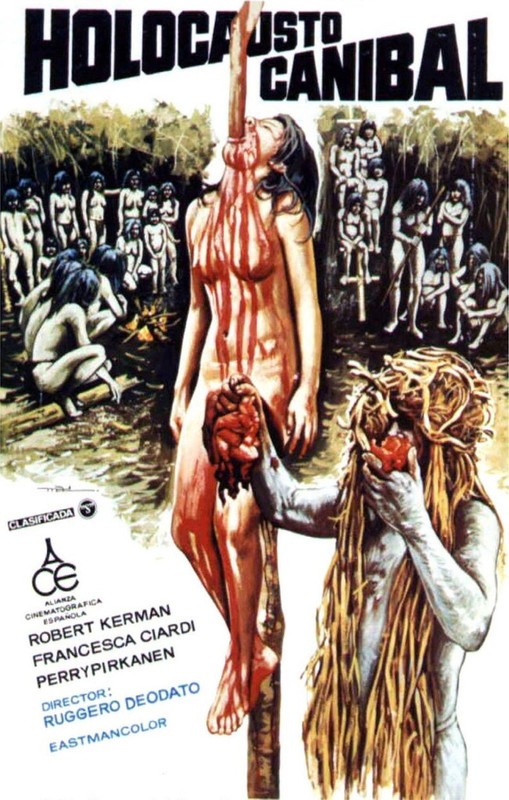
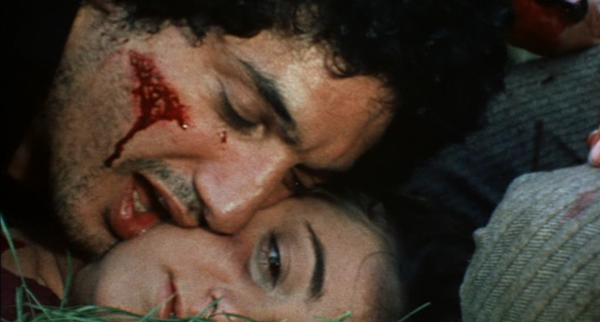
Cannibal Holocaust [2011 Cut] [18]

Dir: Ruggero Deodato
In 1984 the office of the Director of Public Prosecutions in the UK drew up a list of movies that would become known as the video nasties. Films so repellent, so brutal, that their release made their publishers liable to prosecution under the Obscene Publications Act. Ironically, for the most part, the DPP ended up granting a now nearly 30-year long spotlight to these films, films which otherwise would mostly have drifted into deserved obscurity.

However, it has also preserved a handful of good films, and even a couple of classics. Cannibal Holocaust, perhaps the most transgressive of the nasties, falls into that last category. Far from being a simple exploitation film, Deodato's magnum opus is a film of ideas and which plays with form in ways that provoke revulsion, fear, and most importantly thought, in its audience.

Last night I was finally able to see this groundbreaking film at the cinema (the last screening I had wanted to attend was pulled by Police). However, this was still not quite the original film, rather it is Deodato's 2011 edit, cut to get around some of the problems that the British Board of Film Classification have historically had with the film (largely its extensive unsimulated animal cruelty). This is the version which will be released on Blu Ray later this year by the exceptional Grindhouse company Shameless.

Rather than cutting the contentious moments, Deodato has generally chosen to obscure them with what are ostensibly flaws in the film. This is clever; an artful way to make the edits, in keeping with the form of the film (the second half of which purports to consist of documentary footage left in poor conditions in the jungle for months), and it doesn't take much away from the film, only the early killing of a muskrat is entirely deleted.

These considerations aside, Cannibal Holocaust remains a brilliant film. The performances are really only serviceable, but even that's quite high praise for Italian exploitation movies, but Deodato's direction is what really transforms this film from a simple gorefest into something genuinely interesting. The first half of the film is pretty straightforward narrative cinema, following a rescue operation to attempt to recover four missing filmmakers and their footage, and here Deodato reveals a genuinely artistic eye, developing many memorable shots and set pieces. The second half is even more striking; Deodato develops the faux documentary styling brilliantly, using them to draw us in in a much more visceral way than if we had been able to sit at one remove from the film, and manipulating technical 'flaws' to make the verisimilitude ever more convincing, and thus ever more disturbing.

The film's moral questions are simplistically phrased (summed up in a final line of voiceover), but they remain troubling, and can be extended into far less extreme situations with equally troubling implications. Cannibal Holocaust may have begun (as Deodato said before the film) as a reaction against explicit violence in news footage, but today it could easily be seen as being about war reporting, or even the morals of any reporting.

It may not quite be complete, but this is as good a version of Cannibal Holocaust as the UK is ever likely to see, and it was a treat (an odd term I know) to feel the full force of its impact on a big screen. It's an essential film, and a genuinely great and interesting one at that.
★★★★★

Aug 12, 2009

Musical Interlude 1

If there's anything I love almost as much as I love movies, it's music. Back in February I posted my Top 5 Musical Moments in Cinema, but there's still so much more to cover on that topic, so I thought this would be fun, every couple of days to post something musical with a connection to movies.

It might be a clip from a film, it might be a score extract, it might be a video by a band featuring an actor or actress or it might even be a dance sequence.

Cannibal Holocaust: Main title

Such an odd match of movie and music. Cannibal Holocaust is brutal and disturbing, even 30 years after it was made, and yet the score by Riz Ortolani is haunting, strange and beautiful, creating an amazing counterpoint to the unrelenting viciousness of Rugerro Deodato's film.

Jun 13, 2009

Versions: Last House on the Left

This article contains pictures you may find disturbing.

LAST HOUSE ON THE LEFT (1972 / 2009)

Free image hosting powered by PostImage.org Free image hosting powered by PostImage.org
The first version of Last House on the Left was made by Wes Craven, it was the horror auteur’s first film, and remains his most grueling; a film unlike any other he’s ever made. The new version has been produced by Craven and Sean Cunningham (the Friday the 13th director who also produced the original) and is directed by Danish filmmaker Dennis Iliadis.

Both versions have essentially the same story, taken by Craven from Ingmar Bergman’s The Virgin Spring. Mari Collingwood and her more worldly friend (Phyllis in the original, Paige in the remake) are planning a night on the town, but when they stop off to get some marijuana they find themselves kidnapped by recently escaped convict Krug and his extended family of psychos. Unsure what to do with the girls, the gang takes them to the local woods, where they torture rape and kill them. The gang’s car has broken down, so after their crime they have to go to the only nearby house for help - the house of Mari’s parents. After feeding the killers, and offering them a room for the night, Mari’s parents discover their crime and take bloody revenge.

the last house on the left [1972]
dir: Wes Craven
cast: David Hess, Sandra Cassel, Lucy Grantham,
Fred Lincoln, Jeramie Rain, Marc Sheffler


Wes Craven has only ever made one film that isn’t broadly within the horror genre, and many of his films deal explicitly in blood and gore, yet he walked out of a preview screening of Quentin Tarantino’s Reservoir Dogs. Tarantino was incredulous, saying he couldn’t believe that the man who made Last House on the Left had walked out of his film. Craven replied that he had left Reservoir Dogs (during the scene in which Mr Blonde cuts off a cop's ear) because he felt that it was presenting the violence for its own sake, asking the audience to enjoy it and revel in it.

That walkout and that explanation of it are perhaps the key to Last House on the Left, for this is a film that is entirely about violence, a film that dwells in violence to a deeply discomforting degree, and features one of the most disturbingly realistic sequences of murder ever put on screen. What Last House never does though, even as the parents of a murdered girl take righteous vengeance, is ask us to embrace or enjoy its violence. Indeed the whole film has a seedy feel about it. Even as it ends it doesn’t present violence as a solution as much as it does a perverting force, something that makes monsters of us all.

This feeling doesn’t make Last House fun to watch, but it certainly gives the film impact. The murder sequence in the woods is horribly extended, taking up perhaps a third of the film’s brief running time, and from beginning to end you get the hideous sensation that you are watching something real. Much of this feeling can be put down to the very lack of experience that cast and crew brought to the film. Craven was 30 at the time and had been an editor on a couple of films, but he had never shot a frame before making Last House. This shows in the raw, almost documentary like, shooting style of the movie. Most of the shots feel uncoreographed and messy, as if the camera had just stumbled on these awful events and captured them as they unfolded. The script was only skeletal, and it is obvious, particularly in this mid-section, that most of the dialogue was improvised. The gang’s stray observations and exhortations to one another during the sequence in the woods lend a disturbing edge of reality to proceedings, despite the lack of sophistication in the filmmaking.

The performances in Last House are a mixed bag, of course that’s what you’re going to get with a cast of non-actors, agents and adult film players, but there are a few really stand out turns among them. Everyone talks about David Hess' performance as Krug and he’s pretty good; his size alone makes him imposing, and there’s a nonchalance about him that makes his behavior really frightening. However, Hess is upstaged in the villain stakes by Fred Lincoln. Lincoln, a porn star, had easily the most on camera experience of the Last House cast, and it shows. As Weasel he gets to a place of pure evil, similar to Michael Rooker in Henry: Portrait of a Serial Killer. Lincoln often plays the clown, as in an early scene where he taunts the girls, but he also has the ability to credibly turn on a dime from comic to deeply unhinged. It’s subtle work, often played in Weasel’s chillingly dead eyes, and the scariest thing in the film.

In the case of the girls Sandra Cassel, as Mari (who doesn’t appear to have done much since Last House) comes off best. In the scenes with Mari’s parents, despite the awful dialogue, she’s charming and during the grueling scenes in the woods she’s incredibly affecting. That, apparently, is largely down to the fact that she was genuinely terrified of the gang, especially Hess. Both Craven and the cast have said that they used that fact to make the scenes more real (Hess says that during the rape scene, to terrify Cassel into a performance, he turned to Craven and said “Can I?”). There’s a telling touch as the gang begins to torment the girls, making them strip, and Lucy Gantham, in clearly improvised line meant more for Cassel than for Mari, says “It’s just you and me here”. It may come out of real terror, but Cassel’s haunted performance is much of the reason that sequence works.

Though much of the filmmaking is clunky and shows the extreme inexperience of the filmmakers Wes Craven does still manage to pull out a couple of stylish and resonant shots. The long held scene of Mari’s rape - with Hess pressing his face into Cassel’s - is hideously memorable; a dream sequence in which Weasel is tormented by Mari’s parents is both stylish and frightening, and there’s one amazing scare with Krug appearing, huge machete first, to stop Phyllis from escaping. It’s not much, but moments like these do hint that Craven, even here, had the potential to be more than just a kid running around the woods with a camera, pointing it anywhere and everywhere.


Despite the effectiveness of some of its sequences though Last House on the Left is by no means a great film, and in most respects it isn’t even a good one. The tone of the film is all over the place, broken by two near inexplicable decisions. The first of these is the interjection, even into the film’s most disturbing passages, of the slapstick adventures of two inept policemen (including Martin Kove, later the villain in The Karate Kid). In their most memorable sequence, which follows the end of the murder in the woods, they attempt to hitch a ride on a truck loaded with crates of live chickens. Its so completely out of place that it boggles the mind that Craven could ever have thought including these interludes was a good idea. He’s said that, given the chance to do it over, he’d remove the characters, but that they were probably included because the filmmakers needed a break from the depravity of the violence they were shooting.

The other major stumbling block is the score, written and sung by Krug himself, David Hess. His jaunty country and western style songs, which often make light of the events of the film (as in the awful, kazoo led, Baddies Theme), go so completely against the tone as to jar you right out of the prevailing mood of the movie. Only once does it work, with Hess’ haunting ‘Now you’re all alone’ extremely well placed in the terrible aftermath of Mari’s rape, but otherwise the music is so poorly realised as to be comical.

Quite apart from the implausibility of the plot (observed by the characters when they discover that the people they have taken shelter with are the parents of one of their victims) the second half of the film suffers from a definite drop off in quality for a few reasons. First of all the actors playing the parents (Cynthia Carr and Gaylord St. James, who surely must have won some sort of ridiculous pseudonym award) are completely wretched, giving entirely unbelievable performances. Secondly the film is much more heavily scripted here and all the actors struggle with the poor dialogue, sounding stilted compared to the looser feel of the woods sequences. The problem is that the impact of the middle section of the film is so profound that the end simply can’t live up to it, especially as Craven and producer Sean Cunningham begin to give in to their more outlandish side (Cunningham’s note for the finale being “Lets get a chainsaw going”). It is, however, interesting to see that even this early Craven’s fascination with booby traps was being expressed on screen.

Last House on the Left is a completely uneven film. It is bedeviled with problems from an abysmal score and an inconsistent tone, to some dreadful performances and an inexperienced technical crew. It is still fitfully effective though, and the half hour murder sequence is as disturbing as anything you’ll ever see in a movie which, 37 years on, surely counts for something. Its not a good film as a whole, but it is an important one in the history of horror and when it is working it even approaches greatness.


The next review has what you might consider SPOILERS, though the same plot elements are revealed in the trailer.


THE LAST HOUSE ON THE LEFT [2009]
DIR: Dennis Iliadis
CAST: Garret Dillahunt, Tony Goldwyn, Monica Potter,
Sara Paxton, Spencer Treat Clark, Riki Lindhome


I may upset some of my fellow horror fans by saying so, but The Last House on the Left is a great choice for a remake. The original film has a strong central idea and a resonant theme, but it’s undermined by some really awful directorial choices, inconsistent performances and the fact that it is, tonally, all over the place. Fix those problems and you really could have a horror classic, couldn’t you?

To credit new helmer Dennis Iliadis for what he’s done right, the new Last House does fix almost all of the problems with the original. The timeline works better, the plot holes are rather more filled in and the incongruous comedy of the first film is nowhere to be seen, yet the film still manages to miss the rather low target of being better than the original. There are several reasons for this, but the decision that really hobbles the film is to spin off from an alternate version of Craven’s film, in which Mari’s parents find her alive after her ordeal. In this version - called Krug and Company - Mari dies after a few lines and the film continues as in the regular version, but here that thread is expanded, much to the detriment of the film.

This is the largest problem with this Last House; so much of it feels watered down, so desperate to find a mainstream audience that the impact of Craven’s film, which is really all it had going for it, never translates to this version. This film looks prettier and more polished than the original, which is in itself a problem, but while it is technically superior it lacks the verve, and indeed the message, of the 1972 film. The original Last House on the Left told us that violence is dirty and unpleasant, that it makes evil people of us all whatever the motive behind it. This version (surely much to Wes Craven’s disgust) says almost the opposite. It revels in the vengeance of the parents to a disturbing degree, while at the same time giving them less justification for their homicidal fury. Not only that, but this film does allow violence to be the answer, it ends up saying that these extremes are perfectly acceptable, and should even be cheered. That’s a pretty disturbing message anyway, but more than that it’s a complete perversion of what Craven was saying with the original film.

Only one scene in this version of Last House on the Left really works, and that’s the rape scene. Though this too is somewhat watered down (removing the moment when Krug (Dillahunt) cuts his name into Mari’s chest) the rape itself is brutally extended and unspeakably horrible to watch, with an appalling coda in Krug’s line to his son; “you missed out”. It’s a disgusting scene, and that’s as it should be. No rape scene should ever be entertaining or arousing to watch, and this one dwells in the utter degradation of the act to genuinely terrible effect. Both Dillahunt and Sara Paxton, who generally give the best performances in the movie, are brilliant in this scene. Dillahunt is truly animalistic and terrifying, and Paxton communicates brilliantly the awful nature of the experience, while still retaining the steel that Mari has been given in this version.

Aside from this sequence though the film lacks the impact of the original, because of the changes made to make it more mainstream. The gang’s humiliation of the girls (including the infamous ‘piss your pants’ scene and the forced lesbianism) is gone and the death of Paige (Martha MacIssac) is considerably less graphic; just a couple of stabs as opposed to the disemboweling of Phyllis in the original. My problem with these choices isn’t that it lowers what is often termed the gore score, it’s that it makes the gang somehow less awful. Yes, of course they are disgusting, they’re a group of murdering rapists, but the extremity of their acts in the original – both in the film and in their backstories (Krug murdered a priest and two nuns, Weasel was a child molester) – made them so much worse than common or garden criminals, so worthy of the vengeance wreaked on them. It also means that, aside from in the rape scene, this film never gets to the place of genuine discomfort that Craven’s film did. It’s a film you can shrug off, rather than feeling like you need a shower afterwards.


That the film lacks that air of real discomfort is also down to its technical qualities. Credit where it’s due; Iliadis and DP Sharone Meir have crafted a slick and stylish looking film. The problem is that the clean look of this Last House (and that of its cast, who are far more movie star handsome than the real looking cast of the original) undermines the realism that the film needs in order to have maximum impact. It’s so designed and pretty that you are utterly removed from the reality of the experience. Where Craven put you in among these people Iliadis makes you watch them - a subtly but completely different experience - and one that has considerably less impact.

Dillahunt and Paxton aside, the performances are pretty miserable. It’s not as if the actors have much to work with, because the modicum of depth afforded the characters in the original is all but erased here. Krug’s son (Treat Clark) has gone from being a junkie fuck up to an emo teenager with floppy hair, deemed ‘cute’ by the girls, and the charge in the relationship between him and Krug (which culminates, in the original, in father goading son to suicide) is simply gone. Riki Lindhome’s Sadie has little to do but stand around in the background and occasionally flash her breasts, a far cry from Jeramie Rain’s animalistic performance. It’s Francis (Aaron Paul) that proves most disappointing though; he’s the film’s analogue for Weasel, and he’s completely forgettable – a void essentially along to provide the film one more body. Paul lets his designer stubble do the acting, and never comes close to the menace of Fred Lincoln’s performance.

The second half of the film is an abject failure. It’s considerably extended from the original, and lacks any tension or interest. Part of this is down to the bland work of Monica Potter and Tony Goldwyn as Mari’s parents, part of it is down to the near total darkness in which the last 40 minutes of the film take place, rendering it annoyingly impossible to tell what is going on most of the time, but mostly the problem is one of plotting. Mari being alive undermines the revenge so completely. First of all it creates a logic gap: why are the parents attempting to kill this gang when their only concern ought to be getting their daughter to a hospital? It also means that the stakes are lowered, because we know that if the movie hasn’t killed Mari off by now that it won’t, and that it is working its way to an essentially ‘happy’ and hopeful ending, which again goes completely against the prevailing tone of the original film. Finally this choice makes the parents, at times, seem like the truly vicious ones, indeed there are certain sequences in which they stalk the gang where you could easily see Krug and company as the victims, which is unforgivable.

The film’s ending is completely unearned. It not only justifies the Collingwood’s violence by giving them their daughter back, it allows them to create a whole new nuclear family. That, of course, is before the coda that really hammers home this film’s attitude to violence. When Doc Collingwood takes his final, ludicrous, vengeance on Krug it is clearly meant as something for us to cheer, which is the last thing that Last House should be saying. This is not what a remake ought to be; instead of turning a movie that had some great sequences but that didn’t entirely work, into the classic it could have been it has fixed the superficial problems with the original but created a whole series of its own problems, all of which only make you long for the impact of the original.