Showing posts with label Silent films. Show all posts

Oct 11, 2017

24FPS @ LFF 2017: More short(ish) reviews

The Dumb Girl of Portici
Dir: Lois Weber
I confess I am far from an expert on silent cinema. It’s a medium that I think is in many ways distinct from sound film, because of the many differences in style, technique and in the basic way it communicates with us. I have seen a good few silent films, from the established classics - Keaton, Chaplin, Griffith - to a few deeper dives, such as Oscar Micheaux’s Within Our Gates, but I still feel I need further education. It is worth bearing all this in mind here, because some of the difficulties I had with The Dumb Girl of Portici may be based on that unfamiliarity, rather than the inherent qualities of the film itself.

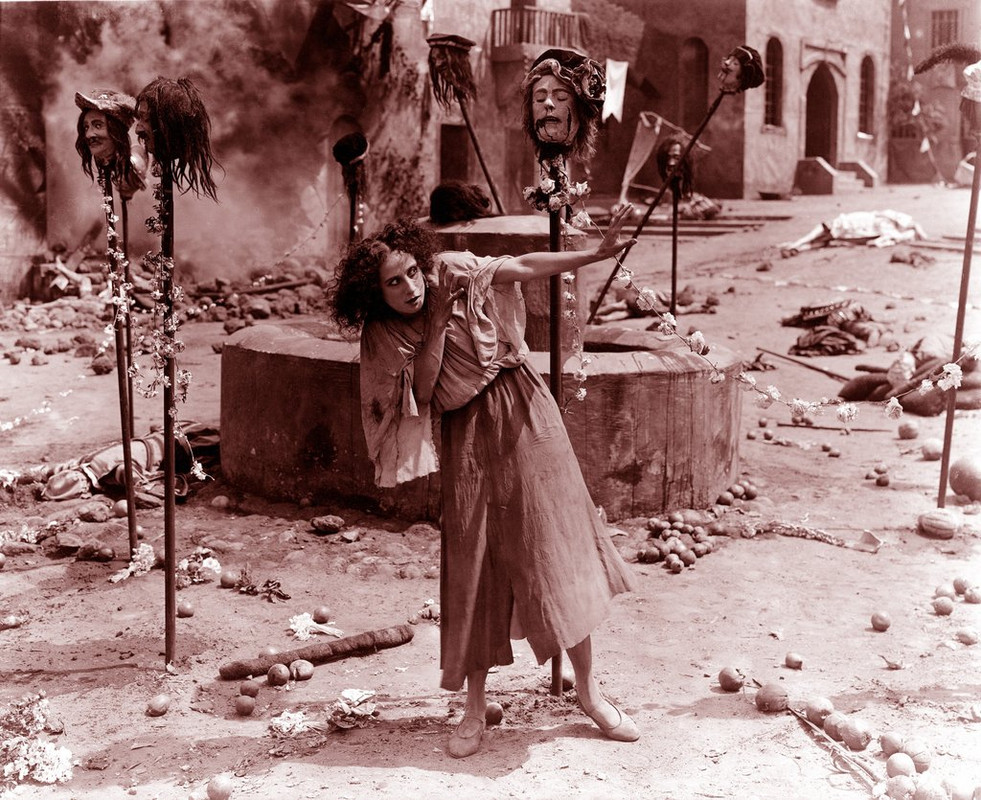
The story is based on an opera about Fenella (Anna Pavlova), a mute gypsy girl who falls for a nobleman. The film tells the story of their affair, the victimisation of Fenella because of it and the revolution it precipitates, led by Fenella’s brother (Rupert Julian, later the director of the silent Phantom of the Opera).

For most modern audiences, The Dumb Girl of Portici will be most notable as the only feature film role of the legendary ballet dancer Anna Pavlova. In this respect it is a hugely important film, documenting a great artist whose work was otherwise only seen live. Pavlova is an interesting presence in the film, she is the top billed star, but the lead role arguably belongs to Rupert Julian and for much of the film, particularly the second half, Pavlova is treated as a rag doll, pulled and carried from scene to scene as people fight over her. It can’t be denied though that she is magnetic on screen: she captures a wild, expressive character with grace and beauty of technique. Most of the time Pavlova is entirely in character, she does some dance in the story, but it is only at the very beginning and very end of the film that we see her as a ballet dancer, her pure technique captured.

The film itself definitely has energy within its frames, especially in the surprisingly bracingly violent riot scenes of the second half, but Lois Weber’s use of the camera is otherwise rather static. Camera movement is very minimal, but tinting is used to excellent effect, again especially in the red toned riots. It’s worth noting that performance in silent film of this era was much more gestural and theatrical as a rule, but even by those standards, I found much of the acting in The Dumb Girl of Portici overblown, particularly Rupert Julian’s performance and that of William Wadworth as Pietro, literally twirling his moustache as a guard who turns on the aristocrats, then turns on the rebels as soon as he is stopped from raping Fenella.

I’m glad I saw The Dumb Girl of Portici, just for the opportunity to see Pavlova and, for the first time, to experience a silent film with a live piano score, but while this is clearly an important film, for me it isn’t one that has aged brilliantly.
★★★

Ava
Dir: Lea Mysius
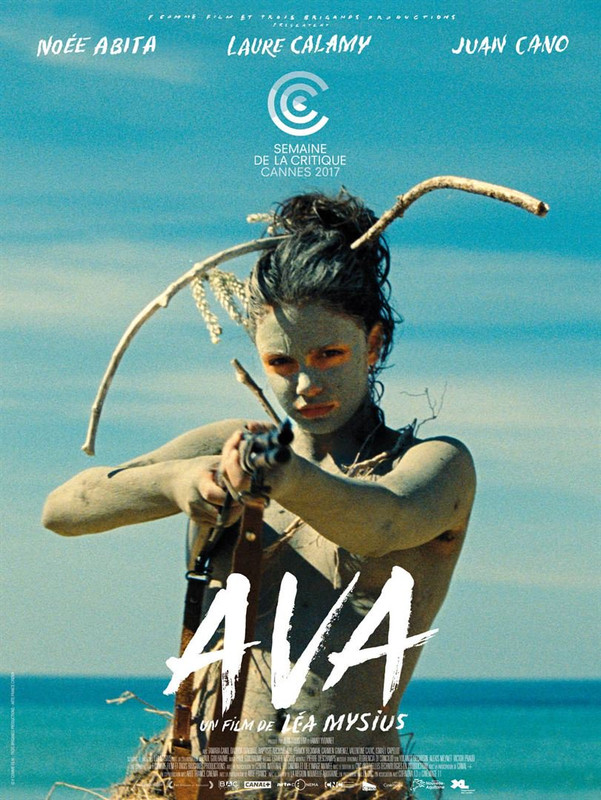
There may be something in the water in France. They seem to excel at making coming of age films, particularly about girls. Lea Mysius debut focuses on the titular Ava (Noee Abita), a 13 year old girl holidaying with her mother (Laure Calamy). Ava has just been told that she is going progressively blind, and this may be the last summer in which she is able to see. On the beach Ava encounters Juan (Juan Cano) and becomes fascinated first with his dog and soon with him.

Ava is very much a film of two halves. The first is beautifully aimless. Ava wanders the beaches, steals Juan’s dog, flirts with a boy her age and acts out in various ways against her mother, perhaps annoyed that she’s taken a much younger local man as a lover. I looked at this part of the film as being about Ava’s wanting to see as much as possible in this ‘last’ summer and it finds great poignancy in that, notably in the paintings in Ava’s room, white circles of decreasing size, surrounded by blackness.

Noee Abita makes an outstanding debut as Ava, capturing the duality of that confusing age when you are still a child, but increasingly desperate to break out of that and into ‘adulthood’, when your parents might be telling you one thing and your body another. Abita has the ability to look both older than her years and incredibly childlike, sometimes in the same moment, and the scenes that play these emotions off against each other are the film’s finest moments. Ava is aware that her body is changing, and of the effect it can have on people, but she doesn’t truly understand either. In one moment, as Juan goes to leave, she flashes him, trying to make him stay. It’s a moment that is both funny and sad in its naiveté.

Laure Calamy, the only experienced actor in the main cast, is also highly effective as Ava’s mother, who is very much enjoying what seems like a second wind of youth, having just passed 40 and with a year old daughter to look after as well as Ava. She’s caring, but not the most responsible parent, leaving Ava alone to care for her young sister. She’s frank with Ava, telling her daughter that she lost her own virginity at 13, that she understands what’s going on in her head right now, but to try and wait. Ava, for her part, wants the Earth to open up and swallow her at this point. This whole first section of the film is an acutely observed and played coming of age film. 

Then Lea Mysius decides her film needs a plot.

The second half of Ava diverges wildly from the first, expanding Juan’s role and suddenly, without warning, becoming a road movie. Ava’s encroaching blindness remains as a plot point, but all but vanishes as a theme, it’s depicted but never truly explored. I don’t want to go into what happens in the film’s second half, for fear of spoilers, but the film splits in two at a certain point, just after a carefree montage of Ava and Juan. That montage strains credulity, but the next scene breaks it, and nothing after rings true with the first half of the film.

It’s a terrible shame that Ava abruptly stops working, because for 40 minutes or so it is an extremely promising debut, beautifully shot, sensitively written and acted. Despite its problems, this film still points to good things from Lea Mysius in the future, but this could have been brilliant, and isn’t.
★★★

Sep 27, 2012

24FPS @ LFF 2012: Diary - Day 3

Tall as the Baobab Tree
Dir: Jeremy Teicher
Cinema is, it strikes me, the truly global artform, and I do enjoy marking off a new country on the map of places I have seen films from (I'm a nerd, in case we hadn't established that). Tall as the Baobab Tree is my first Senegalese film, and it's one that really plunges the audience into a local culture that many of us will see as not just alien but perhaps even objectionable, the more so for the opening caption informing us that it is 'Based on True Stories'.

On the day that she is collecting her exam results, Coumba's older brother falls from a Baobab tree and breaks his leg, which means not only can he no longer work in the fields, but his parents are facing a medical bill they can't pay.  The remedy they find is to marry off Coumba's roughly 12 year old sister Debo and use the dowry to pay the bill.  Coumba can't accept this, and begins working secretly at a hotel in town, aiming to collect enough money to save her sister.

The film's tone is very subdued, and there isn't a great deal of major dramatic incident, but director Jeremy Teicher largely gets away with this because the story has an in built high stakes drama and interest.  What makes the film especially interesting is the fact that it doesn't make the morals totally black and white.  The sympathy of both (this) audience and the film clearly lies with the sisters, but it doesn't treat the father as a total villain, rather it seems to view him as a man who has been raised with a certain faith, a certain doctrine and a certain way of doing things, who can't really see past tradition in trying to solve his family's problems, and it takes pains to show him as conflicted.  It's a welcome moral complexity in a film that could easily have been far too black and white.

While all this does keep the film watchable, I also found that it kept me emotionally at arms length thanks to the performances.  It's difficult at the best of times to judge performances in a language you don't speak, so it may simply be an issue of unfamiliarity with the structure and sound of Pulaar, but there is a flat feeling to the dialogue, which makes even the high stakes drama feel a bit lifeless at times.  Whether this is my unfamiliarity with the language talking or the performances really are a bit flat and rote, it adds up to the same slightly unsatisfying result.

The thrust of the story is interesting and provocative enough, and the imagery beautiful enough, that Tall as the Baobab Tree overcomes many of its issues, but I still left feeling that it wasn't quite the film that it might have been.
★★★☆☆

Good Vibrations
Dir: Lisa Barros D' Sa / Glenn Leyburn
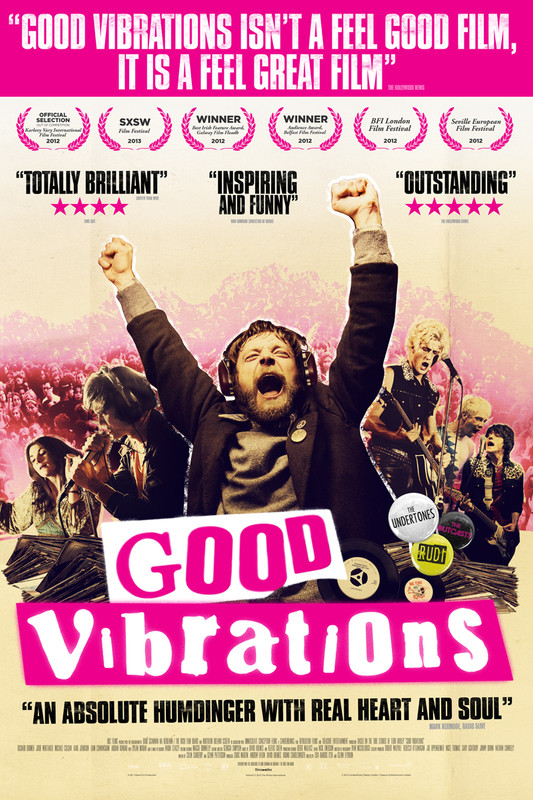
I don't read much about festival films before going to see them, and had somehow got my wires crossed and ended up thinking that this film about Terri Hooley, whose Belfast record shop and indie label Good Vibrations seems to have been a very important presence in the Belfast punk scene of the late 70's and early 80's, was a documentary.  It isn't, I really wish it were, because that's a film I'd actually be interested in seeing in place of the perfunctory and forgettable by the numbers biopic we've been given here.

One problem is the simple fact that Hooley (played by Richard Dormer) just isn't especially likeable.  At the very least we should be getting some sense of his passion for music managing to charm people into working with him, but we really don't, and consequently, particularly given what an organisational fuck up he is, it's tough to see how he pulled everything together and managed to convince people (especially his wife Ruth, played by an almost insultingly underused Jodie Whittaker) to stick with him.

The other major issue is one of tone, in that the film doesn't really know which sort of tone it wants to pursue.  Is it a serious film about the way Hooley tried to use music to distract from the Troubles?  Is it a knockabout comedy about a misfit trying to run a record label?  Yes.  Is it a sad story about a guy who puts music above everything, including his wife and baby?  Yes.  It's all of these things and others besides, and the pieces seldom mesh, so the overwhelming feeling is one of the screenplay rolling a die before each scene and letting the numbers decide which tone they'll go for over the next five minutes.

Good Vibrations isn't terrible, Dormer and Whittaker are both fine in their roles, and some of the music is electrifying, but I could never shake the sense that the real story, the real guy, would be more interesting, nor the feeling that this film had been made with some sort of cinematic paint by numbers kit.
★★☆☆☆

The Loves of Pharaoh
Dir: Ernst Lubitsch
I haven't seen much of the work of Ernst Lubitsch, but even after just a couple of films - The Shop Around the Corner and Ninotchka - I can tell you that this previously lost melodrama from 1922 is neither typical, nor the place to start.

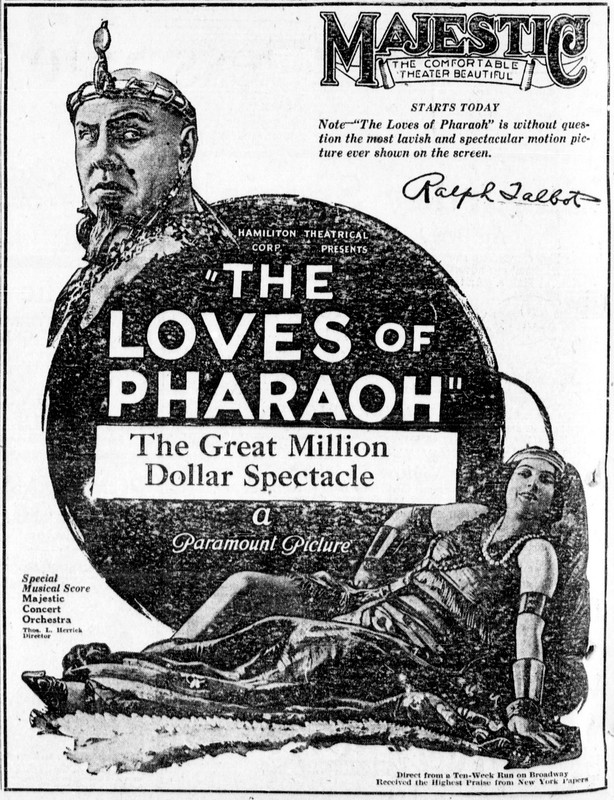
The Loves of Pharaoh has many of the familiar strengths and weaknesses of early and silent cinema.  On the plus side it is remarkable how easily, even in this still incomplete version, the story of a Pharaoh (the great German silent star Emil Jannings) who causes a war in his kingdom when he falls for a slave girl who has recently escaped servitude under the Ethiopian king (played by another star, Paul Wegener, in blackface), is communicated.  It's also a beautiful film, with some remarkably dynamic battle scenes featuring massed ranks of extras, well chosen tints that help communicate both time and mood and many gorgeously lit and framed shots that make the 600 metres still missing feel like a real loss.

On the downside, this is a melodrama, and that's very apparent in the acting, which, sadly, is still stuck in the broad, pantomimic style employed in a lot of early cinema.  Perhaps in 1922 these were great performances, and Jannings does have some subtler moments in which he is great, but for the most part the over-demonstrative work on display from the likes of Dagny Servaes (as the slave girl) and Harry Liedtke (as the other man who is in love with her), just doesn't work, and when Jannings pushes the boat out, especially in the second half of the film, he's comically overblown.

The Loves of Pharaoh is rather good fun; the story and acting are overblown, but if you're interested in film history the beauty of the images and the fluent storytelling do carry it, but it's no lost classic, and really feels more like a curio than an essential addition to most people's experience of silent cinema.
★★★☆☆

Jan 8, 2011

Silence is Golden? Week 1

I take pride in knowing a lot about movies, and I mean a lot, at this stage I could justifiably say that I've forgotten more about cinema than most people are ever likely to know. I've seen films from more than 30 countries in more than 20 languages, I've seen films made as early as 1895 and as late as 2010. That said, though I've seen a few, I don't know all that much about silent cinema, nor is my experience of it especially wide. So, during 2011 I'm going to try and address that. Each week I'll be watching two silent films, and creating a sort of journal of my impressions. These won't be traditional reviews as much as they will be refelections on the movies. I hope I'll be taking in films from all over the world, from many different genres, acknowledged classics and near forgotten films alike. I may also include things like reviews of books I read about silent cinema, or documentaries I see on the subject. I think it's going to be an exciting journey. I hope you'll enjoy it as much as I suspect I will.

WEEK 1
NANOOK OF THE NORTH (1921) and LE VOYAGE DANS LA LUNE (1902)


I started my trip through silent cinema with films set in unfamilliar locations. NANOOK OF THE NORTH is generally thought to be the first film to be what we would consider a documentary, though it predates John Grierson's coining of that term by a decade or so. Though it is presented as purely factual there are clearly things in the film that are staged by director Robert Flaherty. One early sequence shows the entire eskimo family that the film is about climbing one by one out of a tiny canoe, suggesting that this is some sort of Alaskan TARDIS. It's easy to see that Flaherty staged this scene, using a locked off camera to hide the cuts. Apparently much of the rest of the film is, if not fictional, then certainly heavily staged. It seems that by 1920 the Eskimo technology had moved on from the harpoons we see here to the use of guns for their hunting, but that Flaherty wanted to show 'traditional' hunting methods.

Whatever the reservations about the honesty of the film though, you can't deny that it is engaging, and technically remarkable for its time. Just getting the camera to these inhospitable locations in 1920 must have been a real feat, and through it Flaherty catures some genuinely striking and fascinating images. The hunting may be a recreation of something that happened in the 19th rather than the 20th century, but the footage is still hugely interesting, and it is probably authentic at least in that Nanook is old enough to remember the techniques first hand. The real point of interest though is Nanook and his family. The films does take a patronising view of them, but even though you can't hear them they are engaging characters. The sequence in which Nanook and his family build an igloo is especially enjoyable, not just seeing the technique, but the way the whole family chips in to some degree.

Another thing that is really interesting about NANOOK OF THE NORTH is looking at it through the prism of where documentary is in 2011. For a few years now there have been high profile films whose authenticity as documentaries has been challenged CATFISH and AMERICAN TEEN among them. If this film teaches us anything about documentaries it is that the line between fact and fiction has always been a blurry and easily crossed one. 90 years on, this is still a fascinating film, and well worth looking out.


When French magician Georges Melies made this 12 minute film (generally regarded as the first science fiction film) cinema hardly existed. The first feature length film was some way off yet as were purpose built cinemas, moving pictures were still seen as a parlour trick, and what a trick Melies pulled here. LE VOYAGE DANS LA LUNE (A Trip to the Moon) may be primitive, with its proscenium stage and static camera, but it has some startling features. The most famous shot is visible for only a second, but the image of the man in the moon with the rocket ship stuck in his eye remains an inventive and funny one. There is also primitive usage of editing (again, something that wouldn't be fully developed for some years) in order to make characters disappear in a puff of smoke.

It's creaky, sure, and for all their attractiveness the sets are clearly quite cheap and thrown together, but Melies is inventing with every shot here. Seen today this is still a fun and funny film, but imagine seeing it 109 years ago, what the moment the moon man explodes in a puff of smoke must have been like for those first audiences. This is also an important film for its influence, just try and find someone working in animation or special effects who doesn't know this film and its maker.

I think we're off to a good start. Next week I'll be looking at FW Murnau's late period silent CITY GIRL and one other film that I haven't yet decided on.