Showing posts with label Sport. Show all posts

Sep 25, 2017

24FPS @ LFF 2017: Documentaries

A Skin So Soft
Dir: Denis Côté
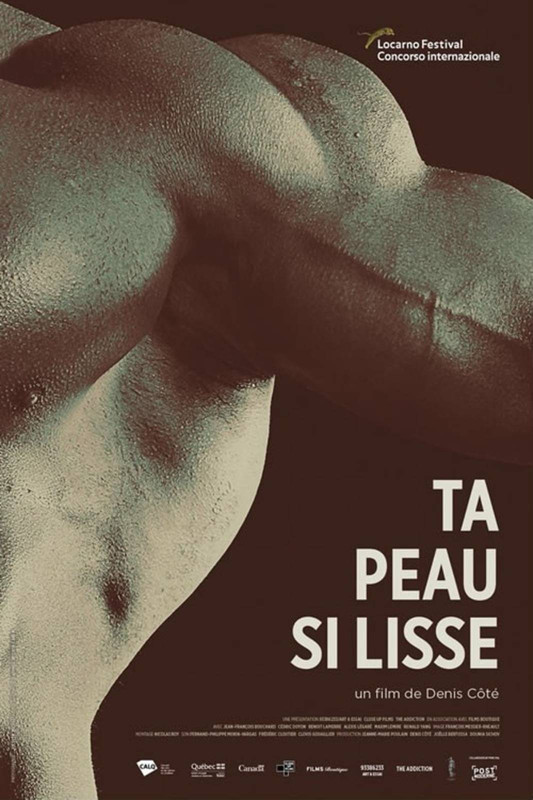
Denis Côté’s bodybuilding documentary has much more in common with Fred Wiseman’s reflective Boxing Gym than it does with the bravado and myth-making of Pumping Iron. Côté follows five French-Canadian bodybuilders, at various stages of their lives and their sport, as they go about their daily lives, training as well as doing other more mundane things.

Near wordless for much of its running time, the film instead finds insight into its subjects purely through observing them, fitting in a sport that is, whatever the route to get there, entirely about physicality. This can be mesmerising. The first twenty minutes of the film introduce the characters in almost total silence, following their morning routines. The youngest of the men trains, his Mother visible through the basement window, gardening above him as his weights clip their frame as he lifts. Another man eats breakfast while watching youtube. I couldn’t tell what he was watching, but from time to time he seems to choke back tears. These and other moments - Max, the wrestler, insisting to his wife that he’s “fine” despite the fact he’s hardly spoken to her in two days, for instance - linger in the memory for the amount of intrigue and insight they pack into images that we have to take purely on their own.

There are a few dialogues; the terse conversation I mentioned between Max and his wife stands out, as does the young bodybuilder telling his girlfriend he can’t be both her boyfriend and her trainer, especially if she’s not going to apply herself fully. Almost every other word spoken though is about training in some way, whether it’s the magnificently bearded Alex telling his masseur “I hate you” or the chatter between the guys when they all go for a weekend away.
   
Côté’s near total reliance on pure physicality does, however, have its downsides. Sometimes it feels as though he’s cutting around conversation. In the closing scenes on their weekend away, the bodybuilders are clearly friends, and talking amongst themselves. It would be good to see, and hear, more of that, to get more of an insight into the dynamic between them, and where the line lies between competition and friendship.

A Skin So Soft sometimes gets beneath the tough surfaces of the men it profiles, but it also often feels like it could go deeper. It’s an interesting film in its quietness but, for me, also sometimes limited by it.
★★★

Liyana
Dir: Aaron Kopp, Amanda Kopp
I have often talked about the fact that I approach film initially from the perspective of someone being told a story. From the earliest time I can remember, I was always told stories - some were read to me, others made up for me. As I got older, film became how I was told stories, and that’s still the way I look at them first.

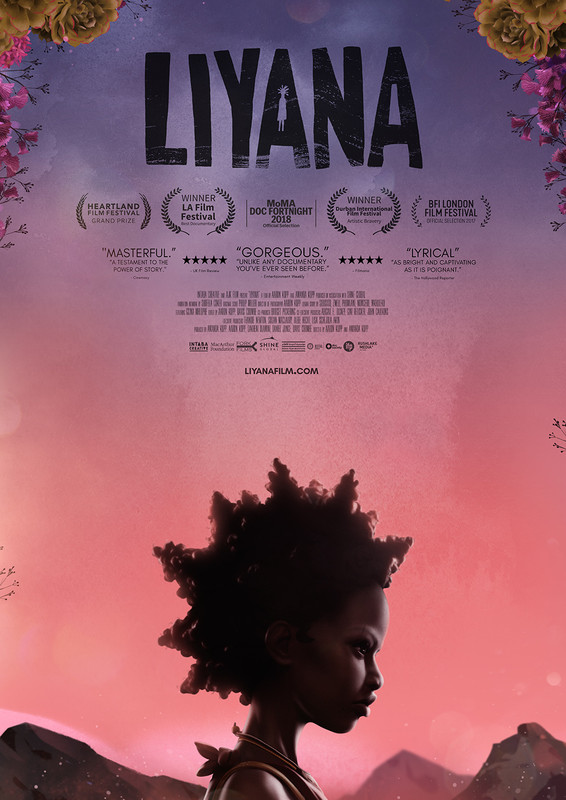
Liyana is a story about storytelling, but it’s about a lot more than that too. The film follows a group of children in an orphanage in Sawziland who are asked in a workshop to collaborate, with children’s author Gcina Mhlophe and with each other, to create a character and a story. Their character is Liyana; a strong girl about their age, born into a family in which a drunk and abusive father contracts HIV and passes it to his wife, orphaning Liyana and her young twin brothers. One night, thieves come to Liyana’s home and kidnap her brothers so Liyana, taking one of the bulls the family keeps along with her, must set out to find them.

The story the children invent is interesting and entertaining in its own right. They set the odds against Liyana, but they give her plenty of agency, they make her brave and resilient and they create a narrative full of perilous set pieces for her to triumph over, with the help of the bull. We see the story unfold in beautiful animation by Shofela Coker, which makes Liyana unusually cinematic for a documentary.

What’s really compelling about Liyana though, and makes it remarkable, is watching the children create this story and understanding why they are writing it as they are. It is often said to young writers that to begin with you should write what you know. Tragic as it is, that is what these children are doing. It cannot be lost on us that a huge percentage of these children have been through much of what they put Liyana through. When deciding on the overall narrative there is discussion about what sets Liyana on her quest and it is clear that the idea of the thieves resonates, at least partly, through experience. This is even more true of the fact that Liyana finds herself orphaned by AIDS. A full 25% of Swaziland’s adult population has HIV or AIDS, and it is almost certain that many of the orphaned children writing Liyana’s story were orphaned for that reason.

The film industry and fan communities have recently been having a lot of conversations about representation. Liyana is the perfect example of why those conversations are important. These children don’t often get the chance to have their stories told cinematically, and when they are it is often through the filter of an industry that is almost entirely white at the top. Here they are able to control their own narrative. They seems to grab that power with both hands, giving it to Liyana and thus back to themselves. It becomes clear in interviews late in the film just what this ability to represent themselves means to these children. “When Liyana’s story keep going, mine will keep going” says one. That’s what’s important here, these children are empowered by storytelling, allowed to write a happy ending for Liyana and thus for themselves. I hope they all get the ending they write.

Liyana is a great example of why the Family strand of the London Film Festival should be covered more, it’s just the kind of film we should be encouraging children to see (I’d suggest it for ages 10 and up, thanks to a few tough themes). Hopefully it will encourage them to tell their own stories, now and in the future.
★★★★

Oct 12, 2015

24FPS @ LFF: Catch up

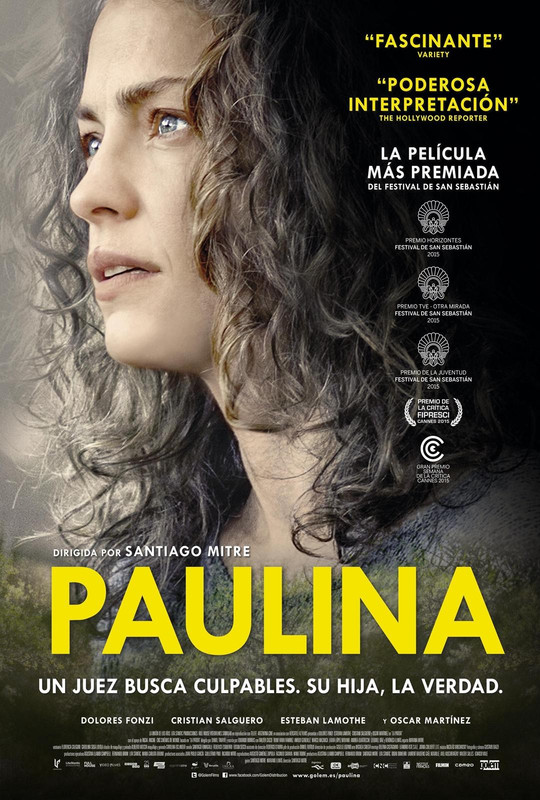
Paulina
Dir: Santiago Mitre
Paulina is a difficult film to classify, at times it looks as though it is going to take paths that will transform it into something that will fall into one genre or another, but over and over again it pulls back from those relatively easy turns, instead zeroing in on the character and the performance at its centre.

Paulina (Dolores Fonzi) is a middle-class Argentinian woman in her early 20s, who abruptly decides to leave her PHD studies and go to a Paraguayan border town to teach. Her father, a local judge, doesn't understand but is supportive. However, after Paulina is raped, her father and her new friends are worried by the way she reacts.

There are many films that Paulina might have been; a social problem film about the grind of being poor and sucked into crime in the town Paulina is teaching in; a slow burn rape-revenge film; a film about a powerful father avenging his daughter's violation, or an introspective drama about a young woman turning her emotions inwards after suffering this horrific ordeal. In a way, Santiago Mitre's film is all and none of these.

Paulina herself isn't an easy character to understand. Perhaps because we've conditioned by films over the years it is easy to expect depictions of rape victims to show them either filled with vengeful anger or obviously outwardly traumatised. Paulina's reaction isn't always clear, it's not one of understanding or compassion exactly, but she quickly rejects any level of self-pity and when she discovers that she is pregnant as a result of her rape the question of punishing the perpetrators seems to become more fraught for her. Little of what she's thinking is stated and we never see whatever she may have planned to do come to fruition, but what seems to come through is that Paulina is trying balance her anger with the principles that led her to Paraguay and to put those principles into practice to do something that will, to her mind, be more useful than simply going to the Police.

For all this, this is not a film that asks us to understand or sympathise with the people who attacked Paulina, even if she tries to do so. Rather, Mitre asks us to understand the complexity of the emotions (and indeed the hormones) affecting Paulina, and why they might lead her to seek a different – if undefined – sort of justice. The reason we buy into all of this, into Paulina's strong convictions about everything in her life, is because Dolores Fonzi's performance is completely believable. It would be easy for an actress to turn this into an excuse for showboating, but Fonzi plays everything close to the chest. This is also why the film manages to convince you that it may at any point take a different turn, into something more along the lines of Katalin Varga, you believe Paulina is capable of that, as well as believing her apparently extreme capacity for empathy.

There are no easy answers in Paulina, catharsis, either through talk or violence, isn't what it's interested in. Instead, it deals in moral uncertainties that run long past the credits. That's probably what I like most about it; it's still going round in my head.
★★★★


The Program
Dir: Stephen Frears
Ben Foster has long been one of those actors who make casual film fans say 'oh, hey, it's that guy'. The Program may finally bring him to the greater attention that he has long deserved, it's just a shame that not a single other thing about it is even remotely notable.

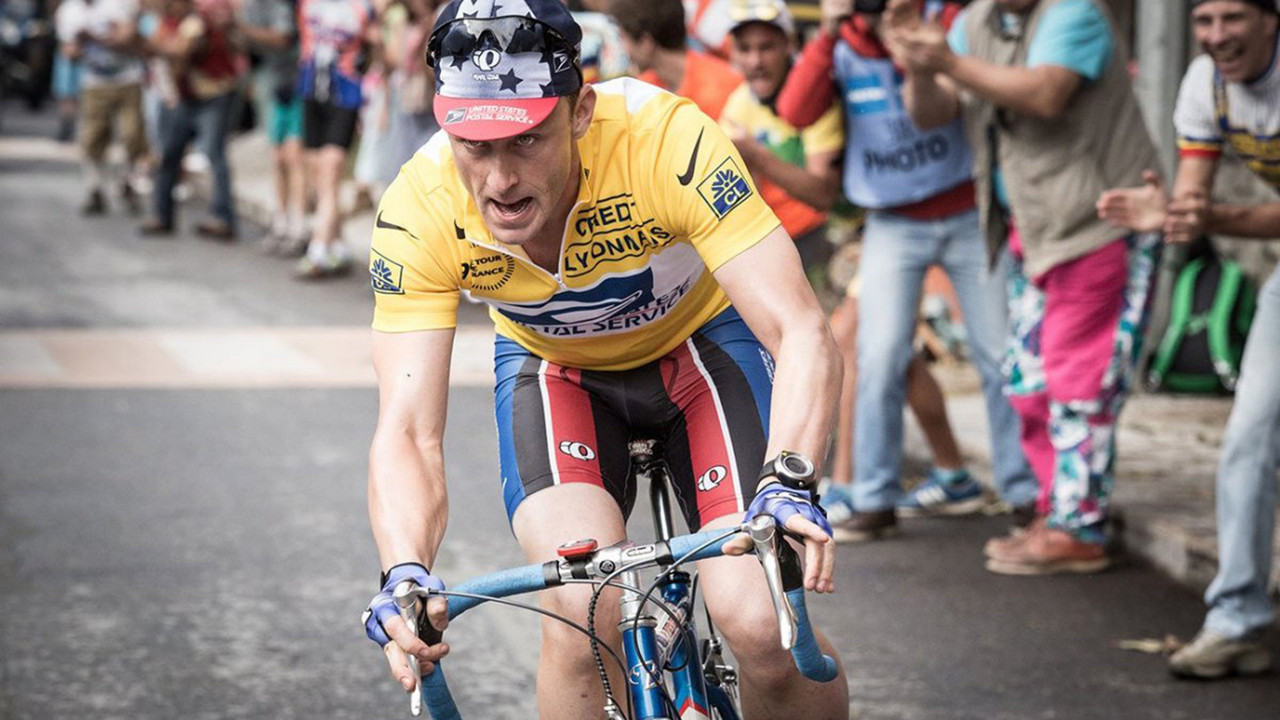
The Program tells the now well-documented story of Lance Armstrong, picking him up at 21 in his first Tour de France, following his battle with cancer, the doping programme that powered him to seven Tour wins in a row and his eventual fall from grace. It does all this in the most schematic manner possible, baldly dramatising events in the exact order they occurred, never bothering to craft a framing device or anything else to upset or enliven the incredibly basic a to b to c structure. The film itself may not be boring, but the way it is made and assembled certainly is.

John Hodge's screenplay isn't especially strong. The dialogue is well crafted enough, especially when it comes to giving Armstrong a credible private voice, but Hodge allows many side stories, notably that of David Walsh, initially the crusading journalist flipside to Armstrong's cheating sociopath, to simply peter out, before the whole film follows suit, ending with a sudden whimper and a cut to captions wrapping up the loose ends. It's as if Hodge, Frears, and editor Valerio Bonelli realised that they had passed the 100-minute mark and said, 'just stop it there'.

The cast are a bit of a mixed bag. Jesse Plemons does good work as conflicted fellow cheat Floyd Landis, O'Dowd steals a few funny lines as David Walsh but never disappears into the role and Denis Menochet is solid as Armstrong's complicit coach. On the other hand, what Guillaume Canet, contributing little more than a silly voice, is doing as the doctor who taught Armstrong how to dope and not get caught is beyond me.

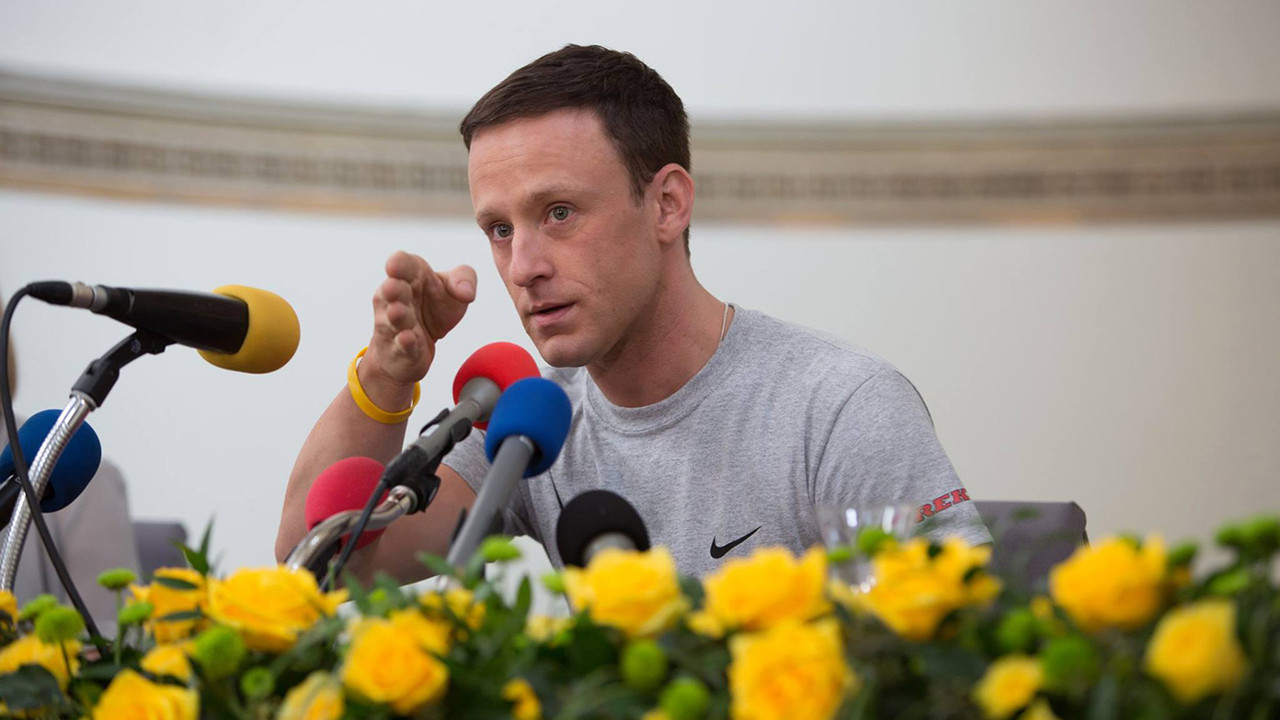
Ben Foster outclasses everyone and everything else on screen here. His Armstrong seems eerily accurate. His preparation, which included following Armstrong's doping routine, clearly paid dividends, but it's not the voice or the look (achieved with some subtle makeup work), it's the eyes. Foster's best moments come in his public denials of drug use. He's strident, defiant, even indignant, the body language is passionate but behind the eyes there seems to be a blank space. This detachment that Foster plays, Armstrong's ability to see his drug use as just another part of competition that he excelled in, can be chilling, but he's so successful at playing this side of the man that anything else seems to go away. Even the moments that we are supposed to see another side to him, such as when he visits kids with cancer, seem to be part of Armstrong's cynical image building, which I doubt is entirely fair.

The Program is straightforward to its very bones. Stephen Frears is a journeyman, and he stamps no authority, no identifiable voice, on this film. Everything is competently filmed, but it's largely as blandly shot as any TV drama, though the editing of the Tour scenes does help inject some pace if not much excitement.

Perhaps part of the reason The Program feels like such a trudge is that there is no mystery to it, even for someone like myself, who brought only a cursory knowledge of Lance Armstrong's career to it, this does little more than scratch at the surface. The scenes that detail the exacting nature of the doping program was carried out are at least informative, but I imagine that that information is also in The Armstrong Lie, so I struggle to see what The Program adds, other than another great Ben Foster performance.

Ben Foster is a remarkable actor, this isn't his best work, but it's likely to get him his first Oscar nomination and he is, just about, worth seeing The Program for, but without him, the wheels would fall off this rickety vehicle of a movie.
★★

Jan 18, 2012

Goon [15]

Dir: Michael Dowse
I wasn't expecting much from Goon, indeed I only saw it because I had some free time that needed filling, but this turned out to be one of the more welcome surprises I've had in a cinema of late.

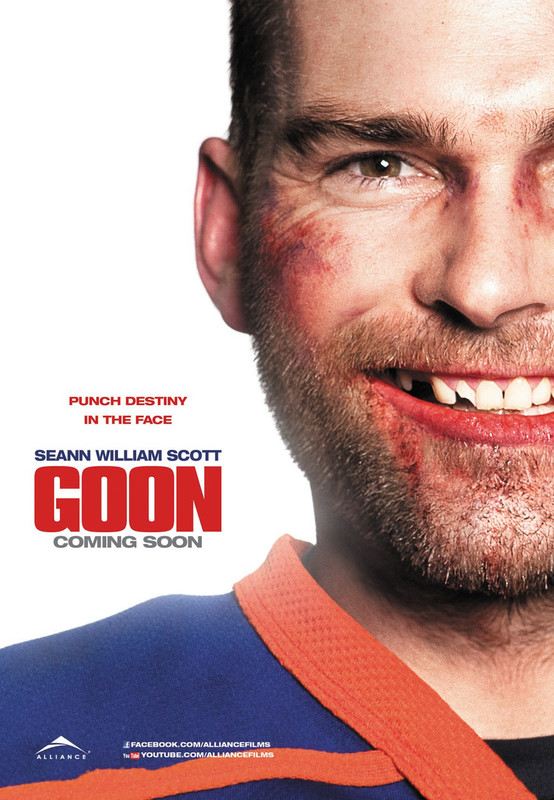
Goon is a sports comedy about Doug Glatt (Seann William Scott), Doug doesn't fit in with his family of academic overachievers, but when he gets into a fight at a semi-pro hockey game he's given the chance to be a 'goon' - essentially get into fights at tactically advantageous points in the game - for his local team. Moving up in the world, Doug finds himself playing for a team in a more professional league, guarding former star player Xavier La-Flamme (Marc-Andre Grondin), who hasn't been the same since he was injured by another 'goon', Ross 'The Boss' Rhea (Liev Schreiber). Doug finds himself bonding with teammates and falling for local girl Eva (Alison Pill) and on a collision course for a fight with Rhea when their teams meet in the play offs.

The reason I wasn't too excited at the prospect of seeing Goon was simply that I'm not a great sports fan, and that and the fact that I'm not Canadian, eh, means that I know less than nothing about hockey. The hockey story is the thing I found least interesting about Goon, it's not badly told, and the individual sequences feature some bone-crunchingly convincing and often pretty funny violence, but even in the final game the stakes feel pretty low, and while the clash of the titans between Scott and Schrieber delivers as a fight, it never feels hugely important.

I warmed to this film largely thanks to Seann William Scott's performance (which has to rank somewhere in the Top 50 sentences I never thought I'd need to type). Doug Glatt is basically the inverse of his American Pie alter-ego, Steve Stifler; he may be paid because he's great at punching people on the head, but Glatt is a gentleman to a fault, doing his job on the ice, but always apologising to the people he beats up, doggedly but politely pursuing Eva, and taking his lumps willingly when he has to. The role allows Scott to stretch acting muscles I wasn't sure he had, particularly when he tries to reach out to his disappointed parents (Eugene Levy and Ellen David). I wished the film had leant a little more heavily on the relationship storyline between Doug and Eva, because while Goon is by no means a romantic comedy their various dates and almost dates are funny, and the relationship is one you root for because both of them are good, likeable, people (amazing that a sports comedy gets right what almost every rom-com of the last five years has got so wrong). It also bears mentioning that Alison Pill is adorable as Eva, and really ought to be getting more work and be a bigger name than she is.

Some parts of the narrative can feel undernourished (I suspect the Blu Ray will have a large deleted scenes section), but the film gets by on a set of broad but enjoyable performances Schrieber is perhaps best, his Canadian accent seems dead on, but it's the sadness you feel from him when Rhea and Glatt meet over coffee, that really feels much more affecting than you'd expect. Also worth singling out in the ensemble are Richard Clarkin and Kim Coates as, respectively, the Captain and Coach of Doug's team. The only real letdown, for me, came from co-screenwriter Jay Baruchel, whose off-screen contributions are more rewarding than his shrill turn as Doug's best friend.

On the whole, Goon is flawed, but I enjoyed it warts and all, it's well worth taking a chance on.
★★★☆☆