Showing posts with label Argentina. Show all posts

Oct 12, 2015

24FPS @ LFF: Catch up

Paulina
Dir: Santiago Mitre

Paulina is a difficult film to classify, at times it looks as though it is going to take paths that will transform it into something that will fall into one genre or another, but over and over again it pulls back from those relatively easy turns, instead zeroing in on the character and the performance at its centre.

Paulina (Dolores Fonzi) is a middle-class Argentinian woman in her early 20s, who abruptly decides to leave her PHD studies and go to a Paraguayan border town to teach. Her father, a local judge, doesn't understand but is supportive. However, after Paulina is raped, her father and her new friends are worried by the way she reacts.

There are many films that Paulina might have been; a social problem film about the grind of being poor and sucked into crime in the town Paulina is teaching in; a slow burn rape-revenge film; a film about a powerful father avenging his daughter's violation, or an introspective drama about a young woman turning her emotions inwards after suffering this horrific ordeal. In a way, Santiago Mitre's film is all and none of these.

Paulina herself isn't an easy character to understand. Perhaps because we've conditioned by films over the years it is easy to expect depictions of rape victims to show them either filled with vengeful anger or obviously outwardly traumatised. Paulina's reaction isn't always clear, it's not one of understanding or compassion exactly, but she quickly rejects any level of self-pity and when she discovers that she is pregnant as a result of her rape the question of punishing the perpetrators seems to become more fraught for her. Little of what she's thinking is stated and we never see whatever she may have planned to do come to fruition, but what seems to come through is that Paulina is trying balance her anger with the principles that led her to Paraguay and to put those principles into practice to do something that will, to her mind, be more useful than simply going to the Police.

For all this, this is not a film that asks us to understand or sympathise with the people who attacked Paulina, even if she tries to do so. Rather, Mitre asks us to understand the complexity of the emotions (and indeed the hormones) affecting Paulina, and why they might lead her to seek a different – if undefined – sort of justice. The reason we buy into all of this, into Paulina's strong convictions about everything in her life, is because Dolores Fonzi's performance is completely believable. It would be easy for an actress to turn this into an excuse for showboating, but Fonzi plays everything close to the chest. This is also why the film manages to convince you that it may at any point take a different turn, into something more along the lines of Katalin Varga, you believe Paulina is capable of that, as well as believing her apparently extreme capacity for empathy.

There are no easy answers in Paulina, catharsis, either through talk or violence, isn't what it's interested in. Instead, it deals in moral uncertainties that run long past the credits. That's probably what I like most about it; it's still going round in my head.
★★★★


The Program
Dir: Stephen Frears
Ben Foster has long been one of those actors who make casual film fans say 'oh, hey, it's that guy'. The Program may finally bring him to the greater attention that he has long deserved, it's just a shame that not a single other thing about it is even remotely notable.

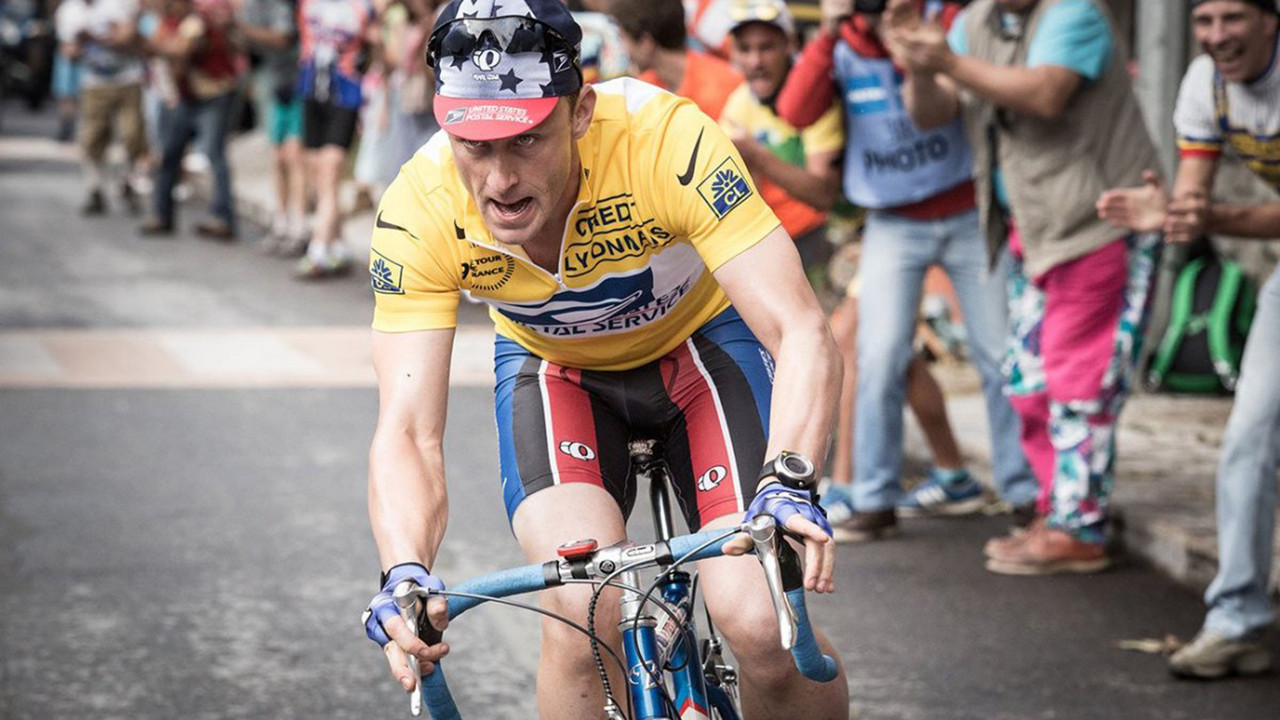
The Program tells the now well-documented story of Lance Armstrong, picking him up at 21 in his first Tour de France, following his battle with cancer, the doping programme that powered him to seven Tour wins in a row and his eventual fall from grace. It does all this in the most schematic manner possible, baldly dramatising events in the exact order they occurred, never bothering to craft a framing device or anything else to upset or enliven the incredibly basic a to b to c structure. The film itself may not be boring, but the way it is made and assembled certainly is.

John Hodge's screenplay isn't especially strong. The dialogue is well crafted enough, especially when it comes to giving Armstrong a credible private voice, but Hodge allows many side stories, notably that of David Walsh, initially the crusading journalist flipside to Armstrong's cheating sociopath, to simply peter out, before the whole film follows suit, ending with a sudden whimper and a cut to captions wrapping up the loose ends. It's as if Hodge, Frears, and editor Valerio Bonelli realised that they had passed the 100-minute mark and said, 'just stop it there'.

The cast are a bit of a mixed bag. Jesse Plemons does good work as conflicted fellow cheat Floyd Landis, O'Dowd steals a few funny lines as David Walsh but never disappears into the role and Denis Menochet is solid as Armstrong's complicit coach. On the other hand, what Guillaume Canet, contributing little more than a silly voice, is doing as the doctor who taught Armstrong how to dope and not get caught is beyond me.

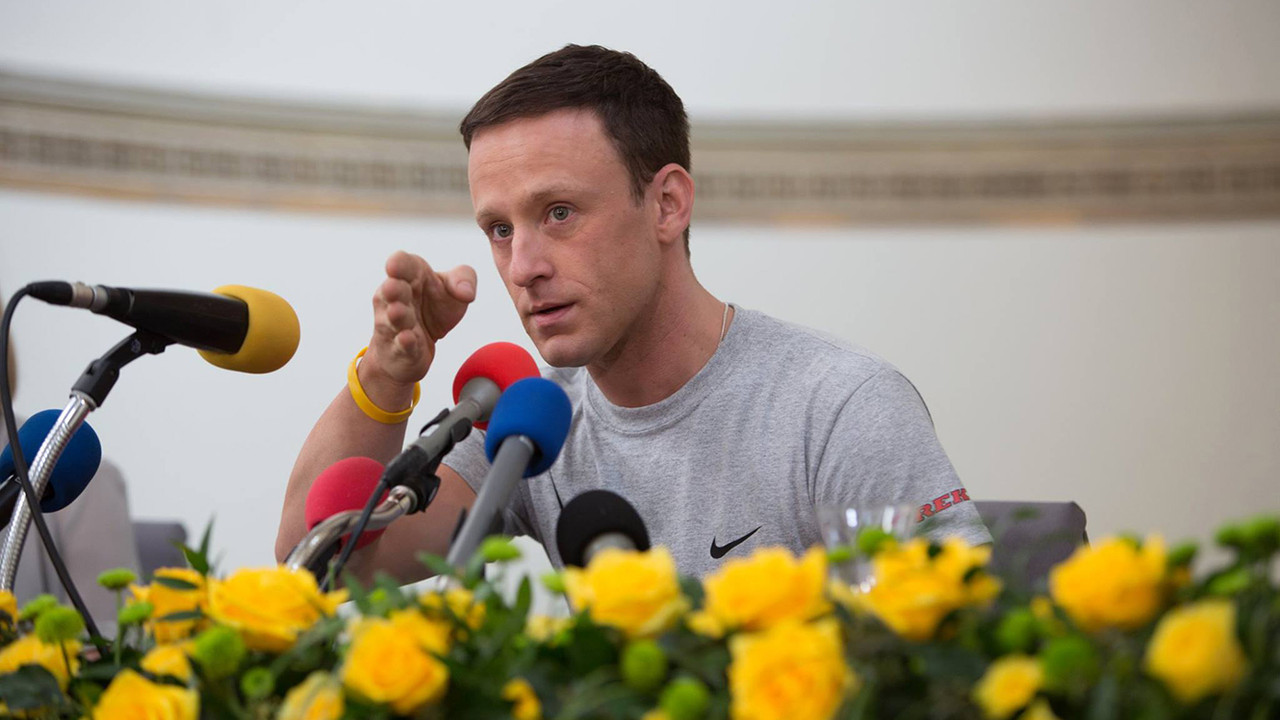
Ben Foster outclasses everyone and everything else on screen here. His Armstrong seems eerily accurate. His preparation, which included following Armstrong's doping routine, clearly paid dividends, but it's not the voice or the look (achieved with some subtle makeup work), it's the eyes. Foster's best moments come in his public denials of drug use. He's strident, defiant, even indignant, the body language is passionate but behind the eyes there seems to be a blank space. This detachment that Foster plays, Armstrong's ability to see his drug use as just another part of competition that he excelled in, can be chilling, but he's so successful at playing this side of the man that anything else seems to go away. Even the moments that we are supposed to see another side to him, such as when he visits kids with cancer, seem to be part of Armstrong's cynical image building, which I doubt is entirely fair.
The Program is straightforward to its very bones. Stephen Frears is a journeyman, and he stamps no authority, no identifiable voice, on this film. Everything is competently filmed, but it's largely as blandly shot as any TV drama, though the editing of the Tour scenes does help inject some pace if not much excitement.

Perhaps part of the reason The Program feels like such a trudge is that there is no mystery to it, even for someone like myself, who brought only a cursory knowledge of Lance Armstrong's career to it, this does little more than scratch at the surface. The scenes that detail the exacting nature of the doping program was carried out are at least informative, but I imagine that that information is also in The Armstrong Lie, so I struggle to see what The Program adds, other than another great Ben Foster performance.

Ben Foster is a remarkable actor, this isn't his best work, but it's likely to get him his first Oscar nomination and he is, just about, worth seeing The Program for, but without him, the wheels would fall off this rickety vehicle of a movie.
★★

Oct 20, 2010

LFF 2010: More mini reviews

Womb
Dir: Benedek Filegauf
For me, this is one of the most disappointing films of the festival so far. It’s disappointing because the synopsis promised so much, but most of all it’s disappointing because even as you watch it you can see the great film that it should have been and isn’t.

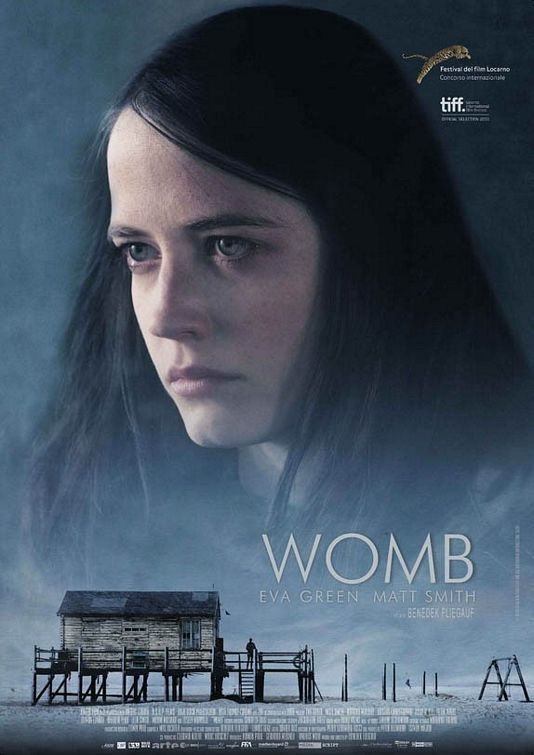
Womb is about Rebecca (played as an adult by Eva Green), as a child on holiday she meets Tommy (played as an adult by current Dr. Who, Matt Smith) but soon after they meet she moves with her Mother to Tokyo. 12 years later Rebecca returns, finds Tommy, and falls for him. When Tommy is killed in an accident Rebecca decides to have him cloned, and to give birth to him herself. As her ‘son’ grows up, Rebecca’s feelings for him become ever more complex.

The problem isn’t the premise. It’s the execution. You can tell that this is Hungarian writer/director Filegauf’s first English language film, because the problems with Womb are all in the performances. The visuals are astounding. There is barely a frame of this film that isn’t beautiful enough to hang on the wall of an art gallery, everything in each shot; the colour, the geometry, the movement of the camera and the actors, is beautifully designed. Sadly these exquisite visuals are wrapped around performances that simply don’t work.

You have to blame Filegauf for the performances, because the flat, emotionless, line readings are given by every actor young and old, which means that they must have been directed into them. Womb deals with controversial issues, powerful feelings challenging emotions, and none of it comes through in the dialogue because everyone delivers it as if they were reading their shopping lists to one another.

The only performer to rise above this is Eva Green, who suffers from the same issues as far as line reading goes, but is a good enough actor to bring a great deal of depth to Rebecca through her physical acting. There is more going on behind her eyes than in the whole of all the other performances (Matt Smith’s terrible display in particular) combined.

I’d like to recommend Womb, it’s beautiful and it’s got such an interesting, provocative, premise, but it just doesn’t work. If Benedek Filegauf takes some English lessons though, his next film might be very interesting indeed.
★★

Carancho
Dir: Pablo Trapero
Film noir had its heyday in the 1940s and ’50s, but while it’s not so dominant it remains a vibrant genre of filmmaking worldwide, and this is the first example I’ve seen from Argentina. It’s the new film by Pablo Trapero, which made me just a little wary, because I wasn’t as convinced by his earlier Lion's Den as most critics. However, Carancho is a much more complete and confident film for Trapero.

Carancho explores the dark underbelly of what is apparently a lucrative industry in Buenos Aries; compensation for injury in traffic accidents. It follows disenchanted injury lawyer Sosa (the Argentinean film industry’s MVP, Ricardo Darin) and paramedic Lujan (Lion's Den star Martina Gusman). But when the two begin a romance, and Sosa’s conscience begins to bite, his employers let him get away without a fight.

The overall thrust of the story is familiar from years of noir, but the specifics are well drawn and quite different. This is especially true of the first half of the film, which eschews the later thriller elements for a dark romantic drama, with Trapero taking his time in setting up the characters of Sosa and Lujan. It’s a tactic that pays off on several levels. First it gives the turns that the story takes in the second half all the more punch, second – and arguably more important – it spotlights the excellent performances of Darin and Gusman, and, despite the fact that both characters are coloured in notably dark shades of grey, allows you to sympathise with and root for them. Happily there is a great deal of chemistry between Darin and Gusman, both as romantic partners onscreen (which overcomes the age gap between them) and as actors, playing off one another to great effect.

Carancho is an energetic, dynamic, film. Even when it’s more concerned with building character it is still full of incident, and moves at a fast, stylish, clip with Trapero’s fluent camerawork powering it along. While the camera is almost always on the move; keeping action dynamic, it doesn’t often fall victim to that horribly semi-epileptic style that has afflicted much cinema lately.

The only disappointing thing about Carancho for me was the final shot. For over 100 minutes the film had avoided the expected, had been content to be messy rather than taking things down expected tracks. And then, right at the last hurdle, I felt that it fell, because the final incident is just too neat, too obvious, too poetic, for a film like this. That, though, doesn’t detract hugely from what is an excellent film, one that puts Pablo Trapero on the map.
★★★★

Oct 3, 2010

LFF 2010 review: What I Love the Most

Dir: Delfina Castagnino
To say that Delfina Castagnino’s directorial debut is a minimalist piece would be to dramatically understate things. It’s a slice of life, deliberately uneventful with little in the way of story or narrative drive; instead it simply shows us two young women and has us spend some time with them. This may sound like a recipe for tedium, but I was completely taken with What I Love The Most.

Since neither character is named I’ll simply assume they share first names with the actresses playing them, as several other reviewers have. Pilar’s (Pilar Gamboa) father has recently died, and she seems to have inherited his logging company, while she tidies up those affairs she and her actress friend Maria (Maria Villar) spend a few days in a cabin in the woods. At a party Maria strikes up a conversation with a handsome local (annoyingly non-specific credits mean I don’t know who plays him), who she goes out with a few times. That’s really about all that happens, the girls gossip and fight a bit, they keep a few secrets (Pilar that she’s selling much of what she’s inherited, Maria that she’s broken up with her boyfriend) and time passes.

It is perhaps the simplicity of the film that really engaged me in it; there is so little artifice at work here in any department. The acting is spectacular, with Villar and Gamboa failing to strike a false note between them, indeed their characters and their interactions feel so genuine that you could believe that Castagnino had simply approached two friends and plonked a camera down to observe them. This is also a testament to Castagnino’s script, I wonder how tight the writing really was, because everything feels so offhand and natural. There’s not much detail about the girls and their lives, except what is gleaned from, for example, Maria’s conversation at a party and Pilar’s repetitive discussion with her father’s workers, as she essentially lays them off, but they still feel fleshed out and identifiable, if only because they both seem so normal.

The film’s centrepiece is a 13-minute scene in which Maria and that handsome local sit on the hood of a car, drinking and flirting. The camera never moves, never cuts, and yet the whole thing is riveting. If cinema is supposed to shed light on how other people live then this scene does that in as pure a form as fiction film really can. It’s awkward, funny, endlessly familiar. Everyone in the cinema has been on one side of that conversation.

It’s interesting that Delfina Castagnino cut her teeth as an editor, because if there is one thing for which What I Love The Most is stylistically notable it is the lack of editing. Almost every scene unfolds in a single, static, beautifully composed, shot and those that don’t have cuts motivated solely by character (as in one in which the girls go out with two local boys and they all jump from a high rock for a swim). It’s a brave tactic, at a time when audiences have been weaned on films that almost assault us with editing, when they complain, at times, that twenty minutes of character development renders a movie ‘slow’. This is a movie that has no problem taking it slowly, and it also has no problem in depriving you of the usual cinematic tricks that instruct us how to feel. The only cuts tend to be between scenes, the only music is in the end credits. What I Love The Most makes you do a lot of work, but if you don’t mind that you should find it rewarding.

For me this is yet more proof of the cinematic renaissance taking place in Argentina, it’s certainly not for everyone, but I loved it, and am still thinking about it several days later.
★★★★★

Apr 12, 2010

Mini-Reviews: How to Train Your Dragon / The Scouting Book for Boys / The Fish Child / I Am Love

2010 films I Neglected to Review

HOW TO TRAIN YOUR DRAGON [3D]
DIR: Dean DeBlois / Chris Sanders


Dreamworks’ latest animated film lacks the emotion of last year's Pixar effort Up, and the lunatic invention of Columbia's wonderful Cloudy With a Chance of Meatballs, but it isn’t without charm. The performances by the vocal cast (even, surprisingly, Gerard Butler as a Viking chief) are fun and relatively engaging and, while it’s very generic, the buddy movie story between misfit Viking Hiccup (Jay Baruchel) and the wounded dragon he adopts is funny and has moments of real charm.

The look is enjoyably cartoony, and the character design largely appealing (though, sadly, the dragon; Toothless, is rather a bland design) and the 3D, while as pointless as ever, is well implemented enough that, while it adds nothing to the film, it manages not to detract from it. No classic, but an agreeable timewaster.


THE SCOUTING BOOK FOR BOYS
DIR: Tom Harper


Despite giving the film its (awful) title the book Scouting for Boys appears in this film for approximately five seconds, and is of little to no importance. Instead the film revolves around David (Thomas Turgoose of This is England) and Emily (Holliday Grainger), two roughly 14 year old friends living in a caravan park, currently on its off season. One day Emily disappears, and the community suspects foul play, centring round an older boy (Rafe Spall) who may have been Emily’s boyfriend, however, Emily is in hiding, and David is helping conceal her in a local cave.

This dark tale stands or falls on the performances of Turgoose and Grainger, and both are excellent. Turgoose, finally, shows that he’s real talent, rather than just receptive to Shane Meadows’ direction, giving a complex and realistic portrayal of a young man nursing a painful, unreturned, crush on a friend. Grainger is equally fine, moving as a desperately naïve young girl running away from a pretty awful situation, and the two play off each other well, with that easy intimacy of friends giving way to a slight, but real, awkwardness when the difference in their feelings is stated.

The ending is shocking, and not entirely convincing. I understood David’s jealousy, but never quite bought the film’s last ten minutes, solid as Turgoose is in them, but that’s a small issue next to the preceding tense and involving 80 odd minutes.


EL NIÑO PEZ
[THE FISH CHILD]
DIR: Lucia Puenzo


This was a real disappointment. The last collaboration between writer/director Lucia Puenzo and actress Ines Efron was the excellent XXY. Unfortunately, The Fish Child; a rather muddled and uninvolving tale taking in a lesbian relationship between the daughter (Efron) of a murdered judge and their young house maid (Maria Vitale) and vacillating between being a romance, a road movie, a dark drama and a crime thriller with little purpose or direction, lacks any of the emotional punch of that first collaboration.

Much of the problem is down to Puenzo’s storytelling; she chops the timeline up so much in the first hour of the film that it’s unclear what is happening when, and it’s really hard to get a handle on what you’re supposed to be feeling at any given moment. When the flashback disappear in the films last act the story takes a radical, and risible, gear shift. Efron is a great actress, and she does sterling work here with a thin role, but she’s just laughable in the last few scenes as she simply isn’t physically threatening enough. What does work relatively well, though it’s given surprisingly little prominence, is the relationship, there’s a real intimacy between Efron and Vitale and Efron’s longing for her lover comes through viscerally. A great actress then, in a rather underwhelming project.


IO SONO L’AMORE
[I AM LOVE]
DIR: Luca Guadagnino


I Am Love has taken a long time, over a decade in fact, to reach the screen. It was born out of the friendship between director Luca Guadagnino and leading lady Tilda Swinton. Set in Milan, and played entirely in Italian, it sees Swinton as a Russian woman who has married into a rich and powerful industrial family and raised three children, when her younger son befriends a chef (Edoardo Gabbriellini) Emma begins to fall for the handsome young man.

As its title might suggest, I Am Love is cinema on a rather grand scale. Guadagnino’s images are striking, often almost operatic in their scale and intention, metaphor isn’t dealt with subtly here, it’s thrust at you in glorious colour and intricate, imposing, composition. The score is similar in tone; John Adams’ music is very beautiful, and it is also, at times, almost assaultively deployed, asking, nay, demanding that you experience the desired emotional response to each scene. For about an hour I Am Love is exceptional, the images and the music cast a spell on you, and the rather intimate screenplay and Swinton’s brilliant performance (in what sounds to me like perfect Italian) draw you in despite the artifice of much of what Guadagnino is doing. Unfortunately, after a pivotal mid film sex scene (which is gorgeously shot, as if Terence Malick had put an urgent and explicit sex scene into Badlands), the film begins to fall apart.

The focus drifts from Emma’s new experience of love and instead there are several dull scenes revolving round the family business and a last minute twist that turns the film from something operatic in scale to something overwrought and more concerned with that operatic tone than with the more down to earth emotion of the first part of the film. Swinton remains astonishing throughout, but as the film goes on it begins to crumble around her faster and faster.