Showing posts with label France. Show all posts

Oct 16, 2021

24FPS @ LFF: Petite Maman

Dir: Celine Sciamma
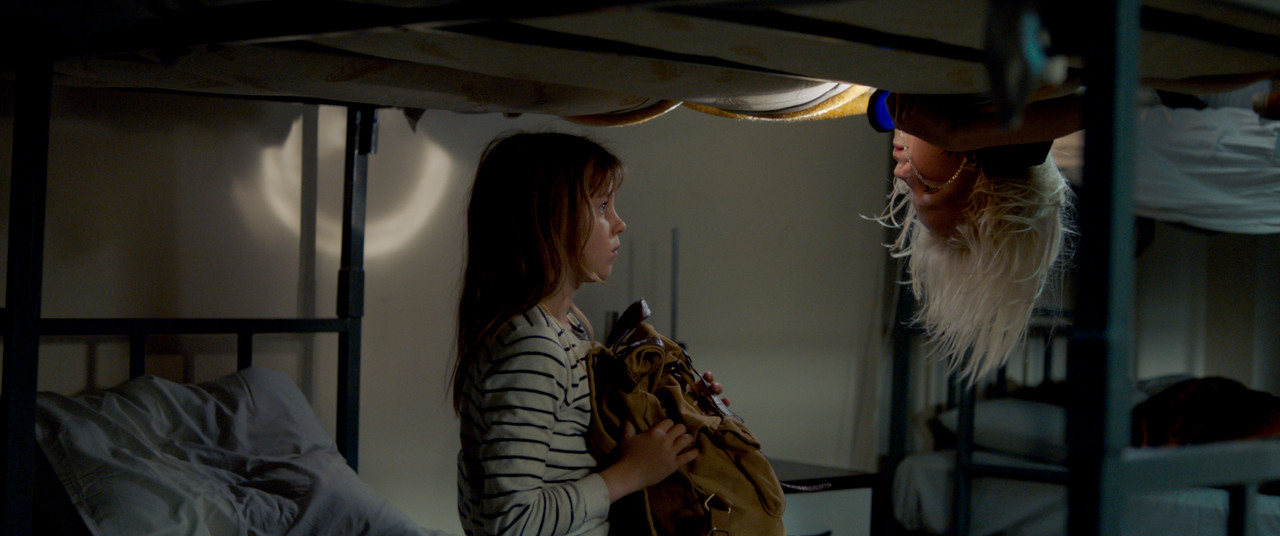
“I came from the path behind you”, says 8-year-old Nelly (Josephine Sanz), just after telling her friend Marion (Gabrielle Sanz) that, in the future, Marion will be her mother. Like many of the lines in Celine Sciamma’s exquisite screenplay for her fifth film, it’s layered with meaning; Nelly literally comes from the path behind Marion, from her Grandmother’s house, which she and her parents are clearing out after her death. It’s also a line about how Nelly, and all children to some degree, follows a path cut for her by her mother.

Four of Sciamma’s five directorial films, and the two features she’s written for other directors, fall broadly into coming of age cinema. I’m not sure any modern filmmaker has managed such a consistent, varied and nuanced exploration of the genre. While it hasn’t got the spectacular effects and the high sci-fi concept, the film Petite Maman most recalls for me in spirit is, perhaps surprisingly, Back to the Future. That film, ultimately, is about meeting your own parents and realising that if you had just been a couple of guys at school, you probably wouldn’t have got on with your Dad. Petite Maman takes the same basic concept of meeting your parent at your own age, but in this case, Nelly and Marion become fast friends. While the film doesn’t have her state it in the moment, it’s clear from one subtle shot of a particular, almost talismanic, prop that Nelly figures out quickly what is going on. 

Initially, Nelly and Young Marion are on totally equal footing, there’s an innocence and purity to their play together, spending much of their time in the woods, building a hut that Nelly had asked about earlier in the film. Later, when the relationship is clear, Sciamma uses the carefree feeling of these scenes to contrast with the older, clearly more fragile, Marion (Nina Meurisse), for instance, it doesn’t seem like the silly, playful, way that the girls make pancakes for Marion’s eighth birthday party is something Nelly will have done with the older version of her mother. 

In the present day scenes, there are some beautiful observations of how much Nelly cares for her mother; feeding her crisps and hugging her from the back seat as they drive away from the home where Marion’s mother passed away. It’s something that, while present day Marion clearly loves her daughter, the younger version seems more able to express. There is so much to be said about how delicately and how beautifully Sciamma and her young stars paint this relationship, but perhaps the simplest moments are the most moving, like the image of 8-year-old Marion, blowing out her birthday candles as she looks between her mother and her future daughter. It’s a gorgeous, truly magical, family portrait that sums up the film's magical realism perfectly.

Celine Sciamma is one of the truly great filmmakers working today, and Petite Maman is another gem. Thanks to cinematographer Claire Mathon, who also shot Portrait of a Lady on Fire for Sciamma, this is a beautiful film. The scenes between the young Marion and Nelly have a golden autumn feel, while the scenes back at the present day house emphasise the emptiness, especially after present day Marion takes off, leaving Nelly with her Dad. The dialogue doesn’t always sound like 8-year-olds talking, but some of the most childlike moments are the film’s most indelible, like Nelly wanting to go to sleep “to get to tomorrow”, which leads immediately to one of my favourite cuts in any recent film, carrying that idea through directly.  In 72 minutes, Sciamma manages to convey great depth and nuance, to fully explore this mother/daughter relationship, but do so with disarming simplicity. 

I think I need to see it again (and again) to appreciate all of its layers properly, but this is clearly one of the very best films of 2021 and yet another landmark in Sciamma’s thus far flawless career.
★★★★★

Oct 5, 2021

24FPS @ LFF 2021: Inexorable

Dir: Fabrice Du Welz
Adoration
, Fabrice Du Welz’ last film, which played at LFF in 2019, was basically Junior Badlands, with two twelve-year-olds on the run from a mental hospital. It’s still only had a digital release in the UK, and remains something of an underseen gem. If that film had a single obvious influence, then Inexorable is much more of a patchwork, drawing plot points and images from a lot of entries in the yuppies in peril subgenre, among others.

Marcel (Benoît Poelvoorde), his wife Jeanne (Mélanie Doutey), and their young daughter Lucie (Janaina Halloy) have just moved back into the massive estate owned by Jeanne’s family. When a young woman named Gloria (Alba Gaïa Bellugi) brings their daughter’s new dog back after he has run off, and offers to show Lucie how to train him, the family soon offers her a job as a nanny/maid. However, it quickly becomes clear that Gloria is not just a fan of Marcel’s successful novel, Inexorable, but that she may have a fixation on it and him, which begins to manifest in manipulative ways.

Like many of the films it draws on, much of Inexorable unfolds like a home invasion thriller in slow motion. Gloria’s assault on the family is not one of sudden violence, but of nurtured obsession and festering resentment. It’s a mix that Alba Gaïa Bellugi plays effectively. The first moment there is a flicker of a crack in her mask is especially good; it’s a tiny bit of nervousness that passes across her face when she’s asked about a bit of her background, visible enough for it to register for us, but fleeting enough that we buy Marcel and Jeanne failing to recognise it. The performance, driven by the necessity of the screenplay, gets broader throughout, but Bellugi comes up to meet the tone rather than overplaying.

Poelvoorde, Doutey and Halloy are all good too, and a believably imperfect family unit. Poelvoorde’s blocked author (an early drone shot has shades of The Shining as it tracks the car on the way to the dusty stately home they are moving into) is obviously at first intrigued by and perhaps too easy-going with the attractive young woman who is now in his home, but from his lies to cover an indiscretion to his hiding of parts of his life, it becomes clear that he’s largely driven by self-preservation. Doutey has perhaps the least rounded character here, too often she’s written a little overly spiky, and early on there’s a naïveté in the way she takes Gloria in (and especially her reaction to Gloria’s first real manipulation) that never seems especially credible from the rest of her performance, but these too are largely script issues.

Du Welz doesn’t just wear his influences out in the open, from Chabrol to Barbet Schroder and from Hitchcock to (if I didn’t misread a certain point) Park Chan-wook, he displays them proudly. Sometimes, as in a stylish shot of Marcel throwing Gloria out of his (stationary) car, one side bathed in blood-red light, the other in vivid blue, in what one could take for a fleeting giallo homage, it works in his favour. When his plot points bear if not direct then certainly considerable comparison to the likes of La Ceremonie and the criminally underrated The Page Turner, those influences hang heavy on the film. That said, Du Welz and the cast successfully draw out the tension. The single location where the bulk of the film takes place may be expansive, but the lighting and the blocking, particularly as Gloria begins to draw Marcel in, help to shrink that space and eventually make the dynamic between the three adult characters fairly claustrophobic.

Inexorable isn’t a bad film. The issue is more that it’s never as good as the sum of its influences promises. The performances are capable, it’s got some thrills and some tension, but you’ll always know where it's going, and you’ll know because you’ve seen its moves done better before. An engaging homage, then, but not one that can sit alongside the best of its predecessors.
★★★

Sep 17, 2021

The Mad Women's Ball [Le Bal Des Folles]

Dir: Mélanie Laurent
Eugénie (Lou de Laâge) is the daughter of a well off family in 19th century France. An independent spirit, she’s sometimes prone to embarrassing her father and brother, but the last straw comes when she begins to believe she hears the voices of the dead. Institutionalised, she slowly convinces head nurse Geneviève (Laurent) that she’s not crazy and is telling the truth.

Over the past decade, and now five films, French actress Mélanie Laurent has quietly built a low-key but high-quality directorial career. Here she reunites with Lou de Laâge, one of the leads from her 2014 film, Breathe and takes the other lead role herself. Laurent surrounds herself with talented collaborators. Emmanuelle Bercot brings experience and authority as a much less empathetic nurse, who runs the isolation cells in the hospital. On the other hand, Lomane de Dietrich makes a big impression in her first feature as Louise; a fellow patient of Eugénie’s who thinks her relationship with one of the junior doctors will be her route out of the asylum. The supporting cast, filling out the background in the asylum, give the place a sense of life; sometimes nightmarish but also often as somewhere that the inmates—many of them not ill at all by today’s standards—find camaraderie. The supporting players don’t have much development, but they give a feeling that there are stories behind each of these faces and why they are in this place, it’s just that we’re following Eugénie’s experience.

The screenplay layers in a feminist point of view, about how a society controlled by men locked women away rather than deal with their problems, real or imagined. It’s not difficult to see contemporary resonance here in how women may not be institutionalised for such prosaic reasons anymore, but are still frequently dismissed as ‘hysterical’ as a way to avoid dealing with what they are saying. It’s also interesting that the story (adapted by Laurent from a novel by Victoria Mas) chooses not to entirely heroise Geneviève by making her awakening about being a moderniser in how they treat the patients as a whole, but because she comes to believe in Eugénie’s contact with the dead when she passes a message from her deceased sister. Where the writing, and the film as a whole, falls down, is in giving the story real force. While it drives the narrative, and in one scene Laurent movingly plays Geneviève’s gratitude at what she believes is contact with her sister, we don’t get a lot of sense of the background of the tragedy. This lack of weight is also present in the other sibling relationship in the film, between Eugénie and her brother Theo (Benjamin Voisin). He appears a couple of times, once to beg Geneviève to give his sister a book, but the sense of the guilt the character presumably feels for being in on the plan to commit his sister or the scheming to save her just isn’t there. Perhaps the best-developed relationship in the film is between Eugénie and Louise, and fittingly Lou de Laâge and Lomane de Dietrich (a name to keep an eye on in the future) give the film’s most complete performances and play off each other very well.

Where Laurent excels here is often in the film’s imagery. Not only does she create a world that feels definitively removed from the outside within the walls of the asylum, but she and DP Nicolas Karakatsanis also capture the different aspects of that world viscerally, from the cold greyness of the ice bath treatments to the strange spectacle of Louise being hypnotised until she has a seizure in front of a group of doctors who stroke their beards, talk around her and ignore her distress. The ball of the title has a feeling that captures a sort of pantomime version of the opulence of the opening scenes with Eugénie and her rich family but has an edge of danger that the scenes between the inmates only otherwise have when the staff; uniformed and stern-faced, come to take one of them for a treatment. Worse than all of this is the featureless dungeon of the isolation cells, which Laurent makes claustrophobic in a way none of the rest of the asylum feels. On top of the well-drawn environment, there are some sharp editing choices here that draw parallels between various different characters and moments. Most effective is a cross-cut of Eugénie and Geneviève each removing their corsets; the patient in her dungeon and the nurse in her bedroom.

The Mad Women’s Ball isn’t so startling a film as Laurent’s last directorial effort, Galveston. There’s nothing here that marks her work out quite so much as that film’s extremely tense third act tracking shot of Ben Foster trying to escape a warehouse. That said, even if bits don’t hit with the impact you might hope for, this is still a fine showcase for Mélanie Laurent the director. She draws excellent performances from her whole cast, herself included, and makes her visuals appropriately alternately rich and dingy, rhyming those choices intelligently in the structure. I wish there was a little more to make us feel these events the way the characters do, but this is still engaging, quality filmmaking.
★★★½

Oct 10, 2019

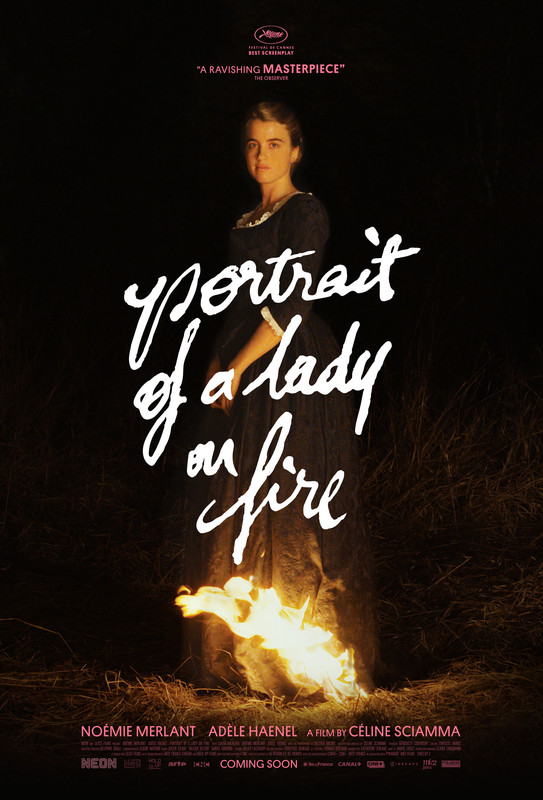
24FPS @ LFF 2019: Portrait of a Lady on Fire

Dir: Celine Sciamma
Since 2008, writer/director Celine Sciamma has made her name exclusively in coming of age cinema, with her own films Water Lilies, Tomboy and Girlhood and the screenplays for My Life as a Courgette and Being 17, all five of them among the genre’s best in the past few years. As her first venture outside that genre, Portrait of a Lady on Fire represents a big change, but Sciamma’s cinema, while evolving, as it has with each work, still feels as raw and personal as ever with this move into period romance.

In 18th century France, painter Marianne (Noémie Merlant) is commissioned to paint a wedding portrait of Héloïse (Adèle Haenel). Because she doesn’t want the marriage, Héloïse is trying to avoid the painting, so Marianne must observe her during daily walks and work in secret. As the wedding grows closer, so do Marianne and Héloïse.

Described by Sciamma as a film about the memory of love, the jumping off point is the titular portrait. When Marianne is asked about it in a drawing class where she is both teacher and model we move straight into flashback, finding her arriving on the beach, above which sits the stately home where Héloïse lives with her mother (Valeria Golino) and their young maid Sophie (Luàna Bajrami).

Like many love stories, Portrait of a Lady on Fire is initially a slow burn. In her aim to film the growth of desire, Sciamma uses both this slow pacing and the composition and timing of her images brilliantly. The film is incredibly sensual and tactile, taking in details of form and texture in a way that seems to try to replicate Marianne’s painter’s eye for detail. This is seen in how the camera dwells on things like the folds of a dress, as well as in the way it regards Haenel, taking in every angle and line, allowing her to give a performance that works in tiny nuances, especially during the first half of the film, which is essentially a process of breaking through Héloïse’s shell. The first time Haenel smiles in the film, which is almost imperceptible and almost halfway through, is the first moment that begins to trigger the realisation of the desire and slowly forming passion that Sciamma has been building.

In a film where gaze is paramount, it is fascinating to watch how that aspect evolves. The connection between Merlant and Haenel changes throughout the film, and Sciamma often dwells in those moments, holding on their gaze towards each other, whether the two are in the same frame or not. The way the camera represents how they look at each other comes through in everything. It's there even in the design, the home feeling colder in the beginning of the film and the warmth of the relationship between Marianne and Héloïse seeming to warm up the surrounding environment, at least in the house, as time goes on. The central visual metaphor—Marianne seeing Héloïse standing in the opposite side of a fire at an outdoor party and Héloïse’s dress catching fire, just as the yet unspoken desire is rising on both sides—may not be subtle, but it’s evocative, thanks especially to the painterly texture of the image. This painterly feel is embedded in many of the film’s important images, most notably a recurring and fleeting image of Héloïse in a white nightgown; she seems part ghost, part painting, and that image becomes more affecting every time we see it.

The romance is the centre of the film, but many other concerns run through it as well. As well as being about love, the film features a telling depiction of female friendship and support, as Marianne discovers that Sophie is pregnant and the women try to obtain an abortion for her. That sequence, thanks to one element included by Sciamma, bears such complexity of feeling in a way that never lectures and is entirely fresh. It’s sad yet a victory; tough yet tender. Sciamma also interrogates the place of women in 18th century society. The idea that Héloïse is meant primarily as a bauble, a decoration for her husband to carry around is embedded in the portrait process, and especially in the more idealised image that Marianne paints when her model won’t sit for her. We also see this in Héloïse’s mother—clearly unhappy with her own arranged marriage, but now engaged in making the same bed for her daughter to very literally lie in.

Passionate but never exploitative, it’s obvious that a female gaze is behind the love scenes, but it’s sometimes the painting scenes that feel most telling of the relationship at the heart of the story. As they build to the first kiss, these sequences are as intense and intimate as any in the film, and after the relationship is formed they become playful; the intimacy acknowledged and embraced. Art also plays a part in the film’s most exposing scene, as Marianne draws a self-portrait, a secret thing for her lover to keep, while looking in a mirror she has set between Héloïse’s legs.
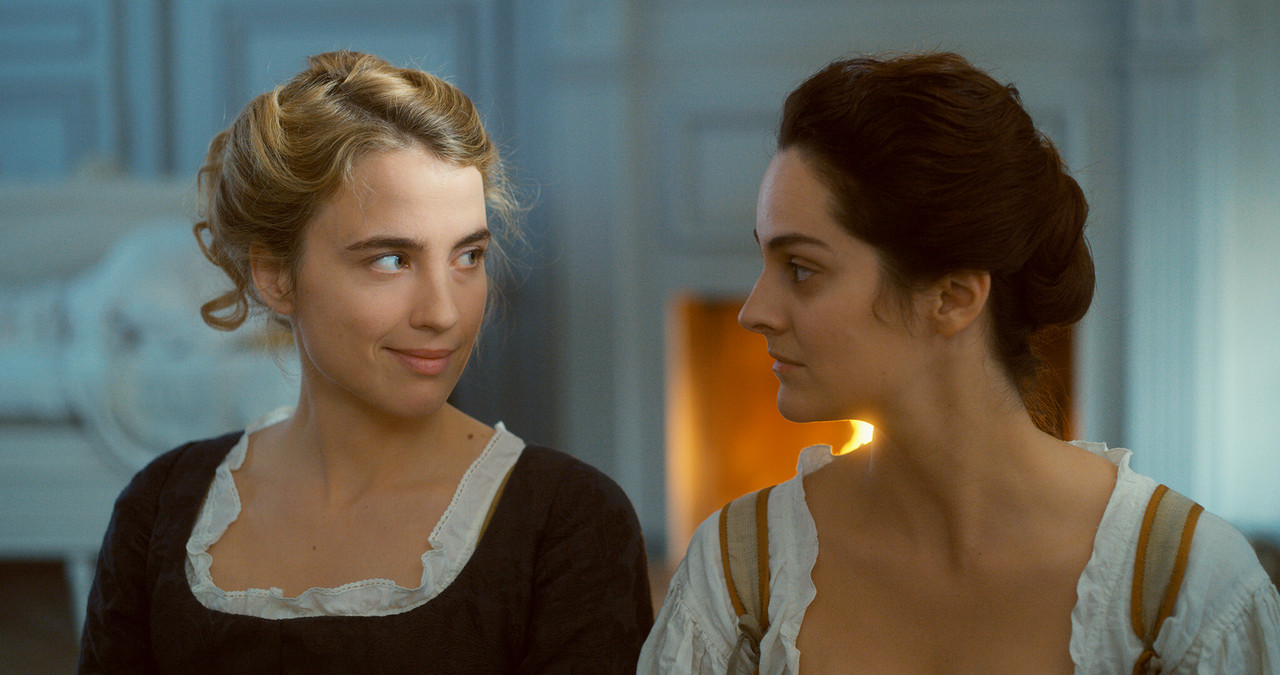
The film is exquisitely crafted, from the impeccable framing that only draws parallels between the arts of painting and cinema to the lack of non-diegetic music, which forces us to dwell in the same space as Marianne and Héloïse, to experience the growth of their love without being instructed by a score as to what we should be feeling. This extends to the work of the actresses (two men appear in the entire running time, each for a few seconds). The supporting roles are well cast, with Valeria Golino again reminding us how good she is, finding layers of sadness in the Countess and Luàna Bajrami making Sophie another interesting and important prong in the way the film looks at female relationships, beyond the romantic and sexual. Of the leads, Noemie Merlant is perhaps easier to read in the initial part of the film, from her emptiness in the opening scene to the way Marianne is progressively drawn to Héloïse, prompted initially by the mystery of what this woman may look like. The study of that face, which grows into a stronger desire scene by scene, is as brilliantly played as it is cued by Sciamma’s camera.

Sciamma has said that this film was made for Adele Haenel, and it’s difficult not to see it through the prism of their working and personal relationship. In many ways it is a film about Haenel’s face and the fascination it holds; for Marianne and, through the lens, for Sciamma. It would be tempting to take this reading further, but for all its clearly personal content there is a universality here. The power of the memory of love is hardly exclusive to any one relationship, and it’s impossible not to connect with the melancholy of that element, especially as the film runs up to the completion of the portrait. Haenel’s performance, even by her own standards, is superlative. The subtlety of what plays on her face, the way she shifts Héloïse’s character as the film goes on. She is perhaps most powerful in her silences, never more so than in the film’s beautiful final shot; a three minute take that simply tracks in on her. Haenel is one of the best female actors in Europe, and this is her finest performance to date.

Portrait of a Lady on Fire is a stunning achievement, rich and detailed in storytelling, metaphor and resonance. It’s proof that Celine Sciamma is more than just an accomplished teller of teenage stories, and further develops her cinema to put her on a level with the great visual storytellers around right now. It’s essential viewing for fans, and maybe even more so if you’ve not yet discovered her work.
★★★★★

Oct 6, 2019

24FPS @ LFF 2019: The Girl With a Bracelet

Dir: Stéphane Demoustier
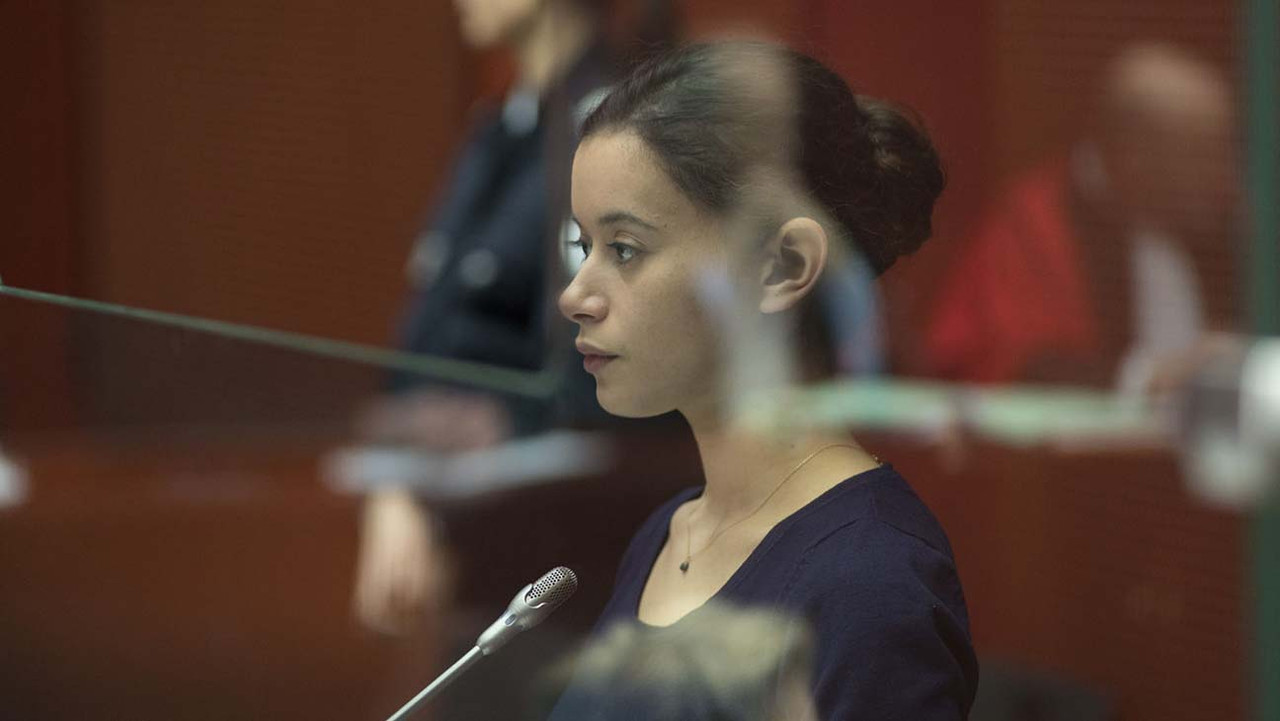
18 year old Lise (Melissa Guers) stands accused of stabbing her friend to death. During her preparation for trial and the process itself, she has been living at home while under house arrest with an ankle monitor. As the trial goes on, her parents (Roschdy Zem and Chiara Mastroianni) hear things they never imagined about their daughter, but are they wrong in their belief that Lise is innocent of the charge against her?

It’s not difficult to see why the courtroom drama has been a reliable staple of cinema for so long. If anything has inherent drama then it is a trial. The battle lines are clear, the heroes and villains can, depending on our point of view, be clearly delineated but also can shift as the drama unfolds. The process also provides ample opportunity for actors to stretch their muscles, with tailor made spaces for grandstanding speeches about important issues. On the one hand, you might expect that getting away from some of these generic touchstones would prove refreshing. On the other, The Girl With a Bracelet often seems to set out to prove otherwise.

Following an articulate silent opening scene, which shows Lise calmly being arrested while at the beach with her family, Stéphane Demoustier’s film is all talk. This is partly mandated by the courtroom setting, but once the trial begins, the film holds us in that setting almost all the time. If the film is accurately representing the French court system (and it does seem to be), then it could perhaps do with being less faithful, because the setup itself, with the lawyers only muted presences next to an examining judge, seems to undercut the drama of the case. 

Some courtroom films allow us glimpses of the various possible ways the case could have played out, given the various theories advanced, or at least show us one of the possible perspectives on the crime. The Girl With a Bracelet does neither, and so the entire film is all talk and no show. This is far less intriguing than Demoustier may have hoped, because the case itself, while lurid, is argued in such a stiff and frankly dull way that even the telling isn’t that interesting. It’s also fair to say that the ending is never in doubt, so even the drama of the verdict lacks punch.

Confined to the courtroom for long periods, the film feels static and stagy, and Demoustier has no tricks up his sleeve either to make things feel claustrophobic or to find interesting angles from which to shoot the proceedings. At times the whole thing is so visually flat it feels like Court TV. So little is said purely visually that with only very minor adjustments, this could be a radio play, and I’m not sure it would be any more entertaining then.

The performances aren’t bad. Melissa Guers has a distant detachment that could be read either as Lise being unable or unwilling to process what is happening to her or that she’s so cold she’s unaffected by it all. The problem is that either interpretation is defined by the same almost affectless performance. Likewise, Anaïs Demoustier (one of the most interesting actors in France and, coincidentally, the director’s sister) has little to work with as the prosecutor in the case. There’s conviction in her final speech to the court, but as a figure within the film she exists solely as a job title. The same, sadly, is true of Annie Mercier as Lise’s lawyer. There are a couple of flashes of interest in Roschdy Zem and Chiara Mastroianni’s performances in the very brief moments that their belief in their daughter’s innocence is undermined, but the film never indulges this for long enough to say anything interesting.

There is always potential in a courtroom drama but the disappointment of The Girl With a Bracelet isn’t so much that it misses that potential as it is that it consistently seems to try to avoid it.
★½

Sep 26, 2019

24FPS @ LFF 2019: Days 8 and 9

I Lost My Body
Dir: Jérémy Clapin
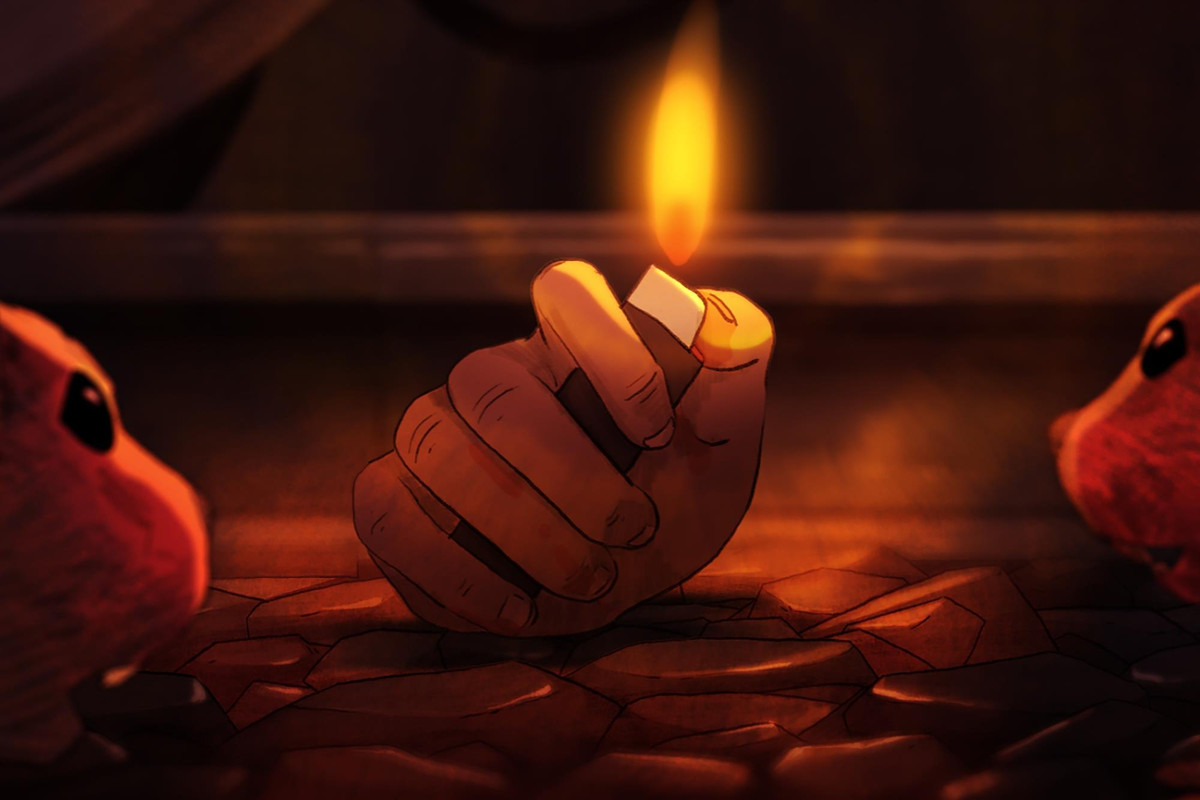
As a disembodied hand searches for its former owner, we watch in parallel as Naoufel (Hakim Faris) falls for Gabrielle (Victoire Du Bois), who he first meets as a voice on an intercom when he’s supposed to deliver a pizza to her.

Jérémy Clapin’s first feature is first and foremost a beautiful piece of hand-drawn animation. The human characters are expressive, with a slightly sketchy look but fluid and engaging animation that gives them all character. What is more remarkable though is the animation of the disembodied hand and the world it moves through. Obviously, we are seeing much of what the hand goes through from its level and the realistic drawing of the environment around it and the things it interacts with - notably rats and a pigeon - makes its journey feel all the more perilous and takes us on that journey with it. In addition to that is the brilliance of the animation of the hand itself. Without eyes, a mouth or even an interior voice, the hand feels like a full character. From it, we get a sense of struggle—gripping on to a drainpipe for dear life—and of longing, as it ventures on its long quest. In many ways, it may be the character we end up feeling most empathy for, which is an incredible achievement. 

The relationship between Naoufel and Gabrielle is sweetly drawn. It’s hard not to identify with the slightly inept ways that Naoufel tries to tell Gabrielle who he is, aborting the mission several times through nerves. It’s also interesting and refreshing to see how Gabrielle, and through her the film, views these gestures by Naoufel as compared to how a romantic comedy of ten or twenty years ago might have.

As much as I loved the animation and the expressive but not instructive score by Dan Levy of The Dø, I Lost My Body ends up feeling a bit slight. Once we see how everything connects up, the last ten minutes are a little underwhelming and don’t really deliver the emotional punch the rest of the film appears to have been trying to lead to. There are lovely moments here, and the whole section of the film focused on the hand is remarkable, but ironically it might ultimately be a little less than the sum of its parts.
★★★½

The Antenna
Dir: Orcun Behram
The idea of a government using a broadcast to control its population is barely a sci-fi concept when one considers things like North Korean state TV and even the relationship between Fox News and the Trump administration. The Antenna is set in Turkey and shows us the first night of operations of a new government broadcast from the point of view of a single apartment building where, as soon as the dish to receive the broadcast is installed, escalating chaos ensues.

For his first film, writer/director Orcun Behram draws on many influences. This wouldn’t necessarily be a problem in itself, but he fails to establish much of an identity of his own and so what we end up with is a patchwork of those influences and a film that feels hugely derivative of better things that have come before. The main thrust of the plot is essentially a combination of two David Cronenberg films; the still underrated Shivers and one of his true masterpieces, Videodrome. As the insidious influence of the dish and the broadcast become more present, black sludge begins to ooze out of walls, taps and other outlets, calling to mind the black oil that was such a feature of the conspiracy episodes of The X Files. These are just the most glaring examples, and the ones by which The Antenna suffers most by comparison.

Taken on its own merits, The Antenna does occasionally show that Behram has some visual promise. An early sequence of Mehmet (Ihsan Önal), the maintenance worker who is the first to sense that there is something wrong at the building and that the dish is the cause, walking to work makes striking use of the imposing, towering, straight lines of the buildings he walks past. There are also a couple of standout sequences in the last fifteen minutes or so; an attack, under flickering lights, on Yasemin (Gül Arici) is visceral and brutal, and the long held close up on her in the aftermath is effective. The final sequence also shows some flair, especially in the choice to show one attack from outside the building it happens in, which accentuates the shock by stripping out the sound. 

Unfortunately, the journey to and time between these sequences is filled with long and slow scenes that want to revel in the film’s imagery but do little to repay that investment of time. The pace is often painful, every camera movement is agonisingly slow and the characters seem to move as if they are walking through the black sludge we see so much of. Sometimes a slow pace can work to build tension, but it’s so obvious where the film is going and what it’s trying and failing to say that instead it simply tests the patience. At 115 minutes, The Antenna feels long, and it could lose half an hour just through recutting to quicken the pace. The overarching message is one that has been advanced with more force and clarity in many films over the years, and the screenplay fails to get under the skin of either its central idea or its characters. It is possible there are resonances an English speaking audience will miss unless they are familiar with Turkey and its politics, but even if that’s the case, the film doesn’t deliver much of substance that is accessible to a wider audience. 

There are a few flashes of promise here, but for the most part, The Antenna is a slow and boring slog that will make you wish you were watching any one of the films it so liberally cribs its ideas from.
★½

Sep 23, 2019

24FPS @ LFF 2019. Day 7

Olla
Dir: Ariane Labed
In 2010 and 2011, Ariane Labed burst on to the international film scene with leading roles in Athina Rachel Tsangarai’s Attenberg and Yorgos Lanthimos’  Alps. It is perhaps no surprise then that this half-hour short, her debut as a writer/director, should bear their influence. 

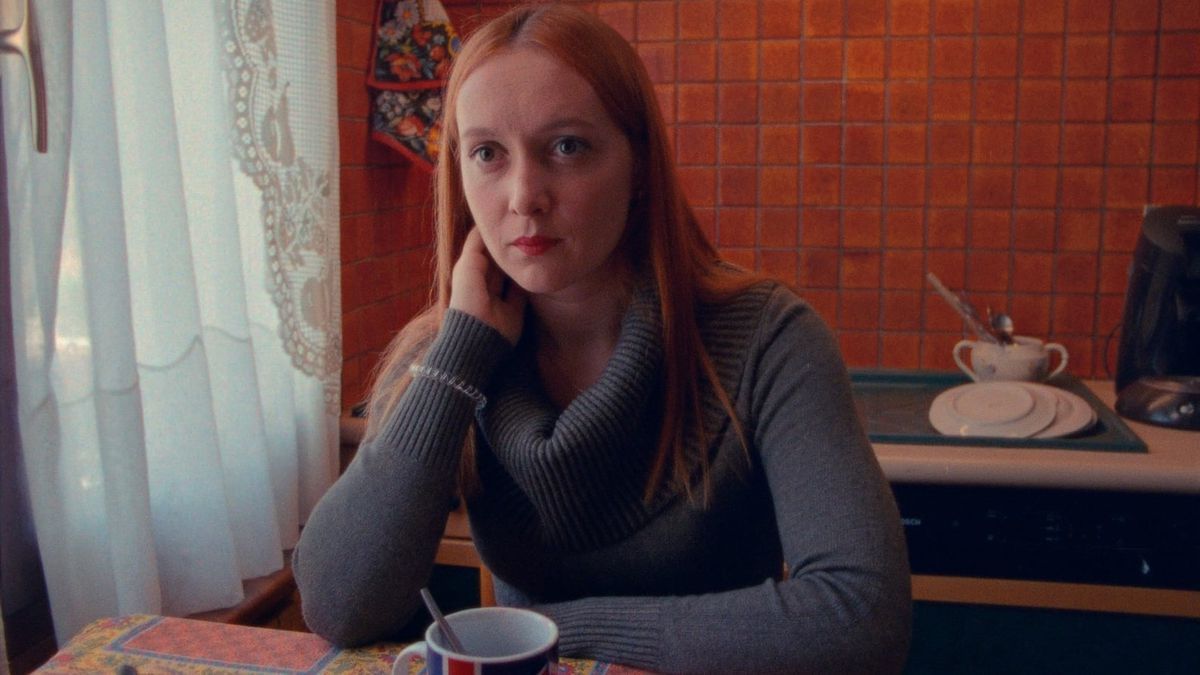
Olla (Romanna Lobach) has just arrived in France from Ukraine to live with Pierre (Grégoire Tachnakian), a man she met online and his infirm and elderly mother (Jenny Bellay). Bored, cut off from Pierre by the language barrier, and clearly annoyed by his suggestion that she be called Lola so she seems less like an immigrant, she ventures out of the house and ends up doing more than exploring the town. 

Though the deadpan black comedy and sometimes stark shooting style recall her collaborators work, Ariane Labed is no karaoke director. Most notable in her style here is an often bright and bold colour palette (starting with Olla’s striking red hair) that sometimes acts to undercut the darker elements of Olla/Lola’s experience. That said, there are moments that showcase the same sense of humour and stylistic influence of Lanthimos or Tsangarai. Most notable among them a one shot sequence in which she practices dancing, Pierre’s mother impassive in the chair as Olla gyrates to a foreign version of What is Love. Another darkly funny touch comes in repeated sequences of Olla being catcalled, the group of men all shouting in unison, first telling her how hot she is, then yelling that she’s a slut. The repetition turns them into something like a greek chorus, but also allows Labed to make a serious point about how women are often made to feel they are always on display.

At just half an hour, Olla doesn’t quite have enough room to grow. A feature version could flesh out the various plot points, especially the relationship between ‘Lola’ and Pierre, but this is a strong debut for Labed, anchored by a very good performance from Romanna Lobach and points to promising things from both of them.
★★★½

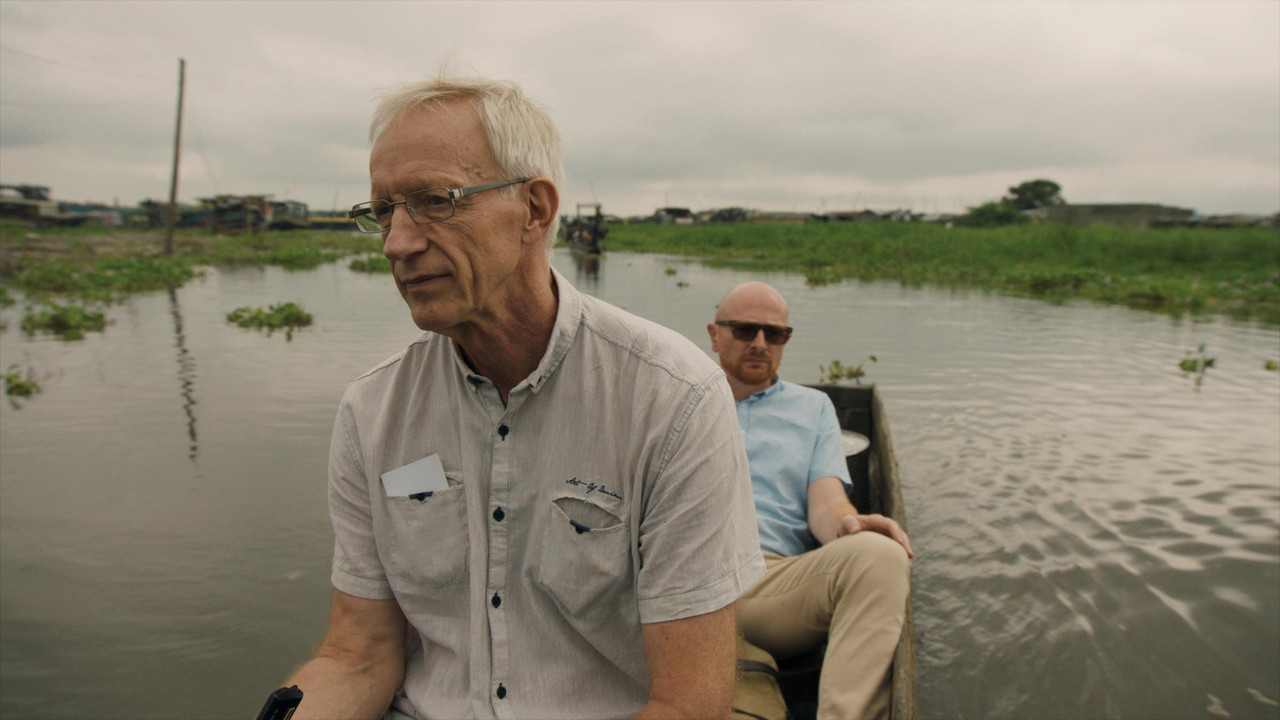
Cold Case Hammarskjöld
Dir: Mads Brügger
Through Netflix and a mass of popular podcasts, the true crime documentary has become one of the dominant forms of non-fiction storytelling in recent times. That is, in a way, what Cold Case Hammarskjöld begins as. The setup has director Mads Brügger and Swedish private investigator Göran Björkdahl reinvestigating the suspicious death in a 1961 plane crash over of UN Secretary General Dag Hammarskjöld. As Brügger admits right up front, this may be a very dark and far reaching crime, or it may simply be a tangled conspiracy theory.

There is, buried somewhere in this film, a compelling (potential) murder mystery. It definitely seems that the official story of Hammarskjöld’s murder is at best incomplete and deserves further and more rigorous and public investigation. Unfortunately not only does the film get distracted frequently, venturing down multiple rabbit holes, it also presents the central thrust of the mystery it sets out to investigate shockingly poorly. Throughout, Brügger uses a framing device that sees him have two (why two? he doesn’t know) secretaries type up the narration for the film, as we see him speak it. This totally redundant device slows the pace of the film badly, and only ever serves to restate things that it would be much better off simply presenting to us from the documentary and interview footage gathered.

The first half of the film is incredibly dull, with only tiny bits of information sneaking out between sequences of the director apparently structuring his film as we watch it. This might be less irritating if he structured it better. The second half of the film is more compelling. Brügger delves further into the South African Institute of Maritime Research—a shadowy mercenary and spy organisation that may have had a hand in Hammarskjöld’s death and other even darker crimes. He does manage to clearly establish that this organisation existed, but everything else is on very shaky ground. The one person he’s able to talk to at length tells a good story, but offers nothing to back up what he says, and worked for SAIMR decades after the plane crash that killed Hammarskjöld. Even this content is frustrating though, with Brügger fixating on details like how the man he believes was the head of SAIMR dressed completely in white at all times.

Again, the film can’t concentrate. If the rabbit hole it explores in the second half is true, then it’s one of the biggest and most disturbing scandals I’ve ever heard of, which is why it needs far better sourcing. What Brügger does is less robust investigation and more speculative join the dots. We see things laid out as note cards, but it wouldn’t be a surprise to find this film laid out on a conspiracy theorist’s wall, with red string joining the various elements up.

Strip out the self-indulgent framing device, impose a robust structure and concentrate on the one thread of the story that the film at least manages to pose relevant and important questions about and there might be a solid podcast episode or short documentary in this cold case, but the pure theory that surrounds it and the terrible presentation means that, at two hours, this is a largely unedifying test of patience.
★½

Sep 21, 2019

24FPS @ LFF 2019. Day 5

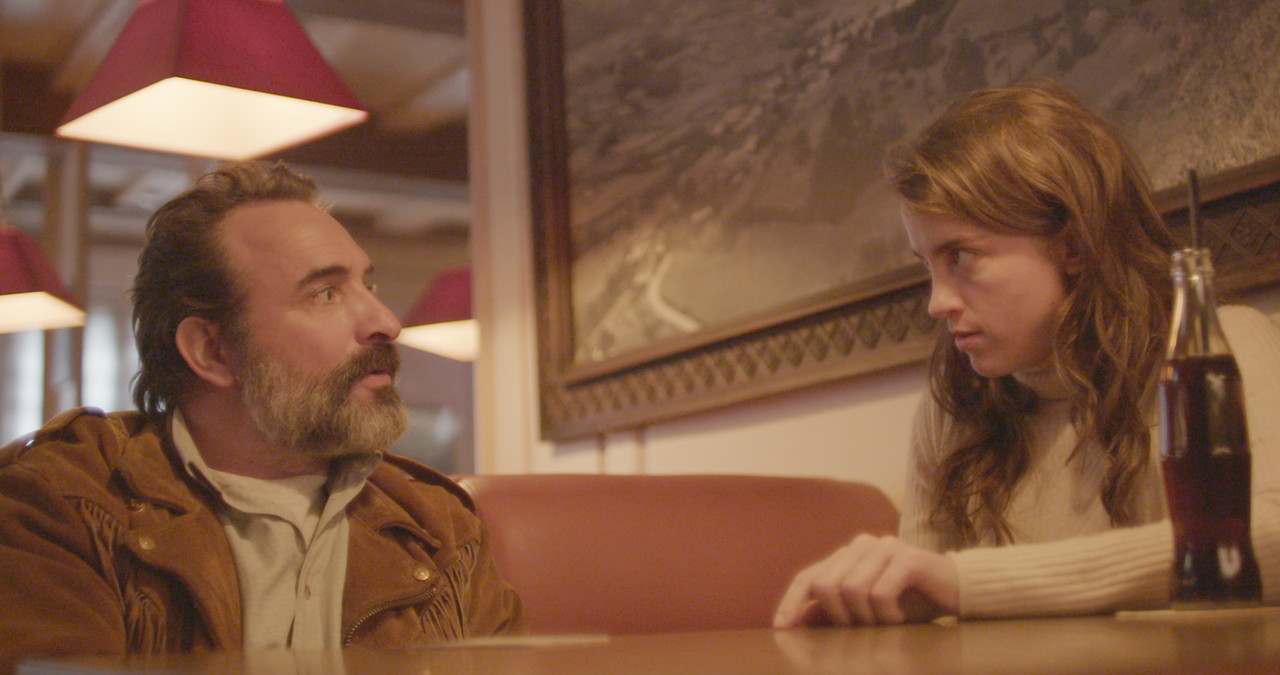
Deerskin
Dir: Quentin Dupieux
It has been a while since the UK has heard from Quentin Dupieux, the musician turned determinedly weird horror filmmaker who debuted with Rubber, a film about a killer tyre. This is far from his first film since, but it’s the first to make an international splash for a while.

Deerskin sees Jean Dujardin (still best known to international audiences for The Artist) as Georges, who appears to have left everything behind to buy a 100% deerskin jacket. Soon, he hears the jacket tell him it should be the only jacket in the world. One night he tells Denise, a barmaid (Adele Haenel, also at LFF in Portrait of a Lady on Fire), that he’s a filmmaker and she responds that she, in her spare time, is an editor. Together they begin making a film. You know, that old story. 

Deerskin couldn’t be accused of being a deep film. Dupieux largely deals in strangeness for its own sake. If there’s any larger point that he’s making then it’s probably in the fact that Denise finds such interest and potential in Georges’ poorly framed and self-obsessed (or jacket obsessed) footage; perhaps a sideswipe at fans and critics who’ll reach for meaning in anything. Which likely means that, at this point, the joke is very much on me.

The film works because, from both behind and in front of the camera, everyone plays it straight, which has the effect of accentuating the absurdity and making it funnier. This is true from one of the very first images, which finds Georges trying to flush his suit jacket down a service station toilet, right through to the final scene. Dupieux doesn’t do anything flashy with the direction, again trying to ground his silliness in something that, if it doesn’t feel entirely like the real world, we can accept on its own terms. The visuals can feel a little flat—deadpan, perhaps—but this may also be something of a reflection of Georges’ own unpracticed filmmaking (and again, the joke’s on me).  

Jean Dujardin is brilliantly matter of fact as Georges. As he slips further from reality he creates a voice for the jacket. At some points Dupieux lets us see Georges speaking for it, but increasingly as the film goes on he allows us to see how tenuous Georges’ grip on what’s real has become by framing his face out when ‘the jacket’ is speaking. To talk about exactly how things go down would be a shame, as it would spoil some of the film’s funniest sequences, but suffice to say that Deerskin develops increasing shades of American Psycho, including its main character’s obsession with how he looks to the outside world) as it goes on. Adele Haenel’s role might look thankless at first glance; a facilitator more than a character. That may have been true at script level, but Haenel is a huge talent. She has what seems like a simple gift, but one which is incredibly rare; the ability to always seem real on screen. In this way, she provides the film a grounding influence of sorts, but the character is also credibly sucked into Georges’ world, culminating in a brilliant final image. I would absolutely watch a film that picked up from that moment.

Deerskin is, ultimately, a bit inconsequential. It is huge fun in the moment, but I’m not sure that much besides that will linger. However, that’s more than many films ever achieve and for 77 minutes it is highly entertaining and engagingly weird company. 
★★★½

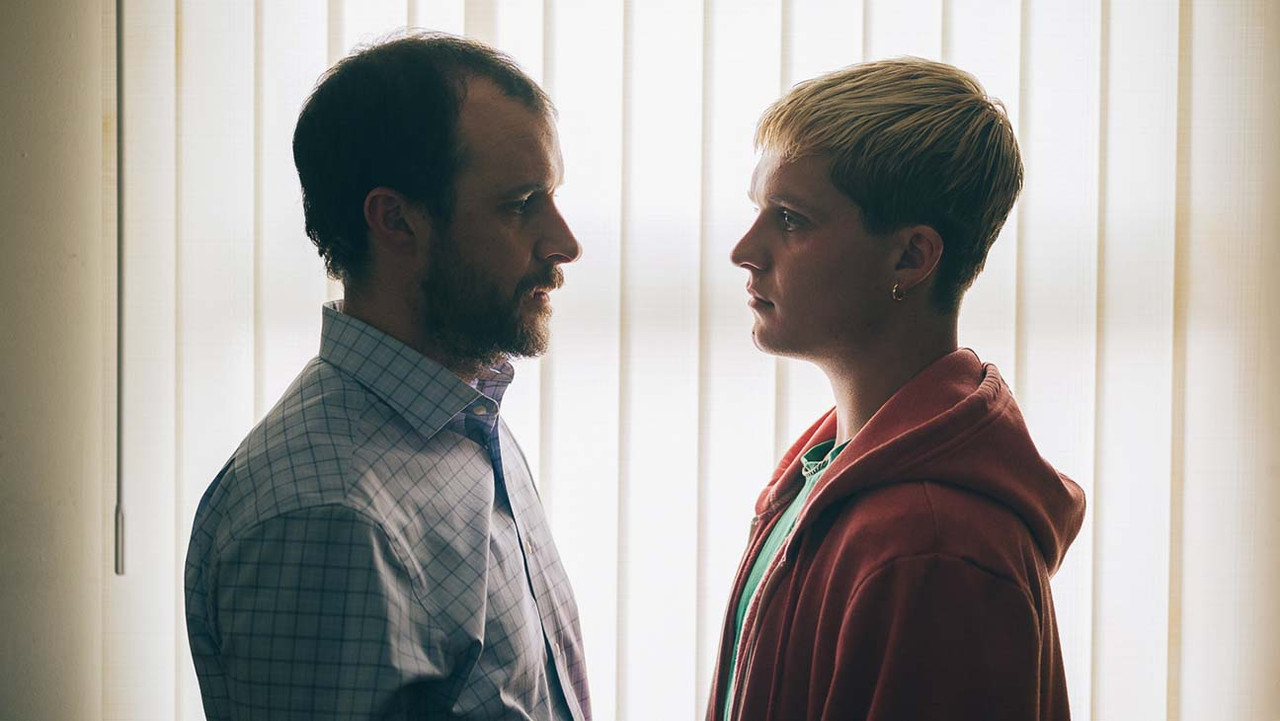
Rialto
Dir: Peter Mackie Burns
With his 2017 debut, Daphne, Peter Mackie Burns established himself as a British director to watch. Powered by a searingly honest performance from Emily Beecham, that was an engaging drama that felt honest about the experience of being thirtysomething and single in London. Mackie Burns’ follow up in some way stakes out similar territory, focusing on one character and their struggles with relationships, sex and identity.

Colm (Tom Vaughn-Lawlor) is middle aged, working a job he doesn’t seem particularly interested in and equally disconnected at home from his wife (Monica Dolan) and their teenage kids. He begins a series of encounter with a much younger man (Tom Glynn-Carney) as his life outside this relationship begins to cave in around him.

What Rialto has in common with Daphne is the centrality and quality of its leading performance. Tom Vaughn-Lawlor’s performance is heartrending to watch, as Colm tries to find a space in which he can be fully himself and deals with the guilt of that not being at home with his wife and children. He is devastating in a couple of scenes in particular; one coming home after a long night getting drunk, only to faced with explaining himself to his wife and, later, finally spitting out his true feelings, directly in the face of his 18-year-old son. A less familiar face, but also very good, Tom Glynn-Carney brings more complexity than you might imagine to what might be a cliche role as a male prostitute. He’s especially humanised in a late scene ar his home, which is a touching contrast to the more menacing way he’s seen early in the film. I just wish I’d found the film around these performances quite as effective.

Written by Mark O’Halloran, the screenplay struggles to shed its stage origins. The dialogue, more so than in Daphne, feels constructed rather than something we’re just hearing the characters say for the first time. Aside from the two leads, the characters are lightly sketched, with Colm’s kids notably underwritten. The images are also a mixed bag. Though Adam Scarth’s (Daphne, Apostasy) cinematography often captures a certain stark beauty (the late scene of Colm walking to the sea late at night) the direction feels a bit flat. The dialogue and performances are the main storytelling engines here. There aren’t many shots that are memorable in and of themselves, and nothing that has stuck with me the way an early shot in Daphne, of Beecham descending an escalator, has. 

On the whole, Rialto is worth seeing for its two central performances, but the film surrounding them never quite lives up to them and this has to, for me, go down as something of a disappointment from Peter Mackie Burns, given the expectations set by his last film.
★★★

Oct 16, 2017

24FPS @ LFF 2017: Family Films

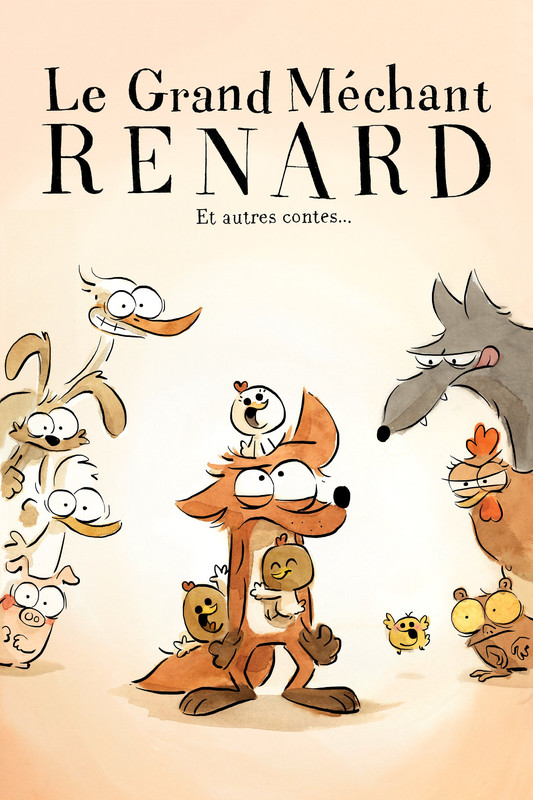
The Big Bad Fox and Other Tales
Dir: Patrick Imbert, Benjamin Renner
This delightful French animated film is set up as three short plays, put on by the animals in a farmyard. In Baby Delivery, Pig and his dimwitted friends, Rabbit and Duck, must fill in for an injured Stork. The Big Bad Fox sees Fox accidentally become mother to three chicks he steals for himself and Wolf to eat. In Saving Christmas, Duck believes he has killed Father Christmas and he, Rabbit and Pig must fill in for him, as they did for the Stork.

The Big Bad Fox and Other Tales is this year’s Family Gala screening at the London Film Festival, this is the strand that contains the films pitched at children, but this is a true family film. It will delight children (I’d suggest it for ages six and over) but, without aiming jokes over children’s heads, it should also work for adults. The animation style is very different; a little sketchy, but beautifully simple and full of character rather than crude, but the tone of the film has much in common with classic animated shorts. The slapstick gags come thick and fast, with the timing and execution of classic era Tom and Jerry, while the way these moments combine with the verbal humour recalls Looney Tunes strongly (especially in the relationship between Pig, Rabbit and Duck).

There are some wonderfully absurd touches and running gags to be enjoyed; the chickens forming a self-defence group because the guard dog is lazy, the calamities that happen to Pig’s house and Little Michel, who pops up in the last two stories to endearing and hilarious effect.

Any further review of this film would amount to my repeating my favourite jokes, which would rather spoil what is a wonderfully enjoyable film. I will say to stay in your seats during the credits as during them there are some lovely jokes, a recipe and a closing moment that seems to be a nod to Michigan J. Frog and sent me out of the cinema with a mile wide smile on my face. This may be pitched as a kids film, but it’s for anyone with a functional funnybone.
★★★★½

The Day My Father Became A Bush
Dir: Nicole Van Kilsdonk
Toda (Celeste Holsheimer) is ten years old and lives with her pastry chef father (Teun Kuilboer) in an unnamed country. When war breaks out between ‘The Ones’ and ‘The Others’ Toda’s grandmother comes to stay, while her father is called to fight. Eventually it becomes too dangerous at home and Toda is sent abroad to join the mother (Noortje Herlaar) she doesn't know. Along the way she gets separated from the people taking her and must make her way on her own.

I am a great believer that children’s cinema can and should be much more than mindless entertainment. The Day My Father Became A Bush tackles some big issues: war and its futility, displacement and the dislocating reality of suddenly becoming a refugee, but does it from a child’s eye view, making those issues comprehensible for its target audience. A big part of this success is in the way it addresses war. Nicole Van Kilsdonk never explores what the fighting is about or whether we should see ‘The Ones’ or ‘The Others’ as the good guys in the conflict. This isn't what’s important to Toda, what matters to her is that her father is away and that his camouflage be good enough to make sure he comes home (in one of the film’s most quietly touching scenes she puts branches on his helmet so ‘even birds will think you’re a tree’). 

Ultimately, the film says, which side we’re on doesn't matter much. Her father wears a blue badge but at one point Toda finds herself sharing a shack with a man wearing a yellow badge, soon she’s sharing food with him and, sweetly, helping him learn to give orders (he has deserted because he found he wasn't assertive enough for his command role. This scene is a fine example of the way the film leavens its messages with humour and heart.

Toda is a great character for young girls to see and identify with. She’s inquisitive and intelligent, brave in the face of scary situations and compassionate with a slightly younger boy who attaches himself to her, whom she nicknames Stickie (Matsen Montsma). She’s also just a typical ten year old, who calls herself a daddy’s girl. As Toda, Celeste Holsheimer gives a performance free of anything actorly or precocious. She hits the funny moments nicely, but is particularly adept in the dramatic scenes, especially towards the end of the film when, having lost her mother’s address, Toda finds herself a refugee.

The Day My Father Became A Bush asks kids to engage with some big themes, but it takes them gently through those ideas, leavening them with humour and, even in the film’s toughest moments, the optimistic outlook that Toda radiates. It’s an entertaining and intelligent film and an ideal opportunity to discuss some challenging subjects with your kids. 
★★★★

Oct 11, 2017

24FPS @ LFF 2017: More short(ish) reviews

The Dumb Girl of Portici
Dir: Lois Weber
I confess I am far from an expert on silent cinema. It’s a medium that I think is in many ways distinct from sound film, because of the many differences in style, technique and in the basic way it communicates with us. I have seen a good few silent films, from the established classics - Keaton, Chaplin, Griffith - to a few deeper dives, such as Oscar Micheaux’s Within Our Gates, but I still feel I need further education. It is worth bearing all this in mind here, because some of the difficulties I had with The Dumb Girl of Portici may be based on that unfamiliarity, rather than the inherent qualities of the film itself.

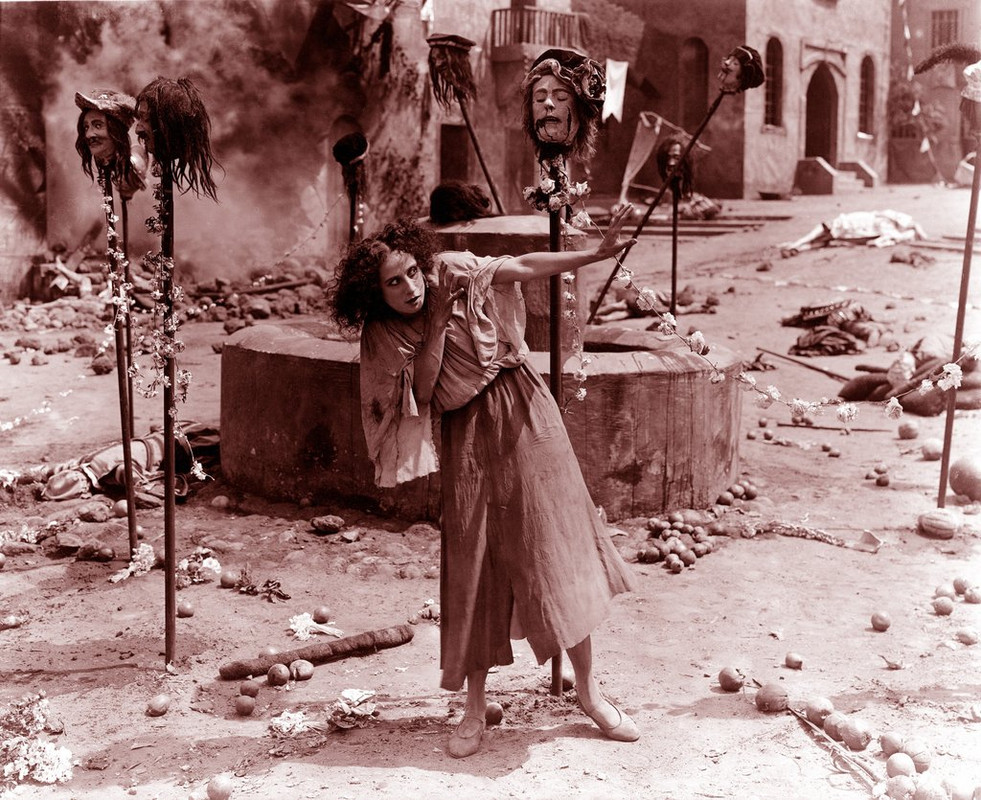
The story is based on an opera about Fenella (Anna Pavlova), a mute gypsy girl who falls for a nobleman. The film tells the story of their affair, the victimisation of Fenella because of it and the revolution it precipitates, led by Fenella’s brother (Rupert Julian, later the director of the silent Phantom of the Opera).

For most modern audiences, The Dumb Girl of Portici will be most notable as the only feature film role of the legendary ballet dancer Anna Pavlova. In this respect it is a hugely important film, documenting a great artist whose work was otherwise only seen live. Pavlova is an interesting presence in the film, she is the top billed star, but the lead role arguably belongs to Rupert Julian and for much of the film, particularly the second half, Pavlova is treated as a rag doll, pulled and carried from scene to scene as people fight over her. It can’t be denied though that she is magnetic on screen: she captures a wild, expressive character with grace and beauty of technique. Most of the time Pavlova is entirely in character, she does some dance in the story, but it is only at the very beginning and very end of the film that we see her as a ballet dancer, her pure technique captured.

The film itself definitely has energy within its frames, especially in the surprisingly bracingly violent riot scenes of the second half, but Lois Weber’s use of the camera is otherwise rather static. Camera movement is very minimal, but tinting is used to excellent effect, again especially in the red toned riots. It’s worth noting that performance in silent film of this era was much more gestural and theatrical as a rule, but even by those standards, I found much of the acting in The Dumb Girl of Portici overblown, particularly Rupert Julian’s performance and that of William Wadworth as Pietro, literally twirling his moustache as a guard who turns on the aristocrats, then turns on the rebels as soon as he is stopped from raping Fenella.

I’m glad I saw The Dumb Girl of Portici, just for the opportunity to see Pavlova and, for the first time, to experience a silent film with a live piano score, but while this is clearly an important film, for me it isn’t one that has aged brilliantly.
★★★

Ava
Dir: Lea Mysius
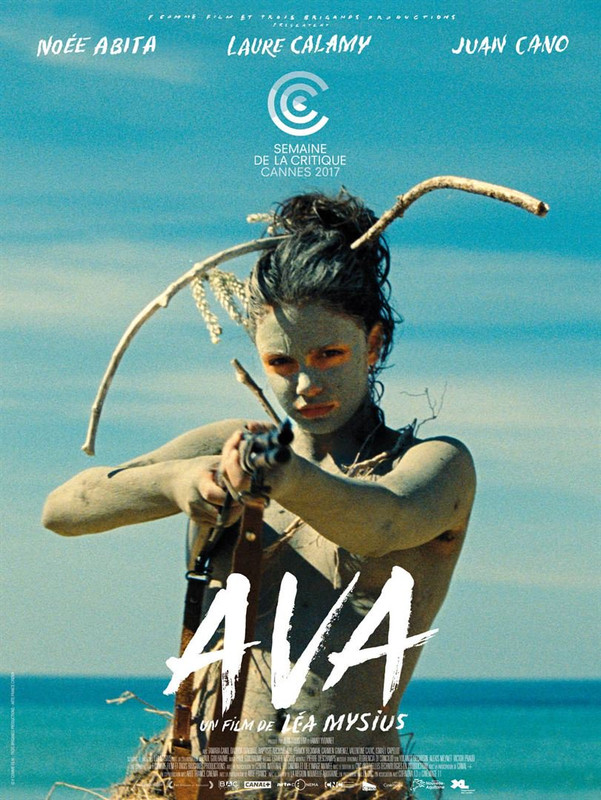
There may be something in the water in France. They seem to excel at making coming of age films, particularly about girls. Lea Mysius debut focuses on the titular Ava (Noee Abita), a 13 year old girl holidaying with her mother (Laure Calamy). Ava has just been told that she is going progressively blind, and this may be the last summer in which she is able to see. On the beach Ava encounters Juan (Juan Cano) and becomes fascinated first with his dog and soon with him.

Ava is very much a film of two halves. The first is beautifully aimless. Ava wanders the beaches, steals Juan’s dog, flirts with a boy her age and acts out in various ways against her mother, perhaps annoyed that she’s taken a much younger local man as a lover. I looked at this part of the film as being about Ava’s wanting to see as much as possible in this ‘last’ summer and it finds great poignancy in that, notably in the paintings in Ava’s room, white circles of decreasing size, surrounded by blackness.

Noee Abita makes an outstanding debut as Ava, capturing the duality of that confusing age when you are still a child, but increasingly desperate to break out of that and into ‘adulthood’, when your parents might be telling you one thing and your body another. Abita has the ability to look both older than her years and incredibly childlike, sometimes in the same moment, and the scenes that play these emotions off against each other are the film’s finest moments. Ava is aware that her body is changing, and of the effect it can have on people, but she doesn’t truly understand either. In one moment, as Juan goes to leave, she flashes him, trying to make him stay. It’s a moment that is both funny and sad in its naiveté.

Laure Calamy, the only experienced actor in the main cast, is also highly effective as Ava’s mother, who is very much enjoying what seems like a second wind of youth, having just passed 40 and with a year old daughter to look after as well as Ava. She’s caring, but not the most responsible parent, leaving Ava alone to care for her young sister. She’s frank with Ava, telling her daughter that she lost her own virginity at 13, that she understands what’s going on in her head right now, but to try and wait. Ava, for her part, wants the Earth to open up and swallow her at this point. This whole first section of the film is an acutely observed and played coming of age film. 

Then Lea Mysius decides her film needs a plot.

The second half of Ava diverges wildly from the first, expanding Juan’s role and suddenly, without warning, becoming a road movie. Ava’s encroaching blindness remains as a plot point, but all but vanishes as a theme, it’s depicted but never truly explored. I don’t want to go into what happens in the film’s second half, for fear of spoilers, but the film splits in two at a certain point, just after a carefree montage of Ava and Juan. That montage strains credulity, but the next scene breaks it, and nothing after rings true with the first half of the film.

It’s a terrible shame that Ava abruptly stops working, because for 40 minutes or so it is an extremely promising debut, beautifully shot, sensitively written and acted. Despite its problems, this film still points to good things from Lea Mysius in the future, but this could have been brilliant, and isn’t.
★★★

Oct 8, 2017

24FPS @ LFF 2017: A Season In France

Dir: Mahamat Saleh Haroun
It is easy, and probably comfortable, for us to view the current refugee crisis and the people seeking asylum in Europe in the abstract. When they are seen on a UKIP poster as an endless line of faceless people we don’t have to consider the individual stories that make up that line. I think a lot of people are afraid that if they did engage with those individual stories they would find that they empathise with some of them. That is very much the aim of A Season In France.

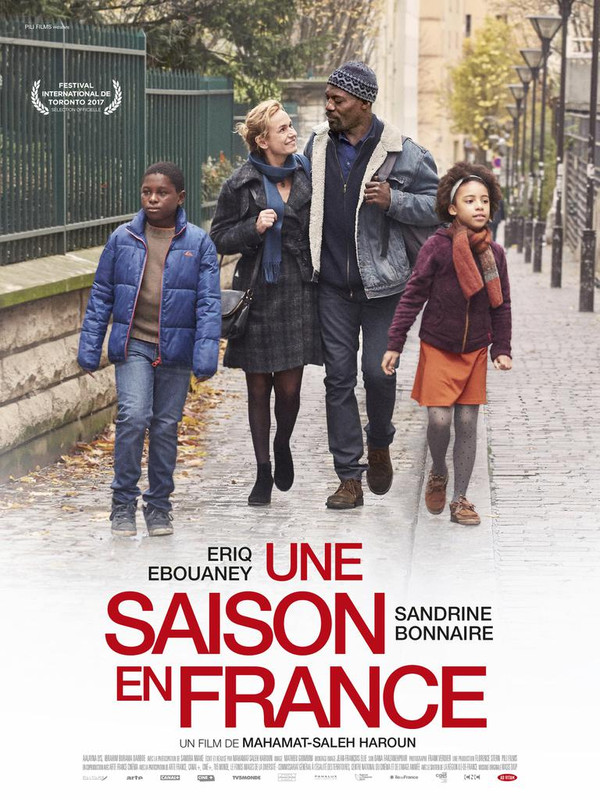
Abbas (Eriq Ebouaney) and his young son and daughter have escaped Central African Republic, but Abbas’ wife was killed by rebels before they could leave their home country. Now making their home in France, the children go to school while Abbas works at a market stall and has established a relationship with Carole (Sandrine Bonnaire). Abbas’ brother Etienne (Bibi Tanga) is also living and working in France, and the whole family is waiting to hear whether their asylum appeals have been granted. When they are denied life, inevitably, becomes even harder.

A Season In France has a difficult circle to square. It must at once be a specific story, taking us into the lives of Abbas, his family and Carole but it also will be asked to represent something larger, to speak for a wider refugee experience. That it manages this trick is one of its greatest achievements. While there was dialogue written, Haroun apparently likes to allow his actors to find natural unscripted moments within scenes, and we can feel the evidence of this balance throughout. This is especially clear in the performances of Aalayna Lys and Ibrahim Burama Darboe as Abbas’ children, Asma and Yacine. Neither of their performances appears scripted. Instead we seem to get a glimpse of kids being kids together, whether they’re toughing it out eating together in a cramped kitchen or they are finding a moment of escape as they help Carole celebrate her birthday.

Those moments of escape feel precious because there don’t seem to be many. Life is tough waiting to hear whether you’re to be allowed to make a new home when, in essence, you already have. The scenes at the court of asylum are wrenching - crowds of people being drip fed through to check their names against a list and discover their new status. We are left to imagine the details of what Abbas and Etienne experienced in their escape, but we see that Abbas still has nightmares about it and Etienne, having gone from being a teacher to working security, is clearly terrified of being returned. The point, ultimately, is that the fact they made the perilous and traumatic journey should tell us more than we often allow it to.

The naturalism that Mahamat Saleh Haroun captures in his sensitive work with the children is also reflected in the other performances. Eriq Ebouaney plays Abbas as a man remaining strong for his kids, for Carole, for Etienne, even as he inwardly accepts the inevitable. When those walls crumble and we see the vulnerability that lies just under that strong surface, when Abbas wakes from another dream about his wife, or cries with Carole, it’s deeply moving. Sandrine Bonnaire is typically excellent as Carole. She plays her as a woman without ulterior motives, who simply cares for Abbas and for his children. When we meet them the relationship is already established and we get a sense both of their chemistry and their affection for each other and the difficulty that Abbas has had in letting go of his wife. In a smaller role, Bibi Tanga brings warmth as Etienne. His story is just as affecting as anything else in the film, with a shocking sadness that intrudes without warning.

It would be easy for A Season In France simply to be depressing, and its conclusions are, but there is a lot of light let in to this story, a lot of warmth along the way. The film humanises and individualises a group of stories too often dismissed because of fear and prejudice. In that alone it is valuable, but it’s also an engaging, sometimes enraging, piece of drama in its own right.
★★★★

Oct 6, 2017

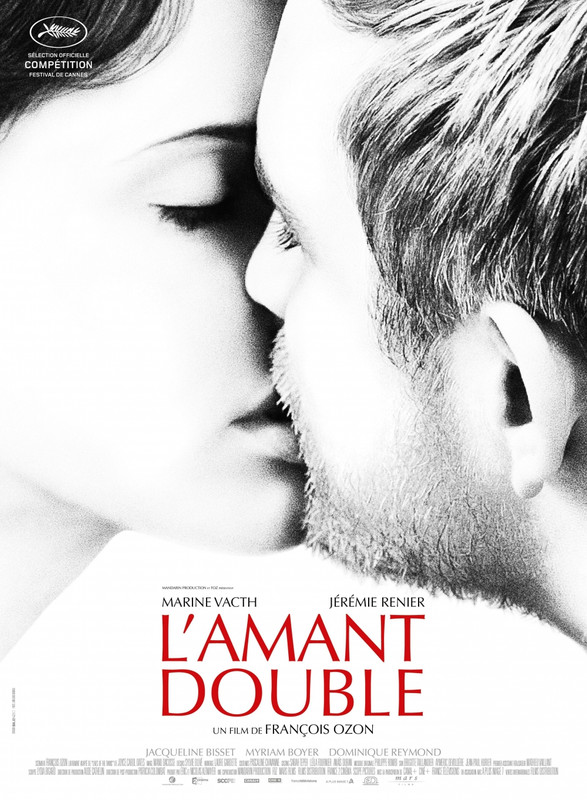
24FPS @ LFF 2017: L'Amant Double

Dir: Francois Ozon
Another LFF, another new Francois Ozon film, regular as clockwork. This is an improvement on his last, the deeply disappointing Frantz, but I am beginning to think that Ozon, like a lot of auteurs who work at a rate of knots, would benefit from taking a break.

Adapted, apparently loosely, from Joyce Carol Oates’ The Lives Of The Twins, L’Amant Double centres on Chloe (Marine Vacth, back with Ozon after an impressive turn in the otherwise poor Jeune Et Jolie). Plagued by stomach problems that her doctors believe are psychosomatic she goes to visit psychiatrist Paul (Jeremie Renier). Paul and Chloe fall in love and soon she has moved in, but the stomach problems return. Having spotted ‘Paul’ on the street, Chloe discovers that this was in fact Louis (Renier again), a twin that Paul doesn’t acknowledge. He too is a psychiatrist and, under the guise of therapy, begins an affair with Chloe that takes her into investigating the dark past of her boyfriend and his brother. 

Whatever you think of Ozon, he’s always been able to make a striking image, and one of the first we see in L’Amant Double is likely to be one of his most controversial. We open on flesh, and as Ozon’s camera pulls out it becomes clear we are watching a gynaecological examination, which then cross dissolves into an image of Marine Vacth’s eye. The film indulges in doubling and near doubling a lot and later we’ll see another image redolent of this one, this time in a sexual, rather than a clinical, context. It’s an audacious beginning, one that suggests the shock tactics of a Von Trier more than it does Ozon’s usual eye, but the film never again goes to these extremes, so it ends up an isolated image calculated to make us sit up at the start of the film, rather than adding up to much.

What L’Amant Double adds up to is perhaps its central problem, because the answer remains ‘not that much’. The themes of duality, twinning and their wrapping up in sexual desire are familiar not just from the likes of Single White Female and Dead Ringers, but Ozon’s own work. A key sex scene here evokes a, sadly, much less disturbing Society as well as a Cronenbergian feel, but Ozon advanced its themes much more interestingly in The New Girlfriend. Other images reveal a debt to Black Swan and, further, to its inspiration Perfect Blue.

The dual role of Paul and Louis allows Jeremie Renier licence to cut loose. A fine actor who previously worked with Ozon on Potiche and Criminal Lovers, Renier clearly enjoys himself as Louis, chewing on his every misanthropic line with glee, having fun with the counterpoint to the rather wet Paul. He’s best in the few scenes in which he gets to slip between personae, but otherwise each role is a bit one note, a well played note, but a singular one. Given that he’s now cast her as a lead in two films, I’m certain Ozon regards Marine Vacth as a big talent. In Jeune Et Jolie she was effective as an ingenue out of her depth, but here, with bigger notes to play in a more melodramatic setting, she seems a little lost at times. I found myself longing for Jennifer Jason Leigh, whose Single White Female performance nails the details and makes the psychology credible, while also hitting the operatic moments perfectly. I’m not sure Vacth totally sells either.

L’Amant Double isn’t a dead loss though. Ozon is clearly having a wonderful time indulging all his influences, and comes up with some amusingly overblown and audacious moments. A shot that takes us down Vacth’s throat to her vocal chords at the moment of orgasm is one of these, a more subtle one seeds a key twist in the museum display that it’s Chloe’s job to guard, while the geometric use of the screen - clean lines doubling Chloe and Paul/Louis in the film’s climax - is visually striking. Ticking off all the references is all but impossible (for instance, when did Ozon see Elle, is a shot of a cat a nod or simply a coincidence)? Ozon saves his best shot for almost last; a sly use of reflection and refraction in a window putting a bow on the film’s themes. Sadly he literalises this idea, getting an effective jump, but undercutting a great image.

L’Amant Double is entertaining but, ironically for a film that has several moments that are literally internalised, skin deep. The themes are an easy read, as is much of the plot (if not how much of it happens in whatever Ozon means by reality here). If you’re a fan of 90’s erotic thrillers then you’ll probably enjoy this and an Ozon fan will have much to do unpicking the surprising influences and contextualising this film among his work. Ultimately though, this is a lightweight film that feels very minor in one of the most interesting cannons around.
★★★

Oct 16, 2016

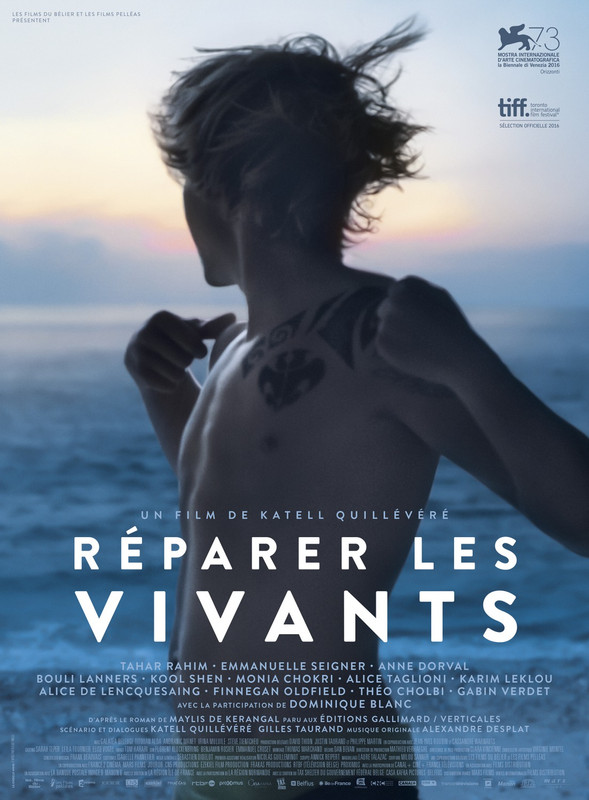
24FPS @ LFF 2016: Heal the Living

Dir: Katell Quillevere
As a film viewer, and especially as a critic, I am aware that when I approach a film I take things from it, but I also bring things to it. In the case of Heal the Living this was especially acute, because as I sat down to watch it I carried with me (as I do all the time) the weight of my medical history. Obviously this is hugely important in my life, but generally speaking it's not something that comes into play when I watch films. I have to be clear that Heal the Living was an exception, and that the impact it had on me has to be seen through the lens of that medical history.

Katell Quillevere's third feature, adapted from a novel by Maylis de Kerangal, takes organ transplants as its subject, following a single procedure (a heart transplant) from both sides; that of the family of the donor and of the the recipient and her family. This is where my history comes into play: I have received two liver transplants (25 years ago, within 10 days of each other), so I have experienced this journey from one side and have often imagined what it must have been like from the other. For other viewers these events may be more abstract, but for me Heal the Living was deeply and devastatingly personal.

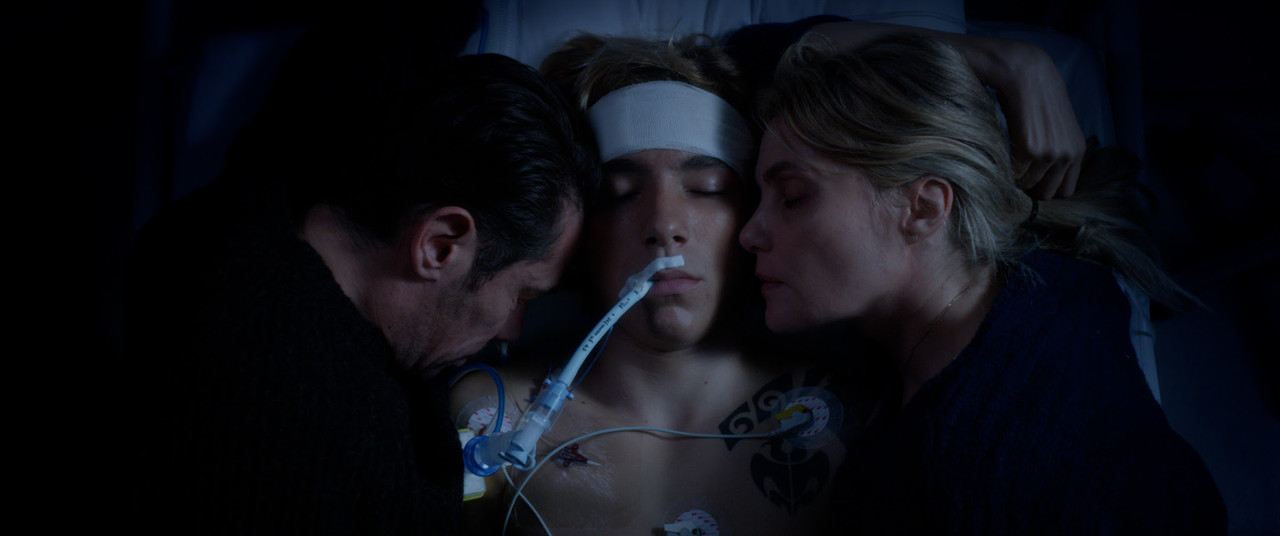
The donor is Simon (Gabin Verdet), brain dead after a car accident, and we are privy to the whole process as a young doctor (Tahar Rahim) sensitively introduces the prospect of donation to the devastated parents (Emmanuelle Seigner and Kool Shen). From the other side we see Claire (Anne Dorval) slowing down her life as she is placed on the transplant list and also trying to moderate the impact on her late teenage children (Finnegan Oldfield, Theo Cholbi). Quillevere divides the two parts quite decisively, only introducing Claire after about an hour, but also allowing time for each side of the story to develop independently before drawing them together.

The two parts of the film have similar form, but slightly different styles. In each section Quillevere allows for a few digressions, for instance following Monia Chokri's nurse for a little while and showing Claire reconnecting with a former lover (Alice Tagliolini), but the first hour has a more dreamlike feel, while the second half largely abandons those touches for something much closer to documentary style. For me, this seems to suggest the sense of dislocation that the extreme grief of Simon's parents must be causing for them spilling over into the film. This is acutely felt in a brief flashback to the first time Simon and his girlfriend kiss, a sweet scene which trades on Quillevere's mastery of coming of age cinema (her first film, Love Like Poison, is one of the 21st century's great entries in that genre). After sweeping you up briefly in this romantic moment, Quillevere immediately cuts to an ashen Seigner and Kool Shen, driving back from the hospital. The flashback is not a memory but either a parent's imagining of a moment in their son's life, now brutally cut short, or a memory of how he told that story. We never know which, but the question alone is affecting.

There are more beautiful directorial flourishes in the film's first part; the road becoming the sea as Simon's friend falls asleep at the wheel, causing the crash; images of Simon surfing, as if being sucked under into another world. These are not only striking in themselves, but in the contrast with the second half. Once Claire is introduced everything is matter of fact. Quillevere becomes more an observer, first of the relationship between Claire and her sons, then of the transplant procedure itself. Both operations, the harvesting and the transplant, are handled sensitively and with a matter of fact eye for procedure, but with enough restraint that the film always feels honestly sad, rather than sentimental.

This is delicate material, but Quillevere and her outstanding cast handle it beautifully. Tahar Rahim strikes a perfect balance between playing his character's desire to get consent for Simon's organs to be used and his determination to handle it with maximum sensitivity, while Seigner and Kool Shen, with relatively limited screentime, sketch believable studies of grief. In the second half, Anne Dorval finds a lot of moments that struck home for me, especially in the sequences after she gets the call to hospital; the nerves, the preparation, the goodbyes, all these things ring true and brought back raw images from 25 years ago. Even the small parts are expertly cast and played, with especially fine work from Bouli Lanners and Dominique Blanc.


Quillevere's balance between realism and poetic touches is exceptional throughout, but the moment that Rahim pauses the harvesting operation to say a few last words to Simon from his family is where it hits hardest. Devastatingly touching without ever feeling sugary or false, it's a moment that shows the film in miniature. 

After the blip I felt Suzanne represented after Love Like Poison, this is a dazzling piece of work from Quillevere. Heal the Living is beautifully cast and acted, expertly directed and well made in every technical respect, but for me it was so much more than that. Transplant isn't a subject often addressed in cinema, the last time I remember seeing it covered was in a very different context in Never Let Me Go, but Heal the Living has none of the abstraction and distance that Mark Romanek's film did. Instead this film lives in some of the most emotionally fraught moments of people's lives and rings true at every turn. I can't say whether other audiences will feel this film as viscerally as I did, but even if they don't, it remains essential viewing.
★★★★★