Showing posts with label Thriller. Show all posts

Oct 8, 2021

24FPS @ LFF: See For Me

Dir: Randall Okita

Having recently gone blind, former Olympic skier Sophie (visually impaired actor Skyler Davenport) has found herself taking jobs cat-sitting for wealthy homeowners. On the first night at her latest job, the house is broken in to and Sophie has to make it through the night, with the help of Kelly (Jessica Parker Kennedy), a desk-bound army veteran who sidelines as a helper on an app called See For Me.

To begin with, See For Me plays like a pretty typical home invasion thriller, riffing on the likes of Wait Until Dark and Panic Room. The opening act capably sets out the space, even more vital here because, with Sophie unable to see, we need to understand the geography to appreciate the difficulties she’s going to face because of it. The first half-hour or so also deals with the character introductions, and in that respect, at least with Sophie herself, Adam Yorke, and Tommy Gushue’s screenplay (their first feature) distinguishes itself a little. Sophie is a more complex character than you might first expect, especially in her moral dimensions, and this leads to some pretty surprising twists, and one scene, involving a cop played by Emily Piggford, takes on much greater tension because of it. 

The mix of characters among the three criminals in is pretty typical: the tech guy who doesn’t like violence, the controlled pro, and the loose cannon, and Kelly is also quite loosely established, though her sense of responsibility to Sophie comes through strongly and at least initially there’s some spark in the relationship between her and Sophie, though that is reduced as the film goes on, and she becomes a lot more purely functional as a character. Director Randall Okita does a decent job establishing and exploiting the geography of the location. Best in this respect is a series of shots early in the break-in that use first a wide exterior and then a more claustrophobic interior to show, in single frames, where Sophie and the robbers are in relation to each other.

Unfortunately, the whole film begins to lose its way in the third act. Up until this point, Davenport has given a performance that plays interestingly with our sympathies and challenges us on whether to root for her. The last half-hour, however, ends up letting in the only truly bad performance in the movie. The script piles on too many twists, and eventually loses credibility in story terms and, more damagingly, in terms of what we believe Sophie would be able to do with the level of visual impairment the film says she has. A tacked-on coda suggests something I simply don’t believe, before wrapping up on a twee note that doesn’t really fit the film, dragging it further down just before the credits roll. It’s a pity because there are things to enjoy here, but a solidly tense first hour ends up deflating by the end.
★★½

Oct 5, 2021

24FPS @ LFF 2021: Inexorable

Dir: Fabrice Du Welz
Adoration
, Fabrice Du Welz’ last film, which played at LFF in 2019, was basically Junior Badlands, with two twelve-year-olds on the run from a mental hospital. It’s still only had a digital release in the UK, and remains something of an underseen gem. If that film had a single obvious influence, then Inexorable is much more of a patchwork, drawing plot points and images from a lot of entries in the yuppies in peril subgenre, among others.

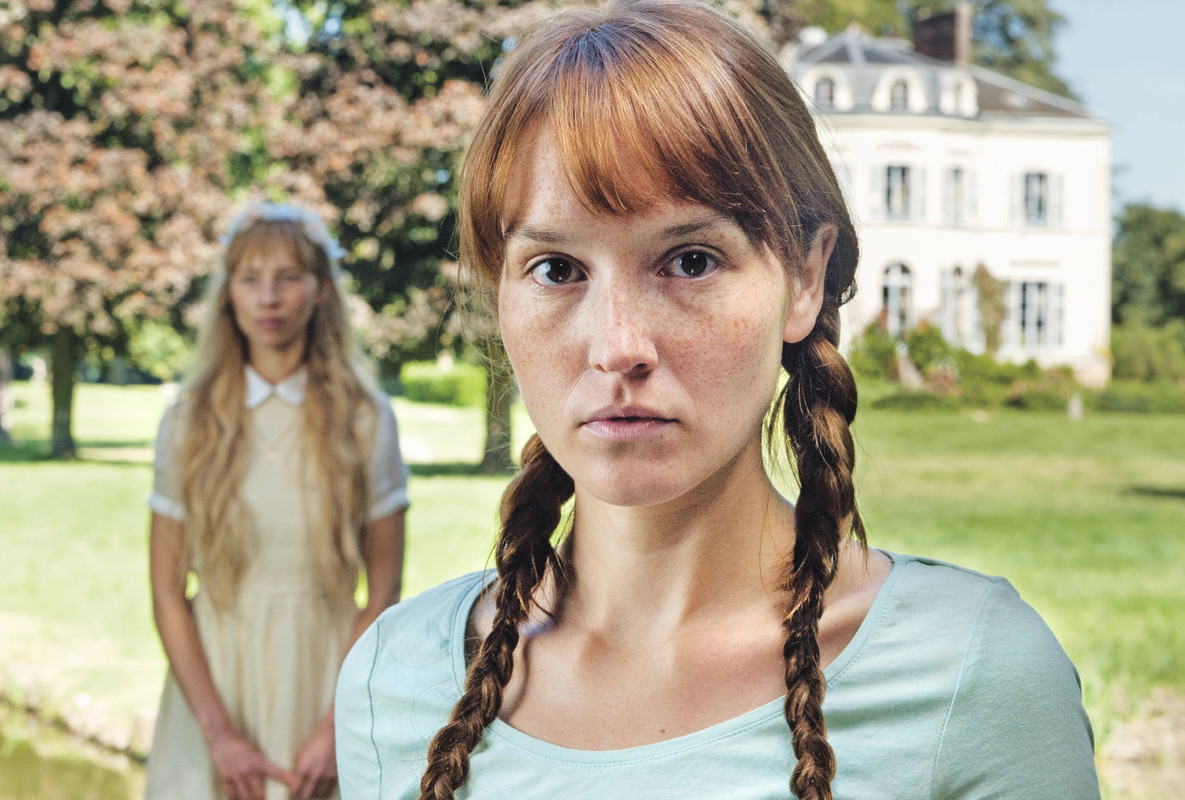
Marcel (Benoît Poelvoorde), his wife Jeanne (Mélanie Doutey), and their young daughter Lucie (Janaina Halloy) have just moved back into the massive estate owned by Jeanne’s family. When a young woman named Gloria (Alba Gaïa Bellugi) brings their daughter’s new dog back after he has run off, and offers to show Lucie how to train him, the family soon offers her a job as a nanny/maid. However, it quickly becomes clear that Gloria is not just a fan of Marcel’s successful novel, Inexorable, but that she may have a fixation on it and him, which begins to manifest in manipulative ways.

Like many of the films it draws on, much of Inexorable unfolds like a home invasion thriller in slow motion. Gloria’s assault on the family is not one of sudden violence, but of nurtured obsession and festering resentment. It’s a mix that Alba Gaïa Bellugi plays effectively. The first moment there is a flicker of a crack in her mask is especially good; it’s a tiny bit of nervousness that passes across her face when she’s asked about a bit of her background, visible enough for it to register for us, but fleeting enough that we buy Marcel and Jeanne failing to recognise it. The performance, driven by the necessity of the screenplay, gets broader throughout, but Bellugi comes up to meet the tone rather than overplaying.

Poelvoorde, Doutey and Halloy are all good too, and a believably imperfect family unit. Poelvoorde’s blocked author (an early drone shot has shades of The Shining as it tracks the car on the way to the dusty stately home they are moving into) is obviously at first intrigued by and perhaps too easy-going with the attractive young woman who is now in his home, but from his lies to cover an indiscretion to his hiding of parts of his life, it becomes clear that he’s largely driven by self-preservation. Doutey has perhaps the least rounded character here, too often she’s written a little overly spiky, and early on there’s a naïveté in the way she takes Gloria in (and especially her reaction to Gloria’s first real manipulation) that never seems especially credible from the rest of her performance, but these too are largely script issues.

Du Welz doesn’t just wear his influences out in the open, from Chabrol to Barbet Schroder and from Hitchcock to (if I didn’t misread a certain point) Park Chan-wook, he displays them proudly. Sometimes, as in a stylish shot of Marcel throwing Gloria out of his (stationary) car, one side bathed in blood-red light, the other in vivid blue, in what one could take for a fleeting giallo homage, it works in his favour. When his plot points bear if not direct then certainly considerable comparison to the likes of La Ceremonie and the criminally underrated The Page Turner, those influences hang heavy on the film. That said, Du Welz and the cast successfully draw out the tension. The single location where the bulk of the film takes place may be expansive, but the lighting and the blocking, particularly as Gloria begins to draw Marcel in, help to shrink that space and eventually make the dynamic between the three adult characters fairly claustrophobic.

Inexorable isn’t a bad film. The issue is more that it’s never as good as the sum of its influences promises. The performances are capable, it’s got some thrills and some tension, but you’ll always know where it's going, and you’ll know because you’ve seen its moves done better before. An engaging homage, then, but not one that can sit alongside the best of its predecessors.
★★★

Nov 15, 2020

Recent Viewing: Cutterhead / I Spit On Your Grave Deja Vu

Cutterhead
Dir: Rasmus Kloster Bro
A multi-national crew is cutting a new tunnel for the Copenhagen metro and Rie (Christine Sønderris) has been sent to take pictures of the workers and do puff piece interviews for a PR campaign. While she's watching Ivo (Kresimir Mikic) and Bharan (Samson Semere) change one of the cutters there is a fire in the tunnel and the three are trapped in the pressurized chamber that houses the cutterhead. With oxygen and water both running low, they try to decide if they should wait to be rescued or attempt to escape.

There is something almost inherently tense about a confined thriller like Cutterhead. The fears behind it are primal; claustrophobia, the idea that with each breath you are eating up an increasingly finite resource. In this case that is only added to by the literally as well a metaphorically high-pressure atmosphere, which means that even though the door can be opened, the physical effects of doing it quickly might debilitate the person chosen to leave the capsule. The first act establishes a quick but comfortable dynamic between the three characters, Rie may be doing her job, but she appears to be interested in the processes and to like the two guys, who we quickly establish are friends as well as co-workers. This, of course, is all strained by the situation.

This isn't the most eventful film, a lot of it involves the crew simply waiting to be rescued, but the little moments of levity, paranoia, and of betrayal are all well played and these small moments, as well as the sense of time passing and the space feeling ever smaller and more dangerous adds up to a growing, grinding, tension—think The Descent without monsters. Things do shift somewhat for the third act, though the thrills remain claustrophobic and intimate, with the last ten minutes, in particular, taking a dark direction, leading to a final scene that is tense and airless in an entirely different way to the rest of the film.

This isn't a showy feature debut from Rasmus Kloster Bro, but it does demonstrate an ability to take a limited set of ingredients and find a way to stretch their inherent heart in mouth qualities across the film's 84 minutes. If you're claustrophobic this will be a nightmare, but even if you aren't you're likely to feel Cutterhead gripping your nerves more and more as it runs on.
★★★½


I Spit On Your Grave Deja Vu
Dir: Meir Zarchi
Shot in 1976, first released in '78 and finding a wider audience in grindhouses and on video in the early 80s, I Spit On Your Grave has been notorious for four decades. Meir Zarchi's original film still stands as one of the most powerful and visceral rape-revenge films ever released. A sequel was first mooted in the mid 80s, but that film dropped the link to I Spit, and became Savage Vengeance. Between 2010 and 2015 a trilogy of increasingly terrible films, begun with a remake, was fairly successful in the direct to video market. It must have been that which finally got Zarchi the green light to make this, his first film since 1985's dreadful Don't Mess With My Sister.

You get the sense that Zarchi had a certain pent-up energy as a filmmaker. In his early 80s when making the film, and having not directed in almost 35 years, there is a feeling in the rampantly excessive 148 minute running time that he is simply using this one last opportunity to dump every idea he's had about this series of films since 1978 on to the screen. Unfortunately, most of those ideas involve copying his previous film very, very slowly, introducing overblown religiosity to the villains, and a broken timeline to tie the plot in with the original.

Jennifer Hills (Camille Keaton) has just written a book about her ordeal and her vengeance. Taking a break from promotion, she's having lunch with her daughter Christy (Jamie Bernadette). In the car park after lunch, two 'fans' pull up and while Jennifer is signing her book, kidnap them both, setting off a chain of events that take Jennifer back to the events of the first film and end up with Christy fighting for her life and fighting back.

Things start as they mean to go on: slowly and with terrible dialogue. The original film is recapped in a laughably written radio call-in show with Jennifer responding to questions about her memoir (curiously it's not here that we discover that she was cleared by a jury of any crimes she committed in the vengeance section of the first film, which is a stretch). We also discover that Christy is the world's most in-demand model, and that she just turned down a million dollars to shave her head and pose topless for a magazine cover. This is all delivered in clunky lines by Keaton and an at this stage fairly wooden Bernadette.

Things get turned up to eleven once the kidnapping happens and we meet what is at first a gang of three, all related to Jennifer's tormentors from the first film, there is Johnny's wife Becky (Maria Olsen), Scotty (Jeremy Ferdman), who is the cousin of Andy and Kevin (Jonathan Peacy), who is Stanley's brother. Maria Olsen, in her mid 50s, is clearly too young to have been Johnny's wife (she's roughly the same age as Zarchi's kids, who make cameos to reprise their brief roles as Johnny's children). More puzzling is Scotty's assertion that he grew up around Andy when he was obviously born, given the film never indicates that it is set any other time than when it was shot, at least 10 years after the events of the first film. This, along with other revelations, makes the timeline very difficult to unpick. All three of these performances, along with that of Jim Tavaré as Herman (who we're told is Matthew's Dad, despite the fact he's several decades too young for that) are overplayed to the hilt, with Olsen and Peacy seeming to be in some kind of contest to see who can chomp more scenery.

This would be less of a problem had Zarchi not written a lot of drawn-out dialogue for the villainous characters, but the speeches go on and on, running over and over the same two ideas: that the relatives want 'justice' and that God is going to help them extract it from Jennifer and Christy. The fact that Camille Keaton, so great and unaffected in the first film, never manages to find that same performance is probably down to the writing as much as her work, but she is visibly unenthused and appears to know the dialogue isn't up to par (and that there is too much of it). Only when Jennifer is told to dig her own grave does Keaton find a moment with an ounce of the resonance the 1978 film had throughout. 

The structure of the film is clunky. Not only is it brutally overlong, but the pacing issue isn't simply that a scene here or there needs to be cut, it's that every moment is twice the length it needs to be. There was apparently a lot of back and forth about whether the 2010 I Spit On Your Grave should be a sequel or a remake. In some ways Deja Vu, as suggested by its subtitle, is an attempt to square that circle. The first 50 minutes or so are a direct sequel, then we move into a section which is a fairly close remake, with Christy in her Mother's role. The rape scene can't help but be upsetting and it is in this section that Jamie Bernadette's performance comes closest to matching Keaton's power in the original. As with that performance, it's probable that there isn't much acting involved here, there's a certain level at which what we're seeing is just what's happening and it's not easy to watch.

The third act moves into the vengeance phase. Again the film is fighting with itself over being a sequel or a remake. One revenge sequence directly mirrors a famous scene from the '78 film, which only diminishes this one, because the fact we've seen it before, the cartoony nature of the actor's performance up to that point, and the extended running time means it never captures the shock and horror of its antecedent. Zarchi tries to introduce some twists into the narrative in the last half hour of the film, but he only succeeds in adding more terrible monologues, hammy performances, and timeline confusion to the mix.

I Spit On Your Grave Deja Vu is more than a disappointment, while it's sometimes weirdly reverent of the first film, even to the point of the director reprising his cameo as a church organist, it also feels like its rejecting much of what it meant. It's almost a desecration. When characters repeatedly literally spit on the graves of deceased characters you can't help but feel it represents a certain aspect of its attitude to what has gone before. The original film is a grindhouse classic, but it's more than that, it's still a truly impactful and provocative work. Deja Vu never achieves that, Jamie Bernadette does what she can and, mainly in moments where she doesn't have to wrestle Zarchi's dialogue, has moments that impress. On the whole, though, the film is by turns too silly and too boring to even approach that kind of lasting power.
★

Oct 11, 2020

24FPS @ LFF 2020: 200 Meters

Dir: Ameen Nayfeh

From whichever side we're ultimately looking at it, we tend to see the Middle East purely as a war zone, which is why it is refreshing to encounter films like 200 Meters. The politics of the region is embedded in both its title and its story, which begins as a family drama about Mustafa (Ali Suliman), who lives in the West Bank, divided by the titular distance and by the wall from his wife Salwa (Lana Zriek) and their three small children who, though they visit, live most of the time in Israel. When, after he has lost the work permit that allows him to cross the border for the day, Mustafa's son is injured, he attempts to find a way to smuggle himself across so he can visit the hospital.

The first half hour of the film is very much about everyday life in the West Bank and Israel, Mustafa dealing with only seeing Salwa and his kids occasionally, and trying to find what is often taxing work across the border despite his bad back. Things clearly aren't perfect between Mustafa and Salwa, as we see them disagree about his health and his not applying for a residence permit in Israel, and it might be enlightening to see that dug into a bit more. However, most of the family scenes are lighter, though mixed in with a sense of how tough the grind of life is, even without invoking the spectre of the conflict in the area with anything more than the very presence of the wall and the checkpoints. The events are somewhat mundane, but they knit together into a compelling picture of a family separated by circumstance and establish a sweet running visual in the lights that Mustafa uses to signal goodnight to his kids across the wall.

The film's last hour shifts gears, becoming a thriller about getting Mustafa and several fellow travellers, notably German filmmaker Anne (Anna Unterberger), through the checkpoints and the border and into Israel. When things go wrong they lose their driver and things shift again into a road movie full of simmering tension both between the characters and about how they are all going to be able to make it over the border. Politics is largely kept as a background hum, but there are tensions that reveal themselves, especially between Anne and her camera operator boyfriend. The thriller elements here feel credible, both in the dangers that are presented and the solutions that are found (one even manages to be amusing in its simplicity, given the tension built up). 

This is only added to by the strong performances all round and the developing camaraderie between characters who are initially almost literally thrown together, most of them crammed in the boot of a car. Everyone is good, but it is Ali Suliman's beautifully modulated performance, expressing all the joy of being among his family, the strain of times without them, and the growing worry and often impatience of a parent who needs to see his kid in the hospital, that carries the film.

200 Meters is trying to do a lot of things, and in his first feature, director Ameen Nayfeh draws his elements together well. In taking a long section of the film to cross what initially sounds like a short distance he builds in a metaphor about the difficulty of bridging that gap without having the characters make speeches about the region's politics, and he shows the effects of the conflict without dwelling in its violence and living into the cliches of how the region is depicted. It's an accomplished debut from a filmmaker worth watching.
★★★★

Oct 8, 2020

24FPS @ LFF 2020: Chess of the Wind

Dir: Mohammad Reza Aslani

The story of how Chess of the Wind came to be seen in this new restored version should be a movie in itself. Completed in 1976 and apparently screened only twice; once to hostile critics and once to an empty room, it was banned in 1979 when the Islamic government came to power in Iran. Years later, while Aslani's daughter was researching Iranian auteur cinema, the director's son discovered a complete print of the film in a junk shop. Smuggled out of the country and restored, it can now be seen in its original form.

Set almost entirely within the confines of the ornate home of a rich family where the matriarch has recently died, the film is about the machinations of the remaining members of the household, chiefly a paraplegic daughter who hates her stepfather and schemes with her maid (Oscar nominee Shohreh Aghdashloo in her film debut), to get the inheritance. The opening part of the film is perhaps the hardest for a Western audience to find its way in to, as it seems reliant on tradition and on knowledge of the dynamics of a large family at this point in Iranian history, however, we are drawn in by Aslani's composition and by the web of double and triple crosses he begins to weave. 

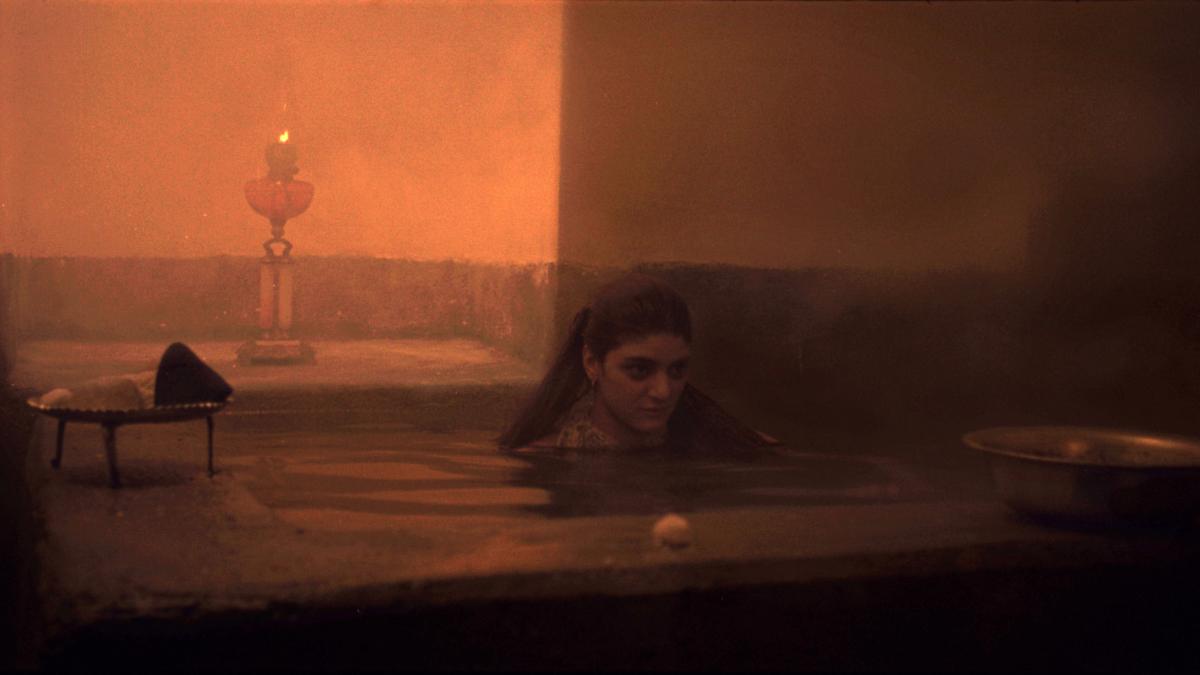
Fakhri Khorvash is a striking presence as the malevolent wheelchair-bound daughter, calculating every move even though she needs help to make them. A handheld flail is her equivalent of the dagger that might be the weapon of choice in a Western gothic horror. Beyond the violence, and the fact that is largely a strong and scheming female who is meting it out, it is easy to see why this film was banned by Iran's Islamic regime. A frisson exists between Khorvash and Aghdashloo's characters throughout, but one scene takes it further, suggesting a lesbian encounter between the two. Aghdashloo is the film's standout performer, immediately her presence—which vacillates between demure, luminous, and menacing—leaps off the screen. Her shifting loyalties are compelling to watch, and she's mesmerizing in the film's closing sequence (see still above), rising from a pool like some thing coming for her mistress.

The last twenty minutes of the film are remarkable. It's noted in the opening captions explaining the restoration that the sequence is influenced by silent cinema, and the orange tint, vividly restored in this version not only looks to the teens and twenties, Aslani makes it his own. A hothouse atmosphere has been building for some time at this point; a growing sense of paranoia and questions of who is out to get whom and whether there have been supernatural goings on. The fiery look of this sequence gives it the feel that everything may literally be going to hell.

Chess of the Wind is great example of exactly why festivals need archive sections. I had never even heard of this film, but I found something that drew me in more with each minute, that made me want to explore more about the culture it was made in to get more out of it (not just the traditional aspects, but the sort of Greek chorus formed by women washing clothes in a fountain outside the home, and the final shot which appears to recontextualise much of the film). The restoration brings out not just the precision of Aslani's shot choices but of the colour and texture of his film. I've not seen much quite like this before, and I hope this new version will enable a lot of people to be as transported by it as I was.
★★★★½

Oct 5, 2019

24FPS @ LFF 2019: The Lost Okoroshi / Instinct

The Lost Okoroshi
Dir: Abba Makama
Nigerian cinema, while I'm sure it is much more than this, has often been viewed as something of a punchline. Certainly, I’ve only come across it as clips of notably inept Nollywood films or satirical reviews of the legitimately bonkers sounding series of Vultures of Horror films. This all being the case, it’s refreshing to see a Nigerian film that is interesting for more than being crazy or terrible.

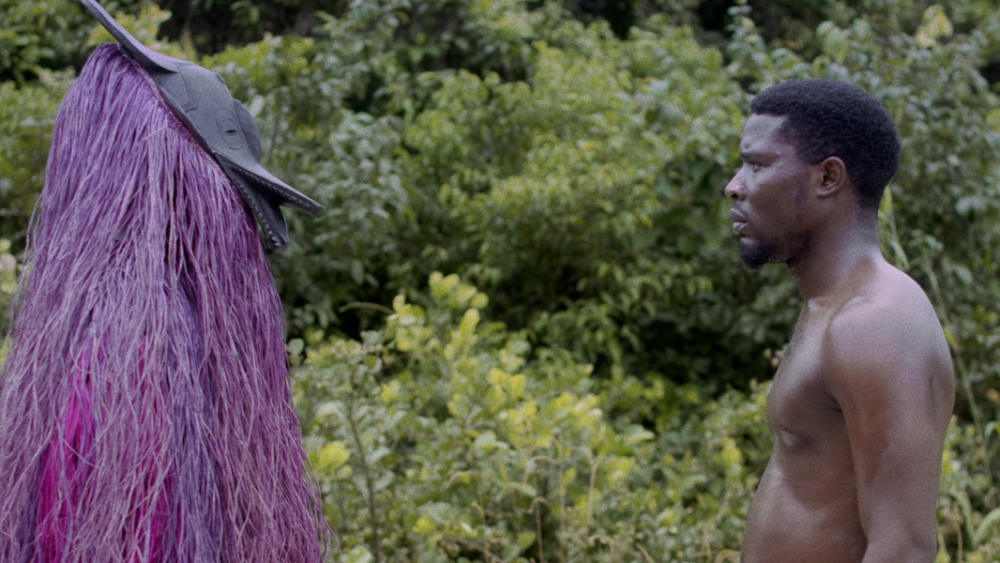
The Lost Okoroshi is a film that is obviously soaked in local tradition and culture. It’s about Raymond (Seun Ajayi), a security guard who wants to go back to tradition and become a farmer. He has a recurring dream of being chased by a masked spirit called Okoroshi. One day, Ray wakes up as the Okoroshi, he can no longer speak or remove the mask. Lost in the city, he is followed around by a kid who wants to be his promoter, then kidnapped by a group who want to use him as an icon to restore Nigeria’s traditional beliefs.

This seems like a deeply personal project and one that may have had to scrape together both funding and equipment. At times it is amateurish, with very rough sound recording and some poor acting (a journalist in the film’s final scene is the worst offender), but it’s clear that many of these issues, though they are a problem, stem more from a lack of resources than the filmmakers not being accomplished.

Things start slowly, with the first act composed of several long scenes of conversation that don’t really go anywhere and, at least for an international audience, aren’t terribly funny. The film picks up hugely once Raymond is transformed, and it builds comic momentum from there. Initially, co-writer/ director Abba Makama gets plenty of mileage purely from the incongruity of the Okoroshi figure walking through modern Lagos; a traditional figure set against a city that now speeds past him. There are plenty of funny moments here, especially when, his ‘promoter’ having collected a bag of money from people watching ‘Raymond’ dance, the Okoroshi hands the money to a hooker. The three of them form a sort of comedic chorus for a while, and again the film mines laughs from the sheer strangeness.

Later, when ‘Raymond’ is taken by the traditionalist group, the film continues to find better and funnier gags as it goes on. The group is clearly inspired by the scenes in The Life of Brian with the People’s Front of Judea and, while Makama and Africa Ukoh’s dialogue never reaches that sort of sublime comic inspiration, he hits on plenty of laughs. The film also looks pretty good, with the costumes for Okoroshi and the other ‘masquerades’ being especially striking.

For all the solid gags, Makama and Ukoh’s screenplay is patchy and disjointed. Beginnings and endings seem to test them, as storylines peter out and Makama simply cuts to the next scene rather than drawing to a satisfying close. This is also a problem with the film as a whole, which closes with several minutes of dry dialogue essentially recapping what we’ve just seen with a professor laying out events for a journalist and suggesting what Raymond’s case may mean for traditional Nigerian practices.

The Lost Okoroshi is seldom less than interesting, and the cultural aspects in particular will mark it out as something different for most UK audiences, but whatever the reasons for its technical amateurishness, that and the sometimes clunky screenplay mean that the several good laughs you’ll get from it never quite manage to paper over the cracks.
★★½

Instinct
Dir: Halina Reijn
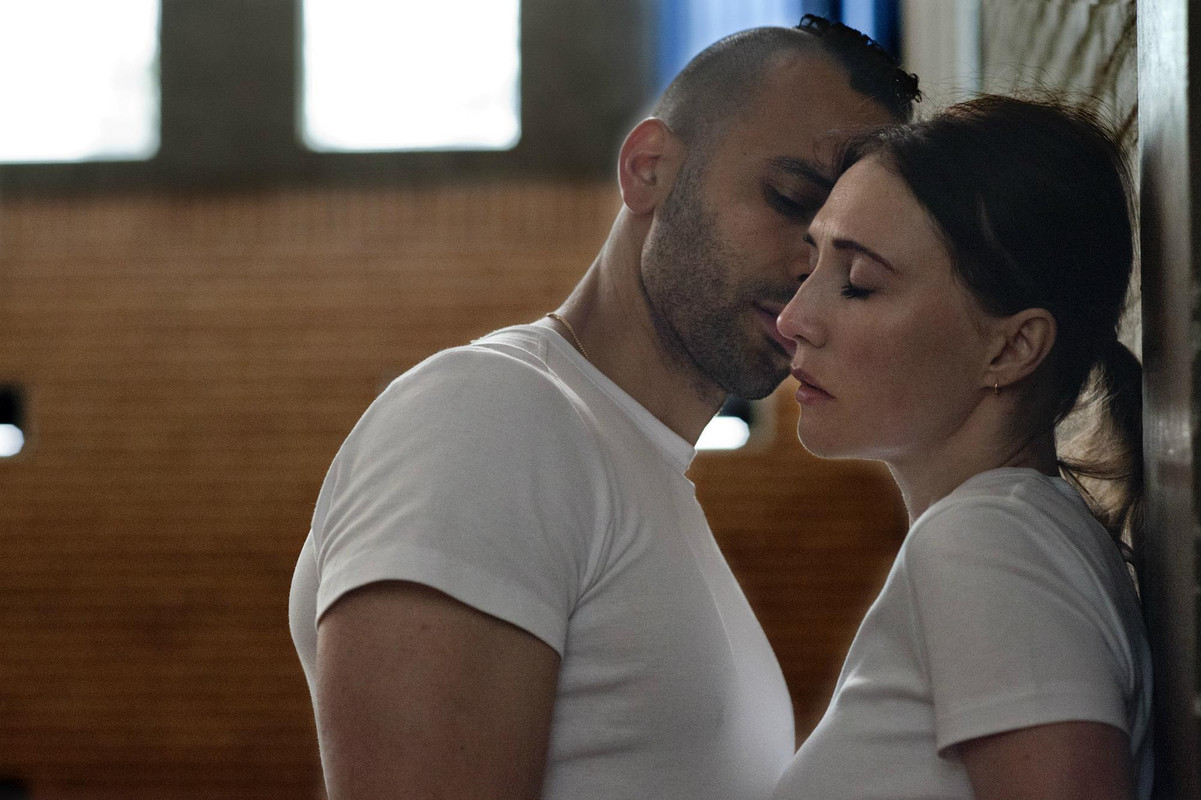
Set in a rehabilitation centre for sexual offenders, Instinct sees Carice Van Houten as Nicoline, a therapist newly assigned to Idris (Marwan Kenzari, familiar from his role as Jafar in Disney’s live-action Aladdin). With most of the staff convinced he’s doing well, Idris is nearing the end of his time at the centre, Nicoline disagrees, but the dynamic between her and Idris is more than therapist/patient, as her manipulative charge perceives that she’s attracted to him.

The term ‘psychological thriller’ is one that has been misapplied through the years, often used as an umbrella term for horror films their makers don’t want lumped in with the Friday the 13ths of the world. Instinct is a true psychological thriller, with all its tension coming from the dynamics and interaction between Nicoline and Idris. On these terms, it often works well. Carice Van Houten delivers her most notable and best performance for some time. Working again in her native language, she delivers a natural and nuanced performance that finds many layers in her character. Kenzari may be even better, always compelling and frightening as he walks the character of Idris along a precarious line between being charming and very obviously dangerous. Watching these two play off each other is often thrilling in itself, as there is palpable chemistry between them which, given the situation and the characters, is always disturbing. 

When Instinct is purely about performance, it can be excellent. This is never more true than in a sex scene between Nicoline and Alex (Pieter Embrechts) who is the basketball coach at the centre. We’ve seen this scene a hundred times, where one of the participants in a sex scene clearly wants it to be with someone else. Many directors would handle this by showing Idris, either in cuts or by having him, at a certain point, replace Alex in the scene. Reijn doesn’t do this, instead trusting us to understand the dynamic through Van Houten’s performance. Her trust in her lead’s skill pays off; the scene is unsettling and complex without simply stating what we’re supposed to read into it. It’s surprising, then, that the direction is increasingly the film's downfall.

The signs are there in the first half, notably in several confused scenes with Nicoline’s mother (Betty Schuurman) which seem to me to accidentally leave it very unclear whether that character is alive in the world of the film. Their first scene, in particular, is almost dreamlike - a quality which, if she’s reaching for it, Reijn never pulls off here. Much of the rest of the first half of the film is solidly grounded (though the fact the rest of the staff can’t see through Idris as easily as Nicoline does strains credulity), and benefits from the excellent central performances, but the film begins to go off the rails once the chemistry between Nicoline and Idris goes beyond an unsettling background simmer.

During a scene when they are alone on the centre’s basketball court, there is an encounter between Idris and Nicoline. Most of the scene is visually muted, but at a certain point the lighting shifts, becoming brighter and more intense. This carries over into the following scenes for about ten minutes. I suspect Reijn would say that this is to suggest that Nicoline is feeling a brighter light on her, a more intense focus. What comes across instead is, again, an uncertainty that I’m sure is unintentional, as to whether we should accept these scenes as reality or see them as something Nicoline is imagining. This also carries over into a scene at the beach, which marks the first moment that the film broke my suspension of disbelief.

The third act increasingly feels less like Reijn is telling her story than advancing an idea about the way people can be attracted to dangerous relationships. This might have worked had she more decisively gone for this approach early on, but next to the very grounded scenes of the first half, it’s an uneasy fit. The scenes themselves aren’t bad - one in which Idris turns up at Nicoline’s flat is interesting in how it tries to boil down an entire abusive relationship into five minutes, but it always feels more like an exercise than something we can believe in the context of these characters and their story.

Halina Reijn shows skill as an actor’s director. This is no surprise, given that she is best known as an actress (in the UK she is most recognised for a supporting role in Paul Verhoeven's Black Book, alongside Van Houten), but her visual and thematic approach is too scattershot for her ideas to engage as they should. The two central performances are too good for Instinct to be a total loss, but the confused direction and screenplay mean that they stand out as far better than the film they appear in. 
★★½

Jul 9, 2019

The Quake [12]

Dir: John Andreas Andersen
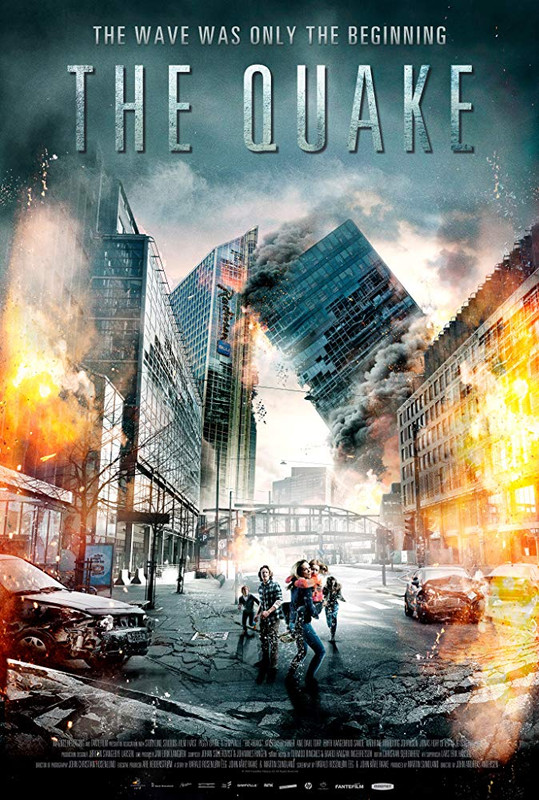
Three years after the events of The Wave, Kristian Eikjord (Kristoffer Joner) is still affected by the disaster. Separated from his wife Idun (Ane Dahl Torp) and distant from his kids, he feels guilty about his warnings not being heeded sooner and thus saving more people, and he’s haunted by fears of fresh disasters. These fears become more present when an old friend dies while examining a tunnel in Oslo and Kristian finds an old letter from him, warning of the potential of a massive earthquake. When the quake comes, will Kristian be able to protect his family?

The Wave did pretty big things for the career of director Roar Uthaug, who followed it up by making his Hollywood debut with the Alicia Vikander starring Tomb Raider reboot. Perhaps disappointingly, it didn’t seem to do the same for the film’s star Kristoffer Joner (a small role, confined to a hospital bed, in Mission: Impossible - Fallout aside). On the other hand, maybe that’s not such a bad thing, because it’s unlikely that a film like The Quake, if made in Hollywood, would have offered him much opportunity to stretch his acting muscles. At 103 minutes, this is a relatively short film, but for over an hour the titular event lurks in the background. For this time, the film does the requisite build up, but what it concentrates on isn’t the charts and graphs but the already shaken man at the centre of the film. 

Kristoffer Joner is a great actor, and he brings his customary dedication and detail to this part, just as he did in the first film. This performance is about trauma; a man haunted by his previous efforts, even though they were genuinely heroic. It’s left him looking bedraggled, almost hollow at times, and even the slightest engagement has become a struggle (in one particularly well acted moment there’s a tiny register of appreciation for the breakfast his daughter Julia (Edith Haagenrud-Sande) has made him, just in his eyes, a second before he says that she should go home). This background is important because it makes the growing threat of the earthquake feel different. By spending real time and effort on the emotional fallout of the previous events, there is always a very credible feeling that Kristian may genuinely just be paranoid. Of course, we know that’s very unlikely to be true, but it’s a testament to Joner that a film that used the title The Quake in a purely psychological sense would be at least as compelling as this one proves.

There are sacrifices made in order to spend this kind of time on Kristian’s character, and sadly they impact mainly on the other characters. There is an emotional short hand with the established characters of Idun, Julia and Kristian and Idun’s son Sondre (Jonas Hoff Oftebro, sidelined here to the point that you’d be forgiven for thinking the first draft forgot he ever existed) but Kathrine Thorborg Johansen’s Marit, the bereaved daughter of Kristian’s friend who first warned him of the quake, is fatally underdeveloped; little more than a plot device with a face. This is where the film’s running time bites. We understand Marit’s actions in the third act as standard disaster response, the way we’d all hope to behave in those circumstances. Kathrine Thorborg Johansen does what she can with what’s on the page, giving a decent performance, but some more scenes between her and Kristian, just to bond the characters a bit, would give us more investment in her in the last half hour. Ane Dahl Torp is also a little limited by what’s on the page, but there’s enough in her performance and the dynamic between her and Joner that we can read what’s happened between Kristian and Idun over the past couple of years without having it baldly laid out in dialogue, and we are very much invested in her fate and that of Julia, thanks to another solid performance from Edith Haagenrud-Sande.

The carnage does, of course, finally arrive and when it does it’s extremely well executed, with effects that rival any $200 million film for roughly $6 million. The scale is smaller of course, but the CG is strong and because it’s linked to physical effects, more credible than in many higher budget films. The major setpiece, in a collapsing tower block, is tense, well paced, and not easy viewing if you have vertigo. Director John Andreas Andersen steals a few things (notably a sequence from The Lost World: Jurassic Park), but he adds his own wrinkles to everything he co-opts. The only issue in this passage is that, once again, the film largely forgets about Sondre, which makes things feel a bit unbalanced.

If you’re going in wanting something like a San Andreas (which, for the record, would be no bad thing, that’s a fun movie), The Quake is going to disappoint. I appreciated the slow and thoughtful start and the way it allows a great actor like Joner room to dig into his character. It has its problems, even at its best it is riddled with cliche, short changes some of its characters and has an ending so abrupt that it’s barely an ending at all, rather than a hard stop. For all those issues though, this is a smarter and more entertaining film than most Hollywood efforts in the genre.
★★★½

Oct 6, 2017

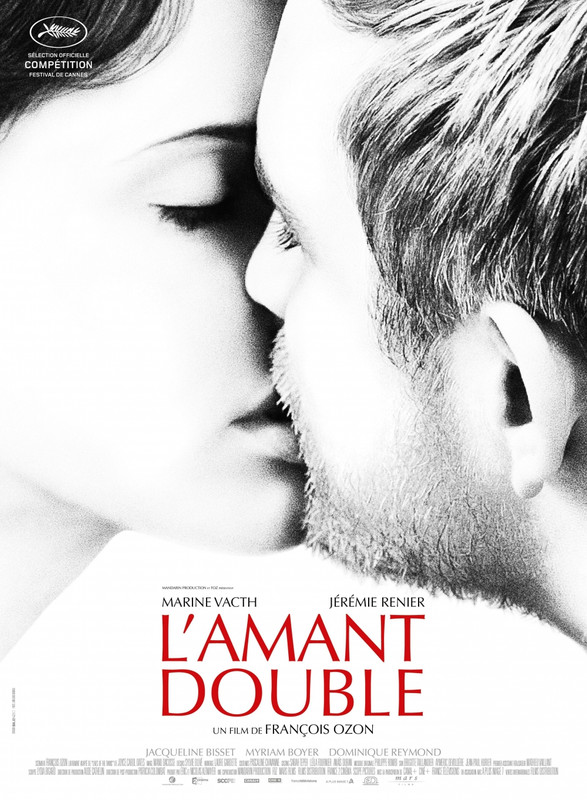
24FPS @ LFF 2017: L'Amant Double

Dir: Francois Ozon
Another LFF, another new Francois Ozon film, regular as clockwork. This is an improvement on his last, the deeply disappointing Frantz, but I am beginning to think that Ozon, like a lot of auteurs who work at a rate of knots, would benefit from taking a break.

Adapted, apparently loosely, from Joyce Carol Oates’ The Lives Of The Twins, L’Amant Double centres on Chloe (Marine Vacth, back with Ozon after an impressive turn in the otherwise poor Jeune Et Jolie). Plagued by stomach problems that her doctors believe are psychosomatic she goes to visit psychiatrist Paul (Jeremie Renier). Paul and Chloe fall in love and soon she has moved in, but the stomach problems return. Having spotted ‘Paul’ on the street, Chloe discovers that this was in fact Louis (Renier again), a twin that Paul doesn’t acknowledge. He too is a psychiatrist and, under the guise of therapy, begins an affair with Chloe that takes her into investigating the dark past of her boyfriend and his brother. 

Whatever you think of Ozon, he’s always been able to make a striking image, and one of the first we see in L’Amant Double is likely to be one of his most controversial. We open on flesh, and as Ozon’s camera pulls out it becomes clear we are watching a gynaecological examination, which then cross dissolves into an image of Marine Vacth’s eye. The film indulges in doubling and near doubling a lot and later we’ll see another image redolent of this one, this time in a sexual, rather than a clinical, context. It’s an audacious beginning, one that suggests the shock tactics of a Von Trier more than it does Ozon’s usual eye, but the film never again goes to these extremes, so it ends up an isolated image calculated to make us sit up at the start of the film, rather than adding up to much.

What L’Amant Double adds up to is perhaps its central problem, because the answer remains ‘not that much’. The themes of duality, twinning and their wrapping up in sexual desire are familiar not just from the likes of Single White Female and Dead Ringers, but Ozon’s own work. A key sex scene here evokes a, sadly, much less disturbing Society as well as a Cronenbergian feel, but Ozon advanced its themes much more interestingly in The New Girlfriend. Other images reveal a debt to Black Swan and, further, to its inspiration Perfect Blue.

The dual role of Paul and Louis allows Jeremie Renier licence to cut loose. A fine actor who previously worked with Ozon on Potiche and Criminal Lovers, Renier clearly enjoys himself as Louis, chewing on his every misanthropic line with glee, having fun with the counterpoint to the rather wet Paul. He’s best in the few scenes in which he gets to slip between personae, but otherwise each role is a bit one note, a well played note, but a singular one. Given that he’s now cast her as a lead in two films, I’m certain Ozon regards Marine Vacth as a big talent. In Jeune Et Jolie she was effective as an ingenue out of her depth, but here, with bigger notes to play in a more melodramatic setting, she seems a little lost at times. I found myself longing for Jennifer Jason Leigh, whose Single White Female performance nails the details and makes the psychology credible, while also hitting the operatic moments perfectly. I’m not sure Vacth totally sells either.

L’Amant Double isn’t a dead loss though. Ozon is clearly having a wonderful time indulging all his influences, and comes up with some amusingly overblown and audacious moments. A shot that takes us down Vacth’s throat to her vocal chords at the moment of orgasm is one of these, a more subtle one seeds a key twist in the museum display that it’s Chloe’s job to guard, while the geometric use of the screen - clean lines doubling Chloe and Paul/Louis in the film’s climax - is visually striking. Ticking off all the references is all but impossible (for instance, when did Ozon see Elle, is a shot of a cat a nod or simply a coincidence)? Ozon saves his best shot for almost last; a sly use of reflection and refraction in a window putting a bow on the film’s themes. Sadly he literalises this idea, getting an effective jump, but undercutting a great image.

L’Amant Double is entertaining but, ironically for a film that has several moments that are literally internalised, skin deep. The themes are an easy read, as is much of the plot (if not how much of it happens in whatever Ozon means by reality here). If you’re a fan of 90’s erotic thrillers then you’ll probably enjoy this and an Ozon fan will have much to do unpicking the surprising influences and contextualising this film among his work. Ultimately though, this is a lightweight film that feels very minor in one of the most interesting cannons around.
★★★

Sep 20, 2017

24FPS @ LFF 2017: Mini-Reviews 1

So Help Me God
Dir: Jean Libon, Yves Hinant
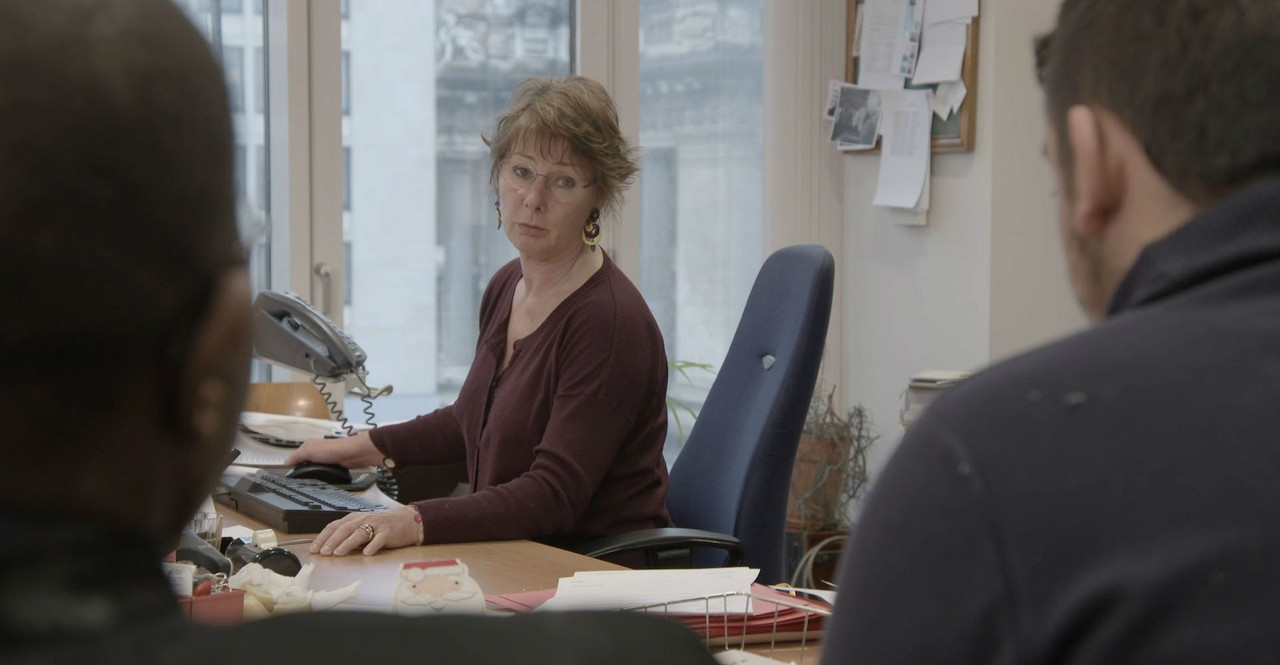
The true crime documentary is going through a particularly interesting period right now, with series like Making A Murderer and The Keepers and films as straightforward as Amanda Knox or as formally interesting as Casting JonBenet. So Help Me God doesn't break any new ground in the way it's made, but it does show most of us a job within the justice system we're not familiar with, through a highly engaging and interesting woman.

Anne Gurwez is a Belgian investigating magistrate, a job that seems to be somewhere between detective and prosecutor and carries a great deal of influence on how people are dealt with within the Belgian system. The film follows her over the course of several months, as her day to day work on current cases coincides with the reinvestigation of a 20 year old double murder.

Gurwez herself is the best reason to give So Help Me God a look. She seems like she takes a nuanced approach to her work; tough but good humoured, able to be talked round to giving someone a chance if she likes them, but sharp tongued if she detects any hint of bullshit and deadly serious when the situation demands it. This mix often provokes some amusing juxtapositions of the gruesomeness of some of her work and the matter of fact and generally good humoured way she approaches it (see the scene where a body is exhumed in the cold case).

There are many memorable moments here, some are quite light, like the scene in which a dominatrix accused of theft amuses Gurwez by discussing some of the strangest requests her clients have made, but others are much darker and heavier. The film hits hardest in the investigation of a horrifying infanticide, which is immediately followed by a coldly matter of fact confession by the child's mother, who tells a story that suggests insanity in the calmest and most measured tones. It's a truly disturbing scene that nothing else in the film comes close to matching.

Overall, this is a pretty conventional film made engaging by an unconventional personality at its centre and some compelling stories, it's perhaps more suited to the BBC's Storyville than a cinema, but it's well worth a watch if you're interested in true crime.
★★★

Pickups
Dir: Jamie Thraves
Aiden Gillen is one of those actors who can make everything he's in a little bit better. Especially as he's got into middle age, he's become one of those actors who always disappears into a character, and that is the jumping off point for
Pickups, which Gillen co-wrote with director Jamie Thraves.

Gillen plays Aiden, an Irish actor who is well known enough to get recognised regularly, but not George Clooney famous. He's recently divorced and preparing to make a new film, in which he's going deep into preparation to play a serial killer. It seems, however, that he may have got a bit too far into this character.

The premise of Pickups (the title referring both to casual sex and to additional shooting after a film's main production) isn't wildly original; a mid-life crisis coinciding with an actor going too deep into a role, but it should provide ample room for an actor like Gillen to get his teeth into a starring role (he's in practically every frame of the film). Unfortunately, I found the film meandering and lacking much insight. Narration frequently tells us what Aiden is thinking at any given moment, which it doesn't need to do, Gillen is a good enough actor to show us without our needing to be told most of what the voiceover says. Even with this though, everything is on the surface. The disconnect between Aiden's real life – the daughter he hasn't seen for some time back in Ireland – and his work on this character is interesting in concept, but the screenplay doesn't say much that's especially new or insightful about either side of that divide. 

The overarching story never coheres into anything terribly interesting, so what we end up with is more a series of vignettes. Some are interesting enough, interactions with fans often throw up an amusing moment, but even when we're supposed to be unnerved because he's too deep in the character, this doesn't feel like it bleeds over into these interactions. Only one vignette stuck in my mind, a brief moment with Antonia Campbell Hughes as an actress friend of Aiden's, who he suggests should have a part in the film. It's the one moment that chills the blood.

It's interesting to see Gillen play a character whose experiences seem so close to his own, but because of that it disappointing that Pickups doesn't feel more insightful. Ultimately if you want to see a version of an actor blurring the line between life and acting I'd suggest seeking out the underseen I Love A Man In Uniform rather than this.
★★

Nov 11, 2015

From the Verite Archives: Phoenix and The New Girlfriend

I just answered a question on Twitter asking what our favourite films so far this year had been and in answering it I realised that I had not yet run my reviews, originally written for the now defunct Verite magazine, of two of my choices for that list, which seems important given that the questioner had only heard of one of my selections. Thanks, as ever, to Verite for letting me repost these pieces.

There are spoilers in the review of The New Girlfriend.

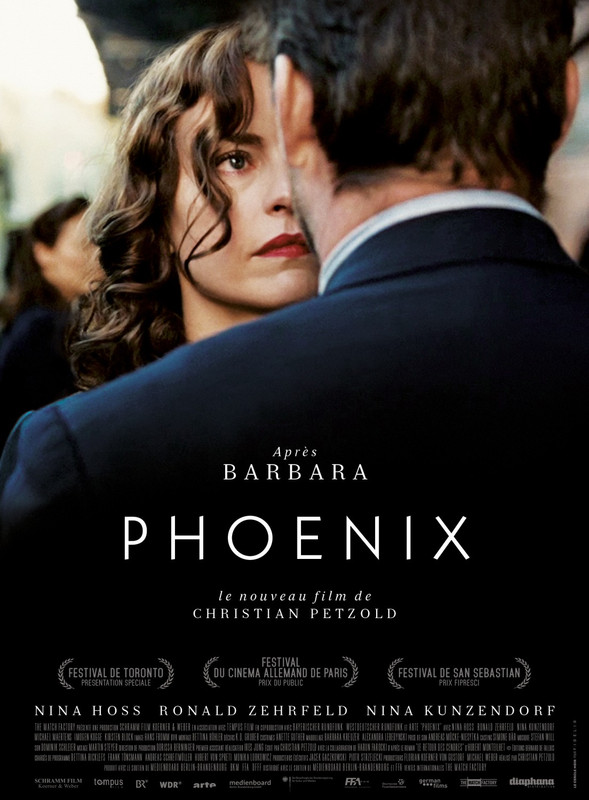
Phoenix
Dir: Christian Petzold
Director Christian Petzold has often drawn on other films for inspiration. Hitchcock has long felt like a key influence on Petzold, bleeding into Jerichow, Barbara, and early TV effort Something to Remind Me, but never has Petzold drawn so heavily on Hitchcock as he does in Phoenix, which is steeped in the influence of Vertigo.

Petzold's muse Nina Hoss (in her eighth collaboration with the director), plays Nelly, a Jewish woman who has survived the concentration camps but, when we meet her, has sustained severe facial injuries. She asks the reconstructive surgeon to make her look exactly as she did before. Nelly then returns to Berlin, looking for her husband Johnny (Ronald Zehrfeld). Nelly's friend Lene (Nina Kunzendorf) claims that Johnny was the one who betrayed Nelly, but she wants to discover if her husband still loves her. When Nelly and Johnny meet again he is struck by the resemblance but appears not know that she is his wife. Instead, he exploits that resemblance, getting her to 'impersonate' Nelly.

There is something disturbing in this story that goes beyond even Vertigo's obsessiveness. James Stewart's Scottie is trying to remodel Kim Novak into someone different, someone she never was. Not so the case here. Whether or not he's aware of it, Johnny is trying to make Nelly become his wife once more, but to his own exacting standards. It's a goal that can't, in either case, ever be achieved, but the impossibility of such perversity is magnified for paradoxically already having been achieved.

This is a film centered on Nina Hoss, specifically on her face. That should be enough to make you want to see it, because Hoss, beyond her obvious talent, has one of the most distinctive and fascinating faces in cinema right now. This is especially interesting in the context of Phoenix, because that very distinctiveness makes it hard to believe that Johnny could fail to recognise his wife. That interesting/frustrating ambiguity lingers for never seeing the full extent of Nelly's facial wounds (only a soldier wincing at them), and all we know of her before her disfigurement is the picture her surgeon is working from that shows Nelly laughing; not something Hoss gets to do much, here or in other films.

Also worth noting about Nina Hoss' face is the depths of its expressiveness and how its surface can shift like quicksilver. Playing two halves of a splintered psyche simultaneously, with only a glance she alternates between a sure-of-herself Nelly, wanting things to return to the way they were (evident early on in that request to the surgeon) and an uncertain Nelly, trying to figure if her husband did, in fact, betray her, and what he thinks of her now they're reunited. She's also Johnny's doll, playing dress up 'Nelly', trying to become the image he has of his wife in the flesh.

Hoss dons the different personas and confused states of minds like masks her character wears uncomfortably; from the bandages of the first fifteen minutes (more than a little reminiscent of Eyes Without a Face) to how the recently reconstructed Nelly now sees herself, and finally, Johnny's idealised version of the wife he recalls—the one that will make their old friends believe she's the 'real' Nelly. It's a performance that, were it in English, would sweep all the accolades come awards season. Hoss shows us the tangled confusion of Nelly's mind with subtle shifts in emotional temperature that are tiny but telling.

Phoenix is an exceptionally strong film and Petzold's direction matches the lead performance. Characteristically, he plays off his influences without allowing the film to become Hitchcock karaoke, and giving 1945 Berlin historical verisimilitude, he uses the camera to be just as true to the emotions of the characters, capturing every moment of exposing vulnerability that Hoss and Zehrfeld contribute to loaded silences, lending their highly dysfunctional relationship an interior richness. Yet all this subtly and intrigue pales next to the mastery of the final scene. Without giving too much away, Nelly's heartrending performance of 'Speak Low', is built off just a few images and a devastating piece of silent acting from Zehrfeld. With this, Petzold draws the themes and all the film's questions together in an astonishing whisper that goes off like a bang. Where Petzold goes from here will no doubt be interesting, but he's given himself a hell of a mountain to climb in having to follow such a powerful ending.
★★★★★


The New Girlfriend
Dir: Francois Ozon
Francois Ozon has brought a new film to the London Film Festival three years running, but 2013's Jeune Et Jolie suggested that a rate of at least one film a year was starting to take a toll on his work - much of which is soufflé light and fancy free, but even for him, Ozon's last was a shallow film crying out for more depth.  

Thankfully, it seems Jeune Et Jolie was just a blip, as The New Girlfriend, adapted from a Ruth Rendell story of the same name, finds Ozon back on form, blending his mischievous side with a substantial (but hardly realistic) story, full of secrets that are practically impossible not to reveal when talking about the film.

The totally spoiler-free version of the review reads like this. A playful addendum to Ozon's grief trilogy (Under The Sand, Time To Leave and Le Refuge), The New Girlfriend finds husband David (Romain Duris) and best friend Claire (Anais Demoustier) dealing with the death of Laura (Isild Le Besco) in different ways. These coping mechanisms are predicated upon Ozon's chief preoccupation of sexual malleability and confusion. For his fans, The New Girlfriend is full of auteurist traits in the use of colour and offbeat humour, perfectly handled by an outstanding cast.

Discussing the film in any greater detail requires the revelation of a key twist, so stop reading if you want to go in cold, which is my recommendation.

Fifteen minutes in, we discover that David is, in fact, the title character. After his wife's death, he falls back into an old enjoyment of dressing as a woman, becoming closer with Claire as Virginia, a relationship she keeps from her loving but uncomprehending husband Gilles (Raphael Personnaz). Virginia is a persona who grows into a fully realised third main character, with Romain Duris physically, verbally and emotionally defining the split between the two personalities he's playing very capably. Ozon mines much comedy from his star's gender-bending, but its intent and effect are never cruel. The joke is often at David's expense, but Ozon never has us laugh at anything David himself would be upset by. Take for instance an early moment when David is having tea with Claire and his mother in law (Aurore Clement) in his own clothes. Gesturing as if to rub away some lipstick, he forgets he's not dressed as Virginia. Coupled with Demoustier's reaction it's one of many slyly funny, non-verbal embarrassments.

With the less showy role, Anais Demoustier has a grounding effect on the film, lending Claire a straightforwardness that gives us a way in to the characters and the story whenever Duris' dual performance might push the camp factor a little too far out for some. Claire seems a simple character, but her complexities lie under the surface and Demoustier lets them show through slowly. Virginia's observation that her friend often dresses in a masculine fashion is quickly followed by a sex scene in which Claire enacts a masculine cliché; rolling off her husband as soon as she's achieved orgasm and casually asking “did you come?” “No”, he says, “but that's okay.” The gender issues seeded in this scene pay off in a later sex scene between Claire and Virginia/David. Demoustier quietly and heartrendingly articulates Claire's sudden kinship with Virginia. Despite never having been close to David, she like him, is trying to fill the void Laura has left in their lives. 

Laura is glimpsed only briefly (mostly in an opening flashback charting her friendship with Claire that feels like Ozon's take on the opening of Up),  and while Isild LeBesco doesn't have time to give us a rounded character, her radiant presence is more than enough to suggest how much darker the lives of these characters are without Laura in them.
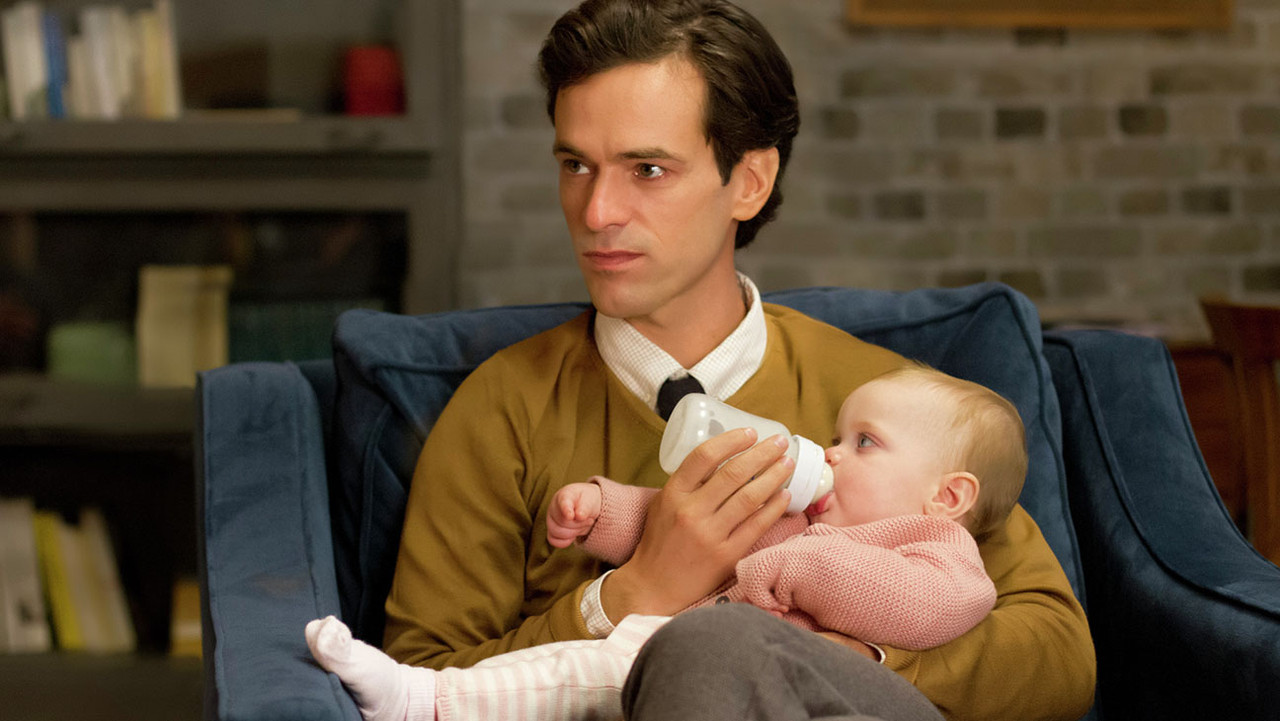
In changing some of its fundamentals, re-calibrating its tone and adding a great deal to Ruth Rendell's ten-page story (including a completely different ending which closes the film out with the most auteurist image of Ozon's career), there's a feeling of a filmmaker at play, despite the grief which subsumes the players. Claude Chabrol's La Ceremonie is more along the lines of what might be expected from a straight Rendell adaptation, but with a distinct lack of foreboding or impending violence, Ozon brings a lightness of touch to even the most dramatic of scenes, enabling him to seamlessly shift from frolicsome scenes such as Claire and Virginia's first outing together and moments suffused with a crippling sense of grief, such as David dressing his wife's body for her funeral. Between these contrasting registers, Ozon's customarily unblinking depiction of sexuality against the hetero-normative grain is evident throughout, with one sex scene in particular, the strangest, most emotionally fraught and complex he's ever directed. Like the sexuality, the film's structure is fluidly subversive. The sequence of Laura being dressed for her funeral is echoed at the end, its second occurrence making poignant use of a song that Virginia and Claire hear a drag act sing at the film's midpoint, movingly literalising its meaning. 

For years, Francois Ozon's films fell into two categories; the playful and the severe. Recently, with In the House and now The New Girlfriend, it's fascinating watching him begin to draw those two sides off his personality as a filmmaker together. The mix is less successful here than it was previously, largely because Claire's husband is rather underdeveloped and one note and the existence of Laura's daughter Lucie is almost entirely forgotten for an hour of the run time. Still, The New Girlfriend is a great film, often moving and amusing in the same moment and boasting two subtly soulful lead performances.

Much more than a return to form, it's a superb reaffirmation of Ozon's status as one of the best directors in world cinema, ranking in the top tier of his own rhapsodically tender and strikingly imaginative filmography.
★★★★★

Oct 10, 2015

24FPS @ LFF: Mini Review: Retribution

Dir: Dani de la Torre
I first saw the Spanish actor Luis Tosar as the abusive husband of Laia Marull in Take My Eyes. Since then, I've found him a consistently commanding actor, one with a very particular screen presence. Tosar seems to have a great line in coiled, menacing, energy which explodes like a powder keg. This is where his casting in Retribution is so effective.

Tosar plays Carlos, an investment banker with a wife, two kids, and a relatively comfortable life. One morning on the school run he gets a call telling him that there is a bomb in his car, that he must pay the caller 488,000 Euros and that if anyone gets out of the car, it will explode.

Putting Tosar's energy in such a hemmed in position is the film's masterstroke. Here's a guy we can see building in both panic and rage as the day runs on, and with just the use of a phone, another man has managed to put him in a box within a box. The fact that Tosar's usual energy is contained in this artificial way is a key element of the film's suspense and, alongside his and most of the other performances, the only element of Retribution that works all the way through the film.

While the action is confined to the car, the camera isn't (which keeps this from becoming the misplaced piece of radio drama that last year's Locke was). This is one of the ways that first-time director Dani de la Torre is able to keep the film's energy up – the other being the sheer amount of incident, for the first hour Retribution barely takes a breath. Then the car stops, the power shifts and much of the tension built up over the first hour starts to ebb away as more characters come in to the situation and things begin to get ever less credible. It's never exactly a mystery why Carlos has been targeted by the caller, but still, when confirmation comes the dialogue is clangingly on the nose and strains with every sinew for contemporary resonance.

It's a pity that Retribution begins to fall apart in its second half, but Tosar keeps it watchable right up until the end. He's a great actor, I just wish this material could match him for consistency.
★★★

Sep 25, 2015

24FPS @ LFF: The Corpse of Anna Fritz

Dir: Hector Hernandez Vicens
The premise is strong: beautiful young actress Anna Fritz (Alba Ribas) dies and Pau (Albert Carbó), the orderly who takes her body in at the morgue has two of his friends come over to see her. After doing some coke, looking at and feeling up Anna, Ivan (Cristian Valencia) decides to take things further, to the mounting horror of Javi (Bernat Saumell). After Ivan has taken his turn, Pau also has sex with Anna's corpse. That's when she wakes up and the question of how to deal with this situation arises.

I was hoping for so much more from this film; a tense thriller mixed with body horror themes that could easily lead into a subtext about the degree to which we, as an audience, consider that we own celebrities, whether in life or in death. If those ideas exist in The Corpse of Anna Fritz then they are buried deep, hidden beneath one of the most by the numbers, predictable so-called horror films I've seen for some time. If I just meant that the plot was predictable, that wouldn't be so bad (after all, we can all guess that Anna has to wake up at some point). The problem is that the predictability extends so far; to every detail of the progression of the story, to the shape of individual scenes, right down to specific shots and edits.

Even at 75 minutes, the film feels brutally stretched out. The ideas here could just about justify a 20 minute short, but to eke a feature out everything is extended and much ground is trodden many times over. The extended moments can occasionally work for the film. When Pau is raping Anna we are forced to watch in a long and disturbing sequence, knowing that it's almost inevitable that she is going to wake up. For a couple of minutes, the largely static camerawork and cold atmosphere work well, but the film has nowhere to go from this apex of horror (which happens barely 20 minutes in). 

Characterisation is incredibly broad. Ivan is a basic monster "just pretend she's drunk", he tells Javi, trying to talk him into joining in the 'fun' he's having with Anna, implying that he's probably a date rapist on top of everything he does here. Javi isn't exactly a saint, but his character arc is cut short early, which is a pity because his mounting guilt is not badly played and could serve as an effective source of tension for much longer than it does. Pau's arc could come across as complex; he's as bad as Ivan in some ways, but also has some of Javi's guilt, but the shifts in his character seem haphazard and dictated by the plot. The performances aren't bad, given what the actors have to work with, but there is never enough depth for anyone to truly impress. 

This is especially true for Alba Ribas. You have to wonder what attracts an actress to this part. Ribas' main job here is to lie still, frequently while naked. Once she wakes up you would expect her part to become more dynamic but, for no reason that seems medically explicable, she is still unable to move and barely able to talk for the great bulk of the running time. This is problematic on several levels; first it reduces Ribas, for about 75% of her screentime, to a nude or scantily clad prop, secondly, it robs the film of more variety in its setpieces. One setpiece, a slow chase towards the end of the film, makes what could be an effective use of Anna's inexplicable paralysis, but it is undermined by the grindingly predictable direction and editing, which robs the sequence of the suspense it's trying to generate. For instance, the second Anna crawled into a lift at the end of this sequence I knew exactly what the next cut and shot would be, and so do you.

Ultimately we've seen everything in this film done better many, many times. If there is even an attempt at commentary on celebrity then it pales next to Brandon Cronenberg's Antiviral, the moral implications and horror of the basic premise are far more interestingly explored in Deadgirl and the character dynamics are infinitely more interesting in any number of locked room thrillers. The Corpse of Anna Fritz is a missed opportunity on every level; a grindingly dull and emptily shocking misfire that feels much, much longer than 75 minutes. It is, sad to say, dead on arrival.
★