Showing posts with label 4 stars. Show all posts

Apr 5, 2022

Spider-Man: No Way Home [12]

Dir: Jon Watts 
There have been many tries at adapting Spider-Man to the screen. Most have strengths, but all have their weaknesses. Sam Raimi’s films got Peter entirely right, with Tobey Maguire perfectly cast, but Spider-Man’s wisecracking wit got left behind somewhat. While Kirsten Dunst was good, the screenplays sanded off Mary Jane’s edges, and often leaned into cheese. The second of Raimi’s trilogy remains a hugely entertaining blockbuster, but even that one suffers from the wider problems of its franchise. I hate the Amazing Spider-Man films. Andrew Garfield clearly earnestly wanted to do the character justice, but only a couple of scenes throughout his tenure capture the character properly, and the problems are legion (reviews here and here). 

The Marvel Cinematic Universe initially couldn’t use Spider-Man but, with rights issues negotiated, he finally showed up, in the form of Tom Holland, for Captain America: Civil War, before the MCU embarked on what has become the Home trilogy of films. Like the other franchises centering on the character, it’s had its ups and downs. The first film, Homecoming, confirms what Civil War suggested: Tom Holland is a great choice, and this time not just as Peter Parker. For the first time, that film consistently nails down the persona of Peter’s Spider-Man; a witty kid who has a quip ready for every occasion. We get the sense here that the Spider-Man costume empowers him to that end, drawing a better-defined distinction between Peter in and out of costume than ever before. However, it’s not entirely a Spider-Man film. Far too much time is spent in service of the larger MCU, especially of featuring Iron Man. The film is at its best when Peter is doing his ‘friendly neighbourhood Spider-Man’ thing, and particularly when he’s in his own costume. The suit that Tony Stark made for him undermines Peter’s trademark intellect and ingenuity by, first of all, having to be something he got from another brilliant scientist, and secondly by doing too much for him. The sequel, Far From Home, doubles down on these problems while also stripping out much of Spidey’s wit. The use of Mysterio’s illusions is fantastic in a couple of late action scenes, but otherwise, it’s a weak film. 

That brings us to No Way Home. The marketing had me worried, the reliance on Dr Strange, the use of the Multiverse, which suggested nothing so much as a desperate attempt to make a live action version of Into The Spiderverse (still, hands down, the greatest Spider-Man film). Happily, this is easily the best of the MCU’s Spider-Man series, and probably one of the best films to feature the character. 

No Way Home picks up directly after the ending of Far From Home. Peter’s secret identity has been revealed to the world by J. Jonah Jameson (JK Simmons, reprising the role from the Raimi series, only this time as an Alex Jones style ranting commentator). This has major repercussions, as Spider-Man is thought by many to have murdered Mysterio, and the effects reverberate onto Peter’s friend Ned (Jacob Batalon), his girlfriend MJ (Zendaya), and his aunt May (Marisa Tomei). Most consequentially, the controversy means that Peter, Ned and MJ are all rejected from what should have been almost sure thing places at MIT. Wanting to set things right, Peter goes to Dr Strange (Benedict Cumberbatch) to ask him to cast a spell that will make people forget that he is Spider-Man. In his haste, he makes Strange change the spell so many times as it is in progress that it goes wrong, creating a crack in the multiverse that lets in anyone who knows, in any universe, that Peter is Spider-Man. 

I’m sorry for that long introduction, but it was important to set the pieces here, because that crack in the Multiverse pulls in many of the villains from the earlier Spider-Man franchises. No Way Home is soaked in Spider-Man lore, both from the earlier films and from the comics (often drawing the earlier versions of the characters much closer to their source material). There is no way to cover this without spoilers, so if you’ve not seen the film yet, beware. 

The first 40 minutes of No Way Home are MCU Spider-Man as we’ve come to expect, in both good and bad ways. I struggled with the point of Ned in the first film in the trilogy. The writers struggled with the point of him in the second, saddling him with a romance so prosaic they wrote it out at the end of the film. Here though, the dynamic between Peter, Ned and MJ feels much more balanced. They’re not well established as a trio in the first two films, but this film depicts them as much closer. It’s a little clumsy, but well played. There’s a sense that an offscreen friendship is bleeding into the film, and we do get a little invested in them all going to college together. The consequences of Peter’s identity being discovered could have been heavier (perhaps an alternate version would have leaned into a certain cameo and given us a trial of Spider-Man narrative), but what does weigh on Peter feels authentically life-altering for a teenager. I buy into the idea of Peter, used to fixing things with superpowers, looking first for that kind of solution. As ever, the points at which the film has to service the expansion of the MCU are its weakest. Worse, you can barely tell a difference in tone between the writing of Dr Strange (or many other characters) and Peter, when it comes to wisecracking, which is a perennial problem for the series. Overall, the first act is fine, but nothing new. 

The bridge scene is when things kick into gear, with the appearance of Alfred Molina’s Dr. Octopus. Molina positively relishes the part, and Jon Watts stages an imaginative action scene, with the fact that Doc Ock’s tentacles are now fully CG giving them somewhat greater freedom. It’s also a well-written scene when it comes to Peter’s character; he’s curious about why this man has suddenly appeared and attacked him, but it also incorporates some of Spidey’s humour, especially in his delight when he discovers how the nanotech of the Iron Spider suit interacts with the tentacles. It’s a tremendously entertaining sequence that combines all the best qualities of Spider-Man. 

Bringing the old villains in one by one allows Watts and writers Chris McKenna and Erik Sommers the chance to do a soft reboot on them, fixing some issues that fans had with the original cinematic incarnations. Jamie Foxx still plays Electro, but he’s no longer the Edward Nygma knockoff of Amazing Spider-Man 2; his powers have given him a swagger that Foxx is much more comfortable with, while a late change in look gives hints of the original comic character’s lightning bolt mask, without going for the full silliness of that look. Similarly, the Green Goblin of the Raimi films is retconned a little. Willem Dafoe continues to play him with the same glee he had in 2002, but the Power Ranger mask is smashed early on, and Norman takes on a look much closer to the classic John Romita design, purple cowl intact. For someone who has always loved the character, it’s a near perfect mix of something credible within its world and preserving the comic book look. 

What works best about the film though is that while the fanservice is present and correct, it’s not what the film is about. With great power, every Spidey series tells us, comes great responsibility, and even before that phrase has been uttered in this continuity, that’s what this film has Peter embracing. It’s also worth noting that the twist on how that maxim is delivered here works well. It hit me emotionally, both because of an affection for the characters its between and how it pays indirect tribute to the way it’s usually shown. The villains Peter encounters may have been teleported in from other dimensions, but he feels a responsibility to them and to the other people in those dimensions not to simply kill these people, but to cure them: to send them back as the decent people they once were. It’s a great encapsulation of the main lesson of Spider-Man and just one of the ways that this—finally—is an MCU movie about Spidey himself. Dr Strange may facilitate the mechanics of the plot here, but this isn’t about Peter’s relationship to him, or his place in The Avengers the way the other films in this series are. This is a film about finally becoming the hero that his powers make it possible to be, whatever the consequences. It’s also a film about connection: to friends who are essentially family, to a parent like May and, of course, to the only people Peter knows who share his experience. 

Even though Andrew Garfield denied it repeatedly, it was always clear that he and Tobey Maguire would be reprising their roles, playing alternate Peter Parkers (Peters Parker?) What was a pleasing surprise to me was how substantial their roles are in terms of screentime and what they contribute. If the reclaiming of the old characters and the moving of them closer to the established lore is largely subtext, one scene with Garfield makes it supertext. In a pep talk the others comfort Garfield’s Parker as he does himself down—clearly a reference to the Amazing series' critical and fan reception. Garfield is great here, it seems that this is everything he ever wanted his Peter to be, and there are some lovely moments as he relates to older and younger versions of ‘himself’. His excitement at being along for this ride is both palpable and contagious. No, it doesn’t mean the  Amazing series is suddenly good. Maguire seems a little less sure about being back, but that works for his older and more reflective Peter. It makes me wonder if he’s still doing the superhero thing in his part of the multiverse. The reference to his MJ is sweet, but I do wish we’d seen Kirsten Dunst reprise her role. 

Pulling three Spideys and something close to a full Sinister Six together for the final action sequence does mean the film’s ending is busy, but it’s also pretty exciting and surprisingly easy to follow. Watts and team break the sequence into a series of mini setpieces, and the costumes and styles are distinctive enough that it doesn’t get lost which Spider-Man we’re following at any given time. The theme of responsibility, and of the cost Peter was trying to avoid, comes full circle with the ending (which also has one image that nods poignantly to the ending of Raimi’s first film). It’s here that I really felt the point of spending so much time with Ned in the two previous films. While Homecoming was a teen movie, the ending makes this one feel like a true coming of age story for Holland’s Peter. There’s an innocence the character used to have that we’ll likely never see again. 

No Way Home has many of the flaws familiar in MCU films. Ultimately it’s just as anonymous looking as any of them, and I don’t doubt that any of the Marvel directors could have delivered much the same movie, given the same second units. That said, this was never intended to be auteur cinema. If the MCU delivers films almost as a mechanical process, this one feels like it’s been delivered by a machine that has been tinkered with, retooled to work at its highest potential. It’s the MCU Spider-Man film I’d been hoping for, and while it’s not perfect (and hasn’t a single image as indelible as Spiderverse’s ‘falling upwards’ shot), that feels like as much as I could have asked of it. 
★★★★

Oct 9, 2021

24FPS @ LFF: Les Enfants Terribles

Dir: Ahmet Necdet Cupur

Back in 2015, Deniz Gamze Ergüven’s Mustang dramatised life inside a Turkish family where the wishes of the parents for their daughters overrode (or at least attempted to override) just about any agency the girls could have had for themselves. Ahmet Necdet Cupur’s documentary has more than a few things in common with Mustang, with its director going home to capture family life with his parents and younger siblings, chiefly twenty-something Mahmut and teenager Zeynep.

Mahmut and Zeynep are each constantly at odds with their parents for different reasons. Mahmut wants to leave his arranged marriage to 17-year-old Nezahat, not because of any fault on either of their parts, he simply doesn’t love her. Zeynep, on the other hand, just wants to further her education, to go to university in the nearest city and to live life on her terms rather than be bound by her parents’ traditions. All this makes for a volatile atmosphere in the house, something we see from the very start when an innocuous joke sends the siblings father into a violent rage. Throughout the film, Ahmet observes in close-up detail, but without seeming to impose himself on what he’s filming. Given that this is his family, that balance must have been challenging to find, but it means that the end result feels fair, if never dispassionate, in how it depicts everyone.

Later sequences demonstrate just how ingrained tradition is in Mahmut and Zeynep’s parents, especially when it comes to seeing women as inferior. In one of the film’s most quietly shocking sequences, Zeynep first debates then more stridently argues with her mother about why she so desperately wants to be educated, trying to get through to her that women have just as much value and should have as much choice of what they do, as men. Frustrated, she finally says “Studies or death, I’ll die if I don’t”, only for her mother to come back with “Death then”. It’s so haunting, so sad, summing up in two words the seeming impossibility of squaring their points of view. The image that closes this scene; Zeynep resting her chin in her hands, looking away as her mother prays, strikes me as the defining one of the film.

Mahumut’s problems have more ramifications for others, chiefly Nezahat, divorced at barely 18. We do see that Mahmut cares about her to some degree, at least expressing concern about her family “giving her to an old man” because she has lost her value. This, as it was in another film at the festival, is a running theme; women being valued as commodities, and there is much discussion of what will have to be paid for Mahmut to go through with the divorce.

As dark as the film can be, chinks of hope come through by the end. “I think a person is like a tree, says Zeynep, so intelligent and expressive throughout the film. You can only hope that she and Mahmut both get to put their roots down where they want to, and grow from there.
★★★★

Jul 30, 2021

2021 Catch Up: Chloe Grace Moretz [Shadow in the Cloud and Tom & Jerry]

Shadow in the Cloud
Dir: Roseanne Liang
1942. Just as their mission is about to take off, the crew of an armed supply plane is joined by Maude (Chloe Grace Moretz), a female flyer with a mysterious package that has to be kept safe. Made to sit in the turret under the plane, without her package, Maude becomes trapped, and that’s before she spots a ‘gremlin’ on the wing and an enemy fighter in pursuit.

Shadow in the Cloud is, it’s fair to say, a lot. It tries to roll several genres; claustrophobic thriller, creature feature, wilfully ludicrous action movie together, while also folding in a big helping of social commentary, and do it all in 83 minutes including credits. That director and co-writer (unfortunately with Max Landis) Roseanne Liang manages it, and only occasionally drops one of the many balls she’s juggling, is pretty remarkable. As Maude gets on the plane, and while she is locked in the turret and communicating via the radio, the characters are understandably broadly drawn. It has to be said a lot of the dialogue, most of it unreconstructed sexism directed towards her, is interchangeable between them. However, the long scenes that are just Moretz trapped inside this tiny pod are extremely claustrophobic, especially once she’s trapped with the gremlin able to attack from the outside.

The creature feature aspects also work well. The design of the gremlin is fairly familiar; a bat-like monster with sharp claws, but it’s well-rendered for the most part and there’s a sense of its presence and of the pain it can inflict in the first attack scene. Later we get to see it more fully, and again it's impressive. The effects in the big fight are well done enough that, even with a small budget, we don’t have any sense of Moretz trying to punch an empty space where the CG will be filled in.

This is only Roseanne Liang’s second feature. Her first, 2011’s My Wedding and Other Secrets, sounds like a pretty conventional rom-com, but it has my attention both on the basis of this one and featuring the great Cheng Pei-pei. Shadow in the Cloud is a big swing, and Liang pulls together all the elements, wedding them to strong images. The use of red and green light is striking, especially when it’s used over close-ups that identify the plane’s crew as we first hear them on the radio. Married to the synth score by Mahuia Bridgman-Cooper and inspired choice of end credits song, it’s an aspect that identifies the film as looking back more to B-Movies of the 80s than strictly to its world war two setting. 

Chloe Moretz is clearly having a great time as Maude, especially in the third act as she embraces her first action role since Hit Girl. She continues to project the toughness and resourcefulness that has always been part of her screen persona (and that made her such a terrible fit as Carrie). That we have any emotional investment in the McGuffin, the big reveal of which doesn’t quite resonate as powerfully as it might if there were a little more setup behind it, but undeniably raises the stakes, is down to her investment in the role and in that rushed backstory. The fact she treats the material seriously grounds it just enough for there to be tension even as it ramps up the ludicrousness.

This turn into the third act is where Shadow in the Cloud might lose some people. But others will find as I did, its full embrace and recognition of its own ridiculousness, while not winking at us, an audacious turn into a third act that has some spectacular action for a film of this budget level. For all its silliness though, this last part of the film does also bring the film’s politics front and centre, the idea seems to be that Liang is showing Maude as a woman embracing but not limited by traditional roles; that she can do what the men on the crew do, even best them at it, but still be more than just a ‘badass female character’. It’s all wrapped up in the film’s triumphant final image.

As I’ve noted, Shadow in the Cloud is trying to do a lot in a short time, and sometimes that means it short changes some elements (the male characters are as lightly sketched as the backstory), but it also means that it is a relentless entertainment. You do, at a certain point—probably when an explosion catapults Maude back into the plane—have to just decide to go with it, but if you do, I can’t imagine you not having enormous fun with it.
★★★★

Tom & Jerry [2021]
Dir: Tim Story

Tom and Jerry cartoons might be the first piece of filmmaking, of media, that I remember really loving. The Hanna Barbera shorts may be simple in premise—cat chases mouse, slapstick violence ensues—but the endless invention of the gags and the malleability of the animation, stretching and squashing its characters into strange new shapes, gets incredible mileage out of it.

The problem with taking Tom and Jerry from seven minutes to over ninety is easy to see; there’s no plot, no characters to speak of, and an hour and a half is long time to spend just stringing together gags without any real connective tissue. The 1993 film didn’t manage to square this circle, and committed the sacrilege of having Tom and Jerry talking for most of the running time. This version gets closer, but still fumbles.

The film is set in the real world, but for the apparently accepted fact that all animals are animated. We pick up with Kayla (a game Chloe Grace Moretz), just fired from her delivery rider job, she manages to pass off another woman’s CV as her own and get a job at a fancy New York hotel helping to organise the wedding of famous couple Preeta and Ben (Pallavi Sharda and Colin Jost). When Jerry moves into the hotel, Kayla volunteers to get rid of him, with the help of Tom. This doesn’t seem like a bad hook on which to hang the film’s slapstick sequences, but far too much screen time is taken up not by Tom and Jerry (or even Kayla and the rest of the hotel staff, including Rob Delaney, Michael Peña, Jordan Bolger and Patsy Ferran) getting into physically impossible comedic scrapes but by a story about Preeta not wanting Ben to go so big with their wedding and not listening to her about it. This is a kids movie, so it’s hardly an issue how shallow this story is, and Sharda and Jost are perfectly fine in their parts, it’s just that nothing about it is either funny or interesting, and it keeps the film’s main attractions off-screen for long periods at a time.

When it is focused on the cat and mouse duel, Tom and Jerry captures the essence of the original shorts beautifully (down to referencing a lot of classic gags). The Rube Goldberg like practicalities of shooting the plates for the animation to go over must have been fun, because the real world mayhem appears largely practical, but stays faithful to cartoon physics. The animation isn’t always brilliantly integrated, but the style, a sort of pseudo-3D look that has the flavour of classic Tom and Jerry, but doesn’t feel entirely flat, works well once you adjust to it. 
The film’s first half-hour is easily its strongest passage, with pure slapstick routines like Tom and Jerry fighting while Tom is playing keyboards in the park and Tom trying to get into the hotel, walking across power lines with predictable results, capturing the energy and look of the shorts perfectly and scoring some big laughs. As the film runs on though, there is less focus on these sorts of sequences, and the laughs dissipate. 

The live-action segments, to be fair, do have a couple of gags that hit. Peña taking a joke Moretz makes about a fish being in charge of aquatic activities at the hotel literally is very funny, as is a throwaway line from one of the spectators watching Tom play in the park, and British actress Patsy Ferran has a weird energy as Joy the bell girl that made me laugh a few times. On the whole though, whenever the titular pair are off-screen, the film’s energy dips disastrously. Moretz, strangely, plays better off the animation than she does most of her human co-stars, especially Jordan Bolger, who I think is meant to be a love interest of sorts, but the chemistry is absent to the point that the intent isn’t even clear. This is a real problem when it’s her job to hold together the human story of the film, such as it is.

There are good things here, and moments in which Tim Story and his team capture exactly what made Tom and Jerry brilliant, but there is also a sense that part of what made them brilliant is also the reason they don’t work at this running time. The surrounding padding that has to be there to facilitate some sort of story is often dull, and the balance is off, with the pure slapstick making up perhaps only 20% of the screen-time. It’s a big improvement on the last Tom and Jerry film, but that only goes so far.
★★

Mar 19, 2021

24FPS @ BFI Flare 2021: The Obituary of Tunde Johnson

Dir: Ali Le Roi
The time loop narrative has been in vogue lately, with the two Happy Death Day films, coming of agers like Before I Fall and The Map of Tiny Pretty Things and rom-com Palm Springs (still unreleased in the UK), but The Obituary of Tunde Johnson uses the conceit to a much more sober and serious end than I’ve seen before.

Tunde (Steven Silver) is an 18-year-old high school senior from a wealthy, Nigerian-American family. He’s in a secret relationship with Soren (Spencer Neville), a jock who is also the boyfriend to Tunde’s best friend Marley (Nicola Peltz). On this day, he tells his parents he is gay and, at the end of each day, he is killed by the police only to wake, gasping for breath, in his bed.

There are two threads at work in The Obituary of Tunde Johnson; one personal, the other societal. The early part of the film is more focused on the wider issue of how black people, especially young black men, are seen and treated in the US. The steady flow of stories about black men killed by cops can, I would imagine, feel like a time loop; a reiteration of different but similar circumstances leading to the same tragic result day after day. Here, writer/director Ali Le Roi simply reduces that to an actual loop. Each day, with each iteration, Tunde makes changes to his circumstances, he avoids the incident in which he gets pulled over, he responds differently when challenged, but even when he heeds his father’s counsel that “Your life is more important than your pride… You stay silent, and you comply” the result is the same. It’s a confrontational message, powerfully delivered. Because we’ve seen time loop movies before, we want to see Tunde figure out the magic formula to survive the day, but the deep sadness of this strand of the film is that it’s message is that this is the reality; that a lot of black people in the US have to figure out that formula each day.

The other throughline is the relationship between Tunde and Soren. Tunde is clearly all in, and at times this feels mutual. The chemistry is there but so, for both of them, is the fear. Of course, that fear dissipates for Tunde as the days loop, because he knows that when he tells his parents it will be fine. The portrayal of the way that Soren hides his relationship with Tunde, staying with Marley as a cover seemingly for fear of losing his jock friends and the love of his father (a broadcaster on a Fox News type political show) rings true, sometimes in ways that are almost painful to watch. This is never more true than in a heartbreaking key moment when Soren is obviously desperate to say something and the words simply can’t claw their way out. The combination of all this with the two sensitive and detailed performances at the film’s heart adds up to a storyline that ends up powerfully putting across why Tunde says that, as a black man and a gay man “In the eyes of humanity, I’m two degrees off human”. 

The Obituary of Tunde Johnson is definitely a film driven by message (much to the consternation of some imdb commenters, giving it 1/10 and decrying its ’wokery’, expect more of that idiocy as it is more widely seen). That said, it advances that message, if not subtly, then often poetically. The dialogue is beautifully written, from Tunde’s repeated obituaries for himself to other lines that simply stick for how well crafted they are (“When you die you become a scar”). Tunde’s loop never feels like Groundhog Day; the universe giving him a chance to get everything he wants, it’s sadder and more realistic about the US than that, perhaps it’s just a chance to survive this day, and that maybe being enough.
★★★★

Dec 1, 2020

2020 Catch up: Folklore: The Long Pond Studio Sessions

Dir: Taylor Swift

Taylor Swift usually works to a relatively regimented schedule; a roughly two-year album cycle with a tour in between records. Coronavirus threw a lot of people’s schedules off in 2020, and Swift responded with an unexpectedly early eighth album so secret before its July launch that even her record company didn’t know about it until a week before.

Of course, touring Folklore isn’t an option in the near term, especially given the size of shows that Swift is now accustomed to playing, so we’ve got this; the first venture in her new deal with Disney+ and her first feature as a director. She had dipped her toe in directing with some early music videos but, unsurprisingly for an artist who has so carefully crafted her image and had hit a few controversies around her Reputation album, she assumed directorial control over all her videos starting with Me!, the first single from 2019’s Lover album.

The Long Pond Studio Sessions isn’t a film that screams directorial vision, rather its use of remote-controlled cameras and simple setups that generally just show the musicians in a couple of solo shots each and occasionally take in a wider angle on the studio seem designed to allow you to slot into the intimate atmosphere of this simple performance of the tracks from Folklore, all played in the order they are presented in on the album.

Between tracks, we have brief behind the scenes chats with Swift and co-writers/producers Jack Antonoff and Aaron Dessner. The three, in various configurations depending on which of them wrote on each song, discuss Folklore’s lyrical themes, the process of composing while all of them were in lockdown, the pseudonymous contribution of Swift’s partner Joe Alwyn to tracks Exile and Betty, and much more. Perhaps most interesting among it all is the way Swift talks about wanting to move away from writing about things fans can read about in the tabloids and more into storytelling, singing in the voice of different characters, and crafting a three-part teen romance narrative that plays out across the record. It’s a good insight into her process and backs up just how well written the songs on Folklore are.

Stripped back, sometimes with little more than an acoustic guitar and Antonoff on a brushed snare drum, Swift is in fine voice throughout. She clearly loves these songs and the way the collaboration has pulled each track together. When she’s not singing, or when she delivers a few lines that she’s mentioned having in a note on her phone for years, the satisfaction with the process and the result is written all over her.

Of course, your reaction to this film will be the same as your reaction to Folklore. I thoroughly enjoyed the album, and the intimacy of these performances (especially the remote duet with a masked Justin Vernon on Exile) and the stories behind the tracks has only deepened my appreciation of it. If you’re not a Taylor Swift fan, this clearly isn’t for you. The only caveat for fans is that, being on Disney+, there is one compromise. Folklore is the first Taylor Swift record with a Parental Advisory sticker, and the occasional dropping of the F-bomb is muted, which sadly neuters the chorus of Betty (my favourite track). I can only hope we’ll see an uncut version, whether as an album, a Blu Ray or uploaded to Youtube. Otherwise, this is a lovely and often insightful version of a terrific album and a safe but solid directorial debut for Taylor Swift.
★★★★

Oct 19, 2020

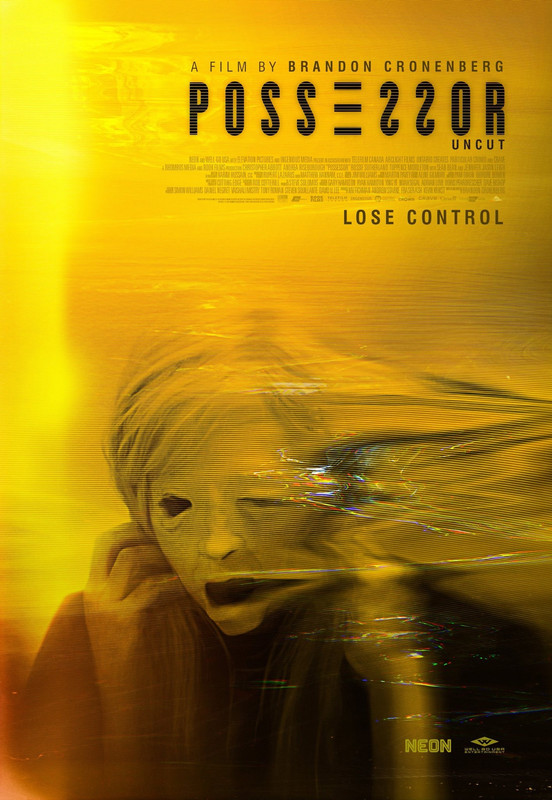
24FPS@LFF2020: Possessor

Dir: Brandon Cronenberg
Thanks to David and his 50-year career, the Cronenberg name is synonymous with body horror. Brandon Cronenberg is nothing if not proof that the apple doesn't fall far from the tree. 2012's Antiviral was a confident debut that nevertheless co-opted both themes and a visual feel from his father's cinema. Possessor may hew even closer to one particular film of Cronenberg Sr's in its themes and ideas, but visually it sees Brandon moving on, keeping the spirit of the family name alive but finding his own identity in the process.

The concept sees Andrea Riseborough as Tasya Vos, an operative for a company that uses brain implants to allow its agents to take over the minds and bodies of real people and use them as vessels to carry out assassinations. Vos' latest assignment is a big one; use the body of Colin Tate (Christoper Abbott) to murder his girlfriend (Tuppence Middleton) and her father (Sean Bean), so that the father's company passes entirely into his son's control. However, something goes wrong, and Vos finds herself fighting Colin for control.

The basic idea of Possessor owes a great deal to eXistenZ and like that film this one never allowed me to feel entirely grounded in reality. We first meet Andrea Riseborough's Vos as she is extracted from a subject at the end of a mission and while she passes the test to see if she's suffered any adverse effect on her brain, the performance gives the sense that her answers are rotely remembered, not especially indicative of anything deeper. This is where the casting of Riseborough and her costume and make-up design is especially clever. She is almost a blank canvas; her features de-emphasized and pale, her hair white blonde and barely styled, and her every expression rehearsed (explicitly so when we see her returning home to her estranged husband and son). It's always as if she's nothing more than a vessel, something again echoed when we see the transfer process, a sequence that is like the opening of Ghost in the Shell run backward and forward through a hall of mirrors.  The nod to eXistenZ is even more explicitly made with the casting of Jennifer Jason Leigh as Riseborough's boss, Girder. While she's only a side character there might be an interesting reading in the idea that this is all just another game by Allegra Gellar.

If his father's filmography divides fairly neatly into horror of the body and of the mind, Possessor finds Brandon Cronenberg combining the two, mind control (or the loss of it, whichever of the leading characters you're talking about) has seldom been depicted as something so visceral. The splatter in this film is often grossly impressive in a way that recalls the best work of the likes of Tom Savini (I'm thinking of the teeth being ground up against a poker, or the literal eye-popping moment), but more interestingly than that, the effects are used to express the way the two consciousnesses inhabiting Colin's body are tearing at each other in pursuit of overall control. The moment we find ourselves inside his mind, an entity trying to rip itself apart, is an image that is not only incredible technically, it manages to boil the film down into a single essential image. Cronenberg also explores this duality in a sequence in which we see Riseborough, her face appearing to melt, just as in the story we wonder if her very presence is dissolving. It's perhaps a little on the nose, but it's a stunningly realized and compellingly weird visual metaphor.

The acting challenge this dynamic poses for Riseborough and Christopher Abbott is substantial. Riseborough, given how blank her character must be, has less to work with, but her detachment sells the toll that the work she does takes on Vos and her updates to Girder allow us to see the denial she's in about the process beginning to go wrong. Abbott, who has turned in some great performances in genre fare, notably Nicolas Pesce's Piercing, has a lot to play here, often he must embody Vos in Colin's body, but there are also passages in which he has to play a confused Colin, wondering if he's losing his mind and sequences that require him to flip between personae almost line by line. It's a complex piece of work and one Abbott carries off with impressive nuance, especially in the film's final, bizarre, confrontation.

Possessor is almost a bit much to take in on first viewing; a nightmare that cracks and refracts its characters and its visuals through familial influences as well as through its writer/director's own increasingly individual imagination. It's grotesque yet thoughtful, full of concerns about technology and identity, and I think it will take a few more viewings to fully unpick. The good news is that it's going to be fascinating to pick this movie's brain, even as it does yours.
★★★★

Oct 15, 2020

24FPS@LFF2020: Zanka Contact

Dir: Ismaël El Iraki

Energy pulses through Bataclan survivor
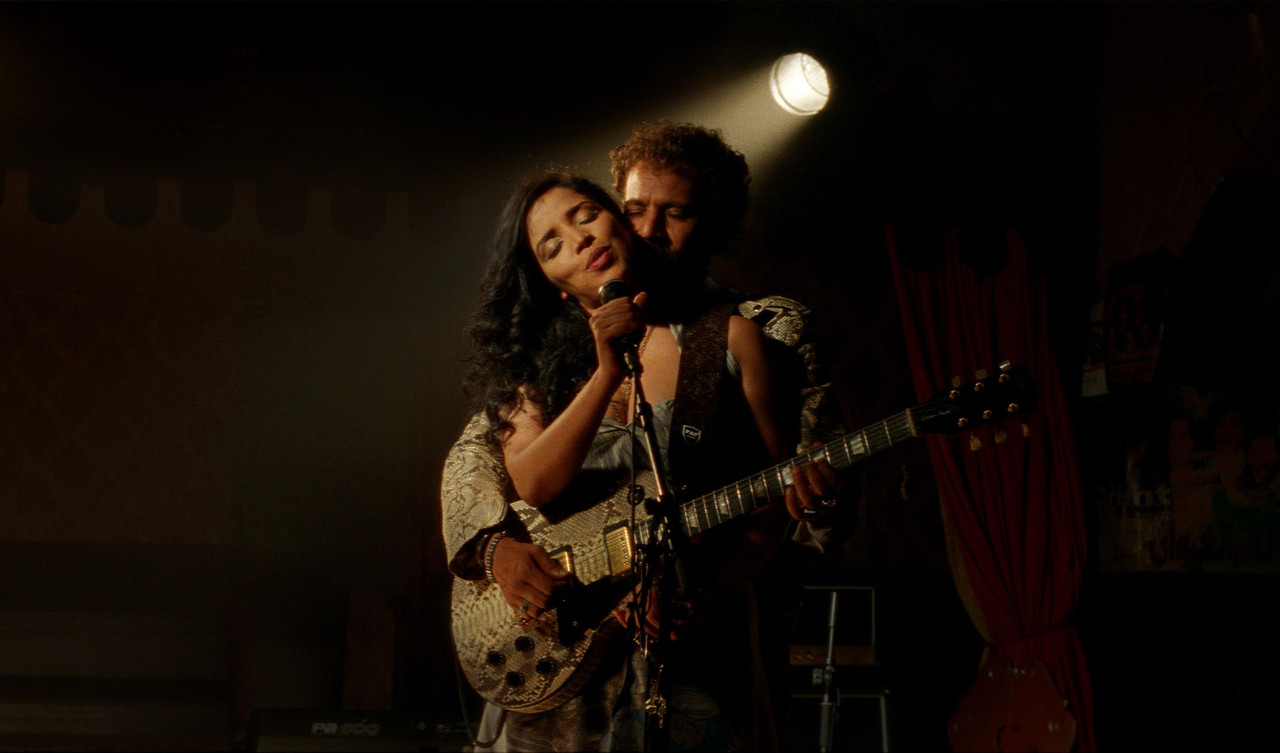
Ismaël El Iraki's feature debut from the very start, as a rock cover of Man of Constant Sorrow takes us over the city of Casablanca to find a pissed off Rajae (Khansa Batma) storming out of a hotel and into a cab, making jokes with the driver until another car slams into them. A flashback throws us into a room where former rock star Larsen (Ahmed Hammoud) is tied to a chair and being menaced by a couple of British criminals who say he owes them £150,000. Making a deal, he's on a plane to Casablanca and, impersonating another passenger, into a limo... which crashes into Rajaes's car, introducing the two. What follows is a wild mix of genres and influences as Rajae and Larsen try to escape her pimp, Said (Said Bey) and Larsen tries to get Rajae to sing for him.

While the setting is immediately novel, there are definite echoes of other films and filmmakers in Zanka Contact. Perhaps most notable is Quentin Tarantino. Several story and structural points recall his work. In particular True Romance; the early scenes of Larsen and Rajae getting to know each other have echoes of Clarence and Alabama's early interactions and Said's conversation with an irritated client of Rajae's has some of the feel of Dennis Hopper's speech to Christopher Walken, with the same lingering threat of violence as he's speaking. That said,  El Iraki doesn't slavishly imitate QT's style or even the sound of his dialogue, it's more that he's trying to capture a similar energy, and he does so successfully. There are other nods and winks throughout the film, obviously to the various versions of A Star is Born, but most notably the sequence when Larsen and Rajae, on the run, turn up to the house of another former member of Said's stable of girls. Here the film becomes a Western, complete with a violent shootout that is more than a little Peckinpah. 

El Iraki injects plenty of style of his own. One moment shows a sawn-off shotgun being made, seen from below, it shows the butt and then the barrel dropping to the floor; an image that drips with menace as much as it does style. Striking dream sequences have both Larsen and Rajae seen with their eyes closed, stylized eyes painted on their lids, walking through a dream landscape, and there is a similar oneiric feel to the first time Larsen plays with Rajae, lifting his guitar over her, so she can feel the notes as she sings. Again though, it's all about the energy, be it the charge of the violent moments (Zanka Contact apparently means a street fight) or the powerfully quiet moment when Larsen relates the story of why he wears snakeskin all the time.

As well as El Iraki, the film's relentless forward motion is powered by charismatic performances from 
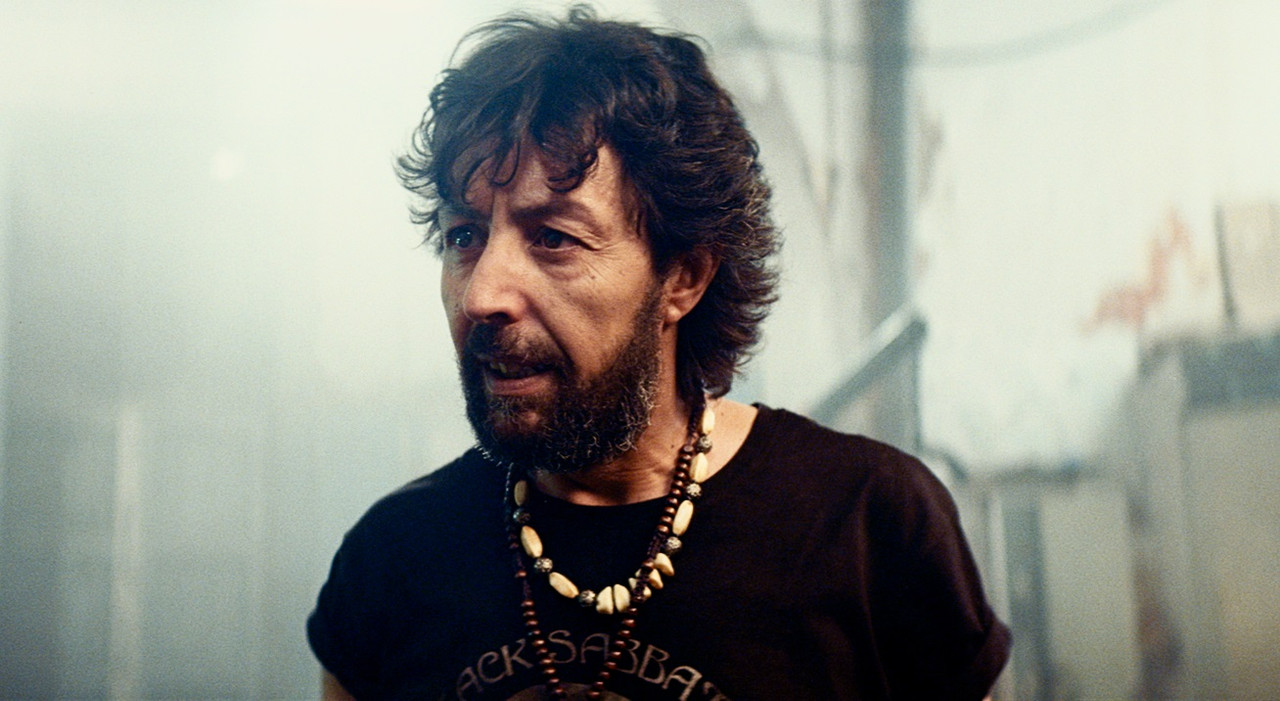
Khansa Batma, Achmed Mahmoud and Said Bey. Batma is well established as a musician in Morocco, but this is her first film role and from the moment she storms on to the screen, rubbing her lipstick off with the back of her hand, she has a presence commanding enough that you can see how she might shake Larsen out of his heroin haze. Her voice is beautiful and powerful, making the sequence near the end where she finally sings the song that gives the film its title impactful enough that you almost buy what happens as a result. Mahmoud's Larsen has more of a muted presence, not that the character can't be forceful, but there's a sense that part of this guy has gone missing; vanishing behind years of drugs and drifting from the music scene, again though, you believe the connection he has with Batma. The last of the central trio is Bey, initially a stereotypical pimp; charming his girls and their clients when he needs to, but also not to be messed with. Said Bey brings conviction to this, but also some more complexity when he's forced to help a much more vicious killer towards the end of the film.

Knowing the origins of Zanka Contact gives it an unexpected poignancy, drawing its leading character closer to his writer and director. There is a throughline here of using music as a way to hold on in a chaotic place. Larsen's connection to music has been compromised; heroin addiction has robbed him of his singing voice, because he's been injecting in his neck for so long. He hasn't recorded in years and has signed away the rights to his biggest hit, but he still carries his snakeskin Gibson and wears the similarly styled jacket and boots that were his onstage trademark. The connection back to music when he hears Rajae sing is immediate and visceral. It feels like El Iraki expressing what he says a gig by the German band Kadavar (who appear in the film), just a few days after the Bataclan, did for him "They brought me back from the dead". Resurrection is perhaps a slower process for Larsen, but it begins in that moment that seems to awaken him somewhat from his withdrawal-induced fug. 

It's not a perfect film. The ending feels a little too neat, as does the apparent ease with which Larsen, who has a decades long habit, seems to shrug off heroin use, and it does sometimes lean a touch heavily on its influences, but Zanka Contact grabs us from the beginning and drags us along on its ride for two pretty relentless hours. It's a debut that commands the attention
★★★★

Oct 11, 2020

24FPS @ LFF 2020: 200 Meters

Dir: Ameen Nayfeh

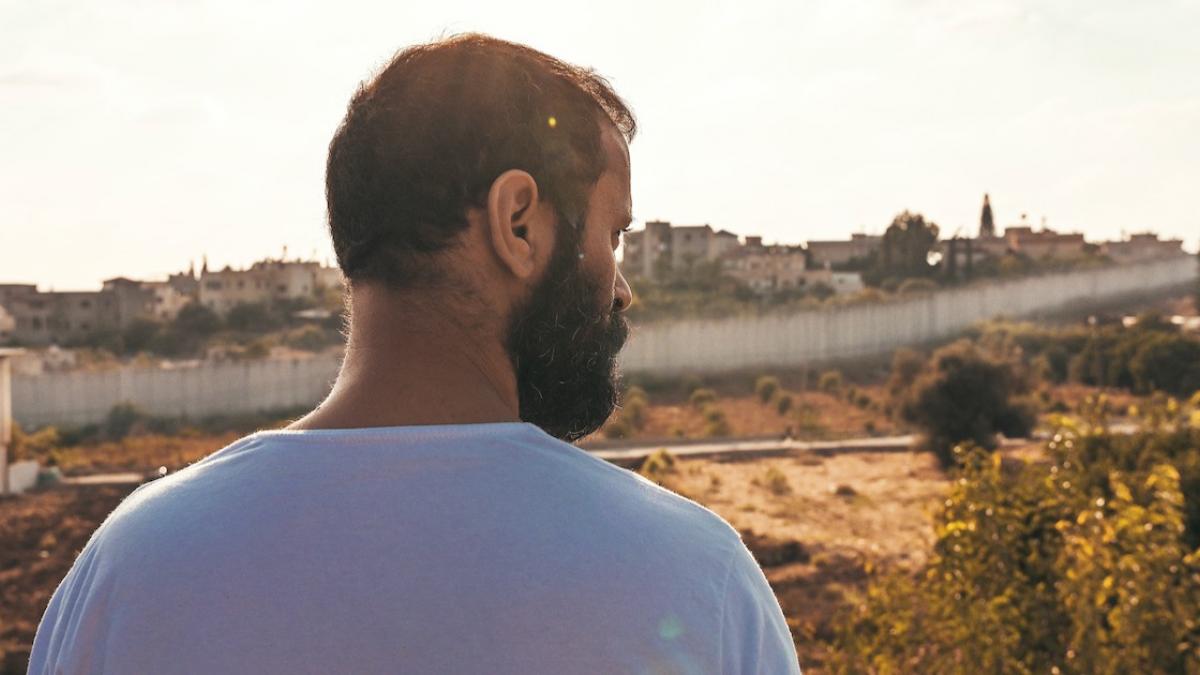
From whichever side we're ultimately looking at it, we tend to see the Middle East purely as a war zone, which is why it is refreshing to encounter films like 200 Meters. The politics of the region is embedded in both its title and its story, which begins as a family drama about Mustafa (Ali Suliman), who lives in the West Bank, divided by the titular distance and by the wall from his wife Salwa (Lana Zriek) and their three small children who, though they visit, live most of the time in Israel. When, after he has lost the work permit that allows him to cross the border for the day, Mustafa's son is injured, he attempts to find a way to smuggle himself across so he can visit the hospital.

The first half hour of the film is very much about everyday life in the West Bank and Israel, Mustafa dealing with only seeing Salwa and his kids occasionally, and trying to find what is often taxing work across the border despite his bad back. Things clearly aren't perfect between Mustafa and Salwa, as we see them disagree about his health and his not applying for a residence permit in Israel, and it might be enlightening to see that dug into a bit more. However, most of the family scenes are lighter, though mixed in with a sense of how tough the grind of life is, even without invoking the spectre of the conflict in the area with anything more than the very presence of the wall and the checkpoints. The events are somewhat mundane, but they knit together into a compelling picture of a family separated by circumstance and establish a sweet running visual in the lights that Mustafa uses to signal goodnight to his kids across the wall.

The film's last hour shifts gears, becoming a thriller about getting Mustafa and several fellow travellers, notably German filmmaker Anne (Anna Unterberger), through the checkpoints and the border and into Israel. When things go wrong they lose their driver and things shift again into a road movie full of simmering tension both between the characters and about how they are all going to be able to make it over the border. Politics is largely kept as a background hum, but there are tensions that reveal themselves, especially between Anne and her camera operator boyfriend. The thriller elements here feel credible, both in the dangers that are presented and the solutions that are found (one even manages to be amusing in its simplicity, given the tension built up). 

This is only added to by the strong performances all round and the developing camaraderie between characters who are initially almost literally thrown together, most of them crammed in the boot of a car. Everyone is good, but it is Ali Suliman's beautifully modulated performance, expressing all the joy of being among his family, the strain of times without them, and the growing worry and often impatience of a parent who needs to see his kid in the hospital, that carries the film.

200 Meters is trying to do a lot of things, and in his first feature, director Ameen Nayfeh draws his elements together well. In taking a long section of the film to cross what initially sounds like a short distance he builds in a metaphor about the difficulty of bridging that gap without having the characters make speeches about the region's politics, and he shows the effects of the conflict without dwelling in its violence and living into the cliches of how the region is depicted. It's an accomplished debut from a filmmaker worth watching.
★★★★

Oct 10, 2020

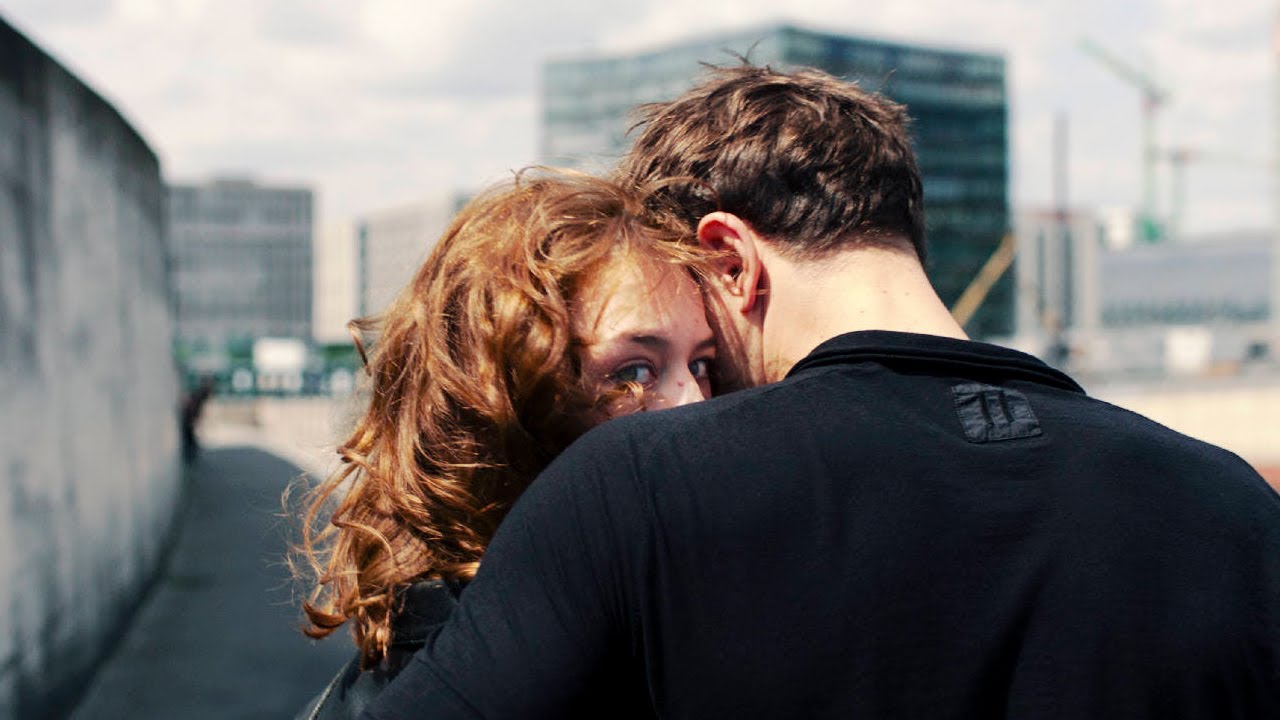
24FPS @ LFF 2020: Undine

Dir: Christian Petzold

Christian Petzold is a filmmaker who at once wears his influences on his sleeve and remixes them enough to make the resulting films very much his own (consider Phoenix's relationship to Vertigo and Eyes Without a Face, or Jerichow and Yella's riffs on The Postman Always Rings Twice and Carnival of Souls respectively). Undine is loosely inspired by a myth initially found in the alchemical writings of renaissance physician Paracelsus. The myth speaks of mermaid-like creatures who resemble humans but lack a soul, and to gain one they must marry a human, but if the man is unfaithful he is fated to die. As is his usual style, Petzold takes a few of the bones of this myth and embeds them in a story that is very much grounded in the real world.

Paula Beer's Undine is a historian working at a Government office in Berlin, giving talks on the architectural history of the city. On the morning her boyfriend Johannes (Jacob Matschenz) breaks up with her, she goes to find him at their local cafe, but instead encounters industrial diver Christoph (Franz Rogowski). They accidentally smash the cafe's fish tank, soaking them both and cutting Undine. When we next see them, they are in a relationship, which we continue to follow throughout the film.

Their connection perhaps honed through their work together in Petzold's previous film, Transit (to summarise its influences, think 'Kafkablanca') Beer and Rogowski are both excellent, solidly grounding the more fanciful aspects of the film with performances that commit totally to the emotion of each moment, and they have intense chemistry throughout. We meet them the second time when they are clearly relatively newly, but comfortably, in their relationship, and there is a hunger especially about the way Beer approaches it, something we see notably in her initial frustration when Christoph puts the brakes on when things are about to get sexual and asks Undine to give him the lecture she has been practising for the next day. On the surface, Undine may seem slight; a relationship drama that takes a late second act diversion into possible supernatural occurrences and mythical fantasy, but there is perhaps more to it than that.

Undine's lectures look at the changing character of Berlin, from a split city to a whole one and the way that transformed the architecture of the city, even bringing back buildings from the past. I think Petzold wants us to view this as analogous to the shifting states of relationships, from Undine's initial pleading with Johannes not to leave her to her relationship with Christoph. It could also be argued that he's discussing shifting states of being, even beyond the question of the connection between Undine as a character and the mythological figure. Through his work, Christoph is to some degree a being of the water and early on Undine needs to be saved from drowning, which has echoes in later passages of the film.

For all the thematic concerns and all the questions of the relationship between myth, imagination, and reality, at its heart, Undine feels honestly romantic, perhaps ultimately about memory and touchstones (the diver statue that travels through the film, variously with Christoph and Undine). I get the sense that it deliberately doesn't give up all that it's about on a first viewing, and I especially want to pair it with a rewatch of Yella, to examine how each film' and each character's connection with water is expressed. That said, this is still an extremely rewarding and rather beautiful film even without the full context of Petzold's filmography. It's a slow burn, but one worth immersing yourself in.
★★★★

Apr 2, 2020

Martial Arts Month: Days 1 and 2

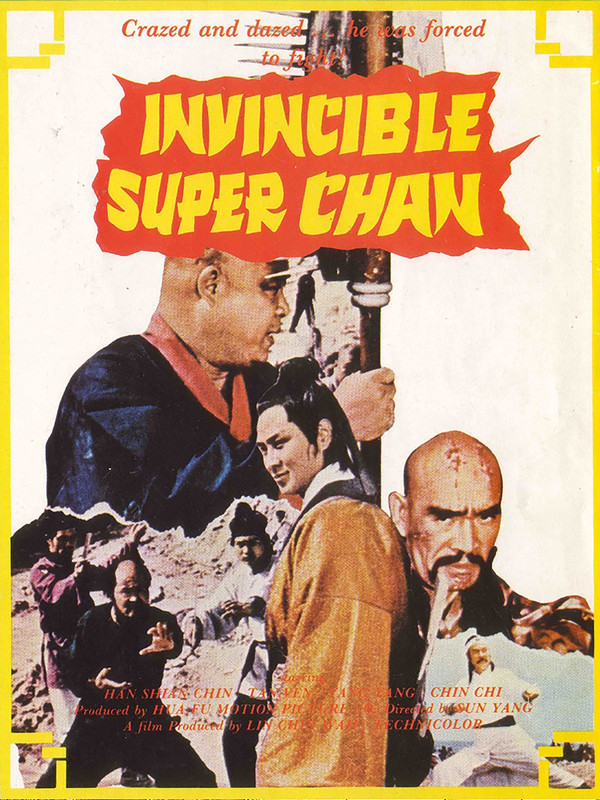
Invincible Super Chan
Dir: Yang Sun
This was one of the titles requested for this series of reviews, and it turns out to be an ideal place to start. Invincible Super Chan is essentially what I thought all martial arts movies were before I discovered martial arts movies.

Chan is angry because his master was murdered. He seeks revenge, and is then a target himself because of his newfound reputation.

The version I was sent to watch is 81 minutes long, which is nine minutes shorter than the running time quoted on Imdb. It shows. The editing is haphazard beyond belief. Apparently, this film attracted some controversy on release and was nearly banned (this may be hyperbole, it’s hard to tell), but it definitely seems to be censored, with many images of blades showing everything but the strike, so we get the often disorienting spectacle of cutting straight from knives just flying through the air with no discernible target to people writhing on the ground, stabbed. This isn’t to say Chan needs to stab people, indeed patting them lightly on the back makes them go flying, such is his strength. His jumps are also hilarious, less wuxia wirework and more like something out of MST3K subject, Pumaman.

The violence is non stop and pretty inventive (ramming a stone down someone’s throat is fairly novel, as is the use of an exploding flag as a weapon), but even though it’s endearingly bonkers, hilariously badly dubbed and entertaining for its rickety production values, you’d never mistake Invincible Super Chan for a good film. An entertaining one though… that’s another matter.
★★

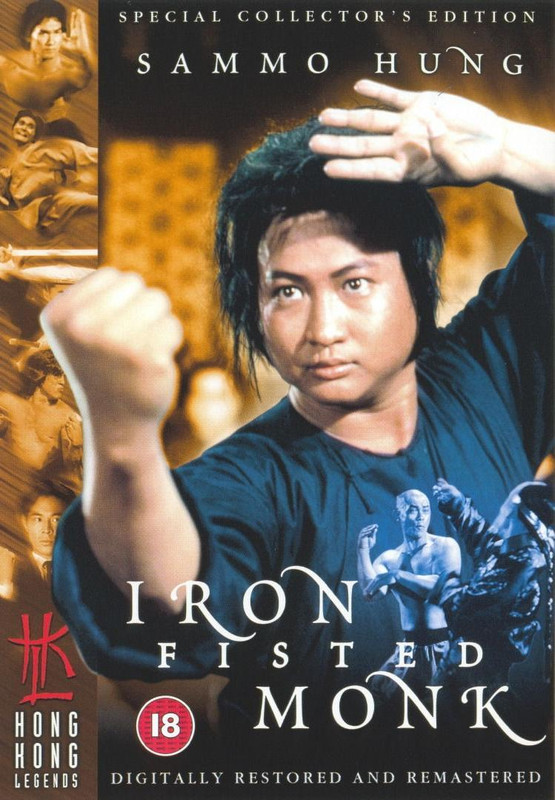
Iron Fisted Monk
Dir: Sammo Hung
I’ve never felt that, at least in the West, Sammo Hung has entirely got his dues. He’s one of the greatest martial arts stars, choreographers and directors of all time and Iron Fisted Monk, his 1977 directorial debut, shows that talent in nascent form.

The plot isn’t the tightest Hung ever put to screen, but it sees him training at Shaolin Temple, where he went after his uncle, whose noodle shop he worked in, was murdered by the Manchu. He leaves the temple early, along with a monk who is his senior (Chen Sing) and they end up pursuing a Manchu official (Hung’s frequent co-star and here co-choreographer, Fung Hak On) who has been leaving a trail of rape and murder in his wake.

In contrast to his opera school brother and frequent collaborator Jackie Chan, Hung’s films have always been notable for their hard edges. That’s more true of Iron Fisted Monk than even Hung’s own later work. The choreography is big and classical, but it’s also hard hitting, with plenty of bloody injuries depicted. More surprising is the level of exploitation content, particularly a very nasty and fairly violent rape scene that had to be cut by over a minute for the first UK DVD release (the recent Blu Ray, which I watched for this, is uncut).

What shows through is Hung’s directorial talent. He never quite balances the slapstick of early scenes with the nastiness that runs through the rest of the film, but both are well captured. One particular match cut in the rape scene, from Dean Shek raising his hand to one woman to Fung Hak On slapping the rape victim is especially (if disgustingly) effective. The action is plentiful and flows beautifully. In this respect Hung is already a master of his craft and while he gets many of the best moments he’s not above ceding the spotlight to Chen Sing. The finale shows off the best filmmaking, with Hung’s fluid camera often gliding between the two fights taking place in the same room.

Sammo Hung would make better films than Iron Fisted Monk, but as a statement of intent and a demonstration of his skills both in front of and behind the camera, this was an excellent start. 
★★★★

Jan 18, 2020

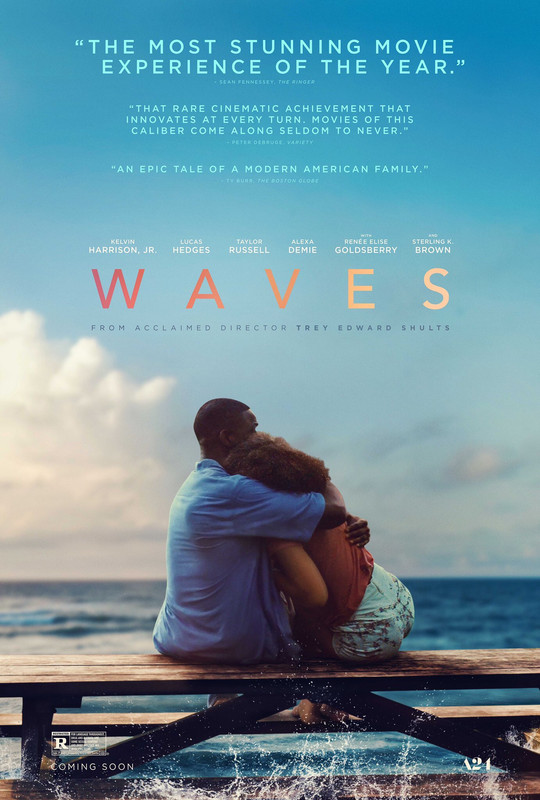
Waves [15]

Dir: Trey Edward Shults
Writer/Director Trey Edward Shults impressed me with his second film, the low-key horror inflected family drama It Comes At Night. His third, as its title might suggest, is bigger and more expansive, yet it remains focused on the small dramas of a family in Florida, dramas which sometimes boil over into life altering moments.

Tyler (Kelvin Harrison Jr) is from a solidly middle class family; a good student, wrapped up in his beautiful girlfriend Alexis (Alexa Demie), and a star on the high school wrestling team. He’s also often under pressure from a demanding father (Sterling K. Brown) and a combination of injury and unexpected news begins to send him off the rails. In the second half of the film, Tyler’s sister Emily deals with her own pain and guilt through a relationship with one of Tyler’s teammates, Luke (Lucas Hedges).

Waves are unpredictable and, like its namesake, this film moves in different ways through its 135 minute running time. At times, it crashes relentlessly; all furious noise and violent emotion, in other moments it gently rolls; time passing in something like a distracted haze. Shults balances these different moods beautifully. He evokes them through the use of his camera, for instance, the endless spinning of the opening sequence throws us into the noise of the lives of its young protagonists, while the off balance stalking quality of a sequence at a party strikes a note of foreboding that turns Waves into a horror film for about ten minutes. The shot composition is often masterful, and called particular attention to by the shifting aspect ratios which move us between the acts. The first of these is especially striking, as in one instant a single act metaphorically shrinks the world in which Tyler, and consequently his family and friends, exists, sending the film into 4:3 ratio. The ratio continues to shift throughout the film. Remarkably, Shults manages to do this without it feeling trite, rather each time it happens - always preceded by a brief blackout - the film is taking a breath and resetting; into panic as walls instantly close in the first instance, and later to a more expansive experience and finally back to the sure footing of the first ratio we saw. It becomes a key part of the film’s emotional journey, both for the characters and for us.

While Shults’ visual craftsmanship is often what commands the attention, it is underpinned by some outstanding performances. Sterling K. Brown plays Tyler and Emily’s father as a man we are given to believe has pulled himself up through hard work, and is sometimes too tough on his son in his desire to bring that same commitment out of him. This toughness is what we see for the bulk of the first act (which takes up the first half of the film), but the second and third reveal it as a shell that can be cracked, in some of the film’s most emotionally wrenching scenes. Good as Brown and Renée Elise Goldsberry (as Tyler and Emily’s stepmother) are though, this is largely a coming of age story, and as such it centres on the younger actors. Kelvin Harrison Jr gives a performance of building resentment as Tyler’s denial about his terrible shoulder injury builds and his anger at his father and at his girlfriend; one for pushing him too hard the other for, in his mind, pushing him away. It would be easy to hate Tyler, but the film establishes him initially as a nice kid, we can understand if not sympathise with his denial and his rage - at least towards his injury - up to a point. The final moments of the first act are brutal; a momentary act that echoes throughout the film and will do for all the characters long past the credits, and the second, third and fourth acts all ask us to dwell in the aftermath of that act from an angle we don’t often see. Harrison is outstanding in the part, the pressures Tyler feels and the sense of loss at what to, whether it’s to avoid disappointing his dad or to win back Alexis, is always at boiling point inside him.

The second half of the film, broken into its last three acts, largely turns the focus on Emily and on her budding relationship with Luke. Taylor Russell and Lucas Hedges establish a warm and naturally growing chemistry, begun with a perfectly awkward scene of Luke asking Emily out, which seems designed to play as the direct antithesis of Tyler and Alexis’ fast burning and eventually angry story. This is certainly a more typical coming of age story than is presented in the first half, but it too is suffused with the striking colours and inventive camerawork that Shults brings to the telling. Russell and Hedges are both wonderful, and it’s the first time I’ve really bought into the hype around Hedges. That said, the standout scene of the second half isn’t between them but between Russell and Sterling K. Brown, as Emily and her father finally talk about the emotional fallout of what happened with Tyler and Alexis.

Waves isn’t perfect. Shults’ Malickian shots of people leaning out of car windows and his colour wash transitions can feel a little self-indulgent at times, and much of the final section of the film is spent on a storyline that has barely been seeded and feels like a digression from the main thrust of the film. However, if the film doesn’t hit the bullseye on every emotional target it takes aim at, those it does strike resonate powerfully and for a long time.
★★★★

Nov 5, 2019

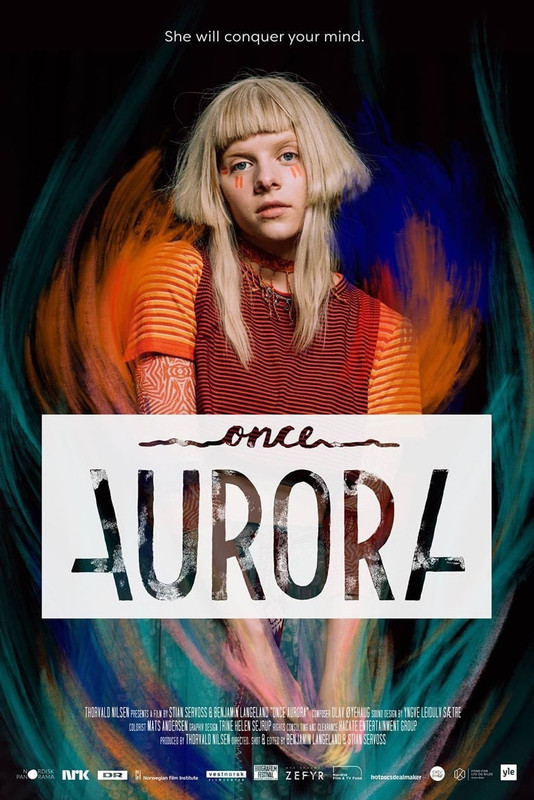
Doc N Roll Festival 2019: Once Aurora

Dir: Benjamin Langeland, Stian Servoss
It seems early in her career for there to be a documentary focused on Aurora Aksnes, particularly one in which she talks quite so much about legacy, but there has always been a certain precocious feel about this Norwegian girl, discovered when a video of her singing a self-penned song at a school concert went viral and launched into the grind of becoming a pop star at just 16. This film catches Aurora at 20. Her first album, All My Demons Greeting Me As A Friend has met with great success, but directors and childhood friends Benjamin Langeland and Stian Servoss find her conflicted about the album, success, fame, touring and, even as she works on her second album, whether she wants to be an artist at all.

Langeland and Servoss clearly had totally unfettered access to Aurora, whether at home, in the studio or on tour. The result of this, along with her comfort with them, having known them for so long, pays dividends. We all know that interviews with famous people are, to a degree, them putting on a character. Once Aurora captures a much different version of the singer than the one we most often see in public. In some ways, the Aksnes we see here seems less secure, delicate in a different way to the thoughtful but somewhat flighty person presented in interviews (many comments tend to describe her as a pixie or a fairy). It can be difficult to watch the film as we see her struggle with the demands of this world she still seems unused to. One moment captures her locked in the bathroom, her hands shaking in what appears to be some kind of anxiety attack as she prepares to deal with yet another influx of people. Another finds her looking to her drummer (and former producer) for support when faced with a fan meet and greet. 

This isn’t to say that we find Aurora either ungrateful for her success or incapable of enjoying it. We’re privy to both joyful and challenging moments in the crafting of her second album. There are carefree moments like the opening sequence of her recording found sounds in the old French stately home where Infections of a Different Kind was recorded and some truly beautiful raw takes of the recording, but also an amusingly strained moment as she tries to explain to a largely male crew how a certain song should sound and feel like an orgasm.  

This is an especially good film about the effect of fame on someone who didn’t expect and never seems to have chased it. We get a few insights into the support network around her, from the more mercenary workings of the record company, to a proud and supportive family and even down to an algae ball she seems to find a comfort but even so, the film made me feel protective, even a little guilty, as one of the fans helping drive this career Aurora seems so unsure about. Happily, we get the feeling that by the end of the film, as she’s able to exert a little more control over her music, this is dissipating and that she is finding more joy in the process as well as in the experience of her fans.

For fans, Once Aurora is a goldmine. It shows the artist they are familiar with but in a much deeper and more rounded light. It' not always an easy watch, but if you are willing to engage with the complexities of how we see Aurora feeling then it’s a thought-provoking film as well as a revealing and welcome insight into one of the best musicians the modern pop scene has to offer. 
★★★★

Oct 8, 2019

24 FPS @ LFF 2019 La Llorona

Dir: Jayro Bustamante
In present day Guatemala, former general Enrique Monteverde (Julio Diaz) is on trial for genocide he is alleged to have overseen thirty years prior. As the trial comes to an end, and increasingly after a controversial decision prompts protests outside his family home and a new maid arrives on the same day, he becomes convinced that he can hear a weeping woman in the house during the night. The family think he may be imagining things because of his dementia, but he believes it is the vengeful La Llorona.

Doing a little reading around the film, it is clear that it takes many of its cues from fact, with the element of the trial and how it works out based quite closely on the case of Guatemala’s former dictator Jose Efrain Rios Montt. Knowing this, the reckoning with genocide becomes much more than simply window dressing for a horror movie. History hangs over the film, lending its slow-building horror and tension extra weight and power.

Despite this heavy subject matter in the background, director Jayro Bustamante is definitely having fun here. Over and over, he allows the potential for the film to take a very typical genre route, setting up the cliche images of the haunting movie, but over and over again he undermines these banal conventions. Sometimes it is simply in the timing, the fact that a slow build of creeping around the dark house doesn’t lead to, for instance, a cut to an apparition screaming in our faces, but he often directly defuses the images. One great moment has the new maid, Alma (María Mercedes Coroy) her long hair being blown across her face by an unseen force (I think the shot is also very slightly slowed down), then Enrique’s granddaughter steps into frame, and we see she’s drying Alma’s hair. It’s funny, and yet the original image still feels a little creepy, and this is a trick Bustamante manages to repeat several times.

The horror elements of the film are slow, ominous and creepingly effective, growing more so as they become ever more entwined with the history and as we see figures from Enrique’s family in different roles within the flashbacks, likely as a way of underlining their complicity, even if their role wasn’t active. It further defies convention by using no CGI, or even any overt ‘scares’ to effect its horror.

The legend of the weeping woman was, earlier this year, the basis for a weakly received entry in the ongoing series of Conjuring universe films. If you’re looking for the same sort of pop up book boo scares, you’ll probably be disappointed in this. For me though, this is one of the more provocative and interesting horror films of the year, reckoning with real monsters through a legendary one.  
★★★★

Oct 6, 2019

24FPs @ LFF 2019: Lunana, A Yak In The Classroom / Babyteeth

Lunana - A Yak in the Classroom
Dir: Pawo Choying Dorji
Sometimes, all it takes for a film to feel a little different is a change of context. There are more than a few movies about teachers in an unfamiliar environment, from comedic takes like Kindergarten Cop to more dramatic pieces like Dangerous Minds. In most of them, the teacher will find their class or environment something they don’t initially warm to, but eventually will be turned around, learning something about themselves. Lunana, a Yak in the Classroom doesn’t do these broad strokes any differently, but the setting and cultural specificity of it make it feel a bit different.

Ugyen Dorji (Sherab Dorji) is in his last of five years of service as a teacher, following his training, and he’s fallen out of love with it. He’s lazy, marking time before he can leave Bhutan for Australia. Ugyen’s boss, sick of his attitude, dispatches him to Lunana and the most remote school in the world, eight days hike across the Himalayas from the nearest town. When he arrives, Ugyen immediately wants to leave, but the villagers and the kids he’s teaching win him round.

There isn’t much unexpected here. Ugyen is slowly inspired by the kids, notably adorable class captain Pem Zam (all the kids use their own names) and sets about doing up the school, for instance having the villagers helping him mix charcoal paint to make a blackboard. A city resident and a modern person, he also has his head turned by traditional culture, notably the songs sung by yak herder Saldon (Kelden Lhamo Gurung). This is where the film marks itself out from the many others like it. Music is a major throughline, Ugyen wants to be a singer when he gets to Australia, and we see him spending much of his time trying to learn a traditional song he hears Saldon singing. The music is soothing, and unlike much we regularly her in the UK.

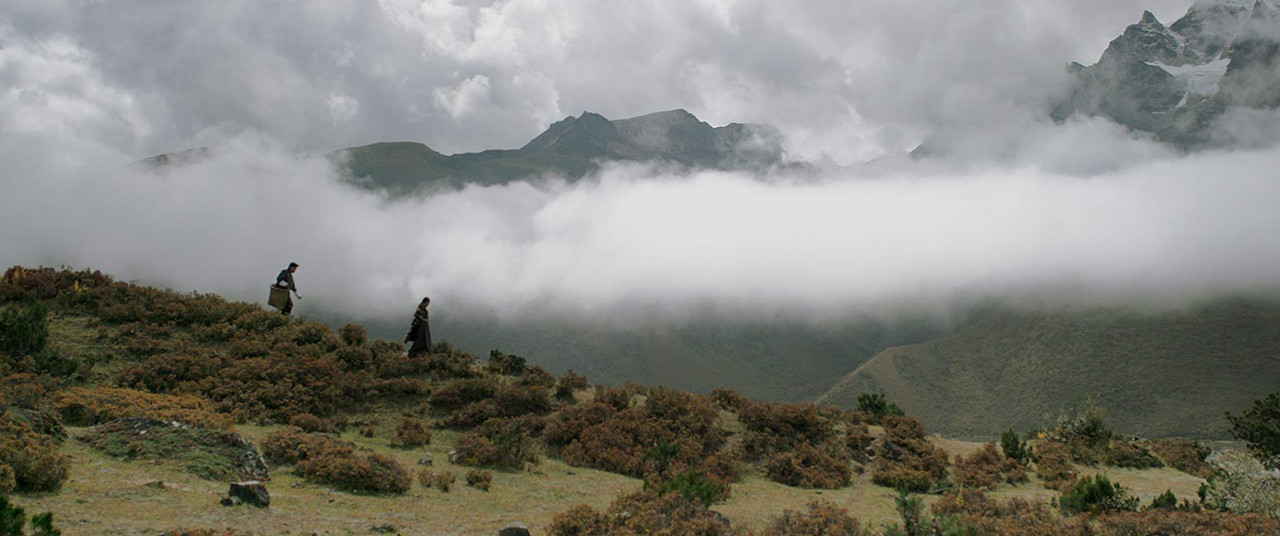
As well as a beautiful soundtrack, the film makes use of its stunning location to mark itself out. Shot on solar powered cameras 5000 metres up in the Himalayas, Lunana looks like few other films, taking place among the clouds not because it is set in some fantastical realm, but simply because that is where its characters live. The vistas are unbelievable and almost worth the price of admission on their own.

While it never goes anywhere unexpected, Lunana is executed with great charm. The dynamic between Ugyen, the villagers and the kids feels natural and has a warmth that permeates the whole film, in contrast to the mountain weather. This is especially the case in the friendships that develop between Ugyen and his escorts and the potential budding romance between Ugyen and  Saldon.

A sweet natured film about the importance of community and tradition, as well as that of following your calling, whatever that may mean, Lunana is perhaps a bit different to the rest of LFF’s Family programme, in that it doesn’t seem as much aimed at children as suitable for them, just as much as it will be for their parents. It should charm the whole family.
★★★

Babyteeth
Dir: Shannon Murphy
The teen cancer romance has, weirdly, become prevalent enough to be a subgenre all of its own. Generally speaking, I can’t stand them. Most feel like tragedy porn, content to let their characters be defined solely through illness and essentially acting as a big stick, designed to poke you until you cry. The genre’s miserable low is without doubt the vomitously saccharine The Fault in Our Stars. I’m not sure it had a high point until now.

Babyteeth begins with 16 year old Milla (Eliza Scanlen) meeting and falling for Moses (Toby Wallace), he’s older, tattooed, jobless, a small time drug addict and dealer. Milla’s parents, Anna and Henry (Essie Davis and Ben Mendelsohn), understandably, do not approve. It’s only later that we learn that Milla’s cancer has returned. In the throes of first love with Moses, she wants to spend as much time with him as possible, to the point that he ends up living with Milla and her parents as she gets sicker.

There are many things that set Babyteeth apart from the herd of teen cancer movies, most notably the fact that it is not defined by Milla’s illness. This is largely a comedy drama about a dysfunctional family and cancer is only a part of that dysfunction. It’s also only a part of the film. It lurks in the background of the first half, becoming more present over time, much like the progress of the disease. For much of the first hour, writer Rita Kalnejais and director Shannon Murphy push comedy to the fore, with Essie Davis especially priceless as Milla’s anxiety riddled mother, who spends much of her time in a Zoloft induced haze, drugs prescribed by her psychiatrist husband. The scene in which Milla first brings Moses home and there is an excruciatingly awkward family dinner is particularly priceless. What many films about tragic things forget is that, even in the midst of it, not every moment is tragic. By remembering this, the sometimes irreverent humour of Babyteeth conveys more emotional honesty than any of the manipulative set pieces in a more typical teen cancer pic.

Milla’s first romance is obviously unsuitable, but we understand it from all sides, whether it’s Milla's romantic sense of being with the bad boy who’ll annoy her parents or the rather deeper thought that it’s Moses’ fearlessness that first draws her in, perhaps a quality she wants more in herself as her cancer gets worse. Eliza Scanlen is excellent in the part. For a long time we can see her playing Milla as a kid who simply wants to ignore her illness; she hasn’t got any hair, so she’ll wear fun wigs, and she’ll go out and she’ll fall in love with this guy, like a normal kid. We also see and feel the moments that bring that crashing down to Earth, but Scanlen never overplays them. For Moses’ part, there’s a recognition that he too, more experienced if not that much wiser at 23, realises that this crush Milla has on him isn’t entirely healthy, and that he at once has some feeling for her that goes beyond sympathy and yet he’s not immune to exploiting her feelings. Moses, in particular, is a more complex character than we usually see in these films and his shifts in motivation and feeling are given great weight in a deceptively light performance from Toby Wallace.

Initially, Ben Mendelsohn and Essie Davis have broader roles, essentially doing something close to comic relief duty (their first scene, an appointment for sex in Henry’s office, is a good example of this tone), but this recedes as the film goes on and their performances become heartbreaking. Mendelsohn, one of the best actors in movies right now, is especially brilliant when his daughter asks him to smile for a picture; “gimme a second” he says, and the weight of everything in the film is felt in those three words.

Director Shannon Murphy, making her feature debut after several shorts and plenty of TV work, balances the film’s tone beautifully and draws terrific work from her cast, allowing supporting players like Emily Barclay, as Anna and Henry’s heavily pregnant neighbour, to steal a few scenes, but never the focus. I’m not a fan, though, of her aggressive chaptering. The many, many title cards add little and sometimes give the film a bitty feel that undermines an otherwise strong emotional throughline. The nadir of this technique comes when a title card introduces the song a sequence is set to, making that sequence resemble a music video even more, slightly deflating its impact for that.

On the whole though, Babyteeth is a refreshing addition to a genre that has so far given us little to enjoy. The balance of humour and heart is more honest here than in any of its peers, and Eliza Scanlen and Toby Wallace both impress, marking themselves out as names to watch for the future.
★★★★