Showing posts with label Mini-Reviews. Show all posts

Apr 5, 2020

Martial Arts Month: Day 5

Lady Bloodfight
Dir: Chris Nahon
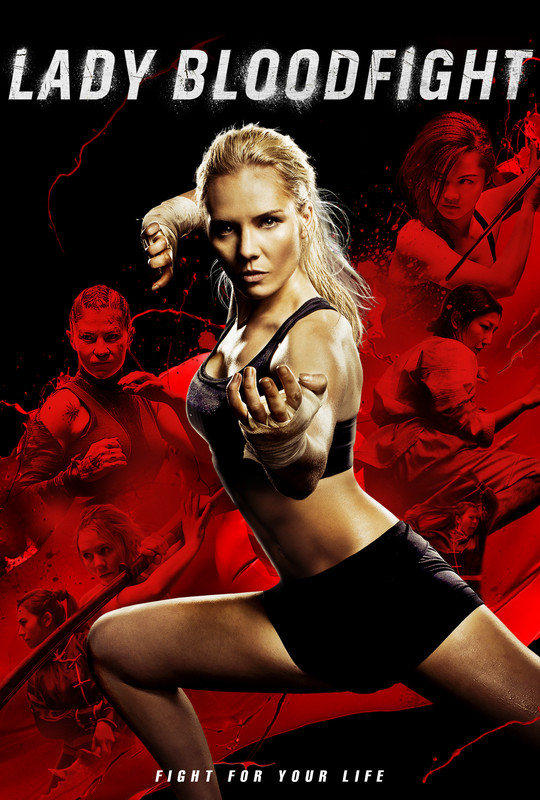
This was not on the initial list for this month’s martial arts marathon, but yesterday I saw a stuntmen react video on youtube, discussing some classic fight sequences and one of the guests was Amy Johnston. There were a few clips shown from this, the first movie she had a leading acting role in, so I decided to give it a look and add it to this series.

The story is basically Bloodsport, but with women (indeed it was originally titled Lady Bloodpsort). Johnston plays Jane Jones, who comes to Hong Kong to fight in the Kumite and avenge her father. She’s taken under the wing of Shu (Muriel Hofmann), who is also seeking revenge on a rival (Kathy Wu) who has trained her own champion (Jenny Wu) for the Kumite. 

The story is clearly basic, and the screenplay (by Bey Logan, whose Hong Kong Legends commentaries got me and many others into the genre) makes few demands of anyone’s acting abilities as it knits together various threads of cliché with dialogue that makes most of the lines sound like ‘that’ll do’ placeholders that accidentally found their way to the shooting draft. The plot too, for all its simplicity, is badly told, with Jane’s character particularly poorly established, meaning it’s hard to see why she’s recruited by Shu.

Amy Johnston is the film’s standout element; an accomplished stunt performer, she steps up to the role and delivers what the film needs. It’s nobody’s idea of a deep characterisation, but she does what she can with the dialogue, and demonstrates the sort of presence a lead needs. Johnston is also clearly extremely good at her day job. Her fight sequences are excellent and there are many blows and falls that at least appear to connect painfully. The other performers, many of them also stuntwomen, match her well. If any of them are given any personality it’s a single note (for instance, Jet Tranter’s Cassidy is ‘the nice one’), but they deliver where it matters: in the ring.

The problem is that while all the actresses are showing their best moves, Chris Nahon, who is the editor as well as director here, often neglects to show them at their best. Of course there are players here who may need more doubling and cutting because they aren’t experienced martial artists, but even the Kumite fights are often overly quickly cut. This is especially acute with Johnston. The few times Nahon lets extended moments play out in her fights are easily the film’s most entertaining, so it’s disappointing when he returns to the hyperactive rhythm that is his default setting.

I’d like to see Amy Johnston do more, this role isn’t a challenge, but what little she gets to do with it shows there’s an actor as well as a stuntwoman there, it’s just unfortunate that the script and direction here appear to not quite let her show the best of either.
★★½

Apr 4, 2020

Martial Arts Month: Day 4

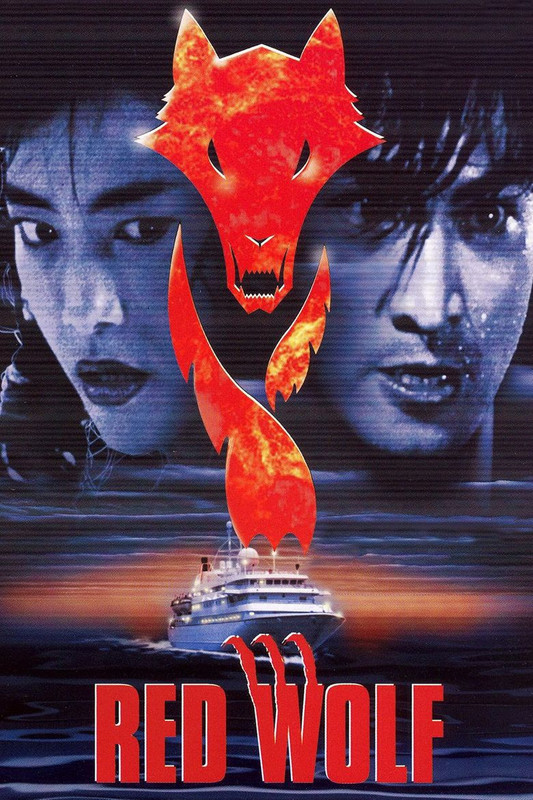
Red Wolf
Dir: Yuen Woo-Ping
Some movies come and go, some create a few ripples and a tiny handful manage to catch lightning in a bottle and become part of what defines a genre. Die Hard did that for action films. For years afterwards we got Die Hard rip offs, one of the most fun being Andrew Davis’ Steven Seagal starring Under Siege. Three years after Under Siege, Yuen Woo-Ping came along and made this, a hilariously slavish homage to/ripoff of both it and its most obvious influence.

Kenny Ho stars as Alan, an ex-cop, now a security guard on a cruise ship which is taken over by a mutinous first mate (Collin Chou) and a gang of mercenaries (some of whom are in the band on the ship) in order to steal some uranium which is on board for… some reason(?) Ho ends up teaming up with a waitress (Christy Chung) to save the ship.

This is a dumb movie. The story is loosely strung together from the basic elements of Under Siege and Die Hard (note a scene in which Alan is locked in a freezer and escapes in the same way as McClane does in a key scene in Die Hard) and much of the acting is poor; Ho is a bland hero and Christy Chung overplays just about every moment. All that said, this is also an insanely fun movie. It’s stupid and a bit rickety, but it also delivers in a lot of ways. Chou and Elaine Lui are great as the bad guys with Lui stealing the show; her performance as the glamorous singer who reveals herself as a gleefully smirking villain a study in being just over the top enough.

Given that this was made before The Matrix, and not a wuxia film, Yuen Woo-Ping’s action is much lighter on the use of wires. He gives everybody their moment in the plentiful fight sequences. Ho and Chou’s high kicking showdown is built up well and ends up being a hugely entertaining final setpiece, but the contrasting styles of Lui (all sharp movements) and Chung (an untrained fighter chaotically trying to stay alive) and a jaw dropping climactic fire stunt make their fight the film’s best scene. The action balances gunplay and martial arts well, finding plenty of reasonably natural excuses to put the firearms away and move to hand to hand fights. The action is brutal and the hits often clearly real. As much as Under Siege is clearly the better film overall, the action here is miles ahead.

Red Wolf is turn your brain off fare. It offers no profound insights into the philosophy of martial arts, its action sequences don’t revinvent the wheel and the story is shamelessly derivative. It is, however, a tremendous 88 minutes of entertainment.
★★★½

Apr 3, 2020

Martial Arts Month: Day 3

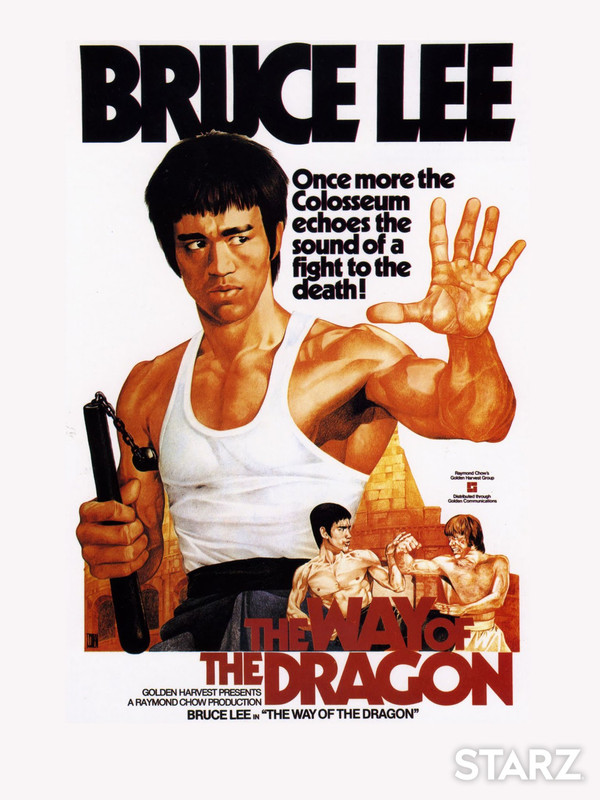
The Way of the Dragon
Dir: Bruce Lee
I’ve never been the biggest Bruce Lee fan. Obviously, he changed martial arts cinema for all time and arguably, more than 45 years after his sadly early passing, remains its best known name, but I’ve always enjoyed the stars who followed just in his wake more. The Way of the Dragon is a pretty good encapsulation of why.

Lee was coming off the wild and widespread success of Fist of Fury, so he had a lot of sway, and was able to cash it in to make his writing and directorial debut. The results suggest that, while a charismatic star and the most talented martial artist of his generation, he had a way to go as a filmmaker. Lee’s screenplay is basic and dull. It sees him coming to Italy to help protect a Chinese restaurant under threat of takeover from the mob. Lee never manages to establish larger stakes, nor much connection between himself and co-star Nora Miao or the staff of the restaurant, who have been training in karate. The fish out of water comedy of the first half is, to put it mildly, not Lee’s gift as an actor, and makes an already uneventful build up feel grindingly slow.

There are two great scenes in The Way of the Dragon. The fight with Lee wielding dual nunchaku and the finale, with Lee facing off against a young, clean shaven, Chuck Norris. Both sequences deliver the hard hitting action we expect of Lee and are brilliantly choreographed by the star and Unicorn Chan. The direction isn’t always as successful, for instance, Lee’s repeated cutaways to a kitten during the finale are much less funny than he may have imagined. Still, for these blessed minutes, the film delivers what we’re looking for from it. Even the rest of the action sometimes disappoints, never more so than when Hwang Jang Lee steps up, only to be so soundly beaten by Lee that he barely gets a chance to show his abilities (look at his films with Jackie Chan for a far better showcase).

On the whole, I found The Way of the Dragon disappointing. There are isolated moments that explain why Lee was and is so revered, but the film as a whole is largely tedious, not especially well made, and plods its way to those moments.
★★

Apr 2, 2020

Martial Arts Month: Days 1 and 2

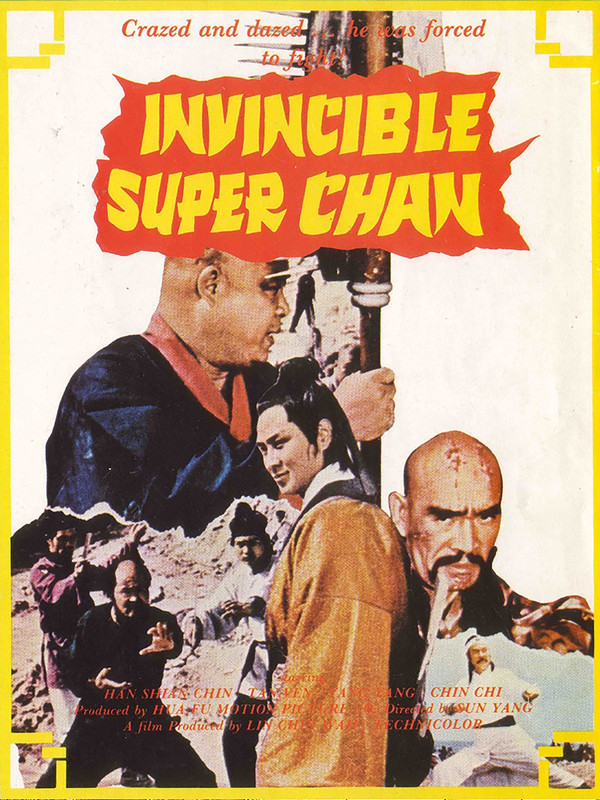
Invincible Super Chan
Dir: Yang Sun
This was one of the titles requested for this series of reviews, and it turns out to be an ideal place to start. Invincible Super Chan is essentially what I thought all martial arts movies were before I discovered martial arts movies.

Chan is angry because his master was murdered. He seeks revenge, and is then a target himself because of his newfound reputation.

The version I was sent to watch is 81 minutes long, which is nine minutes shorter than the running time quoted on Imdb. It shows. The editing is haphazard beyond belief. Apparently, this film attracted some controversy on release and was nearly banned (this may be hyperbole, it’s hard to tell), but it definitely seems to be censored, with many images of blades showing everything but the strike, so we get the often disorienting spectacle of cutting straight from knives just flying through the air with no discernible target to people writhing on the ground, stabbed. This isn’t to say Chan needs to stab people, indeed patting them lightly on the back makes them go flying, such is his strength. His jumps are also hilarious, less wuxia wirework and more like something out of MST3K subject, Pumaman.

The violence is non stop and pretty inventive (ramming a stone down someone’s throat is fairly novel, as is the use of an exploding flag as a weapon), but even though it’s endearingly bonkers, hilariously badly dubbed and entertaining for its rickety production values, you’d never mistake Invincible Super Chan for a good film. An entertaining one though… that’s another matter.
★★

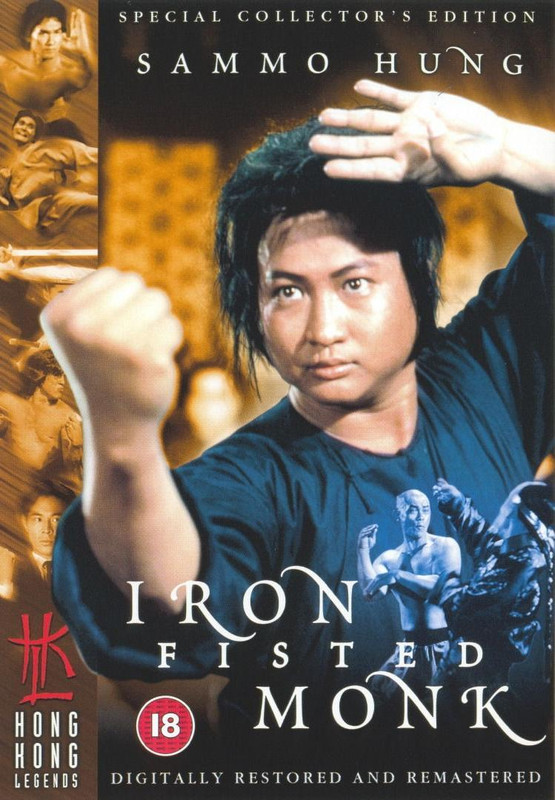
Iron Fisted Monk
Dir: Sammo Hung
I’ve never felt that, at least in the West, Sammo Hung has entirely got his dues. He’s one of the greatest martial arts stars, choreographers and directors of all time and Iron Fisted Monk, his 1977 directorial debut, shows that talent in nascent form.

The plot isn’t the tightest Hung ever put to screen, but it sees him training at Shaolin Temple, where he went after his uncle, whose noodle shop he worked in, was murdered by the Manchu. He leaves the temple early, along with a monk who is his senior (Chen Sing) and they end up pursuing a Manchu official (Hung’s frequent co-star and here co-choreographer, Fung Hak On) who has been leaving a trail of rape and murder in his wake.

In contrast to his opera school brother and frequent collaborator Jackie Chan, Hung’s films have always been notable for their hard edges. That’s more true of Iron Fisted Monk than even Hung’s own later work. The choreography is big and classical, but it’s also hard hitting, with plenty of bloody injuries depicted. More surprising is the level of exploitation content, particularly a very nasty and fairly violent rape scene that had to be cut by over a minute for the first UK DVD release (the recent Blu Ray, which I watched for this, is uncut).

What shows through is Hung’s directorial talent. He never quite balances the slapstick of early scenes with the nastiness that runs through the rest of the film, but both are well captured. One particular match cut in the rape scene, from Dean Shek raising his hand to one woman to Fung Hak On slapping the rape victim is especially (if disgustingly) effective. The action is plentiful and flows beautifully. In this respect Hung is already a master of his craft and while he gets many of the best moments he’s not above ceding the spotlight to Chen Sing. The finale shows off the best filmmaking, with Hung’s fluid camera often gliding between the two fights taking place in the same room.

Sammo Hung would make better films than Iron Fisted Monk, but as a statement of intent and a demonstration of his skills both in front of and behind the camera, this was an excellent start. 
★★★★

Sep 30, 2019

24FPS @ LFF 2019: Selected Shorts

It’s a shame we don’t see more short films in general release, but at LFF the various shorts programmes are often a good way to spot new talent both in front of and behind the camera. Here are some appropriately brief thoughts on some shorts I’ve seen recently. These films were viewed on the online press library.
Be Still My Beating Heart
Jericho (Sarah Andrews, Aaron Hopwood), screening in the Family shorts programme on October 5th, is one of the briefest shorts in the festival. Though barely 90 seconds long, it’s still an impressive piece of work. Fluent and high quality CG animation tells the story of a lonely robot trying to build himself a friend. It’s gently funny and rather touching. I do wish it were longer though, as there is potential to mine some more humour out of the situation. Sweet then, but perhaps too limited by its running time. 
★★★

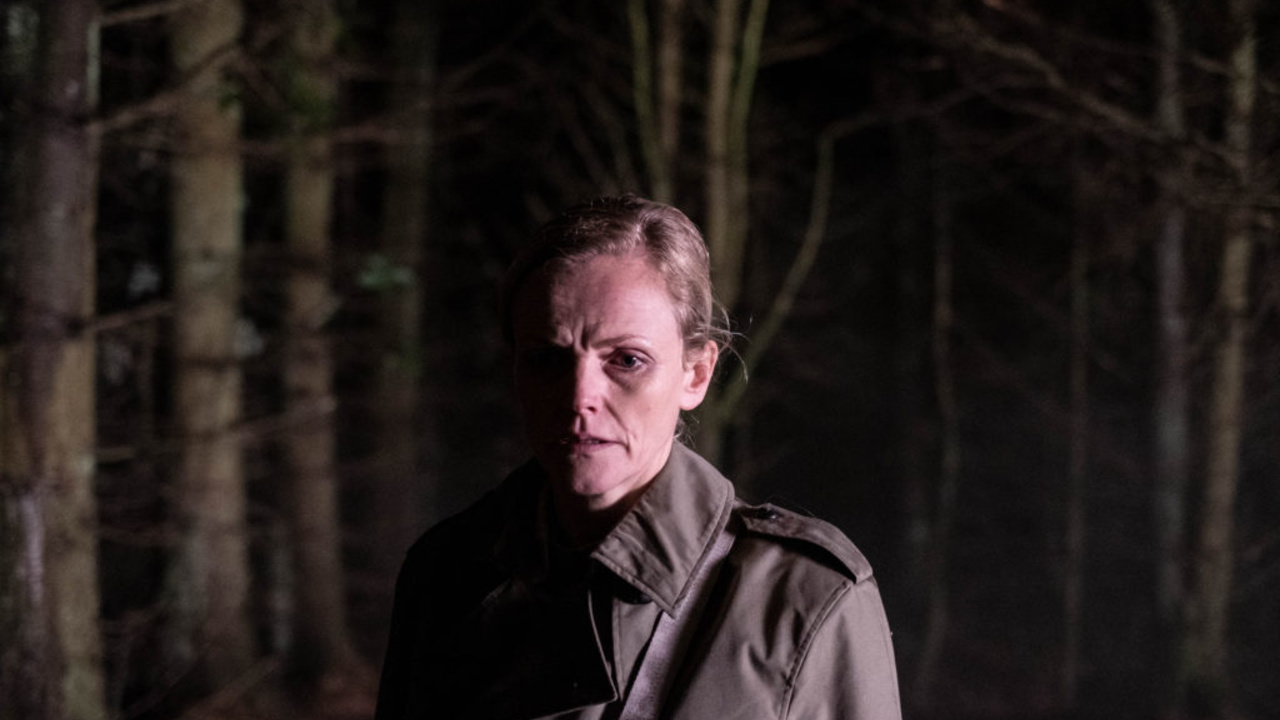
Be Still My Beating Heart (Ruth Paxton) screens in the Cult shorts programme on October 6th and 8th (both sold out). This story of a medical examiner looking after her younger sister who has an unspecified illness benefits greatly from having the always excellent Maxine Peake in the leading role. Peake and Elysia Welch bring dimension to a sisterly relationship that feels sour on both sides, even if it’s loving deep down. Director Ruth Paxton’s imagery veers between the mundane and the primal, and points to interesting things for her future. Unfortunately, the film ends up as less than the sum of its parts. The various ideas don’t knit together in the 25 minute running time and this ends up feeling less like a trailer for a future feature film version of itself (a common issue with shorts) than an impressive showreel for its director. 
★★½

Let's Roll
The Lamb (Nina Volic) screens in the Dare shorts programme on October 10th and 12th. Most boys, when they’re around 12 or 13, start wanting to impress the girls around them. That’s where The Lamb begins, with a boy meeting two girls from his class to show them something. In an incredibly dark turn, ‘something’ turns out to be a black man, tied up and gagged, on his sofa. The way the kids interact with the man is initially not violent, but the immediate and casual dehumanization of this ‘other’ is horrifying, as they treat him as a prop, posing for selfies with him in the background. A deeply disturbing, if extreme, look at how social media has made some of us treat the world as a background image to our lives, The Lamb promises great things from Nina Volic. 
★★★★

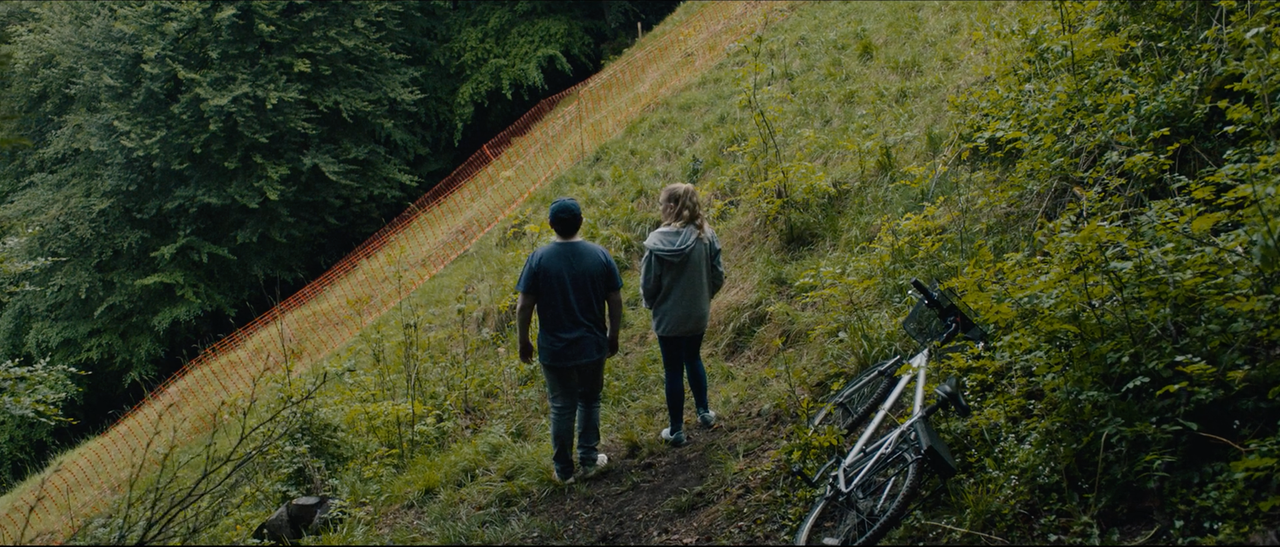
Let’s Roll (Chris Thomas) screens in the Thrill shorts programme  on October 5th and 10th. A surprisingly gentle film for its strand, Let’s Roll is a coming of age film set around the Cooper’s Hill cheese roll. Antonia’s brother was a champion, but now he’s away in the Army and her mother is against Toni taking his place. The progression of the film is fairly familiar, as Toni has a friend (who may be nursing a crush) help her train for the cheese roll in secret. The best thing about the film is how much it packs in to 23 minutes, writer Allan Macleod puts a lot of depth into the background in Toni’s relationship with her Mum, both of their implied concern about their brother and son and Toni’s troubled reaction to this stress (we first meet her running from a shop after stealing a magazine). This is also very well played by Amy Bowden as Toni and Zara Ramm as her Mum. There is a lot to build on for a feature version, which I’d happily watch, but the short feels complete in its own right. The only disappointment is the last sequence, which is too obviously documentary footage that Bowden doesn't appear to be in. 
★★★★

Jun 7, 2018

Teen Movie Thursdays: Nordic coming of age movies

Right On, Man
Dir: Tapio Suominen
This realist Finnish coming of age film, with what seems to be a largely non-professional cast, doesn't appear to have traveled much, but it will be of interest to fans of Aki Kaurismäki, because it features the screen debut of his frequent collaborator Kati Outinen, though in a relatively small part.

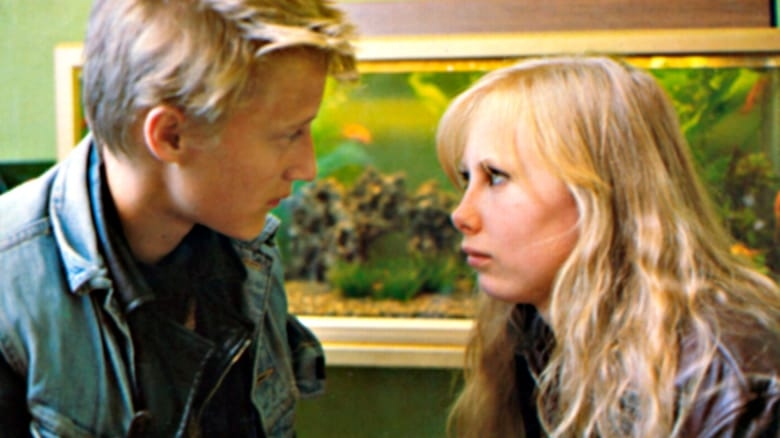
The film focuses on a secondary school class for problem kids, all of them boys except for Outinen's Lissu. Initially, it explores the dynamics between the class, but as the film goes on the focus narrows to concentrate first on the dynamic between Jussi (Esa Niemelä) and Pete (Tony Holmström), as they drift further from the class and from their families, then solely on Jussi, as he isolates himself more and more, before potentially looking to Lissu to find a way back in.

Right On, Man paints a fairly bleak picture of teenage life. You get the sense of these kids as drifting, even before we spend an extended evening with Jussi and Pete, as they roam the streets, drinking and spending the proceeds of a robbery that Jussi pulled off. What hits home, even through sometimes uncertain performances, is the credibility of the whole thing. The dialogue has a natural feel, from the way the kids relate to each other to their dismissive attitude to their teacher (Lissu has a habit of walking away, so much so that in the class portrait that gives us the actor's names in the opening credits, Outinen's is over an empty chair).

Tapio Suominen gives the film a strong sense of time and place. We get a feel for the environment these kids are growing up in and the sense that they probably don't see particularly prosperous future. The dramas here are small, but Suominen builds a couple of threads that run through the narrative, even though they are largely off screen. The bad impression Jussi makes on a beat cop and Jussi's potential interest in Lissu (and hers in him) are both seeded early, only to come back around in a sequence that draws together well.   

If you're coming to the film for Kati Outinen, it's worth noting that she's barely in it until fifteen minutes from the end, when Jussi and Lissu re-connect. It's a lovely sequence and Outinen is charming and natural in it, it's easy to see why she might have been noticed, but this is a very small part. Fortunately, Right On, Man offers many other rewards; it's a well observed teen movie with a sense of verisimilitude and an unobtrusive style that draws you into the story and characters. It deserves to be better known.
★★★

Lars Ole, 5C
Dir: Nils Malmros
As far as I can tell, Nils Malmros is barely known among English speaking audiences. That needs to change. While he has moved outside the genre, Malmros has, for fifty years now, specialised in coming of age films. The best known is Kundskabens Trae (Tree of Knowledge), listed by the Danish Film Institute as one of the country's 100 greatest films, but this - his second feature - seems to be the film that established Malmros' reputation.

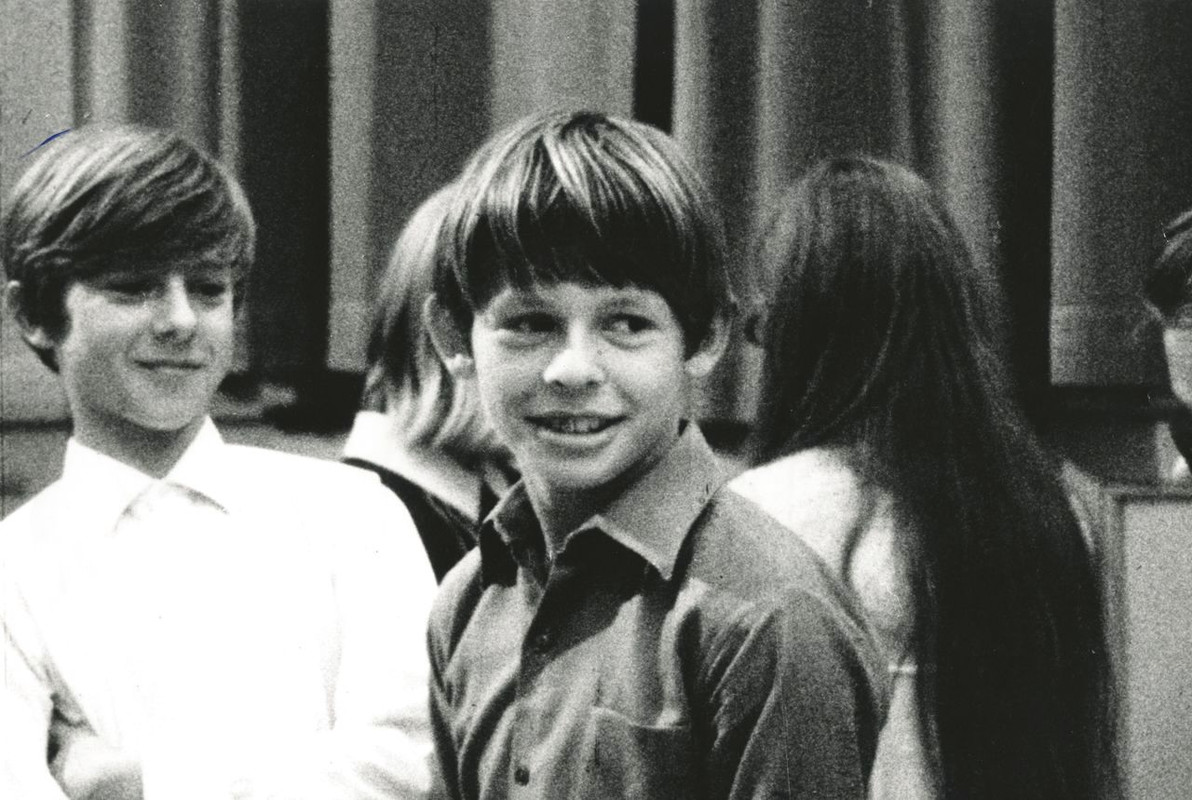
Drawing heavily from his own life, Malmros tells a low key story of 12 year old Lars Ole (Søren Rasmussen) and his classmates. There are petty rivalries, first crushes and moments of childlike mischief, but Malmros' concern isn't big events but the tiny things that shape day to day life when you're somewhere between childhood and adolescence.

Shot on grainy black and white 16mm, the film has a feeling of something observed more than it is staged. Frequently, moments that would have much more emphasis in another film are allowed to play out quietly, often in the background. A good example of Malmros' restraint comes when Lars Ole is being a pain, playing the wrong notes while his sister is practicing the piano, when he makes her cry, the camera views her through the door, before silently showing Lars Ole realising he's upset her more than he meant to. It's a beautifully subtle bit of acting and camerawork that makes us feel as if we are privy to a real moment.

We see a lot of these subtleties in the way the film depicts the politics of the playground, the games of tag and which kids are allowed to play or not, the dominance that older kids are able to exert. This is never more felt than in the way relationships are navigated. Early on we see that Lars Ole has a crush on Inger (Judith Nysom), who is 'dating' Hanse (Lars Randrup Mikkelsen), the way the camera often dwells on the space between them is clearly designed, yet feels totally natural, even in the final sequence when, at a dance, we see Lars Ole join in a square dance, changing partners as he goes and waiting for his brief chance to dance with Inger.

The relationships between the kids, whether it's the rivalry between those who live in a certain apartment complex and those who don't, the pettiness of who is allowed to play tag or not or the teasing and games in the classroom, ring completely true. The performances - all by non-professionals who seem not to have acted again - feel completely unforced, nobody seems to be playing a character or reaching for an emotion at any time.

I've now seen six of Malmros' films, and this is early evidence of his instinctive feel for how to tell a story from a young person's point of view. It's a beautifully constructed film, you feel Malmros' direction rather than seeing it, in that his choices are affecting and clearly purposeful, but barely seem designed. If you have even a passing interest in coming of age cinema, this is a filmmaker you need to discover and Lars Ole, 5C is a perfect entry point to his exceptional filmography.
★★★★★ 

Oct 16, 2017

24FPS @ LFF 2017: Family Films

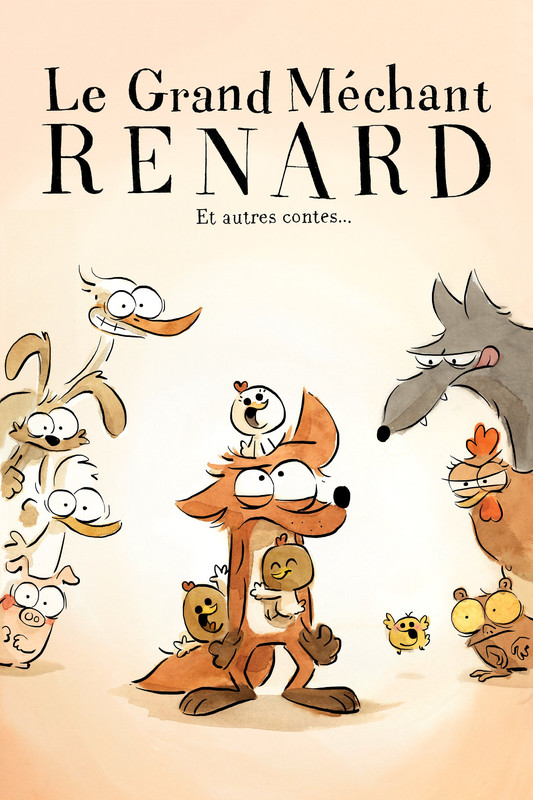
The Big Bad Fox and Other Tales
Dir: Patrick Imbert, Benjamin Renner
This delightful French animated film is set up as three short plays, put on by the animals in a farmyard. In Baby Delivery, Pig and his dimwitted friends, Rabbit and Duck, must fill in for an injured Stork. The Big Bad Fox sees Fox accidentally become mother to three chicks he steals for himself and Wolf to eat. In Saving Christmas, Duck believes he has killed Father Christmas and he, Rabbit and Pig must fill in for him, as they did for the Stork.

The Big Bad Fox and Other Tales is this year’s Family Gala screening at the London Film Festival, this is the strand that contains the films pitched at children, but this is a true family film. It will delight children (I’d suggest it for ages six and over) but, without aiming jokes over children’s heads, it should also work for adults. The animation style is very different; a little sketchy, but beautifully simple and full of character rather than crude, but the tone of the film has much in common with classic animated shorts. The slapstick gags come thick and fast, with the timing and execution of classic era Tom and Jerry, while the way these moments combine with the verbal humour recalls Looney Tunes strongly (especially in the relationship between Pig, Rabbit and Duck).

There are some wonderfully absurd touches and running gags to be enjoyed; the chickens forming a self-defence group because the guard dog is lazy, the calamities that happen to Pig’s house and Little Michel, who pops up in the last two stories to endearing and hilarious effect.

Any further review of this film would amount to my repeating my favourite jokes, which would rather spoil what is a wonderfully enjoyable film. I will say to stay in your seats during the credits as during them there are some lovely jokes, a recipe and a closing moment that seems to be a nod to Michigan J. Frog and sent me out of the cinema with a mile wide smile on my face. This may be pitched as a kids film, but it’s for anyone with a functional funnybone.
★★★★½

The Day My Father Became A Bush
Dir: Nicole Van Kilsdonk
Toda (Celeste Holsheimer) is ten years old and lives with her pastry chef father (Teun Kuilboer) in an unnamed country. When war breaks out between ‘The Ones’ and ‘The Others’ Toda’s grandmother comes to stay, while her father is called to fight. Eventually it becomes too dangerous at home and Toda is sent abroad to join the mother (Noortje Herlaar) she doesn't know. Along the way she gets separated from the people taking her and must make her way on her own.

I am a great believer that children’s cinema can and should be much more than mindless entertainment. The Day My Father Became A Bush tackles some big issues: war and its futility, displacement and the dislocating reality of suddenly becoming a refugee, but does it from a child’s eye view, making those issues comprehensible for its target audience. A big part of this success is in the way it addresses war. Nicole Van Kilsdonk never explores what the fighting is about or whether we should see ‘The Ones’ or ‘The Others’ as the good guys in the conflict. This isn't what’s important to Toda, what matters to her is that her father is away and that his camouflage be good enough to make sure he comes home (in one of the film’s most quietly touching scenes she puts branches on his helmet so ‘even birds will think you’re a tree’). 

Ultimately, the film says, which side we’re on doesn't matter much. Her father wears a blue badge but at one point Toda finds herself sharing a shack with a man wearing a yellow badge, soon she’s sharing food with him and, sweetly, helping him learn to give orders (he has deserted because he found he wasn't assertive enough for his command role. This scene is a fine example of the way the film leavens its messages with humour and heart.

Toda is a great character for young girls to see and identify with. She’s inquisitive and intelligent, brave in the face of scary situations and compassionate with a slightly younger boy who attaches himself to her, whom she nicknames Stickie (Matsen Montsma). She’s also just a typical ten year old, who calls herself a daddy’s girl. As Toda, Celeste Holsheimer gives a performance free of anything actorly or precocious. She hits the funny moments nicely, but is particularly adept in the dramatic scenes, especially towards the end of the film when, having lost her mother’s address, Toda finds herself a refugee.

The Day My Father Became A Bush asks kids to engage with some big themes, but it takes them gently through those ideas, leavening them with humour and, even in the film’s toughest moments, the optimistic outlook that Toda radiates. It’s an entertaining and intelligent film and an ideal opportunity to discuss some challenging subjects with your kids. 
★★★★

Oct 15, 2017

24FPS @ LFF 2017: Suspiria

Dir: Dario Argento
While he continues to dilute his legacy with garbage like Giallo and Dracula 3D (and the rest of the last two decades), it’s a fine time to be reminded that, at one time, Dario Argento made some of the most visually stunning horror cinema ever seen. Suspiria, recoloured to its intended luridness and remastered in 4K for its 40th anniversary, is a brutal, beautiful, masterpiece.

The paper thin story of Suzy (Jessica Harper), an American ballet dancer, going to a famous dance academy where people begin to disappear and be killed, couldn’t be any less important. This isn’t one of Argento’s many whodunnits, instead he simply wants a framework on which to hang the film’s stunning set design, lighting and its graphic gore.

Suspiria’s tagline famously told us that the only thing more terrifying than its last 12 minutes were the first 92. I agree in part. The film’s first 15 minutes or so, up until the first two deaths have been shown, are a self-contained masterwork. The vivid lighting, drenching what should be a drab rainy night in unnatural colour, the striking set design - all sharp lines and symmetry - and the Goblin score; ethereal at first, building to something sinister, all these things combine with the shock of sudden violence in a sequence that envelops us completely in the world of the film.

The scenes in the dance school, with their obvious dubbing and over the top line reads, aren’t the film’s strongest suit, but the disconnection from reality that dubbing often lends is, intentionally or otherwise, effective in further dislocating us from reality, just as the film does to Suzy. This isn’t to say that the performances don’t work for the film though, the delicately pretty Jessica Harper isn’t one of horror cinema’s tougher final girls, but our journey through the world of the film is much like hers - slightly surreal, sometimes unnerving, sometimes confusing - and Harper takes us along on that journey effectively. Most memorable among the cast is Alida Valli, (over)playing strict ballet teacher Miss Tanner to often very funny effect.

Argento sprinkles scares, surrealism and beautifully designed slayings throughout the film, but the tagline undersells the film’s last 12 minutes. Suzy’s surreal journey through the ballet school to find the secret at its heart contains some of Argento’s most incredible and iconic visuals, bringing the film to a crescendo. On this viewing, with the picture so vividly remastered and the sound pounding into my ears, I saw Suspiria on a non-narrative level. That’s probably how it works best, as a purely sensory experience; shape, colour and noise colliding into the most beautiful of nightmares. 
★★★★★ 

Oct 12, 2017

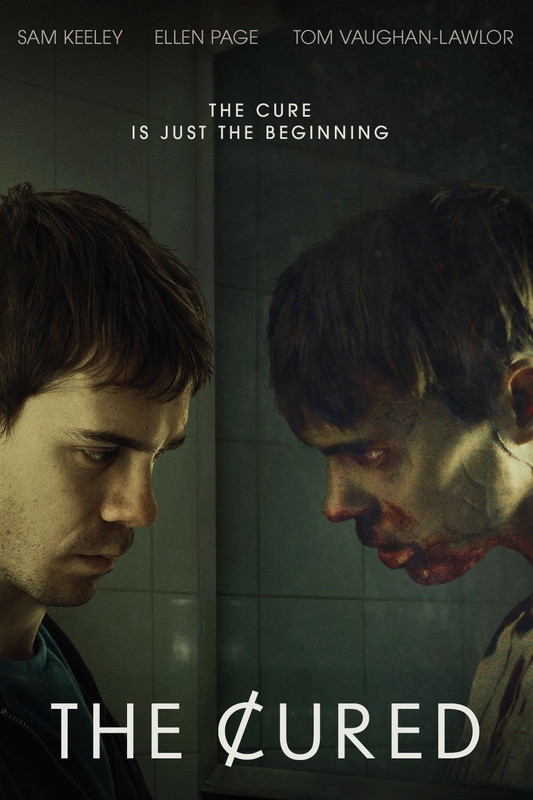
24FPS @ LFF 2017: The Cured

Dir: David Freyne
The zombie movie is a subgenre with a well established set of cliches. Those can be done poorly, they can be done well, but it’s not frequently that anyone brings a truly new idea to the table. Credit is due The Cured for having at least one original idea that opens up new avenues to explore in zombie cinema. Unfortunately, it does less with it than you’d hope.

In Ireland, the Maze virus has devastated the population, turning swathes of people into zombie like creatures. There is hope though, a cure has been found that has treated approximately 75% of cases, curing the rage and bloodlust, making the cured immune to further infection, but leaving them with the memories of what they did while they were infected. Slowly being returned to society, the Cured are largely rejected. As part of the third wave of returnees Senan (Sam Keeley) moves back in with his sister in law Abby (Ellen Page), he’s trying to reintegrate, but Connor (Tom Vaughn-Lawlor), Senan’s friend from quarantine, is trying to him to join a group of Cured planning to fight back against their treatment and the planned killing of the 25% of apparently incurable infected.

The central idea of The Cured is genuinely interesting. I can recall seeing films featuring attempts to treat zombies before, but never one that examined the idea of what would happen if that treatment were effective. The political side of the film has some potentially powerful parallels in how we view other ‘outsiders’ in society with fear. It feels especially relevant to the idea of how prisoners are treated and try to cope after their release. Sadly, it’s all a bit blunt and what starts out as quite a refreshing idea ends up being depicted through rather cliche imagery before descending into little more than the umpteenth riff on 28 Days Later.

The performances are all fairly solid. Sam Keeley has an effective melancholy as Senan, holding in a secret about the things he did while he was infected and Tom Vaughn-Lawlor makes for a forceful, if decreasingly complex, villain. Ellen Page is oddly cast, but she’s got some strong moments, never more so than when Abby confronts Senan about that secret. It’s also fun seeing her cut loose with an axe towards the end of the film, I wish she’d been a bit more involved in the action.

David Freyne does what he can with a limited budget, but those constraints are visible, particularly in how frequently the film cuts away, rather than spend on what could be quite an expensive gore effect. The grimy look isn’t unfamiliar from other recent zombie films, but Freyne finds some memorably bleak shots and, tonally, gives the film an admirable viciousness that goes along with its dystopian outlook. 

The Cured doesn’t break as much new ground as it would like to, but it has capable performances and some new ideas, even if it doesn’t expand on them entirely satisfyingly.
★★

Oct 11, 2017

24FPS @ LFF 2017: More short(ish) reviews

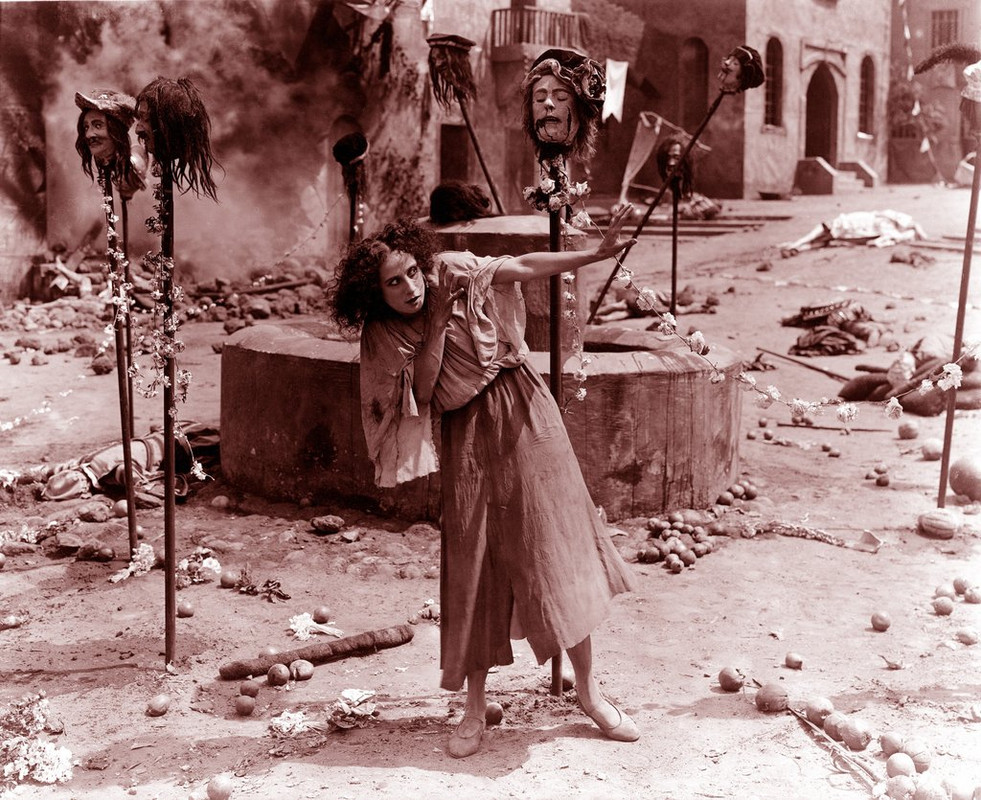
The Dumb Girl of Portici
Dir: Lois Weber
I confess I am far from an expert on silent cinema. It’s a medium that I think is in many ways distinct from sound film, because of the many differences in style, technique and in the basic way it communicates with us. I have seen a good few silent films, from the established classics - Keaton, Chaplin, Griffith - to a few deeper dives, such as Oscar Micheaux’s Within Our Gates, but I still feel I need further education. It is worth bearing all this in mind here, because some of the difficulties I had with The Dumb Girl of Portici may be based on that unfamiliarity, rather than the inherent qualities of the film itself.

The story is based on an opera about Fenella (Anna Pavlova), a mute gypsy girl who falls for a nobleman. The film tells the story of their affair, the victimisation of Fenella because of it and the revolution it precipitates, led by Fenella’s brother (Rupert Julian, later the director of the silent Phantom of the Opera).

For most modern audiences, The Dumb Girl of Portici will be most notable as the only feature film role of the legendary ballet dancer Anna Pavlova. In this respect it is a hugely important film, documenting a great artist whose work was otherwise only seen live. Pavlova is an interesting presence in the film, she is the top billed star, but the lead role arguably belongs to Rupert Julian and for much of the film, particularly the second half, Pavlova is treated as a rag doll, pulled and carried from scene to scene as people fight over her. It can’t be denied though that she is magnetic on screen: she captures a wild, expressive character with grace and beauty of technique. Most of the time Pavlova is entirely in character, she does some dance in the story, but it is only at the very beginning and very end of the film that we see her as a ballet dancer, her pure technique captured.

The film itself definitely has energy within its frames, especially in the surprisingly bracingly violent riot scenes of the second half, but Lois Weber’s use of the camera is otherwise rather static. Camera movement is very minimal, but tinting is used to excellent effect, again especially in the red toned riots. It’s worth noting that performance in silent film of this era was much more gestural and theatrical as a rule, but even by those standards, I found much of the acting in The Dumb Girl of Portici overblown, particularly Rupert Julian’s performance and that of William Wadworth as Pietro, literally twirling his moustache as a guard who turns on the aristocrats, then turns on the rebels as soon as he is stopped from raping Fenella.

I’m glad I saw The Dumb Girl of Portici, just for the opportunity to see Pavlova and, for the first time, to experience a silent film with a live piano score, but while this is clearly an important film, for me it isn’t one that has aged brilliantly.
★★★

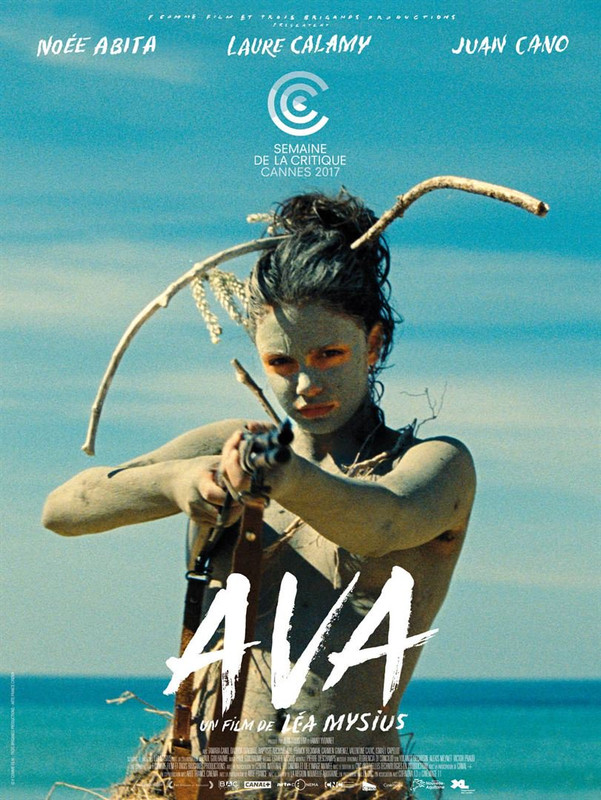
Ava
Dir: Lea Mysius
There may be something in the water in France. They seem to excel at making coming of age films, particularly about girls. Lea Mysius debut focuses on the titular Ava (Noee Abita), a 13 year old girl holidaying with her mother (Laure Calamy). Ava has just been told that she is going progressively blind, and this may be the last summer in which she is able to see. On the beach Ava encounters Juan (Juan Cano) and becomes fascinated first with his dog and soon with him.

Ava is very much a film of two halves. The first is beautifully aimless. Ava wanders the beaches, steals Juan’s dog, flirts with a boy her age and acts out in various ways against her mother, perhaps annoyed that she’s taken a much younger local man as a lover. I looked at this part of the film as being about Ava’s wanting to see as much as possible in this ‘last’ summer and it finds great poignancy in that, notably in the paintings in Ava’s room, white circles of decreasing size, surrounded by blackness.

Noee Abita makes an outstanding debut as Ava, capturing the duality of that confusing age when you are still a child, but increasingly desperate to break out of that and into ‘adulthood’, when your parents might be telling you one thing and your body another. Abita has the ability to look both older than her years and incredibly childlike, sometimes in the same moment, and the scenes that play these emotions off against each other are the film’s finest moments. Ava is aware that her body is changing, and of the effect it can have on people, but she doesn’t truly understand either. In one moment, as Juan goes to leave, she flashes him, trying to make him stay. It’s a moment that is both funny and sad in its naiveté.

Laure Calamy, the only experienced actor in the main cast, is also highly effective as Ava’s mother, who is very much enjoying what seems like a second wind of youth, having just passed 40 and with a year old daughter to look after as well as Ava. She’s caring, but not the most responsible parent, leaving Ava alone to care for her young sister. She’s frank with Ava, telling her daughter that she lost her own virginity at 13, that she understands what’s going on in her head right now, but to try and wait. Ava, for her part, wants the Earth to open up and swallow her at this point. This whole first section of the film is an acutely observed and played coming of age film. 

Then Lea Mysius decides her film needs a plot.

The second half of Ava diverges wildly from the first, expanding Juan’s role and suddenly, without warning, becoming a road movie. Ava’s encroaching blindness remains as a plot point, but all but vanishes as a theme, it’s depicted but never truly explored. I don’t want to go into what happens in the film’s second half, for fear of spoilers, but the film splits in two at a certain point, just after a carefree montage of Ava and Juan. That montage strains credulity, but the next scene breaks it, and nothing after rings true with the first half of the film.

It’s a terrible shame that Ava abruptly stops working, because for 40 minutes or so it is an extremely promising debut, beautifully shot, sensitively written and acted. Despite its problems, this film still points to good things from Lea Mysius in the future, but this could have been brilliant, and isn’t.
★★★

Oct 9, 2017

24FPS @ LFF 2017: Short(ish) reviews.

Little Crusader
Dir: Václav Kadrnka

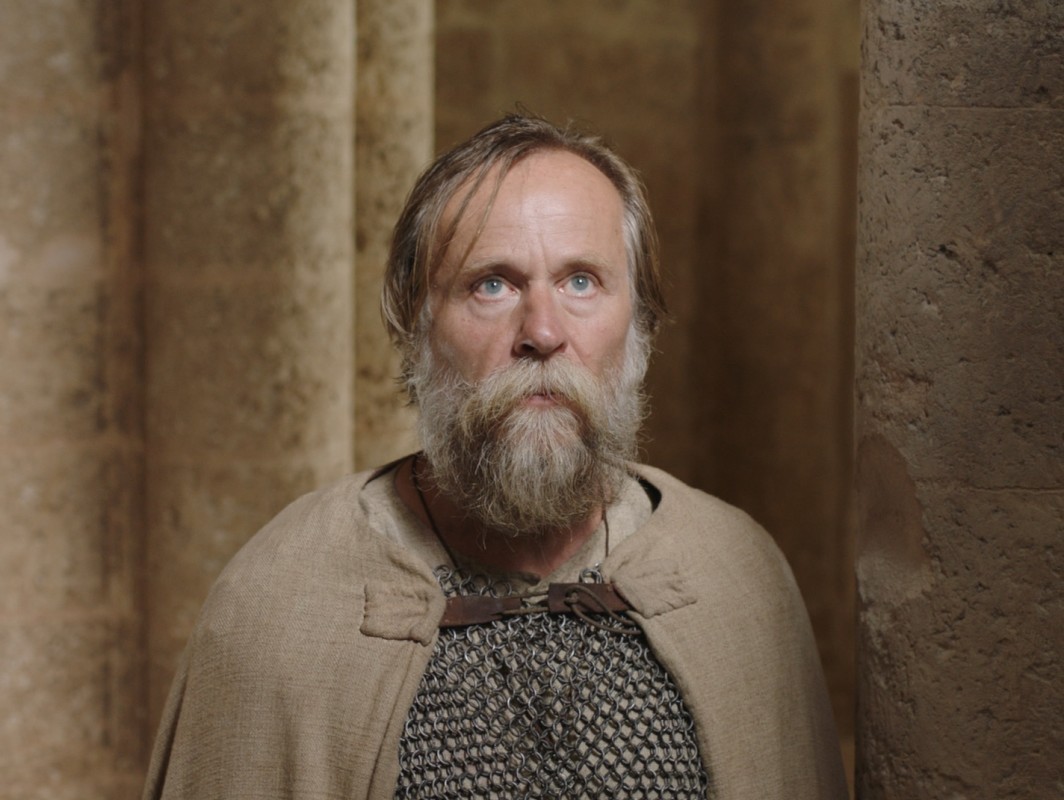
Set during the crusades, Little Crusader follows Borek (Karel Roden) on a near silent quest to find his young son (Matous John), who has run away and apparently vanished into the war.

The film opens with a silent ten minute sequence following the young boy. He puts on his tiny armoured breastplate, hangs his sword on his belt and moves around the castle where he lives and the surrounding area, before lowering the drawbridge to let two men in and walking off on his own. This sequence has some of the film’s most arresting images, not least the first, as an expanse of white gives way to show a Knight walking towards the camera. At first I thought this white was snow, but it turns out to be a pair of curtains, the crack between them flapping in the light breeze.

The film is stunningly composed throughout, with Vaclav Kadrnka making striking use of the 4:3 frame, particularly in long held shots. In one of these we see Borek finally arrive in the thick of the Crusades. In one unbroken shot he marches across the desert, cutting down one enemy after another. Another especially memorable long take has the medallion belonging to Borek’s son passed through what seems like an unending parade of children’s hands, searching for its owner. These and other shots do a hugely effective job of communicating the film’s story through pure imagery. The other notable thing about the imagery here is how incredibly textured it is. Every detail - hair, tree bark, the blades of swords, the fabric of a boat’s sail, feels like you could reach out and touch it. I don’t know how the film was shot, but if it’s digital then it’s some of the most detail rich digital I’ve seen.

The problem is, simple as the film is and short as its running time may be, I’m not sure it’s much other than stunning looking. In the first ten minutes we develop an attachment to Borek’s son and not seeing his side of this story seems a shame. The film is gorgeous, but emotionally it kept me a little distant. Still, if you’re fond of slow cinema, of following a character on a very literal journey, Little Crusader has some great rewards in store.
★★★½

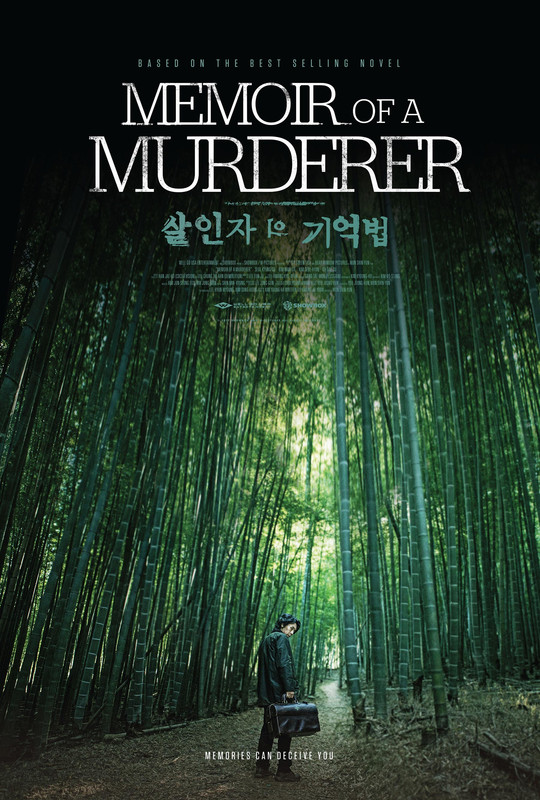
Memoir Of A Murderer
Dir: Won Shin-yun
It’s always useful to have a high concept, a brief logline that can tell a film’s potential audience what they’re in for. Whatever else you think of Memoir of a Murderer, you have to admit that ‘Memento, but with two serial killers, one of whom has dementia’ is a hell of a high concept.

Buyng-su (Kyung-gu Sol) has recently been diagnosed with alzheimer's, possibly as part of the after effects of a car accident 17 years ago. As his memory begins to go, two things remain: his love for his daughter Eun-hee (Seol-Hyun Kim) and his sense memory, the reflexes honed in a career as a serial killer, which ended the day of the accident. When he’s involved in another accident Byung-su comes to believe that the other driver, Tae-ju (Nam-gil Kim) is an active serial killer of young girls. Unfortunately Tae-ju is a cop, and Eun-hee’s boyfriend.

Memoir of a Murderer uses its killer hook to fine effect for most of the running time. Kyung-gu Sol pitches his performance as Byung-su expertly, vacillating between making the character a somewhat pitiable old man struggling with a disease and allowing us glimpses of the organised serial killer who says he only killed ‘bad’ people but, one suspects, is simply self-justifying. The film unpacks the facts about Byung-su, who is by his nature as both a serial murderer and a dementia sufferer a deeply unreliable narrator with patience, managing to land most of its twists as true surprises. Equally good is Nam-gil Kim, whose performance becomes ever more gleeful as he realises that he can let his true nature slip in front of Byung-su, because he’ll soon forget anyway.

Won Shin-yun balances tone well, undercutting the horror with some very black humour. As the film ramps up to its most operatic moments towards the end, it also hits on the best comedic use of Byung-su’s memory problems coming suddenly into play, combining a laugh and a scare in one moment. Won, however, isn’t a stylist on the level of a Park Chan-wook or a Kim Jee-woon and though the film has an effectively cold style and is well shot throughout, it’s not exactly shot through with personality. At just a shade under two hours, the pace flags a few times and the ending, in particular, could probably be tightened, which would also mean the film could pull back on some overblown moments that, for me, slightly sour the effective chill of the rest of the film.

Memoir of a Murderer is an entertaining ride, a little bumpy at times, but it’s got some thrills, some chills and more than a few guilty laughs. It’s worth a look.
★★★

Sep 25, 2017

24FPS @ LFF 2017: Documentaries

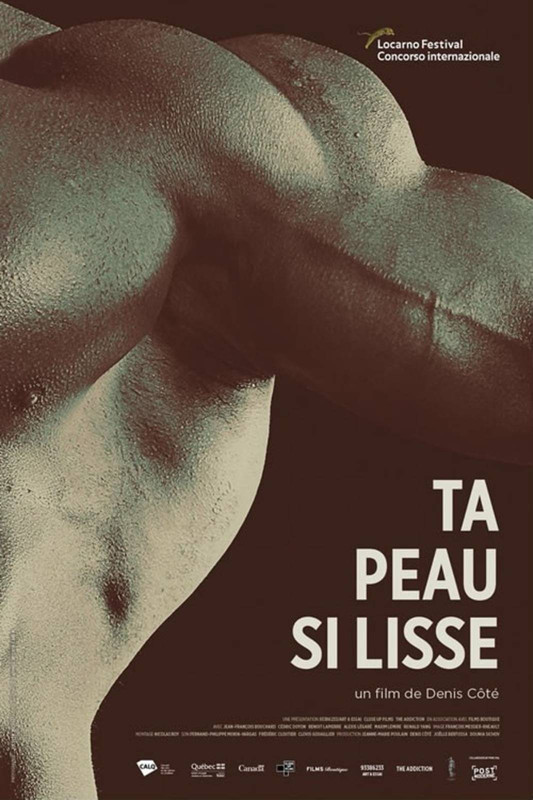
A Skin So Soft
Dir: Denis Côté
Denis Côté’s bodybuilding documentary has much more in common with Fred Wiseman’s reflective Boxing Gym than it does with the bravado and myth-making of Pumping Iron. Côté follows five French-Canadian bodybuilders, at various stages of their lives and their sport, as they go about their daily lives, training as well as doing other more mundane things.

Near wordless for much of its running time, the film instead finds insight into its subjects purely through observing them, fitting in a sport that is, whatever the route to get there, entirely about physicality. This can be mesmerising. The first twenty minutes of the film introduce the characters in almost total silence, following their morning routines. The youngest of the men trains, his Mother visible through the basement window, gardening above him as his weights clip their frame as he lifts. Another man eats breakfast while watching youtube. I couldn’t tell what he was watching, but from time to time he seems to choke back tears. These and other moments - Max, the wrestler, insisting to his wife that he’s “fine” despite the fact he’s hardly spoken to her in two days, for instance - linger in the memory for the amount of intrigue and insight they pack into images that we have to take purely on their own.

There are a few dialogues; the terse conversation I mentioned between Max and his wife stands out, as does the young bodybuilder telling his girlfriend he can’t be both her boyfriend and her trainer, especially if she’s not going to apply herself fully. Almost every other word spoken though is about training in some way, whether it’s the magnificently bearded Alex telling his masseur “I hate you” or the chatter between the guys when they all go for a weekend away.
   
Côté’s near total reliance on pure physicality does, however, have its downsides. Sometimes it feels as though he’s cutting around conversation. In the closing scenes on their weekend away, the bodybuilders are clearly friends, and talking amongst themselves. It would be good to see, and hear, more of that, to get more of an insight into the dynamic between them, and where the line lies between competition and friendship.

A Skin So Soft sometimes gets beneath the tough surfaces of the men it profiles, but it also often feels like it could go deeper. It’s an interesting film in its quietness but, for me, also sometimes limited by it.
★★★

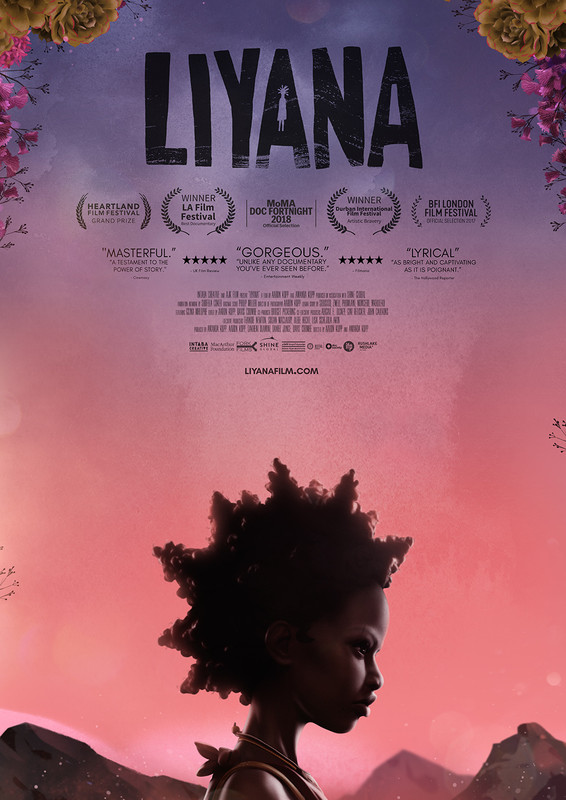
Liyana
Dir: Aaron Kopp, Amanda Kopp
I have often talked about the fact that I approach film initially from the perspective of someone being told a story. From the earliest time I can remember, I was always told stories - some were read to me, others made up for me. As I got older, film became how I was told stories, and that’s still the way I look at them first.

Liyana is a story about storytelling, but it’s about a lot more than that too. The film follows a group of children in an orphanage in Sawziland who are asked in a workshop to collaborate, with children’s author Gcina Mhlophe and with each other, to create a character and a story. Their character is Liyana; a strong girl about their age, born into a family in which a drunk and abusive father contracts HIV and passes it to his wife, orphaning Liyana and her young twin brothers. One night, thieves come to Liyana’s home and kidnap her brothers so Liyana, taking one of the bulls the family keeps along with her, must set out to find them.

The story the children invent is interesting and entertaining in its own right. They set the odds against Liyana, but they give her plenty of agency, they make her brave and resilient and they create a narrative full of perilous set pieces for her to triumph over, with the help of the bull. We see the story unfold in beautiful animation by Shofela Coker, which makes Liyana unusually cinematic for a documentary.

What’s really compelling about Liyana though, and makes it remarkable, is watching the children create this story and understanding why they are writing it as they are. It is often said to young writers that to begin with you should write what you know. Tragic as it is, that is what these children are doing. It cannot be lost on us that a huge percentage of these children have been through much of what they put Liyana through. When deciding on the overall narrative there is discussion about what sets Liyana on her quest and it is clear that the idea of the thieves resonates, at least partly, through experience. This is even more true of the fact that Liyana finds herself orphaned by AIDS. A full 25% of Swaziland’s adult population has HIV or AIDS, and it is almost certain that many of the orphaned children writing Liyana’s story were orphaned for that reason.

The film industry and fan communities have recently been having a lot of conversations about representation. Liyana is the perfect example of why those conversations are important. These children don’t often get the chance to have their stories told cinematically, and when they are it is often through the filter of an industry that is almost entirely white at the top. Here they are able to control their own narrative. They seems to grab that power with both hands, giving it to Liyana and thus back to themselves. It becomes clear in interviews late in the film just what this ability to represent themselves means to these children. “When Liyana’s story keep going, mine will keep going” says one. That’s what’s important here, these children are empowered by storytelling, allowed to write a happy ending for Liyana and thus for themselves. I hope they all get the ending they write.

Liyana is a great example of why the Family strand of the London Film Festival should be covered more, it’s just the kind of film we should be encouraging children to see (I’d suggest it for ages 10 and up, thanks to a few tough themes). Hopefully it will encourage them to tell their own stories, now and in the future.
★★★★

Sep 24, 2017

24FPS @ LFF 2017: Tiger Girl

Dir: Jakob Lass
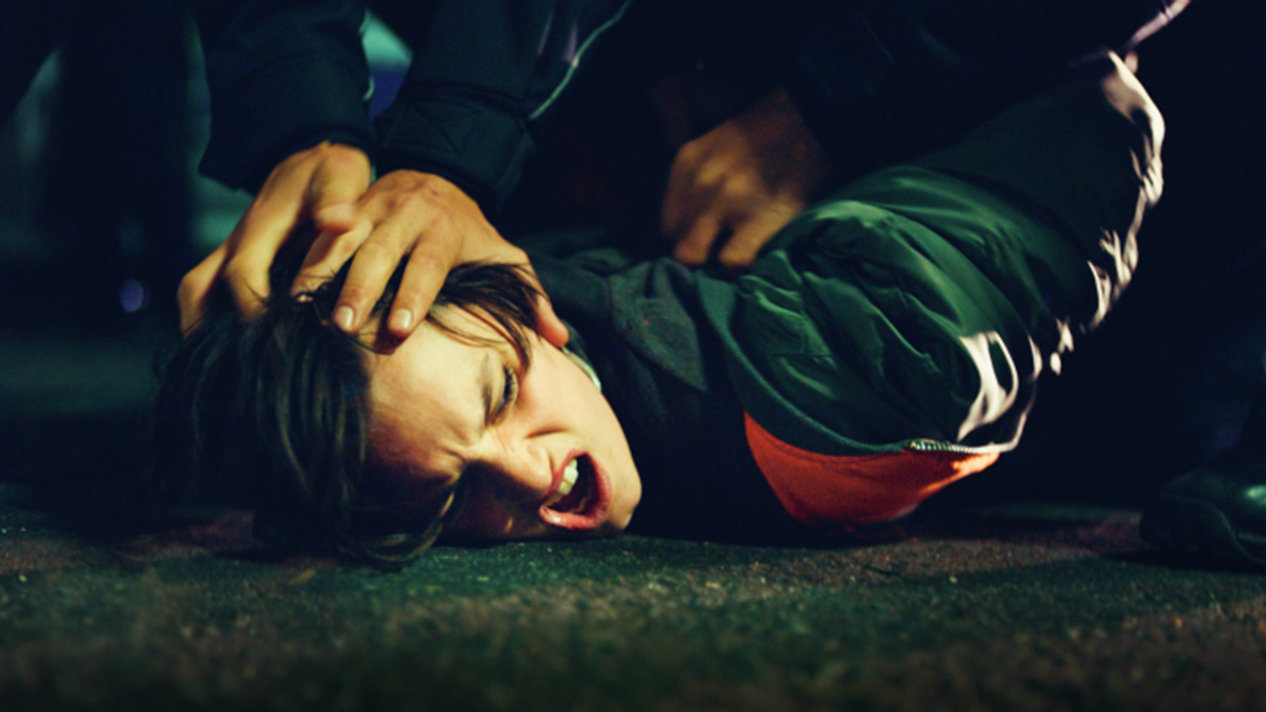
Maggy (Maria Dragus) has recently failed her exam to join the Police but, while she’s waiting to take it again in six months, she’s enrolled on a course to become a security guard. On the first day of her course, Maggy goes out in the evening and is harassed at a subway station on the way home. Tiger (Ella Rumpf) comes to Maggy’s rescue, beating up her attackers. This begins a fast friendship, which begins to lead Maggy down a path of increasing rebelliousness and violence until Tiger is concerned that she’s created a monster.

The brochure blurb on Tiger Girl makes a big play of Tiger as an anti-capitalist and the film as political. I went into it expecting the film to dig into the conflict between political violence and simple lashing out - a sort of Edukators with fight scenes. Unfortunately these themes are more present in the LFF booklet than they are in the film itself.

Tiger does occasionally mention that she only attacks people with power, only steals from the rich, but this reads like self-justification for her mugging people or lashing out violently. That would be interesting if the film gave any indication of making her confront this hypocrisy, but it fails to engage with this even as Maggy becomes ever more randomly violent, to Tiger’s disapproval.

In Raw, Ella Rumpf showed that she has an interesting, edgy, presence about her. Sadly, Tiger Girl doesn’t demand much of her aside from that. The writing is ultimately shallow and we never learn much about Tiger. Rumpf can still hold the camera with a look, and dominates scenes even when outnumbered, useful in a third act scene when she goes to pay off a big time dealer her friends have fallen in with. 

If Rumpf convinces at least with her presence, the same can’t really be said of Maria Dragus, who was so good in Graduation. Dragus always seems like she’s acting, both in the early scenes as she excels in her security course and increasingly so as she drifts ever further into criminality. This is appropriate enough as Tiger goads Maggy into her first acts of rebellion (renaming her ‘Vanilla’), but the sense of both Dragus and Maggy playing a part doesn’t go away. If this is supposed to suggest that Maggy is looking for a sense of belonging and, not finding it, trying to play the role, that’s another theme the screenplay never makes convincing.

The screenplay drags out its various strands in thoroughly expected ways, trying to play off the irony of Maggy’s infatuation with Tiger’s way of life set against her initial ambition to be a cop. It’s entirely obvious where this is going to end up, just as it is obvious how Tiger and Maggy’s friendship will fracture.

Jakob Lass directs competently, if not particularly interestingly. There are a handful of striking images here (the jewelled masks in the still above, for instance) but while the violence is reasonably well shot it seldom has much charge to it. Had the film given more emphasis to the politics we’re apparently supposed to take from it then the violence might have had an interesting moral ambiguity about it, but without that dimension, it just becomes a deadening series of confrontations.

On the whole, this is a disappointing film. It wastes two actors with obvious raw talent and a screenplay that has some ideas, but neglects to explore them in any way that would either inform the characters or prove thought provoking for viewers.
★★

Sep 20, 2017

24FPS @ LFF 2017: Mini-Reviews 1

So Help Me God
Dir: Jean Libon, Yves Hinant
The true crime documentary is going through a particularly interesting period right now, with series like Making A Murderer and The Keepers and films as straightforward as Amanda Knox or as formally interesting as Casting JonBenet. So Help Me God doesn't break any new ground in the way it's made, but it does show most of us a job within the justice system we're not familiar with, through a highly engaging and interesting woman.

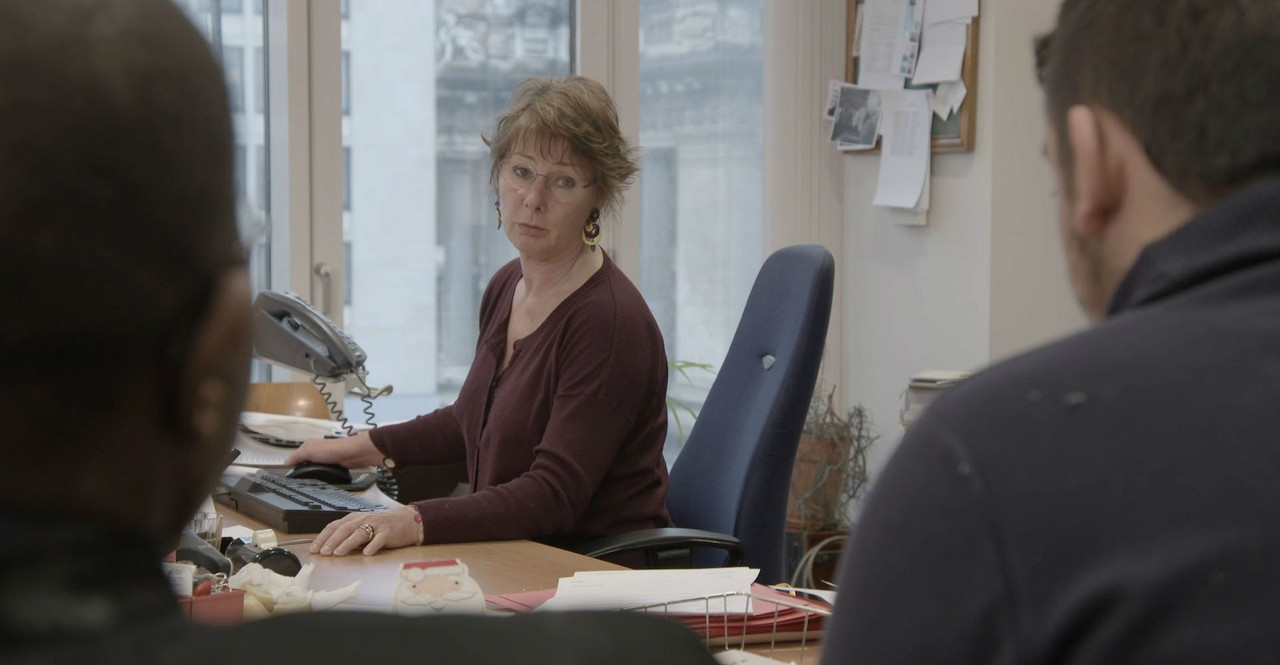
Anne Gurwez is a Belgian investigating magistrate, a job that seems to be somewhere between detective and prosecutor and carries a great deal of influence on how people are dealt with within the Belgian system. The film follows her over the course of several months, as her day to day work on current cases coincides with the reinvestigation of a 20 year old double murder.

Gurwez herself is the best reason to give So Help Me God a look. She seems like she takes a nuanced approach to her work; tough but good humoured, able to be talked round to giving someone a chance if she likes them, but sharp tongued if she detects any hint of bullshit and deadly serious when the situation demands it. This mix often provokes some amusing juxtapositions of the gruesomeness of some of her work and the matter of fact and generally good humoured way she approaches it (see the scene where a body is exhumed in the cold case).

There are many memorable moments here, some are quite light, like the scene in which a dominatrix accused of theft amuses Gurwez by discussing some of the strangest requests her clients have made, but others are much darker and heavier. The film hits hardest in the investigation of a horrifying infanticide, which is immediately followed by a coldly matter of fact confession by the child's mother, who tells a story that suggests insanity in the calmest and most measured tones. It's a truly disturbing scene that nothing else in the film comes close to matching.

Overall, this is a pretty conventional film made engaging by an unconventional personality at its centre and some compelling stories, it's perhaps more suited to the BBC's Storyville than a cinema, but it's well worth a watch if you're interested in true crime.
★★★

Pickups
Dir: Jamie Thraves
Aiden Gillen is one of those actors who can make everything he's in a little bit better. Especially as he's got into middle age, he's become one of those actors who always disappears into a character, and that is the jumping off point for
Pickups, which Gillen co-wrote with director Jamie Thraves.

Gillen plays Aiden, an Irish actor who is well known enough to get recognised regularly, but not George Clooney famous. He's recently divorced and preparing to make a new film, in which he's going deep into preparation to play a serial killer. It seems, however, that he may have got a bit too far into this character.

The premise of Pickups (the title referring both to casual sex and to additional shooting after a film's main production) isn't wildly original; a mid-life crisis coinciding with an actor going too deep into a role, but it should provide ample room for an actor like Gillen to get his teeth into a starring role (he's in practically every frame of the film). Unfortunately, I found the film meandering and lacking much insight. Narration frequently tells us what Aiden is thinking at any given moment, which it doesn't need to do, Gillen is a good enough actor to show us without our needing to be told most of what the voiceover says. Even with this though, everything is on the surface. The disconnect between Aiden's real life – the daughter he hasn't seen for some time back in Ireland – and his work on this character is interesting in concept, but the screenplay doesn't say much that's especially new or insightful about either side of that divide. 

The overarching story never coheres into anything terribly interesting, so what we end up with is more a series of vignettes. Some are interesting enough, interactions with fans often throw up an amusing moment, but even when we're supposed to be unnerved because he's too deep in the character, this doesn't feel like it bleeds over into these interactions. Only one vignette stuck in my mind, a brief moment with Antonia Campbell Hughes as an actress friend of Aiden's, who he suggests should have a part in the film. It's the one moment that chills the blood.

It's interesting to see Gillen play a character whose experiences seem so close to his own, but because of that it disappointing that Pickups doesn't feel more insightful. Ultimately if you want to see a version of an actor blurring the line between life and acting I'd suggest seeking out the underseen I Love A Man In Uniform rather than this.
★★