Showing posts with label British. Show all posts

Apr 4, 2022

Much Ado about Much Ado: Interview with the Shakespeare sisters

In this audio interview, I spoke to Hillary and Anna-Elizabeth Shakespeare, screenwriters and directors of Soundtrack to Sixteen, which I've been a big fan of since its premiere in 2019 about their new film, Much Ado: a British, teen movieesque take on Much Ado About Nothing.
Much Ado

We talked about adaptation, working as a directorial team, delivering 400 year old dialogue casually and much more. You can listen to our discussion below, and head over to Hey U Guys for my review of the film.

If you want to know more about Soundtrack to Sixteen, Much Ado, or their upcoming projects, you'll find Hillary and Anna on Twitter and Facebook.

Sep 5, 2021

Frightfest 2021: Are We Monsters

Dir: Seb Cox
One of the best things about Frightfest is that it looks around for new talent within the genre. It’s often exciting to see young filmmakers taking old tropes within horror and fantasy in new directions. On the other hand, it can sometimes mean that those filmmakers don’t yet have the experience and resources to get all of their ideas up on the screen. For me, Are We Monsters is a case in point.

Maya (Charlotte Olivia) is a werewolf. Trying to understand her monstrous side, she reaches out to Luke (Jathis Sivanesan), who writes about mythical creatures on his blog. The two also meet Everett (co-writer John Black) and Connor (Stefan Chanyaem); brothers whose father taught them to kill werewolves. Through them, Maya learns some history behind her nature, and that even without silver bullets, she can be killed on the night of the blood moon.

The best aspects of Are We Monsters come from the backstory it invents for the creation of werewolves. In extremely expressive, scribbled, black and white animation, it lays out a story about how the god of the sun, wanting to contain man’s evil in a handful of beings, created werewolves, but that even this measure failed. It’s a genuinely different take on the legend, giving a more melancholy feel to the monster, and evocatively told in simple images. These scribbled designs, patterned after Maya’s sketches, also come into play in the look of the werewolf in the last few scenes of the film, and while they are low tech, they’re striking and not a little creepy.

Unfortunately, problems come to the fore in many other aspects of the film. Everything has a very homemade feel to it, so the shonky CGI is to be expected, but some of the design choices early on are baffling. When you think of a ‘werewolf’, there is definitely an image you have in your head; some kind of man/wolf hybrid, be it the more humanoid take of Lon Chaney’s Wolf Man; the much more animalistic look of the Underworld series, or something in between. None of them, though, look like the werewolves we see early on here, with their elongated necks and limbs they sometimes simply look laughable and so little like what we think of as a werewolf that for a long time, you simply have to wonder if Connor and Everett are using the term correctly. It’s a bizarre choice. This is why the animation in the third act works so much better; not only is it more connected to the character of Maya, it looks more like a werewolf.

The leading cast are not massively experienced and, Jathis Sivanesan apart, seem to be part of a building stock company that director Seb Cox has used for his shorts. There’s plenty to be said for working with friends, but the performances are often quite stiff. On the plus side, once their characters warm up to each other Sivanesan and Charlotte Olivia have some effective scenes together, especially as they begin to see the connections between their situations with, shall we say, blood-borne disorders (another interesting theme that feels pretty original in the genre). 

Despite the grade below and the flaws I’ve highlighted here, I don’t want this review to come off as a total slam on Are We Monsters. There are interesting ideas here; original thoughts in a subgenre that often struggles for them. There are also some great design choices. It’s significant, I think, that this is Seb Cox’ first feature following a lot of shorts. There is a brilliant animated short in here, with a live action feature wrapped around it that needs more money and, from the cast, more experience, to be executed to its best advantage. I want to see the next film Cox and his company make, because there’s a foundation here on which he can build something great. I hope he gets the opportunity.
★★

Oct 20, 2020

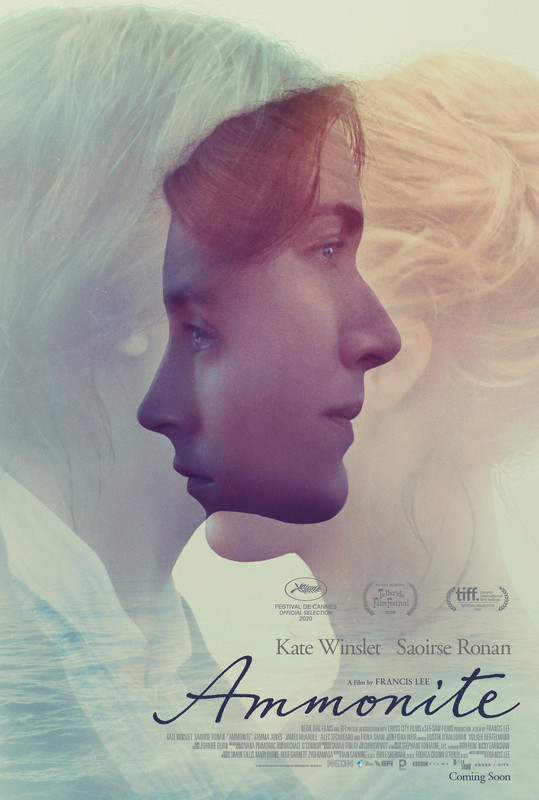
24FPS@LFF2020: Ammonite

Dir: Francis Lee
It would seem that Mary Anning (played here by Kate Winslet) and Charlotte Murchison (Saoirse Ronan) were remarkable women, both talented and important geologists and fossil hunters. It's a shame Francis Lee's film doesn't do much to acknowledge that, instead choosing to focus on a fictional affair between them.

The film's Anning meets Charlotte when her husband Roderick (James McArdle) asks the older woman to look after his depressed wife and to take her out on her daily fossil hunts while he is away on a trip with the Geological society (in reality, Charlotte had by this time already collected rocks and minerals for years and worked alongside her husband all the time). During a bout of illness, Charlotte begins staying with Mary and her elderly mother (Gemma Jones). After she recovers, Charlotte and Mary become closer, eventually embarking on their affair.

Ammonite is a film that reflects its setting. Lee and DP Stephane Fontaine render 1840s Lyme Regis largely in drab greys and browns, redolent of the mud Mary Anning digs through and the slate she pulls from it to find fossils. It's also a very cold looking film, even a scene of Mary and Charlotte swimming together, kissing as they find a moment of abandon in the sea, almost bristles with the chill of the water. The images give the film a certain harsh beauty, but it's unfortunate that they are matched by the emotional temperature of the screenplay and often the performances. Leaving aside the question of the appropriateness of the choice, if the story Lee is aiming to tell is of a relationship between these women rather than one of their scientific achievements,  it needs to be more convincingly presented than Ammonite manages. 

The writing is very reserved; dialogue is minimal, but critically so are moments of real connection between the soon to be lovers. Occasionally we see a longing gaze from Winslet, an indication that Mary finds Charlotte beautiful and is attracted to her. There's also a subtly played scene, full of unspoken backstory about a previous relationship that ended badly, between Winslet and Fiona Shaw as Elizabeth Philpott (another geologist and fossil hunter whose scientific achievements go, in this case, entirely unmentioned). The problem is that this doesn't seem to come back Winslet's way from Ronan, neither in the gaze nor in the events of the film is there any sense of what draws Charlotte, romantically or sexually, to Mary. Because Ronan and Winslet are both great actors, the chemistry is there to make the romantic scenes play individually, it's the inciting incident that seems to have gone missing. It perhaps ought to be there when Mary is invited by the handsome foreign doctor (Alec Secareanu) to a musical recital and insists that Charlotte also be invited, but again while we sense desire and jealousy from Mary it still never seems to come back. Even great actors can't play what isn't there. 

Outside of the romantic storyline, there are some impressive moments from the entire cast. The film draws a connecting line between Charlotte and Molly Anning, Mary's mother, both women affected by the loss of babies (eight in the case of Molly). One quietly devastating moment finds Charlotte, thinking she's doing a nice thing, cleaning the china figurines that are kept ever so tidy, only for Mary's mother to see her and be upset because "those are my babies". It's a little moment that speaks for what was, at the time, a huge scale of routine tragedy and both Ronan and Gemma Jones are excellent.

While some of the film's subtleties come through, the slow pace begins to feel grinding. Because of the setting, the element of art (in Mary revealing and sketching the fossils she finds) and the romantic theme it is almost impossible not to compare Ammonite to Celine Sciamma's masterful Portrait of a Lady on Fire. Ammonite suffers by the comparison in every respect, but most in how it deals with its pacing. Every moment of Portrait is loaded with meaning, every gaze pointed, every scene building tension and chemistry between the characters. I seldom, if ever, felt that from the many scenes of Mary and Charlotte picking up stones on the seafront or the long silences in the Anning home. 

Ammonite seems a missed opportunity. The performances are great within the limitations of the screenplay, but there is just too much that seems to have gone missing (and a lot of airless silence that could be filled). Gifted two fascinating women whose scientific achievements were groundbreaking (In 2010 the Royal Society included Anning in a list of the ten British women who have most influenced the history of science), Francis Lee instead opts to elide over most of that. It's not that we don't need more LGBT love stories told in mainstream cinema, just that inventing one about these two women doesn't seem like the best way to represent their lives and work.
★★

Oct 8, 2019

24FPS @ LFF 2019: Run

Dir: Scott Graham
Finnie (Mark Stanley) is stuck. He works at the fish factory in Fraserburgh, lives with his wife Katie (Amy Manson) and their children. Their eldest, Kid, (Anders Hayward) is about 17, his girlfriend Kelly (Marli Siu) is pregnant and it looks like he’s about to fall into the same pattern as his parents, whose ‘Born to Run’ tattoos now just look ironic.

Scott Graham’s third film brilliantly captures a very particular kind of inertia. Set over 24 hours, it breaks down into distinct sections, first laying out why Finnie feels so trapped, before allowing him to glimpse a way out and resolving whether he takes it. The first act is simply Finnie’s day to day; an unrewarding and likely fairly low paid job, being driven back and forth by his son, the daily shop for stuff for supper, and a marriage which might have seen better days. It’s notable that this doesn’t seem like it’s the worst day of any of these things, just another day in the slow grind that seems to have been wearing Finnie down. We get it when, after everyone’s asleep, he ‘borrows’ Kid’s car and goes for a spin. Going for that drive leads into the film’s second section, an extended detour with Finnie driving around the town. When she asks where Kid is, he ends up with Kelly in the passenger seat and the two drive around, racing some of Kid and Kelly’s friends, then aimless, waiting for the next race.

The long sequence in the car is ultimately about Finnie recapturing his youth. It’s significant that both the car he’s joyriding in and the girl in the seat next to him are much more connected to his son, Finnie is trying to throw himself back twenty years, when it would have been Katie in the passenger seat. In a way, he’s successful and as the sequence runs on we can see that he’s indulging more and more in the idea of the road opening up in front of him, offering more than a race - the sort of possibilities it might have held when he was Kid and Kelly’s age. The race too feels thematic, speaking of how Finnie has likely tried to escape many times, but found himself always turning the same circle, back to Katie and his kids. This is one of the great things about the film, it’s clearly set on a very significant day, but you can believe that this is just one of many days like it for Finnie; the 24 hours we see feel like a microcosm of a whole life.

As with his previous films, Shell and Iona, Scott Graham achieves a great sense of place in Run. The dialogue is particularly specific, thickly accented and in dialect that takes a little while to settle in to if you’re not from this part of Scotland. This only adds to the very observed feel of the first and last acts of the film, grounding us in the language of Finnie and his family as well as in their lives. Of course, this is also down to the naturalism of the performances. From a technical standpoint, it’s worth noting that few, if any, of the main cast are using their native accents, and all the work in that area is impeccable. 

Mark Stanley and Amy Manson’s performances as Finnie and Katie imply all of the backstory we need. We can see them as young sweethearts, getting pregnant early, putting their lives on hold. We get glimpses that suggest Katie also wants, in her own way, to get out of the ordinary, even if it’s by doing something as simple as wearing a nice dress, though it’s only for a family dinner of fajitas. Because this is largely Finnie's story, Manson is often a more muted presence, but the details of her performance are rich and her scenes with Stanley in the third act have real punch. The two have an interesting energy together, again we can see the couple they might have been in the past, and that things aren’t always so great now. There’s a real sense of shared history between them that gives the film added resonance. It matters that we feel the past while watching these characters' present because the film's last moments might feel trite without it, but the depth of the relationship allows them to work.  

Marli Siu, on the rise after Anna and the Apocalypse and with Our Ladies also in this year’s festival, is also very strong as Kelly. The growing rapport between her and Finnie as they drive around at night has an interesting dual dynamic, as you can appreciate why each of them is being pulled in, but also see that it’s not appropriate. The car sequence is long, perhaps 25 of the film’s 78 minutes, but it’s justified by that growing dynamic and the sense of being caught up in an extended moment, best exemplified when Kelly puts CHVRCHES’ soaring Make Them Gold on the stereo and we’re lost for a few minutes in a classic movie montage.

As Kid, Anders Hayward only comes to the fore in the film’s third act, so talking about his most developed scenes isn’t easy. What comes across again is the authenticity of the family dynamic, especially when Kid and Finnie finally sit down and talk. One particularly strong scene comes at breakfast, with Finnie having to hold up the table because Kid has kicked a leg out from it; you get his frustration with his son, but also a hint that he sees a bit of himself in that action, it’s this back and forth that carries across affectingly a little later on.

I hope a distributor will pick this up soon, because it’s one of the highlights of this year’s LFF and because, three films in, we should be talking more about Scott Graham. Graham has done a great job across his work of digging into the minutiae of ordinary lives and finding stories that feel both specific and identifiable. Run is on those terms perhaps his most developed film, because it could be the story of any numbers of families anywhere around the UK or further afield and yet it grounds you in the specifics of these people and their lives. 
★★★★½

Oct 4, 2019

24FPS @ LFF 2019: Saint Maud

Dir: Rose Glass
Maud (Morfydd Clark) is a recent and zealous convert to Christianity. As a private nurse to Amanda (Jennifer Ehle), who is dying of cancer. Maud does her job trying to look after her patient’s ailing body, but also concerns herself with Amanda’s soul, but her devotion to her religion becomes more extreme and more disturbing with time.

Ever since I was able to really consider the various claims, I’ve found religion less than credible, but I remain fascinated by it and by films about it. The roots of belief, how people engage with it, how it can change them, the actions it can drive people to - for good or ill - are all intriguing and much-explored subjects in cinema. 

We never get to see where Rose’s faith begins, but we meet her as a relatively new convert, which goes some way to explaining how devout she is, seemingly having thrown herself fully into this new faith. Rose Glass seems to set up Maud’s faith as a defence mechanism; a way of her feeling that, in a world where she seems to have few other engagements, she can feel someone always has her back. This is particularly underlined by Maud’s prayers, which are conversational more than they are devotional, and seem to speak of a desperate need for meaning and connection.

This need to make connections, if not for herself then for God, is further underlined in Maud’s relationship with Amanda. She only mentions her religion after Amanda comments on her crucifix necklace, but thereafter is trying, gently but firmly, to win her soul. Boundaries begin to be crossed though, and we see a moralistic side to Maud’s Christianity in her conversation with Carol (Lily Frazer), an escort Amanda hires on a regular basis. 

None of these are bad ideas, but they are all very familiar. The drawing of an increasingly bold connecting line between devout religion and mental illness is a crutch that many films have relied on in the past, as are the handful of moments that equate religious and sexual ecstasy. While Maud is more sympathetically and fully presented than many of those characters, these are still old devices and Rose Glass’ screenplay fails to reinvent them, particularly in the film’s second half. The film’s imagery is impressively mounted, but it’s also rather predictable. Again, this is something especially felt in the film’s back half, as it moves away from the two hander about Maud slowly trying to live up to Amanda’s inscription in a book of William Blake’s paintings she gives her nurse as a gift, calling her her “saviour”. 

The second half trades in more extreme imagery as it depicts the difference between Maud’s image of herself and the world and the reality around her and in almost every instance we can predict what we’re going to see long before Glass shows it to us. This makes the last forty minutes or so much less intriguing than you’d hope. The commentary on religion is obvious and done to death and the progress of the story is a trudge towards a heavily signposted ending. Sometimes, knowing where a film is leading can give it a doomy feel of inevitability (even predestination, given the themes here), but that never clicked for me here, perhaps because the film doesn’t use that ending to say anything it hasn’t been shouting for an hour already.

The one thing that unambiguously works about Saint Maud is the acting. Jennifer Ehle is excellent as a woman constrained before her time by terminal illness, but still as vivacious as ever, bursting with the desire to eke whatever enjoyment she can out of her final weeks and months. As is so often the case in her work, Ehle is a bit underused, but again she makes an impression bigger than her role, which is helpful in keeping Amanda present in our minds in the second half of the film. There are also effective performances by Lily Frazer as Carol and Lily Knight as Joy, who knows Maud from a previous job and seemingly as a very different woman.

The film, though, belongs to Morfydd Clark, whose exceptional performance as Maud lifts the entire enterprise. While the machinations of the character and the story are fairly rote, Clark invests them with such detail and truth that not only can we not help but empathise with Maud, she becomes more interesting as a character because we invest and believe in her psychology thanks to Clark’s work. Along with Glass, she evokes an emptiness that allows us to understand why Maud turned to this extreme piety. There are some extreme moments in her performance; the contorted face and body of the moments that her religious experience seems to turn at first sexual, then for a split second painful or disturbing, but it’s the quieter moments that resonate. This is the aspect of the second half that does work, her silence when Joy turns up at her flat, her serenity in the film’s final scene. It’s great and complex work, it added a star to my grade by itself and serves notice that Clark is a real talent to watch.

I wish Saint Maud were better. The acting deserves a screenplay that does some more inventive things and digs deeper into its themes. Rose Glass serves up some memorable images and conjures a weirdly non-specific but still palpable sense of place, making me wonder what she might do in the future with someone else’s writing. On the whole though, this has to go down as something of a disappointment; a film that can’t as a whole match its best elements.
★★★

Sep 30, 2019

24FPS @ LFF 2019: Selected Shorts

It’s a shame we don’t see more short films in general release, but at LFF the various shorts programmes are often a good way to spot new talent both in front of and behind the camera. Here are some appropriately brief thoughts on some shorts I’ve seen recently. These films were viewed on the online press library.
Be Still My Beating Heart
Jericho (Sarah Andrews, Aaron Hopwood), screening in the Family shorts programme on October 5th, is one of the briefest shorts in the festival. Though barely 90 seconds long, it’s still an impressive piece of work. Fluent and high quality CG animation tells the story of a lonely robot trying to build himself a friend. It’s gently funny and rather touching. I do wish it were longer though, as there is potential to mine some more humour out of the situation. Sweet then, but perhaps too limited by its running time. 
★★★

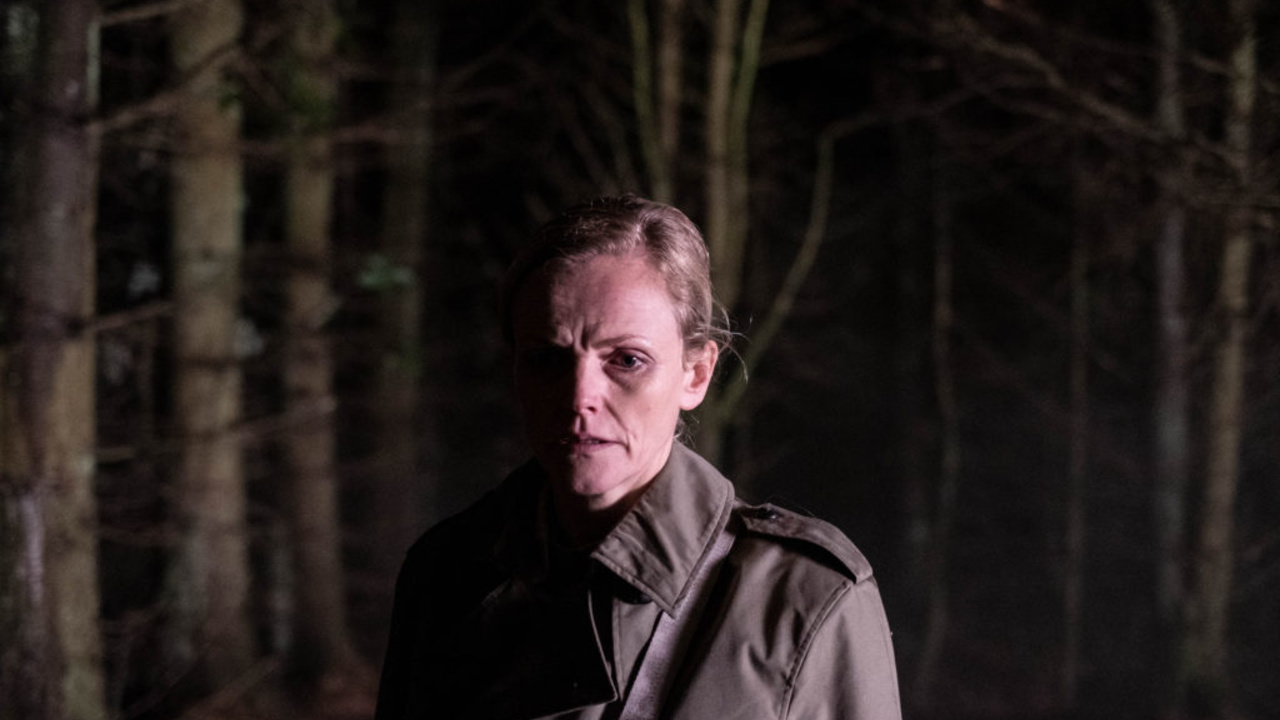
Be Still My Beating Heart (Ruth Paxton) screens in the Cult shorts programme on October 6th and 8th (both sold out). This story of a medical examiner looking after her younger sister who has an unspecified illness benefits greatly from having the always excellent Maxine Peake in the leading role. Peake and Elysia Welch bring dimension to a sisterly relationship that feels sour on both sides, even if it’s loving deep down. Director Ruth Paxton’s imagery veers between the mundane and the primal, and points to interesting things for her future. Unfortunately, the film ends up as less than the sum of its parts. The various ideas don’t knit together in the 25 minute running time and this ends up feeling less like a trailer for a future feature film version of itself (a common issue with shorts) than an impressive showreel for its director. 
★★½

Let's Roll
The Lamb (Nina Volic) screens in the Dare shorts programme on October 10th and 12th. Most boys, when they’re around 12 or 13, start wanting to impress the girls around them. That’s where The Lamb begins, with a boy meeting two girls from his class to show them something. In an incredibly dark turn, ‘something’ turns out to be a black man, tied up and gagged, on his sofa. The way the kids interact with the man is initially not violent, but the immediate and casual dehumanization of this ‘other’ is horrifying, as they treat him as a prop, posing for selfies with him in the background. A deeply disturbing, if extreme, look at how social media has made some of us treat the world as a background image to our lives, The Lamb promises great things from Nina Volic. 
★★★★

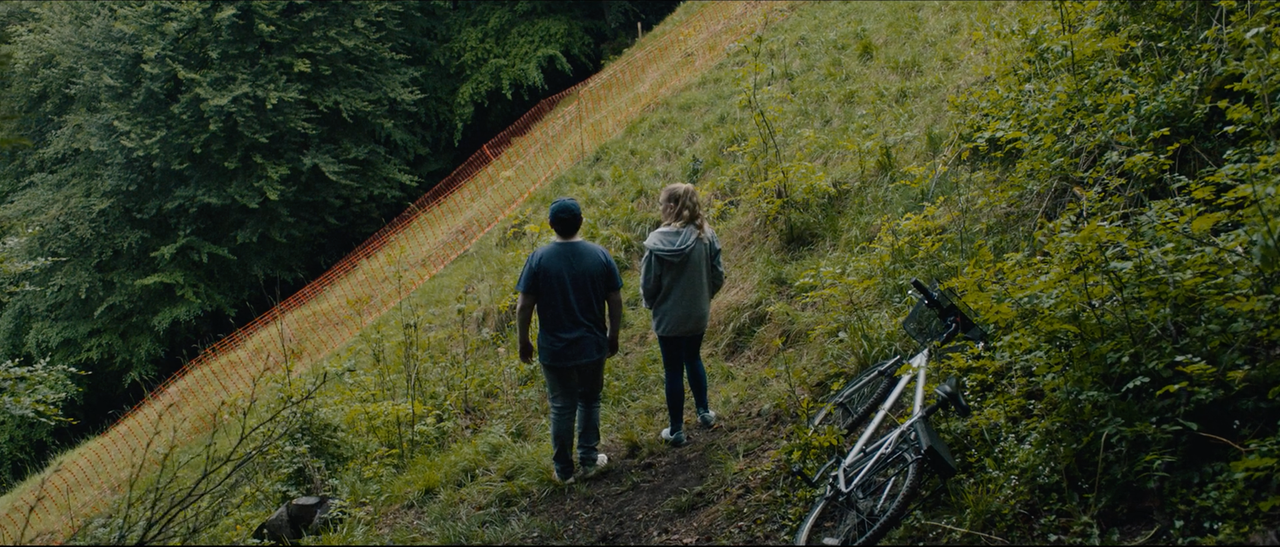
Let’s Roll (Chris Thomas) screens in the Thrill shorts programme  on October 5th and 10th. A surprisingly gentle film for its strand, Let’s Roll is a coming of age film set around the Cooper’s Hill cheese roll. Antonia’s brother was a champion, but now he’s away in the Army and her mother is against Toni taking his place. The progression of the film is fairly familiar, as Toni has a friend (who may be nursing a crush) help her train for the cheese roll in secret. The best thing about the film is how much it packs in to 23 minutes, writer Allan Macleod puts a lot of depth into the background in Toni’s relationship with her Mum, both of their implied concern about their brother and son and Toni’s troubled reaction to this stress (we first meet her running from a shop after stealing a magazine). This is also very well played by Amy Bowden as Toni and Zara Ramm as her Mum. There is a lot to build on for a feature version, which I’d happily watch, but the short feels complete in its own right. The only disappointment is the last sequence, which is too obviously documentary footage that Bowden doesn't appear to be in. 
★★★★

Sep 21, 2019

24FPS @ LFF 2019. Day 5

Deerskin
Dir: Quentin Dupieux
It has been a while since the UK has heard from Quentin Dupieux, the musician turned determinedly weird horror filmmaker who debuted with Rubber, a film about a killer tyre. This is far from his first film since, but it’s the first to make an international splash for a while.

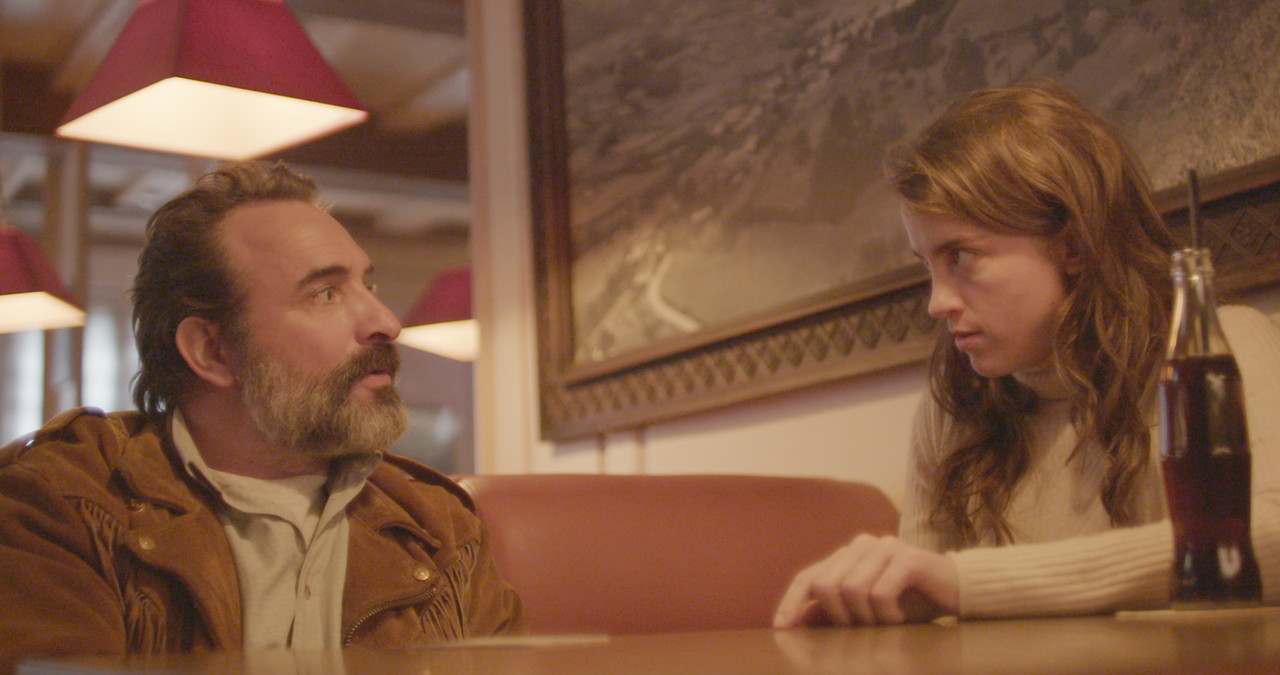
Deerskin sees Jean Dujardin (still best known to international audiences for The Artist) as Georges, who appears to have left everything behind to buy a 100% deerskin jacket. Soon, he hears the jacket tell him it should be the only jacket in the world. One night he tells Denise, a barmaid (Adele Haenel, also at LFF in Portrait of a Lady on Fire), that he’s a filmmaker and she responds that she, in her spare time, is an editor. Together they begin making a film. You know, that old story. 

Deerskin couldn’t be accused of being a deep film. Dupieux largely deals in strangeness for its own sake. If there’s any larger point that he’s making then it’s probably in the fact that Denise finds such interest and potential in Georges’ poorly framed and self-obsessed (or jacket obsessed) footage; perhaps a sideswipe at fans and critics who’ll reach for meaning in anything. Which likely means that, at this point, the joke is very much on me.

The film works because, from both behind and in front of the camera, everyone plays it straight, which has the effect of accentuating the absurdity and making it funnier. This is true from one of the very first images, which finds Georges trying to flush his suit jacket down a service station toilet, right through to the final scene. Dupieux doesn’t do anything flashy with the direction, again trying to ground his silliness in something that, if it doesn’t feel entirely like the real world, we can accept on its own terms. The visuals can feel a little flat—deadpan, perhaps—but this may also be something of a reflection of Georges’ own unpracticed filmmaking (and again, the joke’s on me).  

Jean Dujardin is brilliantly matter of fact as Georges. As he slips further from reality he creates a voice for the jacket. At some points Dupieux lets us see Georges speaking for it, but increasingly as the film goes on he allows us to see how tenuous Georges’ grip on what’s real has become by framing his face out when ‘the jacket’ is speaking. To talk about exactly how things go down would be a shame, as it would spoil some of the film’s funniest sequences, but suffice to say that Deerskin develops increasing shades of American Psycho, including its main character’s obsession with how he looks to the outside world) as it goes on. Adele Haenel’s role might look thankless at first glance; a facilitator more than a character. That may have been true at script level, but Haenel is a huge talent. She has what seems like a simple gift, but one which is incredibly rare; the ability to always seem real on screen. In this way, she provides the film a grounding influence of sorts, but the character is also credibly sucked into Georges’ world, culminating in a brilliant final image. I would absolutely watch a film that picked up from that moment.

Deerskin is, ultimately, a bit inconsequential. It is huge fun in the moment, but I’m not sure that much besides that will linger. However, that’s more than many films ever achieve and for 77 minutes it is highly entertaining and engagingly weird company. 
★★★½

Rialto
Dir: Peter Mackie Burns
With his 2017 debut, Daphne, Peter Mackie Burns established himself as a British director to watch. Powered by a searingly honest performance from Emily Beecham, that was an engaging drama that felt honest about the experience of being thirtysomething and single in London. Mackie Burns’ follow up in some way stakes out similar territory, focusing on one character and their struggles with relationships, sex and identity.

Colm (Tom Vaughn-Lawlor) is middle aged, working a job he doesn’t seem particularly interested in and equally disconnected at home from his wife (Monica Dolan) and their teenage kids. He begins a series of encounter with a much younger man (Tom Glynn-Carney) as his life outside this relationship begins to cave in around him.

What Rialto has in common with Daphne is the centrality and quality of its leading performance. Tom Vaughn-Lawlor’s performance is heartrending to watch, as Colm tries to find a space in which he can be fully himself and deals with the guilt of that not being at home with his wife and children. He is devastating in a couple of scenes in particular; one coming home after a long night getting drunk, only to faced with explaining himself to his wife and, later, finally spitting out his true feelings, directly in the face of his 18-year-old son. A less familiar face, but also very good, Tom Glynn-Carney brings more complexity than you might imagine to what might be a cliche role as a male prostitute. He’s especially humanised in a late scene ar his home, which is a touching contrast to the more menacing way he’s seen early in the film. I just wish I’d found the film around these performances quite as effective.

Written by Mark O’Halloran, the screenplay struggles to shed its stage origins. The dialogue, more so than in Daphne, feels constructed rather than something we’re just hearing the characters say for the first time. Aside from the two leads, the characters are lightly sketched, with Colm’s kids notably underwritten. The images are also a mixed bag. Though Adam Scarth’s (Daphne, Apostasy) cinematography often captures a certain stark beauty (the late scene of Colm walking to the sea late at night) the direction feels a bit flat. The dialogue and performances are the main storytelling engines here. There aren’t many shots that are memorable in and of themselves, and nothing that has stuck with me the way an early shot in Daphne, of Beecham descending an escalator, has. 

On the whole, Rialto is worth seeing for its two central performances, but the film surrounding them never quite lives up to them and this has to, for me, go down as something of a disappointment from Peter Mackie Burns, given the expectations set by his last film.
★★★

Aug 2, 2019

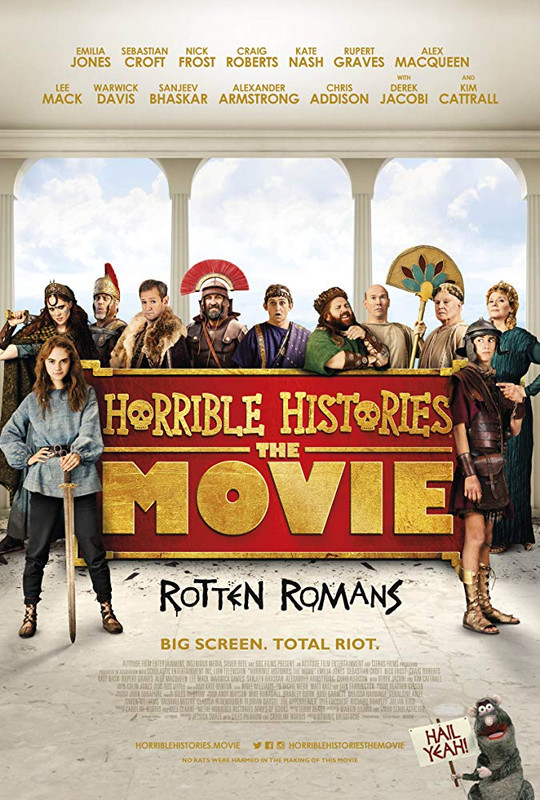
Horrible Histories: The Movie - Rotten Romans [PG]

Dir: Dominic Brigstocke
We had the Horrible Histories books when my brother and I were kids. I have particular memories of having them in the book box we used to put together to occupy us on long car journeys. They were great, combining gross and funny facts with a solid overview of the history of the period they were covering. I had grown past them by the time the TV show came about, but having always heard positive things about the show, I decided to check out its first feature film venture.

The basic story has several prongs. Orla (Emilia Jones) wants to be a Celtic warrior with the army Bouddica (Kate Nash) is raising, but her protective Dad (Nick Frost) doesn’t want her to have a sword yet. Atti (Sebastian Croft) is sent to Britain with the legion as punishment when one of his clever ideas backfires, offending the young emperor Nero (Craig Roberts). Almost as soon as Atti arrives, he’s captured by Orla.

It is always a challenge to review a film that simply isn’t interested in me as an audience member. Rotten Romans is unapologetically for kids, often quite little kids. In that respect, it’s fine; the fart, poo and vomit jokes will provide them some undemanding laughs. Everything is done with a big, broad, energy that talks at the audience rather than down to them and it keeps the brand intact in that amongst the gags, kids will learn a few things about the Roman empire and its war with the Celtic tribes.

As a piece of filmmaking and for an older audience, amiable though it is, Horrible Histories: The Movie doesn’t really work. It’s one thing making a film for kids but, costume design aside, this one does often wear its cheapness rather too visibly. Sets feel a bit rickety and there is a definite sense that certain scenes had to be rushed through, notably the poorly choreographed and noticeably small scale battle of Watling Street. More problematic is the fact that, despite a fairly starry cast with plenty of funny people in it, the jokes just don’t connect frequently enough. As the Roman military leader Paulinus, Rupert Graves definitely sells his running gag of always talking in the third person and the payoff is fairly amusing, but Craig Roberts’ petulant Nero could easily have been pushed to a more comically extreme place and Lee Mack’s running joke as a centurion who misses Rome never manages to find a laugh. This is also an issue with most of the film’s songs, which are sporadic enough that you’re never expecting one and which generally miss the mark.

In the lead, Emilia Jones (who I couldn’t place initially, but discovered I’d recently seen in Pascal Laugier’s Incident in a Ghostland) is an appealing presence. The screenplay never pays her desire to be a warrior off that satisfyingly, but that’s not for lack of effort on her part. She and Sebastian Croft have fun with the growing (platonic) relationship between their characters, they just don’t have the material to work with. Perhaps the most entertaining part of the film is Kate Nash’s Boudicca. The recasting of the queen who united the Celtic tribes in rebellion as a rock star is the film’s best comic idea and one that serves to provide kids with a way to relate her to their own time. For her part, Nash seems to be having a ball, she delivers Boudicca’s songs with energy and has a couple of the better jokes.

This isn’t a deep film. The final song rushes to find something like a happy ending and has a message about sharing that is a good thing to have kids walk out remembering and feels especially positive given the times we find ourselves in. On the other hand, it’s not particularly in keeping with the rest of the film which, though it always frames it out, is surprisingly heavy on killing for something so clearly aimed at a very young audience. Overall, Rotten Romans has a few things that work and a handful of fun moments, but for an audience over eight, while it’s good natured and never a chore to watch, it’s just not consistently funny enough.
★★

Jul 3, 2019

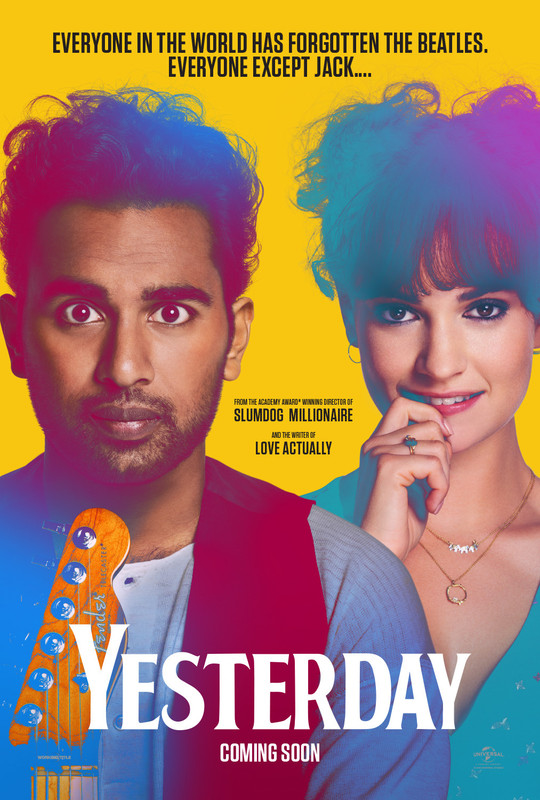
Yesterday [12A]

Dir: Danny Boyle
I remember having an argument with a co-worker who said “The Beatles were shit”. I explained to them that, no, they weren’t. It’s perfectly fine not to like The Beatles, but they demonstrably weren’t shit, because while there are clearly talentless people who make shitty music or shitty movies yet still meet with success, no truly shit band could do what The Beatles did. They changed the very fabric of pop music. What pop music would look like without their influence is all but unimaginable. That’s why the basic concept behind Yesterday is so exciting.

Jack Malick (Himseh Patel) is an unsuccessful singer-songwriter, toting his guitar from tiny gig to tiny gig with the help of his manager and friend Ellie (Lily James). One night, as he cycles home, there is a worldwide power cut, during which a bus hits him. When he wakes up, Jack discovers that only he can remember who The Beatles were and he begins to use their songs and pass them off as his own, meeting with massive success thanks to this ruse.

Imagine a world without The Beatles, it’s full of possibilities if you try. The problem here is that screenwriter Richard Curtis (working from a story by Jack Barth) only ever uses the concept in the most route one way possible; spinning yet another of his increasingly tired collections of rom-com tropes out of it. There is an early gag, as Jack googles to find out if any other bands have vanished from history, that tells us Oasis no longer exist. Good for a chuckle, but that’s the only time the film even nods to the idea of what music would be like without this most important of bands (it’s certain, for instance, that Pet Sounds wouldn’t exist). Would pop music even sound the same? There’s an angle here that could have seen Jack cherry picking missing songs (if we can argue the world NEEDS Ob la di, Ob la da then it definitely needs God Only Knows). On the other hand, the film could have delved into how the modern musical landscape would try to change The Beatles. Again, Curtis strikes a glancing blow here, with Ed Sheeran (in a brutally extended cameo) suggesting that Jack change the lyrics of Hey Jude to Hey Dude, but it’s not particularly convincing that Sheeran or some other trendy producer wouldn’t try to make the songs sound more modern and, without that, it’s tough to buy the overnight success Jack meets with. Yes, the songs are great, but that’s not all it takes.

But instead of any of this, we have a tediously predictable story of Jack feeling guilty over taking ownership of the songs and realising that maybe he shouldn’t have left Ellie behind. In fairness to them, Himesh Patel and Lily James do what they can with stock characters and a screenplay so obvious that you could write every beat in your sleep. Together, they do have a certain amount of natural charm and chemistry. Patel, in his first film role, does a solid job as Jack. With better gags and a more nuanced relationship story to play, he’d probably be effective. He does perform the songs well too, there’s nothing remarkable about his singing voice, but that may be intentional because this is all about the songs themselves more than the person delivering them. Unfortunately, it’s only on Help, rendered as a scream of frustration, that Curtis and Boyle use the songs to bring anything deeper out of the character; another missed opportunity. 

The gags are middle of the road (Jack’s family and their friends continually interrupting as he tries to play them his ‘new’ song, Let It Be)  and the characters broad, especially Kate McKinnon as Jack’s money obsessed new manager and his friend and ‘road manager’ Rocky (Joel Fry), who is as thick as two short planks and plays like a rewrite of Rhys Ifans in Notting Hill. The romance, similarly, is tough to care much about because it’s so clear where it’s all headed (especially given the use of one line, from very late in the third act, in the trailer). Lily James is radiant, and it’s easy to be drawn to her just by that, but she doesn’t have anything to play except the supportive ‘friend’ holding a torch. Once again, the frustration is that you suspect there’s so much more she could be doing.

Danny Boyle has always delivered striking visuals, think about Renton sinking into the rug in Trainspotting or the shots of an empty London in 28 Days Later. Aside from the sequence of all the world’s lights clicking off at once and some nice renderings of Jack's attempts to remember the lyrics to Eleanor Rigby, none of that style is in evidence here. Yesterday is as flat visually as it is dramatically and comedically. The biggest miscalculation in script and direction comes in a cameo (played by Robert Carlyle), which manages to be both saccharine and unbearably crass. The latter problem could easily have been avoided by choosing another figure to cameo, the former only by deleting the entire scene (which has no impact on anything in the larger story).

Overall, Yesterday is a terrible disappointment. It takes an incredible songbook and does nothing with it. It takes a great idea and engages with it only for a couple of fairly obvious gags, rather than digging into it. It takes a couple of charming actors and sticks them with very little to play and it takes Danny Boyle and sucks out most of his style and energy. It’s not the worst thing you’ll ever see, and yes, The Beatles are still great, but given that you could just put the Red and Blue collections on, this doesn’t need to exist.
★★

Oct 7, 2017

24FPS @ LFF 2017: Apostasy

Dir: Dan Kokotajlo
In a time when we worry constantly about religious fundamentalists and their ability to kill in the name of their faith, we tend to dismiss Jehovah’s Witnesses as just those people we slam the door on when they drop by. Dan Kokotajlo’s feature debut tells a fictional story, but it’s one grounded both in what that church teaches and in a family we can believe could live on just about any street, in any town.

Alex (Molly Wright) has had an anaemic condition from birth, and her life was saved minutes after it started by a blood transfusion. Alex’s family are Jehovah’s witnesses, the transfusion causes her guilt and she, supported by her mother Ivanna (Siobhan Finneran), signs a document stating that, now she’s 18, she refuses consent for any transfusion. Alex’s older sister Luisa (Sacha Parkinson) is less devout. When Luisa becomes pregnant she is expelled from the congregation and her mother and sister are told that they must shun her.

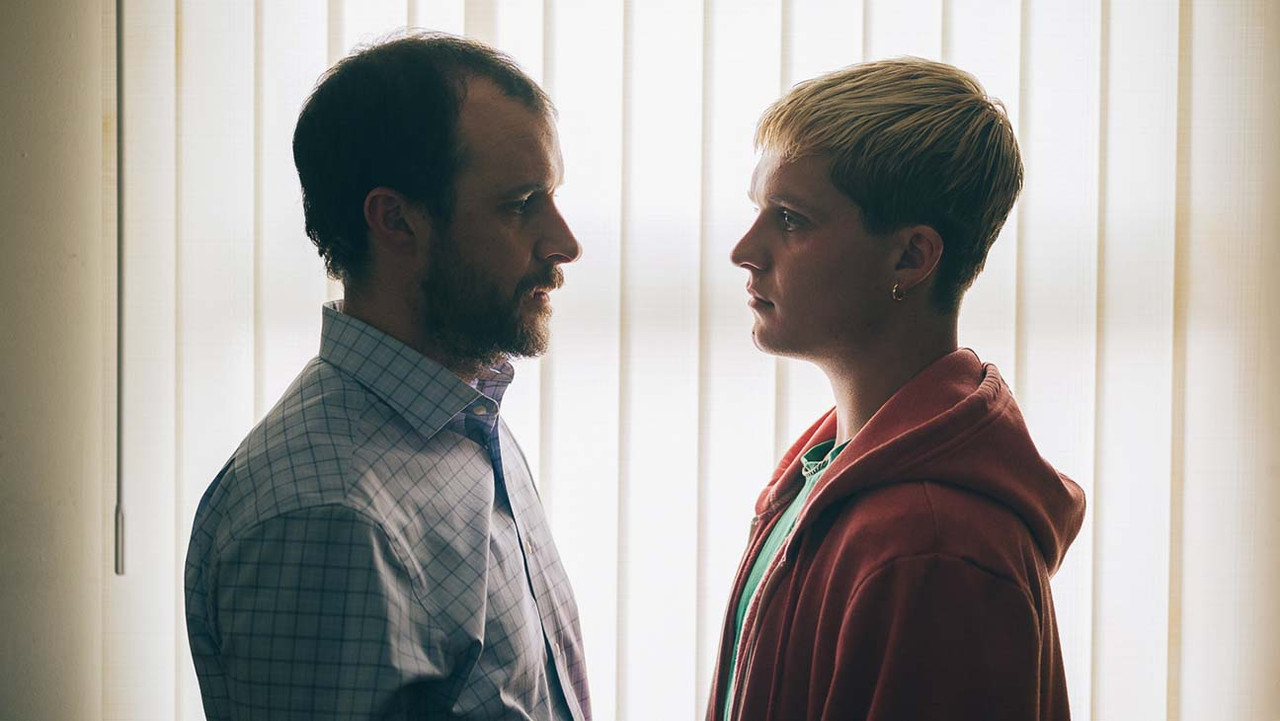
Apostasy made me furious. I mean that as a great compliment, because that’s clearly what it’s aiming for. The film is quiet, trading much more - for the most part - on what is not said and not done than what is, but that reserve can’t mask the fact that this is an angry film that wants to address in a forceful way how even religions we don’t usually lump in with those that are most restrictive seek to control people, especially women. Happily, Kokotajlo doesn’t let the film devolve into a lecture, instead he makes us feel this anger through the storytelling.

The film uses its low key style to draw us into the family and their larger community, it shows us on a micro scale the constant reminders that you have to please God first. For instance that Witness meetings must come before Luisa’s education, even though she only has one more class to take to complete her college. We can see how this burrows into Alex’s mind, how it is what has made her ashamed of the fact she even survived infancy, revealing it as a shameful secret to the young worship leader who shows a romantic interest in her. The most upsetting thing here, chillingly shown in Siobhan Finneran’s performance, is that while Ivanna obviously loves her daughters, that love is second to her love of Jehovah and to a large degree conditional on Alex and Luisa’s love for him.

Finneran, Molly Wright and Sacha Parkinson form a believable family unit. The relationship between the sisters is especially well drawn, with Wright giving us some heartbreaking moments as it’s clear that, when she leaves the house, Alex wants to reach out to her sister but only has the tools to do so through talking to her about Jehovah, rather than on an empathetic level. Equally effective is the singular moment when, without acknowledging it aloud, Wright allows a flicker of recognition to cross Alex’s face as she sees hypocrisy in the moral of a Bible story. It’s a devastating moment, and becomes more so soon after.

The third act becomes a little more strident, stating its case more than it has in the first hour, but by this point the characters and the excellent performances are so well established that these moments remain grounded and feel real for the characters in the moment. Still, even in these scenes, it’s the things unsaid that speak loudest, flickers in Finneran and Parkinson’s physical performances and in the way the camera maintains distance between them. An intelligent, urgent and highly credible film, this is an especially promising first feature from a British filmmaker.
★★★★

Oct 17, 2015

24FPS @ LFF: Burn Burn Burn

Dir: Chanya Button
Terminal cancer seems to have been a favoured topic in cinema over the past few years. 50/50 tried to add a little comedy to the mix and YA adaptations The Fault in Our Stars and Me and Earl and the Dying Girl were both hideous, treacly things that tried to be glib, then beat us up until we cried. Burn Burn Burn is, happily, different on many levels.  First of all, as the film opens the cancer patient, Dan (Jack Farthing), has already died. At his funeral, he (via the first of a series of videos recorded as the disease takes its toll) asks his friends Seph (Laura Carmichael) and Alex (Chloe Pirrie) to take a road trip on which they are to scatter his ashes in four places that are - or were - significant to him. During this trip, friendships and other relationships hit bumps in the road.

The first joke in Burn Burn Burn, which is also the first line, does a lot of heavy lifting. It establishes the way the film will balance sometimes stinging humour with raw emotion along with the level of comfort that exists between Seph and Alex and, by implication, Dan. It's also just a really funny joke. This, remarkably, is a balance that Charlie Covell's screenplay will manage to retain in just about every scene.  

Covell's writing and the three excellent leading performances establish in short order and from a distance a triangular friendship that we totally believe in, with the dialogue covering a believable combination of the minutiae that friends can end up spending hours discussing and the big important conversations that end up defining why you're friends. 

As Dan, Jack Farthing has Burn Burn Burn's most challenging role; he has nobody to act with and must communicate a closeness to the friends he's addressing, while also delivering a convincing picture of someone whose health is on a downward spiral. He pulls all this off, indeed by the last couple of videos his sunken-eyed appearance is alarming, and it sticks with you when he apologises to Seph and Alex for lying about his diagnosis, but says "but seriously, fuck you for believing me". What's remarkable about both the writing of this character and Farthing's performance is how bright, funny and alive Dan seems, even at his worst. We get a great sense of how much fun he would have been to be around and, in that, the sense of loss that Seph and Alex must feel.

Strong as the screenplay is, without the central relationship between Seph and Alex working, the whole film would fall apart. Laura Carmichael (who, as I'm not a Downton Abbey viewer, I hadn't seen before) and Chloe Pirrie (who I've been tipping since naming her my one to watch from LFF 2012 based on her role in Shell) have to carry the film on their shoulders, and both excel. The dynamic between them is totally credible, set up by that first line and carried through in a series of funny scenes that gives each of them a specific voice, but draws enough similarities between them that we get a sense of a shared sense of humour, private jokes and a real closeness, which then begins to break down as the slightly more dramatic second half of the film comes into focus.


The film's more dramatic moments are shared between the main characters, but Farthing and Pirrie get especially notable scenes. Dan's third video is a wrenching watch, both for the characters and for us, because we've got to like them. The bitterness of the unfairness of his fate seems to overwhelm Dan and that spark we usually see turns barbed. It's a great piece of writing, sensitively played by Farthing. Then there is Pirrie's monologue. About three-quarters of the way into the film, Alex finally tells Seph a secret she's previously kept from everyone but Dan. It's a hugely moving piece of writing and Pirrie delivers it with absolute conviction, all while standing in the middle of one of the film's best visual gags. This is typical of Covell and director Chanya Button's approach, over and over again they deliver the film's most heartbreaking moments, then hit us with a big laugh. This pays dividends because it means the film never gets bogged down in sadness or feels like it's begging you to cry.

These three characters form the backbone of the film, but Joe Dempsie does good work as Seph's nice but rather dull boyfriend and a parade of comic talent comes in for one or two scenes as the girls encounter people on their road trip. The best of these is Alice Lowe, who is hilarious in her three or four minutes as a tour guide at Glastonbury Abbey but Sally Phillips, Matthew Kelly and Alison Steadman (in a more dramatic role) all impress as well.

Perhaps the only slight bump in this road trip comes towards the end. Alison Steadman's part, though very well played, does feel a bit on the nose, a plot device designed for a very specific moment. Still, Burn Burn Burn snuck up on me and became one of the highlights of my LFF. It's one of the funniest British films I've seen for some time and marks out Covell and Button as talents to watch, individually or, hopefully, together.
★★★★

Sep 30, 2015

24FPS @ LFF: Roundup 2

A Nazi Legacy
Dir: David Evans
Quentin Tarantino says that the advent of digital projection has rendered cinema no more than watching television in public. I don't buy that. Most of the time. A Nazi Legacy, whatever else it may be, is television. It was made for the BBC's Storyville series and stylistically it couldn't be more basic and televisual if it tried.

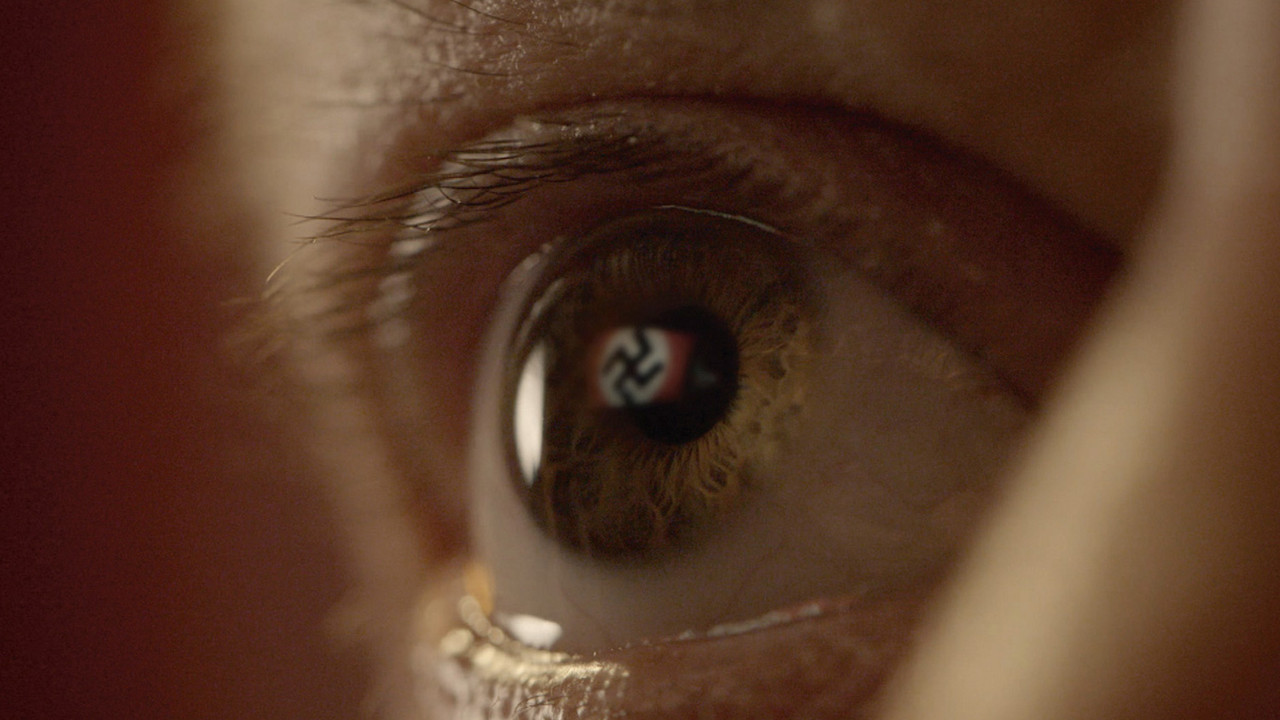
The subject matter is interesting enough. The film focuses on two men whose fathers were high ranking members of the Nazi party and their polar opposite views of their lineage. Niklas Frank, son of Hans Frank – one of the men tried and executed at Nuremburg – condemns his father at his every opportunity and even carries the last picture ever taken of him, just after his hanging. On the other hand Horst Von Wachter, son of Otto Von Wachter, continually minimises his father's role (Otto was in charge of the Warsaw ghetto), insisting that he would never have signed off on the worst atrocities as if this is a defence. Presented with evidence of his father's culpability, Horst still minimises everything.

The different ways these men process the legacies of their fathers and their strained friendship with each other and with human rights lawyer Phillipe Sands is fascinating, but the flatly shot interviews, very basic presentational style of both Sands (who serves as guide and narrator) and director David Evans. The film's simple structure, imagery, and editing do little to transform it from a very basic, if well made, piece of TV into anything that will benefit in any way, in terms of presentation or audience size, from being on a cinema screen.

There are some impactful scenes here, especially in the last twenty minutes, as Sands takes the two men to a field where 3000 people, including his own family, were murdered, on orders that both their fathers had a hand in, challenging Horst with this fact. This, however, doesn't make A Nazi Legacy cinema. It's worthwhile, if schematically presented, television, it just doesn't belong in a film festival.
★★

Who Killed Nelson Nutmeg?
Dir: Tim Clague /Danny Stack
My job is usually fun. Sometimes I get to share my excitement about something great, other times I might get to lay a long deserved kicking on a bad film by a bad filmmaker. In between, there are worse things I might have to do than type a few words about a movie, good, bad or middling. Then there are moments like this. I take no joy in writing about Who Killed Nelson Nutmeg? It has promise in its concept, a hey kids lets put on a show spirit that is admirable and one never wants to be overly harsh on a young and inexperienced cast. On the other hand you have to be honest, and almost nothing about this film works.

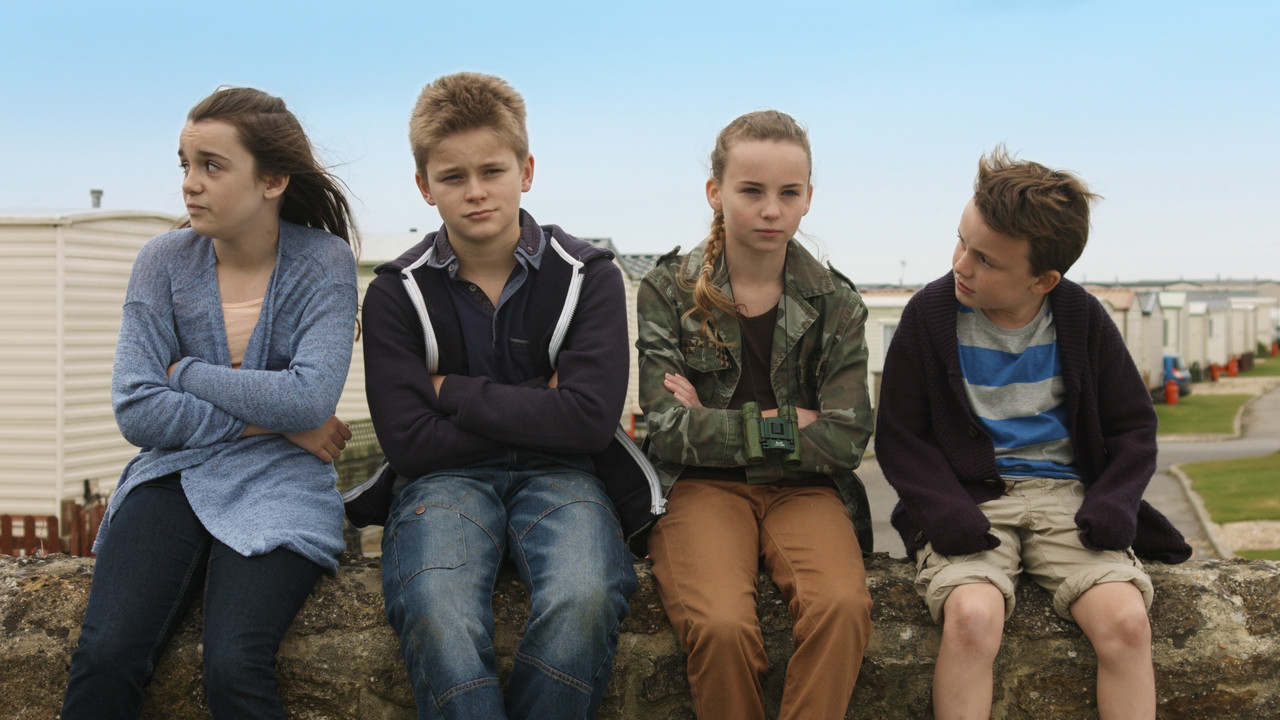
The premise is fun. In what seems to be a rather low budget seaside holiday resort a group of kids led by 12 year old Billie (Loretta Walsh) begin investigating when they believe the park's mascot has been murdered. Their chief suspect is the new manager Diane (Bonnie Wright). What the film is going for seems to be a cross between a low budget take on The Goonies and Enid Blyton's Secret Seven books. The simple clues and broadly played villains could well have worked in that context, but the film just falls down on too many other levels.

The script is a bit clunky. It plays very much to a young crowd (6+, says the LFF programme), but the jokes, juvenile or not, just aren't that funny and those that might have played well on the page aren't very well delivered. For instance, there are some potentially funny moments when the gang begin investigating and interrogate other kids, but the acting from these featured extras is so flat and devoid of comic timing that otherwise decent jokes flounder. It's perhaps no coincidence that some of the best gags are silently delivered, such as the brief glimpse of 'The Colonel' (Hattie Gotobed, as a tough, smart 12 year old girl who usually dresses in camouflage gear) competing in a princess pageant.

Loretta Walsh and Hattie Gotobed give the best performances among the young cast, they're both variable, but Walsh carries the action capably and the relationship between Billie and The Colonel is nicely played. Unfortunately most of the other performances, child and adult, are quite monotonous. This is a problem because, outlandish as something like The Goonies was, you always felt like you were along for that ride with these kids on an adventure. That should be easier to pull off here, with a more down to earth story, but it doesn't happen. The sense of watching a group of actors run through scenes never goes away.

This sense isn't helped by the film's technical side. To be fair, a disclaimer suggests that this is not the absolutely final version and that music and special effects may change yet. I hope this also goes for some of the editing, which can be oddly abrupt. The screenplay does have one resonant running theme; that this is the last year these kids will be together, you do get a sense of an end of an era for the group, and the sadness of that reality. Sadly, the mystery never grips, nor does it resolve in a way that makes much sense, and the gags seldom amuse. 

What is unlikely to shift with any changes still to be made before release is the overall televisual look. Despite a smattering of effects, Nelson Nutmeg resembles nothing quite so much as the low budget British kids shows I watched on late 80's CBBC. Even without massive financial resources, digital can be beautiful, but Nelson Nutmeg veers between looking flat and (in the handful of night time scenes) looking murky. 

My love of cinema was born at roughly the age this film is pitching to, and I still have images from those films stuck in my head more than 25 years on. I'd be surprised if kids get a frame of this film stuck in their minds for 25 minutes. I admire the ambition of Tim Clague, Danny Stack and their team, and it would be great to see more British films aimed at forging the next generation of film buffs, but if that's the intent then the films need to be better than Who Killed Nelson Nutmeg?
★★

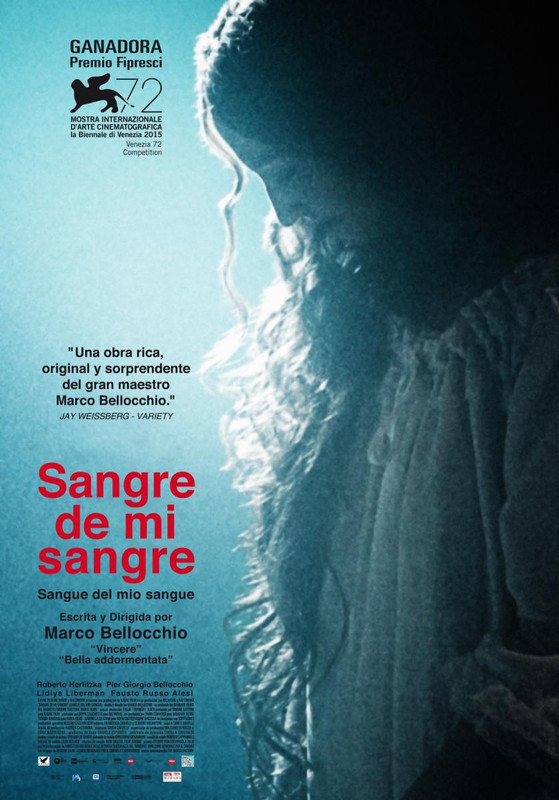
Blood Of My Blood
Dir: Marco Bellochio
The last Marco Bellochio film I saw at LFF was Dormant Beauty, which managed to tell four quite dull stories, without tying them together in particularly satisfying fashion. Blood Of My Blood restricts itself to just two stories, which are more closely tied together in terms of character and theme, but wildly disparate in tone and in quality.

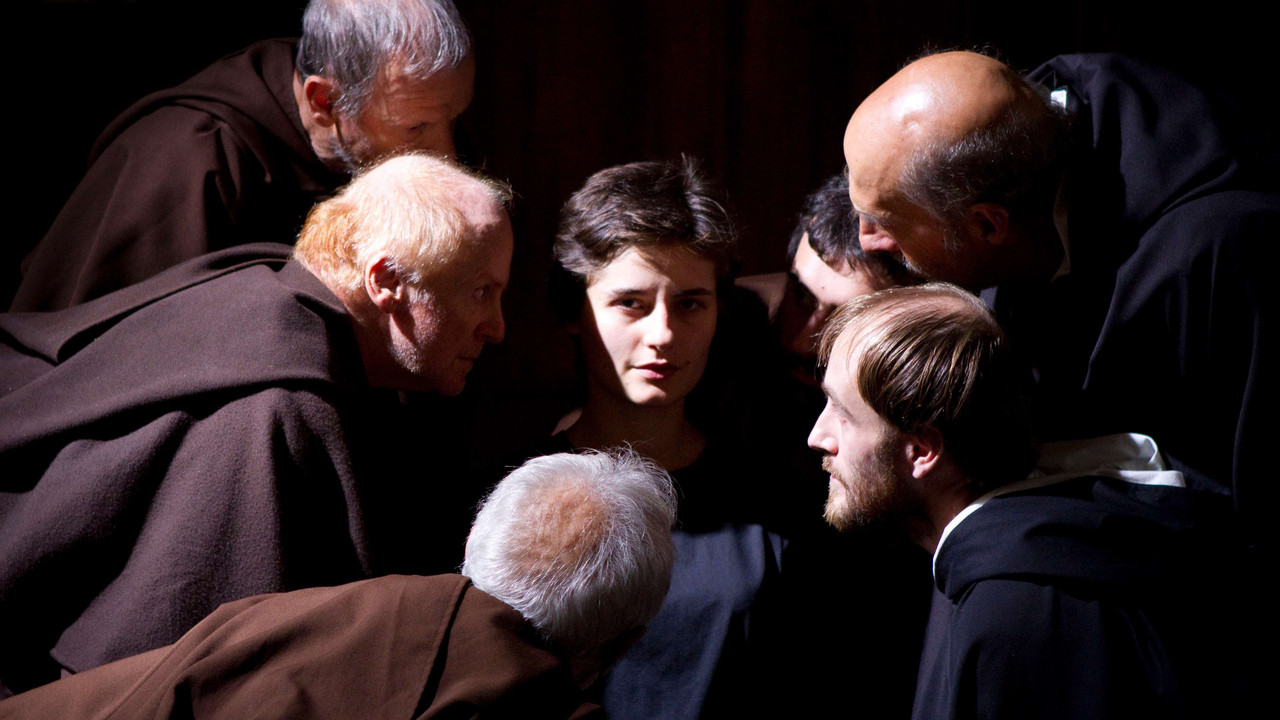
In the first story, set in the 1700s in a small Italian town called Bobbio, a young woman named Benedetta (Lidiya Liberman) is on trial in a convent, accused of seducing a priest whose suicide now means that he will be buried in a donkey cemetery and thus condemned to hell. The priest's brother, Federico (Pier Giorgio Bellocchio) is attending the trial, though, despite what he tells the priests it isn't always clear what he wants the outcome to be. We then cut to the present day. The convent in Bobbio may soon be sold to a Russian billionaire (Ivan Franek), which would greatly inconvenience the Count (Roberto Herlitzka), the self-described vampire who lives there in secret.

This is easily the most schizophrenic film of LFF so far. It begins soberly, the plot looks to history, such as the story of Joan of Arc, but it also has echoes - largely in subject rather than specifics - of Mother Joan of the Angels, Bresson's Trial of Joan of Arc and of the likes of The Devils and Mark of the Devil. The imagery is lush but not lurid, the aesthetic digital, yet still beautiful, even painterly at times (see the images of Federico standing at the bank of a river, seeing what seems to be his doppelganger silhouetted on the other side). It's a supremely controlled piece of direction, with plot, imagery, and music – the stunning use of Scala and Kolachny Brothers' choral cover of Metallica's Nothing Else Matters stands out – all coming together to create a tense and otherworldly feel. 

There is also an eroticism that runs subtly through this section of the film, as if it is a spell cast on the convent by Federico and perhaps, in the past, by his brother. We see this most clearly in the scenes of Federico returning to the guest house where he is staying with two presumably virginal sisters (Alba Rohrwacher and Federica Fracassi). One night when he comes home the sisters get into bed with him and all three begin kissing, we never see whether things go further than this, but there is the unmistakable sense of a force, whether it is under anyone's control or not, drawing these three together. 

It is, then, baffling when, roughly 45 minutes in, Bellochio appears to decide he's sick of making that film. He dumps the tension, throws out the eroticism, and replaces it with unfunny farce and a sub Only Lovers Left Alive depiction of the lives of vampires in the contemporary world. 

The entire texture of the film changes at this point. If you strain to look for it you can perhaps see Bellochio reaching to say something about the regimentation of the society of the church in the first section of the film set against the more chaotic modern world, in which that structure has had to adapt. Honestly though, I think that's more likely to be something I've made up in order to try and find some rationale for why the film so radically and suddenly changes tack. I'm not convinced it's actually in the film.


The acting is strong all round, the slightly sinister Pier Giorgio Bellocchio contributes hugely to the strange atmosphere of the period section as Federico and a haunted looking Roberto Herlitzka as The Count manages to add a little poignancy to the modern set story. The female roles are thinner, but  Alba Rohrwacher and Federica Fracassi bring ethereal presence to the sisters and striking newcomer Lidiya Liberman is by turns stoical and tragic as Benedetta.

The modern set section of the film serves a narrative purpose, it provides distance between the film's first segment and its closing images, which revisit the ending of the period section of the film in a haunting closing moment. That, however, doesn't explain the wild tonal detour that Bellochio takes, most gratingly with a small but infinitely irritating role for Filippo Timi. There is plenty of potential for this modern section to resonate, to rhyme with what's come before, but the sharp left turn into comedy completely undermines that possibility. 50 years into his career, Bellochio must know what he's doing, but he certainly doesn't communicate it well.

Overall, Blood Of My Blood is paradoxical. The first 45 minutes are probably the best I've seen at LFF so far this year, but they are fatally undermined by the second story, which seems to either not understand or flatly reject the spell cast by the first half of the film. And yet, for those 45 minutes, and for the last five minutes, I would still recommend Blood Of My Blood. I just can't do so as wholeheartedly as I'd like.
★★★

Dec 1, 2014

The Imitation Game [12A]

Dir: Morten Tyldum
The story of the breaking of the Enigma code, a breakthrough which, if it didn't actually win us the whole thing, shortened World War Two considerably, is one that should be full of drama and of rich and interesting characters.   This telling, while not especially bad in any way, never really has either of those things.

The film focuses on Alan Turing (Benedict Cumberbatch), his relationship with Joan Clarke (Keira Knightley), a brilliant young member of the team at Bletchley Park, his building of Christopher; the computer that would crack Enigma and the secret that would ultimately lead to a horrible injustice against him later in life.

If you think that suggests that the film's focus is scattered then, frustratingly, you'd be right.  While all of these elements were important in Turing's life, trying to tell them all (plus a flashback to his school days) in roughly 105 minutes discounting the credits means that The Imitation Game struggles either to find a central thread or to tell any of its smaller stories especially satisfyingly.

The fact that we all know how the story ends (both for good and for ill) shouldn't be a reason for a film to fail to engage as a thriller.  Director Morten Tyldum tries hard to bring that edge of tension to the development of Christopher, but it never comes off.  Zodiac, ultimately, is a film about men looking through information in boxes and slowly building it into a complete picture, but it's also an intensive character study of those men and what drives their obsession.  Both sides of this seem to go missing from The Imitation Game.  

Benedict Cumberbatch is perfectly fine as Turing, but the performance is never anything more than that; Benedict Cumberbatch putting on a convincing period accent and convincing period clothing to give a performance.  I got a sense that I was being told who Alan Turing was and watching re-enactments of moments from his life, rather than living inside those moments with him, which is the sense of immersion achieved by Zodiac.

We get a sense of the reason behind the building of Christopher and of Turing's drive to achieve it, but the process itself is left largely offscreen and little attempt is made to explain how the machine works.  We see the stages of its building, but not the nuts and bolts work, so the achievement doesn't seem quite as hard won as it clearly was.  Instead what we get are cliché movie moments; Turing standing in front of his machine shouting that his bosses will never understand the importance of it; papers being flung from desks in frustration.  These things may have happened but, in the context of a movie that doesn't entirely absorb you into its world, they ring false.

Cumberbatch is relatively typical of the performers here.  Like him, Keira Knightley and Matthew Goode are perfectly fine, they're not doing anything wrong, as such, but from both there is a sense that they are working very hard and that we're watching actors acting.  The only moments of naturalism come from an engagement party sequence where we get to see the staff at Bletchley interacting as people – or as close to being a person as Turing is able to get. 

There seems to be an indecision at the heart of the film about what it wants to be; a biopic of Turing or a film about the cracking of Enigma.  This leads to Tyldum and screenwriter Graham Moore trying to have it both ways.  The problem is that the film doesn't come close to splitting its focus equally, so the treatment of Turing's school days and of the framing device involving the hideous injustice of his arrest for indecency and chemical castration is almost insultingly prosaic.  There are the ingredients here for two interesting films; one about Enigma and another about Turing's arrest, trial and conviction, but both of those films would need to dig much deeper than The Imitation Game.

Decently executed though it is, The Imitation Game is remarkable only in how utterly unremarkable it is.  It's not bad, but it's also no more than a couple of notches above a Sunday night drama on ITV.
★★