Showing posts with label Documentary. Show all posts

Nov 1, 2021

24FPS @ Raindance: Youth V Gov

Dir: Christi Cooper

Even with COP26 happening right now, it doesn’t seem that enough focus is being put on the man made climate change that is already befalling our planet, and which all indications say is about to get catastrophically worse. Christi Cooper’s documentary takes a look at group of 21 young people in the US who have elected to try and do something radical about it, by suing the US government to claim that their action in supporting the fossil fuel industry, while knowing the effects it is having on the climate, infringes their right to life, liberty and property.

The film’s greatest asset is these young people, aged between 11 and 22 at the outset of the case. All of them are informed, charismatic advocates for the case. We see this both in events surrounding the various court dates during the case, and in some frankly ridiculous footage from depositions, where opposing lawyers badger them with questions that should be reserved for climate experts. We also get to see some of the details of how climate change is affecting the plaintiffs right now, from extended wildfire seasons threatening farmland, to hurricanes and floods all but destroying homes. In their downtime, we see how these young people become close, their bond among themselves and with their lead counsel seeming to strengthen their resolve when the case gets challenging.

As a film, Youth V Gov is resolutely standard in form, cutting between observed footage of trial prep, talking heads stuff be it with the kids or with experts, and laying out the history of the US government's knowledge of, and action to exacerbate, climate change. It’s informative, but the history aspect is rather dry in its presentation. Spending time with the plaintiffs is often engaging, but that gets repetitive, as do the arguments the film is making, important as they are. Cooper hammers home the point over and over again, which has the peculiar effect of making more than a few sequences feel like a pre-credits summing up. This is perhaps the influence of the case on the film; as much as the lawyers want to make their case in court, Youth V Gov ends up serving as that case in miniature, and there are several closing arguments made.

Juliana Vs United States has the potential to be a massively important case as well as (as we see during the credits) an inspiring one, but Youth V Gov gives it rather standard issue treatment.
★★★

Youth V Gov is available on Curzon Home Cinema until midnight on November 1st


Oct 11, 2021

24FPS @ LFF: All About My Sisters

Dir: Wang Qiong

Starting in 2015, 22-year-old Wang Qiong picked up her camera and began filming her family, focusing on her younger sister Jin. The story she tells across this nearly three hour canvas is about a family that, with two daughters and despite China’s one child policy desperate for a son, first tried to abort and then gave away Jin to one of her uncles, who raised her as his own. Just over 20 years later, Jin is a young mother herself and has an understandably difficult relationship with her parents (who she calls Auntie and Uncle). Qiong’s camera documents their relationship, as well as digging into a family history of abortion and abandonment.

All About My Sisters is, from the start and frequently throughout, an uncomfortable watch. It begins with Jin asking her sister what the point of telling her story is, but as that story unfolds, whether Jin knows it or not, it becomes clear that the point is not only that it is fascinating a devastatingly emotional from a singular point of view, but that Qiong uses it to unfold a critique of how the one child policy drove many people to act. Perhaps the toughest scene to watch is an interview with Jin and Qiong’s uncle, who was one of the local administrators of the policy, and recalls leaving two babies that he and his wife attempted to abort at 8 months out to die. His regret and remorse are clear, as is the implication that this was a routine part of life at the time, but it remains an horrific moment.

The film hammers home the results of the policy not just in moments like Qiong and her other sister Li’s memory of walking over a bridge to school and seeing the bodies of babies, all female, that had been abandoned to die but in a larger, and still prevalent, preference for male children, both at pregnancy and throughout their lives. What emerges is a picture of a society—or at least a section of society—that views women’s lives as almost purely transactional. There are discussions of how much the groom’s family should pay when Jin gets married, of how much families should gift when a woman gives birth to a male child rather than a female, and more besides. 

Watching Jin’s personal story is no easier. It seems clear that her abandonment has affected her both as a person generally and as a parent specifically (some of the scenes of her scolding her two-year-old son are very difficult to watch). Unsparing as Qiong’s camera is of her sister, it’s also sympathetic. She is consistently the family member noting, especially in a late conversation with their 13-year-old brother Sifan, that the situation isn’t Jin’s fault. Many of the questions she asks their brother seem a bit challenging for someone of his age to process, especially when she asks if he thinks Jin was abandoned so that he could be born; that’s a lot to put on him, but it’s a question that hangs heavy on the film and over that relationship, which despite that seems, for much of the film, the closest Jin has with any of her biological family.

For all the moments that Jin is unsympathetic, the film strives to understand the impact of how she grew up on her. She talks about the time she did spend living with her parents and her sisters as feeling “like I was a cleaner in your home”, and the way she is treated by her parents now seems defined more by financial support (an investment in a shop, which then ties her to them) than by anything emotional. Judgments and words are harsh, though to be fair this is not just towards her, at one point her father tells Sifan “you shouldn’t have been born” after he gets in trouble at school. Again though, everything that Jin’s parents are really invested in about her seems driven by money, little emotion comes through, even on her wedding day. The ending is tinged with both sadness at the fact Jin doesn’t seem to be able to find a way forward with her parents and at least a little hope at where it finds her going, and it would be nice to have an update on how she and her family are doing now.

All of Wang Qiong’s points are worthy and often devastatingly made, but it’s fair to say that all of them are made many, many times over and that by the third hour of the film it’s hard to see that she’s adding much new to the argument she’s making. This is an insightful film, and a promising debut for the young director / producer / cinematographer / editor. Next time, it might benefit her to take on fewer jobs herself, as another voice might have focused the film down a bit more, making its points land all the harder by concentrating them. There is much here that could be tightened, from reducing some of the repetitious nature of the sequences to simply trimming back some incidental shots that don’t add a lot to the narrative or the argument. I can see that there is a point to making this an exhausting watch, but after a while, it does dull the emotional punch. 
★★★

Oct 9, 2021

24FPS @ LFF: Les Enfants Terribles

Dir: Ahmet Necdet Cupur

Back in 2015, Deniz Gamze Ergüven’s Mustang dramatised life inside a Turkish family where the wishes of the parents for their daughters overrode (or at least attempted to override) just about any agency the girls could have had for themselves. Ahmet Necdet Cupur’s documentary has more than a few things in common with Mustang, with its director going home to capture family life with his parents and younger siblings, chiefly twenty-something Mahmut and teenager Zeynep.

Mahmut and Zeynep are each constantly at odds with their parents for different reasons. Mahmut wants to leave his arranged marriage to 17-year-old Nezahat, not because of any fault on either of their parts, he simply doesn’t love her. Zeynep, on the other hand, just wants to further her education, to go to university in the nearest city and to live life on her terms rather than be bound by her parents’ traditions. All this makes for a volatile atmosphere in the house, something we see from the very start when an innocuous joke sends the siblings father into a violent rage. Throughout the film, Ahmet observes in close-up detail, but without seeming to impose himself on what he’s filming. Given that this is his family, that balance must have been challenging to find, but it means that the end result feels fair, if never dispassionate, in how it depicts everyone.

Later sequences demonstrate just how ingrained tradition is in Mahmut and Zeynep’s parents, especially when it comes to seeing women as inferior. In one of the film’s most quietly shocking sequences, Zeynep first debates then more stridently argues with her mother about why she so desperately wants to be educated, trying to get through to her that women have just as much value and should have as much choice of what they do, as men. Frustrated, she finally says “Studies or death, I’ll die if I don’t”, only for her mother to come back with “Death then”. It’s so haunting, so sad, summing up in two words the seeming impossibility of squaring their points of view. The image that closes this scene; Zeynep resting her chin in her hands, looking away as her mother prays, strikes me as the defining one of the film.

Mahumut’s problems have more ramifications for others, chiefly Nezahat, divorced at barely 18. We do see that Mahmut cares about her to some degree, at least expressing concern about her family “giving her to an old man” because she has lost her value. This, as it was in another film at the festival, is a running theme; women being valued as commodities, and there is much discussion of what will have to be paid for Mahmut to go through with the divorce.

As dark as the film can be, chinks of hope come through by the end. “I think a person is like a tree, says Zeynep, so intelligent and expressive throughout the film. You can only hope that she and Mahmut both get to put their roots down where they want to, and grow from there.
★★★★

Mar 25, 2021

24FPS @ BFI Flare 2021: No Ordinary Man

Dir: Aisling Chin-Yee, Chase Joynt

I knew a little about Billy Tipton going into this film, which is to say that I basically knew the précis of what we discover is a rather controversial biography of him. It goes like this: Tipton was a trans man who was a fairly successful jazz musician in the 1940s and ’50s, and it was only with his death in 1989 that either the wider public or his wife and adopted children discovered the so-called ‘real’ identity he had been ‘hiding’. To be a hundred percent clear, there I am using the language of coverage at the time and that biography, trans men are men, trans women are women.

This documentary is, on its surface, a deeper telling of the story of Billy Tipton—a telling that acknowledges and celebrates his identity—but it is also much more than that. Aisling Chin-Yee, Chase Joynt and co-writer Amos Mac scrutinise and criticise the way Tipton’s life was framed in coverage after his death as, essentially, a long-running deception of the people around him. One clip, from a news show on E!, has sinister music behind the story, as if it’s something from a horror film. It’s worth noting that this characterisation of Tipton is rejected by his wife and son in archive footage, and by his son in new interviews for the film. They also relate that to the way trans identity is seen and talked about today “If I tell you who I am, I’m not lying” says one interviewee. More than that even, No Ordinary Man explores the issue of the erasure of trans history, and how that plays into the need for trans visibility and representation.

One of the way the film digs into these subjects is through auditioning trans actors to play Billy. The conceit reminds me of the documentary Casting Jon Benet, but it has much deeper resonance here because the directors talk with their auditionees about Tipton, what they already knew of his story, and how it relates to their own experiences. There are several great virtues to this idea, first, it completely gives the lie to the idea that cis people keep getting cast in trans roles because of some lack of talented trans actors, but much more important is the insight into how things are both different and the same for trans people now as when Tipton was alive.

The audition sequences are some of the film’s most riveting material, never more so than when the actors are playing out a sequence that seems mysterious to begin with. In it, Tipton indicates that he recognises something about a DJ he had never met before. It turns out that this is an imagined version of the only time that we know of that Tipton met another trans man. When the actors know this it entirely reframes the performances and leads to some deeply moving moments in which one in particular is overcome with the emotion of knowing that, just for a moment, Tipton knew he wasn’t the only person like himself. This, as much as any moment, show us the value of representation because that empathy just can’t be acted, and it’s a moment that must provoke empathy in its audience as well.

No Ordinary Man is a fascinating film about identity. I’m sure it will be a film that trans audiences identify with, and for cis audiences, it lays out so many nuanced issues of trans identity in such a directly emotional way, while also telling an interesting biographical story, that you can’t help but have a lot to reflect on long after the credits roll. 
★★★★½

Nov 25, 2020

2020 Catch Up: Vol 1

As this long, generally awful, and for cinema notably strange year starts drawing to a close, I come to a familiar part of my process: list time. Each year around Christmas I put out my personal best of the year, and each year I try to play catch up with some of the releases I either missed or need to revisit before finalizing the Top 10 or 20 (probably 20 this year), so here is the first of what should be a series of short(ish) reviews of some of those catch up screenings.

Legacy of Lies
Dir: Adrian Bol
I'm not going to pretend that Scott Adkins the actor can do the kind of emotionally heavyweight work that, say, a Michael Shannon can. On the other hand, in his niche of direct to video action films, he's one of the best. He's got more acting range than a Jason Statham and is considerably more accomplished in the action scenes, he really should be a more mainstream name. That's not to say Legacy of Lies is the best argument for that idea.

The plot, on the vanishingly small off chance that you care, is the usual guff about the bad guys (Russians and/or the CIA in this case) wanting 'the files' that Adkins' Martin, a secret agent turned MMA fighter/bouncer was tasked with protecting 12 years previously. On that mission, Martin's partner was killed, which has left him with a now 12-year-old daughter, Lisa (Honor Kneafsey), who is kidnapped by Suzanne (Andrea Vasiliou), in order to bribe him to get the files.

Shot in Ukraine, Dutch director Adrian Bol's second feature doesn't appear to have the budget to elevate itself much beyond typical DTV fare, though some location shooting does at least give us a bit of a sense of place for Kyiv (the same is not true of any attempt to convince us we're in London in the first act). Adkins doesn't stretch his acting muscles much here, but Honor Kneafsey, so good in the lead voice role in the forthcoming Wolfwalkers, is pretty good as Lisa and she brings a little more emotion out of him in some of their scenes. The bad guys, and Yuliia Sobol, as the daughter of another of Martin's former fellow spies, don't have much opportunity to do more than advance the plot with Bol's generic dialogue.

All this said, Legacy of Lies is still a fun watch. Adkins is seldom less than an engaging presence, and he carries this nonsense fairly well. What matters though, is the action. Fights pepper the movie throughout, with a decent mix of gunplay and martial arts, but definitely more emphasis on the latter, playing to Adkins' strengths. An early MMA bout serves little plot purpose but is one of the film's better punch ups and a mid-film set piece pitting him against (I think) one of the CIA guys is also particularly solid. The editing could be a little more sedate, but the fights are generally well shot; punches and kicks feel like they land hard, and we can generally see what's going on.

When it comes to a film like this, I'm not overly demanding. Legacy of Lies doesn't have the most riveting plot, but it's well enough acted not to be risible, has enough action that it's never dull and is shot proficiently enough that watching the fights is fun. That's doesn't put it up with the Ninja films, Avengement or the peerless among DTV actioners Universal Soldier: Day of Reckoning among Adkins' best, but it's enough to recommend it to his fans.
★★½

Blackpink: Light Up The Sky
Dir: Caroline Suh

It's fair to say that in the last couple of years, having had a brief flirtation with the mainstream back in 2012 with Psy's huge hit Gangnam Style, K-Pop has become a massive force in global pop culture. This can largely be put down to the massive crossover success of the boyband BTS, whose fans apparently sabotaged one of Donald Trump's rallies earlier this year by booking tickets en masse, making him humiliatingly take down an 'overflow' stage outside the venue. No other group seems to have achieved this sort of cultural crossover
—at least to someone like me, who hasn't followed mainstream pop music closely in at least 15 yearsexcept possibly Blackpink.

Caroline Suh's documentary catches Jisoo, Jennie, Rosé and Lisa on the cusp of and during their 2019 world tour, but also takes a look back, filling in the background of each of the girls and their training under the YG Entertainment system, as well as capturing the relationship between them as bandmates and friends.

Glimpses of the girls auditions, their stories of the gruelling training regime at YG, with 14 hour days spent drilling the same routines and songs prior to a monthly ranking, and the archive footage showing their development over as much as six years before Blackpink's debut is the most interesting content here. It's the point at which we sense the least filter, and yet it still feels as though these sequences only scratch the surface of the story behind the factory-like atmosphere at YG and other talent agencies like it. Several of the girls talk about having felt lonely, or sad at knocking their friends out of the process, but there is definitely a whole film to be made diving more deeply into this world.

The rest of the film is really for fans. Jisoo, Jennie, Rosé and Lisa all come across well, their friendship shines through in all of their interactions, with each of them often running into the others as they finish each others sentences. The bits on their background give some insight into why they might have bonded so quickly, with Rosé and Lisa both coming from overseas (New Zealand and Thailand respectively) and Jennie having lived and gone to school in New Zealand for five years, giving them an international makeup that apparently isn't common among K-Pop bands. It's also clear that they work ridiculously hard, which shows in the footage from their accomplished live shows, and particularly the one at Coachella; their first in the US.

At 79 minutes, Light Up The Sky is brisk and breezy. There are glimpses beneath the surface, but there is definitely a feeling that this is argely a PR product. The girls talk about beng tired and having to make sacrifices to work so hard, but little is allowed to puncture what is a very light and sunny tone. I wonder if, some years down the line, we will see a more warts and all portrait of what goes in to making Blackpink the hugely successful machine it is. Still, this film will be enough of a look into their world to delight fans and perhaps to win them a few more, if what relatively little of their music we hear grabs a few casual viewers.
★★½

Oct 8, 2020

24FPS @ LFF 2020: I Am Samuel

I Am Samuel
Dir: Pete Murrimi

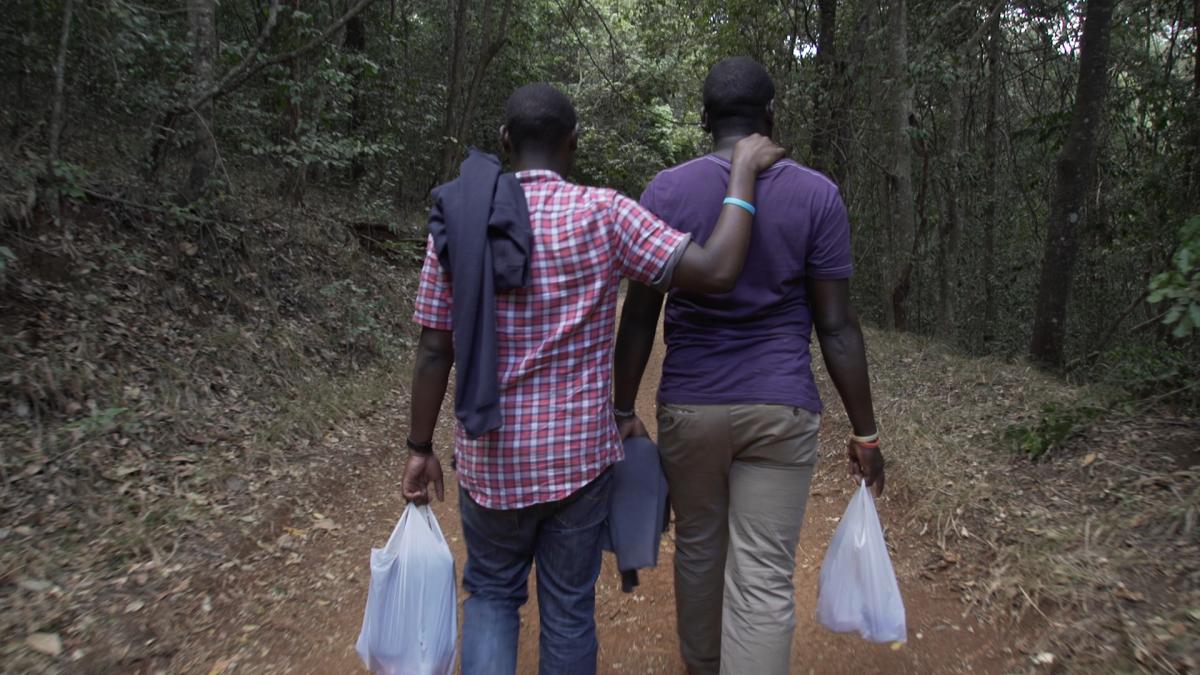
Kenya is not a good place to be part of the LGBT+ community. Not only is there a huge stigma, but gay sex is illegal, punishable by up to 14 years imprisonment. That's the context in which Pete Murrimi's camera follows Samuel, a 26-year-old gay man, his partner Alex and looks at their relationship with each other, with their friends, and Samuel's relationship with his parents, both before and after they discover that he is gay.

The film gets up close with both halves of its central couple. We don't see Alex's parents, because they have all but disowned him. In an interview that encapsulates many of the struggles of being gay in this kind of society, Alex talks about how he thinks his father may have hired people to "teach him a lesson". Later on we also see the couple moving, after Alex has been attacked, though whether this is connected to what he believes about his father isn't entirely clear.

As befits its title, I Am Samuel doesn't dig deeply into the wide societal issues of being gay in Kenya. The roots of prejudice are perhaps glancingly seen in Samuel's dad's preaching, but Murrimi doesn't probe this, he's clearly more interested in Samuel and Alex's life together and how they find moments of levity. One of the most joyous of these is on the couple's first anniversary when they hold an engagement ceremony with all of their friends. It's a sweet moment, filled with love.

I Am Samuel could definitely be deeper, it's frustrating at times that Murrimi seldom asks questions, especially of Samuel's parents. It's also frustratingly short at 67 minutes and there is the feeling that some of the deeper questions could be more fully addressed with a slightly expanded running time. As it is, the sadness and threat that can encroach on Samuel and Alex's relationship lurks around the edges of the film, but it's refreshing to be able to share in their happier moments.
★★★

Jan 31, 2020

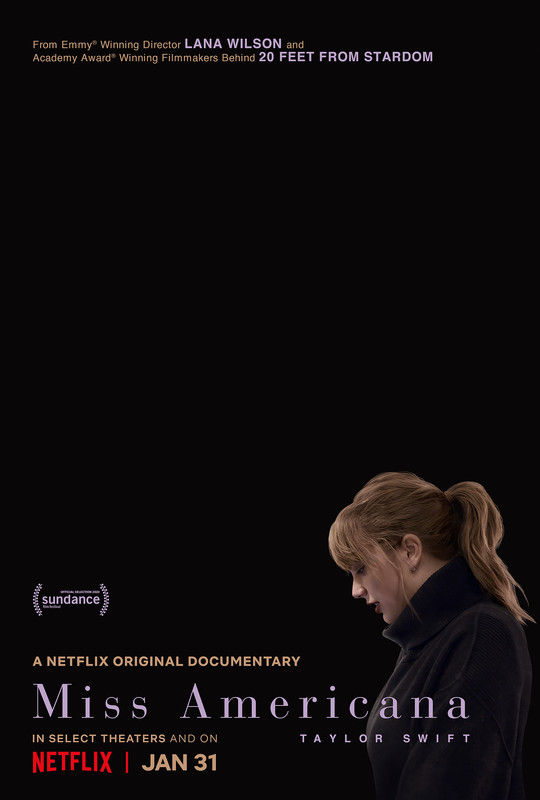
Miss Americana

Dir: Lana Wilson
Among my peers, being a Taylor Swift fan is perhaps not the most fashionable position I hold. I am a fan though. Particularly since her third album, Red, I’ve found her a talented songwriter with a knack for a well-turned lyric and, even when the record doesn’t work (as Reputation, for me, largely didn’t), her tendency to wear her themes on her sleeve means that she’s seldom less than interesting.

Lana Wilson’s documentary picks Swift up after the release of Reputation, and follows her through some of that tour and the writing and recording of her most recent album, Lover, while also looking back at her whole life as a performer. It’s a lot to try to do in 85 minutes.

Surprisingly for a film about someone who has spoken on a global scale for over a decade, Miss Americana’s overarching narrative is largely about Taylor Swift finding her voice. Swift has always been confessional in her songs, writing about boyfriends and breakups, about haters and feuds. Despite this, until an intervention in the 2018 midterm elections, she’d never (aside from supporting her LGBTQ fans) taken clear political positions, leading some on the right to assume that she was on their side and simply afraid to say so, because of potential backlash. 

Some of the film’s most interesting material addresses this shift in Swift’s public engagement. We’re told how the sexual assault court case, in which she counter-sued a DJ who had been fired after he inappropriately touched her during a meet and greet, and then sued her for damages, was the tipping point for her wanting to speak out on politics on a bigger scale. This sequence leads into one of the few extended performance clips in the film, of Reputation highlight Clean. That song was always clearly about the case, but seeing them juxtaposed so closely lends even greater power to the performance. 

We also see how nervous this new political engagement makes Swift’s team, with memories of what happened to the Dixie Chicks’ career after they said a single sentence speaking out against George Bush, and the eventual result when she does put out a statement. This material is some of the film’s most honest, and it really does seem as though a switch has flipped in Swift when she’s talking about it. Early interviews (often used as voiceover) say all the right things, as she talks about always looking for—living for—approval, but these interviews feel a little stiff, like she’s trying very hard to make sure that every word sounds right. Later scenes and later interviews make very plain why she is so on guard. It feels as though a breakthrough comes in the writing of The Man, a standout track from Lover that imagines how people (the press in particular) might talk about Swift if she did all the same things, but were male. Set against an interview used as voiceover late in the film about the pressures and requirements that come with being female in the entertainment industry, that song gains even greater resonance as a woman working out what she wants to simply say, in the mode she’s always been most comfortable communicating in.

This material is honest, and shows a side of Taylor Swift that we’re not used to seeing. She also exposes other vulnerabilities she hasn’t acknowledged before, notably an eating disorder, which she now appears to be dealing with in a healthy way. For all the honesty though, this film does still feel like it is maintaining a carefully curated image. It plays like an approved product, eliding over some more uncomfortable moments (notably much of the Famous controversy with Kanye West) and not delving into the degree to which Lover feels like a naked course correction from the darkness, and sometimes the pettiness, of Reputation. This isn’t to say director Lana Wilson fails to get her subject to open up, but it does have a feeling of butting up against how much Swift wants to reveal: thus far, Miss Americana (both film and person) says, but no further.

The only times the film and Swift seem to fully escape this feeling of stage management is when they are fully embedded in the making of music. This is when we see Taylor Swift, seemingly, truly happy; humming melodies for producers to help her work on, filling in missing bits of lyrics, and the moments of joy when she feels she’s hit on something. Whether her music is for you or not, I think it would be tough to watch these sequences and say she doesn’t work hard at her craft or that she’s not doing exactly what she does best.

Neither Taylor Swift or Miss Americana are perfect, but they both have something to say, and they will likely both speak to a big audience who might not otherwise engage with these ideas in the same way. There’s a lot to be said for that.
★★★½

Nov 5, 2019

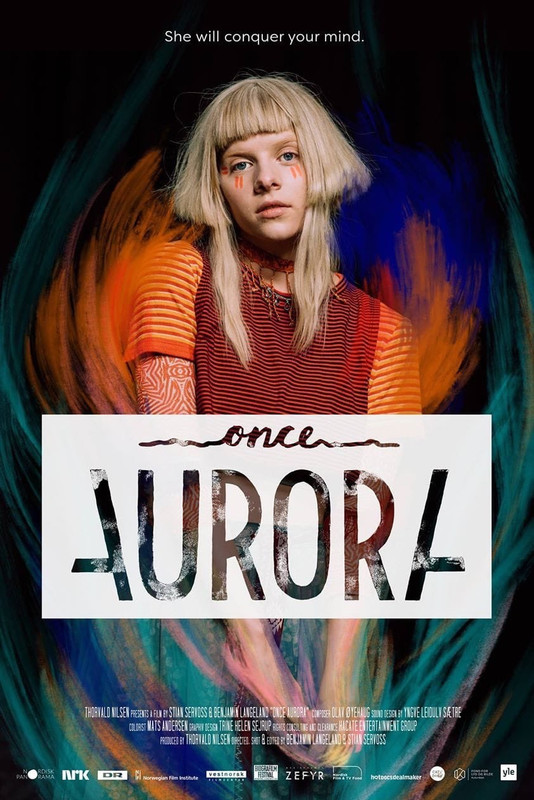
Doc N Roll Festival 2019: Once Aurora

Dir: Benjamin Langeland, Stian Servoss
It seems early in her career for there to be a documentary focused on Aurora Aksnes, particularly one in which she talks quite so much about legacy, but there has always been a certain precocious feel about this Norwegian girl, discovered when a video of her singing a self-penned song at a school concert went viral and launched into the grind of becoming a pop star at just 16. This film catches Aurora at 20. Her first album, All My Demons Greeting Me As A Friend has met with great success, but directors and childhood friends Benjamin Langeland and Stian Servoss find her conflicted about the album, success, fame, touring and, even as she works on her second album, whether she wants to be an artist at all.

Langeland and Servoss clearly had totally unfettered access to Aurora, whether at home, in the studio or on tour. The result of this, along with her comfort with them, having known them for so long, pays dividends. We all know that interviews with famous people are, to a degree, them putting on a character. Once Aurora captures a much different version of the singer than the one we most often see in public. In some ways, the Aksnes we see here seems less secure, delicate in a different way to the thoughtful but somewhat flighty person presented in interviews (many comments tend to describe her as a pixie or a fairy). It can be difficult to watch the film as we see her struggle with the demands of this world she still seems unused to. One moment captures her locked in the bathroom, her hands shaking in what appears to be some kind of anxiety attack as she prepares to deal with yet another influx of people. Another finds her looking to her drummer (and former producer) for support when faced with a fan meet and greet. 

This isn’t to say that we find Aurora either ungrateful for her success or incapable of enjoying it. We’re privy to both joyful and challenging moments in the crafting of her second album. There are carefree moments like the opening sequence of her recording found sounds in the old French stately home where Infections of a Different Kind was recorded and some truly beautiful raw takes of the recording, but also an amusingly strained moment as she tries to explain to a largely male crew how a certain song should sound and feel like an orgasm.  

This is an especially good film about the effect of fame on someone who didn’t expect and never seems to have chased it. We get a few insights into the support network around her, from the more mercenary workings of the record company, to a proud and supportive family and even down to an algae ball she seems to find a comfort but even so, the film made me feel protective, even a little guilty, as one of the fans helping drive this career Aurora seems so unsure about. Happily, we get the feeling that by the end of the film, as she’s able to exert a little more control over her music, this is dissipating and that she is finding more joy in the process as well as in the experience of her fans.

For fans, Once Aurora is a goldmine. It shows the artist they are familiar with but in a much deeper and more rounded light. It' not always an easy watch, but if you are willing to engage with the complexities of how we see Aurora feeling then it’s a thought-provoking film as well as a revealing and welcome insight into one of the best musicians the modern pop scene has to offer. 
★★★★

Sep 28, 2019

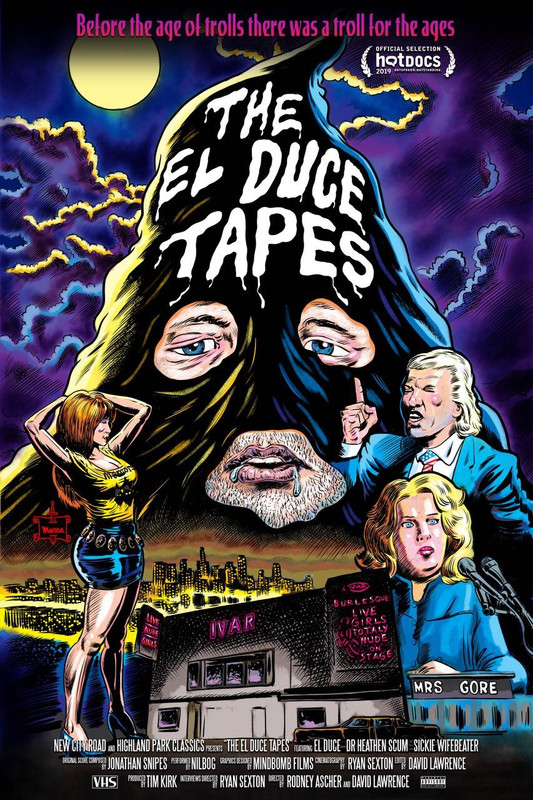
24FPS @ LFF 2019: The El Duce Tapes

Dir: Rodney Ascher / David Lawrence / Ryan Sexton
Composed of documentary and interview footage taken in the early 1990s by Ryan Sexton as he followed extreme punk band The Mentors and their lead singer El Duce, this documentary takes an unflinching look at a man who seems always to have wanted to kick against societal norms. The punk scene has never been my thing, and The Mentors, with their muddy sound and often brutally misogynistic lyrics, aren’t the band to change that but that’s not what makes The El Duce Tapes an interesting film.

Often I’ll say that a film being unsure what it wants to be is a fundamental problem, but in this case it’s perhaps the most interesting aspect of the way that co-directors Rodney Ascher and David Lawrence have chosen to assemble Sexton’s footage (which is clearly out of order). Is it a portrait of a truly disgusting human? Is it about a satirical enacting trolling the world in the pre-internet age? Is it about the sad decline of a man who hid his insecurities beneath extremity in all things? The answer is that it’s probably all of those things, and all the more interesting for that.

El Duce’s real name was Eldon Hoke and apparently he started out as a troubled kid who played the drums to get his aggression out, initially interested in playing jazz fusion music with his high school friend Steve Broy, who became the bassist for The Mentors, under the stage name Dr Heathen Scum. By the time Ryan Sexton began filming him, Hoke was decribing his music as ‘rape rock’, playing in dive bars and small clubs, so drunk that his previously impressive drumming skills would often desert him on stage. El Duce sometimes seems like a persona; a monster that Hoke has created to say the most offensive things his mind can vomit up. Some of that is contained in songs like Four F Club, Free Fix For a Fuck and Golden Showers, extracts of which were read at the congressional that helped lead to the introduction of the Parental Advisory sticker. 

That could be passed off as a pose, but it’s tough to reconcile that with interview footage where Hoke talks about being fine with non-violent rape, gives Nazi salutes and proposes a border plan that starts off sounding like Trumps border wall, then devolves into his voters’ violent wet dream. We never see enough of a gap between this Hoke and whatever ‘real’ person he’s masking to be entirely comfortable with the idea, advanced by the much more outwardly sober and thoughtful Broy, that his friend is purely putting on an act to find an audience for his music.

The part of the film that spends most of its time allowing El Duce to perform, onstage and off, can get wearing. The barrage of disgusting lyrics and hateful bile spilled in the interviews is only slightly leavened by Hoke’s more reflective moments and Broy’s more analytical approach. It’s a surprise, then, that the film does turn inward in its third act. I may not ever have wanted to hang out with Eldon Hoke, but watching his decline as he lurches ever further into the extremes of alcoholism is still sad on a human level. Most depressing are extracts from a videotape made a few years after Sexton stopped filming El Duce, which see Hoke completely out of it at a party, being dragged out of the room, half naked, by his friends. Obviously, the story doesn’t have a happy ending.

What begins looking like a compendium of ugly moments ends up being a surprisingly penetrating and often sad document of a troubled life. It always feels like there’s more to be found out, but Hoke’s walls are too solid, whether it’s consciously a character or not, he’s too hidden behind El Duce for us to ever really know him.
★★★½

Sep 23, 2019

24FPS @ LFF 2019. Day 7

Olla
Dir: Ariane Labed
In 2010 and 2011, Ariane Labed burst on to the international film scene with leading roles in Athina Rachel Tsangarai’s Attenberg and Yorgos Lanthimos’  Alps. It is perhaps no surprise then that this half-hour short, her debut as a writer/director, should bear their influence. 

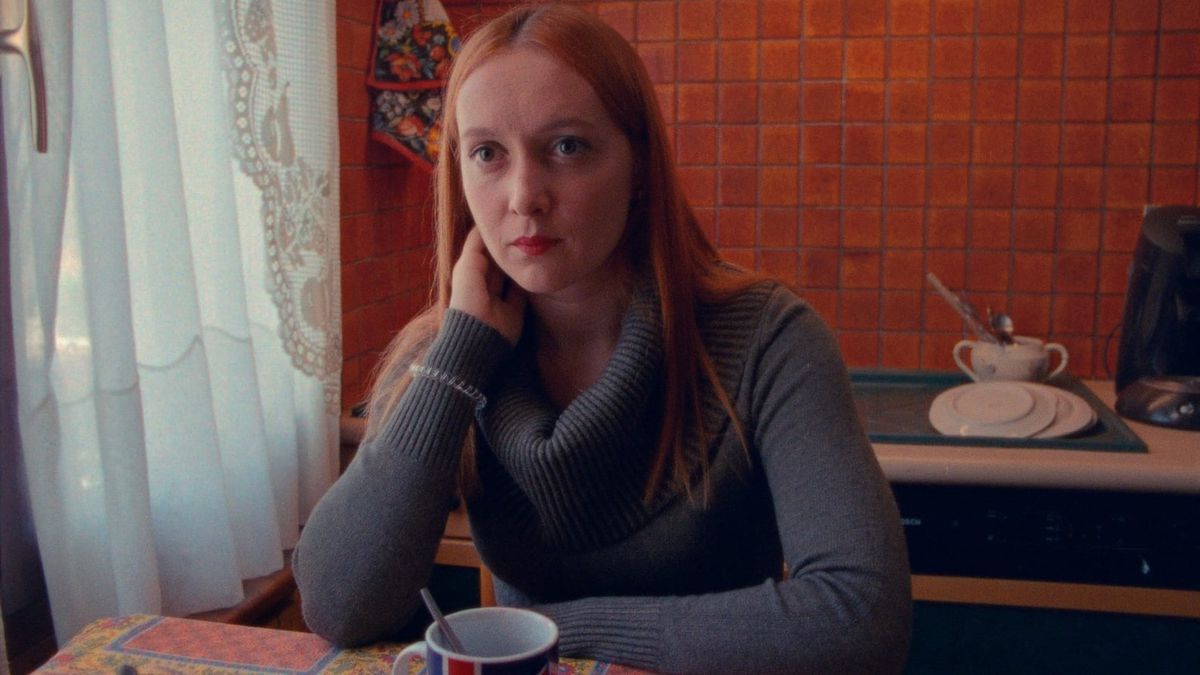
Olla (Romanna Lobach) has just arrived in France from Ukraine to live with Pierre (Grégoire Tachnakian), a man she met online and his infirm and elderly mother (Jenny Bellay). Bored, cut off from Pierre by the language barrier, and clearly annoyed by his suggestion that she be called Lola so she seems less like an immigrant, she ventures out of the house and ends up doing more than exploring the town. 

Though the deadpan black comedy and sometimes stark shooting style recall her collaborators work, Ariane Labed is no karaoke director. Most notable in her style here is an often bright and bold colour palette (starting with Olla’s striking red hair) that sometimes acts to undercut the darker elements of Olla/Lola’s experience. That said, there are moments that showcase the same sense of humour and stylistic influence of Lanthimos or Tsangarai. Most notable among them a one shot sequence in which she practices dancing, Pierre’s mother impassive in the chair as Olla gyrates to a foreign version of What is Love. Another darkly funny touch comes in repeated sequences of Olla being catcalled, the group of men all shouting in unison, first telling her how hot she is, then yelling that she’s a slut. The repetition turns them into something like a greek chorus, but also allows Labed to make a serious point about how women are often made to feel they are always on display.

At just half an hour, Olla doesn’t quite have enough room to grow. A feature version could flesh out the various plot points, especially the relationship between ‘Lola’ and Pierre, but this is a strong debut for Labed, anchored by a very good performance from Romanna Lobach and points to promising things from both of them.
★★★½

Cold Case Hammarskjöld
Dir: Mads Brügger
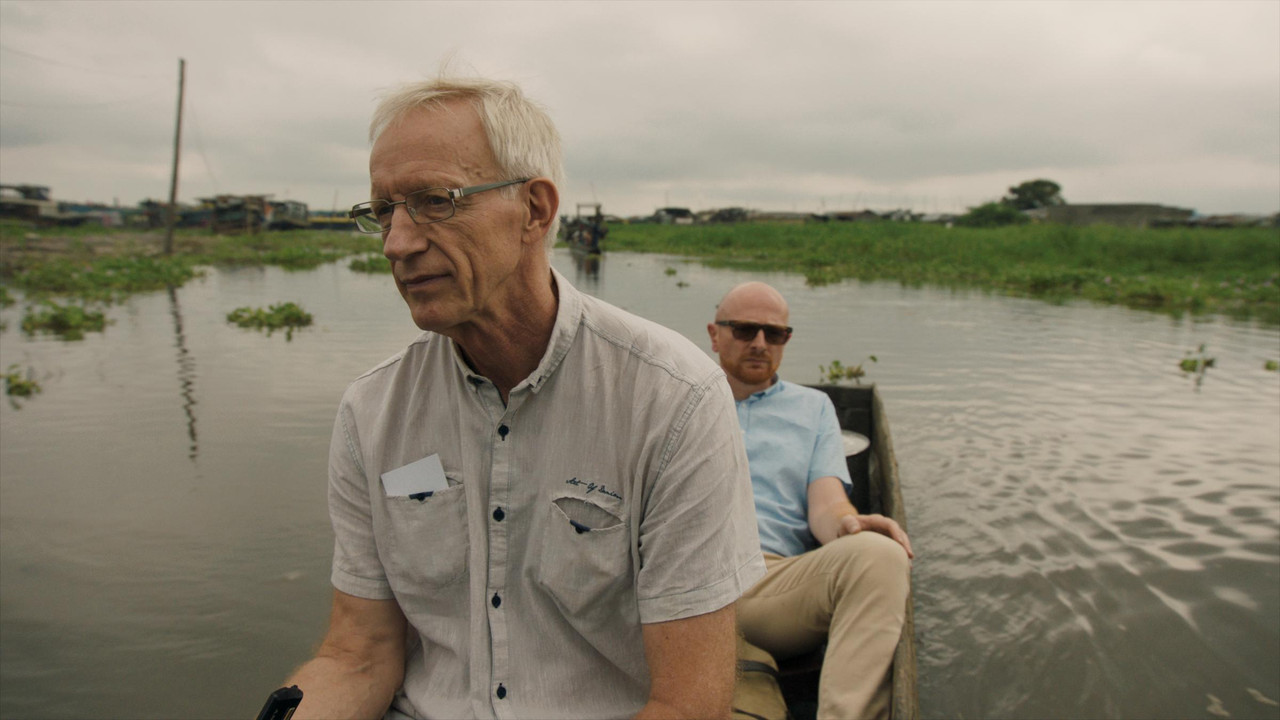
Through Netflix and a mass of popular podcasts, the true crime documentary has become one of the dominant forms of non-fiction storytelling in recent times. That is, in a way, what Cold Case Hammarskjöld begins as. The setup has director Mads Brügger and Swedish private investigator Göran Björkdahl reinvestigating the suspicious death in a 1961 plane crash over of UN Secretary General Dag Hammarskjöld. As Brügger admits right up front, this may be a very dark and far reaching crime, or it may simply be a tangled conspiracy theory.

There is, buried somewhere in this film, a compelling (potential) murder mystery. It definitely seems that the official story of Hammarskjöld’s murder is at best incomplete and deserves further and more rigorous and public investigation. Unfortunately not only does the film get distracted frequently, venturing down multiple rabbit holes, it also presents the central thrust of the mystery it sets out to investigate shockingly poorly. Throughout, Brügger uses a framing device that sees him have two (why two? he doesn’t know) secretaries type up the narration for the film, as we see him speak it. This totally redundant device slows the pace of the film badly, and only ever serves to restate things that it would be much better off simply presenting to us from the documentary and interview footage gathered.

The first half of the film is incredibly dull, with only tiny bits of information sneaking out between sequences of the director apparently structuring his film as we watch it. This might be less irritating if he structured it better. The second half of the film is more compelling. Brügger delves further into the South African Institute of Maritime Research—a shadowy mercenary and spy organisation that may have had a hand in Hammarskjöld’s death and other even darker crimes. He does manage to clearly establish that this organisation existed, but everything else is on very shaky ground. The one person he’s able to talk to at length tells a good story, but offers nothing to back up what he says, and worked for SAIMR decades after the plane crash that killed Hammarskjöld. Even this content is frustrating though, with Brügger fixating on details like how the man he believes was the head of SAIMR dressed completely in white at all times.

Again, the film can’t concentrate. If the rabbit hole it explores in the second half is true, then it’s one of the biggest and most disturbing scandals I’ve ever heard of, which is why it needs far better sourcing. What Brügger does is less robust investigation and more speculative join the dots. We see things laid out as note cards, but it wouldn’t be a surprise to find this film laid out on a conspiracy theorist’s wall, with red string joining the various elements up.

Strip out the self-indulgent framing device, impose a robust structure and concentrate on the one thread of the story that the film at least manages to pose relevant and important questions about and there might be a solid podcast episode or short documentary in this cold case, but the pure theory that surrounds it and the terrible presentation means that, at two hours, this is a largely unedifying test of patience.
★½

Sep 20, 2019

24FPS @ LFF 2019. Day 4

Clemency
Dir: Chinonye Chukwu
The death penalty, as it is practiced in the US, has long been a favoured subject in film. This is one of three death penalty dramas to have done the film festival rounds recently (true stories Trial By Fire and Just Mercy are awaiting UK release, the latter is a late addition to this year's LFF). It’s not hard to see why; the issue raises passions on both sides and the drama is inherently high stakes and emotional for all the characters.

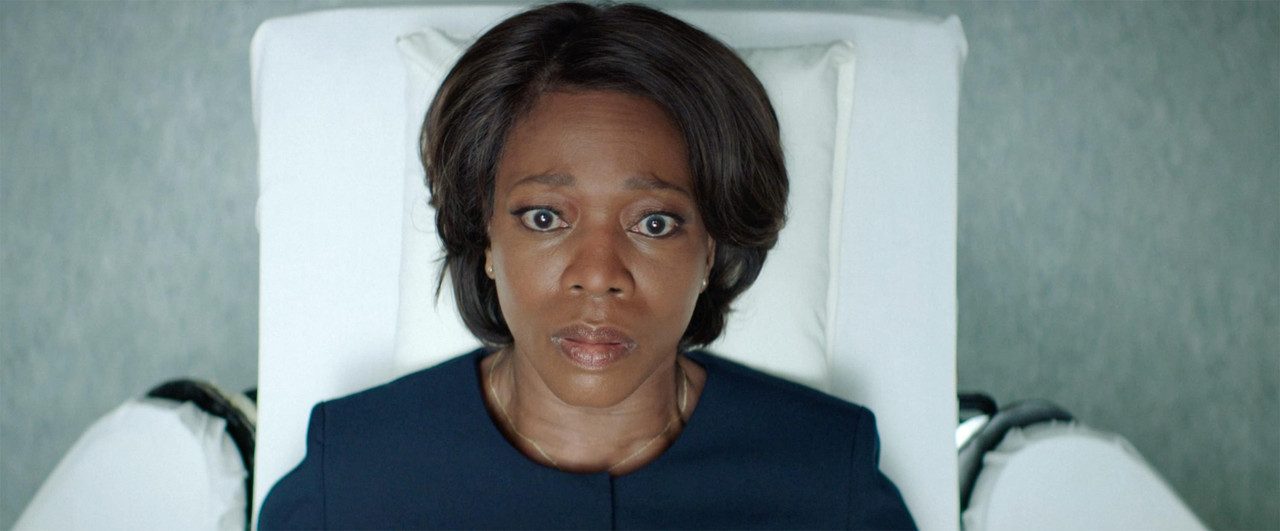
Clemency takes a different angle on the drama than most films, putting Alfre Woodard front and centre as Bernadine Williams, a prison warden in an unspecified state. The last execution she supervised was botched and now Bernadine is having trouble coping: she can’t sleep and seems conflicted about the upcoming execution of Anthony Woods (Aldis Hodge), whose conviction may have a few doubts hanging over it.

In her second feature, writer/director Chinonye Chukwu strips a lot of things back. She knows when to simply let the camera sit, to allow the actors to carry a moment purely in their faces rather than attempt to emphasise things with cutting or dialogue. This is an all too rare quality these days, and it raises Clemency above a fairly run of the mill screenplay and only light engagement with the real world issues that lie behind this fictional story.

Chukwu is aided in her focus on performance by a clutch of fine actors who allow their feelings to rage under the surface while clearly trying to keep it all in check. Most notable among them is Alfre Woodard, a great actor who ought to get more roles that utilise her talents like this one. The somewhat cold control she shows to the outside world on the surface is gradually and credibly cracked, up until a late close up which is a brilliant depiction of someone whose emotions are trying to escape from her every pore, but which can’t be shown in that moment. In many ways, her performance is much like that of Aldis Hodge, whose Anthony Woods is also a person who doesn’t want to show his vulnerability to the wrong person at the wrong time though he, more than her, has a few moments at which the dam simply has to burst. The characterisation of Woods isn’t especially deep, but Hodge plays him effectively, as a man who probably feels the cage he’s in is half of his own making, but that the other half being there is deeply unfair, and fully cognizant that he’s very unlikely to escape it.

The supporting cast is full of talent, with Wendell Pierce the standout as Bernadine’s husband, who seems both concerned and impatient with her struggles. One scene, when they talk at the dinner table about their marriage, quietly brings out the best in both performances.

While the performances make Clemency intermittently powerful, the film as a whole can’t get past the fact that while the angle may have changed somewhat, this is a story we’ve seen many times before. The third act in particular suffers from a thudding inevitability that isn’t helped by Richard Schiff’s stock character and equally stock performance as Anthony’s lawyer. By never exploring what exactly went wrong with the execution the film, while clearly inspired by them, misses the chance to engage with live issues in the death penalty debate like states experimenting with different drug cocktails because companies are refusing to supply the standard execution drugs. 

Alfre Woodard will be justly acclaimed for her performance here and the film should also act as an effective calling card for Chinonye Chukwu, but perhaps next time it would be interesting to see what she can bring to someone else’s screenplay, because that’s what lets the side down here. 
★★★

Coup 53
Dir: Taghi Amirani

Politics at the moment is essentially a 24 hour global anxiety attack and it can be difficult to see past that. However, as with anxiety, it is worth trying to look underneath the symptoms for the cause and that, at least to some degree, is what Taghi Amirani is doing with Coup 53.

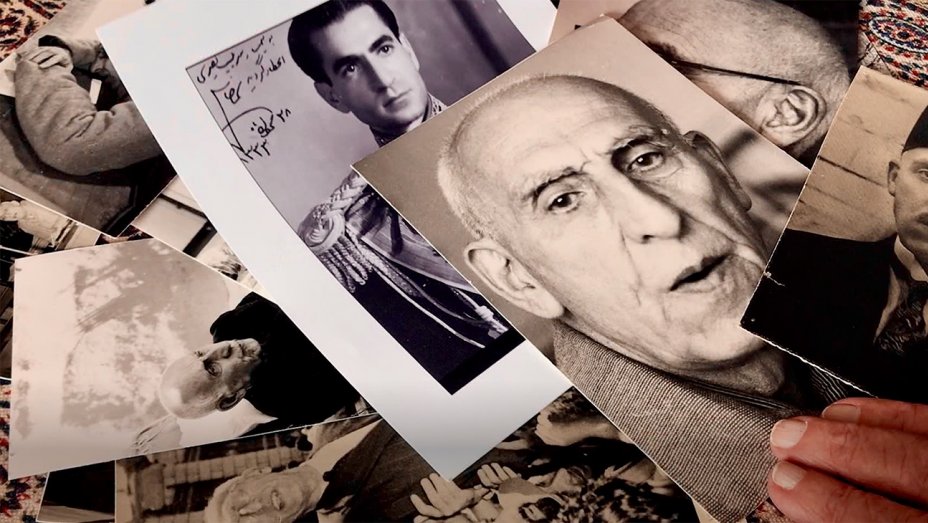
More than a decade in the making, the film explores the 1953 coup, led by MI5 and the CIA, to depose Mohammad Mossadegh, the democratically elected Prime Minister of Iran. In a fairly self-regarding first act, Amirani documents how, as he was working on the film, he discovered the source interviews for one of a series of BBC programmes about the end of empire and, buried within them, the transcript of an interview with an MI5 operative named Norman Darbyshire. This interview forms the backbone of the rest of the film, acting as entry point to the depth of Britain’s still officially unacknowledged participation in the planning and execution of the Operation Ajax—named for the household cleaner. Amirani digs deep, using archive and present day interviews to paint a damning picture of the motives behind the coup (spoilers: Oil), the upheaval of its execution and the far reaching consequences. 

As a film, this is one of a handful of documentaries that can truly make the argument for being seen in a cinema. Much of this is likely down to the involvement of Walter Murch, whose peerless control in the editing room is felt not just in the artfulness of some of the transitions but in the precision and sharpness of the timing (at least after that sticky first act). One moment even draws a laugh, as there is an abrupt cut to an unexpected face, filling in for the lost footage of Darbyshire. There is also some beautiful watercolour style animation by Martyn Pick, which is well used and I’d have been pleased to see more of.

As far reaching and deep as its research goes and as much as we learn from the collection of footage that Amirani makes use of, his film also feels something like a jumping off point, so much is the impression driven home that this episode changed our world, with implications we are still feeling. As much as it shows and tells us, Coup 53 left me wanting to know and understand more.  
★★★★

Sep 19, 2019

24FPS @ LFF 2019. Days 2 and 3

Love Me Tender
Dir: Klaudia Reynicke
The second fiction feature by Swiss director Klaudia Reynicke, Love Me Tender is a strange and changeable beast. 

At the outset, this seems a largely serious minded look at a young woman named Seconda (Barbara Giordano) and her struggle with agoraphobia. We don’t know why she stopped going outside, but when we initially meet her she hasn’t left the apartment in nine months. When her mother dies and her father abruptly leaves, Seconda is trapped. With only answerphone messages from an increasingly abusive debt collector for company, she begins to think about ending her life. This is the unlikely cue for the film to begin to slip ever further into absurdist comedy.

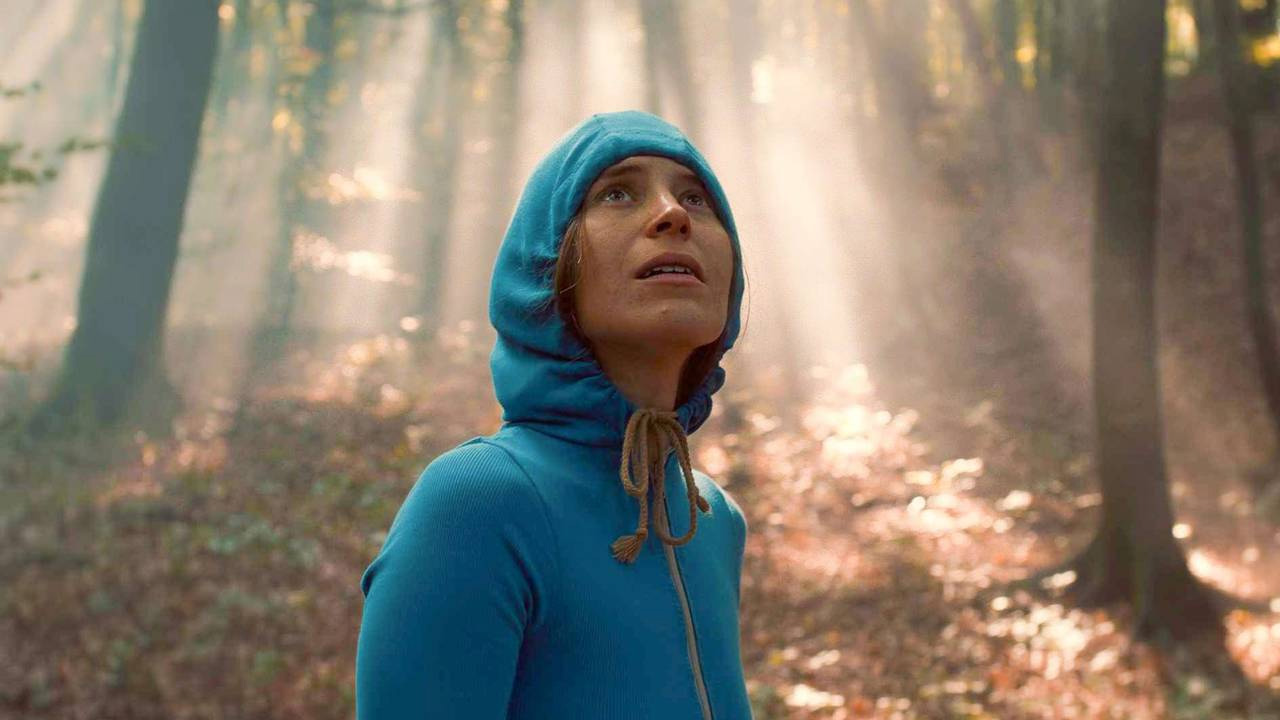
Though it is about its main character’s psychology, Love Me Tender communicates largely through physicality.  Barbara Giordano’s performance is striking from the very start, as we see her manically dancing in the living room she shares with her parents. This is one of several behaviours that seem to have been carved out as a way to find comfort. For the first half there is a somewhat greater degree of comfort to Giordano’s performance, as the character and the film are confined to the flat, it’s when we finally see Seconda pull on her ‘armour’— a blue onesie—and venture outside that we see the character at her most vulnerable and the performance at its most extreme. Outside, Seconda seems to shrink; a slender woman anyway, she seems to pull every part of herself inwards to take up as little space as possible and walks in a fast straight line, never engaging with the world around her unless it directly intrudes. It’s a funny visual, but also a great evocation of somebody profoundly uncomfortable in their surroundings, which is a line Giordano’s performance walks brilliantly throughout.

A few more people are drawn into the narrative in the film’s second half. The debt collector shows up at Seconda’s door and there is an instant and very funny twist in that relationship. Then there is Santo (Antonio Bannò), who knocks at the door asking if there are any bottles he can take to sell. This is the first person Seconda has engaged with in the weeks since her dad left, and she immediately draws him in and asks if he’ll kill her (“unfortunately I have a strong survival instinct”). The film sometimes veers quite quickly in tone, from a sequence that threatens to recall Lucky McKee’s May, to a late moment in which every character in the film appears in the apartment, dressed in Seconda’s blue onesie, which is straight out of Being John Malkovich. It’s a bit messy at times, but the shifts are unexpected enough to be amusing and they do all contribute to the larger picture of Seconda as a character. 

You can probably watch Love Me Tender as a character study of a woman trying to get over her childhood trauma or as an absurd, drily witty, black comedy. For me, the combination of its two sides worked well, largely thanks to the deft work of Barbara Giordano; rooted in the character’s psychology but unafraid of being big and even occasionally silly. It’s an odd film and the peculiarly shifting tone won’t be for everyone, but if you go with it there are many rewards to be had.
★★★½

Hope Frozen
Dir: Pailin Wedel
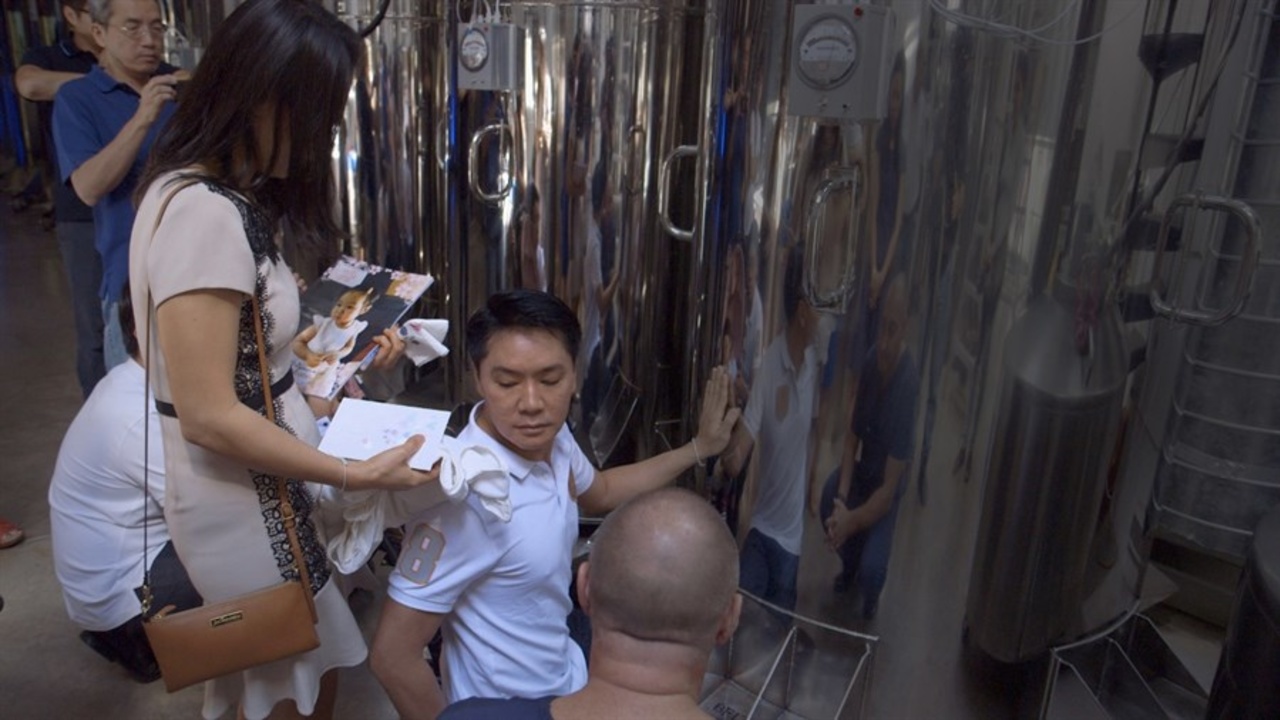
We all want the best for our children. We imagine who they’ll be, what their lives will be like, what they’ll achieve. Sometimes we don’t get those answers at all because they are cruelly snatched away from us. For the family in Hope Frozen, that happened with their two-year-old daughter Einz, when she died of an especially virulent form of brain cancer. Scientists, they decided to cryopreserve her brain, in the hopes that in the future she would be able to be brought back and to have the life that was taken from her this time.

There’s not much that is formally notable about Hope Frozen. It’s a fairly standard issue documentary construction, with observed moments combined with talking heads to tell the story and the fact it runs just 73 minutes is another thing that would make it ideally suited, eventually, for the small screen. That said, the film loses little by this, indeed its impact may be heightened by the fact that the filmmaking is fairly simple as, by this choice, director Pailin Wedel places the focus squarely on the story and on the family going through it, allowing us a window into their grief and the way they are trying to use science to help them work through it and find a glimmer of hope.

There is an added wrinkle in that the family are Thai and Buddhist. Reincarnation is a central tenet of their religion and the film hints at some controversy around that in Thailand, with commentators asking if Einz, rather than being preserved to potentially be saved, is trapped; her soul unable to enter a new body. As with the other questions in the film, Einz’ father, mother and brother find beautiful words to explain their decision, saying that their loved one’s soul is still around, in everything and everyone she touched.

Religion plays a part, but the film, like the family, is largely rooted in science. Einz’ older brother Matrix is pursuing studies that will allow him to work on finding some way to bring his sister back, something he initially feels might be close, but both he and the film are brought down to Earth with a bump at a certain point. It’s only in this moment that his father’s hope seems to move into a sort of strident faith, though the film never draws a connection to religion.

It’s impossible not to be moved by Hope Frozen. You can’t help but feel the raw heartbreak of this family, or be roused by their moments of joy (especially one that forms the coda of the film), but it’s also clear that their hope seems distant, dim, and perhaps destined to remain in stasis. 
★★★½

Sep 17, 2019

24FPS @ LFF2019: Day 1

Rewind
Dir: Sasha Joseph Neulinger
Film serves many functions in our lives. It can be pure escapism and entertainment, but it can also serve as an archive; a document of what we are thinking and feeling in a given moment, or as evidence of another kind.

Sasha Neulinger’s directorial debut is a bravely personal film, looking back on the sexual abuse that came from within his family towards both him and his younger sister, when they were each as young as three years old. Through a patchwork of archive footage taken by his filmmaker father and present day documentary and interview footage, “It’s a puzzle made from my life”, says Neulinger, as he opens the film in which he combs through his childhood to recall and to contextualise the abuse, focusing on how it seems to be passed down like a virus.

The archive footage, at first glance, is much like that which any family who had a video camera in the 90s might have taken; family gatherings, parties, trips to the zoo the kids playing outside. There is a dark side though, and it’s present from the off, as we see a roughly 9-year-old Sasha introduce his “Shit diaries” direct to camera. What emerges as the pieces of the puzzle form a full picture is a jagged image of a disturbed boy whose initially sunny and open nature was blown apart early in his life, leaving a child who couldn’t express his emotions except in anger and acting out.

Today’s Sasha is markedly different, but there is still a raw feeling to the film as it is plain that revisiting these times, even if it is eventually cathartic, is deeply difficult for him. In one scene, as his father describes his own childhood abuse from a brother who would grow up to also victimise Sasha, we can see the director in background of his shot, clearly shocked, moved and holding back tears. In another moment that speaks of deep connection, both as family and survivors, Sasha gives his sister Beckah a long hug following her interview. It’s this long thread of shared experience the runs throughout the film that is, in many ways, its most shocking aspect. 

Rewind is, obviously given its subject matter, a challenging watch. Moments that find Neulinger looking through his old therapy records with his doctor, looking back at drawings that graphically - if largely metaphorically - describe his abuse are especially hard to stomach. Yet there are also moments of grace, not least the one in which, in archive footage, Sahsa reveals that he’s changing his surname to Neulinger. 

The form of Rewind is fairly familiar, not least from the acclaimed Capturing the Friedmans, but coming from a first person point of view gives the way that the stitching of this patchwork of footage a somewhat different power to that of the earlier film. This case has already made positive change, but this film will bring it to a wider audience, particularly if it is picked up by something like the BBC’s Storyville series, which is the sort of distribution that might suit it best. That would allow Neulinger’s campaigning, but never brow beating, film to get out and perhaps make a wider difference.  
★★★½

The Miracle of the Sargasso Sea
Dir: Syllas Tzoumerkas

The name may not be entirely accurate anymore, but after more than a decade it still feels as though the Greek ‘weird wave’ is surfing in the wake of Yorgos Lanthimos. While he has managed to transfer his talents, with his peculiar tone largely intact, to higher profile and even prestige projects, many other filmmakers have remained at home, ploughing a similarly strange furrow. Syllas Tzoumerkas was last seen at LFF with the awful A Blast, his latest film has a little more going for it, but suffers from many of the same issues.

For the first half, Tzoumerkas and co-writer Youla Boudali set their pieces. Elizabeth was a cop in Athens but in the opening sequence we see her asked to join other officers in lying about planted evidence. 10 years later, Elizabeth (Angeliki Papoulia) is living with her now teenage son Dimitris (Christian Culbida). Elizabeth the chief of police in their small town. She’s a drunk, a casual and sometimes open drug user, constantly berating the officers below her and not above her own corrupt actions. Other strands involve the rest of the people in town, from club singer Manolis (Hristos Passalis) and his sister Rita (Boudali), who have a fractious relationship with him doing most of the caring for their mother, who has alzheimer's to, among others, Elizabeth’s married lover Vassilis (Argyris Xafis), local DA Andreas (Laertis Malkotsis) and Andreas’ mute brother Michalis (Thanasis Dovris). 

There are a lot of tangled strands set up here, but only Rita’s story grabs much attention. This is where the film suggests the most depth, with her job cleaning a church and the various biblical visions we see through her story promising something with a powerful undertone but, as with many other things it sets up, the film never really delivers on this. The visions seem just to be there, perhaps someone more well versed in Greek Orthodox doctrine could unfold something specific from them, but for me they ended up feeling empty. That’s less true of Youla Boudali’s performance as Rita though. We get, at the very least, a sense of trauma and of something rather dark lurking underneath her relationship with Manolis (a slickly dislikeable turn from Passalis).

The rest of the film is far less interesting. Elizabeth’s story starts intriguingly enough, leaving some ambiguity about how she reacted to the bribe in the opening sequence, but once we find her a decade later, Angelikki Papoulia’s performance is disappointingly lacking in any shading. Her constant anger, her lack of any subtlety in her performance outside the film’s bookending scenes becomes wearing very quickly. Having a heroine who isn’t someone we would usually root for is fine, but the screenplay allows Papoulia little to work with in terms of contextualising Elizabeth’s rage and keeps her at such a constant boil that her every scene feels like a reiteration of the last.

As the second half of the film begins to use a murder mystery - the solution to which is hardly a surprise - to unpick the strands the first half set up, the extreme dark secrets that lie under the quietness of this town feel, for all the deadening and pointless explicitness with which Tzoumerkas shows them, somehow inevitable. He’s clearly going for shock value but a decade of films from Greece that have used many of the same ingredients, along with the fact we only really know and care about one of the characters involved, means the effect is considerably blunted.

There are flashes of interest here, notably in Youla Boudali and Hristos Passalis’ performances (he is especially good as he seemingly snaps after a performance, and begins berating the home town crowd from the stage) and in the various biblical overtones that surround their story. However, Tzoumerkas and Boudali’s screenplay is far too unfocused and, in other areas, too one note, to sustain that interest for the two hours the film runs.
★★

A Thief’s Daughter
Dir: Belén Funes
Late on in A Thief’s Daughter, Sara (Greta Fernández) is asked why she can’t just forget about her Dad “I carry him in my face”, she says. There’s a push and pull in that moment that is felt throughout Belén Funes excellent feature debut.

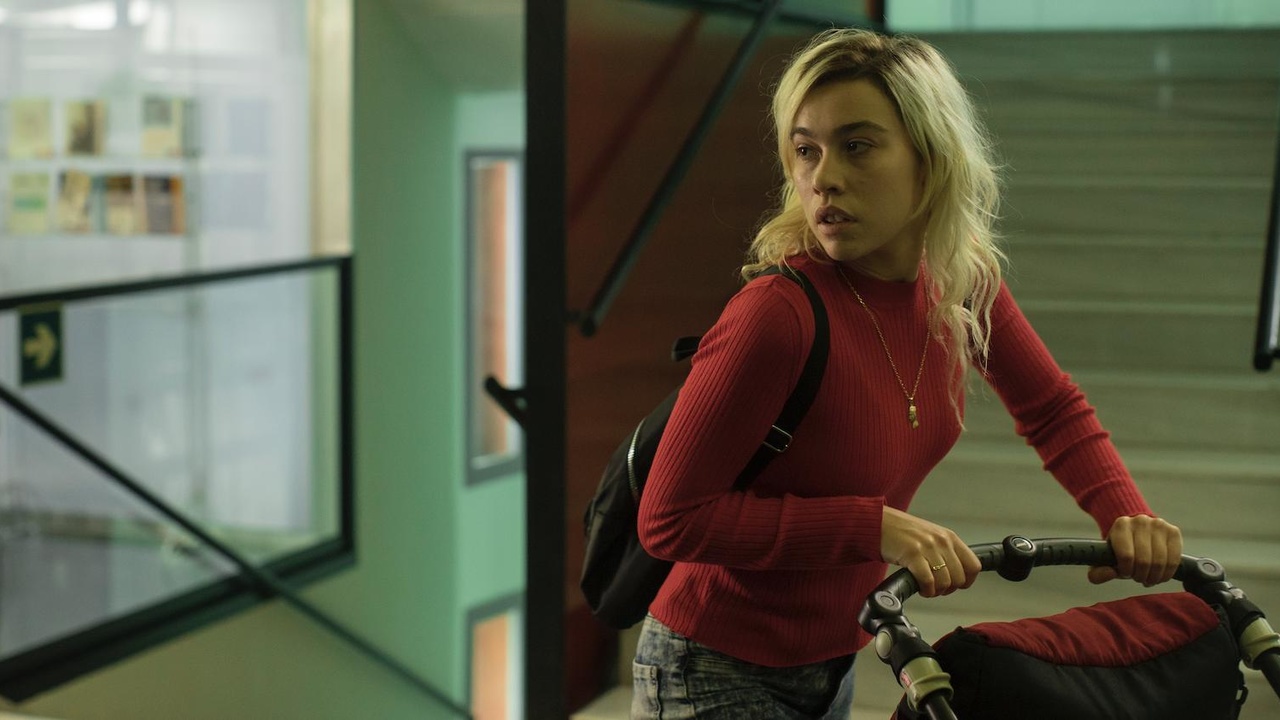
Sara is 22, she’s scraping away in a variety of menial jobs, trying to make ends meet for herself and her baby son, while also trying to win custody of her seven year old half brother Martin. Her father (played by her real life father Eduard Fernández) has just got out of prison and she clearly craves a family connection, while also being aware that being around him may not be good either for her or for Martin.

This isn’t a film of big dramas, confrontations are small and brief, grounded in the same reality as the rest of the film. Funes constructs a beautifully observed film, her camera more often feeling like a third person in the room more than it does something imposing structure. With that said though, she also has an incredibly economical style, often unfolding whole swathes of backstory without a word. In one especially impactful moment Sara is washing up after celebrating Martin’s first communion, she gets a little wine on her hand and sucks it off, then for a second considers drinking what’s left in a glass, before relenting and washing it. A couple of movements, perhaps five seconds, and we understand potentially years of Sara’s life. It’s a piece of pure cinematic storytelling. 

Little things unpack big stories throughout the film, thanks to the sensitive and artifice free performances. The relationship between Sara and her Dad has a naturally tense feeling to it, doubtless aided by the real life relationship between the actors, the history between the characters feels present in every moment. Outside of these scenes, the same unforced realism comes through in Greta Fernández’ performance. Whether Sara is at work, at home, or with her brother (another beautifully drawn relationship) there is never a sense of an actor playing a scene; the observational quality of Belén Funes’ direction coming through in performance as well as in camera. The victories may be small, but we feel them all the more powerfully for that, one sequence in which Sara learns she’s passed her probation at work is particularly good, capturing a warmth that we sense she feels too seldom as she’s trying to get by.

The film does build to a big narrative event, but even there Funes and co-writer Marçal Cebrian  resist any urge to grandstand, landing on an ambiguous but deeply moving final image that underscores the tug that we have felt in Sara throughout. This is a notable debut from Belén Funes, a film that delivers but also promises many interesting things for the future. It points to director with a strong but unobtrusive eye and a great command over casting and performance. It’s a quietly excellent film, and one you should make time for at LFF.
★★★★

Jul 13, 2019

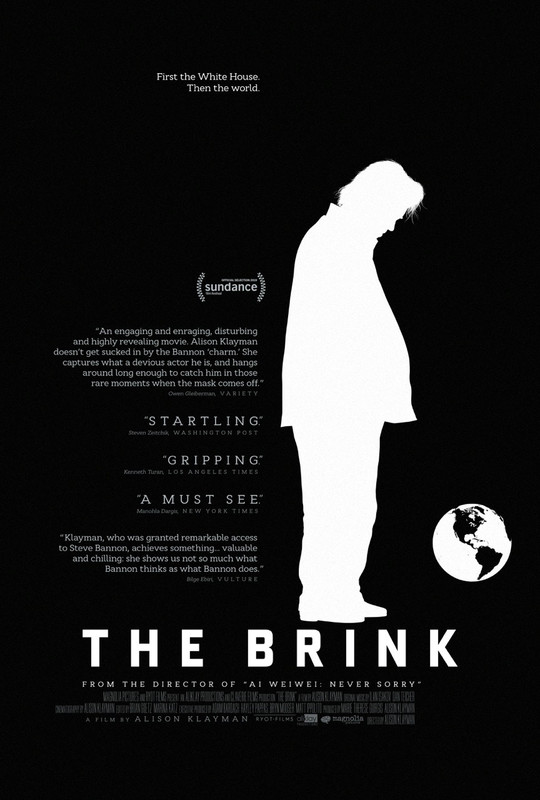
The Brink [15]

Dir: Alison Klayman
To me, the title of Alison Klayman’s documentary about Steve Bannon speaks to where we are as a planet. We’re walking up to the line in so many ways, and on the political side, it seems Bannon exists to give us that one last push over the edge.

Bannon is a far right strategist who co-founded Breitbart News in 2007 and became a late addition to the Donald Trump campaign in 2016, coming in as campaign CEO. He now credits himself with Trump’s win, as do many people, to be fair to him. For most of The Brink, Klayman follows Bannon after he has left the Trump administration, as he begins to form what he and his allies call ‘The Movement’; an initiative to unite the far right parties across Europe to increase their influence.

Bannon is a loathsome human, he looks like a thumb that gained sentience and that’s the least ugly thing about him. However, he does have an ability to wrap the vileness of his politics in an outward veneer that, when you put yourself in the shoes of the people who believe the poison that emanates from him, you can see why they are drawn to him. For most of the film, Bannon speaks outwardly reasonably, he’s not screaming in the faces of his opponents, indeed in a debate with David Frum he appears to have an easy - if not especially insightful - humour to his delivery. This difference between tone and content is what makes him dangerous.

This is where Klayman’s approach works well. She’s not a Michael Moore, deftly picking the worst moments her subject exhibits and drawing them together, she at least appears to be trying to show a fuller picture of Bannon. What emerges is a slippery character. Whenever another person on camera with him begins to push the rhetoric too far, Bannon will end filming, but again, the framing is interesting with him often saying something like “You’ve got everything you need here?”, when he clearly doesn’t mean the question mark. This is one of a couple of recurring refrains that seem designed to allow Bannon to play the nice guy while clearly manipulating people. The other happens every time he poses for a picture with a man and a woman, putting the woman in the middle saying “a rose between two thorns”. Both of these repeated phrases, in a way indicative of how Klayman allows Bannon to make himself look bad, end up feeling very sinister.

Another sinister and slippery side of Bannon, and of his influence, comes across whenever he’s challenged or things look bad on his side. Bannon himself seems most uncomfortable when the inherent racism of his views is questioned. He knows that if he wants to win more people to his cause that there HAS to be plausible deniability on this point (a way, at least, for supporters to say “I’m not racist, but”), the thing is that he hasn’t developed an answer beyond flat denial, it’s one thing he simply doesn’t have an argument on. We see some of this attitude reflected in his staff after the arrest of Cesar Sayoc, who sent homemade bombs to a number of prominent left wing figures and lived in his van, which was covered in Trump paraphernalia, as one of them - again without quite coming out and suggesting a ‘false flag’, says that he finds it surprising, that he’s not sure the bombs were real, and that the left is so much more violent before going on to invoke no true Scotsman over Timothy Mc Veigh. It’s in exchanges like this that we see Bannon’s ideas reach fruition.

That carries over into The Movement, whose meetings of rich white men conspiring to freshly empower the worst of the far right make for the most frightening segments of The Brink, especially in light of the recent success of the Brexit Party and the resurgence of Bannon cohort Nigel Farage. We see Bannon challenged, particularly robustly by Guardian reporter Paul Lewis, and we see him take losses like the US Midterms, but there’s definitely a sense of the momentum going his way overall. That’s why The Brink is more terrifying than a film that would set out to ‘take down’ Bannon more overtly: it shows how horrific his ideas are, how proudly he embraces them and their associations (“How would Leni cut it?” he says of a trailer for a film he’s making, half joking, half winking) and how, if he’s not entirely winning, he’s also not losing.
★★★★