Showing posts with label Denmark. Show all posts

Nov 15, 2020

Recent Viewing: Cutterhead / I Spit On Your Grave Deja Vu

Cutterhead
Dir: Rasmus Kloster Bro
A multi-national crew is cutting a new tunnel for the Copenhagen metro and Rie (Christine Sønderris) has been sent to take pictures of the workers and do puff piece interviews for a PR campaign. While she's watching Ivo (Kresimir Mikic) and Bharan (Samson Semere) change one of the cutters there is a fire in the tunnel and the three are trapped in the pressurized chamber that houses the cutterhead. With oxygen and water both running low, they try to decide if they should wait to be rescued or attempt to escape.

There is something almost inherently tense about a confined thriller like Cutterhead. The fears behind it are primal; claustrophobia, the idea that with each breath you are eating up an increasingly finite resource. In this case that is only added to by the literally as well a metaphorically high-pressure atmosphere, which means that even though the door can be opened, the physical effects of doing it quickly might debilitate the person chosen to leave the capsule. The first act establishes a quick but comfortable dynamic between the three characters, Rie may be doing her job, but she appears to be interested in the processes and to like the two guys, who we quickly establish are friends as well as co-workers. This, of course, is all strained by the situation.

This isn't the most eventful film, a lot of it involves the crew simply waiting to be rescued, but the little moments of levity, paranoia, and of betrayal are all well played and these small moments, as well as the sense of time passing and the space feeling ever smaller and more dangerous adds up to a growing, grinding, tension—think The Descent without monsters. Things do shift somewhat for the third act, though the thrills remain claustrophobic and intimate, with the last ten minutes, in particular, taking a dark direction, leading to a final scene that is tense and airless in an entirely different way to the rest of the film.

This isn't a showy feature debut from Rasmus Kloster Bro, but it does demonstrate an ability to take a limited set of ingredients and find a way to stretch their inherent heart in mouth qualities across the film's 84 minutes. If you're claustrophobic this will be a nightmare, but even if you aren't you're likely to feel Cutterhead gripping your nerves more and more as it runs on.
★★★½


I Spit On Your Grave Deja Vu
Dir: Meir Zarchi
Shot in 1976, first released in '78 and finding a wider audience in grindhouses and on video in the early 80s, I Spit On Your Grave has been notorious for four decades. Meir Zarchi's original film still stands as one of the most powerful and visceral rape-revenge films ever released. A sequel was first mooted in the mid 80s, but that film dropped the link to I Spit, and became Savage Vengeance. Between 2010 and 2015 a trilogy of increasingly terrible films, begun with a remake, was fairly successful in the direct to video market. It must have been that which finally got Zarchi the green light to make this, his first film since 1985's dreadful Don't Mess With My Sister.

You get the sense that Zarchi had a certain pent-up energy as a filmmaker. In his early 80s when making the film, and having not directed in almost 35 years, there is a feeling in the rampantly excessive 148 minute running time that he is simply using this one last opportunity to dump every idea he's had about this series of films since 1978 on to the screen. Unfortunately, most of those ideas involve copying his previous film very, very slowly, introducing overblown religiosity to the villains, and a broken timeline to tie the plot in with the original.

Jennifer Hills (Camille Keaton) has just written a book about her ordeal and her vengeance. Taking a break from promotion, she's having lunch with her daughter Christy (Jamie Bernadette). In the car park after lunch, two 'fans' pull up and while Jennifer is signing her book, kidnap them both, setting off a chain of events that take Jennifer back to the events of the first film and end up with Christy fighting for her life and fighting back.

Things start as they mean to go on: slowly and with terrible dialogue. The original film is recapped in a laughably written radio call-in show with Jennifer responding to questions about her memoir (curiously it's not here that we discover that she was cleared by a jury of any crimes she committed in the vengeance section of the first film, which is a stretch). We also discover that Christy is the world's most in-demand model, and that she just turned down a million dollars to shave her head and pose topless for a magazine cover. This is all delivered in clunky lines by Keaton and an at this stage fairly wooden Bernadette.

Things get turned up to eleven once the kidnapping happens and we meet what is at first a gang of three, all related to Jennifer's tormentors from the first film, there is Johnny's wife Becky (Maria Olsen), Scotty (Jeremy Ferdman), who is the cousin of Andy and Kevin (Jonathan Peacy), who is Stanley's brother. Maria Olsen, in her mid 50s, is clearly too young to have been Johnny's wife (she's roughly the same age as Zarchi's kids, who make cameos to reprise their brief roles as Johnny's children). More puzzling is Scotty's assertion that he grew up around Andy when he was obviously born, given the film never indicates that it is set any other time than when it was shot, at least 10 years after the events of the first film. This, along with other revelations, makes the timeline very difficult to unpick. All three of these performances, along with that of Jim Tavaré as Herman (who we're told is Matthew's Dad, despite the fact he's several decades too young for that) are overplayed to the hilt, with Olsen and Peacy seeming to be in some kind of contest to see who can chomp more scenery.

This would be less of a problem had Zarchi not written a lot of drawn-out dialogue for the villainous characters, but the speeches go on and on, running over and over the same two ideas: that the relatives want 'justice' and that God is going to help them extract it from Jennifer and Christy. The fact that Camille Keaton, so great and unaffected in the first film, never manages to find that same performance is probably down to the writing as much as her work, but she is visibly unenthused and appears to know the dialogue isn't up to par (and that there is too much of it). Only when Jennifer is told to dig her own grave does Keaton find a moment with an ounce of the resonance the 1978 film had throughout. 

The structure of the film is clunky. Not only is it brutally overlong, but the pacing issue isn't simply that a scene here or there needs to be cut, it's that every moment is twice the length it needs to be. There was apparently a lot of back and forth about whether the 2010 I Spit On Your Grave should be a sequel or a remake. In some ways Deja Vu, as suggested by its subtitle, is an attempt to square that circle. The first 50 minutes or so are a direct sequel, then we move into a section which is a fairly close remake, with Christy in her Mother's role. The rape scene can't help but be upsetting and it is in this section that Jamie Bernadette's performance comes closest to matching Keaton's power in the original. As with that performance, it's probable that there isn't much acting involved here, there's a certain level at which what we're seeing is just what's happening and it's not easy to watch.

The third act moves into the vengeance phase. Again the film is fighting with itself over being a sequel or a remake. One revenge sequence directly mirrors a famous scene from the '78 film, which only diminishes this one, because the fact we've seen it before, the cartoony nature of the actor's performance up to that point, and the extended running time means it never captures the shock and horror of its antecedent. Zarchi tries to introduce some twists into the narrative in the last half hour of the film, but he only succeeds in adding more terrible monologues, hammy performances, and timeline confusion to the mix.

I Spit On Your Grave Deja Vu is more than a disappointment, while it's sometimes weirdly reverent of the first film, even to the point of the director reprising his cameo as a church organist, it also feels like its rejecting much of what it meant. It's almost a desecration. When characters repeatedly literally spit on the graves of deceased characters you can't help but feel it represents a certain aspect of its attitude to what has gone before. The original film is a grindhouse classic, but it's more than that, it's still a truly impactful and provocative work. Deja Vu never achieves that, Jamie Bernadette does what she can and, mainly in moments where she doesn't have to wrestle Zarchi's dialogue, has moments that impress. On the whole, though, the film is by turns too silly and too boring to even approach that kind of lasting power.

Sep 23, 2019

24FPS @ LFF 2019. Day 7

Olla
Dir: Ariane Labed
In 2010 and 2011, Ariane Labed burst on to the international film scene with leading roles in Athina Rachel Tsangarai’s Attenberg and Yorgos Lanthimos’  Alps. It is perhaps no surprise then that this half-hour short, her debut as a writer/director, should bear their influence. 

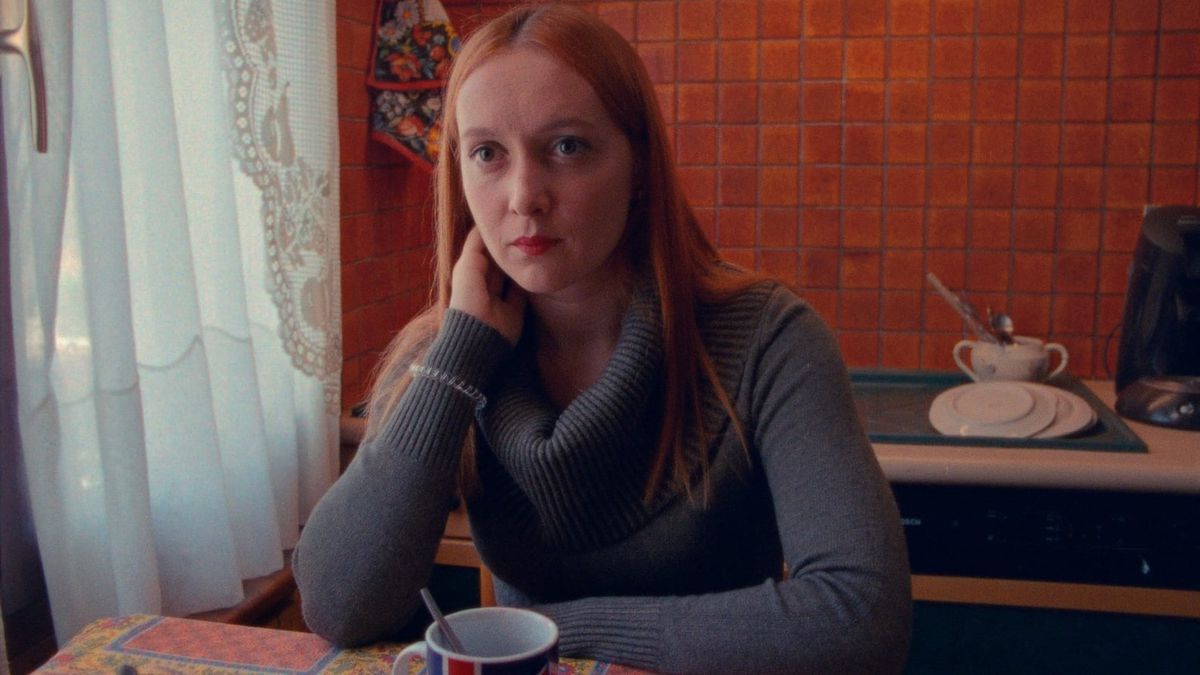
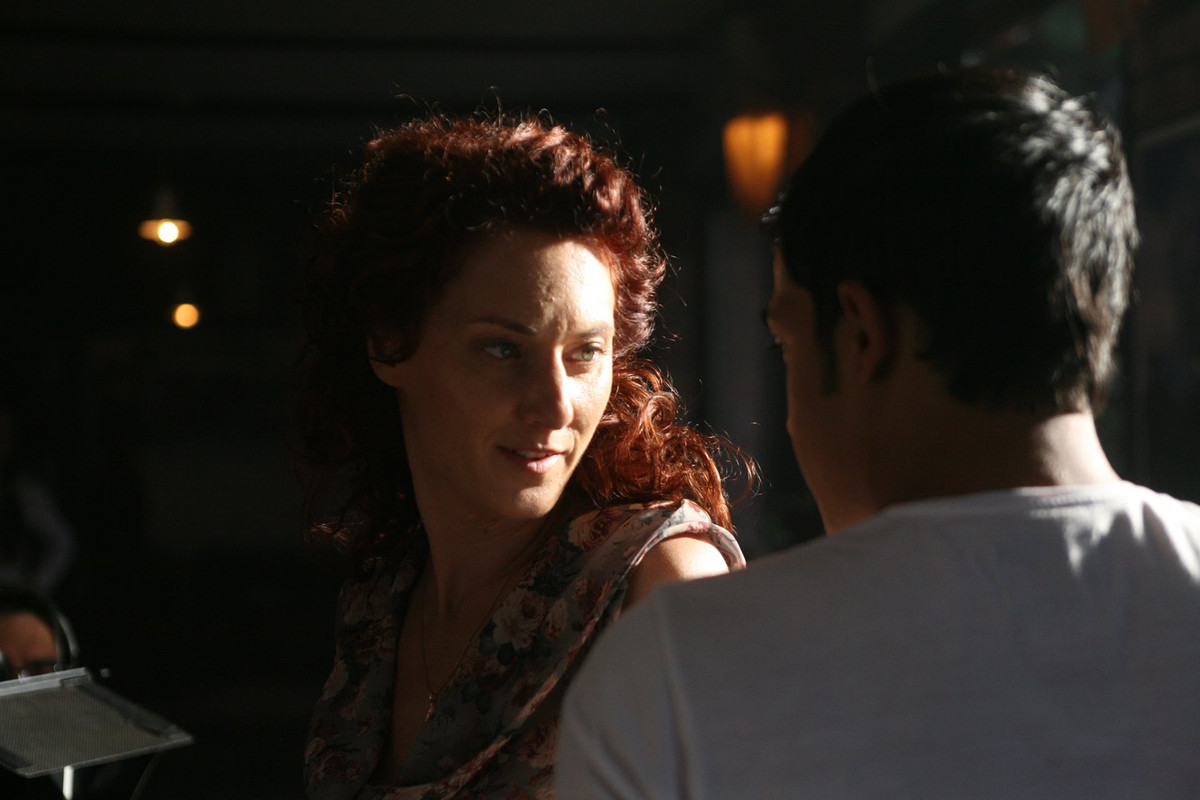
Olla (Romanna Lobach) has just arrived in France from Ukraine to live with Pierre (Grégoire Tachnakian), a man she met online and his infirm and elderly mother (Jenny Bellay). Bored, cut off from Pierre by the language barrier, and clearly annoyed by his suggestion that she be called Lola so she seems less like an immigrant, she ventures out of the house and ends up doing more than exploring the town. 

Though the deadpan black comedy and sometimes stark shooting style recall her collaborators work, Ariane Labed is no karaoke director. Most notable in her style here is an often bright and bold colour palette (starting with Olla’s striking red hair) that sometimes acts to undercut the darker elements of Olla/Lola’s experience. That said, there are moments that showcase the same sense of humour and stylistic influence of Lanthimos or Tsangarai. Most notable among them a one shot sequence in which she practices dancing, Pierre’s mother impassive in the chair as Olla gyrates to a foreign version of What is Love. Another darkly funny touch comes in repeated sequences of Olla being catcalled, the group of men all shouting in unison, first telling her how hot she is, then yelling that she’s a slut. The repetition turns them into something like a greek chorus, but also allows Labed to make a serious point about how women are often made to feel they are always on display.

At just half an hour, Olla doesn’t quite have enough room to grow. A feature version could flesh out the various plot points, especially the relationship between ‘Lola’ and Pierre, but this is a strong debut for Labed, anchored by a very good performance from Romanna Lobach and points to promising things from both of them.
★★★½

Cold Case Hammarskjöld
Dir: Mads Brügger
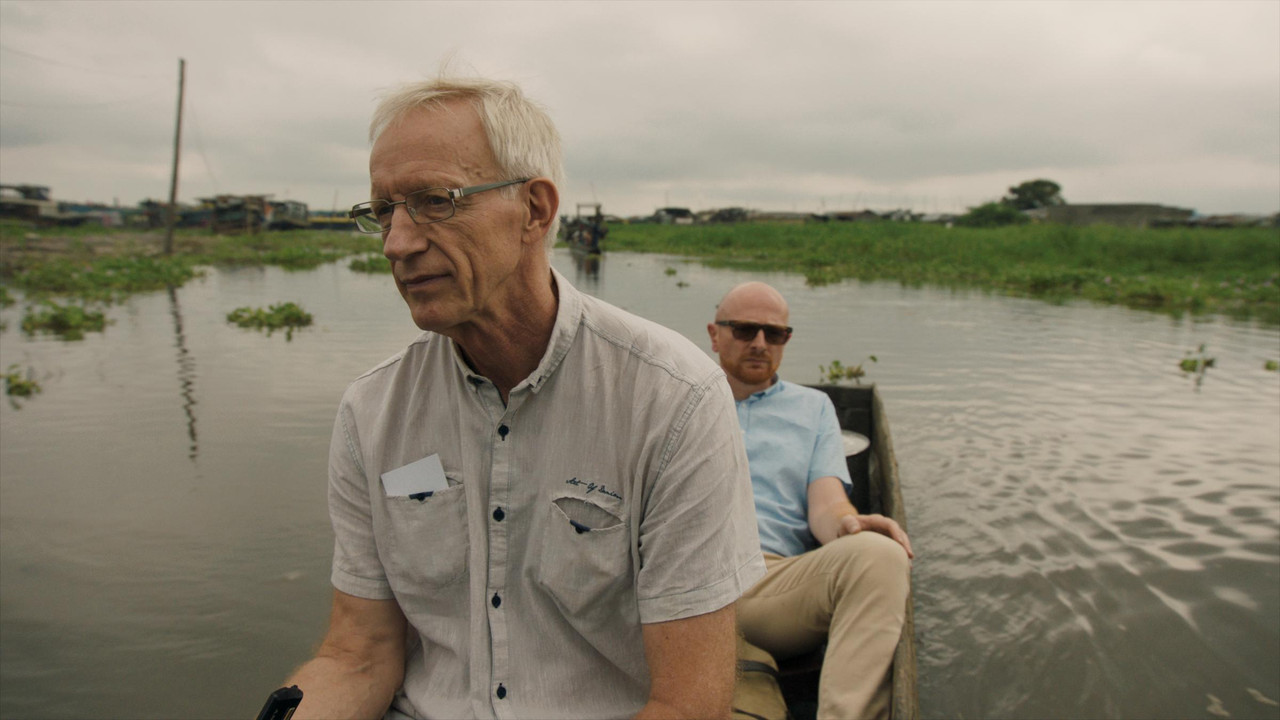
Through Netflix and a mass of popular podcasts, the true crime documentary has become one of the dominant forms of non-fiction storytelling in recent times. That is, in a way, what Cold Case Hammarskjöld begins as. The setup has director Mads Brügger and Swedish private investigator Göran Björkdahl reinvestigating the suspicious death in a 1961 plane crash over of UN Secretary General Dag Hammarskjöld. As Brügger admits right up front, this may be a very dark and far reaching crime, or it may simply be a tangled conspiracy theory.

There is, buried somewhere in this film, a compelling (potential) murder mystery. It definitely seems that the official story of Hammarskjöld’s murder is at best incomplete and deserves further and more rigorous and public investigation. Unfortunately not only does the film get distracted frequently, venturing down multiple rabbit holes, it also presents the central thrust of the mystery it sets out to investigate shockingly poorly. Throughout, Brügger uses a framing device that sees him have two (why two? he doesn’t know) secretaries type up the narration for the film, as we see him speak it. This totally redundant device slows the pace of the film badly, and only ever serves to restate things that it would be much better off simply presenting to us from the documentary and interview footage gathered.

The first half of the film is incredibly dull, with only tiny bits of information sneaking out between sequences of the director apparently structuring his film as we watch it. This might be less irritating if he structured it better. The second half of the film is more compelling. Brügger delves further into the South African Institute of Maritime Research—a shadowy mercenary and spy organisation that may have had a hand in Hammarskjöld’s death and other even darker crimes. He does manage to clearly establish that this organisation existed, but everything else is on very shaky ground. The one person he’s able to talk to at length tells a good story, but offers nothing to back up what he says, and worked for SAIMR decades after the plane crash that killed Hammarskjöld. Even this content is frustrating though, with Brügger fixating on details like how the man he believes was the head of SAIMR dressed completely in white at all times.

Again, the film can’t concentrate. If the rabbit hole it explores in the second half is true, then it’s one of the biggest and most disturbing scandals I’ve ever heard of, which is why it needs far better sourcing. What Brügger does is less robust investigation and more speculative join the dots. We see things laid out as note cards, but it wouldn’t be a surprise to find this film laid out on a conspiracy theorist’s wall, with red string joining the various elements up.

Strip out the self-indulgent framing device, impose a robust structure and concentrate on the one thread of the story that the film at least manages to pose relevant and important questions about and there might be a solid podcast episode or short documentary in this cold case, but the pure theory that surrounds it and the terrible presentation means that, at two hours, this is a largely unedifying test of patience.
★½

Jun 7, 2018

Teen Movie Thursdays: Nordic coming of age movies

Right On, Man
Dir: Tapio Suominen
This realist Finnish coming of age film, with what seems to be a largely non-professional cast, doesn't appear to have traveled much, but it will be of interest to fans of Aki Kaurismäki, because it features the screen debut of his frequent collaborator Kati Outinen, though in a relatively small part.

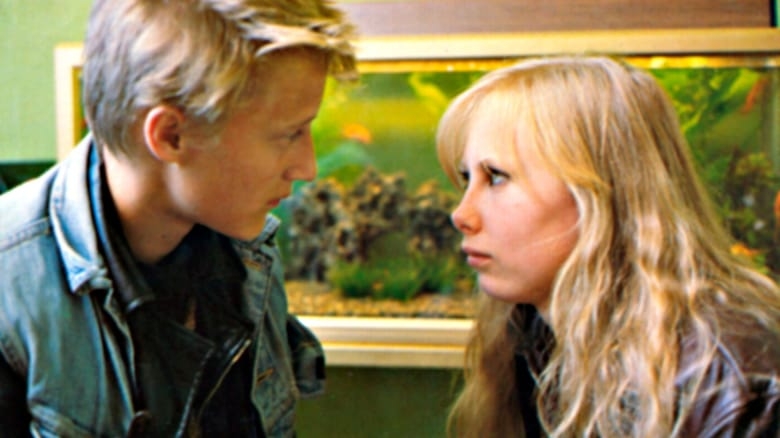
The film focuses on a secondary school class for problem kids, all of them boys except for Outinen's Lissu. Initially, it explores the dynamics between the class, but as the film goes on the focus narrows to concentrate first on the dynamic between Jussi (Esa Niemelä) and Pete (Tony Holmström), as they drift further from the class and from their families, then solely on Jussi, as he isolates himself more and more, before potentially looking to Lissu to find a way back in.

Right On, Man paints a fairly bleak picture of teenage life. You get the sense of these kids as drifting, even before we spend an extended evening with Jussi and Pete, as they roam the streets, drinking and spending the proceeds of a robbery that Jussi pulled off. What hits home, even through sometimes uncertain performances, is the credibility of the whole thing. The dialogue has a natural feel, from the way the kids relate to each other to their dismissive attitude to their teacher (Lissu has a habit of walking away, so much so that in the class portrait that gives us the actor's names in the opening credits, Outinen's is over an empty chair).

Tapio Suominen gives the film a strong sense of time and place. We get a feel for the environment these kids are growing up in and the sense that they probably don't see particularly prosperous future. The dramas here are small, but Suominen builds a couple of threads that run through the narrative, even though they are largely off screen. The bad impression Jussi makes on a beat cop and Jussi's potential interest in Lissu (and hers in him) are both seeded early, only to come back around in a sequence that draws together well.   

If you're coming to the film for Kati Outinen, it's worth noting that she's barely in it until fifteen minutes from the end, when Jussi and Lissu re-connect. It's a lovely sequence and Outinen is charming and natural in it, it's easy to see why she might have been noticed, but this is a very small part. Fortunately, Right On, Man offers many other rewards; it's a well observed teen movie with a sense of verisimilitude and an unobtrusive style that draws you into the story and characters. It deserves to be better known.
★★★

Lars Ole, 5C
Dir: Nils Malmros
As far as I can tell, Nils Malmros is barely known among English speaking audiences. That needs to change. While he has moved outside the genre, Malmros has, for fifty years now, specialised in coming of age films. The best known is Kundskabens Trae (Tree of Knowledge), listed by the Danish Film Institute as one of the country's 100 greatest films, but this - his second feature - seems to be the film that established Malmros' reputation.

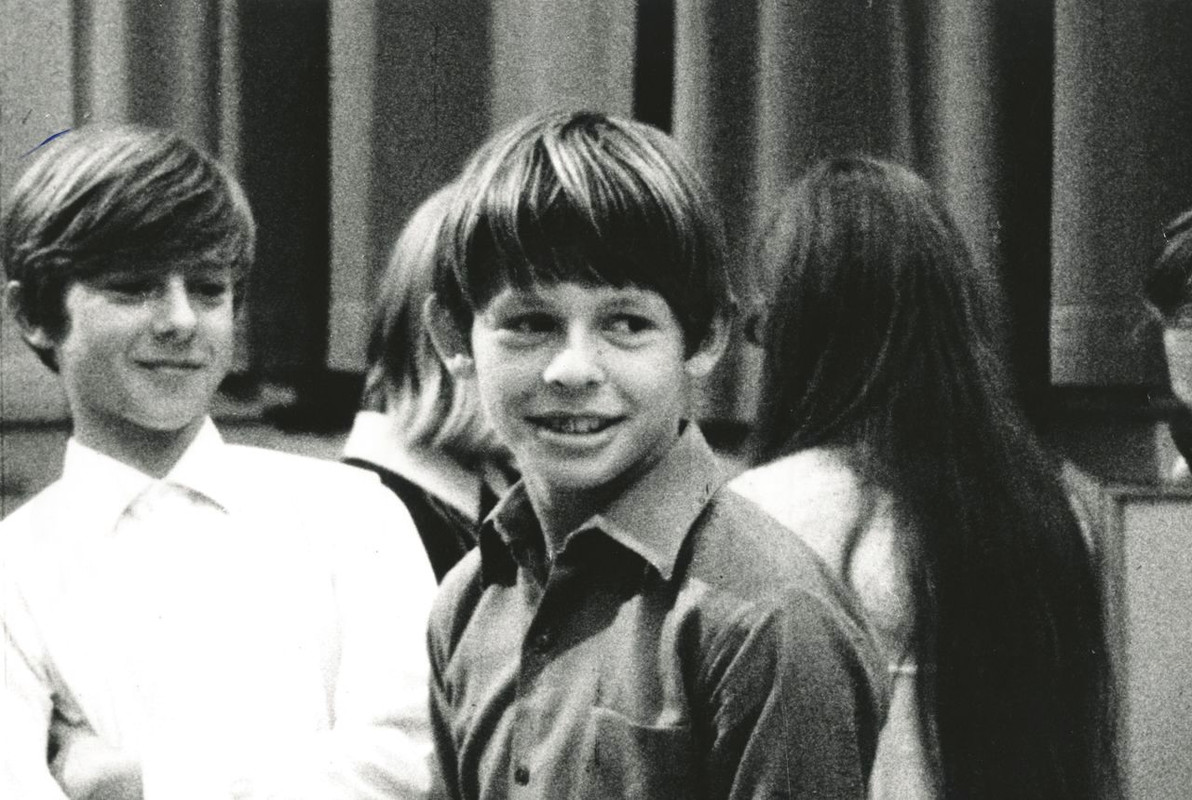
Drawing heavily from his own life, Malmros tells a low key story of 12 year old Lars Ole (Søren Rasmussen) and his classmates. There are petty rivalries, first crushes and moments of childlike mischief, but Malmros' concern isn't big events but the tiny things that shape day to day life when you're somewhere between childhood and adolescence.

Shot on grainy black and white 16mm, the film has a feeling of something observed more than it is staged. Frequently, moments that would have much more emphasis in another film are allowed to play out quietly, often in the background. A good example of Malmros' restraint comes when Lars Ole is being a pain, playing the wrong notes while his sister is practicing the piano, when he makes her cry, the camera views her through the door, before silently showing Lars Ole realising he's upset her more than he meant to. It's a beautifully subtle bit of acting and camerawork that makes us feel as if we are privy to a real moment.

We see a lot of these subtleties in the way the film depicts the politics of the playground, the games of tag and which kids are allowed to play or not, the dominance that older kids are able to exert. This is never more felt than in the way relationships are navigated. Early on we see that Lars Ole has a crush on Inger (Judith Nysom), who is 'dating' Hanse (Lars Randrup Mikkelsen), the way the camera often dwells on the space between them is clearly designed, yet feels totally natural, even in the final sequence when, at a dance, we see Lars Ole join in a square dance, changing partners as he goes and waiting for his brief chance to dance with Inger.

The relationships between the kids, whether it's the rivalry between those who live in a certain apartment complex and those who don't, the pettiness of who is allowed to play tag or not or the teasing and games in the classroom, ring completely true. The performances - all by non-professionals who seem not to have acted again - feel completely unforced, nobody seems to be playing a character or reaching for an emotion at any time.

I've now seen six of Malmros' films, and this is early evidence of his instinctive feel for how to tell a story from a young person's point of view. It's a beautifully constructed film, you feel Malmros' direction rather than seeing it, in that his choices are affecting and clearly purposeful, but barely seem designed. If you have even a passing interest in coming of age cinema, this is a filmmaker you need to discover and Lars Ole, 5C is a perfect entry point to his exceptional filmography.
★★★★★ 

Oct 7, 2017

24FPS @ LFF 2017: Darling

Dir: Birgitte Stærmose
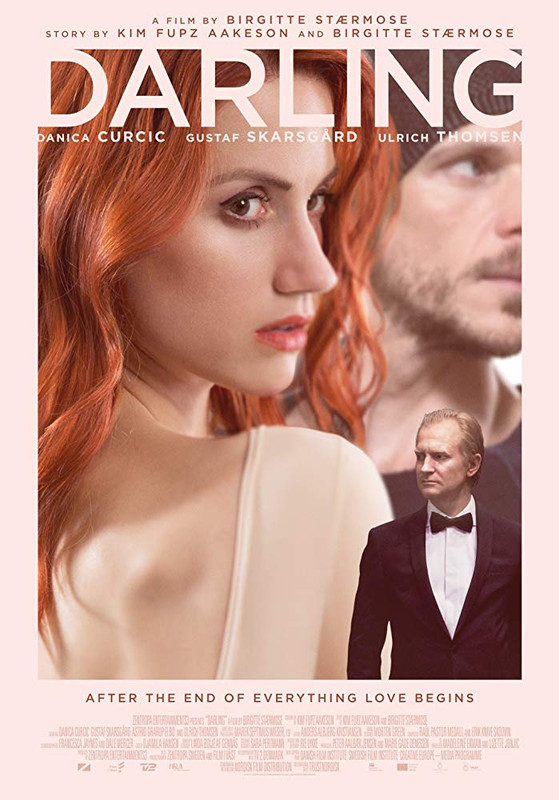
Darling is about a prima ballerina named Darling (Danica Curcic), brought back to her home company in Denmark, along with her choreographer boyfriend Frans (Gustaf Skarsgård), to create and perform a new version of Gisele. Darling has been hiding severe pain for a long time and when she collapses in rehearsal it is clear that the problem is career ending. Darling instead offers to assist in training her replacement, Polly (Astrid Grarup Elbo, making an excellent film debut) but it’s hard to tell whether her tough methods are designed to help Polly or to undermine her.

We’ve seen the basic beats of Darling before: artistic jealousy fraying a relationship and the agony of being replaced, superseded for your director, your audience and possibly your partner by a younger, fresher model driving an artist to extremes. Given that, it all comes down to execution. While it doesn’t deal in the duality and split personality ideas, the closest recent analogue is probably Black Swan, but Darling feels more grounded, lacking much of that film’s tendency to melodrama. 

This is exactly why Darling is, at times, unnerving. Danica Curcic gives an excellent performance which never quite lets you read her motives in Darling’s training of Polly. It’s clear that she takes some perverse pleasure in making the the younger dancer suffer. One notable scene sees her begin to seduce Polly, only to break off and say “bring that feeling to rehearsal tomorrow” just as Polly starts to go with the moment. Is this a cruel method of drawing out a feeling she actually wants infused in the performance, or is Darling only trying to hurt her young, beautiful, replacement? The same question arises throughout. Only one moment feels truly sinister, when Darling administers the same medications to Polly that she used for years to hide her pain. This scene feels like Darling is attempting not just to hurt Polly but to turn her into a clone of herself and perhaps make Polly, eventually, end her career in the same painful way she was forced to.

The same back and forth that we feel about Darling - is she trying to help or to hurt - is something we can see in Astrid Grarup Elbo’s performance. Polly clearly admires Darling, wants her help on the role and is challenged by her training, but we can see the shift as this gives way first to concern then to some degree of fear, alongside confusion at being tod different things by Darling than by Frans.

The relationship storyline between Frans and Darling is considerably less interesting than the dynamic between Darling and Polly. In many ways it’s an mirror image of the process, between lovers rather than two dancers but, while Gustaf Skarsgård gives a fine performance, these scenes never have the claustrophobic intrigue of the scenes between Darling and Polly in the studio.

Birgitte Stærmose directs capably. She creates some memorable images, especially in the stark design of the eventual performance of Gisele and generates an interesting tension between her actors in the scenes between Darling and Polly (the gaze in a costume fitting not long after that interrupted seduction, for instance). The film never hits the same heights outside those sequences, but there is plenty here to hold the interest and I’ll be looking out for Stærmose’s next film.
★★★

Dec 14, 2015

24FPS' 10 Worst Films of 2015

I had a shorter list of terrible films to choose from this year than usual. I think there are two reasons for this. 

First, it was a middling year on the whole, with many average to very good films, but few that broke through, for me, either to excellence or awfulness. 

Second, I changed the way I watch movies this year. For many years I had an annual pass for the UK's largest multiplex chain. This year I switched that for a similar deal with Curzon, whose programming is more eclectic. As a result I missed much of the year's mainstream fare after April. I say missed, but that's a lie, I can't say there was a single major release that I truly regret not catching. I think this switch in my viewing has led to a much better average among the films I saw in 2015 as opposed to recent years. 

All this said, the pickings for this list, though slim, were rich indeed and I had to drop some films I truly will miss from this countdown. Make no mistake, these 10 movies are all pretty awful, some made me extremely angry, and I'd be happy to never see any of them again.

10:  Rosewater
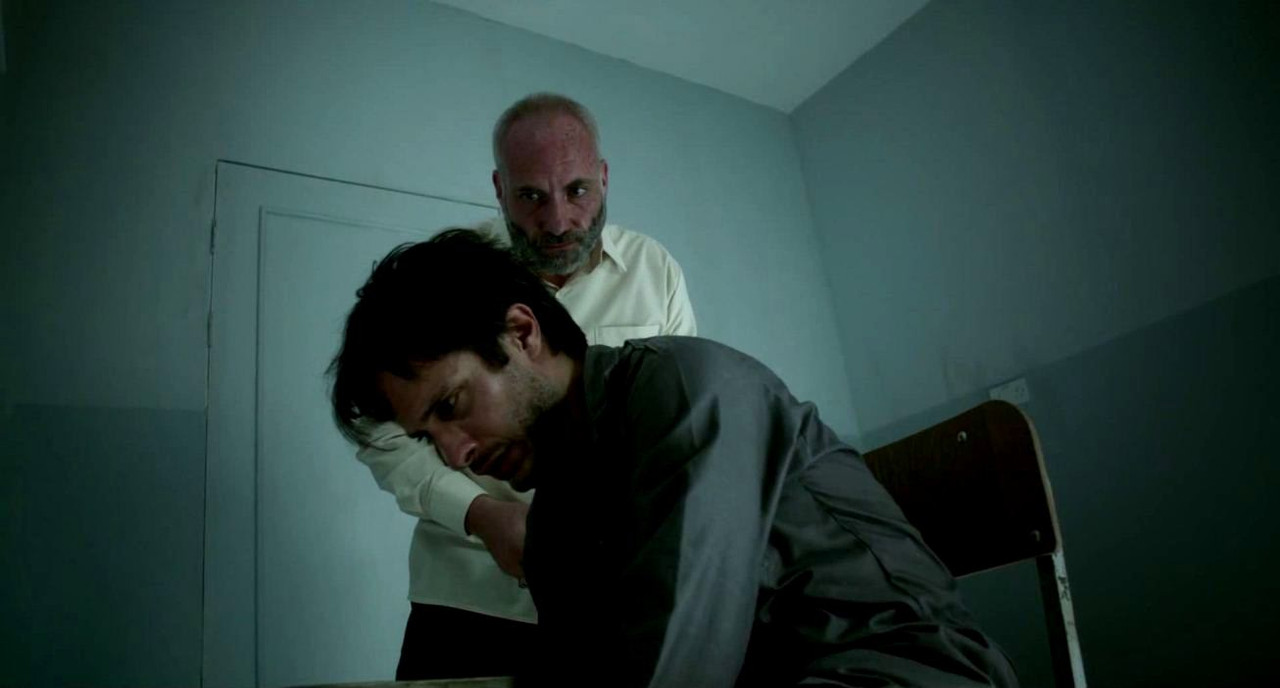
Jon Stewart's directorial début is a disappointment rather than a truly awful film, it strives for importance, but its impact is lost in uninspired directorial choices. The story of the imprisonment and interrogation of Iranian journalist Maziar Bahari (played by Gael Garcia Bernal) is impactful enough on its own, without the mawkish scenes of him hallucinating images of his Father and Sister.  When Stewart pulls back and just allows the situation to speak for itself (as when Bahari gets to speak to his pregnant wife on the phone), we get glimpses of what the film could have been, but all too often the directorial inexperience and the weight of Stewart's tangential personal involvement in the story hobbles it.

Aside from this, the language of the film proved a disconnect for me. The Iranian main characters are played by a Mexican (Bernal) and a Dane (Kim Bodnia as the interrogator), and all the dialogue is in English, not only does this confuse a few moments when you wonder how much Bernal's captors understand, but it created a distance for me, an awareness of watching actors rather than being sucked into a situation. This is an Iranian story, it feels wrong in English.

It's a pity that this doesn't come off, it's a deeply sincere film, but undone by inexperience.

9: What We Become
This is going to be a recurring theme on this year's worst list, but the main reason that What We Become has ended up here isn't because it's one of the worst films ever made - it's entirely competently acted and shot - it's because there is not one single frame of it that I haven't seen before. This Danish zombie/pandemic film draws quite heavily on Chris Gorak's underrated Right At Your Door and very heavily on every zombie movie ever made.

The film shuffles forward, seldom dull, but never truly engaging either, and never remotely original. Every scene, every shot, could have been drawn from somewhere else and a hackneyed horror film doesn't magically become better because it's not in English.

8: Me and Earl and the Dying Girl
Well, it's better than last year's godawful cancer movie. Just. Me and Earl and the Dying Girl (the more I type that title the more I hate it) has many of the familiar problems of young adult literature adaptations, most pressingly the fact that its characters have no personality. As the Dying Girl of the title Olivia Cooke has a tumour and a small assemblage of quirks where her character's personality should be and worse, what personality she does develop largely comes in the last 10 minutes of the film, entirely in service of the male lead.

That male lead (Thomas Mann as Greg), is both an annoying character - it's another movie that forces me to hang out with an asshole I'd rather avoid, without him being very interesting - and a weak performance. Mann is flat and affectless throughout, which completely undermines the connection he should be developing with Cooke's Rachel.

While it has a few moments of wit, thanks to the parody films that Greg [Me] and Earl make together (well, their titles anyway), the film's overwhelming tweeness drowns out the few moments of promise.

7: Chappie
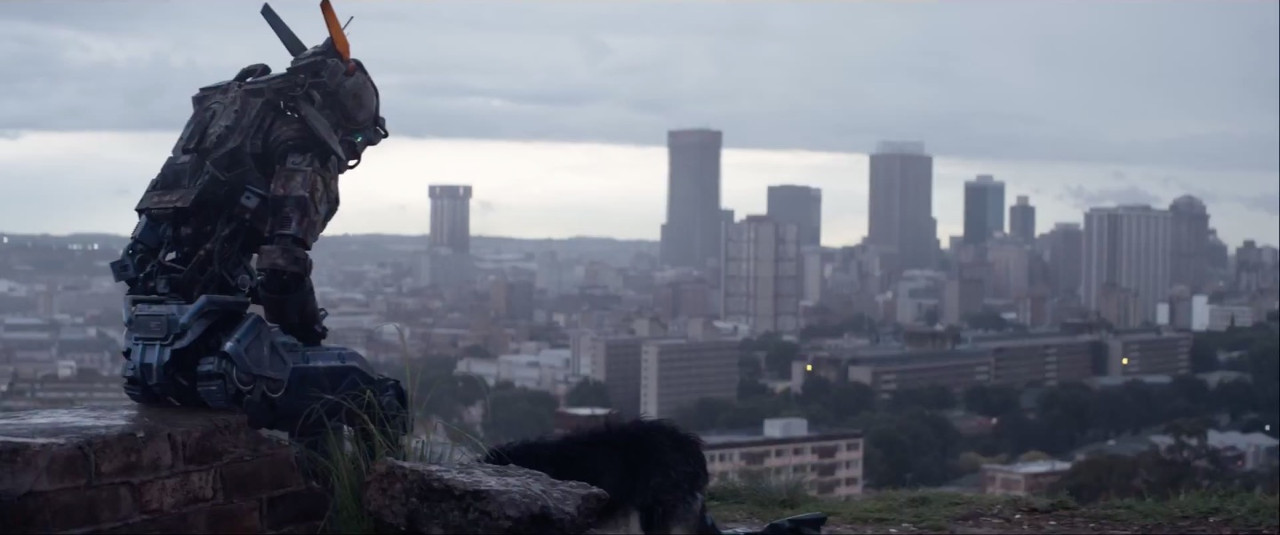
Three films in, Neill Blomkamp has half a great movie to his name. It's not half of this one. Like so many other films on the list this year, Chappie seems to be less a film in its own right than a compilation of other people's ideas, in this case with the annoyance factor turned WAAAY up. 

The story is an amalgamation of elements of Short Circuit (the coming of age stuff), Ghost in the Shell (several of the bigger sci-fi concepts) and Robocop (the crime/policing side of the story). The design also steals from all of these sources (Robocop especially egregiously). What ideas Blomkamp has are either abandoned in favour of CGI spectacle, poorly executed thanks to some of the worst performances of the year, or lost in the cacophony of competing elements and abysmal dialogue.

The performances are the worst part though. The perma-mugging Sharlto Copley is just awful as the voice and motion capture source of Chappie, Dev Patel is wooden as his creator, Hugh Jackman can blame his performance, which boomerangs from pious concern to gleeful violence on the script, but Sigourney Weaver's autopilot rendition of a business bitch has no such excuse.

However, it gets worse, in the shapes of Ninja and Yo-Landi Visser, co-vocalists in rap-rave act Die Antwoord, who both have major roles with serious screentime and compete to give 2015's most fingernails down the blackboard grating performance. It's a close run thing but Ninja's strained faux gangsta schtick wins. We lose.

Every single idea in Chappie has been better and more fully executed in other films, hell, the final image was better executed in a Bjork video. There's no reason for this to exist.

6: Mistress America
I'm not generally fond of what I've taken to terming 'hangout movies'. Hangout movies are those films that are driven not by plot but simply by spending time in the company of a character or small group of characters. I'm not averse to them when the character or characters are people I'd like to spend time with in real life, or people I find interesting enough to want to spend 90 minutes with in a cinema, even if I'd avoid them otherwise. The people in Mistress America are dull and largely have noxious personalities, I'd leave a party to avoid them.

Noah Baumbach's films have been having this effect on me for a while, but at least he used to write about interesting bastards. Roger Greenberg (Ben Stiller in Greenberg) is a wanker of such magnitude that for me it undermined the plot of the film, but he's not boring. The characters in Margot at the Wedding are uniformly terrible, but again, their conflicts are interesting. This is not true of Gerwig's Brooke, nor of Lola Kirke's Tracy (pretty damn awful herself) . 

Given that, all Mistress America amounted to for me was 45 minutes in the company of people I hated, then another 45 minutes watching them do forced, desperately unfunny, screwball comedy. I think that's my last Baumbach for a while.

Note: Yes, I know Baumbach made a film [While We're Young] without Gerwig this year, but since I hated the trailer and fans seemed to like that one less, I skipped it.

5: Madame Courage
I really thought this was going to be the single dullest film of 2015's London Film Festival. It didn't even manage that meagre achievement (see No. 3). I keep having to clarify that I don't have an inherent problem with slow or minimalist cinema, I think for me though, the caveat is that if in story terms you are going to take that route, then in character terms I need to find something compelling, because while beautiful images are all well and good - which isn't to say Madame Courage has those either - they aren't the be all and end all of what I come to cinema for.

This incredibly minimal story, set in Algeria, is of a young drug addicted thief who falls for a girl he mugs and begins following her and standing outside her window. What does he find so intriguing about her, why is she not more intimidated by him? On these and many, many other questions the film is oblique to the point of tedium.  Many scenes simply depict Omar (the thief) standing outside this girl's window for minutes on end. Nothing is said, nothing happens, we just watch him stand, or sit. This might have proven menacing if director Merzak Allouache gave any sense of building to something, but even when this appears, finally, to be what he's doing, it amounts to less than nothing.

On the sidelines there are scenes of Omar interacting with his Mother and Sister at home, but these feel overblown and, while they strain to make a point about women in this society, the characters are so thin that it never comes off. For the most part, for all its incident and interest, I may as well have watched a blank screen rather than Madame Courage.

4: The Corpse of Anna Fritz
I like my movies messed up and I especially like body horror. This really should have been on the other list this year, if it had worked. The premise is simple; a famous actress dies unexpectedly and the young morgue attendant invites his friends to see the naked corpse before it is embalmed. Soon though, things move beyond looking and while she is being raped, Anna Fritz (Alba Ribas in an exploitative part) wakes up. There is a terrifying locked room thriller, with a rich subtext about how we as a society believe we own celebrities, buried somewhere in this premise, but instead co-writer/director Hèctor Hernández Vicens opts to make one of the most by the numbers pieces of horror I've seen this year.

The Corpse of Anna Fritz runs through its potentially unnerving story within half an hour, then proceeds to stretch in a way that strains credulity and patience more often than it does nerves. Worse than this is the grinding predictability of the whole thing. Almost every scene is predictable not just in plot terms, but down to the visual choices. This reaches its apex in a chase scene that should be the film's most suspenseful moment but so hackneyed is the execution that I could spot every single shot and every single edit coming a mile away.

This should have been right up my dark little street, but it fails on almost every level.

3: Box
I went to see Box at the London Film Festival, choosing it over several higher profile screenings that I might have been well advised to see and have an opinion on, purely because it stars the Hungarian actress Hilda Peter, who made one of the most compelling film debuts I'd seen in years in Peter Strickland's Katalin Varga. This was my first chance to see her again and I wasn't going to miss it. Unfortunately, Box is an empty vessel.

Peter plays Cristina, a stage actress in her mid 30s, a little distracted both in rehearsals and at home with her husband and young son. Rafael Florea plays a 19 year old boxer, looking for success, who begins following Cristina home. After an hour's repetitive and largely silent screentime of this, they finally speak, agreeing to go for one coffee, after which Rafael will promise to stop following Cristina home. The film's last half hour, after this 'date' is grindingly predictable, but the film builds to nothing more than a pointless ellipsis. 

It would be something if we got any sense of a connection between Cristina and Rafael, that last image might then prompt questions, but they're so uninteresting that by the end it simply feels as though writer/director Corneliu Porumboiu has tired of the characters, long after I had.

2: Awaiting
I have to be careful how I phrase this, because there are words I don't want to use, but to say that Awaiting (which played at Frightfest before getting a DVD release this year) is 'inspired by' 1989 Canadian chiller Cold Comfort would be to, in my opinion, massively understate the debt that writer/director Mark Murphy owes that film.

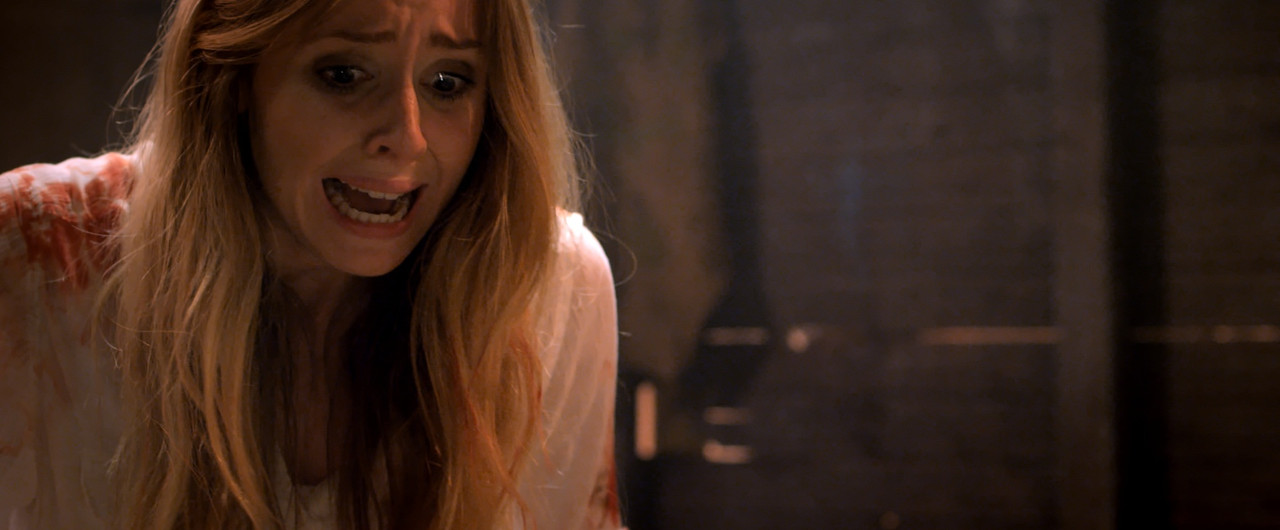
On its own merits, Awaiting is pretty awful. The performances of Tony Curran and Diana Vickers as a serial killer father and his shut in daughter aren't bad, but they're in service of a film that unspools like a collection of moments and shots drawn from other, better, films even before you get to the similarities to Cold Comfort. If you have seen that film then watching Awaiting will often be an exercise in deja vu, as Murphy mirrors not just plot details (often down to the tiniest nuances) but dialogue, images and even editing and shot structure. In this way Murphy hobbles himself, because even the few things he does right here seem to belong to another filmmaker first.

1: Terminator: Genisys
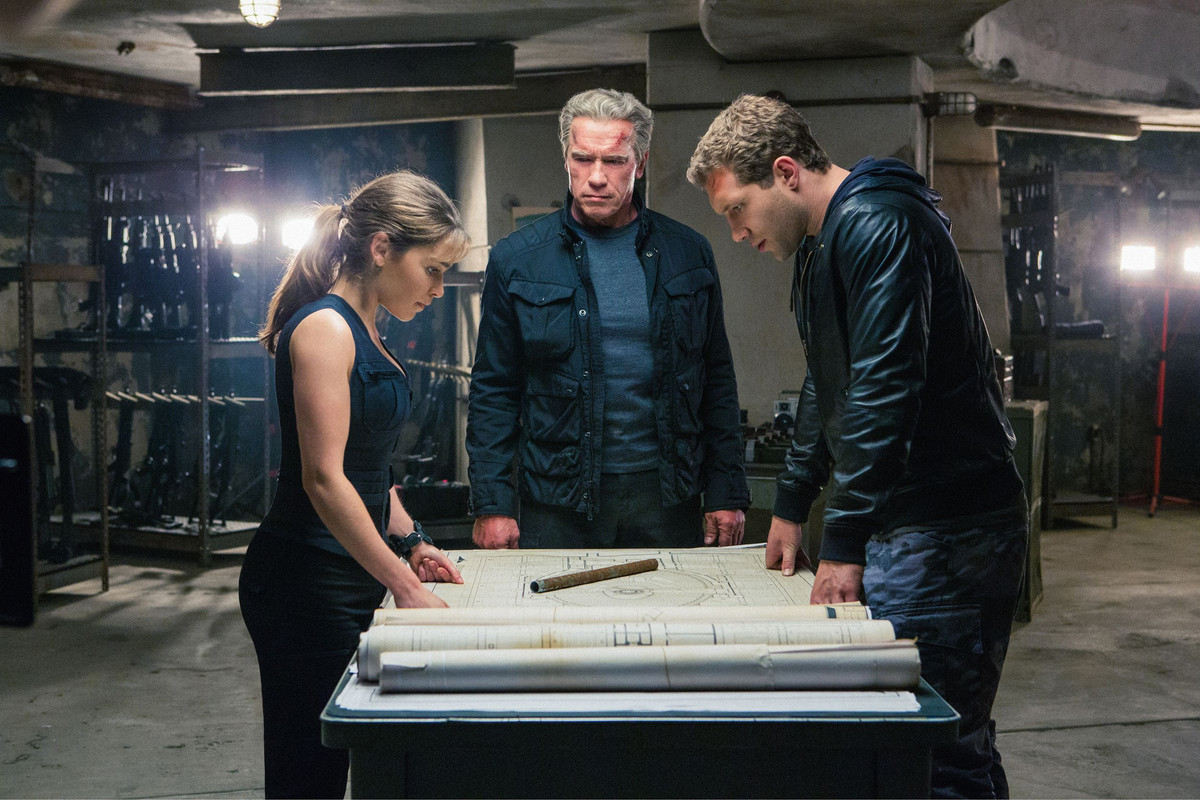
Terminator: Genisys is a remarkable film. It is so catastrophically terrible that it feels like watching the result of a creative meeting, the mission statement of which was 'How can we take every good idea in the history of the franchise and make it insultingly shitty?' Not only that, it makes me want to apologise to McG, because next to this steaming heap of elephant droppings, his Terminator: Salvation looks like the unacknowledged sci-fi classic it absofuckinglutely isn't.

Arnie's tired take on the titular cyborg is easily his worst leading performance since ending his Governorship of California. He's reduced to spouting endless confusing exposition, trying to find a quotable one-liner ("I'm old, not obsolete" won't be a line we'll see callbacks to in future Arnie films) and generally hamming it up. In previous films, Schwarazenegger's performances, subtly shifted with each different iteration of the Terminator, have been strong. Here he's weak all round, he seems bored and even his action scenes have a listless quality that suggest he's barely along for the ride. This isn't to say the rest of the cast is better: Emilia Clarke is a catastrophically miscast and bland Sarah Connor, while Jai Courtney still can't provide any answer to the frequently asked question 'Why does Jai Courtney have a career?'

The timeline bending storyline, which attempts to write the consistently and sadly underrated Terminator 3: Rise of the Machines out of continuity, is perhaps the film's very worst element. It's less a screenplay than a series of nadirs for the franchise. First the godawful moment in which Courtney arrives in this movie's 1984 and we see 1984 Arnie, the seemingly unstoppable threat of the first film, neutered within seconds. Then there's the twist. The godawful, utterly miscalculated, laughably executed and acted, thoroughly pre-spoiled twist. The idea is beyond terrible, but the performance it is anchored to is so bad that it undermines even the tiniest chance of it having the impact it might have achieved in the second or third films.

The tragedy of Terminator: Genisys (leaving aside its nonsensical tytle) is that for about 30 seconds we glimpse a movie that could have been, a movie that could have been new and different and interesting. Why couldn't we have seen the film set in 1973, with the Terminator raising and protecting Sarah Connor as a child? It would be a new context for the franchise, with new challenges inherent in the setting. But that's the thing, that would be new and that, in a Hollywood apparently intent on feeding on itself until it chokes on its own self-regarding nostalgia, just wouldn't do.

Feb 26, 2014

Coming of Age Movie Month Days 17 to 21

After two and a half weeks I found that even I needed a little breather from watching the same genre of movies at such a high rate.  I will be finishing out my list of 28 films for this project, but it may take me into March.

However, I will also be continuing the series with a weekly double bill of coming of age movies and reviews, those films will largely be new to me, but I'll also include a few I've seen but not reviewed here before.

Slap Her She's French
Dir: Melanie Mayron
Slap Her, She's French passed me by at the time of its release in 2002 and it's not hard to see why; this high school comedy, pitched somewhere between Clueless and Single White Female, which sees Piper Perabo as French exchange student Genevieve who deliberately overshadows the popular girl (Jane McGregor) whose family she is staying with, came right at the end of the late 90's/early 2000's revival of the teen movie and just wasn't up to the standard set by many of the films that had preceded it.

Slap Her, She's French is actually rather better than its (shit awful) title might imply.  Having an unsympathetic protagonist in Jane McGregor's Starla works quite well, because it enables writers Lamar Damon and Robert Lee King to give her some amusingly bitchy dialogue.  There are also some fun set pieces, few more amusing than when Genevieve 'helps' Starla with her homework and teaches her sexually suggestive phrases to use in her French oral exam.  It also wins points for a big final laugh, with a disclaimer before the end credits.

Melanie Mayron gives the film a bright, brash style that matches the broad style of the screenplay and she directs the cast to similar ends.  Perabo and McGregor both put in big performances, but the film is so heightened that it works, at least to some degree.  There are two ultimate problems here.  First of all, while it has some laughs, the film isn't consistently funny enough and secondly Perabo's deliberately awful accent may be a joke in and of itself, but it's not that funny and makes the film's 'twist' one that seems to have a neon sign flashing above it from the very first second she speaks.

Slap Her, She's French is a perfectly fine time passer if you like high school comedies (and, as I believe we've established, I do), but it's not among the best of its era and there are other lesser known teen films from this time much more worthy of rediscovery.
★★

36 Fillette

Dir: Catherine Breillat

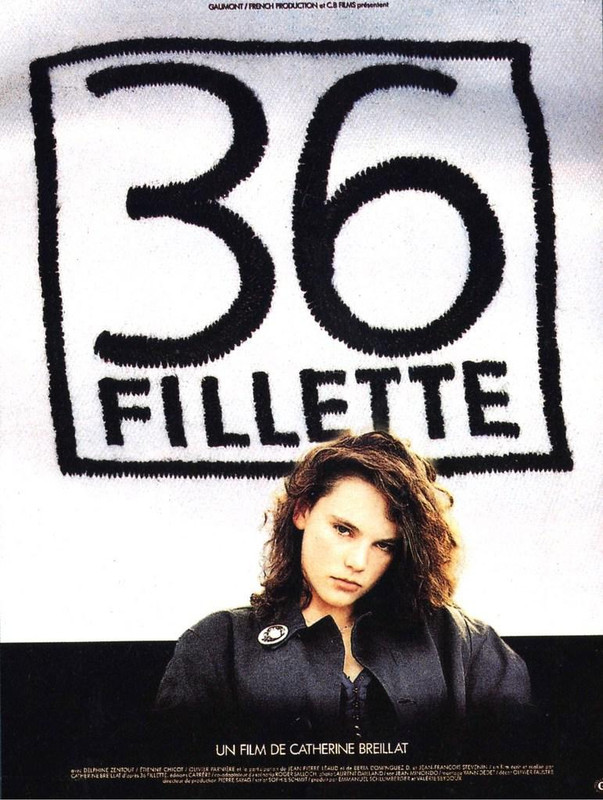
I have lately become more interested in the work of Catherine Breillat, having, it seems, found a way into her filmography through her recent fairytale films (which also deal in coming of age themes), so I decided to go back and look at an earlier example of her work for this series, hoping that a theme I am interested in would hook me into her earlier films.  Nope.

I've enjoyed quite a few of the more controversial French takes on first experiences with love, relationships, and sex and I appreciate the fact that they are unafraid to be confrontational and sometimes explicit in their depictions of these things.  I'm not sure what it is, perhaps I simply have a disconnection with Catherine Breillat's style, but like so many of her other films, I found 36 Fillette rather boring.

This is, typically of its director, a very talky film that finds a 14-year-old girl (Delphine Zentout) making a connection with a playboy type (Jean-Pierre Leaud) and becoming more and more determined, over about three nights, to lose her virginity to him.  Zentout is good, but I don't especially believe her as a teenager.  Like so many of Breillat's characters, she feels more like a mouthpiece for the director, except that here Breillat doesn't even have that much to say.

The relationship at the film's centre is creepy, which is to be expected, it's between a 14-year-old and a 40-year-old, but it's not creepy in any particularly interesting way (as the relationship in, say, Beau Pere is) and for me the film didn't seem to say anything about coming of age or relationships like the one between Zentout and Leaud that hadn't been said much better in any number of other films.  36 Fillette isn't terrible, but it did, for me, seem both bloodless and curiously pointless.
★★

Maske Ku' Vi
Dir: Morten Arnfred
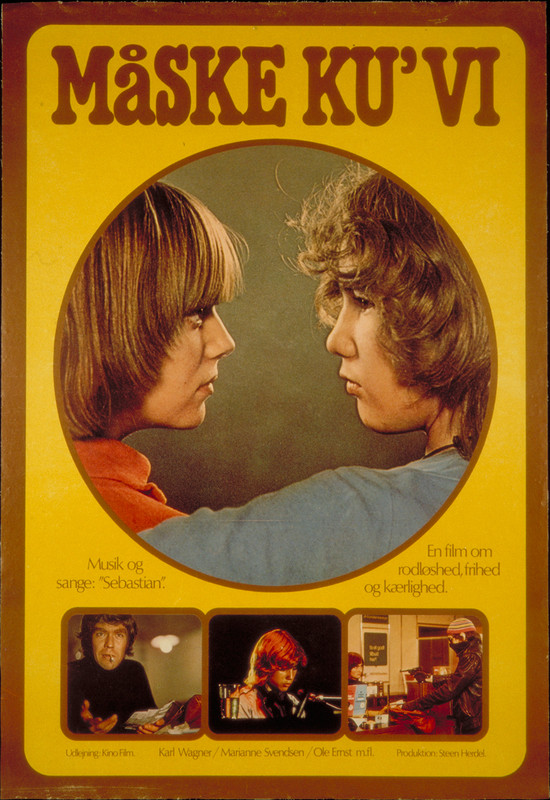
This seems to be something I'm saying a lot in the course of these reviews, but once again, Maske Ku Vi [Could We Maybe?] seems almost to be two films that have been glued together.  The film is by substantially the same team that would go on to make You Are Not Alone, and initially, it doesn't feel too far away from that film.  

Maske Ku Vi begins with an almost Loachian approach, taking a close up and rather uneventful look at the lives of two young friends.  I found this stretch of the film enthralling.  It establishes a social realist tone, grounding itself completely in the experience of two 14-year-old boys growing up in Denmark in 1977.  Little happens - they go out drinking, they jokingly flirt with prostitutes plying their trade from their windows, they hang out together - but you get a real sense of their friendship and their lives.  This changes when Kim (Karl Wagner) is asked to go to the bank for his mother.  During his visit, there is a holdup and he and a 14-year-old girl named Marianne (Marianne Berg) are kidnapped by the gang.

This second act, with the kids held captive by the gang but, at least in Kim's case, treating it more as a liberation from home, is where the film goes off the rails a bit.  The performances are still as naturalistic and as strong as they have been, especially between Wagner and Berg, but the scrupulously down to earth realism of the first act is thrown out of the window, becoming more and more distant as the film goes on. The change of tone doesn't entirely work.  The idea is to see bad events through the kids eyes, the fact that even a kidnapping can, if you don't like your home, feel like an opportunity, but the first act doesn't really suggest that Kim has that sort of disdain of his home life, merely that he's a typically dissatisfied teen, so this doesn't really come off for me.

The third act develops the little romance between Kim and Marianne believably and in typically frank style, but the overarching plot still feels too neat and too fanciful.  It's frustrating to not be able to recommend Maske Ku Vi more wholeheartedly because there are wonderful things in it.  The whole first act is great and there are some beautifully acted moments between Kim, Marianne, and the bank robbers, not to mention the sweet romance between the kids.  However, the mix of realism and more fanciful storytelling never quite meshes.  Still, flawed as it may be, this is an obscurity that will hold much enjoyment for anyone who likes these kinds of movies.
★★★

A Little Romance
Dir: George Roy Hill
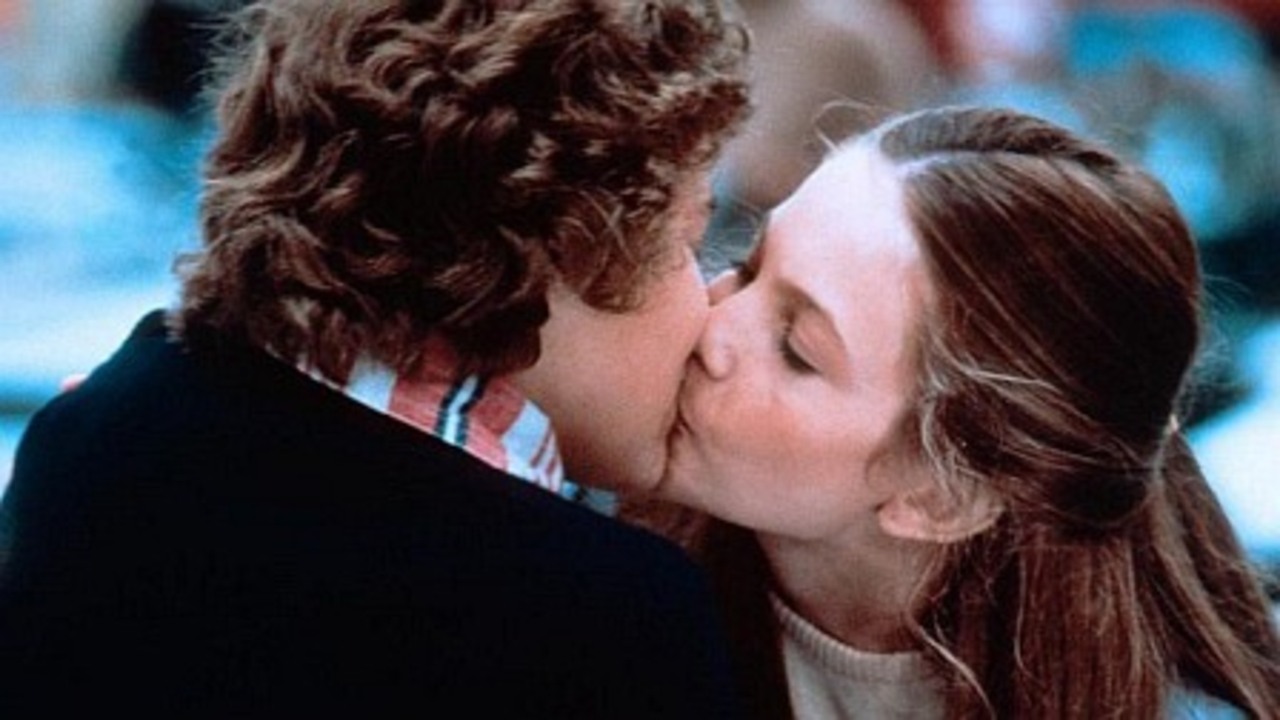
If it is now of any interest at all this film must chiefly be a curio based on the fact that it features the (charming) debut of Diane Lane.  With the exception of her fans, I would struggle to recommend A Little Romance to anyone.

Lane plays Lauren the stepdaughter of an American director working in France.  She meets a French boy named Daniel  (Thelonius Bernard) and... well, you've read the title.  The complicating factor is that Lane's mother (Sally Kellerman) doesn't like her new boyfriend (not entirely unreasonable of her; he can be a smug little shit) so they have to sneak around.  One day while they're out, Lauren and Daniel meet Julius (Laurence Olivier), who enchants Lauren with romantic stories about his days as a young man with his wife.  When Lauren and Daniel determine to run away together they enlist Julius' help.

One thing you can tell from this film (and from another early role in Ladies and Gentlemen, The Fabulous Stains) is that Diane Lane was meant to be in movies.  She's hardly stretched here; her character is supposed to be extremely smart, but it's a pretty typical teenage role, but she is just glowing and has a presence that completely eludes her co-star Thelonius Bernard.  Some of their scenes have charm, particularly when they're joined by their less intelligent but somehow nerdier friends (Ashby Semple and Graham Fletcher-Cook), but I don't quite buy their discussions about Nietzsche, even smart 14-year-olds don't often talk that way.  The familiarity of the whole thing is also a problem, there's little to distinguish A Little Romance from a hundred other similarly themed films, aside from Laurence Olivier. 

I confess I've not seen much of Laurence Olivier's work from when he was a leading man (though I thought he was great in Hitchcock's Rebecca), so I have to take his reputation as one of the greatest screen actors somewhat on trust, but he is terrible here.  Olivier hams outrageously through a completely stereotypical and pretty awful Franch accent.  His presence completely unbalances the film, which is reasonably well played until he turns up, immediately alerting us to the fact that we're watching a movie because there is no sense when watching Julius that we are seeing anything other than an actor chomping all the scenery he can lay his hands on.

The plot grinds on, chugging through predictable twists with broadly written adult characters and Olivier always on the sidelines, undermining the moments of sincerity the film does have.  Lane and Bernard try hard, but the love story never caught light for me.  A Little Romance is perhaps worth a look for Diane Lane fans, but I found it rather irritating.
★★

Kundskabens Træ
Dir: Nils Malmros
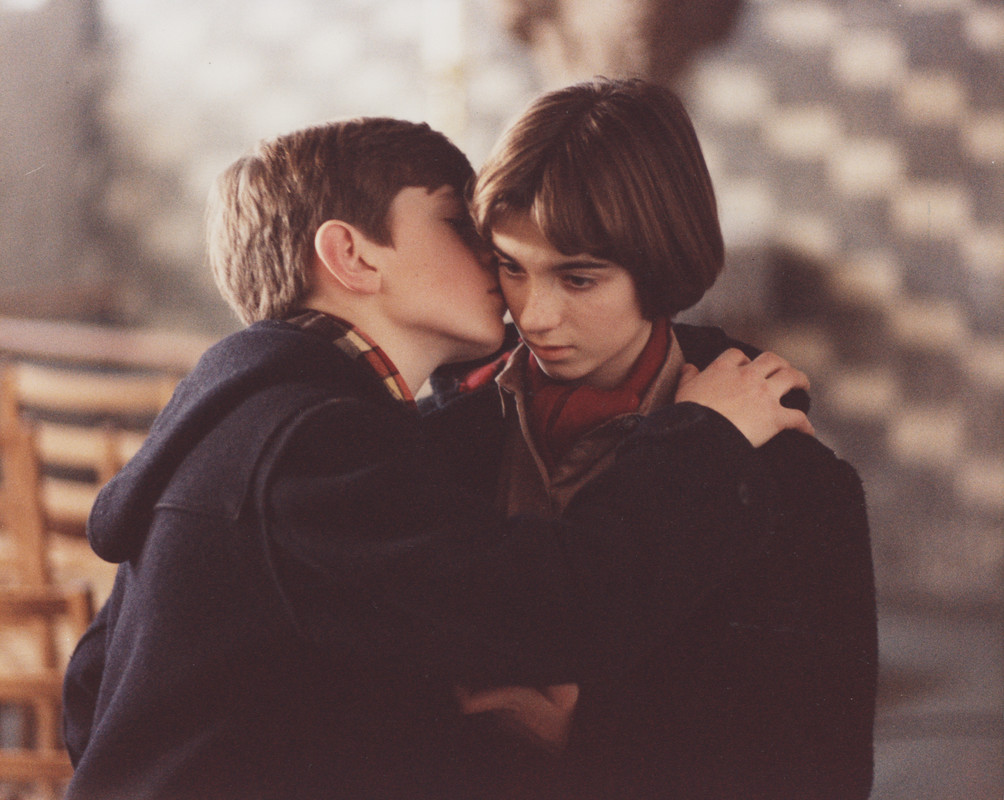
Until I began doing the research for this series I had never even heard of this 1981 Danish film, apparently it is regarded as something of a classic in Denmark, and it isn't difficult to see why.  

In common with many Scandinavian coming of age films, Kundskabens Træ (Tree of Knowledge) has a more downbeat take on the process of growing up than is generally common in mainstream teen and coming of age films, especially those from the US.  In this case, the film follows a whole class of roughly 13-year-old students over a few weeks.  We see the cliques that they form, but what writer/director Nils Malmros is especially perceptive about is how young people's friendships and relationships can shift almost day by day for the tiniest of reasons.  The focus is most frequently turned on the popular Elin (Eva Gram Schjoldager), who is slowly and systematically frozen out by her friends after she refuses the advances of Helge (Marin Lysholm Jepsen).

While it is strong on the drama  Kundskabens Træ also has a great feeling for the playfulness of its characters, whether they are sneaking around in a boring lesson to play tricks on their teacher or getting involved in a game on a school trip (in a scene that feels heavily improvised).  It is perhaps best when it combines these two aspects, showing the kids being kids and having fun, but also what they are doing to Elin.  On the school trip there is a beautifully observed scene where an acronym, PTH, starts to be used to refer to Elin and the way it is passed in whispers from kid to kid is perfectly realised, it's something we all saw and heard during our own school days and is relatable whether you were 13 in 1953, when the film is set, or in 2013.

Eva Gram Schjoldager, who only ever made one other film, also for Malmros, is brilliant as Elin.  You can see her lack of comprehension about what she's done wrong to be frozen out by her friends, but also her determination to be strong in the face of that and of her awful, awful parents and their 'advice' (which, in the only poor piece of writing in the film, feels almost abusive at times).  She's most moving though the few times that she cracks; you can see the hurt behind her stoic face when her friends blow off her party to attend another, to which she's not invited.  It's a sad story, but one that is all too real.

The other kids are equally excellent.  While they are all playing in a particular period there is still a feeling of easy naturalism to the performances and though there are a lot of characters to keep track of most of the actors manage to give their roles enough personality that their characters and their relationships are clearly defined.

If you were ever 13 then you will find something in Kundskabens Træ that will prick at your memories of that time in a relatable way.  It may make you laugh, it may make you cry, but either way, it's well worth taking the time to track this rare little gem down.  For my part, I'm going to try to find some more of Nils Malmros' films.
★★★

Feb 24, 2014

Nymphomaniac [18]

Dir: Lars Von Trier
I have never found Lars Von Trier to be an especially consistent filmmaker, but when he finds form his work can be dazzling; challenging and exciting in a way that few directors today ever are.  This has certainly been true of his most recent series of films, the depression trilogy which, following Antichrist and Melancholia, now comes to a close with the colossal Nymphomaniac.

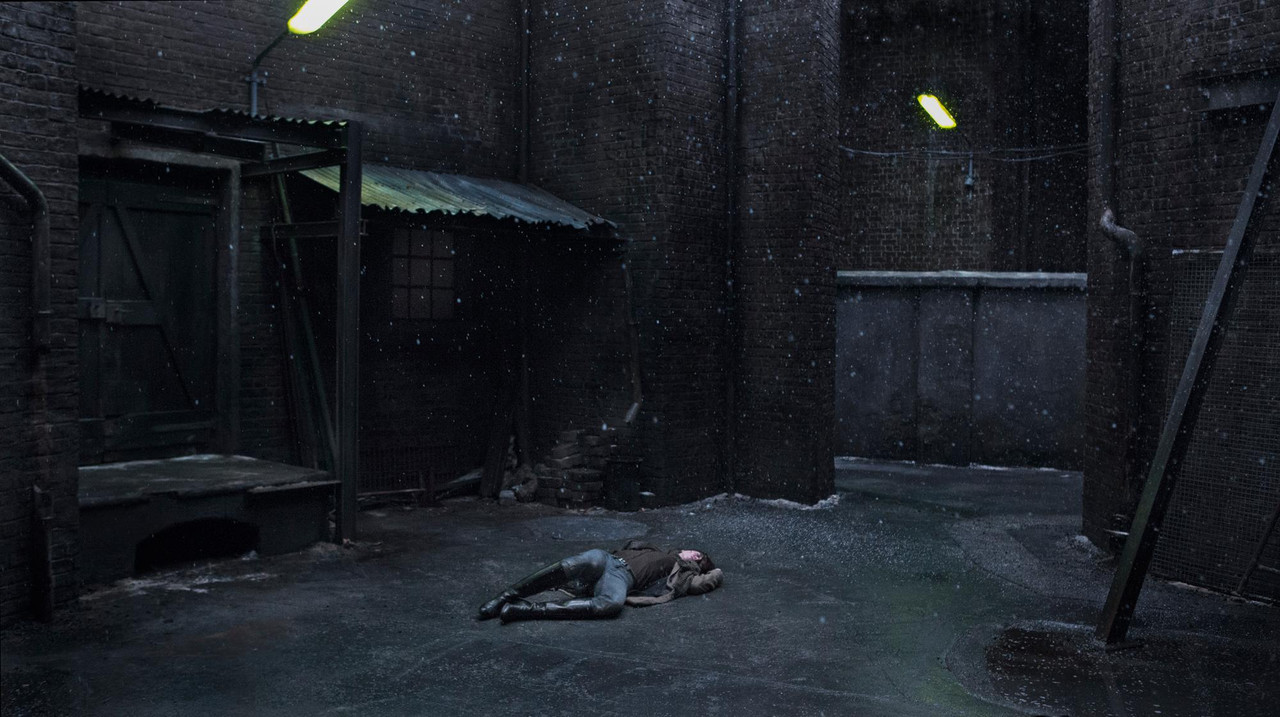
Across, in this shorter version, four hours and two volumes Nymphomaniac tells the story of Joe (played from 15 to 30 by newcomer Stacy Martin and from 30 to 50 by Charlotte Gainsbourg).  We find her lying in the street, beaten up.  Seligman (Stellan Skarsgaard) stumbles across her and, when she insists that he not call an ambulance, takes her to his home to recover.  There Joe relates, in eight chapters, the story of her life as a nymphomaniac, which she believes will lead Seligman to judge her a bad person.

There is always the question of how seriously we are to take anything that Lars Von Trier says or does, but Nymphomaniac comes loaded with more questions than that.  Is this four hour version something Von Trier is happy with?  Are we intended to see this as one long film or two distinct entities?  Is Von Trier trying to make art or porn?  Typically for its director Nymphomaniac makes none of these questions easy to answer.  That being the case you should consider this a review of the experience of seeing the two parts of this film back to back.  Having done so I'm sure that it will be a different experience viewing them separately, and I suspect doing so may benefit the films.

There are a couple of surprises about this version of Nymphomaniac (Von Trier's 5 ½ hour director's cut will likely see a Blu Ray release later this year), but the biggest is perhaps how playful and how funny it is.  Even at the film's most pretentious - and boy can it get pretentious - Von Trier's cutting and his dialogue often demonstrate a dry as dust wit, which can cut through the moments that might otherwise see you shake your head and mutter 'oh, Lars'.  For instance; Seligman often interjects in Joe's story, and at one point, just as I was inwardly sighing at another of his monologues in Volume 2, Joe told him “I think that was your most annoying interruption yet”.  The fact Von Trier seems to anticipate this criticism doesn't entirely defuse it, but this wry self-awareness is present and welcome throughout.  Seligman's interjections can be funny, but they are rather on the nose.  The fly fishing metaphor of the first chapter is amusing, but playing the same trick on different themes for four hours becomes seriously wearing by the midpoint of volume 2.  This is one of several ways in which the films might, for me, work better apart from one another. 

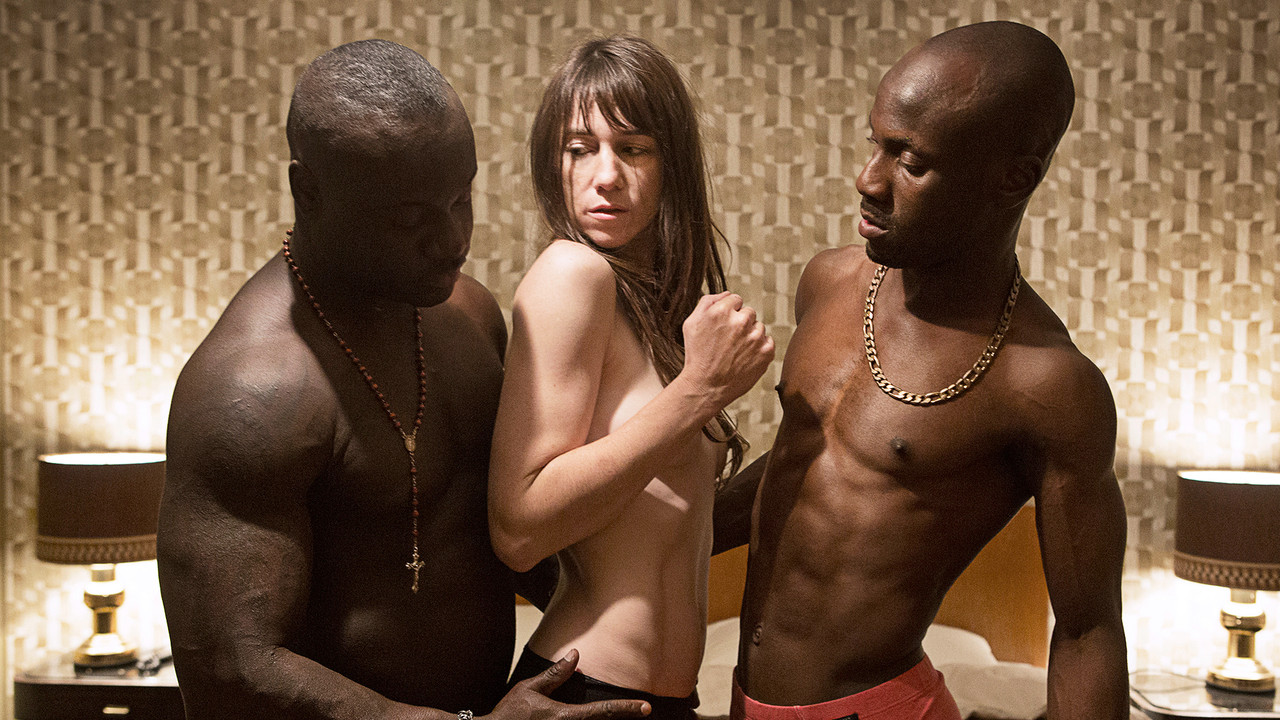
Throughout both volumes, Nymphomaniac essentially unfolds as two linked films; one a two hander, set in a single room, as Gainsbourg's older Joe tells her story and has discussions with Seligman, the other a series of flashbacks taking Joe from her discovery, at two, of her c**t right up to the film's opening image, when she is 50.  Both sides have moments that are great and moments that are infuriating, but for me, the flashbacks work more consistently.  

The big question of this film was always whether Von Trier could find someone who could convince as a younger Charlotte Gainsbourg as, from her look to her soft and soothing voice, Gainsbourg is one of the most distinctive (and for my money one of the best) actresses working.  Stacy Martin doesn't so much look like a young Gainsbourg as she does an absurdly beautiful melding of Gainsbourg's features with those of her mother, Jane Birkin, but what she gets right is the essence of the actress and especially the voice, which has that distinctive delicacy that is so present in the film through Gainsbourg's voiceover.  Outside of comparisons to her elder counterpart, Martin, in her first film, delivers an exceptional performance.  She has a way of delivering Joe's emotional detachment without her performance being empty.  She's especially good in what is easily Volume 1 and the film's best scene; as Uma Thurman whips up an emotional whirlwind around her Martin silently conveys Joe's alienation from, discomfort with and lack of understanding of these emotions.  When, particularly as Joe loses her one expression of feeling, Martin is called on to dig into emotional reserves, she delivers brilliantly.  The last shot of volume 1 is searing and painful thanks to her.

Charlotte Gainsbourg's side of the central performance is just as impressive.  Her Joe seems more fragile as if age and experience have made her brittle.  There is certainly more bitterness in her in this older incarnation, some justifiable, some less so, but she is recognisably the same woman.  Having given us two depictions of depression that manifested themselves in very visible ways; Antichrist's violence and Melancholia's panic, Gainsbourg here shows a much more reticent kind of depression.  Joe seems to operate at one remove from the world; her sexuality the only way she knows - perhaps cares - to connect with it.  Her brilliance here lies not in the searing, screaming, pain of loss as it does in Antichrist but in something much smaller and ultimately harder to understand.  Gainsbourg's side of the film is sadder, more reflective, but she does get to engage in some of its funnier moments, as when a proposed threesome degenerates into an argument between the two men.  Her voiceover means that Gainsbourg remains a presence even in the earliest of the flashback scenes, and does a great deal to tie the two portrayals of Joe together.  It's also just wonderful to listen to, communicating much about Joe's inner life with a rather poetic turn of phrase, not to mention a voice I would happily hear read the phone book.

The supporting cast is eclectic and the performances are as mixed as you might expect.  Perhaps the film's biggest downfall is the performance of Shia La Beouf.  I respect the fact that he's trying to stretch himself now, rather than turn back to the blockbusters that made his name (and, let's face it, an amount of money that allows him that choice), but he's pretty terrible as Jerome; the most important lover in Joe's life.  The problem is twofold.  First of all, for a character who has a lot of screen time, Jerome is frustratingly thinly developed.  He seems to behave in ways that serve the plot rather than tracking as a real character.  This too is something Von Trier jokes about, even implying that Joe may be lying about some of the times that she refers to Jerome, perhaps subbing him in for someone else because it's more interesting to do so. The second issue is LaBeouf's accent.  The film seems to be set in England, but it's so non-specific that there is no reason that Shia had to attempt the abysmally poor, inconsistent, woefully generic, 'English' accent he does here.  Let's just say that Dick VanDyke may now be forgiven.

There is much better news among the supporting cast, Christian Slater is very good as Joe's father (though the fact he stubbornly refuses to age is a little jarring in his last scenes, moving though they are).  Jamie Bell also impresses as a BDSM specialist that the older Joe sees.  He's almost completely devoid of personality, but Bell makes this interesting rather than frustrating.  I found myself asking the same questions as Joe does; who is this man and what does he get out of his 'work', which we never see that he is paid for?  In a smaller role as a friend of young Joe's, Sophie Kennedy Clark puts in a provocative turn in the film's opening chapter, instigating the memorable scene in which her character B and Joe compete to see who can fuck the most men on a train journey and so win a bag of chocolates.  On the downside there is Mia Goth, who has a large part in the film's closing chapter but, while beautiful, is deadly dull and puts almost no expression into her lines.  The film is very nearly stolen, however, by the barnstorming one scene performance of Uma Thurman, which has to be seen to be believed and should, in a world where there is justice, already be a front runner for next year's supporting actress awards.

Lars Von Trier's style as a director is constantly mutating and while Nymphomaniac has moments that recall the incredibly designed beauty of Antichrist and Melancholia (the opening shot, older Joe finding her 'soul tree' and many more) it also has a grittier and more mobile camera style at times.  This apparently comes out of Von Trier's non-proscriptive atmosphere on set, not blocking the scenes in advance and tasking the camera to follow the actors rather than vice versa.  This is perhaps best seen, again, in Uma Thurman's one scene, which has a chaotic but cohesive visual feel.  Perhaps the most notable thing about what Von Trier does here is the way that, like his main character, he appears to be reflecting on his life.  References to his earlier work litter the film.  I'm sure I didn't pick up on all of them but a major plot point of Breaking the Waves is echoed, the opening scene of Antichrist is recreated almost shot for shot and that film's fox also makes a brief cameo in the films most broadly comic scene.  Beyond reflection what Von Trier is saying about how he views this earlier work is never quite clear; perhaps that is what the debate between Joe and Seligman is really about for him, but it's a typically mischievous touch from the director.

Explicit as it is, Nymphomaniac is almost studiedly unsexy.  Part of Joe's story is how her endless sexual activity ends up being unfulfilling and making her numb both physically and mentally.  For its part, the film seems determined to make you feel the physical side of that numbness and it largely succeeds.  Most of the sex is mechanical (in a funny touch the thrusts when Joe loses her virginity are counted out on screen) and even when it's explicitly shot Von Trier's camerawork is so matter of fact.  The signifiers that Hollywood uses to tell you 'this is a sexy scene' are all absent.  It's all very effective in plugging you into Joe's experience.  That all said, I must confess I found one scene in the last chapter to be an exception to this rule, and I suspect most people will have one or two scenes where they find this to be the case.

Though my interest began to flag towards the end of the film, as I began to tire of the heavy metaphors discussed between Joe and Seligman, the film's only major storytelling misstep for me is its coda.  Even in a film that feels as frequently on the nose as this one, that last sequence bothers me because while Nymphomaniac can be groan-inducingly obvious it is never, until that moment, cheaply shocking.  I'll just say that I wish the cut to black had come a couple of minutes earlier and leave it for you to discover what I mean and whether you agree.

As an experience, Nymphomaniac is certainly a singular piece of work and often an exercise in contradiction: pretentious and hilarious; endlessly provocative and explicitly unsexy; artfully composed and messy as hell; rigorous and mischievous.  Viewed as a whole it loses steam, but that may not mean that Volume 2 is a worse film, simply that at four hours it is exhausting.  This isn't a great film by any means, but it's a vital and exciting one, I'm glad it exists and for all its flaws it is essential viewing.
★★★