Showing posts with label Coming of Age. Show all posts

Oct 16, 2021

24FPS @ LFF: Petite Maman

Dir: Celine Sciamma
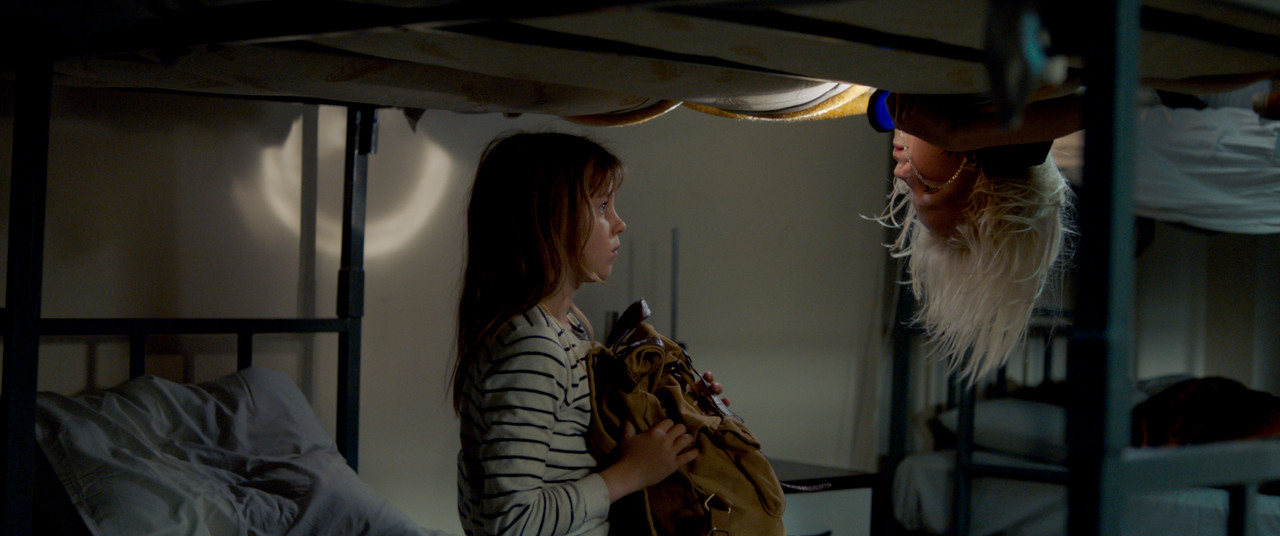
“I came from the path behind you”, says 8-year-old Nelly (Josephine Sanz), just after telling her friend Marion (Gabrielle Sanz) that, in the future, Marion will be her mother. Like many of the lines in Celine Sciamma’s exquisite screenplay for her fifth film, it’s layered with meaning; Nelly literally comes from the path behind Marion, from her Grandmother’s house, which she and her parents are clearing out after her death. It’s also a line about how Nelly, and all children to some degree, follows a path cut for her by her mother.

Four of Sciamma’s five directorial films, and the two features she’s written for other directors, fall broadly into coming of age cinema. I’m not sure any modern filmmaker has managed such a consistent, varied and nuanced exploration of the genre. While it hasn’t got the spectacular effects and the high sci-fi concept, the film Petite Maman most recalls for me in spirit is, perhaps surprisingly, Back to the Future. That film, ultimately, is about meeting your own parents and realising that if you had just been a couple of guys at school, you probably wouldn’t have got on with your Dad. Petite Maman takes the same basic concept of meeting your parent at your own age, but in this case, Nelly and Marion become fast friends. While the film doesn’t have her state it in the moment, it’s clear from one subtle shot of a particular, almost talismanic, prop that Nelly figures out quickly what is going on. 

Initially, Nelly and Young Marion are on totally equal footing, there’s an innocence and purity to their play together, spending much of their time in the woods, building a hut that Nelly had asked about earlier in the film. Later, when the relationship is clear, Sciamma uses the carefree feeling of these scenes to contrast with the older, clearly more fragile, Marion (Nina Meurisse), for instance, it doesn’t seem like the silly, playful, way that the girls make pancakes for Marion’s eighth birthday party is something Nelly will have done with the older version of her mother. 

In the present day scenes, there are some beautiful observations of how much Nelly cares for her mother; feeding her crisps and hugging her from the back seat as they drive away from the home where Marion’s mother passed away. It’s something that, while present day Marion clearly loves her daughter, the younger version seems more able to express. There is so much to be said about how delicately and how beautifully Sciamma and her young stars paint this relationship, but perhaps the simplest moments are the most moving, like the image of 8-year-old Marion, blowing out her birthday candles as she looks between her mother and her future daughter. It’s a gorgeous, truly magical, family portrait that sums up the film's magical realism perfectly.

Celine Sciamma is one of the truly great filmmakers working today, and Petite Maman is another gem. Thanks to cinematographer Claire Mathon, who also shot Portrait of a Lady on Fire for Sciamma, this is a beautiful film. The scenes between the young Marion and Nelly have a golden autumn feel, while the scenes back at the present day house emphasise the emptiness, especially after present day Marion takes off, leaving Nelly with her Dad. The dialogue doesn’t always sound like 8-year-olds talking, but some of the most childlike moments are the film’s most indelible, like Nelly wanting to go to sleep “to get to tomorrow”, which leads immediately to one of my favourite cuts in any recent film, carrying that idea through directly.  In 72 minutes, Sciamma manages to convey great depth and nuance, to fully explore this mother/daughter relationship, but do so with disarming simplicity. 

I think I need to see it again (and again) to appreciate all of its layers properly, but this is clearly one of the very best films of 2021 and yet another landmark in Sciamma’s thus far flawless career.
★★★★★

Oct 12, 2021

24FPS @ LFF: Playground

Dir: Laura Wandel

For seven and nine-year-old siblings Nora (Maya Vanderbeque) and Abel (Günter Duret), the school playground isn’t the friendliest place. Bigger boys pick on Abel, and the association, as well as their closeness, blows back on both him and Nora, making things worse for both of them.

Playground is perhaps better served by its original title: Une Monde (A World). A child’s world is, in many ways, fundamentally different to that of an adult, and Laura Wandel goes out of her way to create that world and to bring us into it. The camera is always placed at Nora’s height. Adults are often seen as legs and have to bend down into the frame to interact with the children. This immediately places us with the children, having to remember what our perspective was like. 

Visually, Wandel also uses close-ups a lot, making the backgrounds of shots blurry. This, I think, is a neat and effective way to suggest Nora’s development. At seven, she’s just arriving at the stage where she can see beyond herself, but the blurriness suggests there’s still a shallow focus there; she can empathise with her brother, but her reasoning (“You won’t stand up for yourself, so I told Dad”) is still simplistic, and initially, she can’t see how that might have unintended consequences. It’s telling that the adults we see in focus are the ones Nora feels closest to; her Dad, a stay at home parent, and her favourite teacher, through whom the script hits its only bump, perhaps leaning a little too hard on the saintly teacher trope à la Miss Honey.

These interactions with the film’s few adults aside, Playground stays resolutely among its young cast, observing the day-to-day of primary school politics and interaction. The bullying we see doesn’t seem motivated by anything particular, just that the bigger boys sense some kind of weakness they can pick at in Abel, especially when his younger sister—again too naive to read the situation the way her brother can—tries to defend him. It’s even more affecting when, having gone to a teacher, we see Nora sitting in on a meeting as the boys are made to apologise to Abel. The whole scene plays on Maya Vanderbeque’s face, and we can see that Nora now understands that this is only going to make things worse.

The way this all affects Nora and Abel’s relationships with each other and with their own friends is incredibly realistically written, seldom more so than in a heartbreaking series of scenes as Nora tries to get invited to the birthday party of a girl who, until a few weeks ago, was her closest friend at school. This and the way Abel tries to get back in the good graces of the bigger kids by turning into one of them are so well observed by Wandel and her young stars that were it not for the purposeful stylisation of her camerawork you could confuse moments of the film for documentary.

For me, the filmmaker Wandel most recalls here is Nils Malmros, whose brilliant coming of age films are some of the best the genre has ever produced. In particular, this one seems to look to his debut, the autobiographical Lars Ole, 5C, for inspiration. There is little higher praise I can offer than to say that Playground can stand alongside that film and other classics about childhood and growing up. 

This is an outstanding debut. It's structurally excellent, with a beautiful rhyme to its opening and closing shots. More than that, it's also an incredibly articulate film that has a lot to say about children’s experiences at school and, through some of the things we hear them say that must be parroted or misinterpreted from their parents, at home as well. It's too unblinking and too serious to speak to the children it's about, but it feels like it comes from a place of deep understanding for and of them. It's one of the best films of 2021, and marks Wandel out as a huge talent to watch.
★★★★½

Mar 19, 2021

24FPS @ BFI Flare 2021: The Obituary of Tunde Johnson

Dir: Ali Le Roi
The time loop narrative has been in vogue lately, with the two Happy Death Day films, coming of agers like Before I Fall and The Map of Tiny Pretty Things and rom-com Palm Springs (still unreleased in the UK), but The Obituary of Tunde Johnson uses the conceit to a much more sober and serious end than I’ve seen before.

Tunde (Steven Silver) is an 18-year-old high school senior from a wealthy, Nigerian-American family. He’s in a secret relationship with Soren (Spencer Neville), a jock who is also the boyfriend to Tunde’s best friend Marley (Nicola Peltz). On this day, he tells his parents he is gay and, at the end of each day, he is killed by the police only to wake, gasping for breath, in his bed.

There are two threads at work in The Obituary of Tunde Johnson; one personal, the other societal. The early part of the film is more focused on the wider issue of how black people, especially young black men, are seen and treated in the US. The steady flow of stories about black men killed by cops can, I would imagine, feel like a time loop; a reiteration of different but similar circumstances leading to the same tragic result day after day. Here, writer/director Ali Le Roi simply reduces that to an actual loop. Each day, with each iteration, Tunde makes changes to his circumstances, he avoids the incident in which he gets pulled over, he responds differently when challenged, but even when he heeds his father’s counsel that “Your life is more important than your pride… You stay silent, and you comply” the result is the same. It’s a confrontational message, powerfully delivered. Because we’ve seen time loop movies before, we want to see Tunde figure out the magic formula to survive the day, but the deep sadness of this strand of the film is that it’s message is that this is the reality; that a lot of black people in the US have to figure out that formula each day.

The other throughline is the relationship between Tunde and Soren. Tunde is clearly all in, and at times this feels mutual. The chemistry is there but so, for both of them, is the fear. Of course, that fear dissipates for Tunde as the days loop, because he knows that when he tells his parents it will be fine. The portrayal of the way that Soren hides his relationship with Tunde, staying with Marley as a cover seemingly for fear of losing his jock friends and the love of his father (a broadcaster on a Fox News type political show) rings true, sometimes in ways that are almost painful to watch. This is never more true than in a heartbreaking key moment when Soren is obviously desperate to say something and the words simply can’t claw their way out. The combination of all this with the two sensitive and detailed performances at the film’s heart adds up to a storyline that ends up powerfully putting across why Tunde says that, as a black man and a gay man “In the eyes of humanity, I’m two degrees off human”. 

The Obituary of Tunde Johnson is definitely a film driven by message (much to the consternation of some imdb commenters, giving it 1/10 and decrying its ’wokery’, expect more of that idiocy as it is more widely seen). That said, it advances that message, if not subtly, then often poetically. The dialogue is beautifully written, from Tunde’s repeated obituaries for himself to other lines that simply stick for how well crafted they are (“When you die you become a scar”). Tunde’s loop never feels like Groundhog Day; the universe giving him a chance to get everything he wants, it’s sadder and more realistic about the US than that, perhaps it’s just a chance to survive this day, and that maybe being enough.
★★★★

Feb 7, 2020

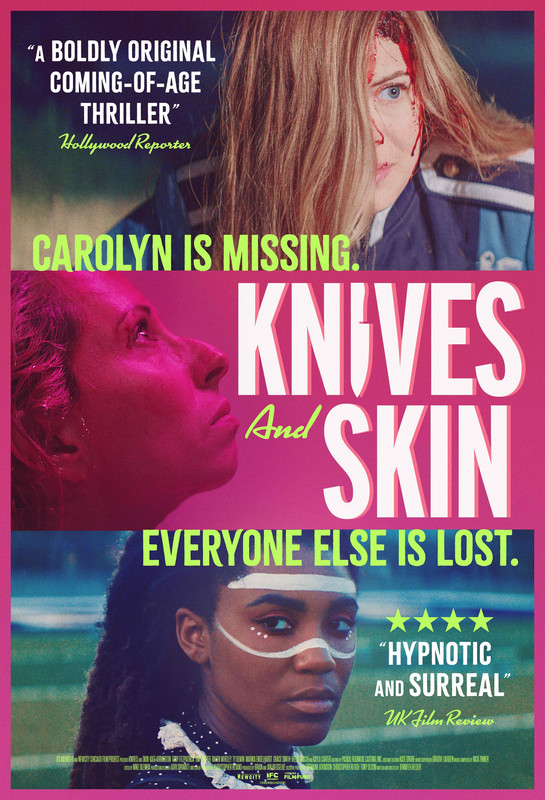
Knives and Skin

Dir: Jennifer Reeder
I’ve only seen a handful of Jennifer Reeder’s short films, but this feature feels like a logical extension of them. Those shorts screened in the London Film Festival’s Experimenta programme, but I always believed I saw Reeder’s interest in genre trying to force its way through her more abstract imagery. The images may lean more towards traditional narrative cinema here, but the tone remains deliciously off-kilter, in a way that draws us into what feels like a reality-adjacent world where Reeder is in full control.

15 year old Carolyn Harper (Raven Whiteley) has gone missing, and the film explores the aftermath of her disappearance and its effect on the small town she lives in; her peers at school, as well as her mother, Lisa (Marika Engelhardt) and the other adults in the community.

As befits a director with Reeder’s experience, Knives and Skin is, from the first frames, a supremely confident film. We are thrust straight into its neon-dipped world, discovering Lisa looking for her daughter, knife in hand, then pulling on one of her daughter’s dresses when she finds her gone. This sets a mood for the next 110 minutes, establishing the slightly off feeling of the film’s world, the bright and bold look and the way it mixes a wide streak of humour into its overwhelmingly melancholy tone. There is so much going on here, so much that Knives and Skin is about. On the surface, it’s largely about how a single death—even that of a person who may not have been especially popular—can echo through a community, but look beneath that and there is a film about girls and women, about feminism and representation, about relationships, about high school and about high school movies. Even that list doesn’t cover all the bases. 

Everything is filtered through Reeder’s dialogue, which has a very specific feel. It takes a moment to adjust to at first, but soon we and the film settle into its rhythm. Soon after her daughter has disappeared, Mrs Harper is talking with the local Sheriff, who says that he’ll get his wife to make her a casserole “I don’t think it’s time yet for casserole”, she replies. This moment distills the dialogue style beautifully; the cadence is slightly off, but the words themselves are expressive and full of underlying meaning. We know from the start that Carolyn is gone but in this moment her mother isn’t ready to give up hope that her daughter will be okay.

Other themes are also explored. The film is timely in its feminist approach. Early on, Reeder looks to reclaim the depiction of girls in teen movies. As Joanna (Grace Smith) and Jesse (Robert T. Cunningham) discuss their relationship to Carolyn he says “She could be pretty mean, so can you”. “That’s all we’ve got”, comes the reply. This feels like a direct riposte to the stock character of the popular bitchy girl, and also an acknowledgment of how women, whatever age, are judged more harshly for not appearing ‘nice’. We don’t actually see much meanness between the girls, but Joanna has a hard side, expressed to exploitative men in her life—a line about a sandwich near the end of the film is, remarkably, both laugh out loud funny and properly rousing. The film’s thesis statement about high school girls, if it has one, comes towards the end when Laurel (Kayla Carter) tells her soon to be officially ex-boyfriend “I’m not a bitch, I’m not a slut, I’m not a tease. You treat girls like shit”. It’s a powerfully blunt statement, later underlined in a perfect visual moment.

These are just some of the ways in which Reeder tries to get us to look askance at high school movies of the past, while also making clear her respect for the genre. Much of the film’s last fifteen minutes seems dedicated to this idea of depicting familiar moments but putting a twist on them. For instance, there is plenty of buildup to the homecoming dance, but it’s a performance by Charlotte’s band, rather than the date the film has been setting up, which ends up being the most important part of the scene, while a potential suicide scene becomes one of the film’s most hopeful and funniest (Joanna: “Please don’t jump, you’ll make a mess down here and it’s already such a fucking mess down here”) 

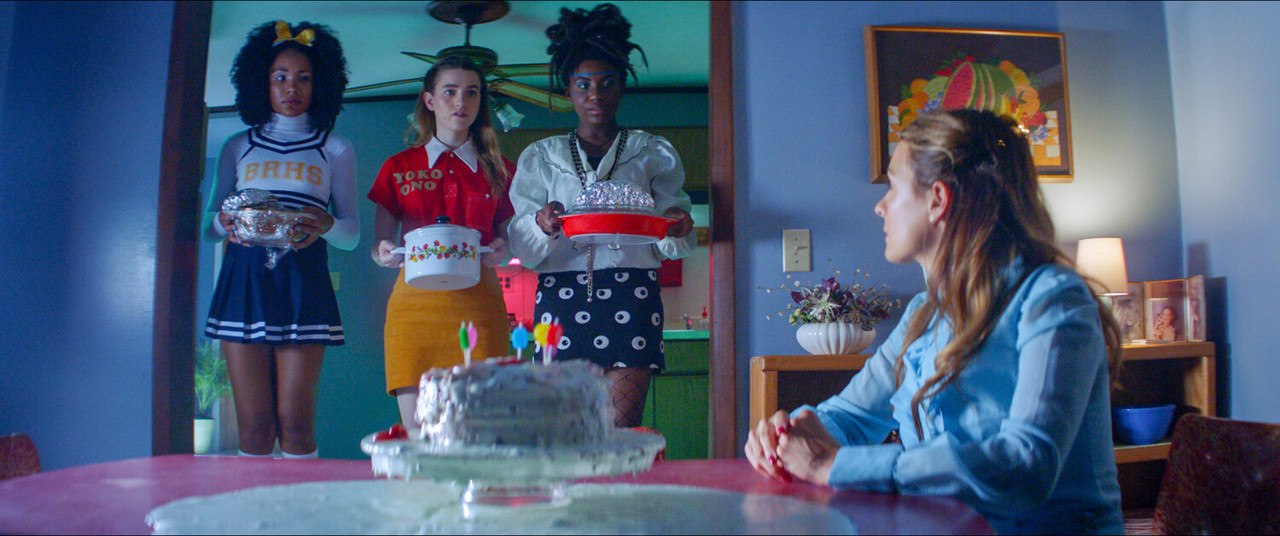
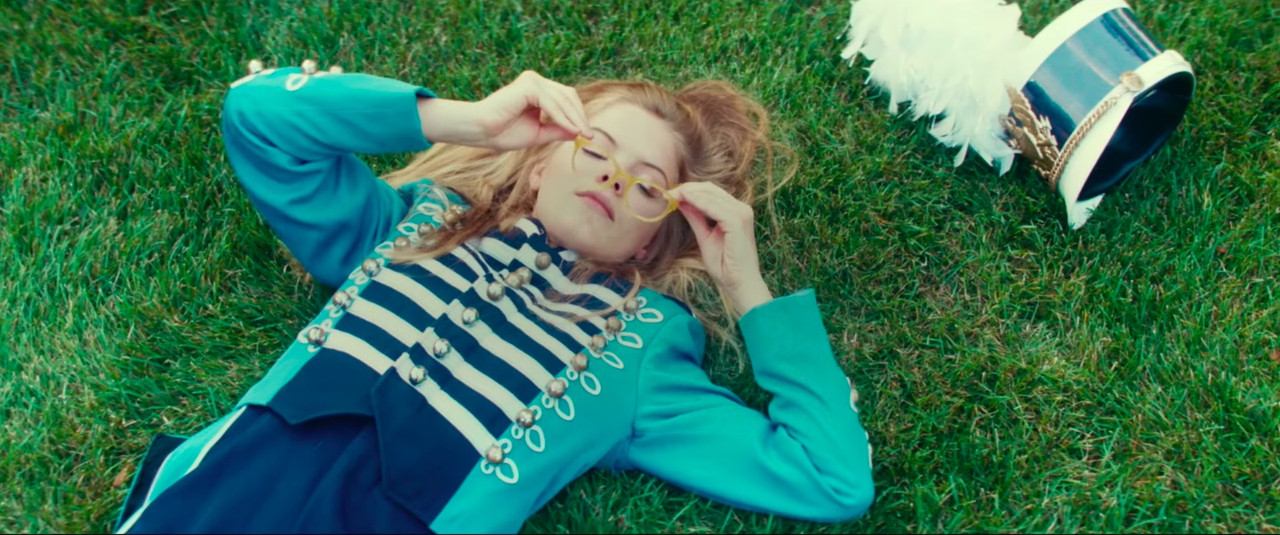
Of course, meaning is unpacked in the visuals as much as in the dialogue. Clothing, in particular, is given great significance. Several things related to Carolyn (her blood, a scratch she makes on her would-be boyfriend) glow, but it’s her glasses that become something of a talisman, spending the majority of the film shut away in a school locker, emanating a neon light, like the last piece of energy left from Carolyn trying to reach out into the world. For the other characters, clothes are a signifier of who they are (or would like to be), whether it’s Joanna’s T-Shirts, all monogrammed with the names of women like Angela Davis, Yoko Ono or Joan of Arc, her mother’s (Audrey Francis) Lion T-Shirt, or Charlotte’s (Ireon Roach) striking make up, and eventual acceptance of a pink homecoming dress. This is perhaps a little on the nose when it comes to Joanna’s dad; a literal sad clown who is cheating on his wife.

The use of music is striking throughout. Nick Zinner’s electronic score has a chilled ambiance, which pairs beautifully with the melancholy of the film. It’s not what you’d expect from the Yeah Yeah Yeahs guitarist, and is more reminiscent of Para One’s score for Celine Sciamma’s Water Lilies. However, the most daring use of music comes through the songs Reeder uses, largely 80s new wave hits sung by a choir coached by Carolyn’s mother. Some are staged simply as the choir rehearsing, but the use of Modern English’s I Melt With You is especially beautiful, as it’s sung by two girls falling in love, their faces and voices cross-fading into each other. These sequences are peppered throughout the film with such regularity that you could almost call it a musical, with each song serving a different emotional purpose within the narrative.

The performances from, at least to me, a largely unknown cast, are outstanding all round. Reeder has found memorable faces who deliver performances of great nuance. It’s worth noting Raven Whitely as Carolyn who, though she has relatively little presence in the film, establishes her character quickly in the opening scene and then haunts the movie, her presence hanging over it throughout. However, the two major standouts here are Grace Smith as Joanna and Marika Engelhardt as Lisa. Smith puts across a character who is extremely smart and uncompromising in her dealings with others, willing to exploit them, but there’s also a chink of warmth we can see under that shell, especially for her parents. It’s a terrific performance and should bring Smith a lot more work. Engelhardt’s performance is raw and vulnerable, dazed by concern but also trying to hold it together (“People keep asking me how I’m doing. It’s really annoying, but I know eventually they’ll stop asking, so I’m trying not to be an asshole about it”). Her best scene, and maybe the movie’s, comes when she gets into a boy’s car, believing she can smell how her daughter used to smell. It’s at once uncomfortable, deeply sad and blackly funny and Engelhardt hits every note perfectly.

There is so much still to say about Knives and Skin, whether it’s the production design (the tinfoil wrapped pillows Joanna’s mother sleeps on; Reeder's nod to her short Blood Below the Skin) or the darkly comic incidents (the reveal about the sheriff’s wife’s pregnancy). On an analytical level, I’ve only scratched the surface of what I have read into it, and I’m sure further viewings will prompt more ideas. This is all to say that this isn’t just a great film (though it is), but that it’s an interesting and deeply rewarding one that will have you turning its images and ideas over in your head long after the credits roll. Seek it out immediately.
★★★★★

Jan 18, 2020

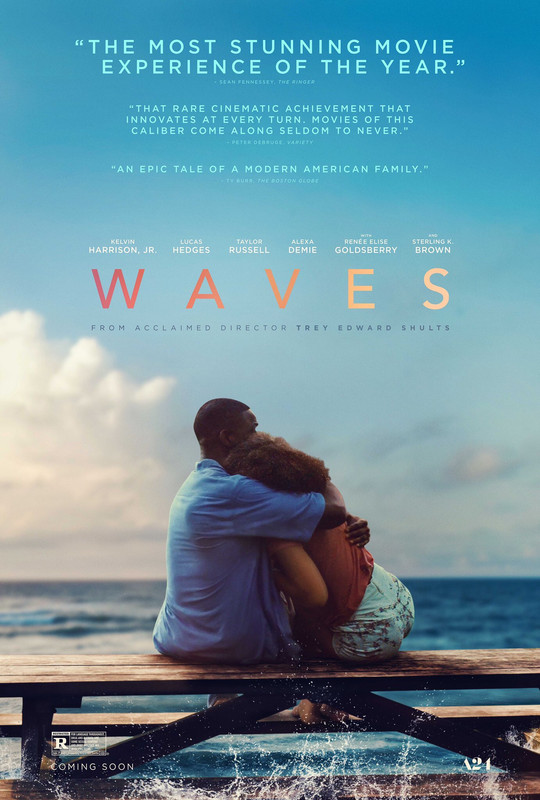
Waves [15]

Dir: Trey Edward Shults
Writer/Director Trey Edward Shults impressed me with his second film, the low-key horror inflected family drama It Comes At Night. His third, as its title might suggest, is bigger and more expansive, yet it remains focused on the small dramas of a family in Florida, dramas which sometimes boil over into life altering moments.

Tyler (Kelvin Harrison Jr) is from a solidly middle class family; a good student, wrapped up in his beautiful girlfriend Alexis (Alexa Demie), and a star on the high school wrestling team. He’s also often under pressure from a demanding father (Sterling K. Brown) and a combination of injury and unexpected news begins to send him off the rails. In the second half of the film, Tyler’s sister Emily deals with her own pain and guilt through a relationship with one of Tyler’s teammates, Luke (Lucas Hedges).

Waves are unpredictable and, like its namesake, this film moves in different ways through its 135 minute running time. At times, it crashes relentlessly; all furious noise and violent emotion, in other moments it gently rolls; time passing in something like a distracted haze. Shults balances these different moods beautifully. He evokes them through the use of his camera, for instance, the endless spinning of the opening sequence throws us into the noise of the lives of its young protagonists, while the off balance stalking quality of a sequence at a party strikes a note of foreboding that turns Waves into a horror film for about ten minutes. The shot composition is often masterful, and called particular attention to by the shifting aspect ratios which move us between the acts. The first of these is especially striking, as in one instant a single act metaphorically shrinks the world in which Tyler, and consequently his family and friends, exists, sending the film into 4:3 ratio. The ratio continues to shift throughout the film. Remarkably, Shults manages to do this without it feeling trite, rather each time it happens - always preceded by a brief blackout - the film is taking a breath and resetting; into panic as walls instantly close in the first instance, and later to a more expansive experience and finally back to the sure footing of the first ratio we saw. It becomes a key part of the film’s emotional journey, both for the characters and for us.

While Shults’ visual craftsmanship is often what commands the attention, it is underpinned by some outstanding performances. Sterling K. Brown plays Tyler and Emily’s father as a man we are given to believe has pulled himself up through hard work, and is sometimes too tough on his son in his desire to bring that same commitment out of him. This toughness is what we see for the bulk of the first act (which takes up the first half of the film), but the second and third reveal it as a shell that can be cracked, in some of the film’s most emotionally wrenching scenes. Good as Brown and Renée Elise Goldsberry (as Tyler and Emily’s stepmother) are though, this is largely a coming of age story, and as such it centres on the younger actors. Kelvin Harrison Jr gives a performance of building resentment as Tyler’s denial about his terrible shoulder injury builds and his anger at his father and at his girlfriend; one for pushing him too hard the other for, in his mind, pushing him away. It would be easy to hate Tyler, but the film establishes him initially as a nice kid, we can understand if not sympathise with his denial and his rage - at least towards his injury - up to a point. The final moments of the first act are brutal; a momentary act that echoes throughout the film and will do for all the characters long past the credits, and the second, third and fourth acts all ask us to dwell in the aftermath of that act from an angle we don’t often see. Harrison is outstanding in the part, the pressures Tyler feels and the sense of loss at what to, whether it’s to avoid disappointing his dad or to win back Alexis, is always at boiling point inside him.

The second half of the film, broken into its last three acts, largely turns the focus on Emily and on her budding relationship with Luke. Taylor Russell and Lucas Hedges establish a warm and naturally growing chemistry, begun with a perfectly awkward scene of Luke asking Emily out, which seems designed to play as the direct antithesis of Tyler and Alexis’ fast burning and eventually angry story. This is certainly a more typical coming of age story than is presented in the first half, but it too is suffused with the striking colours and inventive camerawork that Shults brings to the telling. Russell and Hedges are both wonderful, and it’s the first time I’ve really bought into the hype around Hedges. That said, the standout scene of the second half isn’t between them but between Russell and Sterling K. Brown, as Emily and her father finally talk about the emotional fallout of what happened with Tyler and Alexis.

Waves isn’t perfect. Shults’ Malickian shots of people leaning out of car windows and his colour wash transitions can feel a little self-indulgent at times, and much of the final section of the film is spent on a storyline that has barely been seeded and feels like a digression from the main thrust of the film. However, if the film doesn’t hit the bullseye on every emotional target it takes aim at, those it does strike resonate powerfully and for a long time.
★★★★

Oct 6, 2019

24FPs @ LFF 2019: Lunana, A Yak In The Classroom / Babyteeth

Lunana - A Yak in the Classroom
Dir: Pawo Choying Dorji
Sometimes, all it takes for a film to feel a little different is a change of context. There are more than a few movies about teachers in an unfamiliar environment, from comedic takes like Kindergarten Cop to more dramatic pieces like Dangerous Minds. In most of them, the teacher will find their class or environment something they don’t initially warm to, but eventually will be turned around, learning something about themselves. Lunana, a Yak in the Classroom doesn’t do these broad strokes any differently, but the setting and cultural specificity of it make it feel a bit different.

Ugyen Dorji (Sherab Dorji) is in his last of five years of service as a teacher, following his training, and he’s fallen out of love with it. He’s lazy, marking time before he can leave Bhutan for Australia. Ugyen’s boss, sick of his attitude, dispatches him to Lunana and the most remote school in the world, eight days hike across the Himalayas from the nearest town. When he arrives, Ugyen immediately wants to leave, but the villagers and the kids he’s teaching win him round.

There isn’t much unexpected here. Ugyen is slowly inspired by the kids, notably adorable class captain Pem Zam (all the kids use their own names) and sets about doing up the school, for instance having the villagers helping him mix charcoal paint to make a blackboard. A city resident and a modern person, he also has his head turned by traditional culture, notably the songs sung by yak herder Saldon (Kelden Lhamo Gurung). This is where the film marks itself out from the many others like it. Music is a major throughline, Ugyen wants to be a singer when he gets to Australia, and we see him spending much of his time trying to learn a traditional song he hears Saldon singing. The music is soothing, and unlike much we regularly her in the UK.

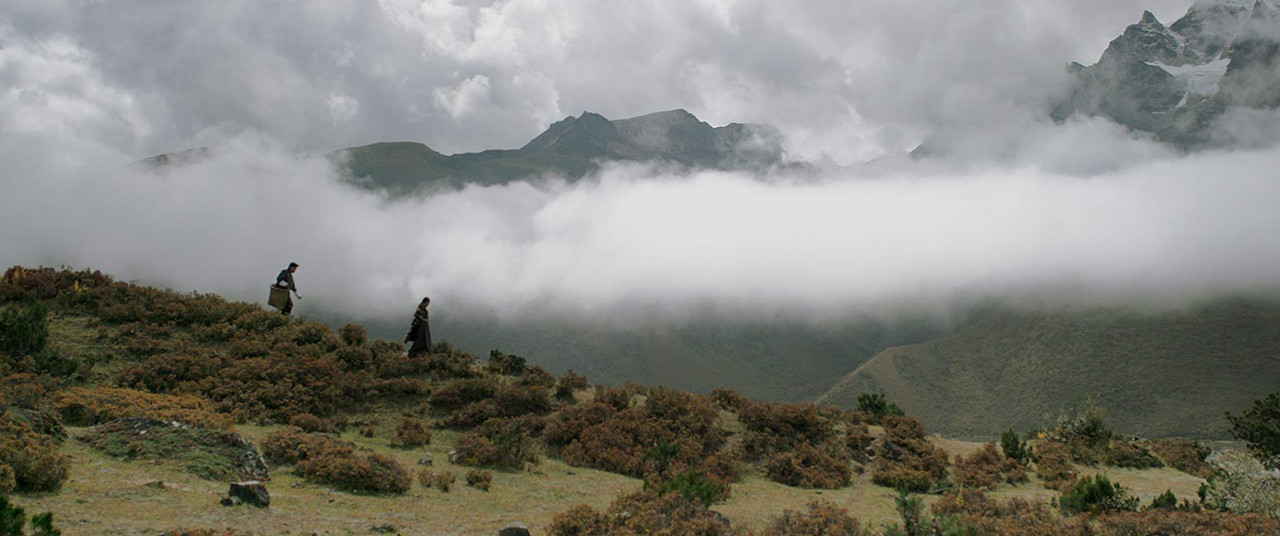
As well as a beautiful soundtrack, the film makes use of its stunning location to mark itself out. Shot on solar powered cameras 5000 metres up in the Himalayas, Lunana looks like few other films, taking place among the clouds not because it is set in some fantastical realm, but simply because that is where its characters live. The vistas are unbelievable and almost worth the price of admission on their own.

While it never goes anywhere unexpected, Lunana is executed with great charm. The dynamic between Ugyen, the villagers and the kids feels natural and has a warmth that permeates the whole film, in contrast to the mountain weather. This is especially the case in the friendships that develop between Ugyen and his escorts and the potential budding romance between Ugyen and  Saldon.

A sweet natured film about the importance of community and tradition, as well as that of following your calling, whatever that may mean, Lunana is perhaps a bit different to the rest of LFF’s Family programme, in that it doesn’t seem as much aimed at children as suitable for them, just as much as it will be for their parents. It should charm the whole family.
★★★

Babyteeth
Dir: Shannon Murphy
The teen cancer romance has, weirdly, become prevalent enough to be a subgenre all of its own. Generally speaking, I can’t stand them. Most feel like tragedy porn, content to let their characters be defined solely through illness and essentially acting as a big stick, designed to poke you until you cry. The genre’s miserable low is without doubt the vomitously saccharine The Fault in Our Stars. I’m not sure it had a high point until now.

Babyteeth begins with 16 year old Milla (Eliza Scanlen) meeting and falling for Moses (Toby Wallace), he’s older, tattooed, jobless, a small time drug addict and dealer. Milla’s parents, Anna and Henry (Essie Davis and Ben Mendelsohn), understandably, do not approve. It’s only later that we learn that Milla’s cancer has returned. In the throes of first love with Moses, she wants to spend as much time with him as possible, to the point that he ends up living with Milla and her parents as she gets sicker.

There are many things that set Babyteeth apart from the herd of teen cancer movies, most notably the fact that it is not defined by Milla’s illness. This is largely a comedy drama about a dysfunctional family and cancer is only a part of that dysfunction. It’s also only a part of the film. It lurks in the background of the first half, becoming more present over time, much like the progress of the disease. For much of the first hour, writer Rita Kalnejais and director Shannon Murphy push comedy to the fore, with Essie Davis especially priceless as Milla’s anxiety riddled mother, who spends much of her time in a Zoloft induced haze, drugs prescribed by her psychiatrist husband. The scene in which Milla first brings Moses home and there is an excruciatingly awkward family dinner is particularly priceless. What many films about tragic things forget is that, even in the midst of it, not every moment is tragic. By remembering this, the sometimes irreverent humour of Babyteeth conveys more emotional honesty than any of the manipulative set pieces in a more typical teen cancer pic.

Milla’s first romance is obviously unsuitable, but we understand it from all sides, whether it’s Milla's romantic sense of being with the bad boy who’ll annoy her parents or the rather deeper thought that it’s Moses’ fearlessness that first draws her in, perhaps a quality she wants more in herself as her cancer gets worse. Eliza Scanlen is excellent in the part. For a long time we can see her playing Milla as a kid who simply wants to ignore her illness; she hasn’t got any hair, so she’ll wear fun wigs, and she’ll go out and she’ll fall in love with this guy, like a normal kid. We also see and feel the moments that bring that crashing down to Earth, but Scanlen never overplays them. For Moses’ part, there’s a recognition that he too, more experienced if not that much wiser at 23, realises that this crush Milla has on him isn’t entirely healthy, and that he at once has some feeling for her that goes beyond sympathy and yet he’s not immune to exploiting her feelings. Moses, in particular, is a more complex character than we usually see in these films and his shifts in motivation and feeling are given great weight in a deceptively light performance from Toby Wallace.

Initially, Ben Mendelsohn and Essie Davis have broader roles, essentially doing something close to comic relief duty (their first scene, an appointment for sex in Henry’s office, is a good example of this tone), but this recedes as the film goes on and their performances become heartbreaking. Mendelsohn, one of the best actors in movies right now, is especially brilliant when his daughter asks him to smile for a picture; “gimme a second” he says, and the weight of everything in the film is felt in those three words.

Director Shannon Murphy, making her feature debut after several shorts and plenty of TV work, balances the film’s tone beautifully and draws terrific work from her cast, allowing supporting players like Emily Barclay, as Anna and Henry’s heavily pregnant neighbour, to steal a few scenes, but never the focus. I’m not a fan, though, of her aggressive chaptering. The many, many title cards add little and sometimes give the film a bitty feel that undermines an otherwise strong emotional throughline. The nadir of this technique comes when a title card introduces the song a sequence is set to, making that sequence resemble a music video even more, slightly deflating its impact for that.

On the whole though, Babyteeth is a refreshing addition to a genre that has so far given us little to enjoy. The balance of humour and heart is more honest here than in any of its peers, and Eliza Scanlen and Toby Wallace both impress, marking themselves out as names to watch for the future.
★★★★

Sep 30, 2019

24FPS @ LFF 2019: Selected Shorts

It’s a shame we don’t see more short films in general release, but at LFF the various shorts programmes are often a good way to spot new talent both in front of and behind the camera. Here are some appropriately brief thoughts on some shorts I’ve seen recently. These films were viewed on the online press library.
Be Still My Beating Heart
Jericho (Sarah Andrews, Aaron Hopwood), screening in the Family shorts programme on October 5th, is one of the briefest shorts in the festival. Though barely 90 seconds long, it’s still an impressive piece of work. Fluent and high quality CG animation tells the story of a lonely robot trying to build himself a friend. It’s gently funny and rather touching. I do wish it were longer though, as there is potential to mine some more humour out of the situation. Sweet then, but perhaps too limited by its running time. 
★★★

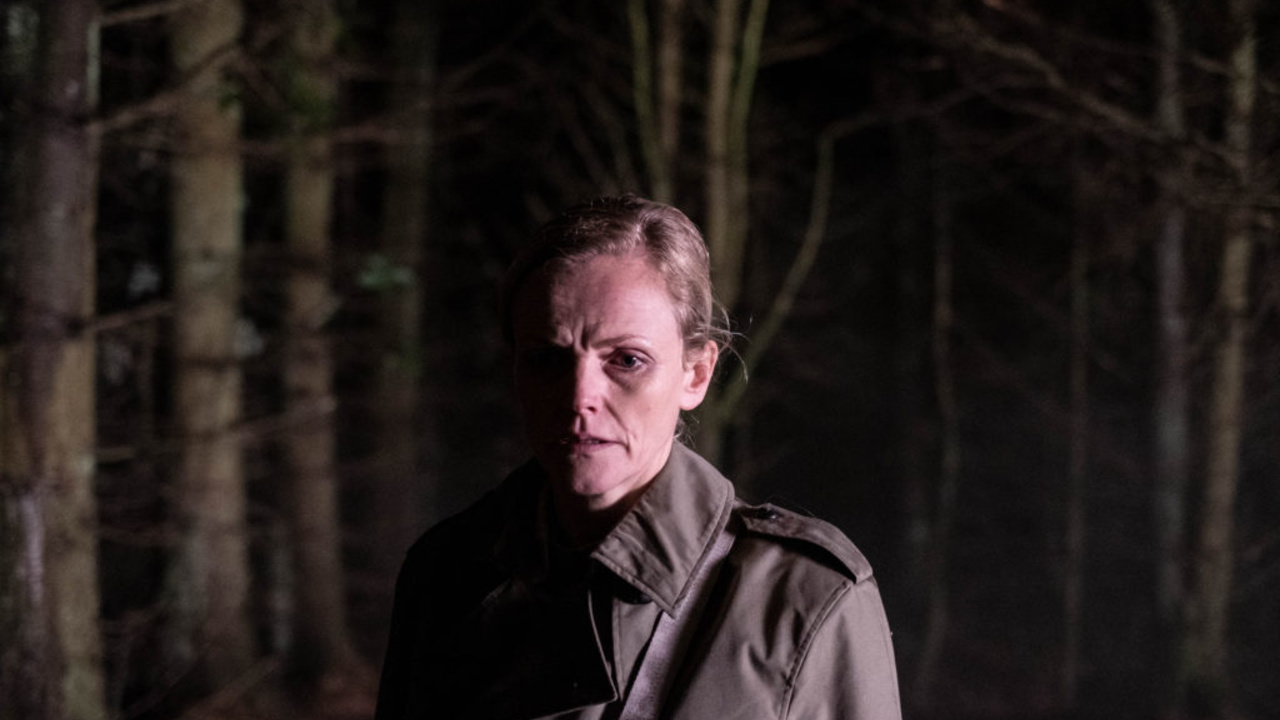
Be Still My Beating Heart (Ruth Paxton) screens in the Cult shorts programme on October 6th and 8th (both sold out). This story of a medical examiner looking after her younger sister who has an unspecified illness benefits greatly from having the always excellent Maxine Peake in the leading role. Peake and Elysia Welch bring dimension to a sisterly relationship that feels sour on both sides, even if it’s loving deep down. Director Ruth Paxton’s imagery veers between the mundane and the primal, and points to interesting things for her future. Unfortunately, the film ends up as less than the sum of its parts. The various ideas don’t knit together in the 25 minute running time and this ends up feeling less like a trailer for a future feature film version of itself (a common issue with shorts) than an impressive showreel for its director. 
★★½

Let's Roll
The Lamb (Nina Volic) screens in the Dare shorts programme on October 10th and 12th. Most boys, when they’re around 12 or 13, start wanting to impress the girls around them. That’s where The Lamb begins, with a boy meeting two girls from his class to show them something. In an incredibly dark turn, ‘something’ turns out to be a black man, tied up and gagged, on his sofa. The way the kids interact with the man is initially not violent, but the immediate and casual dehumanization of this ‘other’ is horrifying, as they treat him as a prop, posing for selfies with him in the background. A deeply disturbing, if extreme, look at how social media has made some of us treat the world as a background image to our lives, The Lamb promises great things from Nina Volic. 
★★★★

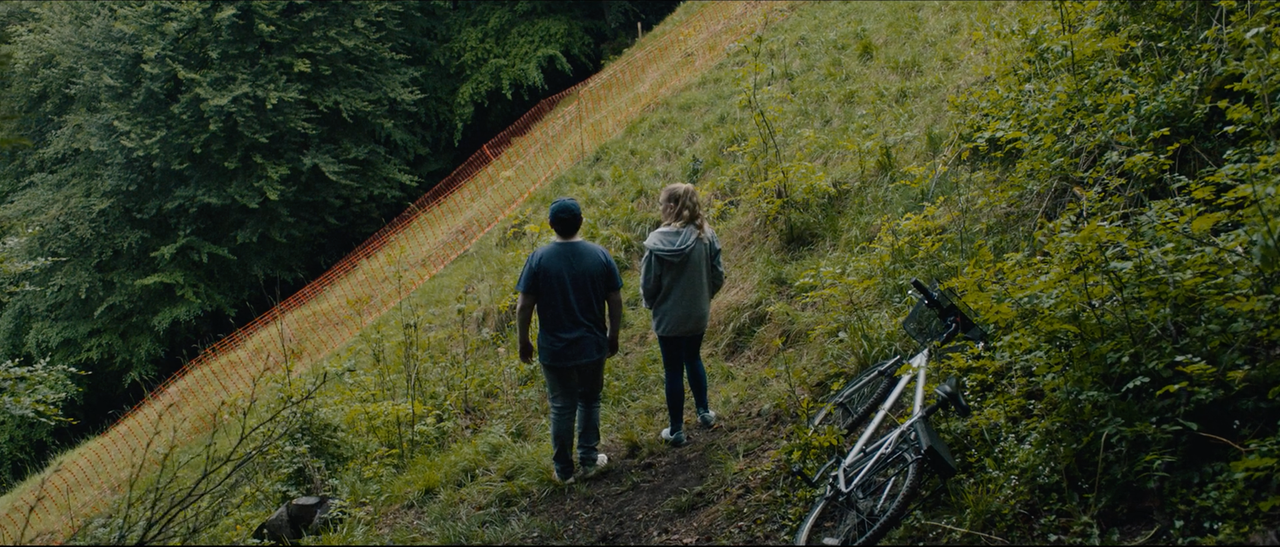
Let’s Roll (Chris Thomas) screens in the Thrill shorts programme  on October 5th and 10th. A surprisingly gentle film for its strand, Let’s Roll is a coming of age film set around the Cooper’s Hill cheese roll. Antonia’s brother was a champion, but now he’s away in the Army and her mother is against Toni taking his place. The progression of the film is fairly familiar, as Toni has a friend (who may be nursing a crush) help her train for the cheese roll in secret. The best thing about the film is how much it packs in to 23 minutes, writer Allan Macleod puts a lot of depth into the background in Toni’s relationship with her Mum, both of their implied concern about their brother and son and Toni’s troubled reaction to this stress (we first meet her running from a shop after stealing a magazine). This is also very well played by Amy Bowden as Toni and Zara Ramm as her Mum. There is a lot to build on for a feature version, which I’d happily watch, but the short feels complete in its own right. The only disappointment is the last sequence, which is too obviously documentary footage that Bowden doesn't appear to be in. 
★★★★

Aug 11, 2019

Dora and the Lost City of Gold [PG]

Dir: James Bobin
Like several other recent kids movies, Dora and the Lost City of Gold is based on something I was too old for the first time round. By all accounts, the show was a fun and educational cartoon for young children, teaching them about other cultures. As far as I can tell, this live action take on the material keeps the core of that, ageing the characters up but keeping the material suitable for the show’s target audience as well as the older siblings who might now be taking them to this movie.

We get a brief glimpse of Dora and her cousin Diego as little kids running around the jungle with Dora’s monkey Boots. Most of the film takes place 10 years later. Dora (Isabella Moner) is 16 and when her parents (Eva Longoria and Michael Pena, both enjoying themselves) decide to go into the jungle to search for the golden city of the title they send Dora to stay with Diego in LA, fearing she’s still too irresponsible for a full scale adventure. Dora doesn’t fit in at high school, on a field trip she and Diego are thrown together with a couple of other kids and they all find themselves kidnapped by treasure hunters and thrown into a jungle adventure.

Dora and the Lost City of Gold is a film that truly embraces what it is. It’s a live action cartoon and director James Bobin, writers Nicholas Stoller and Matthew Robinson and the whole cast commit to this tone from the start. Whenever the film threatens to forget this, even for a second, a gag will be thrown in to re-establish the knowing tone. Bobin’s debut, The Muppets (2011), feels like a key influence. Dora isn’t as consistently hilarious, and lacks the history that gave The Muppets such poignancy and joy, but it has a similar comic tone and love of playing around with the relationship between film and audience. This is all done so deftly that it never feels smug, rather than the film showing you how clever it is, it invites you in, whether directly through Dora asking things like “Can you say poisonous tree frog?” or simply by acknowledging that, yes, this is all very silly. There are many other detectable influences here. Bobin nods with palpable glee to Indiana Jones (particularly Last Crusade) and steals several moves from The Goonies. The fact that Dora, even if it’s unlikely to ascend to the heights of the adoration those films are held in, isn’t embarrassed by those comparisons is a testament to how well the film works on its own terms.

The film may be accessible to older kids and adults, but neither the tone nor the story are pitched at them. This is resolutely a kids film and that is reflected in the way it talks to its audience. While there is an attraction between Diego and serious minded Sammy (Madeline Madden), neither she nor Dora is ever defined by a relationship and both Dora and the film are much more concerned with friendship than they are romance. The morals are simple but effective, espousing the value of exploring - learning for its own sake - over using that exploration for any monetary gain.

The main reason the film works so well is 18 year old Isabella Moner, who impressed earlier this year by helping bring emotional weight to Instant Family, which could easily have been just another broad Hollywood comedy. This performance is completely different in tone; wide-eyed, irrepressibly energetic; a cartoon character who has stepped whole cloth out of her world and into an LA high school. With the wrong handling it could all be incredibly grating, but Moner’s performance has an unfailingly sunny enthusiasm, whether she’s having her bag searched on her first day of high school or singing a song about poo. Along with that, her knack for comic timing and expressive face sell every beat. The rest of the cast are just as game. This does mean there are a few overplayed moments, and Bobin does allow a few gags (Dora’s dad telling her what rave music is like, for instance) to run a bit longer than they need to, but there’s generally a nice dynamic between the cast, which allows the friendships between them to grow more naturally than you might expect.

The energy of the cast is matched by the direction. Without feeling rushed, the film moves along at a pace, finding just a few well placed moments to take a breath. The moments of action are always inflected with the same humour as the rest of the film (Swiper gets more than a few laughs) and use the characters established strengths to get them out of jams (again leaning on the morals a bit to teach younger kids the value of teamwork).

It may be simple and broad, the villain may be obvious from ten miles off, and we may have seen many of its plot points in close to specific detail before, but Dora and the Lost City of Gold is impossible to dislike. I imagine it will work brilliantly for its target audience and also be appreciated by the parents who will likely be very be grateful they aren’t being dragged to Playmobil: The Movie instead. It probably won’t stay in my head that long, but I can’t deny I had great fun with it for 102 minutes.
★★★½

Jul 3, 2019

Spider-Man: Far From Home [12A]

Dir: Jon Watts
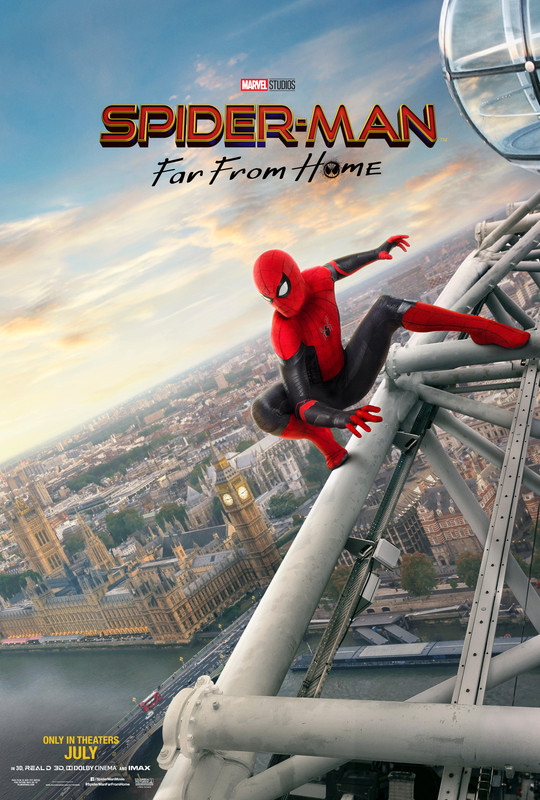
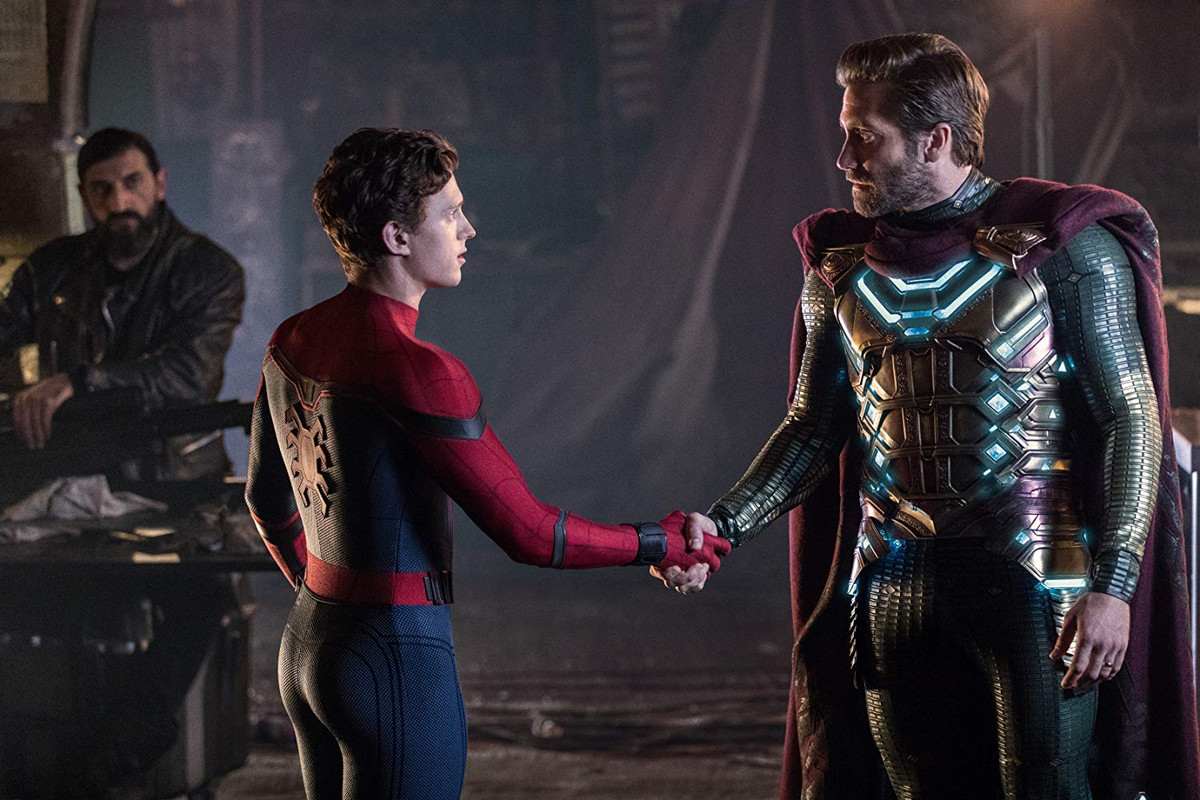
The second of the MCU’s Spider-Man films, and the closing film of Marvel’s Phase 3, Spider-Man: Far From Home picks up after the events of Avengers: Endgame. With Tony Stark gone, the world is looking to other heroes, as is Nick Fury (Samuel L Jackson). When reports begin of massive beings called elementals and of Quentin Beck (Jake Gyllenhaal), a soldier from another dimension trying to fight them, Fury calls in Spider-Man to assist. At least, he tries to. Peter Parker (Tom Holland) has a lot on his plate, juggling being a superhero with his life after the blip; most pressingly a school trip to Europe and a plan to tell MJ (Zendaya) how he feels about her. He doesn’t have time for Nick Fury, especially with this new hero, quickly nicknamed Mysterio, on the scene.

I’d call myself a casual observer of the Marvel Cinematic Universe. With a little distance from them, it’s probably only the first two Captain America films and Spider-Man: Homecoming that I’d say are, qualitatively, anything more than solid pieces of blockbuster filmmaking. On the other hand, I love Spider-Man. I always have. I love the 70s series with Nicholas Hammond in all its cheesy crappiness. I love the 90s cartoon. I love a lot about Sam Raimi’s trilogy of films, and... almost nothing about The Amazing Spider-Man reboots (reviews here and here). Homecoming was pretty much everything I ever wanted from a Peter Parker Spider-Man film, and the first film to manage to square the circle of the character and get both Peter and Spider-Man right, at least for me. Then Into the Spiderverse raised the bar. I didn’t have much investment in Miles Morales going in, having stopped reading Spider-Man books a few years before he came along, but I certainly had that investment on the way out (as well as an appreciation for the film’s dazzling art style). That film and Avengers: Endgame present challenges for this film, challenges it never manages to overcome.

Homecoming had a studiedly low key feel to it. As we first met Holland’s Spidey in the midst of a big action sequence in Captain America: Civil War, his own film deliberately foregrounded the idea of Peter as a relatively nomal teenager and of Spidey as ‘Your Friendly Neighbourhood Spider-Man’. It did the big action well too, and had a menacing villain in the shape of Michael Keaton’s Vulture, but the largely ground level feel of it (depsite the web slinging) was a great plus. With that groundwork laid, the mix doesn’t work the same way this time out. We don’t feel the effects of ‘the blip’ (the five year gap between the people who survived Thanos’ snap and those who didn’t) enough. Rather than just have one third string character be that much older, would it not have been interesting for  the dynamics of their relationship if Ned had survived the snap and was now several years further on than his friend Peter? Certainly it would be more interesting than Ned’s storyline, which screams that screenwriters Chris McKenna and Erik Sommers couldn’t think of anything to do with him. 

Homecoming, not having to do an origin story, got its feet under it immediately, but the emphasis on the teen comedy aspect and the high school trip to Europe (which is so nakedly a plot facilitator that at a certain point the film doesn’t even bother pretending about it) means that as a Spider-Man film Far From Home is a slow starter. Even when there are action scenes, for much of the first half of the film, Mysterio is the driving force. Jake Gyllenhaal is a bit of a casting coup for this film, and he brings his customary dedication to the role, dealing well with the several gigantic exposition drops he has to do, while also managing to create an interestingly nuanced character and draw a relationship with Holland which, though close to what Sam Raimi did with Dr Octopus in Spider-Man 2, carries weight for Peter as he looks for a new mentor in the wake of the loss of Stark. Of course there is another mentor figure available in Nick Fury (both Jackson and Cobie Smulders as Maria Hill have an increased presence here), but without Peter ever saying it, I think it’s that Beck shows himself as a scientist as well as a warrior that means Peter is drawn to him. He sees an older version of himself there - or at least a version to aspire to - in a way that he doesn’t in a top spy like Fury.

Jake Gyllenhaal also helps bring out the best in Holland's performance, we can feel his pride when Beck tells him never to be ashamed of being the smartest person in the room, how it fuels that desire to see Beck as a mentor, and how this desire might not make for the best judgement. That said, it’s only in the second half of the film that we see Mysterio used to his full potential. The first action scene that deploys his illusions in their full force is absolutely fantastic. Jon Watts and the crew find some wonderful and very comic book inflected images and have great fun pulling surprises on the characters and on us. This and other sequences in the second half also use the connection we’ve seen built between Peter and Mysterio effectively, giving some emotional power to underlie the action.

In its first half, the film does mark time. Ned’s story with Betty Brant (Angourie Rice) is notable here. Rice is well cast, and fun in the newscast that opens the film, but both she and Jacob Batalon (who still has nice comic timing, especially opposite Holland) are underserved by a story so prosaic that the film explicitly declares that it’s abandoning it before the end credits. This is also true of a lot of the class trip stuff, like the fairly unfunny dynamic between Martin Starr and JB Smoove as the teachers and Tony Revolori’s one joke version of Flash Thompson. It’s also the case with a weirdly misplaced action sequence. Yes, Peter’s carelessness is a theme here, but it’s a bit overegged at one particular moment, especially given that the film has other instances that trade on the same idea, but feel much more in character for Peter. The only part of the class trip narrative that really engages is the dynamic between Peter and MJ. Zendaya is definitely a departure from the traditional MJ, in both look and attitude, but it completely works for me; she gets bigger laughs with a withering look than almost any of the film’s one-liners, and her ability to throw Peter off balance is always funny (the exchange at the opera, when Peter tells MJ she looks beautiful, is perfectly timed and played). For all the sarcasm she throws his way though, there’s a genuine sweetness about Peter and MJ too, it’s a different take, but a smart and well-executed one.

The best things in the film come in the third act, which ups the action to an epic scale, but it’s a challenge to discuss any of it because every part of it is predicated on massive spoilers. Suffice to say that the idea that has defined every version of Spider-Man is that ‘with great power comes great responsibility’ and that in these sequences Spidey is feeling that at a very personal level. It’s a classic hero's journey all about the choice this young kid has to make in embracing his role, his responsibility. It’s not something we haven’t seen in cinematic Spider-Man stories, but it’s still effective thanks to Holland’s performance and in no small part thanks to the stunt teams and digital artists who help create Spidey, whose movements have never felt more fluid.

It’s worth briefly addressing the first of the two post-credits scenes (stay for both, by the way). As a fan, I was at once elated at a certain piece of casting and somewhat thrown off by the depiction, which feels like a departure from the principals of the character, if only because of what the iconography suggests it’s referencing. I’m not sure how I feel about it, but along with the other things this sequence throws up, we’ll surely be dealing with it in the next film.

Then there are, of course, those twin problems of Into the Spiderverse and Endgame. As a Spider-Man film, Far From Home simply can’t help but feel like a damp squib after the blisteringly inventive Spiderverse (especially as it seeds a similar idea early on), it’s got fun action and is incredibly well executed, but the sheer visual verve of that film is nowhere to be found, nor is there a single image with a tenth of the power of the shot of Miles falling upwards through the frame. Equally, as a closer for Marvel’s third phase, it can’t help but feel like an anti-climax next to the monumental (though flawed) Endgame. All that said, though it does take a while to plod its way there and too many characters seem stuffed in just because they were there in the last film, rather than because there’s a great need for them here, once it kicks into gear, Far From Home is a highly entertaining, very well acted and sometimes thoughtful Spider-Man film. I had a great time with it in its second hour and again loved the depiction of both Peter and Spidey throughout, but I can’t deny it failed to give me the charge of excitement I had after Homecoming.
★★★

Jun 7, 2018

Teen Movie Thursdays: Nordic coming of age movies

Right On, Man
Dir: Tapio Suominen
This realist Finnish coming of age film, with what seems to be a largely non-professional cast, doesn't appear to have traveled much, but it will be of interest to fans of Aki Kaurismäki, because it features the screen debut of his frequent collaborator Kati Outinen, though in a relatively small part.

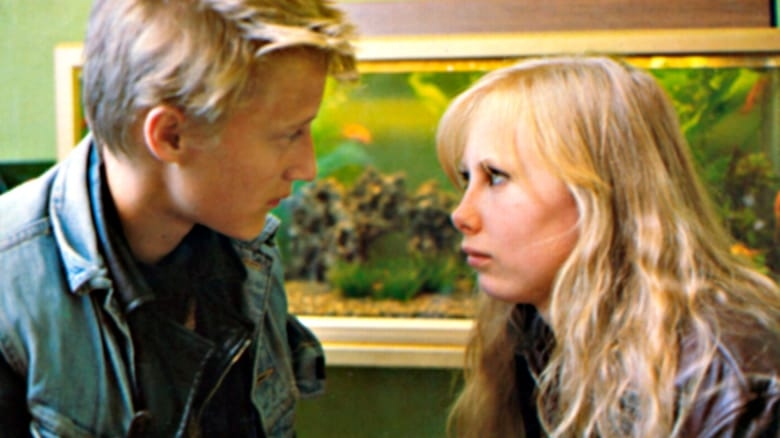
The film focuses on a secondary school class for problem kids, all of them boys except for Outinen's Lissu. Initially, it explores the dynamics between the class, but as the film goes on the focus narrows to concentrate first on the dynamic between Jussi (Esa Niemelä) and Pete (Tony Holmström), as they drift further from the class and from their families, then solely on Jussi, as he isolates himself more and more, before potentially looking to Lissu to find a way back in.

Right On, Man paints a fairly bleak picture of teenage life. You get the sense of these kids as drifting, even before we spend an extended evening with Jussi and Pete, as they roam the streets, drinking and spending the proceeds of a robbery that Jussi pulled off. What hits home, even through sometimes uncertain performances, is the credibility of the whole thing. The dialogue has a natural feel, from the way the kids relate to each other to their dismissive attitude to their teacher (Lissu has a habit of walking away, so much so that in the class portrait that gives us the actor's names in the opening credits, Outinen's is over an empty chair).

Tapio Suominen gives the film a strong sense of time and place. We get a feel for the environment these kids are growing up in and the sense that they probably don't see particularly prosperous future. The dramas here are small, but Suominen builds a couple of threads that run through the narrative, even though they are largely off screen. The bad impression Jussi makes on a beat cop and Jussi's potential interest in Lissu (and hers in him) are both seeded early, only to come back around in a sequence that draws together well.   

If you're coming to the film for Kati Outinen, it's worth noting that she's barely in it until fifteen minutes from the end, when Jussi and Lissu re-connect. It's a lovely sequence and Outinen is charming and natural in it, it's easy to see why she might have been noticed, but this is a very small part. Fortunately, Right On, Man offers many other rewards; it's a well observed teen movie with a sense of verisimilitude and an unobtrusive style that draws you into the story and characters. It deserves to be better known.
★★★

Lars Ole, 5C
Dir: Nils Malmros
As far as I can tell, Nils Malmros is barely known among English speaking audiences. That needs to change. While he has moved outside the genre, Malmros has, for fifty years now, specialised in coming of age films. The best known is Kundskabens Trae (Tree of Knowledge), listed by the Danish Film Institute as one of the country's 100 greatest films, but this - his second feature - seems to be the film that established Malmros' reputation.

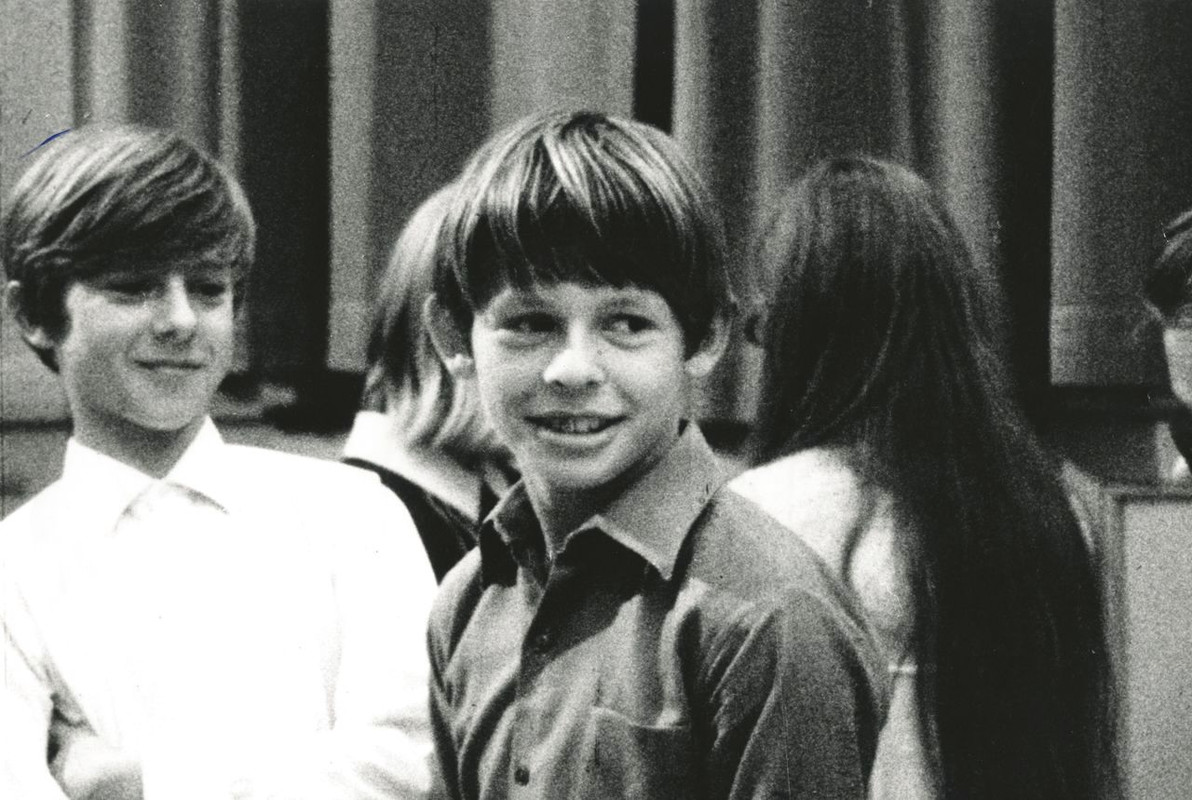
Drawing heavily from his own life, Malmros tells a low key story of 12 year old Lars Ole (Søren Rasmussen) and his classmates. There are petty rivalries, first crushes and moments of childlike mischief, but Malmros' concern isn't big events but the tiny things that shape day to day life when you're somewhere between childhood and adolescence.

Shot on grainy black and white 16mm, the film has a feeling of something observed more than it is staged. Frequently, moments that would have much more emphasis in another film are allowed to play out quietly, often in the background. A good example of Malmros' restraint comes when Lars Ole is being a pain, playing the wrong notes while his sister is practicing the piano, when he makes her cry, the camera views her through the door, before silently showing Lars Ole realising he's upset her more than he meant to. It's a beautifully subtle bit of acting and camerawork that makes us feel as if we are privy to a real moment.

We see a lot of these subtleties in the way the film depicts the politics of the playground, the games of tag and which kids are allowed to play or not, the dominance that older kids are able to exert. This is never more felt than in the way relationships are navigated. Early on we see that Lars Ole has a crush on Inger (Judith Nysom), who is 'dating' Hanse (Lars Randrup Mikkelsen), the way the camera often dwells on the space between them is clearly designed, yet feels totally natural, even in the final sequence when, at a dance, we see Lars Ole join in a square dance, changing partners as he goes and waiting for his brief chance to dance with Inger.

The relationships between the kids, whether it's the rivalry between those who live in a certain apartment complex and those who don't, the pettiness of who is allowed to play tag or not or the teasing and games in the classroom, ring completely true. The performances - all by non-professionals who seem not to have acted again - feel completely unforced, nobody seems to be playing a character or reaching for an emotion at any time.

I've now seen six of Malmros' films, and this is early evidence of his instinctive feel for how to tell a story from a young person's point of view. It's a beautifully constructed film, you feel Malmros' direction rather than seeing it, in that his choices are affecting and clearly purposeful, but barely seem designed. If you have even a passing interest in coming of age cinema, this is a filmmaker you need to discover and Lars Ole, 5C is a perfect entry point to his exceptional filmography.
★★★★★ 

May 13, 2018

How To Talk To Girls At Parties [15]

Dir: John Cameron Mitchell
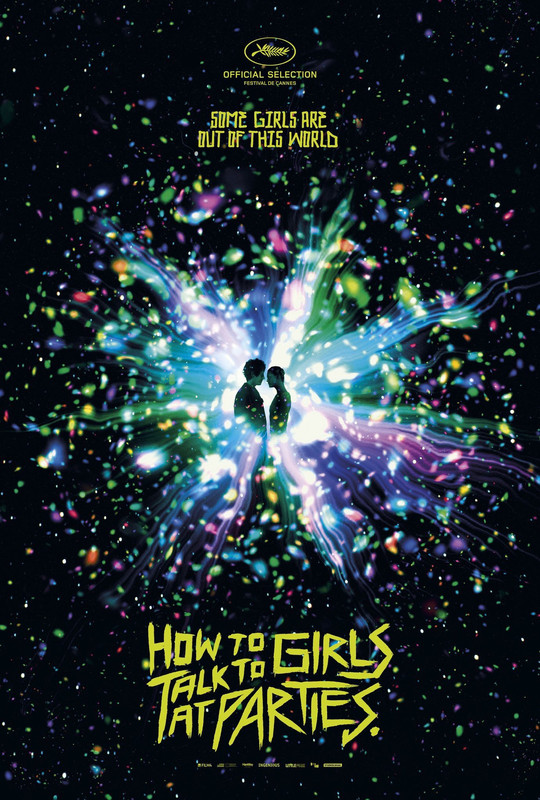
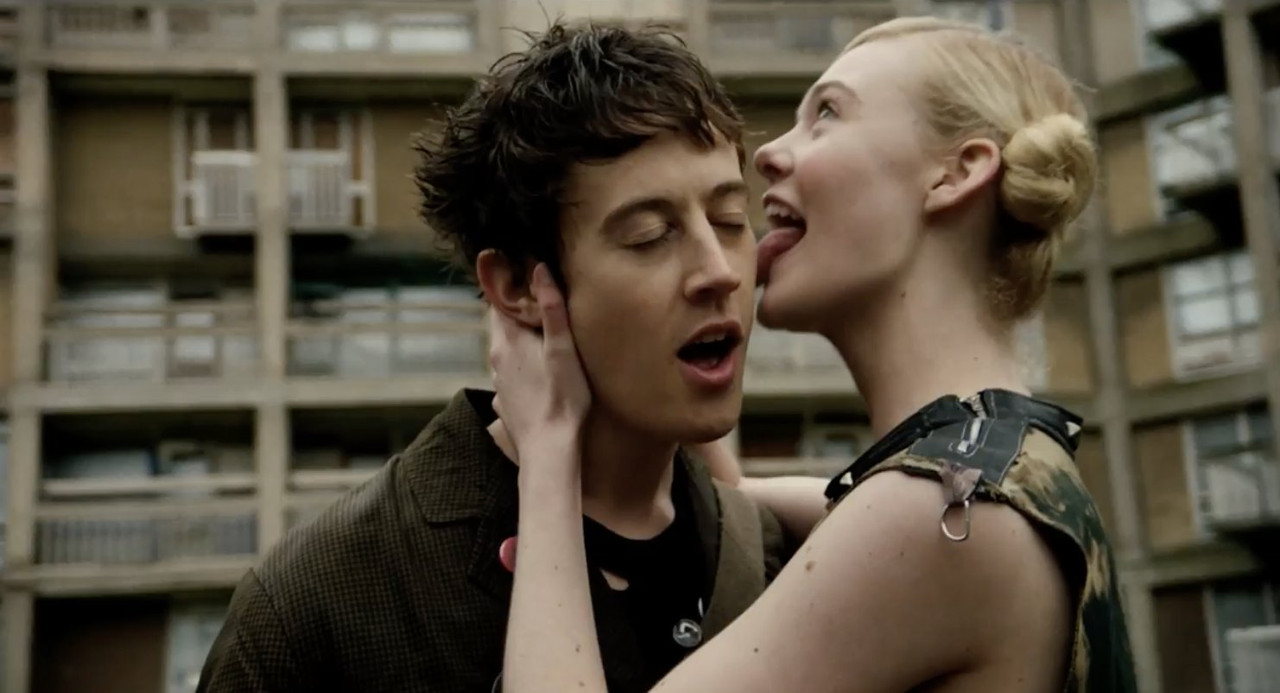
When you’re a teenage boy, girls might as well be an alien species, so the fact that Zan (Elle Fanning) is literally out of this world doesn’t make her any more unusual to Enn (Alex Sharp). Not that he realises she's an alien, he thinks she’s escaping from a cult. It’s 1977 and Enn and his friends are teenage punks in Croydon. Stumbling into what they think is an afterparty for the gig they have just been to, the end up at an abandoned house that Zan and the other beings from the six colonies that make up her species have taken over. When Enn tells her about punk, Zan is fascinated. Rebelling against her colony, Zan leaves the house with Enn, hungry for new experiences in her unfamilliar human form.

John Cameron Mitchell’s adaptation and expansion of Neil Gaiman’s short story is an eclectic mix of genres and influences: a punk sci-fi coming of age comedy, with a sex and kink positive message and, at its heart, a genuinely affecting love story. Mitchell and co-screenwriter Philippa Goslett mash these disparate elements together into a narrative that is sometimes chaotic, but always full of energy and ideas, be they in the film’s story or its wildly colourful and inventive design.

Along with costume designer Sandy Powell, Mitchell creates a distinctive look for the aliens, both as a species and within their individual colonies. All of them are dressed in skin-tight latex, but each has their own colour and their own look. The Stellas are the most sexualised, with the females wearing different coloured material to highlight their bodies, while another group are dressed somewhat more conservatively, the same material fashioned into blue suits. This way of distinguishing between the various colonies extends into their behaviour and even their movement. There are sure to be many subtleties here to pick up on subsequent viewings.

Set against this colourfully strange world there is the Croydon of 1977 (Sheffield subs for the exteriors). In many ways, punk and Zan serve similar functions in Enn’s life; injecting colour and excitement into a dull, grey, time and place. This is where Elle Fanning is perfect casting. I’ve said before that I think Fanning may be the most naturally gifted actress of her generation, and this is one of her best and most finely detailed performances. As she has observed, there is a risk inherent in playing a character who is engaging with the world for the first time that they appear to be stupid, thanks to their misunderstandings of language and social codes. This is not what we get from her as Zan. Yes, there is humour inherent in her telling Enn “I would like to go to the punk now” or telling his mother that she is going to the toilet for the first time, but what we get from Fanning is a sense of Zan’s boundless curiosity and enchantment with everything she is discovering, particularly her own sense of freedom, which is restricted in her colony.

There are the expected broad strokes to Fanning’s performance, but it’s the subtleties that make it. The way she moves is especially interesting; at first there’s a stiffness, she’s getting used to being in this body, but she loosens her physicality as Zan spends more time among humans, both because she is learning to mimic their movement and because she is adjusting to her new form. This is something we also see in the way she observes the world, Fanning has that rare gift of being able to let us see the character thinking. That’s another thing she first shows as pronounced. In the beginning, Zan’s observations are obvious, and often stated as well as simply made, but this is something else that gets naturally folded into her persona, as she becomes more comfortable around people. We get so much of the character through Fanning’s physicality, but she also exhibits great comic timing with her dialogue, and unforced chemistry with Alex Sharp that aids the film’s love story. Sharp also delivers a strong performance, lifted by Fanning and by Ethan Lawrence and Abraham Lewis, who play Enn’s best friends. The dynamic between them is believable and fun and, while it’s a different generation depicted here, there was much in the way they interact that felt familiar from my own teenage years.

In a largely excellent supporting cast, Ruth Wilson stands out as PT Stella, bringing a deadpan comic sensibility that I didn’t know she had. She’s particularly funny at the end of the film when she too begins to rebel. On the downside, there is Nicole Kidman. Tone is important in comedy, and Kidman is the only actor to miss it. As Queen Boadicea she’s a punk matriarch for whom the movement came too late. As an actress, she’s trying too hard. The accent is laughably broad and she overplays every moment to the hilt. It’s especially interesting to see her strain her every acting muscle in her few moments with Fanning, whose unaffected work has much more impact and embodies the character rather than performing it. Only in one moment, a stare down with Ruth Wilson, does Kidman stop working long enough to be similarly effective.

Mitchell and Goslett’s screenplay strikes a good balance between fish out of water comedy and the growing connection between Enn and Zan. The jokes largely hit and the love story is touching and feels organic; as Zan comes to love Earth and people she grows to love Enn in particular. It’s a rather beautiful thing, believing through Fanning’s performance that this is the first time this being, who is likely thousands of years old and has been through many life cycles, has experienced these emotions. The film also hits some truth about our relationship to music; the community that surrounds certain scenes and the sense of belonging that engenders, as well as the transporting nature of finding a song or a band that means something to you. This last aspect Mitchell takes in a way that is both literal and trippy.

I’m genuinely shocked by how divisive How To Talk To Girls At Parties has been. I can see how its tone will either work for you or not. I found it involving and moving as well as very funny. What I can’t see is how you can fail to appreciate how well designed it is, how Mitchell creates a whole offbeat world for his aliens inside their house. Nor do I get how you can fail to appreciate the many deft touches in Elle Fanning’s performance. Ultimately I think this is destined to be a cult item, appreciated by a group of fans I imagine will grow once the film lands on home formats after its disappointingly limited cinema run. At least, I hope that’s what happens.
★★★★

Oct 16, 2017

24FPS @ LFF 2017: Family Films

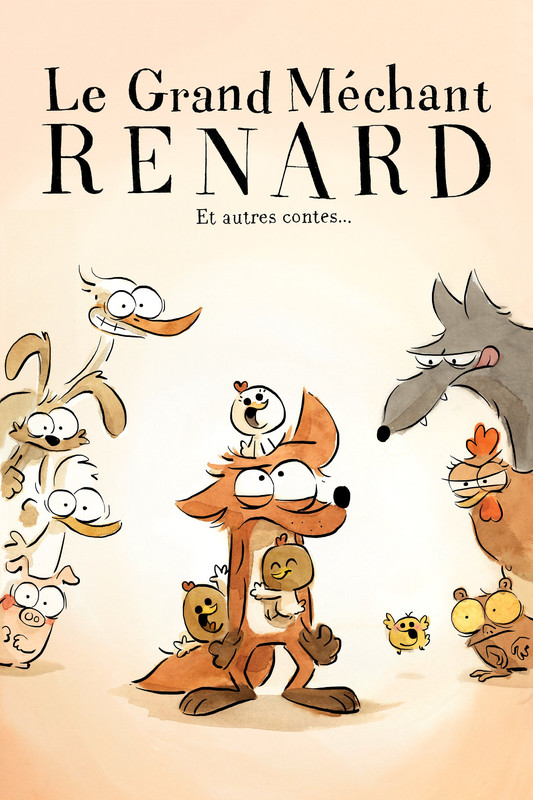
The Big Bad Fox and Other Tales
Dir: Patrick Imbert, Benjamin Renner
This delightful French animated film is set up as three short plays, put on by the animals in a farmyard. In Baby Delivery, Pig and his dimwitted friends, Rabbit and Duck, must fill in for an injured Stork. The Big Bad Fox sees Fox accidentally become mother to three chicks he steals for himself and Wolf to eat. In Saving Christmas, Duck believes he has killed Father Christmas and he, Rabbit and Pig must fill in for him, as they did for the Stork.

The Big Bad Fox and Other Tales is this year’s Family Gala screening at the London Film Festival, this is the strand that contains the films pitched at children, but this is a true family film. It will delight children (I’d suggest it for ages six and over) but, without aiming jokes over children’s heads, it should also work for adults. The animation style is very different; a little sketchy, but beautifully simple and full of character rather than crude, but the tone of the film has much in common with classic animated shorts. The slapstick gags come thick and fast, with the timing and execution of classic era Tom and Jerry, while the way these moments combine with the verbal humour recalls Looney Tunes strongly (especially in the relationship between Pig, Rabbit and Duck).

There are some wonderfully absurd touches and running gags to be enjoyed; the chickens forming a self-defence group because the guard dog is lazy, the calamities that happen to Pig’s house and Little Michel, who pops up in the last two stories to endearing and hilarious effect.

Any further review of this film would amount to my repeating my favourite jokes, which would rather spoil what is a wonderfully enjoyable film. I will say to stay in your seats during the credits as during them there are some lovely jokes, a recipe and a closing moment that seems to be a nod to Michigan J. Frog and sent me out of the cinema with a mile wide smile on my face. This may be pitched as a kids film, but it’s for anyone with a functional funnybone.
★★★★½

The Day My Father Became A Bush
Dir: Nicole Van Kilsdonk
Toda (Celeste Holsheimer) is ten years old and lives with her pastry chef father (Teun Kuilboer) in an unnamed country. When war breaks out between ‘The Ones’ and ‘The Others’ Toda’s grandmother comes to stay, while her father is called to fight. Eventually it becomes too dangerous at home and Toda is sent abroad to join the mother (Noortje Herlaar) she doesn't know. Along the way she gets separated from the people taking her and must make her way on her own.

I am a great believer that children’s cinema can and should be much more than mindless entertainment. The Day My Father Became A Bush tackles some big issues: war and its futility, displacement and the dislocating reality of suddenly becoming a refugee, but does it from a child’s eye view, making those issues comprehensible for its target audience. A big part of this success is in the way it addresses war. Nicole Van Kilsdonk never explores what the fighting is about or whether we should see ‘The Ones’ or ‘The Others’ as the good guys in the conflict. This isn't what’s important to Toda, what matters to her is that her father is away and that his camouflage be good enough to make sure he comes home (in one of the film’s most quietly touching scenes she puts branches on his helmet so ‘even birds will think you’re a tree’). 

Ultimately, the film says, which side we’re on doesn't matter much. Her father wears a blue badge but at one point Toda finds herself sharing a shack with a man wearing a yellow badge, soon she’s sharing food with him and, sweetly, helping him learn to give orders (he has deserted because he found he wasn't assertive enough for his command role. This scene is a fine example of the way the film leavens its messages with humour and heart.

Toda is a great character for young girls to see and identify with. She’s inquisitive and intelligent, brave in the face of scary situations and compassionate with a slightly younger boy who attaches himself to her, whom she nicknames Stickie (Matsen Montsma). She’s also just a typical ten year old, who calls herself a daddy’s girl. As Toda, Celeste Holsheimer gives a performance free of anything actorly or precocious. She hits the funny moments nicely, but is particularly adept in the dramatic scenes, especially towards the end of the film when, having lost her mother’s address, Toda finds herself a refugee.

The Day My Father Became A Bush asks kids to engage with some big themes, but it takes them gently through those ideas, leavening them with humour and, even in the film’s toughest moments, the optimistic outlook that Toda radiates. It’s an entertaining and intelligent film and an ideal opportunity to discuss some challenging subjects with your kids. 
★★★★