Showing posts with label 2019 releases. Show all posts

Nov 15, 2020

Recent Viewing: Cutterhead / I Spit On Your Grave Deja Vu

Cutterhead
Dir: Rasmus Kloster Bro
A multi-national crew is cutting a new tunnel for the Copenhagen metro and Rie (Christine Sønderris) has been sent to take pictures of the workers and do puff piece interviews for a PR campaign. While she's watching Ivo (Kresimir Mikic) and Bharan (Samson Semere) change one of the cutters there is a fire in the tunnel and the three are trapped in the pressurized chamber that houses the cutterhead. With oxygen and water both running low, they try to decide if they should wait to be rescued or attempt to escape.

There is something almost inherently tense about a confined thriller like Cutterhead. The fears behind it are primal; claustrophobia, the idea that with each breath you are eating up an increasingly finite resource. In this case that is only added to by the literally as well a metaphorically high-pressure atmosphere, which means that even though the door can be opened, the physical effects of doing it quickly might debilitate the person chosen to leave the capsule. The first act establishes a quick but comfortable dynamic between the three characters, Rie may be doing her job, but she appears to be interested in the processes and to like the two guys, who we quickly establish are friends as well as co-workers. This, of course, is all strained by the situation.

This isn't the most eventful film, a lot of it involves the crew simply waiting to be rescued, but the little moments of levity, paranoia, and of betrayal are all well played and these small moments, as well as the sense of time passing and the space feeling ever smaller and more dangerous adds up to a growing, grinding, tension—think The Descent without monsters. Things do shift somewhat for the third act, though the thrills remain claustrophobic and intimate, with the last ten minutes, in particular, taking a dark direction, leading to a final scene that is tense and airless in an entirely different way to the rest of the film.

This isn't a showy feature debut from Rasmus Kloster Bro, but it does demonstrate an ability to take a limited set of ingredients and find a way to stretch their inherent heart in mouth qualities across the film's 84 minutes. If you're claustrophobic this will be a nightmare, but even if you aren't you're likely to feel Cutterhead gripping your nerves more and more as it runs on.
★★★½


I Spit On Your Grave Deja Vu
Dir: Meir Zarchi
Shot in 1976, first released in '78 and finding a wider audience in grindhouses and on video in the early 80s, I Spit On Your Grave has been notorious for four decades. Meir Zarchi's original film still stands as one of the most powerful and visceral rape-revenge films ever released. A sequel was first mooted in the mid 80s, but that film dropped the link to I Spit, and became Savage Vengeance. Between 2010 and 2015 a trilogy of increasingly terrible films, begun with a remake, was fairly successful in the direct to video market. It must have been that which finally got Zarchi the green light to make this, his first film since 1985's dreadful Don't Mess With My Sister.

You get the sense that Zarchi had a certain pent-up energy as a filmmaker. In his early 80s when making the film, and having not directed in almost 35 years, there is a feeling in the rampantly excessive 148 minute running time that he is simply using this one last opportunity to dump every idea he's had about this series of films since 1978 on to the screen. Unfortunately, most of those ideas involve copying his previous film very, very slowly, introducing overblown religiosity to the villains, and a broken timeline to tie the plot in with the original.

Jennifer Hills (Camille Keaton) has just written a book about her ordeal and her vengeance. Taking a break from promotion, she's having lunch with her daughter Christy (Jamie Bernadette). In the car park after lunch, two 'fans' pull up and while Jennifer is signing her book, kidnap them both, setting off a chain of events that take Jennifer back to the events of the first film and end up with Christy fighting for her life and fighting back.

Things start as they mean to go on: slowly and with terrible dialogue. The original film is recapped in a laughably written radio call-in show with Jennifer responding to questions about her memoir (curiously it's not here that we discover that she was cleared by a jury of any crimes she committed in the vengeance section of the first film, which is a stretch). We also discover that Christy is the world's most in-demand model, and that she just turned down a million dollars to shave her head and pose topless for a magazine cover. This is all delivered in clunky lines by Keaton and an at this stage fairly wooden Bernadette.

Things get turned up to eleven once the kidnapping happens and we meet what is at first a gang of three, all related to Jennifer's tormentors from the first film, there is Johnny's wife Becky (Maria Olsen), Scotty (Jeremy Ferdman), who is the cousin of Andy and Kevin (Jonathan Peacy), who is Stanley's brother. Maria Olsen, in her mid 50s, is clearly too young to have been Johnny's wife (she's roughly the same age as Zarchi's kids, who make cameos to reprise their brief roles as Johnny's children). More puzzling is Scotty's assertion that he grew up around Andy when he was obviously born, given the film never indicates that it is set any other time than when it was shot, at least 10 years after the events of the first film. This, along with other revelations, makes the timeline very difficult to unpick. All three of these performances, along with that of Jim Tavaré as Herman (who we're told is Matthew's Dad, despite the fact he's several decades too young for that) are overplayed to the hilt, with Olsen and Peacy seeming to be in some kind of contest to see who can chomp more scenery.

This would be less of a problem had Zarchi not written a lot of drawn-out dialogue for the villainous characters, but the speeches go on and on, running over and over the same two ideas: that the relatives want 'justice' and that God is going to help them extract it from Jennifer and Christy. The fact that Camille Keaton, so great and unaffected in the first film, never manages to find that same performance is probably down to the writing as much as her work, but she is visibly unenthused and appears to know the dialogue isn't up to par (and that there is too much of it). Only when Jennifer is told to dig her own grave does Keaton find a moment with an ounce of the resonance the 1978 film had throughout. 

The structure of the film is clunky. Not only is it brutally overlong, but the pacing issue isn't simply that a scene here or there needs to be cut, it's that every moment is twice the length it needs to be. There was apparently a lot of back and forth about whether the 2010 I Spit On Your Grave should be a sequel or a remake. In some ways Deja Vu, as suggested by its subtitle, is an attempt to square that circle. The first 50 minutes or so are a direct sequel, then we move into a section which is a fairly close remake, with Christy in her Mother's role. The rape scene can't help but be upsetting and it is in this section that Jamie Bernadette's performance comes closest to matching Keaton's power in the original. As with that performance, it's probable that there isn't much acting involved here, there's a certain level at which what we're seeing is just what's happening and it's not easy to watch.

The third act moves into the vengeance phase. Again the film is fighting with itself over being a sequel or a remake. One revenge sequence directly mirrors a famous scene from the '78 film, which only diminishes this one, because the fact we've seen it before, the cartoony nature of the actor's performance up to that point, and the extended running time means it never captures the shock and horror of its antecedent. Zarchi tries to introduce some twists into the narrative in the last half hour of the film, but he only succeeds in adding more terrible monologues, hammy performances, and timeline confusion to the mix.

I Spit On Your Grave Deja Vu is more than a disappointment, while it's sometimes weirdly reverent of the first film, even to the point of the director reprising his cameo as a church organist, it also feels like its rejecting much of what it meant. It's almost a desecration. When characters repeatedly literally spit on the graves of deceased characters you can't help but feel it represents a certain aspect of its attitude to what has gone before. The original film is a grindhouse classic, but it's more than that, it's still a truly impactful and provocative work. Deja Vu never achieves that, Jamie Bernadette does what she can and, mainly in moments where she doesn't have to wrestle Zarchi's dialogue, has moments that impress. On the whole, though, the film is by turns too silly and too boring to even approach that kind of lasting power.

Dec 14, 2019

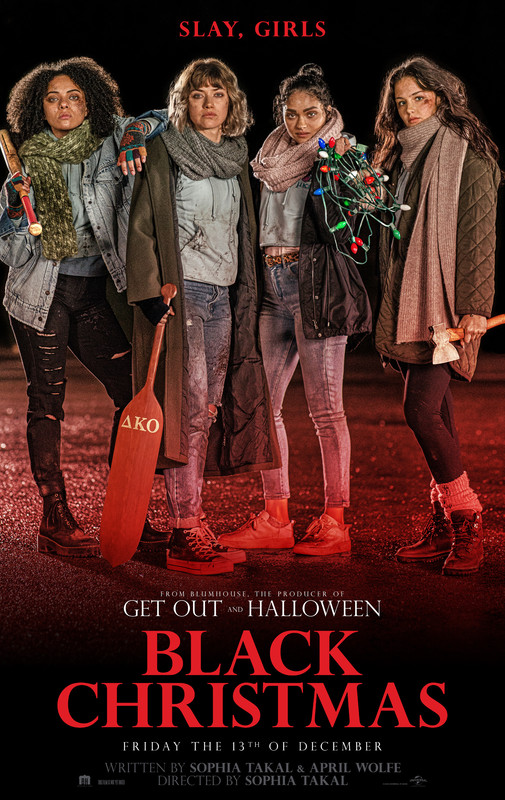
Black Christmas [2019] [15]

Dir: Sophia Takal
Bad movies are most often bad by dint of being fundamentally uninteresting, whether that comes from the cast, the script, the direction or a combination of those factors, tedium and a lack of inspiration tends to be what unites bad movies. That’s - surprisingly given that it’s the second remake of Bob Clark’s 1974 grandfather of the slasher movie - not the case with Black Christmas.

Make no mistake, Black Christmas 2019 is a bad movie in all the ways that matter, but it is at least interesting and ambitious in its badness. The 2006 remake of Clark’s film copied the original while needlessly and ineptly expanding its backstory but director Sophia Takal and her co-writer April Wolfe treat this iteration as a remake in name only, with just one or two moments that nod to the original. Clark’s film is perhaps neither as well known nor as well rated as it should be, and is more thematically interesting than one might expect of a mid 70s slasher. Particularly notable, especially given that at the time of its release the procedure had only been legal in Canada for five years and the US for one, is a storyline that has the main character (played by Olivia Hussey) being pregnant and determined that she is going to have an abortion, against the wishes of her boyfriend. This feminist slant is what Takal and Wolfe grab on to in their source material. In updating it, they zero in on a story taking in many of the recent concerns on college campuses: date rape, courses dominated by a focus on white male writers, feminist activism and (generally white) men’s rights crybabies who see themselves as rebels in a culture war. It’s not a bad idea. Incels and MRAs are genuinely scary; a real world threat that it’s easy to see as the villains of a horror movie, and yet the film utterly fails to capitalise on it.

It’s great that Black Christmas has ideas, it’s a quality scarcer than I’d like these days, especially in remakes, but how it deploys those ideas matters. At a fundamental level, this is a horror film, a slasher, the film should be feeding its ideas through that form, but the two feel almost entirely independent of each other. We need to identify with and care about at least some of these characters so that we can be scared for them, and we really don’t, because they are largely as interchangeable as the women in any B grade slasher you care to name. They’re not taking gratuitous showers, so it’s less icky, but fundamentally Riley (Imogen Poots) is a total cipher, Kris (Aleyse Shannon) little more than a mouthpiece for the screenplay’s politics (politics I agree wholeheartedly with, but that’s not the point) and the others blend into the background, barely distinguishable. The guys fare little better, with only Cary Elwes’ Jordan Peterson analogue professor and Caleb Eberhardt as a blandly nice, kind of nervous, guy who’s into Riley being anything more than stereotypical frat guy cutouts. 

The characters baldly state the screenplay’s politics. There is little to no shading, little to no discernible attempt to make the ideas sound different in each character’s mouth. It ends up feeling less like a screenplay than a collection of buzzworthy words and phrases. The intent is admirable, the message inarguably a good and timely one, but the delivery is so hamfisted and so undermines everything else the film should be attempting to be that it falls flat.

It’s evident that Takal was most focused on what she wanted to say with this film, to the point that she completely botches the horror elements. At times it seems that she’s simply not interested in them. The opening sequence trades on mouldy clichés of masked killers creeping around making a young woman feel vulnerable; he’s behind you… oh he’s gone… and now he’s in front of you. These sequences can be unnerving in a way that is fun as a horror fan, but Takal leans exclusively on the familiar beats. On the plus side, this sequence does contain the film’s sole memorable image; a murder victim making a snow angel as she dies. At least that is a full horror sequence, hackneyed as it is, it has some kind of structure to it. That is not true of the rest of the film’s kills, at least up until the third act. I understand, particularly given the overarching message, not wanting to dwell in violence against women, but Takal’s continual cutting away from any impact or blood and her lack of much build up to those moments neuter any atmosphere of horror. This might be compensated for if she and Wolfe built some more existential horror, a feeling of dread, but just as that possibility presents itself they opt for a calamitously stupid and poorly executed turn that makes even the politics less chilling. Again it’s clear what the intent is; to say something about the way in which insidious politics take root and grow, but it’s lost among sub X Files silliness.

It’s a genuine shame that Black Christmas doesn’t work, because there is the ghost of a truly impressive and perhaps rather groundbreaking film here. Credit is definitely due to Takal and her team for going all out with the idea of a truly modern heavily politicised slasher, but ultimately everything is undercooked. The screenplay needs work; to give the characters dimension, to cut through the declamatory dialogue and give it life and to find real scares and unease in the horror sequences. Whether the quest for a PG13 rating is responsible or it was always the intention to make a film this bloodless and free of visceral impact, that decision was a disaster as it only serves to shine a light on the film’s other flaws. On the whole, intent is important, but execution matters more, and that’s where Black Christmas misses the mark by a wide margin.   
★½

Dec 13, 2019

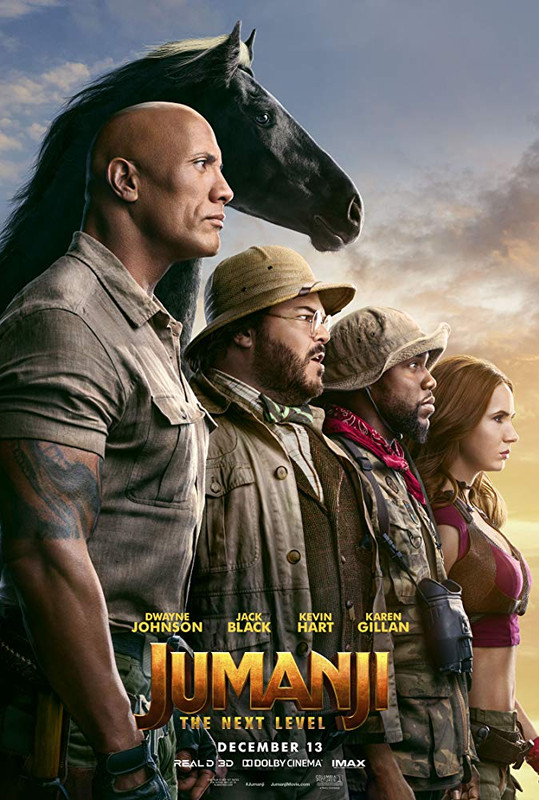
Jumanji: The Next Level [12A]

Dir: Jake Kasdan
In 2017, I don’t know that I’d thought about Jumanji for 15 years or more. It was pleasant enough when I was 13, but it wasn’t a film I’d carried with me, and so I wasn’t especially interested in a reboot/sequel. I ended up seeing Jumanji: Welcome to the Jungle only because I had a gap in my day and had seen already everything else on offer at the nearest cinema. It was a huge surprise; not just a fun and often amusing adventure, but a surprisingly interesting and original twist on a coming of age narrative. It also felt finished. By the end, the experience of being their game avatars had left an impression on all the real world teens who embodied them, their lives had moved on and there was no sense that they would need those avatars back in their lives. This is one of many reasons why lightning doesn’t strike twice with Jumanji: The Next Level.

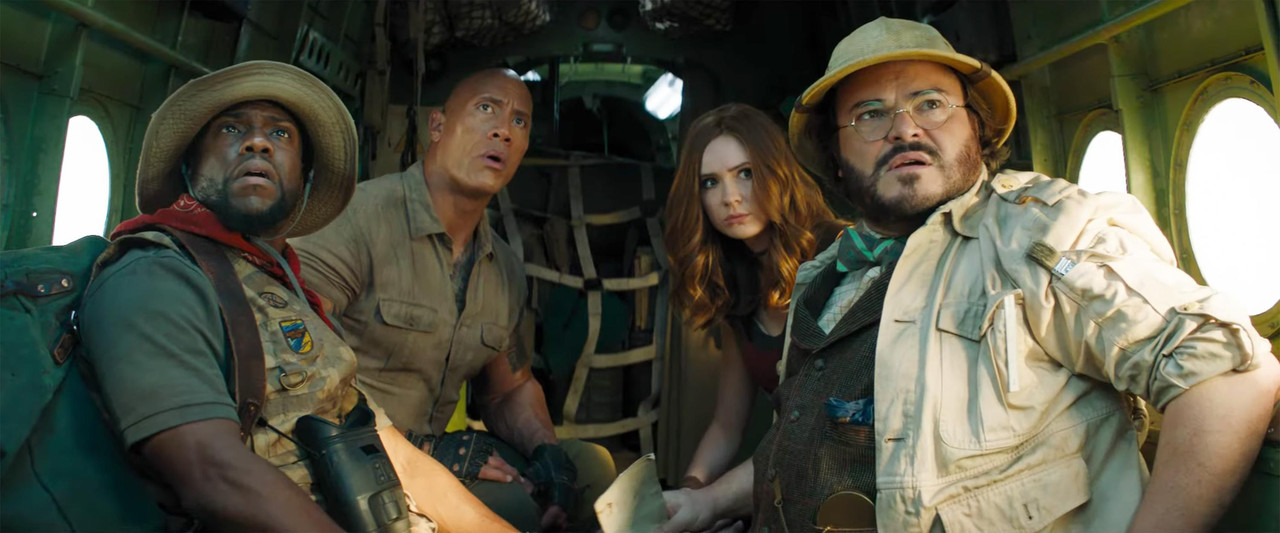
Picking up more or less in real time, The Next Level finds Spencer (Alex Wolff), Martha (Morgan Turner), Bethany (Madison Iseman) and Fridge (Ser'Darius Blain) coming home from their first year of college for the holidays. When Spencer doesn’t show up for their get together, the others go looking for him and soon realise he may have gone back into Jumanji. They head back in to the game, but Spencer’s grandpa Eddie (Danny DeVito) and his old business partner Milo (Danny Glover) also end up sucked in, while Bethany is left at home. Inside the game, Martha is back in her old avatar of Ruby Roundhouse (Karen Gillan), but otherwise things have changed. Fridge is now Shelly Oberon (Jack Black) and Eddie and Milo have become Dr Smoulder Bravestone (Dwayne Johnson) and Mouse Finbar (Kevin Hart) respectively. The group must go on another quest to save Jumanji, but also find Spencer and get themselves home.

The Next Level is the film I expected Welcome to the Jungle to be. The problems are evident from the start. While it painted in broad strokes and clichés, the previous film did at least spend some time setting up the characters and relationships before entering the game. This time, Kasdan and co-writers Jeff Pinkner and Scott Rosenberg spend a little time updating us on where the gang from the last movie are now, but just a couple of minutes introducing Eddie and Milo’s relationship, meaning that we’re not all that invested in them by the time we get into the game.

Once the action moves into the game world, other problems manifest. The switching around of characters and avatars has the potential to be fun, but it largely doesn’t work. Fridge was always the least developed of the real world characters, and Jack Black struggles to find much to do with him. It doesn’t help that his schtick is largely the same as what Fridge had to deal with in game in the last film: an underpowered character whose strengths only become clear in very specific situations. Gillan is comfortable as Martha/Ruby, but is too often reduced to explaining everything to Eddie and Milo and, given her avatar’s status as ‘killer of men’, has far too little action. 

To his credit, Kevin Hart captures Danny Glover’s essence nicely, he nails the voice and the rhythm and manages to give a sense of Mouse being embodied by a fundamentally different character this time out. It’s a pity that Milo is a one joke character, his slow way of talking putting the characters in more peril is a gag that hits once, but not over and over again. Dwayne Johnson, usually a presence of such towering charisma that he can make middling (and silly) projects like Skyscraper and Rampage much more fun than they would be in other hands, seems adrift here. Johnson was great in the previous film, as he played against type to embody a nervous teen, gaining many laughs from the contrast between his physical presence and his performance. We don’t see those layers while he’s playing Eddie. Johnson never gets Danny DeVito’s rhythms down, and because of that he sticks out against Hart’s more detailed (if broad) work. Johnson has some fun with the glee when Eddie discovers how strong Bravestone is, but the repetitive gags about Eddie never learning the rules of being inside a video game become tiresome in short order and he can’t make the weak material stick this time.

The plot of the in game adventure wasn’t a hugely important part of the last film, but here it is even more perfunctory, which is a problem given an early attempt to give Bravestone’s character a personal grudge against the villain. This could have been interesting, a way to show the game taking over at a certain point, with Bravestone’s designed in-game personality coming out and swallowing Eddie, even if only briefly. Unfortunately, nothing so interesting happens, indeed nothing at all happens in reference to this reveal, meaning it adds up to nothing more than an excuse to see Johnson in a silly moustache.

Happily, there are some fun action sequences. The early dune buggy chase is solid, as is a sequence involving suspension bridges and mandrills. Seeing Gillan cut loose late in the film (even if it’s a beat for beat recreation of a scene from the first film) is as entertaining as ever. It would be nice to see her headline her own action-comedy, even the opening sequence of the otherwise awful Stuber suggested she’d carry it off well. 

A body-switching idea may be contrived, but having Karen Gillan play a character other than Martha, however briefly, leads to some of the film’s biggest laughs, and she emerges as one of the film’s MVPs, along with franchise newcomer Awkwafina. Like most of the others, the Farewell star has two characters to play and, while she has to paint in broad strokes as a function of her screen time, she bests most of the rest of the cast in capturing the basic essence of those characters, she’s also the only one to pay much attention to the physicality of embodying another actor, particularly in her second role. This isn’t her best work, but it’s a fine demonstration of why she’s become a star so quickly.

Jumanji: The Next Level suffers from fairly typical sequel problems. It’s trying to do the same thing but differently but the things that are different often don’t work and those that are the same don’t have the same punch the second time around. All that said, and as much of a miss as this is, I’m actually anxious to see the sequel trailed in the credits scene, which looks to be the film I’d hoped they’d make this time out.
★★

Nov 23, 2019

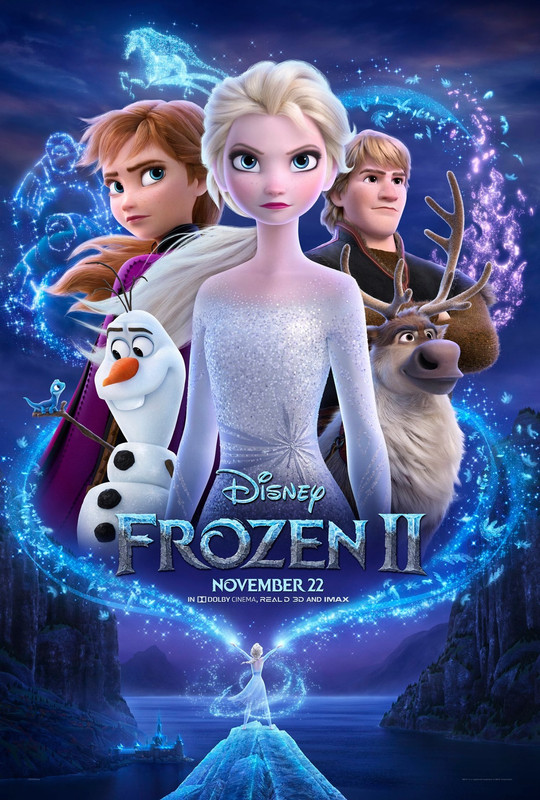
Frozen II [U]

Dir: Chris Buck, Jennifer Lee
Frozen was a genuine cultural phenomenon and the highest grossing animated film of all time. Finding a way to make a sequel to it is in many ways a nice problem to have, but that doesn’t mean it’s easy. If you’re too radical you risk alienating the fans of the original film (and after six years that’s a lot of little kids who have been watching the first film at home their whole lives, plus their older siblings who saw it at the cinema first time round) but making a carbon copy of your previous work risks making both entries look stale. I wish I could say that with Frozen II, writer and co-director Jennifer Lee and her team had managed to find a middle way through this conundrum.

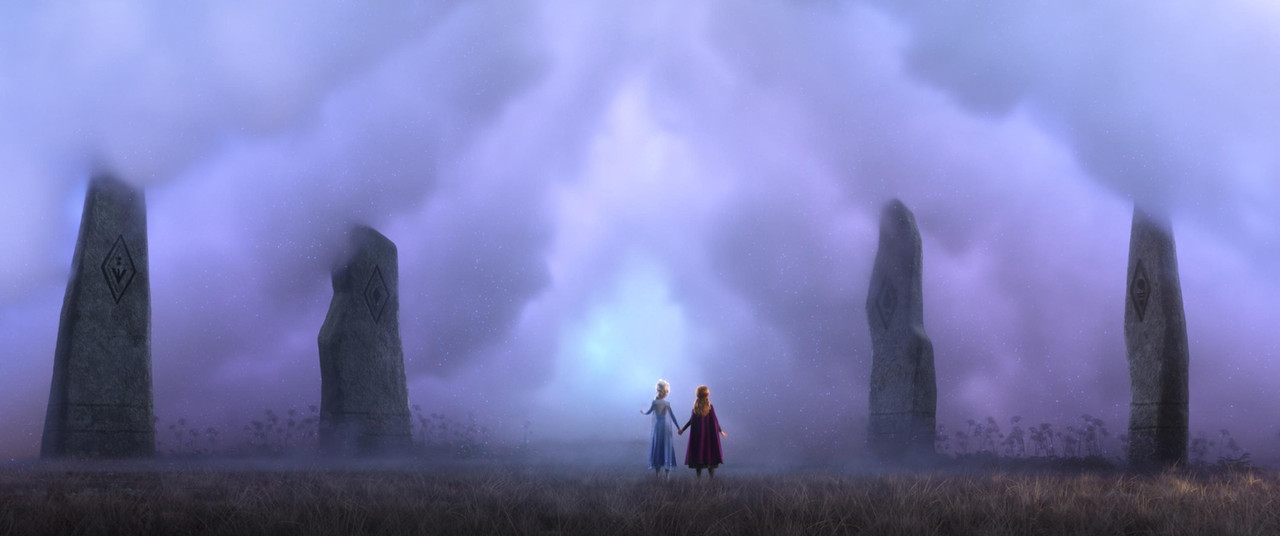
Three years have passed since the end of the first film and all seems fine in Arendelle. Elsa (Idina Menzel) and Anna (Kristen Bell) have kept the city gates open, Olaf (Josh Gad) is enjoying his new magical permafrost and Kristoff (Jonathan Groff) is preparing to propose to Anna. This happy stability is rocked when Elsa begins hearing a beautiful voice singing in the distance (vocals provided by the Norwegian singer Aurora Aksnes). Elsa, Anna, Kristoff and Olaf follow that voice to a magical forest, which became cut off years before, after a conflict between Arendelle and the Northuldra people who live in the forest. Called to the forest by the voice, Elsa wants to discover the truth about the past and how it might connect to her powers.

Frozen, while hardly without its flaws, was a good film, but more importantly, it was an interesting one. For years, Disney films had dealt in familiar fairy tale clichés of Princesses saved by and ending up married to Prince Charming. ‘True love’ had only really been seen to mean one thing, and it had often struck in an instant. Frozen transcended and lightly satirised many of these things, and found a narrative that dealt in more complex emotions. It was refreshing, while also delivering the comedic goods and the showtunes, some of them funny, others emotional, one world-conquering.

Of course, Frozen II can’t break the same ground, but what’s most disappointing about the film is that it finds no other new notes to play. The dynamic between Elsa and Anna remains the same and, in terms of how the film deals with romance, Kristoff’s struggle to find the correct words to propose to Anna is notably old-fashioned set against how the idea of true love was dealt with in the first film. Olaf is still largely superfluous comic relief. He has one or two charming moments, but those are the bits that feel most disposable (a song about getting older and a quick recap of the events of the first film). Even the other characters find him grating at times and it’s hard to blame them. 

The songs also suffer from a combination of a lack of inspiration and fear of straying too far from the template. Only Kristoff’s Lost in the Forest—rendered as an 80s hair metal ballad, complete with visual quotes from music videos—is any kind of departure, but it’s such a strange switch away from everything else in both musical and visual style that it has the inverse problem to the rest of the film: it feels like it’s been parachuted in from a completely different movie. 

Songwriters Kristen Anderson-Lopez and Robert Lopez try not once but twice to recapture the once in a lifetime success of Let It Go, giving Idina Menzel licence to belt out Into The Unknown and Show Yourself. Neither song is up to the task. Into The Unknown is weirdly hollow, perhaps coming too early, only a few minutes after the voice has been established, at which point the stakes feel so much less personal than they were in Let It Go. It also doesn’t help that, even without words for her to sing, it’s Aurora Aksnes’ voice that is the song’s standout element. There’s more drive and a little wit in Show Yourself, but the naked desperation to recapture earlier glories only helps it fall flat. The other songs don’t rate much mention, so aggressively unmemorable are they. The gulf in quality between the songwriting in original and sequel calls to mind that between 2011’s The Muppets and Muppets Most Wanted, as with the latter of that pair, there’s little danger of your kids or you walking out of the cinema humming any of these tunes.

With six years between films, a research trip to Norway, having written in character diaries for Elsa and Anna, and with four other people on the story team, you’d have hoped that Jennifer Lee would have come up with a more solid foundation of a screenplay. Unfortunately, it’s all very slippery. Elsa and Anna’s relationship has nowhere to go, while Kristoff and Anna’s is written as a sitcom’s C story. The lack of a defined villain wasn’t a problem for most of Frozen’s runtime, because it was part of the way the film differed from Disney convention, here that and the under explored nature of the enchanted forest mean the film suffers from a lack of focus. The story never coheres, the forest and its creatures and people lack definition (one very cute creature is an almost direct lift from Tangled, even more so than Kristoff’s reindeer Sven, who always felt like a riff on the horse from that underrated film). Even moments that should be poignant echoes, one key one involving Elsa in particular, land awkwardly because the film is so directly echoing its predecessor throughout that they just end up being another lift, rather than something more meaningful.

This is still a Disney movie, which means the animation is breathtaking. A horse made of water is especially jaw-dropping and, closely ‘inspired by’ The Neverending Story as the design is, the Earth Giants are equally impressive technically. Equally, the voice cast give their best. Kristen Bell and Idina Menzel have a nice back and forth and everyone hits the laughs and the emotion well. The problem is with the material rather than the execution.

From a story perspective, Frozen never cried out for a sequel. Yes, there were unanswered questions in the backstory, but as many recent prequels have taught us, if backstories are left unexplored in an initial franchise entry, there tends to be a reason for that. The answers found here are, once we have the setup, obvious, and not that interesting. Beyond the fact that, economically, it would be a good idea, Frozen II ultimately never finds an answer to the largest question any sequel has to address: why does it need to exist?
★★

Nov 5, 2019

Doc N Roll Festival 2019: Once Aurora

Dir: Benjamin Langeland, Stian Servoss
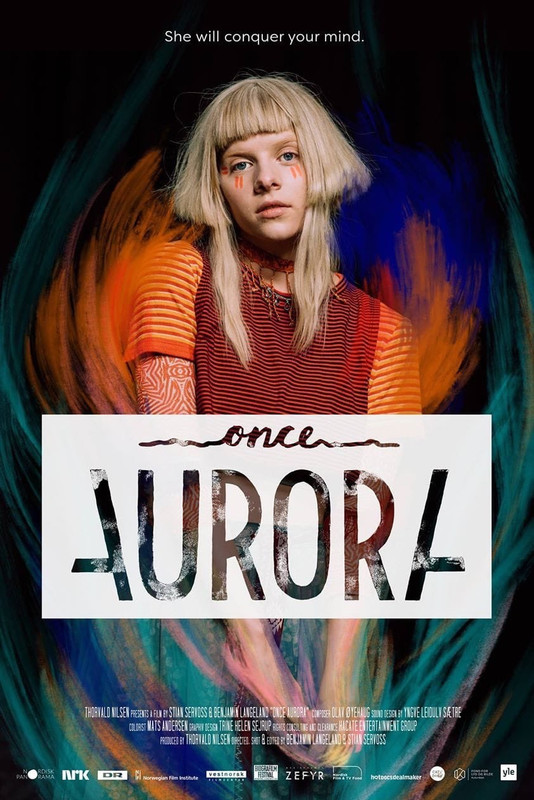
It seems early in her career for there to be a documentary focused on Aurora Aksnes, particularly one in which she talks quite so much about legacy, but there has always been a certain precocious feel about this Norwegian girl, discovered when a video of her singing a self-penned song at a school concert went viral and launched into the grind of becoming a pop star at just 16. This film catches Aurora at 20. Her first album, All My Demons Greeting Me As A Friend has met with great success, but directors and childhood friends Benjamin Langeland and Stian Servoss find her conflicted about the album, success, fame, touring and, even as she works on her second album, whether she wants to be an artist at all.

Langeland and Servoss clearly had totally unfettered access to Aurora, whether at home, in the studio or on tour. The result of this, along with her comfort with them, having known them for so long, pays dividends. We all know that interviews with famous people are, to a degree, them putting on a character. Once Aurora captures a much different version of the singer than the one we most often see in public. In some ways, the Aksnes we see here seems less secure, delicate in a different way to the thoughtful but somewhat flighty person presented in interviews (many comments tend to describe her as a pixie or a fairy). It can be difficult to watch the film as we see her struggle with the demands of this world she still seems unused to. One moment captures her locked in the bathroom, her hands shaking in what appears to be some kind of anxiety attack as she prepares to deal with yet another influx of people. Another finds her looking to her drummer (and former producer) for support when faced with a fan meet and greet. 

This isn’t to say that we find Aurora either ungrateful for her success or incapable of enjoying it. We’re privy to both joyful and challenging moments in the crafting of her second album. There are carefree moments like the opening sequence of her recording found sounds in the old French stately home where Infections of a Different Kind was recorded and some truly beautiful raw takes of the recording, but also an amusingly strained moment as she tries to explain to a largely male crew how a certain song should sound and feel like an orgasm.  

This is an especially good film about the effect of fame on someone who didn’t expect and never seems to have chased it. We get a few insights into the support network around her, from the more mercenary workings of the record company, to a proud and supportive family and even down to an algae ball she seems to find a comfort but even so, the film made me feel protective, even a little guilty, as one of the fans helping drive this career Aurora seems so unsure about. Happily, we get the feeling that by the end of the film, as she’s able to exert a little more control over her music, this is dissipating and that she is finding more joy in the process as well as in the experience of her fans.

For fans, Once Aurora is a goldmine. It shows the artist they are familiar with but in a much deeper and more rounded light. It' not always an easy watch, but if you are willing to engage with the complexities of how we see Aurora feeling then it’s a thought-provoking film as well as a revealing and welcome insight into one of the best musicians the modern pop scene has to offer. 
★★★★

Oct 31, 2019

Teen Spirit [12]

Dir: Max Minghella
Whether it’s been the source of your favourite music or you think it’s a blight on the industry and Simon Cowell is pop’s devil incarnate, there’s no denying that The X Factor and other TV singing competitions have been hugely influential over the past two decades, so it’s something of a surprise that they haven’t been the backdrop to more films. 

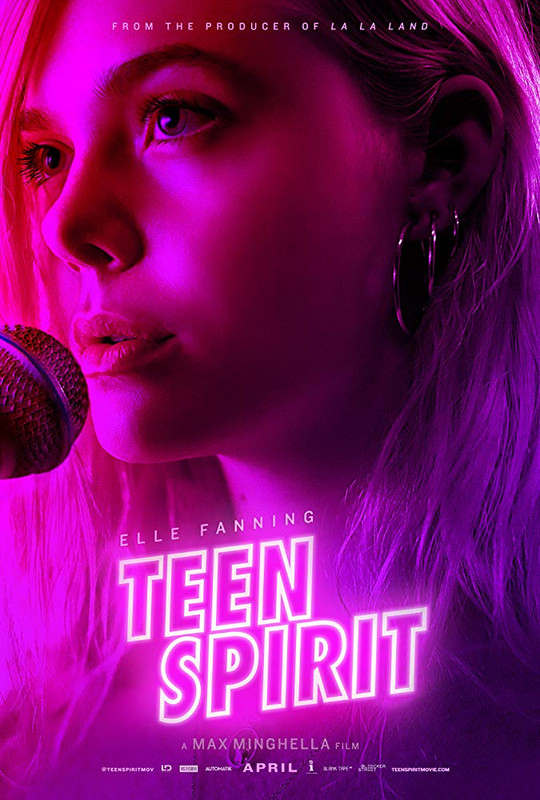
Max Minghella’s debut as writer/director casts Elle Fanning as Violet Valensky, a teen of Polish descent, living on the Isle of Wight. When the singing competition Teen Spirit comes to the island, she goes to audition but has to rope in a slightly creepy local truck driver, Vlad (Zlatko Buric) to pose as her manager because, being under 18, she needs an adult to sign off on her participation. The film focuses both on Violet’s relationship with Vlad, who used to be an accomplished opera singer, and on her progress through the competition.

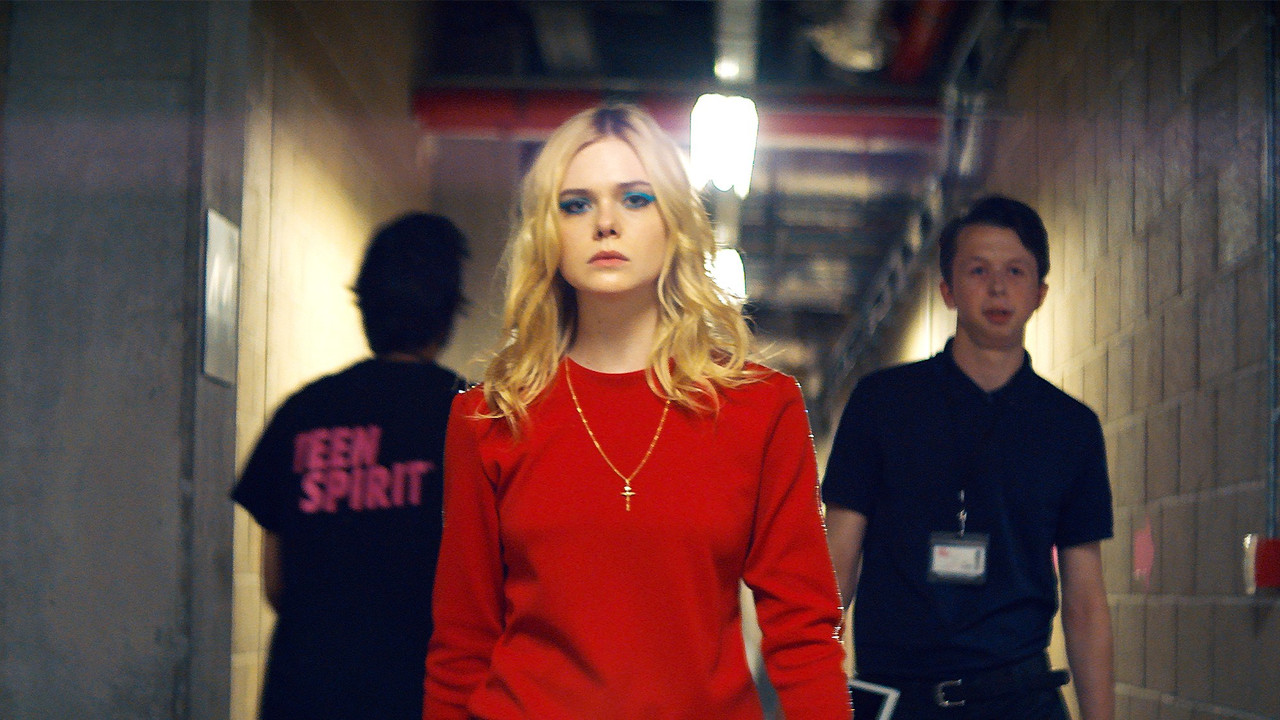
Elle Fanning is without a doubt the most accomplished American actress in her age group, and what Teen Spirit does get right comes almost entirely from her typically committed and detailed work. Appearing in every scene, Fanning has a lot of lifting to do: she’s singing, working with an English accent, and learned Polish for the role. Through all this, she also manages to give another subtly layered performance in which we see much of what Violet is going through written only through her expressions. This ranges from a nice comic tension when she introduces the always dishevelled Vlad to her mother (Agnieszka Grochowska) to the different ways she regards the various boys who, to some degree or other, express interest in her. Other moments, when we find Violet at her least self-conscious, dancing around her room, or when she hears the news that she’ll be on Teen Spirit’s televised final, seem to channel her off-screen persona, to charming effect.

Between them, Fanning and Zlatko Buric create a warm mentor/mentee relationship. Buric can be amusing in his brusqueness, but also finds a sensitive side to Vlad and puts across his genuine affection for Violet. It might, however, land a little more strongly had Minghella’s screenplay explored in more depth the background it gives Vlad in relation to his own daughter.

That is, unfortunately, just one of the areas in which Minghella’s writing falls short. While Violet’s character and her home life are well drawn, the things that happen to her and the people who surround her are often too lightly sketched. The members of the backing band who she eventually takes to the competition (a thing that would almost certainly never be allowed in real life, those shows have professional house bands) are almost total non-entities, their intended roles as potential romantic interest and comic relief falling flat throughout. Perhaps more frustrating is how loosely the film tells us about Teen Spirit itself. Montages show the off camera whittling down process, but we then skip so fast through the televised portions that it seems Violet is in the final after being on just one other broadcast. It rings false, and that’s a near hobbling problem for the film as a whole.

Wildly talented as Elle Fanning is, on this evidence she’s only a slightly above average singer. That’s not really a problem, it describes a lot of major pop stars. What does present an issue, at least in the way it’s utilised in the film, is the fact that Fanning is always obviously working with a pre-recorded track. If this were an intermittent thing, if we saw her sing live early on and the autotune and miming crept in during the TV show, it could have been an interesting statement about these shows and about pop music as a whole. The fact she’s miming in every music scene, and clearly autotuned in all but one (the performance of Tegan and Sara’s I Was A Fool is not live on set, but sounds less treated), means any potential for comment or satire is missed. This makes the music feel rather soulless—a point Minghella may be trying to make, but botches.

Many issues might have been overcome by Fanning’s performance, but for the way the film looks. Minghella’s visual sense can be a godawfully ugly spectacle. The worst aspect is the lens flare, which is so prevalent that sometimes the film seems to have been shot by JJ Abrams on steroids. You would be forgiven for thinking that every single light in the film flares—even the light in Violet’s fridge does it at one point. Again, it’s not hard to see what is being attempted here, it could be read the artificial sparkle of TV following Violet everywhere, but as with the way the music is used, it’s so indiscriminate that any potential meaning becomes lost and all that remains is a stylistic choice so grating the film can be genuinely challenging to watch. 

More grating still is the obviousness of the influence, even outside the casting of Fanning, of The Neon Demon. The colour scheme often feels influenced by it, and both the audition montage and the final performance draw heavily on specific imagery. The comparison only serves to bring home, good as she is here, how much more interesting Fanning’s performance is and how much more scathing and successful Nicolas Winding Refn’s commentary about the industry he’s depicting is than Teen Spirit manages. 

To be fair, Teen Spirit does have its successful moments. Fanning’s version of Don’t Kill My Vibe is infectious enough to work in the setting it’s used in, and her voice is just about good enough to carry the songs. The worst version of Teenage Kicks ever recorded is a beautiful skewering of the vapidity of pop talent shows and while she’s not terribly well used it’s fun seeing Rebecca Hall as the film's version of Simon Cowell (a definite upgrade from the real thing). At 93 minutes, and with several storylines feeling less than fleshed out, the film cries out for a few extra scenes to give a little more body to the characterisation and flesh out and lend credibility to the show itself. As it is though, Teen Spirit is a frustratingly undercooked mix that never quite figures out if it wants to be satire or simple Cinderella story. It’s elevated, as most things are, by the mere presence of Elle Fanning, but she clearly couldn’t take it to number one.
★★

Oct 24, 2019

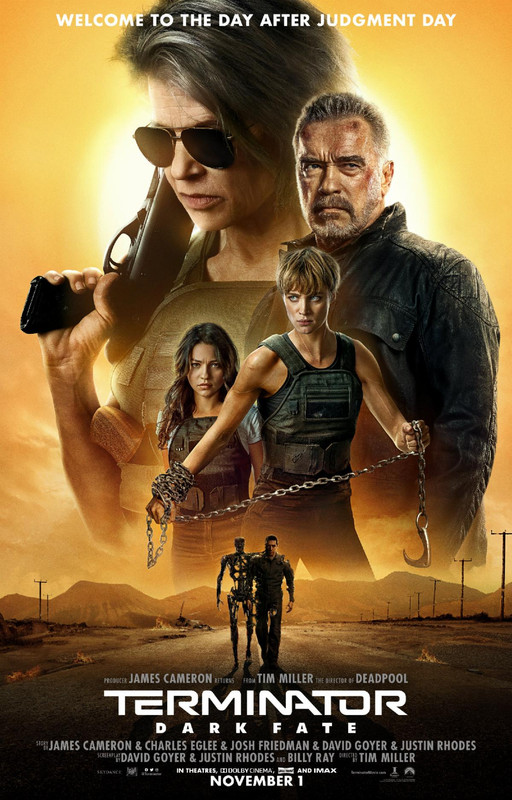
Terminator: Dark Fate [15]

Dir: Tim Miller
“There is no fate but what we make for ourselves”. For some years now, following the poorly regarded Terminator 3: Rise of the Machines, the Terminator franchise has been trying to re-make its own fate. The first attempt, Terminator Salvation, was an Arnieless excursion into the future war that had been glimpsed in every previous film. The next try, Terminator Genisys, was a full on attempt at a reboot, an abysmally terrible film that felt like the result of meeting asking how to actively take every good idea in the history of the franchise and make it shitty. Terminator: Dark Fate, arriving for the series’ 35th anniversary, feels like a last roll of the dice, and it’s trying as hard as it can to make sure those dice are loaded. Like the recent reboot of the Halloween franchise, this comes with the blessing of the original’s creator (James Cameron is credited as one of many story writers and as a producer) and turns back the clock to disregard every sequel since he was involved. 

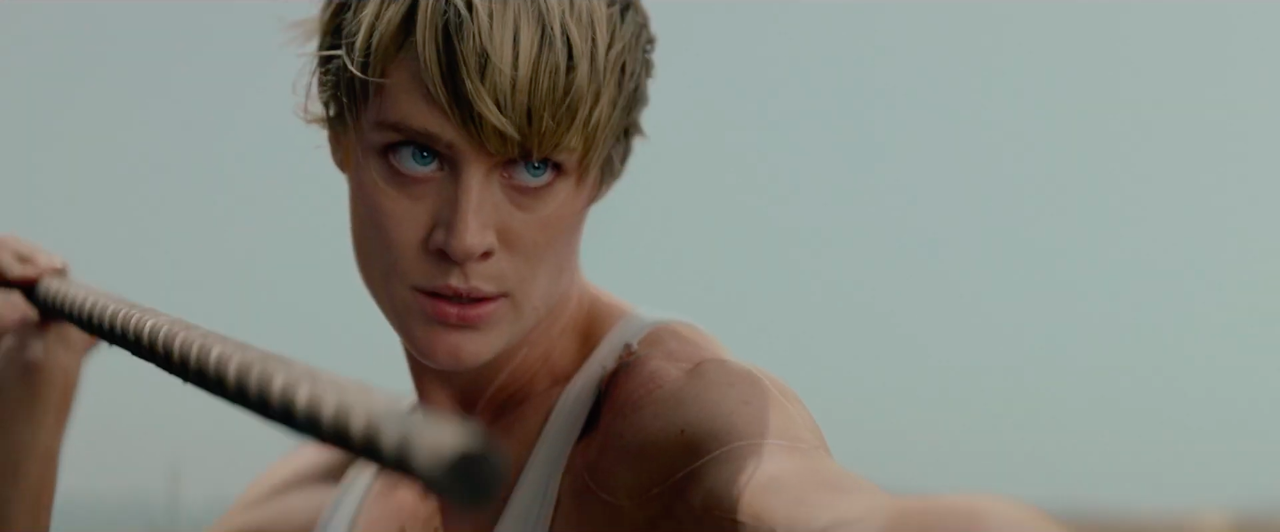
Positioned as a direct sequel to Terminator 2, the plot finds auto worker Dani Ramos (Natalia Reyes) pursued by a new kind of Terminator, the Rev-9 (Gabriel Luna), as ever, the resistance has managed to send her a protector, this time in the form of Grace (Mackenzie Davis); a human, but one with enhanced abilities. On the run, they join forces with Sarah Connor (Linda Hamilton) and later with a T-800 (Arnold Schwarzenegger) to attempt to destroy the Rev-9, to save Dani and with her the future.

There is a certain purity to the first three Terminator films. For all their plot contortions—time travel, alternate futures, continuity destroying paradoxes—they are all basically one long chase sequence. The relentlessness of them is remarkable, and drives each of them forward with a propulsive sense of purpose. This is clearly what Tim Miller and his team are trying to find with this soft reboot. They want to recapture that thrill ride feeling, but also to bring the series up to date and use it to engage with some ideas with contemporary relevance. The result is, at best, a very mixed bag.

Things largely start well. Basing the first act in Mexico, with much of the dialogue in subtitled Spanish for the opening minutes gives this film a different flavour to its predecessors and Miller wastes little time in getting to the first action scenes. Mackenzie Davis and Gabriel Luna’s first fight is solid; a brutal encounter in a car factory, it shows off some solid choreography and establishes that both Davis and Luna are adept at doing their action beats. This then leads into a truly spectacular car chase—the franchise’s best action sequence since Rise of the Machines’ crane chase—which demonstrates the abilities of the Rev-9, including the very cool aspect of splitting itself into two entities: the endoskeleton and its liquid metal covering and shows off some of the film’s best CGI. Not pausing for breath, Miller then gives Sarah Connor an entrance that befits her iconic status, Linda Hamilton instantly nails the hard-bitten attitude, creating a continuity with the first two films that, at least in the moment, is powerful and thrilling. These ten or twelve minutes of screen time are stunning; vintage Terminator fare that can stand alongside any of the highlights of the franchise. They also set a standard the film never comes close to meeting again.

Some issues are apparent even in this first part of the film. The screenplay brushes up against a few ideas: exploitation of workers and their replacement via automation, but it doesn’t do much with them. This is a pattern we’ll see repeated in how the film later avoids engaging with immigration issues, despite an action scene set in a detention centre. Happily, this isn’t the Trumpian fantasy of the recent Rambo: Last Blood , but the issues barely qualify as window dressing.

The bigger problems begin to bite after Sarah Connor’s entrance into the film. Logic has never been the strong suit of the Terminator franchise, but I found myself wondering, once a key piece of information was revealed, why Grace should be the protector sent back through the future. She possesses some of the strengths of a Terminator, but one key weakness that is more acute than those of a human, making her arguably the worst choice of the three. Her weakness serves merely as a plot device, and doesn’t add anything appreciable to her character. Nevertheless, Mackenzie Davis is very good in the part, giving it an emotional dimension reminiscent of the original’s Kyle Reese with some of the strength of Arnie’s good Terminator from the first sequel.  

The writing is the problem all the way through, with the performances often seeming to work in spite rather than because of it. Natalia Reyes has much the same arc as Hamilton’s Sarah Connor did in the first film, and she plays the role well as Dani evolves from a disbelieving pawn and grows into steely resolve, but the familiarity of the arc means that she’s not terribly interesting as a character and the one minor twist on it is both screamingly obvious and something T2 did before and better, with two characters. Gabriel Luna has an intimidating blankness, but again it feels like he’s chasing another actor’s work, in this case Robert Patrick. The new abilities of the Rev-9 are fun for a while, but again could be more inventively utilised. The first act suggests that Dark Fate will have the same relentless drive as the first three films, but somehow this too goes missing. The middle hour flags quite substantially, as we have to team Sarah up with Grace and Dani and have them find Arnie’s T-800. During this section, Luna is mostly off screen, and the ever present sense of threat from the T-800 in the first film and the T-1000 in the second just doesn’t translate here.

Though he is of course top billed, this is probably Arnold Schwarzengger’s most limited screen time in the franchise, leaving aside his digital cameo in Salvation. One thing that often goes under acknowledged is that each time Schwarzenegger plays the Terminator, he is reinventing the character; the face may be the same, but he’s a different Terminator each time. In this respect, as little sense as his very existence makes in this timeline, there are some nice ideas here. ‘Carl’, as this T-800 is known, has built a life over the past 20 years. It would have been interesting to see this be more than window dressing and the source for a couple of jokes, but Arnie plays both the humour and the Terminator’s slightly evolved understanding of emotion effectively for the little screen time he’s allowed to work with it. It’s a good performance which is somewhat derailed by the fact the film seems shackled to striking as close to the shape of its best-loved predecessors as possible, meaning that come the third act Arnie is just a Terminator again, any evolution he’s done largely a moot point.  

Having been away from the franchise for 28 years, Linda Hamilton must have seen something worth getting involved in here. It’s true that Sarah Connor is probably the character best served by the screenplay, and Hamilton falls back into the role perfectly. The years visible in Sarah’s face attest to the tragic backstory, and Hamilton communicates both this and her distrust of the T-800 effectively. Again, even in the baggy middle hour, it’s not all that deep, but Hamilton hits all the emotional beats well enough to get maximum effectiveness from minimal development. Sarah’s presence is pure fanservice, but it’s well-executed fanservice in the middle of a film that otherwise often fails on that level.

Tim Miller, fortunately, doesn’t try to translate the tone of Deadpool to this film, the moments of humour are few, mostly solidly executed and, in fairness, less obtrusive than in Rise of the Machines. Miller does marshal some decent action sequences, though they are customarily over-reliant on CG and the rhythm of them feels off, with the unquestionable highlight coming with the first of the setpieces and the film feeling like it’s chasing that same high throughout, without hitting it. The CG is also problematic at times, with the first sequence in which it’s used looking shockingly shonky in one hugely important aspect (I won’t spoil it, because it has been well protected by the trailers). Outside the action, the screenplay again lets the side down, as it looks for an ending with the same kind of pathos as T2, and comes up empty.

Terminator: Dark Fate is a major step up from Salvation and Genisys, but that is much more an indictment of those films than an endorsement of this one. Every one of its successes is partial or compromised. The first twenty minutes are thrilling, but thereafter the film flags badly, throws out a lot of ideas it never quite utilises effectively and when it stutters to life it recalls the earlier, better, films so much—without hitting the same level of quality—that it only serves to make you wish you were just watching those again. For all its flaws, Rise of the Machines remains underrated and its dystopian ending maybe the franchise’s boldest choice. Dark Fate does nothing so interesting. It has some virtues, but its legacy will likely be as the second-best Terminator 3.
★★½

Sep 29, 2019

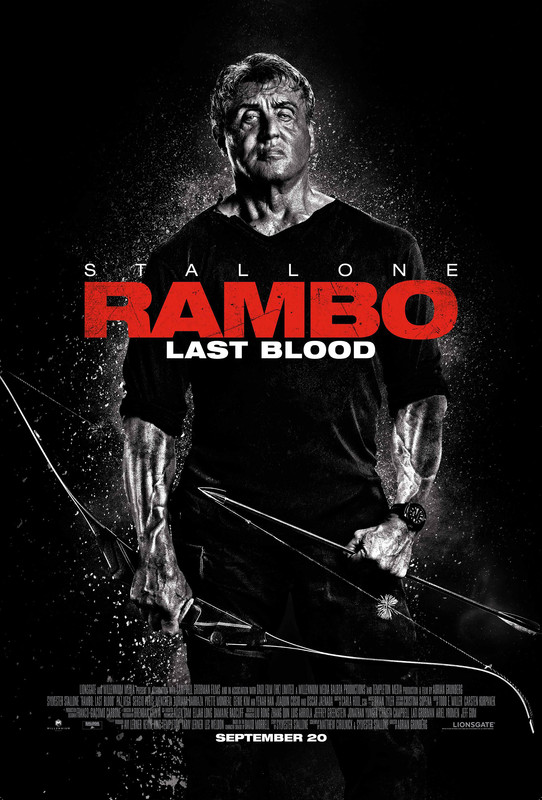
Rambo: Last Blood [18]

Dir: Adrian Grunberg
There has always been more to Sylvester Stallone than his meathead image. Many of his performances are better and more nuanced than he’s ever been given credit for and he has written and directed much of his own work. This strong authorial voice behind the scenes has almost certainly been a large part of how he has managed to sustain not one but two career-defining franchises over a period of around 40 years. The Rocky series may be patchy, but it has only grown more interesting with each entry, drawing together into a sort of alternative autobiography as each entry reflects on Stallone’s career and life.

Rambo was never really meant to be a franchise. In the novel the first entry in the series, 1982’s First Blood, was based on, Rambo died at the end. It probably should have stayed that way in the film, because with each entry the ensuing series has drifted further from that film's downbeat tone. The John Rambo of First Blood is painted not as a hero but as a traumatised Vietnam veteran whose PTSD makes him click into survival mode when a small-town sheriff decides to victimise him. He kills no one on purpose and the film’s crescendo is not violent but emotional. Rambo: First Blood Part II, Rambo III and the incongruously titled Rambo increasingly dumped any form of introspection in favour of escalating violence. That pattern continues with Rambo: Last Blood.

Last Blood finds Rambo living on a ranch raising horses. He lives with a Mexican housekeeper (Adriana Barraza) and they seem to have been raising Gabrielle (Yvette Monreal) together, though whether she’s actually related to Barrraza’s character is never addressed. With the help of a friend, Gabrielle has found her long absent father and she wants to visit him in Mexico and ask why he abandoned her. In Mexico, Gabrielle is kidnapped by a trafficking gang and hooked on drugs, leading an enraged Rambo to go hunting for her and for vengeance.

Any way you slice it, Last Blood is a bad film. Before we even get to its deeper-seated issues, the screenplay is terrible. The characters are ciphers, particularly Paz Vega’s crusading journalist, who does little in her ten minutes of screen time but point Rambo in the right direction. It recalls another godawful fifth entry in an action franchise: A Good Day to Die Hard. That film, like this one, dumped much of what defined its leading character. The sequels may have progressively pulled back on Rambo’s PTSD, but even Stallone’s 2008 entry found a little space to allow the character and the audience to reflect on how the years of war had shaped him. This film has no such inclination, instead, it’s just a bit of weak setup building to a group of totally personality free bodies being mashed by Rambo in a Home Alone style third act. There are rumours that Stallone ghost directed the second film, but so far it is only the fourth that he has been the credited director on, not that you’d be able to tell from Adrian Grunberg’s anonymous work here. The director delivers the violence fairly competently, but this isn’t an interesting or memorable looking film in any way.

The Rambo series was never the model of political correctness, and I’m not suggesting it needs to start being that now, but by any standard, this is a disturbing and nasty film in the political context of 2019. Of course, trafficking gangs exist, and are bad, but Stallone and  Matthew Cirulnick's screenplay doesn’t even attempt nuance. It’s not just the gang either, every person we encounter in Mexico, with the exception of Vega, who does nothing, is an unambiguous and unexplored villain. Of course Rambo has to have a motivating factor, but Gabrielle is never more than a prop, the same is true of Adriana Barazza’s Maria. It sometimes feels as though the film is using these characters as a get out of jail card for its otherwise racist violence—Rambo likes THESE Mexicans, so he can’t be racist. It’s not convincing. The whole film feels like a Trump voter’s wet dream of the solution to the border ‘crisis’, and a shot of the wall, just before the orgy of ultraviolence that forms the film’s last 20 minutes, only underlines this point.

I’d like to brush off the film’s politics, to say just enjoy it as unserious and vicarious splatter, as we do many horror films. The problem with that is that Rambo has always been political and in 2019, with this particular plot as the driving force, the politics are inescapable. If there had been a measure of thoughtfulness, of nuance, of self analysis or criticism, the politics could have been a genuinely interesting reflection on how Rambo ended up this way. Those things aren't there, so it's just vile. In a way, I hope Last Blood isn’t the end for Rambo because, whatever my issues with the character and the series, an iconic figure like this deserves a better send off. On the other hand, I won’t mourn if he disappears into the desert, like a lot of other dinosaurs before him.
½★

Sep 8, 2019

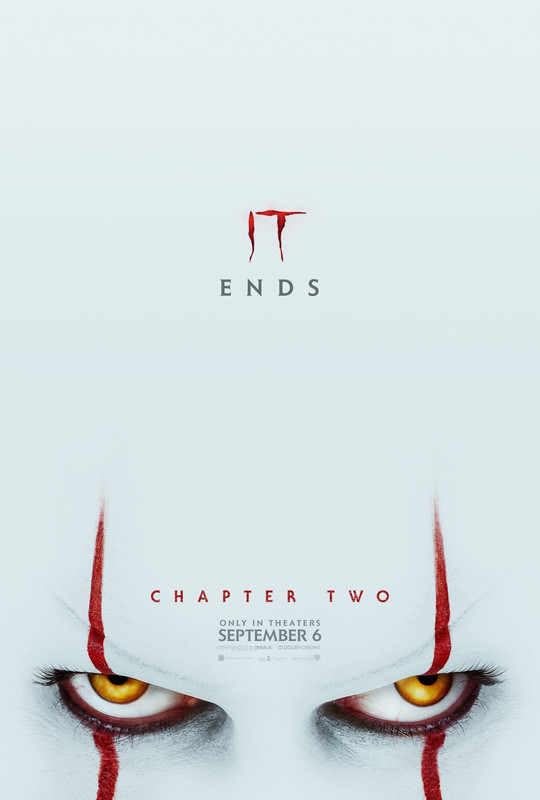
It: Chapter Two [15]

Dir: Andy Muschietti
The first part of this adaptation of one of Stephen King’s best regarded novels became, on its 2017 release, the highest grossing horror film of all time (albeit unadjusted for inflation), so it makes sense that director Andy Muschietti has been afforded expanded freedoms for this second and final instalment. It’s probably not coincidental that the finished film is a good argument for reining a director in.

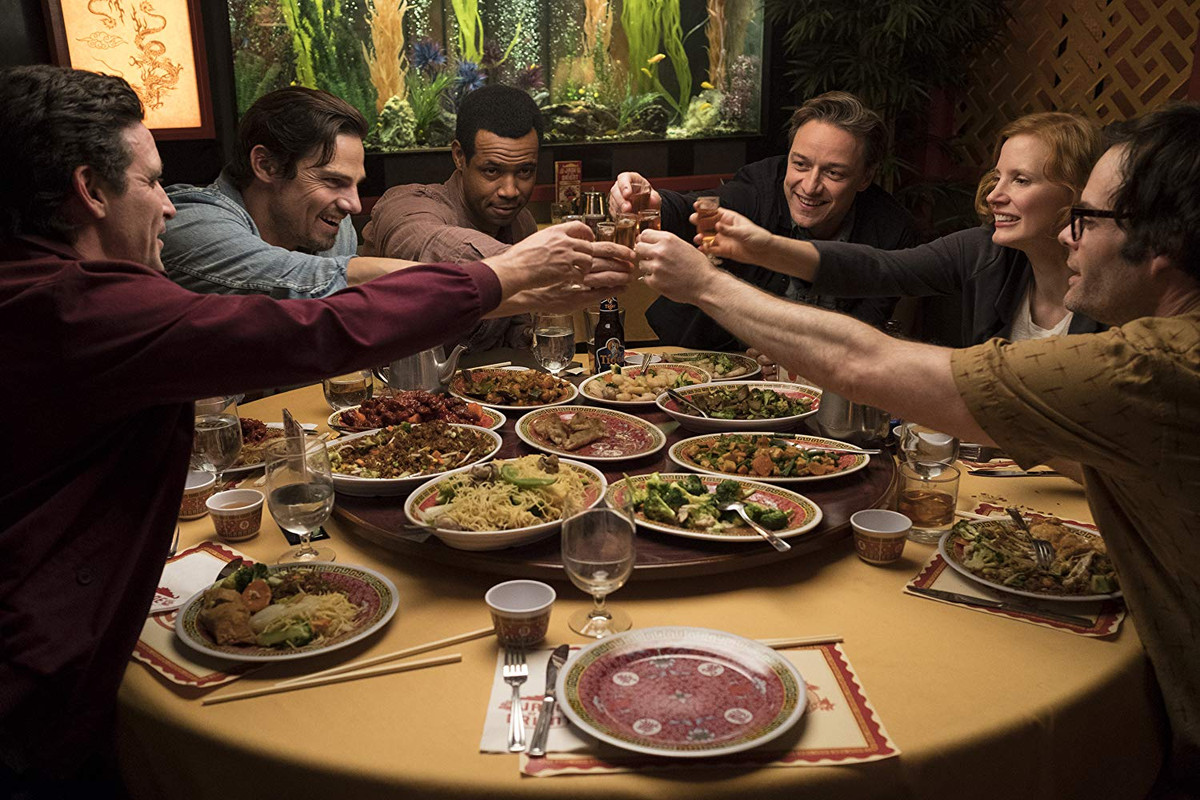
We pick up the action 27 years after the end of the last film, with the Losers Club now far-flung and having been out of contact and, with the exception of Mike Hanlon (Isaiah Mustafa), out of Derry since shortly after the summer they believed they defeated Pennywise (Bill Skarsgard). When a man is murdered, Mike discovers writing in blood that tells him Pennywise has returned, and he must reunite the Losers to finally destroy him once and for all. 

It’s tough to argue with the quality of many aspects of It: Chapter Two. Cinematographer Checco Varese, production designer Paul D. Austerberry and art director Nigel Churcher all help craft a striking look for the film. Scenes with Bill (James McAvoy) trapped in a funhouse and Richie (Bill Hader) seeing Pennywise floating above him, hanging from a pyramid of red balloons are particularly strong images in their own right. The good work in the behind camera departments continues with some effective transitions between past and present, some achieved via effects and others through Jason Ballantine’s editing, and there is excellent practical effects work from the make up department, notably the Pennywise unit and largely successful de-aging CGI on the kids, who have all grown since the first film. The join is only visible on Finn Wolfhard, who obviously needed more work to match his look from the first film and can occasionally appear a bit waxy in the flashback sequences. Unusually, the film’s MVP is arguably casting director Rich Delia who, having found a talented group of kids for the first film, matches them brilliantly both in look and personality with the adult cast here. 

With all this quality work in departments that don’t often get singled out for notice, it’s disappointing that where It: Chapter Two falls down is in the key aspects of its writing and direction. The film starts well enough, with a genuinely shocking and nasty scene of a gay bashing murder (with filmmaker Xavier Dolan playing the victim), but inconsistency soon rears its head. 

Gary Dauberman’s screenplay is bitty and episodic, often putting its emphasis on the wrong things. In the long search for ‘tokens’ the Losers have to sacrifice to help them defeat Pennywise, only a couple feel hugely significant to the characters, Bev’s (Jessica Chastain) postcard being the one we feel the owner has the deepest connection to. Criminally, Bill’s bike feels more like his token, given the emphasis put on it during the sequence, than what it turns out to be. Some of the problems with the writing, like the nuance free depiction of characters like Bev’s abusive husband, can be traced back to Stephen King, who never wrote a bully who wasn’t pure unvarnished evil, but Dauberman should have been able to use the film’s massive running time to draw the story together more effectively, and to find something for Mike Hanlon to do aside from spout exposition. A running gag about Bill (King’s self-insert author in this story) not being able to write satisfying endings is not only tiresome, making a joke about something doesn’t mean it’s not true.

Like Dauberman, Andy Muschietti seems to struggle with the unwieldy length of his film (169 minutes, longer than 2001, The Life and Death of Colonel Blimp and recent byword for self-indulgent overlength, Once Upon a Time… in Hollywood). The pacing is notably stop/start, with the film cramming in the exposition in the opening twenty minutes, with scenes so brief to establish where the Losers Club are now that they feel pat and tossed off. After the first act, every single scene is drawn out long beyond the time at which its point is made. This is especially true of the token seeking scenes and the funhouse sequence, all of which could easily lose a third of their running time. This is all without taking account of scenes that could be cut wholesale, such as every last frame involving Henry Bowers (Teach Grant), another of King’s one note bullies, and entirely superfluous here. 

Only in a couple of sequences does Muschietti show any knack for building atmosphere, and in both the funhouse and Beverly’s encounter with an old lady who lives in her former home, he manages to undermine what creeping fear he does engender, either with a laughable monster or poor pacing. Otherwise, the film’s scares are the typical ‘boo’ jumps. Some work, if only as a result of the law of averages, but they can almost all be counted in.

The acting is better than the screenplay and direction deserve. Chastain is the biggest name here but, while she’s typically good, she’s not a standout the way Sophia Lillis was, and remains among the teenage cast. McAvoy is also effective as the older Bill, convincing us of the long held guilt his character feels over ‘abandoning’ his little brother to Pennywise and the scene in which he works through that is one of the film’s best moments. The adult cast all channel their young counterparts, capturing the same essence and energy, suggesting both that our essential natures never really change and that, when drawn back together, they fall easily into old relationships. This is the film’s most affecting material, as it advances the coming of age stories that were the most compelling aspect of Chapter One

Among the adult Losers, the best performances come from Bill Hader as Richie and James Ransone as Eddie, the latter now somewhat meeker but still the risk averse person he was as a kid. Hader’s performance has both the emotional content of his work on The Skeleton Twins and the sharp comic timing he always shows, but he isn’t always well served by the script, which puts too much emphasis on his wisecracking, often puncturing potentially scary scenes with gags that, while well delivered, aren’t funny enough to justify undermining the horror element of what is supposed to be a horror film. Equally, the secret that Pennywise taunts Richie with, obvious as it is, appears to be set up to pay off in a bigger way, and while the way it’s depicted is heartfelt, it doesn’t land with the emotional punch the setup promises. Ransone, who made a strong impression in the Sinister films, might give the best performance of the whole Losers Club, struggling to overcome the hypochondria of his childhood which has led into work as a risk analyst, not a personality type best suited to fighting a demonic clown. As Ben Hanscom, Jay Ryan’s character is, for the first two acts, often little more than a soundalike of his surname. Ben’s story only comes into focus in the final act, but at least that’s more than Isaiah Mustafa gets as Mike, the film’s sole black character finding himself sidelined for large swathes of a second film in a row.

The other key cast member here is Bill Skarsgard as Pennywise. While the make up does a lot of work for him, the actor inhabits it brilliantly. Almost every element of the film’s pure horror scenes that works is thanks to his deeply weird and unnerving performance. This is particularly true when Pennywise attacks a little girl under the bleachers at a baseball game, Skarsgard’s childlike voice only adding to the skin-crawlingly horrible feel of the scene.

It would be unfair to say that It: Chapter Two is a bad film, there are too many well crafted elements for that to be true. The film comes into focus just often enough to make you think that buried somewhere in this morass of footage is a genuinely frightening film about the things that haunt us from our childhood. Unfortunately, to find that movie you have to pick through an overlong and digressive collection of scenes that often feel like they are stuck in the same inert state as the lady Bev has tea with. Muschietti is capable both of boring us with his longueurs and of making us groan with his painfully obvious allusions to films infinitely better than this one (from the King universe and outside). Next to these moments, the scenes that do manage to grip or to scare don’t add up to enough to allow the film to work as a whole. Taken together with the equally overlong and patchy Chapter One, there may be a way to carve out a great four hour film, but these two hours and forty nine minutes are only sporadically interesting.
★★½

Aug 25, 2019

Crawl [15]

Dir: Alexandre Aja
Where exactly the early 00’s horror movement referred to as the New French Extremity began is debatable, but I remember my first encounter with it. I saw Alexandre Aja’s Switchblade Romance in a ratty London multiplex, and was blown away by the effectiveness with which it assaulted its audience, as I left the screening I saw the girl behind me balled up in her chair in the foetal position, crying. The visceral nature of the film and of that reaction have been burned in my memory ever since. In that moment I saw such promise in Aja and I’ve been waiting more than 15 years for him to fully deliver on it. It looks as though I’ll be waiting a bit longer.

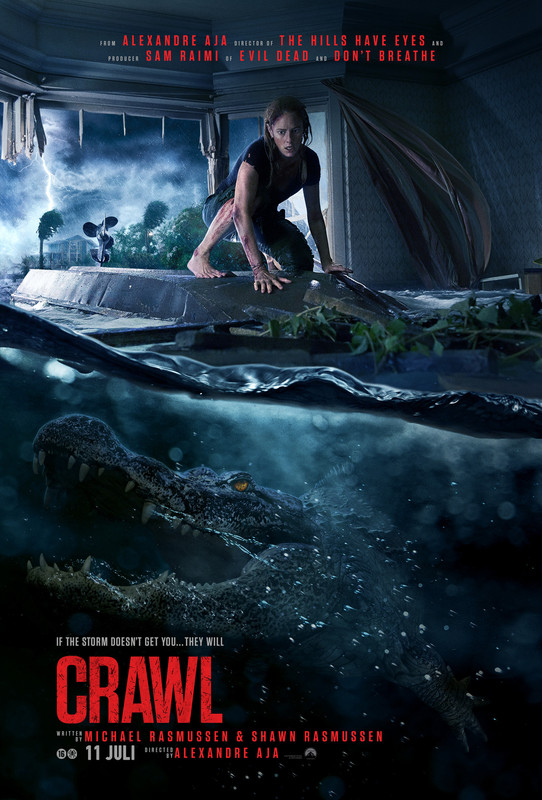
Crawl is a pretty basic ‘nature attacks’ movie. Haley (Kaya Scodelario) is away from home on a college swimming scholarship, but when a hurricane begins to bite she goes to check on her estranged father, Dave (Barry Pepper). She finds him trapped in the basement of their house and as the wind and flooding becomes ever more intense she is trapped with him, and at least two hungry alligators.  

In some ways, Crawl is a very stripped back film. Much of it takes place on a single set with just two characters using limited tools and their wits to survive. In this respect, it’s a qualified success. Kaya Scodelario made her name with British TV series Skins, but this is the first major role I’ve seen her in and she comes up to what the part demands. The backstory for her character isn’t new or deep, but she commits to it, as well as to the action elements. On the whole, it’s an effective performance, if not one that particularly stands out. As Haley’s dad, the perennially underrated Barry Pepper, whose career was somewhat derailed by the unfortunate decision to star in Battlefield: Earth, gets a decent showcase. The dynamic between him and Scodelario works and between them, they carry the emotional moments well enough. 

While the performances are solid enough, some of the other elements are decidedly more rickety. The writing is perfunctory, with the issues between Haley and her dad feeling like boilerplate tensions between father and daughter the issue. There is also some unintentionally funny dialogue, notably when Dave tells Haley “you’re faster than them” - sure, she’s a competitive swimmer, but they’re ALLIGATORS. The problem Aja never manages to escape is that there is only so much to be done with material this basic. We’ve seen these moves before. Killer croc movies, lost in the wilderness movies, have done most of what’s on offer here and confining the action largely to a basement and subsequently a house doesn’t make Crawl especially novel. 

Aja is nothing if not a proficient filmmaker he marshals the film's effects well and manages to pull out a few nailbiting moments as Haley tries to swim through 'gator infested water. The frustrating thing about Crawl is that it’s not a bad movie, it’s just not an especially good one either. It works through the expected beats, with the grace not to hang around too long, but there’s not a single thing about it that is new or memorable. If you haven't seen one of these for a while, or if you're a fan of the subgenre, it might scratch an itch, but for me that's not enough. I remember the filmmaker who delivered Switchblade Romance, I just wish I believed Alexandre Aja did as well.
★★½

Aug 24, 2019

Once Upon a Time... in Hollywood [18]

Dir: Quentin Tarantino
I was in my teens in the mid to late 90s, so of course I grew up a Tarantino fan. I remember the frustration of the long wait for Reservoir Dogs, and then Natural Born Killers to be released here; the first held up by BBFC, the second having its release cancelled by Warner Brothers after an 18 certificate was granted. I remember the shock of seeing Pulp Fiction at fourteen, rewinding it and rewatching it immediately. 

My first Tarantino in the cinema was a bit of a disappointment at the time. Subsequently, Jackie Brown is clearly his greatest film. I bought into the mythology of the cool director who honed his craft not at film school but by watching videos and I revelled in much of the renaissance in independent cinema that his work seemed to usher in. I feel that Tarantino’s career, with Pulp Fiction as something of an outlier, can largely be divided into two eras: the genre pastiches and the alternate histories. Dogs was his heist film, Jackie his Blaxploitation movie, Kill Bill his kung fu picture, Death Proof a Roger Corman cars n' girls movie. Those elements that come from being steeped in genre lore recur in his war film Inglourious Basterds and his Westerns Django Unchained and The Hateful Eight but these films are at least as concerned with remixing history as they are remixing genre, an aspect of Tarantino’s work I’ve never entirely warmed to, until Once Upon a Time… in Hollywood.

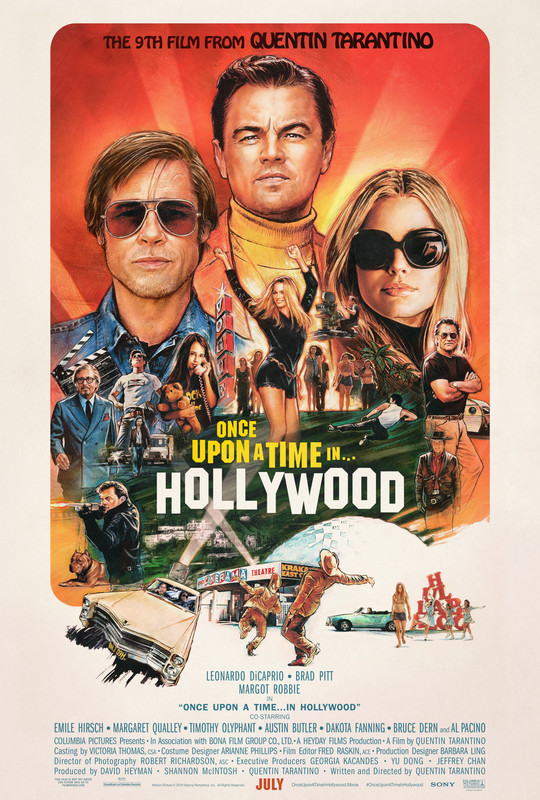
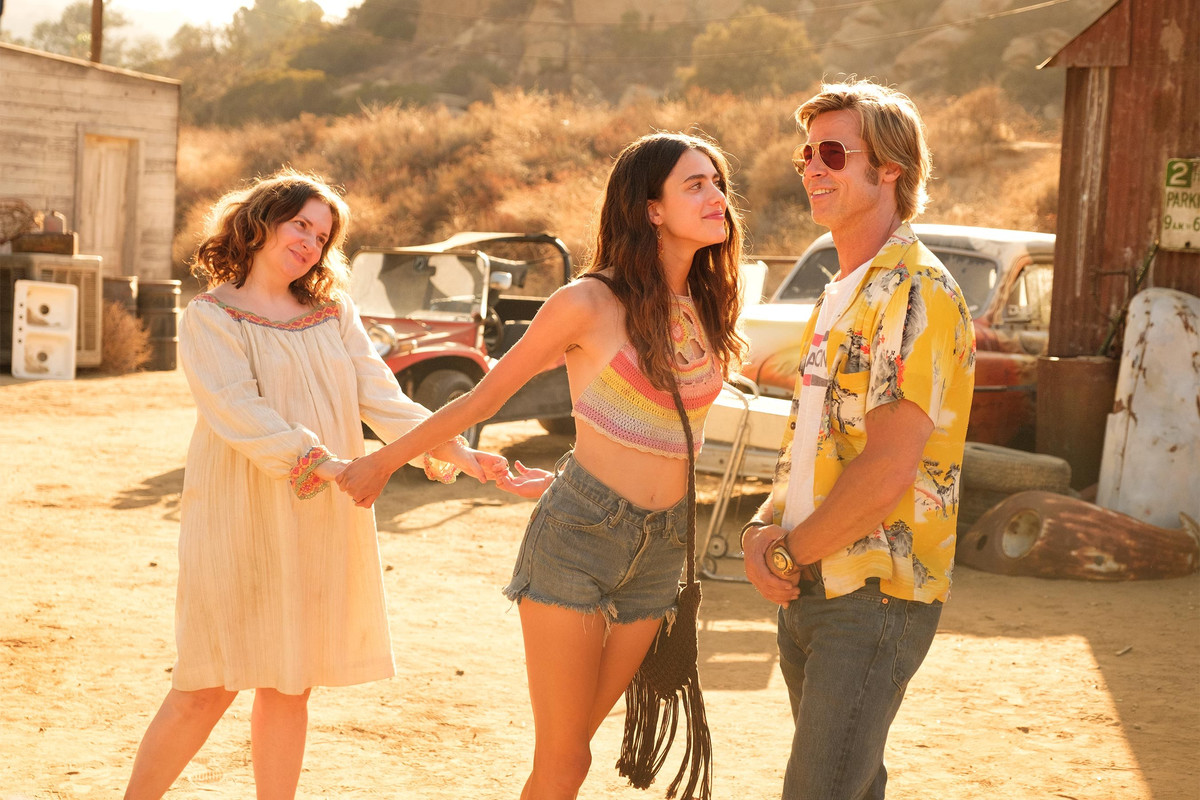
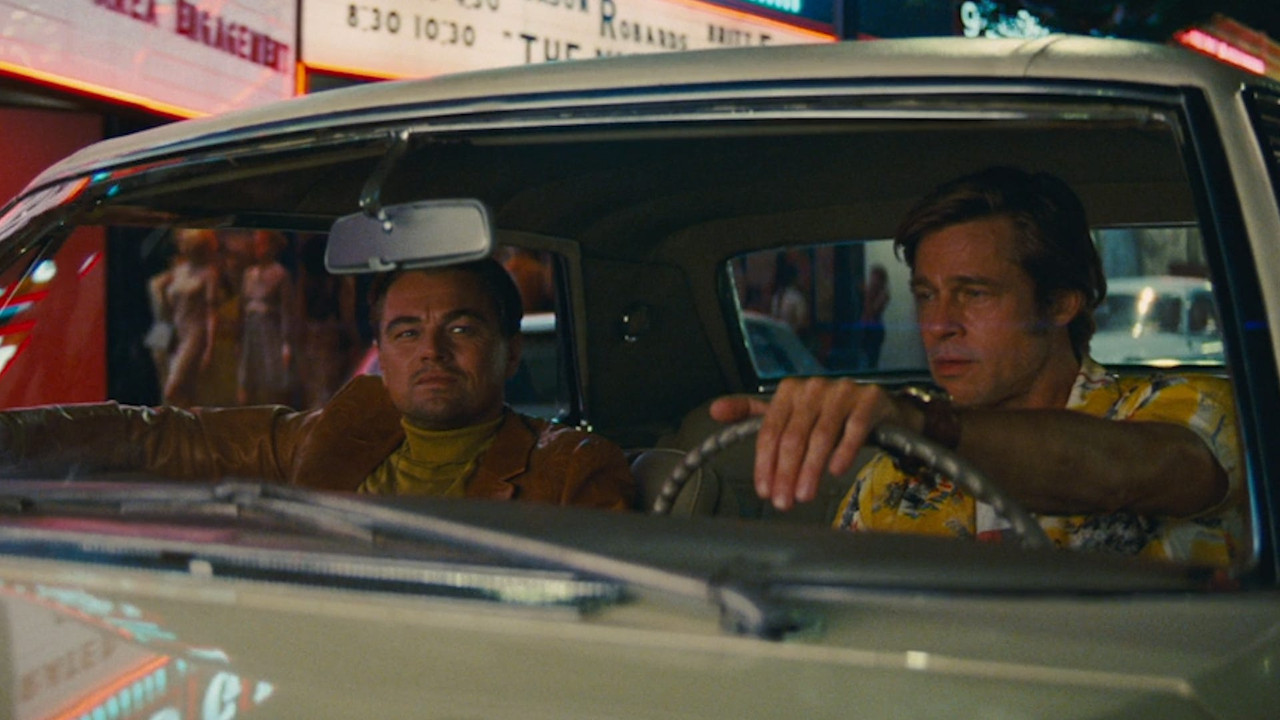
I first heard about this as Tarantino’s film about the Manson Family murders, but in truth it’s a shaggy dog story woven around 1969 in Hollywood, tangentially and intriguingly dealing with those events. Leonardo DiCaprio and Brad Pitt star as Rick Dalton, a washed up movie star, now flailing in TV and Cliff Booth, his stunt double/dogsbody. Rick’s disappointment in the direction his career has taken is accentuated by the fact that while he’s doing a guest part on a Western pilot, he’s living next door to Roman Polanski and Sharon Tate (Margot Robbie). Meanwhile, Cliff encounters one of the Manson girls (Margaret Qualley) and gives her a lift back to Spahn ranch where he and Rick used to work, meeting the rest of the Family in the process.

That’s only the barest bones of a film that, in its 162 minutes, encapsulates so much; from encounters with Bruce Lee (Mike Moh) and Steve McQueen (Damian Lewis); to cameos from the extended Tarantino family (Zoe Bell, Kurt Russell, Michael Madsen) and what is sure to be one of the year’s most controversial and difficult to address endings. 

In some ways the film is guilty of all the typical excesses of its director’s oeuvre but it’s also his most reflective work; at times almost wistful, even in the midst of its most extreme moments.

For the bulk of its running time Once Upon A Time… in Hollywood (a title whose significance is only fully clear when the card comes up at the end of the film) is a hangout movie, involving us in the minutiae of a couple of days in Rick and Cliff’s lives. There is some sense that what began as a working relationship has subconciously shifted to become a friendship of convenience.  Still, we get a sense of the two as real friends despite the disparity of their Tinseltown status. Together or separately, DiCaprio and Pitt have seldom, if ever, been better than they are here. Pitt, now more than ever aging into a doppelganger of a 45-ish Robert Redford, gives Cliff a slightly melancholy sense of a guy who has just followed where his life has led him, ending up a little battered and somewhere in the forgotten middle of society orbiting the rich, famous and his formerly idolised benefactor. Earlier in his life, you might imagine Cliff getting pulled in when he meets Pussycat (Qualley), but the years we can see and feel in Pitt’s performance have given him a fine-tuned bullshit detector which works to ramp up the tension in the scenes at Spahn ranch. As with the scenes of him being both a gofer and a shoulder for Rick, Cliff is shown to be a caring person in the sequence at Spahn ranch, the tension driven by his sense that something is off, making him insist that he check in on the elderly George Spahn (a cameoing Bruce Dern). 

It is in two closely related scenes centering on Cliff, that Tarantino hits the movie's only extended discordant note. During a lengthy flashback explaining why he’s no longer working as a stuntman,  Bruce Lee goads Cliff into a confrontation on the set of The Green Hornet. This is a film that otherwise fantasises about redressing the balance on terrible events, but this image of Cliffat least 40 in this sceneisn't just holding his own against an in-his-prime Lee, but at one point besting him. This isn’t just ludicrous, it leaves a bad taste in the mouth, especially when combined with a flashback within the flashback that winkingly suggests Cliff killed his wife. It’s a testament both to how inessential they are and how good the rest of the film is, that these scenes can largely be brushed aside, although they do leave the same lingering questions that have always clouded Tarantino's racial and sexual politics.

The Spahn Ranch sequence and the ending aside, Cliff’s story is about as loose and relaxed as he is. Rick's story by contrast is tense and internalised; from the opening realisation that the producer he’s talking to (Al Pacino, typically overblown) is telling him the  sad truth about his fading career; to the scenes on the set of the pilot he’s shooting, DiCaprio conveys the sense of a man simmering in a crisis continually rising to the surface. By far the most interesting character moments occur on the set of Lancer. Tarantino indulges in extended screen time for these probing scenes of a formerly confident ego wracked with self-doubt. Particularly interesting is the scene in which a highly practiced Rick still manages to forget his lines while the cameras roll. When he’s on solid ground he’s good, playing the villain with relish but also real menace, but once he loses focus he becomes hammily overblown, voraciously chewing on lines now given as prompts, spitting them out with a disdain for himself that extends to a pitifully brutal, drunken self-critique  in his trailer between scenes. 

It’s a special kind of challenge to deliver a great performance through bad acting, but the subtlety of Diaprio’s work pays dividends, giving colour and pathos to Rick’s process and his character. As Rick unexpectedly finds himself talking to a child actor before a crucial scene, the Lancer set provides an equally unexpected glimpse of something more emotionally raw than anything Tarantino has previously written. Asked about the cowboy novel he’s reading, Rick instantly recognises parallels to his own fading career and breaking down. This and the instant shame this recognition arouses, causes him to somewhat cruelly lash out at his preternaturally gifted co-star. These are rich but subtle moments that contribute to this being career best work from DiCaprio.

The most talked about aspect of OUATIH is undoubtedly the character of Sharon Tate and how she and the Manson murders tie into the narrative. It is at once very much a side story and the beating heart of the film. Tarantino has always been defined by his love of cinema, but he’s never romanticised it quite the way he does when Margot Robbie’s Tate goes to watch a public showing of The Wrecking Crew, in which she has a supporting role. We see herbare feet up on the seat in front of herenjoying the film but taking special pleasure in hearing laughter when her character “the klutz” gets a big reaction from a sparse audience, unknowingly watching along with the film's nascent star. This is a sequence about the magic of cinema and tragically snuffed out possibility. Splicing footage of the real Sharon Tate into this New Hollywood fairytale, Tarantino accentuates the artifice of his universe. Attention is drawn to the fact that Robbie looks little like the real life performer she’s playing, yet between them, actress and director make the connection between the avatar watching the film and the woman up on screen both believable and moving. We can see a process many actors must go through but which we’re seldom privy to. Watching herself up on the big screen, the movie’s Sharon seems to know that the audience's reaction and her rising star adjacent to the meteroic ascent of her husband, has opened up myriad possibilities, bathed in the warm glow of the projector. 

Robbie, one of the best actresses to emerge as a star in the past decade, is truly wonderful as Tate. Though much has been made of her lack of dialogue, her luminous presence is felt throughout even when she's off-screen, floating through the film as a prematurely ghostly figure. Tate and Polanski are positioned as the Joneses Rick can no longer keep up with, but their idyllic bubble is soon to burstthough Tarantino clearly wishes that hadn’t been the case. 

I’m unconvinced by the controversy around what Tarantino elects to leave out about Manson and his beliefs; the cult leader exists entirely on the periphery. Similarly, the controversy about the violence of the final sequence feels overblown, even in the context of Tarantino's filmography. OUATIH revels in violence and yes, much of it is meted out against women, but it matters exactly who these women (and the men leading them) are and what they have set out to do. For Tarantino, and in the wider historical context, this deranged bloodshed is a means of enacting righteous and furious vengeance. In the world of the film, these unfathomable events will almost certainly be a story for only a day. Cliff and Rick’s actions create an alternate path for history, meaning what they do has none of the ramifications it does in the real world. It's interesting to consider how the sequence plays if the viewer knows absolutely nothing about the historical reality, but if they do, the reward is Tarantino’s most radically complex rewriting of history yet.

As with all Tarantiono's post Jackie Brown output, Once Upon a Time in Hollywood's longueurs can go a little too long, though in this instance mostly by design and only occasionally. The gear shifts here would be easy to botch, but from its warm nostalgia to its violent excess and tense horror-inflected sequences pushed up against a surprising abundance of broad comedy, Once Upon a Time... in Hollywood mixes tones freely and with great success. The performances are uniformly excellent, not only the incredible leads, but many of the supporting playes, from a staked cast standouts include Margaret Qualley as the quintessential hippie chick, given an edge of danger by her associations, and a genuinely scary Dakota Fanning as Manson girl Squeaky. The film is also littered with one scene wonders like Julia Butters as Rick’s young co-star and Mikey Madison as deranged Manson girl Sadie. Robert Richardson’s cinematography beautifully captures a sense of period without feeling like pastiche, and he and Tarantino bring an especially beautiful eye to the TV pilot, making Lancer look so much more than the Western programme filler it's likely intended as. Overall, OUATIH is the richest, most mature and interesting film Quentin Tarantino has crafted in two decades. If the filmmaker remains true to his word and his next production is his last we can only hope he'll deliver at the same level and end his career on a suitably elegiac note, as he does with this film.
★★★★½