Showing posts with label 1.5 stars. Show all posts

Feb 20, 2022

Texas Chainsaw Massacre [2022]


Dir: David Blue Garcia
Like many things, horror franchises move in cycles. Occasionally, individual films start trends, but further franchise entries tend to be trying to catch up with them. The original Texas Chain Saw Massacre wasn’t so much a trendsetter as something that the films that came in its wake—very much including most of the eight various sequels, remakes and reboots—tried and failed to recapture the lightning in a bottle feel of. Tobe Hooper’s film was a nightmare to make; the set and costumes reeked, the set wasn’t especially harmonious, Hooper was a real taskmaster, and the dinner sequence was a more than 24 hour shooting day purgatory. As well as the grain conferred by a low-budget 16mm shoot, the film has an air of madness about it; a feeling of a waking nightmare that bleeds into every frame. Texas Chainsaw Massacre 2022, on the other hand, is a glossy-looking Netflix movie.

TCM 2022 is also chasing a trend, for legacy sequels, and most prominently the template set by Halloween 2108. The plot isn’t well developed, but as far as I can figure out chefs/influencers Melody (Sarah Yarkin) and Dante (Jacob Latimore) have bought the entire, almost totally deserted, town of Harlowe, Texas, and are arriving there to set up (apparently with about seven minutes to spare) for a busload of investors to come in and lease space from them to turn it into a tourist hotspot. Along for the ride are Dante’s girlfriend Ruth (Nell Hudson) and Melody’s sister Lila (Elsie Fisher). Soon after arriving, they find the local orphanage is still occupied by an old woman and her adult ‘son’. No prizes for guessing who the son is. The only real background we get on any of the characters is that Lila is a survivor of a school shooting, and thus very uncomfortable when, stopping for gas, the group sees a man with a large gun strapped to his waist, Of course, he turns out to be their contractor in Harlowe, Richter (Moe Dunford). 

Despite the lack of much story, Texas Chainsaw Massacre does seem to want to say something. It’s as confused here as in other areas. It seems to be against Melody and Dante coming in and buying up the town, perhaps trying to criticise gentrification, but if that’s what it wants to do the commentary might be more effective if they were turfing out more than the last two people from what is otherwise a ghost town. It mocks social media a little but doesn’t show that it knows anything about influencer culture. We never see anything of Melody and Dante’s content, nor is it really explained why that content makes Harlowe a place they think they could do something with. You have to wonder just how popular they are because I’d question whether even someone with as powerful a following as Kim Kardashian could pull off what they seem to be attempting here. 

What throughline there is to the film’s attempt at a message seems weirdly right-wing. The  “You’re canceled” joke, which works no better here than in the trailer, is a lazy trope of right-leaning ‘wit’, but what is truly distasteful is the way the film plays Lila’s backstory. Lila’s journey is one of not just losing her fear of guns but re-embracing them in the wake of her traumatic experience. It leaves a horrible taste in the mouth and gives the whole film a reactionary feel that, while not quite as bad, recalls last year’s odious Run Hide Fight.

Terrible and badly communicated as all this is, I do realise that suspect politics won’t be the main thing that people are coming to Texas Chainsaw Massacre either to see or to criticise. At just 73 minutes pre-credits, the saw has to rev up pretty quickly this time, dispensing with character beats to favour set pieces. On the plus side, at least there’s no messing about in getting to the meat of the film. On the other hand, this haste undermines its interest as a legacy sequel. For as much as it got wrong David Gordon Green’s Halloween did at least devote considerable time to re-establishing and letting us understand where Laurie Strode had ended up. If those beats were there for Sally Hardesty (Olwen Fouéré, doing a decent enough job subbing for the late Marilyn Burns) they have hit the cutting room floor. There’s no insight into what she’s been doing for 45 years or more and less (beyond ‘the film’s not long enough’) into why she doesn’t take several chances she has. There is really no reason for both Sally and these random kids to be in this story. If it’s to be a legacy sequel, then there is something to be made of a weary Sally following one last lead to finally destroy this monster. If you want Leatherface to kill Gen Z Tik Tok users… fine, I guess, but I’m not sure that’s the same movie, especially at this running time.

To give director David Blue Garcia some credit, he came into a difficult situation with this film, replacing the original directors with a week of production already completed. I’m not a fan of the look of the film overall, especially the teal and yellow palette that he and cinematographer Ricardo Diaz arrive at for the entirety of the third act, but there are a few memorable images here, most strikingly Leatherface rising from a field of dead sunflowers. While the original film famously implies almost all of its gore, it’s fair to say that the rest of the franchise has been defined by excess in that area, and you have to hand it to this iteration; it goes for broke and doles out some memorably bloody carnage. While the way the bus sequence starts is a disaster, there are also some brilliantly gross moments as Leatherface chops his way through to the fleeing Melody and Lila, and the showdown with Sally is equally brutal (so much so that a later moment is total nonsense).

Character, as mentioned, isn’t the film’s strong suit, and that’s a pity because with a more robust script I could imagine this cast working well. In the brief preamble, though the dialogue clunks, the dynamic is convincing enough, and Yarkin and Fisher both have strong Final Girl energy about them. The problem is that film lacks either the will or the space to develop them enough for that to be something we can really hang on to. 

Like most of the other Chainsaw films, this one is never scary. In this respect the original works because the atmosphere simply drips with oppressive terror, while in Hooper’s sequel that’s gone, but I like and care about Stretch and, to a degree, Lou enough to be worried about what happens to them. Neither of those things is present here. The gloss of the way it’s shot strips away any real atmosphere, and there’s no opportunity to know the characters enough to care whether they live or die, so it’s not scary. For some, the simple thrill of the gore and the pace at which the film comes at you may be satisfying enough. That can be a lot of fun, but when you’re attempting, for at least the third time, to directly follow up one of the most uniquely terrorising films ever made, this just doesn’t… ahem… cut it.
★½

Feb 7, 2021

The Intergalactic Adventures of Max Cloud [12A]

Dir: Martin Owen
Max Cloud (Scott Adkins) has crash-landed on an unfamiliar planet. His ship is in need of repair, but he’s also got to survive attacks from the inhabitants of an intergalactic prison that is also housed on the planet. That’s the plot of the videogame being played by Sarah (Isabelle Allen) in Brooklyn in 1990. One night, she finds herself sucked in to the world of the game and, with the help of her friend Cowboy (Franz Drameh), controlling her game character from the outside, she must complete the game in order to escape.

From the trailer, The Intergalactic Adventures Of Max Cloud looked like fun; a tongue in cheek action movie with Adkins poking fun at his persona in a cross between Last Action Hero and the recent Jumanji films. That’s definitely the idea here, but the execution leaves much to be desired. Where all of the aforementioned films work is in excluding the outside world. We assume that when the credits roll on Jack Slater IV in the real world, the world of the movie still exists, and the Jumanji films smartly excluded the idea of anyone outside the game world controlling the characters. This is one of the most fundamental ways in which Max Cloud fails to work at the most basic level. 

Having Cowboy at the controls throws all sorts of questions up as to how the mechanics of what is happening work. Sarah ends up in the body of an apparently useless character, Jake (Elliot James Langridge) a cook on Max’s ship, who we’re told nobody would choose to play as. We do see Cowboy control her avatar. A mildly amusing gag has ‘Jake’ uncontrollably walking into a wall because Cowboy has set the controller down to go to the bathroom, but there also long periods in which ‘Jake’ is either standing around talking with Max or one of the other NPCs (most often Rexy, played by co-writer Sally Collett) or just walking from place to place. By including Cowboy in the game, and sometimes showing him simply walking the characters through empty screens, we have to wonder how this game plays in the real world. Fights are so infrequent that it appears deathly dull. On screen, Max Cloud the game looks like a side scrolling beat ‘em up from an early 16-bit console, but those games were generally jam-packed with enemies, allowing you few opportunities to rest. They were also full of power-ups; health bonuses in whatever form, special moves for characters to execute and occasionally extra lives. None of these things appear to be available (but for in one sequence at the end) within the world of Max Cloud.

Only on a couple of occasions does the film find interesting ways to exploit the video game mechanics. A mid-film end of level boss battle works quite well, with Sarah figuring out the pattern of attack and exploiting it to beat the boss, just as she’d have to back home with the controller. Easily the film’s best sequence is Scott Adkins’ first fight (of far too few). It’s only in this fight that Adkins gets to have fun with the martial arts choreography. He deliberately makes his movements staccato, as if rendered in limited animation, and strikes the kinds of poses you’d expect to see from a sprite in a 90s game, but does so while also delivering a tremendously fun fight. 

On the whole, Adkins is clearly trying something here. He gives Max an over the top American accent and heroic bearing, the bearing shifts later in the film, as Sarah seems to make the game characters a little more human, and it might have been fun if he’d lost the accent too, as it feels like there’s some idea that even Max might, by the third act, have some awareness of how over the top his character is. Unfortunately, the script doesn’t dig into that idea, or any others really. Even Jumanji, in a comedic way, used the avatars to expand its human characters, Max Cloud never even appears to aspire to that and Isabelle Allen and Franz Drameh are saddled with dull characters who don’t achieve or change much during the film. Among the supporting cast, Sally Collett reserves many of her screenplay’s best lines for her own character, and the parade of underdeveloped characters continues with John Hannah’s bad guy, Revengor and Lashana Lynch, who is wasted as his sidekick Sheee.

Though the film is named for Max Cloud, Scott Adkins doesn’t have enough to do here, he’s a supporting character in his own movie and too much of what he does is off-screen, notably a couple of fights which could have been fun, but director Martin Owen leaves us stuck with ‘Jake’ and other characters while they hide and Max does the ass kicking (again, what does this suggest about the game mechanics? What is Cowboy doing at this point?) Some of this is surely down to a visibly low budget. The sets often appear cramped and the costume design, particularly that for Revengor, looks rather cheap. Disappointingly, there’s not much ingenuity on display to solve the budgetary problems, it would be easy enough to fold in gags about game design or limited graphics to paper over the cracks and provide some laughs, but this is just another way that neither the game world nor the situation that Sarah finds herself in really convince.

There is potential in The Intergalactic Adventures of Max Cloud. The idea of Scott Adkins getting his own Last Action Hero is a fun one at heart but this, sadly, is another project that fails to use him, or the ideas surrounding him, to its best advantage. How is his comic timing? It works in that one fight scene, but otherwise, the screenplay doesn’t give him enough jokes to stretch his range much, so it’s hard to tell. Overall this is a disappointment; a couple of fun moments marooned in a film the central conceit of which is too glitchy to be functional.
★½

Dec 14, 2019

Black Christmas [2019] [15]

Dir: Sophia Takal
Bad movies are most often bad by dint of being fundamentally uninteresting, whether that comes from the cast, the script, the direction or a combination of those factors, tedium and a lack of inspiration tends to be what unites bad movies. That’s - surprisingly given that it’s the second remake of Bob Clark’s 1974 grandfather of the slasher movie - not the case with Black Christmas.

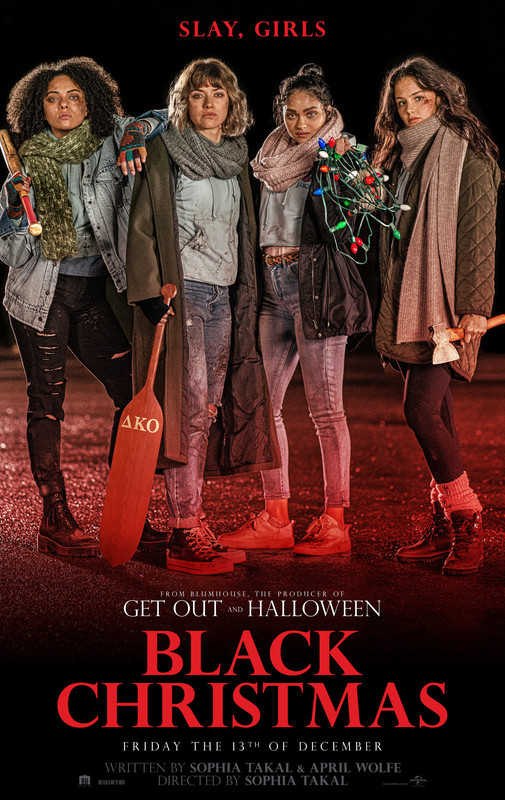
Make no mistake, Black Christmas 2019 is a bad movie in all the ways that matter, but it is at least interesting and ambitious in its badness. The 2006 remake of Clark’s film copied the original while needlessly and ineptly expanding its backstory but director Sophia Takal and her co-writer April Wolfe treat this iteration as a remake in name only, with just one or two moments that nod to the original. Clark’s film is perhaps neither as well known nor as well rated as it should be, and is more thematically interesting than one might expect of a mid 70s slasher. Particularly notable, especially given that at the time of its release the procedure had only been legal in Canada for five years and the US for one, is a storyline that has the main character (played by Olivia Hussey) being pregnant and determined that she is going to have an abortion, against the wishes of her boyfriend. This feminist slant is what Takal and Wolfe grab on to in their source material. In updating it, they zero in on a story taking in many of the recent concerns on college campuses: date rape, courses dominated by a focus on white male writers, feminist activism and (generally white) men’s rights crybabies who see themselves as rebels in a culture war. It’s not a bad idea. Incels and MRAs are genuinely scary; a real world threat that it’s easy to see as the villains of a horror movie, and yet the film utterly fails to capitalise on it.

It’s great that Black Christmas has ideas, it’s a quality scarcer than I’d like these days, especially in remakes, but how it deploys those ideas matters. At a fundamental level, this is a horror film, a slasher, the film should be feeding its ideas through that form, but the two feel almost entirely independent of each other. We need to identify with and care about at least some of these characters so that we can be scared for them, and we really don’t, because they are largely as interchangeable as the women in any B grade slasher you care to name. They’re not taking gratuitous showers, so it’s less icky, but fundamentally Riley (Imogen Poots) is a total cipher, Kris (Aleyse Shannon) little more than a mouthpiece for the screenplay’s politics (politics I agree wholeheartedly with, but that’s not the point) and the others blend into the background, barely distinguishable. The guys fare little better, with only Cary Elwes’ Jordan Peterson analogue professor and Caleb Eberhardt as a blandly nice, kind of nervous, guy who’s into Riley being anything more than stereotypical frat guy cutouts. 

The characters baldly state the screenplay’s politics. There is little to no shading, little to no discernible attempt to make the ideas sound different in each character’s mouth. It ends up feeling less like a screenplay than a collection of buzzworthy words and phrases. The intent is admirable, the message inarguably a good and timely one, but the delivery is so hamfisted and so undermines everything else the film should be attempting to be that it falls flat.

It’s evident that Takal was most focused on what she wanted to say with this film, to the point that she completely botches the horror elements. At times it seems that she’s simply not interested in them. The opening sequence trades on mouldy clichés of masked killers creeping around making a young woman feel vulnerable; he’s behind you… oh he’s gone… and now he’s in front of you. These sequences can be unnerving in a way that is fun as a horror fan, but Takal leans exclusively on the familiar beats. On the plus side, this sequence does contain the film’s sole memorable image; a murder victim making a snow angel as she dies. At least that is a full horror sequence, hackneyed as it is, it has some kind of structure to it. That is not true of the rest of the film’s kills, at least up until the third act. I understand, particularly given the overarching message, not wanting to dwell in violence against women, but Takal’s continual cutting away from any impact or blood and her lack of much build up to those moments neuter any atmosphere of horror. This might be compensated for if she and Wolfe built some more existential horror, a feeling of dread, but just as that possibility presents itself they opt for a calamitously stupid and poorly executed turn that makes even the politics less chilling. Again it’s clear what the intent is; to say something about the way in which insidious politics take root and grow, but it’s lost among sub X Files silliness.

It’s a genuine shame that Black Christmas doesn’t work, because there is the ghost of a truly impressive and perhaps rather groundbreaking film here. Credit is definitely due to Takal and her team for going all out with the idea of a truly modern heavily politicised slasher, but ultimately everything is undercooked. The screenplay needs work; to give the characters dimension, to cut through the declamatory dialogue and give it life and to find real scares and unease in the horror sequences. Whether the quest for a PG13 rating is responsible or it was always the intention to make a film this bloodless and free of visceral impact, that decision was a disaster as it only serves to shine a light on the film’s other flaws. On the whole, intent is important, but execution matters more, and that’s where Black Christmas misses the mark by a wide margin.   
★½

Oct 6, 2019

24FPS @ LFF 2019: The Girl With a Bracelet

Dir: Stéphane Demoustier
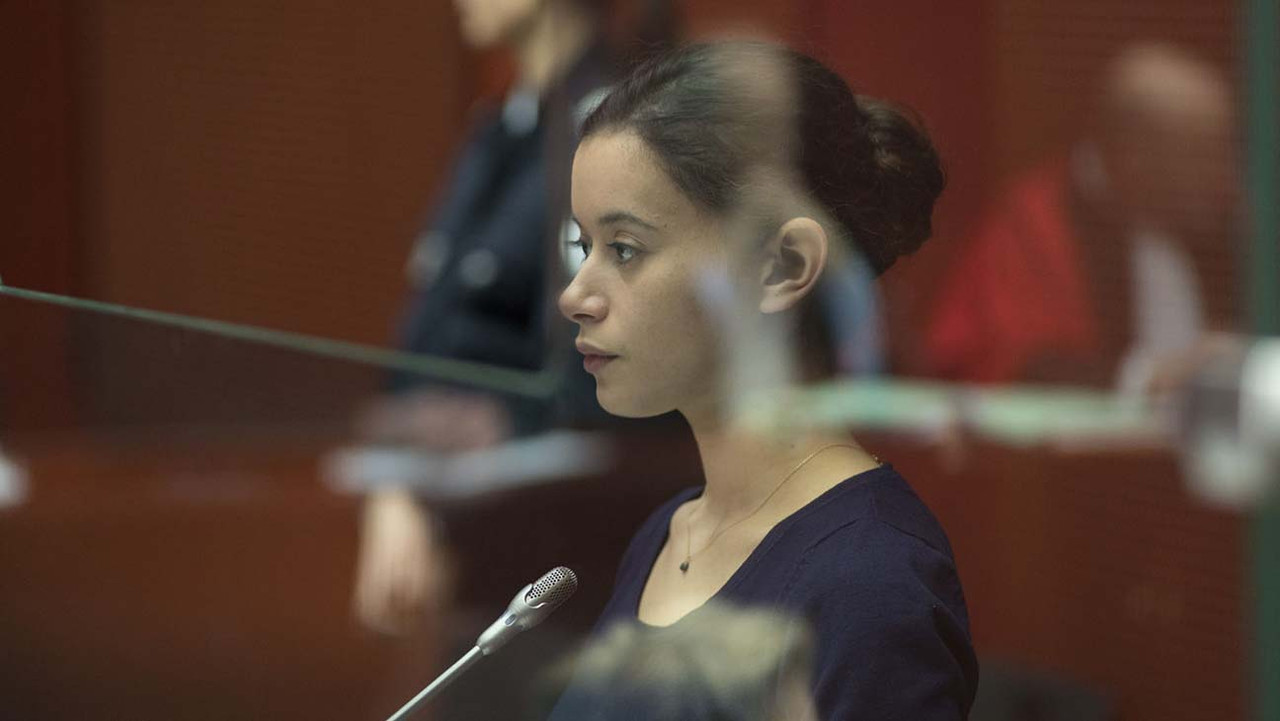
18 year old Lise (Melissa Guers) stands accused of stabbing her friend to death. During her preparation for trial and the process itself, she has been living at home while under house arrest with an ankle monitor. As the trial goes on, her parents (Roschdy Zem and Chiara Mastroianni) hear things they never imagined about their daughter, but are they wrong in their belief that Lise is innocent of the charge against her?

It’s not difficult to see why the courtroom drama has been a reliable staple of cinema for so long. If anything has inherent drama then it is a trial. The battle lines are clear, the heroes and villains can, depending on our point of view, be clearly delineated but also can shift as the drama unfolds. The process also provides ample opportunity for actors to stretch their muscles, with tailor made spaces for grandstanding speeches about important issues. On the one hand, you might expect that getting away from some of these generic touchstones would prove refreshing. On the other, The Girl With a Bracelet often seems to set out to prove otherwise.

Following an articulate silent opening scene, which shows Lise calmly being arrested while at the beach with her family, Stéphane Demoustier’s film is all talk. This is partly mandated by the courtroom setting, but once the trial begins, the film holds us in that setting almost all the time. If the film is accurately representing the French court system (and it does seem to be), then it could perhaps do with being less faithful, because the setup itself, with the lawyers only muted presences next to an examining judge, seems to undercut the drama of the case. 

Some courtroom films allow us glimpses of the various possible ways the case could have played out, given the various theories advanced, or at least show us one of the possible perspectives on the crime. The Girl With a Bracelet does neither, and so the entire film is all talk and no show. This is far less intriguing than Demoustier may have hoped, because the case itself, while lurid, is argued in such a stiff and frankly dull way that even the telling isn’t that interesting. It’s also fair to say that the ending is never in doubt, so even the drama of the verdict lacks punch.

Confined to the courtroom for long periods, the film feels static and stagy, and Demoustier has no tricks up his sleeve either to make things feel claustrophobic or to find interesting angles from which to shoot the proceedings. At times the whole thing is so visually flat it feels like Court TV. So little is said purely visually that with only very minor adjustments, this could be a radio play, and I’m not sure it would be any more entertaining then.

The performances aren’t bad. Melissa Guers has a distant detachment that could be read either as Lise being unable or unwilling to process what is happening to her or that she’s so cold she’s unaffected by it all. The problem is that either interpretation is defined by the same almost affectless performance. Likewise, Anaïs Demoustier (one of the most interesting actors in France and, coincidentally, the director’s sister) has little to work with as the prosecutor in the case. There’s conviction in her final speech to the court, but as a figure within the film she exists solely as a job title. The same, sadly, is true of Annie Mercier as Lise’s lawyer. There are a couple of flashes of interest in Roschdy Zem and Chiara Mastroianni’s performances in the very brief moments that their belief in their daughter’s innocence is undermined, but the film never indulges this for long enough to say anything interesting.

There is always potential in a courtroom drama but the disappointment of The Girl With a Bracelet isn’t so much that it misses that potential as it is that it consistently seems to try to avoid it.
★½

Sep 26, 2019

24FPS @ LFF 2019: Days 8 and 9

I Lost My Body
Dir: Jérémy Clapin
As a disembodied hand searches for its former owner, we watch in parallel as Naoufel (Hakim Faris) falls for Gabrielle (Victoire Du Bois), who he first meets as a voice on an intercom when he’s supposed to deliver a pizza to her.

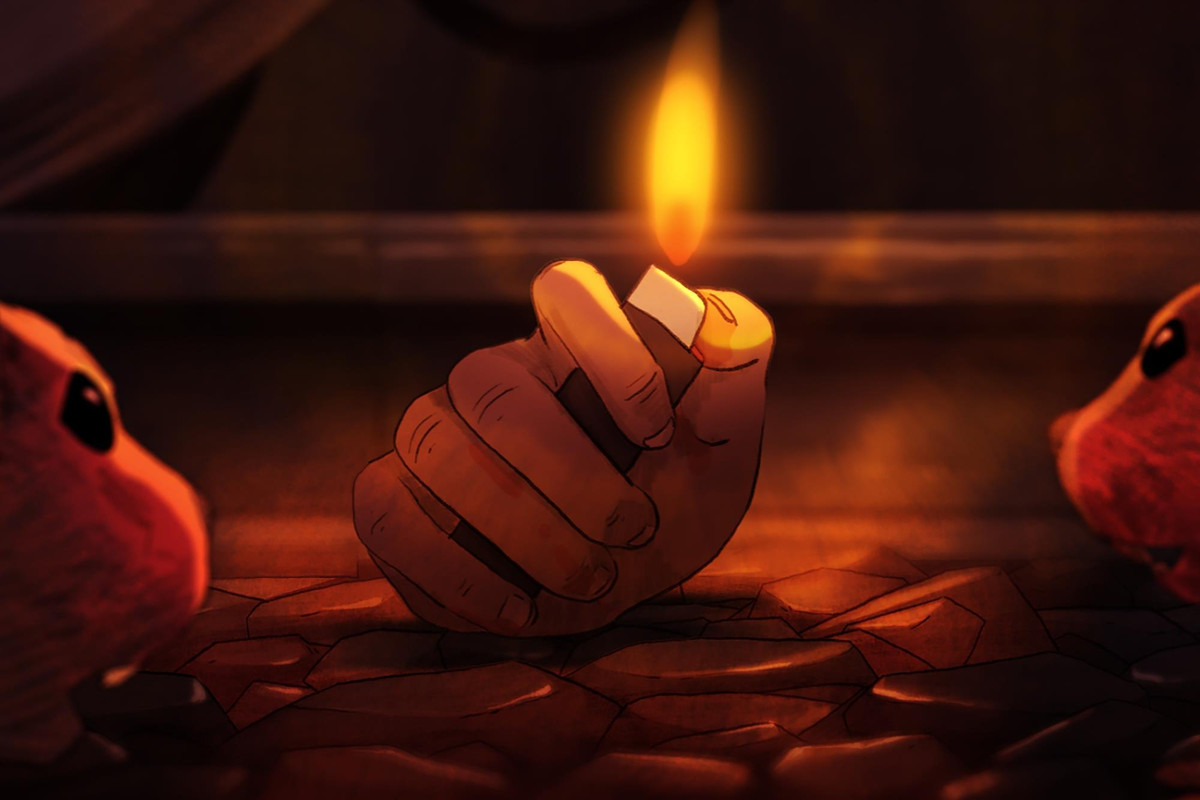
Jérémy Clapin’s first feature is first and foremost a beautiful piece of hand-drawn animation. The human characters are expressive, with a slightly sketchy look but fluid and engaging animation that gives them all character. What is more remarkable though is the animation of the disembodied hand and the world it moves through. Obviously, we are seeing much of what the hand goes through from its level and the realistic drawing of the environment around it and the things it interacts with - notably rats and a pigeon - makes its journey feel all the more perilous and takes us on that journey with it. In addition to that is the brilliance of the animation of the hand itself. Without eyes, a mouth or even an interior voice, the hand feels like a full character. From it, we get a sense of struggle—gripping on to a drainpipe for dear life—and of longing, as it ventures on its long quest. In many ways, it may be the character we end up feeling most empathy for, which is an incredible achievement. 

The relationship between Naoufel and Gabrielle is sweetly drawn. It’s hard not to identify with the slightly inept ways that Naoufel tries to tell Gabrielle who he is, aborting the mission several times through nerves. It’s also interesting and refreshing to see how Gabrielle, and through her the film, views these gestures by Naoufel as compared to how a romantic comedy of ten or twenty years ago might have.

As much as I loved the animation and the expressive but not instructive score by Dan Levy of The Dø, I Lost My Body ends up feeling a bit slight. Once we see how everything connects up, the last ten minutes are a little underwhelming and don’t really deliver the emotional punch the rest of the film appears to have been trying to lead to. There are lovely moments here, and the whole section of the film focused on the hand is remarkable, but ironically it might ultimately be a little less than the sum of its parts.
★★★½

The Antenna
Dir: Orcun Behram
The idea of a government using a broadcast to control its population is barely a sci-fi concept when one considers things like North Korean state TV and even the relationship between Fox News and the Trump administration. The Antenna is set in Turkey and shows us the first night of operations of a new government broadcast from the point of view of a single apartment building where, as soon as the dish to receive the broadcast is installed, escalating chaos ensues.

For his first film, writer/director Orcun Behram draws on many influences. This wouldn’t necessarily be a problem in itself, but he fails to establish much of an identity of his own and so what we end up with is a patchwork of those influences and a film that feels hugely derivative of better things that have come before. The main thrust of the plot is essentially a combination of two David Cronenberg films; the still underrated Shivers and one of his true masterpieces, Videodrome. As the insidious influence of the dish and the broadcast become more present, black sludge begins to ooze out of walls, taps and other outlets, calling to mind the black oil that was such a feature of the conspiracy episodes of The X Files. These are just the most glaring examples, and the ones by which The Antenna suffers most by comparison.

Taken on its own merits, The Antenna does occasionally show that Behram has some visual promise. An early sequence of Mehmet (Ihsan Önal), the maintenance worker who is the first to sense that there is something wrong at the building and that the dish is the cause, walking to work makes striking use of the imposing, towering, straight lines of the buildings he walks past. There are also a couple of standout sequences in the last fifteen minutes or so; an attack, under flickering lights, on Yasemin (Gül Arici) is visceral and brutal, and the long held close up on her in the aftermath is effective. The final sequence also shows some flair, especially in the choice to show one attack from outside the building it happens in, which accentuates the shock by stripping out the sound. 

Unfortunately, the journey to and time between these sequences is filled with long and slow scenes that want to revel in the film’s imagery but do little to repay that investment of time. The pace is often painful, every camera movement is agonisingly slow and the characters seem to move as if they are walking through the black sludge we see so much of. Sometimes a slow pace can work to build tension, but it’s so obvious where the film is going and what it’s trying and failing to say that instead it simply tests the patience. At 115 minutes, The Antenna feels long, and it could lose half an hour just through recutting to quicken the pace. The overarching message is one that has been advanced with more force and clarity in many films over the years, and the screenplay fails to get under the skin of either its central idea or its characters. It is possible there are resonances an English speaking audience will miss unless they are familiar with Turkey and its politics, but even if that’s the case, the film doesn’t deliver much of substance that is accessible to a wider audience. 

There are a few flashes of promise here, but for the most part, The Antenna is a slow and boring slog that will make you wish you were watching any one of the films it so liberally cribs its ideas from.
★½

Sep 23, 2019

24FPS @ LFF 2019. Day 7

Olla
Dir: Ariane Labed
In 2010 and 2011, Ariane Labed burst on to the international film scene with leading roles in Athina Rachel Tsangarai’s Attenberg and Yorgos Lanthimos’  Alps. It is perhaps no surprise then that this half-hour short, her debut as a writer/director, should bear their influence. 

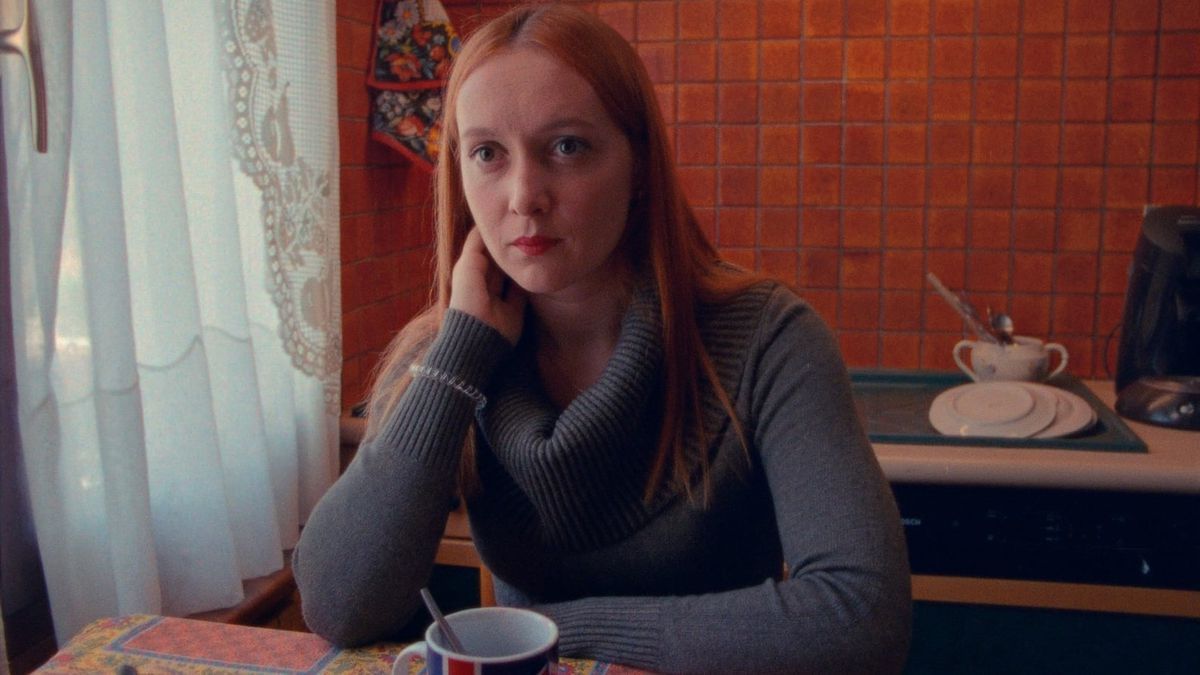
Olla (Romanna Lobach) has just arrived in France from Ukraine to live with Pierre (Grégoire Tachnakian), a man she met online and his infirm and elderly mother (Jenny Bellay). Bored, cut off from Pierre by the language barrier, and clearly annoyed by his suggestion that she be called Lola so she seems less like an immigrant, she ventures out of the house and ends up doing more than exploring the town. 

Though the deadpan black comedy and sometimes stark shooting style recall her collaborators work, Ariane Labed is no karaoke director. Most notable in her style here is an often bright and bold colour palette (starting with Olla’s striking red hair) that sometimes acts to undercut the darker elements of Olla/Lola’s experience. That said, there are moments that showcase the same sense of humour and stylistic influence of Lanthimos or Tsangarai. Most notable among them a one shot sequence in which she practices dancing, Pierre’s mother impassive in the chair as Olla gyrates to a foreign version of What is Love. Another darkly funny touch comes in repeated sequences of Olla being catcalled, the group of men all shouting in unison, first telling her how hot she is, then yelling that she’s a slut. The repetition turns them into something like a greek chorus, but also allows Labed to make a serious point about how women are often made to feel they are always on display.

At just half an hour, Olla doesn’t quite have enough room to grow. A feature version could flesh out the various plot points, especially the relationship between ‘Lola’ and Pierre, but this is a strong debut for Labed, anchored by a very good performance from Romanna Lobach and points to promising things from both of them.
★★★½

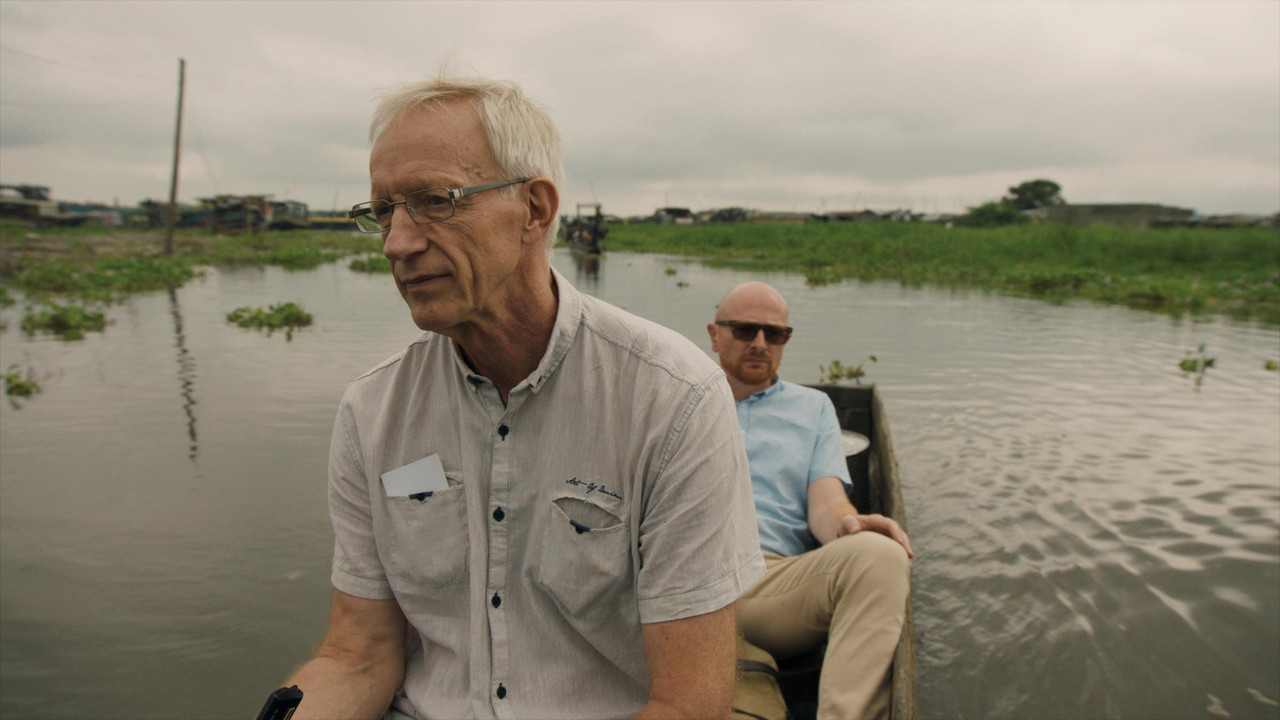
Cold Case Hammarskjöld
Dir: Mads Brügger
Through Netflix and a mass of popular podcasts, the true crime documentary has become one of the dominant forms of non-fiction storytelling in recent times. That is, in a way, what Cold Case Hammarskjöld begins as. The setup has director Mads Brügger and Swedish private investigator Göran Björkdahl reinvestigating the suspicious death in a 1961 plane crash over of UN Secretary General Dag Hammarskjöld. As Brügger admits right up front, this may be a very dark and far reaching crime, or it may simply be a tangled conspiracy theory.

There is, buried somewhere in this film, a compelling (potential) murder mystery. It definitely seems that the official story of Hammarskjöld’s murder is at best incomplete and deserves further and more rigorous and public investigation. Unfortunately not only does the film get distracted frequently, venturing down multiple rabbit holes, it also presents the central thrust of the mystery it sets out to investigate shockingly poorly. Throughout, Brügger uses a framing device that sees him have two (why two? he doesn’t know) secretaries type up the narration for the film, as we see him speak it. This totally redundant device slows the pace of the film badly, and only ever serves to restate things that it would be much better off simply presenting to us from the documentary and interview footage gathered.

The first half of the film is incredibly dull, with only tiny bits of information sneaking out between sequences of the director apparently structuring his film as we watch it. This might be less irritating if he structured it better. The second half of the film is more compelling. Brügger delves further into the South African Institute of Maritime Research—a shadowy mercenary and spy organisation that may have had a hand in Hammarskjöld’s death and other even darker crimes. He does manage to clearly establish that this organisation existed, but everything else is on very shaky ground. The one person he’s able to talk to at length tells a good story, but offers nothing to back up what he says, and worked for SAIMR decades after the plane crash that killed Hammarskjöld. Even this content is frustrating though, with Brügger fixating on details like how the man he believes was the head of SAIMR dressed completely in white at all times.

Again, the film can’t concentrate. If the rabbit hole it explores in the second half is true, then it’s one of the biggest and most disturbing scandals I’ve ever heard of, which is why it needs far better sourcing. What Brügger does is less robust investigation and more speculative join the dots. We see things laid out as note cards, but it wouldn’t be a surprise to find this film laid out on a conspiracy theorist’s wall, with red string joining the various elements up.

Strip out the self-indulgent framing device, impose a robust structure and concentrate on the one thread of the story that the film at least manages to pose relevant and important questions about and there might be a solid podcast episode or short documentary in this cold case, but the pure theory that surrounds it and the terrible presentation means that, at two hours, this is a largely unedifying test of patience.
★½

Jul 20, 2019

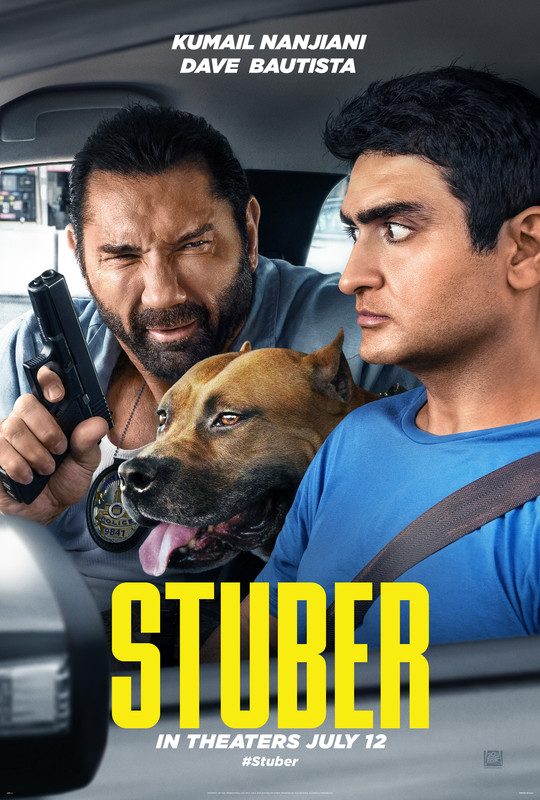
Stuber [15]

Dir: Michael Dowse
A few weeks ago, Dave Bautista ruled out the idea of being in future entries in the Fast and the Furious franchise because “I’d rather do good films”. Stuber is not the film you want to be releasing after that comment. 

Bautista plays a cop hunting the drug dealer (Iko Uwais) who killed his partner (Karen Gillan). Taking the day off for lasik surgery, he still springs into action when he gets a tip telling him a huge deal is going down. Because he can’t see, he orders an Uber and ends up dragging the driver, Stu (Kumail Nanjiani) into his pursuit of the dealer.

An action comedy that largely fails in both parts of that equation, Stuber has some talented people involved in front of the camera, but flagrantly wastes all of them. Bautista made a strong impression as Drax in the Guardians of the Galaxy and Avengers films, showing a knack for comic timing that makes the fact Stuber isn’t funny both more disappointing and more puzzling, but he’s also shown some hints of dramatic chops in the likes of Blade Runner 2049 and Bushwick (not a great film, but a decent performance). Here he seems adrift. He doesn’t have much of a character to grab on to with his more serious dramatic intentions, just a cliche story of a cop so obsessed with a case that he neglects his family (Natalie Morales as the daughter whose art opening is the same day he’s scheduled his eye surgery). His jokes fall flat too, with far too much emphasis put on slapstick that he carries off with little grace, blundering through scenes in much the same way the screenplay does.

In any mismatched buddy movie, chemistry is key; the way people play off each other should get us invested, as the film runs on, in their getting along eventually, and once they do we should invest in the partnership and feel how the experiences up to that point have helped forge it. That doesn’t happen between Bautista and Kumail Nanjiani. I liked The Big Sick well enough, but always felt that the sequences of Nanjiani performing comedy were its weakest aspect, he doesn’t land many laughs here either and alongside Bautista he helps form a grating pair: the angry cop and the annoying driver, unfortunately, the film takes much too long to advance them beyond these points. The rest of the cast is both underused and badly used. Betty Gilpin may have literally phoned in most of her role as the college friend Stu has long nursed a crush on (a relationship that doesn’t make Stu any more likeable) and Mira Sorvino, while it’s nice to see her, could have had a much more interesting role as Bautista’s boss (those scenes may well be on the cutting room floor because Stuber is at least short). Karen Gillian is as winning as ever in a tiny part and her opening scene with Bautista is easily the most fun the film ever has, their relationship is hardly original, but it's a dynamic I suspect I’d have enjoyed watching for another 90 minutes. Perhaps the most wasteful use of a co-star is reserved for Iko Uwais. His character is never given a personality, but much more criminal is how badly director Michael Dowse handles his two fights with Bautista. I’d happily sit through an even worse version of Stuber if these fights were handled well, but instead Dowse shoots them with a chaotic camera that never lets us see the action. Dowse does a little better with the action when Bautista and Nanjiani fight (in an overblown sequence that would almost certainly kill at least one of them), but that’s not the main attraction here.

Only once does everything come together and allow us to glimpse the kind of fun action comedy this might have been. For one blessed shootout sequence the film uses the blindness conceit well, finds a way for Nanjiani to be useful in the action, shoots things competently and has a couple of funny gags. It lasts about three minutes. That’s not enough for me to recommend this. Bautista looked pretty foolish when that comment about the Fast and the Furious came out, but having seen this and trailers for both Hobbs and Shaw and Bautista’s upcoming My Spy in the same screening, he looks even sillier now.
★½

Jul 19, 2019

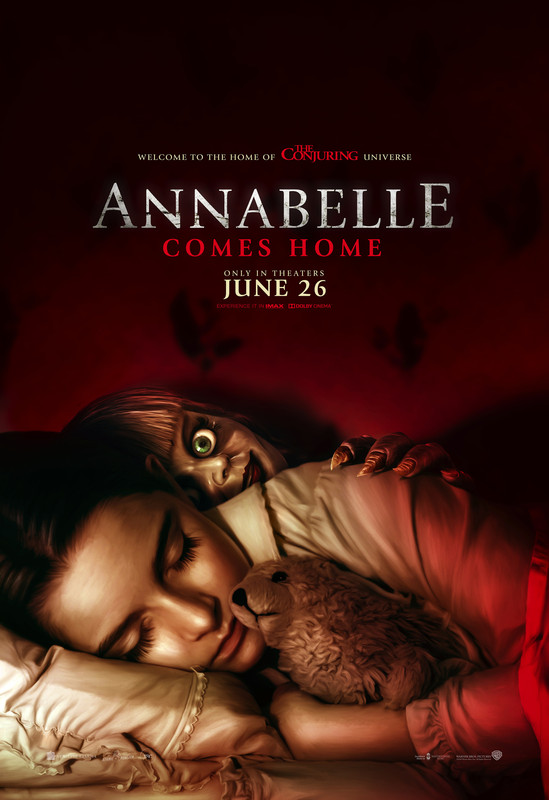
Annabelle Comes Home [15]

Dir: Gary Dauberman
I haven’t followed The Conjuring universe. I saw the first film largely on the strength of a cast that was more interesting than that of most modern ghost stories, with great character actors like Vera Farmiga, Patrick Wilson and Lili Taylor. That film was fine, lifted by its performances and better than average direction from James Wan, but it was at heart still just the standard issue haunting movie. I saw little reason to give the sequels or spinoffs any of my time. That said, I’m trying to write more, trying to cover more mainstream cinema and as a horror fan I feel I should try to get something out of both the biggest contemporary horror franchise and a subgenre that I generally don’t enjoy. This wasn’t the film to win me over to either.

As the film begins, Ed and Lorraine Warren (Wilson and Farmiga in brief cameos) are taking Annabelle, a doll possessed by an evil spirit, home with them to be kept where they can keep it from harming anybody. A year later, the Warrens are going out of town and leaving babysitter Mary Ellen (Madison Iseman) to spend the night watching their 11 year old daughter Judy (Mckenna Grace). Mary Ellen’s friend Daniela (Katie Sarife) also comes over and, curious about the room where the Warrens keep their occult artefacts, accidentally unleashes Annabelle, which also frees many other ghosts and other entities. 

This isn’t a bad premise. As I understand, each of the Conjuring spinoff films so far has largely focused on a single ghostly or otherwise demonic figure, so unleashing them all together in Ed and Lorraine Warren’s house has promise. Unfortunately the film does almost nothing with this idea. Far from reinventing the wheel, it simply rolls out as many wheels as it can, before proceeding to spin them for an hour.

Annabelle Comes Home is an extremely competent film. Mckenna Grace builds on good performances in the likes of Gifted and I, Tonya with equally solid work here while Madison Iseman, funny as the vain Bethany in Jumanji: Welcome to the Jungle, is about as effective as she could possibly be in a role that increasingly asks no more of her than wandering around slowly and looking scared. Katie Sarife’s role as Danielle, though only third lead, has a bit more of an emotional component to it, and she does well with that. Equally, the cinematography, if overly dark at times, is generally decent and writer/director Gary Dauberman, making his debut behind the camera after handling writing duties for many of the other films in the franchise, does a solidly decent job, ticking his way through the list of expected elements without making any terrible mistakes. The problem is that while there’s nothing, bar the thin screenplay, that stands out as notably bad, there is also little that makes you sit up and take notice. One sequence of shots in the middle of the film, revealing progressive forms of Annabelle in silhouette as the various colours of Judy’s bedside lamp shine on her in turn, looks very cool indeed and is genuinely creepy. That is perhaps 30 seconds of screen time, and it’s the only notably interesting image or series of images in the film. One other recurring image, involving a TV, does threaten to be interesting but Dauberman uses the device too often, so by the time the twist on how it has previously been used comes, you’re way ahead of the film on that too.

The rest of Annabelle Comes Home is paint by numbers filmmaking. It’s all creaky doors and floors, torches being shone in dark corners (before going out at a key moment because we can’t miss one of the points on the list of cliches), shots of empty spaces when you expect a scare and then, of course, shots back for the boo scare. Often, this is less a film than it is a pop up book, with some omniscient hand opening the flaps to scare you, and it’s just as grindingly predictable as that sounds both in terms of its content and its timing. If this is what you want from your horror, then the film will likely prove satisfying enough, if incredibly familiar, but these tricks have seldom worked for me even when they are done brilliantly. Annabelle Comes Home is, at its infrequent best, workmanlike. It generates no atmosphere, there’s no real threat from any of the various entities in the film, any actual peril or injury is undercut within seconds so the film - while there is sometimes a little apprehension as we tense for the next noise or jump scare - is never actually scary. If this represents what's popular in modern horror, I might just stick with the independent scene.
★½

Oct 22, 2010

LFF 2010 Mini Reviews

My Joy
Dir: Sergei Loznitsa
Guess what? The title’s ironic. For me it was ironic on two levels; not only is there absolutely no joy depicted in My Joy, but I got very little joy from it. It starts off as little more than a series of vignettes, tenuously linked by the presence of a truck driver (Viktor Nemets). He has a run in with some corrupt traffic cops, he’s told a story by an old man, he walks through a town, he has a run in with three men who want to steal what he’s transporting. And then, about an hour in, he’s gone from the film, at which juncture the film flies off on several random tangents, mostly focused on a mute bearded man. It does slowly (very, very slowly) draw together the various strands, but by that point I was a long way past caring.

The problem really is that we never learn anything about any of these characters or their lives, the whole film is just a series of ugly events, and for that to have any meaning for me I really have to be able to care about the people to whom those events are happening, and that was never the case with these near mute ciphers.

The only vignette that I really engaged with was a brief episode in which the truck driver, stalled by a long traffic jam, meets a young prostitute touting for business. I thought I recognised the actress, and the end credits confirmed that she is Olga Shuvalova, who I last saw in the exceptional Everybody Dies But Me. Shuvalova is so forceful, and at the same time so vulnerable, as this nameless girl that in just five minutes she’s more interesting than anything else in the film.

My Joy does look very good, especially in a menacing night time scene in the middle of the film, but the punishingly slow pace and the utter lack of interest I had in the characters made that scant compensation in a film from which I would like to claim back all but about five minutes of my time.
★½

Young Girls in Black
Dir: Jean Paul Civeyrac
They’re known as Emos now, apparently. They were Goths when I was growing up, and there was probably some other name for them when you were a kid, but the one thing that hasn’t changed from generation to generation is that those kids who wore black, thought everything – including life – was crap and romanticised dead rock stars were really bloody annoying. On that level, Young Girls in Black is just about an unqualified success. On all other levels, however…

The bulk of the film unfolds over a single day; the day on which friends Noemie (Elise Lhomeau) and Priscilla (Lea Tissier) have decided to enact a suicide pact together. I can’t really fault Lhomeau and Tissier’s performances, it’s just that the characters are so irritating, and their problems so prosaic, that you just want to slap a bit of sense into them and tell them both to grow up. The other problem is that the film is just so predictable. The minute any pact is mentioned it seems obvious how it is going to end, and end it does, sadly the film refuses to follow suit.

The last twenty of the mere 85 minutes that Young Girls in Black runs are barely explicable, the film is so obviously over, and yet it continues, introducing new characters and ever more clichéd and corny moments, before ending with a shot which is simultaneously cheap and pretentious (something of a feat, to be fair).

Ultimately, Young Girls in Black is a demonstration of the fact that while strong acting is always welcome in a movie, it can’t always rescue one that isn’t working.
★★

May 3, 2009

X-Men Origins: Wolverine [12A]

Dir: Gavin Hood
Prequels have an inherent problem, in that they are devoid of surprise. Any audience going to see X-Men Origins: Wolverine is going to know where it ends up.  Sadly, the journey to that point is more often annoying, creating continuity problems in the later films, than it is exciting. I rewatched the X-Men trilogy before going to see this film, and I was going to review all three of the earlier films here as well, but since they can all be summed up quite easily with the words ‘Good idea, flawed execution’ I think I’ll spare you the other 3000 or so I might otherwise have written and move right on to Wolverine.

Wolverine (Hugh Jackman), both character and movie, is a strange beast. Gavin Hood clearly wants to go to a dark emotional place with this movie, as evidenced by the fact that the event that triggers Logan into putting himself into the Weapon X programme is the murder of his wife, by his half brother Sabretooth (Liev Schreiber). Unfortunately this approach is completely defeated by the several hundred characters that jostle for screentime, a terrible, clunky, screenplay and some of the worst realised action scenes in some long time.

We begin in the 1840’s with a young Jimmy Logan discovering his bone claws in a fit of rage then, in a deeply confusing and entirely pointless moment, killing his own father. Logan and his brother then fight their way through the popular American wars of the late 1800’s, up to Vietnam (including the Civil war, which is odd, because the brothers are Canadian), before being recruited by one Colonel Stryker (Danny Huston) to a team of mutant mercenaries. Wolverine has a crisis of conscience and moves back to Canada.  There he falls in love with a schoolteacher (Lynn Collins) and becomes a lumberjack, until Stryker reappears to ask for his help stopping the killings of their old team.

So much happens in this movie, and yet so little either makes one iota of sense or has any weight or excitement to it whatsoever.  The overwhelming feeling is one of Gavin Hood ticking off moments and characters, without having any real sense of why they are there, other than to make fans say ‘look, Gambit’. At times we get hints of the deep dark movie that Hood and original screenwriter David Benioff may have envisioned making, particularly in the scene that has Logan discovering the body of his murdered wife.  The problem is that these moments are all immediately underscored by hackneyed, obvious, and comic book like choices, such as the several times that Wolverine looks to the sky and melodramatically bellows “Noooooo”, an action that suits him about as well as it did Darth Vader.

Indeed there seems to have been a lot of confusion about how to depict Wolverine here.  The sardonic anti-hero of the X-Men trilogy is gone, and with him the moral ambiguity, which made you think that at anytime in the first two X-Men films he might have gone to fight with Magneto. All the character seems to have gone out of Wolverine, to be replaced with thicker sideburns and moping. At times Hood and Jackman try to depict Wolverine deep in thought, reflecting on his wife’s death. Those scenes ring false though, because the movie spends so little time on that relationship that we get no real sense of it.  It also seems false because we’ve got no real sense of Wolverine in this movie, and so his emotions are essentially meaningless.

Given that the story revolves around, or appears to revolve around, someone hunting down Wolverine’s old team it should have been simple to generate a sense of urgency, but there’s none. The film has no drive, no rhythm, no subtle gear changes; it’s either in neutral or going 100 miles an hour. This quickly becomes very boring, and leads to the overwhelming sense of script meetings where the conversation went “We haven’t had an action scene for 15 minutes”. “But we don’t need one there”. “Write one anyway”.

The same thinking applies to the insane amount of characters that are crammed into this movie, none of whom have enough time to develop any sort of character. Ryan Reynolds is a fine case in point as Deadpool.  He’s effortlessly entertaining in his 10 minutes on screen, but then vanishes so completely that when his character re-appears he is played by a mute stuntman. It’s clear that Benioff and Hood just don’t know what to do with their multitude of characters.  Another case in point is fan-fave Gambit, who looks and sounds so little like his comic and cartoon counterpart that fans will be upset and annoyed rather than thrilled by his appearance. There’s one utterly pointless scene for The Blob (whose make up is embarrassingly immobile), and a hideously charisma free debut for the Black Eyed Peas Will. I. Am as John Wraith; an impoverished man’s Nightcrawler.

The stupid just keeps on coming though, most notably in an abysmal scene, hilariously badly played by the bland Lynn Collins, which reveals how Wolverine gets his alias, and in the appearance of a young Cyclops, which would make his character about 40 in the original X-Men (just one of many, many ways this movie fails to tie up with that one).

Of course little of this should matter, because at the end of the day all Wolverine really needs to be to be on some level successful is a decent action film. Whoops. Gavin Hood’s previous films, the overrated Tsotsi and the entirely average and extremely heavy-handed Rendition don’t suggest that there’s an action director inside him, waiting to get out, and Wolverine absolutely confirms that there isn’t. The action scenes are a nightmare, a confusingly cut, boringly choreographed and impact free set of deeply unconvincing images that never manage to get the blood pumping at all.

Even if they were better choreographed though the action scenes would still be laughable, because the effects employed to realise them are so unspeakably poor. Wolverine’s claws are especially embarrassing, the CGI looks like it is several texture and lighting passes from being complete, and they appear to be floating somewhere in the vicinity of his hand, rather than attached to it. The larger scale effects are not much better, looking for all the world like someone decided to use a programme a generation back from the one employed on X-Men to make them, but those are more difficult, the claws though, amateurs could do that right, and professionals certainly should have. At a basic level this film isn’t finished, and releasing it like that is inexcusable.

X-Men Origins: Wolverine doesn’t work, it’s a big, loud, stupid movie that barely holds together.  However, there is one real positive to take away from Wolverine, and that’s Liev Schrieber. Schreiber is a proper actor, one who tends to be a high point of anything he’s involved in, and I was puzzled when I heard he was taking on this role. He’s got exactly the same awful dialogue as everyone else, and he drifts in and out of the movie at weird intervals, but whenever he’s on screen the film becomes instantly more compelling.  Schreiber attempts to give every single moment, however dumb, weight and reality. He largely succeeds too, giving Sabretooth a genuinely feral feel, but also bringing an intellect to the part (which makes the fact that in X-Men the character turns into a mute Tyler Mane pretty inexplicable). If the rest of the people involved in Wolverine had treated it with such respect it really could have been good.  What a shame.
★½