Showing posts with label 2 stars. Show all posts

Nov 14, 2021

Home Sweet Home Alone

Dir: Dan Mazer
I hate to break it to you, but you’re not ten years old anymore. That’s why Home Sweet Home Alone isn’t much cop. I was nine, right in the demographic sweet spot, when the original film came out in 1990. It used to be a holiday perennial for me; a fun bit of seasonal slapstick, but it’s been almost 25 years since I last saw it, and let’s be honest, I’ve aged out of it. So, likely, have you. With that in mind, let's try to come at this ‘reimagining’ with some perspective rather than the cries of “my childhood is being destroyed” that greeted the trailer.

The bones of the story are the same as ever; harried parents (Aisling Bea and Andy Daly) go on holiday, accidentally leaving their 10-year-old son (Jojo Rabbit’s Archie Yates as Max Mercer) at home. While he’s there, two burglars attempt to break in and steal a valuable doll they believe is in the house, and Max has to defend the home.

There is an interesting idea here. Heaven forbid we overanalyse the sixth film in the Home Alone series, but the script electing to centre not so much on Max as on the burglars adds a thin veneer of class commentary. The usual things: Max over-indulging in sweets and doing all the things he can only do when he finds himself home alone (a fairly charming sequence, actually); Max fighting off the burglars with some extremely painful-looking slapstick (a pool ball gun...ouch) are present and correct, but it’s who the thieves are that makes this a bit different.

Ellie Kemper and Rob Delaney play Pam and Jeff McKenzie, they’re not criminals, but a teacher and an unemployed tech support worker, who are having to sell the house they love because they can’t keep up with the mortgage. They discover that an ugly doll they own is worth more than $200,000 but they think Max has stolen it during an open house, hence their attempts to steal it back. This does contrast them with the obviously very financially comfortable Mercers (who have taken their extended family to a posh hotel in Tokyo over Christmas). It’s not exactly a scathing indictment of the inequities of the American economy, but at least some thought has gone into the backstory. Making Pam and Jeff first time criminals, as well as the film’s central figures, is an interesting change of focus and explains why they are so bad at crime. Kemper and Delaney are easily the film’s best asset, with Kemper’s generally friendly persona working nicely in a fun scene with a cameoing actor playing a cop she has to throw off the scent. The two also commit to the bit when it comes to the cartoon violence of the break in, and I’d be lying if I didn’t say I chuckled a couple of times.

On the downside, this focus on the burglars leaves Max’s story aneamic. We never really get to know him, beyond the fact he’s a 10-year-old kid, and Yates, who is a bit flat with the dialogue, only gets one short sequence of having fun by himself in the house. The mayhem of the third act is inventive enough, but it’s all over very quickly and the film races towards a treacly ending with quite unbelievable haste. The few sequences in Tokyo offer the usually very funny Aisling Bea very little to do other than fret in an English accent. She and Max’s family are barely in the film more than the one joke members Pam and Jeff’s extended family, and this unbalances things a bit.

On the whole, if you’re coming at this as an eight to ten-year-old, I imagine you’ll have fun. It’s broad and silly, the slapstick is brief, but it works. Fans of the original will never give this the place the movie has in their hearts, but at least there is an interesting idea, and they might even get a laugh or two along with the kids.
★★

Sep 5, 2021

Frightfest 2021: Are We Monsters

Dir: Seb Cox
One of the best things about Frightfest is that it looks around for new talent within the genre. It’s often exciting to see young filmmakers taking old tropes within horror and fantasy in new directions. On the other hand, it can sometimes mean that those filmmakers don’t yet have the experience and resources to get all of their ideas up on the screen. For me, Are We Monsters is a case in point.

Maya (Charlotte Olivia) is a werewolf. Trying to understand her monstrous side, she reaches out to Luke (Jathis Sivanesan), who writes about mythical creatures on his blog. The two also meet Everett (co-writer John Black) and Connor (Stefan Chanyaem); brothers whose father taught them to kill werewolves. Through them, Maya learns some history behind her nature, and that even without silver bullets, she can be killed on the night of the blood moon.

The best aspects of Are We Monsters come from the backstory it invents for the creation of werewolves. In extremely expressive, scribbled, black and white animation, it lays out a story about how the god of the sun, wanting to contain man’s evil in a handful of beings, created werewolves, but that even this measure failed. It’s a genuinely different take on the legend, giving a more melancholy feel to the monster, and evocatively told in simple images. These scribbled designs, patterned after Maya’s sketches, also come into play in the look of the werewolf in the last few scenes of the film, and while they are low tech, they’re striking and not a little creepy.

Unfortunately, problems come to the fore in many other aspects of the film. Everything has a very homemade feel to it, so the shonky CGI is to be expected, but some of the design choices early on are baffling. When you think of a ‘werewolf’, there is definitely an image you have in your head; some kind of man/wolf hybrid, be it the more humanoid take of Lon Chaney’s Wolf Man; the much more animalistic look of the Underworld series, or something in between. None of them, though, look like the werewolves we see early on here, with their elongated necks and limbs they sometimes simply look laughable and so little like what we think of as a werewolf that for a long time, you simply have to wonder if Connor and Everett are using the term correctly. It’s a bizarre choice. This is why the animation in the third act works so much better; not only is it more connected to the character of Maya, it looks more like a werewolf.

The leading cast are not massively experienced and, Jathis Sivanesan apart, seem to be part of a building stock company that director Seb Cox has used for his shorts. There’s plenty to be said for working with friends, but the performances are often quite stiff. On the plus side, once their characters warm up to each other Sivanesan and Charlotte Olivia have some effective scenes together, especially as they begin to see the connections between their situations with, shall we say, blood-borne disorders (another interesting theme that feels pretty original in the genre). 

Despite the grade below and the flaws I’ve highlighted here, I don’t want this review to come off as a total slam on Are We Monsters. There are interesting ideas here; original thoughts in a subgenre that often struggles for them. There are also some great design choices. It’s significant, I think, that this is Seb Cox’ first feature following a lot of shorts. There is a brilliant animated short in here, with a live action feature wrapped around it that needs more money and, from the cast, more experience, to be executed to its best advantage. I want to see the next film Cox and his company make, because there’s a foundation here on which he can build something great. I hope he gets the opportunity.
★★

Jul 30, 2021

2021 Catch Up: Chloe Grace Moretz [Shadow in the Cloud and Tom & Jerry]

Shadow in the Cloud
Dir: Roseanne Liang
1942. Just as their mission is about to take off, the crew of an armed supply plane is joined by Maude (Chloe Grace Moretz), a female flyer with a mysterious package that has to be kept safe. Made to sit in the turret under the plane, without her package, Maude becomes trapped, and that’s before she spots a ‘gremlin’ on the wing and an enemy fighter in pursuit.

Shadow in the Cloud is, it’s fair to say, a lot. It tries to roll several genres; claustrophobic thriller, creature feature, wilfully ludicrous action movie together, while also folding in a big helping of social commentary, and do it all in 83 minutes including credits. That director and co-writer (unfortunately with Max Landis) Roseanne Liang manages it, and only occasionally drops one of the many balls she’s juggling, is pretty remarkable. As Maude gets on the plane, and while she is locked in the turret and communicating via the radio, the characters are understandably broadly drawn. It has to be said a lot of the dialogue, most of it unreconstructed sexism directed towards her, is interchangeable between them. However, the long scenes that are just Moretz trapped inside this tiny pod are extremely claustrophobic, especially once she’s trapped with the gremlin able to attack from the outside.

The creature feature aspects also work well. The design of the gremlin is fairly familiar; a bat-like monster with sharp claws, but it’s well-rendered for the most part and there’s a sense of its presence and of the pain it can inflict in the first attack scene. Later we get to see it more fully, and again it's impressive. The effects in the big fight are well done enough that, even with a small budget, we don’t have any sense of Moretz trying to punch an empty space where the CG will be filled in.

This is only Roseanne Liang’s second feature. Her first, 2011’s My Wedding and Other Secrets, sounds like a pretty conventional rom-com, but it has my attention both on the basis of this one and featuring the great Cheng Pei-pei. Shadow in the Cloud is a big swing, and Liang pulls together all the elements, wedding them to strong images. The use of red and green light is striking, especially when it’s used over close-ups that identify the plane’s crew as we first hear them on the radio. Married to the synth score by Mahuia Bridgman-Cooper and inspired choice of end credits song, it’s an aspect that identifies the film as looking back more to B-Movies of the 80s than strictly to its world war two setting. 

Chloe Moretz is clearly having a great time as Maude, especially in the third act as she embraces her first action role since Hit Girl. She continues to project the toughness and resourcefulness that has always been part of her screen persona (and that made her such a terrible fit as Carrie). That we have any emotional investment in the McGuffin, the big reveal of which doesn’t quite resonate as powerfully as it might if there were a little more setup behind it, but undeniably raises the stakes, is down to her investment in the role and in that rushed backstory. The fact she treats the material seriously grounds it just enough for there to be tension even as it ramps up the ludicrousness.

This turn into the third act is where Shadow in the Cloud might lose some people. But others will find as I did, its full embrace and recognition of its own ridiculousness, while not winking at us, an audacious turn into a third act that has some spectacular action for a film of this budget level. For all its silliness though, this last part of the film does also bring the film’s politics front and centre, the idea seems to be that Liang is showing Maude as a woman embracing but not limited by traditional roles; that she can do what the men on the crew do, even best them at it, but still be more than just a ‘badass female character’. It’s all wrapped up in the film’s triumphant final image.

As I’ve noted, Shadow in the Cloud is trying to do a lot in a short time, and sometimes that means it short changes some elements (the male characters are as lightly sketched as the backstory), but it also means that it is a relentless entertainment. You do, at a certain point—probably when an explosion catapults Maude back into the plane—have to just decide to go with it, but if you do, I can’t imagine you not having enormous fun with it.
★★★★

Tom & Jerry [2021]
Dir: Tim Story

Tom and Jerry cartoons might be the first piece of filmmaking, of media, that I remember really loving. The Hanna Barbera shorts may be simple in premise—cat chases mouse, slapstick violence ensues—but the endless invention of the gags and the malleability of the animation, stretching and squashing its characters into strange new shapes, gets incredible mileage out of it.

The problem with taking Tom and Jerry from seven minutes to over ninety is easy to see; there’s no plot, no characters to speak of, and an hour and a half is long time to spend just stringing together gags without any real connective tissue. The 1993 film didn’t manage to square this circle, and committed the sacrilege of having Tom and Jerry talking for most of the running time. This version gets closer, but still fumbles.

The film is set in the real world, but for the apparently accepted fact that all animals are animated. We pick up with Kayla (a game Chloe Grace Moretz), just fired from her delivery rider job, she manages to pass off another woman’s CV as her own and get a job at a fancy New York hotel helping to organise the wedding of famous couple Preeta and Ben (Pallavi Sharda and Colin Jost). When Jerry moves into the hotel, Kayla volunteers to get rid of him, with the help of Tom. This doesn’t seem like a bad hook on which to hang the film’s slapstick sequences, but far too much screen time is taken up not by Tom and Jerry (or even Kayla and the rest of the hotel staff, including Rob Delaney, Michael Peña, Jordan Bolger and Patsy Ferran) getting into physically impossible comedic scrapes but by a story about Preeta not wanting Ben to go so big with their wedding and not listening to her about it. This is a kids movie, so it’s hardly an issue how shallow this story is, and Sharda and Jost are perfectly fine in their parts, it’s just that nothing about it is either funny or interesting, and it keeps the film’s main attractions off-screen for long periods at a time.

When it is focused on the cat and mouse duel, Tom and Jerry captures the essence of the original shorts beautifully (down to referencing a lot of classic gags). The Rube Goldberg like practicalities of shooting the plates for the animation to go over must have been fun, because the real world mayhem appears largely practical, but stays faithful to cartoon physics. The animation isn’t always brilliantly integrated, but the style, a sort of pseudo-3D look that has the flavour of classic Tom and Jerry, but doesn’t feel entirely flat, works well once you adjust to it. 
The film’s first half-hour is easily its strongest passage, with pure slapstick routines like Tom and Jerry fighting while Tom is playing keyboards in the park and Tom trying to get into the hotel, walking across power lines with predictable results, capturing the energy and look of the shorts perfectly and scoring some big laughs. As the film runs on though, there is less focus on these sorts of sequences, and the laughs dissipate. 

The live-action segments, to be fair, do have a couple of gags that hit. Peña taking a joke Moretz makes about a fish being in charge of aquatic activities at the hotel literally is very funny, as is a throwaway line from one of the spectators watching Tom play in the park, and British actress Patsy Ferran has a weird energy as Joy the bell girl that made me laugh a few times. On the whole though, whenever the titular pair are off-screen, the film’s energy dips disastrously. Moretz, strangely, plays better off the animation than she does most of her human co-stars, especially Jordan Bolger, who I think is meant to be a love interest of sorts, but the chemistry is absent to the point that the intent isn’t even clear. This is a real problem when it’s her job to hold together the human story of the film, such as it is.

There are good things here, and moments in which Tim Story and his team capture exactly what made Tom and Jerry brilliant, but there is also a sense that part of what made them brilliant is also the reason they don’t work at this running time. The surrounding padding that has to be there to facilitate some sort of story is often dull, and the balance is off, with the pure slapstick making up perhaps only 20% of the screen-time. It’s a big improvement on the last Tom and Jerry film, but that only goes so far.
★★

Mar 24, 2021

24FPS @ BFI Flare 2021: Firebird

Dir: Peeter Rebane
At the height of the cold war, Private Sergey (Tom Prior) and Lieutenant Roman (Oleg Zagorodnii) meet and fall in love on base. When they are suspected, Sergey leaves the army for his long held dream of going to drama school and Roman marries Luisa (Diana Pozharskaya), Sergey’s best friend. Still, Sergey and Roman continue to be drawn to each other.

Every film whether, like this one, it is based on a true story or it is the most fantastical and surreal tale ever told, sets out to create a world that is, in itself, credible. In some ways, Firebird does this: the historical detail—sets, props, hairstyles, costumes—appears to be on point, but right from the start, something is off. The film is spoken almost entirely in English (background dialogue that doesn’t need to be subtitled is in Russian, as is signage and other incidental writing). The commercial imperatives of this choice are clear and easy to understand, but the fact remains that Firebird is telling a fundamentally Russian story. The story takes place entirely within the USSR, the characters are all Russian, and two of the three lead actors are Ukrainian. From the first moment they start talking to each other in accented English (often dubiously so in Tom Prior’s case), a vital part of the world-building is broken however good the rest of the film may be.

Unfortunately, even apart from this glaring issue, Firebird isn’t a particularly good film. The performances are a mixed bag; the actors are clearly capable, with the films quieter moments coming off well. The longing looks between Sergei and Roman, the silent build of chemistry, and Sergei’s terror, which he has to hide from the other soldiers when Roman’s plane gets into trouble, are all effective. The best moment in the film comes from Tom Prior. When Sergei hears that Roman is marrying Luisa we can see the deep, under the surface, hurt coming to the fore for just a moment. However, probably thanks to the language issue, dialogue is often stiff and stilted, never more so than in a dinner table scene between Roman and Luisa. This means the film always feels uneven. While it looks handsome enough and Rebane puts some of his influences on display (a beach scene late on has a definite air of Francois Ozon), the direction isn’t especially inspired and, on a couple of occasions, notably clunky. This is never more true than when we find out that Luisa is pregnant with Roman’s child, there is a hard cut to Sergei standing in the pouring rain—a cheap, corny, and cliche emotional shortcut.

Taken purely at an emotional level as a story of forbidden love, Firebird has its affecting moments. We do believe in the relationship at its heart, and it’s hard not to feel for the characters, especially knowing that the story is at least broadly true. On the other hand, every detail is clunky. The language issue means everything feels artificial and Peeter Rebane doesn’t find much visual inventiveness with which to tell his story. There’s the kernel of a great movie here, but it’s not the one that ended up on the screen.
★★

Oct 20, 2020

24FPS@LFF2020: Ammonite

Dir: Francis Lee
It would seem that Mary Anning (played here by Kate Winslet) and Charlotte Murchison (Saoirse Ronan) were remarkable women, both talented and important geologists and fossil hunters. It's a shame Francis Lee's film doesn't do much to acknowledge that, instead choosing to focus on a fictional affair between them.

The film's Anning meets Charlotte when her husband Roderick (James McArdle) asks the older woman to look after his depressed wife and to take her out on her daily fossil hunts while he is away on a trip with the Geological society (in reality, Charlotte had by this time already collected rocks and minerals for years and worked alongside her husband all the time). During a bout of illness, Charlotte begins staying with Mary and her elderly mother (Gemma Jones). After she recovers, Charlotte and Mary become closer, eventually embarking on their affair.

Ammonite is a film that reflects its setting. Lee and DP Stephane Fontaine render 1840s Lyme Regis largely in drab greys and browns, redolent of the mud Mary Anning digs through and the slate she pulls from it to find fossils. It's also a very cold looking film, even a scene of Mary and Charlotte swimming together, kissing as they find a moment of abandon in the sea, almost bristles with the chill of the water. The images give the film a certain harsh beauty, but it's unfortunate that they are matched by the emotional temperature of the screenplay and often the performances. Leaving aside the question of the appropriateness of the choice, if the story Lee is aiming to tell is of a relationship between these women rather than one of their scientific achievements,  it needs to be more convincingly presented than Ammonite manages. 

The writing is very reserved; dialogue is minimal, but critically so are moments of real connection between the soon to be lovers. Occasionally we see a longing gaze from Winslet, an indication that Mary finds Charlotte beautiful and is attracted to her. There's also a subtly played scene, full of unspoken backstory about a previous relationship that ended badly, between Winslet and Fiona Shaw as Elizabeth Philpott (another geologist and fossil hunter whose scientific achievements go, in this case, entirely unmentioned). The problem is that this doesn't seem to come back Winslet's way from Ronan, neither in the gaze nor in the events of the film is there any sense of what draws Charlotte, romantically or sexually, to Mary. Because Ronan and Winslet are both great actors, the chemistry is there to make the romantic scenes play individually, it's the inciting incident that seems to have gone missing. It perhaps ought to be there when Mary is invited by the handsome foreign doctor (Alec Secareanu) to a musical recital and insists that Charlotte also be invited, but again while we sense desire and jealousy from Mary it still never seems to come back. Even great actors can't play what isn't there. 

Outside of the romantic storyline, there are some impressive moments from the entire cast. The film draws a connecting line between Charlotte and Molly Anning, Mary's mother, both women affected by the loss of babies (eight in the case of Molly). One quietly devastating moment finds Charlotte, thinking she's doing a nice thing, cleaning the china figurines that are kept ever so tidy, only for Mary's mother to see her and be upset because "those are my babies". It's a little moment that speaks for what was, at the time, a huge scale of routine tragedy and both Ronan and Gemma Jones are excellent.

While some of the film's subtleties come through, the slow pace begins to feel grinding. Because of the setting, the element of art (in Mary revealing and sketching the fossils she finds) and the romantic theme it is almost impossible not to compare Ammonite to Celine Sciamma's masterful Portrait of a Lady on Fire. Ammonite suffers by the comparison in every respect, but most in how it deals with its pacing. Every moment of Portrait is loaded with meaning, every gaze pointed, every scene building tension and chemistry between the characters. I seldom, if ever, felt that from the many scenes of Mary and Charlotte picking up stones on the seafront or the long silences in the Anning home. 

Ammonite seems a missed opportunity. The performances are great within the limitations of the screenplay, but there is just too much that seems to have gone missing (and a lot of airless silence that could be filled). Gifted two fascinating women whose scientific achievements were groundbreaking (In 2010 the Royal Society included Anning in a list of the ten British women who have most influenced the history of science), Francis Lee instead opts to elide over most of that. It's not that we don't need more LGBT love stories told in mainstream cinema, just that inventing one about these two women doesn't seem like the best way to represent their lives and work.
★★

Apr 3, 2020

Martial Arts Month: Day 3

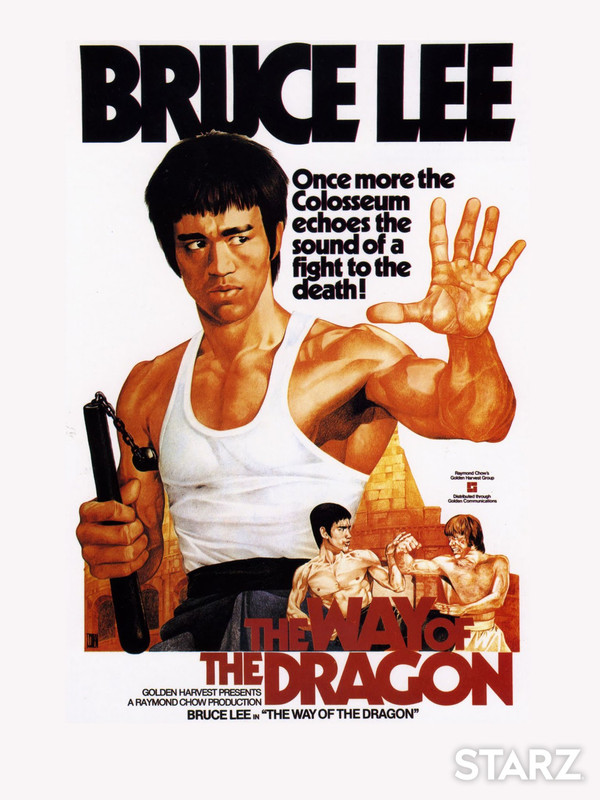
The Way of the Dragon
Dir: Bruce Lee
I’ve never been the biggest Bruce Lee fan. Obviously, he changed martial arts cinema for all time and arguably, more than 45 years after his sadly early passing, remains its best known name, but I’ve always enjoyed the stars who followed just in his wake more. The Way of the Dragon is a pretty good encapsulation of why.

Lee was coming off the wild and widespread success of Fist of Fury, so he had a lot of sway, and was able to cash it in to make his writing and directorial debut. The results suggest that, while a charismatic star and the most talented martial artist of his generation, he had a way to go as a filmmaker. Lee’s screenplay is basic and dull. It sees him coming to Italy to help protect a Chinese restaurant under threat of takeover from the mob. Lee never manages to establish larger stakes, nor much connection between himself and co-star Nora Miao or the staff of the restaurant, who have been training in karate. The fish out of water comedy of the first half is, to put it mildly, not Lee’s gift as an actor, and makes an already uneventful build up feel grindingly slow.

There are two great scenes in The Way of the Dragon. The fight with Lee wielding dual nunchaku and the finale, with Lee facing off against a young, clean shaven, Chuck Norris. Both sequences deliver the hard hitting action we expect of Lee and are brilliantly choreographed by the star and Unicorn Chan. The direction isn’t always as successful, for instance, Lee’s repeated cutaways to a kitten during the finale are much less funny than he may have imagined. Still, for these blessed minutes, the film delivers what we’re looking for from it. Even the rest of the action sometimes disappoints, never more so than when Hwang Jang Lee steps up, only to be so soundly beaten by Lee that he barely gets a chance to show his abilities (look at his films with Jackie Chan for a far better showcase).

On the whole, I found The Way of the Dragon disappointing. There are isolated moments that explain why Lee was and is so revered, but the film as a whole is largely tedious, not especially well made, and plods its way to those moments.
★★

Apr 2, 2020

Martial Arts Month: Days 1 and 2

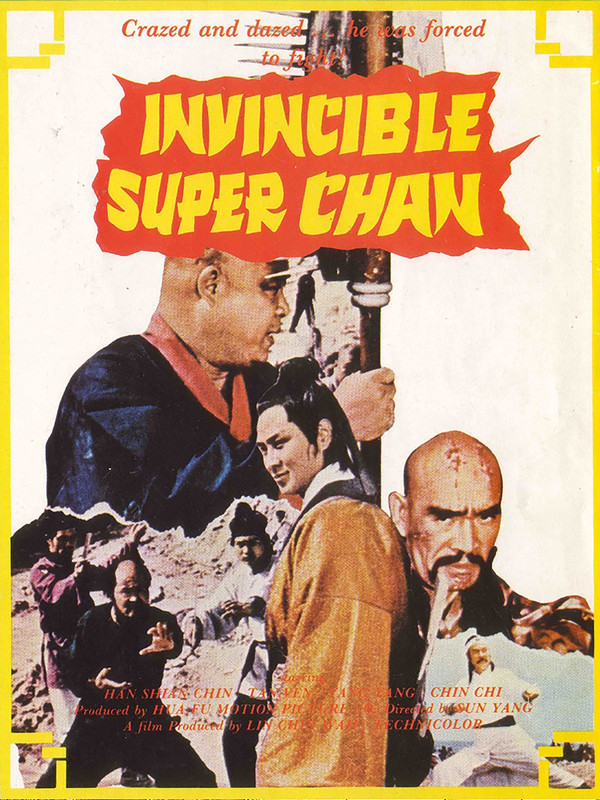
Invincible Super Chan
Dir: Yang Sun
This was one of the titles requested for this series of reviews, and it turns out to be an ideal place to start. Invincible Super Chan is essentially what I thought all martial arts movies were before I discovered martial arts movies.

Chan is angry because his master was murdered. He seeks revenge, and is then a target himself because of his newfound reputation.

The version I was sent to watch is 81 minutes long, which is nine minutes shorter than the running time quoted on Imdb. It shows. The editing is haphazard beyond belief. Apparently, this film attracted some controversy on release and was nearly banned (this may be hyperbole, it’s hard to tell), but it definitely seems to be censored, with many images of blades showing everything but the strike, so we get the often disorienting spectacle of cutting straight from knives just flying through the air with no discernible target to people writhing on the ground, stabbed. This isn’t to say Chan needs to stab people, indeed patting them lightly on the back makes them go flying, such is his strength. His jumps are also hilarious, less wuxia wirework and more like something out of MST3K subject, Pumaman.

The violence is non stop and pretty inventive (ramming a stone down someone’s throat is fairly novel, as is the use of an exploding flag as a weapon), but even though it’s endearingly bonkers, hilariously badly dubbed and entertaining for its rickety production values, you’d never mistake Invincible Super Chan for a good film. An entertaining one though… that’s another matter.
★★

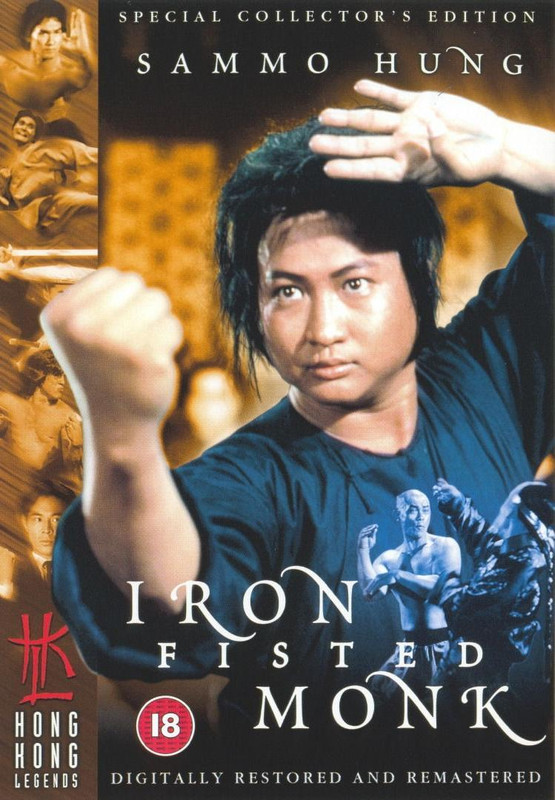
Iron Fisted Monk
Dir: Sammo Hung
I’ve never felt that, at least in the West, Sammo Hung has entirely got his dues. He’s one of the greatest martial arts stars, choreographers and directors of all time and Iron Fisted Monk, his 1977 directorial debut, shows that talent in nascent form.

The plot isn’t the tightest Hung ever put to screen, but it sees him training at Shaolin Temple, where he went after his uncle, whose noodle shop he worked in, was murdered by the Manchu. He leaves the temple early, along with a monk who is his senior (Chen Sing) and they end up pursuing a Manchu official (Hung’s frequent co-star and here co-choreographer, Fung Hak On) who has been leaving a trail of rape and murder in his wake.

In contrast to his opera school brother and frequent collaborator Jackie Chan, Hung’s films have always been notable for their hard edges. That’s more true of Iron Fisted Monk than even Hung’s own later work. The choreography is big and classical, but it’s also hard hitting, with plenty of bloody injuries depicted. More surprising is the level of exploitation content, particularly a very nasty and fairly violent rape scene that had to be cut by over a minute for the first UK DVD release (the recent Blu Ray, which I watched for this, is uncut).

What shows through is Hung’s directorial talent. He never quite balances the slapstick of early scenes with the nastiness that runs through the rest of the film, but both are well captured. One particular match cut in the rape scene, from Dean Shek raising his hand to one woman to Fung Hak On slapping the rape victim is especially (if disgustingly) effective. The action is plentiful and flows beautifully. In this respect Hung is already a master of his craft and while he gets many of the best moments he’s not above ceding the spotlight to Chen Sing. The finale shows off the best filmmaking, with Hung’s fluid camera often gliding between the two fights taking place in the same room.

Sammo Hung would make better films than Iron Fisted Monk, but as a statement of intent and a demonstration of his skills both in front of and behind the camera, this was an excellent start. 
★★★★

Dec 13, 2019

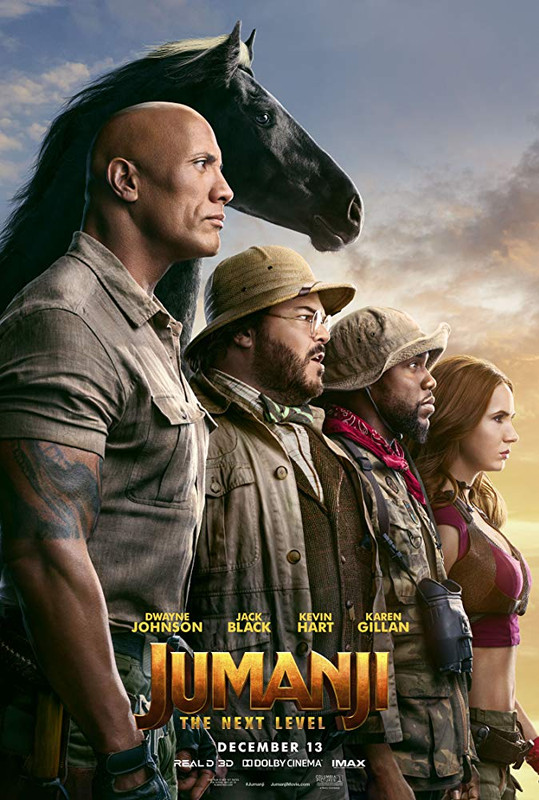
Jumanji: The Next Level [12A]

Dir: Jake Kasdan
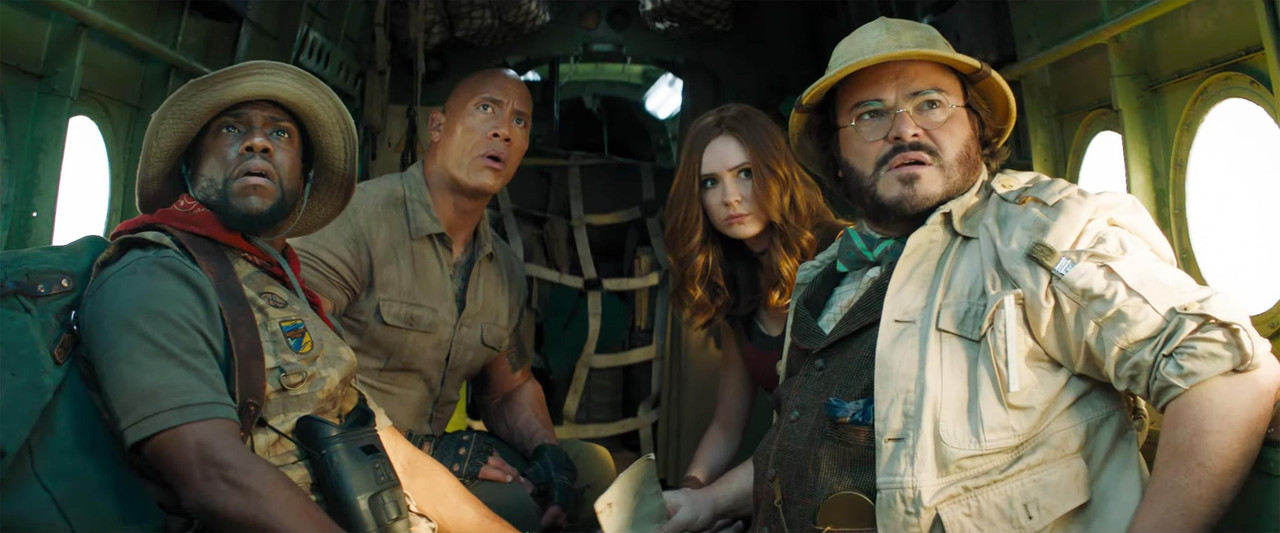
In 2017, I don’t know that I’d thought about Jumanji for 15 years or more. It was pleasant enough when I was 13, but it wasn’t a film I’d carried with me, and so I wasn’t especially interested in a reboot/sequel. I ended up seeing Jumanji: Welcome to the Jungle only because I had a gap in my day and had seen already everything else on offer at the nearest cinema. It was a huge surprise; not just a fun and often amusing adventure, but a surprisingly interesting and original twist on a coming of age narrative. It also felt finished. By the end, the experience of being their game avatars had left an impression on all the real world teens who embodied them, their lives had moved on and there was no sense that they would need those avatars back in their lives. This is one of many reasons why lightning doesn’t strike twice with Jumanji: The Next Level.

Picking up more or less in real time, The Next Level finds Spencer (Alex Wolff), Martha (Morgan Turner), Bethany (Madison Iseman) and Fridge (Ser'Darius Blain) coming home from their first year of college for the holidays. When Spencer doesn’t show up for their get together, the others go looking for him and soon realise he may have gone back into Jumanji. They head back in to the game, but Spencer’s grandpa Eddie (Danny DeVito) and his old business partner Milo (Danny Glover) also end up sucked in, while Bethany is left at home. Inside the game, Martha is back in her old avatar of Ruby Roundhouse (Karen Gillan), but otherwise things have changed. Fridge is now Shelly Oberon (Jack Black) and Eddie and Milo have become Dr Smoulder Bravestone (Dwayne Johnson) and Mouse Finbar (Kevin Hart) respectively. The group must go on another quest to save Jumanji, but also find Spencer and get themselves home.

The Next Level is the film I expected Welcome to the Jungle to be. The problems are evident from the start. While it painted in broad strokes and clichés, the previous film did at least spend some time setting up the characters and relationships before entering the game. This time, Kasdan and co-writers Jeff Pinkner and Scott Rosenberg spend a little time updating us on where the gang from the last movie are now, but just a couple of minutes introducing Eddie and Milo’s relationship, meaning that we’re not all that invested in them by the time we get into the game.

Once the action moves into the game world, other problems manifest. The switching around of characters and avatars has the potential to be fun, but it largely doesn’t work. Fridge was always the least developed of the real world characters, and Jack Black struggles to find much to do with him. It doesn’t help that his schtick is largely the same as what Fridge had to deal with in game in the last film: an underpowered character whose strengths only become clear in very specific situations. Gillan is comfortable as Martha/Ruby, but is too often reduced to explaining everything to Eddie and Milo and, given her avatar’s status as ‘killer of men’, has far too little action. 

To his credit, Kevin Hart captures Danny Glover’s essence nicely, he nails the voice and the rhythm and manages to give a sense of Mouse being embodied by a fundamentally different character this time out. It’s a pity that Milo is a one joke character, his slow way of talking putting the characters in more peril is a gag that hits once, but not over and over again. Dwayne Johnson, usually a presence of such towering charisma that he can make middling (and silly) projects like Skyscraper and Rampage much more fun than they would be in other hands, seems adrift here. Johnson was great in the previous film, as he played against type to embody a nervous teen, gaining many laughs from the contrast between his physical presence and his performance. We don’t see those layers while he’s playing Eddie. Johnson never gets Danny DeVito’s rhythms down, and because of that he sticks out against Hart’s more detailed (if broad) work. Johnson has some fun with the glee when Eddie discovers how strong Bravestone is, but the repetitive gags about Eddie never learning the rules of being inside a video game become tiresome in short order and he can’t make the weak material stick this time.

The plot of the in game adventure wasn’t a hugely important part of the last film, but here it is even more perfunctory, which is a problem given an early attempt to give Bravestone’s character a personal grudge against the villain. This could have been interesting, a way to show the game taking over at a certain point, with Bravestone’s designed in-game personality coming out and swallowing Eddie, even if only briefly. Unfortunately, nothing so interesting happens, indeed nothing at all happens in reference to this reveal, meaning it adds up to nothing more than an excuse to see Johnson in a silly moustache.

Happily, there are some fun action sequences. The early dune buggy chase is solid, as is a sequence involving suspension bridges and mandrills. Seeing Gillan cut loose late in the film (even if it’s a beat for beat recreation of a scene from the first film) is as entertaining as ever. It would be nice to see her headline her own action-comedy, even the opening sequence of the otherwise awful Stuber suggested she’d carry it off well. 

A body-switching idea may be contrived, but having Karen Gillan play a character other than Martha, however briefly, leads to some of the film’s biggest laughs, and she emerges as one of the film’s MVPs, along with franchise newcomer Awkwafina. Like most of the others, the Farewell star has two characters to play and, while she has to paint in broad strokes as a function of her screen time, she bests most of the rest of the cast in capturing the basic essence of those characters, she’s also the only one to pay much attention to the physicality of embodying another actor, particularly in her second role. This isn’t her best work, but it’s a fine demonstration of why she’s become a star so quickly.

Jumanji: The Next Level suffers from fairly typical sequel problems. It’s trying to do the same thing but differently but the things that are different often don’t work and those that are the same don’t have the same punch the second time around. All that said, and as much of a miss as this is, I’m actually anxious to see the sequel trailed in the credits scene, which looks to be the film I’d hoped they’d make this time out.
★★

Nov 23, 2019

Frozen II [U]

Dir: Chris Buck, Jennifer Lee
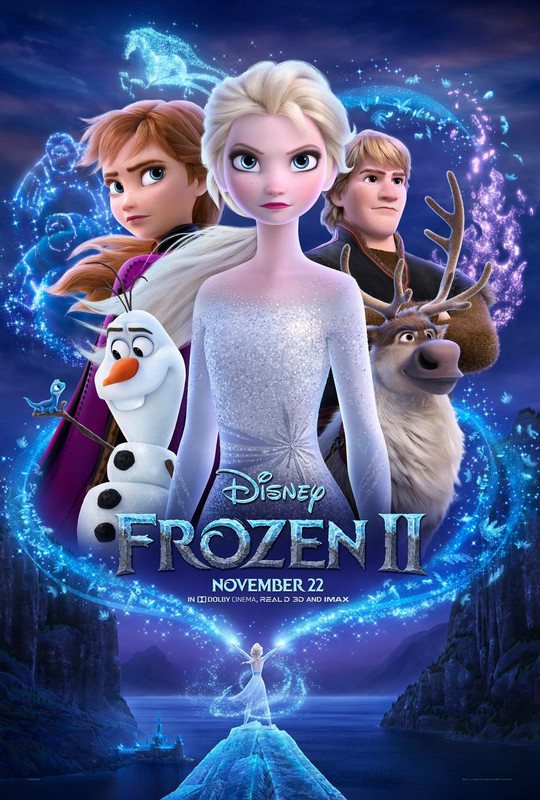
Frozen was a genuine cultural phenomenon and the highest grossing animated film of all time. Finding a way to make a sequel to it is in many ways a nice problem to have, but that doesn’t mean it’s easy. If you’re too radical you risk alienating the fans of the original film (and after six years that’s a lot of little kids who have been watching the first film at home their whole lives, plus their older siblings who saw it at the cinema first time round) but making a carbon copy of your previous work risks making both entries look stale. I wish I could say that with Frozen II, writer and co-director Jennifer Lee and her team had managed to find a middle way through this conundrum.

Three years have passed since the end of the first film and all seems fine in Arendelle. Elsa (Idina Menzel) and Anna (Kristen Bell) have kept the city gates open, Olaf (Josh Gad) is enjoying his new magical permafrost and Kristoff (Jonathan Groff) is preparing to propose to Anna. This happy stability is rocked when Elsa begins hearing a beautiful voice singing in the distance (vocals provided by the Norwegian singer Aurora Aksnes). Elsa, Anna, Kristoff and Olaf follow that voice to a magical forest, which became cut off years before, after a conflict between Arendelle and the Northuldra people who live in the forest. Called to the forest by the voice, Elsa wants to discover the truth about the past and how it might connect to her powers.

Frozen, while hardly without its flaws, was a good film, but more importantly, it was an interesting one. For years, Disney films had dealt in familiar fairy tale clichés of Princesses saved by and ending up married to Prince Charming. ‘True love’ had only really been seen to mean one thing, and it had often struck in an instant. Frozen transcended and lightly satirised many of these things, and found a narrative that dealt in more complex emotions. It was refreshing, while also delivering the comedic goods and the showtunes, some of them funny, others emotional, one world-conquering.

Of course, Frozen II can’t break the same ground, but what’s most disappointing about the film is that it finds no other new notes to play. The dynamic between Elsa and Anna remains the same and, in terms of how the film deals with romance, Kristoff’s struggle to find the correct words to propose to Anna is notably old-fashioned set against how the idea of true love was dealt with in the first film. Olaf is still largely superfluous comic relief. He has one or two charming moments, but those are the bits that feel most disposable (a song about getting older and a quick recap of the events of the first film). Even the other characters find him grating at times and it’s hard to blame them. 

The songs also suffer from a combination of a lack of inspiration and fear of straying too far from the template. Only Kristoff’s Lost in the Forest—rendered as an 80s hair metal ballad, complete with visual quotes from music videos—is any kind of departure, but it’s such a strange switch away from everything else in both musical and visual style that it has the inverse problem to the rest of the film: it feels like it’s been parachuted in from a completely different movie. 

Songwriters Kristen Anderson-Lopez and Robert Lopez try not once but twice to recapture the once in a lifetime success of Let It Go, giving Idina Menzel licence to belt out Into The Unknown and Show Yourself. Neither song is up to the task. Into The Unknown is weirdly hollow, perhaps coming too early, only a few minutes after the voice has been established, at which point the stakes feel so much less personal than they were in Let It Go. It also doesn’t help that, even without words for her to sing, it’s Aurora Aksnes’ voice that is the song’s standout element. There’s more drive and a little wit in Show Yourself, but the naked desperation to recapture earlier glories only helps it fall flat. The other songs don’t rate much mention, so aggressively unmemorable are they. The gulf in quality between the songwriting in original and sequel calls to mind that between 2011’s The Muppets and Muppets Most Wanted, as with the latter of that pair, there’s little danger of your kids or you walking out of the cinema humming any of these tunes.
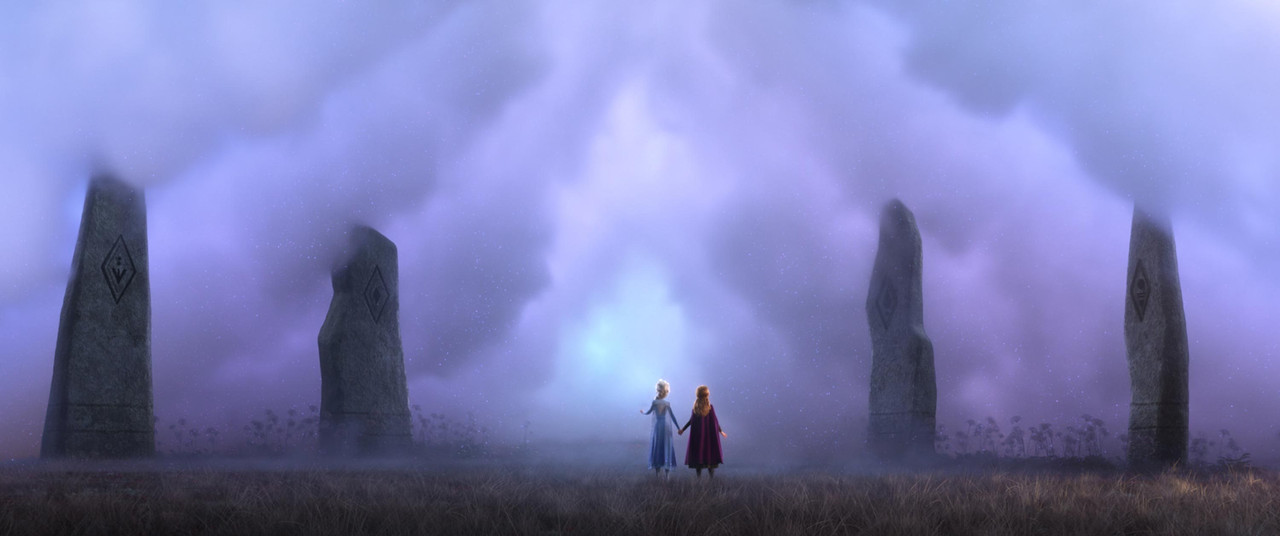
With six years between films, a research trip to Norway, having written in character diaries for Elsa and Anna, and with four other people on the story team, you’d have hoped that Jennifer Lee would have come up with a more solid foundation of a screenplay. Unfortunately, it’s all very slippery. Elsa and Anna’s relationship has nowhere to go, while Kristoff and Anna’s is written as a sitcom’s C story. The lack of a defined villain wasn’t a problem for most of Frozen’s runtime, because it was part of the way the film differed from Disney convention, here that and the under explored nature of the enchanted forest mean the film suffers from a lack of focus. The story never coheres, the forest and its creatures and people lack definition (one very cute creature is an almost direct lift from Tangled, even more so than Kristoff’s reindeer Sven, who always felt like a riff on the horse from that underrated film). Even moments that should be poignant echoes, one key one involving Elsa in particular, land awkwardly because the film is so directly echoing its predecessor throughout that they just end up being another lift, rather than something more meaningful.

This is still a Disney movie, which means the animation is breathtaking. A horse made of water is especially jaw-dropping and, closely ‘inspired by’ The Neverending Story as the design is, the Earth Giants are equally impressive technically. Equally, the voice cast give their best. Kristen Bell and Idina Menzel have a nice back and forth and everyone hits the laughs and the emotion well. The problem is with the material rather than the execution.

From a story perspective, Frozen never cried out for a sequel. Yes, there were unanswered questions in the backstory, but as many recent prequels have taught us, if backstories are left unexplored in an initial franchise entry, there tends to be a reason for that. The answers found here are, once we have the setup, obvious, and not that interesting. Beyond the fact that, economically, it would be a good idea, Frozen II ultimately never finds an answer to the largest question any sequel has to address: why does it need to exist?
★★

Oct 31, 2019

Teen Spirit [12]

Dir: Max Minghella
Whether it’s been the source of your favourite music or you think it’s a blight on the industry and Simon Cowell is pop’s devil incarnate, there’s no denying that The X Factor and other TV singing competitions have been hugely influential over the past two decades, so it’s something of a surprise that they haven’t been the backdrop to more films. 

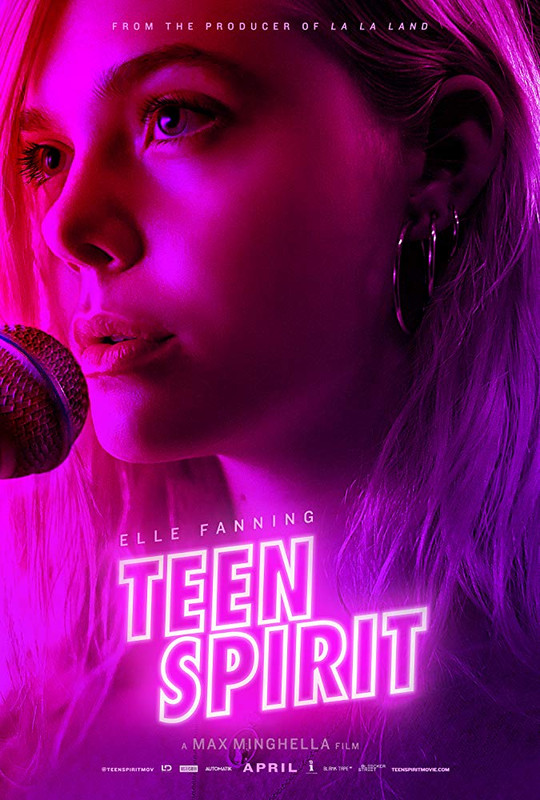
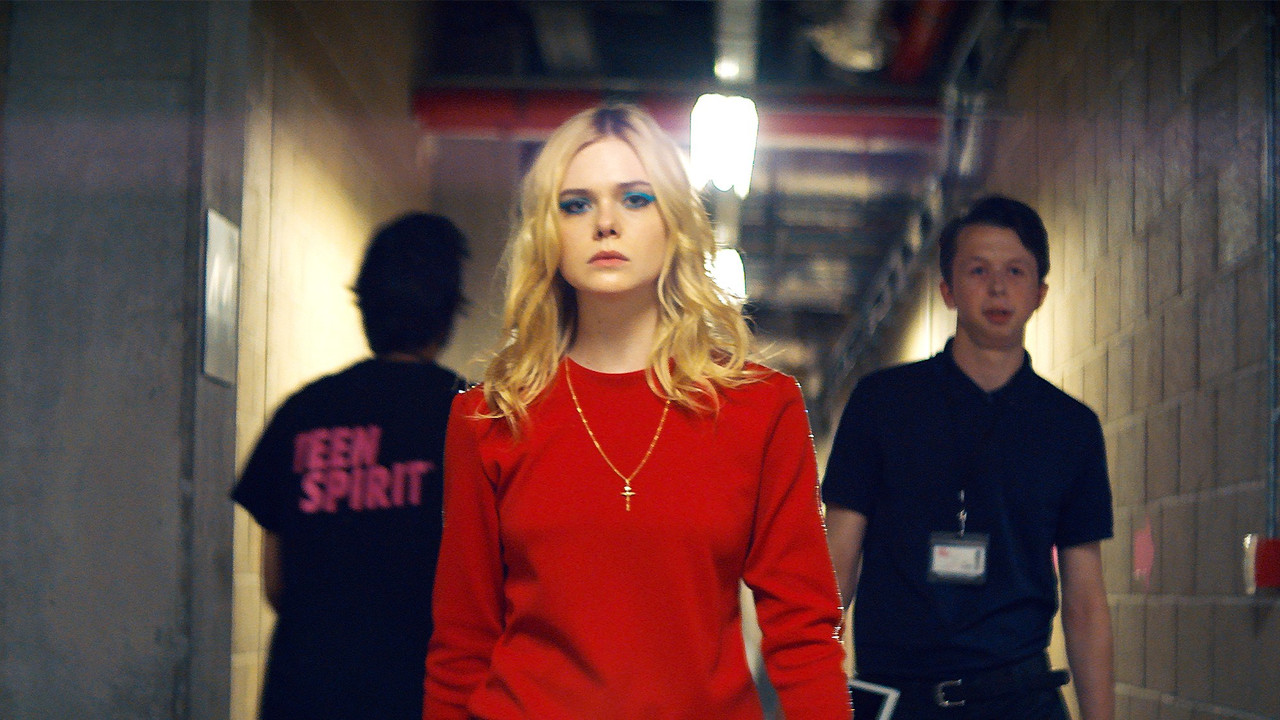
Max Minghella’s debut as writer/director casts Elle Fanning as Violet Valensky, a teen of Polish descent, living on the Isle of Wight. When the singing competition Teen Spirit comes to the island, she goes to audition but has to rope in a slightly creepy local truck driver, Vlad (Zlatko Buric) to pose as her manager because, being under 18, she needs an adult to sign off on her participation. The film focuses both on Violet’s relationship with Vlad, who used to be an accomplished opera singer, and on her progress through the competition.

Elle Fanning is without a doubt the most accomplished American actress in her age group, and what Teen Spirit does get right comes almost entirely from her typically committed and detailed work. Appearing in every scene, Fanning has a lot of lifting to do: she’s singing, working with an English accent, and learned Polish for the role. Through all this, she also manages to give another subtly layered performance in which we see much of what Violet is going through written only through her expressions. This ranges from a nice comic tension when she introduces the always dishevelled Vlad to her mother (Agnieszka Grochowska) to the different ways she regards the various boys who, to some degree or other, express interest in her. Other moments, when we find Violet at her least self-conscious, dancing around her room, or when she hears the news that she’ll be on Teen Spirit’s televised final, seem to channel her off-screen persona, to charming effect.

Between them, Fanning and Zlatko Buric create a warm mentor/mentee relationship. Buric can be amusing in his brusqueness, but also finds a sensitive side to Vlad and puts across his genuine affection for Violet. It might, however, land a little more strongly had Minghella’s screenplay explored in more depth the background it gives Vlad in relation to his own daughter.

That is, unfortunately, just one of the areas in which Minghella’s writing falls short. While Violet’s character and her home life are well drawn, the things that happen to her and the people who surround her are often too lightly sketched. The members of the backing band who she eventually takes to the competition (a thing that would almost certainly never be allowed in real life, those shows have professional house bands) are almost total non-entities, their intended roles as potential romantic interest and comic relief falling flat throughout. Perhaps more frustrating is how loosely the film tells us about Teen Spirit itself. Montages show the off camera whittling down process, but we then skip so fast through the televised portions that it seems Violet is in the final after being on just one other broadcast. It rings false, and that’s a near hobbling problem for the film as a whole.

Wildly talented as Elle Fanning is, on this evidence she’s only a slightly above average singer. That’s not really a problem, it describes a lot of major pop stars. What does present an issue, at least in the way it’s utilised in the film, is the fact that Fanning is always obviously working with a pre-recorded track. If this were an intermittent thing, if we saw her sing live early on and the autotune and miming crept in during the TV show, it could have been an interesting statement about these shows and about pop music as a whole. The fact she’s miming in every music scene, and clearly autotuned in all but one (the performance of Tegan and Sara’s I Was A Fool is not live on set, but sounds less treated), means any potential for comment or satire is missed. This makes the music feel rather soulless—a point Minghella may be trying to make, but botches.

Many issues might have been overcome by Fanning’s performance, but for the way the film looks. Minghella’s visual sense can be a godawfully ugly spectacle. The worst aspect is the lens flare, which is so prevalent that sometimes the film seems to have been shot by JJ Abrams on steroids. You would be forgiven for thinking that every single light in the film flares—even the light in Violet’s fridge does it at one point. Again, it’s not hard to see what is being attempted here, it could be read the artificial sparkle of TV following Violet everywhere, but as with the way the music is used, it’s so indiscriminate that any potential meaning becomes lost and all that remains is a stylistic choice so grating the film can be genuinely challenging to watch. 

More grating still is the obviousness of the influence, even outside the casting of Fanning, of The Neon Demon. The colour scheme often feels influenced by it, and both the audition montage and the final performance draw heavily on specific imagery. The comparison only serves to bring home, good as she is here, how much more interesting Fanning’s performance is and how much more scathing and successful Nicolas Winding Refn’s commentary about the industry he’s depicting is than Teen Spirit manages. 

To be fair, Teen Spirit does have its successful moments. Fanning’s version of Don’t Kill My Vibe is infectious enough to work in the setting it’s used in, and her voice is just about good enough to carry the songs. The worst version of Teenage Kicks ever recorded is a beautiful skewering of the vapidity of pop talent shows and while she’s not terribly well used it’s fun seeing Rebecca Hall as the film's version of Simon Cowell (a definite upgrade from the real thing). At 93 minutes, and with several storylines feeling less than fleshed out, the film cries out for a few extra scenes to give a little more body to the characterisation and flesh out and lend credibility to the show itself. As it is though, Teen Spirit is a frustratingly undercooked mix that never quite figures out if it wants to be satire or simple Cinderella story. It’s elevated, as most things are, by the mere presence of Elle Fanning, but she clearly couldn’t take it to number one.
★★

Sep 17, 2019

24FPS @ LFF2019: Day 1

Rewind
Dir: Sasha Joseph Neulinger
Film serves many functions in our lives. It can be pure escapism and entertainment, but it can also serve as an archive; a document of what we are thinking and feeling in a given moment, or as evidence of another kind.

Sasha Neulinger’s directorial debut is a bravely personal film, looking back on the sexual abuse that came from within his family towards both him and his younger sister, when they were each as young as three years old. Through a patchwork of archive footage taken by his filmmaker father and present day documentary and interview footage, “It’s a puzzle made from my life”, says Neulinger, as he opens the film in which he combs through his childhood to recall and to contextualise the abuse, focusing on how it seems to be passed down like a virus.

The archive footage, at first glance, is much like that which any family who had a video camera in the 90s might have taken; family gatherings, parties, trips to the zoo the kids playing outside. There is a dark side though, and it’s present from the off, as we see a roughly 9-year-old Sasha introduce his “Shit diaries” direct to camera. What emerges as the pieces of the puzzle form a full picture is a jagged image of a disturbed boy whose initially sunny and open nature was blown apart early in his life, leaving a child who couldn’t express his emotions except in anger and acting out.

Today’s Sasha is markedly different, but there is still a raw feeling to the film as it is plain that revisiting these times, even if it is eventually cathartic, is deeply difficult for him. In one scene, as his father describes his own childhood abuse from a brother who would grow up to also victimise Sasha, we can see the director in background of his shot, clearly shocked, moved and holding back tears. In another moment that speaks of deep connection, both as family and survivors, Sasha gives his sister Beckah a long hug following her interview. It’s this long thread of shared experience the runs throughout the film that is, in many ways, its most shocking aspect. 

Rewind is, obviously given its subject matter, a challenging watch. Moments that find Neulinger looking through his old therapy records with his doctor, looking back at drawings that graphically - if largely metaphorically - describe his abuse are especially hard to stomach. Yet there are also moments of grace, not least the one in which, in archive footage, Sahsa reveals that he’s changing his surname to Neulinger. 

The form of Rewind is fairly familiar, not least from the acclaimed Capturing the Friedmans, but coming from a first person point of view gives the way that the stitching of this patchwork of footage a somewhat different power to that of the earlier film. This case has already made positive change, but this film will bring it to a wider audience, particularly if it is picked up by something like the BBC’s Storyville series, which is the sort of distribution that might suit it best. That would allow Neulinger’s campaigning, but never brow beating, film to get out and perhaps make a wider difference.  
★★★½

The Miracle of the Sargasso Sea
Dir: Syllas Tzoumerkas

The name may not be entirely accurate anymore, but after more than a decade it still feels as though the Greek ‘weird wave’ is surfing in the wake of Yorgos Lanthimos. While he has managed to transfer his talents, with his peculiar tone largely intact, to higher profile and even prestige projects, many other filmmakers have remained at home, ploughing a similarly strange furrow. Syllas Tzoumerkas was last seen at LFF with the awful A Blast, his latest film has a little more going for it, but suffers from many of the same issues.

For the first half, Tzoumerkas and co-writer Youla Boudali set their pieces. Elizabeth was a cop in Athens but in the opening sequence we see her asked to join other officers in lying about planted evidence. 10 years later, Elizabeth (Angeliki Papoulia) is living with her now teenage son Dimitris (Christian Culbida). Elizabeth the chief of police in their small town. She’s a drunk, a casual and sometimes open drug user, constantly berating the officers below her and not above her own corrupt actions. Other strands involve the rest of the people in town, from club singer Manolis (Hristos Passalis) and his sister Rita (Boudali), who have a fractious relationship with him doing most of the caring for their mother, who has alzheimer's to, among others, Elizabeth’s married lover Vassilis (Argyris Xafis), local DA Andreas (Laertis Malkotsis) and Andreas’ mute brother Michalis (Thanasis Dovris). 

There are a lot of tangled strands set up here, but only Rita’s story grabs much attention. This is where the film suggests the most depth, with her job cleaning a church and the various biblical visions we see through her story promising something with a powerful undertone but, as with many other things it sets up, the film never really delivers on this. The visions seem just to be there, perhaps someone more well versed in Greek Orthodox doctrine could unfold something specific from them, but for me they ended up feeling empty. That’s less true of Youla Boudali’s performance as Rita though. We get, at the very least, a sense of trauma and of something rather dark lurking underneath her relationship with Manolis (a slickly dislikeable turn from Passalis).

The rest of the film is far less interesting. Elizabeth’s story starts intriguingly enough, leaving some ambiguity about how she reacted to the bribe in the opening sequence, but once we find her a decade later, Angelikki Papoulia’s performance is disappointingly lacking in any shading. Her constant anger, her lack of any subtlety in her performance outside the film’s bookending scenes becomes wearing very quickly. Having a heroine who isn’t someone we would usually root for is fine, but the screenplay allows Papoulia little to work with in terms of contextualising Elizabeth’s rage and keeps her at such a constant boil that her every scene feels like a reiteration of the last.

As the second half of the film begins to use a murder mystery - the solution to which is hardly a surprise - to unpick the strands the first half set up, the extreme dark secrets that lie under the quietness of this town feel, for all the deadening and pointless explicitness with which Tzoumerkas shows them, somehow inevitable. He’s clearly going for shock value but a decade of films from Greece that have used many of the same ingredients, along with the fact we only really know and care about one of the characters involved, means the effect is considerably blunted.

There are flashes of interest here, notably in Youla Boudali and Hristos Passalis’ performances (he is especially good as he seemingly snaps after a performance, and begins berating the home town crowd from the stage) and in the various biblical overtones that surround their story. However, Tzoumerkas and Boudali’s screenplay is far too unfocused and, in other areas, too one note, to sustain that interest for the two hours the film runs.
★★

A Thief’s Daughter
Dir: Belén Funes
Late on in A Thief’s Daughter, Sara (Greta Fernández) is asked why she can’t just forget about her Dad “I carry him in my face”, she says. There’s a push and pull in that moment that is felt throughout Belén Funes excellent feature debut.

Sara is 22, she’s scraping away in a variety of menial jobs, trying to make ends meet for herself and her baby son, while also trying to win custody of her seven year old half brother Martin. Her father (played by her real life father Eduard Fernández) has just got out of prison and she clearly craves a family connection, while also being aware that being around him may not be good either for her or for Martin.

This isn’t a film of big dramas, confrontations are small and brief, grounded in the same reality as the rest of the film. Funes constructs a beautifully observed film, her camera more often feeling like a third person in the room more than it does something imposing structure. With that said though, she also has an incredibly economical style, often unfolding whole swathes of backstory without a word. In one especially impactful moment Sara is washing up after celebrating Martin’s first communion, she gets a little wine on her hand and sucks it off, then for a second considers drinking what’s left in a glass, before relenting and washing it. A couple of movements, perhaps five seconds, and we understand potentially years of Sara’s life. It’s a piece of pure cinematic storytelling. 

Little things unpack big stories throughout the film, thanks to the sensitive and artifice free performances. The relationship between Sara and her Dad has a naturally tense feeling to it, doubtless aided by the real life relationship between the actors, the history between the characters feels present in every moment. Outside of these scenes, the same unforced realism comes through in Greta Fernández’ performance. Whether Sara is at work, at home, or with her brother (another beautifully drawn relationship) there is never a sense of an actor playing a scene; the observational quality of Belén Funes’ direction coming through in performance as well as in camera. The victories may be small, but we feel them all the more powerfully for that, one sequence in which Sara learns she’s passed her probation at work is particularly good, capturing a warmth that we sense she feels too seldom as she’s trying to get by.

The film does build to a big narrative event, but even there Funes and co-writer Marçal Cebrian  resist any urge to grandstand, landing on an ambiguous but deeply moving final image that underscores the tug that we have felt in Sara throughout. This is a notable debut from Belén Funes, a film that delivers but also promises many interesting things for the future. It points to director with a strong but unobtrusive eye and a great command over casting and performance. It’s a quietly excellent film, and one you should make time for at LFF.
★★★★

Aug 23, 2019

Angel Has Fallen [15]

Dir: Ric Roman Waugh
In 2013, we had one of those semi-regular Hollywood moments in which the same idea comes along twice almost simultaneously. We’d had comet disaster movies (Deep Impact and Armageddon), volcano disaster movies (Dante’s Peak and Volcano), animated movies about insects (Antz and A Bug’s Life) and this time it was action movies in which the White House was under attack. Neither was great, but White House Down was probably the better film, so of course it was Olympus Has Fallen that spawned a franchise, with Gerard Butler as shakily accented secret service agent Mike Banning, protecting the president first from a North Korean attack on his home and then a city wide terrorist attack in the first sequel, London Has Fallen.

Angel Has Fallen finds Banning battered. He’s getting older, injuries are piling up from the last two movies, and he’s getting migraines that mean he needs painkillers. When the President (Morgan Freeman) is attacked by drones and Banning is the only survivor of his whole team, he ends up the chief suspect and must go on the run while trying to show that he’s being framed.

Where the first two Fallen films were merely deadeningly generic Die Hard knockoffs, this third entry is much more specific in the way it draws from its influences. Chiefly, it is a slavish ripoff of The Fugitive, or rather it would like to be. Rather than the Harrison Ford classic, but with more stuff going boom, Angel Has Fallen ends up more reminiscent of Fordless follow up US Marshals, with masses of action which is only occasionally and grudgingly coherent. By being only mildly sub-average and occasionally having a moment that not only understands but exploits action geography (the confrontation on the roof of a hospital), Angel manages to take a small step over a very low bar and be the best film in the series. Another aspect that scores this film points over the previous ones is the repositioning of its politics. That’s not to say this is a deep film in that respect, but the Trump voter’s action movie madlibs feel and sometimes outright racism of London Has Fallen in particular is dumped for something right wing moviegoers will probably like rather less; a narrative that comments on the military industrial complex and lightly brushes up against current political issues.

Gerard Butler’s appeal continues to elude me. While the script does him no favours by forgetting every issue it lays out in terms of Mike’s health the second he comes under attack, the star contributes little in the way of character, vacantly grunting his way through the dialogue and looking just as impassive doing it as he does when shooting at parades of essentially faceless bad guys. Morgan Freeman, Tim Blake Nelson and Danny Houston try to lend some acting chops to proceedings but Freeman just wheels out his patented wise old sage performance and Nelson and Houston’s roles are so predictable and one note that they have nothing to work with. Nick Nolte, as Butler’s estranged father, continues on his quest to become Hollywood’s most unintelligibly gruff character actor. To be fair, Nolte gives the thing that most closely resembles a performance here and with more to play off than the sentient tree trunk that is Butler he might have pulled out a moving scene or two. Unfortunately, after an action scene that is somehow both insanely overblown and boring, he’s out of the action for most of the last third of the film, though he does return for a baffling mid-credits scene.

Angel Has Fallen shouldn’t be mistaken for a good film, Ric Roman Waugh brings more competence than London's Babak Najafi but his action is largely just as incoherent and over cut as in the previous films in the series. However, unlike Banning’s previous outings, Angel isn’t notably terrible, nor does it leave a nasty taste in the mouth with its politics. Instead, this is just one more in a long production line of action films that feel tossed off, mistaking number of bullets fired for coherence of action. You could theoretically do worse, but you could also just watch a good movie instead. The Fugitive might be the place to start.
★★

Aug 2, 2019

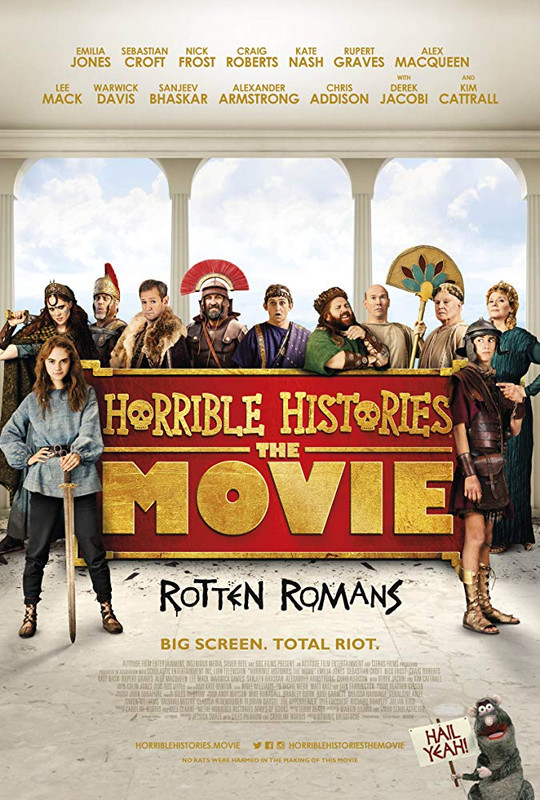
Horrible Histories: The Movie - Rotten Romans [PG]

Dir: Dominic Brigstocke
We had the Horrible Histories books when my brother and I were kids. I have particular memories of having them in the book box we used to put together to occupy us on long car journeys. They were great, combining gross and funny facts with a solid overview of the history of the period they were covering. I had grown past them by the time the TV show came about, but having always heard positive things about the show, I decided to check out its first feature film venture.

The basic story has several prongs. Orla (Emilia Jones) wants to be a Celtic warrior with the army Bouddica (Kate Nash) is raising, but her protective Dad (Nick Frost) doesn’t want her to have a sword yet. Atti (Sebastian Croft) is sent to Britain with the legion as punishment when one of his clever ideas backfires, offending the young emperor Nero (Craig Roberts). Almost as soon as Atti arrives, he’s captured by Orla.

It is always a challenge to review a film that simply isn’t interested in me as an audience member. Rotten Romans is unapologetically for kids, often quite little kids. In that respect, it’s fine; the fart, poo and vomit jokes will provide them some undemanding laughs. Everything is done with a big, broad, energy that talks at the audience rather than down to them and it keeps the brand intact in that amongst the gags, kids will learn a few things about the Roman empire and its war with the Celtic tribes.

As a piece of filmmaking and for an older audience, amiable though it is, Horrible Histories: The Movie doesn’t really work. It’s one thing making a film for kids but, costume design aside, this one does often wear its cheapness rather too visibly. Sets feel a bit rickety and there is a definite sense that certain scenes had to be rushed through, notably the poorly choreographed and noticeably small scale battle of Watling Street. More problematic is the fact that, despite a fairly starry cast with plenty of funny people in it, the jokes just don’t connect frequently enough. As the Roman military leader Paulinus, Rupert Graves definitely sells his running gag of always talking in the third person and the payoff is fairly amusing, but Craig Roberts’ petulant Nero could easily have been pushed to a more comically extreme place and Lee Mack’s running joke as a centurion who misses Rome never manages to find a laugh. This is also an issue with most of the film’s songs, which are sporadic enough that you’re never expecting one and which generally miss the mark.

In the lead, Emilia Jones (who I couldn’t place initially, but discovered I’d recently seen in Pascal Laugier’s Incident in a Ghostland) is an appealing presence. The screenplay never pays her desire to be a warrior off that satisfyingly, but that’s not for lack of effort on her part. She and Sebastian Croft have fun with the growing (platonic) relationship between their characters, they just don’t have the material to work with. Perhaps the most entertaining part of the film is Kate Nash’s Boudicca. The recasting of the queen who united the Celtic tribes in rebellion as a rock star is the film’s best comic idea and one that serves to provide kids with a way to relate her to their own time. For her part, Nash seems to be having a ball, she delivers Boudicca’s songs with energy and has a couple of the better jokes.

This isn’t a deep film. The final song rushes to find something like a happy ending and has a message about sharing that is a good thing to have kids walk out remembering and feels especially positive given the times we find ourselves in. On the other hand, it’s not particularly in keeping with the rest of the film which, though it always frames it out, is surprisingly heavy on killing for something so clearly aimed at a very young audience. Overall, Rotten Romans has a few things that work and a handful of fun moments, but for an audience over eight, while it’s good natured and never a chore to watch, it’s just not consistently funny enough.
★★