Showing posts with label Kids Movies. Show all posts

Oct 6, 2021

24FPS @ LFF: Martin and the Magical Forest

Dir: Petr Oukropec
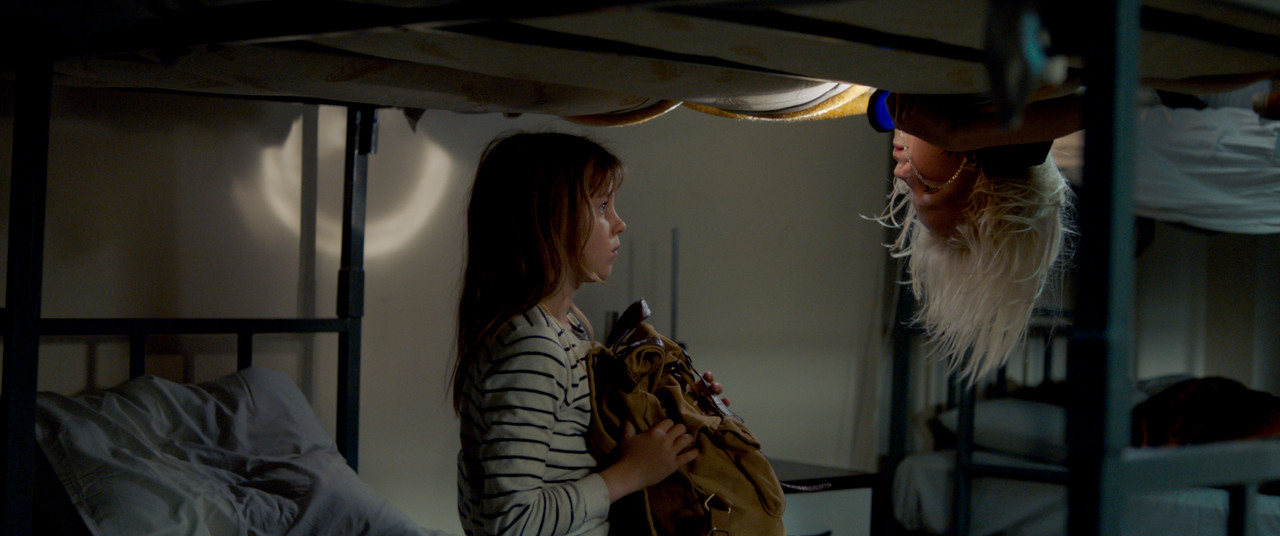
10-year-old Martin (Sebastian Pöthe) is a town kid who is packed off to a forest-based summer camp that he’s less than excited to be going to. Uninterested in joining in with the team games, and constantly complaining, he soon alienates most of the other kids. However, the sprites that live in the forest need some of the items he’s brought with him to cast a spell that might save them from a drilling crew looking for minerals. Martin’s price is their help so his team can win the camp’s series of challenges.

I sometimes worry that we’re not doing enough to grow the next generation of cinephiles, raising them on a limited diet when there is a world of kid’s cinema out there, and the LFF’s family strand is always a good way to throw the net a little wider. This Czech film is squarely pitched at an audience of its main character’s age, but it doesn’t talk down to them in terms of the environmental issues, nor by assuming that it needs fart jokes to keep a young crowd engaged. 

The magical world of the forest is something the film highlights from the very start. We see it in the beauty of the setting, but more to the point in the creatures that appear from the very first time Martin steps foot in the forest. Initially the sprites like him about as much as he does them; pine cones throw themselves onto his head and vines trip him up, but we also see that they have a side that can come to people’s aid, flying Martin back to the campsite when he’s tried to leave or helping him win the various challenges.
 
The methods used to realise the creatures are a little tough to discern. There may be animatronics in use because the sprites are very present within the frame and have a slight staccato effect to their movement, but if they are CGI then it is exemplary work. The creatures are expressive and fun to look at, with several developing personalities. One moment, when a stick Martin has been trying to get an arrow back from gets run over and ‘bleeds’ sap is surprisingly affecting as an image, even though we’ve never seen that creature before. It’s an effective way to teach kids a healthy respect for nature, but it’s never cloying or overly preachy.

Most of the kids other than Martin and Foxie (a winning Josefína Krycnerová), a fairy-tale loving 8-year-old who believes in the sprites but has never seen one, aren’t especially well-defined. The adults fall into two categories: the counselors, only one of whom, who measures chemicals in the local water and talks about being ready for a catastrophic event, is particularly notable and the drillers, personified by a couple in their 30s. On the one hand, it’s refreshing that the drillers aren’t simply shown as monsters who can’t wait to destroy the forest (remember Ferngully’s smoke-belching bulldozers), but on the other hand, they don’t otherwise have a great deal of personality.

The stakes and morals are pretty simple, as is the solution of the ending, but Martin and the Magical Forest should be a fun time for its intended audience, and it’s hard to argue with any of what it's trying to teach them about respect for nature and finding common ground with other kids. For adults, there’s some lovely imagery and the chance to watch something a little different from the usual kids movie fare. It’s slight, but a charming and fun time.
★★★

Sep 30, 2019

24FPS @ LFF 2019: Selected Shorts

It’s a shame we don’t see more short films in general release, but at LFF the various shorts programmes are often a good way to spot new talent both in front of and behind the camera. Here are some appropriately brief thoughts on some shorts I’ve seen recently. These films were viewed on the online press library.
Be Still My Beating Heart
Jericho (Sarah Andrews, Aaron Hopwood), screening in the Family shorts programme on October 5th, is one of the briefest shorts in the festival. Though barely 90 seconds long, it’s still an impressive piece of work. Fluent and high quality CG animation tells the story of a lonely robot trying to build himself a friend. It’s gently funny and rather touching. I do wish it were longer though, as there is potential to mine some more humour out of the situation. Sweet then, but perhaps too limited by its running time. 
★★★

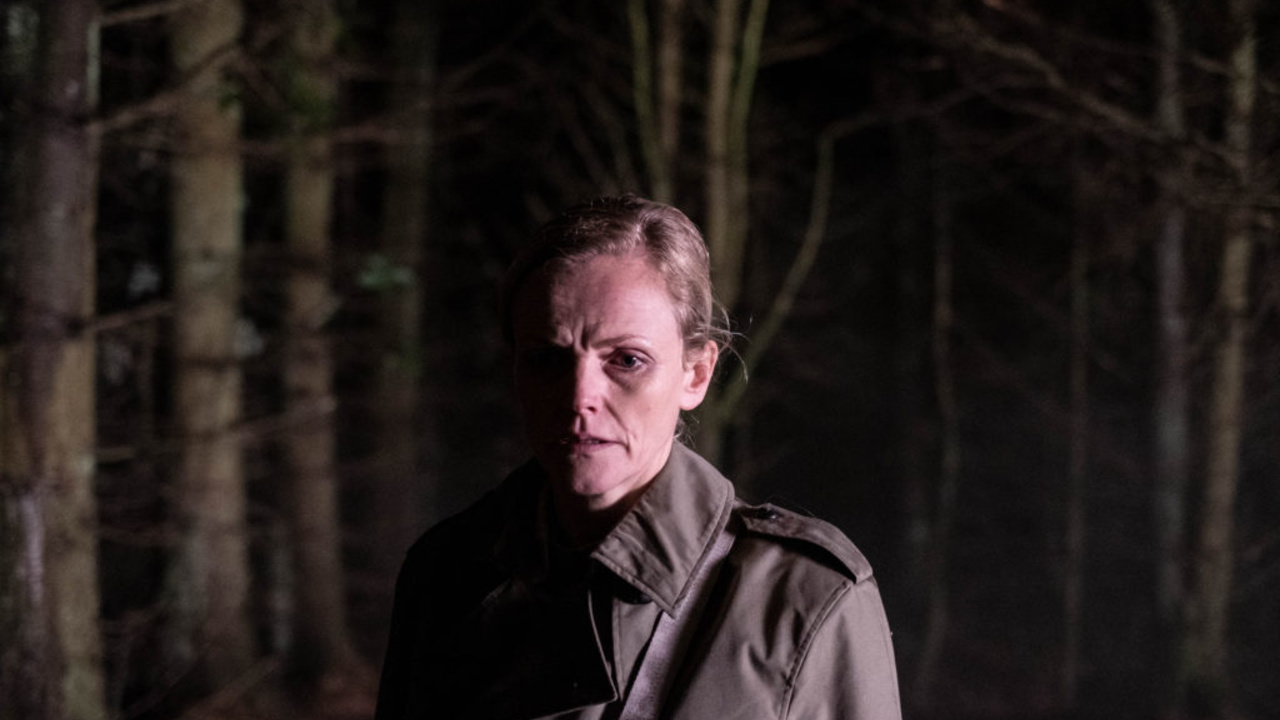
Be Still My Beating Heart (Ruth Paxton) screens in the Cult shorts programme on October 6th and 8th (both sold out). This story of a medical examiner looking after her younger sister who has an unspecified illness benefits greatly from having the always excellent Maxine Peake in the leading role. Peake and Elysia Welch bring dimension to a sisterly relationship that feels sour on both sides, even if it’s loving deep down. Director Ruth Paxton’s imagery veers between the mundane and the primal, and points to interesting things for her future. Unfortunately, the film ends up as less than the sum of its parts. The various ideas don’t knit together in the 25 minute running time and this ends up feeling less like a trailer for a future feature film version of itself (a common issue with shorts) than an impressive showreel for its director. 
★★½

Let's Roll
The Lamb (Nina Volic) screens in the Dare shorts programme on October 10th and 12th. Most boys, when they’re around 12 or 13, start wanting to impress the girls around them. That’s where The Lamb begins, with a boy meeting two girls from his class to show them something. In an incredibly dark turn, ‘something’ turns out to be a black man, tied up and gagged, on his sofa. The way the kids interact with the man is initially not violent, but the immediate and casual dehumanization of this ‘other’ is horrifying, as they treat him as a prop, posing for selfies with him in the background. A deeply disturbing, if extreme, look at how social media has made some of us treat the world as a background image to our lives, The Lamb promises great things from Nina Volic. 
★★★★

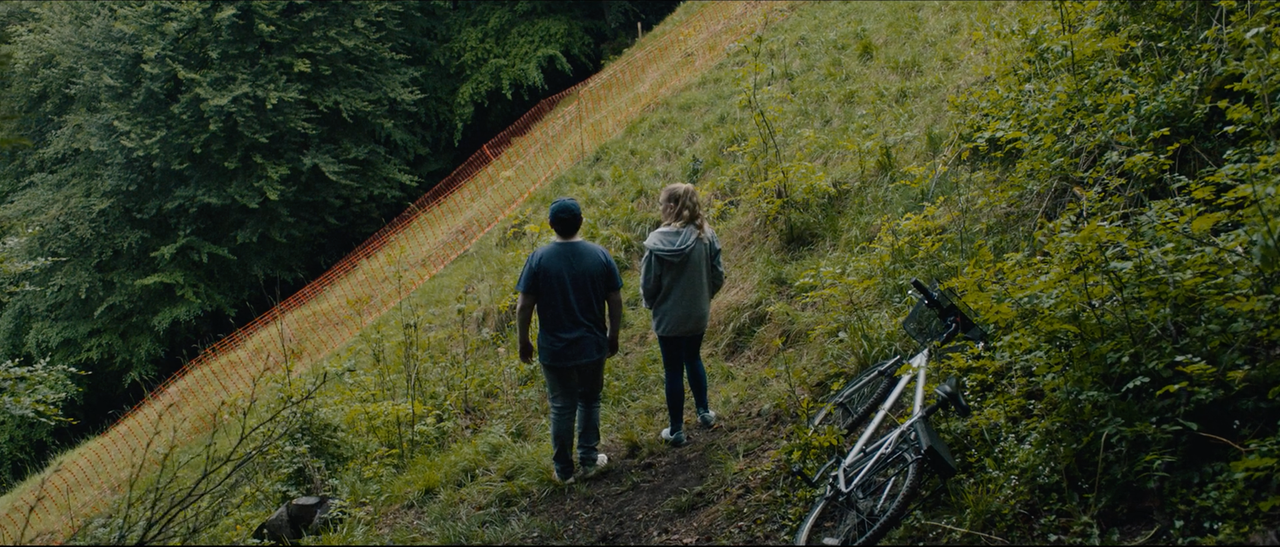
Let’s Roll (Chris Thomas) screens in the Thrill shorts programme  on October 5th and 10th. A surprisingly gentle film for its strand, Let’s Roll is a coming of age film set around the Cooper’s Hill cheese roll. Antonia’s brother was a champion, but now he’s away in the Army and her mother is against Toni taking his place. The progression of the film is fairly familiar, as Toni has a friend (who may be nursing a crush) help her train for the cheese roll in secret. The best thing about the film is how much it packs in to 23 minutes, writer Allan Macleod puts a lot of depth into the background in Toni’s relationship with her Mum, both of their implied concern about their brother and son and Toni’s troubled reaction to this stress (we first meet her running from a shop after stealing a magazine). This is also very well played by Amy Bowden as Toni and Zara Ramm as her Mum. There is a lot to build on for a feature version, which I’d happily watch, but the short feels complete in its own right. The only disappointment is the last sequence, which is too obviously documentary footage that Bowden doesn't appear to be in. 
★★★★

Aug 12, 2019

Playmobil: The Movie [U]

Dir: Lino DiSalvo
When it was first announced, I remember a lot of skepticism about The Lego Movie, but on reflection it makes perfect sense, Lego could be completely unconstrained, it offered a multitude of ideas because the only boundary to what you could do with it was your imagination. Playmobil doesn’t strike me that way. I remember it as having defined sets and not being especially malleable. This is just one of many reasons that the German company’s naked attempt to replicate Lego’s cinematic success falls flat.

The setup has 18 year old Marla (Anya Taylor-Joy) her younger brother Charlie (Played at 6 by Ryan S. Hill and at 10 by Gabriel Bateman) orphaned, leaving Marla to abandon her dream of spending a gap year travelling and to become a surrogate parent to Charlie who, a few years later, is bemoaning how little fun she’s become. After a row Charlie runs away, he ducks into a toy exhibition and when Marla finds him there they are both sucked into the world of the Playmobil toys they used to play with together.

Playmobil: The Movie feels like a film that nobody thought about beyond its title. The characters, screenplay and message are all painfully bland, the songs are perfunctory and the performances either lack or make poor use of any personality from the actors. This lack of interest pervades everything, right down to the animation. Consider the intricacy of how The Lego Movie and its sequels and spinoffs are animated: everything is built from virtual representations of real Lego bricks, there is nothing in the films that couldn’t be built, and the characters all retain the same articulation as their real life counterparts. Initially, when Marla and Charlie are sucked, low rent Pleasantville style, into the Playmobil world, it looks as though this film will take a similar tack, as Marla struggles to get used to moving using her new rigid plastic limbs, on the plus side, this is one of the few gags in the film that raises a titter. Sadly, the film quickly abandons the idea, allowing the figures to bend their arms and legs in a way that actual Playmobil figures can’t. The choice isn’t the issue, the inconsistency and lack of interest in addressing or exploring it is, along with how this is indicative of the larger experience of the film.

The film unfolds as a series of vignettes some rip off better things (the opening section with the vikings devolves into a deeply substandard attempt at ripping off a song from Tangled) and others are simply unfunny scenes of their own, often voiced by celebrities who lend little to proceedings (Adam Lambert as a Roman emperor).

This same lazy feel pervades everything. The songs feel particularly listless, with Anya Taylor-Joy looking ill at ease as she dances her way through an anonymous opening number and Meghan Trainor obviously heavily autotuned for her song. The jokes have the same listlessness, with Jim Gaffigan seemingly abandoned by a script that gives him a main character (Del), but absolutely no defining traits and several interesting opportunities for gags squandered. Think about Meghan Trainor’s part, it’s a fairly route one idea but, wouldn’t a funnier joke be to have her speaking voice autotuned and her singing voice natural? Daniel Radcliffe sounds very ill at ease as secret agent Rex Dasher, why not play that up, make it part of his character? A nervous and uncomfortable James Bond figure may again be a relatively obvious gag, but at least it’s something, and would mitigate an otherwise weirdly affected performance.

All in all, Playmobil: The Movie is dull and empty, a closing sequel setup seems - thankfully - ludicrously optimistic. I suspect this will very soon be an embarrassing footnote that Anya Taylor-Joy and Daniel Radcliffe, among others, will cringe at being reminded of.
★

Aug 11, 2019

Dora and the Lost City of Gold [PG]

Dir: James Bobin
Like several other recent kids movies, Dora and the Lost City of Gold is based on something I was too old for the first time round. By all accounts, the show was a fun and educational cartoon for young children, teaching them about other cultures. As far as I can tell, this live action take on the material keeps the core of that, ageing the characters up but keeping the material suitable for the show’s target audience as well as the older siblings who might now be taking them to this movie.

We get a brief glimpse of Dora and her cousin Diego as little kids running around the jungle with Dora’s monkey Boots. Most of the film takes place 10 years later. Dora (Isabella Moner) is 16 and when her parents (Eva Longoria and Michael Pena, both enjoying themselves) decide to go into the jungle to search for the golden city of the title they send Dora to stay with Diego in LA, fearing she’s still too irresponsible for a full scale adventure. Dora doesn’t fit in at high school, on a field trip she and Diego are thrown together with a couple of other kids and they all find themselves kidnapped by treasure hunters and thrown into a jungle adventure.

Dora and the Lost City of Gold is a film that truly embraces what it is. It’s a live action cartoon and director James Bobin, writers Nicholas Stoller and Matthew Robinson and the whole cast commit to this tone from the start. Whenever the film threatens to forget this, even for a second, a gag will be thrown in to re-establish the knowing tone. Bobin’s debut, The Muppets (2011), feels like a key influence. Dora isn’t as consistently hilarious, and lacks the history that gave The Muppets such poignancy and joy, but it has a similar comic tone and love of playing around with the relationship between film and audience. This is all done so deftly that it never feels smug, rather than the film showing you how clever it is, it invites you in, whether directly through Dora asking things like “Can you say poisonous tree frog?” or simply by acknowledging that, yes, this is all very silly. There are many other detectable influences here. Bobin nods with palpable glee to Indiana Jones (particularly Last Crusade) and steals several moves from The Goonies. The fact that Dora, even if it’s unlikely to ascend to the heights of the adoration those films are held in, isn’t embarrassed by those comparisons is a testament to how well the film works on its own terms.

The film may be accessible to older kids and adults, but neither the tone nor the story are pitched at them. This is resolutely a kids film and that is reflected in the way it talks to its audience. While there is an attraction between Diego and serious minded Sammy (Madeline Madden), neither she nor Dora is ever defined by a relationship and both Dora and the film are much more concerned with friendship than they are romance. The morals are simple but effective, espousing the value of exploring - learning for its own sake - over using that exploration for any monetary gain.

The main reason the film works so well is 18 year old Isabella Moner, who impressed earlier this year by helping bring emotional weight to Instant Family, which could easily have been just another broad Hollywood comedy. This performance is completely different in tone; wide-eyed, irrepressibly energetic; a cartoon character who has stepped whole cloth out of her world and into an LA high school. With the wrong handling it could all be incredibly grating, but Moner’s performance has an unfailingly sunny enthusiasm, whether she’s having her bag searched on her first day of high school or singing a song about poo. Along with that, her knack for comic timing and expressive face sell every beat. The rest of the cast are just as game. This does mean there are a few overplayed moments, and Bobin does allow a few gags (Dora’s dad telling her what rave music is like, for instance) to run a bit longer than they need to, but there’s generally a nice dynamic between the cast, which allows the friendships between them to grow more naturally than you might expect.

The energy of the cast is matched by the direction. Without feeling rushed, the film moves along at a pace, finding just a few well placed moments to take a breath. The moments of action are always inflected with the same humour as the rest of the film (Swiper gets more than a few laughs) and use the characters established strengths to get them out of jams (again leaning on the morals a bit to teach younger kids the value of teamwork).

It may be simple and broad, the villain may be obvious from ten miles off, and we may have seen many of its plot points in close to specific detail before, but Dora and the Lost City of Gold is impossible to dislike. I imagine it will work brilliantly for its target audience and also be appreciated by the parents who will likely be very be grateful they aren’t being dragged to Playmobil: The Movie instead. It probably won’t stay in my head that long, but I can’t deny I had great fun with it for 102 minutes.
★★★½

Aug 2, 2019

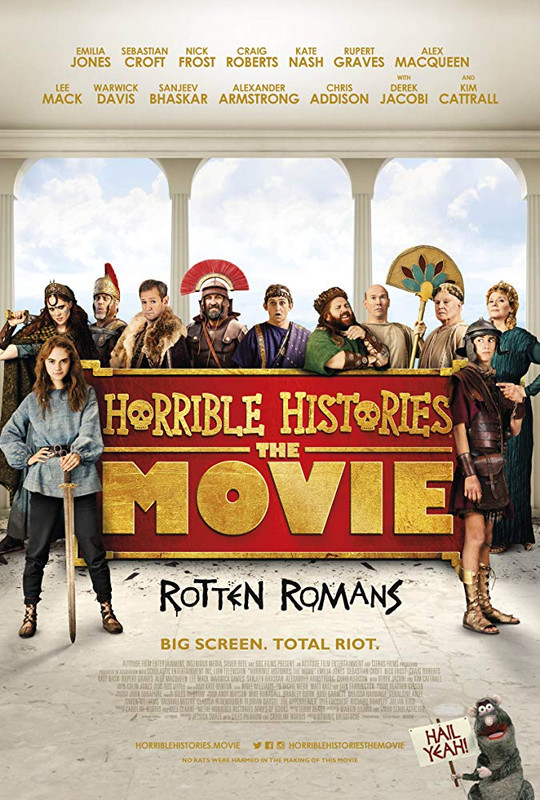
Horrible Histories: The Movie - Rotten Romans [PG]

Dir: Dominic Brigstocke
We had the Horrible Histories books when my brother and I were kids. I have particular memories of having them in the book box we used to put together to occupy us on long car journeys. They were great, combining gross and funny facts with a solid overview of the history of the period they were covering. I had grown past them by the time the TV show came about, but having always heard positive things about the show, I decided to check out its first feature film venture.

The basic story has several prongs. Orla (Emilia Jones) wants to be a Celtic warrior with the army Bouddica (Kate Nash) is raising, but her protective Dad (Nick Frost) doesn’t want her to have a sword yet. Atti (Sebastian Croft) is sent to Britain with the legion as punishment when one of his clever ideas backfires, offending the young emperor Nero (Craig Roberts). Almost as soon as Atti arrives, he’s captured by Orla.

It is always a challenge to review a film that simply isn’t interested in me as an audience member. Rotten Romans is unapologetically for kids, often quite little kids. In that respect, it’s fine; the fart, poo and vomit jokes will provide them some undemanding laughs. Everything is done with a big, broad, energy that talks at the audience rather than down to them and it keeps the brand intact in that amongst the gags, kids will learn a few things about the Roman empire and its war with the Celtic tribes.

As a piece of filmmaking and for an older audience, amiable though it is, Horrible Histories: The Movie doesn’t really work. It’s one thing making a film for kids but, costume design aside, this one does often wear its cheapness rather too visibly. Sets feel a bit rickety and there is a definite sense that certain scenes had to be rushed through, notably the poorly choreographed and noticeably small scale battle of Watling Street. More problematic is the fact that, despite a fairly starry cast with plenty of funny people in it, the jokes just don’t connect frequently enough. As the Roman military leader Paulinus, Rupert Graves definitely sells his running gag of always talking in the third person and the payoff is fairly amusing, but Craig Roberts’ petulant Nero could easily have been pushed to a more comically extreme place and Lee Mack’s running joke as a centurion who misses Rome never manages to find a laugh. This is also an issue with most of the film’s songs, which are sporadic enough that you’re never expecting one and which generally miss the mark.

In the lead, Emilia Jones (who I couldn’t place initially, but discovered I’d recently seen in Pascal Laugier’s Incident in a Ghostland) is an appealing presence. The screenplay never pays her desire to be a warrior off that satisfyingly, but that’s not for lack of effort on her part. She and Sebastian Croft have fun with the growing (platonic) relationship between their characters, they just don’t have the material to work with. Perhaps the most entertaining part of the film is Kate Nash’s Boudicca. The recasting of the queen who united the Celtic tribes in rebellion as a rock star is the film’s best comic idea and one that serves to provide kids with a way to relate her to their own time. For her part, Nash seems to be having a ball, she delivers Boudicca’s songs with energy and has a couple of the better jokes.

This isn’t a deep film. The final song rushes to find something like a happy ending and has a message about sharing that is a good thing to have kids walk out remembering and feels especially positive given the times we find ourselves in. On the other hand, it’s not particularly in keeping with the rest of the film which, though it always frames it out, is surprisingly heavy on killing for something so clearly aimed at a very young audience. Overall, Rotten Romans has a few things that work and a handful of fun moments, but for an audience over eight, while it’s good natured and never a chore to watch, it’s just not consistently funny enough.
★★

Oct 16, 2017

24FPS @ LFF 2017: Family Films

The Big Bad Fox and Other Tales
Dir: Patrick Imbert, Benjamin Renner
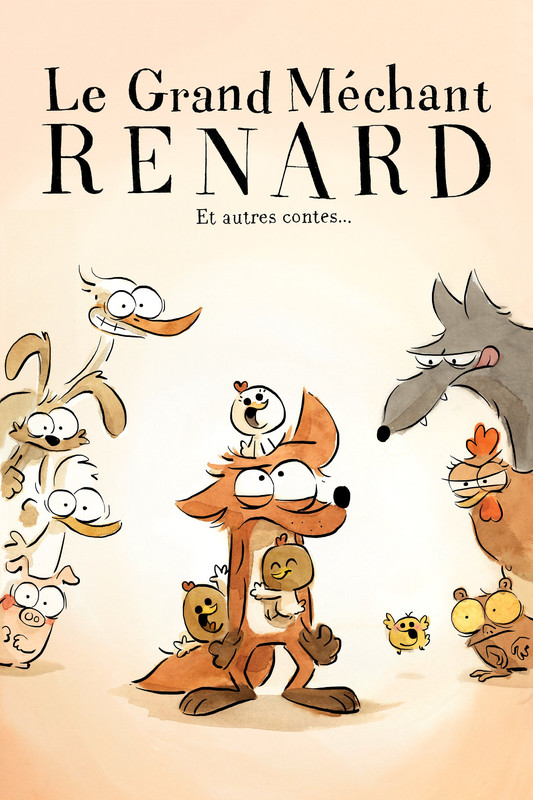
This delightful French animated film is set up as three short plays, put on by the animals in a farmyard. In Baby Delivery, Pig and his dimwitted friends, Rabbit and Duck, must fill in for an injured Stork. The Big Bad Fox sees Fox accidentally become mother to three chicks he steals for himself and Wolf to eat. In Saving Christmas, Duck believes he has killed Father Christmas and he, Rabbit and Pig must fill in for him, as they did for the Stork.

The Big Bad Fox and Other Tales is this year’s Family Gala screening at the London Film Festival, this is the strand that contains the films pitched at children, but this is a true family film. It will delight children (I’d suggest it for ages six and over) but, without aiming jokes over children’s heads, it should also work for adults. The animation style is very different; a little sketchy, but beautifully simple and full of character rather than crude, but the tone of the film has much in common with classic animated shorts. The slapstick gags come thick and fast, with the timing and execution of classic era Tom and Jerry, while the way these moments combine with the verbal humour recalls Looney Tunes strongly (especially in the relationship between Pig, Rabbit and Duck).

There are some wonderfully absurd touches and running gags to be enjoyed; the chickens forming a self-defence group because the guard dog is lazy, the calamities that happen to Pig’s house and Little Michel, who pops up in the last two stories to endearing and hilarious effect.

Any further review of this film would amount to my repeating my favourite jokes, which would rather spoil what is a wonderfully enjoyable film. I will say to stay in your seats during the credits as during them there are some lovely jokes, a recipe and a closing moment that seems to be a nod to Michigan J. Frog and sent me out of the cinema with a mile wide smile on my face. This may be pitched as a kids film, but it’s for anyone with a functional funnybone.
★★★★½

The Day My Father Became A Bush
Dir: Nicole Van Kilsdonk
Toda (Celeste Holsheimer) is ten years old and lives with her pastry chef father (Teun Kuilboer) in an unnamed country. When war breaks out between ‘The Ones’ and ‘The Others’ Toda’s grandmother comes to stay, while her father is called to fight. Eventually it becomes too dangerous at home and Toda is sent abroad to join the mother (Noortje Herlaar) she doesn't know. Along the way she gets separated from the people taking her and must make her way on her own.

I am a great believer that children’s cinema can and should be much more than mindless entertainment. The Day My Father Became A Bush tackles some big issues: war and its futility, displacement and the dislocating reality of suddenly becoming a refugee, but does it from a child’s eye view, making those issues comprehensible for its target audience. A big part of this success is in the way it addresses war. Nicole Van Kilsdonk never explores what the fighting is about or whether we should see ‘The Ones’ or ‘The Others’ as the good guys in the conflict. This isn't what’s important to Toda, what matters to her is that her father is away and that his camouflage be good enough to make sure he comes home (in one of the film’s most quietly touching scenes she puts branches on his helmet so ‘even birds will think you’re a tree’). 

Ultimately, the film says, which side we’re on doesn't matter much. Her father wears a blue badge but at one point Toda finds herself sharing a shack with a man wearing a yellow badge, soon she’s sharing food with him and, sweetly, helping him learn to give orders (he has deserted because he found he wasn't assertive enough for his command role. This scene is a fine example of the way the film leavens its messages with humour and heart.

Toda is a great character for young girls to see and identify with. She’s inquisitive and intelligent, brave in the face of scary situations and compassionate with a slightly younger boy who attaches himself to her, whom she nicknames Stickie (Matsen Montsma). She’s also just a typical ten year old, who calls herself a daddy’s girl. As Toda, Celeste Holsheimer gives a performance free of anything actorly or precocious. She hits the funny moments nicely, but is particularly adept in the dramatic scenes, especially towards the end of the film when, having lost her mother’s address, Toda finds herself a refugee.

The Day My Father Became A Bush asks kids to engage with some big themes, but it takes them gently through those ideas, leavening them with humour and, even in the film’s toughest moments, the optimistic outlook that Toda radiates. It’s an entertaining and intelligent film and an ideal opportunity to discuss some challenging subjects with your kids. 
★★★★

Sep 30, 2015

24FPS @ LFF: Roundup 2

A Nazi Legacy
Dir: David Evans
Quentin Tarantino says that the advent of digital projection has rendered cinema no more than watching television in public. I don't buy that. Most of the time. A Nazi Legacy, whatever else it may be, is television. It was made for the BBC's Storyville series and stylistically it couldn't be more basic and televisual if it tried.

The subject matter is interesting enough. The film focuses on two men whose fathers were high ranking members of the Nazi party and their polar opposite views of their lineage. Niklas Frank, son of Hans Frank – one of the men tried and executed at Nuremburg – condemns his father at his every opportunity and even carries the last picture ever taken of him, just after his hanging. On the other hand Horst Von Wachter, son of Otto Von Wachter, continually minimises his father's role (Otto was in charge of the Warsaw ghetto), insisting that he would never have signed off on the worst atrocities as if this is a defence. Presented with evidence of his father's culpability, Horst still minimises everything.

The different ways these men process the legacies of their fathers and their strained friendship with each other and with human rights lawyer Phillipe Sands is fascinating, but the flatly shot interviews, very basic presentational style of both Sands (who serves as guide and narrator) and director David Evans. The film's simple structure, imagery, and editing do little to transform it from a very basic, if well made, piece of TV into anything that will benefit in any way, in terms of presentation or audience size, from being on a cinema screen.

There are some impactful scenes here, especially in the last twenty minutes, as Sands takes the two men to a field where 3000 people, including his own family, were murdered, on orders that both their fathers had a hand in, challenging Horst with this fact. This, however, doesn't make A Nazi Legacy cinema. It's worthwhile, if schematically presented, television, it just doesn't belong in a film festival.
★★

Who Killed Nelson Nutmeg?
Dir: Tim Clague /Danny Stack
My job is usually fun. Sometimes I get to share my excitement about something great, other times I might get to lay a long deserved kicking on a bad film by a bad filmmaker. In between, there are worse things I might have to do than type a few words about a movie, good, bad or middling. Then there are moments like this. I take no joy in writing about Who Killed Nelson Nutmeg? It has promise in its concept, a hey kids lets put on a show spirit that is admirable and one never wants to be overly harsh on a young and inexperienced cast. On the other hand you have to be honest, and almost nothing about this film works.

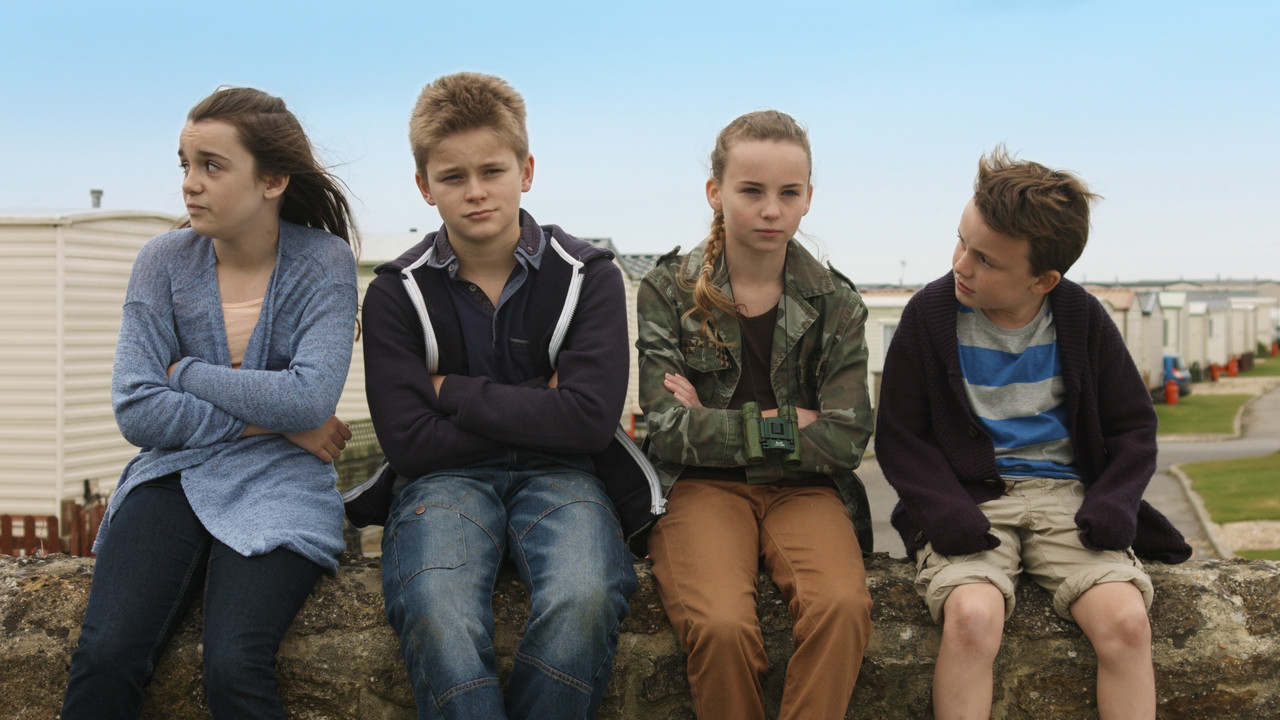
The premise is fun. In what seems to be a rather low budget seaside holiday resort a group of kids led by 12 year old Billie (Loretta Walsh) begin investigating when they believe the park's mascot has been murdered. Their chief suspect is the new manager Diane (Bonnie Wright). What the film is going for seems to be a cross between a low budget take on The Goonies and Enid Blyton's Secret Seven books. The simple clues and broadly played villains could well have worked in that context, but the film just falls down on too many other levels.

The script is a bit clunky. It plays very much to a young crowd (6+, says the LFF programme), but the jokes, juvenile or not, just aren't that funny and those that might have played well on the page aren't very well delivered. For instance, there are some potentially funny moments when the gang begin investigating and interrogate other kids, but the acting from these featured extras is so flat and devoid of comic timing that otherwise decent jokes flounder. It's perhaps no coincidence that some of the best gags are silently delivered, such as the brief glimpse of 'The Colonel' (Hattie Gotobed, as a tough, smart 12 year old girl who usually dresses in camouflage gear) competing in a princess pageant.

Loretta Walsh and Hattie Gotobed give the best performances among the young cast, they're both variable, but Walsh carries the action capably and the relationship between Billie and The Colonel is nicely played. Unfortunately most of the other performances, child and adult, are quite monotonous. This is a problem because, outlandish as something like The Goonies was, you always felt like you were along for that ride with these kids on an adventure. That should be easier to pull off here, with a more down to earth story, but it doesn't happen. The sense of watching a group of actors run through scenes never goes away.
This sense isn't helped by the film's technical side. To be fair, a disclaimer suggests that this is not the absolutely final version and that music and special effects may change yet. I hope this also goes for some of the editing, which can be oddly abrupt. The screenplay does have one resonant running theme; that this is the last year these kids will be together, you do get a sense of an end of an era for the group, and the sadness of that reality. Sadly, the mystery never grips, nor does it resolve in a way that makes much sense, and the gags seldom amuse. 

What is unlikely to shift with any changes still to be made before release is the overall televisual look. Despite a smattering of effects, Nelson Nutmeg resembles nothing quite so much as the low budget British kids shows I watched on late 80's CBBC. Even without massive financial resources, digital can be beautiful, but Nelson Nutmeg veers between looking flat and (in the handful of night time scenes) looking murky. 

My love of cinema was born at roughly the age this film is pitching to, and I still have images from those films stuck in my head more than 25 years on. I'd be surprised if kids get a frame of this film stuck in their minds for 25 minutes. I admire the ambition of Tim Clague, Danny Stack and their team, and it would be great to see more British films aimed at forging the next generation of film buffs, but if that's the intent then the films need to be better than Who Killed Nelson Nutmeg?
★★

Blood Of My Blood
Dir: Marco Bellochio
The last Marco Bellochio film I saw at LFF was Dormant Beauty, which managed to tell four quite dull stories, without tying them together in particularly satisfying fashion. Blood Of My Blood restricts itself to just two stories, which are more closely tied together in terms of character and theme, but wildly disparate in tone and in quality.

In the first story, set in the 1700s in a small Italian town called Bobbio, a young woman named Benedetta (Lidiya Liberman) is on trial in a convent, accused of seducing a priest whose suicide now means that he will be buried in a donkey cemetery and thus condemned to hell. The priest's brother, Federico (Pier Giorgio Bellocchio) is attending the trial, though, despite what he tells the priests it isn't always clear what he wants the outcome to be. We then cut to the present day. The convent in Bobbio may soon be sold to a Russian billionaire (Ivan Franek), which would greatly inconvenience the Count (Roberto Herlitzka), the self-described vampire who lives there in secret.

This is easily the most schizophrenic film of LFF so far. It begins soberly, the plot looks to history, such as the story of Joan of Arc, but it also has echoes - largely in subject rather than specifics - of Mother Joan of the Angels, Bresson's Trial of Joan of Arc and of the likes of The Devils and Mark of the Devil. The imagery is lush but not lurid, the aesthetic digital, yet still beautiful, even painterly at times (see the images of Federico standing at the bank of a river, seeing what seems to be his doppelganger silhouetted on the other side). It's a supremely controlled piece of direction, with plot, imagery, and music – the stunning use of Scala and Kolachny Brothers' choral cover of Metallica's Nothing Else Matters stands out – all coming together to create a tense and otherworldly feel. 

There is also an eroticism that runs subtly through this section of the film, as if it is a spell cast on the convent by Federico and perhaps, in the past, by his brother. We see this most clearly in the scenes of Federico returning to the guest house where he is staying with two presumably virginal sisters (Alba Rohrwacher and Federica Fracassi). One night when he comes home the sisters get into bed with him and all three begin kissing, we never see whether things go further than this, but there is the unmistakable sense of a force, whether it is under anyone's control or not, drawing these three together. 

It is, then, baffling when, roughly 45 minutes in, Bellochio appears to decide he's sick of making that film. He dumps the tension, throws out the eroticism, and replaces it with unfunny farce and a sub Only Lovers Left Alive depiction of the lives of vampires in the contemporary world. 

The entire texture of the film changes at this point. If you strain to look for it you can perhaps see Bellochio reaching to say something about the regimentation of the society of the church in the first section of the film set against the more chaotic modern world, in which that structure has had to adapt. Honestly though, I think that's more likely to be something I've made up in order to try and find some rationale for why the film so radically and suddenly changes tack. I'm not convinced it's actually in the film.
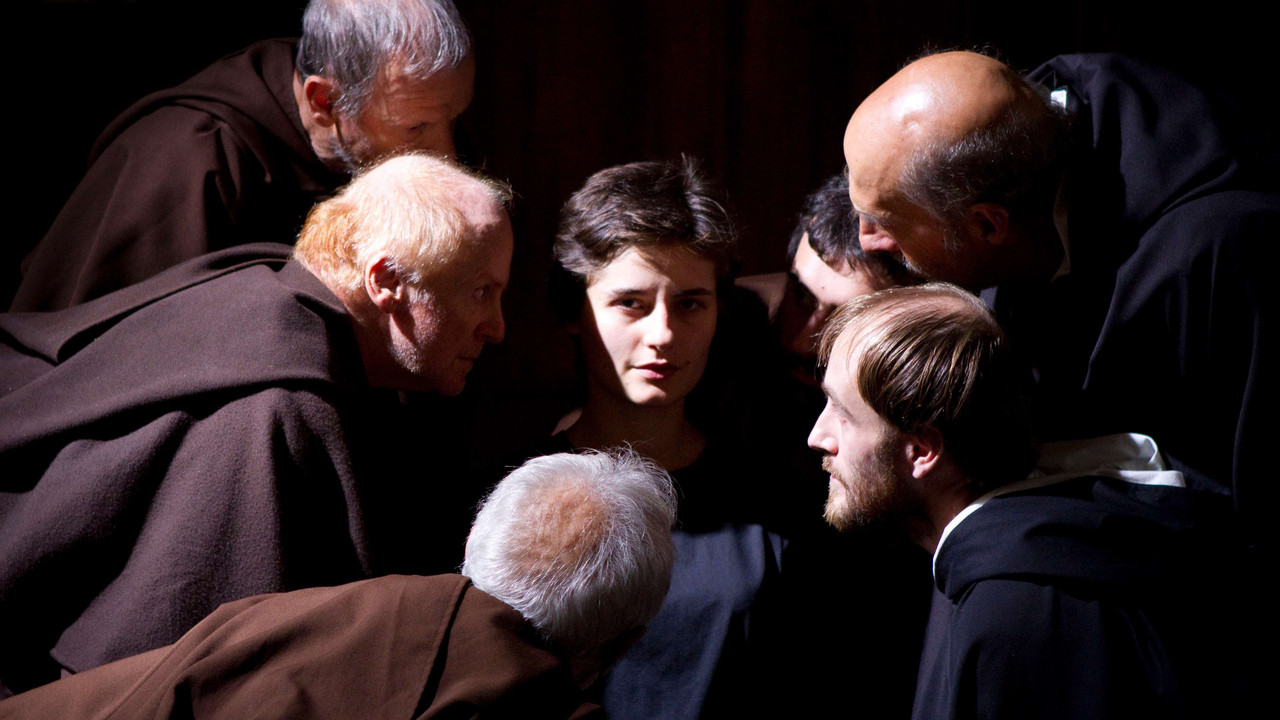

The acting is strong all round, the slightly sinister Pier Giorgio Bellocchio contributes hugely to the strange atmosphere of the period section as Federico and a haunted looking Roberto Herlitzka as The Count manages to add a little poignancy to the modern set story. The female roles are thinner, but  Alba Rohrwacher and Federica Fracassi bring ethereal presence to the sisters and striking newcomer Lidiya Liberman is by turns stoical and tragic as Benedetta.

The modern set section of the film serves a narrative purpose, it provides distance between the film's first segment and its closing images, which revisit the ending of the period section of the film in a haunting closing moment. That, however, doesn't explain the wild tonal detour that Bellochio takes, most gratingly with a small but infinitely irritating role for Filippo Timi. There is plenty of potential for this modern section to resonate, to rhyme with what's come before, but the sharp left turn into comedy completely undermines that possibility. 50 years into his career, Bellochio must know what he's doing, but he certainly doesn't communicate it well.

Overall, Blood Of My Blood is paradoxical. The first 45 minutes are probably the best I've seen at LFF so far this year, but they are fatally undermined by the second story, which seems to either not understand or flatly reject the spell cast by the first half of the film. And yet, for those 45 minutes, and for the last five minutes, I would still recommend Blood Of My Blood. I just can't do so as wholeheartedly as I'd like.
★★★

Feb 11, 2012

The Muppets [U]

Dir: James Bobin
Why did you first start going to the cinema? Do you even remember? For me, the cinema has become many things; a place I go to think and to feel, to be scared and excited, to rail against villains and fall for girls. It didn't start like that though, it started as a place of pure, joyous, escapism, and that's what The Muppets took me back to.

I'm a little young to have grown up with The Muppet Show, but I saw the films when I was a kid, the Muppet Babies cartoon was often featured in the Saturday morning shows I grew up on and Muppets Tonight had a short-lived BBC run when I was in my mid teens. Most of my affection for the gang, however, post dates creator Jim Henson's untimely death, and is connected to the peerless seasonal classic The Muppet Christmas Carol, which is a Christmas Eve tradition for me.

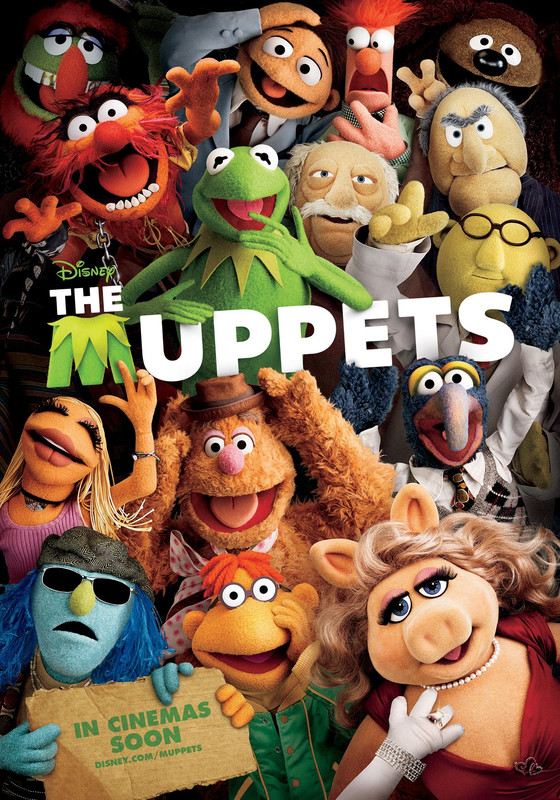
The Muppets takes place in a world somewhat like our own, in that the Muppets have been off TV and cinema screens for many years (their last film outing was 1999's Muppets From Space), they have been largely forgotten, except by Gary (Jason Segel) and his suspiciously muppety brother Walter (Peter Linz). When Gary decides to take his girlfriend Mary (Amy Adams) to Los Angeles for their tenth anniversary, Walter tags along, so they can make pilgrimage to the Muppet Studios, where Walter discovers that unless The Muppets raise $10 million in the next week, the Muppet theatre will be razed to the ground by oil baron Tex Richman (Chris Cooper). Walter and Gary decide they have to find Kermit (Steve Whitmire), put the gang back together, and do one more Muppet Show to raise the money.

I just don't know where to begin with this movie, which thing that I loved should I tell you about first? The songs? The script? The performances? Which performances anyway, those from the films humans or from the Muppets? Before we get to that, let's just address this quickly... Fox News accused this film of being liberal propaganda because an oil baron is the villain. Okay. First off; he's clearly a cartoon villain. How can I tell? Well... he's got Muppet sidekicks, he's incapable of laughing and instead simply says 'Maniacal Laugh, Maniacal Laugh'... oh, and HE'S CALLED TEX RICHMAN! It's a simple conflict for kids to identify with, also it's a JOKE, get over it. The point of The Muppets isn't to indoctrinate people, it's purely and simply there for you to have fun, and on that level it is an unqualified success.

Star Jason Segel, along with Nicholas Stoller, has written a light and witty screenplay that nods to the audience frequently, as in a lovely early exchange when Kermit says he's not getting the gang back together and Mary notes: "This is going to be a really short movie." However, it's not just about delivering the laughs, the film is solidly, if simply, plotted, and not a little moving. The early part of the film finds Kermit and the other Muppets estranged from each other, and Kermit's song Pictures in my Head manages to hit the funnybone and tug the heartstrings, and I defy you not to get just a bit choked up when Rainbow Connection comes along.

For the most part though, the film's stock in trade is fun. If you're a Muppet fan then chances are your favourite character has his or her little moment in the sun, personally I'm a big fan of Beaker and Animal, neither of whom have large parts, but both recur throughout the film and are consistently hilarious (and Animal is one of the funniest things here, with his film long quest to stay away from the drums). Of course Kermit and (eventually) Miss Piggy get the most screentime, and they fall quickly and entertainingly into their familiar roles. There are a handful of disappointments, namely that both Gonzo and Rizzo have very little to do (though that is somewhat made up for by a few very funny moments for Pepe the prawn). The remarkable thing about the Muppets is how readily you can forget that they are puppets. Kermit actually has little articulation, but Steve Whitmire uses tiny gestures, minuscule adjustments that wrest real emotion from what is, in essence, a green sock with ping pong ball eyes, and brings him to vivid life.

The other main cast members; Segel, Adams and Walter are also effective (though Adams, irresistible as ever, is sidelined at times). Their heaviest lifting comes in the opening twenty minutes, which, crucially, hook you in even before we've got to Kermit. The charming and funny first act develops the relationships in Gary's life, and provides the film with its best musical number, the ridiculously hummable Life's a Happy Song (and if you're not finding yourself singing it as you skip out of the cinema, check yourself for a heartbeat). There is no denying though that the film really takes off once the familiar faces arrive.

Famous faces pepper the movie with cameos, which I won't spoil other than to say that most really hit the mark. The human supporting cast is also excellent though, with Chris Cooper clearly having time of his life as Tex Richman (especially when called upon to rap), and Rashida Jones is still adorable, even cast as (this movie's version of) a hard-nosed TV executive.

I don't know what else I can say. Every word further risks spoiling something surprising and joyous for you. Go and see The Muppets, you'll love it. Or else.
★★★★★