Showing posts with label Australia. Show all posts

Mar 17, 2021

24FPS @ BFI Flare 2021: The Greenhouse

Dir: Thomas Wilson-White
Four siblings are reuniting for their mother Ruth’s (Camilla Ah Kin) 60th birthday, several years after the death of their other Mum, Ruth’s wife Lillian (Rhondda Findleton). Only Beth (Jane Watt) has remained at home over the years, being there as Lillian died and to try to help Ruth cope afterwards. She has also discovered that the path at the bottom of their garden acts as a portal, transporting her back to the past, when both her mothers were alive, her siblings were home, and she was falling in love for the first time.

The Greenhouse falls pretty distinctly into two genres. One works better than the other. The more familiar part of the film is a fairly simple character-driven drama. A wife struggling to come to terms with the loss of her wife, even a few years later. Siblings who love each other but have a difficult relationship, at least partly because the eldest, Beth, feels as though she has become stuck while her brothers and sister have gone off to live their lives. These are also dynamics we find echoing in the flashback sequences, as Beth observes the past. These sequences aren’t wildly original, but they are well acted, in particular one scene in which Beth sees herself shout at a dying Lillian, only for her older self to desperately try to take it back, screaming her “sorry” to a memory, unable to change it even though it is right in front of her. This is by far the moment that best distills what the film is saying in these flashback sequences. 

The flashbacks also have a few moments that colour in the characters of the siblings. Beth’s tentative relationship with her friend Lauren (Harriet Gordon-Anderson) is interesting in how it speaks about the fact that even though her mothers are gay and one of her brothers is bi-sexual, Beth isn’t entirely comfortable with or confident in her sexuality. Also effective are the purely domestic scenes. The family dynamic is credibly fractious, but we also believe that the siblings and Ruth all love each other, especially during Ruth’s speech at her birthday party, which becomes something of a eulogy for Lillian.

What works less well is the sci-fi aspect of the film. In the beginning, it’s somewhat unclear how we are supposed to take what is happening. Beth could be having very vivid, lucid, dreams (which would perhaps better explain what everyone she sees in the past is their current age, despite flashbacks clearly going back to when she was about 16), when it becomes clear that she’s not the only one who has found this path, and thus that it isn’t a dream, the rules aren't especially well-defined, which means that a late attempt at a shift into horror—while it throws up some emotional moments—doesn’t feel credible within the film’s conceit.

Overall, The Greenhouse isn’t bad, but it’s messy. The sci-fi element trips over itself literalizing a fairly obvious point, but the straightforward drama sections showcase strong performances and some emotionally articulate writing from director Thomas Wilson-White.
★★½

Oct 6, 2019

24FPs @ LFF 2019: Lunana, A Yak In The Classroom / Babyteeth

Lunana - A Yak in the Classroom
Dir: Pawo Choying Dorji
Sometimes, all it takes for a film to feel a little different is a change of context. There are more than a few movies about teachers in an unfamiliar environment, from comedic takes like Kindergarten Cop to more dramatic pieces like Dangerous Minds. In most of them, the teacher will find their class or environment something they don’t initially warm to, but eventually will be turned around, learning something about themselves. Lunana, a Yak in the Classroom doesn’t do these broad strokes any differently, but the setting and cultural specificity of it make it feel a bit different.

Ugyen Dorji (Sherab Dorji) is in his last of five years of service as a teacher, following his training, and he’s fallen out of love with it. He’s lazy, marking time before he can leave Bhutan for Australia. Ugyen’s boss, sick of his attitude, dispatches him to Lunana and the most remote school in the world, eight days hike across the Himalayas from the nearest town. When he arrives, Ugyen immediately wants to leave, but the villagers and the kids he’s teaching win him round.

There isn’t much unexpected here. Ugyen is slowly inspired by the kids, notably adorable class captain Pem Zam (all the kids use their own names) and sets about doing up the school, for instance having the villagers helping him mix charcoal paint to make a blackboard. A city resident and a modern person, he also has his head turned by traditional culture, notably the songs sung by yak herder Saldon (Kelden Lhamo Gurung). This is where the film marks itself out from the many others like it. Music is a major throughline, Ugyen wants to be a singer when he gets to Australia, and we see him spending much of his time trying to learn a traditional song he hears Saldon singing. The music is soothing, and unlike much we regularly her in the UK.

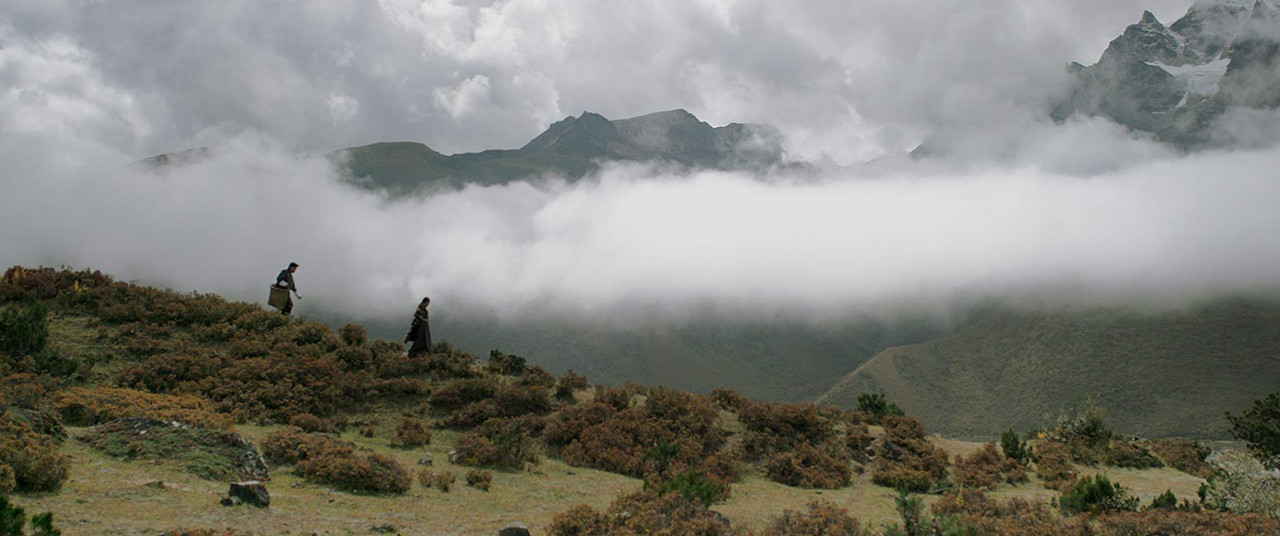
As well as a beautiful soundtrack, the film makes use of its stunning location to mark itself out. Shot on solar powered cameras 5000 metres up in the Himalayas, Lunana looks like few other films, taking place among the clouds not because it is set in some fantastical realm, but simply because that is where its characters live. The vistas are unbelievable and almost worth the price of admission on their own.

While it never goes anywhere unexpected, Lunana is executed with great charm. The dynamic between Ugyen, the villagers and the kids feels natural and has a warmth that permeates the whole film, in contrast to the mountain weather. This is especially the case in the friendships that develop between Ugyen and his escorts and the potential budding romance between Ugyen and  Saldon.

A sweet natured film about the importance of community and tradition, as well as that of following your calling, whatever that may mean, Lunana is perhaps a bit different to the rest of LFF’s Family programme, in that it doesn’t seem as much aimed at children as suitable for them, just as much as it will be for their parents. It should charm the whole family.
★★★

Babyteeth
Dir: Shannon Murphy
The teen cancer romance has, weirdly, become prevalent enough to be a subgenre all of its own. Generally speaking, I can’t stand them. Most feel like tragedy porn, content to let their characters be defined solely through illness and essentially acting as a big stick, designed to poke you until you cry. The genre’s miserable low is without doubt the vomitously saccharine The Fault in Our Stars. I’m not sure it had a high point until now.

Babyteeth begins with 16 year old Milla (Eliza Scanlen) meeting and falling for Moses (Toby Wallace), he’s older, tattooed, jobless, a small time drug addict and dealer. Milla’s parents, Anna and Henry (Essie Davis and Ben Mendelsohn), understandably, do not approve. It’s only later that we learn that Milla’s cancer has returned. In the throes of first love with Moses, she wants to spend as much time with him as possible, to the point that he ends up living with Milla and her parents as she gets sicker.

There are many things that set Babyteeth apart from the herd of teen cancer movies, most notably the fact that it is not defined by Milla’s illness. This is largely a comedy drama about a dysfunctional family and cancer is only a part of that dysfunction. It’s also only a part of the film. It lurks in the background of the first half, becoming more present over time, much like the progress of the disease. For much of the first hour, writer Rita Kalnejais and director Shannon Murphy push comedy to the fore, with Essie Davis especially priceless as Milla’s anxiety riddled mother, who spends much of her time in a Zoloft induced haze, drugs prescribed by her psychiatrist husband. The scene in which Milla first brings Moses home and there is an excruciatingly awkward family dinner is particularly priceless. What many films about tragic things forget is that, even in the midst of it, not every moment is tragic. By remembering this, the sometimes irreverent humour of Babyteeth conveys more emotional honesty than any of the manipulative set pieces in a more typical teen cancer pic.

Milla’s first romance is obviously unsuitable, but we understand it from all sides, whether it’s Milla's romantic sense of being with the bad boy who’ll annoy her parents or the rather deeper thought that it’s Moses’ fearlessness that first draws her in, perhaps a quality she wants more in herself as her cancer gets worse. Eliza Scanlen is excellent in the part. For a long time we can see her playing Milla as a kid who simply wants to ignore her illness; she hasn’t got any hair, so she’ll wear fun wigs, and she’ll go out and she’ll fall in love with this guy, like a normal kid. We also see and feel the moments that bring that crashing down to Earth, but Scanlen never overplays them. For Moses’ part, there’s a recognition that he too, more experienced if not that much wiser at 23, realises that this crush Milla has on him isn’t entirely healthy, and that he at once has some feeling for her that goes beyond sympathy and yet he’s not immune to exploiting her feelings. Moses, in particular, is a more complex character than we usually see in these films and his shifts in motivation and feeling are given great weight in a deceptively light performance from Toby Wallace.

Initially, Ben Mendelsohn and Essie Davis have broader roles, essentially doing something close to comic relief duty (their first scene, an appointment for sex in Henry’s office, is a good example of this tone), but this recedes as the film goes on and their performances become heartbreaking. Mendelsohn, one of the best actors in movies right now, is especially brilliant when his daughter asks him to smile for a picture; “gimme a second” he says, and the weight of everything in the film is felt in those three words.

Director Shannon Murphy, making her feature debut after several shorts and plenty of TV work, balances the film’s tone beautifully and draws terrific work from her cast, allowing supporting players like Emily Barclay, as Anna and Henry’s heavily pregnant neighbour, to steal a few scenes, but never the focus. I’m not a fan, though, of her aggressive chaptering. The many, many title cards add little and sometimes give the film a bitty feel that undermines an otherwise strong emotional throughline. The nadir of this technique comes when a title card introduces the song a sequence is set to, making that sequence resemble a music video even more, slightly deflating its impact for that.

On the whole though, Babyteeth is a refreshing addition to a genre that has so far given us little to enjoy. The balance of humour and heart is more honest here than in any of its peers, and Eliza Scanlen and Toby Wallace both impress, marking themselves out as names to watch for the future.
★★★★

May 15, 2014

Tracks [12A]

Dir: John Curran
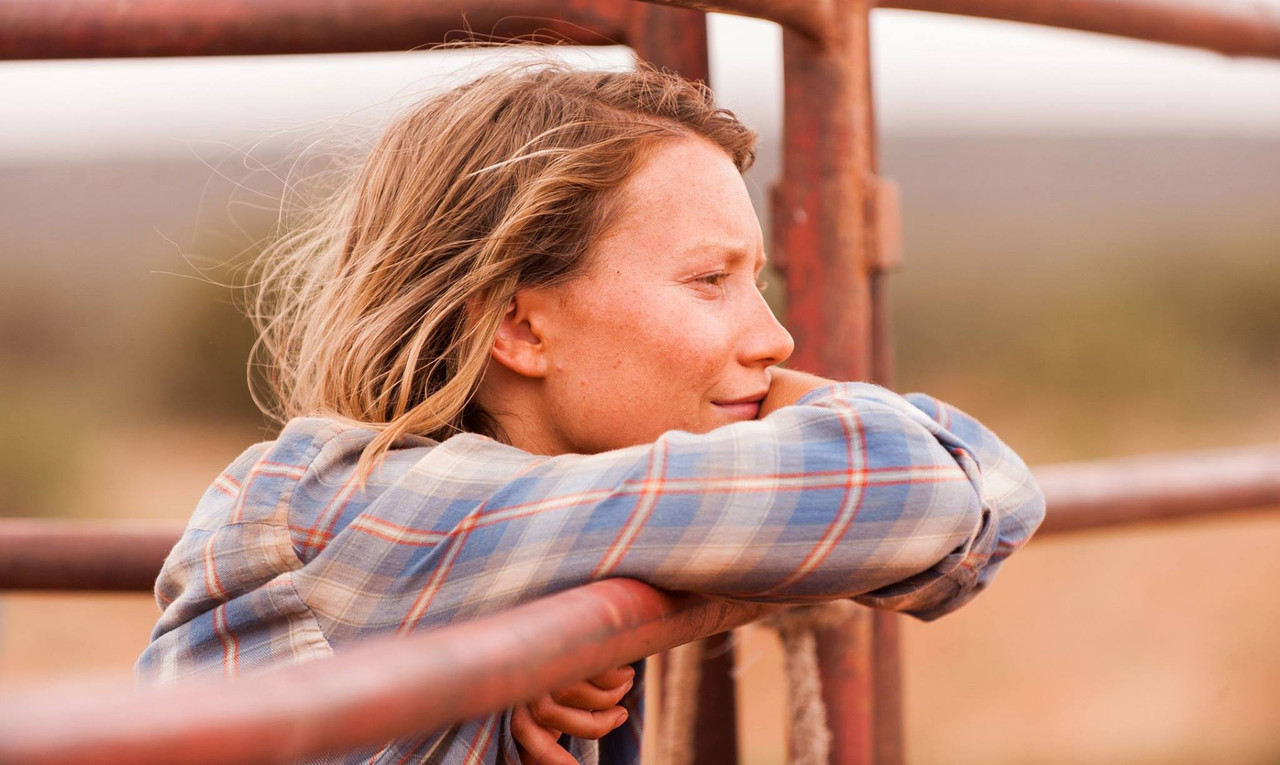
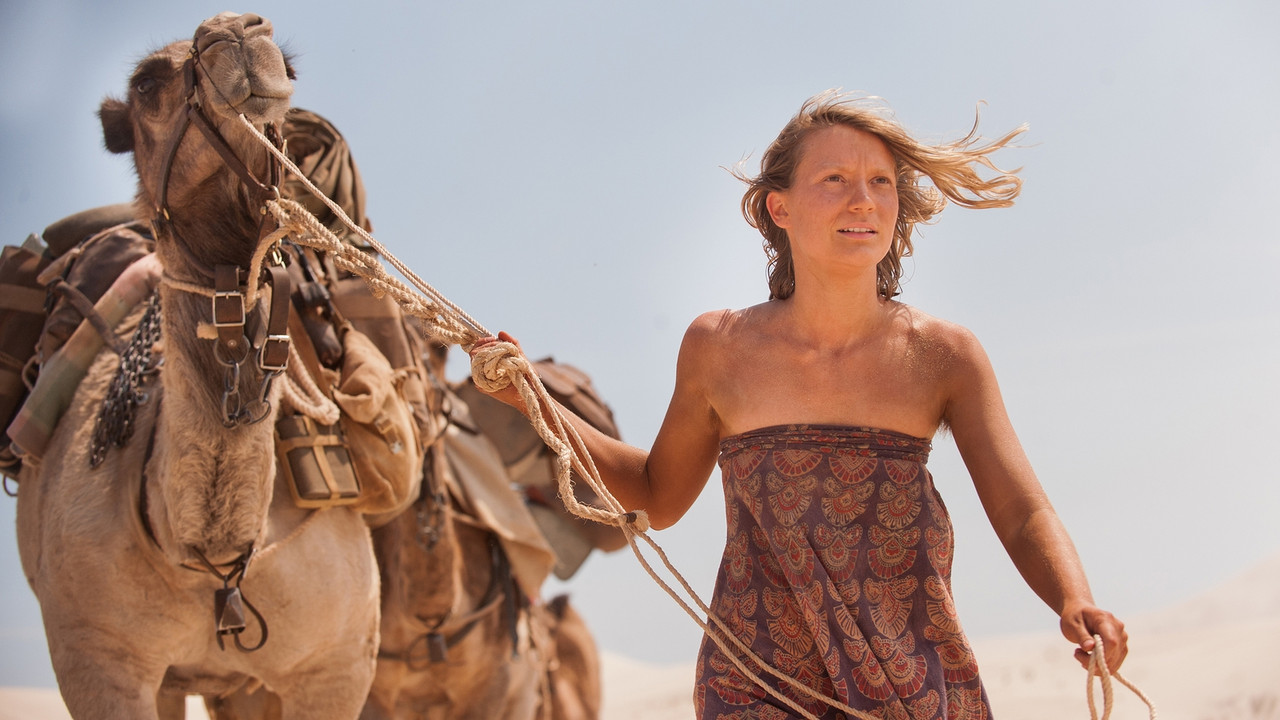
I had an inkling of how good an actress Mia Wasikowska would prove to be right from the start.  I pretty much hated Tim Burton's Alice in Wonderland (as did all right thinking humans), but even in that ugly digital world, there was something about the young Australian actress that stood out, beyond her obvious beauty.  Tracks gives Wasikowska one of her most challenging roles to date.  She plays Robyn Davidson who, in 1977, trekked largely alone across 1700 miles of desert from Alice Springs to the Pacific Ocean.  The film documents her walk and her relationship with National Geographic photographer Rick Smolan (Adam Driver), whose interest in the story made her adventure possible.  

For the bulk of the film's running time, the actress is left alone (aside from four camels and a dog) to carry the film on her shoulders and she does an admirable job.  Wasikowska is a likeable presence and even at her spikiest (generally in the sometimes unwelcome moments that Rick shows up) Robyn remains a likeable character, someone whose journey we are happy to be along for the ride on.  Much of Robyn's journey has to be communicated through Wasikowska's physical performance and this is sometimes just as much the case when there is another character on screen as when Robyn is trekking alone.  Wasikowska is especially good in the scenes opposite Driver, her physical performance full of signs that he, somewhat understandably, misreads.

Driver has the only large role among the supporting cast and while the progression of Robyn and Rick's relationship is hardly a surprise both sides are well played.  Driver has a particularly good moment towards the end of the film, as Rick shows his concern as Robyn embarks on the most dangerous part of her trek.  The rest of the supporting cast largely appear for one or two scenes each, but while they've little time to develop rounded characters there are no performances that let the side down.

There is only so much that can be done with a story like Robyn Davidson's, and John Curran tells it in a very straight A to B fashion, however, this telling suits the story well.  The tale is linear, with bumps and encounters along the way.  Convenient as they may be as narrative stopgaps, Robyn's encounters with other people don't feel shoehorned into the story, and the down to earth performances aid in avoiding much feeling of contrivance.

Curran does occasionally depart from the down to earth style that he lays down, with scenes that are more impressionistic.  The best of these is an almost surreal encounter with a man on a motorcycle trip through the same desert that Robyn is walking.  The abruptness and shooting style leave it up to audience interpretation whether this is a real moment or a mirage.  Less successful are the occasional flashbacks to Davidson's childhood.  They add little and, in one case involving Davidson's beloved dog, serve only to pour sugar on a genuine emotional moment.

Tracks looks pretty spectacular.  That's no real surprise, given the landscape it has to work with, but there are some beautiful choices by Curran and DP Mandy Walker that show off both the terrain and Wasikowska's performance to their best advantage.  The most interesting visual moments often play with the idea of mirage, especially in a sequence in which Davidson is walking naked, but there are also some strikingly stark moments, particularly whenever Davidson has to use her rifle.

This isn't a film that anyone will mistake for being groundbreaking or even adventurous, but that's okay, it's impeccably made and acted and, happily, manages to tell Robyn Davidson's story without turning it into a sentiment drenched 'inspirational' tale.  This is a beautiful and compelling film and there are too few of those about in the mainstream. 
★★★

Feb 8, 2014

Coming of age Movie Month: Day 5 and 6

Flirting
Dir: John Duigan
I'm a hoarder of films.  Across Blu Ray, DVD and VHS collections I own perhaps 4000 different movies, many of which I have not yet got around to watching, the thing is, I know they're available when I do want to watch them.  The copy of Flirting I watched for this series of reviews is an old rental VHS that I picked up in a charity shop, probably close to 15 years ago, but have never quite got around to watching until now.

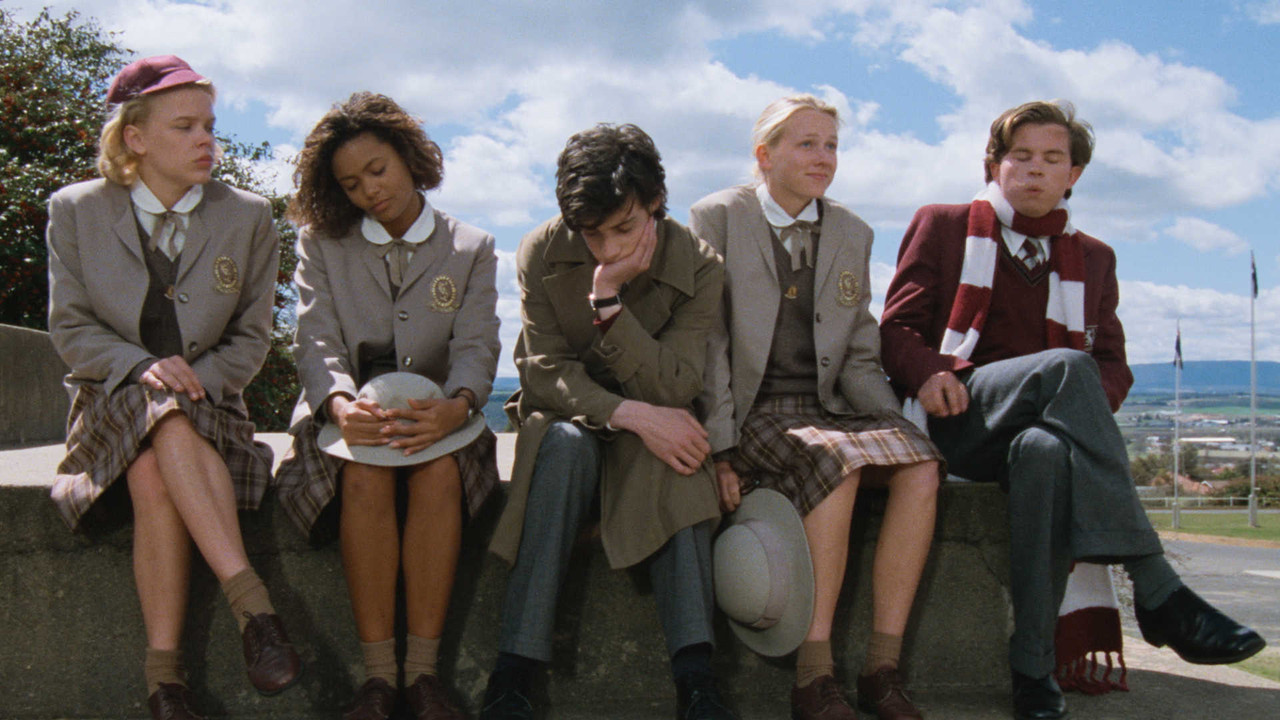
Had I watched this tape when I first bought it I would have been about the same age as Noah Taylor's character, and I'm sure I'd have seen quite a lot of myself in the shy, somewhat nerdy, boarding school pupil that he plays (though I, to my enduring disappointment, did not get to make out with Thandie Newton), but I wonder if I'd have liked the film as much as I did watching it today.

John Duigan's autobiographical film is a beautifully observed piece of work about two teenagers from neighbouring boarding schools (Taylor and Newton) falling for each other when the schools get together to put on their annual play.  The two aren't supposed to leave their respective schools, but they find regular opportunities to see each other and their tentative romance is drawn in realistic and engaging detail.

Taylor, as Duigan's alter ego Danny Embling (a role he also played in the earlier The Year My Voice Broke), gives an excellent performance.  He's always been rather awkward and gawky looking, but he has an offbeat charm that you can see Newton's Thandiwe being charmed by and the voiceover that Duigan gives him reveals much about the character's inner life and thoughts, and is delivered beautifully by Taylor.  That voiceover leads to many of the film's best moments, especially in one scene in which Danny and Thandiwe are sitting with some other kids and, in the voiceover, Danny explains that he was looking at her legs, and how the lines made by the elastic in her socks confirmed for him that she was real.  It's a romantic idea, perhaps the more so for the fact that he never expresses it to Thandiwe, but it also acknowledges that, hey, Danny's 16, of course he's looking at this girl's legs.

Thandie Newton is similarly excellent and brilliantly cast, in her first film, as Thandiwe.  Though Newton's race and the character's Ugandan heritage is a factor in the film it's nice that Duigan doesn't lean too hard on the racial aspect as an obstacle to Danny and Thandiwe being together.  I did wonder, from time to time, whether an interracial relationship would have been more of an issue in the Australia of the late 50's than the film makes it, but focusing on that would probably have lurched what is a distinctly un movie-like movie into either cliché, preaching or both.  Instead the film strikes a fine balance; making it clear that certain people don't approve, but largely adopting Danny and Thandiwe's lack of interest in this issue.

The supporting cast is also strong, with two particularly notable names in the shape of Nicole Kidman and, in a very small part, Naomi Watts.  Kidman's presence is played up in the publicity materials (especially the scene where she and two other girls dance in their underwear) but she has relatively few scenes as the queen bee of the girls boarding school.  Still, Kidman gets to develop as the film goes on, going from being an obstacle in Danny and Thandiwe's way to helping them out.

Flirting's dramas are small, but the film's intimacy and its clearly personal nature are its greatest strengths.  It's a charming film that captures a wider experience through a personal viewpoint.
★★★★

The Spirit of the Beehive
Dir: Victor Erice
I suppose this is cheating a little because The Spirit of the Beehive is not strictly a coming of age film, but more a film about childhood, still it's not far off, so I'm including it in this series.

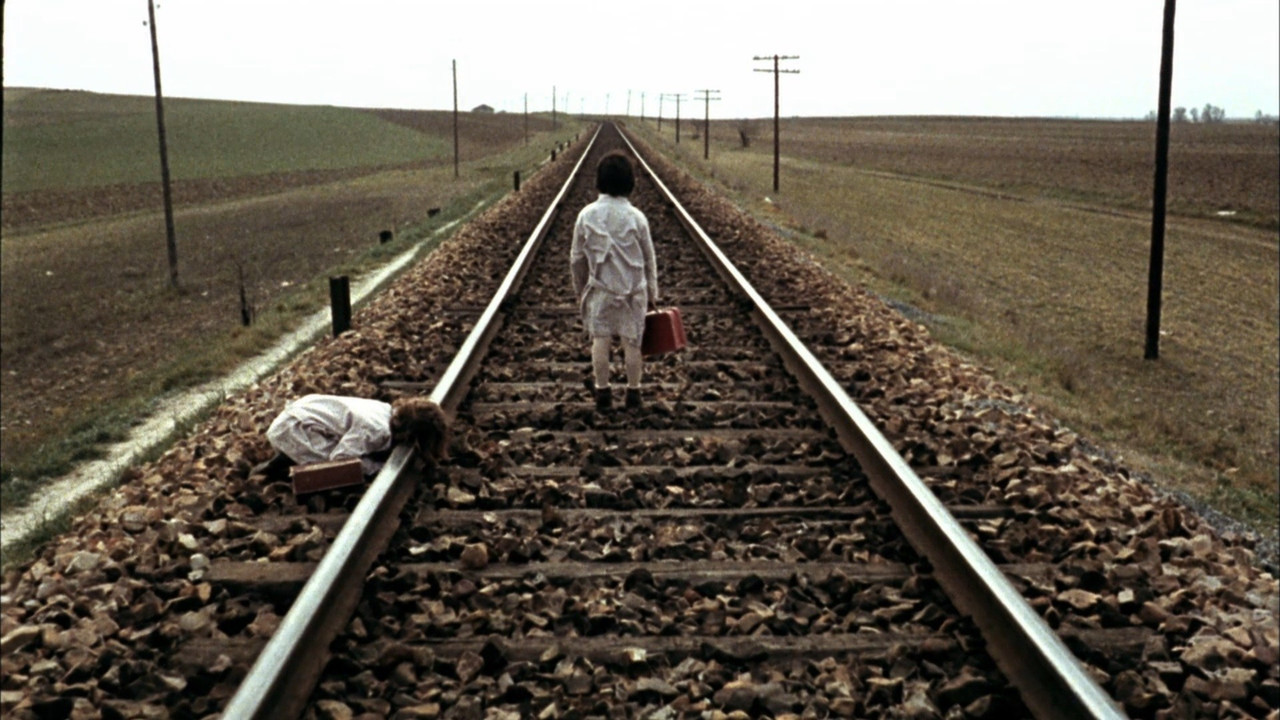
Victor Erice's remarkable film is set in Spain in 1940.  It begins with a travelling cinema bringing Frankenstein to a remote town, seven year old Ana (Ana Torrent) sees it with her older sister Isabel (Isabel Tellería) and is entranced by the film, especially the scene in which the monster accidentally drowns the little girl.  Drawn by the story of the monster, Ana escapes her home life into a fantasy world which becomes rather too real when Ana discovers a fugitive from the civil war living in a nearby barn where she and her sister think the monster lives.

I think I will have to watch The Spirit of the Beehive several more times before I truly get a handle on what it is about, especially at a metaphorical level.  On a first glance though it struck me as a film about a fractured family; the mother and father barely speak and interact with their young children only occasionally (Mother brushing their hair, Father taking them mushroom picking).  Erice draws visual parallels, underscored by the father's dialogue, between the beehives the family keeps and their home, the windows of which all have a honeycomb pattern, but rather than depict a close community in the home Erice never shows the entire family together - even when they are all eating dinner together - in a single frame.  I got the feeling that the girls' fantasy world, as well as being the sort of play typical of their childish innocence, was an escape route from having to acknowledge this fractured home life.

While the film is sometimes elliptical and seems to tread further into fantasy the longer it goes on, it is grounded by some exceptional performances, especially from seven year old Ana Torrent.  Torrent's huge eyes, open face and apparent curiosity about everything around her leap off the screen.  She also has a remarkable ability, which many adult actors never find, to allow us to see the thought process behind what her character is doing.  This is most obvious in the scene where she finds Isabel lying on the floor, apparently at least badly hurt and unconscious from a fall.  You can see the stages as she processes the information, tries to wake her sister, tires to see if she's hurt or is playing a game.  The same thing happens in scenes with the fugitive; her childlike understanding clearly trying to reconcile fact and fantasy.  It's an astonishing performance, one of the best ever by someone so young.

The other performances also strike a tone of simple reality, further helping the blend of reality and fantasy, and as good as Torrent is one shouldn't allow that to take away from Isabel Tellería's performance, which is perhaps equally strong.  Tellería also has the one true coming of age moment in the film, when Isabel, looking at herself in the mirror, bites her finger and uses the blood to approximate lipstick.

As enchanting as The Spirit of the Beehive is at a story and acting level, Victor Erice's images are just as compelling and beautiful.  Frequent close ups allow the actors, especially Torrent, to give incredibly detailed silent performances (dialogue is generally quite sparse), and when the film pulls back to observe the characters environments it has a rugged beauty that calls to mind early Malick (this film was made the same year as Badlands).  The setting of the house where the sisters believe the monster lives is especially haunting in its sparse, broken down, beauty.

Most films are pretty simple.  You get served everything they have to offer on a first viewing, The Spirit of the Beehive doesn't seem to be like that.  I suspect, as is the case with many of the films I like best, I will be returning to this one in the future and finding different things in it: new ideas, new meanings, new moments to love.  I can't wait.
★★★★★

Sep 26, 2012

24FPS @ LFF 2012: Diary - Day 2

Here and There
Dir: Antonio Mendez Esparza
I don't mind slow films, in fact there are many that I like a great deal, but there has to be some sort of reward; tension, whether it pays off or not; a feeling that you're seeing into an interesting or different life; anything to mitigate the fact that the story you're following isn't especially eventful.

Here and There doesn't deliver any of that. A while back, Total Film used to have a 'predicted interest curve', a graph depicting the highs and lows of some of the films they were reviewing. The biggest problem with Here and There is simple; that graph would be a straight line. This is an incredibly flat film. We should be engaged by the life of the Mexican family at the centre of the film; a mother and father who seem to be in their mid thirties and three daughters of about 15, 12 and 1 year old but the ups (the father's band playing a gig with a well known local musician) and downs (the youngest child becoming ill) are all treated with the same lack of engagement by filmmakers and characters alike. There is never an ounce of passion shown in the film, creating an overwhelming feeling of flatness and disengagement. The performances don't help matters much as, while there is a strong family dynamic created, none of the actors ever rises above a mumbled monotone.

There is one caveat that I must mention: I fell asleep for about twenty minutes during the middle of this festival of tedium. These were easily my favourite twenty minutes of the film, and I suspect that what I missed wasn't a sudden lapse into genius, but I have to allow for that possibility. That said, even if that were the case I still couldn't recommend Here and There, which will surely mount a robust challenge to be noted as the single dullest film at this year's festival. Avoid it with extreme prejudice.
★☆☆☆☆

Save Your Legs
Dir: Boyd Hicklin
From its awful title on down, Save Your Legs is just dire. It's not so much a film as it is a selection box of sports movie clichés, with the scrappy little team from the minor leagues (Aussie park cricket team the Abbotsford Anglers) taking on a challenge they are clearly not up to (a tour of India). Oh just guess the plot. Hell, guess every scene and every joke, if you're wrong you'll write a better film than Boyd Hicklin has.

For an alleged comedy, Save Your Legs is notably short on jokes, well, unless you find poo inherently funny, which, no longer being five, I don't. The characters are all desperately one note; there's the one who won't grow up, the drunk, the egomaniac, the nerd (who might have a crush on one of the others), the philosopher, the young upstart and the fat bearded one. There are more, but they don't even register that much personality. As the only woman in the film, Pallavi Sharda registers, but only thanks to her beauty, the film tries to work her into the climactic scenes, but then forgets to give her anything to do.

Save Your Legs is insultingly lazy. The jokes basically hit the peak of their inventiveness at 'Indian food gives you the trots', the 'bromance' between the team is laughably thin, and the lessons learned prosaic, unimpressive (apparently when you're 35 you might want to grow up, thanks for that movie) and predictable and the cricket sequences are unimpressively shot and totally devoid of tension, because even before you've seen a frame of them you know almost to the last beat how each of them will play out.

This is a terrible film, disregard its advice, if it comes to a choice between seeing it and running away, do not Save Your Legs.
★☆☆☆☆

Doomsday Book
Dir: Yim Pil-Sung / Kim Jee-Woon
Portmanteau films are, by their very nature, hit and miss, but this sci-fi triptych from South Korean directors Yim (Hansel and Gretel) and Kim (the better known, director of A Bittersweet Life and A Tale of Two Sisters) works better than most. For years two stories sat on the shelf, but production problems meant the third had not been shot, well, now it has, with the directors collaborating on the third short.

Every viewer will have a story they prefer and one that they perhaps don't like as much, and it will differ and provoke much discussion. Personally I liked the bookending efforts, which seem to match up better in tone than Kim Jee-Woon's solo entry in the middle. The film opens with Yim's hilarious The New Generation; a vision of a zombie apocalypse, which blends absurd humour, bloody violence, environmental commentary (it's very concerned with recycling) and a little romance to fine effect. The compressed nature of the story actually makes it all the more fun, because it becomes hilariously overblown in a very short space of time.

Kim Jee-Woon's story of a robot that becomes self aware, and a Buddhist, causing an existential crisis for itself and for many humans, didn't work as well for me. To some degree the problem is likely that I don't know much about or really understand some of the ideas running through it, I also rather missed the more markedly anarchic tone of the first film, and thanks to the very familliar design of the robot I just couldn't shake the expectation that it was about to begin singing Bjork song at any moment. This film; The Heavenly Creation, may be the one that really grows on a rewatch, certainly it's the deepest and most thoughtful of the films, but it's definitely the one I found least rewarding on a first look.

The closing collaboration, Happy Birthday, is the best of the shorts for me. It takes the anarchic apocalypse comedy of The New Generation and turns it up to eleven, with the story of a family (including The Host director Bong Joon-Ho) hiding underground from a potentially world destroying meteor, which turns out to be something they may have caused (I don't want to spoil it any further than that). The end of the world newscasts are absolutely priceless, and the short's almost surreal last moments - which to some degree recall the botched ending of Save the Green Planet - really surprised me by working very well (and hey, if nothing else it's always nice to see Bae Doo-Na, if only for a few minutes).

Doomsday Book is never less than engaging, and I'm sure that anyone will find at least two of the three shorts highly entertaining.  
★★★☆☆

Jan 24, 2012

X: Night of Vengeance [18]

Dir: Jon Hewitt
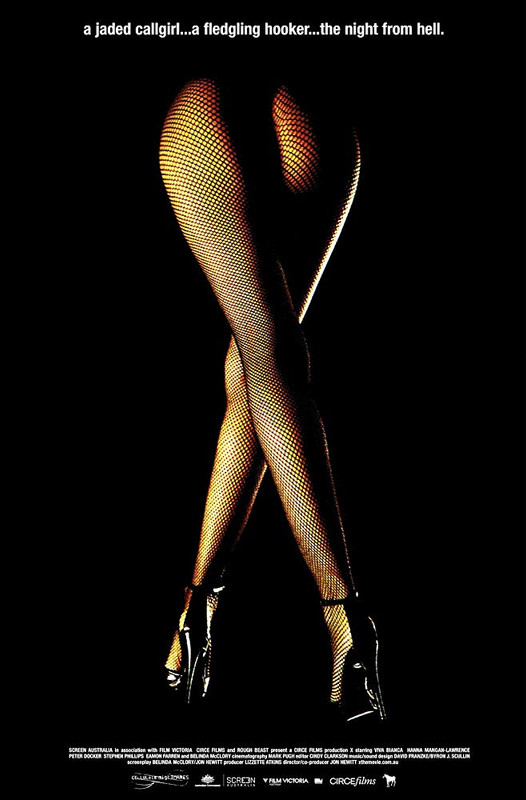
So, it's a film called X: Night of Vengeance. It's about two hookers (one about to retire, one just starting out) on the run from a killer who murdered their client, and set over a single night in Sydney's red light district. Well, that sounds promising; modern Ozspolitation, two beautiful women on a roaring rampage of revenge. That's what I thought, that's why I sat down. That's not what we got.

Let's start with this: X: Night of Vengeance is not a vengeance movie. The bigger problem? X: Night of Vengeance is not a good movie. At all. After the first half hour or so, X is absolutely relentless, and yet it's so incredibly straightforward, and so little fun, that it is massively dull. It has the cartoonish villainous bastards of an exploitation movie, but its female characters are blanks who either have to run away or be saved by men. It's dumb as a rock and completely heightened, but it can't reconcile that side of itself with director Jon Hewitt and co-writer Belinda McClory's pretensions to art and social commentary (both of which it botches anyway).

The tone is maddeningly confused. It starts out by being about 15 year street veteran Holly (Viva Bianca) finally quitting prostitution and moving to Paris on her 30th birthday, but the script then proceeds to kick Holly for the next 90 minutes, making her a punchbag for men and basically screaming at her that she's a whore and can't escape. The treatment of new arrival Shay (Hanna Mangan Lawrence) is no better, she's another stereotype; a 17 year old runaway from a drug addled home, and the film is so keen to beat on her that it never, ever lets up on her character's abject misery, even though it's set on her first night in Sydney. I think we're supposed to see Holly as a strong woman, but she seems only to exist to soak up abuse, and neither she nor Shay are allowed to strike back (like they might have on, say, A NIGHT OF VENGEANCE), their most proactive strategy being running to men for protection.

There are no surprises. When Holly and Shay go to Holly's 'boyfriend' for help it's clear what's going to happen. When Holly seems to leave Shay in the lurch you KNOW she's coming back, the narrative ticks predictably by, and for all its pace, never once raises the pulse.

If the women fall into just one type; victims, the men fare somewhat better, there are a whole two kinds of men in X. Of the three male characters with any real screen time two are cartoon bastards and one is - I'm not making this up - a saintly cab driving magician who falls for Shay (he's played, really quite badly, by Eamon Farren). The worst performance in the film comes from Stephen Phillips, who all but foams at the mouth as lead villain Bennett, and spits lines like "I hate women" in between beating the shit out of Holly and Shay (he's not very nice). It's not as if the acting is ever much better than that though. Viva Bianca is lifeless and remote as Holly, which would be fine if it seemed to be a persona for her tricks, but she's the same throughout the film, and Hanna Mangan Lawrence is little better, though what can you expect when all they've been asked to play is an assortment of clichés that needs rescuing a lot?

On the other hand, you have to give X: Night of Vengeance some credit; being boring and offensive is a hell of a trick.
★

Jul 6, 2011

Lake Mungo [15]

Dir: Joel Anderson
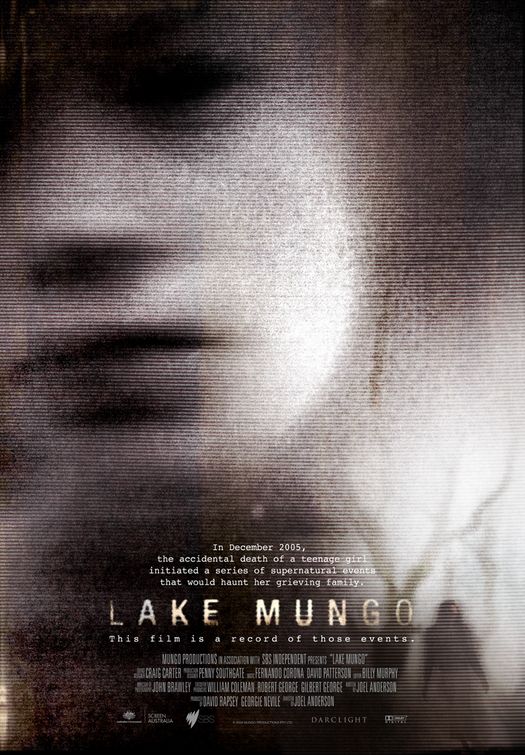
At first glance, Lake Mungo looks to be just one more in the recent glut of found footage horror films, specifically a close cousin to Paranormal Activity (though the two films were made at roughly the same time). However, as the film's 87 minutes tick by, something a bit different, and altogether more interesting, reveals itself.

In 2005 in the small Australian town of Ararat, Alice Palmer (Talia Zucker) drowns while swimming at the local dam. After her death her parents (Rosie Traynor, David Pledger) and her brother (Martin Sharpe) begin to sense a presence in the house, and see what appears to be Alice's ghost in photographs and video footage they have taken. This leads them to look deeper into the circumstances of the time surrounding Alice's death, and they discover some disturbing things.

Writer/director Joel Anderson makes a creditable debut here, crafting a film that is convincing in its documentary construction, from the use of interviews and found footage, down to the occasional creepy recreated shot illustrating a piece of expository dialogue, the whole film feels very much like a modern documentary. Where it really convinces though is with the acting. The perennial problem of the mock doc is that many fall into the trap of feeling acted. Lake Mungo never does. I'm not sure whether Anderson stuck closely to a script or had his cast improvise their dialogue from his guidance, but however he achieved it there is a tremendous sense of reality in these performances. The Palmer family feels like a family, they all react differently, but convincingly, to their grief and everything they say in the interviews feels like they are relating a story they lived through, and re-experiencing the emotions. This is true from top to bottom of the cast list, there's not a weak link here.

Anderson doesn't go for empty style here, but his shots are well designed, always preserving the verisimilitude of the film, but also creeping you out at the pivotal moments. The images of a ghostly Alice are haunting, and the grainy nature and slowly revealed complexity of them allows Anderson to draw you in to every frame, studying, hunting the clues. Some may not warm to the film's slow burn pace, but for me it worked perfectly (certainly this is a much better paced film than Paranormal Activity, and its 80 minutes waiting/30 seconds payoff ratio). Lake Mungo doles out small revelations on a regular basis, and always manages to surprise us by dwelling in the details (the ones you'll miss first time round). Ultimately it takes us briefly down several different roads regarding what, exactly, happened to Alice, and there is a refreshing openness to the ending, a sense that posing questions and positing ideas is enough, that the answers are what we make them.

Lake Mungo makes for an interesting companion piece to the more visceral horror films that have lately been coming from Australia. This creepy little film may not be for gorehounds, but it sneaks up and gets under your skin. I also suspect that it will reward multiple viewings, as you challenge yourself to see things before they are revealed, and perhaps to divine the truth of what happened to Alice. This comes highly recommended.
★★★★☆

Apr 9, 2011

Tomorrow When the War Began [12A]

Dir: Stuart Beattie
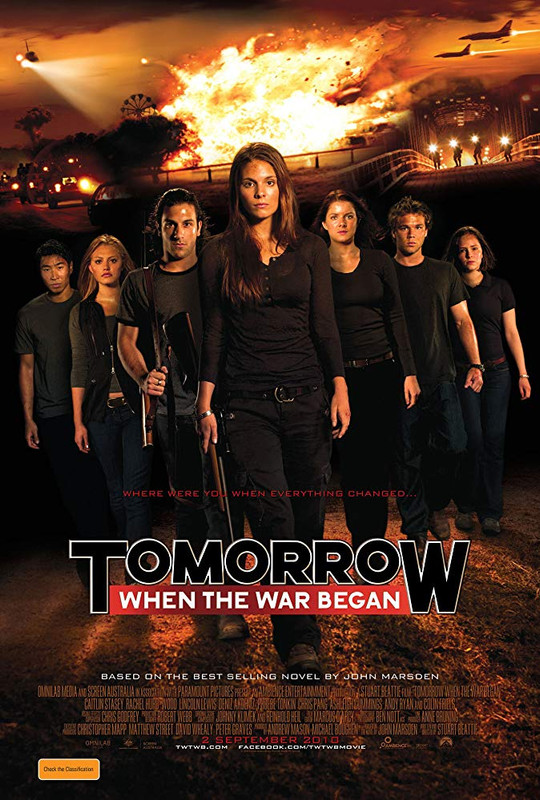
Tomorrow When the War Began is based on the first in a series (oh God, no) of books by Australian author John Marsden. It has a compelling idea at its heart; seven teenagers go for a weekend of camping in a remote part of Australia, when they return to their small town they find it deserted, and soon discover that it, and the rest of Australia, has been captured by an invading army. The group soon determine that, rather than just hiding, they should become guerrilla fighters and join this war.

With that premise, this really should be an engaging movie, mixing slam bang action with a little political context and some well drawn relationships between the small cast. Oh, if only. The main problem with Tomorrow When the War Began is simple; it is excruciatingly dull, and there are no stakes whatsoever. There are two big reasons for this. First of all the threat, despite the fact that the invading army seem to have taken Australia within two days, feels weak. The villains are faceless, have no defined goal or personality, the most we ever learn is that they're Asian. The villains' pursuit of the group seems halfhearted; frequently the teens escape the invading army just by running away, and there seems to be no concerted move against them.

The other thing that undermines the film and lowers the stakes is the character writing; there isn't any. None of these people has a personality and several of them lack even the most basic of traits. We're told by her narration that main character Ellie (played by the unfeasibly pretty, but very flat, Caitlin Stasey) has been lifelong friends with both Corrie (Rachel Hurd Wood) and Homer (Deniz Akendiz), but that connection is never felt in the script or in the performances. Most of the characters can be described with one word: Asian (Chris Pang as Lee); Religious (Ashleigh Cummings as Robyn); Stoner (Andrew Ryan as Chris); Muscles (Akendiz as Homer); Dick (Lincoln Lewis as Kevin) Leader (Stasey as Ellie). The rest... I can't even give that little credit to, Phoebe Tonkin's character Fiona is such a complete void that I forgot she was in the film for about an hour (to be fair so did the film) and Rachel Hurd Wood's Corrie has the personality of driftwood. How can I possibly begin to care about such thin characters? I keep saying it, but since writers don't seem to listen I'll keep repeating myself: If your characters don't feel real to me, I am not going to give two shits what happens to them.

The script issues don't stop there, because these blank characters all speak clangingly awful dialogue. In every conversation, there is at least one horrible line, usually one that 'foreshadows' something that will soon develop in the action. For example, Robyn's repeated refusal to even attempt to harm the invaders because of her faith signposts her actions in the climactic action scene with the subtlety and grace of a tapdancing elephant. For the most part though the dialogue is just bland, with lines that feel completely interchangeable between the various mouthpieces.

There is no one performance here that is either especially good or especially bad as a whole, but everyone has at least one laugh out loud moment that could find itself used in one of the Nostalgia Critic's recurring 'I'm Acting' jokes. Again though, blandness tends to be the order of the day. Caitlin Stasey is memorable for two reasons; she's the lead and... well, just look at her, but otherwise the mass of adequacy makes everyone equally forgettable. It was never going to be on the cards, given the screenplay, for anyone to give a searingly honest and memorable performance here, but what's irritating is that it feels like the cast knew this, and largely decided not to try. Behind the camera, debuting director Stuart Beattie makes a predictably middling job of the lensing. The film does use the stunning locations well, and the lighting is frequently strong, but even at a visual level the action lacks a feeling of immediacy and danger, meaning that this apparently high stakes movie about guerrilla warfare, never raised my pulse.

Despite having a lot to work with, Tomorrow When the War Began manages to be the dullest and most non-descript movie I've seen in some time. It's not awful, it's not good, it's not really anything. There is literally nothing here; no characters, no enemy, no stakes, no tension, no excitement, no context, no metaphor, nothing to invest in, and, criminally, no ending. This is cinematic ephemera, it's so totally devoid of content that I'm not even sure I've seen it.
★★☆☆☆

Feb 26, 2011

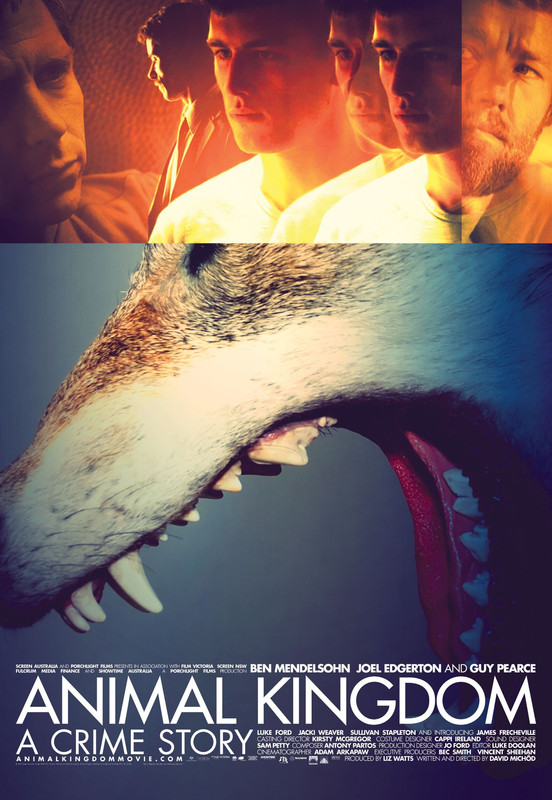
Animal Kingdom [15]

Dir: David Michod
Animal Kingdom arrives in the UK having spent most of 2010 on the festival and international release circuit, building up a reputation as one of the best films to come out of Australia in some time. I wish I had been able to see and evaluate the film without that long lead (and, perhaps especially, without hearing it described as the best film of 2010) because then, although I doubt it would have been outstanding, Animal Kingdom might have been less disappointing.

Let's be clear, this is by no means a bad film. David Michod's screenplay and direction are solid (though both have the odd leaden moment), and promise much for the future. He establishes a gritty, down to earth, but also well designed, look for the film, and he draws some excellent performances from a cast consisting of a mix of Australian stars (Ben Mendelsohn, Guy Pearce), up and comers (James Frecheville, Luke Ford and Laura Wheelwright) and an actress making a striking comeback (Jacki Weaver).

The problem with Animal Kingdom is more in concept than execution, as well as it is told, the story of 17 year old J (Frecheville), who goes to live with his criminal extended family when his mother dies of a drug overdose, and finds himself torn between loyalty to his family, fear, and the Police offer of witness protection, really can't help but feel a bit hackneyed. It's a story that has been gone over and over in cinema, and Michod's take on it offers few surprises or fresh ideas.

The film does come up trumps as far as the acting is concerned. Ben Mendelsohn impressed me last year in Beautiful Kate, and if anything he's even better here as menacing patriarch Pope. There is real layering to Mendelsohn's work; Pope might easily have been a caricature of villainy, but he underplays the role, making the character's barely repressed malevolence genuinely chilling, never more so than in the scenes with J's girlfriend (Wheelwright), who he always holds in what seems to be a dangerous gaze.

Much of the attention on the film has focused on Jacki Weaver's performance as J's grandmother Smurf. Weaver has been a fixture in Australian cinema since the mid 70s (like many of her generation of actresses she first made a splash in Picnic at Hanging Rock). For a while I was really wondering what all the fuss, to say nothing of the Oscar nomination, was about. Yes Weaver gave the relationship between Smurf and her brood of boys a creepy, incestuous undertone, but there wasn't really much to the character or the performance. Then comes the film's third act, and Smurf takes on a much bigger role, allowing Weaver many juicy scenes to play, all of which she knocks out of the park. Slowly, inexorably, she becomes the most corrupt, and the most frightening, person in the film. Weaver's intense performance becomes a mini masterpiece in those scenes.

The rest of the cast is also strong; Frecheville makes a creditable debut as J, as does Laura Wheelwright, overcoming a very underwritten role with a strong performance as J's girlfriend Nicky. Guy Pearce is his familiar solid self as the cop trying to get J to turn and Joel Edgerton, Luke Ford, Sullivan Stapleton and Mendelsohn combine to create a realistic criminal fraternity.

I'd like to recommend Animal Kingdom more whole heartedly, but for me the film never quite caught light. The script is the main offender; familiar and predictable, despite having some well conceived scenes and excellent dialogue. Some characters also feel under developed, a particular problem towards the end of the film, when the lack of connection with Nicky, and the limited import J's relationship with her is accorded in the first two acts, making the ending ring a little hollow. I would certainly still say that this is a film worth seeing for the performances, and because I suspect that David Michod does have a great film in him somewhere down the line, this isn't that film, but it's a solid start on the road to it.
★★★☆☆

Aug 2, 2010

Film Review: Beautiful Kate

BEAUTIFUL KATE
DIR: Rachel Ward
CAST: Ben Mendelsohn, Sophie Lowe, Bryan Brown,
Rachel Griffiths, Maeve Dermody


At the very least, you can’t fault Rachel Ward’s directorial debut for truth in advertising. Sophie Lowe, who plays the titular Kate, is a real discovery; talented and almost unfeasibly good looking. Unfortunately, though there is much that is interesting here, the film that surrounds Lowe’s surely star-making turn is patchy in the extreme.

The problem is really familiarity. It’s another in a long line of films about grown children, dying parents, and old family secrets being dragged kicking and screaming into the present. The setup has 40-year-old Ned (Mendelsohn) returning home for the first time in two decades to visit his younger sister (Griffiths) and their dying father (Brown). Being home again triggers memories of his last summer in the outback, the summer his twin sister Kate (Lowe) died in a car crash and their brother Cliff killed himself. To me, especially given the revelations about Kate and Ned (which, while extremely taboo, aren’t especially surprising) the film felt much like Tim Roth’s The War Zone seen in rose tinted flashback.

Rachel Ward’s film divides pretty neatly in two. About sixty percent of the screentime is given over to the present day story of the return of the prodigal son (initially with his very young girlfriend, played as a stroppy stereotype by Maeve Dermody). This is where the film feels like it is treading water. We’ve seen this troubled father/son relationship a million times before and while Mendelsohn is strong, and the regular unveiling of Dermody’s breasts is to be welcomed, these things can’t rescue this section of the film from Bryan Brown.

Brown is one of the film’s producers, He's also Ward's husband, and it's pretty clear from his performance that she's either intimidated by the idea of directing her husband or simply so in love with everything he does that she doesn't feel the need to direct him. Even though he spends much of the film lying in bed and refusing to eat, Brown chows down the scenery with gusto, hugely overacting his character’s every utterance (right down to his breathing). It creates a gaping hole at the centre of the film, because one side of its most important relationship is totally lacking in credibility. For the most part Mendelsohn gives a dialled down performance, and is all the better for it, but towards the end of the film he too orders up a big slice of ham, in a scene redolent of Tom Cruise’s big crying scene over his dying father in Magnolia.

The flashbacks prove welcome respite from the present day story; shot with a glow that suggests that some of what Ned is remembering is perhaps being seen through rose tinted glasses, these scenes are the film’s most beautiful, and also its most involving. That’s thanks to a vital, energetic, risk taking performance from Sophie Lowe, who brings Kate to vivd life, allowing you to really understand why this girl and these events have resonated in this family for two decades. The other young actors also do a nice job with what is a rather rote script (also by Rachel Ward) but they are all but acted off the screen by Lowe.

Rachel Ward makes a promising, rather than a brilliant, directorial debut. She shows that she has an eye for a nice shot, even if it’s not especially original. Visually a lot of the best moments centre on Kate, often viewed through doorways and windows, as if she’s always being looked at, and there is one especially striking shot of Mendelsohn alone in a dark corridor outside his father’s room. Ward’s grasp slips when it comes to the film’s pacing, at times the present day story is repetitive and excruciatingly slow, especially given the much more interesting flashbacks, and she also seems to lack a firm hand with some of the actors, to be unable to pull them back when they are overplaying a moment. That’s only an issue with some of the performances (Rachel Griffiths, for example, pitches her small role perfectly), but it does undermine the whole.

There are people from this film that I’ll be watching out for; Rachel Ward may yet blossom as a director, but this script is just too middle of the road, and Sophie Lowe (who single handedly makes this film worth the price of admission, whatever its other strengths and weaknesses) is somebody I’ll be keeping a very close eye on. All told, Beautiful Kate is something of a mess, but even if it doesn’t quite come together there is enough in it that is good to make it worth a look.

Apr 10, 2010

Film Review: Samson & Delilah

SAMSON & DELILAH
DIR: Warwick Thornton
CAST: Rowan McNamara, Marissa Gibson


When were you most bored? What did it feel like? Midway through Samson & Delilah I wondered just how I could possibly review it. How, with mere words, I could communicate the sheer bludgeoning tedium of the experience. I’m not sure that I will succeed, but do me a favour, and picture this… Imagine you are attending an evening class, each class is an hour long, and there are ten lessons. The subject of the class is: “How to watch paint dry”, the dominant teaching aids are bar graphs, demonstrating how long paint will take to dry, given various states, surfaces and other variables. The charts are black and white. The class is being taught by Ben Stein (the teacher from Ferris Bueller's Day Off). This, I imagine, approaches being half as dull as the experience of sitting through Samson & Delilah.

The film begins in the Australian outback, in a scattered aboriginal community. The titular Samson and Delilah appear to be the only residents in their late teens. Samson (McNamara) sniffs solvents, and moons around after (well, stalks might be a more accurate description) Delilah (Gibson), whose only occupation is looking after her grandmother. She never encourages his affections, but when he’s thrown out by his older brother and her Grandmother dies the two go to the city together (why? Because that’s what it says, here in my script) and live on the street. The entire time they never exchange ONE SINGLE WORD.

I’ve said before, it’s not that I mind films about nothing, or films with little to no dialogue, but if you are telling a story which essentially just almost silently follows two people’s lives, with no real big events or larger sense of drama you had best make sure that those people are fascinating. It’s here (well, it’s almost everywhere, but notably here) that debuting director Warwick Thornton falls down. Largely by dint of the fact that neither of them speaks more than a handful of words. In Samson’s case it’s somewhat understandable; his brain may be affected by his solvent habit, but in Delilah’s it just feels unrealistic to the point of being silly, even if she’s shy, or traumatised, there are a mass of scenes here where it’s just totally unnatural for her not to speak (for example, she never exchanges one word with the older tramp who shares both his sleeping site and his food with them). Perhaps Thornton just isn’t confident in his ability to write dialogue, but if that’s the case then you bring in another writer rather than just having your characters be silent.

This silence, combined with the somnambulant performances of McNamara and Gibson, also means that neither Samson nor Delilah ever develops anything resembling a trait, let alone a personality. These aren’t characters. Like Twilight’s Bella Swan they are walking shells, spaces of totally pure vacancy, unencumbered by emotion or expression. Nothing happens in this movie (or, when it does, as when Delilah is kidnapped – oddly she doesn’t even appear to try and scream, which really is taking the silence motif a bit far – it happens almost entirely off screen), and so the running time is filled with endless repetition; Samson’s brother’s band play the same single refrain throughout every scene in the outback; Samson constantly has a cup of petrol under his nose; Samson and Delilah walk around aimlessly, saying nothing; the tramp tries to engage them, they stare silently into space. Look, you don’t have to be entertaining, movie, but DO SOMETHING.

Warwick Thronton is a cinematographer by trade, and the photography here is pretty good, but honestly, who cares, because this film is no more interesting for being nicely shot, the pretty pictures being akin to a pink ribbon, wrapped round the dog turd you’ve just been given for Christmas, I appreciate the gesture Warwick, and it’s a nice ribbon, but that’s still a turd you’ve wrapped it round.


More reviews tomorrow.