Showing posts with label Surreal. Show all posts

Sep 19, 2019

24FPS @ LFF 2019: Queen of Diamonds

Dir: Nina Menkes
It is clear from the very first moment that Queen of Diamonds is not going to deal much in words. The title card comes up not as text but as a playing card. This is all the introduction we get to Nina Menkes’ demanding but rewarding look at one woman’s life on the outskirts of Vegas.

Made in 1991 and recently restored in 4K, this is likely to be one of the big discoveries of the LFF Treasures section for many viewers. It’s hard to ascribe anything approaching a story to this film, it hints at many behind the sometimes disconnected images, but not fully engaging with them is just one of the ways the film skirts any hint of cliche. Tinka Menkes plays Firdaus. We learn she lives in a motel, where her neighbours are an engaged couple and the man is hitting the woman. Firdaus works in what looks like a rather low rent casino and she helps care for an old man. Her husband is missing, but this doesn’t appear to concern her. 

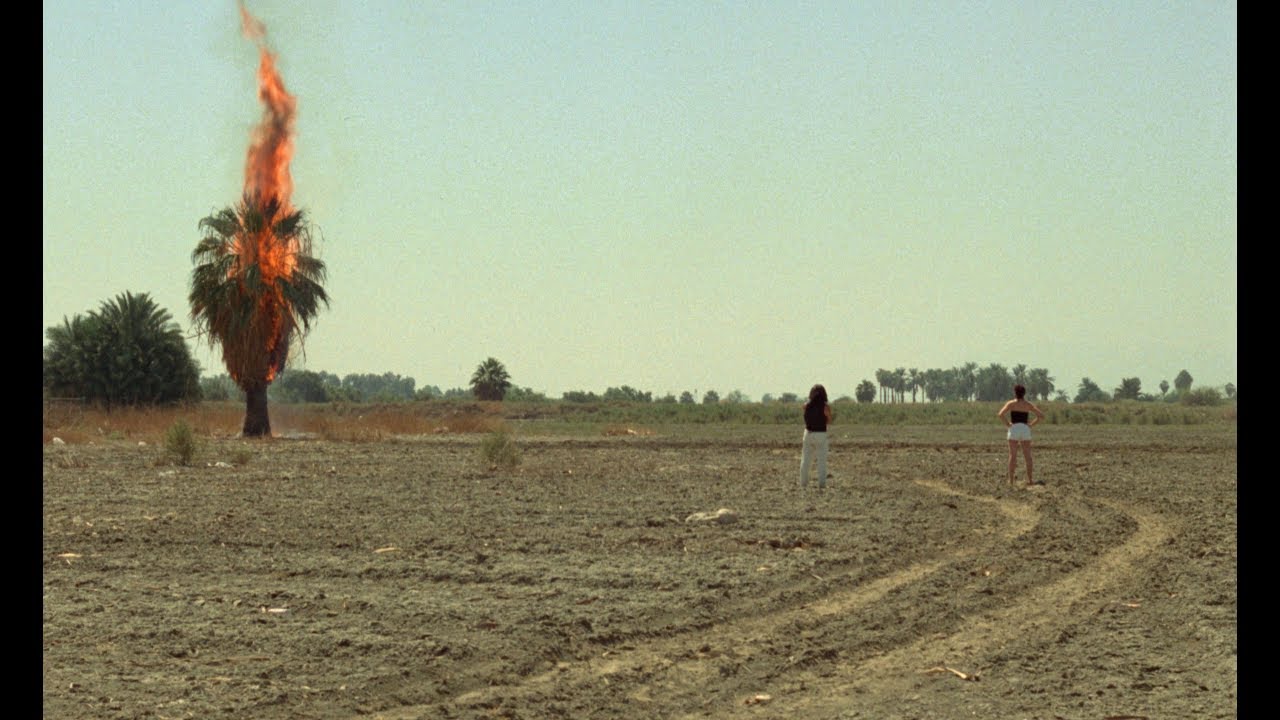
Events are thin on the ground, instead Nina Menkes puts us in a world somewhere between realism and surrealism, capturing the grinding mundanity of Firdaus' day to day life in a series of strikingly framed images, most of them in long shot, silent and unmoving. By so often sitting still on a shot for an extended period of time, Menkes forces us to draw ourselves into each image, to study every part of her framing and construction. The result doesn’t always reveal great meaning in the individual frame, but the beauty of her composition always means that there is pleasure merely in the looking and eventually in trying to piece the images together into some kind of full picture, like a jigsaw that will let us in to Firdaus, who remains a remote figure throughout. Perhaps the most striking image in the early part of the film comes when Firdaus goes for a walk with a man she meets on the beach. Rather than watch them walk we find them next standing at the edge of frame while, on the other extreme edge, a palm tree burns. The man leaves at some point, but we watch with her as it burns out in a shot that doesn’t move for something like three minutes.
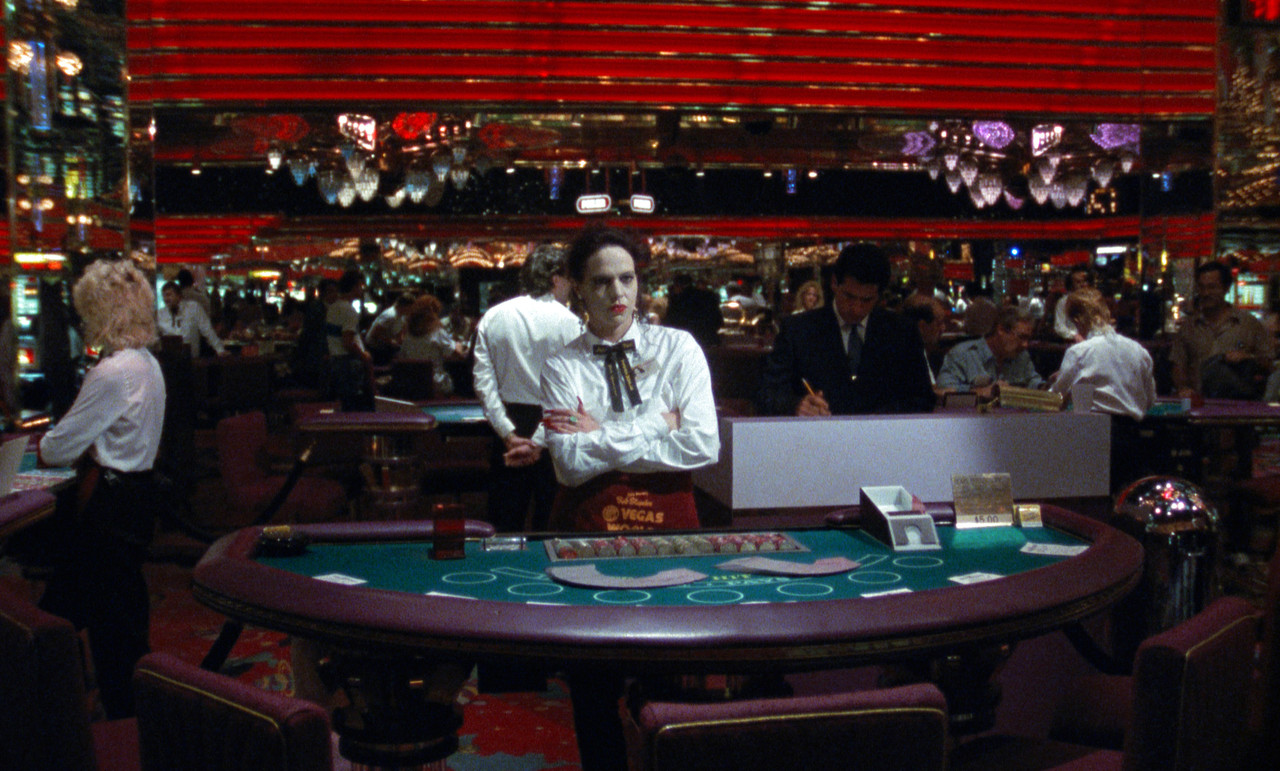
Camera movement and cutting are so rare that when, about thirty minutes in, we come to a scene where we see Firdaus at work and Menkes zooms in on something, then cuts, it is almost a shock to the system. For a while it feels like Queen of Diamonds is settling into something approaching a normal filmic rhythm, but that’s only in the first part of the sequence. Menkes drags this sequence out for a long time—in full it is perhaps 10 of the film’s 77 minutes—it is clear the aim is to show us the repetitiveness and perceived length of her main character’s work day. This is highly successful, but not just through the length of the sequence. Images, cuts and camera movements repeat in a cycle, the camera often focusing on how Firdaus always leans on the card chute, or how she pushes money into a bank in the table. Menkes seems to break continuity, emphasising what feels like a time loop of mundane work and all the while she subtly builds a ticking clock into the sound design. It’s a sequence that demands patience and attention, but which is hugely rich and revealing if you give yourself over to it. In one way it’s hugely atypical of the film, in another it’s the whole thing in miniature. The second half of the film does take a few of the qualities of this sequence, but still remains stylistically very true to the still and studied overall style.

Dialogue is thin on the ground, serving little like traditional narrative function when it does appear. Even the sound quality—whether by design or happenstance—underlines this with the dialogue sounding distant, even overheard. Character too, is a slippery notion. We get no real background on Firdaus and her one friend who occasionally appears is equally an enigma. It would almost be fair to say we know more about the neighbour and his fiance, but even so, a long sequence about them towards the end of the film, though the jollity set against the bruises we can see on the bride is perhaps Menkes’ clearest signpost to what the film is saying as a whole, is the only segment that truly feels drawn out.

Queen of Diamonds is something of an enigma, but it’s gorgeous, hypnotic and quite unlike anything else I’ve seen recently. I want to dive into further viewings and try to unpick what lies behind it. One thing, though, is certain: it’s a crime that I hadn’t even heard of Nina Menkes before, and you should take this all too rare opportunity to discover her work. 
★★★★½

Oct 13, 2015

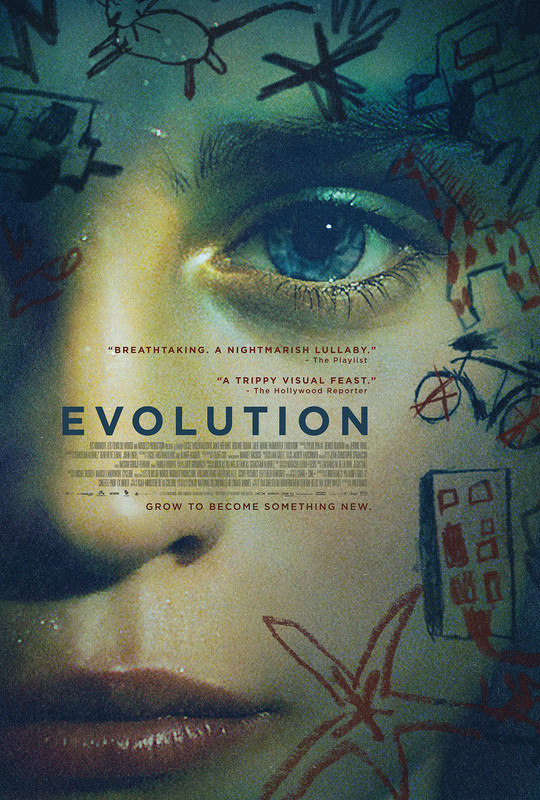
24FPS @ LFF: Evolution

Dir: Lucile Hadzihalilovic
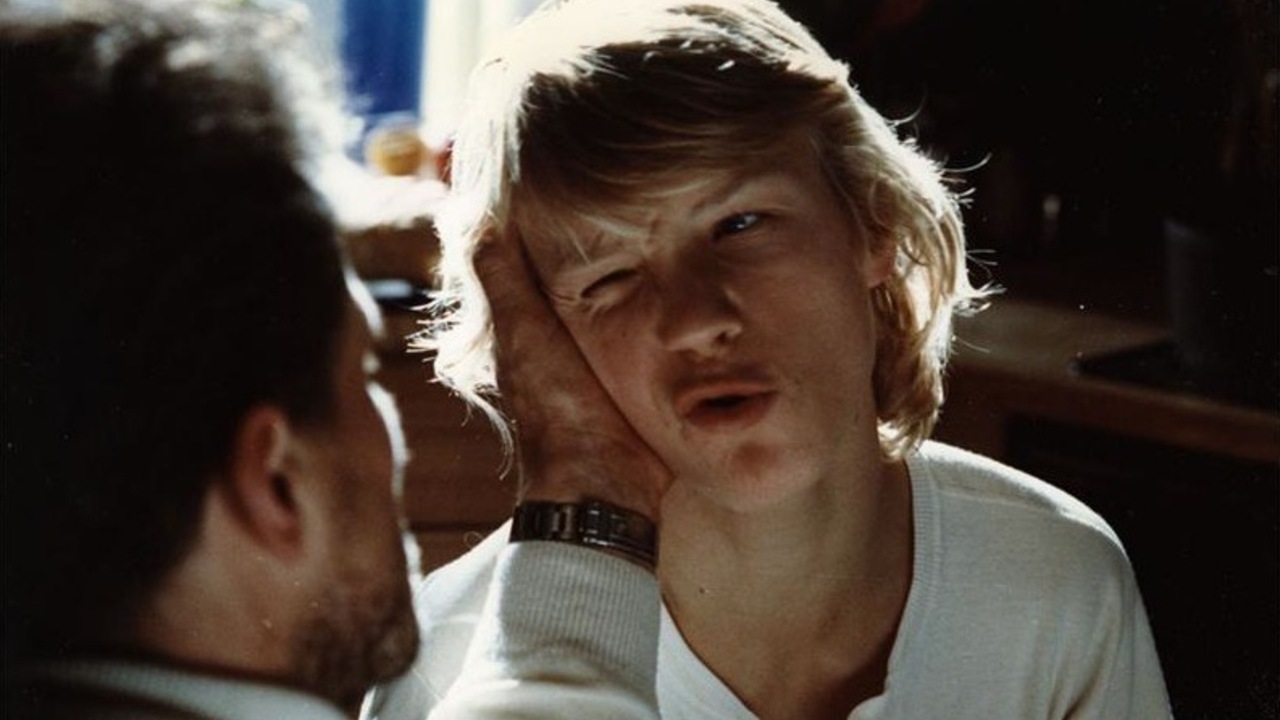
10 years ago I saw Lucile Hadzihalilovic's first film, Innocence. I loved it, and have continued to be beguiled and baffled by it in equal measure in the decade of creative silence that has passed between it and this, her long overdue second film. 

Evolution is an apt title for this film in more ways than one. While she hasn't made films of her own during the gap between Innocence and this film, it describes what has happened to Hadzihalilovic's style in the intervening decade. It may also describe her second film's relationship to her first. Much of the time Evolution feels like an extension, a refinement, a development, of the themes and imagery of Innocence. It's not a requirement that you see Innocence before coming to this film, but it can only enhance your enjoyment and understanding of Evolution if you have.

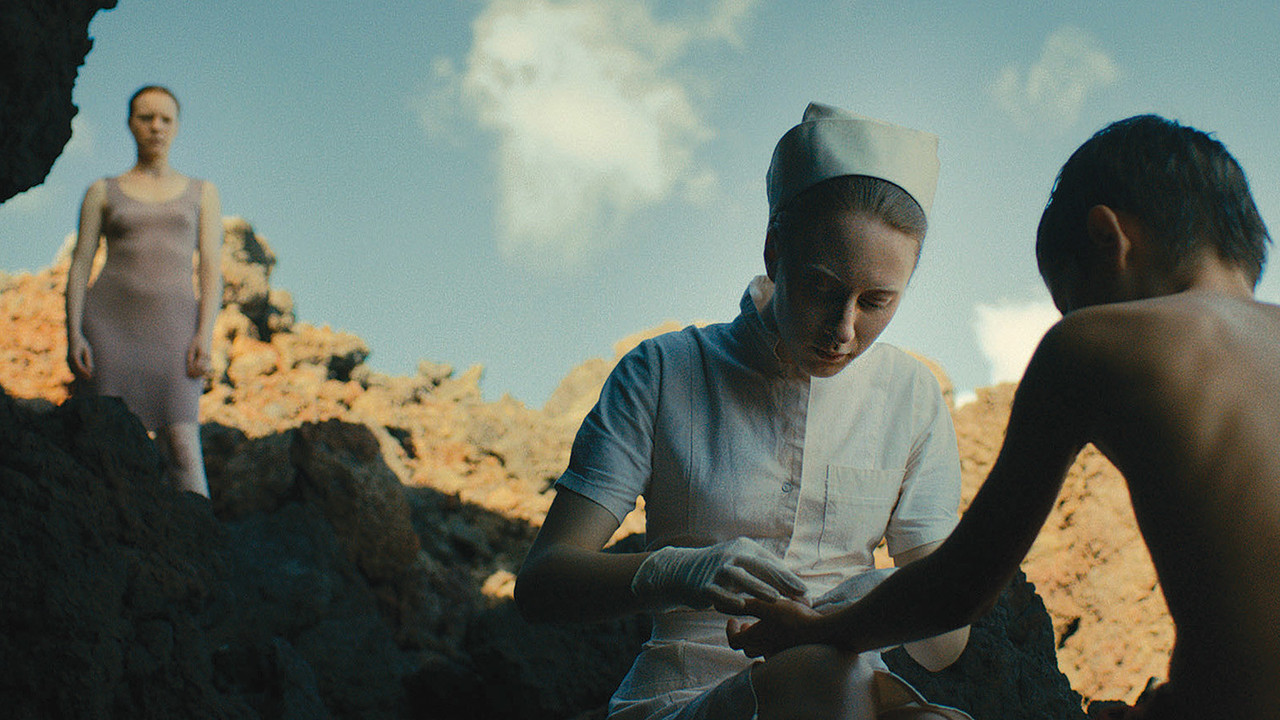
The film begins with a boy, Nicolas (Max Brebant) swimming underwater. He believes that he has seen a dead boy with a starfish on his belly and runs to tell his mother (Julie-Marie Parmentier) about what he has seen and to draw a picture of it. We see that society on the island where Max lives is entirely composed of women in their mid-20s to mid-30s and boys of about 10. Soon, Nicolas and his friends are sent to the island's 'Hospital', where, in between strange procedures, Nicolas and a young nurse (Roxanne Duran) forge a connection through his drawings.

Any attempt to lay out the plot of Evolution is highly subjective, as is everything else about it. There will be as many interpretations of this film as there are viewers and they'll all be right, which means they'll also all be wrong. The fact that Evolution seems able to contain this multiplicity of meaning is one of the most seductive things about it (as it was Innocence). 

A few things are clear to me. Like Innocence, this is a film about cycles and one that may end with the breaking, for at least one character, of their cycle. The film is soaked in the imagery of birth and pregnancy, both in a literal (if nightmarish) sense and at a metaphorical level. As the film opens we see Nicolas swimming underwater before emerging on to land to find his mother, or at least the woman we assume is his mother. If we take this at a level of metaphor, given the film's title, we can see it as the ultimate birth; the emergence of life from the sea on to land. This imagery of pregnancy, birth, and life emerging from water recurs throughout the whole film.  There is also a sense here of the roles of mother and child lacking permanence. Because all the children are the same age, and because of what we see in the hospital, it is very possible that what we see in the narrative space of the film is the entirety of a very brief relationship between these 'mothers' and their 'children'.

To suggest that Evolution fits neatly into a generic box that will make it a simple sell would be untrue, but it does have genre trappings around its experimental heart. For me, this is a horror film, more specifically a body horror film, and perhaps one of the most potent entries in the subgenre for some time. While I am certain that there are many other artists and filmmakers that Hadzihalilovic is drawing on here, the influences that Evolution seems steeped in are those of David Cronenberg and Guillermo Del Toro. Cronenbergian imagery recurs throughout the gorgeous body horror nightmares that are the hospital scenes, culminating in an image ripped straight out of Shivers (if it had a higher budget). Del Toro's influence is perhaps more specific and can be seen in the recurrence of things - mutated foetuses, the boys themselves - submerged partly or wholly in jars of liquid. Another specific influence seems to be Andrezj Zulawski's unlikely video nasty Possession, both in the design and in one particular scene that allows the film's often present sense of under the surface sexuality to boil over.

This submerged – repressed isn't quite accurate – sexuality is also felt in Nicolas' relationship with the nurse, whose name, we discover late on, is Stella. His clear crush on her (evidenced by the picture he draws of her in his notebook) is another thing that sets him apart from the rest of the boys, who seem not to have developed to this level yet. Initially this attraction and Stella's reaction to it remain an undercurrent, but it comes to a point of catharsis in one of the film's most beautiful and memorable images as Nicolas and Stella float underwater locked in a long, but chaste, kiss as she breathes air into his lungs. It's important that Stella also seems like an outlier in this obviously regimented society, perhaps even a rebel at some level, it's this that seems to draw her to Nicolas; first her sympathy, then perhaps more.

Hadzihalilovic's imagery is astoundingly beautiful throughout, be it the stark, featureless, interiors of the houses on the island, the dark and intimidating hospital or the almost alien beauty of the underwater images. Another thing that Evolution shares with Innocence is the sense that it is set in a world adjacent to ours, one that operates on different rules, socially, even biologically. Both films suggest that for the most part this adjacent place is hermetically sealed, but that it may be possible to reach our world from it. This is something that comes through strongly in the visuals, which are familiar yet strange. For instance, an early image of Nicolas swimming is filmed from below, making the water's colour and texture appear alien. The unsettling beauty of the images is also carried through in the sound design, which retains the running theme of water, with a rumbling and menacing presence throughout the film.

The cast here are required more as props to propel the imagery forward than they are strictly as actors, but the three leads all do fine work. Max Brebant and Julie-Marie Parmentier put across a deeply unusual mother/son relationship that is detached in its emotion and underplayed without being stilted. Roxanne Duran is someone I've had my eye on for a while. She has lent ethereal presence to small parts in the likes of LFF entries 17 Girls and The Monk, as well as Melanie Laurent's Breathe and has always been someone I have wanted to see in a lead thanks to her intriguingly offbeat charisma. Duran is perfectly cast as Stella, her strange beauty and otherworldly presence play into the level of reality that the film is working on. In the role, she effortlessly projects something, perhaps a level of purity, that immediately seems to set her apart from the other nurses. It's a difficult role to sum up and a difficult performance to review in any traditional sense, but Duran has that thing it is impossible to fake, the ability to draw both a camera and an audience to her, and here that's central to the spell that her character and the film cast.

There is still so much to say about Evolution and there will be more to say later, because I don't doubt that second and subsequent viewings will deepen, perhaps utterly change, what I think it's about on either a scene to scene or an overarching basis. I can say with confidence that it's quite unlike anything else I've seen at LFF this year and that it is really rather extraordinary. If you can get to see this on a cinema screen then do so. You may love it, you may hate it – though I won't understand why – but you will certainly be thinking about it for some time afterwards, and that's rare enough to be valuable in and of itself.
★★★★★

Oct 12, 2014

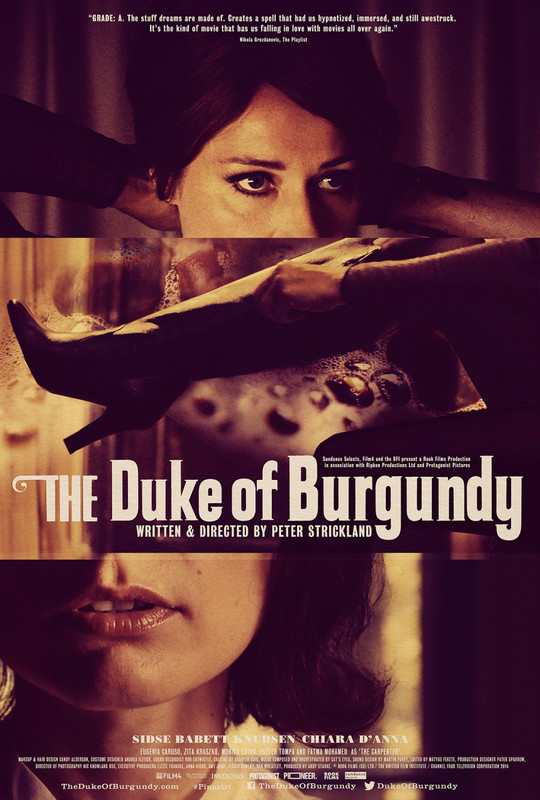
24FPS @ LFF 2014: The Duke Of Burgundy

Dir: Peter Strickland
Having got little from Peter Strickland's last exercise in a horror sub-genre (the Cliff's Notes on Giallo that was Berberian Sound Studio), I was wary of his latest, worried that it would again feel to me more like a textbook on a type of cinema than a film in its own right.  The Duke of Burgundy is certainly a film steeped in film history and film academics, it's an art piece exploring a particular style and genre, but this time I found that Strickland drew me in to his characters and his story as well as his use of images and sound.

As the film begins we see Sidse Babbet Knudsen playing Cynthia, who seems to be a wealthy woman, living in a huge, opulently decorated, but otherwise empty house.  Her maid Evelyn (Chiara D'Anna) arrives and Cynthia spends the day coldly assigning her chores, punishing her when they are not done to her incredibly exacting standards.  As the film progresses we see that these dynamics are not all they seem, and that Cynthia and Evelyn's relationship is much more complex than it first appears to us.

There are moments throughout The Duke Of Burgundy that reflect many different styles of film, though largely from one era; the late 60's and the 70's.  The striking opening titles are pure Witchfinder General, while Cat's Eyes' score is one of several things that echo Czech surrealism, calling to mind Broadcast's alternate score for Valerie And Her Week Of Wonders.  However, among all the influences one shines through; the European Artspolitation scene.  There are things throughout that reflect the erotic horror films of Jean Rollin and Jesus Franco, few of them more than Chiara D'Anna's face.  D'Anna is astonishingly beautiful, but more than that she could easily have stepped out of a Rollin film and into this one.

All this said, I don't wish to suggest that The Duke Of Burgundy is merely a patchwork of its influences.  Peter Strickland's style may have changed following his micro budget and much more simple début, Katalin Varga, but he has definitely developed an eye that is his own.  There are many striking and puzzling visuals in the film, from the prevalence of butterflies (including the one that gives the film its title) to the presence of a mannequin in the audience at one of the lectures that Cynthia gives, but for all its abstraction there is a strong throughline to the film in our shifting understanding of the relationship between Cynthia and Evelyn.  

Once it becomes clear that Evelyn's job as maid is not a job but a persona, put on as a fantasy, the film shifts, going from being something potentially about an abusive business relationship to a story of a power game within a romantic relationship.  What is most interesting is how Strickland shifts the balance of that power game throughout, challenging your assumption of the dom/sub power play throughout.  What emerges from this; built out of a picture of gorgeously lensed repeated moments is a surprisingly funny and tender picture of what we must assume is a long term relationship.  That, ultimately, seems to be what the film is about; a couple who have had a (strange) rhythm for some time, surrealism and a slight overtone of foreboding seep in as that that rhythm is disturbed.  This tenderness is always present, even as Cynthia and Evelyn discuss Evelyn's birthday gift in a conversation that features the memorable line “Perhaps a human toilet would be a suitable alternative”. This is perhaps why Strickland chooses not to depict the sexual side of the relationship in much explicit detail; there is no nudity in the film and the one sex scene is shot with many doubled images, as if through glass, giving it a hallucinatory feel.  In another way this is an odd choice; The Duke Of Burgundy is so steeped in the more artistic aspects of the artsploitation film that it was, for me, a shame not to see Strickland dig into those films' equally valid exploitation side.  

Whatever ideas I have about this film, from whether it's a love story to the fairy tale feeling that seems to bracket it in the first and last images of Evelyn, there is much more that I have yet to unpick.  Most notable is the last time Evelyn says Cynthia's name, at which point it sounds very much like she says “Sidse”.  Whether this is a mistake, something I misheard or an intentional lapse in the film's internal continuity I don't know, but none of those answers would surprise me and none of them would be less than interesting.  That goes for many of the unanswered questions of the film.

All of this works as more than an art piece because the images are anchored by excellent performances.  Sidse Babbet Knudsen initially does a great line in cold, withering, glances and harsh tones as Cynthia, but her part becomes more complex as the film goes on and we start sensing some conflict in her, from a little sigh when she drinks yet another glass of water to prepare for a game to an increasing disengagement in her rote repetition of the script for each game.  Through all this she also puts across Cynthia's longing for closeness, even if it is found in a way that most of us would consider unconventional.  Chiara D'Anna's Evelyn is a more unknowable character and the ambiguity of certain aspects of her character extends to the film as a whole (for instance a few scenes seem to imply that she may be the rich woman in this relationship, but equally that may be a part of the role play).  D'Anna does a huge amount simply through her presence which is by turns ethereal, sexy, demure and severe, among many other things.  This is the first time I've seen her, but she's a memorable presence, one I hope to see more of.

For all its artsiness, which may grate on some viewers, The Duke Of Burgundy has a surprising streak of humour running through it.  There is an inherent comedy to seeing familiar relationship issues played out in such an unconventional relationship, especially when, late in the film, Evelyn admits to a 'fling', in which she cleaned another woman's boots and was scolded by her.  The humour is an interesting balancing act; Strickland doesn't parody his influences, but there is a wryness here that might have enlivened Berberian Sound Studio for me.  

It's not perfect, and I did find myself, every now and then rolling my eyes at some of the film's most obscure moments.  I don't really get what is clearly a big overarching metaphor about the moths that Cynthia studies (with Evelyn's help?)  It certainly doesn't feel to me like a film about metamorphosis, the one thing that does strike me about it is the theme of confinement; the moths all pinned in glass boxes set against Cynthia's desire to be locked in a box at night.  Equally those two things may have nothing to do with each other.  

Repetition is part of how the film establishes both its story and its humour, but occasionally seeing the same scene and hearing the same dialogue for a fifth time can become a little wearing.  With just a bit of judicious cutting it could lose ten or fifteen minutes and I doubt it would lose any real meaning or impact with them.

I loved The Duke Of Burgundy on a lot of levels; it's a sensory experience that demands to be seen in a cinema, thanks to the combination of Strickland's offbeat and beautiful images and Cat's Eyes' score.  It's also an absorbing character piece; Knudsen and D'Anna are perfectly cast and Cynthia and Evelyn's relationship is never less than intriguing.  It's a film that invites many readings, but I most enjoyed getting lost in its images and its influences, but they'll draw me back and make me think more and perhaps differently about the film next time I see it.  That's rare.
★★★★

Jun 22, 2014

The Films of 1967 Blogathon: Viy [12]

When Rosie asked me to take part in this blogathon I took it as something of a challenge.  Next to our host and, I'm sure, the other writers my knowledge of 60's cinema is decidedly limited.  Growing up as a movie fan I seldom found myself reaching back farther than the 70's, and I still consider myself a bit of a novice before the movie brats era really kicks off.  That said, I still wanted to pick something for this series that the other contributors would almost certainly not have seen and very possibly never have heard of.  I suspect that I've managed this with Viy; a pseudo-folkloric piece of surreal horror cinema from the Soviet Union.

Insofar as you can take its story at face value as it is presented,  Viy is about a seminarian named Khoma who, along with two friends, finds himself lost one night while on leave from his studies.  The three are given shelter by an old woman, who turns out to be a witch.  Disgusted when she uses magic on him Khoma beats her, only refraining from a killing blow when she turns into a beautiful young woman.  Later Khoma is summoned to a remote village to say prayers for a young woman who is dying.  It is the witch, and as Khoma prays over her body across three nights she returns to torment him.

Viy has the feeling of being an old, old story; something handed down by word of mouth through generations, perhaps to scare children into staying in bed ('if you don't go to sleep the witch will get you').  In fact the story was published in Nikolai Gogol's 1835 collection Mirgorod, but there has apparently been nothing discovered to substantiate his author's note that claimed the tale as one from Ukrainian folklore.  However, Gogol appears to have captured that tone so completely that his story became what he initially pretended it was.  The film has clearly influenced many since it was made, but Gogol's story has also been reinterpreted; as Mario Bava's Black Sunday, as a ghost story in dialogue in Joe Dante's Piranha and in a recent Russian remake, in 3D..

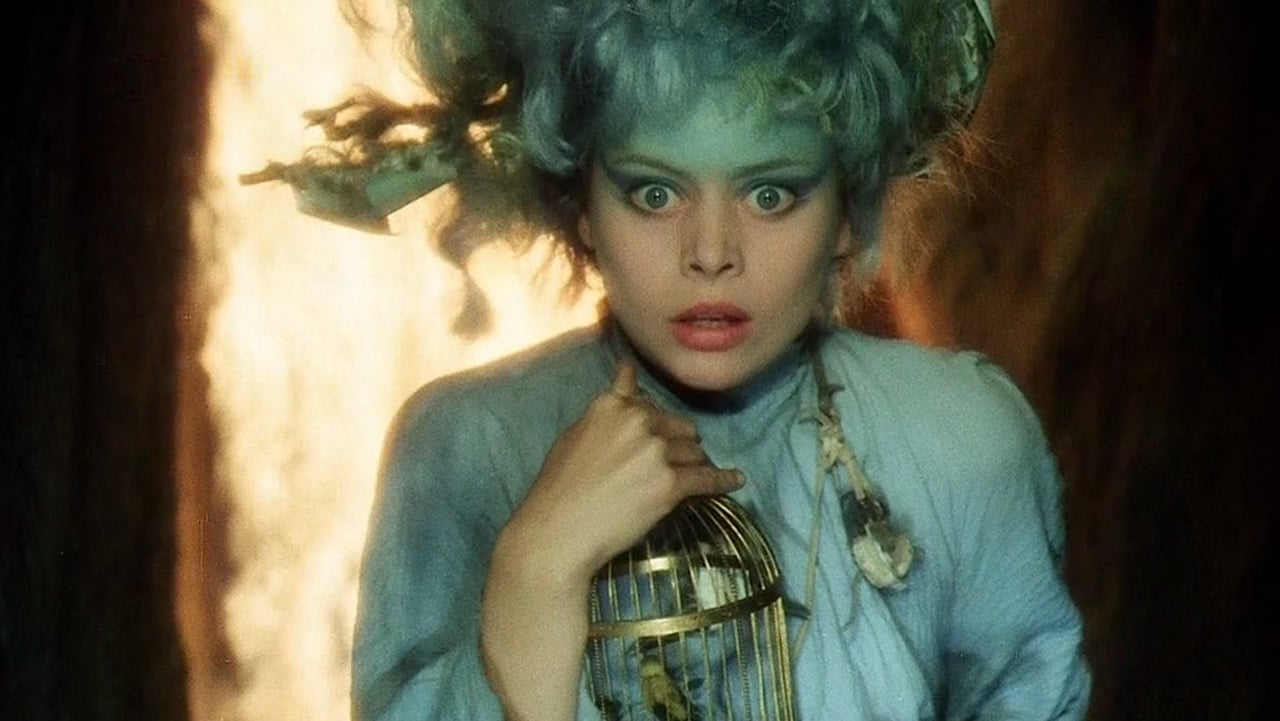
This was the first horror film of the soviet era to be released in the USSR, and co-directors Konstantin Yershov and Georgi Kropachyov apparently found their way around censorship rules by invoking the tale's folkloric history.  That said, the film is mild by today's standards.  There is little violence and no blood at all, however, despite their frequently crude realisation (even by 1967 standards), there are images here that remain creepy after more than 45 years.  Beautiful as Natalya Varley is, there is something haunting about her here, her face covered in white make up (it's possible that this was also an influence on Helena Anýžová's look in Valerie and Her Week of Wonders) and the crude special effects prove oddly effective because when Varley is superimposed into the shots to make her appear to fly there is a sense of dislocation and other-worldliness imposed by the fact that the join between the shots is obvious.  Varley's creepiest moment comes on the first night, as the witch wakes and advances on Khoma, who rushes to draw a protective sacred circle before she can reach him

The film has a growing surreal feel to it throughout, but it is the final scene, in which Khoma, cowering in his protective circle of chalk, is beset by demons who climb, seemingly endlessly, out of the walls and floors that proves most memorable and most chilling.  Again, the effects and costumes are unmistakably a little cheap and of their time, but the creakiness of them is more effective than any CGI because they have real physical presence.  The designs are striking, and this is another point at which the film seems to have had an influence on later work.  I'd be shocked if Guillermo Del Toro doesn't know Viy's last ten minutes by heart.  Without any explicit violence or blood, there is a real sense here of something coming up from the bowels of hell, and it's all the more effective because the film has patiently built to this moment throughout, especially during its second half.

Viy doesn't, at least not obviously, reflect much about its time.  It's not stylistically in keeping with the much parodied image of the summer of love and it couldn't be further from the aesthetic of the nascent New Hollywood.  It's possible that there are political allusions if you know more about the USSR of the time, but it's also possible that all the film was intended as was what I enjoy and admire it as; a creepy and surreal piece of horror cinema that has been influential enough to feel familiar but remains entirely its own beast.  You'll have to invest some time and effort to seek this one out, but it's worth the chase.
★★★★

You can find the rest of the articles in the Films of 1967 Blogathon at The Rosebud Cinema

Feb 12, 2014

Coming Of Age Movie Month Days 9 and 10

Jeremy
Dir: Arthur Barron
I hadn't heard of this 1973 film until a few years ago when I heard Mark Kermode talk about how much it had moved him when he first saw it and having a similar experience when he finally saw it again after many years.  Any film that resonates down the years like that must have something worth recommending in it and, even if I can't claim to love it as Kermode does, that's certainly true of Jeremy.

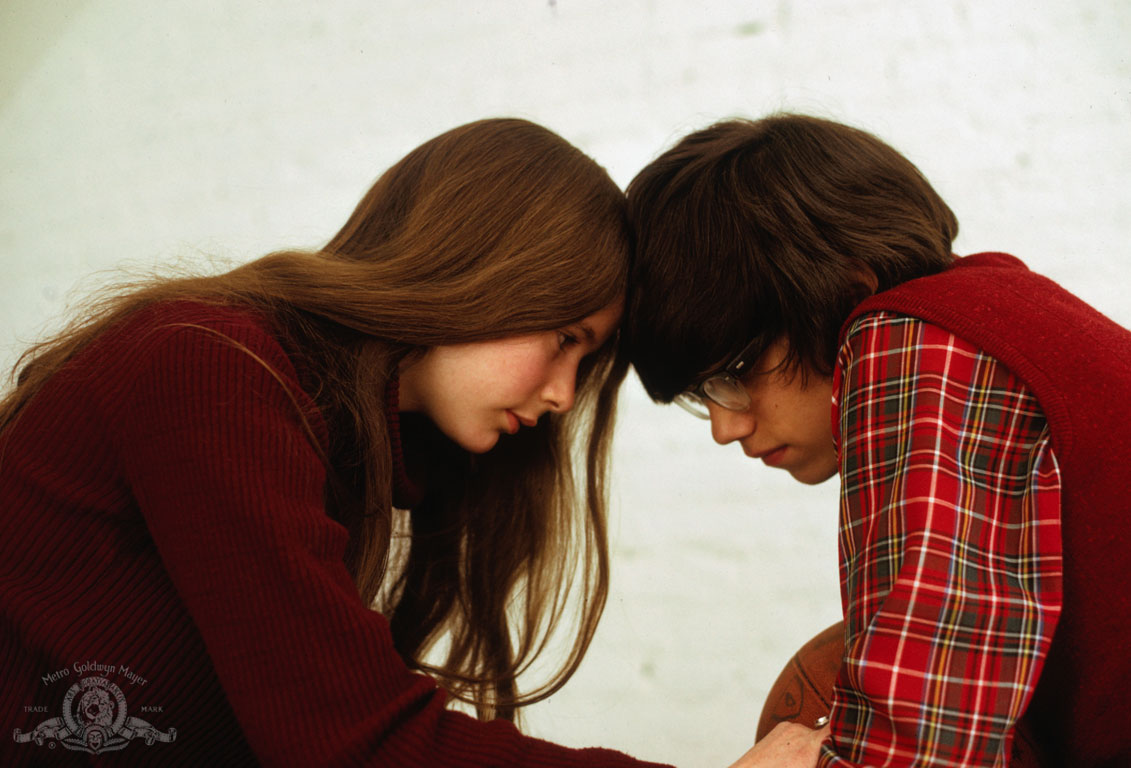
The story is a rather typical one of first love.  The geeky Jeremy (Robby Benson) spots Susan (Glynnis O'Connor) at school and falls for her instantly.  When he finally plucks up the courage to talk to her they start dating, falling into a relationship that becomes serious quite quickly.  Unfortunately, a big obstacle is suddenly thrown in their way when Susan's father gets his old job back, meaning they have to move.

I understand Mark Kermode's affection for this film completely, and I suspect that had I seen it when I was the same age as Jeremy and Susan (who are 15 or 16) it would have become one of my favourite films.  Seeing it now I can still feel a lot of it at a very personal level.  At 16 I was much like Jeremy; a bespectacled nerd pining for the prettiest girl in school.  The scenes where he's trying to call her and ask her out, asking his friend to find out about her, taking her on a date and trying to make small talk, I think we've all lived those awkward moments.  This is what makes Jeremy a film that still resonates; there can hardly be an audience member who hasn't felt like this, and that powers the movie through some of its clunkier moments.

Jeremy is sometimes earnest to the point of being cloying.  This would annoy me more, however, if it were a film about adults, who tend to have a little more perspective on things than teenagers in their first serious relationships.  As grating as they can be, these moments also ring true, catapulting me back in time to similarly over-dramatic conversations I had with friends at that time.  If I'm honest, my engagement with the characters and the relationship was probably also aided by the fact that I too would have been in love with Susan if I'd gone to school with her.

The emotional honesty of the film is thanks largely to its two excellent central performances.  Both 17 at the time and just starting out their film careers, Benson and O'Connor give unforced performances that feel almost improvised.  Their connection is palpable (and indeed genuine, they got together in real life for a time) and the scenes of them spending time together on dates are sweet and heartfelt.  Since this film was made many American teen movies have developed a mean or exploitative streak (and I say that as someone who likes a lot of those films), but what's great about Jeremy is that it gives you two characters who are easy to root for.  They aren't caricatures, just nice kids that you can identify with and even imagine having gone to school and been friends with.  Watching their relationship develop in such a frank way is a pleasure.

As a story about first love, Jeremy has barely dated, but the ending makes it look like something of a relic.  It still has an emotional tug, but I wonder if people raised in the internet age will feel the full force of it because Jeremy and Susan's problem could be so easily fixed today.  Of course, this is not the fault of the film. For me, the melancholy ending is one of the best things about it.  I'm not sure this is quite a lost classic, but I see why people would feel that way, and if you like coming of age films it's an essential one to track down.
★★★★

Lakki, The Boy Who Grew Wings
Dir: Svend Wam
I... I have to review this don't I?  

Lakki, The Boy Who Grew Wings would seem to have a lot going for it.  I'm fond of Scadinavian coming of age films, I like the idea of mixing surrealism and social drama (see Francois Ozon's Ricky for a great take on that odd idea) and the idea of a surrealist piece about an abused and neglected 14 year old growing wings to escape his situation is, at the very least, different.  Unfortunately, for me at least, Lakki fails on just about every possible level.

First off, the drama just doesn't work.  The reason that Ricky worked so well for me was that it established a real world, with strong performances, before heading into realms of surrealism.  Lakki doesn't.  From the off the 'real world' scenes feel just as surreal as the fantasies that Lakki has, so we're never sure what's actually happening and what Lakki is blowing out of proportion in his own mind.  This is also reflected in the tone of the performances, which are overblown throughout, further undermining any sense of why Lakki really wants to escape from his life so desperately.  Even when the film tries to rein these excesses in (far too late), the damage has been done and everything rings false.

The surreal sequences do have some striking images (Lakki, having been bullied by his swimming teacher, borne aloft in a crucifixion pose, by his classmates), but they all tend towards beating us over the head with their point.  Frankly the film may as well be called Lakki, The Boy Who Grew An Obvious Metaphor.

I don't really have much to say about this.  I found it irritating and tiresome throughout; a laboured, badly conceived and acted film that bellowed its metaphor at the audience for 105 minutes to little effect.
★

Dec 13, 2012

It's a Mad Mad Mad Mad World Cinema Blogathon: The Little Mermaid

So, for the second week of the Blogathon, Marcey has sent me to Czechoslovakia, to check out a surrealist film.  Here's why..

"Czech films of the 70’s are usually worth your time, and I happened to come across this one, based upon the story by Hans Christian Andersen. I am a huge fan of the story, and yes I do enjoy the Disney film but this is a fantastic adaptation. The visuals here are stunning; my eyes were treated to such beauty when I first watched this. There is a unique way of telling the story here, the under water scenes are done on sets and they look beautiful. This is exactly what I want out of the story, and I certainly hope Sam enjoys this. I know he shares a love with Czech cinema with me, and this is a must see."

The Little Mermaid ['76] 
Dir: Karel Kachyna
The first thing that came to mind as I watched this film wasn't the fairy tale, but rather a film that I had recommended to Marcey a couple of years ago; the Czech surrealist film Valerie and Her Week of Wonders.  Both films exist in a dreamlike state, but use it to tell what is a very simple story of a young girl's coming of age (in the case of Valerie the film is triggered by her first period, The Little Mermaid hinges on first love).  I LOVE Valerie, but The Little Mermaid, if not as immediately seductive, is not embarrassed by the comparison.

Disney's film must be one of the first I remember seeing at the cinema, but I also remember being read the real story; the sad story, when I was a kid, and thinking as I grew up that it was a shame nobody had filmed that version.  Turns out they had.  From my hazy 20 plus year old memories, this would seem to be a pretty faithful adaptation of Hans Christian Andersen's story of a mermaid (who saves and falls in love with a prince, then sells her voice to a witch, and agrees to endure enormous pain in order to appear human and have a chance to win his heart, only to fail, and decide to die rather than kill him and live).  It's a beautiful story, and Kachyna tells it well, with both the romance and the tragedy coming through affectingly.

The visuals are unusual and gorgeous, particularly the design of the underwater kingdom of the Sea King, and of the Mer people themselves, who are all dressed in the different colours that the sea can appear to be, and seem to have ocean debris tangled in their hair.  The set design is also stunning, and really contributes to the way that the film creates a whole and credible feeling undersea world.  I like the little details too, like the way that Mer People never appear wet, even after emerging from the water.  Kachyna builds the world well in the film's first half, making it seem idyllic at first, but revealing the ways it holds The Little Mermaid (Miroslava Safránková) prisoner bit by bit.

The standout moment of the film is the scene in the cave of the Sea Witch, which really lays out just how huge a sacrifice is involved for the Princess to even appear human, here the film combines horror with the development of a strong character (another thing that's good about the story as a whole; all the choices are the Princess' own).

The only major criticism is really that the film somewhat rushes through the story once the Mermaid gets to look human, but Safránková's convincingly alien and rather soulful performance help the emotion of the story's third act stick, as does the still dreamlike imagery.  This is a hypnotic and beautiful film, one I'll come back to, and one that, just as Valerie And Her Week Of Wonders did, has made me anxious to see more Czech surrealism.
★★★★

Nov 4, 2012

The Picture Show: Holy Motors / Excision

After a long layoff, Sam and Mike are back with The Picture Show.  This week they discuss (read argue about) Leos Carax' brilliant/irritating Holy Motors, Richard Bates Jr's disturbingly funny Excision and some of their favourite minor characters in movies.

You can listen to the show through the player below, or download it HERE.


We'll be back soon with a special show on the new James Bond film Skyfall.

Oct 19, 2012

24FPS @ LFF 2012: Diary 17/10

In Another Country
Dir: Hong Sang-soo
Despite my long-standing fondness for South Korean cinema, I've never previously seen any films by one of its most prominent auteurs, Hong Sang-soo. I've often meant to see his films when they have come to previous LFF's, but never quite got around to it, but I knew I'd be seeing this one as soon as it was announced that he had cast Isabelle Huppert in the leading role.

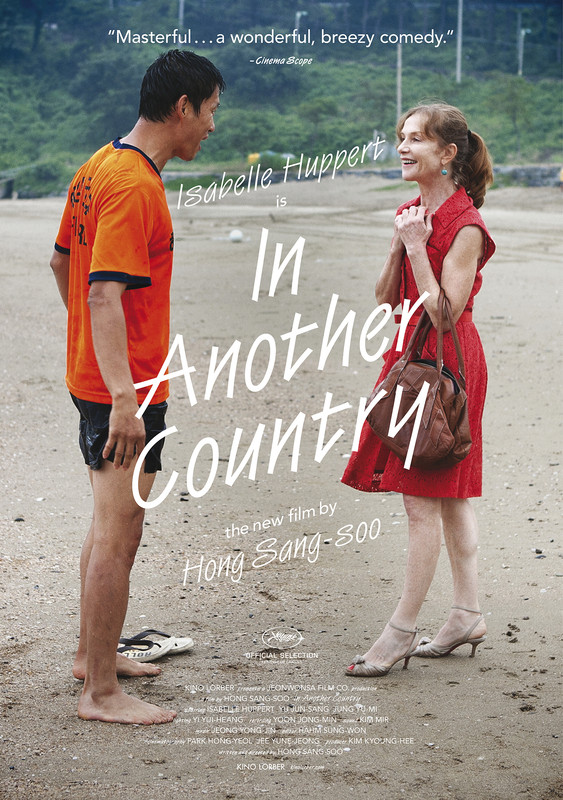
In Another Country is really three short films more than it is a feature, with Huppert playing a different French woman alone in a small Korean town, interacting with the same small cast of characters (some of them in slightly different roles from piece to piece) in each of the shorts. In the first part Huppert is a famous film director, in the second she's a woman awaiting the arrival of her lover; a famous Korean director and in the third she's alone after her husband (who may be a director in this part, it's not quite clear) has left her for a younger Korean woman.

After, for the first time, finding her on autopilot in another of her four LFF films, Dormant Beauty, I was really hoping that In Another Country would find Huppert on form again, and it largely does. Huppert has a reputation as a stern and icy presence (and to be fair, few people do stern and icy as well), but here she's clearly having a lot of fun, putting on a flighty turn as the various incarnations of Anne enjoy flirtations with Korean men (her host/lover and a lifeguard) or ask inappropriate questions of Buddhist monks (“What is sex for you?”). There's a sense that Huppert is relishing the (slightly mannered) silliness of the script, and particularly of the many scenes in which the same dialogue is used, slightly tweaked to the different situation, scenes in which she seems just a small step away from winking at the audience. It's a very different Huppert than we're used to, and a welcome change. The other performances are equally good, particularly a turn full of nervous energy from the actor playing the lifeguard [IMDB lists actor names but not who plays who for this film], who is uproarious in the first section, when he writes a song for Anne (“Anne, Anne, this is a song for you”).

Hong Sang-soo's direction is as intentionally mannered as his script, with Anne's changing character indicated largely by her changing dress, along with a few other physical indicators – hairstyles, clothes – that serve to show that the other actors are playing different people in each short. As constructed as it is though, the film is always fun, with Hong using a few dream sequences and wry match cuts as much as he does the dialogue in order to get laughs.

In Another Country is insubstantial. It plays with narrative amusingly, if less assuredly than In the House does, and the performances are all perfectly pitched. It's a fun confection which has encouraged me to try some more of its director's work, but it could do with being a little more substantial.
★★★

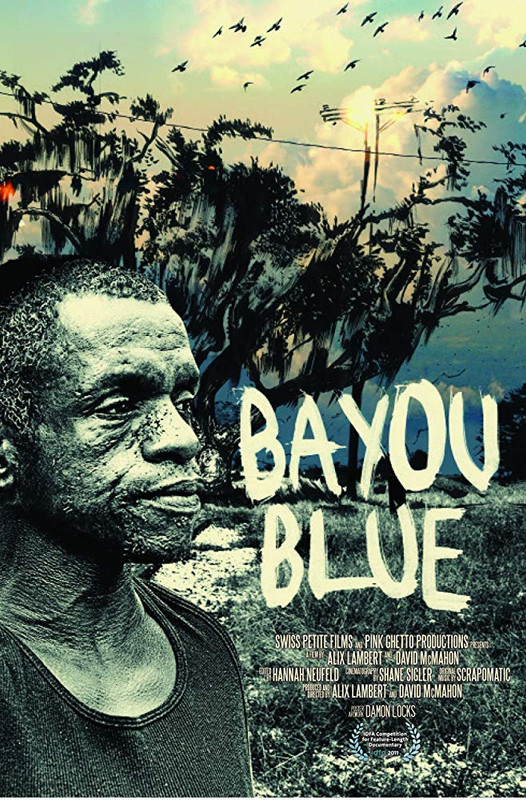
Bayou Blue
Dir: Alix Lambert / David McMahon
I've always been interested, perhaps because it's very far from my experiences growing up in a very safe corner of the South East of England, in the darker side of life. We all are to a degree – why else is 90% of the news in our papers bad news? But even at that ratio, the papers can't contain all the horrible things that people do to one another, and such was the case when it came to a relatively recent series of serial killings of young men down in the bayou around the New Orleans area.

Between about 1998 and 2006 Ronald Dominique raped and murdered 23 men, most of them not yet out of their twenties, and for some reason, even regionally, the story was hardly picked up. This was one of the worst serial cases in US history, and it was all but unreported. Bayou Blue looks mostly at the later cases, the ones that led two local Sheriff's office detectives from two different parishes to finally catch Dominique. Directors Lambert and McMahon talk to the detectives, to victims families and, in one very striking interview, to a man who seems to have come very close to making the victim tally 24.

It's a fascinating case, and the story is told with assurance by the filmmakers and passion by the interviewees but, while there are some nice visuals of New Orleans bayou, the pressing issue is really that there's no reason this should be on a cinema screen rather than on TV. There is also something of a lack of focus, as if this reasonably short film has used up all its most interesting information in the initial hour, and has to overextend itself for the last twenty minutes, touching on things like media and coastal erosion, which have little to do with the case at the film's centre.

On the whole, Bayou Blue is well made, interesting, television, but I can't shake the sense that it is television.
★★★

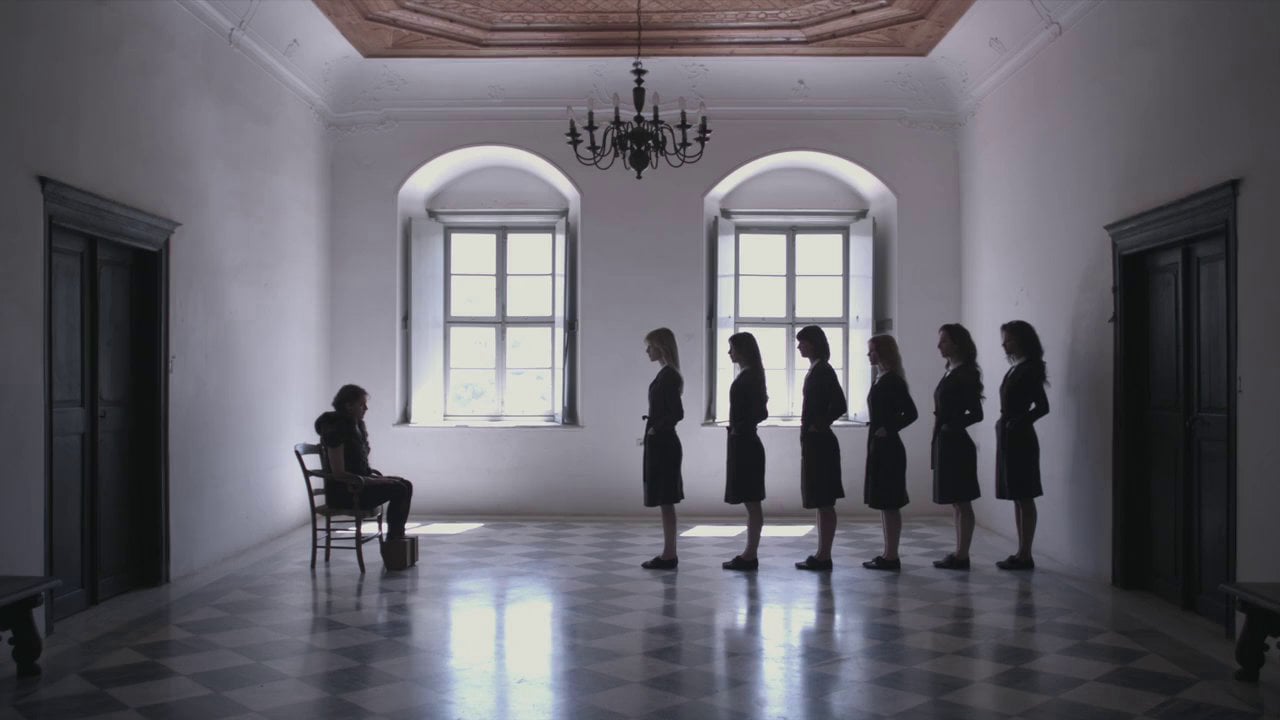
The Capsule [Short]
Dir: Athina Rachel Tsangarai
Athina Rachel Tsangarai follows her striking feature debut Attenberg, unusually, with a 35 minute short. The film seems to take place at a castle in a completely deserted landscape, where six young women (including up and comer Isolda Dychauck and Clemence Posey) are put through a series of bizarre scenarios by a beautiful authority figure (Tsangarai's Attenberg star Ariane Labed). They lead Goats around on leashes, they dance as Labed sings A Horse with No Name, they make confessions and are punished in odd ways (one girl has her hair tied in a knot across her face). These things are also interspersed with a handful of animated sequences (such as a topless Daychuck pulling her chest open, her crudely animated guts spilling out).

The Capsule is a film awash in film knowledge and references, and it recalls everything from Lucille Hadzihalilovic's Innocence to Lynch, to Bunuel and even, in its frequent focus on bodily detail and strange movement, David Cronenberg. The meaning is elusive, but it hardly matters, because the imagery is so strange and riveting (thanks in part, it has to be noted, to the strange beauty of each of the actresses Tsangarai has cast). This gorgeous, baffling, film makes me sad that the distribution routes for shorts are so limited, because it's a hypnotising film, and one of the best I've seen at LFF this year.
★★★★★

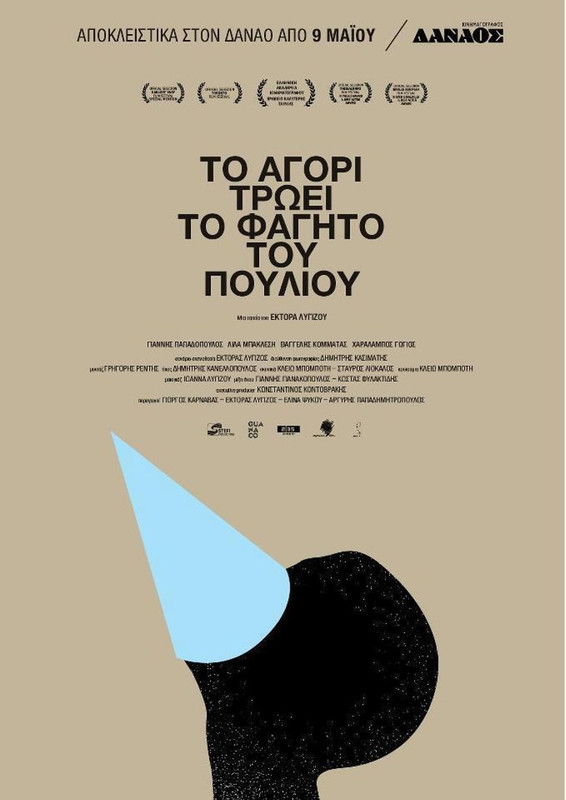
Boy Eating the Bird's Food
Dir: Ektoras Lygizos
I'm – annoyingly for a writer – at something of a loss for words. How do I even begin to go about itemising all that I hated about Boy Eating the Bird's Food? I wonder, in all honesty, if when he hoped we'd “enjoy the next 80 minutes of our lives” before the film, the producer was being ironic or facetious, because even if you see value in it (and I don't, and nor do I understand how anyone might), this is hardly an 'enjoyable' film.

The story is basically covered by the title. The lead character (Yorgos Karnavas) seems to be in his mid to late twenties and lives alone with a pet bird. He eats bird food and other things he finds, he stalks a girl who works in a hotel, visits an elderly man who lives beneath him and generally walks around a lot. NONE of his behaviour is given reason, little of it is shown to have consequences. Showing a character doing stuff, then expecting us to fill in every detail besides, is not a story and it certainly isn't a character study. It's merely stuff.

There is little on the technical side of the film to get excited about. It's largely shot in that irksome handheld 'look at me I can't hold the camera still so my film must be super realistic and smart' style that has become so prevalent of late and it's impossible to tell anything about the acting, because we know nothing about what this character is supposed to be like (we don't even know his name until it is randomly blurted out perhaps 15 minutes from the end of the film by an unseen character).

As well as being boring the film is also often disgusting, most notably in an utterly gratuitous scene, apparently staged for real, in which the main character jerks off in his hand before licking it clean, as well as in its apparent suggestion that if you stalk a girl long enough she'll eventually let you get intimate with her, and even pack up your dinner for you so you can take it away. As much as I was hating the film before, it really lost me half way in, when the main character danced to a song on Itunes, and chose Broder Daniel's Whirlwind, the theme tune of one of my favourite films of all time; Lukas Moodysson's Fucking Amal.  Here's a tip for makers of future meaningless, character free, badly filmed pieces of cinematic dung like this: DO NOT remind me how much I'd rather be watching one of my favourite movies.

My parents have often asked me why I watch some of the films I choose to watch (horror, exploitation, etc etc).  I'd really like to ask Ektoras Lygizos why he thinks we should watch this.  Why for 80 minutes we should watch a character do nothing more than wander around, eat rotting food and occasionally stalk a girl.  Why does he feel we should see this and learn nothing about him?  What does he think we'll gain in insight?  Does he expect us to make up a backstory, given that the only clue we get as to why the character is how he is is a brief and singularly unedifying phone call to his mother?  What the hell is he trying to say with any of this?  I don't care, at the end of the day.  Boy Eating the Bird's Food is a waste of my time and even of the memory on the digital cameras used to shoot it.  I'll be stunned if I see a worse film this year.
★

Jun 17, 2012

Cosmopolis [15]

Dir: David Cronenberg
Recently, several of my favourite directors have released films that just haven't delivered on the promise of their previous work, but the really crushing blow was David Cronenberg's last films, A Dangerous Method; the dullest, most anonymous, film of his now 40 year career. When I heard that he already had another film ready, I was concerned. A furious work rate doesn't usually imply consistency (does it, Woody Allen?), and Cronenberg is far from the most prolific of filmmakers. I was even more concerned when extremely mixed word began coming out of Cannes, if there was one thing I didn't want to have to say about 2012 it was 'this year David Cronenberg released two rubbish films'.

Happily, I don't have to say that. Cosmopolis finds Cronenberg back on form, once again making challenging, searching, intriguing work that fits right within his wheelhouse as an auteur, but doesn't feel like he's going back over old ground. It may well be his best film since eXistenZ, though confirming that, and much more besides, will demand rewatches.

Based (apparently extremely closely) on the novel by Don DeLillo, Cosmopolis has as its protagonist 28 year old billionaire Eric Packer (Twilight heartthrob Robert Pattinson). Packer is on his way across town to have a haircut, but the journey is taking a long time thanks to a presidential motorcade and a funeral, so meetings and doctor's appointments are taken in Packer's 'Prousted' limousine. The day goes further and further off the rails as Packer encounters more and more people, and begins, quite possibly, to lose his mind.

As with most of David Cronenberg's work, there is a lot to say about Cosmopolis, but the first thing that has to be noted is the film's big shock (not in a plot sense, don't worry). I've said some very rude things about Robert Pattinson's performances in the Twilight series (and, sorry fans, I stand by every syllable), but he's revelatory here. The first point of comparison that comes to mind is Hayden Christensen's unexpectedly great performance in Shattered Glass. To begin with, Packer is something of a blank slate - this is a studied and affected pose, and Pattinson is effective playing it as such - but as the film goes on, as we penetrate the impossibly wordy and constructed dialogue, there are layers peeled back by the differences in the ways he interacts with the different people who drift through the film. Some of the best scenes are between Pattinson and Sarah Gadon as his young wife (she also played Emma Jung in A Dangerous Method, and was one of the best things about that film). Gadon gives a very unusual performance, even by this film's standards, but through these scenes you do feel the dislocation between Elise and Packer, and perhaps between Packer and the world at large.

There are many things that may frustrate people about the film. First of all it's fair to say that the cadence of the film; the dialogue and the way it is spoken - theatrically, almost as if it is a series of lectures at times - requires a period of adjustment because it is so completely unlike the established rhythm of either life or cinema. Give it twenty minutes to settle, because once it does it becomes clear just how much is going on here, and just how funny the film is. There are inter-personal relationships (particularly interesting in this respect is a scene with Emily Hampshire in which Packer gets his prostate examined as he takes a meeting), but there are bigger themes weaving in and out of the words here, most notably surrounding both the reality and the morality of the financial crisis and other current events (some of which, like the custard pie attack on Rupert Murdoch and Occupy Wall Street, the film mirrors in ways that are downright eerie).

Cronenberg also seems to be packing his commentary into the visuals. This is tough to describe, but bear with me, because I think it's the film's key motif. There is a visual disconnect between the inside of Packer's limo, and Packer and his wife, and the rest of the world. I don't know quite how the film was made, but it seems at times in the film's first two thirds that all the backgrounds and everything outside the limo have been digitally added around Pattinson. The effect is curious, and distracting until you think about it on a metaphorical level of this rich and powerful young man having to truly engage with the world so seldom that he is becoming physically separate from it. I don't know that this was Cronenberg's intent, but it's also supported by the fact that this particular stylisation begins to recede after Packer leaves the limo behind and, in a sense, re-enters the world. Whatever it means, it makes the film fascinating and different to look at.

Inside the limo is almost another world: Cronenberg seems to stretch the screen to give us the odd combination of cramped and spacious that interior provides, and the visuals seem sharper on the inside, as if the world outside isn't quite as real, even when the windows open and it's JUST outside. All these things and more speak very much of Cronenberg's ever-recurring obsessions with identity, with our place in then world. There is less of the body-focused Cronenberg of old, but it's hard to ignore the frequent references to Packer's asymmetrical prostate.

The structure may be another sticking point for some people, as Cosmopolis unfolds essentially as a series of moments; individual scenes with little connective tissue or narrative drive ('I need a haircut' is basically the throughline of the 'plot'). It works, for me anyway, because most of those moments are individually brilliant, and the guest stars who come in for five or ten minutes each are frequently brilliant. Among the standouts are the aforementioned Gadon (who will hopefully have a larger part in whatever Cronenberg does next), a never sexier Juliette Binoche as an art dealer that Packer is having an affair with (and whose opening shot echoes a famous one of Holly Hunter in Crash), Samantha Morton, who makes sense of some of the film's most impenetrable dialogue, and Paul Giamatti, who by rights ought to steal the film when he turns up, but doesn't, because he seems to power Pattinson's own performance on to ever greater heights, and that scene becomes one of the unlikeliest great acting scenes of the year. The other really outstanding moment is the most awkward lunch date I've seen in ages, in which Packer and Elise talk at each other in a series of non-sequiters, Pattinson and Gadon are both brilliant here, effortlessly communicating everything about their marriage, though the dialogue is very indirect.

I'm afraid I'm neither selling nor analysing Cosmopolis especially well, because there's not really space to get into every interesting detail, because I need more time to think it through, because I need to see it again so I can immediately surrender to it rather than needing that period of adjustment, and so that I can further contextualise it as a Cronenberg film. What I can say is this; it's a major, interesting work, it should reward multiple viewings and real analysis, and I think it will remain interesting far beyond the current financial climate. It's proper, challenging, thoughtful, adult cinema, and we all could do with more than that. Welcome back David.
★★★★★

Jun 28, 2011

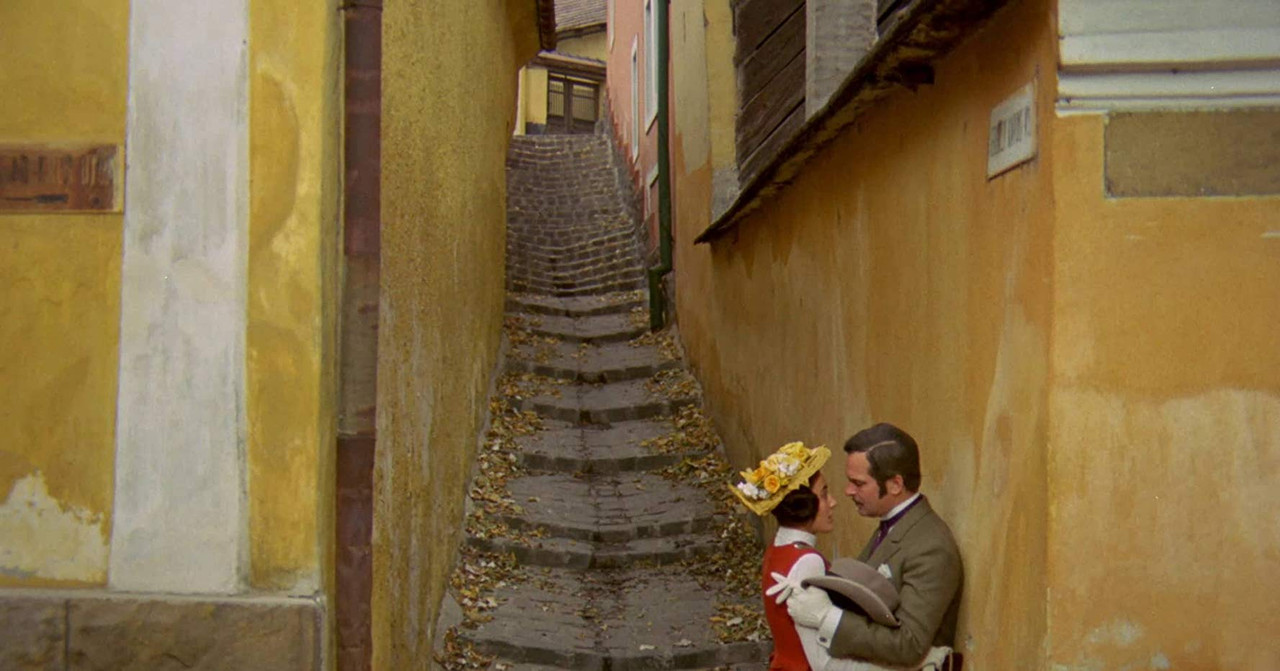
DVD Review: Szindbád [15]

Dir: Zoltán Huszárik
Made in Hungary in 1971, Szindbád is quite a late contribution to Eastern Europe's surrealist movement, which was peopled largely by artist rebelling against conformist communist societies. I wonder if, if I knew more about Hungarian politics, the context of this film, and exactly what Zoltán Huszárik felt in relation to it, I would have liked Szindbád more, but while I'm sure there are layers here that I am not getting, and I'm equally sure that that undermines my enjoyment of the film, that's not to say that there aren't things to recommend here.

Szindbád is a visual marvel. It's essential that the film be beautiful, because its eponymous central character - who seems to be an aristocrat of some sort, but not to have any settled job or residence - is clearly captivated by beauty, and particularly by the beauty of nature. This natural beauty is the film's focus, it is a sensual film, it delights in nature (the near microscopically close up shots of flora and fauna put me in mind of certain sequences in I Am Love), in food and perhaps most notably in women. As far as it has any structure, the film is a dossier of memories of the various beautiful women who have drifted through Szindbád's life. Huszárik, and by extension Szindbád, see beauty in women old an young, from every class and of diverse appearence. There is relatively little nudity, and no sex to speak of, but the film is in thrall to the beauty of women, and Huszárik's soft lighting and his focus on detail in all things (be it a flowers petal, chilli seeds in soup or a woman's breast) draws us into a sensual experience.

For me, Szindbád felt like a series of beautiful digressions, but the frustration of it is that I'm not sure that it is anything more than that. This is a surrealist work, so going in expecting a traditional narrative would be foolish, but the film gives us very little to hang on to. Szindbád himself (Zoltán Latinovits) is so studiedly unemotional - he tells us that the secret of his success with women is not telling them that he loves them - that he always remains distant, and he's so prone to spouting pretentious (and largely irrelevant) philosophies that he's often a chore to follow. None of the women are really around long enough to develop any character, and there is no sense of even the most subtle narrative through line (even films like Valerie and Her Week of Wonders have a central thread, which is then disrupted by the surrealist telling). Engagement is further complicated by a timeline which seems to skip back and forward through time, without giving us any clue to - or real reason to care about - chronology. What I was left with was a film I admire a great deal for its visual splendour, but the frustrating feeling that I'm going to need to do some serious reading to understand it enough to truly appreciate it.

Szindbád is hard work, but right from the start it is rewarding, because it is so beautifully shot and edited (the combination of very fast cutting with other scenes that unfold in long held shots is striking and means that the film always remains visually unpredictable). I'd like to be able to recommend it in more glowing terms. This one is probably for long standing fans and students of surrealist cinema, as a starting point I'd suggest Valerie, or some Bunuel, but if you are already interested in the movement then I suspect that Szindbád will delight and fascinate you.
★★★☆☆

May 5, 2009

Synecdoche, New York [15]

Dir: Charlie Kaufman
Write a plot summary? Sure, if you fancy seeing how my criticism reads when my mind has imploded.

I’ve waited a long time for Charlie Kaufman’s directorial debut. I first heard about it when it played Cannes in 2008, failed to get a ticket for it at the London Film Festival later that year, and have been anticipating its release since. I like Kaufman’s work, the fact that he always seems to have trouble finding a way to end his films aside I think he’s one of the most interesting screenwriters around. Add to that the fact that this film has a cast that seems to be made up of all my favourite people in cinema, including the great Jennifer Jason Leigh, and you can hopefully see why I’ve been anticipating it. Perhaps that anticipation is part of the reason that Synecdoche, New York is a disappointment on such a catastrophic scale, then again, it might just be as bad as I think it is.

It actually starts out promisingly. Phillip Seymour Hoffman is as brilliant as ever in a difficult role as Caden Cotard, a hypochondriac theatre director with a deeply dysfunctional family life with his artist wife (Catherine Keener) and their 4-year-old daughter. Throughout the film’s first half hour Kaufman rather wryly observes their life and their foibles, leading to several very funny conversations. Then Caden’s wife leaves him, he receives a ‘genius grant’ so he can produce a theatre piece and Synecdoche, New York begins to lurch further and further off the rails with every passing frame.

The main problem is this: I don’t care about any of these people. Kaufman clearly wants us to feel sorry for Caden in his lonely life, but he’s the cause of it, and it’s hard to care about a man who is so weak, so beaten down, when he seems to have everything he could want. He’s utterly unsympathetic, and that meant that I never engaged with him, never cared whether his play ever got produced or if he ended up with Hazel (Samantha Morton), the assistant who clearly loves him or Tammy (Emily Watson), the actress playing Hazel in the play. This lack of investment extends to every character, because they all seem essentially selfish and self involved. This means that even the endless parade of deaths in the movie make no impact, because who cares if there’s one less character you didn’t like anyway?

It’s absolutely not the fault of the actors. The film is brilliantly cast (Watson and Morton as the two Hazels is a particular masterstroke) and acted with conviction and reality with every performer, none more so than Hoffman. It’s just that the people they’ve been tasked to create and the situations they are enacting lack any ring of truth, any sense that they exist for any reason other than Charlie Kaufman’s amusement. Kaufman, of course, deals in unbelievable situations, but even at their most outlandish Eternal Sunshine of the Spotless Mind and Being John Malkovich feel real within their own worlds, this film never does.

It’s a shame that Synecdoche lurches into pretentiousness, because its cast deserve so much better. Among a line up crowded with the greatest female talent available right now many impress. Watson is excellent, particularly as she observes and mimics Morton. Morton, for her part, is the most human person, and perhaps the only likeable person, in the movie – she has a wonderful moment early in the film when Hazel buys a house that is cheap because it’s on fire, saying “I’m afraid I might die in the fire” in much the same tone that one might use to express worry about dry rot or cracked pipes. Dianne Weist is also customarily excellent, and Catherine Keener, though she’s done this sort of part before, plays Hoffman’s inattentive and uncaring wife with relish. The real standout, though, is Hope Davis, hilarious and drop dead sexy as Hoffman’s psychiatrist – if only she had more than 10 minutes screen time. The sole disappointment is Jennifer Jason Leigh, whose ill-defined character has little to do, and only four minutes or so in which to do it.

As the film plods ever nearer the two hour mark, and reality and fantasy begin to blend ever more, the film becomes unspeakably pretentious, vanishing, by the end, so far up itself that it becomes a klein bottle. It’s a distancing and boring film. I’m sure that some critics will tell you how deep and important and meaningful it is. I’m not one of them. I’d almost recommend Synecdoche, New York because of the sheer amount of acting talent on display, but with such numbingly dull material to work with even these greats can’t craft a film worth seeing.