Showing posts with label LFF2014. Show all posts

Oct 20, 2014

24FPS @ LFF 2014: My LFF Awards

The London Film Festival introduced competition strands for the first time in 2012.  In this post I won't be confining myself to the competition films, but instead looking at the best of what I saw during the entire festival.


Best Director
Josephine Decker: Thou Wast Mild and Lovely
Francois Ozon: The New Girlfriend
Christian Petzold: Phoenix
Celine Sciamma: Girlhood
Peter Strickland: The Duke of Burgundy

It's no surprise that this list features four of my final festival Top 5 (in this category Christian Petzold's control of Phoenix just shaded the abandon that Sion Sono brought to Tokyo Tribe).  All five are excellent all round directorial jobs, with fine performances and visuals, in styles ranging from the playful and colourful The New Girlfriend, through the occasional stylisation of Girlhood, to the much more severe Phoenix.

WINNER: Peter Strickland
The Duke of Burgundy is a rabbit hole of a film, you could easily get lost exploring the depth and detail that Peter Strickland brings to it, refashioning artsploitation influences like Jean Rollin, Jess Franco and Radley Metzger into a surreal love story with undertones of horror.  It is achingly beautiful, extremely well-paced and never less than fascinating.  My few issues with it when I first saw it have since receded in my mind and I can't wait to revisit it.


Best Actor
Romain Duris: The New Girlfriend
Grigoriy Fesenko: The Tribe
Lou Taylor Pucci: Spring
Miles Teller: Whiplash
Ronald Zehrfeld: Phoenix

Rather slim pickings this year in this category, which isn't to say that these aren't excellent performances, just that if you asked me to add a sixth to them we'd probably be sitting here all day while I thought it over.  In a lot of ways Grigoriy Fesenko's is the most interesting performance here, given that he has no voice to articulate his feelings, just sign language and physicality; both of which he jabs aggressively at the other characters.  Miles Teller, one of the best young actors in Hollywood, continues to make his mark with a fantastic performance (which may yet net him an Oscar nod) in Whiplash, which also shows off his versatility, being 180 degrees from his last LFF role, in The Spectacular Now.


WINNER: Romain Duris
Romain Duris is an actor I've been aware of for a long time, but not one I've seen deliver a performance that has really put him on the map for me.  The New Girlfriend changes that.  Duris has a complex role here, in some ways he's playing two characters, to begin with he often has to play aspects of both at the same time, but then draw increasingly distinct personalities for them as the film runs on.  He rises to the challenge brilliantly, creating two characters whose physicality and personality are strikingly different from each other, but who also inform each other's behaviour.  Subtle is not what The New Girlfriend is, but there are many subtleties in what Duris does here.


Best Actress
Bae Doo-na: A Girl At My Door
Nina Hoss: Phoenix
Kalki Koechlin: Margarita, With A Straw
Ellen Dorrit Petersen: Blind
Karidja Touré: Girlhood

The welcome surprise of this category was not just the sheer amount of performances I had to leave out of it (from, among others, The Tribe, The Keeping Room, Hungry Hearts, The New Girlfriend and The Duke of Burgundy) but the fact that I had never even heard of three of these actresses before the festival.  Ellen Dorrit Petersen is heartbreaking as a woman dealing with loss (that of her sight) in Blind, Karidja Touré makes a boundlessly charismatic debut in Girlhood and Kalki Koechlin is moving and brilliantly detailed in Margarita, With A Straw.  But...


WINNER: Nina Hoss
Nina Hoss is one the best actresses working in any language right now, and she's seldom better than when she is paired with Christian Petzold, having served as his muse since 2003's Wolfsburg.  Phoenix' take on Vertigo is their second riff on a classic noirish text.  Hoss plays a concentration camp survivor who undergoes extensive plastic surgery (saying she wants to look as much like her old self as possible) to cover her injuries.  On meeting the husband she thought dead she finds that he doesn't recognise her, but is struck by her resemblance to his wife, so much so that he asks her to 'pose' as his wife.  The layers in Hoss' performance are vivid and detailed, and everything, by design, plays on her extraordinary face, right up to the devastatingly powerful final two scenes.


Best Screenplay
Josephine Decker / David Barker: Thou Wast Mild and Lovely
Julia Hart: The Keeping Room
Francois Ozon: The New Girlfriend
Christian Petzold / Harun Farocki: Phoenix
Céline Sciamma: Girlhood

One thing that strikes me about the screenplays here is that while they all have some memorable lines, none of them are really built around dialogue.  The ambiguity of mood in Thou Wast Mild and Lovely begins with Decker and Barker's screenplay, while The Keeping Room's screenplay weaves layers of modern metaphor into its depiction of the American Civil war.  Of the three foreign language screenplays Francois Ozon's The New Girfriend comes closest to taking the prize, with its balance of kitsch comedy, raw emotion and strong characterisation.


WINNER: Celine Sciamma: Girlhood
Celine Sciamma's Girlhood, like her previous two films, takes the broad strokes familiar from hundreds of teen and coming of age movies and views them from a sympathetic, ground level, point of view.  Coming from a filmmaker who is 15 years older than her characters and from a very different background the apparent authenticity, transcending stereotypes, of the interactions between the characters is highly impressive.  The structure is another strength, unfolding in several acts of roughly twenty minutes each, always advancing the characters organically but incrementally as it goes on, while keeping a loose, organically driven, feel to the film.  It's the film that feels least written, and that's perhaps why it wins here.


Best Cinematography
Fabio Cianchetti: Hungry Hearts
Ashley Connor: Butter on the Latch / Thou Wast Mild and Lovely
Crystel Fournier: Girlhood
Nicholas D. Knowland: The Duke of Burgundy
Martin Ruhe: The Keeping Room

I cheated a little bit here by nominating Ashley Connor for both Butter on the Latch and Thou Wast Mild and Lovely, but I really can't separate the two.  Connor has such a definable style and though it grows between the two films there is real continuity between them.  Nicholas D. Knowland might be the obvious choice here for the dreamlike, gorgeous imagery of The Duke of Burgundy, but Martin Ruhe's work in The Keeping Room, while going for a more mainstream approach, also brought beauty and artistic framing to the grindhouse.  The shifting look of Hungry Hearts, which goes from brightly lit rom-com to surreally paranoid shot horror, was a real surprise, and some of the more unusual technique on show at LFF.


WINNER: Crystel Fournier: Girlhood
Fournier has shot all three of Celine Sciamma's feature films, and they have clearly built an understanding and a style together.  Girlhood is their most designed, most expansive and most cinematic work to date, but it wears its technique lightly.  Much of the film has a realistic style, putting us in amongst the girls it is about, and making it all the more striking when, as in the first scene, or the stunning sequence set to Rihanna's Diamonds, Fournier and Sciamma go for something more stylised.  Beautifully and meaningfully framed throughout and carrying recurring themes (for instance the fact every act break features a shot of Marieme's back), Girlhood marks a big maturation in Sciamma's already strong visuals.


Best Score/Soundtrack/Use of Music
Girlhood: Use of Light Asylum, Rihanna / Score by Para One
Kelly & Cal: Song by Wetnap, sung by Juliette Lewis 
Phoenix: Speak Low, sung by Nina Hoss
Tokyo Tribe: Songs
Whiplash: Final drum solo

Film is my first obsession, music is my second, and I love the many ways in which the two intersect.  In fact several of the very best moments of the films at LFF this year revolved around that intersection.  The final scene of Phoenix, in which Nina Hoss, with a beautiful voice I never knew she had, sings Speak Low is a gut punch of a moment that echoes long after the credits roll.  The same goes for the lengthy drum solo that closes Whiplash in an explosion of every feeling Miles Teller's Andrew has bottled up during the film.  Tokyo Tribe is a musical, completely powered by its hip hop beats and (sometimes inexpertly) rapped plot and character developing songs, it's unlikely to be to everyone's taste, but I found it huge fun.


WINNER: Girlhood
I pretty much knew that Girlhood had this category sewn up the second it started.  The opening sequence, set to Light Asylum's Dark Allies is incredibly striking and energetic and sets the tone both musically and for the story of the film in using a song powerfully delivered by a young black woman.  Then there's the sequence set to Diamonds; a key moment of character development for Marieme and a sequence that redefines the song for me.  It's not a song I like outside of this context, but seeing what it means to the audience it is for, and how it draws the girls together, gives it power that it lends to the film.  Add in a brilliant chilled electro score by Sciamma's regular collaborators Para One and you've got a film as rich musically as it is visually and as a story.


Biggest Surprise
The Duke of Burgundy
The Keeping Room
The Satellite Girl and Milk Cow
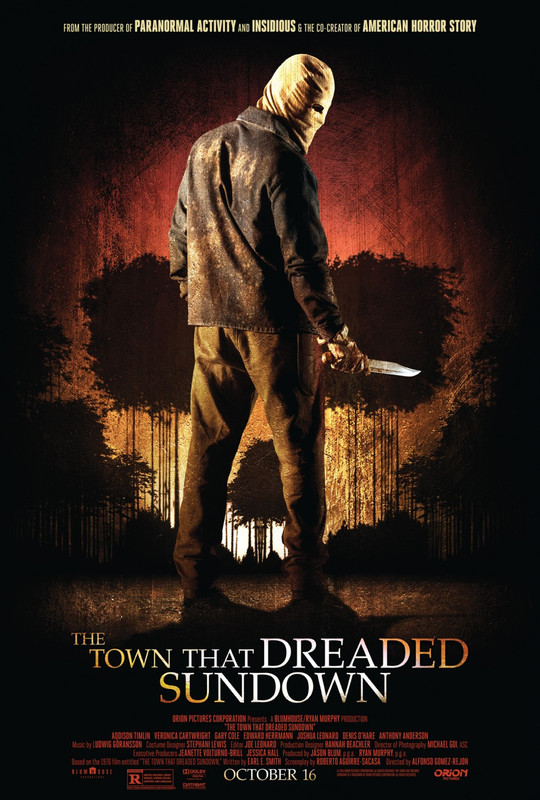
The Town That Dreaded Sundown
Waiting For August

Surprises came in many forms at this year's LFF (as did disappointments, but we won't talk about those). Satellite Girl and Milk Cow was surprising purely in its completely barmy plot, while Waiting For August and The Keeping Room were both films I wanted to see, expected to like, but was surprised by the specifics of (even after watching it in the case of Waiting For August) and The Duke of Burgundy was a film expected to dislike, on the precedent of Peter Strickland's last film, but found myself falling for.

WINNER: The Town That Dreaded Sundown
At first glance this was an almost completely unappealing prospect; yet another remake of yet another cult horror classic (albeit one I haven't yet seen).  I expected it to follow the blueprint to the letter; drab visuals, stupid and/or hateable characters, overexplained killer, rote deaths, abysmal writing, a sense of 'well, that's good enough' to the whole thing.  That's not what this film is, indeed it's as inventive a remake as I've seen for a long time.  Ambitiously folding the original film into the fiction it spins, this film both pays tribute to the history of horror and uses it as fodder to make something interesting.  It's stylish, directed with verve and an interesting, magpie like, eye, solidly acted and loads of fun.  Definitely the surprise of the festival.


One To Watch
Bruna Amaya: Actress, Casa Grande
Chiara D'Anna:  Actress, The Duke of Burgundy
Alfonso Gomez-Rejon: Director, The Town That Dreaded Sundown
Teodora Mihai: Director, Waiting For August
Assa Sylla: Actress, Girlhood

One of the things I like best about a festival is the opportunity to discover new talent.  I decided to include people who I haven't nominated for any other awards here, because otherwise the category would be too crowded with the aforementioned likes of Kalki Koechlin, Joesphine Decker, Ashley Connor and Miles Teller.  What that list and the one above reflect is how great a year this has been at LFF for female talent, both in front of and behind the camera.  It's something I hope we see more of, especially in behind the camera roles.


Bruna Amaya is an interesting choice here, because I didn't love Casa Grande, but in discussing it with a critic friend that evening we agreed that she give a nicely nuanced performance and had a warm presence that left us anxious to see more of her.  The other actresses listed here are the same, they draw you into their films and their roles effortlessly, but otherwise they couldn't be more different; Assa Sylla is all bravado as Lady, the leader of Girlhood's gang of girls while Chiara D'Anna seems like a beautiful apparition teleported in from a Jean Rollin film to appear in Duke of Burgundy.  The directors couldn't be more different.  Alfonso Gomez-Rejon finds an interesting style by playing around with as many 70's and 80's horror influences as he can, but manages to make it all feel like more than empty homage, while Teodora Mihai drew me so deeply in to the experience of the family in Waiting For August I never knew whether I was watching documentary or fiction, but was enthralled either way.

I'm not choosing a winner here.  These people should all be on your radar.

Oct 19, 2014

24FPS @ LFF 2014: Roundup 3

The Face Of An Angel
Dir: Michael Winterbottom
Michael Winterbottom is probably Britain's most prolific director, generally turning out at least one full length project every year (his last feature, Everyday, played LFF in 2012), unfortunately his recent career has reflected the ups and downs that almost inevitably come with that sort of productivity.  The Face Of An Angel is not just a downward turn in form but one of his very worst films.

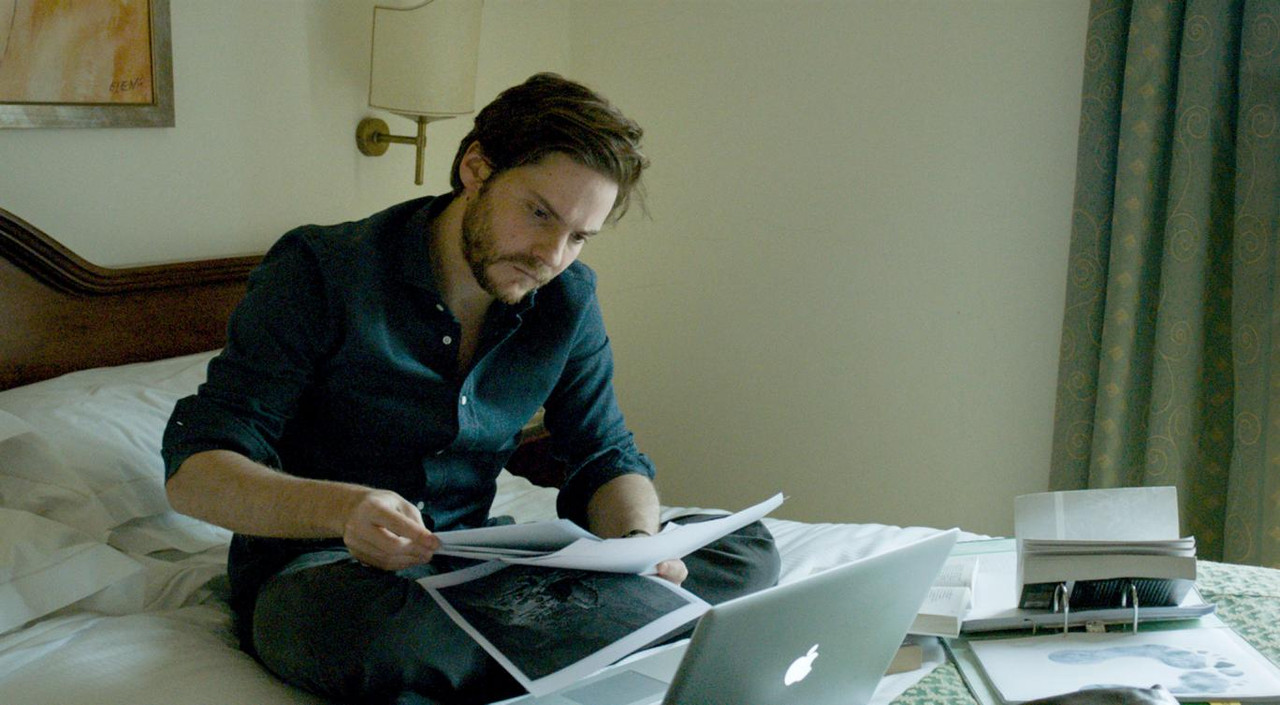
Winterbottom's point of departure is the Meredith Kercher case.  Here Kercher is renamed Elizabeth Pryce (Sai Bennett) and Amanda Knox, the roommate first convicted, then acquitted and now, in her absence, re-convicted of her murder is called Jessica Fuller (Genevieve Gaunt), but they hardly matter. The film isn't the story of Meredith Kercher, or of Amanda Knox or their analogues. Indeed, Winterbottom shows almost no interest in the case itself, instead spinning the story of filmmaker Thomas (Daniel Bruhl) who is struggling to write his own film about the case, largely because he too wants to use it as a mere jumping off point to make a film based on Dante's Divine Comedy.

Winterbottom has previously explored the difficulty of creation with great success.  A Cock and Bull Story hilariously took apart the process of trying to adapt Tristram Shandy, but here Winterbottom comes unstuck while trying to make the same point with drama.  The film's thesis is laid out early in clangingly earnest fashion, when Thomas is told that his film should be fictional because “you can only tell the truth by making it fictional”.  He tries to further explore this angle in scenes with Beckinsale and her friends and rivals in the press pack covering the appeal in the not Amanda Knox, just exactly like Amanda Knox in every detail, case.  Sadly all these scenes end up doing is regurgitating old points about how sleazy the UK press is and how everything in your newspaper has an angle, and is played for drama first, fact second.  These are surface jabs; things people already know if they have followed things like the hacking scandal and Winterbottom never gets deeply enough into the journalist characters to say anything less prosaic.

At times it's almost impressive how miscalculated The Face Of An Angel is.  Midway through the film Winterbottom seems to decide that it might be an interesting idea to riff on Zodiac, so he introduces a sinister blogger who serves as Thomas' landlord and who Thomas begins to suspect of being involved in the killing.  The attempts in this subplot to find a scene as creepy as Zodiac's basement meeting between Jake Gyllenhaal and Charles Fleischer are just risible.  The dialogue is never remotely convincing and the plot adds nothing to the story.  This is also true of the several utterly inexplicable dream sequences, one of which features a CGI monster.  No, I don't know why either.

It's tough to blame the actors for their performances because Paul Viragh's screenplay gives most of them so little to play, but the fact remains that Daniel Bruhl, who impressed in an English language role in Rush, seems lost here.  For all his screen time as Thomas we never get much of a handle on him.  In fact after a certain point it's hard to see him as 'Thomas', rather than as an analogue for Winterbottom himself.  Kate Beckinsale is similarly adrift, along largely to provide exposition and a couple of brief sexual interludes for Thomas.  Like Bruhl, she's not terrible, just wasted.  The surprise among the cast, indeed the only person to emerge from this farrago with much of their dignity intact, is Cara Delevigne.  As a barmaid who ends up as Thomas' guide in Siena she gives a sparky performance and shows that as well as her unusual beauty she has a natural screen presence.

On the one hand there is a certain level of fascination in what seems to be Michael Winterbottom's semi-autobiographical mid life crisis being played out on screen in surrogate form (legal note: I'm not suggesting the cocaine usage and Kate Beckinsale shagging are drawn from real life).  The problem is that Winterbottom hasn't committed to making that film.  By wedding it to something inspired by what could justifiably, thus far, be called the trial of the century he does no justice to either and, more problematically, the coverage of the Knox/Kercher case ends up so prosaic it's insulting.  This isn't helped, as Winterbottom clearly would like  it to be, by a closing dedication to Meredith Kercher, which, along with the mawkish final montage, comes across as more of a self-serving figleaf than anything sincerely meant.

The Face Of An Angel is something of a débâcle.  I might have been interested in either of the films it attempts to be, but jamming them together is one of the worst ideas of Michael Winterbottom's career.
★

The Town That Dreaded Sundown [2014]
Dir: Alfonso Gomez-Rejon
The remake has become a byword for the lack of invention and inspiration that seems to be running through the mainstream American film industry of late and for the last decade horror fans in particular have had cause to groan inwardly every time a new project with the same title as a cult classic has been announced.  There are, however, a handful of projects that buck the prevailing trend for empty retreads and over-explained reboots of previously mysterious monsters.  The Town That Dreaded Sundown is one of them.

Rather than simply remake the original film, this one folds it into its story, setting it up as part of the mythology surrounding a real killer, known as the Phantom, who stalked the town of Texarkana on 1946 and was never caught.  Late in 2013, the Phantom appears to have returned and to have set high schooler Jami (Addison Timlin), the girlfriend of his first victim, the task of discovering and informing the town of why he is back.

It's refreshing to see a clever conceit at the heart of what seems, at first glance, to be another simple cash in, but it's also good that the film wears its post modern twist reasonably lightly, delivering the slashery goods in a form that horror fans will enjoy as it plays up to and relishes the tropes of the genre.  Alfonso Gomez-Rejon directs somewhat playfully, referencing the masters (Carpenter, Fulci, even Fincher, with an early murder scene that has a few shots straight out of Zodiac), but he also finds his own style and recurring themes.  The use of neon lighting, especially in the motel murder, gives the film an 80's throwback feel (also reflected in the opening Orion Pictures logo) and there is some very striking imagery of eyes, especially of the Phantom reflected in extreme close ups of Addison Timlin's eyes.  The directorial and editorial timing is also bang on, with jump scares working even when you know, as a horror fan, that they're surely coming.

The performances are solid all round, with a nicely cast group of character actors playing the town's older residents, Gary Cole and Anthony Anderson are especially notable as a sheriff and a Texas Ranger respectively.  Addison Timlin is a capable actress and makes for an appealing final girl, though her assertion early in the film that “I don't get asked out much” rings incredibly false.  The film cleverly combines its invented legend, the original film and its own innovations for about 65 minutes, but sadly can't quite hold it together for the ending.  By this time the red herrings have been thoroughly (though amusingly) worked through , so the culprit is pretty obvious.  When the film tries to spring a surprise it's so left field that for a moment you could feel the audience give a collective 'WHO?!'

It's a shame that The Town That Dreaded Sundown can't quite wrap things up satisfyingly, but the film is strong enough and unusual enough that it doesn't lose many points for that.  It marks out Gomez-Rejon as an inventive talent to watch and, in cannibalising its source, stands on its own merits as a horror film, while also making me want to go back and see the original, on the promise that it won't simply be this film with more lo-fi visuals.  I'd happily see more remakes if they were all like this.
★★★½

Oct 18, 2014

24FPS @ LFF 2014: A Blast

Dir: Syllas Tzoumerkas
The Greek 'weird wave' kicked off, at least at LFF, in spectacular style by Yorgos Lanthimos' modern classic Dogtooth has produced some of the most challenging work in recent world cinema.  Some of it - Alps, Miss Violence, Attenberg - has been great, some -  the infuriating Boy Eating The Bird's Food - has been abysmally poor.  The good news is that A Blast isn't as terrible as Boy Eating The Bird's Food, the bad news is that it's a very close run thing.

The film focuses on Maria (Angeliki Papoulia, of Dogtooth and Alps); a mother of three in her early 30's.  When we meet Maria she is clearly running from something (or to something, it's hard to tell).  She's had debt problems thanks to the failure of the shop she owns with her Mother, has a fractious relationship with her sister (Maria Filini), whose husband has joined Golden Dawn, but still leaves her children with them.  She also appears to be on the outs with her cargo ship captain husband Yannis (Vassilis Douganis).  The film skips between scenes of this increasingly frantic Maria and of her early, more carefree, days with Yannis.

There are two major problems with A Blast, which together conspire to make it one of the absolute worst films at LFF this year.  The first is the register at which it is presented.  The entire film is set at an hysterical pitch, every emotion overplayed, every line garbled out as if in a dialogue speed reading competition, or a rap battle with no rhythm.  This reaches a fingernails down the blackboard annoying fever pitch in scenes between Maria and her sister, in which Papoulia and Filini trade loud insults at 200 miles per hour.  The effect is very much like being in a wind tunnel lined with people bellowing at each other.  

Aside from the fact that it's just wearing, this constant pursuit of volume and speed over sense has another damaging effect: it makes everything overplayed.  As anyone who has seen Dogtooth and Alps will tell you, Angeliki Papoulia is a great and fascinating actress who can say volumes without speaking.  Here, sadly, she's directed into shouty histrionics at almost every turn and it all feels like she's in a ridiculously sexually explicit panto, so broad and directed at the back of the room is her performance.  It's tough to say anything nice about the other performances, but as they are also pitched at this same level you have to extend the actors the benefit of the doubt for their clanging falseness.

The other film-hobbling issue that A Blast has to contend with is how much of a mess it is, and how its all over the shop structure ultimately renders it an exercise in empty, unfulfilled, metaphor.  Co-writer/director Tzoumerkas is clearly trying to draw a big metaphor about how the financial crisis and the rise of Golden Dawn ripped Greece apart, boiling that conflict down to this one family.  He fails.  Hard.  The reason he fails is that little of this attempted substance can make its way through the sheer volume of the present day scenes and that the flashbacks, while trying to set a different tone, are so needlessly explicit (and seldom any quieter than the present day story) that there is no space left in these 83 minutes for nuance.

For the most part, A Blast flits all but randomly between time periods.  It may be worse when it stops being random, cutting clunkily between a sex scene, Maria watching hardcore porn in an internet cafe and Yannis teaching Maria to throw a punch.  The metaphor is beyond obvious and lamely executed.  When it's not obvious the film is infuriatingly obscure.  For example, early in the film a 'first payment' of 65,000 euros is put in to Maria's bank, setting her off on her journey.  What is this payment for?  How much is yet to come, in how many installments, and what does she have to do for those?  Not only does the film never answer these questions, it barely even feigns interest in them, preferring to cut to yet another borderline hardcore sex scene instead.

The sex scenes pretty much encapsulate A Blast's larger issues; screamingly over the top content over substance.  Papoulia has hardly shied away from explicit content, indeed Dogtooth also has a sex scene that at least skirts very close to being hardcore.  The difference is that the explicitness here serves little purpose, leaving it feeling exploitative of both Papoulia and Douganis.  Yes, it shows how at one point the couple had an intense connection, but this is something film neglects to demonstrate in anything but a physical way, and it hardly needs in excess of ten minutes of extremely explicit sex to demonstrate it on a physical level.

A Blast ends on a suitably infuriating note; an ellipsis that tells us nothing.  That's just...
★

Oct 17, 2014

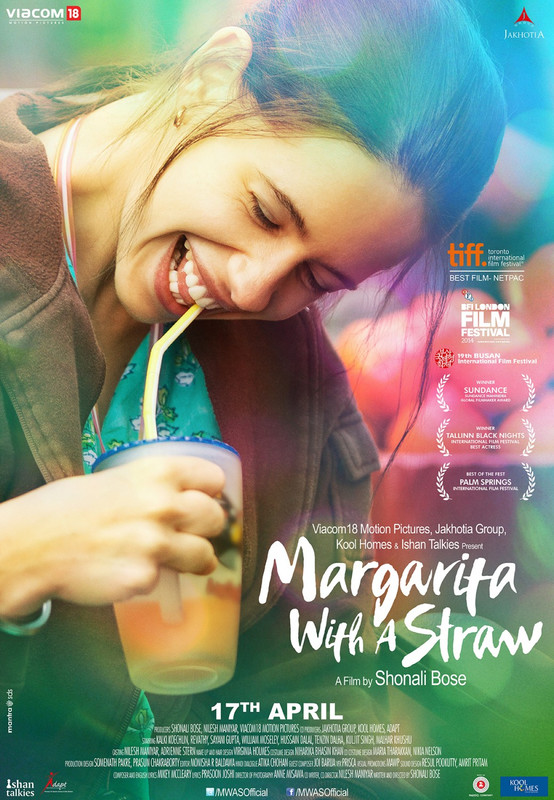
24FPS @ LFF 2014: Margarita, With A Straw

Dir: Shonali Bose
The view we get of modern Indian cinema in the UK is so dominated by the handful of  mainstream Bollywood films that get released here that it can be hard to realise that there is an independent industry there, producing films that are perhaps better suited to export for more general audiences.  Margarita, With A Straw may be a flawed example, but it's certainly an interesting one.

Laila (Kalki Koechlin) is a bright, pretty, 18 year old girl with a talent for music, living in a middle class family in India.  She is also confined to a wheelchair because of a severe case of Cerebral Palsy.  When Laila wins a scholarship to study at NYU she and her mother (Revathy) relocate to the US.  While studying there Laila meets Khanum (Sayani Gupta) a fellow student, who is blind.  The two fall for each other and begin a relationship that could be complicated when Laila has to tell her family she is bisexual.

If there is one overwhelming reason to seek out Margarita, With A Straw then it is Kalki Koechlin.  Apparently she's a major Bollywood star, but I had never seen her before.  I came away hugely impressed.  The details of her performance are so well observed and authentic that I had to do some research to find out whether she was genuinely disabled.  Koechlin brings an effortlessly charming and endearing presence to Laila.  There can be a tendency for either scripts or performances attempting to portray disability to talk down to disabled characters; to assume that they are more different from able-bodied people than is in fact the case.  In this case neither writer/director  or Koechlin make that mistake.  Laila is a well drawn character who has thoughts and feelings that are as complex and treated as just as valid as those of any other character.  

Beyond this, Koechlin gets the tone just right.  It is very easy for a performance like this to fall in to caricature (see Rob Lowe's cringemaking turn in Square Dance for a particularly egregious example) but Koechlin treats the challenges of playing disability much as it seems Laila treats the fact of being disabled; as a part of her reality, but one she's not going to allow to stop her from expressing herself.  On this evidence Koechlin is a real talent and someone I'd like to see more of.

Outside the fact of the physical challenges its main character faces, the story of Margarita, With A Straw is a pretty standard LGBT film narrative. Laila has previously seen herself as straight but falls for a gay character in Sayani Gupta's Khanum; a fun loving girl who compliments Laila well, something also reflected in Koechiln and Gupta's chemistry.  It also hits pretty standard tropes in its coming out story, with Laila worrying about how her parents will react, not without reason, as Khanum has been disowned by her family, this conversation hints at some deeper cultural comment about how sexuality is viewed in India, but the film never really digs into that theme.

Familiar as it is, the story is largely charmingly told.  Revathy is excellent as Laila's concerned and caring mother and their close relationship is nicely drawn, warm, and often quite funny.  You can see exactly why Laila falls for Khanum, thanks to Sayani Gupta's vibrant performance, and she also brings some emotional resonance to the developments of the relationship in the third act, rushed as they are.  

That third act is the film's major issue.  There are bits that clunk earlier in the film; Laila's crush on her British typing aide (William Moseley) falls especially flat and the visual style is never especially dynamic, but the twist that signals the third act comes out of nowhere and is rushed through with unseemly haste.  The reason for this is easy to see.  The mass of dedications on the film suggest that this is a very personal story for writer/director Shonali Bose and that few, if any, of the events are wholly invented.  The thing is, compressing events set over about a year into under two hours sometimes jams too much incident together.  Add in an abrupt change of tone, and your story can quickly lose credibility.  That's exactly what happens here.

Margarita, With A Straw is flawed, but it's warm and engaging despite its problems and whatever else you think of it, it is worth seeing purely for Kalki Koechlin's exceptional performance.
★★★

Oct 16, 2014

24FPS @ LFF 2014: The Disappearance Of Eleanor Rigby: Them

Dir: Ned Benson
Ned Benson's feature début sounded hugely ambitious the first time I heard about it; a story about a marriage in crisis told across two features, Him focusing on the husband (Connor, played by James McAvoy) and Her concentrating on the wife (Eleanor, played by Jessica Chastain).  It sounded challenging, with a three hour running time and shared moments echoing slightly differently depending on which film you saw.  A tough sell then, but I don't believe the answer to that tough sell is this combined version, which dumps the novel structural conceit and feels terribly conventional as a result.

The Disappearance Of Eleanor Rigby: Them opens with Eleanor attempting suicide, we don't know why at this stage, but it also becomes clear that she is separated from her husband, who is running a struggling restaurant with his best friend (Bill Hader).  Eleanor stays with her parents (Isabelle Huppert and William Hurt) and her younger sister (Jess Weixler), takes a class at the local college and tries to get back on an even keel.  Connor tries to keep his business afloat, relate to his father (Ciaran Hinds) and get his wife back. 

The problem with this film is that practically everything has been seen more than a few times before.  As drama, there is little to mark Connor and Eleanor's story out from any other film about a couple going through the wringer in the wake of a tragedy and while the side characters add some colour to the film they don't have anything to do that isn't in relation to Connor and Eleanor, meaning that they always feel more like story props than they do people.

There are ways to put a new spin on an old story, but without its structural gimmick Eleanor Rigby seems not to have any.  The side characters are especially guilty of speaking almost exclusively in trite clichés, and the fact that the film often has them say something like 'this is such a lame way to put this' doesn't excuse that fact.  Note to writers: if you have to have multiple characters apologise for their own dialogue you may wish to have another crack at at least some of those lines.  Talking of cliché, Ned, maybe you could have just ONE shot in which Isabelle Huppert isn't holding a glass of wine, especially as, in this version at least, you never acknowledge that she might have a problem.

The caveat here, and it's a major one, is that it's tough to fault either the cast or their performances.  Jessica Chastain is one of the most magnetic, charismatic actresses working today and, by happy accident, also one of the most talented.  She's excellent as Eleanor, finding little moments of nuance in the physicality of every scene.  For instance, the scene in which Eleanor goes out clubbing with her sister and almost has a one night stand is hopelessly rote, but as she pulls away from the stranger she's about to sleep with her change of heart is writ larger in her face and her movement than in the dialogue.  It's a rare ability, being able to let us read a character's thought process without seeming to overact, but Chastain is brilliant at it.

James McAvoy is also good, though his character is somewhat more muted than Chastain's and so makes less impact, especially in the early part of the film.  What he puts across extremely well is the sense of Connor dragging himself through the days.  You don't know, early on, what the event is that lies behind this, but when you do the whole performance begins to come into focus.  McAvoy and Chastain also play well off each other, you can believe that there was once a passionate relationship and that the embers might still just about be alight and that helps keep the film somewhat engaging even when the script is at its weakest.  It's also why I would prefer to have seen Him and Her, because it would be interesting to truly see both sides of this relationship.

The rest of the cast are solid too.  Isabelle Huppert is well cast as Chastain's mother, but she's underused, as is Ciaran Hinds as McAvoy's father, but William Hurt, Bill Hader and especially Viola Davis, injecting life into the film in some sparky scenes opposite Chastain as her identity theory teacher, all do strong work.  The problem is that, as much of an effort as the cast puts in and as much as they often achieve, it's in service of a script that seldom comes together in the way you'd like.

This is why, though I will see them given the chance, I have my doubts as to whether Him and Her can fully paper over the cracks that are so apparent in Them.  A novel approach to presentation is all well and good, but, like fine performances it can only go so far in saving material that isn't working.  In this cut The Disappearance Of Eleanor Rigby is, at best, the sight of a studio deliberately sanding the edges off something to make it less interesting and that makes it tough to recommend, good as Chastain and McAvoy are.
★★

Oct 15, 2014

24FPS @ LFF 2014: Roundup 2

The Keeping Room
Dir: Daniel Barber
The home invasion film isn't new, it's been the model for everything from some of the most controversial films ever made (Fight For Your Life) to a series of hit family comedies (Home Alone), but this is the first home invasion film I can recall set during the American Civil War.

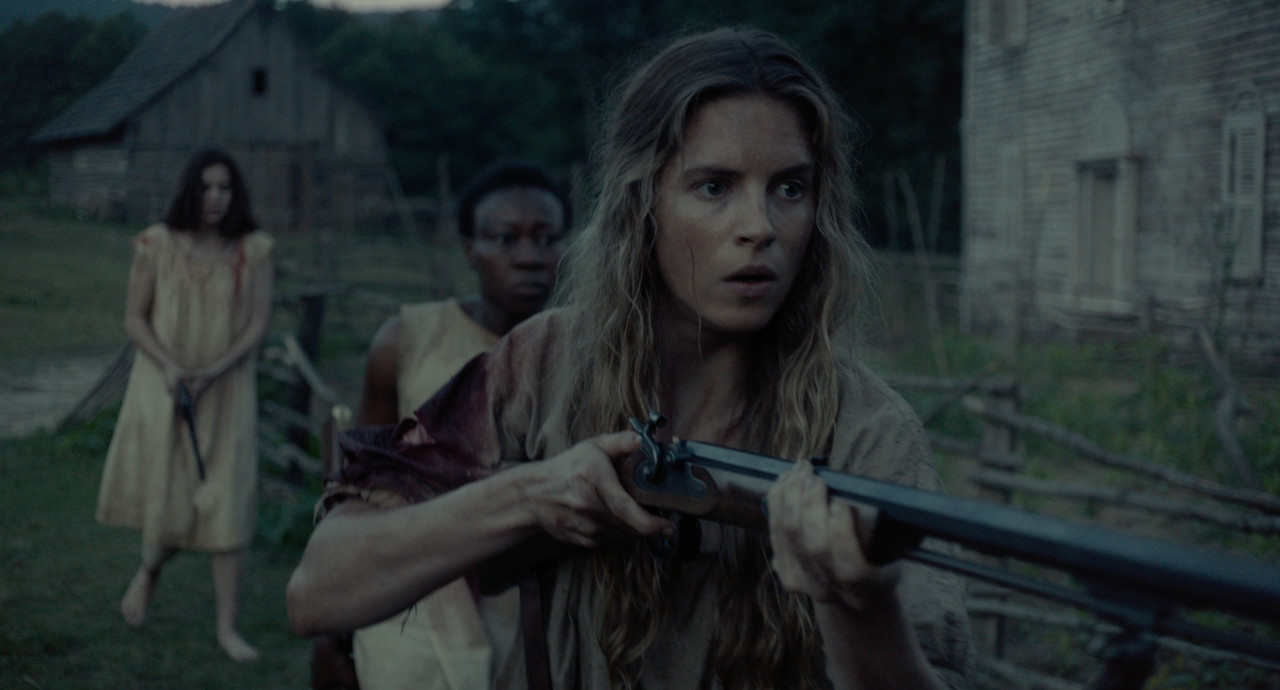
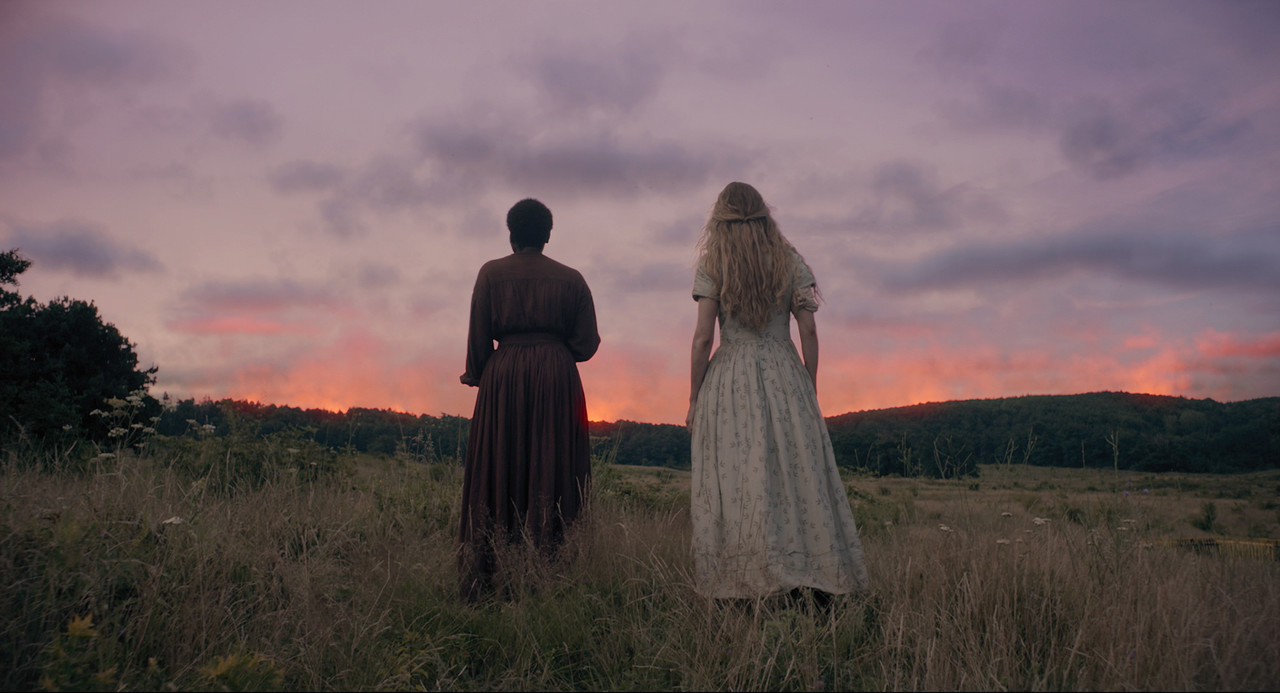
Augusta (Brit Marling) and Louise (Hailee Steinfeld) are Southern sisters, their large home is now empty but for them and one slave, Mad (Muna Otaru), who they now live on more or less equal terms with.  The war is all but over and Northern forces are encroaching, but when Augusta catches the eye of a violent advance party, led by Moses (Sam Worthington), the women must defend their home and their lives.

 The Keeping Room could have been made, in some alternate movie universe, 40 years ago as a nasty little grindhouse piece, but director Daniel Barber, writer Julia Hart and cinematographer Martin Ruhe bring more craft and subtext than you would probably have seen in that film.  The screenplay doesn't lean too heavily on its subtext, but there are powerful things said about both female empowerment and race.  The film is striking from the off, with a disturbingly slow and still opening sequence that introduces the film's suggestion that even in a war that was fought against slavery the victors weren't always noble.  The image of a cart rolling along a deserted road, on fire, its black driver shot in the head, is both sad and brutal; a combination the film plays to throughout.  The cinematography is excellent throughout, with an Innocents like shot of the women, carrying lanterns, walking up the stairs stealing the honours as the film's most beguiling.

The Keeping Room spends a good amount of time establishing rounded characterisations for its three leading ladies.  The dynamic between Augusta, Louise and Mad is never entirely comfortable; you get the sense of an uneasy but long lasting truce, especially in an early scene in which Louise says that Mad should be doing all the digging, because “she's the nigger”, to which Augusta replies “We all niggers now”.  This is typical of the film; it knows that these characters we're going to end up rooting for aren't always admirable, that they were on the wrong side of this war, but it still humanises them, showing them caught up in a brutal situation not of their making.

This complexity is matched by three fine central performances.  Hailee Steinfeld finally delivers on the promise she showed in True Grit, with a performance that is by turns forceful and vulnerable and Manu Otaru brings a quiet, clearly hard won, dignity to Mad.  However, as she does so often, Brit Marling stands out.  As Augusta she's full of steely resolve and resourcefulness, but also lets us see the fear behind her actions, fear both of the men who are invading the farmhouse and of those she knows will follow now the war is lost.  Marling is a great actress, but more than that she's clearly a movie star, she has a presence that draws the eye of both a camera and an audience and that quality pays dividends here.


There is a surprise in the cast in the form of Sam Worthington. This year, having previously been one of my least favourite actors, he has begun to win me round, first with a forceful role in the underrated Sabotage and now here, with a performance that is more than the cipher of a villain it begins as.  Late in the film, in a quiet and extremely tense scene conducted at gunpoint, Worthington more than holds his own with Marling.  It's this late moment, in conjunction with a quote about the cruelty of war that opens the film, that serves to humanise the villains of the piece.

While it's not hugely explicit, Daniel Barber doesn't flinch from much of the brutality on show here.  What, aside from an extremely upsetting rape scene, makes an impact is how much damage is done by a single gunshot.  Because the weapons used here still operate with ball and powder rather than bullets gunshots are infrequent, which means that every one has huge impact; they are loud, painful looking, and seldom without consequence, a stark contrast to how they are often treated in modern set films.  That said, the film's most powerful moment isn't a violent one but its quietest and most reflective, as Mad tells a story about life at one of her previous plantations.  This scene is where the film hammers home the idea that, as brutal as war is, for Mad it's hardly new, or indeed worse than any other time in her life.

Intelligent and artistic but also thrilling and accessible, The Keeping Room brings class to what could have simply been an exploitation movie and in doing so stands out among this year's London Film Festival crowd.
★★★★

Nagima
Dir: Zhanna Issabayeva
I have been coming to the London Film Festival for over a decade and must have seen at least 250 films here over the years.  Some were probably worse than Nagima, but few, if any, were emptier.

In contemporary Khazakstan Nagima (Dina Tukubayeva) is living a hand to mouth life with her friend Anya, with whom she grew up in an orphanage.  Anya is heavily pregnant, but after complications with the birth Nagima finds herself left holding the baby, something she is ill equipped for.

What's remarkable about that plot summary is that I've made Nagima sound about six times more interesting than it actually is.  The only truly notable thing about this film, at least until its abysmal, out of nowhere, last five minutes is how unstintingly boring it is.  Early in the film we see Nagima making her way home from work, which is to say that for about three minutes we watch her sit on a bus.  Expressionless.  This is not the only time during the film that director Zhanna Issabayeva takes 'slow cinema' to its inert conclusion, similar moments of watching Nagima on buses or watching vehicles travel along roads occupy perhaps ten of the film's scant 78 minute run time (this is not to say it feels like 78 minutes).

There is something to be said for the idea of using cinema simply to observe people going about their lives, but either the people or their lives ought to be interesting and Nagima, as played by Dina Tukubayeva, never has even the tiniest hint of personality.  Because she's such a complete void, so totally affectless, and because we never get a handle on who she is nothing that she does in the film, especially her extreme actions towards the end, connects.  There's no throughline, no logical progression from one event to the next because she's just a blank space.

I'm all for extreme cinema, I like to be challenged, I like to be shocked, but Nagima's shock ending is one of the cheapest I can recall.  Two years ago at LFF I saw a film called Accession, which featured one of the most shocking scenes I have ever seen, but it wasn't there for its shock value, it wasn't cheap.  Accession followed the progression of its character's brutally and hideously misguided logic, with a deep sense of dread, up to that moment.  That is what Nagima would like to do, and tries to do with Tukubayeva's final speech.  It's utter failure is not because it tries to shock but because that shock doesn't come from anything within the film.  It doesn't seem credible for Nagima's character, there's no hint of it in Tukubayeva's performance and the film never seems to be driving to that (or indeed any other) moment.

Nagima is easily and by far the worst film I've seen in this year's festival; a total waste of time and money, hell, even of the electricity going to the projector.
★

Hungry Hearts
Dir: Saverio Costanzo
From its still, its title, its place in the Love section of the festival and the presence of Adam Driver I had assumed that Hungry Hearts was going to be another indie hipster romance of the kind I have become so tired of over the past few years.  It is not.

Hungry Hearts begins with the most disarming meet cute I've seen in some time, as Jude (Driver) and Mina (Italian actress Alba Rohrwacher) find themselves locked in a restaurant toilet together.  The next time we see them they have been together for a few months.  Soon Mina falls pregnant and they get married, but when their baby is born Mina becomes so obsessed with purity and cleanliness that she may be harming him. 

Most films pick a genre and stick with it, or hybridise a couple of genres.  Hungry Hearts takes a different approach; it mutates throughout, evolving from a romantic comedy to a drama to a thriller to a horror film and back to a drama.  This could have unbalanced the film, throwing us between too many different poles in too short a time, but until the very end the gear shifts are surprisingly natural, growing organically out of the story and Saverio Costanzo's decision to alter the style of his direction along with the genre of his film keeps things interesting and specific from moment to moment, only proving disconcerting when the film wants you to be thrown off balance.

Driver and Rohrwacher capably adapt their performances to the shifting genre, with Driver's charming hipster routine sliding compellingly into a portrait of a man who clearly adores his wife, but is increasingly afraid of her and what her obsessions might be doing to their son.  Rohrwacher's finest choice here is to keep everything that Mina says and does small.  Her quietness and her conviction enable you to believe that, even if she's not well, she does believe everything she's saying and that she doesn't want to harm her son.  She becomes ever better and ever more disturbing as the film enters its Polanski influenced darkest patch.

These twenty minutes or so, when Mina's illness is at its worst and Jude's concern for his son at its height, also contain some of Costanzo's most interesting visual choices.  Operating the camera himself, he uses an extremely wide angle lens, giving the whole thing a surreal, sickly, look and making the already petite Rohrwacher seem to become an elongated skeletal figure.  This all contrasts very nicely with the brighter visual style of the first act, as we see Jude and Mina fall in love and get married and the shift from charmingly funny rom-com to disturbing everyday horror is so strong that it only compounds the disappointment of the ending.

The last three minutes of Hungry Hearts seem to be the product of Costanzo throwing up his hands and saying to himself 'I can't think of anything else, so I suppose that will do'.  From one completely out of the blue extreme action to a final shot that goes completely against the prevailing tone and feels like someone phoned Hallmark to obtain the final frame, the last three minutes are a complete disaster.  Thankfully, the rest of the film is strong enough and confident enough that it is still absolutely worth your time.
★★★★

Oct 12, 2014

24FPS @LFF 2014: Roundup

Some reviews from the last week at LFF.

Spring
Dir: Justin Benson, Aaron Moorhead
There are many things that are great in isolation, but combining them with other great things, interesting as the idea may be, doesn't always lead to a third great thing.  That seems to be what has happened here.  You have to give Spring the daring and originality of its concept; filtering Before Sunrise through a Cronenbergian monster movie is an intriguing idea but in the hands of writer/co-director Justin Benson and co-director Aaron Moorhead the execution is less satisfying than the concept.

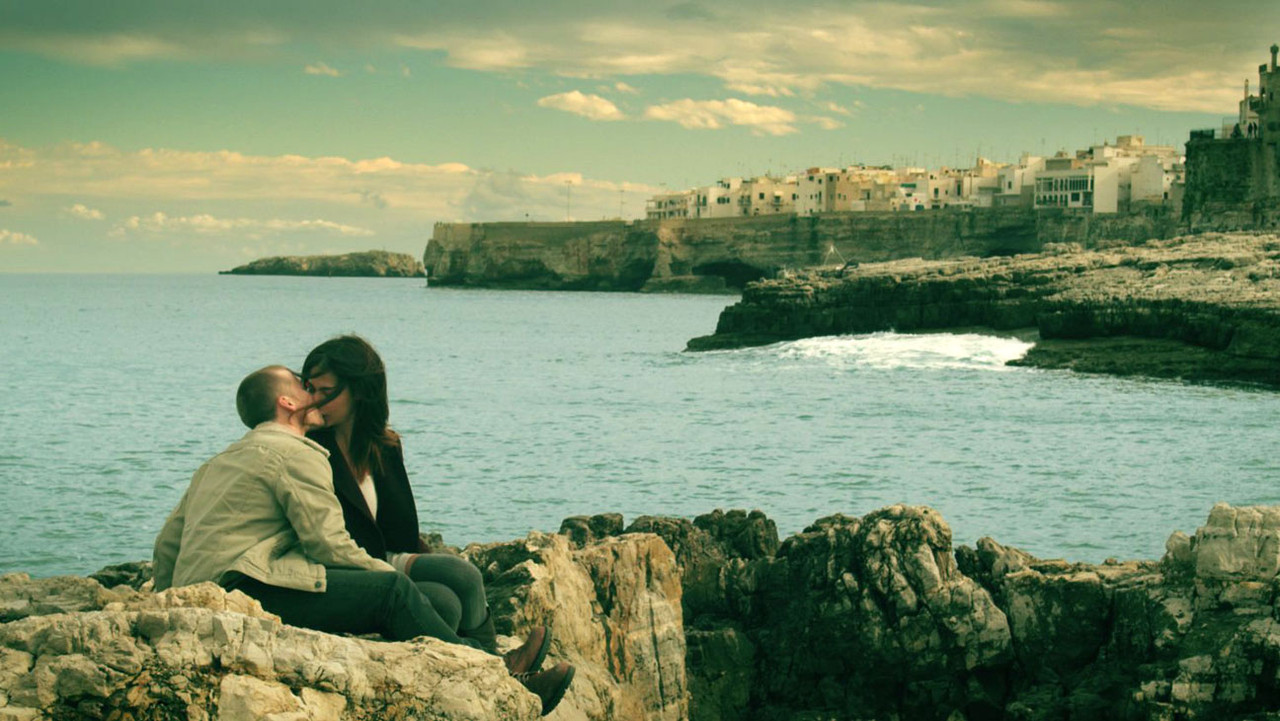
After his mother dies Evan (Lou Taylor Pucci), finding himself aimless and wanted after a bar fight, decides to use his inheritance and gets on a plane to Italy.  There he meets and falls for Louise (Nadia Hilker), but this new romance is complicated when it turns out that she is not just the beautiful woman she appears to be.

For most of it first hour, Spring keeps its cards very close to its chest, not even giving away the genre of the film it becomes.  For a while it simply follows Evan; home from the bar after his mother's funeral and then to Italy, where he meets two boorish Brits who take him on a booze fuelled road trip.  This is all pretty engaging, because it allows us some time to get to know Evan and because Lou Taylor Pucci, unrecognisable with close cropped hair and clean shaven, makes him amusing and enjoyable company (the same can not be said of the Brits, Tom and Sam, who are cliché irritants).  By the time Evan meets Louise we're as ready as he is for things to switch gears, and they do, into a rather endearing, if not unfamiliar, getting to know you style romance.

The body horror movie Spring eventually becomes (and if that constitutes a spoiler you're making the wrong assumptions about the Cult strand of the festival) needs this slow burn approach to work, but it's a mixed bag.  Charming as Evan is and gorgeous and interesting as Louise is for the third act to work you have to believe that there is deep, deep love between them.  I just didn't buy it.  A connection, both sexual and as people, sure, but that's different and given the stakes of the ending I found this lack of belief in the depth of their relationship a near fatal flaw.

On the plus side the performances are good.  Pucci believably charms Nadia Hilker's Louise and she, even before we know the true scale of things, is someone who you can buy into any guy falling pretty hard and fast for.  The script in their early scenes together is light and fun (their first meeting, which ends with both of them a little confused, is especially amusing) and you do warm to them as a couple.  Then, when the film springs its surprise, which has elements of Cronenberg and more than a few visual echoes of Possession it does turn your head and change the direction of the film.

Unfortunately the third act never quite delivers on this promise.  The interplay between Evan and Louise is all too often reduced to Louise expositing at him.  Of course it's important to establish certain rules, but spending so much time on raw exposition not only somewhat over explains things but also leads to the very problem that means that the film's final shot lands, at least for me, with a bit of a thud.

There is much to like here.  Benson and Moorehead deliver main characters worth investing in, who both have actual personalities (a rarer quality than I'd like) and when they steal they steal with taste and manage to put a spin on their influences.  There is some striking imagery here too, especially in the transformation sequences.  It's just a shame that, after holding two seemingly disparate ideas together for an hour they can't balance them for the last third of the film.  That said, Spring remains an interesting and original piece of work and it's worth checking out, because we'll be hearing from Benson and Moorehead again.
★★★

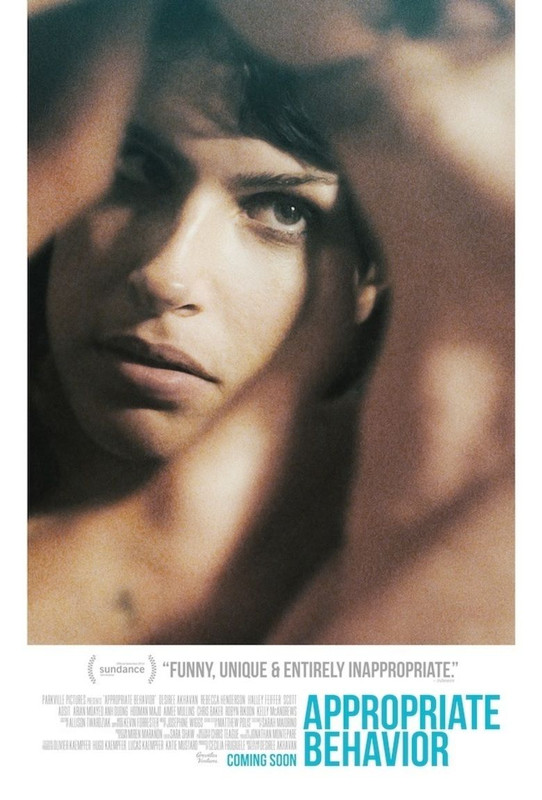
Appropriate Behavior
Dir: Desiree Akhavan
Not quite a rom-com, Appropriate Behavior nevertheless concerns itself with modern romantic relationships and has a whole lot of good jokes along the way.

Shirin (writer/director Desiree Akhavan) has just split up with her girlfriend Maxine (Rebecca Henderson) and through the course of the film we see her trying to adjust to being single, get over Maxine and figure out how to tell her Iranian parents that she's bisexual without being disowned. 

Several things mark Appropriate Behavior out but perhaps the most striking is its viewpoint.  I don't know how closely Akhavan is drawing on her real life here, but this feels like a very personal film, especially when it comes to Shirin's interactions with her family and with Maxine.  The flashbacks to the various stages of Shirin and Maxine's relationship capture in short order both the thrill and fun of falling in love and the sting of it ceasing to work.

The side stories provide some fun jokes too, especially when Shirin gets a job teaching a filmmaking class to 5 year olds. Scott Adist of 30 Rock scores a laugh with every line as her boss, and the finished films riff nicely on pretentious video art and on the kind of movie a 5 year old would actually want to make (it's about farts).

Despite a few dark turns, Appropriate Behavior is quite a light film.  Arkhavan's direction is pretty unobtrusive most of the time, though she does use the camera well to suggest the discomfort of an impromptu threesome that Shirin finds herself in, she fares well as an actor's director, doing strong work herself and helping the rest of the cast find a very natural register that suits the story and style well.  Akhavan is particularly well matched by Rebecca Henderson, who can be caustic as Maxine, but also lets us see why Shirin is drawn to her.  There's also a fun supporting part for Halley Feiffer, very funny as Shirin's fickle straight friend Crystal.

Appropriate Behavior may not be the most groundbreaking of films, but it's funny, intelligent,well acted and points to an interesting voice with a particular viewpoint in Desiree Akhavan.
★★★

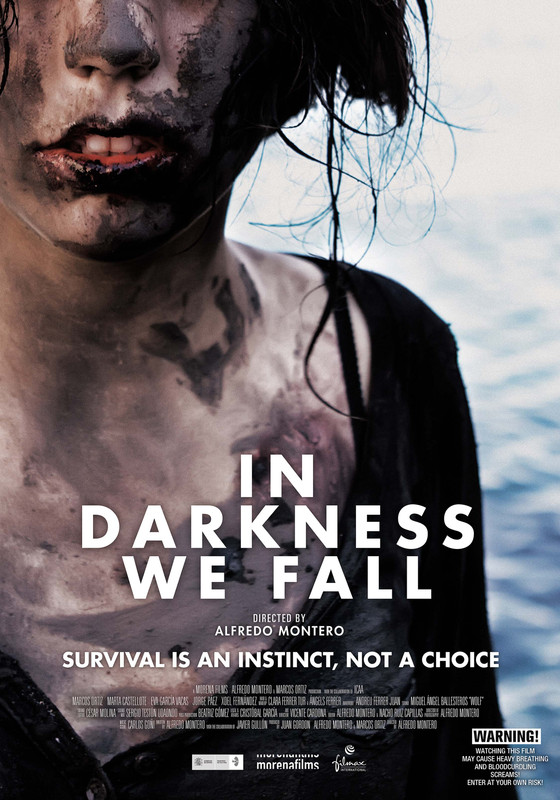
In Darkness We Fall
Dir: Alfredo Montero
It has always puzzled me why so many filmmakers seem to think that populating their horror movies with total arseholes is the way to get us to care whether the characters live or die.

In Darkness We Fall follows Carlos (arsehole who films absolutely everything all the time), Jaco (alpha-male arsehole), Ivan (arsehole who shags the girl he knows his friend has been after), Carlos' girlfriend Celia and her friend Bego on a camping trip.  One morning they decide to explore a cave.  They find themselves lost and things go from bad to worse while they are trapped.

For most of its first hour, In Darkness We Fall (a better title than the Spanish original: La Cueva) is annoying.  The characters aren't fun company and the group dynamic between them doesn't really work (especially in relation to Jaco, who'd go on holiday with that guy?)  That would be fine if they were interesting, but they aren't.  Writer/director Alfredo Montero is apparently operating a strict 1 trait per character limit.  So we follow these people who are largely stupid (because they leave no track behind them when exploring a cave) and unpleasant and watch on shaky found footage cam as they get lost and crawl around in circles.

The third act does herald the film's one would be interesting scene, in which there is a debate that has an interesting moral, and indeed practical, question at its heart and the horror of the situation is heavily ramped up.  But it's undermined by the fact that I don't care who lives or dies.  This is also true of the final setpiece, which, to be fair, has one very effective jump scare, but is also the film's most implausible moment.

For a film shot as found footage In Darkness We Fall doesn't look bad and the cave does have some atmosphere though the film is never, despite trying hard to be, as claustrophobic as The Descent.  In the end, In Darkness We Fall has the same problem as Open Water.  There I was rooting for the sharks, here I was rooting for the cave.
★★

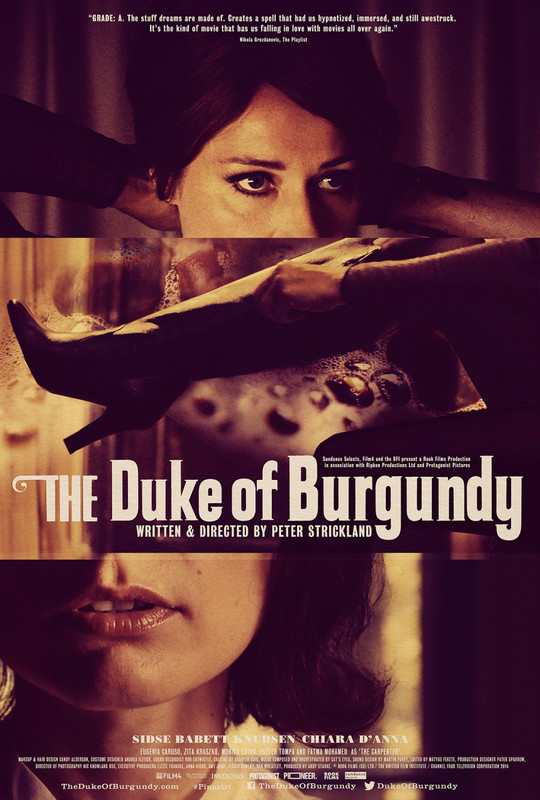
24FPS @ LFF 2014: The Duke Of Burgundy

Dir: Peter Strickland
Having got little from Peter Strickland's last exercise in a horror sub-genre (the Cliff's Notes on Giallo that was Berberian Sound Studio), I was wary of his latest, worried that it would again feel to me more like a textbook on a type of cinema than a film in its own right.  The Duke of Burgundy is certainly a film steeped in film history and film academics, it's an art piece exploring a particular style and genre, but this time I found that Strickland drew me in to his characters and his story as well as his use of images and sound.

As the film begins we see Sidse Babbet Knudsen playing Cynthia, who seems to be a wealthy woman, living in a huge, opulently decorated, but otherwise empty house.  Her maid Evelyn (Chiara D'Anna) arrives and Cynthia spends the day coldly assigning her chores, punishing her when they are not done to her incredibly exacting standards.  As the film progresses we see that these dynamics are not all they seem, and that Cynthia and Evelyn's relationship is much more complex than it first appears to us.

There are moments throughout The Duke Of Burgundy that reflect many different styles of film, though largely from one era; the late 60's and the 70's.  The striking opening titles are pure Witchfinder General, while Cat's Eyes' score is one of several things that echo Czech surrealism, calling to mind Broadcast's alternate score for Valerie And Her Week Of Wonders.  However, among all the influences one shines through; the European Artspolitation scene.  There are things throughout that reflect the erotic horror films of Jean Rollin and Jesus Franco, few of them more than Chiara D'Anna's face.  D'Anna is astonishingly beautiful, but more than that she could easily have stepped out of a Rollin film and into this one.

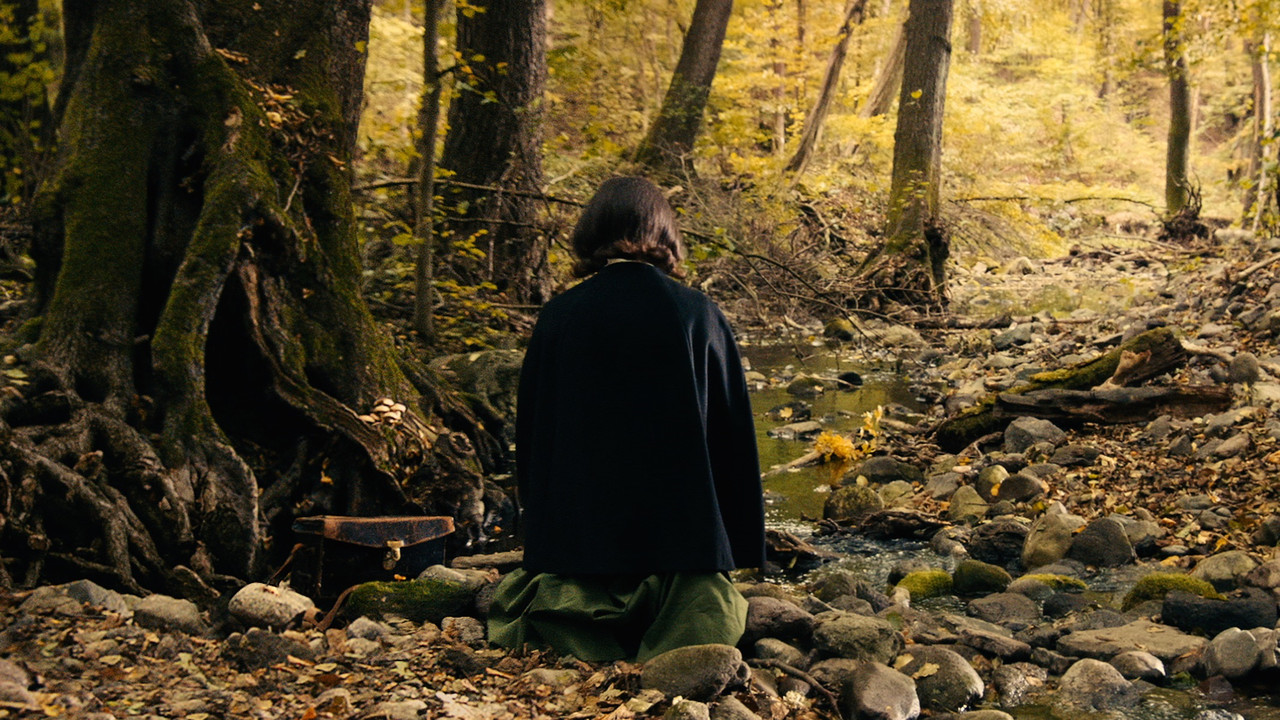
All this said, I don't wish to suggest that The Duke Of Burgundy is merely a patchwork of its influences.  Peter Strickland's style may have changed following his micro budget and much more simple début, Katalin Varga, but he has definitely developed an eye that is his own.  There are many striking and puzzling visuals in the film, from the prevalence of butterflies (including the one that gives the film its title) to the presence of a mannequin in the audience at one of the lectures that Cynthia gives, but for all its abstraction there is a strong throughline to the film in our shifting understanding of the relationship between Cynthia and Evelyn.  

Once it becomes clear that Evelyn's job as maid is not a job but a persona, put on as a fantasy, the film shifts, going from being something potentially about an abusive business relationship to a story of a power game within a romantic relationship.  What is most interesting is how Strickland shifts the balance of that power game throughout, challenging your assumption of the dom/sub power play throughout.  What emerges from this; built out of a picture of gorgeously lensed repeated moments is a surprisingly funny and tender picture of what we must assume is a long term relationship.  That, ultimately, seems to be what the film is about; a couple who have had a (strange) rhythm for some time, surrealism and a slight overtone of foreboding seep in as that that rhythm is disturbed.  This tenderness is always present, even as Cynthia and Evelyn discuss Evelyn's birthday gift in a conversation that features the memorable line “Perhaps a human toilet would be a suitable alternative”. This is perhaps why Strickland chooses not to depict the sexual side of the relationship in much explicit detail; there is no nudity in the film and the one sex scene is shot with many doubled images, as if through glass, giving it a hallucinatory feel.  In another way this is an odd choice; The Duke Of Burgundy is so steeped in the more artistic aspects of the artsploitation film that it was, for me, a shame not to see Strickland dig into those films' equally valid exploitation side.  

Whatever ideas I have about this film, from whether it's a love story to the fairy tale feeling that seems to bracket it in the first and last images of Evelyn, there is much more that I have yet to unpick.  Most notable is the last time Evelyn says Cynthia's name, at which point it sounds very much like she says “Sidse”.  Whether this is a mistake, something I misheard or an intentional lapse in the film's internal continuity I don't know, but none of those answers would surprise me and none of them would be less than interesting.  That goes for many of the unanswered questions of the film.

All of this works as more than an art piece because the images are anchored by excellent performances.  Sidse Babbet Knudsen initially does a great line in cold, withering, glances and harsh tones as Cynthia, but her part becomes more complex as the film goes on and we start sensing some conflict in her, from a little sigh when she drinks yet another glass of water to prepare for a game to an increasing disengagement in her rote repetition of the script for each game.  Through all this she also puts across Cynthia's longing for closeness, even if it is found in a way that most of us would consider unconventional.  Chiara D'Anna's Evelyn is a more unknowable character and the ambiguity of certain aspects of her character extends to the film as a whole (for instance a few scenes seem to imply that she may be the rich woman in this relationship, but equally that may be a part of the role play).  D'Anna does a huge amount simply through her presence which is by turns ethereal, sexy, demure and severe, among many other things.  This is the first time I've seen her, but she's a memorable presence, one I hope to see more of.

For all its artsiness, which may grate on some viewers, The Duke Of Burgundy has a surprising streak of humour running through it.  There is an inherent comedy to seeing familiar relationship issues played out in such an unconventional relationship, especially when, late in the film, Evelyn admits to a 'fling', in which she cleaned another woman's boots and was scolded by her.  The humour is an interesting balancing act; Strickland doesn't parody his influences, but there is a wryness here that might have enlivened Berberian Sound Studio for me.  

It's not perfect, and I did find myself, every now and then rolling my eyes at some of the film's most obscure moments.  I don't really get what is clearly a big overarching metaphor about the moths that Cynthia studies (with Evelyn's help?)  It certainly doesn't feel to me like a film about metamorphosis, the one thing that does strike me about it is the theme of confinement; the moths all pinned in glass boxes set against Cynthia's desire to be locked in a box at night.  Equally those two things may have nothing to do with each other.  

Repetition is part of how the film establishes both its story and its humour, but occasionally seeing the same scene and hearing the same dialogue for a fifth time can become a little wearing.  With just a bit of judicious cutting it could lose ten or fifteen minutes and I doubt it would lose any real meaning or impact with them.

I loved The Duke Of Burgundy on a lot of levels; it's a sensory experience that demands to be seen in a cinema, thanks to the combination of Strickland's offbeat and beautiful images and Cat's Eyes' score.  It's also an absorbing character piece; Knudsen and D'Anna are perfectly cast and Cynthia and Evelyn's relationship is never less than intriguing.  It's a film that invites many readings, but I most enjoyed getting lost in its images and its influences, but they'll draw me back and make me think more and perhaps differently about the film next time I see it.  That's rare.
★★★★