Showing posts with label Unreleased in the UK. Show all posts

Jul 8, 2013

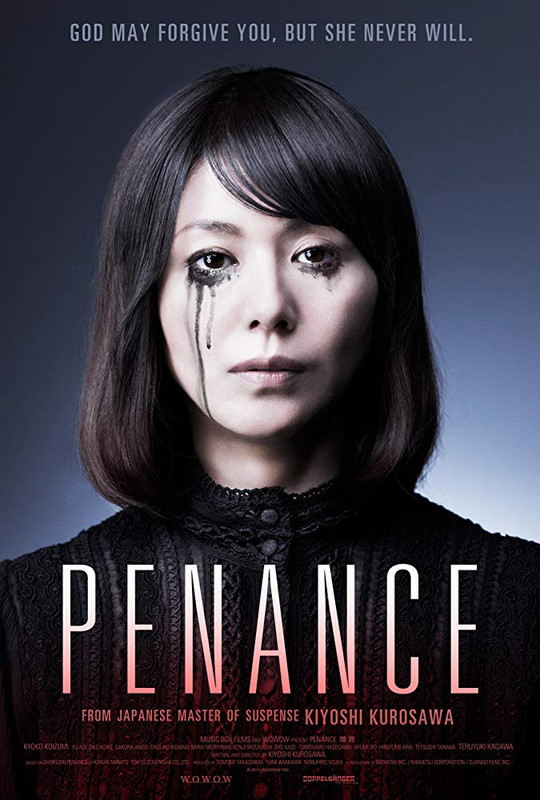
East End Film Festival 2013: Penance

Dir: Kiyoshi Kurosawa
Four and a half hours is a long time to spend in a cinema, but Penance – actually a five part Japanese TV series that is also being distributed as a film – made that time pass very quickly with a gripping, tense and varied story that managed to surprise right up until the end.

The story opens in the mid 90′s, when Emiri, one of a group of five ten-year-old friends is taken away from the others by a man and murdered in her school gymnasium. The other girls; Sae, Maki, Akiko and Yuka all say that they can’t remember anything about the man who took Emiri, and six months later there are no leads. Emiri’s mother Asako (Kyoko Koizumi) holds a birthday party for her, six months on from the murder, where she informs the four other girls that she can’t forgive them for not helping catch the killer, and that in the future they will have to perform an act of penance to earn her forgiveness. The series then picks up fifteen years later, unfolding in five parts, following the four girls and then Asako in turn.

While the fact of Emiri’s murder lies underneath the whole series as a motivating factor in how each of the girls grows up, and how that affects each of their stories, the focus of most of the series is not on finding the killer or even why the girls may have held back and not spoken up about things they did remember at the time of the investigation. Writer and Director Kurosawa (working from a novel by Kanae Minato) doesn’t attempt to draw the one mystery out over 270 minutes but instead gives each part of the film its own feel, drawing from a wide range of influences, while still keeping the underlying thread tight.

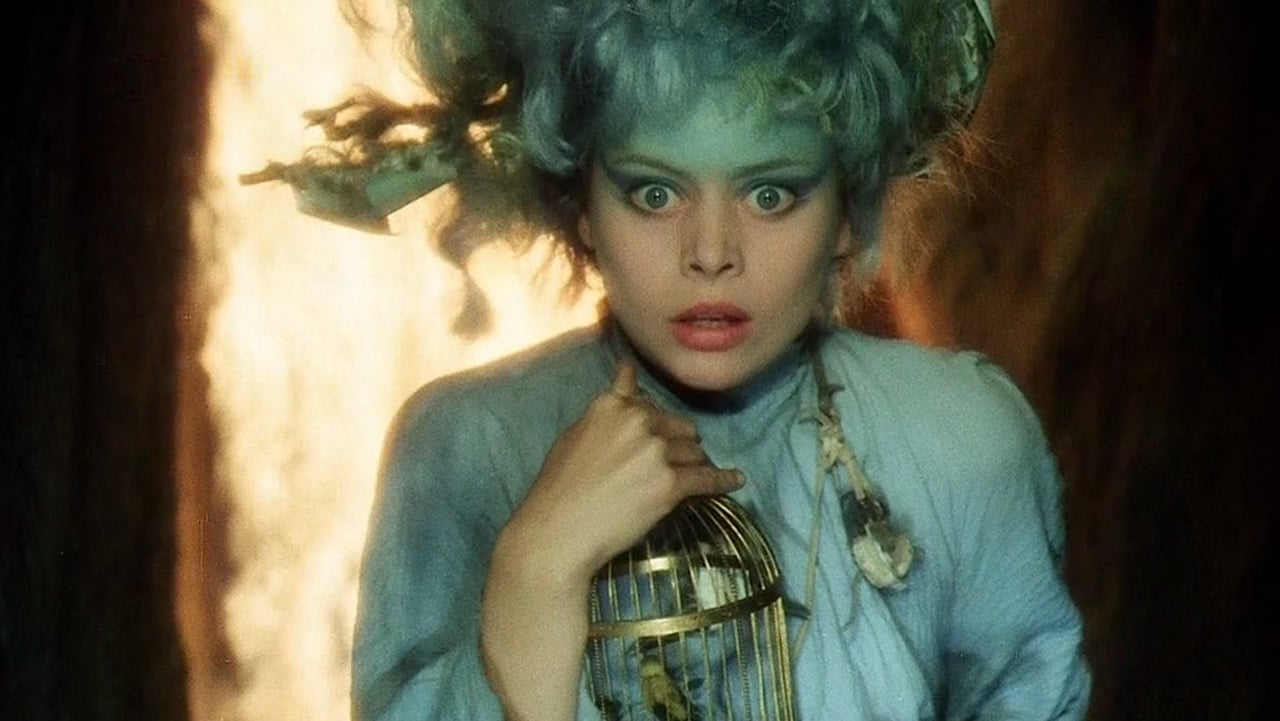
The first chapter sets out the strange, dark, stall that much of the film will follow (though in differing ways and tones) with a Hitchcockian – Vertigo being the obvious influence – chiller in which Sae (Yu Aoi) is set up with Takahiro (Mirai Moriyama) who was a couple of years ahead of her in school when Emiri was killed. They eventually marry, at which point Takahiro makes many rules for Sae, including requiring her to dress as a doll every night. It’s a strong psychological chiller, with great performances from its leads, and an interesting link back to the murder in terms of why Sae accepts this as her lot.

There is a jarring tonal shift between this and the broader second chapter, in which we see that Maki (Eiko Koike) has responded to the murder by becoming a teacher and being very hard on her students. Her reaction to an intruder who attempts a mass stabbing when the children are swimming is to attack back, but the way the series treats the school politics around this doesn’t quite work, as it sometimes has a slightly overblown comic tone that undercuts the drama (never more so than in the last scene, which provokes a few accidental chuckles).

Chapter three righted the series for me, with a(nother) great performance from Sakura Ando as Akiko. On the day Emiri is killed Akiko gets blood on her pretty dress, and she takes this as a sign that she mustn’t try to move ‘above her station’. Fifteen years later she sees herself hardly as a person but as a Bear. Ando is fantastic in the part; you get a true sense of her separateness simply from the way she holds herself. She also shows the - possibly fatal - shift in Akiko’s perception of herself in a purely physical manner with the way she begins to open up when her brother returns home with his new wife and his step-daughter Wabaka (Nanaka Fujii). The third chapter also features some of the best writing in the series, combining the cold and forbidding undertone with a much more natural sense of offbeat comedy.

The fourth chapter takes a very different approach, by showing us that, unlike the others, Yuka (Chuzuru Ikewaki) is untroubled by any kind of guilt, and this twists into a black comedy of manners as Yuka reconnects with her older sister (Ayumi Ito) and immediately, brazenly, sets about trying to steal her husband (Tomoharu Hasegawa), eventually becoming pregnant. When Asako comes into these stories (as she does in each) she is usually the cold presence, so it’s a well-timed change when Yuka meets her, and offers up one of the most coldly calculated suggestions in a film that has many. Chuzuru Ikewaki walks a fine line; bright and perky on the surface, with a flinty heart beneath, but she does it extremely well, and again this is where the film gets the blackness of its comedy right.

The final chapter wraps up the mystery, and owes much to Park Chan-Wook both in feel and in specifics. It’s a convoluted tale, and one detail stretches credibility near breaking point, but the series had been compelling viewing for long enough and the other twists were unexpected, more credible, and kept unfolding and unfolding in such a way that I could forgive the small lapse. Kyoko Koizumi really carries this last chapter, and she conveys a sense of sadness and resolve that put me in mind of Lee Young-Ae’s Lady Vengeance performance.

Penance commands the attention for its whole four and a half hours, moving much faster than you’d expect given the mammoth running time. I suspect the second chapter will feel more a part of the whole on a subsequent watch; it jars because it’s the first real tonal shift. Ultimately it’s a great showcase for five clearly talented actresses (Koyzumi and Ando the standouts). It’s a consistently high quality thriller that will keep you on your toes, whether you end up seeing it as series or a film, it’s well worth a watch.
★★★★

Dec 13, 2012

It's a Mad Mad Mad Mad World Cinema Blogathon: The Little Mermaid

So, for the second week of the Blogathon, Marcey has sent me to Czechoslovakia, to check out a surrealist film.  Here's why..

"Czech films of the 70’s are usually worth your time, and I happened to come across this one, based upon the story by Hans Christian Andersen. I am a huge fan of the story, and yes I do enjoy the Disney film but this is a fantastic adaptation. The visuals here are stunning; my eyes were treated to such beauty when I first watched this. There is a unique way of telling the story here, the under water scenes are done on sets and they look beautiful. This is exactly what I want out of the story, and I certainly hope Sam enjoys this. I know he shares a love with Czech cinema with me, and this is a must see."

The Little Mermaid ['76] 
Dir: Karel Kachyna
The first thing that came to mind as I watched this film wasn't the fairy tale, but rather a film that I had recommended to Marcey a couple of years ago; the Czech surrealist film Valerie and Her Week of Wonders.  Both films exist in a dreamlike state, but use it to tell what is a very simple story of a young girl's coming of age (in the case of Valerie the film is triggered by her first period, The Little Mermaid hinges on first love).  I LOVE Valerie, but The Little Mermaid, if not as immediately seductive, is not embarrassed by the comparison.

Disney's film must be one of the first I remember seeing at the cinema, but I also remember being read the real story; the sad story, when I was a kid, and thinking as I grew up that it was a shame nobody had filmed that version.  Turns out they had.  From my hazy 20 plus year old memories, this would seem to be a pretty faithful adaptation of Hans Christian Andersen's story of a mermaid (who saves and falls in love with a prince, then sells her voice to a witch, and agrees to endure enormous pain in order to appear human and have a chance to win his heart, only to fail, and decide to die rather than kill him and live).  It's a beautiful story, and Kachyna tells it well, with both the romance and the tragedy coming through affectingly.

The visuals are unusual and gorgeous, particularly the design of the underwater kingdom of the Sea King, and of the Mer people themselves, who are all dressed in the different colours that the sea can appear to be, and seem to have ocean debris tangled in their hair.  The set design is also stunning, and really contributes to the way that the film creates a whole and credible feeling undersea world.  I like the little details too, like the way that Mer People never appear wet, even after emerging from the water.  Kachyna builds the world well in the film's first half, making it seem idyllic at first, but revealing the ways it holds The Little Mermaid (Miroslava Safránková) prisoner bit by bit.

The standout moment of the film is the scene in the cave of the Sea Witch, which really lays out just how huge a sacrifice is involved for the Princess to even appear human, here the film combines horror with the development of a strong character (another thing that's good about the story as a whole; all the choices are the Princess' own).

The only major criticism is really that the film somewhat rushes through the story once the Mermaid gets to look human, but Safránková's convincingly alien and rather soulful performance help the emotion of the story's third act stick, as does the still dreamlike imagery.  This is a hypnotic and beautiful film, one I'll come back to, and one that, just as Valerie And Her Week Of Wonders did, has made me anxious to see more Czech surrealism.
★★★★

Oct 9, 2011

LFF 2011: Natural Selection

Dir: Robbie Pickering
Robbie Pickering's début has many touchstones, and it fits the mould of a relatively typical quirky American indie, but despite the fact that - especially to fans of the Coen Brothers' earlier, more freewheeling films - it may feel familiar, Natural Selection comes at us with such energy and such likeability that it is hard to imagine that anyone will mind very much.

The film focuses on Linda White (Rachael Harris), a 40 year old housewife whose husband Abe (John Diehl) refuses to make love to her for religious reasons, as they can't have children. One day Abe has a stroke, leading Linda to discover that for 25 years he has been donating at the local sperm bank. Thinking that Abe is going to die, and that he has asked that she track down his son, Linda sets out to find the 23 year old progeny of one of Abe's donations, but gets more than she bargained for when she finds Raymond (Matt O'Leary); a foul mouthed, drug addled, recent prison escapee.

Even from that brief synosis you can probably figure out much of what is going to happen during Natural Selection, and you'd be right most of the time, as the film does tick off a quite well established series of events, and foreshadows many of its twists quite clearly. This often annoys me more than it does most people, purely because I've seen so many films over the years (8-9000 is my current guess), but here it's fine, because the drama and the laughs come not so much from the storyline as they do from the characters.

Characterisation is a collaboration, it comes from the writing, the direction and the acting, and the three have to work in concert for it to really work. Here the balance is struck beautifully. At a screenplay level Pickering has created characters who seem on the surface to be a little stereotypical (the sheltered Christian housewife striking out on her own for the first time, the dishevelled redneck fuck up, etc) but slowly the script reveals layers behind that surface and reasons for the way these characters are. One pivotal scene has Raymond and Linda share a stolen supper, and reveal some painful truths about their backgrounds, and that, among several other scenes, really lets us see them as rounded characters. Pickering's direction is also strong, visually Natural Selection may not be the most dynamic or original film, but he exhibits a fine sense of timing in his cutting, a good balance between comedy and drama, and finds a few memorable shots (few more so than when we first see Raymond).

For me though, Natural Selection is an actor's piece, and while there are good supporting contributions from Diehl and Jon Gries, the film really belongs to Harris and O'Leary. O'Leary, an actor since childhood and familiar from the Spy Kids series and Brick, among others, is unrecognisable and very funny as the lank haired, bearded and frequently injured Raymond, he evidently enjoys Pickering's salty dialogue, and plays an early scene in which, after he's been beaten up, Linda gives him a bath, with perfect comic timing. That said, he's also believable in the film's more dramatic beats. Harris is perhaps even better. She too plays some of the comedy quite broadly, but only by embracing Linda as a character, she's never winking at the audience. Some people have observed that Linda; a buttoned down Christian housewife who believes in her duty to her husband so much that she's stayed in a sexless marriage for 25 years, wouldn't so readily fall into some of the things she does with Raymond. For me, Harris' performance makes it play, Linda always remains the fundamentally decent and sweet woman she is at the start of the film, but I believe her process of discovering the different things that that can mean once she's really out in the world for the first time.

The performances really power this film, O'Leary's character in particular might be problematic, as he is deeply unlikeable and sometimes cruel to Linda, who is loveable from the word go, but O'Leary is entertaining enough, and gives Raymond just enough depth, that we're always willing to go along with him, and even understand at some level why Linda does.

Natural Selection is at times a little schizophrenic; sweary and sometimes graphic (there is some violence, some brief nudity and a clip from Driller Killer), but also sweet natured and gently funny, it's a shame that this may well get quite a restrictive rating in the UK, because I could see it being the sort of gateway drug to more offbeat and interesting cinema that something like Raising Arizona was for me when I was about 13. It's not perfect; there is a moment towards the end that feels far too neat for this otherwise quite wilfully messy series of events, and is entirely predictable into the bargain, but that said, it's extremely well written and played, highly entertaining, and overall just one of the most enjoyable and likeable films I've seen in some time.
★★★★☆

Mar 8, 2009

The Heart Is A Dark Forest

Dir: Nicolette Krebitz
I know what you’re thinking… finally, he’s reviewing the obscure, surreal, German film, that’s what I’ve been waiting for. Okay, perhaps not, but stick with me because The Heart is a Dark Forest is an unexpected treat.

I’ve been seeing a lot of German films lately. There seems to be a pool of talent there that has been producing some of Europe’s most distinctive, and best cinema for a few years now. In that time I’ve seen Nina Hoss in a couple of pretty bad movies. Atomised and Yella, both of which I came away from thinking ‘ I wish that movie were better, because that actress is incredible’. Since then I’ve been on the lookout for any of Hoss’ films screening near me, and I bought a ticket for this one on the strength of her presence alone.  It’s a joy to report that this fantastic actress has finally found a film worthy of her estimable talents.

The Heart is a Dark Forest tells the story of Marie (Hoss) who discovers one day that her husband (Streisow) has another wife (Petri) and child across town. Over the following 24 hours her life collapses in on itself. On this rather threadbare story director Nicolette Krebitz hangs some extraordinary, and artfully composed imagery, and draws from her leads a pair of performances that dwarf anything else I’ve seen this year.

Nina Hoss is, as I’ve come to expect, astonishing. She makes Marie come to life in an utterly compelling way and, aside from her distinctive angular beauty, there is nothing in this performance that betrays the actress behind it, or repeats anything I’ve seen her do previously. Watching her gradually unravel is wrenching, because it’s utterly believable and as both the character and the film drift ever further from reality Hoss keeps her performance totally grounded. It’s an extraordinary piece of work, one that puts to shame the performances that usually win awards, I’ll be surprised if I see anything better this year. This shouldn’t, however, take away from either Devid Streisow or Franziska Petri. Streisow and Hoss were together in Yella, and there’s a clear comfort between them that makes their relationship play in the film’s early scenes, making it ever more devastating as we discover the depths of Streisow’s betrayal. Petri only has a small role, just two brief scenes, but she makes a real impact with the surreal friendliness with which her character greets Marie both times they meet.

Nicolette Krebitz is in total control of her film, a former model she has clearly picked up a feel for the camera, because every image in The Heart is a Dark Forest is both beautiful and fascinating. Her writing is also impressive, be it the way the script delves into its main character’s psyche, the creation of a credible relationship, and its breakdown, or the uncompromising darkness of the film’s ending, this is a consistently startling, riveting and impressive piece of work. The film also boasts an outstanding soundtrack, courtesy of Fetisch and The Whitest Boy Alive, whose combinations of dance beats and classical instrumentation add to the odd, doomy atmosphere that builds up during the second half of the film, particularly at a masked party somewhat reminiscent of Eyes Wide Shut.

But what will really linger in your mind is the ending. I’ll give no specifics, other than to say that Krebitz initially sent the script out with a fake ending, to make it more saleable, and that the way it does end is incredibly brave, emotionally shattering and monumentally shocking. It’s a rare film, these days, that remains an hour in your head, but The Heart is a Dark Forest continues to rattle around mine. This is a great film, the first great film of 2009, and if you get a chance to see it I thoroughly and unreservedly recommend that you do so.