Showing posts with label LFF2013. Show all posts

Oct 15, 2013

24FPS @ LFF 2013 The Great Passage

Dir: Yuya Ishii
I'm a writer (in case you hadn't noticed) and while I got into writing because I love films I have stuck with it because I love writing and because I love words.  The right word is something any writer knows is elusive – sometimes it's impossible to find – The Great Passage, among it's many other virtues, is a film for the writer, the word lover, in us all.

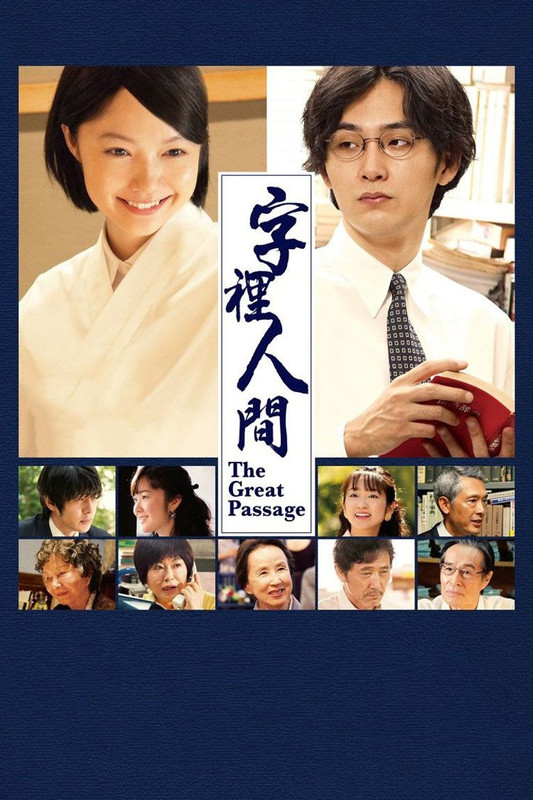
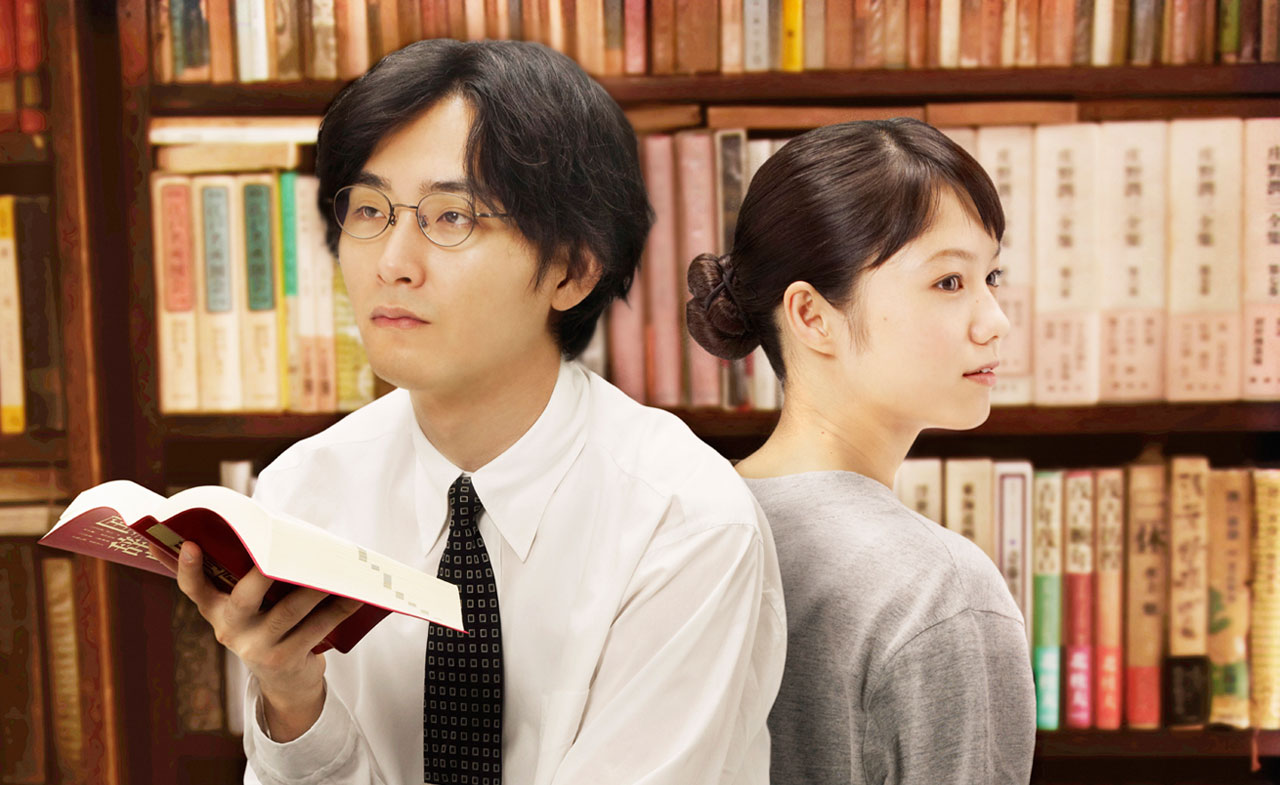
The Great Passage is the title of a new 240,000 word dictionary being put together by the Genbu company.  The dictionary editorial department is understaffed and underbudgeted, but they recruit one new member of staff to help with this project; shy, geeky, Mitsuya (Ryuhei Matsuda).  Over 15 years the film follows Mitsuya as both the dictionary and his life move on.

The premise of The Great Passage immediately recalls Howard Hawks' wonderful screwball comedy Ball of Fire, in which linguistics professor Gary Cooper is beguiled by Barbara Stanwyck as he helps to compile an encyclopedia.  The first half of Yuya Ishii's film – his first with a big budget and major stars – wears this influence very much on its sleeve, with screwball antics very much in evidence both in the dictionary editing department and at the boarding house where Mitsuya lives and falls for his landlady's pretty granddaughter   (Aoi Miyazaki).  However there is always an undercurrent of drama, provided by the very real sense that the dictionary's editor  (Joe Odagiri) may not live to see it completed.  This drama comes to the fore in the film's second half which, while still often funny, delivers an undeniable emotional punch.

I'm not sure how Yuya Ishii's fanbase will take to this film.  I've only previously seen his candy coloured, kooky, Sawako Decides, which I liked for the most part, but almost felt assaulted by, so desperate was it to charm me.  The Great Passage is not a total departure but rather feels like a refinement of Ishii's style.  It remains bright, broad and cute but the biggest excesses are reined in, making it easier to relate to the characters and their relationships, as well as to the comedic and dramatic beats.

The first half of the film hits a variety of comic registers, from the way that the older members of the dictionary staff observe people in order to collect new words and phrases on examplar cards to the genuine charm of the romantic comedy dynamic between Matsuda and Miyazaki.  This is how you do romantic comedy; the characters are both charmingly awkward on their own and right from the off their dynamic works well.  Their first meeting sets the tone, when Mitsuya mistakes Kaguya asking the cat's name and instead gives his own.  We never see much intimacy between the two (we don't even see them kiss) but we do believe and root for the couple.  

Some of the film's funniest scenes revolve around a letter that Mitsuya has written to Kaguya, unfortunately he's used brush calligraphy and though it's beautiful almost no one can read the result.  Ishii mines this for several very funny moments, both in the office and at the boarding house, hitting wonderfully warm comic tone that echoes through the film, even into the somewhat more serious second half.
The letter is also a good metaphor for what the film as a whole is about just under the surface; the joy of words and how they can draw people together (this isn't a film that has   much interest in pulling people apart).  To say that the way this theme is woven into the film is subtle wouldn't be true, but it's certainly effective.

The actors all pitch their performances beautifully; the stammering Ryuhei Matsuda finds the charm underneath Mitsuya's nerves while Aoi Miyazaki has a serene beauty that is also reflected in Kaguya's nature and in addition radiates a believable intelligence that is reflected in her character's skills as a chef.  Joe Odagiri gives an appropriately regal bearing to his veteran editor, but there's a glint in his eye that works for his humour, especially when he is collecting new words.  All round, the actors reflect the tone of the film perfectly.

Overall, The Great Passage is a great big warm hug of a film.  It has an easy charm thanks to an appealing cast who all do strong work with a script that is often very funny.  The drama works too, without feeling overly manipulative.  I hope we'll see more of this kind of work from Yuya Ishii.

24FPS @ LFF 2013 The Enemy Within / Durban Poison

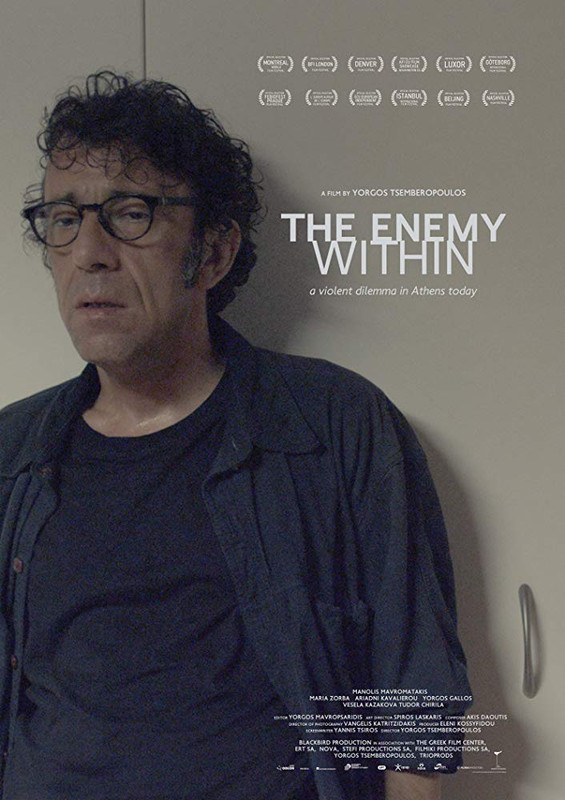
The Enemy Within
Dir: Yorgos Tsemberopolous
Since bursting into wider consciousness with Dogtooth (which I saw at LFF 2009), Greek cinema has been impressing with what has been called the 'weird wave'.  The Enemy Within takes up some of the stylistic tropes of that wave, but is overall rather more conventional than many of the films we've lately seen from Greece.

The story unfolds in low key fashion, documenting the way that anger and fear drive Kostas (Manolis Mavromatakis) to disturbing, destructive action after a gang breaks into the home he shares with his wife and teenage children, robbing and assaulting them and raping his 14 year old daughter (Maria Zorba).  Kostas is egged on in his vengeance by a neighbour (Yorgos Gallos) who has been obsessed with security since a similar incident happened to him.

The Enemy Within plays in genre much more than most of the recent films we've seen in the Greek New Wave.  Ultimately it's a vengeance film, though an atypical one, and like most vengeance films it's about more than just the surface.  In this case, like much current cinema from the region, the film seems to reflect the Greek economic crisis in several ways.  Yorgos' right wing neighbour, who rants about immigrants, is likely a member of Golden Dawn and the whole thrust of the story; the rising incidence of home invasions and the extreme protective instinct around property could be seen as a comment on the way Greek society is reacting to suddenly having much less to go around.

This all plays under the surface though, and the thrust of the film is still Yorgos' ever building anger and the way it threatens to destroy his life when it explodes for a moment.  This is largely depicted through an excellent inheld performance from Manolis Mavromatakis, more sad than scary as the frightened patriarch.  The other leads also turn in fine work.  Yorgos Gallos is the standout, giving a troubling performance, casually justifying a violent response in a way that, at least to begin with, seems frighteningly reasonable.  

About half an hour from the end, with the plot twisting in interesting ways, the film seems as though it's about to go all Rolling Thunder on us, then it pulls a reversal, ending with its quietest scenes, which, as is the way of vengeance movies, leave things on a morally thorny note.

There isn't much here that we haven't seen before, but the spare style – broken by the early rush of violence of the home invasion, effectively intercut with the quieter aftermath – strong performances and a very good score all add up to make it a worthwhile and more easily accessible entry in the Greek New Wave.

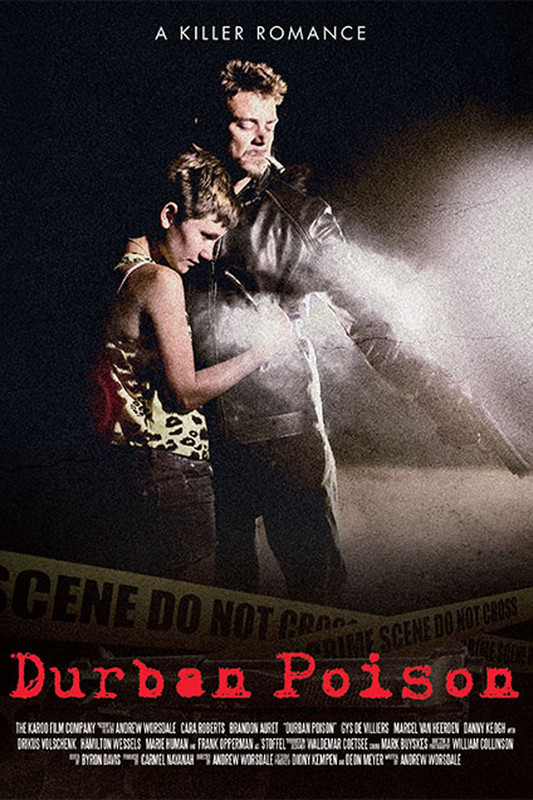
Durban Poison
Dir: Andrew Worsdale
Apparently this is South African filmmaker Andrew Worsdale's first film in almost thirty years.  It shows.  

The film unfolds after Pieter (Brandon Auret) and Jolene's (Cara Roberts) killing spree has ended in arrest and they take the Police on a tour of the crime scenes, relating what happened, though the Police suspect that the whole truth is not coming out.

To be fair, Durban Poison doesn't start badly.  The opening scene; a montage of images that seem to come from right across the film's timespan of roughly four years, with a focus on the couple being booked after their arrest, plays out silently under the credits, suggesting at the very least that there is a visual sense at work here.  Not, perhaps, a hugely original one, but still effective.  The opening half hour then goes on to set up a multi-stranded narrative, with questions from the Police prompting flashbacks and an interesting relationship seeming to develop between Jolene and the Police Captain leading the investigation.  All of these things quickly go off the rails.

Durban Poison begins to fall apart once we flash forward in time and establish that Pieter and Jolene are now married with a baby.  This threw me.  No jump in the timeline is ever indicated so the child simply arrives out of nowhere.  Equally unhelpful is the fact that the first time we see the baby is in an all but silent scene.  I initially assumed that the camera was going to cut either to a kidnap victim whose child this would be or to a friend for whom Jolene and Pieter are babysitting, so badly established is the whole thing.  I wouldn't bang on about this so much, but it seems to set a pattern for the rest of the film.

The relatively even juxtaposition of the two timelines is abandoned, the focus thrown on the flashbacks, unbalancing the film and making the actions of the Police increasingly, hilariously, inexplicable (they let Jolene go swimming in the sea because, sure, that's procedure).  Even the performances seem to suffer, Auret and Roberts now struggling, though with some admittedly very rote dialogue.  

The idea, seeded early on, that there might be more to the story than Pieter and Jolene are letting on seems to be forgotten for much of the last hour of the film, only to resurface in the last scene, in the most obvious way possible.  This also reflects the larger problem with the storytelling, events unfolding in what feels like a series of isolated scenes rather than a consistent narrative flow.  Overall it almost seems, after finishing the opening half hour of his film,  Andrew Worsdale simply gave up.

It's a pity Durban Poison ends up being such a let down, because there's the kernel of something good here.  The basic story is interesting, and I'd like to find out how closely Worsdale stuck to the facts (the film, though it never says so, is based on a real case).  The performances are variable, but I suspect that's a writing and direction issue and the first act of the film suggests rather better things than the last hour can deliver.  If Worsdale decides to wait another 30 years before stepping behind a camera again I shan't be crying over the loss.

Oct 13, 2013

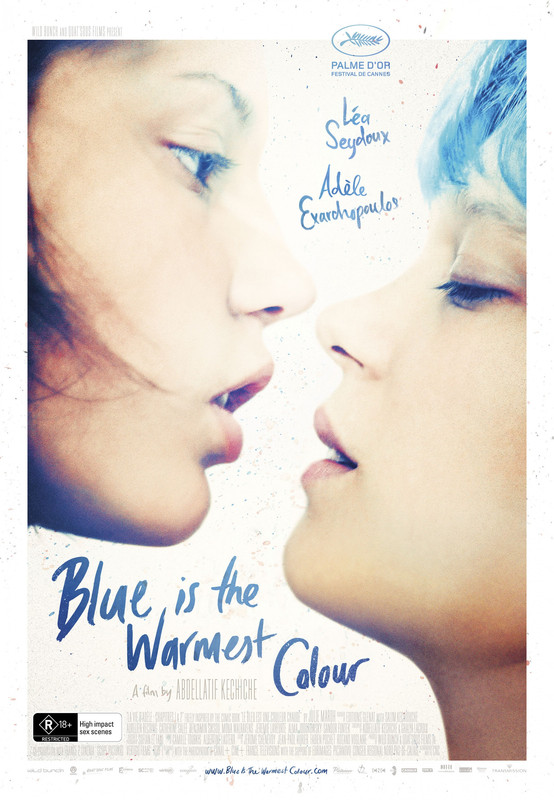
24FPS @ LFF 2013 Blue Is The Warmest Colour

Dir: Abdellatif Kechiche
This was one of my most anticipated films of the London Film Festival.  Leaving aside the stellar word from Cannes and the unprecedented decision to award the Palme D'Or to the film's stars as well as its director I'd still have been desperate to see it, because Blue is the Warmest Colour seems to be built entirely out of things I find interesting.  I am, as some of my LFF reviews will attest, an absolute sucker for a coming of age movie and you could make the case that no country produces interesting examples of the genre with greater regularity than France.  I'm also interested in controversial, boundary pushing, cinema of all kinds and given the discussion that has surrounded its sex scenes and the actresses comments on them I wanted to see it in order to be a part of that discussion.  Unfortunately Blue is the Warmest Colour turned out to be, despite several inarguable qualities, one of the more disappointing films of the festival so far.

The French title - La Vie D'Adele - is much more descriptive of what this film is.  Spanning several years, the film focuses on Adele (Adele Exarchopoulos) from the age of 17 and especially on her intense relationship with Emma (Lea Seydoux), her first with a woman.  The relationship is depicted in intense and explicit detail over the film's generous 179 minute running time.

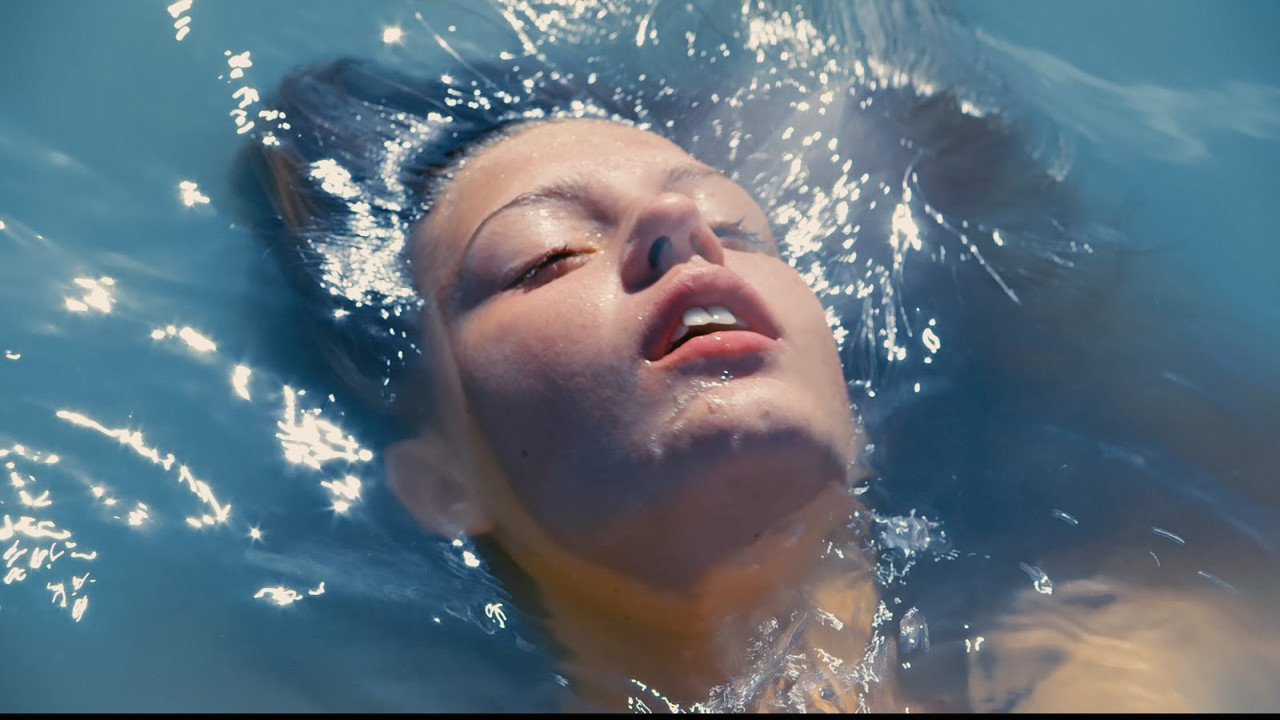
If there's one thing that you can't deny about this film it's that the two leading performances are exceptional.   Adele Exarchopoulos is a real find, she's so beautiful that it almost seems as though she's been put together as a photofit from the constituent parts of other incredibly beautiful faces, but there is much to be found behind that dazzling facade.   Exarchopoulos gives an unaffected performance that switches gears effortlessly, sometimes in a moment, from casual to intensely emotional.  There is an especially effective example of this when, having qualified as a teacher, she is saying goodbye to her students for the summer and as soon as they leave breaks down in floods of tears (they're not about the students).  She's possibly most effective when her passion is at its height, be it when Adele begs Emma not to break up with her or a late scene in a cafe when she attempts to get the relationship back, but she also has a lightness of touch that comes through when Adele is teaching or spending time with friends.  It's a noteworthy debut and I'm looking forward to seeing what  Exarchopoulos does from here.

Lea Seydoux enters the film surprisingly late, but she's equally strong as Emma, particularly in early scenes as she seems to be feeling out whether Adele is just a bi-curious teenager or really worth investing time and feeling in.  There's undeniable chemistry in these early scenes, accentuated by Kechiche's extensive use of close ups to show the gaze that each of the women is casting at the other.

So, with all this praise, what's the problem?  There are several answers to that, which I'll try to get into, but the ultimate one is somewhat ephemeral: I just didn't feel it.  Despite the quality of the performances, despite the chemistry, despite the detail – sexual and otherwise – I never really engaged with Adele and Emma's relationship, never found myself caring whether they ended up together and never felt the stakes come the inevitable third act break up scene.  That scene is one of the best acted of the year, but throughout it I struggled to figure out why it wasn't working at an emotional, rather than a technical, level.  I'm still not sure I have the answer.

The same issue persisted with the sex scenes.  During the first, which is about eight minutes long, I found myself thinking 'two beautiful women are having very explicit sex, why am I bored?'  Part of this may be down to the fact that I know the actresses had a bad time making these scenes.  Because I was already feeling outside of the film I found my thoughts drifting to what they had said, ten days on set, that they were uncomfortable, their fractious relationship with Kechiche.  This is, perhaps, more a problem with the prevalence of film news online as much as with the film, but had the film been working I doubt it would have crossed my mind. 

The biggest tangible problem with the film is its running time.  When I described it as a generous 179 minutes I forgot the word absurdly.  The slow burn works nicely for the first hour, detailing Adele's unfulfilling life at school and with a casual boyfriend, as well as the first stirrings of her attraction to women.  Unfortunately in the last two hours the film slows to a crawl.  I can see the point of showing Adele's work, but the amount of scenes at the school seems excessive and after a certain point adds very little to the picture of her as a character.  Every individual scene is also indulgently long.  This is a film you could cut heavily and not lose a single scene, for instance, does a party scene with Emma's friends tell us any more at eight minutes than it would have at five?  I doubt it.  As slow as it can be, the film grinds to a halt in its last twenty five minutes, which drag on and on, adding nothing, long after the cafe scene which is the (or should be) emotional culmination and natural end point of the story.

In its three hours, Blue is the Warmest Colour breaks little new ground.  It follows every expected beat, apparently hoping that doing so at great length and with some extremely explicit scenes will make it seem more novel than in fact it is.  It has many undeniable qualities, and if it connects with you emotionally then you will likely find it absorbing.  I found it frustrating and frequently dull, but exceptional performances from Exarchopoulos and Seydoux just scrape it an extra star.

Oct 11, 2013

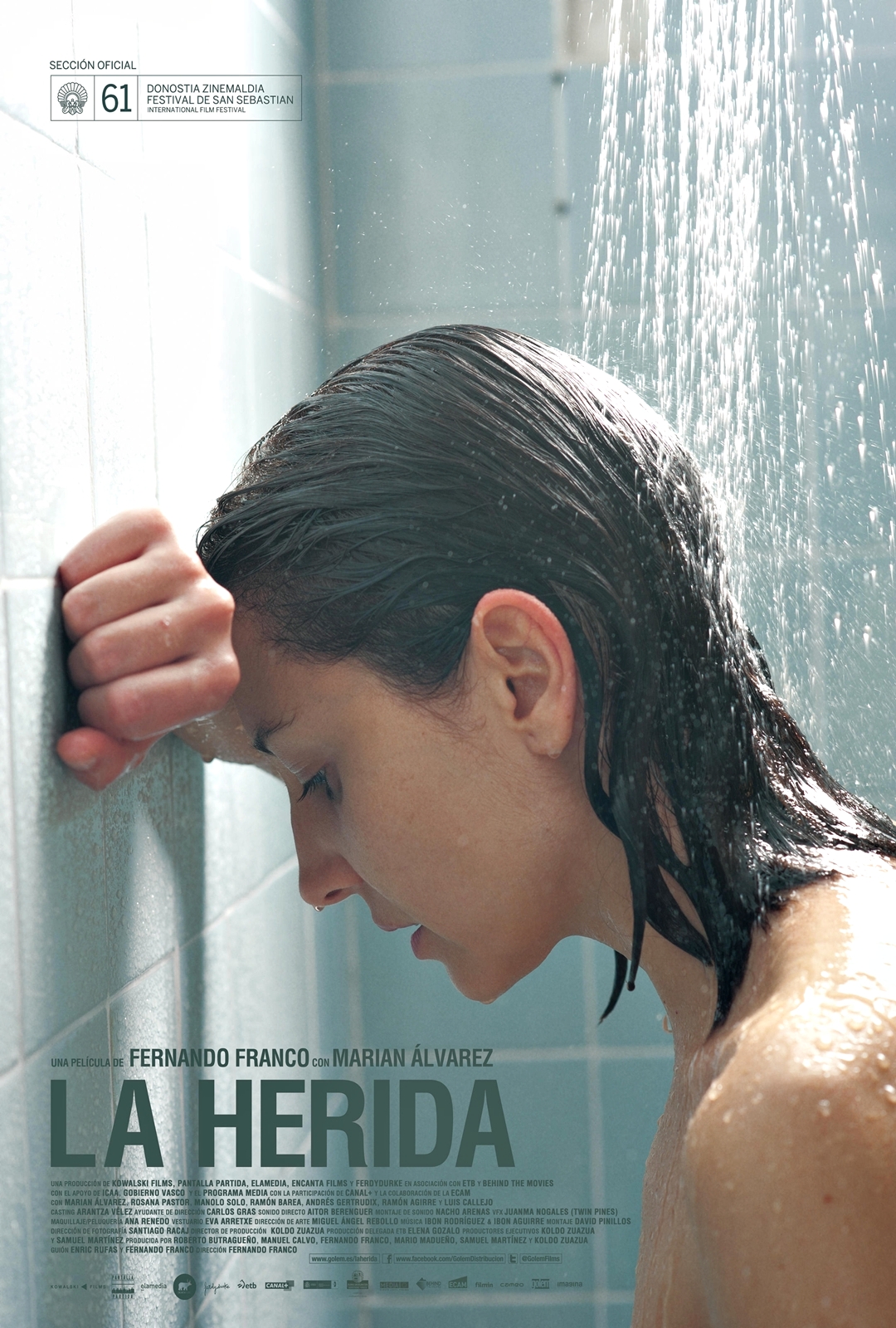
24FPS @ LFF 2013 Wounded

Dir: Fernando Franco
Films about mental illness tend to come in two distinct flavours.  There is the bleak as fuck version, most often complete with tragic and/or bloody ending or the wackier version (see Silver Linings Playbook, large sections of which could be re-titled 'Mental Illness Ain't It Kooky?')  Wounded does not fall into either of these categories.  This is where I have to inform you that, while I've no desire to start writing like Harry Knowles, this review is going to have to get much more personal than I would usually allow, because that's the only way to tell you how Wounded affected me.

The film is essentially a character study of Ana Ortega (Marian Alvarez), an ambulance driver in her late twenties who – though apparently undiagnosed – is clearly suffering with severe depression and anxiety attacks, causing her to self harm, shut herself away and sometimes lash out at people.  Over about six months, Wounded follows Ana's attempts to lead a relatively normal life, without people knowing that she's unwell.

This is where it has to get personal.  For most of my twenties, and still to a thankfully lesser degree, I suffered with severe anxiety and depression.  I was never as bad as Ana, I never self-harmed but I think it was movies, as much as anything, that helped get me through.  Coming from this standpoint I can say that Marian Alvarez' performance as Ana comes as close as anything I've ever seen to showing what my experience of depression was.  

I knew the film was going to engage me personally right from the start, when Ana has a panic attack at work, but hides it from her co-worker Jaime.  This is something I did regularly, and it took me viscerally back to those moments.  Here and in the rest of the film Alvarez is sensational.  She does a great deal with very little.  Small moments; a gesture here, a look there, tell a great deal about what is going through her head and how she's trying to keep it from coming to the surface.  When it does boil over it is powerful, but always real and not overplayed.  Her frustration after lying to end an online chat with a friend, for example, also struck a deeply personal chord.  I've done that, and reacted like that.  Personal experience or not, I suspect most will still think Alvarez does a sterling job here, establishing herself as a name to watch.

Director Fernando Franco clearly has a firm hand on the performances, as he gets similarly outstanding, naturalistic, work from the actors around Alvarez.  Rosana Pastor puts in an especially good performance as Ana's mother, who is all unspoken concern.  She clearly loves and worries about her daughter, but it's almost as if she asks about the self-harm that will make it real for her.

The key to the film is that, as difficult as she can be, you always root for Ana and want her to be okay.  Franco and Alvarez achieve this by breaking out of the bleakness to show Ana's efforts to maintain a normal life.  You can sometimes see behind the depression, whether it be through the way she works with a favourite patient who has dementia or her playful response to a suitor at a work party.  Sometimes we also see how depression twists those moments, leading her to passionless sex or occasional drug abuse, and those moments are wrenching.

There is little narrative shape here and that's a good thing, it means that Wounded steers away from offering easy answers for why Ana is depressed (there are hints that it may have something to do with her Father, but nothing concrete) or for how she can finally beat it.  That's not to say that this isn't a hopeful film, I think it ultimately is, but it's a film about a process that looks at only a small part of that process.  

With it's stark imagery, limited narrative, downbeat story and unresolved ending some will find Wounded a difficult experience.  I certainly did, but the very difficulty of watching it, the regularity with which it pricked at painful memories, was proof to me of how strong and how affecting both the film and Marian Alvarez' performance (which is worth the price of admission by itself) really are.  I'm sure my grade is slightly coloured by the level on which I personally engaged with this film, but I don't think I can honestly give it a lower score.

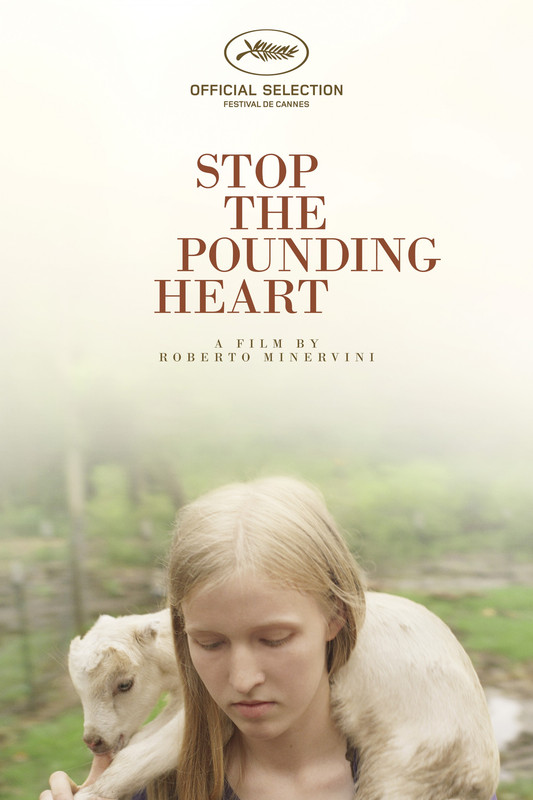
24FPS @ LFF 2013 Stop The Pounding Heart

Dir: Roberto Minervini
The third of a thematic trilogy by Italian director Roberto Minervini, Stop the Pounding Heart straddles a very fine line between documentary and drama while observing two rural Texan families.  The main focus falls on the extremely religious Carlson family, and on 17 year old daughter Sara.  The plot is very loose and advances only in tiny increments, but the subtle but growing connection between Sara and Colby - a boy from the neighboring family who is teaching some of Sara's younger siblings to ride bulls – provides one throughline.  The second, at first glance more prevalent, throughline comes from themes of fundamentalist religion and of Sara's implied struggles with the life she's expected to lead.

You'll notice that I've given no actors names above.  This is for the simple reason that everyone in the film plays a version of themselves and uses their real name on screen.  This seems to me one of the most difficult balances to strike, finding non-professionals capable of acting in a story that is subtly different from their lives, but still essentially playing themselves and doing so in a way that is unaffected.  In this Minervini was either incredibly fortunate or extremely skilled with his direction because only one or two of the actors ever hits a bad note and they're never on screen long enough for it to matter.  Sara Carlson and Colby Trichell are especially good.  Nothing about their relationship is explicitly stated in this film, but the hints of growing closeness are beautifully articulated and affectingly inform some of the later scenes in the Carlson home.

Fundamentalist religion is usually depicted as something scary, and to be fair there are elements of the Carlson family's beliefs that are unnerving in the modern world especially a discussion, entirely between women, about how the bible says women were created to serve men, not vice versa.  However, Minervini doesn't go out of his way to show their religion as oppressive, and often presents it in the best light.  This is clearly a family that cares deeply for each other.  The mix of the two ways that religion influences the family seems reflected in the scene in which Sara expresses (in vague terms, but terms we suspect are to some degree to do with Colby) doubts about God.  Sara's mother is caring, praying to God to protect her and 'stop her pounding heart' but it's also clear, particularly in the final scene, that even if consented to, this is something of a means of control.

As the actors straddle the line between documentary and drama so does Minervini's camera.  Scenes of the Trichell boys riding bulls, of Sara working with her father and of one of Sara's relatives (her aunt?) giving birth have a gritty documentary feel, but Minervini isn't above a little magic realism; a scene of Sara and her siblings going on a picnic has a glowing, almost idyllic, quality.  There is definite design here.  Minervini uses low light beautifully in a few shots and his eye for composition – largely centered on Sara's down to earth beauty – is impressive.  The whole film has a sort of bruised beauty, right down to its ellipsis of a final shot.

Stop the Pounding Heart is a small and subtle film, but for me it's what is best about minimalist cinema.  It may not shout about it, but under the surface it says a lot.  It expects you to do some of the work, but rewards you with beautiful images and fine performances.  Some will simply find it uneventful and dull, but I was thrown right into these people's lives and would happily have watched them for longer.

Oct 10, 2013

24FPS @ LFF 2013 Mini Reviews

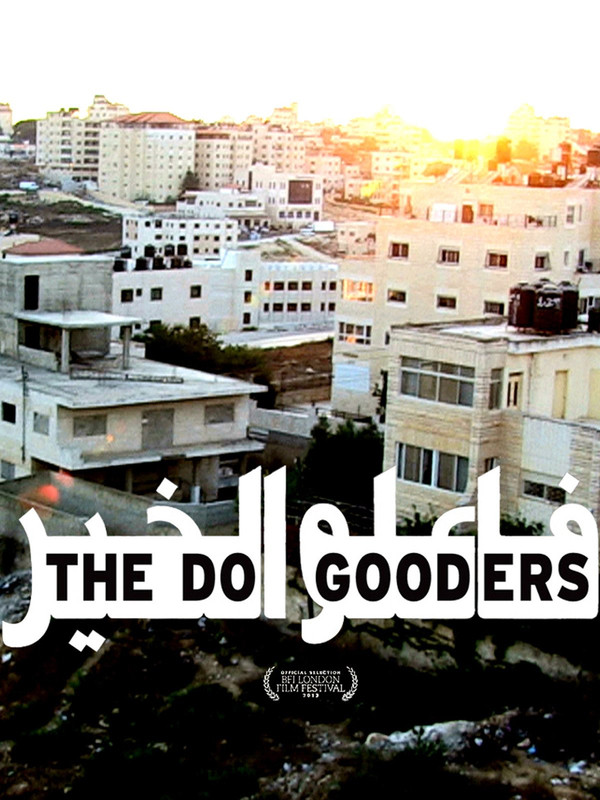
The Do Gooders
Dir: Chloe Ruthven
One of the favourite questions that people ask of critics when they give a film a severe kicking in a review is 'do you think you could do better'.  In this case?  Yes.  Yes I do.

The Do Gooders attempts to be a documentary looking into how aid is used and how it might actually be hindering peace efforts in the West Bank, but whatever insight it has on that subject is extremely limited, comes across almost entirely by accident, and is wrapped up in the most amateurish filmmaking I've ever seen at a festival.

Director Chloe Ruthven has some personal connection to this region and the western activism that happens there; her grandparents were among the first generation to attempt to help on the Palestinian side and she, influenced by her grandmother's book on the subject, is attempting to see what the situation is now like.  Sadly her grandmother's book seems to be all the reading that Ruthven has done.  She blunders into the Palestinian territory with no apparent knowledge of what's really going on on the ground, no ability to speak Arabic and, it seems, no clear idea either of what she wants to see or the film she ultimately wants to make.

Eventually, by some stroke of luck, Ruthven does manage to find someone to drive her around and translate, but there is still little structure to what she does with this help. Despite her apparent obsession with filming all the time, she still has no clue what she's doing.  At one point, in the film's most moving, most insightful, interview the driver has to tell Ruthven to film the man she is talking to, rather than the chickens she was focusing on at that point.  This is not atypical, the journalism here is an embarrassment to the profession.

The film is also crafted badly.  It's packed with irrelevances and with moments that should be left on the cutting room floor (such as the before and after of an interview, which shows us nothing but Ruthven's haphazard skills as a director) while potentially interesting moments like a conversation between Ruthven's driver and the head of a local NGO staffed entirely by Palestinian women are repeatedly cut away from so the camera can be pointed at the film's biggest liability: its director.

It's clear Ruthven sees this as a personal journey, which would be okay if you felt like she approached it that way. Instead what develops is an attempt to turn this entire conflict, all the politics, all the complexities of aid, into a personal whine about the fact that it's not about Chloe Ruthven.  It is obnoxious in the extreme, and infuriating by the end, when Ruthven cuts away from that conversation to film herself crying because two women are speaking in Arabic, which is their native language but which she doesn't understand.

The Do Gooders is a dreadful, dreadful film.  What insight it does possess you could come by in fifteen minutes on Google, but worse is the confused focus and the calamitously poor filmmaking.  I've seen better documentaries on BBC 3, what this is doing in a major film festival is anyone's guess.

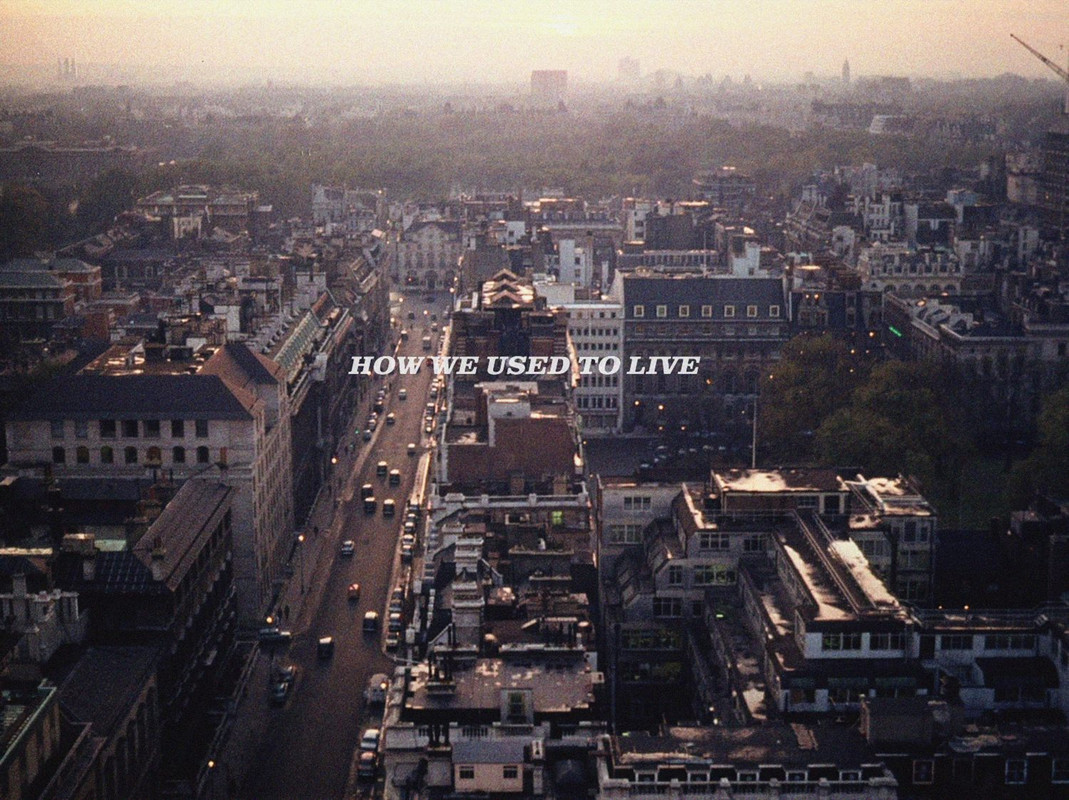
How We Used To Live
Dir: Paul Kelly
To really like How We Used to Live you have to like two things: London and Saint Etienne.  I'm sold.

Saint Etienne's latest collaboration with filmmaker Paul Kelly takes footage of London, ranging from the 1950's to the 1980's, from the BFI national archive, cutting it together in a series of themed montages to music largely composed by the band's Pete Wiggs (though two full Saint Etienne tracks also appear).  It's an essay film, which I don't usually warm to, and I can see why people might not like this one, but it completely worked for me.

The film is essentially, though only loosely divided by theme.  There are sequences on the city, on transport, on morning, on night, on mods, on punk and much more.  Each segues easily into the next, Wiggs' music; at times ambient, at times poppy, at times almost classical, setting the tone.  My favourite segment, as it will be for many people, was the montage of London going to work in the morning, set to the only Sarah Cracknell featuring Saint Etienne track in the film (from the Sound of Water era).  Yes, it's a basically a music video, but the images and the music complement each other to soaring, soothing, effect.

How We Used To Live is nakedly, unashamedly, nostalgic, but it's an honest nostalgia.  Yes it romanticises aspects of London, but there's a subtle bite to the way some footage (especially glimpses of the Queen) is used and the film does also look at some of the less attractive aspects of the city like some of its ugly architecture and poor, almost derelict, areas.  Ultimately though, just as much of Saint Etienne's music is, this is a love letter to an imperfect city, filtered through Paul Kelly's curated images, the Bob Stanley penned narration and Pete Wiggs' music.

My grade here is purely personal.  Knock a star off if you don't love London or Saint Etienne as much as I do.

Oct 9, 2013

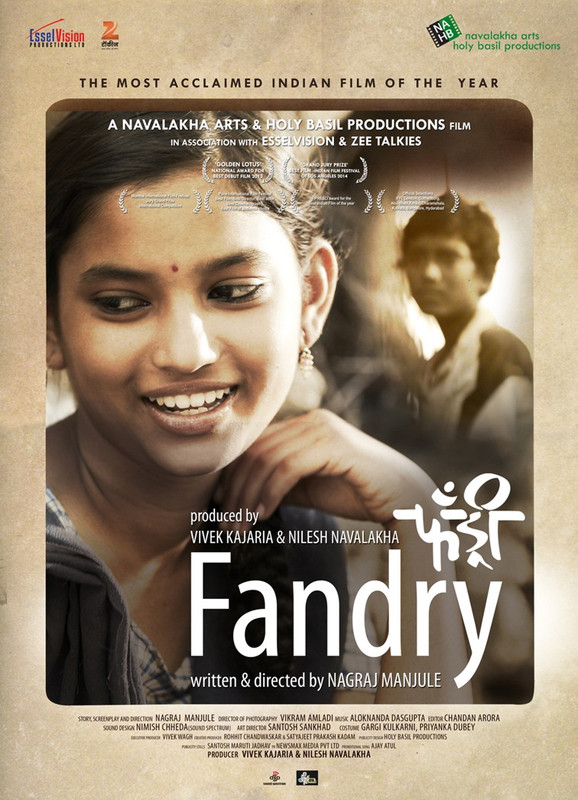
24FPS @ LFF 2013 Fandry

Dir: Nagraj Manjule
Certain ideas are universal and Fandry deals with one of them.  We've all felt that same pull of our first crush that Jabya is currently going through.  What makes the story specific to India is the fact that Shalu, the object of his affection, is from a high caste while he is of the Dalit (Untouchable) caste, which makes his even looking at her a problem.

Fandry is not the kind of Indian film – mainstream Bollywood product – that we usually see here in the UK.  This is a much more down to earth drama, with naturalistic performances and a notable absence of songs (though there is one, entirely appropriate and unchoreographed, dance sequence).  This made it, for me, much easier to relate to than the rest of the few Indian films I have seen.  This is also true of the way that the film combines the universal and the specific, because it means that the film engages you on two levels; drawing you into a culture that is not your own through an experience that likely is.

All of the performers are credited under the 'introducing' tag (and, unhelpfully, the credits on imdb are incomplete).  It seems safe to assume that most are either non actors or very raw, new, talents.  Hard as it is to judge performances in a language you are unfamilliar with, the acting in Fandry feels unaffected in the best way.  Jabya's crush feels very real, especially in a lovely sequence in which he and a friend move around the school playground to see if Shalu's gaze follows him.  The family dynamics between Jabya, his parents and his sisters also feel very real - even if the cultural differences are a leap, especially when Jabya's family want him to work rather than go to school (he can't be more than 14).  The young girl playing Shalu has less to do, but the camera idealises her in a way that both effectively sets her against the poverty we see Jabya's family in and reflects the way any 14 year old sees his crush.

The only point at which the film falls a little flat is during an overextended closing scene.  Jabya and his family have to catch a pig, and slowly the whole town seems to turn out to laugh at and mock them.  The realities of the caste system work in the background of the whole film, but here it's writ large and though the scene is effectively dramatic it feels a little on the nose, especially with the final shot.  Overall though, Fandry is an engaging film that is affecting on several levels.  I'd like to see more of this sort of Indian cinema.

Oct 5, 2013

24FPS @ LFF 2013 Mini-Reviews

Drones
Dir: Rick Rosenthal
The new LFF programme divides films by a series of themed headings.  Drones comes under 'Thrill', but would probably be more suited to 'Debate', because that's what it revolves around.

A two-hander, Drones is set in a portakabin in the desert where Jack (Matt O'Leeary), an experienced drone pilot and Sue (Eloise Mumford), a new recruit he's training sit observing a suspected terrorist, waiting for the opportunity to kill him.  They observe that their target may soon be arriving home, but as more people arrive at the house Sue begins to get cold feet about their orders.

Drones is as of the moment as movies get, the debate about the ethics of the use of unmanned aircraft and the way that it can be see to turn war into a video game is very much a live one.  The film articulates both sides of the debate passionately, though it increasingly seems to take sides as the film goes on.

At times it's an engaging debate, rooted in character and in two exceptional leading performances, especially from O'Leary who has gone from being a child star to become an interesting and daring young actor.  Unfortunately the screenplay is also prone to passages of bludgeoning obviousness that feel like regurgitated talking points.  This is especially the case when other characters play a part in the drama, as the supporting performances are rather cartoony at times.

There is an inherent drama behind the debate, and the real time structure does make the film increasingly tense, ratcheting up the stakes minute by minute.  This tension, along with O'Leary and Mumford's performances, help the film overcome its clunky moments and director Rick Rosenthal's very basic lensing.  There may well be better films to be made about this issue, but Drones is tense, timely, and sure to spark interesting discussion.


Teenage
Dir: Matt Wolf
Knowing my weakness for coming of age movies you're probably thinking 'was there ever a title more suited to Sam'?  You have a point, but unfortunately, Matt Wolf's documentary on the evolution of the 'Teenager' in the 50 years leading up to the coining of that term is a mixed bag.

Most of the film is composed of archive footage, which is a mixed blessing.  On the one hand footage is well chosen, it's informative and often funny (especially as we get towards the 40's and clips from American educational and hygiene films) and the editing is great, skipping nimbly between ideas and clips.  The problem is that this approach can feel shallow, less a film than a mixtape.

The multiple voiceovers are similarly both a good and a bad thing.  They are all very nicely delivered, especially Jena Malone's as the American girl and I appreciate the idea behind them of giving a personal narrative to the film.  The problem is that these are clearly not personal narratives (as attested to by multiple writing credits and a lack of any sourcing for the narration) and that, in a documentary, undermines the desired effect.

Teenage tells many interesting stories, some of which could really benefit from more breathing room.  The story about a young British socialite in the twenties who wanted to be famous but ended up as one of the country's first young heroin addicts is a good example, a sad tale that is skipped over with unseemly haste.  However, the best (and simultaneously most disappointing) part of the film focuses on a group of young German people whose affection for Swing music led to them rejecting Hitler's philosophies, and ultimately to almost all of them being killed by the Nazis.  I never knew anything about this, and I would love to see a film really delve into this forgotten history.

With just 79 minutes to cover 50 years Teenage is often frustrating, even in its best moments.  It's well crafted and puts its thesis forward with conviction, but it's bitty, messy and never totally fulfilling.


The Strange Colour of Your Body's Tears
Dir: Bruno Forzani / Helene Cattet
The second film from artists and giallo fans Forzani and Cattet is as odd and as esoteric as its title would seem to promise. Some will find it maddening, some will find it exhilarating.  The one thing I can say with some certainty is that the more film you have seen, the more points of reference you have, the more you are likely to get from this film.

The basic story appears simple; a man returns home from a business trip to find that his wife has vanished.  He and the Police begin to investigate and he begins to believe there is a killer living in his apartment building.  It's not that simple of course, because Forzani and Cattet filter this basic framework through an incredibly surreal series of sequences that make a nonsense of your aspiration to construct a timeline or to maintain a sense of what is real and what is not.

The Strange Colour of Your Body's Tears is not so much narrative as it is patchwork; a collection of influences stitched together in scenes that feel only loosely connected, often more like a collection of shorts than a feature film.  Usually I would count this as a flaw, but so much of this film is so inherently riveting from a purely visual standpoint that the narrative is less important than it might otherwise be.  Forzani and Cattet draw from throughout film history for their influences, but standout moments include a black and white sequence whose staccato motion calls to mind stop motion animation as it draws on Un Chien Andalou, German expressionism and film noir in a beautifully brutal series of images.    Of course there is also a great deal of influence from Italian horror directors, with a series of head stabbings and eye closeups that could come straight from Fulci and a bright, luridly colourful, lighting scheme straight out of Suspiria.

As exciting as this film can be I also found it frustrating at times.  I found myself craving a story more and more as it went on and Forzani and Cattet's imagery began to become repetitive (the endless returns to a particular door in the film's last half hour eventually became grating).  I also had the feeling that, ultimately, as beautiful and visceral and cool as it is, The Strange Colour of Your Body's Tears doesn't add up to much more than a collection of technically and visually thrilling set pieces.  It hits home as a piece of art, but it doesn't engage me on any other level than the visual.

Oct 3, 2013

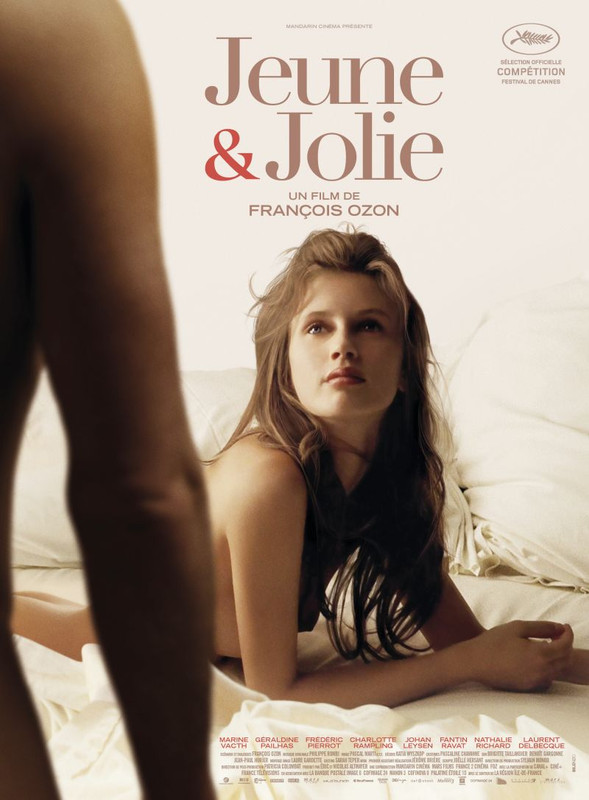
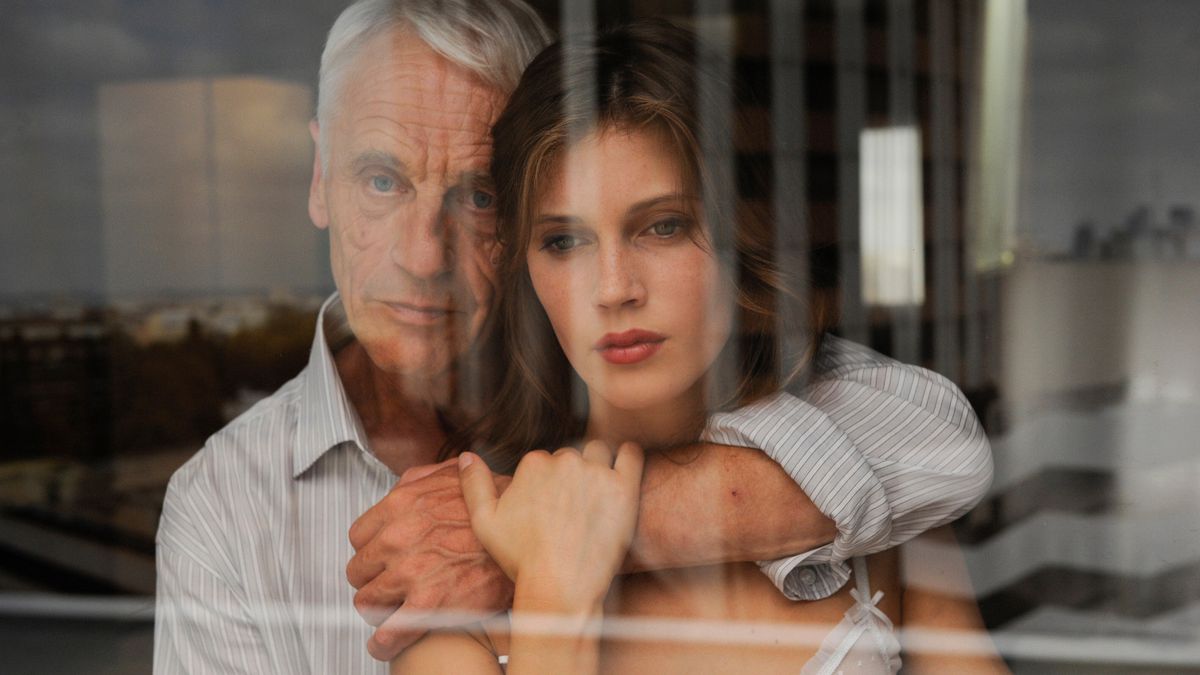
24FPS @ LFF 2013 Jeune & Jolie

Dir: Francois Ozon
Ever since I first saw his feature debut, Sitcom, about fifteen years ago, Francois Ozon has been both one of the most exciting and one of my absolute favourite working filmmakers.  Last year he really hit the heights with In The House; a film that played with and analysed film and storytelling, while also working as a thriller and a comedy.  Even as a big fan I had accepted going into Jeune & Jolie (Young & Beautiful, for those whose GCSE French has deserted them) that it was unlikely to match that film, but I really didn't expect it to be the crushing disappointment that it is.

Told over twelve months, beginning in Summer and split into four seasonal sections, Jeune & Jolie begins by introducing us to Isabelle (Marine Vacth).  She's holidaying at the beach with her family and about to celebrate her seventeenth birthday.  The night before her birthday Isabelle sneaks out and loses her virginity to a boy she's had a holiday romance with.  The next time we meet Isabelle it is Autumn, she's back at school, but in between homework assignments, she has begun working as an escort, under the name Lea.

Recently there have been a few films about students turning to prostitution to fund their studies (the best of the bunch is the bleak Student Services).  Jeune & Jolie is different in both tone and content to those films.  On the one hand, this could prove refreshing, as Ozon doesn't take us on the familiar downward spiral of danger and drugs often seen in films about sex workers. Unfortunately what he does serve up is so thin and underwhelming that he seems unsure of what he's trying to say. The film seems to have no opinion about Isabelle's work, no interest in why she got into it and no insight into what she gets out of it (we never even see her spend any of the money she makes). From a director has long been renowned for his complex characterisation of women and for his work with actresses, this lack of insight is disappointing, and it brings the film tumbling down.

Jeune & Jolie actually begins promisingly. The opening image of a topless Isabelle on the beach, viewed through binoculars by her twelve-year-old brother Victor (Fantin Ravat), is shot through with Ozon's obsessions; it's a beach shot, dwells on beauty and is full of implied unconventional sexuality.  It's the biggest, but almost the only, auteurist statement of the film and Ozon largely fails to explore the most interesting undertones that it suggests.  This is often the story of this film; it's packed with interesting avenues that I want to see Ozon explore, but he never does.

Victor is a perfect example.  In several scenes there is something bubbling under the surface; the suggestion that Victor is attracted to his sister – certainly he tries to explore his sexuality through her – but this never comes to anything, Ozon seems to repeatedly brush the idea aside in favour of following Isabelle in what is a rather more conventional and less interesting coming of age narrative.  This pattern repeats with the stories about Isabelle's mother (Geraldine Pailhas) and her possible affair with a family friend, Isabelle's relationships with friends and lovers after she leaves prostitution behind and, most frustratingly, Isabelle's relationship to her job and her clients.

Ozon's films have never pulled back from sex and nudity, but Jeune & Jolie is unusual even in this respect.  Ozon is gay, which is something that informs his work.  He clearly appreciates female beauty, but he's never made a film that has such an explicitly male – and straight – gaze as this, in fact it's so extreme that at some points it feels exploitative of Marine Vacth, who is exposed over and over again.  Of course the nudity is part of Isabelle's job, but still, Ozon lingers queasily long after any potential point has been made.  The last time the nudity in an Ozon film was this extensive and frequent was Swimming Pool, but there it was about something – the idealisation of Ludivine Sagnier's character from the point of view of Charlotte Rampling's – here it seems to be mere titillation most of the time.

Throughout the film things echo from the rest of Ozon's filmography, only adding to the hollow rattle of this film as what was previously meaningful loses most of its content.  A party scene towards the end of the film is a good example.  This is the moment that Isabelle is re-entering society, associating with her peer group again after the scandal of her double life (which, remarkably, she seems to have been able to hide even after the Police have been involved).  There is something of a feeling here, especially as Isabelle dances with a potential boyfriend, of an echo of the key party scene in 5 X 2.  Unfortunately where that scene neatly encompassed all of the film's conflicts this one just feels like a series of shots of people dancing to Crystal Castles, because we know so little about Isabelle, even over an hour into the film.

It has been suggested to me that reason we are told so little and given to understand so little about Isabelle is that, at 17, she may not know herself who she is or why she does the things she does.  This is a fair point, but a character not knowing or understanding something doesn't mean that we shouldn't, in fact that duality is a feature of almost every coming of age film.  Without the extra dimensions that Ozon's characters usually have, Isabelle comes off as a blank slate, and a blank slate isn't terribly interesting to base a film around.

There are a couple of caveats to the disappointment of Jeune & Jolie.  First of all the initial Summer sequence, though some of its key events never echo as they should, is great.  Ozon shoots summer and the seaside like no one else, and here he filters that through an intimate, Rohmeresque, exploration of the little dramas of holiday romance, if this had been the whole film I'm sure I'd have loved it.  The other thing worth seeing here is Marine Vacth, she can't conjure up a personality for Isabelle, but she does draw a clear line between Isabelle and her Lea persona and while it's never as deep as you'd like thanks to Ozon's weightless screenplay she delivers a performance of conviction and slips effortlessly between gears.  If she's this good in a bad film I'm looking forward to seeing what Vacth can deliver when she has more to work with.  The rest of the performances are also good, with Geraldine Pailhas especially strong as Isabelle's mother.  The only disappointment among the cast is Charlotte Rampling, whose ice queen act is wearing very thin at this point.

Jeune & Jolie isn't a classically bad film.  It looks fine, it's expertly cut and there is a clear artistic hand behind it, the problem is perhaps context: Ozon has been so good that when he stumbles it feels like a bigger fall than it might be for another filmmaker.  The greatest disappointment of this film is how weightless it is.  Ozon does fluff brilliantly, but this story needs heft, needs character, and ultimately it's the worst thing it could have been: inconsequential.

Oct 2, 2013

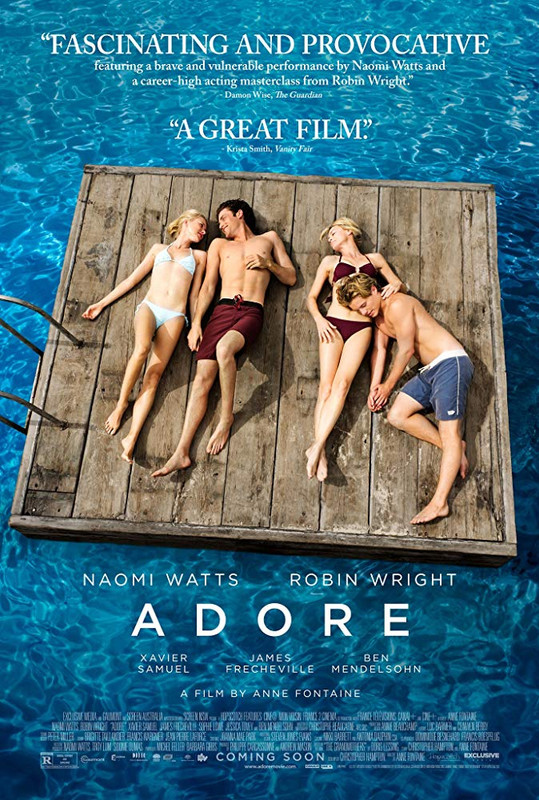
24FPS @ LFF 2013 Adore

Dir: Anne Fontaine
Adore is easily the funniest film I've seen so far from this year's London Film Festival crop. What a pity it's a drama.

Ros (Robin Wright) and Lil (Naomi Watts) have been friends all their lives. In their forties, they are living idyllic seeming lives on the coast of Australia, Ros with her husband (Ben Mendelsohn) and late teens son Tom (James Frecheville) and the widowed Lil with her own 18 or 19-year-old son Ian (Xavier Samuel). The families have always been close, but one night when Tom has gone to bed drunk and with her husband away in Sydney, Ian kisses Ros, who reciprocates, kicking off an affair between the two. Tom catches them, but rather than say anything responds by beginning his own affair with Lil. The film follows the ups and downs of these two relationships and that between Tom and Ian over about five years.

I think the biggest problem with Adore is it's easy to see how it could be a promising project. The story (based on a Doris Lessing novella, The Grandmothers) has an inherent drama about it, given that it's rife with betrayal and the potential for broken friendships and relationships. On the surface, it is also very well cast. Naomi Watts is someone I've been a fan of. Even when she's sometimes been stuck with a generic screenplay (Fair Game) or the film she's in hasn't entirely won me over (The Impossible), she tends to impress, sometimes elevating films through her work. Robin Wright works less often than Watts, but I've long thought her an underappreciated talent, and I've enjoyed seeing her make more frequent screen appearances lately. To be fair to Watts and Wright, they do what they can here and give pretty remarkable performances given what they have to work with. This isn't to say that you'll buy anything that happens in Adore, just that the fact you won't is the fault of Christopher Hampton and Anne Fontaine's screenplay rather than the acting.

Adore is dull in a rather particular way; everything is purely surface level. This is as true of the imagery as it is of the writing.  Fontaine is blessed with a beautiful landscape to shoot and gorgeous actors to film against it, resulting in a film that superficially looks good. However, there is little behind any of it, the visuals do little that isn't backed up by bald dialogue, and the few things that are left purely to the visuals are equally telegraphed.

The premise promises drama, but the film seems almost allergic to it. The whole thing is excruciatingly polite. Any moment that suggests any kind of confrontation is swiftly cut away from and left to play out off screen. Among the dramatic events that we never see are the first couplings between Ros and Ian and Lil and Tom, the arguments (and reasons) that Ros and her husband divorce and the argument between Tom and Ian when they first find out they are each involved with the other's mother. Each of these things seems rather key to the narrative and the fact we see none of them is a problem because there is nothing in their place aside from risible dialogue. Dramatic restraint is fine if it means something, but there's no tension and no great insight into the characters through that restraint, so it just becomes tedious and silly.

The lack of passion and the lack of drama completely undermines the film. First, because there is no sense of the visceral chemistry that surely should power these twin affairs, but more damagingly because it gives us the sense that Adore takes place in some sort of alternate reality. This is a reality where two lifelong friends, on discovering that each has betrayed the other - in a frankly icky way - clear things up with a chat that consists of this exchange: Ros: “What have we done?” Lil: “We've crossed a line.” and then decide that, hey, let's just keep crossing it. In any real world this story wouldn't feature that conversation, it would end up as a shouting match on Jeremy Kyle. It was at this point that I and the majority of the audience stopped taking Adore at all seriously.

There are two ways Adore could work; by being serious or by being silly. Anne Fontaine desperately wants to be taken seriously, but she keeps fumbling the ball with such comical scenes as one in which Watts' boss comes to ask her out, but ends up thinking she and Wright are lovers or the gut-busting penultimate scene in which Lil tells Ros - whose actions help start everything - “You're the only one who hasn't behaved badly.” If Adore wants to be taken seriously, fine, but it needs to delve much deeper into its characters than a few brief scenes of the absurdly beautiful Ros and Lil worrying about their age. If Adore wants to be a farce, fine, but it needs then to play as though the laughs are intentional. The problem is that it never decides, and ends up being Bergman's Blame It On Rio. Yes, it's as bad as that sounds.

Sep 27, 2013

24FPS @ LFF 2013 The Spectacular Now

Dir: James Ponsoldt
I have always been a fan of coming of age cinema, I was introduced to these films by the great American examples of the 80's and 90's, when I was the same age as many of the characters, but recently the best examples have been coming not from the US but from Europe and Scandinavia.  The Spectacular Now doesn't shift that balance by itself, but it is the best American coming of age film I can remember seeing for some time.

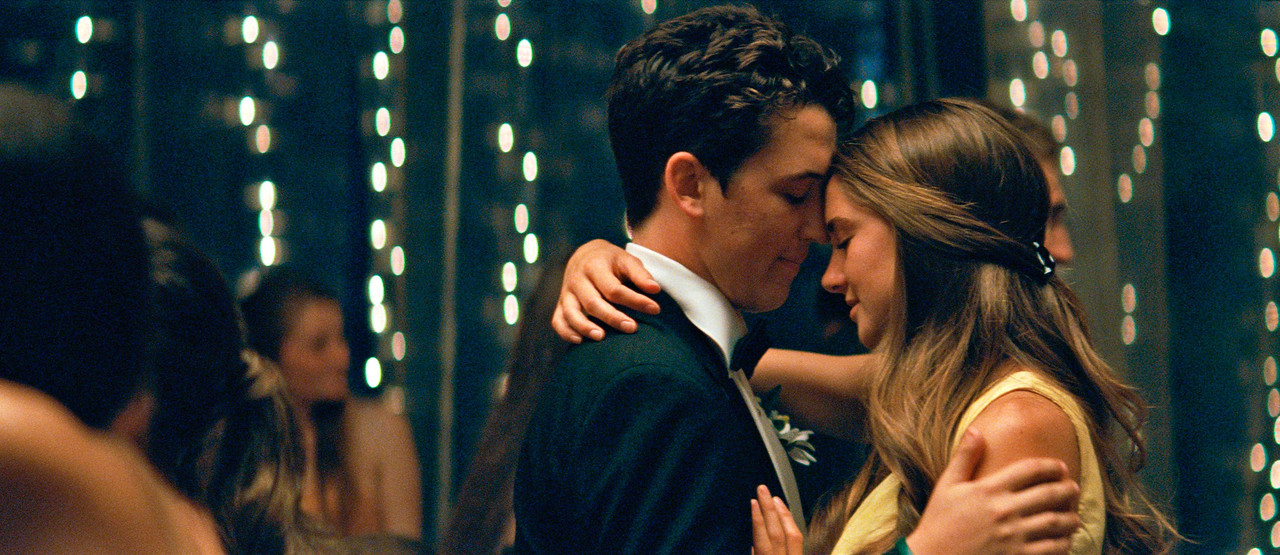
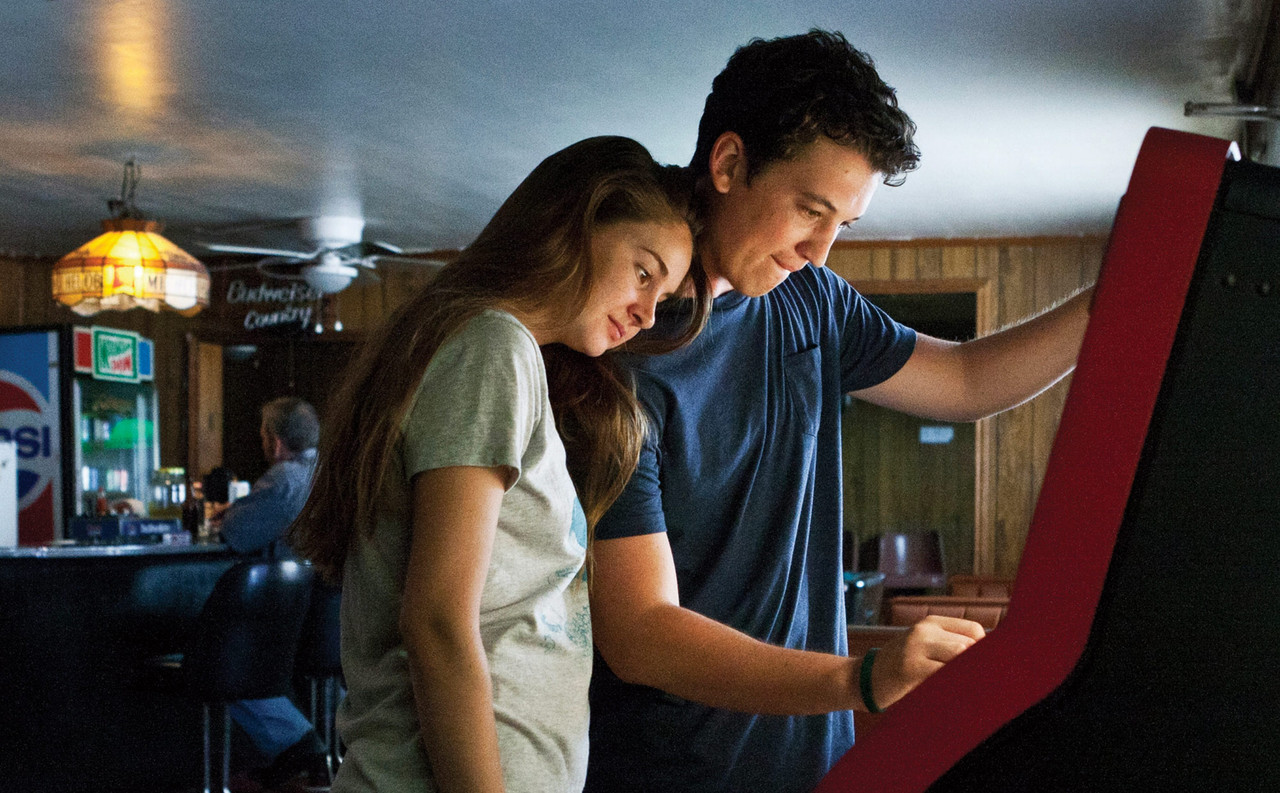
Sutter Keeley (Miles Teller) is a high school senior, he's smart but unmotivated and his fondness for a drink has developed into functioning alcoholism.  However, Sutter is also a decent guy and makes friends very easily.  When he's dumped by his girlfriend (Brie Larson) Sutter has a wild night and wakes up on Aimee's (Shailene Woodley) lawn.  The two immediately like each other and Sutter takes Aimee - something of a wallflower - under his wing, telling himself and others that they are just friends, even as they get closer and closer.

Most characters are simple; they're good or they're bad; they're funny or they're serious, few ever really deviate from broad parameters.  People, you may have noticed, aren't simple.  The Spectacular Now knows this, every time you think you have a handle on a character the script and performances peel back another layer.  This is especially well done with Sutter, who is an incredibly complex character; he's great at making friends, but has very few; he can be incredibly abrasive, but he's also genuinely caring.  Ultimately Sutter is someone who has all the tools to be a great person but often makes the choice to be an asshole.  It's a tough balance to pull off, but Miles Teller does it brilliantly, making us root for Sutter, understand why Aimee likes him so much and want to slap him, sometimes all in the same moment.

Aimee is not your typical manic pixie dream girl; her awkwardness feels real, not affected or studied and she talks like a normal person, rather than a walking book of meaningful kookiness.  Aimee also looks like a normal person.  This isn't to say that - even de-glammed and for the most part wearing no makeup - Woodley isn't beautiful, just that the film isn't interested in having, or trying to make her into, a Megan Fox like Barbie doll.  It's refreshing, too, that when Sutter wants to 'do Aimee a favour' by hanging out with her, his motive is not to change her so much as to let everyone else see how great she is.  This is no Pygmalion story, and all the better for it.

The film begins in basically the same register as Sutter's character; sarcastically comedic, but it – like its characters – slowly begins to shift as time goes on.  The tone shifts in a slow fade, introducing tension in the form of Sutter's long-absent father (a typically excellent cameo from Kyle Chandler), as well as an increasing seriousness to Sutter and Aimee's relationship, which is underscored by a sex scene that is deliberately not romanticised.  
Because the shift in tone is gradual it feels natural, and this means that both sides of the film work equally well.  The teen romantic comedy of the first half charms as we see both Sutter and Aimee begin to change.  Woodley is wonderful here, the way her Aimee lights up every time Sutter says something nice or walks over to her is sweet, but it's also tinged with sadness because we know that, at this stage, their motives aren't the same.  Watching Aimee come to life we get to see what Sutter initially sees in her, you can't help but be charmed by her naiveté.  From another actress, you might not believe the dismissal of the possibility that someone would flirt with her, or think it a ploy, but Woodley makes it, and everything else Aimee does, totally honest.

Another thing that The Spectacular Now recognises about real people is that our character arcs tend not to be huge.  If we change we usually do it slowly and only by degrees.  Sutter begins the film as a fuck up and he largely ends it that way too, but the development that we do see is that he begins to see how he is a fuck up and to try to change it.  Not only can we believe this evolution, but we root for it throughout the film, because even as a fuck up Sutter is sympathetic.

While the film focuses largely on Sutter and Aimee it's not entirely a two-hander.  The supporting cast drifts in and out of focus, largely in small roles, but director James Ponsoldt gets strong work from all of them.  Brie Larson is an actress who keeps showing up in small parts and impressing me, she does it again here as Sutter's ex, who moves on rather faster than he does and Mary Elizabeth Winstead, the lead in Ponsoldt's previous film, Smashed, also impresses as Sutter's older sister.  However, the most impressive supporting turns come from Kyle Chandler and Jennifer Jason Leigh as Sutter's parents.  Chandler's absent screw up of a father is a role it would be easy to overplay, but he doesn't and yet still extracts every bit of resonance from the similarities between his and Miles Teller's characters and performances.  Jennifer Jason Leigh, as has been typical for her lately, has only a handful of scenes, but is customarily excellent, bringing emotional truth and weight to what could be a sappy scene with Teller towards the end of the film.  The film can hit hard at times.  In one moment it almost feels like too much, like it's just trying to pile on too much misery at once, but even that moment ends up echoing effectively right up until the film's final shot.

The screenplay and the performances carry The Spectacular Now, but that's not to say that it doesn't also look good.  The style is never self-conscious, but there are a lot of smart and evocative choices here from the spare style of the sex scene to a more composed shot of Sutter and Aimee talking after prom, both of them reflected in a window, subtly suggesting the different visions of the relationship that each of them has. It's an image that, like much of the film, finds beauty in the mundane.

Ultimately, with its deft mix of comedy and drama; mismatched couples and disappointing parents, The Spectacular Now sometimes comes off as a bittersweet, more realistic, take on Say Anything.  When a new film ends up reminding you of one you've loved for a long time, it needs to be great to get away with it.  The Spectacular Now gets away with it.  Cameron Crowe's film echoes throughout this one (right down to a similar and equally brilliant cut to the end credits), but Ponsoldt isn't imitating it, and ends up going down different roads with both plot and tone.

It's been too long since there was a great American teen movie, it will take time and more viewings to know whether The Spectacular Now really is the latest, but right now it feels like it might be.

Sep 25, 2013

24FPS @ Lff 2013: As I Lay Dying

Dir: James Franco
Your response to As I Lay Dying will likely depend on your response to co-writer/director James Franco.  I'm mixed on him; there is clearly talent there, but he's also got a tendency to spread himself thin and allow his artsy pursuits to become very self-indulgent. For me, this tends to make his work harder to love than it is to respect.

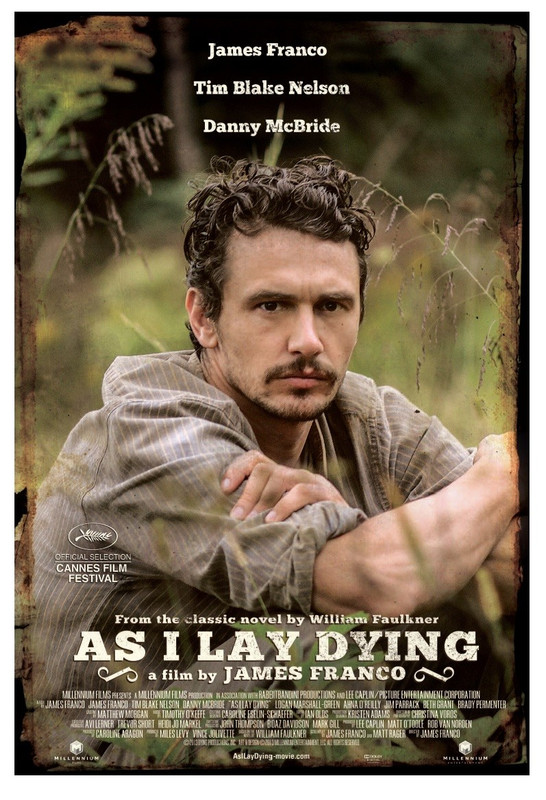
Based on William Faulkner's novel (which, for the record, I've not read), As I Lay Dying tells a very simple story of an extremely poor family; father (an impenetrably accented Tim Blake Nelson), four sons (including Franco and Logan Marshall-Green) and sister (Ahna O’Reilly) and their journey to bury their recently deceased mother (Beth Grant).  Along the way family tensions and secrets emerge.

Perhaps because of the overwhelming simplicity of the story and the potential tendency toward melodrama, Franco opts to use a very consciously designed, elliptical, impressionistic style that constantly alerts you to the fact that you're watching a film.  Passages that apparently occur as internal monologue in the book are here rendered as fourth wall breaking pieces to camera, the one thing that could be fairly called an action sequence is drained of all sound and about half of the film is split screen.

For me, Franco's use of split screen is the perfect demonstration of the film's successes and its failures.  When the technique works – as when it juxtaposes Dewey going to procure an abortion as her brothers dig their mother's grave – it works beautifully, providing interesting ideas, and it frequently means we have two beautiful shots on screen rather than just one.  On the other hand, it can also feel like a crutch, as though Franco is using it to avoid choosing between two shots he likes, or as though we're watching two different films at once.  It's telling that as the film develops more of a plot as it goes on Franco relies on the split screen less and less, which also suggests that in the uneventful opening hour it is a bit of a crutch.

There are great things here; a beautiful, intricate and unusual score, breathtaking cinematography, a set of fine performances, especially from Marshall-Green, O'Reilly and Franco himself and a clear craftsman's hand at work.  I just wish that Franco could rein himself in a little, display his directorial sleight of hand when it will add the most to the film, rather than with the near indiscriminate frequency he does, it's this that marks the film out as a debut.

The problem with all this technique is that it is, for me, extremely distancing.  This may be by design, but I still found it extremely frustrating.  The film held me at arm's length for the first hour, but as the story and characters developed I found myself drawn into the story of this family until, every now and then, the movie would in essence shout 'you're watching a movie'.  

Some people will love As I Lay Dying and I can see why, but Franco consistently works against his own film, I wish he'd trusted it more.