Showing posts with label Mexico. Show all posts

Oct 17, 2012

24FPS @ LFF 2012: Diary 16/10

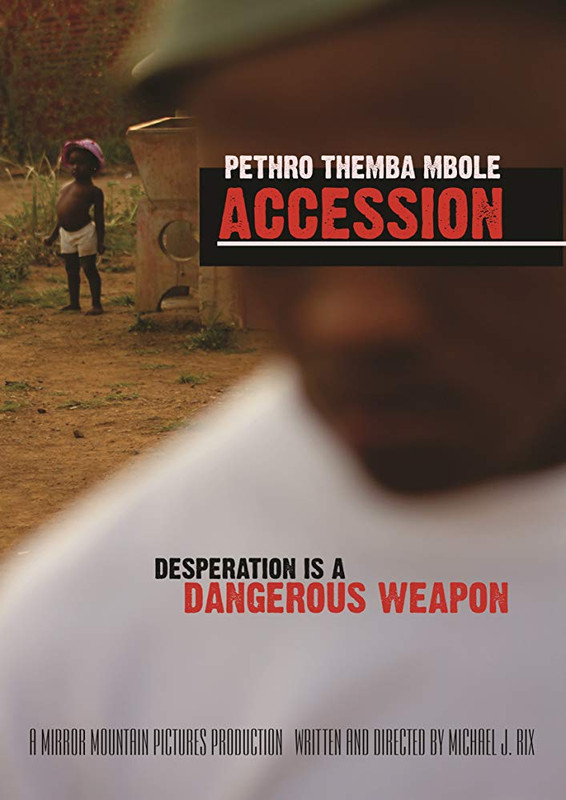
Accession
Dir: Michael J Rix
This is probably the film I've had the most trouble getting a critical handle on during this year's festival. I found more than half of it quite painfully dull, but there are moments that are so profoundly, brutally shocking that as someone who finds extreme cinema fascinating I can't dismiss the film as a whole.

John (Pethro Themba Mbole) is unemployed, and spends his days wandering round his small South African town, drinking, chatting with friends he meets and having frequent, unprotected, sex with women he meets. One woman he encounters tells him that she has just been tested and is HIV positive, which makes John sure he must be too. Over lunch a friend says he's heard that sex with a virgin can cure HIV, thereafter John is on a mission.

For about 40 minutes of this 78 minute film all that happens is the handheld camera follows John as he walks from encounter to encounter. Director Rix hardly moves from close ups in this part of the film, almost the sole variation being that some shots are on the back of John's head and others on his face. It reminded me of Gus Van Sant's singularly unedifying Elephant. However, once John hears the gossip from his friend that sex with a virgin will cure HIV this same technique becomes much more interesting. Suddenly, because Pethro Themba Mbole's quiet performance still manages to communicate a lot, the walking, the following, take on an air of menace, because we know deep down that something very nasty is likely coming. This utterly changes the film in it's second half, and your heart is suddenly in your mouth.

There are two scenes that will keep most people from ever wanting to see Accession.  I've seen a lot in my time as a movie fan. I watched Salo and happily ate dinner directly afterwards, and I count Cannibal Holocaust and Martyrs among my favourite films. Accession contains nothing as explicit as any of those films, but it does contain a scene which, by showing nothing, manages to be perhaps the most shocking single scene I can recall watching. It's also perhaps the best scene in the film, because Mbole's performance, the process of allowing John to decide to go forward in this hideous moment, is so articulate in its silence.

I would probably 'like' Accession much more as a 40 minute short, because even in the second half there is much that could be tightened, but for all its many problems, this is a film I can't dismiss.
★★★

Everyday
Dir: Michael Winterbottom

Michael Winterbottom has had a long and prolific career, but there is perhaps no more hit and miss filmmaker working today. He's capable of great things as both a dramatic (Butterfly Kiss, Jude) and comedic (24 Hour Party People, A Cock and Bull Story) director, but when he misses the mark the lows are catastrophically low (I Want You, With or Without You, Code 46).

This lack of consistency is a real concern when you consider that Winterbottom's new film; a drama about a family (Shirley Henderson and the four Kirk siblings) coping with the fact that the father (John Simm) is serving five years in prison, was shot in short bursts between other projects over five years. This was done, as it is being done over twelve years for Richard Linklater's upcoming Boyhood, so that we could see the actors, and particularly the children, grow and change in a completely organic way over the course of the film.

In this respect Everyday is an unequivocal success. The sense of the passage of time – which Winterbottom never flags up with captions -is totally organic. The children obviously change hugely, the eldest ageing from about 8 to 13 and the youngest from around 3 to 8, but we can also see the years adding up in Henderson and Simm (who begins to grey a bit towards the end of the film). It's also a remarkably consistent film given the production period, the untested child actors, and Winterbottom's aforementioned hit and miss filmography. Winterbottom, co-writer Lawrence Coriat and their cast have all managed to find and sustain a very strong tone of low key believability. This is indeed a story you can imagine is happening every day in many parts of the country.

Shirley Henderson has long been one of my favourite actresses, and it's great to see her get another film anchoring role several years after the strong, but almost totally unseen, Frozen. She's brilliant as Karen, giving us both a completely credible portrait of a Mother struggling to raise four kids by herself, to cope with the day to day challenges that come with that and a sense, without ever saying it that her husband Ian's sentence has put her in a kind of prison just as much as it has him. John Simm is equally effective as Ian, and between them he and Henderson feel like a credible couple that has been together for a long time, is enduring a hard time, but fundamentally still love each other. Both excel at the art of understatement, and say a lot with quite limited dialogue during the many scenes in which Karen and the kids visit Ian in prison, suggesting tension, love and the struggle to retain some sort of normality with a few looks and a few exchanges.

The kids aren't hugely stretched, and I had the feeling that most of the visit scenes were only loosely scripted, which, along with the fact that they are real life siblings, and so their relationships to each other are likely very much the same as they are here as in real life, would account for the beautifully unaffected performances that Winterbottom is able to draw from them.

Everyday is a fine film, but there were a couple of things that niggled at me in it. The first was just a question. How, given that she's only shown as working casually, does Karen maintain a reasonably nice house, support four kids, and frequently travel from Norwich to London to see Ian with at least two of those kids in tow? It's hardly a major issue, but it's odd, and when everything else feels so real it would make sense to have an idea of the financial pressures Ian's imprisonment must place on his family. The other issue is much more major, and that's Michael Nyman's score. For long periods the film unfolds without score, but when it comes on it feels as though Winterbottom and Nyman are dipping the film in raw sentimentality. It's especially damaging in the final shot, in which the score is almost begging you to feel something, while undermining that possibility.

Overall though, Everyday is a return to form for Winterbottom and essential viewing for fans of Henderson and Simm.
★★★

After Lucia
Dir: Michel Franco

It's incredible, really, what people will do to each other. It would be comforting to not believe the things we see in After Lucia happen, but we read about things that aren't far removed from it in the papers almost every day.

Alejandra (Tessa Ia) and her Father Roberto (Hernan Mendoza) have just moved to Mexico City for a fresh start after the death of Alejandra's Mother, Lucia, in a car accident. At a party with friends from her new school, Alejandra is filmed having sex with a boy. The video soon makes its way round the school, and makes Alejandra the target of a disturbingly escalating campaign of bullying.

If the content of After Lucia weren't disturbing enough (and, when a birthday cake made of shit isn't the worst thing to happen to Alejandra, you can be pretty sure it is) the way the characters react – or rather fail to react – to it is perhaps more disquieting. We get the feeling that both Alejandra and Roberto have been rendered inert by Lucia's death, and perhaps even that Alejandra regards some of what she's going through as 'punishment' as her Mother was teaching her to drive when they crashed and she died. Tessa Ia's performance may be extremely still and quiet, but there is still a lot of turmoil evident behind her eyes, and it's clear from Hernan Mendoza's equally detached performance that the reason Roberto isn't seeing it is that he's really not seeing anything very clearly through his grief.

The film begins with a disturbingly real feel to it, and this helps as the bullying escalates to a point that finally shocks Roberto out of his stupor. While, happily, Michel Franco largely eschews the shakycam stylings that have, somehow, become a shorthand for realism, the performances of the schoolkids are extremely believable, and we get a sense of the way that each act of bullying makes the next escalation easier for them. The film does begin to strain credulity, stopping just short of breaking point, in the climactic school trip.

The problems in After Lucia are largely confined to the last twenty minutes, in which the film takes a long expected but too late executed shift in tone and genre. It's not a bad idea, nor are the scenes themselves badly executed, but the shift feels like a bolted on afterthought because it simply isn't given enough time to develop.

Leaving this last section aside, After Lucia is a compelling and relevant film, and well worth seeing for Tessa Ia's understatedly affecting performance alone.
★★★

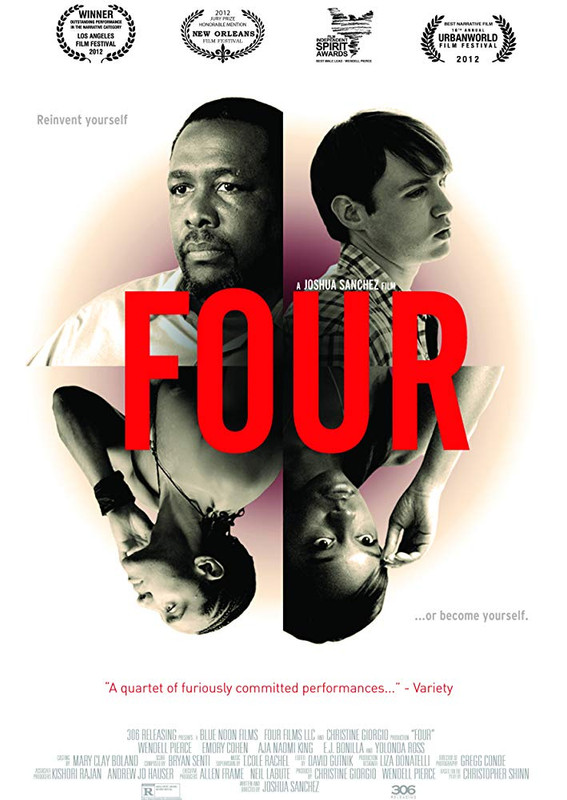
Four
Dir: Joshua Sanchez
Telling two stories of four people on one July fourth, Four is perhaps more mobile than a lot of stage adaptations, cutting between its two pairs of characters as they move through the New York night, but it does share some of the pitfalls of the filmed play.

Joe (The Wire's Wendell Pierce) picks up a young man named June (Emory Cohen) he has been talking to online for a date. Across town Joe's daughter Abigayle (Aja Naomi King) sneaks out on her duties looking after her mother for a date with Dexter (EJ Bonilla).

The film largely centres on the exchanges between these four characters. Joe and June talk about the fact that June hasn't come out, even seems afraid of his desire as a boyfriend. Wendell Pierce is fantastic in these scenes, allowing the subtext of Joe's own double life (which we see vividly illustrated in one long shot at the end of the film's second act) to bleed through, even as he forcefully tells June that he should be fully out, that he should talk to Todd; a friend he hasn't spoken to since Todd stepped out of the closet in high school. It's actually a rather sad series of scenes, but the point isn't beaten into you. Dexter and Abigayle's date night is a little more typical. You might expect Dexter (who clearly is trying to seduce Abi throughout) to come across as a bit sleazy, but EJ Bonilla's sincere performance, and the strength of Abigayle's character and Aja Naomi King's performance keep that from being the case.

Neither story is perfectly realised; Dexter and Abi's goes off the rails when they get back to her place, and Joe and June's does sometimes feel like it is reiterating the same (good) scene over and over again. However, the film is held together, despite a slightly stagy feel to the long and talky scenes, by impressively lush photography and the strength of all four leading performances.
★★★

Peddlers
Dir: Vasan Bala
I've only ever seen one Indian film- Shekhar Kapur's debut Bandit Queen – before Peddlers. I've not been actively avoiding them, it's more that the Indian film industry is so vast, and most Bollywood films so impenetrable looking, that I've not really had a clue about a way into them.  

Peddlers feels like an attempt to make a 'western' style film, with its 'gritty' subject matter and 'adult situations'. If Vasan Bala was trying here to make an American style thriller that might be a breakout hit then he has failed miserably.

The narrative has two strands. One is about a young man nicknamed Mac (Zachary Coffin), who is called upon to look after a drug mule named Bilkis (Kriti Malhotra), only to fall for her. The other story is about Ranjit (Gulshan Deviah); a cop who is going over the edge in both his work and his personal life as he tries to keep the shameful secret of his erectile dysfunction.

The Indian film industry was famously heavily restricted for a long time – even kissing was only allowed on screen less than 20 years ago – Perhaps Peddlers is the result of liberalisation, because it's a film that speaks to a writer and director with a desperate desire to be edgy and shocking, but with no concept of how to do it. In the roughly 40 minutes in which, across the first two acts, the film deals with Ranjit's erectile problems it does so either with breathtakingly misplaced earnestness or totally overblown shock moments (like the unintentionally hilarious moment in which he force feeds cocaine to a neighbour he's been flirting with and threatens her with arrest if she tells anyone his secret).

By contrast with the hilariously awful Ranjit story, Mac and Bilkis are just a bit dull. We know Mac is in love with Bilkis because he says so, but there's no sense of it in any connection between the characters or in the performances. The film tries to beat emotional involvement out of you with the revelation that Bilkis has cancer, but it doesn't work because it never seems to effect her. There are similar problems with the drug mule side of Bilkis storyline, which is set up, but never seems to go anywhere. The best thing I can really say for this part of the film is that Kriti Malhotra is beautiful.

The third act of the film lurches even further off the rails, finally bringing the stories together in a way so contrived and so misconceived that I wasn't sure whether I should laugh or cry at the ineptitude on display. Again, Vasan Bala goes for brutal and shocking, but has no clue how to do it, and so ends up with unintentional comedy. Peddlers is a terrible film. It's hurt by an abysmal screenplay, performances that suffer from being in a seemingly random mix of barely inflected English and Indian, and a complete miscalculation of tone. It is sometimes quite funny though.
★

Sep 26, 2012

24FPS @ LFF 2012: Diary - Day 2

Here and There
Dir: Antonio Mendez Esparza
I don't mind slow films, in fact there are many that I like a great deal, but there has to be some sort of reward; tension, whether it pays off or not; a feeling that you're seeing into an interesting or different life; anything to mitigate the fact that the story you're following isn't especially eventful.

Here and There doesn't deliver any of that. A while back, Total Film used to have a 'predicted interest curve', a graph depicting the highs and lows of some of the films they were reviewing. The biggest problem with Here and There is simple; that graph would be a straight line. This is an incredibly flat film. We should be engaged by the life of the Mexican family at the centre of the film; a mother and father who seem to be in their mid thirties and three daughters of about 15, 12 and 1 year old but the ups (the father's band playing a gig with a well known local musician) and downs (the youngest child becoming ill) are all treated with the same lack of engagement by filmmakers and characters alike. There is never an ounce of passion shown in the film, creating an overwhelming feeling of flatness and disengagement. The performances don't help matters much as, while there is a strong family dynamic created, none of the actors ever rises above a mumbled monotone.

There is one caveat that I must mention: I fell asleep for about twenty minutes during the middle of this festival of tedium. These were easily my favourite twenty minutes of the film, and I suspect that what I missed wasn't a sudden lapse into genius, but I have to allow for that possibility. That said, even if that were the case I still couldn't recommend Here and There, which will surely mount a robust challenge to be noted as the single dullest film at this year's festival. Avoid it with extreme prejudice.
★☆☆☆☆

Save Your Legs
Dir: Boyd Hicklin
From its awful title on down, Save Your Legs is just dire. It's not so much a film as it is a selection box of sports movie clichés, with the scrappy little team from the minor leagues (Aussie park cricket team the Abbotsford Anglers) taking on a challenge they are clearly not up to (a tour of India). Oh just guess the plot. Hell, guess every scene and every joke, if you're wrong you'll write a better film than Boyd Hicklin has.

For an alleged comedy, Save Your Legs is notably short on jokes, well, unless you find poo inherently funny, which, no longer being five, I don't. The characters are all desperately one note; there's the one who won't grow up, the drunk, the egomaniac, the nerd (who might have a crush on one of the others), the philosopher, the young upstart and the fat bearded one. There are more, but they don't even register that much personality. As the only woman in the film, Pallavi Sharda registers, but only thanks to her beauty, the film tries to work her into the climactic scenes, but then forgets to give her anything to do.

Save Your Legs is insultingly lazy. The jokes basically hit the peak of their inventiveness at 'Indian food gives you the trots', the 'bromance' between the team is laughably thin, and the lessons learned prosaic, unimpressive (apparently when you're 35 you might want to grow up, thanks for that movie) and predictable and the cricket sequences are unimpressively shot and totally devoid of tension, because even before you've seen a frame of them you know almost to the last beat how each of them will play out.

This is a terrible film, disregard its advice, if it comes to a choice between seeing it and running away, do not Save Your Legs.
★☆☆☆☆

Doomsday Book
Dir: Yim Pil-Sung / Kim Jee-Woon
Portmanteau films are, by their very nature, hit and miss, but this sci-fi triptych from South Korean directors Yim (Hansel and Gretel) and Kim (the better known, director of A Bittersweet Life and A Tale of Two Sisters) works better than most. For years two stories sat on the shelf, but production problems meant the third had not been shot, well, now it has, with the directors collaborating on the third short.

Every viewer will have a story they prefer and one that they perhaps don't like as much, and it will differ and provoke much discussion. Personally I liked the bookending efforts, which seem to match up better in tone than Kim Jee-Woon's solo entry in the middle. The film opens with Yim's hilarious The New Generation; a vision of a zombie apocalypse, which blends absurd humour, bloody violence, environmental commentary (it's very concerned with recycling) and a little romance to fine effect. The compressed nature of the story actually makes it all the more fun, because it becomes hilariously overblown in a very short space of time.

Kim Jee-Woon's story of a robot that becomes self aware, and a Buddhist, causing an existential crisis for itself and for many humans, didn't work as well for me. To some degree the problem is likely that I don't know much about or really understand some of the ideas running through it, I also rather missed the more markedly anarchic tone of the first film, and thanks to the very familliar design of the robot I just couldn't shake the expectation that it was about to begin singing Bjork song at any moment. This film; The Heavenly Creation, may be the one that really grows on a rewatch, certainly it's the deepest and most thoughtful of the films, but it's definitely the one I found least rewarding on a first look.

The closing collaboration, Happy Birthday, is the best of the shorts for me. It takes the anarchic apocalypse comedy of The New Generation and turns it up to eleven, with the story of a family (including The Host director Bong Joon-Ho) hiding underground from a potentially world destroying meteor, which turns out to be something they may have caused (I don't want to spoil it any further than that). The end of the world newscasts are absolutely priceless, and the short's almost surreal last moments - which to some degree recall the botched ending of Save the Green Planet - really surprised me by working very well (and hey, if nothing else it's always nice to see Bae Doo-Na, if only for a few minutes).

Doomsday Book is never less than engaging, and I'm sure that anyone will find at least two of the three shorts highly entertaining.  
★★★☆☆

May 18, 2009

The Complete... Guillermo Del Toro - Part 3

Populist Auteur

First off, sorry it's taken me so long to get to this. I promise to get through future Complete... series faster. Anyway, we left off last time with Guillermo Del Toro freshly confirmed as a bankable Hollywood director who could make a little money look like a lot, and deliver mainstream films that pleased audiences and critics alike. The world was essentially his oyster. Rather than take on a big money job Del Toro finally took the oppurtunity to make a film he's since said would have been his first, had he been able to make it at the time. A sister film to The Devil's Backbone, again setting a fantastic story against the Spanish Civil War.


Pan's Labyrinth [2006]
Del Toro's most clearly personal work, Pan's Labyrinth concerns a young girl, Ofelia (Ivana Baquero), who moves with her pregnant, sickly, Mother (Adriana Gil) at the insistence of her Stepfather (Sergi Lopez), a Captain in Franco’s fascist army, currently concerned with trying to put down a rebllion. In the nearby woods Ofelia discovers a maze, and at its end a faun, who tells her she is a long missing Princess of a fairytale kingdom, and sets her three tasks to complete by the full moon. The synopsis seems fantasy led, but in fact about two thirds of the film takes place in the real world, and deals more with the harsh reality of Franco’s Spain, and the brutality of Captain Vidal. This is a smart choice, because it grounds the film in a grim reality that makes Ofelia’s wish to escape into a fantasy world, any fantasy world, even one so dark as this often appears, easily understandable and seductive for the audience. This also allows the fantasy to work, because by establishing one believable world, and grounding us in it for some time, Del Toro makes it easier for us to believe in the fantasy world.

The design is as stunning as we’ve been conditioned to expect of this filmmaker. Every single shot of this film is packed with detail, things that you hardly notice the first time you see them, but which enrich the experience at both visual and metaphorical levels. One of my favourites is that Captain Vidal’s private quarters are underneath the main building of the mill he and his soldiers have taken over, and his desk right in front the workings of the mill’s water wheel. This is a beautiful piece of composition, especially when Vidal is trying to fix a watch in the same shot, and also fulfils Del Toro’s obsession with villain’s fascination with clockwork, but it’s also a subtle and clever statement about what Vidal stands for – the imposition of regimentation, which Ofelia is trying to escape, both in the real world and by going into Pan’s world.

I was sure, even before I saw a single frame of it that Pan’s Labyrinth was going to be stunningly beautiful. The first teaser poster, showing a tiny young girl walking into a tree whose shape was unmistakably uterine, was so striking, and so unusual that even if the film ended up being bad I was sure from that image that it would never be dull or ugly. It isn’t. There are so many visuals here that will live in the memory that picking out highlights seems almost futile, as if you’re damning the rest of the film by faint praise. Still, things like the backwards opening, the mandrake root, Pan himself, whose appearance subtly changes each time we see him and Vidal sewing up his own cheek in front of the mirror are all indelible pieces of film.

Then, of course, there’s the Pale Man. Del Toro is a master at seducing an audience before scaring the wits out of them, and he’s never done it better than he does here. The Pale Man is the product of your most beautiful nightmares, and the mix of the amazing suit design, the sound effects that make it sound as if his leg bones are breaking with every step he takes, and Doug Jones’ supremely deft physical performance (which he also brings to Pan) makes this five minute sequence, one that isn’t actually particularly integral to the film, perhaps the finest moment of a great film.

Of course the visuals aren’t the only thing that Pan’s Labyrinth has going for it. If Del Toro had a real weakness in his previous films it was as a writer, but this script is clearly a labour of love and everything about it fits together beautifully. The characters are all extremely well rendered; even the supporting characters have dimensions, complex motivations, and purpose within the film. It’s a genuinely moving story, and one that, to Del Toro’s enormous credit, even knowing how it will end, never lacks for impact. This is especially true of the real world portion of the story, which is gritty and violent to a pretty shocking degree, particularly in a scene in which Vidal beats a young man to death with a bottle, this violence is so at odds with the strange beauty and lyricism of the fantasy world that it brings you back down to earth with an unpleasant thud.

Del Toro also draws strong performances from his entire cast. Sergi Lopez, as Vidal, is a true standout. He’s a true monster, scarier than even the Pale Man, because Vidal chooses his evil, but Lopez never makes an unrealistic choice. Everything is underplayed, he never rages, never explodes, his violence is utterly controlled and clinical. It’s this absolute coldness that makes the performance so blood-chillingly memorable. Again showing a facility for directing children Del Toro draws a warm and vital performance from 11-year-old Ivana Baquero as Ofelia, who brings real three-dimensionality to her performance, which is real, but without the distracting precociousness of a Dakota Fanning. There’s also a strong show from Maribel Verdu, whose quiet determination works well for the kitchen maid who becomes a surrogate parent to Ofelia.

I love the ending of Pan’s Labyrinth, because even though the film has a circular structure it still holds surprises, and is moving on a couple of separate levels, it takes a special filmmaker to have you end his movie smiling, and fighting away tears, and yet makes both of those conflicting emotions feel completely natural. This was Del Toro’s first truly great film, showing a total mastery of every aspect of the story he’s telling. It's unlikely to be be his last masterpiece, but it will always be his first.


Pan's Labyrinth was a critical smash, and instantly catapulted Del Toro to the first rank of working auteurs. It collected a mass of awards, including several BAFTA's and Oscars, but missed out, sadly, on the Best Foreign Language Film Oscar. It's box office take wasn't going to trouble the Top 10 of the year, but for a subtitled release it did spectacularly well, making almost £2 million in the UK and $37 million in the US, against a budget of roughly $18 million. This really left Del Toro free to pick and choose, and gave him the ability to demand creative control of his next film.


Hellboy II: The Golden Army
In Summer 2008 critics described one superhero film as deep, dark, morally complex and brilliant. Sadly that’s how they described The Dark Knight, the most overrated film of that year, when they should have been describing the most underrated mainstream film of 2008, Guillermo Del Toro’s sadly overlooked Hellboy II: The Golden Army, in those glowing terms.

It is said that in cinema the law of diminishing returns is all but incontrovertible. For every Godfather Part 2 or Empire Strikes Back there are hundreds of Robocop 2’s, hundreds of Speed 2’s. Given that Hellboy was a deeply flawed, if fitfully brilliant, film there was little hope of its sequel being a great movie, but great Hellboy II most certainly is, it is, at last, the perfect coming together of the artistic and the mainstream sides of Guillermo Del Toro’s cinema, as achingly beautiful to behold as anything he’s ever done, and as roaringly entertaining a blockbuster as had been released for years. Make no mistake, this is mainstream entertainment at its very finest.

Most mainstream cinema is stupid, simplistic, or both. Not so Helllboy II, unusually for a summer movie its themes are genuinely thought provoking, the moral dilemmas of its leading character truly thorny, and even as an audience you’re never sure that the ‘villain’ of this piece isn’t in the right, at least in some respects. The backstory, dealt with in a gorgeous opening sequence redolent of the underseen British film Strings, concerns The Golden Army, an indestructible force created for and Elf king’s war against mankind, after much bloodshed the king had a change of heart and called a truce, breaking up the crown that allowed him to control the army and giving one piece to men while keeping two. Thousands of years later, with Elves and their like endangered, the king’s son Nuada (Luke Goss) comes out of hiding to reunite the crown pieces and use the Golden Army to wage a new war.

The great thing about Hellboy II as a sequel is that it appears to have recognised the flaws of its predecessor and jettisoned them, as well as seeing the first film’s strengths, and building on each of those. This is particularly the case with the villain, who at one point tells Hellboy (Ron Perlman) that they should be on the same side, that humanity hates both of them and neither of them belongs to the human world. It’s a fantastic point, one that is undeniably true, and which throws up a whole new side to this film. Hellboy was used as an agent of the apocalypse in the first film, but never when he was in control of himself, here there’s always the possibility that he could come to see things Nuada’s way, because in a lot of ways Nuada isn’t wrong, which makes both the story and the villain much more interesting than in the previous film. Luke Goss is still no Shakespearean actor, but he’s perfectly fine as Nuada, and gives the character weight and pathos, as well as, once again, seriously impressing when it comes to the acrobatic and rather hard hitting fight sequences.

This is also a much more varied film than the first, thanks in large part to an increased budget (increased only modestly though, this film looks as good as any $200 million production, but cost just $73 million), which allowed Del Toro to let his imagination run riot when it comes to monsters, especially the many that populate the outstanding Troll Market sequence. Hellboy II is a constant visual feast, be it the astonishing shopkeeper whose face is a city in miniature, the giant one eyed troll Mr Wink, or the more subtle work on Nuada and his sister Nuala’s (Anna Walton) alabaster skin, there is something in just about every frame to take your breath away. Compared to the endless Sammaels of the first film this increased imagination allows Del Toro to craft a greater range of action scenes, from the Godzilla like sequence with the elemental, which has a genuinely moving and beautiful ending, to the sharp, punchy, fight between Hellboy and Wink, and the battle with the massed ranks of the golden army, to mention just a few.

The returning characters are as compelling as ever. Ron Perlman simply is Hellboy, he’s so good that you never question the logic of the character (which, since he’s an almost ageless demon, is a hell of a trick to pull off) the conceit of this monster as a simple blue collar guy is as funny as ever, and Perlman’s warm and funny performance makes him a truly engaging and entertaining hero. Doug Jones gets a great deal more to do as Abe Sapien this time out, getting to lend his voice as well as his ever impressive physicality to the character this time out. He matches David Hyde Pierce’s performance from the first film well, but it just feels more natural this time, more connected to Abe’s movements, it also allows Abe to develop more of a rapport with the other characters, key to the film’s funniest scene in which Hellboy and Abe, both down about their relationships (Hellboy with Liz and Abe with Princess Nuala) get drunk and sing along to Barry Manilow together. It’s a scene that absolutely shouldn’t work, but it’s extremely funny, and so well played that it becomes one of the film’s highlights. Selma Blair is still the weak link, she doesn’t really have much purpose here, other than as a plot device, but she outdoes herself in her one big moment in the movie, in the sequence featuring one of Del Toro’s most memorable creations – the Angel of Death.

That sequence, which opens the film’s fantastic third act, is one of the best of Del Toro’s career. It’s nightmarish, it’s so beautiful that and frame could hang on a gallery wall, but it is the drama of the scene that makes it so compelling, and the way that it promises so very much for the surely inevitable Hellboy III. The first time I saw this sequence and Liz said “Him” the hairs on the back of my neck stood up.

I can’t say enough good things about Hellboy II, it’s just about the perfect blockbuster. It runs at a terrific pace, but makes just enough room for character, so that it never threatens to become empty spectacle. It’s packed with memorable characters and brilliant design (check out the little clockwork mechanism used to give new character Johan Krauss (Seth MacFarlane) expression). It has depth, complex morality and darkness in spades, but it also manages to maintain a fun, light tone, and be on occasion uproariously funny. It’s the complete entertainment package, a film that improves on every viewing, and very possibly the best superhero film I’ve ever seen.


Next comes The Hobbit, a pair of films to be produced in association with Peter Jackson. This makes me nervous, because much of it will be dictated by what Jackson has done before, including some of the casting, and most importantly the look of the film. It’s already been stated that the films will be styled to link up with Jackson’s Lord of the Rings films. That being the case I can’t see why you’d have Del Toro direct them. You hire this great filmmaker for HIS vision, not to interpret and link up with someone else’s vision. That said, I’ll be seeing them, and anything else Del Toro makes, on opening night, if not before.

Mar 28, 2009

The Complete... Guillermo Del Toro - Part 1

I was going to do a simple (simple, he says, the last one was over 3000 words and took about 7 hours to research, write and find pictures for) Hall of Fame post for Guillermo Del Toro, but it occurred to me that I had seen and owned all but one of his feature films, and that if I got my hands on Mimic and watched it I could do something even more in depth.

So here it is - in three exhaustive parts - The Complete Guillermo Del Toro, I’ve provided a little biographical detail (there’s really not much available) and whatever background I think is necessary, but the main focus of this feature is the reviews. I’ve re-watched and written brand new detailed reviews for all seven of Del Toro’s feature films, and a preview of his eighth and ninth, the upcoming pair of Hobbit films. I’ve also tried to tie the films together more than in a conventional set of reviews, to give a sense of how Del Toro has progressed through his films.

Ladies and Gentlemen… Guillermo Del Toro

Birth Name: Guillermo Del Toro
Occupation: Writer / Director
Born: 9th October 1964 Guadalajara, Mexico
Age: 44
Family: Wife: Lorenza  Daughters: Mariana, Marisa
Directorial Debut: Doña Lupe (Short, 1985)
Latest Film: Hellboy II: The Golden Army (2008)
Current Project: The Hobbit (2012)

Raised in Guadalajara, Mexico by his devout Catholic Grandmother Guillermo Del Toro became interested in filmmaking in his early teens, but it was probably his later schooling in special effects and effects make up under Dick Smith, whose work spans 50 years and such films as The Exorcist and Scanners, that helped shape his later work, which dwells on the fantastic stories and monsters that enthralled and frightened the young Del Toro.

Del Toro’s first directorial credit came, aged 21, with the half hour horror short Doña Lupe, which has just seen its first ever commercial release thanks to a Cinema 16 DVD titled World Short Films, and features a commentary which Del Toro apparently begins by apologising for his own film. After this Del Toro plugged away, doing effects for other people’s films, and directing for Mexican television, notably a horror series called Hora Marcada, which also gave Alfonso Cuaron early experience. Then, finally, aged 29, Del Toro made his feature directorial debut with the revisionist vampire film Cronos.

Cronos (1993)
The Cronos device was invented by an alchemist in the 16th century, it granted the user eternal life, but transformed him into a creature allergic to sunlight, with alabaster white skin, and a thirst for blood. In the 1990s antiques dealer Jesus (Federico Luppi) finds the device and accidentally activates it, beginning the process of his own transformation. But other forces want the Cronos device for their own ends, and they’ll go to any lengths to get it.

The vampire myth is as old as the hills, and has been a cinematic staple for close to 90 years. Every now and then some upstart comes along with what they allege is an original take on the myth, most prove to have just juggled a couple of aspects of it and then done largely the same old thing, but Guillermo Del Toro’s take on the vampire is genuinely, breathtakingly, original and utterly compelling. Del Toro does away with most of the established traits of vampirism, Jesus never develops fangs, he never becomes sensitive to garlic or crosses, instead Del Toro creates a vampirism that works more like a disease, altering Jesus beyond recognition; physical and mental. It’s a refreshing take, and early evidence that we are here in the hands of someone with complete mastery of the story and the world he is creating.

That world is also completely recognisable as that of Guillermo Del Toro; many of what would become the director’s trademarks first identify themselves here. The Cronos device itself is the most prominent; a golden thing that looks like a scarab, it works, like many malevolent things in Del Toro’s films, through a clockwork mechanism, and contains an insect of some sort, which feeds on the users blood. Both clockwork and insects are near constants in Del Toro’s work, and here he combines them to eerie effect. The Cronos device is a bizarre and utterly original creation, and the mechanical workings of the prop and the excellent, creepy sound effects combine to make this largely inanimate object decidedly chilling.

Another of Del Toro’s seeming obsessions that raises its head here is the use of children in prominent roles in horrific situations. Jesus’ young granddaughter is the first to discover his condition, and rather than fear him she accepts him for what he was; Grandad. There are all sorts of things that one could read into Cronos. You could see Aurora as Del Toro’s version of himself (he, after all, was raised by his grandmother), or you could take the entire film as Del Toro’s reaction to his Catholic upbringing, this is quite a persuasive idea; the leading character Jesus Gris comes very close to sharing a name with Jesus Christ, and during the film he dies and is resurrected, there is also the fact that blood is, in Cronos, a restorative, and this could be seen as analogous to the use of wine in Catholic mass.

At the end of the day though, interesting as those theories are, they are almost beside the point, because what really matters about Cronos, what really makes it interesting, is simply that it’s a brilliant horror film. Del Toro’s script is a smart and original thing, but he’s a director first, and the film’s imagery is often extraordinary. Besides the device and its use he finds some truly striking shots. Particularly strong is a scene in which Jesus follows a man with a bleeding nose to the bathroom. The way Del Toro makes the vivid blood stand out against the marble bathroom and has Luppi bend right to the floor to lick it up makes for a memorable series of compositions, as does the sequence in which, in front of Aurora, Jesus begins to peel off his grey rotting skin to reveal the vampire beneath it.

The use of special effects, and even blood, is sparing, but strong, and always beautifully designed. The only times that the effects look a touch cheap are when the Cronos device is puncturing Jesus’ skin, but otherwise everything from the blood, which looks impressively real, to the inner workings of the device holds up brilliantly to even quite close scrutiny. Del Toro tells much of this story with images (indeed Aurora seldom speaks) but he never leans too heavily on his effects, never allows them to overtake his story and characters.

The only real problem with the film is that Del Toro’s mastery of the English language is clearly not complete, and that hurts the English language scenes and performance of Ron Perlman, who is more overblown than he need be as Angel De La Guardia, in what is otherwise a rather subtle, even soulful, film. Thankfully Federico Luppi’s performance is spot on, he makes Jesus grandfatherly and avuncular in the beginning, so that as he begins to change we both see the metamorphosis and feel the loss that he and his family are suffering.

Cronos is a masterful debut for Guillermo Del Toro, one that sets out his stall as a truly gifted, and truly different, filmmaker.


Cronos was a critical success, and gained a cult following. It also won awards at several festivals, and at Mexico’s Ariel awards. In 1993 Del Toro reportedly had a meeting with Universal, regarding the idea of remaking Cronos in English, to which he responded with typical wit "Who wants to see Jack Lemmon lick blood off a bathroom floor?".

A new talent with a successful independent debut behind him, this being the mid 90’s it was pretty obvious where Del Toro would go next, and so he went to America, to make his next film for Bob and Harvey Weinstein at mega-indie Miramax. He was offered Hellraiser: Bloodline (on which eventual director Kevin Yagher was so frequently overruled that he took an Alan Smithee credit), but turned it down and opted instead for…


Mimic (1997)
I’ll let Del Toro himself introduce this review: “I remember the worst experience of my life, even above the kidnapping of my father, was shooting Mimic. Because what was happening to me and the movie was far more illogical than kidnapping, which is brutal, but at least there are rules. Now when I look at Mimic, what I see is the pain of a deeply flawed creature that could have been so beautiful.”

Mimic is, as he has recognised and stated, Guillermo Del Toro’s worst film by some distance. It’s the only one that doesn’t indelibly bear his stamp on every frame, the only one that, at the most basic level, simply doesn’t work. Yet, if you wade through the tedious mire that much of this movie is, there are moments; a shot here, an idea there, that hint at what might have been had Bob and Harvey Weinstein simply let Del Toro’s unstoppable imagination run riot. The creatures are well designed and when they appear in shadow they have a frightening presence, sadly on full reveal the monsters work less well, particularly when they aren’t rendered physically.

What really kills Mimic is the fact that the creatures don’t really have a personality, or even much of a purpose. Del Toro’s monsters are often the most intriguing characters in his stories, always layered, always given complex morals and motivations. He loves monsters, is fascinated by them, and it usually shows. Mimic, in its pursuit of convention, does away with that, meaning that the monsters are just that; monsters, and once you know what they are and what they do they become pretty boring.

The people are no more interesting than the creatures, thanks to a bland story and a screenplay that mistakes ciphers for characters. The performances are also dreadful, and not even uniformly so. There are the personality voids that are supposed to be our heroes, played with as little charisma and effort as they can muster by Mira Sorvino and Jeremy Northam. There’s the obnoxious support provided by Josh Brolin (in that difficult period after The Goonies and before No Country for Old Men) and the usually reliable Charles S Dutton. We’re also graced with the hamtastic, English mangling, Giancarlo Giannini and some truly dreadful child performances, a surprise from Del Toro, usually a sensitive director of kids.

However, Mimic, for all its tedium, is beautifully shot and designed. A scene in a church, which sees monsters closing in on a young boy, is stunning, and Del Toro’s insect obsession continues to serve him well. More proof of the tinkering done on this film arrives in the rumour that one stand out shot (hospital beds in endless rows draped in white sheets) was directed by producer Ole Bornedal (who was remaking his Nightwatch for Bob and Harv at the time), and there is an occasional decent set piece; the monsters attacking a subway car in which the characters are trapped being a particular highlight.

It’s easy to see why Del Toro has little love for Mimic, I’d love to see him be allowed to recut or remake the film on his own terms, because the idea of a cure that ends up hunting and killing us sounds like an idea tailor made for him, thankfully the experience of making Mimic led to Del Toro’s willingness to compromise his dark visions slipping, which was all to the good.


Mimic was a financial disappointment on its theatrical release, amassing only a few hundred thousand dollars more than the $25 million it had cost Miramax, however its video and DVD incarnations boosted that significantly enough to make sure that Del Toro wouldn’t be written off by Hollywood, and that Mimic itself would spawn two straight to video sequels.

Del Toro, disillusioned with Hollywood, went back to his favoured themes, and to the Spanish language, for his next project, which is where we’ll pick up in Part 2.