Showing posts with label Adventure. Show all posts

Aug 11, 2019

Dora and the Lost City of Gold [PG]

Dir: James Bobin
Like several other recent kids movies, Dora and the Lost City of Gold is based on something I was too old for the first time round. By all accounts, the show was a fun and educational cartoon for young children, teaching them about other cultures. As far as I can tell, this live action take on the material keeps the core of that, ageing the characters up but keeping the material suitable for the show’s target audience as well as the older siblings who might now be taking them to this movie.

We get a brief glimpse of Dora and her cousin Diego as little kids running around the jungle with Dora’s monkey Boots. Most of the film takes place 10 years later. Dora (Isabella Moner) is 16 and when her parents (Eva Longoria and Michael Pena, both enjoying themselves) decide to go into the jungle to search for the golden city of the title they send Dora to stay with Diego in LA, fearing she’s still too irresponsible for a full scale adventure. Dora doesn’t fit in at high school, on a field trip she and Diego are thrown together with a couple of other kids and they all find themselves kidnapped by treasure hunters and thrown into a jungle adventure.

Dora and the Lost City of Gold is a film that truly embraces what it is. It’s a live action cartoon and director James Bobin, writers Nicholas Stoller and Matthew Robinson and the whole cast commit to this tone from the start. Whenever the film threatens to forget this, even for a second, a gag will be thrown in to re-establish the knowing tone. Bobin’s debut, The Muppets (2011), feels like a key influence. Dora isn’t as consistently hilarious, and lacks the history that gave The Muppets such poignancy and joy, but it has a similar comic tone and love of playing around with the relationship between film and audience. This is all done so deftly that it never feels smug, rather than the film showing you how clever it is, it invites you in, whether directly through Dora asking things like “Can you say poisonous tree frog?” or simply by acknowledging that, yes, this is all very silly. There are many other detectable influences here. Bobin nods with palpable glee to Indiana Jones (particularly Last Crusade) and steals several moves from The Goonies. The fact that Dora, even if it’s unlikely to ascend to the heights of the adoration those films are held in, isn’t embarrassed by those comparisons is a testament to how well the film works on its own terms.

The film may be accessible to older kids and adults, but neither the tone nor the story are pitched at them. This is resolutely a kids film and that is reflected in the way it talks to its audience. While there is an attraction between Diego and serious minded Sammy (Madeline Madden), neither she nor Dora is ever defined by a relationship and both Dora and the film are much more concerned with friendship than they are romance. The morals are simple but effective, espousing the value of exploring - learning for its own sake - over using that exploration for any monetary gain.

The main reason the film works so well is 18 year old Isabella Moner, who impressed earlier this year by helping bring emotional weight to Instant Family, which could easily have been just another broad Hollywood comedy. This performance is completely different in tone; wide-eyed, irrepressibly energetic; a cartoon character who has stepped whole cloth out of her world and into an LA high school. With the wrong handling it could all be incredibly grating, but Moner’s performance has an unfailingly sunny enthusiasm, whether she’s having her bag searched on her first day of high school or singing a song about poo. Along with that, her knack for comic timing and expressive face sell every beat. The rest of the cast are just as game. This does mean there are a few overplayed moments, and Bobin does allow a few gags (Dora’s dad telling her what rave music is like, for instance) to run a bit longer than they need to, but there’s generally a nice dynamic between the cast, which allows the friendships between them to grow more naturally than you might expect.

The energy of the cast is matched by the direction. Without feeling rushed, the film moves along at a pace, finding just a few well placed moments to take a breath. The moments of action are always inflected with the same humour as the rest of the film (Swiper gets more than a few laughs) and use the characters established strengths to get them out of jams (again leaning on the morals a bit to teach younger kids the value of teamwork).

It may be simple and broad, the villain may be obvious from ten miles off, and we may have seen many of its plot points in close to specific detail before, but Dora and the Lost City of Gold is impossible to dislike. I imagine it will work brilliantly for its target audience and also be appreciated by the parents who will likely be very be grateful they aren’t being dragged to Playmobil: The Movie instead. It probably won’t stay in my head that long, but I can’t deny I had great fun with it for 102 minutes.
★★★½

Aug 16, 2015

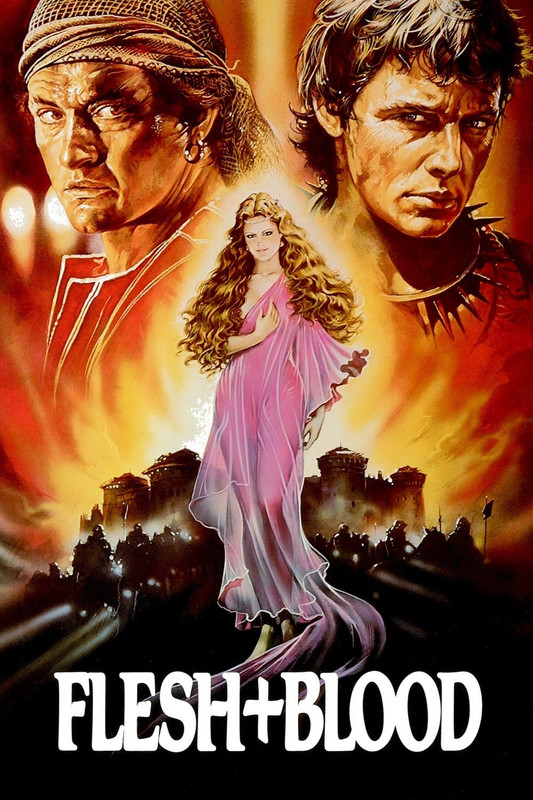
Exploitation Classics: Flesh + Blood [18]

I have just rewatched Paul Verhoeven's Showgirls which, 20 years after its release, seems to be attracting a new critical appreciation. I still think it's pretty dreadful, and easily Verhoeven's worst film.

For me, the Verhoeven film that is most in need of reappraisal and a bigger audience is his 1985 English language début, Flesh + Blood. What follows is a piece originally written as a review of the US Blu Ray release for the blog of the now defunct Vérité film magazine.

Dir: Paul Verhoeven
Flesh + Blood is a film that would seem to epitomise the idea of doing exactly what it says on the tin. The course of its running time is split relatively evenly between Jennifer Jason Leigh's flesh, and the blood dripping from the swords of Rutger Hauer and his band of mercenaries. If that were all that Flesh + Blood were offering it'd still be a lot of fun, but coming from Paul Verhoeven, the master of finding substance in schlock, it's so much more than a boobs n' gore-filled guilty pleasure.

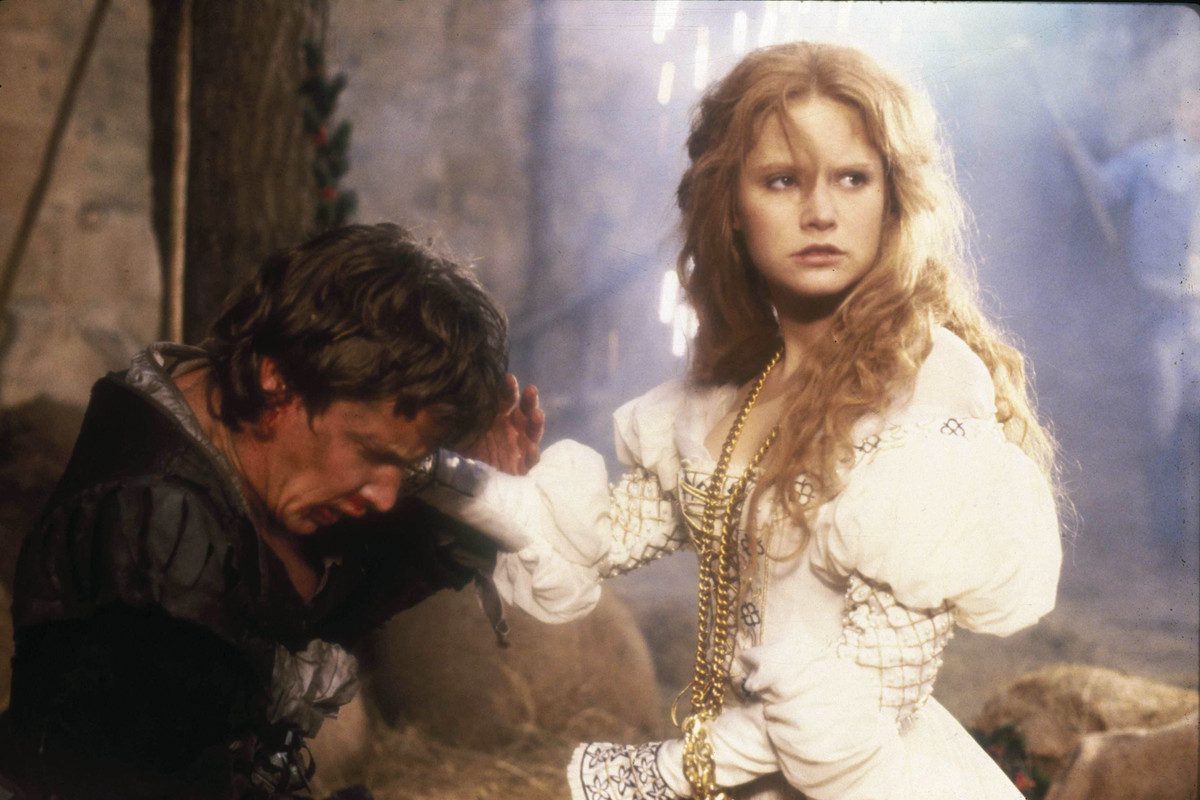
In Italy, 1501, Martin (Hauer) and his battle-born warriors are left unpaid by their employer Arnolfini (Fernando Hilbeck) after a claret-soaked conflict. In retaliation they kidnap Agnes (Leigh), the betrothed of Arnolfini's son Stephen (Tom Burlinson), and following a route indicated by a statue of St Martin, take an abandoned castle as their new home. Wanting vengeance and his bride back, Stephen pursues them and lays siege to the castle. These are the bloodied bones of a story that Verhoeven and co-screenwriter Gerard Soeteman pick clean before sharpening them into a set of themes that cut as deep as any of Martin's blades.

In his first English-language film, Verhoeven explores the tendency of power to corrupt, and the abuse of authority by those who hold it, a preoccupation that has informed almost all his subsequent work from Robocop to Black Book. In this sixteenth-century setting, power and authority rest largely with the church, and particularly with Ronald Lacey's easily influenced priest. The film's original suggested title was 'God's Own Butchers', an accusation Verhoeven makes not only of the priest but of Martin, seemingly drunk on the power that his followers belief in St Martin confers on him. The most rational of the group, he sees through the priest's pronouncements but goes along with them to secure his position as leader.

To Verhoeven, the coveting of power and control are basic instincts as hardwired as our sexual urges. Scenes between Martin and the kidnapped princess Agnes are similarly predicated on animal attractions. When we are first introduced to Agnes she is nervous and excited about meeting Stephen, less for getting to know him and more for where it will eventually lead. Her curiosity about sex is such that she orders her maid to seduce another member of their party, so that she can watch.

The extensive nudity is exploitation typical of the randy Dutch director, but with that exploitation comes Agnes' understanding of her doll-like beauty and how to use it in a world of brutes. Raped soon after she is kidnapped, even on her back, Agnes is still the one who wields the power, seemingly hypnotising Martin as he has his way with her and undermining his dominance enough so he is the only one who attacks her. Winning a type of protection, she also gains influence with the savage and watching her manipulations is almost as uncomfortable as witnessing the violation of her body.

The MPAA demanded cuts of course, which Verhoeven details in his commentary before noting with relish that this is the uncut version, but what might have so easily offended works as a wily clash of egos and varying degrees of intelligence, thanks to captivating casting. During shooting, Verhoeven fell out with Rutger Hauer, who'd been his on-screen alter ego up to that point, and they never worked together again. In their final collaboration, Hauer is as good as he's ever been, credibly buffed up as a warrior and charismatic as a leader of men. Martin's unredeemed arrogance, encouraged by the priest's repeated assertions that he has been appointed by God to lead them, is a trait Hauer makes innate without indulging.

Jennifer Jason Leigh spent much of her early career elevating sleaze with her talent, and Flesh + Blood is a fine example of that. While she struggles with an English accent, Agnes' enticing ambiguities are all behind the dialogue. The division of her loyalties is externalised in Leigh's body language, her scheming physicalised, as she writhes this way and that during the sex scenes. Calculating especially when copulating, Agnes looks for weakness and advantage wherever possible. Just watch Leigh as she decides whether or not to stop Martin from eating a particular piece of meat late in the film; the ruthless streak running through Agnes is nakedly on display, in or out of bed.

Tom Burlinson is a blander presence against two strong leads but still manages to make something of Stephen, who's a thinker, not a warrior, only discovering his inner steel after Agnes is taken. His intelligence is a trait Verhoeven has fun with, inventing gadgets that play into the film's action scenes - a mobile bomb in the film's opening siege leaves no doubt over Stephen's ingenuity, and later his smarts are responsible for a disgustingly realised depiction of early germ warfare. The rest of the supporting cast is colourfully eclectic, giving the film more than two-tone mud and plasma. Ronald Lacey and Susan Tyrell are on especially fine form, while an amusingly confused Bruno Kirby is completely miscast.

On his typically forthright and story-packed commentary, Verhoeven lets us know just how hellish a film it was to make, but Flesh + Blood's verve and lack of compromise allowed the director to propel himself into the Hollywood big leagues with his follow up, Robocop. Every bit as violent as that era-defining sci-fi, the stench of battle emanates from every frame, Jan DeBont, then Verhoeven's regular cinematographer (who went on to direct nineties action classic Speed, then killed that career with Speed 2: Cruise Control), keeps the film at ground level, giving it a grimy, gritty look that's overwhelming in HD even if it's not as dirty as the ugly verisimilitude of VHS.

A film you wallow in as much as watch, Verhoeven's most underrated work evokes an unpleasant reality that's raw without being softened by the pulp of the films that followed.
★★★★

Feb 17, 2014

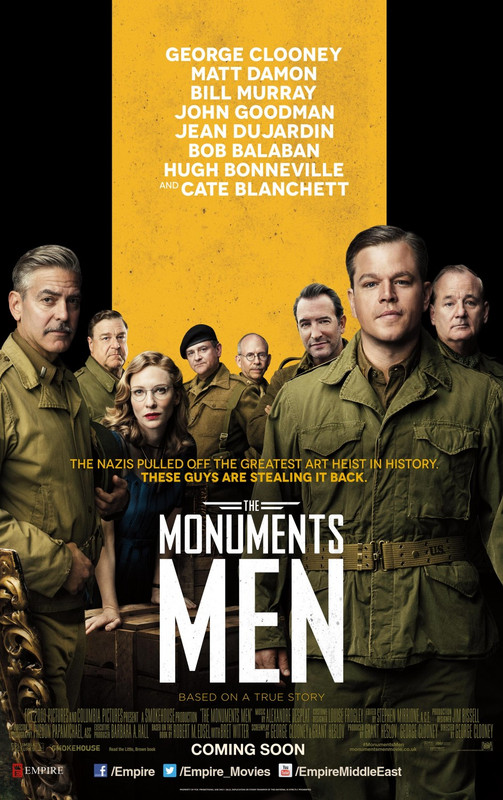
The Monuments Men [12A]

Dir: George Clooney
There is something peculiarly old-fashioned about George Clooney as both a movie star and a filmmaker.  On screen, he has a charisma that suggests a studio star like Cary Grant or Clark Gable.  Behind the camera, he shows an interest in classical storytelling and a type of filmmaking that looks back to the slower paced stories of 70's cinema and sometimes further (his screwball comedy Leatherheads).  You'd think he'd be well suited to making and starring in a World War 2 set men on a mission movie.  On this evidence, he's not.  At all.

Based, apparently rather loosely, on the true story of a unit of art experts dispatched in the dying days of World War 2 to recover and return to their rightful owners the privately owned works of art stolen and hoarded by the Nazis, the film attempts to combine an extremely earnestly meant question of whether art, even great art, is worth someone's life with a caper movie, tracing various stories as this mismatched group of unsuited soldiers attempts various parts of its mission.  

The chief problem of the film is easily diagnosed; Clooney, as writer, director and leading actor, completely fails to reconcile the dual tones that he's trying to strike here.  At one moment the film wants us to be emotional as Bill Murray's character listens to his daughter sing 'Have Yourself A Merry Little Christmas' on a record sent from home.  The next moment the film will reach for a jaunty tone, as in the scene where Murray has to have emergency dental treatment or Matt Damon hilariously treads on a mine.  Even when he's more set on the tone he's going for, Clooney botches it.  The central question and theme of the film is stated and restated over and over, but the film only ever engages with the question of whether art is worth a life (or lives) in a way that is at once incredibly perfunctory and so mawkish that it's like being drowned in treacle while someone screams 'IS ART WORTH THIS MAN'S LIFE?' at you over and over.  The other problem with this is that every time a speech is given on this subject (four times during the film) it is substantially the same.  There are no new ideas in the last speech in the film as compared to the first, two long hours earlier.

The tonal issues might be less of a burden if the film achieved the half-serious adventure movie tone (think Indiana Jones with historical accuracy) that it goes for outside of its mawkishness.  It doesn't.  Splitting the group into smaller groups and sending them all off on their own adventures (Bill Murray and Bob Balaban as a sarcastic odd couple; John Goodman's sad bulldog look paired with Jean Dujardin's benevolent version of The Joker's smile; Matt Damon trying to get intelligence material out of Cate Blanchett) means that the film suffers from a fatal lack of focus and that we hardly get to know the characters.  but worse, none of these little stories are very engaging in and of themselves.  Even when they do throw up the odd decent scene it's derivative of something better.  Murray and Balaban's interlude in a farmer's house plays like the opening of Inglourious Basterds, but without Christoph Waltz or any tension, yet still counts as one of the film's strongest moments.  You'd expect a smattering of action in these scenes as well.  We get two perfunctory and derivative scenes that could have been lifted from any number of films.

You have to give The Monuments Men this much: it has a great cast, but they're wasted.  Clooney is blandly heroic when not in lecture mode (and he's in lecture mode a lot).  Murray and Balaban try hard to be the comic relief, but their material isn't that funny and the rest of the film often has a jarringly comic tone that takes away from that function.  Most of the others are simply betrayed by bad writing, giving them dull and underdeveloped characters.  It is, however, worth singling out Cate Blanchett; a brilliant actress, she gives the single worst performance of her career here.  She has no character to play and her role is almost totally redundant in the story, so rather than a character she ends up playing an accent.  A terrible, terrible accent.  She's supposed to be French but there's German and comedy Russian in there too.  It's laughably bad.

Even when the film does, 90 minutes in, acquire a little momentum, Clooney simply can't sustain it.  He's wedded closely enough to history that the antagonists of the film are kept almost completely offscreen, but this means that there is no sense of peril in the journey to the goal, and thus little sense of achievement when it is reached.  I don't see the problem with taking inspiration from history and then making it more cinematic.  I wish Clooney had looked more to Indiana Jones; the history is largely window dressing, but the films are exciting, fun, funny and engaging.  The Monuments Men, on the other hand, feels stuffy; like a historical reenactment that only wants to show us the dullest bits. 

George Clooney can be an interesting filmmaker, and it's great to see someone showing such dedication in his career to trying to bring back a somewhat old-fashioned patience in storytelling, but he's come unstuck here because The Monuments Men mistakes sentimentality for moral questioning and weds it to a poorly told story.  These men deserved better, and so did the question of whether art was worth their lives.
★

Aug 2, 2011

Captain America: The First Avenger [3D] [12A]

Dir: Joe Johnston
I have previously described Joe Johnston as a journeyman filmmaker, but frankly that was unfair, and undersells the man who made, among others, Honey I Shrunk the Kids, October Sky, and now this; one of the better blockbusters of the year. Obviously the film of Johnston's that this one most closely relates too is The Rocketeer, and actually they share DNA. From the square jawed hero to the World War Two setting to the ruby lipped love interest, this often feels like a large scale version of what Johnston couldn't quite afford to do twenty years ago, but it's the tone that is both most closely reminiscent of that film, and most refreshing.

After a lot of darker superhero movies, and the overblown and tedious Thor, it's great to see a superhero movie that is as much boys own fun as Captain America, and that's what Johnston brings; a sense of fun, and a daring, a willingness to push the boat out just a little and do things that might seem a bit crazy (like the mid-movie musical sequence which introduces Captain America to the world at large). It all adds up to a pretty exhilarating watch, and a film that pulls you along on a wave of good will, even when it doesn't entirely work.

Captain America's origin is relatively well known, but for the record... 90 pound weakling Steve Rogers (Chris Evans) wants to go to World War Two and fight, but he's repeatedly turned down until he's offered a chance by Dr Erskine (Stanley Tucci). Eventually Rogers is chosen as the test subject for a programme designed to create an army of super soldiers to fight the nazis, but Erskine is killed by a double agent and so Captain America must fight Nazi agent / megalomaniac 'Red Skull' (Hugo Weaving) as the army's only super soldier, leading a team of commandos.

Having been an irritating Human Torch in the awful Fantastic Four, Chris Evans wouldn't have been my first, second, or even sixth choice for the role of Captain America. Well, colour me surprised, because Evans proves to be just about perfect casting. Even if there are isues with the opening forty minutes of the film, before Rogers' transformation, Evans' performance isn't one of them. He makes you believe in Rogers as a fundamentally decent and devoted man who deserves to be given this huge chance, so even before he gets to don the uniform, you're on his side (not that you wouldn't be, the other side being a Nazi with severe sunburn). Once we finally see him as Captain America it becomes clear just how much work Evans put into this character. First of all he's built like the brick shithouse all the other brick shithouses are scared of, but he convinces as a character as well as simply as a force; there is an authority about him that works when he's leading the (howling?) commandos and a sensitivity that remains very much more Steve Rogers than Captain America.

As the evil Red Skull Hugo Weaving doesn't do anything especially groundbreaking, but his slightly cartoony German accent works well, he's quite menacing in both look and character and his big evil plan (though a little ill defined) is very big and very evil. Red Skull has always been, from a visual standpoint, one of the most striking characters in Marvel Comics long history, and he's certainly done justice here, with what looks to be a largely practical make up job achieving something in a suitable grey area between comic book extravagance and genuinely freaky. Weaving is also able to work well with the make up; a malleable actor, he loses none of his characterisation after the Red Skull is unveiled.

In the rest of the supporting cast there are drily funny turns from Tommy Lee Jones (whose "I'm not kissing you" to Rogers as he goes on his climactic mission may be the best of the film's abundant good lines) and Stanley Tucci, each of whom function as something of a Father figure for Rogers. Sebastian Stan makes for a solid Bucky Barnes and recurring cast members like Dominic Cooper (as Howard Stark) and Samuel L Jackson (as Nick Fury) keep the Avengers tease ticking over relatively unobtrusively.

The script isn't exactly the most original you'll have seen, in fact there are times at which you'd swear that an uncredited magpie had written most of it, as it plunders other superhero and adventure movies for events, images and moments. It's hard to mind though, first because all the elements coalesce well, into a movie that feels very much of a piece, and also because this is something of a trademark of Joe Johnston's. In Honey, I Shrunk the Kids he riffed on 50's sci-fi B-Movies.  The Wolfman was an extended homage to James Whale (an unsuccessful one, but still) and in The Rocketeer he paid tribute to such diverse things as Errol Flynn, German expressionism and Rondo Hatton. Captain America is unashamedly - and entertainingly - a movie for movie fans, nods subtle and blatant are shot in the direction of Busby Berkley (in a hugely enjoyable musical sequence), Indiana Jones and even A Matter of Life and Death. It's a slight pity that Albert Pyun's 1990 Captain America doesn't get a nod here (surely a movie like this can make room for the psych Hitler).

Obviously being a superhero movie, action is a key component of the film and, again, while it won't win awards for originality, the action is well mounted, easy to follow thanks to solid geography and calm cutting within scenes, pretty exciting and sometimes provides some unexpected moments (as Rogers chases a Nazi agent a kid gets thrown in the water, but before Cap can dive in and save him says "I can swim, go get him").

Not everything works though. There are three issues that conspire to stop Captain America from being quite as great as it should (and could) be. First, as is often the case, is the retrofitted 3D. It's not terrible (though I did notice, for the first time in a long time, some ghosting problems), but to describe it as necessary, or to suggest that it adds anything to the film would be untrue. This is not an especially deep film, and nor does it need to be, in any sense. The second issue is with some of the CGI. Most of the effects are seamlessly realised, but the Tron: Legacy like effects that turn Chris Evans into the thin, weedy, Rogers for the film's first act, though much better than they were in the trailer, often don't work. As was the case in Legacy the problems usually seem most pronounced when the character wears a shirt with a high collar - perhaps because it creates a hard seam - again it's not a disaster, but combined with the fact that Evans' deep voice struggles to fit in that character's frame it does give the film's first act a bit of an uphill struggle.

The third problem is the most serious, and it's with a major character. I'm sure British actress Hayley Atwell is capable and charming, but as Cap's love interest Peggy Carter she has little to do besides be very British and wear almost impossibly red lipstick. There are a couple of hints that she might be capable in action, but this is never explored, and aside from a brief glimpse of her wielding a machine gun she sits largely on the sidelines. This is a real problem, because Peggy is so unmemorable that she's even overshadowed by a brief but forceful turn from feline British actress Natalie Dormer, whose cameo made me wonder why either this actress or this character hadn't won the love interest role. As it is the love interest is a rare dull spot in an otherwise commendable film.

I won't pretend that Captain America: The First Avenger is a great film; it hasn't the depth of X-Men: First Class, the jaw dropping design of Batman Returns or the cheerful disregard for conventional limits of Kick Ass, but it is fun. Hang on, scratch that, it's Fun! It demonstrates that Joe Johnston knows how to help you have a rollicking good time, and that though that may not be the loftiest aim, it's no bad thing.
★★★☆☆

Jul 17, 2011

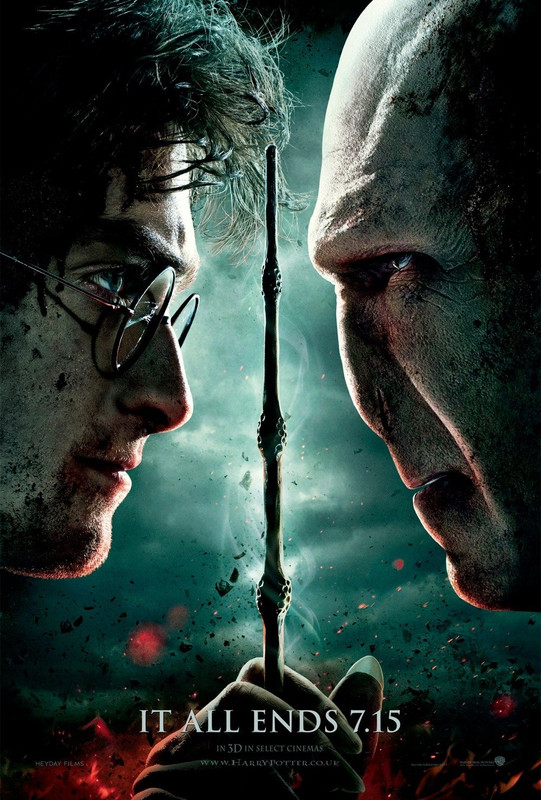
Potterthon Part 5: Harry Potter and the Deathly Hallows Part 2 [12A]

Dir: David Yates
This isn't supposed to happen. Franchises seven films deep aren't supposed to still be good, and certainly they aren't supposed to be continuing to get smarter and deeper even as they hit an almost entirely action driven final chapter. Franchises seven films deep (or considerably less, look at the Final Destination series) tend to be moulded to be empty retreads; titles that can be exploited to shore up a studio's books, without scaring away a built in audience. That's just one way in which the Harry Potter films have thrown out the franchise rulebook.

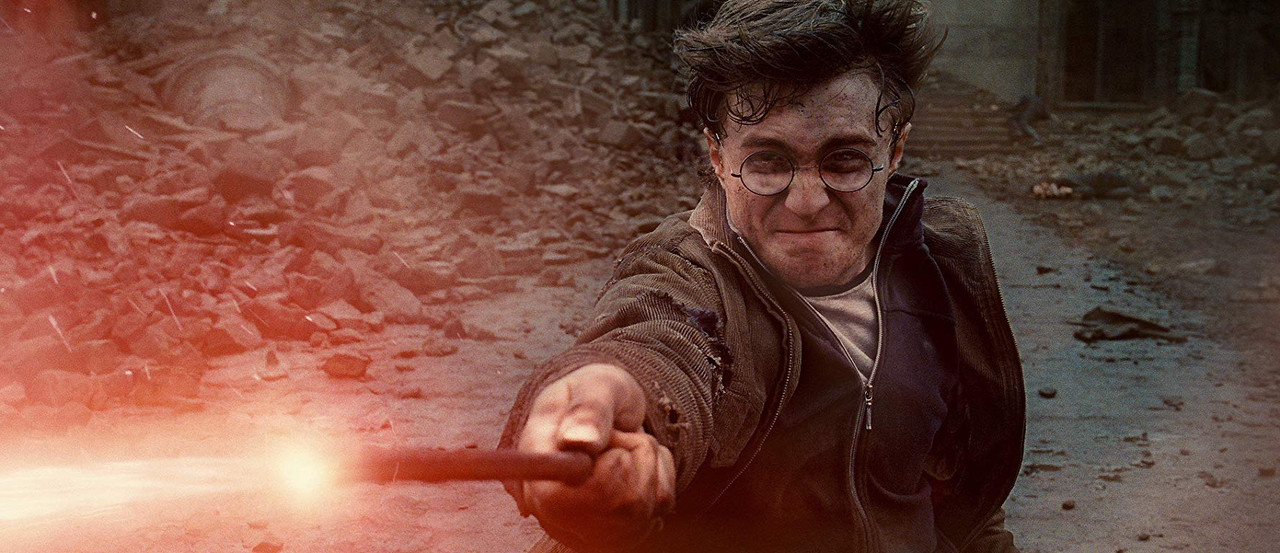
As the tile would suggest, Harry Potter and the Deathly Hallows Part 2 is not a film in and of itself so much as it is the concluding half of a single gigantic film, but you can't - even if it's Harry Potter - release a blockbuster aimed at 12 and 13 year olds that is longer than Gone With the Wind. That said, this film does, at least in its last two thirds, have a very different feel to that of its predecessor, where Part 1 was largely a quiet and reflective film, concerned with developing and deepening the relationship between its three questing main characters, Part 2 is the explosion of sound and fury, only this time it signifies everything.

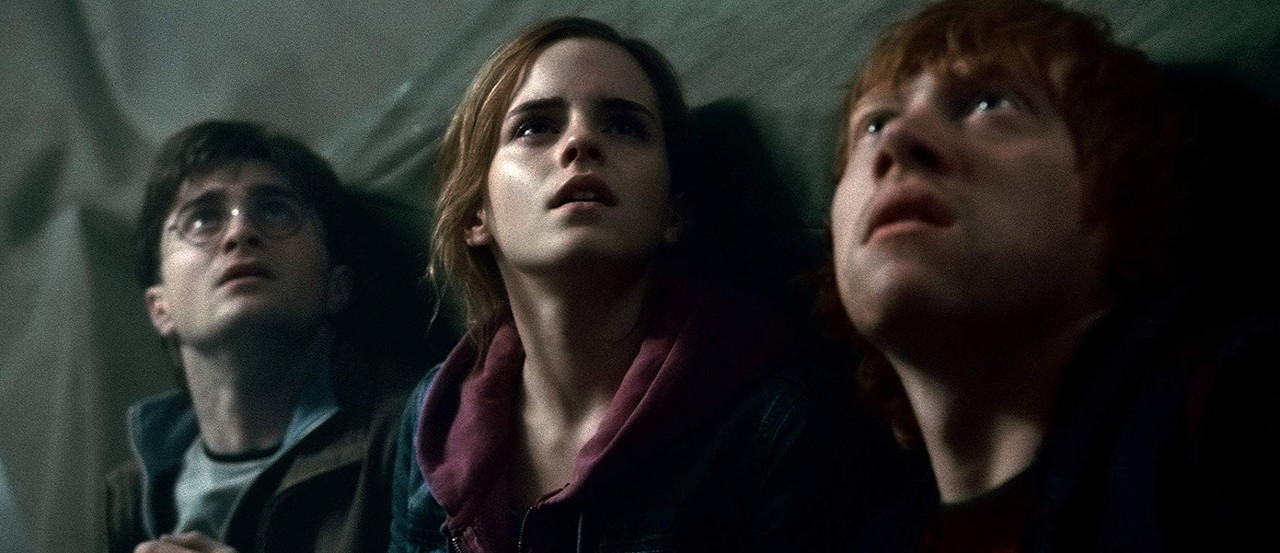
After the close up on the central trio of Harry, Hermione and Ron in the first part, this film casts its net wider, in an attempt (which it largely succeeds in) to give us a moment of closure for all of the series' significant characters, all the while keeping the story of Harry and Voldemort's personal confrontation in sharp focus as the central thing around which the whole film pivots.

There are few actors new to the franchise in this film, and the performances - which are exemplary all round - benefit from the familiarity of the actors with their characters, as does the story. Much of the film's weight is really something that it gets for free, because it comes from the history as much as it does from what is happening in this film; for example when Molly Weasly (Julie Walters) protects Ginny (Bonnie Wright) from an attacking Bellatrix Lestrange (Helena Bonham Carter) both the act and the accompanying line "Not my daughter, you bitch" draw strength and shock from the fact that for the past ten years Walters has been a warm, serene, motherly figure in these films.

The acting is excellent from all concerned, and with a huge cast it would be too time consuming to cover everyone, but some of the supporting players do need singling out. Matthew Lewis, who has been nerdy, accident prone comic relief from the start as Neville Longbottom, gets a great showcase here, as Neville steps up to the plate to become an unlikely but very real hero, without ever losing his essential character (in a nice moment after he barely survives a collapsing bridge he asks where Luna is; "I'm mad for her, and I've never told her, but I think I should since we'll probably both be dead by morning"). Helena Bonham Carter; thus far a mad screeching whirlwind as Bellatrix Lestrange, gets to do something very different at the start of the film, as Hermione takes polyjuice potion for a break in to Bellatrix's vault at Gringotts, and Bonham Carter gets to play very awkward Hermione now resembling the woman who, not 24 hours ago, tortured her. It's one of the film's few lighter moments, and welcome given the darkness of these 130 minutes. Also given an especially nice moment to shine is Maggie Smith as Professor McGonnagall, who gives strength to the rebellion at Hogwarts, and has a lovely moment of almost schoolgirlish glee when, just as battle is about to be joined, she gets to use a spell she's always wanted to try. Those are the moments, the ones you treasure, the ones that mean so much, because they are the ones that other blockbusters would miss, and - entirely non-coincidentally - the ones that make these people human, make us care for them. It's a shame to see the likes of Bonnie Wright and Evanna Lynch get a bit sidelined, but even they get moments to shine, and they take them with gusto.

Greatly expanded from the other films are the roles of Snape and Voldemort. Alan Rickman has always been something of a secret weapon for this franchise; his clipped tones perfectly suited to Snape's mix of menace and humour, and to conveying his murky and seemingly changeable loyalties. He's been a mysterious and intriguing character, and here Rickman finally gets to show his hand. Yes, the ten minute series of flashbacks filling in Snape's background and showing us what has been going on behind the main narrative of the previous films is a huge expository infodump, but it's gracefully executed. The casting of the young Snape (and of a young analogue for Geraldine Somerville's Lily Potter) is dead on, and the nostalgic soft focus gives it a different feel, while conferring what this memory means to both Snape and Harry, and it also happens to give the film's third act an even greater weight, to make the final confrontation feel even more apocalyptic. The battle between Harry and Voldemort has always been on two levels. It is an apocalyptic confrontation to decide the fate of the wizarding world, but as far as the films are concerned what is more important is that it is a battle between two men, tied together by fate, and this film, with its brutal end of act two twist, plays that up brilliantly. Ralph Fiennes has largely been a background figure so far; a looming threat, but in this film he finally gets to really explore Voldemort in more detail. It's an interesting piece of work, deeper than the stock evil bastard it could easily have been (it would have been easy for Fiennes to let all that brilliant make up do the work for him) but what's really interesting is how Fiennes lets us see the origins of Voldemort's evil; fear, and how as his fear grows, as his horcruxes are destroyed and he comes closer to to being able to die, he lashes out with ever more extreme and less directed fury.

The personal nature of the confrontation with Voldemort, and the heavy weight on Harry's shoulders also brings out the best in Daniel Radcliffe. Radcliffe was unremarkable as an actor when he started, but as the years and the films have ticked by he's become better and better, and he's excellent here, bringing great dramatic heft to the later scenes in particular, and convincing as a man who can command the loyalty of a great many very frightened people. Radcliffe is perhaps most effective as he walks to meet Voldemort and, in a slightly Star Wars like moment, talks to the ghosts of many of the people who have died to protect him, unlike Star Wars though, this scene carries a real emotional weight with it, and Radcliffe allows you to see it and to feel it weighing on Harry, without overplaying it.

There has always been a connection between Hermione and Ron's characters, and it's been a large part of the last couple of films. It's a pleasure to see it come to fruition here, and while there is the big emotional moment of the much talked about kiss (which is brief and sweet) much else is left unsaid (Hermione's simple look down to her hand holding Ron's at the end of the film speaks volumes). Again, Emma Watson and Rupert Grint have visibly grown into their roles, to such a degree now that it's not really like watching actors anymore so much as it is just watching Hermione and Ron, and that's the holy grail as far as movies are concerned, once you can get the construct to go away and have your audience watching people, not characters, you've won.

Much has always been made of the way that each film in the series has been darker and more adult than the last, and as befits a film that is largely about death, sacrifice and a final battle against an ultimate evil this is thee darkest and most violent of the lot. For much of its second act this is a war film, with a bloody battle that ranges through Hogwarts and takes the lives of several beloved characters, the bloodletting may not be explicit (this is still a 12A, though it pushes that rating quite hard), but it is still very real and very consequential. At the beginning of the third act, in a brief lull in the action, there is time to see the devastation, and it's hard not to get a little choked up as the camera tracks across dead and bloodied characters we've known for many years.

David Yates deserves a lot of praise for delivering on all these emotional moments while keeping the storytelling pacy (at 130 minutes this is the shortest of the series), the action exciting and the shots genuinely interesting to look at. Hogwarts itself seems different in this film; harder, colder and more foreboding than it has been before, and Yates focuses on its harsh lines and sharp edges in several moments that have an almost expressionist feel to them, given the shadowy cast of the whole film. You would expect a film with a budget this large to look good, but it's not always so, and as well as avoiding the Transformers trap of over designing characters and over crowding shots, Yates makes his effects work for his shots, not vice versa. I can't comment on the 3D, because I refuse to see this film in 3D for two reasons. First of all it was shot in and for 2D presentation, that's the director's intent, the DP's intent, the design department's intent, and that's how it should be seen. Secondly, this is a world we've been familiar with for a decade, and it's always been presented in 2D, why would I want to suddenly change the way I've experienced this world? Overall, the decision to present the last part of this story in '3D' strikes me as like switching ratios from 2.35:1 to 1.66:1 for no apparent reason for the last ten minutes of an eighty minute film. The film looks stunning in 2D; the use of light and shadow, the desaturated colours, augmented by the pyrotechnics of spellcasting, work brilliantly. This will all be diminished in 3D, thanks to the light issues the format simply can't avoid. You have to see this film, but do it properly, see it in 2D.

On its own terms, Harry Potter and the Deathly Hallows Part 2 is an exceptional film, though determining whether it is truly the best of the series (it feels like it right now) will take some perspective and some rewatches. What can be said now is that this is a film that deals deftly in both epic scope and personal drama, that its effects never overwhelm its acting or its action, that it is frequently genuinely moving, without ever feeling like it is manipulating you. Okay, so the 19 years later epilogue isn't really needed, but it's sweet, and really, after the past 18 hours, it would be churlish to complain about those five minutes. It has been a very, very long time since there was a blockbuster this good in cinemas, and it is likely to be a very, very long time before another comes close to this one. I'll miss Harry Potter, but there couldn't have been a better way for this franchise to go out.
★★★★★

Jul 16, 2011

Potterthon: Part 4: Harry Potter And The Deathly Hallows: Part 1 [12A]

Dir: David Yates
Harry Potter and the Deathly Hallows Part 1 has an extremely challenging job; it must be both the calm before, and the beginnings of the storm itself. Splitting JK Rowling's final book made sense in a lot of ways (not least commercially), but it does present a challenge for this film; how do you make setup play as an exciting and complete experience? Even though the first six films built to a grander point they all, to some degree, had a self contained quest. David Yates, now on his third Potter, deals with the challenge confidently, delivering a film that is pacy and exciting, but also, due to its different form (it's essentially a road movie, and set entirely outside Hogwarts) spends greater time and energy on character than any of its predecessors, making for a surprisingly satisfying experience for what is, basically, an extended prologue.

Much is asked of the core trio of Daniel Radcliffe, Emma Watson and Rupert Grint in this film. There are, for the bulk of the film, few of the regular minor characters to provide the spice that they usually add. This is a film entirely on the shoulders of this young trio, and they carry it brilliantly. If Half Blood Prince showed how far Emma Watson's portrayal of Hermione has come, this time it is the turn of Rupert Grint, whose Ron finally graduates from comic relief status with some real heroism and a couple of extremely well handled dramatic scenes (particularly when, having been absent for a long time after arguing with Harry, Ron explains why he's come back to the fold). For much of the film's near two and a half hour running time we follow Harry, Hermione and Ron on their lonely quest to find and destroy the horcruxes that hold Voldemort's soul, it's here that we really get to dig into the characters and, rather than the visceral thrills that characterise both this and the other films in the series, get a couple of scenes of really taut tension as the group hide out from Voldemort's spies as they hunt the chosen one and his friends.

Two of the best scenes in this segment of the film are additions not found in Rowling's book. The first has Hermione almost discovered because, despite all her protective magic, someone smells her perfume, while the second sees Harry and Hermione, at their lowest ebb, dancing to a Nick Cave song on the radio. That moment is one of my favourites in the whole franchise; in 40 wordless seconds it speaks to all the years of friendship, all the feelings these two have for each other, giving them a brief respite from the darkness around them. It's rather beautiful.

Getting to this quest takes some work, and the process provides a handful of lighter moments. There's a lovely comic scene in which many allies take Polyjuice potion to make themselves look like Harry so that Voldemort and his Death Eaters won't know which Harry to attack, and a very funny scene, also involving Polyjuice potion, in which Harry, Hermione and Ron steal into the Ministry of Magic in pursuit of a horcrux. Even at these moments though, tragedy is never far away, in one of most movingly and subtly developed threads in the series, Hermione makes a huge sacrifice to go with Harry and Ron, erasing herself from her parents memory; another fine piece of acting from Watson there.

All the while, Voldemort and the Death Eaters, and both sides quest for the titular Deathly Hallows (whose background is filled in with a brilliant animated sequence which looks like the Lotte Reigner influenced fever dream of Guillermo Del Toro) are in the background, threatening the whole time to break through, which they finally do in a tremendous last twenty minutes. With Hermione, Ron and a heavily disguised Harry captured, Bellatrix Lestrange determines to discover if this is the real Potter she has. Thee resulting torture sequence is brief and not massively explicit, but actually it's all the more disturbing and upsetting for playing largely through Hermione's screams. This is where all the hard graft of the character work, all the history, pays dividends; it makes us care. We know these characters, most likely love them (unless you're rooting for Voldemort, in which case get the hell away from me you loony), and hearing one of them in pain, seeing her bleed, hurts.

This is what's uncommon about the Harry Potter films, and perhaps particularly about the last two (or one, depending on how you wish to define it), there's a level of emotional engagement that most blockbusters either can't or simply don't care to reach.

The technical aspects of the film continue to be absolutely impeccable; the dark, desaturated, photography has a stark beauty, and matches the mood of the piece perfectly. Alexandre Desplat's score has an emotional tug, without seeming like it is instructing us as to how we should feel, and the special effects really deserve that designation, with the much improved Dobby the House Elf feeling, this time, like a real character rather than a digital approximation of one (which, again, gives a key moment a weight I'd never have expected given how I felt about him in Chamber of Secrets).

Aside from a couple of minor performances hiccups (the standard Bill Nighy performance; Welsh variation), Deathly Hallows Part 1 is just about perfect. It could have been little more than an extended trailer for Part 2, but instead it continues to darken, and more importantly deepen this saga, and promises great things for the long awaited ending.
★★★★★

Jul 15, 2011

Potterthon: Part 3

For the second half of the franchise there has been just one director; David Yates, who came to Order of the Phoenix from acclaimed British TV series State of Play. It seemed an odd fit, but it was an inspired piece of directorial casting as the films moved into a new phase; the march to war.

Harry Potter And The Order Of The Phoenix [12]
Dir: David Yates
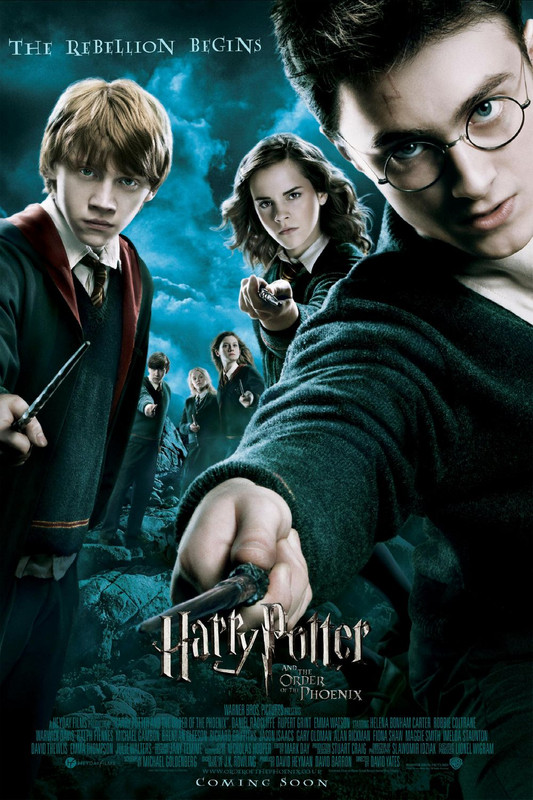
After the less focused and somewhat underwhelming Goblet of Fire, another new face came in behind the camera for the series fifth film; adapted from JK Rowling's longest book, new screenwriter Michael Goldenberg (in his only outing in the series, the rest all having been scripted by Steve Kloves) stripped the text back into the shortest, leanest and most focused film to date. Here, just halfway through the series, the march to war truly begins, and it does so in fine style.

Goblet of Fire never visited Privet Drive, but Harry's nightmarish Uncle (Richard Griffiths), Aunt (Fiona Shaw) and cousin make a reappearance for this film's opening sequence. The film begins on a glorious summer day, quite at odds with the visuals of the last two films, but soon, Dementors arrive, and director David Yates immediately shrouds even the muggle world in darkness. Yates retains the dark tone of the past two films, but brings his own vision to it (along with cinematographer Slawomir Idziak), giving the film a steely blue tint, which sets the tone of the world, and particularly of the scenes of Harry and his friends preparing for war, against the film's major new character.

Imelda Staunton's delightful turn as Dolores Umbrage gives the film a new kind of villain; a sweet looking middle aged woman who turns out to be a petty, dictatorial and cruel figure who wants to hide what is coming from the Hogwarts students to 'protect' them. This is, obviously, JK Rowling taking on education policy, but the film makes that undertone less prevalent and less irksome than Goblet of Fire did the 'satire' of the Rita Skeeter character. Staunton is hilarious in the role, but also frightening, portraying a butter wouldn't melt façade (complete with tinkling laugh), which becomes chilling when she is crossed (see the excellent scene in which she makes Harry do lines with a special quill designed to etch the words - painfully - on his skin).

Aside from Umbrage's bureaucratic and restrictive attitude at Hogwarts the film's main focus falls on Harry's attempts to do what she won't allow, teach a practical Defence Against the Dark Arts course, raising an army of students (which includes delightful new addition Luna Lovegood, played by Evanna Lynch) to fight Voldemort when the time comes. These sequences are fantastic, the film moves quickly through the training, dealing with much of it in a couple of montages, but it takes enough time that we still get character beats, Umbrage's attempts to discover the secret class, and a real sense of the progress being made. It's adaptation working at its best, reducing something that should take a long time down to its essence without losing the storytelling.

The film's last act is exceptional; a large scale set piece taking place inside the Department of Mysteries at the Ministry of Magic, with Harry and his small army (Ron and Hermione along with Luna, Ginny (Bonnie Wright, continuing to make a tiny part resonate) and Neville (Matthew Lewis, convincingly gaining in strength with each film)) facing off with a group of death eaters which now includes an unhinged Helena Bonham Carter as Azkaban escapee Bellatrix Lestrange. The battle is brutal, with a moment when Lucius Malfoy punches Luna in the face, making her bleed, and Ginny's hugely effective 'Reducta' being especially memorable for the way they raise the level of violence from previous entries. In the pitched battle the spells that fly back and forth begin to feel like bullets, and Yates directs the sequence like a gunfight, which pays dividends when an important character is hit and killed.

You would expect, by the fifth film, for the returning actors to be settling into their roles, and so it proves. The leads have always had an easy chemistry, but it's really felt in this film; the group more close knit than ever. In a lovely moment Harry, Ron and Hermione are talking about feelings, and Hermione says that Ron has 'the emotional range of a teaspoon', the reaction, the slowly dawning laughter that spreads through their little gang here, really speaks to their closeness as well as any other character beat in the series. Daniel Radcliffe, in particular, has a lot more asked of him this time out, and he delivers. When the film's tragic loss comes his reaction is really powerful, as is the way he defeats Voldemort, who has possessed him for a moment. David Yates was hired for his work with actors, and it seems to have paid great dividends. The adults also deliver, with Helena Bonham Carter making for a memorable (if slightly underused) villain, Gary Oldman bringing both warmth and force as Sirius Black and the ever entertaining Alan Rickman again giving it his best English Christopher Walken as Snape.

Order of the Phoenix is a tight, well disciplined, frequently thrilling film, and for my money its one of the best of the Harry Potter series.
★★★★★

Harry Potter And The Half Blood Prince [12]
Dir: David Yates
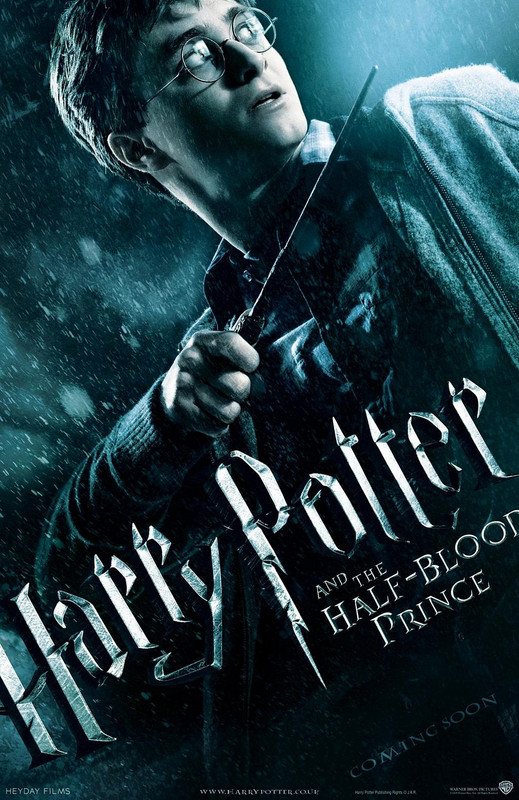
Despite a two and a half hour running time, the sixth Harry Potter film doesn't stand still for very long. Right from the off director David Yates' second crack at the Potter whip throws us into events, making no concessions to latecomers (which is as it should be, by this point you're either on board or you're not). He leads off with one of the film's most striking setpieces, the Muggle world finally seeing what's happening in the magic world as Death Eaters blast through Muggle London before arriving in Diagon Alley.

Yates and screenwriter Steve Kloves maintain a loose, but effective, grip when it comes to storytelling, with much that could have required the sort of florid explanations common to the first few films actually told in a few images that at first seem incidental but which ultimately add up to something much greater than the sum of those elliptical parts (the best use of this is in Draco Malfoy's story, which seems, for a long time, to consist of shots of him opening and closing a cupboard). The only place where the storytelling falls down this time is really in regard of the title, as the Half Blood Prince (the previous owner of a potions book that Harry uses to become top of new professor Horace Slughorn's class) only reveals his identity late in the day, and when he does the revelation falls flat, because it doesn't seem to mean anything.

Harry Potter and the Growing Pains might be a more suitable title for this film, as while it builds up the ongoing Voldemort storyline very capably, and has many fine action sequences, much of the running time is given over to the changing relationships between the characters. These are some of the film's most effective and affecting moments, especially when both Harry and Hermione are unable to take the person they want to go with to a party thrown by Slughorn (Ron in Hermione's case, Ginny in Harry's), this leads to a beautifully played scene between Emma Watson and Daniel Radcliffe in which Hermione in particular seems more vulnerable than ever before. It's great that, even as war creeps ever closer, the films still take time to have these beats, because the investment they give you in the characters gives the encroaching threat more weight, because you care what happens to these people. There's also a nice smattering of comedy in this part of the film, supplied, as ever, largely by Rupert Grint, though Evanna Lynch gets to be adorably weird once more as Luna Lovegood (if you aren't charmed when she randomly pops up in a Lion costume then you're not human), and even Radcliffe gets in on the act when Harry takes a potion called liquid luck.

On the other side of the coin the film uses the new character of Horace Slughorn (an entertainingly scatty Jim Broadbent) to introduce memories of a young Voldemort, and lay the groundwork of plot for the next two films. The full horror of Voldemort's evil, and the difficulty of the task lying in front of Harry, Hermione and Ron becomes clear in this instalment as we are introduced to the concept of a Horcrux; a device holding part of a person's soul, which enables them to live even if their body is destroyed. This ushers in a whole new sense of threat, which is given weight both by the ever darkening visual style and by the much more brutal tone to the film. A fight between Harry and Draco Malfoy (Tom Felton, finally starting to come to grips with the whole 'acting' thing, but still very much the weak link in the cast) feels extremely personal, and the violence coming from Harry speaks clearly of how much he's changed since Philosopher's Stone.

The only real chink of light in Half Blood Prince is Harry's relationship with Ginny Weasly. It's nice to see Bonnie Wright; a serene background presence in each film, come into her own here, giving Ginny great strength and resolve. She and Radcliffe have a nice chemistry together, and Harry and Ginny's first kiss has a sweetness and an innocence which works well for the relationship that has really been bubbling under since Chamber of Secrets.

It's hard to know what to say about the cast and crew at this point; everyone continues to raise their game. Radcliffe's performance as Harry has acquired a moral complexity which is incredibly compelling, but remains a real (in all senses of the word) hero. Rupert Grint continues to give us a bit of comic relief, but is also able to bring some dramatic weight when Ron is called upon to help his friends, while, as I mentioned above, there is an emotional depth to Emma Watson's performance here that we haven't really seen before, and she makes Hermione feel much more human by showing us her vulnerable side. The film also looks exceptional, Yates seems to have grown in confidence, making more unusual shot choices (look at the opening frames) and the special effects are little short of miraculous. There's really not much to criticise.

There is a lot of plot to get through in this episode of the Harry Potter series, but as ever the cast and crew do it with assurance, and they make sure that even at the heaviest expository moments the film is never dull. The set pieces are stunning, especially a mid film moment in which the Weasly house is attacked by Death Eaters (not in the book), and though the battle that ends the book has been deleted (for fear it would prove to similar to the battle that forms the second half of the final film), Yates and Kloves manage to find final moments that send a shiver up the spine and bring a tear to the eye, and make you desperate to see, finally, how it all ends.
★★★★★

Jul 13, 2011

Potterthon: Part 2

In the next two films, the production team behind Potter made some changes, recognising that the story, characters and actors were growing up they brought in new directors with a darker vision. Most consider that this is when the films came of age.

Harry Potter And The Prisoner Of Azkaban [PG]
Dir: Alfonso Cauron
Though Chris Columbus had created a strong visual identity for the Harry Potter films, and had led his young stars to better performances in the sequels, his move on from the franchise couldn't have come at a better time. With the stars and their characters in their early teens, upheaval was in keeping with the series at this point, as was growing up. Producer David Heyman could have gone for a safe pair of hands for this third film; another journeyman like Columbus, instead the offer went out to the visionary Guillermo Del Toro (who passed in favour of the more personal Hellboy) and then to his countryman and friend Alfonso Cauron, whose varied CV took in kids movies (A Little Princess) and who was coming off the back of a - very different - film about teenagers; Y Tu Mama Tambien.

Cauron brings a distinctly different flavour to this instalment, and though the process of darkening the series began with Chamber of Secrets, it was here that it took hold, and Cauron who really set the vision for the rest of the series. Where Columbus' Hogwarts basked in sunshine and was bright and primary coloured, Cauron's is darker and more forbidding, and quite often drenched with rainstorms. Colours are desaturated, and night time scenes play in near pitch darkness, accentuating the creepy aspects of Hogwarts castle. There is also a somewhat harder (though at this stage still PG rated) tone to the film's action, which seems to leave more of a mark than it had previously, and Cauron really up the ante on scary imagery, with a great Werewolf design and transformation, and the genuinely terrifying (were I still nine) Dementors; shrouded creatures who feed on good memories, and can suck out your soul should they so please. This is not to say that Cauron is above pulling back for some lighter hearted moments, but even those are now inflected with darkness (see the way Harry's passionate anger causes the films opening slapsticky set piece).

Another thing you have to give Cauron immense credit for is the improvement in the performances from the young leads. He apparently worked them hard, even asking them to write in character autobiographies (apparently these were delivered very much in keeping with characters; a solid effort from Radcliffe, dozens of pages from Watson, while Grint turned in nothing, saying that Ron wouldn't have written the essay). Clearly being challenged and asked to really go for something more truthful than had been asked of them before paid off, because all three visibly raise their games. Emma Watson, benefiting from a larger role this time round, is perhaps most improved, while Radcliffe does some great work opposite Gary Oldman's Sirius Black.

The plot is solid and well told, and making it very personal to Harry and very connected to his past works well for both the film and Daniel Radcliffe's performance, giving the whole thing much more import than you felt (at the time at least) than either Philosopher's Stone and Chamber of Secrets had in the overall arc. It also raises the stakes, giving everything greater weight, because it's more emotional and demands more of Harry, making him seem more heroic.

The adult performers are largely as good as ever. I never warmed to Michael Gambon's Dumbledore, whose voice seems to be a series of one sentence tours of UK accents, and whose manner is very different to Richard Harris' softly spoken, grandfatherly figure. Among the new teachers, a scatty Emma Thompson is great fun as Professor Trelawny, and David Thewlis keeps us guessing about his allegiances as Professor Lupin. However, Gary Oldman steals the film with a short but resonant turn as Sirius Black; powerful enough to give his character real weight when he reappears in the fifth film. As ever, the old guard; Coltrane, and Rickman most notably, impress with colourful character turns, though Tom Felton continues to be a wooden disappointment.

The film, lensed by Michael Seresin, is much more visually dynamic than the first two entries, with Cauron's camera much more active than Columbus', exploring the nooks and crannies of Hogwarts and finding a lot of new angles on familiar sights.

On the whole, Harry Potter and the Prisoner of Azkaban is one of the best films in the series, and clearly its great leap forward from being high quality children’s films to becoming something much more resonant, and rather closer to high art.
★★★★☆

Harry Potter And The Goblet Of Fire [12]
Dir: Mike Newell
Maybe it's the fact that the characters are now 14, and thus going through the most annoying and obnoxious phase of their adolescence (hey, we've all been there), maybe it's that director Mike Newell seems a little unsure of himself, maybe it's the hilarious hairstyle choices (Daniel Radcliffe's continually surprised hair being the wooden spoon winner), maybe it's the underdeveloped new side characters... No, the problem with Goblet of Fire is that, right up until the end, it just feels inconsequential - well, that and the fact that it has to follow Prisoner of Azkaban.

The central thread of the film is given over to the triwizard tournament; a magical contest between three schools, involving three deadly challenges which a champion from each school must take pert in. Harry is supposed to be too young, but his name is drawn from the titular goblet anyway, meaning that he must compete. Sadly this is the most aimless part of the film, it provides some acceptably realised action, but the stakes feel very low (even at Hogwarts I don't buy the idea that a child will be allowed to drown in service of a contest) and the storyline adds little to the film up until the final challenge, some 108 minutes into the film. All in all, after the drama of Chamber of Secrets and Azkaban's action scenes, this just feels like franchise is treading water, however good the dragon effects are.

Also thrown into the mix are some John Hughes like high school shenanigans; rivalry between friends (Ron has several Nomi Malone like strops with Harry, which is as tiresome as you'd expect), some of which works quite well, a funny scene in which Ron has to dance with Professor McGonnagal and the central Yule ball are both welcome diversions from the rather plodding tournament plot, though the relationship dramas between the characters play out to much greater effect in the subsequent films. On the plus side though, this plot does allow Rupert Grint to have some fun, and he's very amusing here, especially when recounting how he asked visiting witch Fleur Delacourt out ("You know how I like it when they walk").

The script also has some problems; Goblet of Fire was JK Rowling's first real doorstop of a book, and screenwriter Steve Kloves hasn't found an organic way to reduce it down. Even at two and a half hours it feels brutally shortened (look at the abruptness of the Quidditch World Cup, and the underdevelopment of Robert Pattinson's Cedric Diggory). There is also a real irritant in the form of Rita Skeeter; a Daily Prophet journalist who is Rowling's, and the film's, brutally unfunny, sledgehammer subtle, parody of a tabloid reporter, and who feels completely out of place here.

I don't want to make it sound like Goblet of Fire is a dead loss though, as there is much to enjoy and admire here. Mike Newell may seem an odd fit for this assignment, but he develops the look of the series capably, bringing even more darkness to it than Alfonso Cauron, particularly in a forbidding opening sequence which really sets the tone for this entry, and provides our first sense of the series' central villain; Lord Voldemort. Also strong is the performance of new recruit Brendan Gleeson, who is hilarious as new Defence Against the Dark Arts teacher 'Mad Eye' Moody. His costume and the effects on his false eye are brilliant, and Gleeson overplays to the hilt, having a wonderful time, especially in a lesson in which he shows the students the three 'unforgivable curses'; magic so terrible that using it will get you a one way ticket to Azkaban.

However, the film really excels in its climax. If Prisoner of Azkaban saw the series begin to grown up, the end of Goblet of Fire, and specifically Lord Voldemort's haunting line "Kill the spare", sees it come of age, with a deep, dark, frightening and extremely high stakes set piece which sees Harry confront the real Voldemort (a deliciously evil and nightmarish looking Ralph Fiennes) for the first time. It is ten minutes of screen time so good that you can almost forgive the two hours of plodding it has taken to get there. What's really important about this scene, and what makes it the key to the rest of the series, is that it makes Harry's quest going forward a truly personal one - something severely lacking in the rest of this film. This one scene echoes through the rest of the series.

Overall, Goblet of Fire is be my least favourite of the series, but it makes up a lot of ground in its last twenty minutes, and is, if only on the back of those twenty minutes, a game changer for the series. It's inconsistent, but essential.
★★★☆☆

Jul 12, 2011

Potterthon: Part 1

The Harry Potter films have defined the last decade of cinema. Over eight films, JK Rowling's stories have dominated the cinematic landscape while becoming that rare thing; a blockbuster series that has not just been well received each time out, but has improved as time and films have gone by. On Friday the final film; Harry Potter and the Deathly Hallows Part 2, will open, and in the run up to that I'm going to re-visit and review (or re-review, in the last two cases) all of the previous films, and try to look at the series as one overarching story. I'll tackle the first seven films in three parts, and on Saturday there will also be a featured review of Deathly Hallows Part 2. Enjoy.

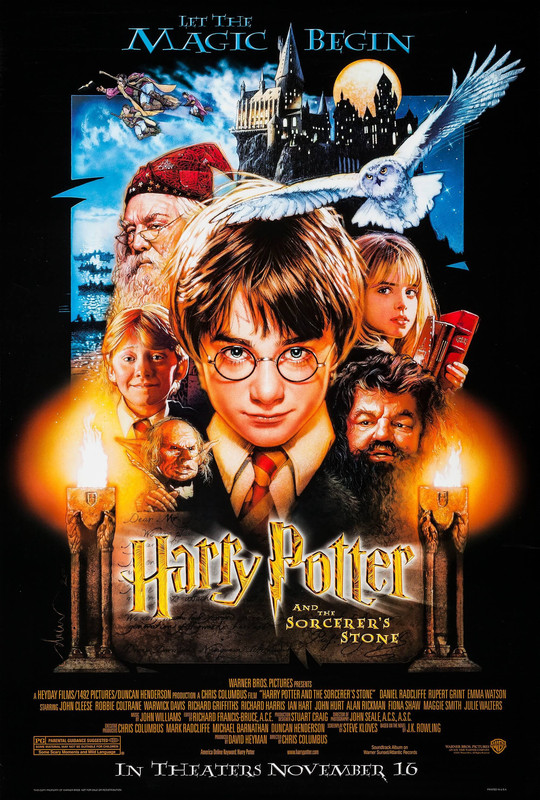
Harry Potter And The Philosopher's Stone [PG]
Dir: Chris Columbus
It's not that Harry Potter and the Philosopher's Stone is a bad film, just that it feels like a film that is very far away from what the series became, so much so that watching this unashamed kids movie, from the director of Home Alone, with its bogey jokes and slightly schematically told and overexplained plot, is a bit of a shock to the system ten years later. That said, it's a real charmer, and sets up the world of Harry Potter in a bright and engaging fashion.

Where Columbus really gets it right is in the film's design. Hogwarts itself is imposing and impressive, dwarfing the films young stars and immersing both them and us in ths magical world. In keeping with the age of the characters and the audience the world at this pint is bright, inviting and fun (and sometimes a little overly cartoony). The characters; Dumbledore, Snape, Hagrid et al, are larger than life, but Columbus makes them feel like a credible part of this world they inhabit, and this really allows you to buy into the reality of Hogwarts as well as engaging with its more fantastical elements. Right down to the tiny details (the fact that every wand is different and designed to suit the character who wields it) the film is beautifully and intricately designed.

Columbus also did sterling work when it comes to casting, and whatever you make of his films it's worth remembering that the bulk of the main casting was his work, and ingenious it was too, as even here it is hard to imagine anyone else in most of the adult roles. Robbie Coltrane's bumbling Hagrid (catchphrase here "Oh, I should not have said that"), Maggie Smith's authoritarian but warm Professor McGonnagal and Alan Rickman's brilliantly sinister Snape have all become iconic. Richard Harris' Dumbledore is a slightly different case; a less bombastic and more certainly accented performance than that of Michael Gambon (who took the role after Harris' death after Chamber of Secrets), his Dumbledore is a more immediately likeable character, one who sets you at ease, but it is hard to identify anyone other than Gambon with the role now.

The kids, all unknowns at this point and all but Daniel Radcliffe without any significant acting experience, largely acquit themselves well, but are all very visibly green here. Radcliffe (who always fit his part like a glove) and Emma Watson, as an energetic Hermione, are best, but Rupert Grint shows a knack for comic relief, and comes into his own during the chess scene. Only Tom Felton lets the side down badly, with a rather wooden turn as Draco Malfoy (a flaw that would take some time to rectify).

For all its charm, Philosopher's Stone does creak in parts. The opening hour has to be used to set up the characters and the world, and while that still leaves 90 minutes it does take a long while for the plot to kick into high gear. Add to that a somewhat ineffectual villain, and a level based climax that feels a bit computer gamey (complete with some effects that have dated very poorly) and you have a film that ends up being better at setup than it is execution. Still, it looks great, sets up a distinctive world, and is never dull. It's not a triumph, but it's a solid start for the franchise.
★★★☆☆

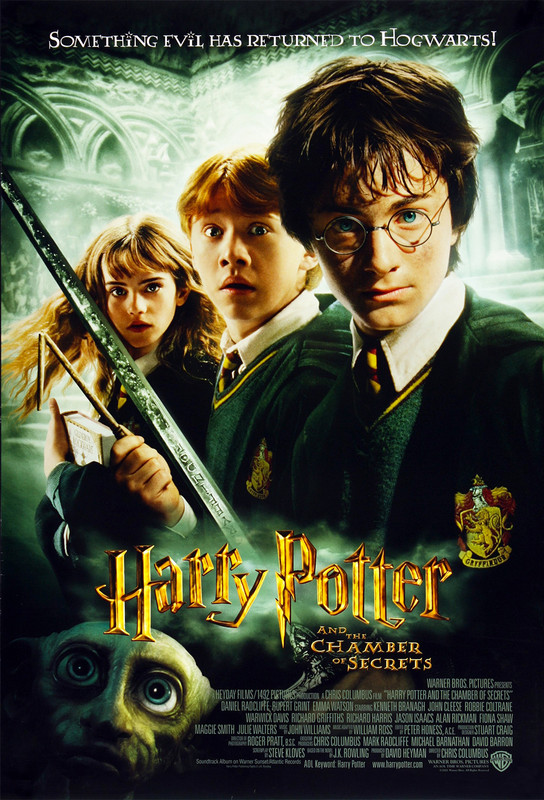
Harry Potter And The Chamber Of Secrets [PG]
Dir: Chris Columbus
I'd never especially liked Chamber of Secrets, in fact I had always considered it the weakest of the films. Until yesterday. On this latest rewatch, Chris Columbus' second crack at the Potter whip played better than it ever had before; revealing a more muscular and more confident film, which even has a few signs of the way the series would evolve (in amongst, it has to be said, a still rather large helping of kid friendly silliness).

Though this, at 154 minutes, is an even longer film than Philosopher's Stone, it gets going much faster, with the world established thoroughly in the first film, Chamber of Secrets is able to give more time to its plot, which really heralds the first sign of encroaching darkness, by dealing with an attempt to open a secret room in Hogwarts, an attempt which, if successful, will release a monster trained to attack all the non-pureblood students at Hogwarts (including Hermione who, we discover here, has non-magic - muggle - parents). This is also the first sign of the films commentary on social issues, and particularly on racism, which becomes more pronounced as the series goes on.

Though production resumed very quickly after the first film opened, Radcliffe, Grint and Watson have visibly and audibly aged, and they all also seem to have found their feet as actors, giving performances that seem a lot more assured than the occasional rabbit in the headlights styling they contributed to the first film. Watson is a little sidelined here, but is charming and does what she can with a small part, and Grint provides solid support, but this is very much Radcliffe's film, and he carries it assuredly. In the film's climax - much higher stakes that that of Philosopher's Stone he battles a giant monster and a form of Voldemort to save little Ginny Weasly (Bonnie Wright, good as ever in a bit part) - a nice setup for what would come some years down the road. But it's really the character beats that carry that sequence; Harry's heroism in contrast to the cowardice of defence against the dark arts teacher Gilderoy Lockhart (Kenneth Branagh, in a breezy and hilarious performance) and Harry's bravery and willingness to sacrifice are things that have come to define the character, and here Radcliffe sells those aspects of Harry right from the start. You know he's not going to die of his basilisk bite, but it's still touching when he tells Ginny to go and find her brother, rather than stay with him in what might be his last moments.

The screenplay works much better this time round too and, aside from a mid film infodump from Maggie Smith, has a better sense of flow between scenes. Despite the length the plot develops at a good pace, and is well told. Characters new and old make strong impressions, and yet more great British actors get in on the act here, with notable contributions from Branagh, Jason Isaacs, deliciously clipped as Lucius Malfoy and Shirley Henderson, then 35, playing the ghost of 12 year old Hogwarts student Moaning Myrtle. Visually, though it's nothing like as radical as what would happen on Alfonso Cauron's watch, Columbus does darken his style here, and especially in the second half of the film the bright primary colours of Philosopher's Stone are replaced with greys, greens and blacks. Happily Columbus is also playing with a larger budget, and despite being only a year further on, the special effects, and especially the compositing, make a quantum leap from the first film.

It doesn't all work; the ending is messy, and new character Dobby the House Elf is an irritant, while the early sidelining of Hermione means that the central trio don't actually get that much time together in this entry. Otherwise though, this is a big step on from the first film and a thrilling, high quality, blockbuster.
★★★★☆