Feb 26, 2014

Coming of Age Movie Month Days 17 to 21

After two and a half weeks I found that even I needed a little breather from watching the same genre of movies at such a high rate.  I will be finishing out my list of 28 films for this project, but it may take me into March.

However, I will also be continuing the series with a weekly double bill of coming of age movies and reviews, those films will largely be new to me, but I'll also include a few I've seen but not reviewed here before.

Slap Her She's French
Dir: Melanie Mayron

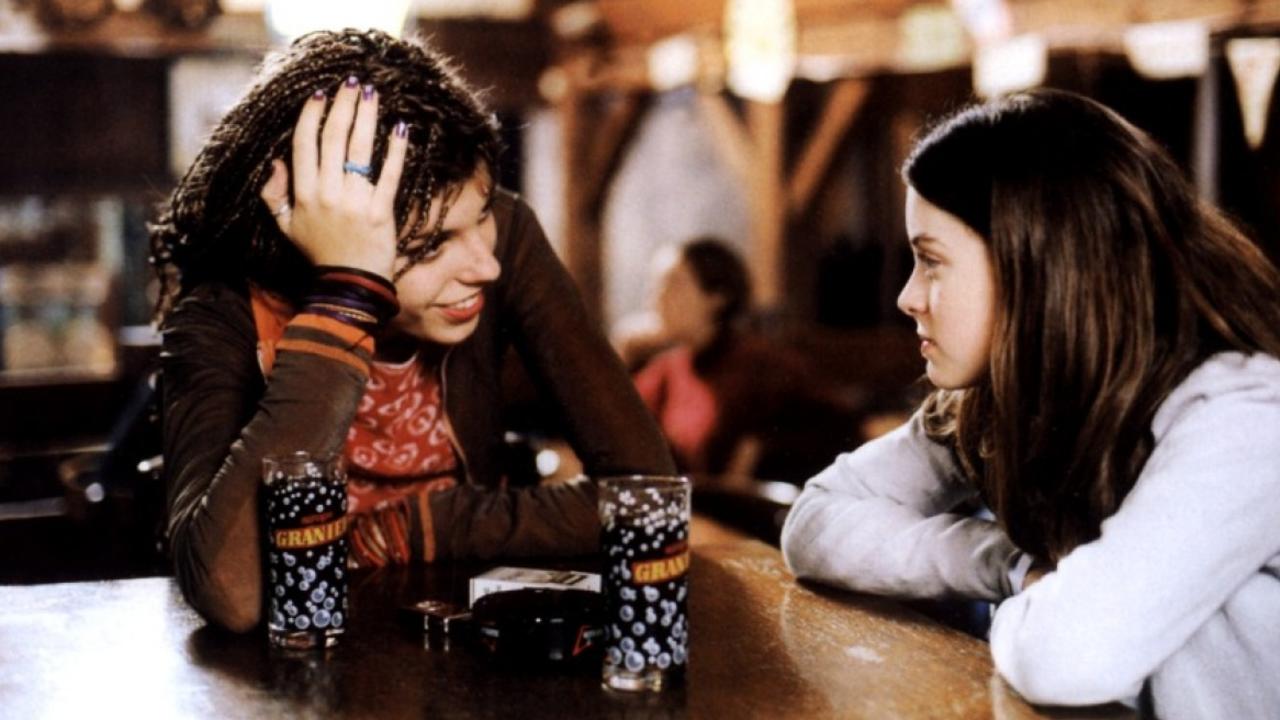
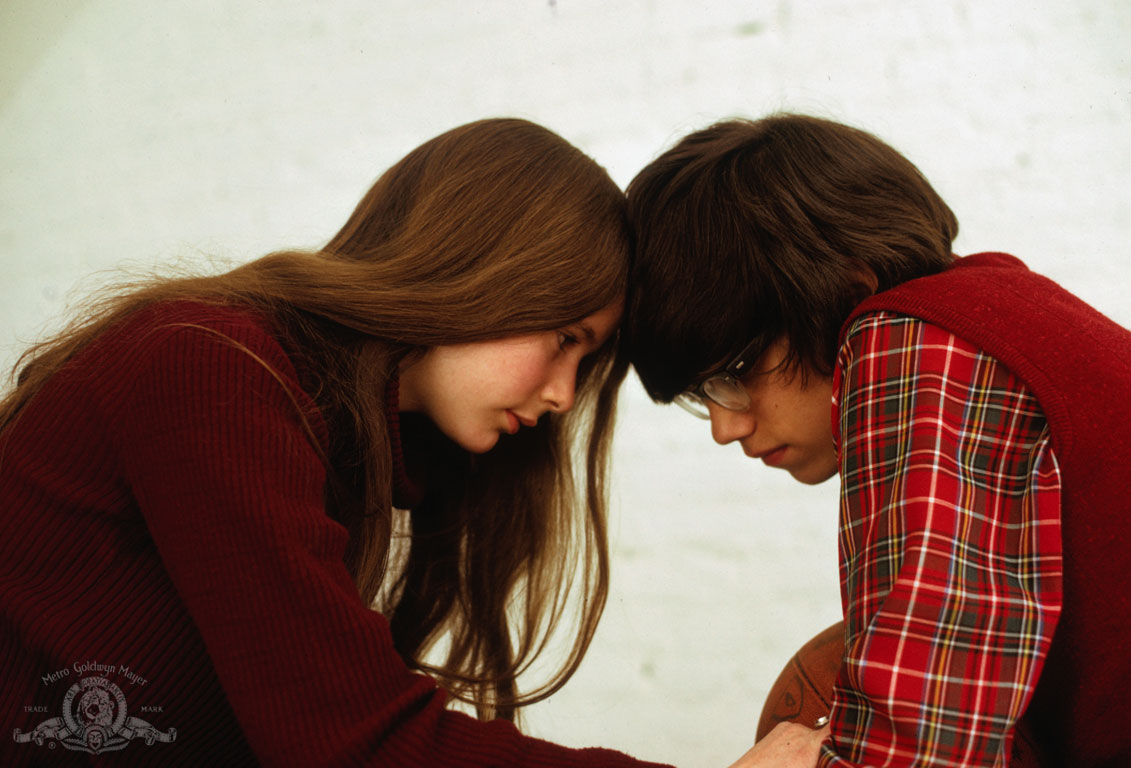
Slap Her, She's French passed me by at the time of its release in 2002 and it's not hard to see why; this high school comedy, pitched somewhere between Clueless and Single White Female, which sees Piper Perabo as French exchange student Genevieve who deliberately overshadows the popular girl (Jane McGregor) whose family she is staying with, came right at the end of the late 90's/early 2000's revival of the teen movie and just wasn't up to the standard set by many of the films that had preceded it.

Slap Her, She's French is actually rather better than its (shit awful) title might imply.  Having an unsympathetic protagonist in Jane McGregor's Starla works quite well, because it enables writers Lamar Damon and Robert Lee King to give her some amusingly bitchy dialogue.  There are also some fun set pieces, few more amusing than when Genevieve 'helps' Starla with her homework and teaches her sexually suggestive phrases to use in her French oral exam.  It also wins points for a big final laugh, with a disclaimer before the end credits.

Melanie Mayron gives the film a bright, brash style that matches the broad style of the screenplay and she directs the cast to similar ends.  Perabo and McGregor both put in big performances, but the film is so heightened that it works, at least to some degree.  There are two ultimate problems here.  First of all, while it has some laughs, the film isn't consistently funny enough and secondly Perabo's deliberately awful accent may be a joke in and of itself, but it's not that funny and makes the film's 'twist' one that seems to have a neon sign flashing above it from the very first second she speaks.

Slap Her, She's French is a perfectly fine time passer if you like high school comedies (and, as I believe we've established, I do), but it's not among the best of its era and there are other lesser known teen films from this time much more worthy of rediscovery.
★★

36 Fillette

Dir: Catherine Breillat
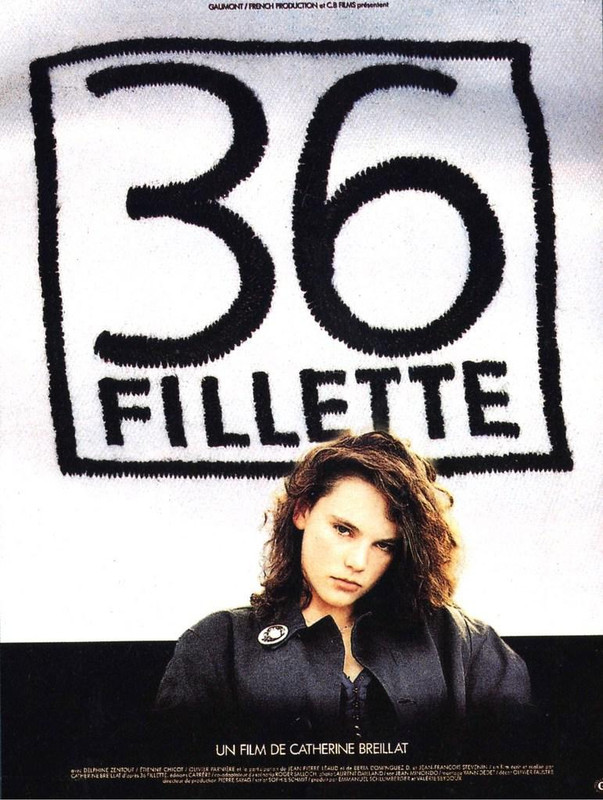
I have lately become more interested in the work of Catherine Breillat, having, it seems, found a way into her filmography through her recent fairytale films (which also deal in coming of age themes), so I decided to go back and look at an earlier example of her work for this series, hoping that a theme I am interested in would hook me into her earlier films.  Nope.

I've enjoyed quite a few of the more controversial French takes on first experiences with love, relationships, and sex and I appreciate the fact that they are unafraid to be confrontational and sometimes explicit in their depictions of these things.  I'm not sure what it is, perhaps I simply have a disconnection with Catherine Breillat's style, but like so many of her other films, I found 36 Fillette rather boring.

This is, typically of its director, a very talky film that finds a 14-year-old girl (Delphine Zentout) making a connection with a playboy type (Jean-Pierre Leaud) and becoming more and more determined, over about three nights, to lose her virginity to him.  Zentout is good, but I don't especially believe her as a teenager.  Like so many of Breillat's characters, she feels more like a mouthpiece for the director, except that here Breillat doesn't even have that much to say.

The relationship at the film's centre is creepy, which is to be expected, it's between a 14-year-old and a 40-year-old, but it's not creepy in any particularly interesting way (as the relationship in, say, Beau Pere is) and for me the film didn't seem to say anything about coming of age or relationships like the one between Zentout and Leaud that hadn't been said much better in any number of other films.  36 Fillette isn't terrible, but it did, for me, seem both bloodless and curiously pointless.
★★

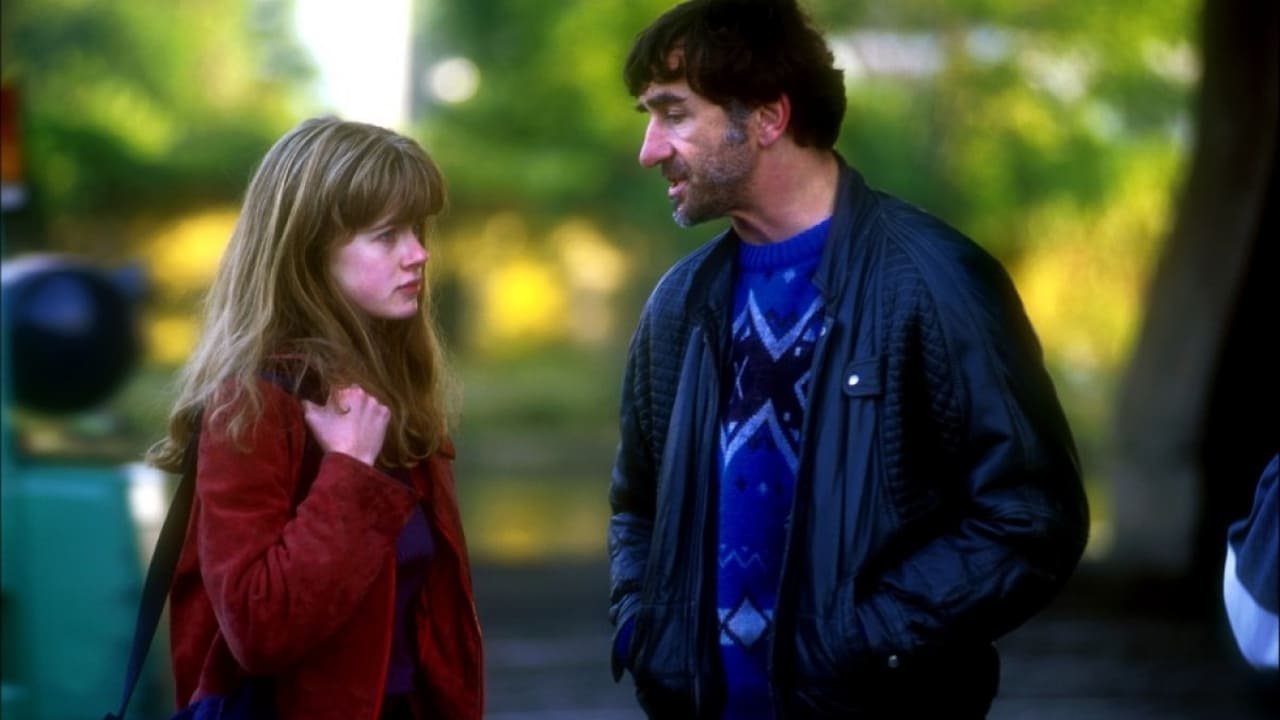
Maske Ku' Vi
Dir: Morten Arnfred
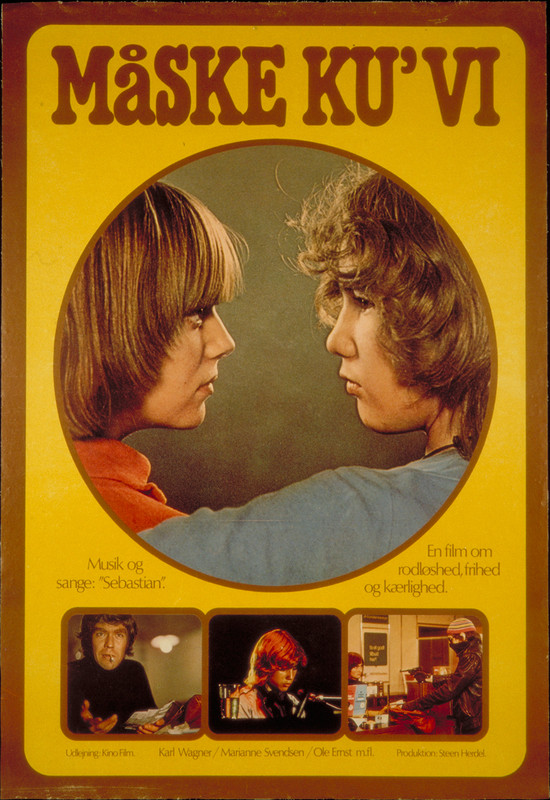
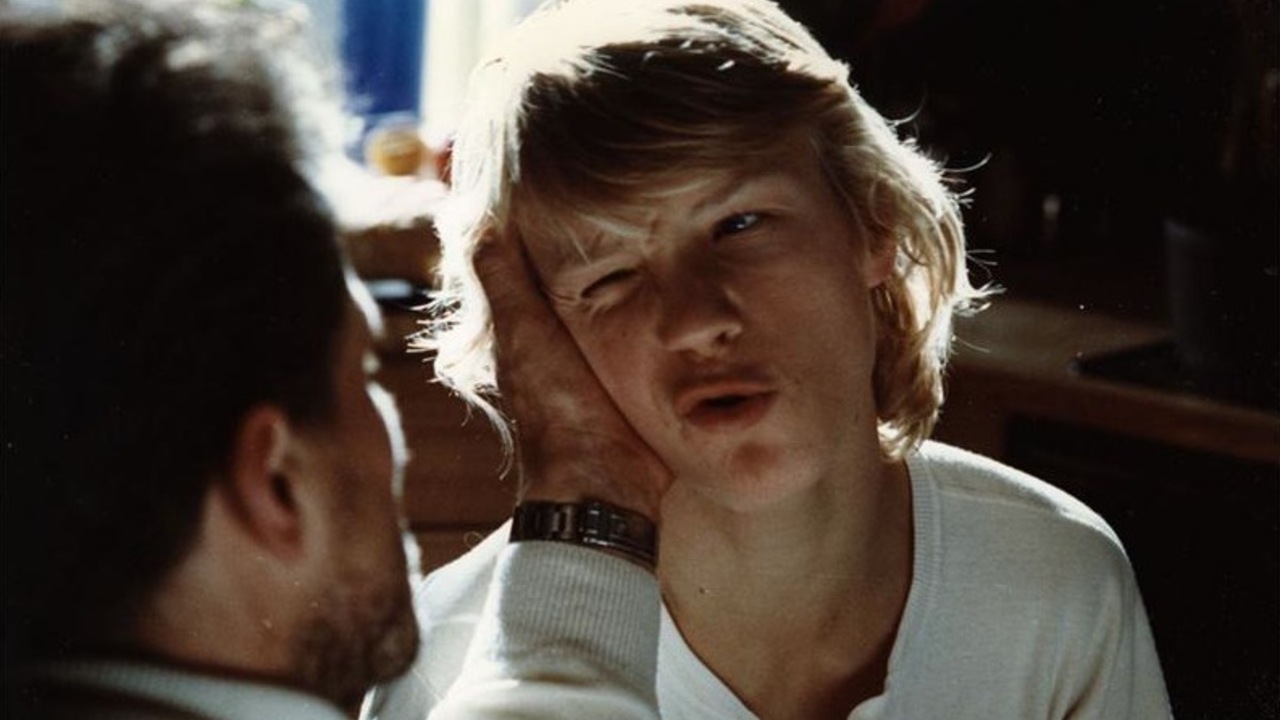
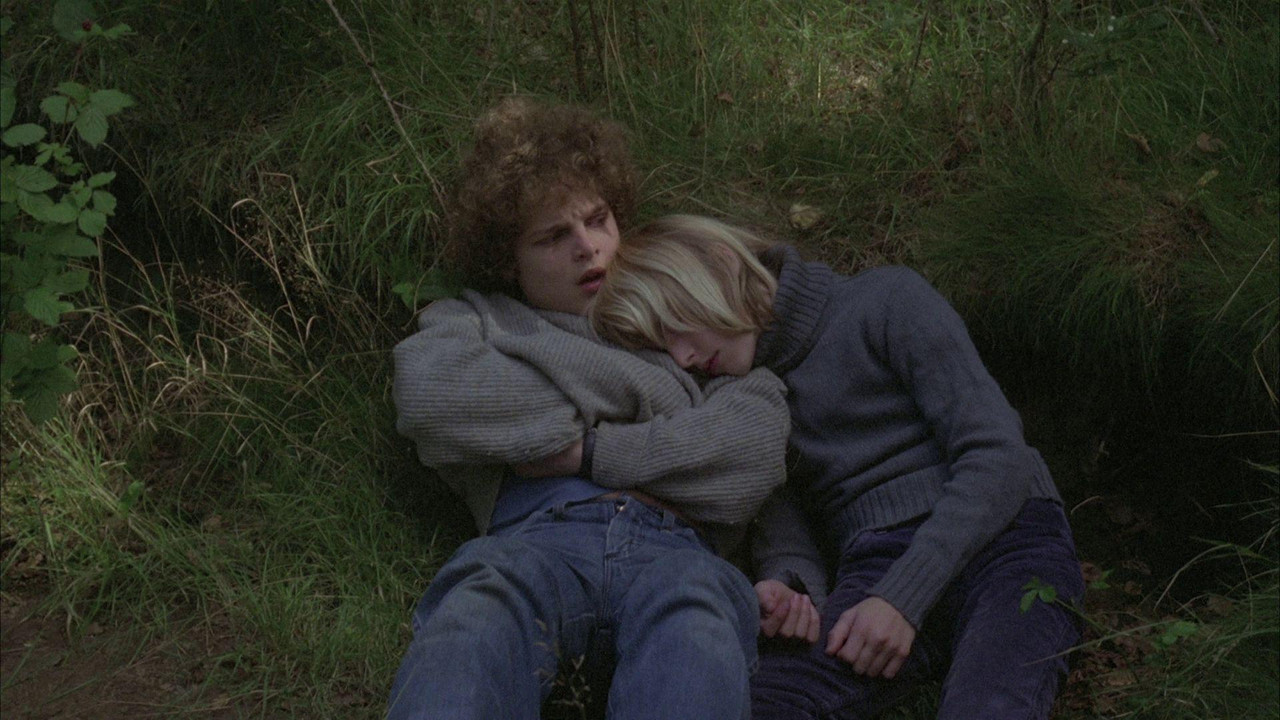
This seems to be something I'm saying a lot in the course of these reviews, but once again, Maske Ku Vi [Could We Maybe?] seems almost to be two films that have been glued together.  The film is by substantially the same team that would go on to make You Are Not Alone, and initially, it doesn't feel too far away from that film.  

Maske Ku Vi begins with an almost Loachian approach, taking a close up and rather uneventful look at the lives of two young friends.  I found this stretch of the film enthralling.  It establishes a social realist tone, grounding itself completely in the experience of two 14-year-old boys growing up in Denmark in 1977.  Little happens - they go out drinking, they jokingly flirt with prostitutes plying their trade from their windows, they hang out together - but you get a real sense of their friendship and their lives.  This changes when Kim (Karl Wagner) is asked to go to the bank for his mother.  During his visit, there is a holdup and he and a 14-year-old girl named Marianne (Marianne Berg) are kidnapped by the gang.

This second act, with the kids held captive by the gang but, at least in Kim's case, treating it more as a liberation from home, is where the film goes off the rails a bit.  The performances are still as naturalistic and as strong as they have been, especially between Wagner and Berg, but the scrupulously down to earth realism of the first act is thrown out of the window, becoming more and more distant as the film goes on. The change of tone doesn't entirely work.  The idea is to see bad events through the kids eyes, the fact that even a kidnapping can, if you don't like your home, feel like an opportunity, but the first act doesn't really suggest that Kim has that sort of disdain of his home life, merely that he's a typically dissatisfied teen, so this doesn't really come off for me.

The third act develops the little romance between Kim and Marianne believably and in typically frank style, but the overarching plot still feels too neat and too fanciful.  It's frustrating to not be able to recommend Maske Ku Vi more wholeheartedly because there are wonderful things in it.  The whole first act is great and there are some beautifully acted moments between Kim, Marianne, and the bank robbers, not to mention the sweet romance between the kids.  However, the mix of realism and more fanciful storytelling never quite meshes.  Still, flawed as it may be, this is an obscurity that will hold much enjoyment for anyone who likes these kinds of movies.
★★★

A Little Romance
Dir: George Roy Hill
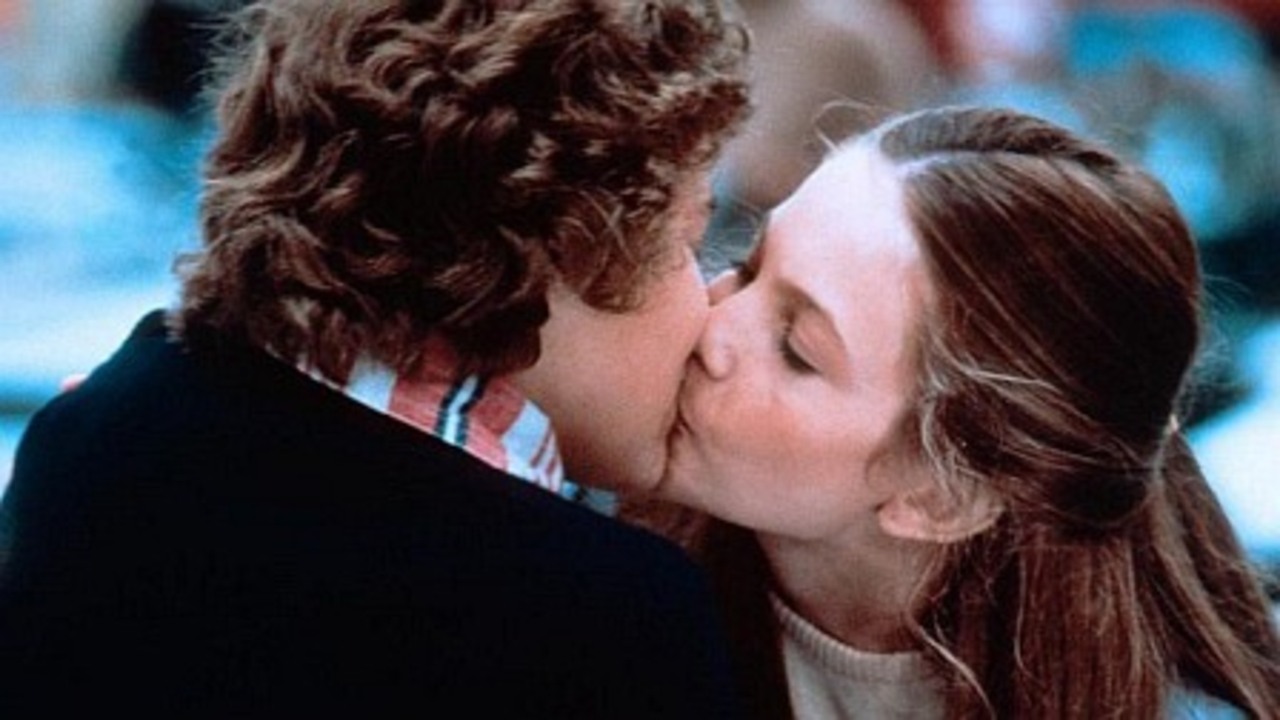
If it is now of any interest at all this film must chiefly be a curio based on the fact that it features the (charming) debut of Diane Lane.  With the exception of her fans, I would struggle to recommend A Little Romance to anyone.

Lane plays Lauren the stepdaughter of an American director working in France.  She meets a French boy named Daniel  (Thelonius Bernard) and... well, you've read the title.  The complicating factor is that Lane's mother (Sally Kellerman) doesn't like her new boyfriend (not entirely unreasonable of her; he can be a smug little shit) so they have to sneak around.  One day while they're out, Lauren and Daniel meet Julius (Laurence Olivier), who enchants Lauren with romantic stories about his days as a young man with his wife.  When Lauren and Daniel determine to run away together they enlist Julius' help.

One thing you can tell from this film (and from another early role in Ladies and Gentlemen, The Fabulous Stains) is that Diane Lane was meant to be in movies.  She's hardly stretched here; her character is supposed to be extremely smart, but it's a pretty typical teenage role, but she is just glowing and has a presence that completely eludes her co-star Thelonius Bernard.  Some of their scenes have charm, particularly when they're joined by their less intelligent but somehow nerdier friends (Ashby Semple and Graham Fletcher-Cook), but I don't quite buy their discussions about Nietzsche, even smart 14-year-olds don't often talk that way.  The familiarity of the whole thing is also a problem, there's little to distinguish A Little Romance from a hundred other similarly themed films, aside from Laurence Olivier. 

I confess I've not seen much of Laurence Olivier's work from when he was a leading man (though I thought he was great in Hitchcock's Rebecca), so I have to take his reputation as one of the greatest screen actors somewhat on trust, but he is terrible here.  Olivier hams outrageously through a completely stereotypical and pretty awful Franch accent.  His presence completely unbalances the film, which is reasonably well played until he turns up, immediately alerting us to the fact that we're watching a movie because there is no sense when watching Julius that we are seeing anything other than an actor chomping all the scenery he can lay his hands on.

The plot grinds on, chugging through predictable twists with broadly written adult characters and Olivier always on the sidelines, undermining the moments of sincerity the film does have.  Lane and Bernard try hard, but the love story never caught light for me.  A Little Romance is perhaps worth a look for Diane Lane fans, but I found it rather irritating.
★★

Kundskabens Træ
Dir: Nils Malmros
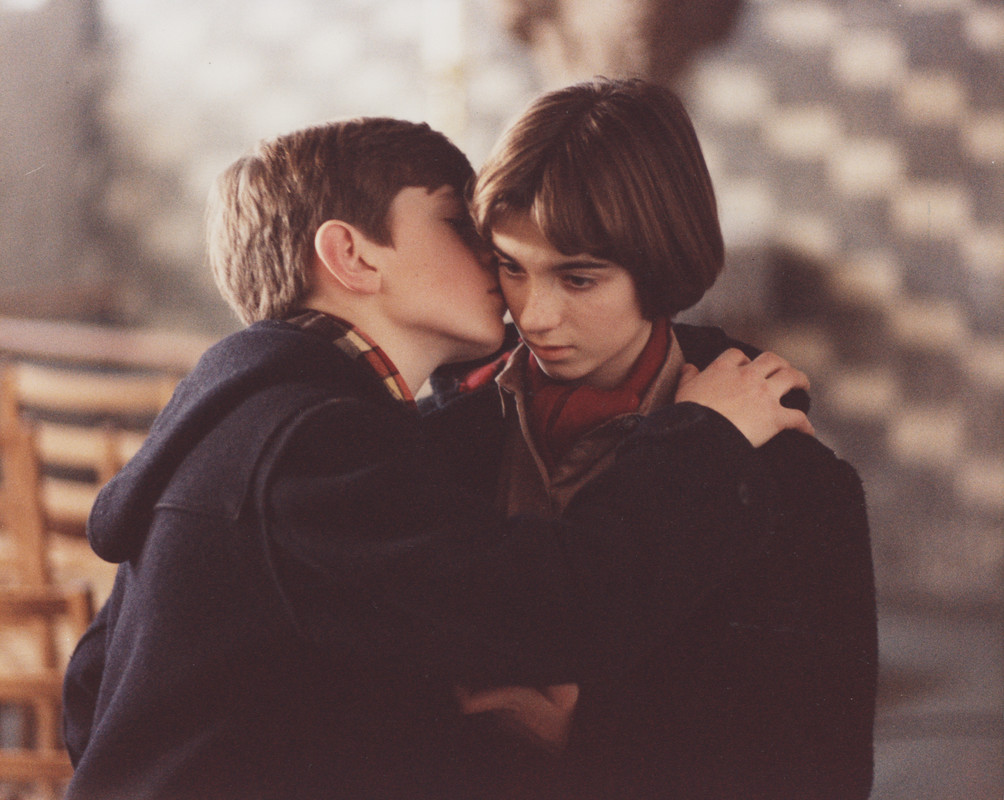
Until I began doing the research for this series I had never even heard of this 1981 Danish film, apparently it is regarded as something of a classic in Denmark, and it isn't difficult to see why.  

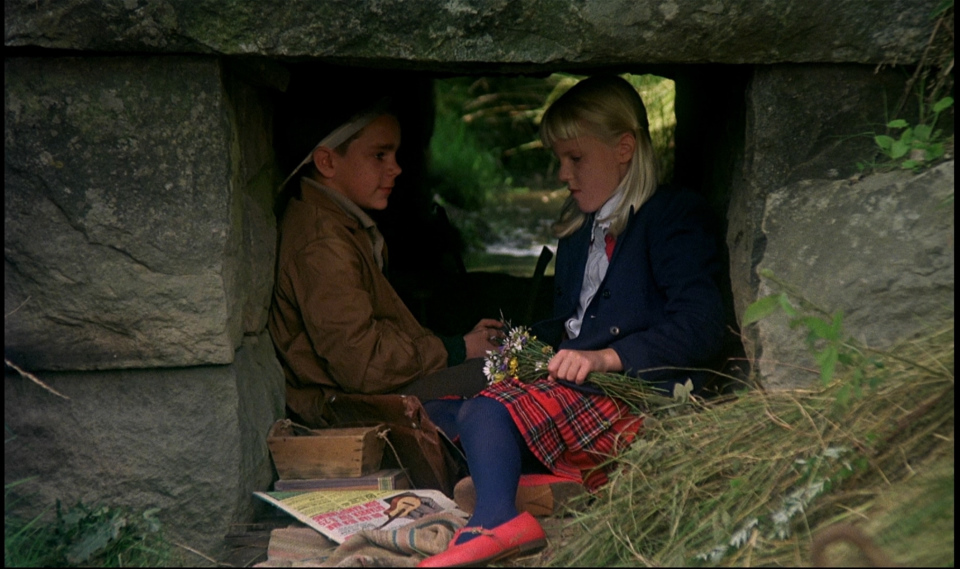
In common with many Scandinavian coming of age films, Kundskabens Træ (Tree of Knowledge) has a more downbeat take on the process of growing up than is generally common in mainstream teen and coming of age films, especially those from the US.  In this case, the film follows a whole class of roughly 13-year-old students over a few weeks.  We see the cliques that they form, but what writer/director Nils Malmros is especially perceptive about is how young people's friendships and relationships can shift almost day by day for the tiniest of reasons.  The focus is most frequently turned on the popular Elin (Eva Gram Schjoldager), who is slowly and systematically frozen out by her friends after she refuses the advances of Helge (Marin Lysholm Jepsen).

While it is strong on the drama  Kundskabens Træ also has a great feeling for the playfulness of its characters, whether they are sneaking around in a boring lesson to play tricks on their teacher or getting involved in a game on a school trip (in a scene that feels heavily improvised).  It is perhaps best when it combines these two aspects, showing the kids being kids and having fun, but also what they are doing to Elin.  On the school trip there is a beautifully observed scene where an acronym, PTH, starts to be used to refer to Elin and the way it is passed in whispers from kid to kid is perfectly realised, it's something we all saw and heard during our own school days and is relatable whether you were 13 in 1953, when the film is set, or in 2013.

Eva Gram Schjoldager, who only ever made one other film, also for Malmros, is brilliant as Elin.  You can see her lack of comprehension about what she's done wrong to be frozen out by her friends, but also her determination to be strong in the face of that and of her awful, awful parents and their 'advice' (which, in the only poor piece of writing in the film, feels almost abusive at times).  She's most moving though the few times that she cracks; you can see the hurt behind her stoic face when her friends blow off her party to attend another, to which she's not invited.  It's a sad story, but one that is all too real.

The other kids are equally excellent.  While they are all playing in a particular period there is still a feeling of easy naturalism to the performances and though there are a lot of characters to keep track of most of the actors manage to give their roles enough personality that their characters and their relationships are clearly defined.

If you were ever 13 then you will find something in Kundskabens Træ that will prick at your memories of that time in a relatable way.  It may make you laugh, it may make you cry, but either way, it's well worth taking the time to track this rare little gem down.  For my part, I'm going to try to find some more of Nils Malmros' films.
★★★

Feb 24, 2014

Nymphomaniac [18]

Dir: Lars Von Trier
I have never found Lars Von Trier to be an especially consistent filmmaker, but when he finds form his work can be dazzling; challenging and exciting in a way that few directors today ever are.  This has certainly been true of his most recent series of films, the depression trilogy which, following Antichrist and Melancholia, now comes to a close with the colossal Nymphomaniac.

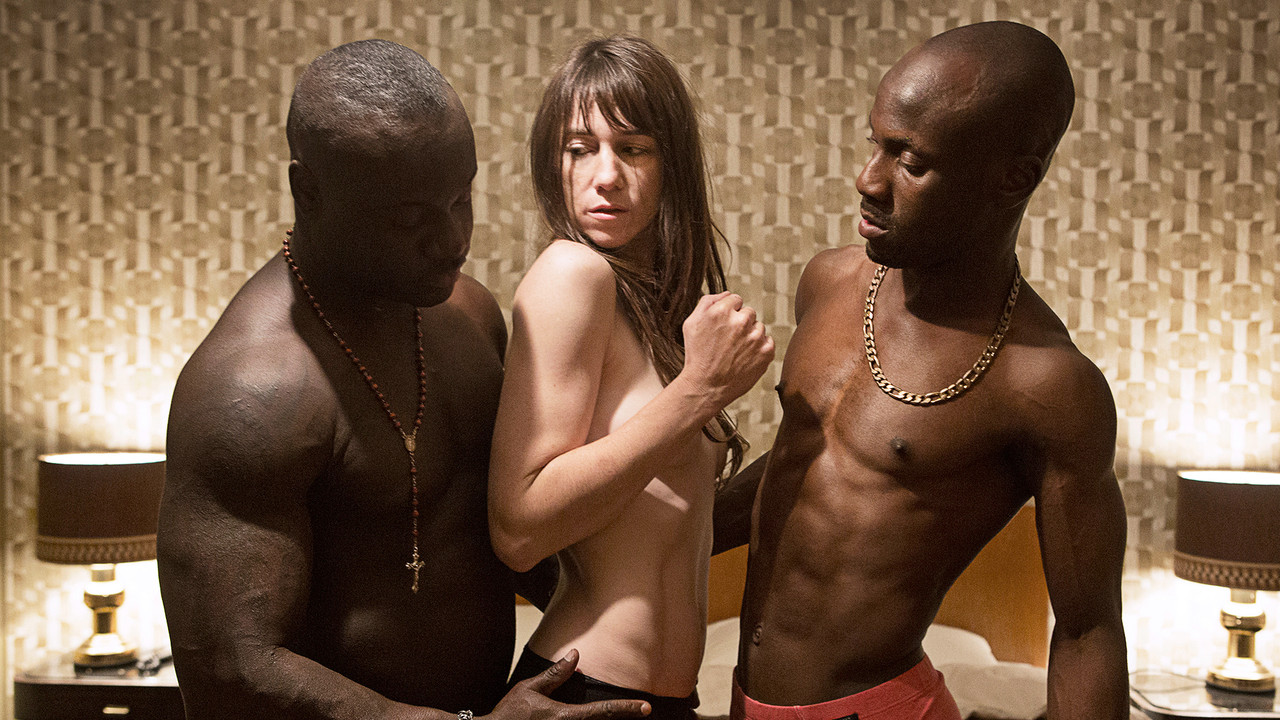
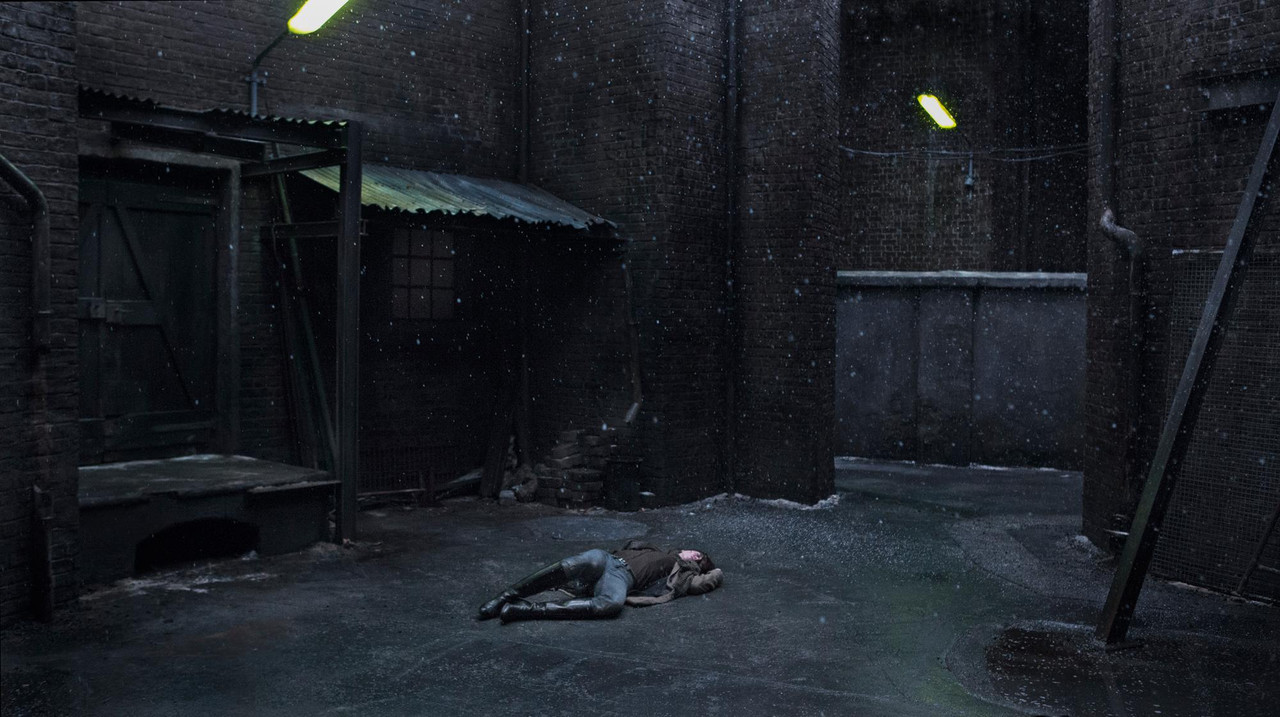
Across, in this shorter version, four hours and two volumes Nymphomaniac tells the story of Joe (played from 15 to 30 by newcomer Stacy Martin and from 30 to 50 by Charlotte Gainsbourg).  We find her lying in the street, beaten up.  Seligman (Stellan Skarsgaard) stumbles across her and, when she insists that he not call an ambulance, takes her to his home to recover.  There Joe relates, in eight chapters, the story of her life as a nymphomaniac, which she believes will lead Seligman to judge her a bad person.

There is always the question of how seriously we are to take anything that Lars Von Trier says or does, but Nymphomaniac comes loaded with more questions than that.  Is this four hour version something Von Trier is happy with?  Are we intended to see this as one long film or two distinct entities?  Is Von Trier trying to make art or porn?  Typically for its director Nymphomaniac makes none of these questions easy to answer.  That being the case you should consider this a review of the experience of seeing the two parts of this film back to back.  Having done so I'm sure that it will be a different experience viewing them separately, and I suspect doing so may benefit the films.

There are a couple of surprises about this version of Nymphomaniac (Von Trier's 5 ½ hour director's cut will likely see a Blu Ray release later this year), but the biggest is perhaps how playful and how funny it is.  Even at the film's most pretentious - and boy can it get pretentious - Von Trier's cutting and his dialogue often demonstrate a dry as dust wit, which can cut through the moments that might otherwise see you shake your head and mutter 'oh, Lars'.  For instance; Seligman often interjects in Joe's story, and at one point, just as I was inwardly sighing at another of his monologues in Volume 2, Joe told him “I think that was your most annoying interruption yet”.  The fact Von Trier seems to anticipate this criticism doesn't entirely defuse it, but this wry self-awareness is present and welcome throughout.  Seligman's interjections can be funny, but they are rather on the nose.  The fly fishing metaphor of the first chapter is amusing, but playing the same trick on different themes for four hours becomes seriously wearing by the midpoint of volume 2.  This is one of several ways in which the films might, for me, work better apart from one another. 

Throughout both volumes, Nymphomaniac essentially unfolds as two linked films; one a two hander, set in a single room, as Gainsbourg's older Joe tells her story and has discussions with Seligman, the other a series of flashbacks taking Joe from her discovery, at two, of her c**t right up to the film's opening image, when she is 50.  Both sides have moments that are great and moments that are infuriating, but for me, the flashbacks work more consistently.  

The big question of this film was always whether Von Trier could find someone who could convince as a younger Charlotte Gainsbourg as, from her look to her soft and soothing voice, Gainsbourg is one of the most distinctive (and for my money one of the best) actresses working.  Stacy Martin doesn't so much look like a young Gainsbourg as she does an absurdly beautiful melding of Gainsbourg's features with those of her mother, Jane Birkin, but what she gets right is the essence of the actress and especially the voice, which has that distinctive delicacy that is so present in the film through Gainsbourg's voiceover.  Outside of comparisons to her elder counterpart, Martin, in her first film, delivers an exceptional performance.  She has a way of delivering Joe's emotional detachment without her performance being empty.  She's especially good in what is easily Volume 1 and the film's best scene; as Uma Thurman whips up an emotional whirlwind around her Martin silently conveys Joe's alienation from, discomfort with and lack of understanding of these emotions.  When, particularly as Joe loses her one expression of feeling, Martin is called on to dig into emotional reserves, she delivers brilliantly.  The last shot of volume 1 is searing and painful thanks to her.

Charlotte Gainsbourg's side of the central performance is just as impressive.  Her Joe seems more fragile as if age and experience have made her brittle.  There is certainly more bitterness in her in this older incarnation, some justifiable, some less so, but she is recognisably the same woman.  Having given us two depictions of depression that manifested themselves in very visible ways; Antichrist's violence and Melancholia's panic, Gainsbourg here shows a much more reticent kind of depression.  Joe seems to operate at one remove from the world; her sexuality the only way she knows - perhaps cares - to connect with it.  Her brilliance here lies not in the searing, screaming, pain of loss as it does in Antichrist but in something much smaller and ultimately harder to understand.  Gainsbourg's side of the film is sadder, more reflective, but she does get to engage in some of its funnier moments, as when a proposed threesome degenerates into an argument between the two men.  Her voiceover means that Gainsbourg remains a presence even in the earliest of the flashback scenes, and does a great deal to tie the two portrayals of Joe together.  It's also just wonderful to listen to, communicating much about Joe's inner life with a rather poetic turn of phrase, not to mention a voice I would happily hear read the phone book.

The supporting cast is eclectic and the performances are as mixed as you might expect.  Perhaps the film's biggest downfall is the performance of Shia La Beouf.  I respect the fact that he's trying to stretch himself now, rather than turn back to the blockbusters that made his name (and, let's face it, an amount of money that allows him that choice), but he's pretty terrible as Jerome; the most important lover in Joe's life.  The problem is twofold.  First of all, for a character who has a lot of screen time, Jerome is frustratingly thinly developed.  He seems to behave in ways that serve the plot rather than tracking as a real character.  This too is something Von Trier jokes about, even implying that Joe may be lying about some of the times that she refers to Jerome, perhaps subbing him in for someone else because it's more interesting to do so. The second issue is LaBeouf's accent.  The film seems to be set in England, but it's so non-specific that there is no reason that Shia had to attempt the abysmally poor, inconsistent, woefully generic, 'English' accent he does here.  Let's just say that Dick VanDyke may now be forgiven.

There is much better news among the supporting cast, Christian Slater is very good as Joe's father (though the fact he stubbornly refuses to age is a little jarring in his last scenes, moving though they are).  Jamie Bell also impresses as a BDSM specialist that the older Joe sees.  He's almost completely devoid of personality, but Bell makes this interesting rather than frustrating.  I found myself asking the same questions as Joe does; who is this man and what does he get out of his 'work', which we never see that he is paid for?  In a smaller role as a friend of young Joe's, Sophie Kennedy Clark puts in a provocative turn in the film's opening chapter, instigating the memorable scene in which her character B and Joe compete to see who can fuck the most men on a train journey and so win a bag of chocolates.  On the downside there is Mia Goth, who has a large part in the film's closing chapter but, while beautiful, is deadly dull and puts almost no expression into her lines.  The film is very nearly stolen, however, by the barnstorming one scene performance of Uma Thurman, which has to be seen to be believed and should, in a world where there is justice, already be a front runner for next year's supporting actress awards.

Lars Von Trier's style as a director is constantly mutating and while Nymphomaniac has moments that recall the incredibly designed beauty of Antichrist and Melancholia (the opening shot, older Joe finding her 'soul tree' and many more) it also has a grittier and more mobile camera style at times.  This apparently comes out of Von Trier's non-proscriptive atmosphere on set, not blocking the scenes in advance and tasking the camera to follow the actors rather than vice versa.  This is perhaps best seen, again, in Uma Thurman's one scene, which has a chaotic but cohesive visual feel.  Perhaps the most notable thing about what Von Trier does here is the way that, like his main character, he appears to be reflecting on his life.  References to his earlier work litter the film.  I'm sure I didn't pick up on all of them but a major plot point of Breaking the Waves is echoed, the opening scene of Antichrist is recreated almost shot for shot and that film's fox also makes a brief cameo in the films most broadly comic scene.  Beyond reflection what Von Trier is saying about how he views this earlier work is never quite clear; perhaps that is what the debate between Joe and Seligman is really about for him, but it's a typically mischievous touch from the director.

Explicit as it is, Nymphomaniac is almost studiedly unsexy.  Part of Joe's story is how her endless sexual activity ends up being unfulfilling and making her numb both physically and mentally.  For its part, the film seems determined to make you feel the physical side of that numbness and it largely succeeds.  Most of the sex is mechanical (in a funny touch the thrusts when Joe loses her virginity are counted out on screen) and even when it's explicitly shot Von Trier's camerawork is so matter of fact.  The signifiers that Hollywood uses to tell you 'this is a sexy scene' are all absent.  It's all very effective in plugging you into Joe's experience.  That all said, I must confess I found one scene in the last chapter to be an exception to this rule, and I suspect most people will have one or two scenes where they find this to be the case.

Though my interest began to flag towards the end of the film, as I began to tire of the heavy metaphors discussed between Joe and Seligman, the film's only major storytelling misstep for me is its coda.  Even in a film that feels as frequently on the nose as this one, that last sequence bothers me because while Nymphomaniac can be groan-inducingly obvious it is never, until that moment, cheaply shocking.  I'll just say that I wish the cut to black had come a couple of minutes earlier and leave it for you to discover what I mean and whether you agree.

As an experience, Nymphomaniac is certainly a singular piece of work and often an exercise in contradiction: pretentious and hilarious; endlessly provocative and explicitly unsexy; artfully composed and messy as hell; rigorous and mischievous.  Viewed as a whole it loses steam, but that may not mean that Volume 2 is a worse film, simply that at four hours it is exhausting.  This isn't a great film by any means, but it's a vital and exciting one, I'm glad it exists and for all its flaws it is essential viewing.
★★★

Bastards [18]

Dir: Claire Denis
Bastards is a film that wants us to believe it's a good deal cleverer than it actually is.  Well, it's not fooling me.

The basic storyline of the latest from Claire Denis is a simple revenge tale.  After his niece (French cinema's it girl du jour Lola Creton) is found wandering naked on the streets following an assault Marco (Vincent Lindon) returns from his job in the merchant navy to take revenge on the person who hurt her.  This simple story is then filtered through a series of pointlessly elliptical scenes that often seem only distantly connected but build with a sense of thudding inevitability to exactly the 'revelation' you'd expect.

This is supposed to be a revenge film, but it never builds any momentum as one.  There are two reasons for this.  Firstly because we're more engaged in trying to figure out exactly what's going on and in what order it is happening (it seems largely chronological, but with a few pointlessly temporally fractured moments that serve merely to confuse).  Secondly, the film spends very little of its running time actually focused on the vengeance plot and instead dwells on the relationship between Marco and Raphaelle (Chiara Mastroianni), a single mother living in the same building he's holed up in.  The scenes between them are reasonably explicit in terms of their content, but do little to advance the characters and as soon as you know that Raphaelle has an older rich man who is the father of her son you'll figure out where this plot point is going.  The only thing here that injects drive or rhythm is the typically excellent score by Glaswegian band Tindersticks, continuing their long collaboration with Denis.

Lindon's cracked leather mask of a face works well enough for the inheld character of Marco, the mistake is in the writing.  We need more sense both of him as a person and of the drive behind what he's doing, junking his entire life to pursue this unclear vengeance.  The other performances are equally serviceable, though it's dismaying to see such thin and exploitative roles for Mastroianni and, especially, Creton, who deserves better than having to play the nude McGuffin she is here.

Even when we do actually get to the dénouement it is both obvious and underwhelming, having very little impact because the build has been so lacking.  The overall impression that I got was that Denis; an auteur, an artiste, had wanted to make a revenge film but at some point became embarrassed of the idea of making something as tawdry and genre driven as a revenge film.  The ellipses, the jumbled timeline, the many, many scenes that don't go anywhere, they all seem to me a way for Denis to dress up her nasty little genre piece and pretend that it's cleverer and more artistic than other revenge films.  I hated that about Bastards.
★★

Feb 18, 2014

Coming of Age Movie Month Days 15 and 16

Mauvaises Frequentations
Dir: Jean-Pierre Ameris
For about 45 minutes this is a fairly typical coming of age movie.  14 year old Delphine (Maud Forget) is something of a wallflower at school, but that changes when new girl Olivia (Lou Doillon) arrives.  Though they're very different the two hit it off and soon Delphine has met and fallen head over heels for Laurent (Robinson Stevenin), who becomes her first boyfriend.  Laurent and his friend Alain, who is Olivia's boyfriend, want to escape to Jamaica and things take a much darker turn when they rope the girls into a horrible plan to get the money for tickets.

I was taken off guard by this film, which doesn't happen often.  After seeing thousands of films over the past 25 years I can usually tell where something is going but from the light, if very well observed, first half of Mauvaises Frequentations I would never have expected the dark and sad turn that it takes in its second half.  What's remarkable is that the change of tone, sharp though it is, is neither cheap nor jarring.

The fact that the two halves gel as well as they do is largely down to three excellent performances from the leads, all seventeen at the time.  Making her debut, Maud Forget is extremely well cast as Delphine.  She's playing fourteen, but her delicate looks often make her appear even younger than that, which makes the film that much more impactful and that much more difficult to watch when she is put in compromising situations.  This delicacy and innocence about Forget plays well for the wallflower that we find her as at the beginning of the film, but her sensitive performance as Delphine falls recklessly and naively in love with Laurent makes the changes that she goes through realistic and moving.  Delphine is an appealing character; even her bad decisions seem to come from an inherent sweetness and a misplaced desire to please, and that only makes the second half of the film all the sadder.

Forget is very much the centre of the film, but the changes her character goes through are extreme and only really believable at a story level because of her friendship with Lou Doillon's Olivia.  That friendship has to work for the film to work.  You can see why Olivia's energy draws Delphine in; Doillon is a charismatic presence, but we get to see that they connect on multiple levels and that Olivia is a good influence on her new friend (I had assumed that she would be the 'Bad Company' of the title, but she's not).  Robinson Stevenin also impresses as Laurent, we can see how he plays on Delphine's naiveté, and the lack of interest in her that he's masking, but we can also see how well he's masking it and how, once he knows that she's fallen for him, he recognises that she is ripe to be exploited.  The dual layers of the performance give us an insight into both his and Delphine's characters.

I don't want to say very much about the second half of the film, because that would kill much of its power, but one thing that comes through strongly in both parts of the film is Cyril Cagnat's performance as Justin; a childhood friend who has been in love with Delphine since they were eight.  I can't tell you how much I identified with Justin (he's also a film buff), or how much one key scene in the film's last half hour broke my heart, but this side story is typical of how well written and played Mauvaises Frequentations is.  I wish I could get into more details, but you'll thank me for not doing so after you watch this one.
★★★★★

Totally True Love
Dir: Anne Sewitsky
Most of the films that I have been writing about in this series have been about teenagers and largely intended for either a teenage or an adult audience.  Totally True Love is different in both respects.  This Norwegian film is about and seems largely pitched towards ten year olds, but what made it a wonderful experience is the fact that it never assumes that being about or for kids is an excuse to be simplistic. 

Anne (Maria Annette Tanderød Berglyd) is ten years old and despite most of the rest of the kids in her class having boyfriends or girlfriends she's never been that interested, until Jorgen (Otto Garli), the new boy in school, arrives.  When they meet Anne falls for Jorgen instantly but she has a rival in the form of the most popular girl in class; Ellen (Vilde Fredriksen Verlo) so Anne and her friend Beate (Aurora Bach Rodal) hatch a plan to make sure that Jorgen doesn't know Ellen is interested in him.

Perhaps the best thing about Totally True Love is that, unlike many films, it doesn't view kids simply as shorter versions of adults.  These ten year olds get to be ten.  Their concept of love is adorably naive and expressed in love letters that are earnest and innocent in exactly the right way.  The film also absolutely gets the pettiness that little kids are capable of; how friendships can be broken and repaired in days over the tiniest of things.  What it understands best though is how first love, when you're barely even equipped to understand the concept, feels.  In these terms, it's the best film about young love since the much underrated Little Manhattan.

Outside of Anne's lovely voiceover, which is written in a style that totally fits both her age and character, it's hard, at times, to tell how closely written the film is.  There is such a sense here of kids just being kids that many scenes have a natural, almost improvisatory, feel.  Scenes between Anne and her 12 year old brother or Anne and Beate and scenes in the schoolyard are especially strong in this respect.

The film has a great energy, largely provided by Anne.  The first ten minutes set the pace as, via a voiceover that flits from thought to thought and subject to subject in short order, Anne introduces herself, her friends, and her family .  It's funny in the way that kids can be without realising it ("That's my mum. And that's my dad. Dad likes Mum best when she's upset and breaks things.") and is matched by a bright and energetic visual sensibility from director Anne Sewitsky.  This introduction also makes it easy to like and be engaged with Anne, it would be hard not to, Maria Annette Tanderød Berglyd's performance is both fun and emotional; an impressively layered piece of work from such a young actress.

Jorgen is less developed than Anne, but that's okay because Anne's crush on him isn't really based on anything concrete (though a scene where she flips through a photo album he drops is very sweet).  We're supposed to see Jorgen through Anne's eyes and through her imagination, in some very funny fantasy sequences inspired by the reality TV she watches.  For his part though, Otto Garli is solid as Jorgen, giving off a believable vibe as a sincerely decent kid, which is as much as is needed of him here.  All the kids are excellent.  Vilde Fredriksen Verlo has a slightly one note role as the most popular and bitchiest kid in year five, but the film suggests something about why she's like that (without laying it on too thick) and gives her a lovely and amusing final scene.  Perhaps best of the young supporting cast is Aurora Bach Rodal.  Beate's best friends relationship with Anne is beautifully drawn and the scenes between Berglyd and Rodal never strike a false note.

Even though Totally True Love is for kids the fact that it never talks down to them and doesn't shy away from complicated (if juvenile) feelings means that it's just as engaging and just as charming for an adult audience.  If you have kids watch it with them, if not, see it for yourself, it's lovely.
★★★★★

Feb 17, 2014

Coming Of Age Movie Month Days 13 and 14

My Life As A Dog
Dir: Lasse Hallstrom
Many of the films that I have been covering in this series have been reasonably obscure, but I have also tried to sprinkle in a smattering of 'classics' that I, for some reason, have never got round to seeing before.  My Life As A Dog is certainly one of the latter.

Based on both a novel and, apparently, director Lasse Hallstrom's own memories of childhood the film is about 10 year old Ingemar (Anton Glanzelius), who lives with his parents and his brother in rural Sweden.  An imaginative child, Ingemar loves storytelling, and turns all of his experiences into stories for his terminally ill Mother (Anki Liden).  When Ingemar becomes too much for his parents to handle he is sent to stay with relatives in another small community.

There are undoubtedly some wonderful things in My Life As A Dog but, and perhaps it's just in the context of having watched one every day for a couple of weeks at this point, I found it to be pretty standard issue coming of age fare.  What really did stick with me was Ingemar's voiceover and the way he wants to make everything into a story for his Mother.  It seems as though he wants her to still be able to experience things even as her illness is restricting her more and more, and this is his way of allowing her that.  It's a touching gesture, one that informs the whole relationship, which is beautifully played by Glanzelius and Liden.  The fractured relationships with family work less well.  I never quite saw why Ingemar was seen by his family as such a difficult child, he's a little rebellious and prone to fantasy, sure, but his being turfed out of two homes isn't especially convincing.  

While it's quite nicely drawn and leads to a few funny scenes, Ingemar's crush on the prettiest girl working at a local glassworks (Ing-Marie Carlsson) is where the film is at its most rote.  Much better is a relationship he forms with Saga (Melinda Kinnaman) a tomyboyish girl his age.  Without leaning on any theme too heavily this storyline touches on ideas of burgeoning sexuality and identity.

There were things I loved in this film, in particular, the voiceover, which has some beautifully touching lines that fill in Ingemar's relationship with his Mother.  The key line is probably the first "I should have told her everything" because so much of the film is shaped by the fact there are so many things Ingemar will never get to tell his Mother.  There are ups and downs in what surrounds it, but My Life As A Dog has a great heart.
★★★

Love, Maths and Sex
Dir: Charlotte Silvera
There must be something in the water in France, not only do they manage to produce a string of excellent coming of age films but they also seem to have an endless supply of talented young actresses to star in them.

Julie Delarme makes her debut here as Sabine, a 15 year old student with such an aptitude for maths that she is being submitted for an international competition to take place in Brussels.  As she is preparing for the exams, Sabine meets Jiri, a 40 year old actor from the Czech Republic.  Initially, she determines to sleep with him for money to fund her trip to Brussels, but soon she falls in love, which doesn't bring out the best in her.

I quite often find that the performances of the young actors that tend to be at the heart of coming of age films are the best reason to watch them, and with Love, Maths and Sex (an unwieldy English title.  The original C'est La Tangente Que Je Préfère is much better) that's especially true.  The film itself is, ironically, rather by the numbers... 15 year old girl falls in love with an unsuitable older man, goes off the rails.  Two things mark it out.  The first is the intelligence of Sabine's character and the way that she applies maths to her day to day life.  The evolution of this in the film is clever; everything Sabine does is a calculation.  This makes her a difficult character to warm to, because it makes her mercenary, capable of doing things that, she calculates, serve her interests without considering others.  It's a very different take on a rather stock character, and it works well.

The other thing that marks the film out is Julie Delarme's performance.  19 when the film was shot, she seems much younger.  She strikes a fine balance between playing a character who is naive, especially in her dealings with adults, but also extremely intelligent and able to put that intellect to substantial use.  Even when the script develops some problems as Sabine begins to make some foolish decisions and the idea that she's calculated that they will work out to her advantage stops being entirely convincing, Delarme's performance is full of conviction.

What works less well, despite a fine performance, is the chemistry between Delarme and Georges Corraface as Jiri.  I buy into the early scenes; Sabine is curious about sex, as you would expect an intelligent girl her age to be, and her disinterest in the boys at school is also believable because they're not really on her level (this is partly true, and partly because Sabine chooses to remain aloof in this sense).  It's not that it doesn't make sense that she pursues Jiri in the reckless way that she does, just that I never quite bought into the strength of the feelings she seems to develop for him or some of the ways in which she goes off the rails when she does.

Still, there's a lot to enjoy here.  The film's first half is rather better than its second, but Delarme is worth watching throughout.  There's one more actress I have to investigate once this series comes to a close.
★★★

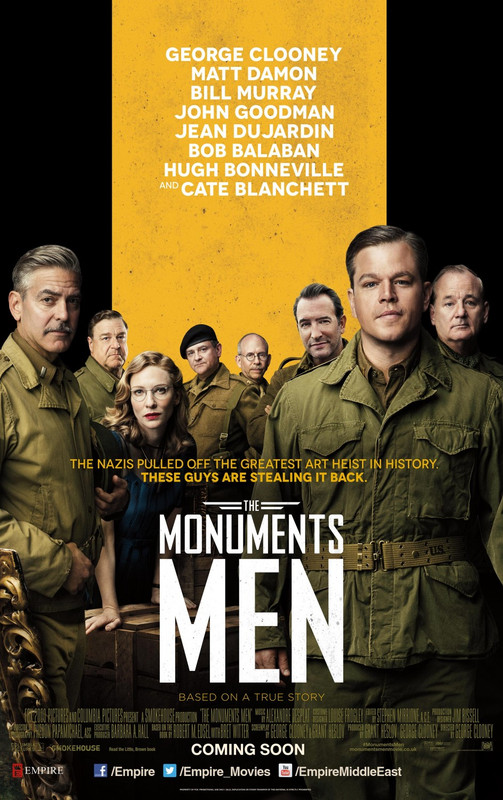
The Monuments Men [12A]

Dir: George Clooney
There is something peculiarly old-fashioned about George Clooney as both a movie star and a filmmaker.  On screen, he has a charisma that suggests a studio star like Cary Grant or Clark Gable.  Behind the camera, he shows an interest in classical storytelling and a type of filmmaking that looks back to the slower paced stories of 70's cinema and sometimes further (his screwball comedy Leatherheads).  You'd think he'd be well suited to making and starring in a World War 2 set men on a mission movie.  On this evidence, he's not.  At all.

Based, apparently rather loosely, on the true story of a unit of art experts dispatched in the dying days of World War 2 to recover and return to their rightful owners the privately owned works of art stolen and hoarded by the Nazis, the film attempts to combine an extremely earnestly meant question of whether art, even great art, is worth someone's life with a caper movie, tracing various stories as this mismatched group of unsuited soldiers attempts various parts of its mission.  

The chief problem of the film is easily diagnosed; Clooney, as writer, director and leading actor, completely fails to reconcile the dual tones that he's trying to strike here.  At one moment the film wants us to be emotional as Bill Murray's character listens to his daughter sing 'Have Yourself A Merry Little Christmas' on a record sent from home.  The next moment the film will reach for a jaunty tone, as in the scene where Murray has to have emergency dental treatment or Matt Damon hilariously treads on a mine.  Even when he's more set on the tone he's going for, Clooney botches it.  The central question and theme of the film is stated and restated over and over, but the film only ever engages with the question of whether art is worth a life (or lives) in a way that is at once incredibly perfunctory and so mawkish that it's like being drowned in treacle while someone screams 'IS ART WORTH THIS MAN'S LIFE?' at you over and over.  The other problem with this is that every time a speech is given on this subject (four times during the film) it is substantially the same.  There are no new ideas in the last speech in the film as compared to the first, two long hours earlier.

The tonal issues might be less of a burden if the film achieved the half-serious adventure movie tone (think Indiana Jones with historical accuracy) that it goes for outside of its mawkishness.  It doesn't.  Splitting the group into smaller groups and sending them all off on their own adventures (Bill Murray and Bob Balaban as a sarcastic odd couple; John Goodman's sad bulldog look paired with Jean Dujardin's benevolent version of The Joker's smile; Matt Damon trying to get intelligence material out of Cate Blanchett) means that the film suffers from a fatal lack of focus and that we hardly get to know the characters.  but worse, none of these little stories are very engaging in and of themselves.  Even when they do throw up the odd decent scene it's derivative of something better.  Murray and Balaban's interlude in a farmer's house plays like the opening of Inglourious Basterds, but without Christoph Waltz or any tension, yet still counts as one of the film's strongest moments.  You'd expect a smattering of action in these scenes as well.  We get two perfunctory and derivative scenes that could have been lifted from any number of films.

You have to give The Monuments Men this much: it has a great cast, but they're wasted.  Clooney is blandly heroic when not in lecture mode (and he's in lecture mode a lot).  Murray and Balaban try hard to be the comic relief, but their material isn't that funny and the rest of the film often has a jarringly comic tone that takes away from that function.  Most of the others are simply betrayed by bad writing, giving them dull and underdeveloped characters.  It is, however, worth singling out Cate Blanchett; a brilliant actress, she gives the single worst performance of her career here.  She has no character to play and her role is almost totally redundant in the story, so rather than a character she ends up playing an accent.  A terrible, terrible accent.  She's supposed to be French but there's German and comedy Russian in there too.  It's laughably bad.

Even when the film does, 90 minutes in, acquire a little momentum, Clooney simply can't sustain it.  He's wedded closely enough to history that the antagonists of the film are kept almost completely offscreen, but this means that there is no sense of peril in the journey to the goal, and thus little sense of achievement when it is reached.  I don't see the problem with taking inspiration from history and then making it more cinematic.  I wish Clooney had looked more to Indiana Jones; the history is largely window dressing, but the films are exciting, fun, funny and engaging.  The Monuments Men, on the other hand, feels stuffy; like a historical reenactment that only wants to show us the dullest bits. 

George Clooney can be an interesting filmmaker, and it's great to see someone showing such dedication in his career to trying to bring back a somewhat old-fashioned patience in storytelling, but he's come unstuck here because The Monuments Men mistakes sentimentality for moral questioning and weds it to a poorly told story.  These men deserved better, and so did the question of whether art was worth their lives.

Feb 13, 2014

Coming of Age Movie Month Days 11 and 12

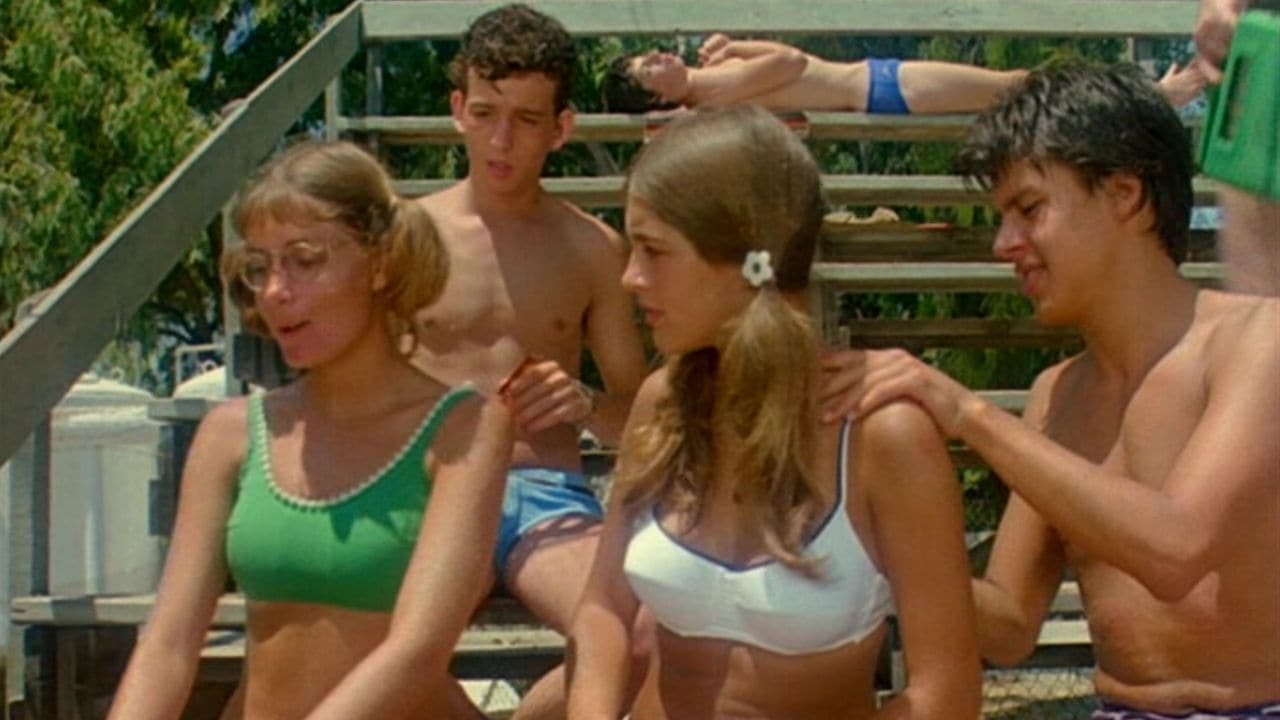
Lemon Popsicle
Dir: Boaz Davidson
I'm as guilty as anyone of complaining about the massive proliferation of remakes that currently infest cinemas, but it's hardly a new trick, hell, The Maltese Falcon is a remake.  This 1978 Israeli film, based on the teenage experiences of its writer-director Boaz Davidson, became a surprise hit around the world and by 1981 Davidson had remade Lemon Popsicle in the US as The Last American Virgin.

What's really interesting about watching Lemon Popsicle as a fan of The Last American Virgin is how incredibly familiar it is.  For the most part, the two films are shot for shot identical, with this feeling very much like an American film.  I think that's a problem for Lemon Popsicle; it's so wedded to this American feeling that it doesn't explore some of the specifics of the time and place it is set, which might have made it a more interesting film.

Most of the things that work about the remake also work here.  Many of the comic set pieces are identical and most of them play out amusingly, and the film also has that same streak of melancholy that runs right through the first hour, making it both a bit deeper and considerably easier to identify with than your typical teen comedy.  The performances are solid enough, but, and maybe it's just affection for The Last American Virgin talking here, I can't get used to anyone else in Lawrence Monoson and Diane Franklin's roles.  In the one major sequence that isn't recreated shot for shot in the remake, Lemon Popsicle comes off weaker.  The cinema-set opening scene isn't half as good as the brilliantly sustained farce of the party that begins Virgin.

Otherwise, the film has many of the same missteps that we see in the remake, especially in regards to the extended (and boring) scene in which the boys are, in turn, seduced by an older woman and to the poor pacing of the third act.  Given that the sequences dealing with abortion are, in this version, set in a country and at a time when abortion was illegal (limited abortion rights were approved in Israel just as the film was being shot in 1977), it is criminal that Davidson doesn't give them a little more time and exploration.  He gives the depiction of these scenes the same harshness we see in Virgin, but missing the social context is strange and disappointing.

The moments that work are still extremely entertaining and the 50's rock and roll soundtrack is great, but this, for me, is a film outshone by its remake.
★★★

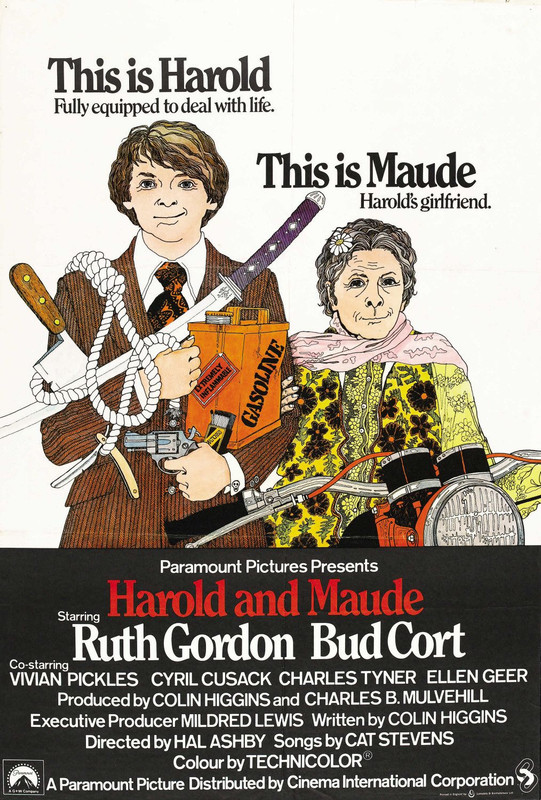
Harold and Maude
Dir: Hal Ashby
Every film nerd I know has those gaps in their viewing, those films you just can't believe they haven't got round to before.  I suppose that, given my affinity for coming of age movies, Harold and Maude was one of mine.  I suspect that it's now going to become one of those films I wish I had liked a bit more, if only for the sake of my critical credibility.

This story of a very odd young man (the very odd Bud Cort) first becoming friends with and then falling for a free-spirited woman more than sixty years his senior (Ruth Gordon) felt rather like two films to me.  There is the quirky, very Wes Andersonish, comedy of Harold's home life with an overbearing an inattentive mother who he constantly tries to provoke by pretending to commit suicide in various creative ways.  This part of the film raises some blackly comic laughs.  When Harold's dating agency matches turn up there are some great lines from Harold's mother ("Harold, that was your last date"), but on the whole it does feel overly, aggressively, quirky, which is something I don't like in Anderson's work and wasn't a lot fonder of here.  Ultimately I didn't find these scenes consistently funny enough, nor do they have the emotional impact that the rest of the film achieves.

Much more effective for me were the scenes that concentrated on Harold's growing relationship with Maude.  Cort and Gordon are both excellent and the spark between them as actors is surprising and engaging.  Also a nice surprise is that the film inverts your expectations; in this relationship, it's not the 17 year old that helps the 80 year old to rediscover life but vice versa.  Ruth Gordon's feisty performance is a lot of fun, and you can appreciate why the dour, death obsessed, Harold would find himself drawn to her.  I also like that, even as they open up, the characters don't lose their idiosyncrasies, nor Harold his discomfort around people other than Maude; a much more realistic choice than having him suddenly become a fully functional member of society just because of this relationship.

The scenes between Cort and Gordon retain the odd, offbeat, black comic tone of the rest of the film but add a layer of tenderness that ends up making the relationship less creepy than it might otherwise be, and very touching by the time the credits roll.

I know I'm supposed to love Harold and Maude (a friend called it one of the best American films of the 70's).  I don't love it as a whole, but I like it very much and I love about half of it.  Can I still be a critic?
★★★

Feb 12, 2014

Coming Of Age Movie Month Days 9 and 10

Jeremy
Dir: Arthur Barron
I hadn't heard of this 1973 film until a few years ago when I heard Mark Kermode talk about how much it had moved him when he first saw it and having a similar experience when he finally saw it again after many years.  Any film that resonates down the years like that must have something worth recommending in it and, even if I can't claim to love it as Kermode does, that's certainly true of Jeremy.

The story is a rather typical one of first love.  The geeky Jeremy (Robby Benson) spots Susan (Glynnis O'Connor) at school and falls for her instantly.  When he finally plucks up the courage to talk to her they start dating, falling into a relationship that becomes serious quite quickly.  Unfortunately, a big obstacle is suddenly thrown in their way when Susan's father gets his old job back, meaning they have to move.

I understand Mark Kermode's affection for this film completely, and I suspect that had I seen it when I was the same age as Jeremy and Susan (who are 15 or 16) it would have become one of my favourite films.  Seeing it now I can still feel a lot of it at a very personal level.  At 16 I was much like Jeremy; a bespectacled nerd pining for the prettiest girl in school.  The scenes where he's trying to call her and ask her out, asking his friend to find out about her, taking her on a date and trying to make small talk, I think we've all lived those awkward moments.  This is what makes Jeremy a film that still resonates; there can hardly be an audience member who hasn't felt like this, and that powers the movie through some of its clunkier moments.

Jeremy is sometimes earnest to the point of being cloying.  This would annoy me more, however, if it were a film about adults, who tend to have a little more perspective on things than teenagers in their first serious relationships.  As grating as they can be, these moments also ring true, catapulting me back in time to similarly over-dramatic conversations I had with friends at that time.  If I'm honest, my engagement with the characters and the relationship was probably also aided by the fact that I too would have been in love with Susan if I'd gone to school with her.

The emotional honesty of the film is thanks largely to its two excellent central performances.  Both 17 at the time and just starting out their film careers, Benson and O'Connor give unforced performances that feel almost improvised.  Their connection is palpable (and indeed genuine, they got together in real life for a time) and the scenes of them spending time together on dates are sweet and heartfelt.  Since this film was made many American teen movies have developed a mean or exploitative streak (and I say that as someone who likes a lot of those films), but what's great about Jeremy is that it gives you two characters who are easy to root for.  They aren't caricatures, just nice kids that you can identify with and even imagine having gone to school and been friends with.  Watching their relationship develop in such a frank way is a pleasure.

As a story about first love, Jeremy has barely dated, but the ending makes it look like something of a relic.  It still has an emotional tug, but I wonder if people raised in the internet age will feel the full force of it because Jeremy and Susan's problem could be so easily fixed today.  Of course, this is not the fault of the film. For me, the melancholy ending is one of the best things about it.  I'm not sure this is quite a lost classic, but I see why people would feel that way, and if you like coming of age films it's an essential one to track down.
★★★

Lakki, The Boy Who Grew Wings
Dir: Svend Wam
I... I have to review this don't I?  

Lakki, The Boy Who Grew Wings would seem to have a lot going for it.  I'm fond of Scadinavian coming of age films, I like the idea of mixing surrealism and social drama (see Francois Ozon's Ricky for a great take on that odd idea) and the idea of a surrealist piece about an abused and neglected 14 year old growing wings to escape his situation is, at the very least, different.  Unfortunately, for me at least, Lakki fails on just about every possible level.

First off, the drama just doesn't work.  The reason that Ricky worked so well for me was that it established a real world, with strong performances, before heading into realms of surrealism.  Lakki doesn't.  From the off the 'real world' scenes feel just as surreal as the fantasies that Lakki has, so we're never sure what's actually happening and what Lakki is blowing out of proportion in his own mind.  This is also reflected in the tone of the performances, which are overblown throughout, further undermining any sense of why Lakki really wants to escape from his life so desperately.  Even when the film tries to rein these excesses in (far too late), the damage has been done and everything rings false.

The surreal sequences do have some striking images (Lakki, having been bullied by his swimming teacher, borne aloft in a crucifixion pose, by his classmates), but they all tend towards beating us over the head with their point.  Frankly the film may as well be called Lakki, The Boy Who Grew An Obvious Metaphor.

I don't really have much to say about this.  I found it irritating and tiresome throughout; a laboured, badly conceived and acted film that bellowed its metaphor at the audience for 105 minutes to little effect.

Feb 10, 2014

Coming Of Age Movie Month Day 7 and 8

Kamikaze Girls
Dir: Tetsuya Nakashima
I have managed to go through Tetsuya Nakashima's filmography to date in reverse order.  I was bowled over by Confessions and shocked by how much of a contrast it was to his previous film, Memories of Matsuko.  His earliest film to get UK distribution, Kamikaze Girls, is completely different again.  It's a hyperactive teen movie about two unlikely friends from opposing Japanese subcultures, shot and cut in a brash, borderline surreal, style. 

Momoko (Kyôko Fukada) and Ichigo (Anna Tsuchiya) are completely different.  Momoko is a 'Lolita'; obsessed with 18th century France, she dresses in modest frilly dresses, isolates herself from most of her peers and is obsessed with everything about her being 'sweet' from her manner to her food.  Ichigo is a Yanki; a motorbike riding tough girl with a hard image and take no shit attitude, but her gang is breaking up and she also has few friends.  The two form an unlikely friendship, based largely around a shared interest in fashion, despite their wildly differing styles.

It can be tough to catch your breath while watching Kamikaze Girls.  From the start Nakashima bombards us with a brightly coloured, fast edited, barrage of images and sequences, seemingly intent on throwing us off  The film certainly grabs your attention when, within seconds of beginning, a title card comes up saying 'The End', only for Momoko's voiceover to say 'that's a bit too short', causing the entire film to rewind.  This sets the irreverent and hyperactive tone for the rest of the film, which frequently breaks into flashbacks and at one point an animated sequence that suggests an extravagantly bloody Powerpuff Girls, 'so you won't get bored', says Momoko.  Boredom is not a problem here.

Fukada and Tsuchiya do strong work and find surprising nuance, as the film goes on, in their outwardly very broad characters.  Tsuchiya is especially engaging, chomping scenery as the bad-tempered biker chick.  The performances sneak up on you, through the cartoonish visuals and the relentless energy of the storytelling you do get a sense of how these two virtual outcasts end up connecting with each other.  There are plenty of other memorable characters, particularly Eiko Koike, cameoing as the leader of Ichigo's biker gang and Sadao Abe, whose hilarious quiff gives his character 'Unicorn'  Ryuji his name.

Kamikaze Girls is easily the lightest of the films I've watched so far for coming of age movie month, but behind it, there is substance and a worthwhile message about people being able to be themselves but also find connection outside of their particular social circle.  Nakashima and his stars make this point well, but without any heavy-handedness to take away from the film's infectious, anarchic, energy.
★★★

You Are Not Alone
Dir: Ernst Johansen, Lasse Nielsen
This film has been a long standing recommendation from my podcast co-host and fellow coming of age movie enthusiast Michael Ewins, so when I had the idea for this series I decided that it had to be included.

You Are Not Alone is a Danish film from 1978, set in a boys boarding school.  The central storyline is that of the burgeoning relationship between 15 year old Bo (Anders Agensø) and Kim (Peter Bjerg), who is a couple of years younger and the son of the school's headmaster.  Around this story we see the relationships, friendly and otherwise, between the pupils and the beginnings of a political consciousness, resulting in the students going on strike when one of their number is threatened with expulsion.

One of the things I liked most about You Are Not Alone is how wide ranging it feels as a coming of age movie.  Many confine themselves either to familial or romantic relationships to show how the characters are growing and changing and while this film also does that (and does it well) the focus on the characters growing politically and becoming active in that way gives an extra dimension to the coming of age narrative.  This is also true of the film's character focus, yes, Bo and Kim are the main characters, but the rest of their classmates are also well developed characters, most of whom have their own arcs and change in the course of the story.  It also makes room to give the teachers some personality (though Kim's authoritarian father is something of a cardboard cutout).

I often find that films about people having their first gay or lesbian relationship (a whole subsection of the coming of age movie) can be very samey: out gay kid and previously straight kid hit it off, straight kid is confused, parents/peers object, love conquers all.  It's not that that narrative can't be done well (see Fucking Amal), but it can be pretty dull.  Happily, You Are Not Alone doesn't really go down this route, even as Bo and Kim are more visibly together it never seems to be an issue among their peer group.  Indeed we see that they aren't the only gay couple among that peer group.  It's great to see a film deal with issues other than these characters sexuality.

The performances are great all around, neither Agensø or Bjerg ever seem to have acted again following this, which was the first film for both, but they give wonderfully naturalistic performances and their relationship has a sweetness and an innocence that works with the tone of the film as a whole.  Directors Ernst Johansen and Lasse Nielsen shoot and edit with an equally unaffected style, often content to let little silent moments communicate what the characters are thinking (as when Bo lifts Kim's arm from around his shoulders in one sequence where they are with other kids but then doesn't in a later scene).  It's a rather beautiful little film, and well worth seeking out.
★★★