Apr 30, 2009

Cinematters: Are movies getting worse?


I’ve often spoken of my general disdain for and disappointment with what the Hollywood mainstream is producing (calling it, once, 'a river of shit') . To give you a little context I’ve seen 58 films released in 2009 so far, of those two have been genuinely great (one French, one German), about 26 could be fairly described as mainstream Hollywood productions, and of those 26 just TWO have scored an above average grade from me. That’s a pretty shocking ratio, and it’s not reflected in films from the rest of the world, because though only two movies have been truly outstanding this year there has still, outside the mainstream, been a spread of strong films; American, Spanish, South Korean and more.

It’s fashionable to note that Hollywood has, for decades, been on a steady decline. William Goldman has been complaining about the Oscars on a regular basis for over thirty years, wheeling out endless lists of films from the glory days of the 30’s 40’s and 50’s to ‘prove’ that the quality of Hollywood’s output has catastrophically diminished in the decades since. Critics also frequently refer to this time as Hollywood’s ‘Golden Age’, as if the studios produced nothing but brilliance in this era. I’ve often wondered how true this is, whether films really are getting worse year on year. To answer that we have to remove the rose tinted glasses and take a long hard second look at the history of cinema.

Of all the film made before 1930 only 10% survives. In one sense that’s a tragedy, it has robbed us of such historical artifacts (and potentially compelling stories) as Tod Browning’s early vampire film, London After Midnight, the 10-hour version of Erich VonStroheim’s Greed and FW Murnau’s circus set 4 Devils. But while these treasures appear lost, it must also be true that a lot of terrible, terrible films were made during the cinema’s first thirty years and were lost simply because nobody thought them worth preserving. This is the essential difference between the early days of cinema and the post ‘golden age’ period.

In much the same way that a filtering system operates for foreign language films, meaning that we in Britain get to see only a small fraction of the films produced in, say, French, German or Mandarin each year, often making it seem like these countries are producing film of a much more consistent quality than is likely true, time acts as a filter for older films. Okay, not all the films that still circulate from the 30’s to 50’s period that we’ll, for argument sake, call the golden age are actually good, but a great deal are. However, that doesn’t mean that everything (or even most things) produced then was good, it simply means that the greatest effort has gone into preserving films that were either extremely popular with audiences, seen as an artistic success or both. A further filtering process exists in that only a fraction of these films have then been chosen for wider circulation on VHS, DVD and now BluRay. It’s likely, though, that in 1939 for every Gone With the Wind and Wizard of Oz. there were two crappy movies that we’ve never since heard of.

As much as anything this would have been true due to the studio system, we complain today about how Hollywood makes films by numbers, rushing them through the production process in pursuit of a release date, but this was enshrined in stars and filmmakers contracts under the studio system. Studios operated like factories, turning out finished films week in week out, reusing sets, rewriting scripts, and using whatever actors were available that week. It’s not the way to make great films now and, most of the time, it wasn’t then. It’s just that we don’t now see most of the dross, because why watch those films when we can just watch Duck Soup again?

So, what changed? The movies came home, and that meant that, almost overnight, almost everything new was being preserved for posterity, whether posterity liked it or not. Until this point cinema had been seen as something of a disposable medium. It existed for its theatrical run, and the odd few films would play revival houses, special screenings, or sometimes get a full scale re-release thereafter, but most were destined to live on only in the audience’s memories. It’s probably hypocritical for a man with a collection of something like 2000 films to say so but, perhaps we’d have been better off if that had remained the case, because, really, who actually needs to own, for example, Freddy’s Dead: The Final Nightmare? What happened in the late 70’s was that a glut of utter dross was released onto tape, filling a gap left by studios unwilling to let their big ticket films be seen at home, because of a fear it would keep audiences from cinemas. Titles like SS Experiment Camp and (my favorite title for anything, ever) Invasion of the Space Preachers flooded on to the market, some have since faded from view, but even the rarest still exist, can still be had. It was once video caught on, though, that we were really in trouble.

Once video became big business, once the studios saw that by exploiting the home market all but the biggest of flops could, eventually, incrementally, make their money back a home release became not something for the deserving few but for every last piece of crap the studios ever shat out. It also meant that the B-Movie industry, whose products had previously lived for a few weeks in a handful of drive-ins, started to release films direct to video, ensuring that all the world’s most derivative and worst acted erotic thrillers would live on forever – thanks video.


This enormity of product forces us to look at the industry as a whole, and whenever you see any creative industry like that you’re going to realize that 90 % of what exists in it is unspeakably bad. Imagine how much better the history of the last few decades of film would look if, for instance, you could no longer see the films that Brian DePalma has made over the last decade or so, a huge swathe of terrible films, from Snake Eyes to Redacted, none of which most sane viewers would ever miss, consigned to the dustbin of history. We could cherry pick everyone’s filmographies, imagine it, the world would forget that John Carpenter became a hack, Rob Zombie would just be a musician, Nicolas Cage would still be an interesting and weirdly intense actor – one who never made Next, or Bangkok Dangerous, or The Wicker Man. The acres of pointless remakes would vanish, to a chorus of nobody caring. The Superman and Spider-Man franchises would still be on their second installments, oh, and The Hottie and the Nottie would fall into the deepest hole ever dug, along with the careers of everyone associated with it. How wonderful the world would be.

Of course I’m joking. It’s great that film is so accessible, and if we have to take the rough with the smooth for that to remain the case then so be it. But we should stop complaining about how there aren’t any good movies out there; it’s just that the filtering hasn’t yet been done for us, as it has with older films. It’s up to us to sift the staggering amount of movies out there, to dig through the endless chaff to find that magical 10%, the wheat that makes it all worthwhile. This year that may so far mean only The Heart is a Dark Forest and Martyrs, but even if that’s the case until the end of the year, that’s still three more hours of utter brilliance than existed before, and that’s saying quite a bit.

Apr 27, 2009

Shifty [15]

Dir: Eran Creevy
There are a couple of good films to be made with the material that writer/director Eran Creevy has come up with for Shifty. Sadly Shifty itself isn’t always one of them.

The chief problem with the ffilm is that it’s all just so incredibly familiar. Chris (Mays) returns to his old South London home to visit old friend Shifty (Ahmed) for the first time in four years. In that time Shifty has become a crack dealer and, as he and Chris make his regular rounds, Shifty’s until now comfortable life threatens to unravel. It just feels like gangsta movie making by numbers. The characters are all entirely stock and the events of the story, down to the very last image, are incredibly predictable. However, that’s not to say that Shifty is a waste of your time.

The script may be hopelessly cliché, but the actors have really thrown themselves into it, and all the performances are excellent. Riz Ahmed is highly charismatic and charming as Shifty, drawing you into the character and his world, despite what he does for a living.  Ahmed also has strong chemistry with Daniel Mays, who is equally excellent as Chris. The two actors work so well together that you instantly buy the connection between them and get wrapped up in their friendship.  This is also to Creevy’s credit, as the dialogue between Shifty and Chris generally has an easy and believable flow. The script does, however, fail to give most of its characters more than one dimension, particularly when it comes to the supporting cast.  That said, the performances of Jay Simpson and Danielle Brent (as a cocaine addicted builder and his wife) and especially that of Nitin Ganatra as Shifty’s older brother bring extra dimensions to their roles. Most of the acting is almost too good to be in this movie, showing the script’s weaknesses up more noticeably than might otherwise be the case, but still, quality performances are always welcome.

To Eran Creevy’s credit he’s worked wonders visually with his £100,000 budget and 18 day schedule, making Shifty look like a film. Much low budget cinema (recently The Queen comes to mind) looks like television that has somehow ended up on a very big screen, not so Shifty. Creevy’s composition is often effective, particularly in a late scene between Shifty and Chris, which plays out almost entirely in silhouette.

So if the acting is great, and the visuals are strong, what’s the problem? It’s this: I don’t care. I’ve seen this story so often that I know exactly where it's going, and there’s little, acting aside, about this telling that really engages. At the end of the day I was more interested in the B story, featuring Jay Simpson and Danielle Brent, and in the backstory about how Shifty and Chris’ earlier dealing led to a terrible accident. Either of those might have made a better and certainly a less familiar film. Shifty isn’t bad, and is worth seeing for the fine performances, but you’ve probably seen it before, and better.

Observe And Report [15]

Dir: Jody Hill
The hero of Observe And Report is Ronnie Barnhart, a mall security guard played by Seth Rogen. Ronnie is a violent, mentally unbalanced racist who at one point date rapes the girl of his dreams. Ladies and gentlemen, our hero.

Here are a few things this movie thinks are funny. Assault - sexual and violent - racism, police corruption, psychosis, alcoholism, drug abuse, rape. Just writing that list makes me both sad and angry, which is pretty much how I felt on leaving this film. I had spent 86 minutes (really, only 86 minutes?  It felt like half my life) being offended at just about every possible level. I’d spent 86 minutes watching a film that, even if it wasn’t unspeakably offensive, still wouldn’t have been funny.

Jody Hill seems to want to model himself on provocateur Todd Solondz, whose films Happiness, Welcome to the Dollhouse and Palindromes all deal with very near the knuckle material (including child abuse and stalking) and yet are funny in the blackest and bleakest possible ways. The difference is that Solondz understands his characters, and doesn’t judge them one way or another, however corrupt they may be. Hill, on the other hand, holds up Ronnie’s total corruption and spends the whole movie celebrating him, without challenging or making him change his attitudes or actions one iota, and depicting him unambiguously as a hero.

Hill’s jokes are pathetic. People fall over, people get hit by other people and by things, people get shouted at and abused in various ways, and one person shows his penis. These are the jokes; this is what, after 115 years of moving pictures, we’ve arrived at; people giggling at a penis. The Lumiere brothers would be so proud. There isn’t a single laugh, not a smile, not a titter, to be found anywhere in this so-called comedy. The only thing in the whole sorry enterprise that didn’t make me think I’d have had more fun removing my eyes with a rusty fork was a young actress I’ve never seen before named Collette Wolfe. She plays an employee at the mall’s doughnut shop who, inexplicably, falls for Ronnie. She looks like Amy Adams, and has the same nuclear powered smile and ability to hold a screen. I really hope that I can see more of her in the future because, for a few minutes at least, she makes Observe And Report seem like it might, in some alternate universe, have been good. But Wolfe is the only person to emerge clean from this sewer of a movie.

The rest of the cast are all lost in some hideous comic wilderness. For instance the talented Celia Weston is reduced to playing a drunk whose only comic characteristic is to occasionally fall over, while Michael Pena has decided that a lisp is hilarious. John and Matt Yuan don’t bother with jokes, because apparently being Chinese and identical twins is a riot all on its own. Anna Faris is a specialist at mining big laughs from shitty movies, but even she can’t find anything here, and she’s the butt of the movie’s most hateful sequence (which is really saying a lot). Seth Rogen, to his credit, works hard, but even if he’d given a performance to stand alongside DeNiro’s peerless Rupert Pupkin, Observe And Report still would have been a waste of everybody’s time. Just a week after Crank: High Voltage seemed to have the title sewn up, here is 2009’s most hateful, most disgusting and most dispiriting film.

Apr 25, 2009

Cannes you dig it? (I'm very sorry)


More from the biggest fest of them all, and interesting films abound.

OUT OF COMPETITION
The Imaginarium of Doctor Parnassus
Dir: Terry Gilliam

Heath Ledger’s last film, completed after his death by Gilliam, who cast Colin Farrell, Jude Law and Johnny Depp as different sides of Ledger’s character’s personality. Gilliam has been off the boil of late, with Tideland and The Brothers Grimm underwhelming their small audiences, but this looks like he’s let his imagination explode on to celluloid, even if it’s not great it should be both beautiful and interesting.

The Army of Crime Dir: Robert Guediguian

Agora
Dir: Alejandro Amenabar

A departure for Amenabar – a historical drama set in Roman Egypt, about an affair between a slave and his mistress, philosopher and atheist Hypatia. Amenabar’s second English language film has a strong sounding cast toplining Rachel Weisz and rising star Max Minghella


MIDNIGHT SCREENINGS
A Town Called Panic Dir: Stephane Aubier, Vincent Patar

Ne te retourne pas
Dir: Marina de Van

Marina De Van remains behind the camera for this, her second feature. She’s got a very strong cast, including Monica Bellucci and Sophie Marceau. The summary makes it sound like an exploration of the themes of identity that David Lynch explored in the bottomlessly baffling Lost Highway. De Van’s In My Skin was a promising debut, and with this strong cast and her focus not split between acting and directing I’ll be interested to see what she comes up with here.

Drag Me to Hell
Dir: Sam Raimi

Raimi’s return to horror is collecting appreciative reviews, especially for its director and for star Alison Lohman (who, on the back of Matchstick Men, really ought to have been the next big thing). It looks like a pretty generic bit of supernatural horror, but done effectively that should be fun.


SPECIAL SCREENINGS
Petition Dir: Zhao Liang

L’epine dans le Coeur
Dir: Michel Gondry
I’ve no clue what this is, Gondry’s IMDB page (which runs into 2011) has no listing for it, but it’s Michel Gondry, so I’m automatically interested. He’s hit and miss, sure, but he’s never, ever boring.

Min ye Dir: Souleyumane Cisse

Jaffa Dir: Keren Yedaya

Manila
Dir: Adolfo Alix Jr., Raya Martin
Fillipino actor Piolo Pascual (pictured, you're welcome ladies) takes different leading roles in each of Manila’s two segments (Day and Night). In the first he plays a drug addict, in the second a bodyguard. Both of its directors (who don’t appear to have worked together before or since) have since completed several more films.


My Neighbor, My Killer Dir: Anne Aghion
I wanted to see this at the Human Rights Watch film festival, but wasn’t able to make the one screening. It’s a documentary covering attempts at reconciliation between Tutsi and Hutu communities in Rwanda in the years following the genocide. It sounds like it could be harrowing, but truly worthwhile.


UN CERTAIN REGARD
Samson & Delilah
Dir: Warwick Thornton

Not the biblical story, but a romance set in the Central Australian desert, told in English and Aboriginal languages. The cast appears to be largely composed of newcomers.

Adrift Dir: Heitor Dhalia

The Wind Journeys Dir: Ciro Guerra

Demain des l’aube
Dir: Denis Dercourt
It doesn’t matter what this is about, it doesn’t matter who is in it. Denis Dercourt’s (pictured) last film was The Page Turner (which was the very first Why haven’t you seen? post), I’m there for this one whatever it is. It shares a title with a Victor Hugo book, though whether it is based on that book I don’t know and, promisingly, it stars Vincent Perez and Jeremie Renier.

Irene Dir: Alain Cavalier

Air Doll
Dir: Hirokazu Kore-eda

A sex doll, played by the wonderful South Korean actress Bae Du-na (pictured) develops human feelings and, unknown to her owner, falls in love with a man she sees walking in a video store. There have been several films about relationships with ultra realistic sex dolls of late (Love Object, Lars and the Real Girl) and this sounds like another fascinating exploration of the idea.

Independence Dir: Raya Martin

Le Pere de mes enfants Dir: Mia Hansen-Love

Dogtooth Dir: Yorgos Lanthimos

Nobody Knows About the Persian Cats Dir: Bahman Ghobadi

Eyes Wide Open Dir: Haim Tabakman

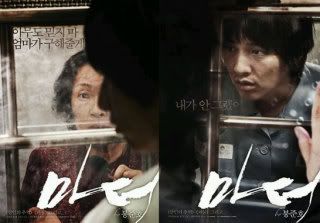
Mother
Dir: Bong Joon-ho

The latest from the director of The Host sounds like a return to the territory of Memories of Murder, as he tells the story of a Mother searching for the killer who framed her son for a grisly murder. It looks to be Bong’s first film in some time without his lucky charm Song Kang-ho, but the plot and director are enough to grab my interest.

The Silent Army Dir: Jean van de Velde

To Die Like a Man Dir: Joao Pedro Rodrigues

Police, Adjective
Dir: Corneliu Porumboiu
The Romanian new wave is generally thought to be producing some of the best films in the world right now. This, from the director of 12:08 East of Bucharest (pictured), follows an undercover cop unwillingly investigating a teenage pot dealer in Caucescu’s Romania.

Tales from the Golden Age
Dir: Hanno Hofer, Razvan Marculescu, Cristian Mungiu,
Constantin Popescu, Ioana Uricaru
More from new Romanian cinema, this a portmanteau by five of its leading lights (including the award winning director of 4 Months, 3 Weeks and 2 Days.

Tale in the Darkness Dir: Nikolay Khomeriki

Tzar Dir: Pavel Lounguine

Nymph
Dir: Pen-ek Ratanaruang
I’m yet to see any of this acclaimed Thai director’s films, though I’ve been wanting to catch The Last Life in the Universe. All that is known about this one is that it’s a supernatural drama.

Precious
Dir: Lee Daniels


Next time: Director's fortnight and Critics week

Apr 23, 2009

The Top 5… Daniel Day-Lewis Performances

In a first for 24 FPS, we’ve got a guest writer. Oren Soffer, who you may know as Monotreme at the Joblo.com forums, is a film fan based in Haifa, Israel. We don’t always see eye to eye on movies, but I always like reading what he has to say. He’s a smart, incisive, entertaining and ridiculously informed writer and I’m really pleased that he took up my invitation to write an article for the site, hopefully it won’t be his last.

For his first article Oren has picked a subject that allows him to educate me, I haven’t seen enough of Daniel Day-Lewis’ work, so this list should give me a good jumping off point. Note: Unlike me Oren has ranked his list. Now over to Oren. Enjoy.


Throughout a career spanning nearly three decades, Daniel Day-Lewis has managed to achieve something no other actor has achieved; a sort of prestige and respect that puts him in the position of exclusively picking his acting roles, which provides him with one of the most consistently high-quality filmographies of any performer of his generation. He is also my favourite actor of all time. Marlon Brando, Robert De Niro and a few others are constantly lauded for their immersion in their roles, but I truly think they pale in comparison to the type of engagement and devotion to the performance that Day-Lewis consistently shows in his acting gigs. His talent essentially makes pretty much all of his acting roles excellent, and picking 5 that stand out is harder than one might think, but here goes anyway.


5. Jack Slavin in The Ballad of Jack and Rose (2005)

Day-Lewis is known by most for his more bombastic, theatrical performances (Gangs of New York, for example), which is what makes this turn as an ex-hippie trying to shelter his daughter from the influences of the outside world so notable for its delicate subtlety. As the role as an altruistic, calm man at peace with himself and nature demands it, Day-Lewis enormously tones down his grandiose style for a performance that rewards us in its intricacies and gestures. Even as events start getting out of his hands – his daughter discovering her sexuality and wanting to get out and learn when all his life he has tried to shield her from the negative influences of society on the one hand, and a developer building a housing contract threatening his environmentally-friendly commune on the other – and Slavin begins to lash out at anyone who doesn’t share his concerns, he still retains a certain calmness about him which is just a wonder to see Day-Lewis play through, playing through the restraint and simply refusing to let go. It’s a wonderful performance in an equally good and quite overlooked gem of a film, written and directed by Day-Lewis’ wife, Rebecca Miller, daughter of lauded playwright Arthur Miller.
See also: Newland Archer in The Age of Innocence (1993), John Proctor in The Crucible (1996).

4. Cecil Vyse in A Room with a View (1985)

In this Merchant-Ivory classic we see Day-Lewis in a rare supporting role; A Room with a View includes one of his earliest roles and is often credited as putting the actor on the map, especially when coupled with the other film he released that year, My Beautiful Laundrette, in which he played a quite different character showcasing his extensive range. The film, based on the E.M. Forster novel, like most stories set in the period from Forster and other important authors who wrote about that time, specifically Jane Austen, is essentially about the oppression of women in 18th century England, who were torn between what society dictated and expected of them and their own unrestrictive needs and desires. The lead character Lucy Honeychurch, played by Helena Bonham Carter in her first film role, is in love with a freewheeling young Englishman she met in Florence, but is to be married to an upper-class dignitary, played by Day-Lewis. The role heavily showcases Day-Lewis’ ability to totally nail the mannerisms, behaviours and nasal, high-pitched accent characteristic of characters of his type, but what makes it truly exquisite is that although he is essentially playing the villain and the symbol of Lucy’s repression, he still plays the character in a way that invokes genuine sympathy from the audience, and makes us feel genuinely bad when Lucy turns down his eager and fretful advances.

3. Gerry Conlon in In the Name of the Father (1993)

Here is a perfect example of Day-Lewis’ total immersion in his roles. Day-Lewis plays a man involved in the real-life case of four innocent North Irish natives who were in the wrong place in the wrong time in London, and who ended up being falsely accused and coerced to confess to an IRA bombing they didn’t commit. The film is the seminal work of prolific Irish director Jim Sheridan, the only director other than Martin Scorsese who has worked with Day-Lewis more than once, which is saying a lot. Although it’s not a particularly showy or bombastic role and doesn’t demand Day-Lewis to show off too often, he still takes the role and totally runs with it, deftly portraying the mannerisms, quirks and characteristics of his character while also showing off some really impressive acting skills in a few scenes in which his character completely explodes and folds under the immense pressure bearing down on him.

At first, Conlon is just another average, troublemaking, rebellious but family-centric small-time thief from North Ireland who couldn’t care less about politics and just wants to have a good time and be slightly naughty. But after he is wrapped up in the whole conspiracy against him and his friends, he totally loses it and there are a few scenes of desperation and yelling that would put Al Pacino to shame. Although close with his mother, Conlon was always estranged from his father, and so when his father is mixed up and also falsely accused in the IRA bombing as well, the film shifts focus heavily to the relationship between Conlon and his father, which also affords us a beautiful acting rapport between Day-Lewis and his mentor, Pete Postlethwaite in the role of the titular father.
See also: Danny Flynn in The Boxer.

2. Christy Brown in My Left Foot (1989)

This was long considered Day-Lewis’ seminal role, and the performance that truly put him on the map as one of the greatest actors of his generation (and also won him his first much-deserved Oscar). In this true story, his first collaboration with director Jim Sheridan, out of three, Day-Lewis plays the almost insanely difficult role of a real man who was born with cerebral palsy into a poor and very large Irish family, an ailment leaving him able to control his movement only in his left foot. Able to speak only in guttural sounds, he is mistakenly believed to be retarded for the first ten years of his life but later, with the help of his devoted mother, develops into a brilliant painter, poet and author while struggling with simple daily physical tasks. Day-Lewis gained much notoriety for the extreme form of method acting he employed in order to portray the role; staying in character throughout the entire shoot, Day-Lewis the actor was himself essentially paralyzed just like his character, and had to be carried around the set just like the real-life counterpart of his character was his whole life. It is truly a remarkable performance in which Day-Lewis enters the very limited pantheon of actors who have successfully achieved the balance of portraying characters with mental or physical disabilities and excelling not only in perfectly reproducing the external and physical aspects of the disability but also in portraying their characters with true, genuine emotion.


What makes Day-Lewis’ performance that much better than other successful disability performances, such as Dustin Hoffman in Rain Man or Sean Penn in I Am Sam, is that he doesn’t sanctify his character or make him holy or pure; Day-Lewis portrays Brown as a totally realistic individual, a man who, though overall trying his best, has his flaws like anyone else. In frustration for his unfeasibly difficult physical disability, he often lashes out at those close to him, and finds it exceedingly difficult to forge a genuine closeness and connection with people due to his uncomfortable feelings about people always having to take care of him. In all, it’s a monumental, daring and truly incredible performance that showcases Day-Lewis’ ability not only to immerse himself in his performances, but also to transcend the physical requirements of his performance and deliver so much more.

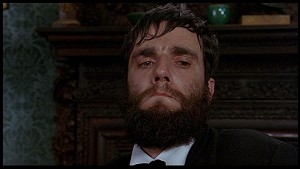
1. Daniel Plainview in There Will Be Blood (2007)

It is known that any part of a movie starts in the screenplay. That includes everything from the story itself to the specifics of the character. With his latest film, the incredible There Will Be Blood, acclaimed filmmaker Paul Thomas Anderson wrote an absolute miracle of a screenplay that manages to achieve something last achieved at this level in 1941 by Orson Welles and Herman J. Mankiewicz with Citizen Kane: creating the most extensive, comprehensive, fascinating character study possible. Anderson’s masterpiece is about a whole lot of things, but at its centre is its monumental construction and de-construction of its protagonist, Daniel Plainview. Although Daniel Day-Lewis almost always plays the main character in his films, he is always one of a few main characters; this time, though, the entire film literally rests entirely on the actor’s shoulders, which applies a lot of pressure, because it essentially means that whether the movie works or not depends entirely on him.


Obviously, Day-Lewis being the remarkable talent that he is took the most fleshed out, deep, resonant, comprehensive character since Charles Foster Kane himself and forged it into one of the single greatest performances of all time. Day-Lewis plays Plainview in a way that exposes every single quirk, mannerism, nook and cranny of his character to the audience. He crafts a unique physical language for the character which he gradually deconstructs corresponding with the character’s own self-deconstruction; from the posture to his way of walking to the accent, Day-Lewis fine-tunes every little detail to perfection. Essentially, Daniel Plainview is a man who cares about one thing and one thing only: Daniel Plainview. The character himself mentions in the film to the man he is led to believe is his brother that he “just doesn’t like people.” But what is most fascinating about the role and the performance is how in the beginning, when his mind is devoted to other things, namely climbing the social and economic ladder on his way up to the top and his sheer and absolute devotion to achieving his goals and ambitions, Plainview manages to shut out his hatred for everything else around him, restraining himself and keeping about him an air of dignity and poise. But once he reaches the top, Plainview no longer has anything to distract him, and he just totally lets himself go.


Day-Lewis plays this deconstruction of the character to utmost perfection, to the point that he pulls the audience so completely into it, that by the time he totally loses it and is already completely manic and almost animalistic in his ferocity and bitterness, we totally believe it. The film’s most notorious sequence, the final scene in the bowling alley, is one that could have very easily entered the realm of caricature, but an actor of Day-Lewis’ calibre manages to find the perfect balance, and turn it into a sequence of pure, genuine, manic brilliance.
See also: Bill “The Butcher” Cutting in Gangs of New York.

Cannes 2009: LOTS to see here


I love going to film festivals, and tend go to more than five a year (all of them in London), I can’t stretch to Cannes, but this incredible lineup of movies for the 2009 edition of the biggest and most famous fest in the world makes me wish I could.

This year’s jury is headed by the great French actress Isabelle Huppert, her fellow panelists are actors Asia Argento, Shu Qi and Robin Wright-Penn and directors Nuri Bilge Ceylan, Lee Chang-dong and James Gray and writer Hanif Kureshi. Here’s the list of films…

OPENING FILM
Up
Dir: Pete Docter / Bob Peterson

Pixar’s latest massively anticipated and, so far, orgasmically received opus. It’s another buddy movie, this time with Ed Asner’s old grouch and an irrepressible 10 year old getting lost in the wilderness. I’m sure that, like all of Pixar’s films, it will be gorgeous, but I haven’t been as big a fan of their last three films and I’m hoping Up will mark a return to the simple fun of films like The Incredibles and Toy Story.

CLOSING FILM
Coco Chanel and Igor Stravinsky
Dir: Jan Kounen
I’ve never seen any of Kounen’s films (though I have a copy of his best known; Dobermann) but this would seem a good place to start, given that it stars Mads Mikkelsen and Anna Mouglalis (pictured).


IN COMPETITION
Bright Star
Dir: Jane Campion

Campion’s first feature since the underwhelming In The Cut. Bright Star is a period romance between John Keats (Ben Wishaw) and Fanny Brawne (Abbie Cornish). The cast is an interesting mix of up and comers (Wishaw, Cornish, Thomas Sangster, Paul Schneider) but it also reunites Campion with Kerry Fox, with whom she made An Angel at my Table.

Spring Fever Dir: Lou Ye

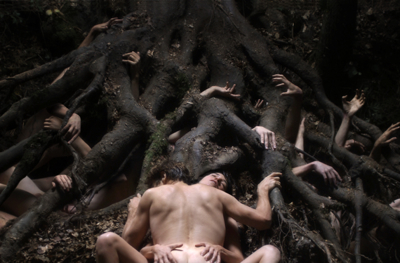
Antichrist
Dir: Lars von Trier

I’ve already mentioned that I’m really looking forward to this, and the brilliant trailer (which hints at something great without making you feel like you’ve seen the film) and this announcement have only increased my anticipation for Von Trier’s return (after TV series The Kingdom) to the horror genre.

Enter the Void
Dir: Gaspar Noe
I know nothing about this film, which would seem to me the perfect way to go into something new from this auteur of the extreme (pictured). His last feature, IRREVERSIBLE, was the most difficult and disturbing thing I’ve ever seen at a cinema, I look forward to being shaken by Enter the Void.


Face
Dir: Tsai Ming-liang

The Taiwanese director has attracted a fantastic French cast for his latest – Mathieu Amalric, Fanny Ardant, Jeanne Moreau, Laetitia Casta, Nathalie Baye (pictured) and Jean-Pierre Leaud all appear. Again, I’ve no clue what it’s about, but I’m intrigued by the names.

Les Herbes folles Dir: Alain Resnais

In the Beginning Dir: Xavier Giannoli

A Prophet Dir: Jacques Audiard

The White Ribbon
Dir: Michael Haneke

After the monumentally pointless Funny Games US Michael Haneke (pictured) returns to Austria and reunites with original Funny Games star Susanne Lothar for an epic (its listed at 150 minutes) tale of ‘strange events’ ata a German school in 1913, and their parallels to the rise of fascism. Sounds tailor made for Haneke.

Vengeance
Dir: Johnnie To

To is gaining a reputation outside of his native Hong Kong as a great action filmmaker, hence this English language debut. However he’s still using his regular actors (Simon Yam again stars) along with a couple of international imports in the shape of Johnny Hallyday and Sylvie Testud in this story of a French chef traveling to Hong Kong for revenge.

The Time That Remains Dir: Elia Suleiman

Vincere Dir: Marco Bellocchio

Kinatay Dir: Brillante Mendoza

Thirst
Dir: Park Chan-wook

Park Chan-wook’s vampire movie. Really, need I say more about how exciting this sounds? Last time he came to Cannes (with Oldboy) he went away with second prize (much to the consternation of jury president Quentin Tarantino, who wanted to give Park the Palme D’Or), can he repeat or better this success with what sounds like a genre film and what sounds like a rather aritly inclined jury?

Broken Embraces Dir: Pedro Almodovar

Map of the Sounds of Tokyo
Dir: Isabel Coixet
This sounds like a real departure for Coixet, who has made a name as an accomplished director of character driven dramas. It’s a thriller about a fish market employee (Rinko Kikuchi, pictured) who leads a double life as a contract killer. Add to that the fact that it co-stars the always brilliant Sergi Lopez and you’ve got a film I’m now dying to see.

Fish Tank Dir: Andrea Arnold

Looking for Eric Dir: Ken Loach

Inglourious Basterds
Dir: Quentin Tarantino

I hate the trailer, I hate the deliberately mis-spelled title and I hate the idea that what sounds like a simple riff on The Dirty Dozen apparently runs around 160 minutes, but the cast is exciting, and Tarantino, though he’s been off the boil of late, can write and can direct. I just hope that this is more than another grab bag of moments that Tarantino remembers as being cool in other movies.

Taking Woodstock Dir: Ang Lee

I'll have the Midnight Movies and Out of Competition sections for you tomorrow.

Apr 22, 2009

RIP Jack Cardiff (1914 - 2009)


The film world will be in mourning today, because it has lost one of its greatest technicians and one of its finest artists. Today, at the age of 94, the legendary cinematographer Jack Cardiff passed away.


Cardiff was born in 1914 in Great Yarmouth. The son of music hall performers he was a child actor before moving behind the camera in the 1930’s. He was a camera operator by 21, making his debut in that role on 1935’s Honeymoon for Three, that same year he made his debut (uncredited) as a cinematographer on The Last Days of Pompeii. In 1937 he collected his first cinematography credit and he never looked back, working on over 70 more films and TV shows in that role up until 2007.


Cardiff was also a director, making 15 films in the big chair. Most notable were a version of DH Lawrence’s Sons and Lovers and the Marianne Faithfull starrer The Girl on the Motorcycle (also known by the rather more interesting title Naked Under Leather). It’s his work as a director of photography, though, that will be his enduring legacy.


Martin Scorsese was a particular fan of Cardiff’s, saying that, particularly in his films for Michael Powell and Emeric Pressburger Cardiff “Painted with the camera” and singling out the staggeringly beautiful ballet sequence at the centre of The Red Shoes as “a moving painting”. He’s right too, in any sense of the word moving. It’s an apt comparison; Cardiff said that he might well have become a painter, and that his work on Powell and Pressburger’s Black Narcissus was inspired in large part by Vermeer.


Incredibly Cardiff won just one cinematography Oscar (for Black Narcissus, in which he made a studio bound film look like it was shot on location in the Himalayas) and wasn’t even nominated for The Red Shoes (my personal choice as the most visually beautiful film ever made) or A Matter of Life and Death. He also won an honorary Oscar in 2001, in recognition of 70 years spent making the cinema a more beautiful place to be.


Jack Cardiff was, perhaps, the best cinematographer film has ever seen, he may no longer be able to give us new work to marvel at but the work he has left behind will continue to dazzle new generations of filmgoers (you’ll have your own chance to be dazzled afresh when several of his Powell and Pressburger films plat at the ICA next month).

RIP to a great talent.

Apr 20, 2009

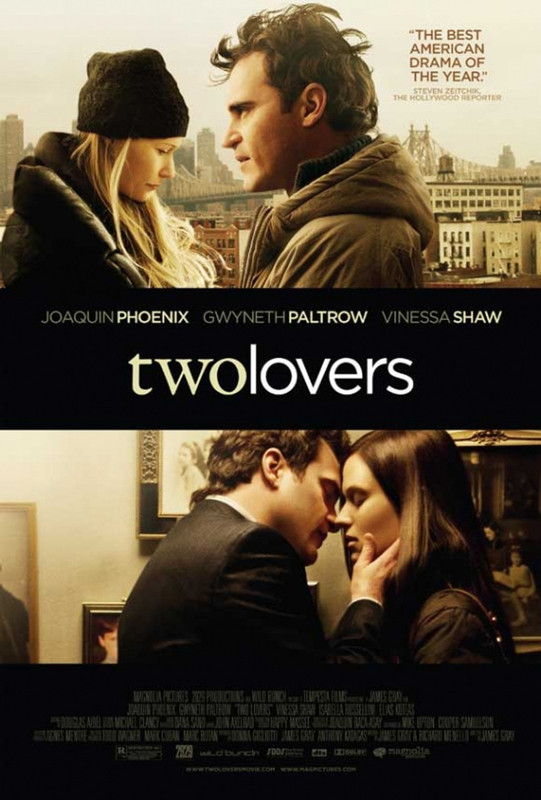
Two Lovers [15]

Dir: James Gray
I never heckle movies, it’s idiotic for one thing, and it’s annoying to anyone who might be enjoying whatever piece of crap I’m enduring. At times though, watching Two Lovers, it was a real effort to stop myself quoting Punch Drunk Love and bellowing “SHUT UP! SHUT THE FUCK UP! Shut up; will you SHUTUP SHUTUP! SHUT SHUT SHUT SHUT SHUTUP... SHUTUP! NOW” at the screen.

Two Lovers is little more than a two hour whine, mumbled at us by Joaquin Phoenix.  Phoenix seems to have forgotten how enunciate his words, meaning that his dialogue comes out as a low droning sound. His character, Leonard, has problems in his love life; he’s trying to choose between settled, loving, drop dead gorgeous Vinessa Shaw and scatty, troubled, drop dead gorgeous Gwyneth Paltrow. You know what Leonard, I’ll switch places with you, make that MY problem, that’s fine with me.

The greater problem is that none of these people are remotely interesting. Leonard, even on the few occasions you can hear what he’s saying, is dull company; he has almost no personality and nothing to say. Vinessa Shaw’s Sandra is a cipher, a nothing. Why is it that when filmmakers try to put a ‘nice’, ‘normal’ girl on screen she more often than not ends up being a total nothing? What happened to the Diane Court’s of cinema? It’s not Shaw’s fault that she makes very little impression on the film, in fact she’s one of the best things in it, struggling valiantly to make something of a part to which there’s little to be done than flashing a dazzling grin in the direction of Joaquin Phoenix.

The film, like Leonard, is absolutely head over heels for Paltrow’s Michelle, and the interest from both parties is utterly inexplicable. Michelle is double trouble; fucked up and boring as hell.  Paltrow is certainly beautiful, as Gray’s loving shots of her take pains to remind us, but Michelle has nothing else going for her. She doesn’t seem clever, or funny, or interesting. Because you are never attracted to any of these people it remains a mystery why they are attracted to one another. Even as Leonard and Michelle form a friendship you don’t really have any clue as to why, on what level they connect.

These things wouldn’t matter so much in an action movie, but when the entire thrust of the film is Leonard’s difficulty in choosing between these two women the fact that we never know why either couple is together or care about either couple ending up together kills the entire enterprise stone dead.

Gray is a competent filmmaker, and there’s an effectively chilly and formal sense of composition to this film, making it far more engaging to look at than it is to listen to its characters (fitting, given that Leonard is a photographer whose New York landscapes never include people). There’s also a nicely judged performance, in just two scenes, by Elias Koteas as Paltrow’s married lover and a film stealing turn from a dressed down Isabella Rossellini as Phoenix’ mother. Overall Two Lovers bored me, it was like listening to a stranger whine about their latest break up for two hours, and just as impossible to care about.

I Love You, Man [15]

Dir: John Hamburg
Hooray, it’s the best Hollywood comedy of the year so far. Oh, hang on, it’s not actually very good.

Comedy is in such a low place that I Love You, Man, in which I laughed out loud twice, represents Hollywood’s finest achievement in the genre for some time. This depresses me more than I can say.  That's not only because this film, for all its staggering mediocrity, still manages to look - against a backdrop of recent films like Borat, Forgetting Sarah Marshall, Semi-Pro, Step Brothers and more - like a shining beacon of quality, but also because there are enough talented people involved in this film that it really ought to be better.

I’ve always liked Paul Rudd, he’s clearly a decent actor and a solid comedian and from films as good as Clueless to films as jaw-droppingly awful as The Ten he’s been an engaging and amusing presence. Sadly he’s not put to great use here, his role is mainly as the straight man to Jason Segel, and Rudd never really develops a great deal of personality. What with this and Role Models it seems that he’s more suited to being in supporting roles, contributing the odd beautifully timed gag, rather than trying to carry a film himself. He’s not terrible and he’s still got that easy charm that makes him such a watchable actor, but there’s never any great engagement.

Jason Segel, equally, is perfectly fine, but his character isn’t especially well written.  There’s no great consistency to him - sometimes he’s the wild and crazy guy and others he’s entirely normal, and perhaps slightly sad - it’s as if the film can’t quite decide who he is and tries to have its cake and eat it.

The screenplay, by director Hamburg and Larry Levin is so stock that I got the impression that someone had seen an old draft of The Forty Year Old Virgin lying around and changed some names, the big difference being that in this film the lead’s problem isn’t meeting women, it’s meeting men. The Forty Year Old Virgin wasn’t the classic it’s often claimed as, but it did a lot of things right, mostly in the writing of its lead character, who managed to be both recognisably odd, in a way that you believed would create the situation of the title, and yet appealing and interesting enough that you wanted to spend two hours with him. I Love You, Man falls down on this score. First of all Peter (Rudd) is far too functional for you to believe that he has no friends. I’ve known guys that really have no friends, they aren’t successful real estate agents, and they aren’t getting married to women who look like Rashida Jones. Aside from that there’s another problem with the film’s premise, in that I never got the idea that Peter and his brother (Andy Samberg) weren’t close enough that Peter, especially in the absence of any other choice, wouldn’t just ask his brother to be his best man.

In keeping with the over familiar feeling of the film the real problems with it start to bite exactly when you’d expect. The first couple of acts pass by amiably enough. They’re implausible, and almost never laugh out loud funny, but there’s a few gently amusing jokes, enough that I generally kept smiling. The problem, as ever, is act three. To inject a bit of drama the movie has to break up its central couple(s), and I can’t remember the last time this happened in a way that felt honest or unforced. I Love You, Man certainly doesn’t break from that trend, doing it through a mechanism so obvious that a flashing box reading “Plot Device” may as well be passed between the main characters. The whole film proceeds, beat for beat and often joke for joke, exactly as you’d expect, and even if it were funnier that would make I Love You, Man a pretty dull experience.

There are things to enjoy here though. Jon Favreau and Jamie Pressley are pretty funny as a fractious married couple and Rashida Jones, though she has almost no character and almost nothing to do, is pretty charming and very cute, while small roles for JK Simmons and an oddly cast Lou Ferrigno are also fun distractions.

These things aren’t enough though, because the main thrust of the story isn’t believable or interesting, and nor are its characters, but worse there’s really no reason for this to be a movie. Hamburg directs as if he’s filming a sitcom, with a bright, flat, boring style that sits uncomfortably on the cinema screen and few of the performances or jokes serve to disabuse you of the notion that what you’re seeing is a very long, rather average, piece of television that someone blew up the negative for.