Mar 28, 2009

The Complete... Guillermo Del Toro - Part 1

I was going to do a simple (simple, he says, the last one was over 3000 words and took about 7 hours to research, write and find pictures for) Hall of Fame post for Guillermo Del Toro, but it occurred to me that I had seen and owned all but one of his feature films, and that if I got my hands on Mimic and watched it I could do something even more in depth.

So here it is - in three exhaustive parts - The Complete Guillermo Del Toro, I’ve provided a little biographical detail (there’s really not much available) and whatever background I think is necessary, but the main focus of this feature is the reviews. I’ve re-watched and written brand new detailed reviews for all seven of Del Toro’s feature films, and a preview of his eighth and ninth, the upcoming pair of Hobbit films. I’ve also tried to tie the films together more than in a conventional set of reviews, to give a sense of how Del Toro has progressed through his films.

Ladies and Gentlemen… Guillermo Del Toro

Birth Name: Guillermo Del Toro
Occupation: Writer / Director
Born: 9th October 1964 Guadalajara, Mexico
Age: 44
Family: Wife: Lorenza  Daughters: Mariana, Marisa
Directorial Debut: Doña Lupe (Short, 1985)
Latest Film: Hellboy II: The Golden Army (2008)
Current Project: The Hobbit (2012)

Raised in Guadalajara, Mexico by his devout Catholic Grandmother Guillermo Del Toro became interested in filmmaking in his early teens, but it was probably his later schooling in special effects and effects make up under Dick Smith, whose work spans 50 years and such films as The Exorcist and Scanners, that helped shape his later work, which dwells on the fantastic stories and monsters that enthralled and frightened the young Del Toro.

Del Toro’s first directorial credit came, aged 21, with the half hour horror short Doña Lupe, which has just seen its first ever commercial release thanks to a Cinema 16 DVD titled World Short Films, and features a commentary which Del Toro apparently begins by apologising for his own film. After this Del Toro plugged away, doing effects for other people’s films, and directing for Mexican television, notably a horror series called Hora Marcada, which also gave Alfonso Cuaron early experience. Then, finally, aged 29, Del Toro made his feature directorial debut with the revisionist vampire film Cronos.

Cronos (1993)
The Cronos device was invented by an alchemist in the 16th century, it granted the user eternal life, but transformed him into a creature allergic to sunlight, with alabaster white skin, and a thirst for blood. In the 1990s antiques dealer Jesus (Federico Luppi) finds the device and accidentally activates it, beginning the process of his own transformation. But other forces want the Cronos device for their own ends, and they’ll go to any lengths to get it.

The vampire myth is as old as the hills, and has been a cinematic staple for close to 90 years. Every now and then some upstart comes along with what they allege is an original take on the myth, most prove to have just juggled a couple of aspects of it and then done largely the same old thing, but Guillermo Del Toro’s take on the vampire is genuinely, breathtakingly, original and utterly compelling. Del Toro does away with most of the established traits of vampirism, Jesus never develops fangs, he never becomes sensitive to garlic or crosses, instead Del Toro creates a vampirism that works more like a disease, altering Jesus beyond recognition; physical and mental. It’s a refreshing take, and early evidence that we are here in the hands of someone with complete mastery of the story and the world he is creating.

That world is also completely recognisable as that of Guillermo Del Toro; many of what would become the director’s trademarks first identify themselves here. The Cronos device itself is the most prominent; a golden thing that looks like a scarab, it works, like many malevolent things in Del Toro’s films, through a clockwork mechanism, and contains an insect of some sort, which feeds on the users blood. Both clockwork and insects are near constants in Del Toro’s work, and here he combines them to eerie effect. The Cronos device is a bizarre and utterly original creation, and the mechanical workings of the prop and the excellent, creepy sound effects combine to make this largely inanimate object decidedly chilling.

Another of Del Toro’s seeming obsessions that raises its head here is the use of children in prominent roles in horrific situations. Jesus’ young granddaughter is the first to discover his condition, and rather than fear him she accepts him for what he was; Grandad. There are all sorts of things that one could read into Cronos. You could see Aurora as Del Toro’s version of himself (he, after all, was raised by his grandmother), or you could take the entire film as Del Toro’s reaction to his Catholic upbringing, this is quite a persuasive idea; the leading character Jesus Gris comes very close to sharing a name with Jesus Christ, and during the film he dies and is resurrected, there is also the fact that blood is, in Cronos, a restorative, and this could be seen as analogous to the use of wine in Catholic mass.

At the end of the day though, interesting as those theories are, they are almost beside the point, because what really matters about Cronos, what really makes it interesting, is simply that it’s a brilliant horror film. Del Toro’s script is a smart and original thing, but he’s a director first, and the film’s imagery is often extraordinary. Besides the device and its use he finds some truly striking shots. Particularly strong is a scene in which Jesus follows a man with a bleeding nose to the bathroom. The way Del Toro makes the vivid blood stand out against the marble bathroom and has Luppi bend right to the floor to lick it up makes for a memorable series of compositions, as does the sequence in which, in front of Aurora, Jesus begins to peel off his grey rotting skin to reveal the vampire beneath it.

The use of special effects, and even blood, is sparing, but strong, and always beautifully designed. The only times that the effects look a touch cheap are when the Cronos device is puncturing Jesus’ skin, but otherwise everything from the blood, which looks impressively real, to the inner workings of the device holds up brilliantly to even quite close scrutiny. Del Toro tells much of this story with images (indeed Aurora seldom speaks) but he never leans too heavily on his effects, never allows them to overtake his story and characters.

The only real problem with the film is that Del Toro’s mastery of the English language is clearly not complete, and that hurts the English language scenes and performance of Ron Perlman, who is more overblown than he need be as Angel De La Guardia, in what is otherwise a rather subtle, even soulful, film. Thankfully Federico Luppi’s performance is spot on, he makes Jesus grandfatherly and avuncular in the beginning, so that as he begins to change we both see the metamorphosis and feel the loss that he and his family are suffering.

Cronos is a masterful debut for Guillermo Del Toro, one that sets out his stall as a truly gifted, and truly different, filmmaker.


Cronos was a critical success, and gained a cult following. It also won awards at several festivals, and at Mexico’s Ariel awards. In 1993 Del Toro reportedly had a meeting with Universal, regarding the idea of remaking Cronos in English, to which he responded with typical wit "Who wants to see Jack Lemmon lick blood off a bathroom floor?".

A new talent with a successful independent debut behind him, this being the mid 90’s it was pretty obvious where Del Toro would go next, and so he went to America, to make his next film for Bob and Harvey Weinstein at mega-indie Miramax. He was offered Hellraiser: Bloodline (on which eventual director Kevin Yagher was so frequently overruled that he took an Alan Smithee credit), but turned it down and opted instead for…


Mimic (1997)
I’ll let Del Toro himself introduce this review: “I remember the worst experience of my life, even above the kidnapping of my father, was shooting Mimic. Because what was happening to me and the movie was far more illogical than kidnapping, which is brutal, but at least there are rules. Now when I look at Mimic, what I see is the pain of a deeply flawed creature that could have been so beautiful.”

Mimic is, as he has recognised and stated, Guillermo Del Toro’s worst film by some distance. It’s the only one that doesn’t indelibly bear his stamp on every frame, the only one that, at the most basic level, simply doesn’t work. Yet, if you wade through the tedious mire that much of this movie is, there are moments; a shot here, an idea there, that hint at what might have been had Bob and Harvey Weinstein simply let Del Toro’s unstoppable imagination run riot. The creatures are well designed and when they appear in shadow they have a frightening presence, sadly on full reveal the monsters work less well, particularly when they aren’t rendered physically.

What really kills Mimic is the fact that the creatures don’t really have a personality, or even much of a purpose. Del Toro’s monsters are often the most intriguing characters in his stories, always layered, always given complex morals and motivations. He loves monsters, is fascinated by them, and it usually shows. Mimic, in its pursuit of convention, does away with that, meaning that the monsters are just that; monsters, and once you know what they are and what they do they become pretty boring.

The people are no more interesting than the creatures, thanks to a bland story and a screenplay that mistakes ciphers for characters. The performances are also dreadful, and not even uniformly so. There are the personality voids that are supposed to be our heroes, played with as little charisma and effort as they can muster by Mira Sorvino and Jeremy Northam. There’s the obnoxious support provided by Josh Brolin (in that difficult period after The Goonies and before No Country for Old Men) and the usually reliable Charles S Dutton. We’re also graced with the hamtastic, English mangling, Giancarlo Giannini and some truly dreadful child performances, a surprise from Del Toro, usually a sensitive director of kids.

However, Mimic, for all its tedium, is beautifully shot and designed. A scene in a church, which sees monsters closing in on a young boy, is stunning, and Del Toro’s insect obsession continues to serve him well. More proof of the tinkering done on this film arrives in the rumour that one stand out shot (hospital beds in endless rows draped in white sheets) was directed by producer Ole Bornedal (who was remaking his Nightwatch for Bob and Harv at the time), and there is an occasional decent set piece; the monsters attacking a subway car in which the characters are trapped being a particular highlight.

It’s easy to see why Del Toro has little love for Mimic, I’d love to see him be allowed to recut or remake the film on his own terms, because the idea of a cure that ends up hunting and killing us sounds like an idea tailor made for him, thankfully the experience of making Mimic led to Del Toro’s willingness to compromise his dark visions slipping, which was all to the good.


Mimic was a financial disappointment on its theatrical release, amassing only a few hundred thousand dollars more than the $25 million it had cost Miramax, however its video and DVD incarnations boosted that significantly enough to make sure that Del Toro wouldn’t be written off by Hollywood, and that Mimic itself would spawn two straight to video sequels.

Del Toro, disillusioned with Hollywood, went back to his favoured themes, and to the Spanish language, for his next project, which is where we’ll pick up in Part 2.

Mar 27, 2009

Shopping List: Last 2 weeks of March

Two weeks in one, because the both of them offer slim pickings either side of the pond.

UK (23/3)
Choke

The excellent Sam Rockwell gets a proper showcase role in this much-underrated adaptation of Fight Club author Chuck Palahniuk’s novel. If anything Clark Gregg’s black comedy is over ambitious, trying to do rather too much, but it’s also frequently extremely funny. It also boasts fine performances all round, most notably from Rockwell and Kelly MacDonald, finally getting, on the back of No Country for Old Men, the career she deserves.

UK (30/3)
Not Quite Hollywood

A shopping list in it’s own right, this documentary about Ozploitation films is riotously entertaining, even if it’s not actually massively enlightening. I reviewed it in Review Post 15.

US (24/3)
Czech Chillers: Valerie and Her Week of Wonders / Witches Hammer

Of these films I’ve only seen the brilliant, baffling, surreal, future Why haven’t you seen entry Valerie and her Week of Wonders. That film alone is reason enough to get this set, but Witches Hammer sounds pretty amazing too.

Gardens of the Night

On seeing this genuinely disturbing drama at last year’s Raindance Film Festival I found it to be half a masterpiece. The first hour features from young Ryan Spimpkins and from Tom Arnold (yes, Tom Arnold) some of the best acting I saw last year, and tells the riveting story of two young children kidnapped by a pair of paedophiles. It’s genuinely tough to watch, because it seems that anything could happen. Sadly, when the film skips several years and the kids grow up, it descends into cliché and the acting becomes less impressive.

US (31/3)
Timecrimes

Nacho Vigalondo’s intriguing time travel thriller is getting remade (possibly by David Cronenberg), but you shouldn’t wait to catch this original, thrilling and funny flick. See Review Post 9 for more.

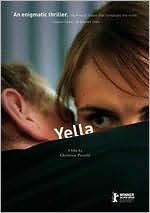
Yella

I didn’t actually like Yella when I first saw it a couple of years back, but I’m inclined to give it another go. First because almost every other review I’ve read is glowing, and secondly because Nina Hoss is undoubtedly one of the great actresses working, and she’s brilliant in this movie.

Mar 25, 2009

Why haven't you seen... 11

Them! (1954) Dir: Gordon Douglas & Matinee (1993) Dir: Joe Dante
The long awaited giant ant double bill… “at last!” I hear you cry.

What are they all about?
In Them, one of the great nuclear paranoia sci-fi movies of the 50’s, atomic testing in the New Mexico desert lead ants to mutate into giant man eating beasts, which threaten to destroy the nearest town, and subsequently the world!
Matinee, set in Florida’s key west during the Cuban missile crisis, is Joe Dante’s affectionate tribute to the sci-fi of the 50’s and 60’s. It sees a William Castle style producer going to key west to premiere his latest monster movie; a film that sees a scientist slowly mutate into a giant ant – or Mant. It’s also a coming of age movie, seeing a couple of young movie fans (Simon Fenton and Omri Katz) having their respective first dates at the premiere.

Why haven’t you seen them?

In the case of Them! It’s probably because you assume it will be silly; a black and white movie from the mid 1950’s about giant radioactive ants.
Matinee is a sadly underseen film; it received only a small cinema release in 1993 before drifting on to video. Though critically well rated and beloved of its small audience it never really broke out, and its DVD treatment (bare bones and panned and scanned) bears that out.

Why should you see them?
Them! is great fun, just as any movie about giant ants should be, but the silliness that would seem inevitable never really raises its head, because though the story is outlandish director Gordon Douglas and his cast get the tone completely right. Tongues are stuck slightly in cheeks, but this never detracts from the films thrills, which build until a genuinely suspenseful and beautifully executed ending set piece which (as in all these movies) sees the army called in. The special effects are excellent for their time and the performances are largely unafflicted by the hammery that could mark the genre. Along with the original Invasion of the Body Snatchers (also ’54) this movie is a cornerstone of paranoid sci-fi, from which the rest of the cycle would draw inspiration, as well as being one of the finest examples of the genre.

Matinee is both send up of and tribute to 50’s and 60’s sci-fi, parodying the gimmicky audience participation stunts pioneered by William Castle, while also providing extracts from Mant (Half man, Half ant, ALL TERROR), which is both an authentic and an hilarious tribute to the movies, and wrapping it all up in a sweet and believable coming of age story, set against a seriously scary backdrop. The construction of the film is intricate genius, and Joe Dante (a hugely underrated filmmaker whose Small Soldiers and Looney Tunes: Back in Action are also ripe for reappraisal) juggles all the elements with confidence. The coming of age story is a real charmer, thanks mainly to a touching performance from 14 year old Lisa Jakub, whose rebellious and feisty schoolgirl, afraid of what she believes may be imminent destruction, is a deft piece of character acting. Sadly Jakub hasn’t acted since 2000 (though she’s great in the 1999 short George Lucas in Love, which you can find on youtube).


John Goodman bestrides Matinee like a colossus; his larger than life appearance and personality perfect to play a character that is essentially a combination of William Castle and Alfred Hitchcock. But more than that he’s a fine actor, he gives Lawrence Woolsey real depth; we see the showman and the shill, we see him cantankerous and caring, he plays drama and comedy and he does it all beautifully, creating a genuinely memorable character. Even the smaller parts are well cast and played – Cathy Moriarty’s turn as Woolsey’s sharp girlfriend and Dante stock company members Dick Miller and Robert Picardo giving great performances. Blink and you’ll miss Naomi Watts, she appears in one of her earliest American roles, in a fake b-movie called The Shook Up Shopping Cart, which is hilarious.

The best part of Matinee, though, is Mant, which is deliriously brilliant, an hilarious joy even if you’ve never seen a 50’s sci-fi flick, but if you’re a fan of the genre it is even funnier, as well as reminding you of many of the classic B’s (most notably The Fly, The Incredible Shrinking Man and the original King Kong) into the bargain.

How can you see them?

All available editions of Them! are exactly the same, and the UK edition can be found for a few pounds. Matinee is more problematic. The American disc is out of print, but was closest to the original aspect ratio, but the US laser disc is the best ever release, in its full 1.85:1 ratio, and featuring outtakes from Mant. The cheap UK dvd is fine to see the movie, but if you can get and play the laser disc then it’s the only way to go.

Mar 22, 2009

Lesbian Vampire Killers [15]

Dir: Phil Claydon
Lesbian Vampire Killers is a great title, it promises a fun 90 minutes, it promises to be funny, sexy, scary and sleazy. It would be wonderful if the film managed to cover all those bases, two would have been fine, one would have proved, perhaps, mildly diverting. Sadly Lesbian Vampire Killers manages to be precisely none of the above. Instead it’s just dull, duller than a wet Wednesday in Wales, at your Grandma’s.

Lesbian Vampire Killers is not funny, not even by accident. It plays like a spoof whose script has been run through with a fine-toothed comb and everything that even looks like a joke removed. In place of actual jokes we have fat man and little boy sketch comedy team  James Corden and Matthew Horne, who run around like Hell’s Laurel and Hardy, Horne whimpering and Corden saying ‘cock’ and ‘fuck’ a lot, because that, apparently, is the essence of funny. For a spoof Lesbian Vampire Killers shows little regard or fondness for, or even knowledge of, its genre (the more sexually explicit of the Hammer Horror films), and it ends up playing like something a few 14 year olds thought was ‘dead funny’. I can imagine having written the ‘cocksword’ bit as a 14 year old, and then dying of embarrassment about it by the time I was 15. As well as being juvenile and unfunny the gags are incredibly predictable, several times during the movie I was able to call the EXACT sequence of jokes for what seemed like minutes on end. If, for example, you can watch the beginning of a shower scene here and not know exactly what the end shot is going to be, well, I wish on your behalf that the first movie you’ve ever seen had been better.

Lesbian Vampire Killers really ought to be sexy, but it’s not. First of all it’s going to disappoint its drooling teenage boy audience, because there’s actually very little in the way of nudity (a few rather unexciting fake boobs here and there) or sapphic action (a few kisses, but no more) and what there is is totally unarousing. The lesbian scenes present a problem because there is absolutely no heat or chemistry in any of them.  Even when a vampire queen awakens and again meets up with the lover she’s not seen for 2000 years actresses Silvia Colloca and Vera Filatova seem bound by contractual obligation rather than desire. Most of the girls are sort of pretty, but only in that fake Barbie doll sort of way. The exception is The Descent’s MyAnna Buring, whose bespectacled charms were about the only thing that kept me awake.

If you are going to make a horror comedy you had damn well better include some scares with your laughs. Shaun of the Dead managed it, so did The Evil Dead, and An American Werewolf in London (though when that franchise went to Paris the scares, and laughs, stayed on the Eurostar). Lesbian Vampire Killers doesn’t. There are several reasons for this, the first being sheer technical incompetence. Almost the whole film is shot in near pitch darkness, this also neuters the sexiness and the comedy, but the fact that you’re forever staring to see what is going on is most deadly to the scares, because even when they do happen you can barely see the damn things. This isn’t, however, to say that the scares were scary in the first place. The use of surround sound is effective, but there’s no chill up your spine when the vamps voices reverberate around the cinema, and otherwise all Claydon has to offer are cheap boo scares that were old hat 40 years ago and vampires being hacked up only to spew rating aware white blood.

There’s nothing wrong with a bit of sleaze every now and then, and exploitation movies often do it brilliantly. Lesbian Vampire Killers has a brilliantly sleazy title, but aside from being rather homophobic and outrageously poorly made it’s utterly inoffensive. Where, for the love of God, are the sapphic sex scenes? Why on earth, when she’s tied up to be sacrificed by lesbian vampires does MyAnna Buring get to keep her clothes on? What’s happened to the random gratuitous nudity? What happened to the explicit and bloody violence? I don’t want these ingredients in Magnolia, or Frost/Nixon, but for crying out loud, this is Lesbian Vampire Killers.  In short; where’s the exploitation in this exploitation movie?

Lesbian Vampire Killers is terrible. The acting is horrible all round, though I can forgive much of that because the script is awful on an epic scale, but worse, the film simply fails to deliver on its own brilliant, brilliant title.

Pray the Devil Back to Hell / Not Quite Hollywood

HUMAN RIGHTS WATCH FILM FESTIVAL
PRAY THE DEVIL BACK TO HELL
Dir: Gini Reticker


I like to think myself relatively aware, but beyond a vague recollection of Charles Taylor’s indictment by the International Criminal Court for war crimes I knew next to nothing about the 15 year civil war in Liberia, or about the remarkable women’s movement documented in this powerful film.

Pray the Devil Back to Hell (which, incidentally, takes an early lead in the best title of the year race) tells the story of a group started by Leyma Gbowee, a group of women whose message was purely “We want peace. NOW.” Leyma and the movement’s other leaders united Christian and Muslim women behind this message, initially simply getting people to pray for peace, but eventually taking their message out on the streets, staging a sit in at a fish market that lasted so long (two and a half years, all told) that it forced Libera’s dictatorial ruler Charles Taylor to meet the women and both him and rebel leaders to attend peace talks. The peace talks started so slowly that Leyma and the other women, fearful of their breakdown, staged another sit in, this time trapping delegates in their meeting rooms.

That’s not the whole story, but from that you can see, hopefully, why it needs telling. Pray the Devil Back to Hell is a salute to the power of ordinary people to change things for the better through a simple message and total dedication to getting the job done. These women really are heroines, and their story deserves to be told.

Leyma and the other women in the film are natural storytellers, and their relation of the events of the two years they spent campaigning for peace is sometimes funny, sometimes thrilling, frequently sad, and always moving. The story itself is perhaps not matched by the film, which at 72 minutes rather rushes through the telling, and is put together in a rather pedestrian manner. It feels like a TV, rather than a cinematic, film.

Still, even if it isn’t the most dynamic of films, even if it really belongs on TV, Pray the Devil Back to Hell is still a film that ought to be seen, these are things you ought to know about, and while this film isn’t terribly enlightening about the situation in Liberia as a whole, it tells its small but vital story well.

NOT QUITE HOLLYWOOD: THE WILD UNTOLD STORY OF OZPLOITATION [18]
DIR: Mark Hartley


If it’s a serious inquiry into a cinematic movement that you want you’ll not find it in Mark Hartley’s documentary about the Australian exploitation films of the seventies and eighties. If, however, you’re okay with what amounts to a greatest hits reel, interspersed with often tongue in cheek interviews then you’ll have a great time with Not Quite Hollywood, and come out with a long list of movies to find and watch.


Being about exploitation movies this is adults only stuff. Hartley splits the film into three parts, the first deals with ‘Ockers’ – Aussie sex comedies, the next is about horror and the third part deals with the road movies that inspired and followed Mad Max. Throughout there’s masses of violence, stunt sequences to make the jaw drop and enough naked women to keep Playboy busy for the best part of a decade. All in all it makes these movies look like an absolute riot.

The interviews are very good. Barry Humphries proves a real highlight, talking about how Australia doesn’t need culture, Quentin Tarantino is as infectiously enthusiastic as he’s ever been (I must thank him for the mention of Next of Kin, that looks amazing) various grumpy critics moan about how the exploitation industry was cancer at the time of the Aussie new wave (My Brilliant Career, Picnic at Hanging Rock etc) and a lot of actresses who formerly turned up and shed their clothes in these films are very good humored about their cult status.

The clips from the films are extremely well chosen, and make these films look, if not always like great movies, like great fun. I‘m going to have to get this movie on DVD just to make a list of all the featured films I want to see, though Patrick, Next of Kin, Road Games and Fair Game seem like musts.

There are some great stories told here. The insane and quite possibly indestructible stunt man Grant Page provides many of them. The making of the Dennis Hopper starring Mad Dog Morgan sounds like a complete nightmare,as does the making of Australia’s first Martial arts movie starring “one of the two worst people I’ve ever met” Hong Kong star Jimmy Wang-yu. But the stories aren’t the point so much as making you sit up and take notice of these films is, and in that respect Not Quite Hollywood is pretty well perfect. It’s a shallow film, but it does its job.

Mar 20, 2009

The Girl Cut In Two [15]

Dir: Claude Chabrol
Claude Chabrol is amazing. Like Woody Allen he makes a film every year (and he’s been at it longer, 79 in June, he’s been making films since 1958 and his filmography, not counting TV work, numbers in the sixties) unlike Allen he hasn’t suffered a collapse of form, many of his later films – The Bridesmaid, Merci pour le Chocolat and La Ceremonie among them – can stand alongside his celebrated Helene cycle as some of his best work.

The Girl Cut in Two isn’t vintage Chabrol, but it’s still a film with many very strong elements. It surprises me that Chabrol, a great director of women and cinematic connoisseur of beauty hasn’t previously worked with Ludivine Sagnier, who has gone from being an extraordinarily lovely decoration in Francois Ozon films to become one of France’s most interesting young actresses. Here Sagnier plays Gabrielle, a TV weather girl who enchants two men, an author some 30 years her senior (Francois Berleand) and a young, unstable, heir (Benoit Magimel), both of whom fall for her the first time they see her, and whose mutual desire proves destructive. Rather than play this as he might have previously – as a thriller – Chabrol fashions a black and sometimes nasty comedy in which things simmer beneath the surface.

As you might expect of a man who has been making films for as long as Chabrol has, and has spent almost 25 years working with the same core crew, The Girl Cut in Two is technically flawless, it is wonderful to look at, from its costumes, make up and sets, to the way that Chabrol makes his entire cast look beautiful, to the smoothness of the camerawork and a few memorable shots (The red gelled opening and Sagnier, clad in a bustier with a peacock’s tail, crawling into a room come to mind).

Chabrol and Cecile Maistre’s screenplay deals with some quite heavy themes; love, jealousy, obsession, with a nice light touch and a sparkling wit that shows itself in almost every scene. The humor translates well, creating an interesting balance of tones that works in the film’s favour. Another nice touch is Chabrol and Maistre’s decision to keep one pivotal event (which I shan’t spoil), and all description of it, off screen, allowing our minds to fill in the details as we see them.

A distinguished cast all give strong performances. Sagnier’s performances are often overshadowed by her beauty (I met her before the screening, and can assure you that, yes, she is that beautiful), she’s entirely natural here, hardly appears to be acting at all, and yet never strikes a false note; a tough balance to achieve and she seems to do it effortlessly and, she said, with little direction. Benoit Magimel, so impressive opposite Chabrol’s latter day muse Isabelle Huppert in The Piano Teacher, also has tricky job. His is a more theatrical performance, as a character that seems to constantly be dancing on the edge of sanity; it could easily be grating, but Magimel finds the middle ground between funny and frightening, nailing the tone of the film. The last side of the central triangle; Francois Bereland is also impressive; giving a finely judged performance that shifts and plays with your sympathies.

Given all this quality its tough to put a finger on why The Girl Cut in Two doesn’t quite work. There is one large issue: the story doesn’t quite sustain the film’s 115 minute running time, and it runs off the rails in the last twenty minutes, which hardly feel like they belong to the same film. The real issue is harder to define though; it’s mainly that while all the individual elements are excellent they don’t quite gel into a coherent whole. Even if it’s not Chabrol’s best, The Girl Cut in Two is an interesting and engaging film despite its flaws.

Hush [15]

Dir: Mark Tonderai
Mark Tonderai began his career, at some ludicrously youthful age, as a DJ at BBC Radio 1. He’s worked as a writer, editor and actor on TV, and he’s appeared in films as well, it seems that only writing and directing a feature was left on the to do list, and with Hush Tonderai has now ticked that off.

Hush is a horror film that never met a cliché it didn’t like. It doesn’t have a single idea you won’t find in numerous other films, both better and worse than this one. It begins something like Duel, or the first half of Jeepers Creepers, or the relatively forgotten Joyride (a.k.a Roadkill) before ending up as more of a backwoods horror with a stalking killer, but despite its incredible over-familiarity Hush does work.

Tonderai clearly spent those years in TV well, made on a small budget with a miniscule cast and just a few locations Hush still looks pretty damn good, there is some very nice lighting here, and strong composition. Tonderai’s use of focus, while belaboring the point he’s making somewhat, is also technically excellent. This confident crafting continues with the few effects in the film; a good stabbing to the eye, and a wince making nail through the hand being especially strong.

The problem really lies with the script; it’s so schematic, so obviously sewn together from bits of other films that Tonderai really likes, that after the character building of the first fifteen minutes, which is quite well done, you are forever ahead of the movie, because it plays like you’ve already watched it. Predictable isn’t the word, you can count down to many of the scares (I literally did so in one scene involving a mobile phone, I counted 3, 2, 1 and it rang) and nothing even remotely unexpected ever happens, because even when Tonderai does come up with something that might prove a shock he telegraphs it. There is one larger problem with the screenplay, a massive credibility gap at its centre, but one that would constitute a big spoiler.

That said Hush does contain some genuinely nailbiting sequences, okay so the toilet scene is an almost direct lift from Haute Tension, but it’s very well executed and you will be white knuckled by the end of it. This is also the case with some of the scenes in and around the truck that Zakes (Will Ash) thinks has kidnapped his girlfriend Beth (Christine Bottomley).

The performances are resolutely average. Ash is fine as an average guy thrust into a horrifying situation.  While Bottomley has a rather grating character she’s perfectly natural as Beth. There’s not a massive amount for them to work with, and other characters are portrayed in only the broadest fashion. It works for the genre, but a little depth wouldn’t have gone amiss.

Overall Hush is perfectly fine, it’s formulaic and forgettable, but its also brief and entertaining enough that it gets away with its many flaws. I’d like to see Mark Tonderai direct someone else’s writing next time; he clearly has an eye, but he’s no great shakes as a screenwriter.

Bronson [18]

Dir: Nicolas Winding Refn
Bronson ends with a caption stating that its subject has now been in prison for 34 years, 30 of them in solitary. Good.


There has recently been a rash of films about, and celebrating, ‘hard men’. Football hooligans, gangsters and other assorted villains have been put on screen and essentially eulogized. Bronson, a biopic of Britain’s most violent prisoner, could easily have been another entry in this rather despicable cycle, but seen through the unusual eye of Pusher trilogy director Nicloas Winding Refn it becomes something else entirely.


Refn approaches Bronson more as a performance artist than a criminal, refraining from making moral judgments about a man who is quite clearly not entirely right in the head, and it is this approach that makes Bronson the often riotous entertainment it is. The story is related by Tom Hardy’s Bronson literally as theatre, many scenes seeing Hardy in Comedia Del Arte style make up acting out scenes on an empty proscenium for an unseen audience. The film also frequently cuts to him in isolation, reacting to or commenting on the action. It’s a device that at first seems, potentially, a little misjudged, but the whole film is so heightened (as is Bronson’s life) that it not only works, it becomes one of the film’s most entertaining traits.


The whole enterprise stands on the stunning foundation that is Tom Hardy’s rabidly committed and utterly mesmerizing performance as Bronson. Hardy bulked up for the role, and his physical form is imposing, but undercut by Bronson’s rather reedy voice. Bald and extravagantly mustachioed, Hardy’s is a complete transformation, and you never, ever see the actor beneath it. Without Hardy’s performance, given that his is the only role with more than about 15 minutes of screentime, Bronson would completely fall apart and the role ought by rights to transform this relatively unknown actor’s career.


Nicolas Winding Refn’s choices are as daring as Hardy’s, his visual style and his use of music (particularly a great sequence set to The Pet Shop Boys' It’s a Sin) stamp the film with its own specific identity, though it does, as a whole, recall the early part of A Clockwork Orange. Refn doesn’t shrink from Bronson’s violence or his madness, in the film’s finest scene he and Hardy brilliantly juggle menace and comedy after Bronson takes a prison librarian hostage, seemingly for the pure hell of it.


The script is frequently very funny, and this makes Bronson an engaging couple of hours, but there are things missing too. There’s no actual insight into Charles Bronson, over two hours we live with this man, but beyond an image of a violent clown we learn almost nothing about him, and certainly nothing about why he acts as he does. There’s also the uncomfortable issue of whether I should be entertained by this man, who really is nothing more than a sociopath and a thug. This troubles me because I can see some audiences viewing Bronson as the hero of this story. As a movie though Bronson has one deeper issue; it’s very repetitive. That’s partly dictated by its subject’s life; 34 years in prison taking hostages and beating up guards, but there really are only so many times you can watch Tom Hardy strip down to punch someone before it becomes boring.


There is much to admire in Bronson, it is a stunning calling card for both Tom Hardy and Nicolas Winding Refn, but much about it also troubles me and I never felt that its great elements added up to become a great film.

Martyrs [18]

Dir: Pascal Laugier
I’m a pretty big horror fan, and I like to think I can handle pretty much anything a movie can throw at me, after all I survived watching Gaspar Noe’s IRREVERSIBLE. Aside from that memorable piece of unpleasantness though, Martyrs is probably the single most depraved, the single most impactful, horror film I’ve seen at a cinema.

Pascal Laugier’s second feature film has been sucked in to the debate around films like Saw and Hostel, the so called ‘torture porn’ genre. Martyrs is so much more than that, it’s a film that uses graphic and unstinting brutality, but the difference is that this film isn’t merely concerned with gore for the sake of entertainment, it wants to get under your skin. Eli Roth wants you to revel in his film's violence, to enjoy it, Pascal Laugier never asks that of his audience – it’s out to disturb, to disquiet, and it achieves that aim from first frame to last.

This is a challenging film to review because it takes several unexpected gear shifting turns including, two thirds of the way in, one that completely alters the film, and I don’t want to spoil any of its many profound shocks, but there’s also so much that warrants discussing here, more so than in most horror films. Laugier’s story starts out relatively simple; Young Lucie escapes from a place where she has been held prisoner and tortured for a considerable time. 15 years later Lucie (Mylene Jampanoi) tracks down and takes her revenge on the people she believes held her captive. Lucie’s girlfriend Anna (Morjana Alaoui) arrives to help her clean up.  That takes us only about a third of the way into the film, but I really can’t say more, because I’d be spoiling things.

Intensity seems to have been Pascal Laugier’s watchword in creating Martyrs. Even before the violence really explodes he creates an atmosphere of terror, with an early scene in what appears to be an orphanage where Lucie and Anna are growing up. The use of sound, and the way Laugier barely lets us see anything in this scene sets the audience immediately on edge, where they will remain for the next 97 minutes. It’s once we get into the house where most of the film will take place that Martyrs really comes to life. After five minutes of scene setting there’s a knock at the door and from then on out the film offers almost no respite from brutality and fear.

The 45 or so minutes of Lucie and Anna carrying out and cleaning up Lucie’s revenge are perhaps Martyrs most conventional passage. The beats are familiar, and an early twist very guessable, but its Laugier’s execution that really impresses. He’s got all the details right, most notably the blood, which seems so simple, but movies so frequently get wrong, the blood here is utterly convincing, and that makes the rest of Laugier’s illusion play. The special effects make up is simply astonishing, there is an especially wince inducing scene in which Anna sews up slices that have been cut into Lucie’s back, but all the make up is stunning, particularly towards the end of the film. These things help, but what makes Martyrs the intensely riveting thing it is is the sheer ferocity of it. Most movies, even in the horror genre, that feature violence don’t really look like they hurt. The violence of this film is so palpable that you almost feel it yourself, and that’s what really makes it effective, if extremely difficult.

The screenplay is pretty basic, light on dialogue, but Laugier gives his characters just enough substance, and hints enough at their relationship, to make them sympathetic. In this lies Laugier's true masterstroke. Most horror films get down to their final girl, the one you are rooting for, the one you want to see kill her tormentor(s) and escape from whatever situation she’s become trapped in. Martyrs forces you to have a completely different relationship with its final girl, to hope that she’ll die not because you dislike her, or because it will be cool, but because it would be the kindest thing, and her ultimate victory. This is a genuinely uncomfortable place to find yourself, and Laugier makes you live in it for a long time.

Morjana Alaoui and Mylene Jampanoi both give strong performances, Jampanoi’s ferocity (particularly during one hideous killing with echoes of IRREVERSIBLE) dominating the film’s first half and Alaoui’s slow discovery of strength and resolve powering the second. Alaoui has the more shaded role, and walks away with the acting honours, but both give searingly memorable performances.

Laugier’s big twist will divide people. It takes the film into a different, perhaps slightly less believable, but ever darker, realm. It explains what has happened to Lucie in a way you’ll never be able to predict. Some will find it silly, and for a while I was unsure what to make of it, but it’s like John Doe says in Se7en, "you have to see the whole complete act." Without its third act Martyrs would be an impressively intense, well acted, and exceptionally nasty horror movie, with it it becomes something far more powerful, and more memorable. This third act is also, even by the standards of this film, unspeakably brutal. For about fifteen minutes all we see is one session of torture after another and then, just as you thought it couldn’t go to a place that was any more depraved and fucked up, the final act reveals itself. It is astounding, and remains burned into my brain.

I’d love to talk about Martyrs in more detail, but I fear that if I give away its twists and turns its incredible impact will be lessened. I’ll say this, don’t let anyone tell you that this is simply torture porn; it isn’t, as distressing and as violent as Martyrs is there are moments in it that approach profundity, which immediately marks it out as more than simple violence for violence sake. Martyrs, as I said to Pascal Laugier and Morjana Alaoui after the Q and A, is not fun, it’s not a film you’ll enjoy on any usual level, but it is a great film, one that any strong stomached horror fan should seek out, because it will get to you on levels that few other horror films even approach.

Mar 16, 2009

Cinematters: The 10 Commandments of Moviegoing

The Lord has spoken on the subject of filmmaking, and lo he has turned his attention to moviegoers.

THOU SHALT SHUT THE FUCK UP


Honestly, if you can’t manage to pass 90 minutes without holding a loud conversation about how your mate James, like, totally scored with this insanely hot girl, or you feel that the characters in the movie really NEED and will listen to your advice, wait for the dvd. You can talk all you like until the end of the adverts, but come the first trailer your mouth should, nay MUST, close. First off: I don’t care which of your friends have recently shagged each other, or stopped shagging each other, or which of your teachers is, like, a dick, or any combination of the above. Secondly, idiot: I can hear you, the rest of the audience can hear you, but the characters, you’ll be shocked to know, CAN’T. She’s still going to go through that door whether or not you tell her the axe murderer is behind it. SHUT UP. It’s just rude, not just to us but to the filmmakers, who’ve worked hard on the product you are supposed to be watching, show some respect.


THOU SHALT SWITCH OFF ALL ELECTRONIC DEVICES
Again, simple enough, again, asked of you before EVERY screening. Really, if something’s THAT important that you might need to answer your mobile in a movie, don’t go to a movie until you’ve taken the call, you’ll almost certainly be able to go another day and not make everyone want to kill you. If you answer your phone, particularly with a bellowed ‘I can’t talk, I’m in the cinema’ I’d go straight to the death penalty, no appeals, no second chances, just slow painful death. Apparently this puts me in a minority. You also don’t need to text, or continually check your text messages during a movie. You may not be aware of this, or may not care, but doing so emits what amounts to spotlight from your phone. SWITCH IT OFF, it’s not a pacemaker, you won’t die without it.


THOU SHALT ARRIVE ON TIME
Okay, the ads are irritating but movies start about 15 to 20 minutes after the advertised time. You know this, assuming you’ve been to more than one movie before. So coming into a movie that’s already been on for 20 minutes is just baffling (actually the cinema shouldn’t be letting you in, but that’s beside the point). If you MUST do it consider the other commandments. DON’T yell ‘it’s already started’ or ‘what’s happened so far’ and DON’T trek across the whole cinema trying to find six seats so you and all your mates can sit together. You were late, LUMP IT.


THOU SHALT EXERCISE CARE AND COURTESY WHEN CHOOSING THY SEAT


I and several of the major movie buffs I know get to cinemas early so we can make sure we get good seats; we also go to daytime screenings as often as possible, so they won’t be so full. This being the case DON’T come and sit directly in front of me when there’s only 4 people in the cinema, and if you want to sit on the same row, leave a courtesy seat between us, I know I’ve got a great seat, that’s why I got here early, just one seat either way is all I’m asking.


THOU SHALT KNOW WHAT THOU ART SEEING
DON’T decide what to see at the box office. DON’T spend five minutes discussing it amongst yourselves. The other part of this is that you should have at least a vague idea of what the film you are seeing IS before you sit down. More than once, at films as varied as Pan’s Labyrinth and The Golden Door I’ve heard the cry ‘Subtitles, bollocks to this’ and the sound of an idiot walking out. Honestly, it’s not that hard to find out ahead of time if, heaven forbid, you might have to read a bit of the movie.


THOU SHALT NOT BRING A 5 YEAR OLD TO A 12A MOVIE
This goes double for Americans taking little kids to R-Rated movies. The advisory 12 certificate is NOT intended as an alternative to a babysitter. I heard children crying in the Spider-Man re-release because the Green Goblin was kicking seven shades of shit out of Spidey, I saw 5 year olds being exposed to the torture scene in Casino Royale and to the headbanging violence of Terminator 3. It’s 12 for a reason people, yes you’re ALLOWED to bring younger kids, but honestly, give it some thought before you expose the tinies to the likes of The Bourne Ultimatum. And if your kid does start crying, take them out of the cinema to calm them down, don't make us listen.


THOU SHALT BRING QUIET FOOD


This is also the fault of cinemas, really, what genius decided that noisy food like popcorn and nachos were a good idea at the movies? DON’T bring massive bags of individually wrapped sweets; DON’T crunch your way through a massive bag of crisps. It goes back to the first commandment.


THOU SHALT NOT TREAT THE SCREEN AS A TARGET
This one is largely the preserve of bored school kids in the holidays. Oh yes, it’s very impressive that you can hit a target as large as that massive screen with a bit of popcorn… oh and you licked it so it’s stuck to the screen, I’m highly impressed. It’s about respect for filmmakers, and for me and the other people who want watch the… ow… stop that… okay, yes, my head IS a smaller… ow… target… now fucking stop it.


THOU SHALT REMAIN SEATED, UNLESS THOU ART ON FIRE
Okay so you may have to pee, fine, you should have gone before the movie, but lets not split hairs here. IF you have to get up it should be to pee, in which case you should go past as few people as possible, rather than annoying everyone in your row go AROUND and hey, keep your shadow off the screen by ducking, it’s not hard to do. There should be no other reason to get out your seat, short of giving birth, throwing up, or being on fire. If none of these applies SIT DOWN.


THOU SHALT DISPOSE OF THY TRASH

This is partly for me, but it’s also for the staff. It’s really not hard to pick up your sweet wrappers, popcorn boxes and drinks bottles and throw them away yourself. Also, do try not to knock giant boxes of popcorn over, the staff already has to turn the screen around quickly enough without checking what shit you’ve left behind.

Mar 13, 2009

Cinematters :The 10 Commandments of Filmmaking

And the Lord saw some movies, and lo he did look upon them with disdain, and great sadness, for they were bad. And the Lord said 'I shall send forth ten commandments, for my people deserve better movies'. And the angel of the Lord did descend with these commandments, and filmmakers obeyed, and there was much rejoicing.

THOU SHALT COMPLETE THY SCRIPT BEFORE DECIDING ON THY RELEASE DATE


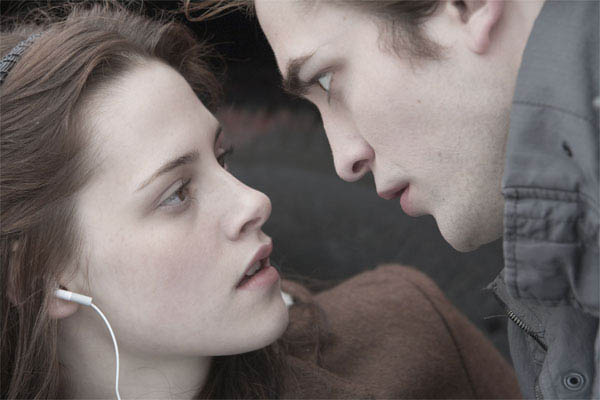
The curse of Hollywood right now, the thing that probably ruins more movies than anything else, is the practice of setting a film’s release date before pre-production has even really begun. Just look at the cretinous Saw films, of which the sixth (!) will be assaulting audiences this coming Halloween. With a production cycle of just a year there is no time with these movies to develop the script, a fact borne out in the steadily less impressed reviews each entry has received. The same problem recently graced Twilight, a film written in six weeks (quite possibly by an illiterate chimp), and will surely show up in its upcoming sequel New Moon, which is about to go before cameras for a late November bow. Now, I’m not saying either of these films were ever going to be high art, but they should be better, and a sensible amount of time set aside for writing would REALLY help with that.


THOU SHALT STOP GIVING JASON FRIEDBERG AND/OR AARON SELTZER MONEY
They made Date Movie, and that was bad enough; so spectacularly bad that it felt like somebody had discovered the direct antithesis of ‘funny’ and put it on screen for 80 odd torturous minutes, 80 minutes in which it felt like the film was eating your soul with a rusty spoon. And then it got worse. Epic Movie; Meet The Spartans; Disaster Movie. These guys make the Wayans brothers look like the Marx Brothers. They make Ed Wood and Uwe Boll look like Stanley Kubrick and Steven Spielberg. They have to be stopped, all three screens of Hell’s Cineplex can now be filled with their excremental product, so they’ve served their purpose, please stop letting them near typewriters and cameras.


THOU SHALT END THY MOVIES WHEN THE STORY DOTH END, NOT TWENTY MINUTES HENCE


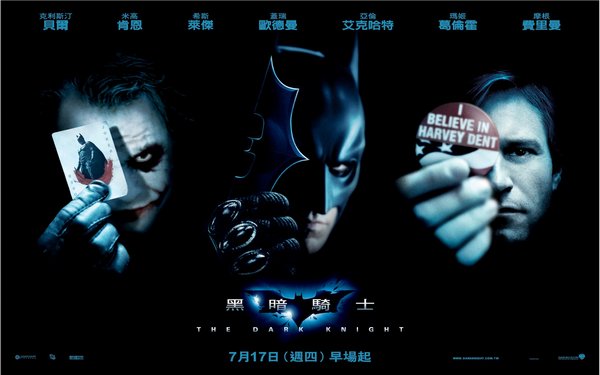
Of all the many things I disliked about The Dark Knight the one I most objected to was the entire Two Face storyline. Harvey Dent’s story was built up slowly for two hours, then he was transformed, setting up the villain for the next installment, now that Batman had, for now, dealt with The Joker. Well, that’s what you’d think; instead Christopher Nolan bolts the entire Two Face movie on to the back end of this one, creating a rushed and redundant half hour that feels like another movie entirely. This problem also afficted the last of the Lord of the Rings films; Frodo has spent 9 hours (9!) of screentime walking to a mountain so he can drop a ring in it, he gets there, drops the ring in, end of movie. Oops, there’s 25 minutes and six endings to come. Almost everything I see these days would benefit from losing 10 minutes, at least, from its tail end. When the main thrust of your story is over, so is your movie, just roll the credits.


THOU SHALT ASSUME THAT THINE AUDIENCE HATH THE CAPACITY FOR RATIONAL THOUGHT
Not everyone is a genius (I’m certainly not), but we do all have brains, and most of us, on occasion, like to be allowed to use them. Almost nothing from Hollywood asks anything of us. The worst culprits are this new breed of ‘comedy’ whose most prevalent jokes are cruelty (Borat), balls and swearing (Step Brothers) or pop culture references, signposted for the functionally retarded (pick a Friedberg/Seltzer film). Even films that seem like they might ask you to think tend not to, look at Tom Cruise’s recent ‘political’ twosome of Lions for Lambs (three filmed lectures, gosh, thanks) and Valkyrie (which skips over any actual substance to be an efficient, but generic, thriller). What ever happened, also, to slashers where the killer actually turned out to be someone you hadn’t suspected from the second he or she appeared (the last may well have been Saw) You don’t have to lay everything out for us, you don’t have to tie up every loose end, we want to think, and to talk about movies after seeing them, and perhaps even during them.


THOU SHALT CEASE TO FEAR SUBTITLES


You know what, Hollywood, most of us, as well as being able to think, can read. You know what else, there’s a whole world of brilliant actors out there. So, if you’re telling a German story, set in Germany, in a film starring German actors, based on a German book you might want to allow the characters to speak GERMAN. Just a thought. Another thing, just because a film is in ‘foreign’ does not mean that it needs to be remade in order to appeal to an English speaking audience. Pan’s Labyrinth crossed over, and that’s got loads of dialogue, almost everyone who has seen it (lots of us, by the way) loves Amelie and I don’t need to tell you how well the likes of Crouching Tiger Hidden Dragon, Hero and The Passion of the Christ went over at the box office. So, cancel the remakes of Let The Right One In, Martyrs and The Orphanage (yes, us horror film fans can read too). One final thing, stop mis-selling foreign language films by giving them silent trailers. The only people a subtitled trailer will put off are those who, if they end up attending the film will walk out, loudly complaining, when the first subtitle comes up. I don’t need them, and, since they'll be getting their money back, nor do you.


THOU SHALT BUY AND RELEASE GREAT MOVIES
The fact that the studios constantly pump a river of shit into cinemas would be understandable if there weren’t great movies out there to be had. But there are, masses of them. Every day there’s a film festival somewhere that’s showing something amazing, and most of them we’ll never hear of again, because the studios are too gutless to pick them up or, even if they do purchase them, give them a cinema release of any real consequence (if they release them at all). Over the years I’ve seen some amazing films at festivals and online that are presently (and likely will remain) awaiting a UK release, for example: A Moment of Happiness, Rain, Exhibit A, April Snow, The Daisy Chain, Everybody Dies But Me, Grace is Gone, Gardens of the Night, The Heart is a Dark Forest. I could go on, but I’m depressed now. The point is this; these films are unreleased, but The Number 23 came out, so did I Am Legend, and Spider-Man 3. We’re culturally poorer for these decisions. Give people a choice and, yes, most will head for the blockbuster, but those who see the small, distinctive films will do so faithfully, and thank you for them.


THOU SHALT FINISH THY SPECIAL EFFECTS BEFORE RELEASING THY MOVIE


Even if your movie is a piece of shit, shouldn’t you at least respect your audience enough to make it a finished piece of shit? Apparently not, at least not if you’re the makers of The Mummy Returns, whose laughable, half finished, Scorpion King was jeered in cinemas, and then wasn’t even fixed for its DVD release (because, said director Stephen Sommers, there didn’t seem to be any point – that’s the spirit Steve). It happened again recently with terrible Will Smith vehicle I Am Legend, whose monsters seemed to be missing several layers of texture mapping, and were so poorly integrated into shots as to be hilarious. Other effects work may be finished, but it can often be stunningly poor, even when it’s key to the film – just look (or don’t) at the recent My Bloody Valentine 3D, you can bet James Cameron won’t be releasing Avatar in December if it still looks that shitty, and that is as it should be.


THOU SHALT HAVE A GREAT POSTER, AND THENCE NOT REPLACE IT WITH AWFUL DVD ART
A great poster can be a piece of art all on its own. A striking image that gives a flavour of the film, helps sell it and, in the best cases, ends up on movie fans walls, it can become iconic shorthand for the movie itself, so why, so often, does it now get replaced with a set of floating heads, or a couple of unrelated images? Look at The Reader, a fine poster, with Kate Winslet in the bath, the DVD an expanse of white with Winslet in the top half and Ralph Fiennes in the bottom. Or Zodiac, whose foreboding image of the Golden Gate Bridge was desecrated on DVD by the floating heads of Jake Gyllenhaal, Robert Downey, Jr and Mark Ruffalo (though the Director’s Cut has stunning art). Then there are those covers that look like Photoshop experiments gone hideously wrong – Real Genius being one of the most reviled. Yes, we all buy DVDs for the film, but it certainly helps if the cover is something we’ll enjoy displaying, especially if the poster was.


THOU SHALT NOT SUMMARISE THY MOVIE IN ITS TRAILER


I try not to watch trailers any more, because by the time most of them are over you’ve already seen the movie. Just in the last few weeks I’ve had this problem with the trails for the new version of Last House on the Left, which even gives away exactly who lives and dies, and how this movie differs from the original, and The Young Victoria, which really does feel like a summary. Comedy trailers are another sort of summary; they’ve started to be a digest of all the best jokes in the movie (which says a lot about the awful state of comedy). The worst trailer I’ve ever seen was for What Lies Beneath, which gave away the film’s big twist, completely robbing the film of its (limited) point. These days I have to just attempt to ignore trailers, perhaps it’s because I’ve seen too many movies and it’s easy to extrapolate the rest from a taster, but however many films I’ve seen I shouldn’t be able to tell you every twist of a thriller after two minutes.


THOU SHALT NOT MAKE DIRECT TO DVD SEQUELS
Hooray, belated sequels with none of the original cast and crew involved, that’s what we want. Or not. Honestly, does the world need three terrible direct to DVD American Pie films, two sequels to the already crappy Mimic, or three to Bring it On, a premise that barely sustained one film? John Lassetter had the good sense to shut down Disney’s dedicated unit, which had been producing follow ups to The Little Mermaid, Beauty and the Beast and Lilo and Stitch among others, but other studios are ramping these kinds of productions up, with sequels to Donnie Darko and Legally Blonde just a couple of the incoming titles. I’m baffled as to who watches these, and why, because I’ve never heard a good syllable about any of them. There’s enough uninspired garbage out there, why add this lot?

Mar 12, 2009

Top 5 (well, 6)... Remakes the world just doesn't need

Entries are, as ever, alphabetical by [original] title.

Addicted
I may well end up covering this stunning Korean film as a future why haven’t you seen. It’s a riveting and beautifully acted film about a woman (Lee Mi-yeon) who, when her husband dies, begins to become convinced that his spirit has become resident in the body of his younger brother (Lee Byung-hun). This is far from the typical Asian ghost stories that Hollywood has been so keen on remaking, instead its strengths lie in dialogue, in character based drama.
It’s recently been remade under the title Possession (way to play up the film’s essential ambiguity there). It’s almost certainly awful, for several reasons… 1: Sarah Michelle Gellar, at least outside of the odd episode of Buffy, has never displayed anything one could even charitably call ‘talent’ as an actor, and this is a tough role, one Lee Mi-yeon played with incredibly raw emotion, and very little dialogue.
2: It’s going direct to DVD, after languishing on a shelf for almost two years; you can see it, in the US anyway, on May 12th
3: Just look at the poster, read the (stupid) tagline, and try not to assume that it’s going to be bollocks… impossible, isn’t it?
Trailers: Addicted - http://www.youtube.com/watch?v=WrQLwxnzncU
Possession - http://www.youtube.com/watch?v=PhRU8cFE5O0

Hellraiser
Hellraiser has been burning through directors, having been given to one pair of filmmakers from the new wave of French slashers (Alexandre Bustillo and Julien Maury of Inside) it has now landed in the hands of Pascale Laugier (whose own Martyrs has now been tapped for a US remake). I’ve heard Martyrs is stunning, and Laugier an impressive new voice, so there’s some degree of hope that Hellraiser might actually be decent. Really though, why do it? The original version by Clive Barker isn’t even 25 years old, and it’s not terribly dated. Okay some of the late 80’s fashions aren’t so great now, but otherwise there’s not much that could be done better here. Hellraiser is a seriously nasty little flick, and though it was made on smallish a budget the effects almost all hold up, and those that don’t (just a few animatronics really) aren’t awful, and add to the film’s charm. There are a couple of things in Hellraiser that you just can’t better. The first of them is the depiction of the Cenobites, who are spectacularly disturbing, and shockingly uncomfortable to look at even now, while Doug Bradley’s Pinhead has become one of the great icons of horror – it would be a crime to replace him. The other truly amazing thing about Hellraiser is Skinless Frank, one of the great make up effects of all time, and one that will absolutely not be improved (and nor will the rest of the film) by adding CGI. It’s not that I’m worried Hellraiser will be bad, it’s just pointless.

Lady Vengeance / Oldboy
Ideas like this make the baby Jesus cry. Park Chan-wook is an honest to god visionary, one of the most individual and consistently fascinating directors in the world and these final two entries in his Vengeance Trilogy (despite the fact that Oldboy is based on a Manga) play like pure, dark, slices of his imagination. The problem is that both of these films are spectacularly harsh, and Hollywood doesn’t really do harsh, and certainly Steven Spielberg and Will Smith, who are attached to Oldboy, don’t. Oldboy is said to be an adaptation of the Manga rather than the film, but even so, can anyone imagine Smith and Spielberg producing a harrowing film about a man searching for a reason behind his 15-year solitary confinement involving hammers, raw squid eating, incest and extreme violence?

There’s not been much said about Lady Vengeance, except that Charlize Theron is interested in producing, and perhaps starring. This smells like bad news to me, because Theron’s only ever been any good in Monster, and this is a role that requires far more subtlety than Aileen Wournos did. Whoever ends up directing these films though, they are simply unlikely to be able to get near the visual mastery of Park Chan-wook (who has already said he has no interest in Hollywood, having been offered both of these films and the long mooted Evil Dead remake), and for that reason they should never be allowed to happen, if you want to see them, read the subtitles.

A Nightmare on Elm Street
Wes Craven’s back catalogue is being pillaged for remake upon remake. The Hills Have Eyes happened a few years back Last House on the Left opens in the US on Friday (and is currently slated for cinemas here in… wait for it… September.) while People Under the Stairs and Shocker are both being discussed for remakes and the Scream franchise for a reboot. I don’t care about any of that so much, but you don’t fuck with Nightmare on Elm Street, you just don’t, especially when you are Michael Bay. Yes, lucky, lucky us, this remake (which seems to be going the way Rob Zombie’s violent raping of Halloween did, and exploring the background of its bogeyman) is coming to us from those fine people who have previously violated The Texas Chain Saw Massacre, and are preparing to do the same to The Birds.
In a move that has had fans up in arms Robert Englund, who has played Freddy Kruger in eight films, will not be returning to the role. Talk had linked Billy Bob Thornton to the role, but that seems to have gone away to be replaced with whispers that Jackie Earle Haley is being sought. That’s a fine pick if it happens, his almost hollow face gives him a great look for Freddy, and he’s a tremendous and scary actor, but, at the end of the day, Robert Englund IS Freddy. The problem is that Nightmare, for all its lack of technical sophistication, and its shitty, shitty ending, is still pant moisteningly scary, while all that Bay’s remakes have so far given us are pretty, bloody, movies with absolutely no scares. Please make him stop.

Robocop
As Darth Vader so memorably and irritatingly put it in Star Wars Episode 3: “Nooooooooooo”. Paul Verhoeven’s satirical masterpiece (yes, I said masterpiece, in reference to Robocop) is a mere 22 years old and, besides some slightly dodgy stop motion on ED 209 it’s as fresh as the day it was released, in fact, it only grows funnier and more disturbingly prophetic, with each passing year. As has been amply demonstrated by the dreadful sequels, no other director seems able to capture the mix of biting comedy, insane action and violence and genuine emotion that makes Robocop such a potent and special film. No actor aside from Peter Weller has been able to give us the soul behind that suit of armour (or indeed move so gracefully in it). In a truly bizarre move Darren Aaronofsky (Requiem for a Dream, The Wrestler) has been tapped to write and direct. I’m no great fan of his movies, but that’s not why this worries me, even if you figure in his other two films; Pi and The Fountain there is nothing to suggest that Aaronofsky is the man to handle Robocop – there is clearly not a satiric bone in his body and he’s never really directed action – I really don’t want to see Robocop become Batman Begins, which I fear is the way this will go. Add to this an early poster that was almost laughed out of Comiccon last year and you’ve got what sounds, already, like a hideously misconceived project. There’s one way to get me excited by this idea: get Verhoeven back and tell him to make what would have been his Robocop 2.